NaNoWriMo – April – 2026 – Day 20

It’s now two-thirds of the way through, and I’m making great progress.

The consequences of the twist that happened yesterday did not have much of an effect on the planned storyline, so it’s full steam ahead.

This story is going to be longer than 50,000 words, as, at the moment, the count is just under 40,000 words.

So far, I have 8 chapters in Part 1

9 chapters in Part 2, with one to be edited (outline is written)

24 chapters in Part 3, with 2 to be edited (also have outlines written)

Looking at the plan, there are approximately 9 more chapters to be edited, and then,

3 or 4 chapters in Part 4 to wrap it up

My best guess, this story will come in at around 70,000 words.

“The Things We Do For Love”

Would you give up everything to be with the one you love?

Is love the metaphorical equivalent to ‘walking the plank’; a dive into uncharted waters?

For Henry, the only romance he was interested in was a life at sea, and when away from it, he strived to find sanctuary from his family and perhaps life itself.  It takes him to a small village by the sea, a place he never expected to find another just like him, Michelle, whom he soon discovers is as mysterious as she is beautiful.

Henry had long since given up the notion of finding romance, and Michelle couldn’t get involved for reasons she could never explain, but in the end, both acknowledged that something had happened the moment they first met.  

Plans were made, plans were revised, and hopes were shattered.

A chance encounter causes Michelle’s past to catch up with her, and whatever hope she had of having a normal life with Henry, or anyone else, is gone.  To keep him alive, she has to destroy her blossoming relationship, an act that breaks her heart and shatters his.

But can love conquer all?

It takes a few words of encouragement from an unlikely source to send Henry and his friend Radly on an odyssey into the darkest corners of the red-light district in a race against time to find and rescue the woman he finally realises is the love of his life.

The cover, at the moment, looks like this:

lovecoverfinal1

Is love the metaphorical equivalent to ‘walking the plank’; a dive into uncharted waters?

For Henry, the only romance he was interested in was a life at sea, and when away from it, he strived to find sanctuary from his family and perhaps life itself.  It takes him to a small village by the sea, s place he never expected to find another just like him, Michelle, whom he soon discovers is as mysterious as she is beautiful.

Henry had long since given up the notion of finding romance, and Michelle couldn’t get involved for reasons she could never explain, but in the end, both acknowledge that something happened the moment they first met.  

Plans were made, plans were revised, and hopes were shattered.

A chance encounter causes Michelle’s past to catch up with her, and whatever hope she had of having a normal life with Henry, or anyone else, is gone.  To keep him alive she has to destroy her blossoming relationship, an act that breaks her heart and shatters his.

But can love conquer all?

It takes a few words of encouragement from an unlikely source to send Henry and his friend Radly on an odyssey into the darkest corners of the red-light district in a race against time to find and rescue the woman he finally realizes is the love of his life.

The cover, at the moment, looks like this:

lovecoverfinal1

The cinema of my dreams – It all started in Venice – Episode 6

Eavesdropping on Juliet

I was heading back to the Vaporetto station just a short distance from St Marks square when my phone vibrated, an incoming message.

Alfie requesting a meeting.

I had suspected he might be somewhere in the square keeping an eye on proceedings. I had that itch at the back of my neck, that one you couldn’t scratch, an old but reliable indicator I was under observation. 

My old mentor was anything but a trusting soul, and he no doubt was giving Alfie enough rope, much the same as he did to me early on, until he learned the errors of his mistrusting nature.

People like Rodby never changed, and it was one of many reasons I walked away.  He was going to have to do better if he wanted me back.

Alfie sent instructions as to where he was, a small park further along the promenade, not far from where a huge cruise ship had docked.  Even from where I was standing, it was impressive, but only one of about five I’d see in the last day or so.

Oddly, I never had the inclination to get on one.

It took about fifteen minutes, maybe more because of the tourists and general foot traffic, to reach the park, then locate Alfie looking very anonymous on a bench overlooking the water.

In another corner what looked to be a television crew was setting up or cleaning up an open set, involving about a dozen or more people all looking harassed.

He saw me coming but made no visible acknowledgment until I sat at the other end of the bench, purposely not looking in his direction.

“Nice view,” I said.

Well, it would be if the day was not overcast, and with the definite prospect of rain.

“Your friend made a call not long after you left.”

OK.  Straight down to business.  “How do you know that?”

“We put a small app on the phone we gave you that clones other phones.”

Without telling me.  Yes, welcome back to the lies and subterfuge.  I just shook my head.  What else weren’t they telling me?

He put his phone on the bench between us and played the conversation.

It was obvious that Larry had called her, and that Giuseppe wasn’t happy about being discovered.  And it was proof that Larry was monitoring her movements and conversations.  Another mistrusting soul.

“What just happened?”  I recognized Larry’s voice immediately, and the tone suggested he was far from happy.

“What do you mean?”  Her surprise was genuine.  It meant she didn’t know he was listening in, but that might not be for much longer.

“Your first meeting.”

Silence.  Then, after a long minute, she said, “it was my phone, the one you gave me, that was relaying our conversation.  It would be nice if you told me what you were intending to do.”

He brushed that comment aside with, “It’s a matter of trust, and, quite frankly, I don’t trust you.”

It was not exactly how I would have spoken to her.  Any normal person would react indignantly to that response.

There was a telling moment of silence while she digested that piece of information.

Her response, “Then you will not be surprised if I don’t respond, as you say, immediately, because now I know you have the phone,  So long, of course, I decide to take it with me.”

“You will…”

She cut him off, not by yelling, but in what could only be described as a very icy tone.  “You make demands, you make threats.  I gave you my word that I would do this for you.  My way.  Instead, you overplay your hand and you’ve sent him to ground.  If he is who you think he is, then he knows now something is wrong.  You can thank you’re own insecurity and that fool Giuseppe for that.”

“That’s…”

“Don’t interrupt, that’s just rude.  If you want me to continue, which by the way, I think is going to be a waste of time, I will, but you have made it almost impossible by taking away the advantage we had.  And if that is the case, then no more of your idiotic antics.  A simple yes or no will suffice.”

“If you think…”

The call was disconnected.

I looked at Alfie.  “Does she know she’s dicing with death?”

“There’s more.”

Twice, an incoming call to her phone went to the voice message.  The third time she answered.

“A simple yes or no will suffice.”

“Yes.”  A tone bristling with anger.

“Good.  You listen in, and I will call you when there is news.”

The call was disconnected.

“She has gumption,” Alfie said.

“Or a death wish.  You know he’s not going to sit around and wait for her.”

“No.  He’s replaced Giuseppe with someone with a little more talent to keep an eye on her, so she won’t be so obvious next time you run into her.”  He slid a grainy but recognizable photo of a woman who could easily be mistaken for a tourist.

“You have a plan.”

“We have her tour itinerary, courtesy of the hotel.”

“A little convenient, don’t you think.  I take it you have an idea where Larry is right now?”

“Of course, Sorrento, visiting his wife’s sister.”

“Perhaps we might pre-empt all this nonsense, and pay him a visit.  I might be able to convince him he’s barking up the wrong tree.”

“Wouldn’t that alert him to the fact we have him under surveillance?”

“I think he knows that’s the case anyway, and not only by us, but by any number of law enforcement agencies.  Maybe I should just drop a hint that I have to make a trip to Sorrento, and take Juliet with me.  But I would like a jamming app installed on this device,” I held up the phone he’d given me, “first.”

“Rodby said you were a wild card operative.”

“Did he?  I always thought he was the wild card, and I was the voice of reason.”

“He says a lot of stuff, how things were different in the old days.”

“A lot of people died needlessly in those so-called old days, and I’m only here now because I retired before I got killed.  And because I believed him when he said I could disappear.  Obviously, he was lying.”

“You can’t disappear these days, not with the means of tracking everyone via the digital network available.   20 years ago, maybe.  Not now.  No one can truly disappear.”

No, probably not.  For that to happen, I would have had to go live on a desert island and have had no contact with anyone for at least a generation.  A new name, identity, and, and minor changes to my persona had made me invisible for long enough to have had a normal life, and, at the very least, Larry had waited until then.

How many others were there, out in the world, also seeking revenge?  I had taken down a number of so-called ‘bad’ people, but their families somehow never quite saw it the same as we had.  No matter how legitimate the reasons.

“Give me a day to fix the phone, and then you can make the first move.  Try not to make it too hard to keep eyes on you, if only for your own safety.”

“Say hello to the boss, and tell him I didn’t miss him for one moment.”

Alfie stood.  “Try and keep out of trouble, and keep me informed if anything out of the ordinary happens.  Just create a draft message in the email app, save it, but don’t send it.  I’ll let you know if Larry makes any unpredictable moves.”

I watched him take a look around, then walk off, all as if he hadn’t realized there was someone else on the same seat.  It wouldn’t fool anyone, especially the woman pretending to minister a child in a pram, three seats along from us.

How many mothers of babies had earplugs?

Or was I just being paranoid?  It didn’t take long to slip back into that dark and murky world I tried so hard to get away from.

© Charles Heath 2022

NaNoWriMo – April – 2026 – Day 19

As a result of a sit-down with Chester, who has been keeping an eye on the progress of the project, or at least that’s what he thinks, we’ve decided that there’s going to be a slight change.

Plan or not, writing the story was always going to go the way the characters want to go, and I’ve decided that the two protagonists are not going to have a happily ever after.

They can’t.

It was a pie in the sky notion that they could, given the nature of their professions. But it’s not only that; it comes down to the plans their employer has for them, and it certainly isn’t for them to be together.

So, the way it’s written, they were about to have that intimate moment when common sense took over, and instead of being together, they are apart in her apartment.

She wanted him to stay, he wanted to stay, but there are forces in play that dictate caution.

Then the plot twist no one saw coming.

I’m excited about the next ten days.

Stay tuned

The devil features prominently in a lot of sayings

For instance, I’ve heard someone mutter, “the devil you say…”

Or another, who was telling his friend, who, at the time was in a spot of bother, ‘You’re between the devil and the deep blue sea.”

Wrong.  We all know the sea is green, not blue.

But whatever the circumstances, the devil seems to pop up a lot.

For instance,

Better the devil you know than the devil you don’t.

It seems I’ve heard that somewhere before, or at least a part of it.  Hmmm.

Maybe you’ve “gone to the devil”.  Can that be paired with “going downhill at a rapid rate of knots”?

OK, it’s impossible to go downhill using the speed measure of knots, that only applies to boats, so who came up with that saying, a landlubber sailor?

Hang on, isn’t there a team called the New Jersey Devils?  Funny, I didn’t see if the players had horns or not, and they were using hockey sticks not tridents.

Maybe I misheard.

Neutral men are the devil’s allies, therefore there must be a lot of devils in Switzerland

The devil finds work for idle hands, oh yes, my grandmother used this often on me whenever she caught me doing nothing, or digging around in her magazine room … which was a lot

But my favorite,

When in hell, only the devil can show you the way out.

I’m still trying to find him!

365 Days of writing, 2026 – 92

Day 92 – Holidays – Bah, humbug

The Blank Page, The Burnout, and the Necessity of Leaving Your Desk

There is a specific kind of romanticism attached to the image of the “tortured writer.” We envision the solitary figure, hunched over a desk in a dimly lit room, surrounded by stacks of paper and empty coffee mugs, finding their ultimate bliss in the quiet hum of creation.

If your ideal scenario—your slice of heaven—is sitting in a silent room with nothing but a blank sheet of paper and a pen, you might be wondering: Is there something wrong with me?

The short answer? No. But there is a danger in confusing “solitude” with “stagnation.”

The Comfort of the Void

For many of us, the blank page is the ultimate sanctuary. It is a space of pure potential, untainted by the messy, demanding realities of the outside world. When the world feels loud, chaotic, or overwhelming, the blank page is the only place where we can impose order. It’s a controlled environment where we are the architects of the universe.

However, that sanctuary can quickly become a cage. When you retreat into the vacuum of your own mind for too long, your writing begins to suffer. It loses its vitality, its texture, and its connection to the very thing it’s supposed to reflect: life.

The Myth of the Perpetual Engine

We feel guilty when we stop. We worry that if we step away from the desk, we’ll lose our momentum, our “voice,” or our discipline. But here is a hard truth every writer needs to internalise: To write about life, you must actually live it.

If you spend every waking hour staring at a blank page, you are not refilling the well; you are just watching the bottom of the bucket. Eventually, the well runs dry.

When you force yourself to stay in that room, you aren’t just risking a “writer’s block” or a mediocre draft; you are risking a breakdown. Writing requires a massive expenditure of emotional and intellectual energy. It is an act of extraction. If you never replenish, you begin to run on fumes. You become irritable, exhausted, and—perhaps worst of all—your writing starts to sound like a rehash of a rehash.

Why You Need to “Get Out”

Taking a break isn’t an act of laziness; it is a vital part of the creative process. Here is why you need to leave the room:

1. You need input to create output. Inspiration is rarely found at the desk. It is found in the way a stranger speaks on the bus, the changing colour of the leaves in the park, the frustrating delay of a train, or the taste of a meal you didn’t have to cook yourself. These experiences provide the “raw material” for your stories. Without them, your writing becomes abstract and hollow.

2. The subconscious needs room to breathe. Have you ever noticed that your best ideas come in the shower or while you’re out for a walk? That’s because your brain is a problem-solving machine that works best when it’s distracted. By stepping away, you give your subconscious permission to connect the dots that your conscious mind was too stubborn to see.

3. Perspective is a cure for perfectionism. When we sit in a room for too long, we lose our sense of proportion. A single paragraph feels like a life-or-death struggle. A week away from the work allows you to come back with fresh eyes, seeing the flaws you were blind to and the potential you had buried under anxiety.

The Holiday is Part of the Work

If you are currently feeling like the “ideal situation” of the blank page is starting to feel more like a prison cell, take it as your sign: Go on holiday.

It doesn’t need to be an exotic excursion. Go to a museum, sit in a crowded cafe, take a hike, or simply spend a weekend completely disconnected from your project. Give yourself the gift of being a person for a few days, rather than a “writer.”

When you return to that desk, you won’t be returning to a cage. You’ll be returning with pockets full of observations, a rested nervous system, and a surplus of energy.

The blank page will still be there. It’s not going anywhere. But it will be waiting for a version of you that has something new to say.

Searching for locations: The Kingston Flyer, Kingston, New Zealand

The Kingston Flyer was a vintage train that ran about 14km to Fairlight from Kingston, at the southern end of Lake Wakatipu, and back.

This tourist service was suspended in December 2012 because of locomotive issues.

However, before that, we managed to go on one of the tours, and it was a memorable trip.  Trying to drink a cup of tea from the restaurant car was very difficult, given how much the carriages moved around on the tracks.

The original Kingston Flyer ran between Kingston, Gore, Invercargill, and sometimes Dunedin, from the 1890s through to 1957.

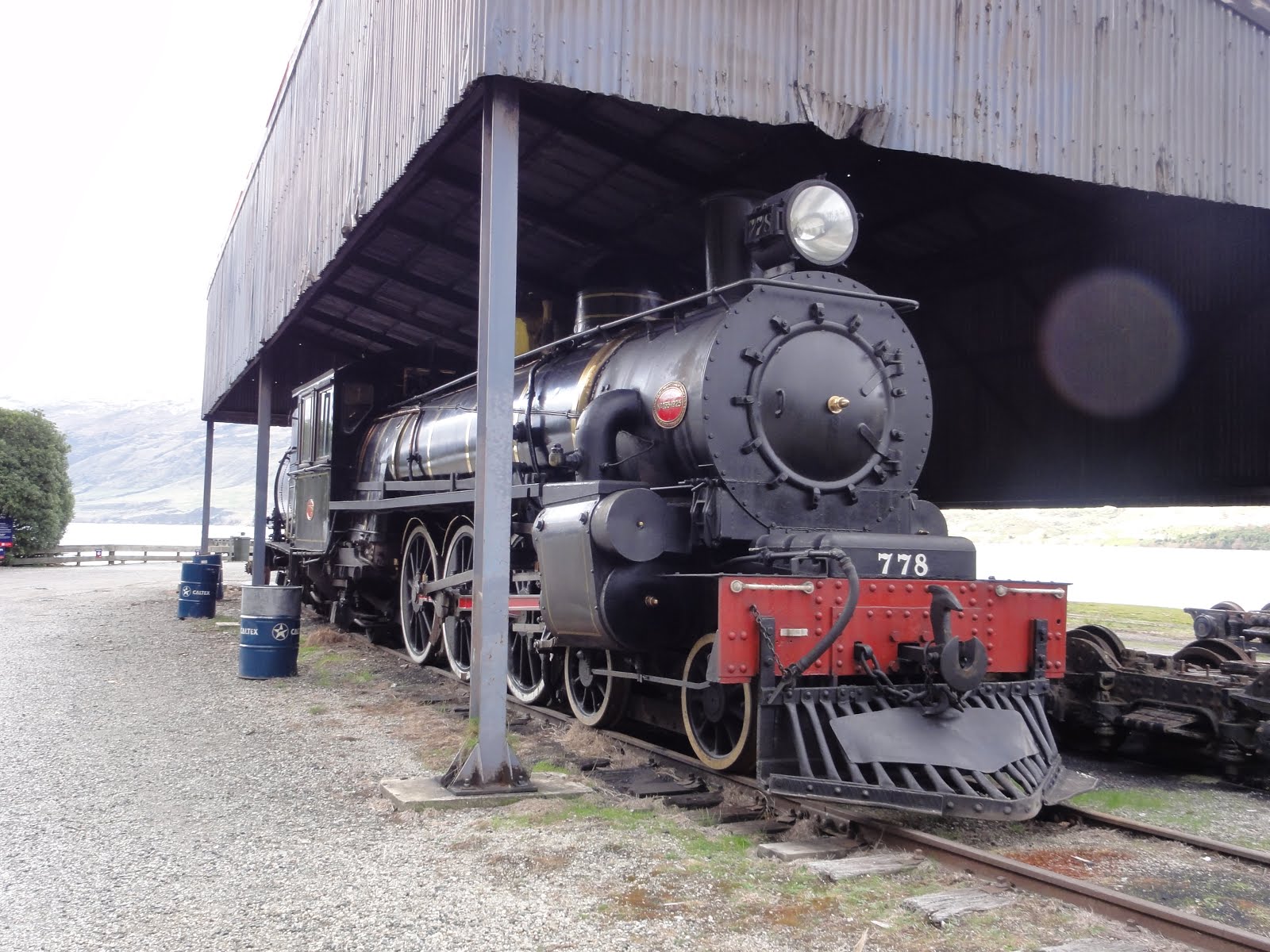
There are two steam locomotives used for the Kingston Flyer service, the AB778 starting service in 1925, and the AB795 which started service in 1927.

The AB class locomotive was a 4-6-2 Pacific steam locomotive with a Vanderbilt tender, of which 141 were built between 1915 and 1927 some of which by New Zealand Railways Addington Workshops.

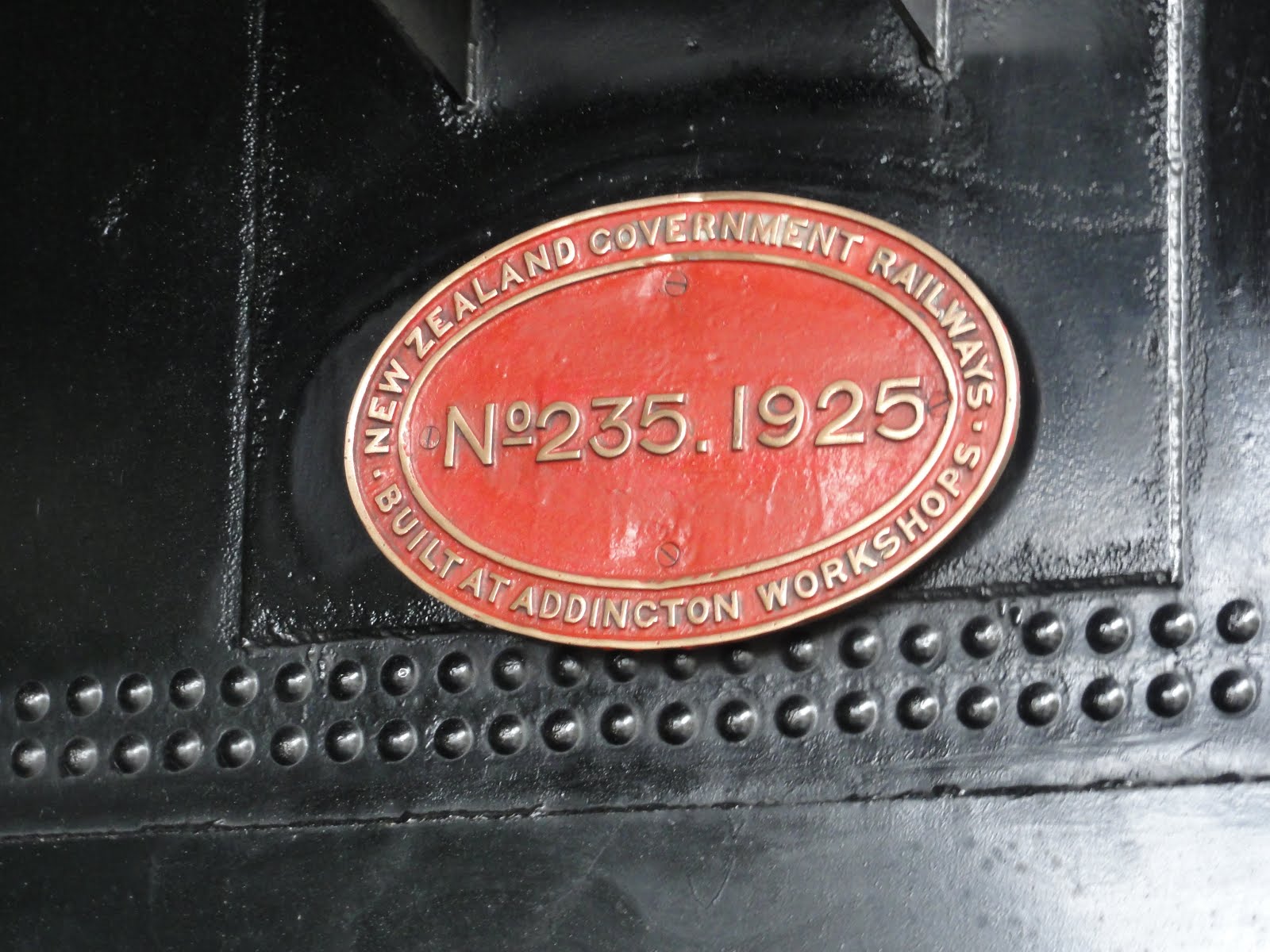
No 235 is the builder’s number for the AB778

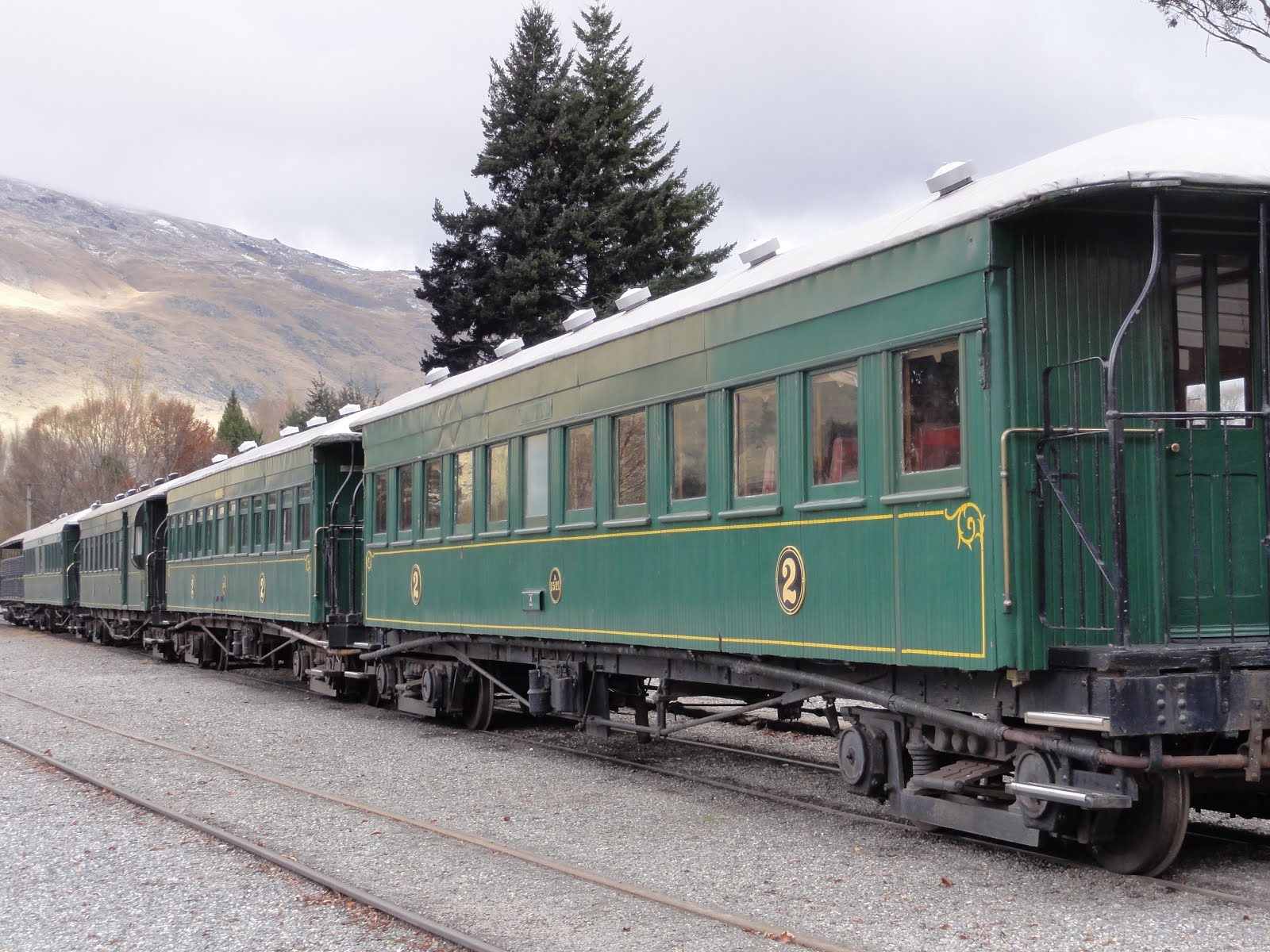
There were seven wooden bodied passenger carriages, three passenger coaches, one passenger/refreshments carriage and two car/vans.  The is also a Birdcage gallery coach.  Each of the rolling stock was built between 1900 and 1923.  They were built at either of Addington, Petone, or Hillside.

I suspect the 2 on the side means second class

The passenger coach we traveled in was very comfortable.

This is one of the guard’s vans, and for transporting cargo.

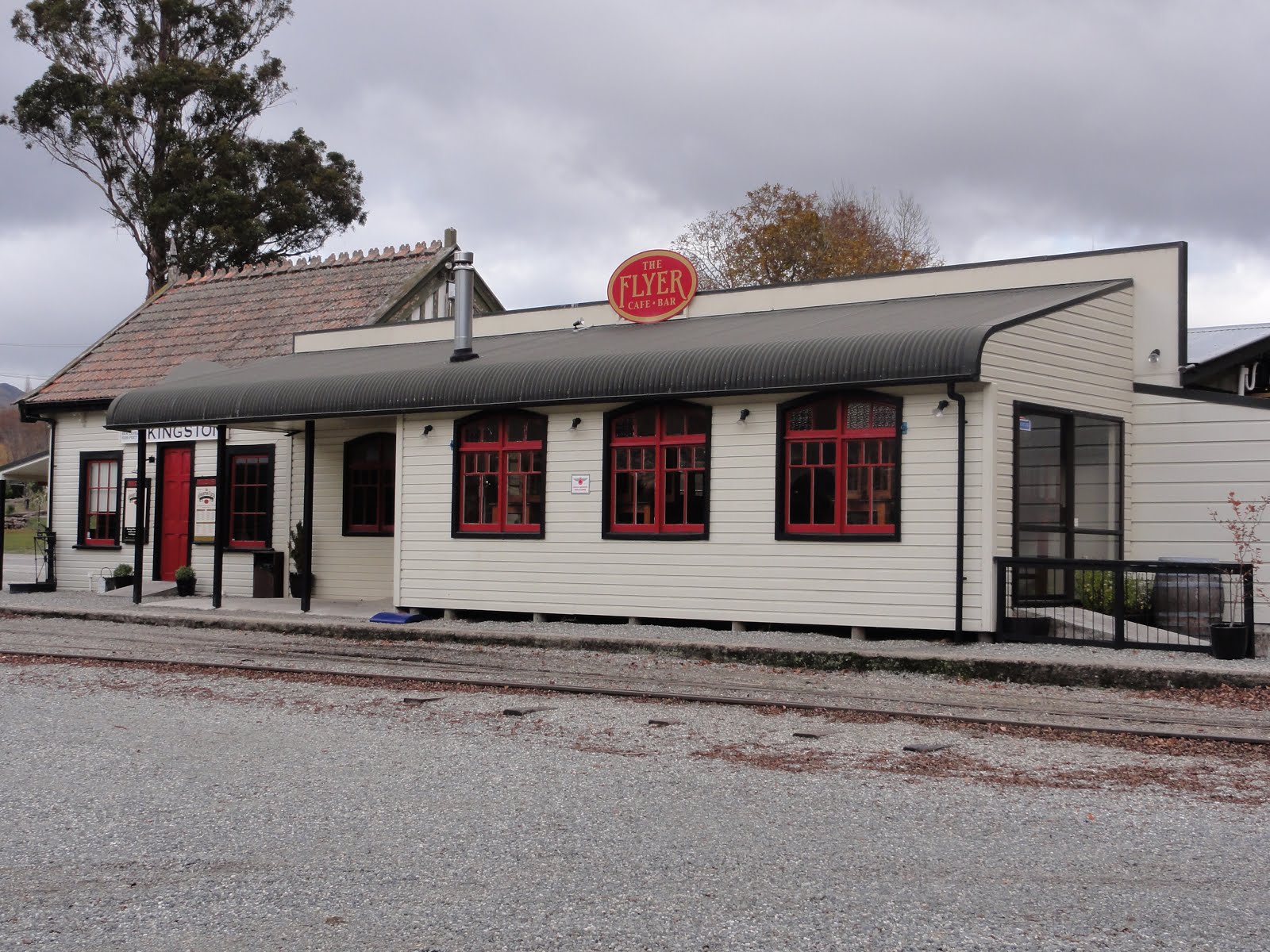
The Kingston Railway Station

and cafe.

A poster sign advertising the Kingston Flyer

The running times for the tourist services, when it was running.

“Surely there’s a better way…” – a short story

When you have secrets, sometimes it’s very hard to hide them from others.

It was something Henry had to do since the day he could speak.

The fact that his parents had been murdered because of their profession, something his grandfather told him, was akin to ‘working for the government’.

The fact that he was from a very wealthy and influential family.

The fact that he was heir to a fortune.

The fact that he was anything other than just another boy, who grew up to be just another man.

His whole life, to this point, had been ‘managed’ so that no one, other than a selected few chosen by his grandfather, knew who he was or what he represented. And more to the point, he had been told to just live his life like any other of his age.

Yes, he went to a private school, but it wasn’t an exclusive one, yes he went to university, but he had got into Oxford on his own merit, and yes, he was smart, smart enough to create his own business and make a handsome income from it. And no, he never drew upon the stipend he had been granted by his parents’ will, so it just gathered dust in the bank.

Henry was an only child, and to a certain extent, introverted. It was a shyness that his grandfather knew existed in his son, Henry’s father. It could be an asset, or it could be a liability. With Henry’s father, it had been an asset, a means by which many had misunderstood him. It might even serve him well for the next phase of his life.

Today, Henry was meeting his grandfather at Speaker’s Corner at Hyde Park, which was an unusual meeting place because in the past it had always been at his grandfather’s club. At his grandfather’s request, he had undertaken a three-year program, one that his father had, and his father before him, and a prerequisite for a profession that would be explained to him.

And it was all because Henry said he was bored. The business he’d built could run without him; his attempts at relationships with various girls and women hadn’t quite achieved what he was looking for, even though he had no idea what he was looking for, and, quite frankly, he told his grandfather, he needed something more exciting.

It was, he’d been told, the way of the MacCallisters. Ever since the British tried to put down the Scots.

Henry was listening to a rather animated man preaching the word of the Lord, but he was not sure which Lord that was. Anything he quoted from the bible resembled nothing he had read and remembered. Perhaps the man was on drugs.

Two or three people stopped, listened for a minute or two, shook their heads, some even laughed, and moved on.

“It’s the last bastion of freedom of speech, though I can say this man is not about to gather an army of insurrectionists any time soon. Let’s walk.”

His grandfather was getting old, and walking was getting more and more difficult. More scotch was needed, he had told Henry, to ward off the evils of arthritis. And, he added, ‘I should have had a less devil-may-care attitude when he was younger.’

It was a slow amble to the Serpentine, which, being a bright sunny day, if not a little chilly, was alive with people.

He waited until his grandfather spoke. One lesson he had learned was to speak when you’re spoken to, and if you’ve got nothing to say, best to remain silent.

“I have found a job you might like to have a go at. Nothing difficult, mind you, but perhaps, at times, hard work. I think you’d be good at it.”

“Is that meant to be a hint, and I have to guess?”

“I think you’re smart enough to know what it might be yourself, young Henry.”

I think I did too. Everything I’d been doing over the last three years led me to believe I’d been training to walk in my father’s footsteps. It was with the Army, and I had imagined my father had been a soldier, though I’d never seen him in a uniform. But my Grandfather had said he worked for the government, so I wondered if that might be some sort of policeman, or some sort of internal agent, like MI6. It had not been boring, and the exercises had been ‘interesting’, but no one had said what the end result of this training might be; in fact, no one had said who they were.

“Something hush, hush as the saying goes.”

We had gone about fifty yards and reached a cross path. As we did, a youngish woman dressed in leather appeared and walked towards us.

“I’d like you to meet a friend of mine, Henry. Her name is Marion, though I suggest you don’t call her that.”

She smiled. “Call me Mary. There’s only one person in the whole world who would dare call me that, and he’s standing here. Your grandfather has spoken a lot about you.”

Henry’s first impression; she had been to the training school he had. He could see it in her manner, and in the way she scanned the area, even though it didn’t look like she was. He’d been doing it himself, and he had seen her earlier. What made her stand out, she didn’t have a bag like all the other women.

“I hope it was good, not bad.”

“You have no bad traits?”

“Everyone had bad traits. You’ll just have to get to know me if you want to know what they are.”

“Well,” my grandfather said, “enough chit chat. Mary has a task, and she needs a little help. I thought you might want to join her.”

“Doing what?”

“She’ll explain it on the way. When it’s done, come and see me.” With that, a hug from Mary, and a handshake from his grandson, he turned and walked back the way they had come earlier.
“So,” Henry asked, “What’s the job?”

“I have to pick up a computer.”

“That doesn’t sound like something you would need help with.” In fact, if he was right in his assessment of her, he was the last person she needed, if at all. She looked to him as if she could handle anything.

“It’s one of those just in case situations.”

They walked a circuitous route back to Park Lane and crossed both roads, up Deanery Street, left where Tilney Street veered off, and then a short distance to Deanery Mews. Henry noted this was an area with a lot of expensive real estate and scattered Embassies. If he was not mistaken, the Dorchester Hotel wasn’t far away.

Walking down the mews seemed to Henry to be walking into a trap. When he looked back towards Deanery Street, he thought he saw two men position themselves, not quick enough to prevent him from getting a glimpse of them.

“You do realise that getting back out of here could be a problem.”

“It’s why I asked for help. Just in case.”

No visible sign of fear, or of what the consequences might be if this went south. Perhaps his grandfather had considered this a test. But what sort of test?

They reached the end, and, just around the corner, a van was parked with what Henry assumed was the driver standing by the open driver’s door, smoking a cigarette.

Mary stopped about ten feet away from him. “Have you got the package?”

He reached inside the car and lifted up a computer case. There didn’t necessarily have to be a computer in it. I looked up and around. It was a good place for a meeting. No witnesses. But there were CCTV cameras. I wondered if they were working.

The man tossed the bag back in the car. “Have you got the money?”

She held up her phone. “Just need the bank account details.”

“OK. Just step over here and let’s get this done.”

She moved closer, and in a flash, he had grabbed her, holding her by the neck with a gun to her head. The two men Henry thought he’d seen at the top of the mews were now within sight, and both had guns trained on him. A trap, indeed.

“What do you want?” Henry asked.

“Tell your boss the price just doubled. Two million. You’ve got five minutes.”

I shook my head, not to clear the cobwebs, but to calm down and think rationally.

Talk first. “Surely there’s a better way to do this. You don’t need to hold a gun to her head.”

I held my hands out just to show I wasn’t a threat.

“No, probably not.” He released his grip and lowered the gun.

A very, very bad mistake.

—-

© Charles Heath 2020-2026

An excerpt from “If Only” – a work in progress

Investigation of crimes doesn’t always go according to plan, nor does the perpetrator get either found or punished.

That was particularly true in my case.  The murderer was incredibly careful in not leaving any evidence behind, to the extent that the police could not rule out whether it was a male or a female.

At one stage, the police thought I had murdered my own wife, though how I could be on a train at the time of the murder was beyond me.  I had witnesses and a cast-iron alibi.

The officer in charge was Detective First Grade Gabrielle Walters.  She came to me on the day after the murder seeking answers to the usual questions like, when was the last time you saw your wife, did you argue, the neighbours reckon there were heated discussions the day before.

Routine was the word she used.

Her fellow detective was a surly piece of work whose intention was to get answers or, more likely, a confession by any or all means possible.  I could sense the raging violence within him.  Fortunately, common sense prevailed.

Over the course of the next few weeks, once I’d been cleared of committing the crime, Gabrielle made a point of keeping me informed of the progress.

After three months, the updates were more sporadic, and when, for lack of progress, it became a cold case, communication ceased.

But it was not the last time I saw Gabrielle.

The shock of finding Vanessa was more devastating than the fact that she was now gone, and those images lived on in the same nightmare that came to visit me every night when I closed my eyes.

For months, I was barely functioning, to the extent that I had all but lost my job and quite a few friends, particularly those who were more attached to Vanessa rather than me.

They didn’t understand how it could affect me so much, and since it had not happened to them, my tart replies of ‘you wouldn’t understand’ were met with equally short retorts.  Some questioned my sanity, even, for a time, so did I.

No one, it seemed, could understand what it was like, no one except Gabrielle.

She was by her own admission, damaged goods, having been the victim of a similar incident, a boyfriend who turned out to be an awfully bad boy.  Her story varied only in that she had been made to witness his execution.  Her nightmare, in reliving that moment in time, was how she was still alive and, to this day, had no idea why she’d been spared.

It was a story she told me one night, some months after the investigation had been scaled down.  I was still looking for the bottom of a bottle and an emotional mess.  Perhaps it struck a resonance with her; she’d been there and managed to come out the other side.

What happened became our secret, a once-only night together that meant a great deal to me, and by mutual agreement, it was not spoken of again.  It was as if she knew exactly what was required to set me on the path to recovery.

And it had.

Since then, we saw each other about once a month in a cafe.   I had been surprised to hear from her again shortly after that eventful night when she called to set it up, ostensibly for her to provide me with any updates on the case, but perhaps we had, after that unspoken night, formed a closer bond than either of us wanted to admit.

We generally talked for hours over wine, then dinner and coffee.  It took a while for me to realise that all she had was her work; personal relationships were nigh on impossible in a job that left little or no spare time for anything else.

She’d always said that if I had any questions or problems about the case, or if there was anything that might come to me that might be relevant, even after all this time, all I had to do was call her.

I wondered if this text message was in that category.  I was certain it would interest the police, and I had no doubt they could trace the message’s origin, but there was that tiny degree of doubt about whether or not I could trust her to tell me what the message meant.

I reached for the phone, then put it back down again.  I’d think about it and decide tomorrow.

© Charles Heath 2018-2020

Sayings: Irons in the fire

There is an expression you hear a lot, here, there, and everywhere when referring to someone who is very busy, ‘oh, he has a lot of irons in the fire’.

These days we use it as an analogy not to have too many things on the go at the same time, and, in the end, none of them will be finished properly, or finished at all.

There are two old-time literal meanings that can apply to this analogy, the first being that in laundries, they used to have their irons in the fire, warming so that clothes could be ironed. Having too many meant sometimes one would be left too long, and end up scorching the clothes being ironed.

Hopefully, that didn’t happen to a very expensive dress!

The second meaning came from a blacksmith’s foundry where he had iron bars in the fire, heating up so that they could be worked on. Having too many in the fire at once sometimes meant that one became overheated, and ruined.

Conversely, having too many pieces of iron in the fire might cause the fire to be too cool to heat any of the metal bars.

These days, a lot of people need to have a lot of projects on the go at once, in the hope that one or more might suddenly become a winner.

Sadly, that doesn’t happen very often.

And, no, buying a lot of lottery tickets hoping one will win, that is not very likely either.