365 Days of writing, 2026 – 69

Day 69 – Writing exercise

We don’t have a lot of time

This was the thing about end-of-world stuff.

You honestly believe that people could not be that stupid, and how simple it was to create the conditions where the only answer is nuclear Armageddon.

We go to the movies, we watch television shows that portray what it’s like before the war, during the war and then after the war, what we are calling World War 3.

If there’s a war, because some shows are about people building bunkers in anticipation of a war, and then when there wasn’t, they blew everything up anyway.

And sadly, that just about sums up what is happening to us now.

Let’s go back.  It wasn’t all that long ago.  We had a particular country in the Middle East deciding that it was sick of missiles randomly raining down on it.

Maybe that’s a bit of an exaggeration, but the intent was the same.  Certain Arab states didn’t like Israel, that certain country, so Israel started bombing the Palestinians. 

Meanwhile, elements in Yemen sent missiles, elements in Lebanon sent missiles, and a larger oil-rich country, Iran, financed all these splinter Arab groups.

Then there’s the Russians and the Ukrainians.  There’s the Chinese posturing over Taiwan.  The United States posturing over oil and terrorism, and the rest of the world, basically horrified, are nervously watching on.

We are in Australia, as far away from all this stuff as you could get, but we do have a problem.  Oil.  We import it all, so if the Middle East explodes, we will be in trouble.

We could live with posturing.  We could live with the superpowers flexing their muscles.  What we don’t want or need is a full-scale war that would become a black hole and suck everyone in.

We even said so, multiple times. Preceful negotiations, not bombs.

Did anyone listen….

I was reading a book, a work of fiction, written a few years ago now.

The premise ..

If someone blows up the oil pipelines in the Middle East, and a country on the borders of the Hormuz Strait decided to sink a few ships and block it, how long would it take for society to break down?

This book should be mandatory reading for every politician in the world because what happens when the scenario plays out is Armageddon.

No oil, no petrol, no cars or trucks, no deliveries.  No oil for the power station generators, no industry, no food moving.  People don’t store food.  They buy it daily.  When the food runs out…

Rationing?  Tell that to the guy with the gun, pointing it at you.  He’s desperate and will pull the trigger.  All semblance of sanity is finished.

You get the picture. Two weeks, anarchy, four goodbye to sanity and everything else.

I’m reading this book, and a newsflash comes on the screen.
.
Israel and America have bombed Iran.

Why?  They think the Iranians are about to launch a nuclear warhead. 

Where?  Israel, America?

Do they not know that if the Iranians exploded a nuclear bomb anywhere, there’s going to be retaliation?

I’m sitting staring at the TV screen in utter disbelief.

Of course, Iran is going to fire back, and because America is involved, they will retaliate against all the US bases in the other Arab States.

What was the reason for this seemingly unprovoked attack, other than the alleged nuclear weapon?

Pick one out of 157 random reasons, none quite a making up a coherent sentence.  We are told it will last two days, the war will be won, Iran will lose everything, the country will be taken back by the people, and everything will be fine.

That’s right, after the alleged nuclear bomb, the next reason was to kill the radical leadership and have the people revolt.

Two days at the most.  Bomb their nuclear facilities and some infrastructure, one of which was apparently next to a girl’s school, and it was hit instead with horrifying results.   But they did kill the leader.

I guess what happens next would be the same if the Iranians killed the President of the USA, and I hpe they weren’t thinking there would be no retaliation.

Admittedly, we all think that Iran is run a little too religiously, and that the regime is harsh in meting out punishment to dissenters and women, but it is a sovereign country, and no other country has the right to bomb them simply because we don’t like their religion or customs.

Of course, we in Australia denounced the attack as illegal, along with just about every sane country in the world.  But again, we are reminded that this is allegedly about killing the leadership and hoping for an uprising.

Yep.  Good luck with that.  Day two, the expert commentators, yes, like sport, we have commentators for wars, the experts are saying that in killing heads of state, they will be replaced, quite possibly with more radical heads of state, with the warning they will never forget what the enemy did.  And yes, there might be protesters in the streets, hoping for a change in government, but we’ll shoot them.

Day four, no to the regime change and no to surrender.  This war is just getting started. Reading between the lines, the Iranians saw this coming, have seen it coming for years, and have made appropriate arrangements.

And a little daunting on the side, the message sent to Israel and America, bring it on.

Day five, we are told Iran is a spent force, with no munitions, destroyed launching sites, and no leadership. 

Until a barrage of missiles lands in places where no missiles were expected, leaving a few dead soldiers for someone to explain how this had happened when their infrastructure had been, so-called, blasted to bits.

And no, just because it’s war and there are always casualties, it just doesn’t cut it when you tell a mother who has lost her son that they have to expect casualties in war, when they had been told no more wars, ending existing wars, and their President is the President of Peace.

This isn’t going to win anyone a Nobel Peace Prize any time soon.

The two-day, worst-case-scenario war is now a week along, and there is no end in sight.  Iran seems to have an inexhaustible supply of missiles.

That one week suddenly turns into two weeks, and the world is now panicking over the loss of oil getting through. Oil prices per barrel are rocketing, ships are not moving, insurance is withdrawn, and stock markets are tanking.

Here’s a thought. Let’s let Russia sell oil to ease the shortages. They won’t use the funds to fuel the war with Ukraine. Will they? Or supply intelligence to the Iranians. Or is China selling arms and missile defence systems?

And not forgetting their own little skirmish, it seems the initial efforts are not working, so let’s start bombing infrastructure.  Not outhouses and portable toilets, let’s start taking out gas and oil fields and make it hard for them to produce anything. Like their major gas field.

Haven’t they heard of retaliation?  You know when the other side goes for your stuff?

Obviously not.  But who didn’t expect Iran to target the other Arab countries’ infrastructure, and now it’s getting serious.

You can see a pattern forming here. Drop bombs on us, we sent missiles and drones back, you target our gas and oil fields, we will target yours. They even stand up and tell us in plain language what they’re going to do.

Week three, we don’t want to know.  Israel has bombarded and damaged a large Iranian facility.  And no, I didn’t hear them surrendering, I hear them going for American and Arab states’ gas and oil fields with the same intensity.

This is a war.  There are no good guys when it comes to running wars.  It’s about destroying the enemy, plain and simple.

OMG.

By this time, we are beginning to realise they’re using missiles which we apparently didn’t or can’t find or destroy because they’re, well, hidden, 500 meters below ground level, and therefore can launch barrages with impunity on friendly Arab states, and it seems longer range targets.

And if they can hit long-range targets, nothing is safe, no one is safe, and you have to think that this war is becoming the mother of all disasters.

So, here we are, each side bombing and destroying part of the other’s oil and gas-producing facilities, and now the world is suffering because of it. Where will it end?

Two world wars, and we apparently haven’t learned anything.

Three weeks, and we’re on a knife-edge. It’s that time when, turning on the TV to get the latest news, we are barraged with destruction and posturing.

And, this morning, an ultimatum. We are telling them they have 48 hours to surrender or they will be totally destroyed.

What?

An ultimatum that says, basically, you’re in a no-win situation. I can literally see the Iranian leadership behind closed doors, discussing the latest threat.

Imagining that they do not have nuclear weapons at their disposal would be a mistake. We want to believe they don;t but I suspect, as so a lot of others, they do.

The question is whether they would use them.

Is anyone, on either side, asking the question?

If you shoot, they shoot, and there will be nothing left.  There will be no world left for either side to claim any sort of victory. And all those who didn’t want to be involved will suffer the same fate.

Nuclear annihilation.

So, here’s the thing.

In many different TV shows where someone is backed into a corner, and there’s no way out, the only way outcome is the worst possible eventuality.

You see the people who finally realise that it’s a no-win situation, and try to calm things down, but it’s usually one person or a group in an isolated situation.  The damage, as catastrophic as it is, is confined.

When you corner someone into believing the only way out is annihilation, well, hold onto your hats because this is one in, all in.

And as is the nature of our society and its thirst for instant news, we’re going to see the end of the world in real time.

We may not die instantly like the lucky ones, no, we’ll get to die a lingering death, a day, or two, or a week.  Maybe a month, but the thought of that is too horrific to contemplate.

You just have to wonder who the madman is who will authorise the first strike.

The Iranians, the Israelis or the Americans?

In the end, it doesn’t matter.  They will condemn this planet to extinction. 

Somewhere out there, the aliens who put us here as an experiment will be saying, yep. What a bunch of nihilistic dumbasses.  Money will change hands as the bets are paid, and the universe will go about its business, happy that Elon Musk isn’t going to live on Mars, and the Chinese aren’t going to take over the moon.

And the self-immolation tendencies of the human race will not spread its disease through the universe.

Except…

Flip-flop has just flipped the 48-hour deadline to five days, and then it will be the infamous two weeks that never end.

The stock market was cratering. It needed to hear positive news, that peace is within reach.

Even if it isn’t. Maybe money with trump annihilation.

We all collectively hold our breath, knowing that inevitably the end of this world is coming, and we can blame the person who invented the atomic bomb.  I was going to say that it’s the aliens’ fault because they could have come and stopped all this nonsense before it started. 

I guess they tried when they landed at Area 51, but our ‘shoot first and ask questions later; basically basically sealed our fate.

So?

We have a four-day breather before everything starts over again.

Is it any wonder I do not like roller coasters?

  .

Skeletons in the closet, and doppelgangers

A story called “Mistaken Identity”

How many of us have skeletons in the closet that we know nothing about? The skeletons we know about generally stay there, but those we do not, well, they have a habit of coming out of left field when we least expect it.

In this case, when you see your photo on a TV screen with the accompanying text that says you are wanted by every law enforcement agency in Europe, you’re in a state of shock, only to be compounded by those same police, armed and menacing, kicking the door down.

I’d been thinking about this premise for a while after I discovered my mother had a boyfriend before she married my father, a boyfriend who was, by all accounts, the man who was the love of her life.

Then, in terms of coming up with an idea for a story, what if she had a child by him that we didn’t know about, which might mean I had a half brother or sister I knew nothing about. It’s not an uncommon occurrence from what I’ve been researching.

There are many ways of putting a spin on this story.

Then, in the back of my mind, I remembered a story an acquaintance at work was once telling us over morning tea, that a friend of a friend had a mother who had a twin sister and that each of the sisters had a son by the same father, without each knowing of the father’s actions, both growing up without the other having any knowledge of their half brother, only to meet by accident on the other side of the world.

It was an encounter that in the scheme of things might never have happened, and each would have remained oblivious of the other.

For one sister, the relationship was over before she discovered she was pregnant, and therefore had not told the man he was a father. It was no surprise the relationship foundered when she discovered he was also having a relationship with her sister, a discovery that caused her to cut all ties with both of them and never speak to either from that day.

It’s a story with more twists and turns than a country lane!

And a great idea for a story.

That story is called ‘Mistaken Identity’.

In a word: Dear

Yes, it’s that simple word that we use to call someone affectionately.

Or sometimes, with a little accent on the word; yes, dear and no, dear.

In other words, it’s a person regarded with deep affection.

It can also mean expensive, by saying, that’s a bit dear, isn’t it, when we’re really saying it’s way overpriced.

I can’t remember how many times I’ve said something is ‘too dear’ to the children.

Grannies tend to use the expression, ‘be a dear and…’, to get you to do something for them.

Friends, sometimes tongue in cheek, will say, ‘oh dear, I’ve upset you’, when that was exactly what they meant to do.  Friends you say?  Yes, friends indeed.

And then we always start a letter (always?  Who writes letters any more?) with

Dear John (oops, not one of THOSE letters)

Dear Sir/Madam

Of course, instead of swearing, you could simply say ‘Oh dear, you’ve let us down again!’.

And when you lose your job, which is happening a lot at the moment, it is said it would cost you dear, though sometimes it would be more appropriate to use the adverb, dearly.

It is not to be confused with the word deer which is an animal, the males of which have antlers.

There are a number of different types of deer, such as reindeer and elk.  In Canada, they are called caribou.

In Robin Hood’s day, killing deer brought you very harsh punishment.

And one of my favourite meats is venison, meat from a deer, which are farmed in New Zealand along with sheep.

An excerpt from “Amnesia”, a work in progress

I remembered a bang.

I remembered the car slewing sideways.

I remember another bang, and then it was lights out.

When I opened my eyes again, I saw the sky.

Or I could be underwater.

Everything was blurred.

I tried to focus but I couldn’t. My eyes were full of water.

What happened?

Why was I lying down?

Where was I?

I cast my mind back, trying to remember.

It was a blank.

What, when, who, why and where, are questions I should easily be able to answer. These are questions any normal person could answer.

I tried to move. Bad, bad mistake.

I did not realise the scream I heard was my own. Just before my body shut down.

“My God! What happened?”

I could hear, not see. I was moving, lying down, looking up.

I was blind. Everything was black.

“Car accident; hit a tree, sent the passenger flying through the windscreen. Pity to poor bastard didn’t get the message that seat belts save lives.”

Was I that poor bastard?

“Report?” A new voice, male, authoritative.

“Multiple lacerations, broken collar bone, broken arm in three places, both legs broken below the knees, one badly. We are not sure of internal injuries, but ruptured spleen, cracked ribs and pierced right lung are fairly evident, x-rays will confirm that and anything else.”

“What isn’t broken?”

“His neck.”

“Then I would have to say we are looking at the luckiest man on the planet.”

I heard the shuffling of pages.

“OR1 ready?”

“Yes. On standby since we were first advised.”

“Good. Let’s see if we can weave some magic.”

Magic.

It was the first word that popped into my head when I surfaced from the bottom of the lake. That first breath, after holding it for so long, was sublime, and, in reality, agonising.

Magic, because it seemed like I’d spent a long time underwater.

Or somewhere.

I tried to speak but couldn’t. The words were just in my head.

Was it night or was it day?

Was it hot, or was it cold?

Where was I?

Around me, it felt cool.

It was incredibly quiet. No noise except for the hissing of air through an air-conditioning vent. Or that was the sound of pure silence.  And with it the revelation that silence was not silent. It was noisy.

I didn’t try to move.

Instinctively, somehow, I knew not to.

A previous unpleasant experience?

I heard what sounded like a door opening, and noticeably quiet footsteps slowly came into the room. They stopped. I could hear breathing, slightly laboured, a sound I’d heard before.

My grandfather.

He had smoked all his life until he was diagnosed with lung cancer. But for years before that he had emphysema. The person in the room was on their way, down the same path. I could smell the smoke.

I wanted to tell whoever it was the hazards of smoking.

I couldn’t.

I heard a metallic clanging sound from the end of the bed. A moment later the clicking of a pen, then writing.

“You are in a hospital.” A female voice suddenly said. “You’ve been in a bad accident. You cannot talk, or move, all you can do, for the moment, is listen to me. I am a nurse. You have been here for 45 days and just came out of a medically induced coma. There is nothing to be afraid of.”

She had a very soothing voice.

Her fingers stroked the back of my hand.

“Everything is fine.”

Define fine, I thought. I wanted to ask her what ‘fine’ meant.

“Just count backwards from 10.”

Why?

I didn’t reach seven.

Over the next ten days, that voice became my lifeline to sanity. Every morning, I longed to hear it, if only for the few moments she was in the room, those few waking moments when I believed she, and someone else who never spoke, were doing tests. I knew it had to be someone else because I could smell the essence of lavender. My grandmother had worn a similar scent.

It rose above the disinfectant.

She was another doctor, not the one who had been there the day I arrived. Not the one who had used some ‘magic’ and kept me alive.

It was then, in those moments before she put me under again, that I thought, what if I was paralysed? It would explain a lot. A chill went through me.

The next morning, she was back.

“My name is Winifred. We don’t know what your name is, not yet. In a few days, you will be better, and you will be able to ask us questions. You were in an accident, and you were very severely injured, but I can assure you there will be no lasting damage.”

More tests, and then when I expected the lights to go out, they didn’t. Not for a few minutes more. This was how I would be integrated back into the world. A little bit at a time.

The next morning, she came later than usual, and I’d been awake for a few minutes. “You have bandages over your eyes and face. You had bad lacerations to your face, and glass in your eyes. We will know more when the bandages come off in a few days. Your face will take longer to heal. It was necessary to do some plastic surgery.”

Lacerations, glass in my eyes, car accidents, plastic surgery. By logical deduction, I knew I was the poor bastard thrown through the windscreen. It was a fleeting memory from the day I was admitted.

How could that happen?

That was the first of many startling revelations. The second was the fact I could not remember the crash. Equally shocking, in that same moment was the fact I could not remember before the crash either, or only vague memories after.

But the most shattering of all these revelations was the one where I realised, I could not remember my name.

I tried to calm down, sensing a rising panic.

I was just disoriented, I told myself. After 45 days in an induced coma, it had messed with my mind, and it was only a temporary lapse. Yes, that’s what it was, a temporary lapse. I will remember tomorrow. Or the next day.

Sleep was a blessed relief.

The next day I didn’t wake up feeling nauseous. I think they’d lowered the pain medication. I’d heard that morphine could have that effect. Then, how could I know that but not who I am?

Now I knew Winifred the nurse was preparing me for something unbelievably bad. She was upbeat, and soothing, giving me a new piece of information each morning. This morning, “You do not need to be afraid. Everything is going to be fine. The doctor tells me you are going to recover with little scarring. You will need some physiotherapy to recover from your physical injuries, but that’s in the future. We need to let you mend a little bit more before then.”

So, I was not going to be able to leap out of bed and walk out of the hospital any time soon. I don’t suppose I’d ever leapt out of bed, except as a young boy. I suspect I’d sustained a few broken bones. I guess learning to walk again was the least of my problems.

But there was something else. I picked it up in the timbre of her voice, a hesitation, or reluctance. It sent another chill through me.

This time I was left awake for an hour before she returned.

This time sleep was restless.

Scenes were playing in my mind, nothing I recognised, and nothing lasting longer than a glimpse. Me. Others, people I didn’t know. Or I knew them and couldn’t remember them.

Until they disappeared, slowly like the glowing dot in the centre of the computer screen, before finally fading to black.

The morning the bandages were to come off she came in early and woke me. I had another restless night, the images becoming clearer, but nothing recognisable.

“This morning the doctor will be removing the bandages over your eyes. Don’t expect an immediate effect. Your sight may come back quickly, or it may come back slowly, but we believe it will come back.”

I wanted to believe I was not expecting anything, but I was. It was human nature. I did not want to be blind as well as paralysed. I had to have at least one reason to live.

I dozed again until I felt a gentle hand on my shoulder. I could smell the lavender; the other doctor was back. And I knew the hand on my shoulder was Winifred’s. She told me not to be frightened.

I was amazed to realise at that moment, I wasn’t.

I heard the scissors cutting the bandages.

I felt the bandage being removed, and the pressure coming off my eyes. I could feel the pads covering both eyes.

Then a moment when nothing happened.

Then the pads are gently lifted and removed.

Nothing.

I blinked my eyes, once, twice. Nothing.

“Just hold on a moment,” Winifred said. A few seconds later I could feel a cool towel wiping my face, and then gently wiping my eyes. There was ointment or something else in them.

Then a flash. Well, not a flash, but like when a light is turned on and off. A moment later, it was brighter, not the inky blackness of before, but a shade of grey.

She wiped my eyes again.

I blinked a few more times, and then the light returned, and it was like looking through water, at distorted and blurry objects in the distance.

I blinked again, and she wiped my eyes again.

Blurry objects took shape. A face looking down on me, an elderly lady with a kindly face, surely Winifred, who was smiling. And on the opposite side of the bed, the doctor, a Chinese woman of indescribable beauty.

I nodded.

“You can see?”

I nodded again.

“Clearly?”

I nodded.

“Very good. We will just draw the curtains now. We don’t want to overdo it. Tomorrow we will be taking off the bandages on your face. Then, it will be the next milestone. Talking.”

I couldn’t wait.

When morning came, I found myself afraid. Winifred had mentioned scarring, there were bandages on my face. I knew, but wasn’t quite sure how I knew, I wasn’t the most handsome of men before the accident, so this might be an improvement.

I was not sure why I didn’t think it would be the case.

They came at mid-morning, the nurse, Winifred, and the doctor, the exquisite Chinese. She was the distraction, taking my mind off the reality of what I was about to see.

Another doctor came into the room before the bandages were removed, and he was introduced as the plastic surgeon who had ‘repaired’ the ravages of the accident. It had been no easy job, but, with a degree of egotism, he did say he was one of the best in the world.

I found it hard to believe, if he were, that he would be at a small country hospital.

“Now just remember, what you might see now is not how you will look in a few months.”

Warning enough.

The Chinese doctor started removing the bandages. She did it slowly and made sure it did not hurt. My skin was very tender, and I suspect still bruised, either from the accident or the surgery, I didn’t know.

Then it was done.

The plastic surgeon gave his work a thorough examination and seemed pleased with his work. “Coming along nicely,” he said to the other doctor. He issued some instructions on how to manage the skin, nodded to me, and I thanked him before he left.

I noticed Winifred had a mirror in her hand and was reticent in using it. “As I said,” she said noticing me looking at the mirror, “what you see now will not be the result. The doctor said it was going to heal with little scarring. You have been extremely fortunate he was available. Are you ready?”

I nodded.

She showed me.

I tried not to be reviled at the red and purple mess that used to be my face. At a guess, I would have to say he had to put it all back together again, but not knowing what I looked like before, I had no benchmark. All I had was a snippet of memory that told me I was not the tall, dark, and handsome type.

And I still could not talk. There was a reason, he had worked in that area too. Just breathing hurt. I think I would save up anything I had to say for another day. I could not even smile. Or frown. Or grimace.

“We’ll leave you for a while. Everyone needs a little time to get used to the change. I suspect you are not sure if there has been an improvement in last year’s model. Well, time will tell.”

A new face?

I could not remember the old one.

My memory still hadn’t returned.

©  Charles Heath  2024

The cinema of my dreams – I always wanted to see the planets – Episode 38

On the alien ship

It looked like the bridge on any other spaceship, and for a moment it had me thinking this was another earth ship, in concert with the fleeing vessel, running an operation to separate the captain from his ship.

But, why?

“Why did you bring us here?” I asked, trying to keep an even tone.  I was working overtime suppressing the fear I felt and regretting being so impulsive.

This was not how I expected first contact with another species, at least for me, would go. 

What did I expect?

Certainly not the red-carpet treatment.

“A private discussion, Captain to captain.”

He looked at Nancy Woolmer, and I said, “anything you say will be in strictest confidence.  is our on-board police detective, part of the security team.”

He gave her another long stare, as if he could see into her mind and knew what she was thinking, then just shook his head.

For an alien, he had a lot of human attributes.

“You speak very good English for, if you’ll pardon the expression, an alien.”  Nnnn decided to throw in her on the question.

I didn’t think my captain’s severe stare would silence her or re-establish my authority over the proceedings.

But it was a good question.

“We speak many languages.  You have, in your planet, hundreds.  We have the same in our corner of the galaxy, so we use what we call a universal translator.”

One thing the space age introduced, was to unify countries into blocs and reduced the number of languages.  It had been touch and go for a few years that we’d all be speaking Spanish, the most widely used language on our planet, but somehow English won the battle.

“We’ve tried to unify it to just a few.  It’s not easy.”

“We had the same problem until the translator was created, not only for us but for communicating with other species, like yourself.”

“Nevertheless, how is it you know of us, and how we speak?”

“That’s easy.  We have been visiting, even living among you, for many thousands of your years.”

“And you’ve chosen never to introduce yourselves or make contact.”

“We tried, a number of times, but you are, always were, a primitive and violent people.  We have waited for signs that you had changed, become peaceful, shown unity, but instead, you continue to kill each other and destroy your world through greed and utter stupidity.  Now you have spaceships, albeit limited in technology and travel distance.  Now, unfortunately, we can’t ignore you.”

“The other ship?”

“It was as we expected.  We had hoped they would be peaceful and curious explorers and adopting a cautious approach, we decided to observe, not contact, see if our assessment of your people had changed.  Unfortunately, it had not.  First habitable planet, not far from here, they visited, the scientists examined the world for technology, resources, and then the people.  What they couldn’t take, they stole.  They treated the people badly, getting into disagreements, fighting, and killing.  The other captain was like you, saying they were explorers.”

That’s the thing I hated about first impressions, you do the wrong thing, it’s all you are remembered for, and the other ship had just made the whole of earth look bad.  Not that we hadn’t done that already ourselves in other ways.

Something else to note, aliens had been visiting us for a long, long time.  I didn’t think it was an appropriate moment to bring up Roswell.

OK, we’ve established that humans are not the nicest people in the galaxy but why was l here?

“I can’t answer for my fellow humans, nor will I apologize for them.  The only way they can improve, we can improve, is the get out there and learn about how others have overcome the obstacles we still face.  But, aside from all that, what was so private that I had to come here?”

“Oh, that.  You have about ten of your earth minutes to convince me not to destroy your ship and everyone in it.”

So much for the alien Captain’s promise no harm would come to us.

© Charles Heath 2021-2022

A photograph from the inspirational bin – 54

What story does it inspire?

It could be a dark and stormy night.

It could be the catalyst for someone who makes a decision to join the space program and head for the moon.

It could be that there is already a space program, there are bases on the moon, and we’re about to head off to Mars.

It could be just someone skulking in the dark up to no good cursing the fact the moon just came out from under the clouds and exposed their position.

Or it could be a war story, ships on the ocean stalking the enemy under the cover of darkness, only to be foiled by the moon, which sometimes can be quite bright.

I often wonder what it might have been like in the North Atlantic between America and England when the convoys were hoping to get to England without being sunk. A dark moonless night would have helped.

There are so many reasons why the moon could be important to a story. Perhaps I will write one now!

“Trouble in Store” – Short stories my way: Revisiting the first section

First drafts are always a little messy.  The words spill out onto the page, and any or all of them are rarely perfect.  Sometimes you get lucky, but most of the time you don’t.

That’s why there’s revision or by the more dreaded name, editing.

Editing conjures up a lot of different images in my mind, from completely re-writing, to cutting the Mss down in size.  Or where you discover the main character’s name has changed from Bill to Fred after a bad night.

Usually, though, as stories progress, they go through several rewrites, and sometimes because of what follows.  It depends on how long a period the story is written.  Some of mine take days, others quite a lot longer.

This is the rewrite of the first section of the short story I’m undertaking, adding some new details:

Jack was staring down the barrel of a gun.

He had gone down to the corner shop to get a pack of cigarettes.

He had to hustle because he knew the shopkeeper, Alphonse, liked to close at 11:00 pm sharp.  His momentum propelled him through the door, causing the customer warning bell to ring loudly as the door bashed into it, and before the sound had died away, he knew he was in trouble.

It took a second, perhaps three, to sum up the situation. 

Young girl, about 16 or 17, scared, looking sideways at a man on the ground, then Alphonse, and then Jack.  He recognized the gun, a Luger, a German relic of WW2, perhaps her father’s souvenir, now pointing at him then Alphonse, then back to him.

Jack to another second or two to consider if he could disarm her.  No, the distance was too great.  He put his hands out where she could see them.  No sudden movements, he tried to remain calm, and his heart rate was up to the point of cardiac arrest.

Pointing with the gun, she said, “Come in, close the door, and move towards the counter.”

Everything but her hand was steady as a rock.  The only telltale sign of stress was the beads of perspiration on her brow.  It was 40 degrees Fahrenheit in the shop.

Jack shivered and then did as he was told.  She was in the unpredictable category.

“What’s wrong with your friend?”  Jack tried the friendly approach, as he took several slow steps sideways towards the counter.

The shopkeeper, Alphonse, seemed calmer than usual, or the exact opposite spoke instead, “I suspect he’s an addict, looking for a score.  At the end of his tether, my guess, and came to the wrong place.”

Wrong time, wrong place, in more ways than one Jack thought, now realizing he had walked into a very dangerous situation.  She didn’t look like a user.  The boy on the ground did, and he looked like he was going through the beginnings of withdrawal.

 “Simmo said you sell shit.  You wanna live, ante up.”  She was glaring at Alphonse. 

The language, Jack thought, was not her own, she had been to a better class of school, a good girl going through a bad boy phase. Caught in a situation she was not equipped to deal with.

© Charles Heath 2016-2024

365 Days of writing, 2026 – 68

Day 68 – Is talent really necessary

Talent Is Insignificant – It’s Discipline, Love, Luck …and Most of All Endurance That Wins

“Talent hits a target, but only discipline hits the bull’s‑eye every single time.”

If you’ve ever cheered a prodigy at the piano, a gymnast who seemed to glide, or a coder who writes flawless algorithms in a flash, you’ve felt the magnetic pull of talent. It dazzles, it excites, and it often convinces us that “natural ability” is the holy grail of success.

But the more closely we watch the stories that truly endure—athletes who out‑last their rivals, entrepreneurs who bounce back after failure, artists whose work still moves people decades later—the clearer a different truth emerges: talent alone is a weak foundation. What builds a lasting legacy are the quieter, less glamorous forces that sit just beyond the spotlight: discipline, love, luck, and, above all, endurance.

In this post we’ll unpack each of those ingredients, explore how they interact, and give you practical ways to turn the “insignificant” talent you may have into a resilient engine for achievement.


1. Talent: The Spark, Not the Engine

Why Talent Feels Overrated

  • One‑time brilliance vs. sustained performance. A single moment of brilliance (a perfect shot, a viral video, a breakthrough idea) can jump‑start attention, but without a system behind it the spark fizzles.
  • The “gifted” trap. Research in psychology shows that people who are labelled “gifted” often develop a fixed‑mindset: they attribute success to innate ability and avoid challenges that might expose weakness.
  • Statistical reality. A 2016 meta‑analysis of 75 studies on expertise (Ericsson et al.) concluded that deliberate practice accounts for roughly 10 % of performance variance; talent accounts for less than 2 %.

Talent as a Starting Line, Not a Finish Line

Think of talent as the starting line in a marathon. It decides who can line up first, but it says nothing about who will cross the finish line. The race is run on the road, not the lane.


2. Discipline: The Daily Blueprint

What Discipline Looks Like

Discipline ElementReal‑World Example
Consistent practiceA violinist who rehearses 2 hours daily, 365 days a year
Structured feedback loopsA software engineer who writes unit tests after every feature
Goal‑oriented routinesA writer who writes 500 words before checking email
Self‑monitoringA runner who logs mileage, heart‑rate, and recovery data

The Science of Habit Formation

James Clear, author of Atomic Habits, points out that identity‑based habits (e.g., “I am a disciplined athlete”) outperform outcome‑based habits (“I will run 5 km”). When discipline becomes part of who you are, it no longer feels like a chore; it feels inevitable.

Actionable tip: Choose one micro‑habit that aligns with your larger goal and repeat it for 30 consecutive days. The habit loop (cue → routine → reward) will start wiring the neural pathways that make discipline feel natural.


3. Love: The Emotional Fuel

Why Passion Isn’t Enough

Passion is often touted as the driver of success, yet passion without purpose can become burnout. Love, in the context of achievement, is a deeper, more sustainable affection for the process—the learning, the challenge, the incremental improvement.

The Role of Love in Resilience

  • Intrinsic Motivation. When you love the work itself, you’re less dependent on external validation.
  • Stress Buffer. Studies in positive psychology show that people who report “loving” their work have lower cortisol levels during high‑pressure periods.
  • Community Magnet. Love attracts like-minded people, creating a support network that can catch you when you stumble.

Actionable tip: Write a “Why I love this?” statement for your main pursuit. Keep it on your desk and read it each morning. When the grind feels heavy, that line reminds you why you’re in the arena.


4. Luck: The Uncontrollable Variable

Luck Is Not Pure Chance

Luck is the intersection of opportunity and preparedness. As the old adage goes, “Luck is what happens when preparation meets opportunity.”

  • Exposure. The more you put yourself out there (networking events, conferences, open‑source contributions), the higher the probability that a serendipitous chance will arise.
  • Timing. Being ready to pivot when a market shift occurs—think of Netflix transitioning from DVD rentals to streaming—turns “luck” into strategic advantage.

How to Engineer Luck

  1. Expand your horizons. Learn a new skill unrelated to your core field.
  2. Cultivate diverse relationships. Cross‑industry friendships often surface unexpected collaborations.
  3. Stay alert. Keep a journal of ideas and revisit it weekly; the seed of a lucky breakthrough may be hidden there.

5. Endurance: The Long‑Term Engine

Endurance vs. Stamina

  • Stamina is the ability to sustain effort in the short term (a 10‑km race).
  • Endurance is the capacity to keep moving over years, decades, or even a lifetime.

Endurance is the only factor that consistently predicts long‑term success. A 2021 longitudinal study of 2,500 professionals across 12 industries found that endurance (measured by years of continuous effort despite setbacks) explained 45 % of career advancement variance, dwarfing talent (2 %) and even discipline (15 %).

What Builds Endurance?

ComponentPractical Habit
Physical health30 minutes of moderate exercise, 5 days a week
Mental recovery10‑minute mindfulness meditation after each work block
Strategic restSchedule “no‑work” days once per month to reboot creativity
Adaptive mindsetReframe failures as data points, not verdicts

Real‑World Illustrations

  • Serena Williams (tennis) – Not just a natural athlete; she trained relentlessly, loved the grind, leveraged every lucky draw for sponsorship, and persisted through injuries for over 25 years.
  • Elon Musk (entrepreneurship) – While his vision seems “gifted,” his schedule of 100‑hour weeks, love for solving engineering puzzles, strategic bets (SpaceX, Tesla), and willingness to endure public ridicule illustrate endurance at scale.

How to Cultivate Endurance in Your Life

  1. Set “anchor goals.” Choose a lifelong purpose (“becoming a master storyteller”) rather than a fleeting target (“finish a novel this year”).
  2. Build a “failure portfolio.” Keep a list of setbacks, what you learned, and the next step. Seeing failure as a collection of data points removes the fear of the next stumble.
  3. Create rituals of renewal. Whether it’s a yearly retreat, a quarterly “skill‑audit,” or a weekly “wins‑and‑losses” meeting with a mentor, rituals remind you that the marathon has checkpoints, not just a distant finish line.

6. The Synergy: How the Four Elements Feed Endurance

ElementHow It Reinforces Endurance
DisciplineTurns daily effort into muscle memory, reducing decision fatigue over the long haul.
LoveProvides emotional fuel that keeps you returning to the grind when motivation dips.
LuckSupplies the occasional boost that keeps the journey exciting and opens new pathways, preventing stagnation.
EnduranceThe overarching framework that integrates the other three into a sustainable, lifelong practice.

Think of the relationship as a four‑legged stool: remove any leg and the whole structure wobbles. Talent may be the decorative cushion, but the stool can’t stand without its sturdy legs.


7. A Blueprint for Turning “Insignificant Talent” Into Lasting Impact

  1. Audit Your Starting Point – List your natural abilities, then rate your current discipline, love, luck, and endurance on a 1‑10 scale.
  2. Identify the Weakest Leg – If discipline scores a 4 while love is an 8, focus on building consistent habits first.
  3. Create a 90‑Day “Endurance Sprint” –
    • Week 1–2: Establish one micro‑habit (e.g., 20‑minute focused work session each morning).
    • Week 3–4: Add a love‑reinforcement ritual (e.g., a weekly reflection on why the work matters).
    • Month 2: Seek one new “luck‑engine” (a networking event, a side‑project).
    • Month 3: Review progress, adjust, and lock in recovery practices (sleep, movement).
  4. Iterate Forever – After each 90‑day cycle, increase the difficulty slightly. Over a year, you’ll have built a compound endurance system that eclipses any initial talent.

8. Closing Thoughts

Talent is the spark that may ignite curiosity, but it’s the quiet, persistent fire of discipline, the warm glow of love, the occasional gust of luck, and the unyielding heat of endurance that keeps the flame alive.

When you stop measuring success by how quickly you can light a match and start measuring it by how long you can keep the fire burning, you shift from a short‑term performer to a long‑term creator.

So, the next time you hear “You’re so talented,” thank the comment, smile, and then ask yourself: “What will I do today that my future self will thank me for?”

Because the answer, more often than not, will be found not in talent, but in the relentless, disciplined, loving, lucky, and enduring steps you take—one day at a time.


Ready to build endurance?
Start now: choose one tiny habit, write a love‑statement for your craft, reach out to a new contact, and schedule a recovery day next week. Your future self will already be cheering you on.

Stay disciplined. Stay loving. Stay open to luck. Stay enduring.

Searching for locations – Port Macquarie – Day 5 – Part 2

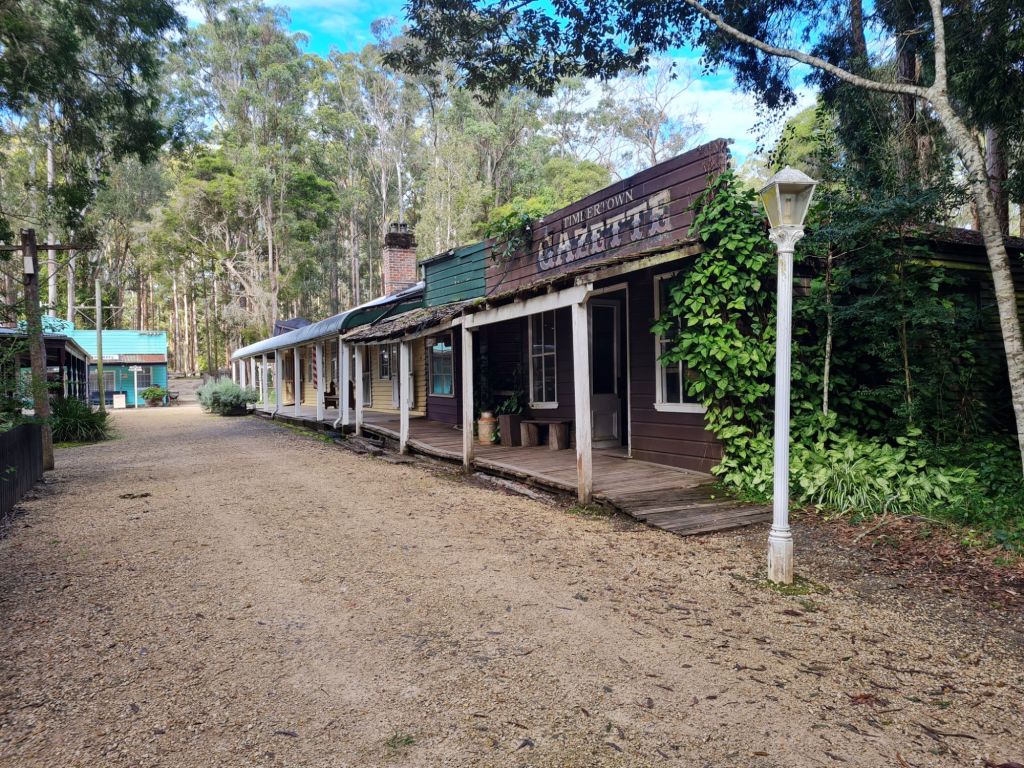
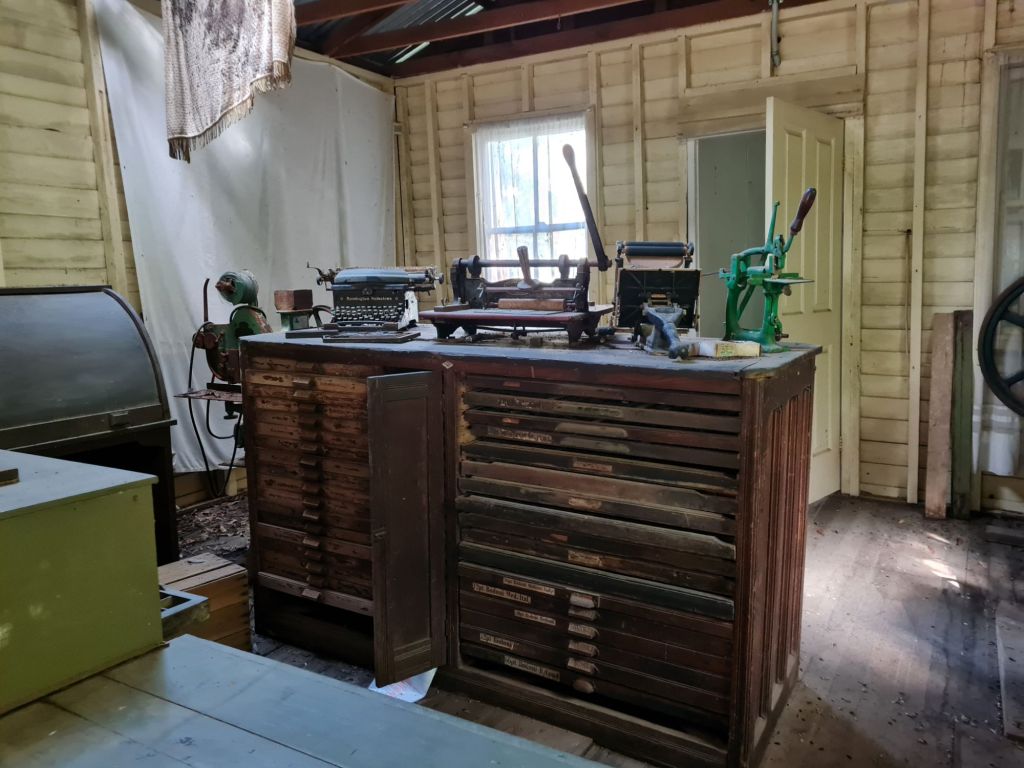
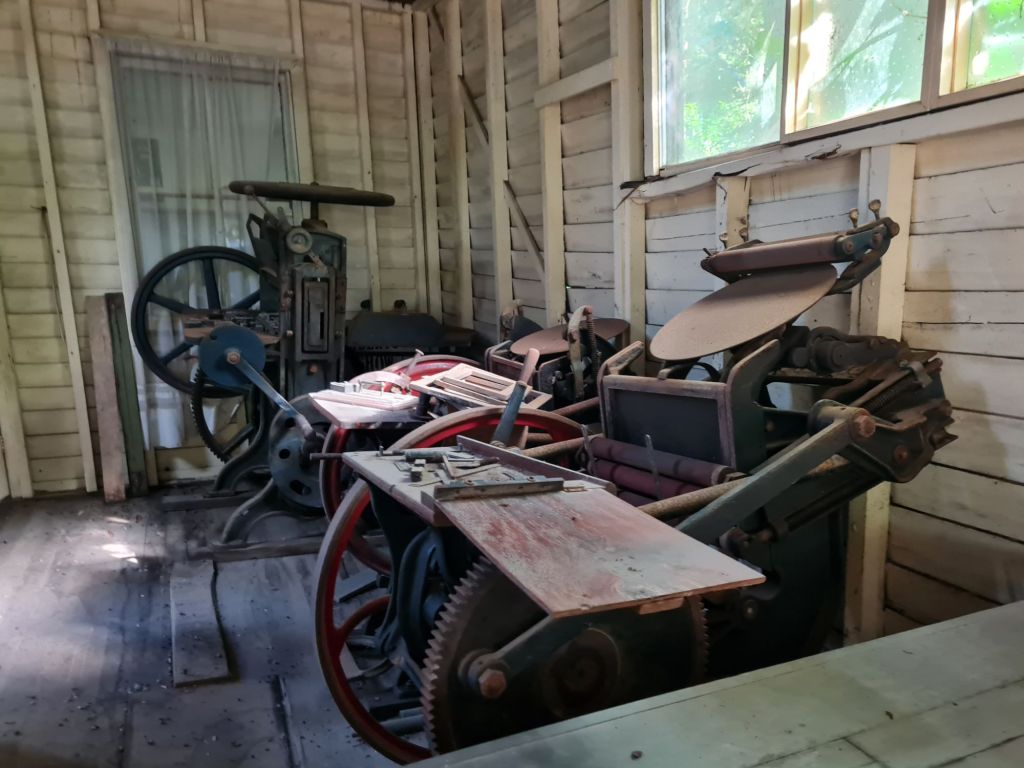
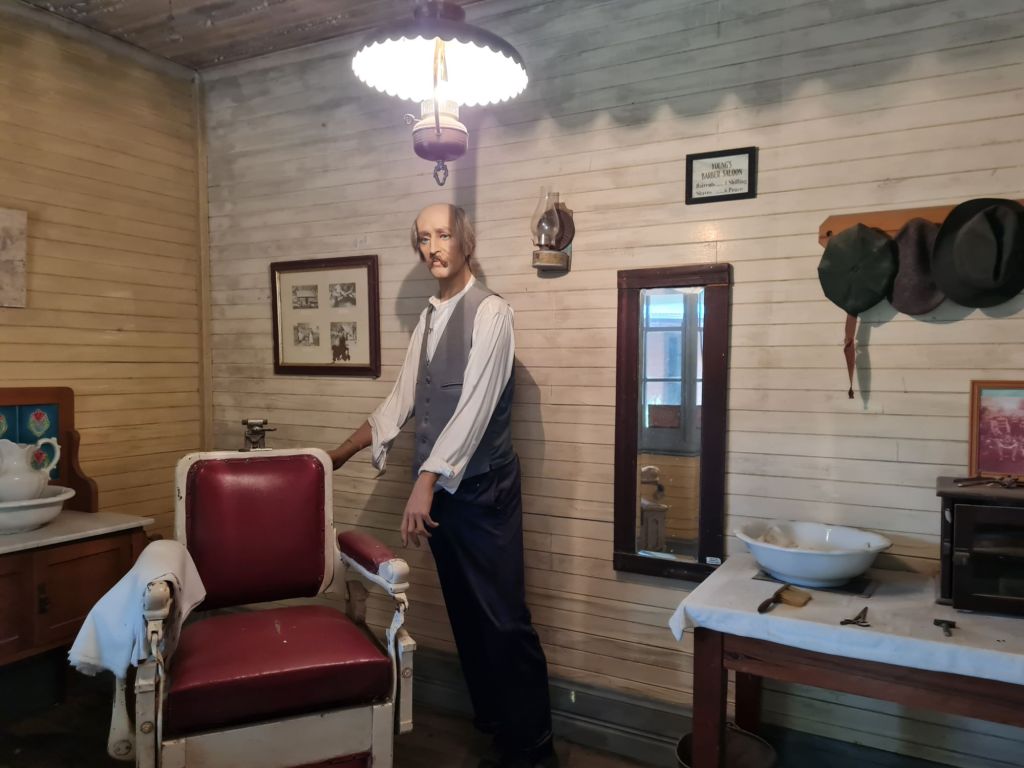
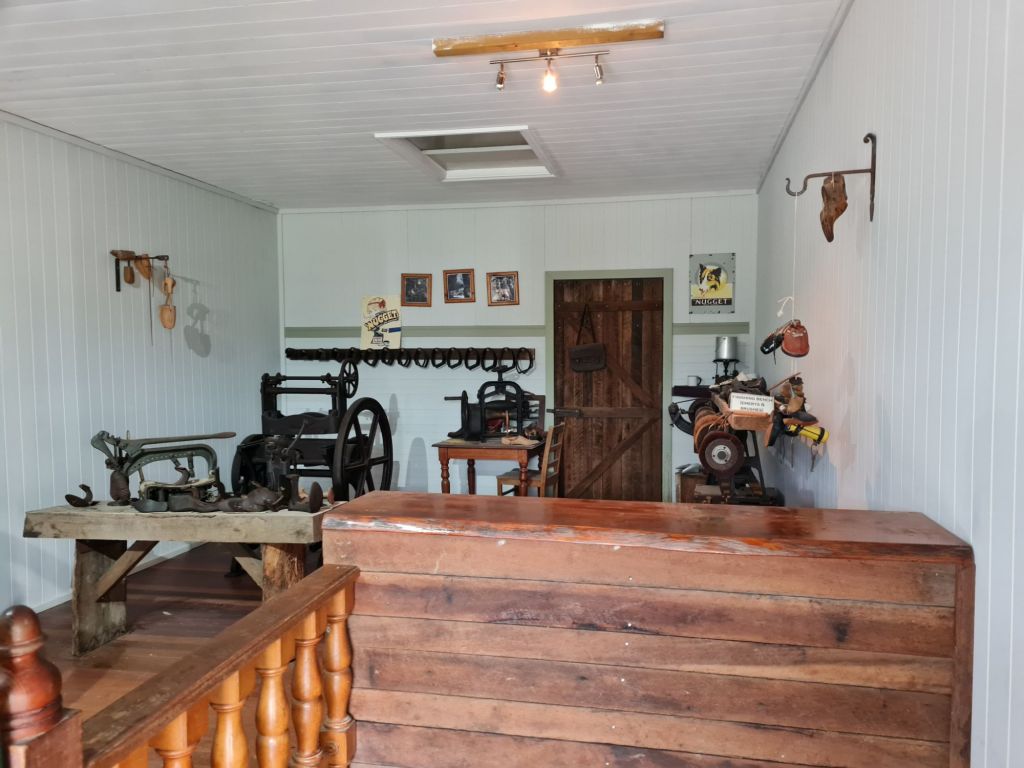
Timbertown – old-time shops

The street

The newspaper office and printers

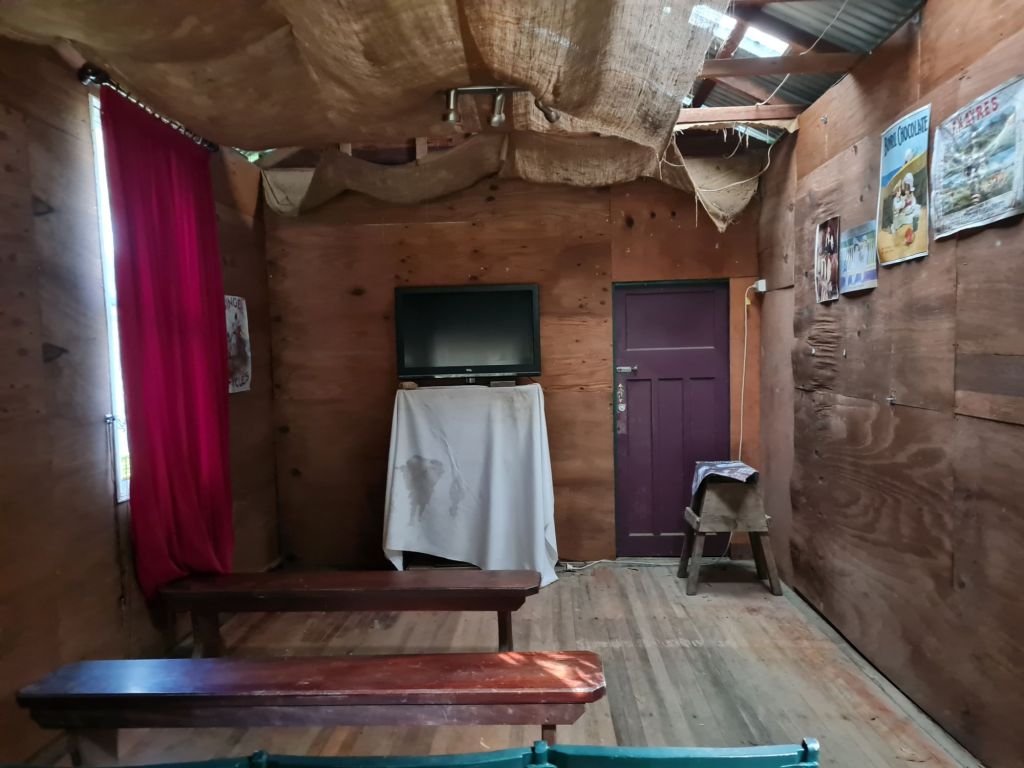
This is apparently a theatre

The barber shop

The bakery

The Bootmaker

There was also a General Store, which was in operation

A blacksmith, sometimes in attendance

A livery stable

A Church, which can be hired for weddings

A school room

And, a dining hall.

What I learned about writing – Word work is sublime – so is the writing we produce, the measure of our lives?

I guess it depends on what you write. Certainly, if you were to ask me if my writing was to a certain extent based on my life experiences, or at the very least, influenced by my life experiences, I’d probably have to say it was.

I mean, what else can you write about? Someone else’s life experiences. Perhaps you have a passion for writing other people’s biographies.

Otherwise, what we may see, consciously or unconsciously, is the baring of your soul in your writing.

Of course, if you are a prolific reader and you have an interest in the ways of what the world used to be like, or the particular ways of a certain group of people, this acquired knowledge might also turn up in your work.

As a writer of period romances, or stories that have their setting in days past, a great amount of research might be required to capture the places, the people, and how they behaved or reacted in those days, because not a lot of those old ways are around today.

Back then, they didn’t have mobile phones or any phones at all. They certainly couldn’t;t jump on a plane and be on the other side of the country in a matter of hours, or on the other side of the world in half a day. Travel used to be by ship and took weeks, even months, to get from one side of the world to the other.

Trains were different, run by steam, and took longer to get to destinations; cars were rare and only affordable for the rich, and places like Africa, and the Middle East, even the Orient, were totally different than they are today, and a person who lived in that time would be shocked at how the world had changed particularly since the end of the second world war.

We only know of today, and what life is like now. Some of us know what the world was like 50 years ago, and it was different then. There was still a British Commonwealth, and we still learned about the British Empire and its kings and Queens. America was a different place, but the only way we knew of its colourful past was through the movies Hollywood made.

And the diversity that was out there in the world was only brought to us by immigration from all over the world.

So, we are products of our times, our words reflect what we know, and what we know, and our perception of the world changes with each new generation of writers who entertain us with their vision of our world, the measure of what our lives are now, and not what they once were.

And some would argue that change is not always for the better.