Searching for locations – Port Macquarie – Day 3 – Part 1

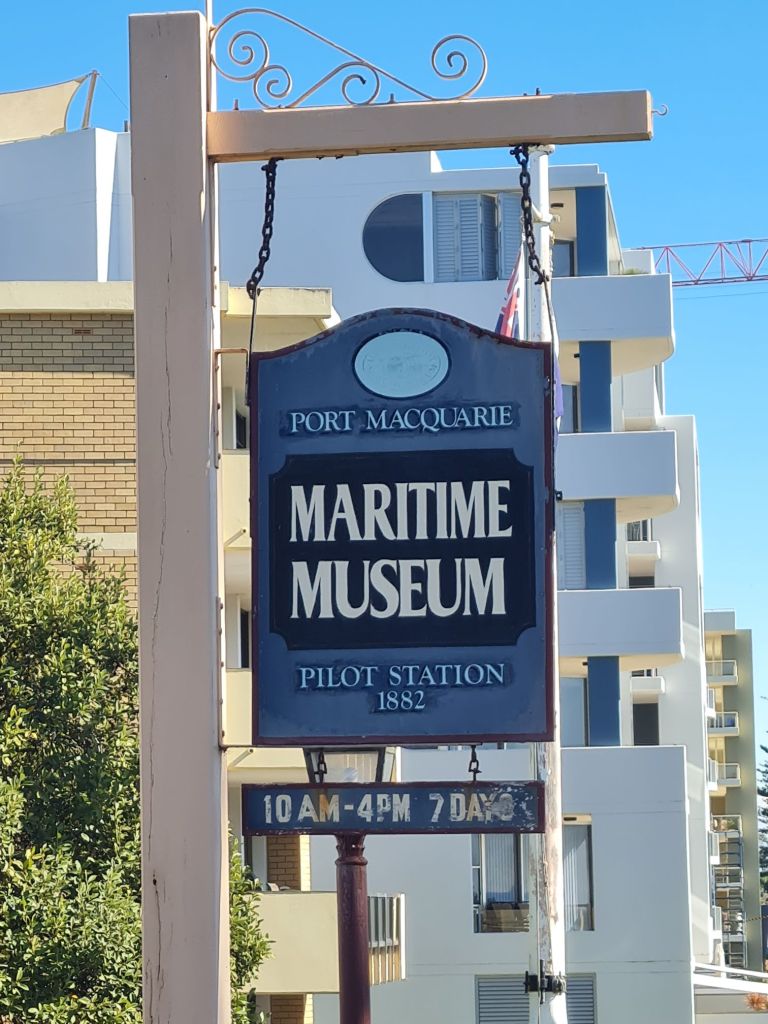
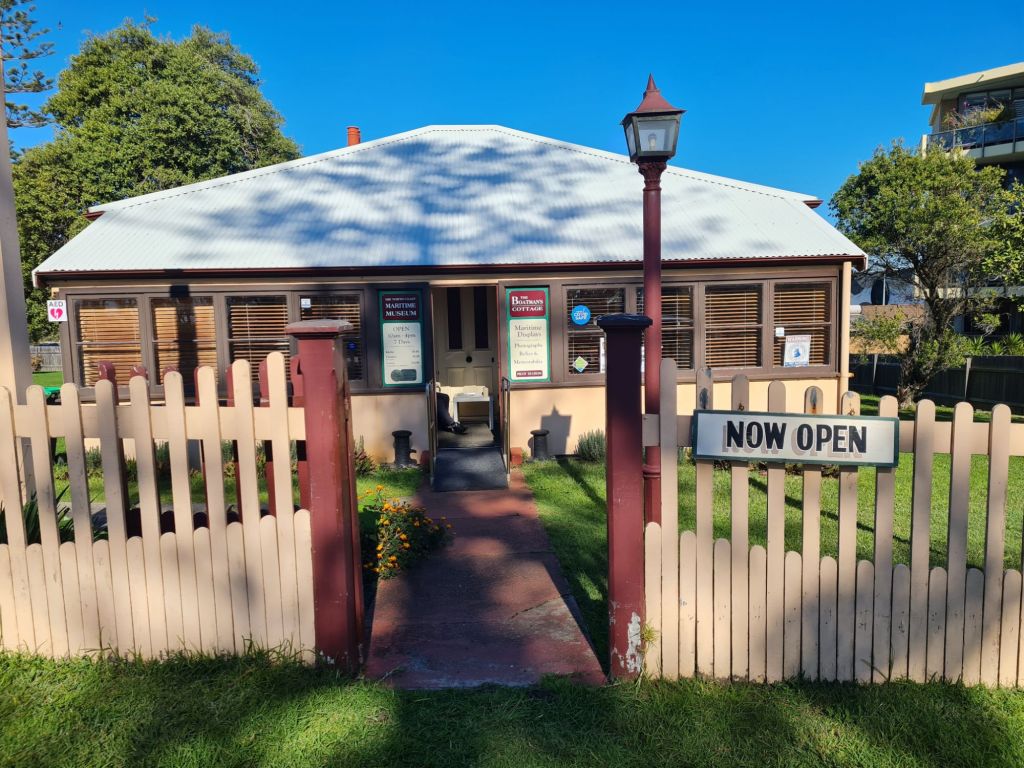
The Maritime Museum

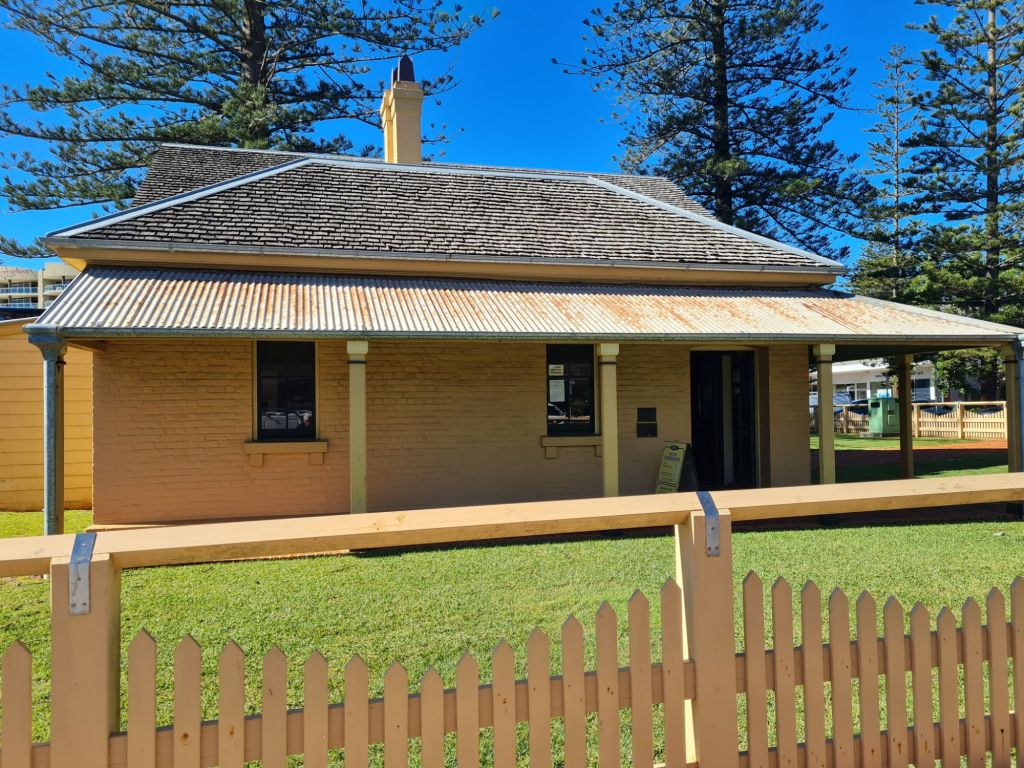
The three houses that make up the maritime museum used to be the pilot’s houses. They were built between 1896 and 1937. There used to be four but one was relocated to another part of Port Macquarie.

In between two of the buildings is, of all things, a sea mine

they also have several model ships which are up for sale.

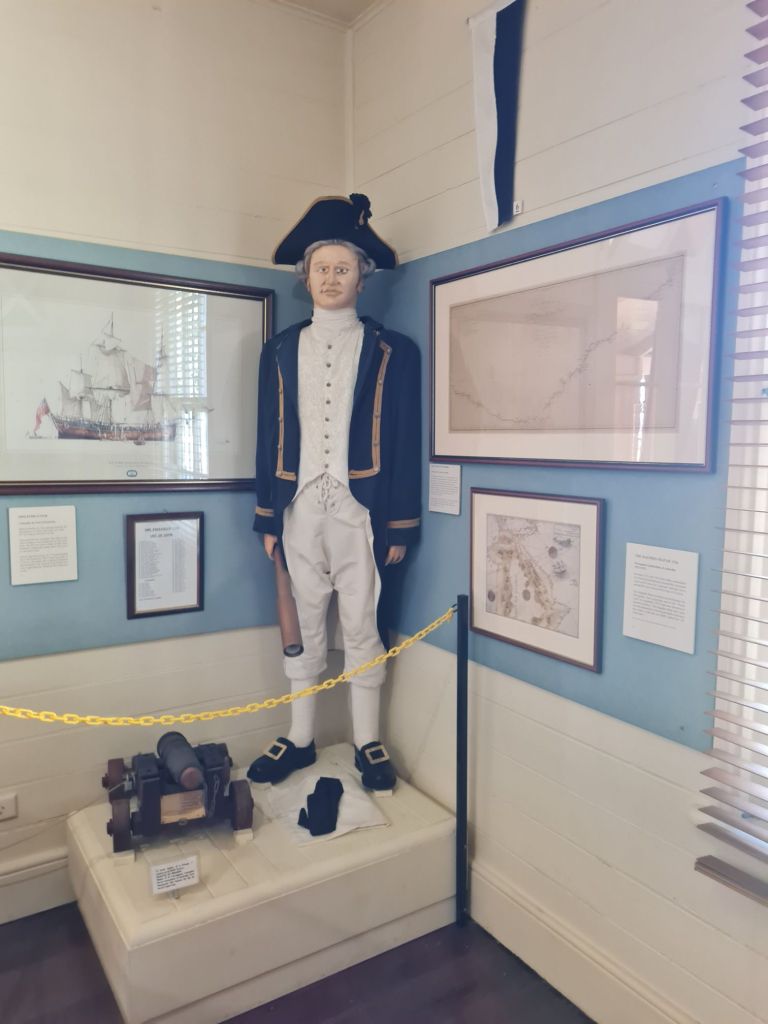
They have sailors dressed in the way they were back in the 1820s

A cannon of one their warships

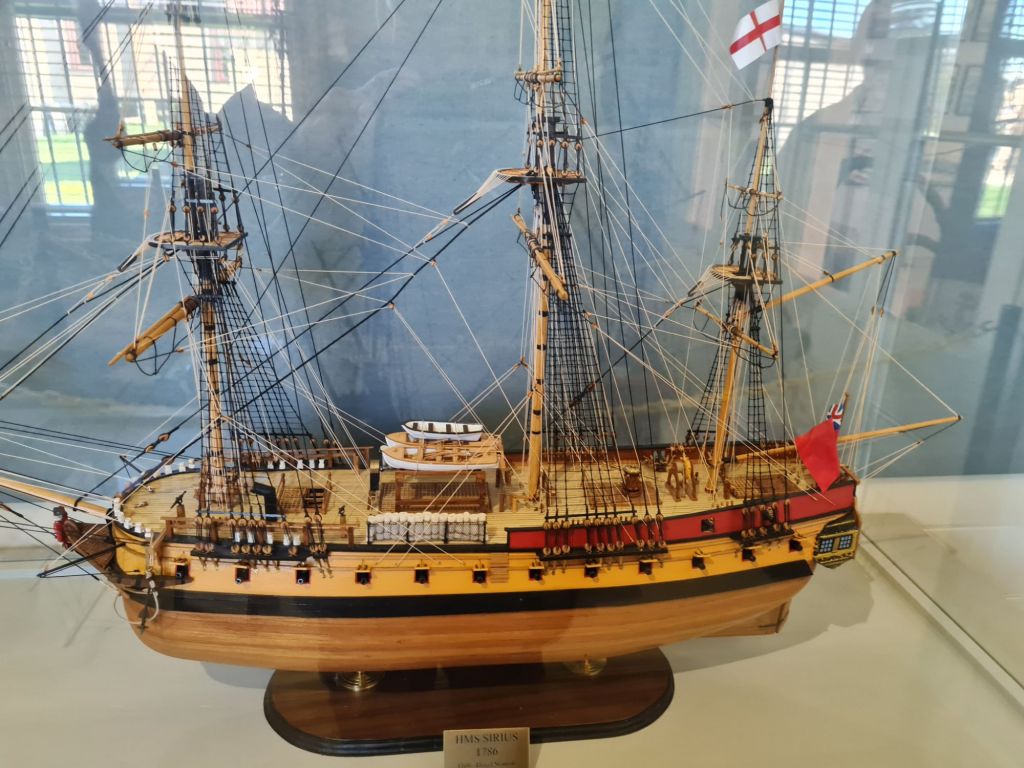
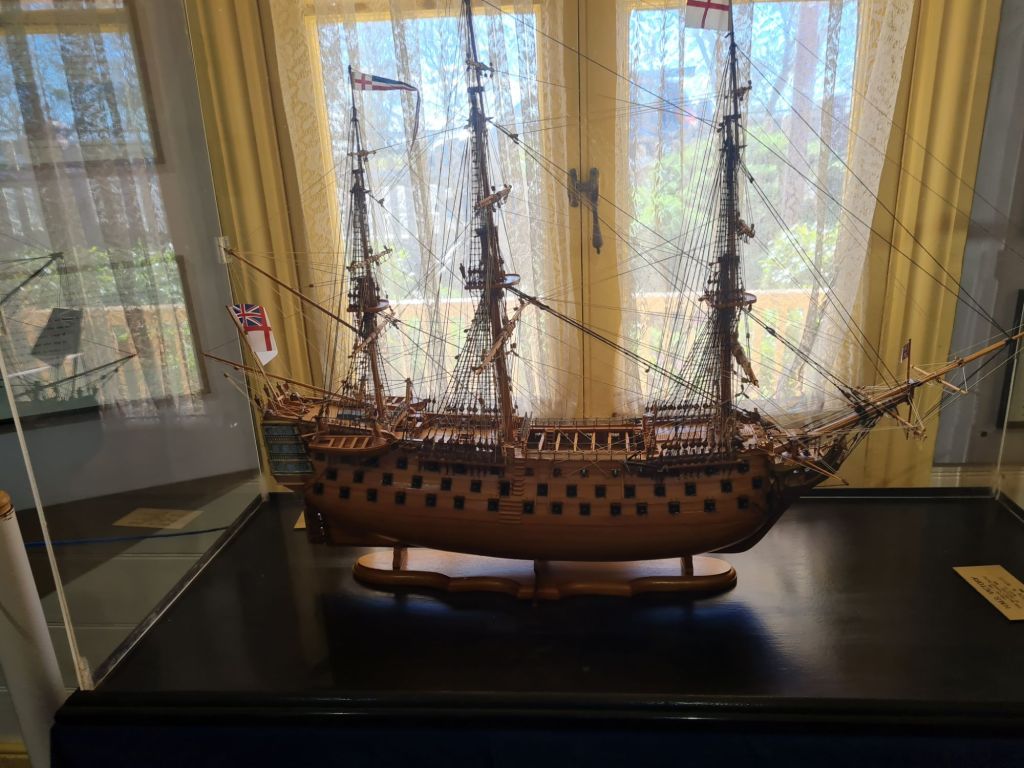
And models of the ships that brought the soldiers, convicts, and free settlers to Australia

There is an interesting collection of flags that were once used to communicate from ship to ship or shore, before the advent of radio.

An excerpt from “Strangers We’ve Become” – Coming Soon

I wandered back to my villa.

It was in darkness.  I was sure I had left several lights on, especially over the door so I could see to unlock it.

I looked up and saw the globe was broken.

Instant alert.

I went to the first hiding spot for the gun, and it wasn’t there.  I went to the backup and it wasn’t there either.  Someone had found my carefully hidden stash of weapons and removed them.

Who?

There were four hiding spots and all were empty.  Someone had removed the weapons.  That could only mean one possibility.

I had a visitor, not necessarily here for a social call.

But, of course, being the well-trained agent I’d once been and not one to be caught unawares, I crossed over to my neighbor and relieved him of a weapon that, if found, would require a lot of explaining.

Suitably armed, it was time to return the surprise.

There were three entrances to the villa, the front door, the back door, and a rather strange escape hatch.  One of the more interesting attractions of the villa I’d rented was its heritage.  It was built in the late 1700s, by a man who was, by all accounts, a thief.  It had a hidden underground room which had been in the past a vault but was now a wine cellar, and it had an escape hatch by which the man could come and go undetected, particularly if there was a mob outside the door baying for his blood.

It now gave me the means to enter the villa without my visitors being alerted, unless, of course, they were near the vicinity of the doorway inside the villa, but that possibility was unlikely.  It was not where anyone could anticipate or expect a doorway to be.

The secret entrance was at the rear of the villa behind a large copse, two camouflaged wooden doors built into the ground.  I move aside some of the branches that covered them and lifted one side.  After I’d discovered the doors and rusty hinges, I’d oiled and cleaned them, and cleared the passageway of cobwebs and fallen rocks.  It had a mildew smell, but nothing would get rid of that.  I’d left torches at either end so I could see.

I closed the door after me, and went quietly down the steps, enveloped in darkness till I switched on the torch.  I traversed the short passage which turned ninety degrees about halfway to the door at the other end.  I carried the key to this door on the keyring, found it and opened the door.  It too had been oiled and swung open soundlessly.

I stepped in the darkness and closed the door.

I was on the lower level under the kitchen, now the wine cellar, the ‘door’ doubling as a set of shelves which had very little on them, less to fall and alert anyone in the villa.

Silence, an eerie silence.

I took the steps up to the kitchen, stopping when my head was level with the floor, checking to see if anyone was waiting.  There wasn’t.  It seemed to me to be an unlikely spot for an ambush.

I’d already considered the possibility of someone coming after me, especially because it had been Bespalov I’d killed, and I was sure he had friends, all equally as mad as he was.  Equally, I’d also considered it nigh on impossible for anyone to find out it was me who killed him because the only people who knew that were Prendergast, Alisha, a few others in the Department, and Susan.

That raised the question of who told them where I was.

If I was the man I used to be, my first suspect would be Susan.  The departure this morning, and now this was too coincidental.  But I was not that man.

Or was I?

I reached the start of the passageway that led from the kitchen to the front door and peered into the semi-darkness.  My eyes had got used to the dark, and it was no longer an inky void.  Fragments of light leaked in around the door from outside and through the edge of the window curtains where they didn’t fit properly.  A bone of contention upstairs in the morning, when first light shone and invariably woke me up hours before I wanted to.

Still nothing.

I took a moment to consider how I would approach the visitor’s job.  I would get a plan of the villa in my head, all entrances, where a target could be led to or attacked where there would be no escape.

Coming in the front door.  If I was not expecting anything, I’d just open the door and walk-in.  One shot would be all that was required.

Contract complete.

I sidled quietly up the passage staying close to the wall, edging closer to the front door.  There was an alcove where the shooter could be waiting.  It was an ideal spot to wait.

Crunch.

I stepped on some nutshells.

Not my nutshells.

I felt it before I heard it.  The bullet with my name on it.

And how the shooter missed, from point-blank range, and hit me in the arm, I had no idea.  I fired off two shots before a second shot from the shooter went wide and hit the door with a loud thwack.

I saw a red dot wavering as it honed in on me and I fell to the floor, stretching out, looking up where the origin of the light was coming and pulled the trigger three times, evenly spaced, and a second later I heard the sound of a body falling down the stairs and stopping at the bottom, not very far from me.

Two assassins.

I’d not expected that.

The assassin by the door was dead, a lucky shot on my part.  The second was still breathing.

I checked the body for any weapons and found a second gun and two knives.  Armed to the teeth!

I pulled off the balaclava; a man, early thirties, definitely Italian.  I was expecting a Russian.

I slapped his face, waking him up.  Blood was leaking from several slashes on his face when his head had hit the stairs on the way down.  The awkward angle of his arms and legs told me there were broken bones, probably a lot worse internally.  He was not long for this earth.

“Who employed you?”

He looked at me with dead eyes, a pursed mouth, perhaps a smile.  “Not today my friend.  You have made a very bad enemy.”  He coughed and blood poured out of his mouth.  “There will be more …”

Friends of Bespalov, no doubt.

I would have to leave.  Two unexplainable bodies, I’d have a hard time explaining my way out of this mess.  I dragged the two bodies into the lounge, clearing the passageway just in case someone had heard anything.

Just in case anyone was outside at the time, I sat in the dark, at the foot of the stairs, and tried to breathe normally.  I was trying not to connect dots that led back to Susan, but the coincidence was worrying me.

A half-hour passed and I hadn’t moved.  Deep in thought, I’d forgotten about being shot, unaware that blood was running down my arm and dripping onto the floor.

Until I heard a knock on my front door.

Two thoughts, it was either the police, alerted by the neighbors, or it was the second wave, though why would they be knocking on the door?

I stood, and immediately felt a stabbing pain in my arm.  I took out a handkerchief and turned it into a makeshift tourniquet, then wrapped a kitchen towel around the wound.

If it was the police, this was going to be a difficult situation.  Holding the gun behind my back, I opened the door a fraction and looked out.

No police, just Maria.  I hoped she was not part of the next ‘wave’.

“You left your phone behind on the table.  I thought you might be looking for it.”  She held it out in front of her.

When I didn’t open the door any further, she looked at me quizzically, and then asked, “Is anything wrong?”

I was going to thank her for returning the phone, but I heard her breathe in sharply, and add, breathlessly, “You’re bleeding.”

I looked at my arm and realized it was visible through the door, and not only that, the towel was soaked in blood.

“You need to go away now.”

Should I tell her the truth?  It was probably too late, and if she was any sort of law-abiding citizen she would go straight to the police.

She showed no signs of leaving, just an unnerving curiosity.  “What happened?”

I ran through several explanations, but none seemed plausible.  I went with the truth.  “My past caught up with me.”

“You need someone to fix that before you pass out from blood loss.  It doesn’t look good.”

“I can fix it.  You need to leave.  It is not safe to be here with me.”

The pain in my arm was not getting any better, and the blood was starting to run down my arm again as the tourniquet loosened.  She was right, I needed it fixed sooner rather than later.

I opened the door and let her in.  It was a mistake, a huge mistake, and I would have to deal with the consequences.  Once inside, she turned on the light and saw the pool of blood just inside the door and the trail leading to the lounge.  She followed the trail and turned into the lounge, turned on the light, and no doubt saw the two dead men.

I expected her to scream.  She didn’t.

She gave me a good hard look, perhaps trying to see if I was dangerous.  Killing people wasn’t something you looked the other way about.  She would have to go to the police.

“What happened here?”

“I came home from the cafe and two men were waiting for me.  I used to work for the Government, but no longer.  I suspect these men were here to repay a debt.  I was lucky.”

“Not so much, looking at your arm.”

She came closer and inspected it.

“Sit down.”

She found another towel and wrapped it around the wound, retightening the tourniquet to stem the bleeding.

“Do you have medical supplies?”

I nodded.  “Upstairs.”  I had a medical kit, and on the road, I usually made my own running repairs.  Another old habit I hadn’t quite shaken off yet.

She went upstairs, rummaged, and then came back.  I wondered briefly what she would think of the unmade bed though I was not sure why it might interest her.

She helped me remove my shirt, and then cleaned the wound.  Fortunately, she didn’t have to remove a bullet.  It was a clean wound but it would require stitches.

When she’d finished she said, “Your friend said one day this might happen.”

No prizes for guessing who that friend was, and it didn’t please me that she had involved Maria.

“Alisha?”

“She didn’t tell me her name, but I think she cares a lot about you.  She said trouble has a way of finding you, gave me a phone and said to call her if something like this happened.”

“That was wrong of her to do that.”

“Perhaps, perhaps not.  Will you call her?”

“Yes.  I can’t stay here now.  You should go now.  Hopefully, by the time I leave in the morning, no one will ever know what happened here, especially you.”

She smiled.  “As you say, I was never here.”

© Charles Heath 2018-2022

strangerscover9

Searching for locations – Port Macquarie – Day 2 – Part 2

The old courthouse

A number of the historical sites are conveniently located in the town centre, making it easy to stop for a morning coffee and unique muffin, visit some history, and then go shopping.

The courthouse is one such site on the corner of Clarence and Hay Streets.

It was designed by a Scottish architect responsible for a large number of courthouses, post offices, police stations, and lighthouses.

It was built in 1867 for 875 pounds and opened for business in 1869 and in use until 1986.

It was one of the early designs for the interior

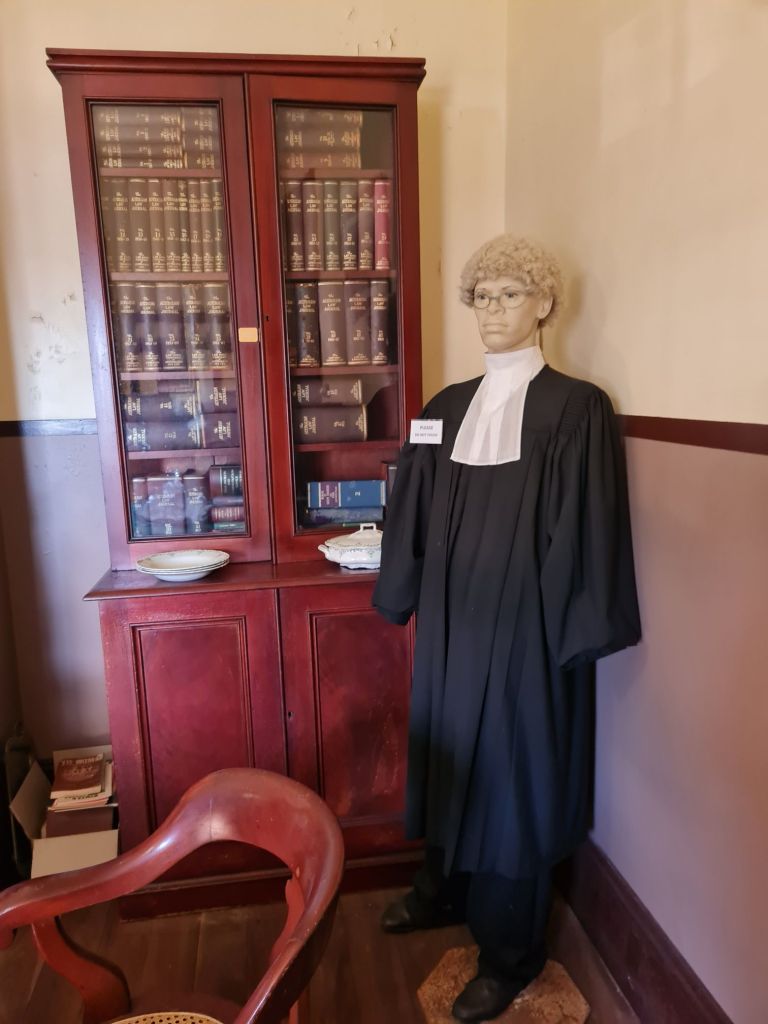
There’s even an opportunity to dress up as the judge

You can lock people in in the cage, though perhaps not a good idea.

There is the judge’s room to one side, complete with fire for cold days, and a lot of dusty reading

And a room for the clerk, and perhaps a soldier or two to guard the prisoners

Another excerpt from ‘Betrayal’; a work in progress

My next destination in the quest was the hotel we believed Anne Merriweather had stayed at.

I was, in a sense, flying blind because we had no concrete evidence she had been there, and the message she had left behind didn’t quite name the hotel or where Vladimir was going to take her.

Mindful of the fact that someone might have been following me, I checked to see if the person I’d assumed had followed me to Elizabeth’s apartment was still in place, but I couldn’t see him. Next, I made a mental note of seven different candidates and committed them to memory.

Then I set off to the hotel, hailing a taxi. There was the possibility the cab driver was one of them, but perhaps I was slightly more paranoid than I should be. I’d been watching the queue, and there were two others before me.

The journey took about an hour, during which time I kept an eye out the back to see if anyone had been following us. If anyone was, I couldn’t see them.

I had the cab drop me off a block from the hotel and then spent the next hour doing a complete circuit of the block the hotel was on, checking the front and rear entrances, the cameras in place, and the siting of the driveway into the underground carpark. There was a camera over the entrance, and one we hadn’t checked for footage. I sent a text message to Fritz to look into it.

The hotel lobby was large and busy, which was exactly what you’d want if you wanted to come and go without standing out. It would be different later at night, but I could see her arriving about mid-afternoon, and anonymous among the type of clientele the hotel attracted.

I spent an hour sitting in various positions in the lobby simply observing. I had already ascertained where the elevator lobby for the rooms was, and the elevator down to the car park. Fortunately, it was not ‘guarded’ but there was a steady stream of concierge staff coming and going to the lower levels, and, just from time to time, guests.

Then, when there was a commotion at the front door, what seemed to be a collision of guests and free-wheeling bags, I saw one of the seven potential taggers sitting by the front door. Waiting for me to leave? Or were they wondering why I was spending so much time there?

Taking advantage of that confusion, I picked my moment to head for the elevators that went down to the car park, pressed the down button, and waited.

The was no car on the ground level, so I had to wait, watching, like several others, the guests untangling themselves at the entrance, and an eye on my potential surveillance, still absorbed in the confusion.

The doors to the left car opened, and a concierge stepped out, gave me a quick look, then headed back to his desk. I stepped into the car, pressed the first level down, the level I expected cars to arrive on, and waited what seemed like a long time for the doors to close.

As they did, I was expecting to see a hand poke through the gap, a latecomer. Nothing happened, and I put it down to a television moment.

There were three basement levels, and for a moment, I let my imagination run wild and considered the possibility that there were more levels. Of course, there was no indication on the control panel that there were any other floors, and I’d yet to see anything like it in reality.

With a shake of my head to return to reality, the car arrived, the doors opened, and I stepped out.

A car pulled up, and the driver stepped out, went around to the rear of his car, and pulled out a case. I half expected him to throw me the keys, but the instant glance he gave me told him was not the concierge, and instead brushed past me like I wasn’t there.

He bashed the up button several times impatiently and cursed when the doors didn’t open immediately. Not a happy man.

Another car drove past on its way down to a lower level.

I looked up and saw the CCTV camera, pointing towards the entrance, visible in the distance. A gate that lifted up was just about back in position and then made a clunk when it finally closed. The footage from the camera would not prove much, even if it had been working, because it didn’t cover the life lobby, only in the direction of the car entrance.

The doors to the other elevator car opened, and a man in a suit stepped out.

“Can I help you, sir? You seem lost.”

Security, or something else. “It seems that way. I went to the elevator lobby, got in, and it went down rather than up. I must have been in the wrong place.”

“Lost it is, then, sir.” I could hear the contempt for Americans in his tone. “If you will accompany me, please.”

He put out a hand ready to guide me back into the elevator. I was only too happy to oblige him. There had been a sign near the button panel that said the basement levels were only to be accessed by the guests.

Once inside, he turned a key and pressed the lobby button. The doors closed, and we went up. He stood, facing the door, not speaking. A few seconds later, he was ushering me out to the lobby.

“Now, sir, if you are a guest…”

“Actually, I’m looking for one. She called me and said she would be staying in this hotel and to come down and visit her. I was trying to get to the sixth floor.”

“Good. Let’s go over the the desk and see what we can do for you.”

I followed him over to the reception desk, where he signalled one of the clerks, a young woman who looked and acted very efficiently, and told her of my request, but then remained to oversee the proceeding.

“Name of guest, sir?”

“Merriweather, Anne. I’m her brother, Alexander.” I reached into my coat pocket and pulled out my passport to prove that I was who I said I was. She glanced cursorily at it.

She typed the name into the computer, and then we waited a few seconds while it considered what to output. Then, she said, “That lady is not in the hotel, sir.”

Time to put on my best-confused look. “But she said she would be staying here for the week. I made a special trip to come here to see her.”

Another puzzled look from the clerk, then, “When did she call you?”

An interesting question to ask, and it set off a warning bell in my head. I couldn’t say today, it would have to be the day she was supposedly taken.

“Last Saturday, about four in the afternoon.”

Another look at the screen, then, “It appears she checked out Sunday morning. I’m afraid you have made a trip in vain.”

Indeed, I had. “Was she staying with anyone?”

I just managed to see the warning pass from the suited man to the clerk. I thought he had shown an interest when I mentioned the name, and now I had confirmation. He knew something about her disappearance. The trouble was, he wasn’t going to volunteer any information because he was more than just hotel security.

“No.”

“Odd,” I muttered. “I thought she told me she was staying with a man named Vladimir something or other. I’m not too good at pronouncing those Russian names. Are you sure?”

She didn’t look back at the screen. “Yes.”

“OK, now one thing I do know about staying in hotels is that you are required to ask guests with foreign passports their next destination, just in case they need to be found. Did she say where she was going next?” It was a long shot, but I thought I’d ask.

“Moscow. As I understand it, she lives in Moscow. That was the only address she gave us.”

I smiled. “Thank you. I know where that is. I probably should have gone there first.”

She didn’t answer; she didn’t have to, her expression did that perfectly.

The suited man spoke again, looking at the clerk. “Thank you.” He swivelled back to me. “I’m sorry we can’t help you.”

“No. You have more than you can know.”

“What was your name again, sir, just in case you still cannot find her?”

“Alexander Merriweather. Her brother. And if she is still missing, I will be posting a very large reward. At the moment, you can best contact me via the American Embassy.”

Money is always a great motivator, and that thoughtful expression on his face suggested he gave a moment’s thought to it.

I left him with that offer and left. If anything, the people who were holding her would know she had a brother, that her brother was looking for her, and equally that brother had money.

© Charles Heath – 2018-2025

365 Days of writing, 2026 – 63

Day 63 – Criticism

To What Extent Should We Take on Criticism?

When feedback feels like a gift, a weapon, or something in‑between, how do we decide what to keep?


1. The Three Faces of Criticism

TypeWhat It Looks LikeWhat It Does to YouHow to Spot It
Constructive“I love your concept, but the pacing feels rushed. Maybe try a slower intro?”Sparks curiosity, nudges improvement, builds confidence.Specific, actionable, delivered with respect.
Soul‑Destroying“You’re terrible at this. Nobody will ever take you seriously.”Triggers shame, self‑doubt, and in extreme cases, burnout.Vague, personal attacks, “you’re” language, often unqualified.
Context‑Dependent“Your work is okay, but… [insert personal bias]Can feel uplifting or crushing depending on your mindset that day.Mixed signals: compliments tangled with criticism, delivered by someone whose opinion you value (or fear).

Bottom line: Not all criticism is created equal. Recognizing the category is the first step toward deciding whether to let it in.


2. Why Our State of Mind Matters

Our brain is a filter—it amplifies what it’s primed to hear.

  • Stress‑High, Confidence‑Low → Even a gentle suggestion can feel like a dagger.
  • Rested, Curious, & Secure → The same suggestion is a roadmap.

Neuroscience backs this up: under cortisol spikes, the amygdala hijacks the prefrontal cortex, making us react emotionally before we can reason. In other words, the same words can be a lifeline or a landmine—depending on the internal weather.


3. A Quick Self‑Check Before You Swallow (or Spit Out) Feedback

  1. Pause. Take three breaths.
  2. Identify the source.
    • Authority? Peer? Stranger?
    • Do they have expertise or a vested interest?
  3. Ask yourself:
    • Is the feedback specific?
    • Does it focus on the work, not the person?
    • Is there a pattern or is this a one‑off?
  4. Rate the impact (1‑5).
    • 1‑2 = Minimal (maybe let it drift away).
    • 3 = Worth a second look.
    • 4‑5 = Deep dive required—either to apply or to guard against toxicity.

If the answer to “Is it specific?” is no, you’re probably dealing with soul‑destroying or context‑dependent criticism. If it’s yes, you’ve likely encountered something constructive.


4. Strategies for Each Kind

A. Constructive Criticism – Welcome It Home

  • Summarise and confirm. “So you’re saying the climax needs more tension?”
  • Create an action plan. Turn the suggestion into a tiny experiment.
  • Give thanks. A simple “Thanks for pointing that out” reinforces healthy feedback loops.

B. Soul‑Destroying Criticism – Set Boundaries

  • Detach the person from the message. “I hear you’re upset, but I’m not going to let this define me.”
  • Limit exposure. If it’s a chronic source (e.g., a toxic boss), consider escalation, mediation, or a change in environment.
  • Re‑anchor with evidence. List recent successes, testimonials, or metrics that counteract the negativity.

C. Context‑Dependent Criticism – Check Your Lens

  • Mind‑state audit. Ask, “Am I already feeling insecure about this?” If yes, give yourself a grace period before reacting.
  • Seek a second opinion. Ask a trusted colleague: “What do you think of this feedback?”
  • Experiment with reframing. Turn “Your design feels too busy” into “How can we simplify the visual hierarchy?” – you keep agency over the direction.

5. Building a Resilient Feedback Muscle

PracticeHow It WorksTime Investment
Morning “Feedback Forecast”Write down one thing you’re open to hearing that day.5 min
Weekly “Critique De‑brief”Review all feedback received, categorize, and log actions taken.15 min
Monthly “Mindset Reset”Meditate or journal on successes; remind yourself of your core values.10‑20 min
Quarterly “Source Audit”Evaluate who’s influencing your perception—keep the constructive, prune the toxic.30 min

Consistent practice turns the act of receiving criticism from a high‑stakes gamble into a low‑stakes habit.


6. When to Say “No, Thanks”

  • If the criticism is a personal attack – you have the right to walk away.
  • If it’s coming from someone who consistently undermines you – consider limiting that relationship.
  • If it’s irrelevant to your goals – politely thank them and redirect: “I appreciate your viewpoint; I’m focusing on X right now.”

Saying “no” isn’t a sign of weakness; it’s a declaration that you are the steward of your own growth.


7. Takeaway Cheat Sheet

QuestionAnswerAction
Is the feedback specific and about the work?Yes → Likely constructive.Take notes, apply, thank.
Is the tone attacking or demeaning?Yes → Soul‑destroying.Set boundaries, seek support, document.
Am I feeling vulnerable right now?Yes → Context‑dependent.Pause, revisit later, get a second opinion.
Do I trust the source’s expertise?No → Treat with caution.Verify, ask clarifying questions, research.

Print this table, stick it on your desk, and refer to it the next time a comment lands in your inbox.


Closing Thought

Criticism is inevitable—like the weather, it will come in sun, rain, or storms. The art isn’t in how much we take on; it’s in what we choose to carry forward. By learning to read the type of feedback, checking our mental climate, and setting intentional boundaries, we transform criticism from a potential wrecking ball into a sculptor’s tool.

So, the next time someone says, “That could be better,” ask yourself: “Is this a chisel or a hammer?” And then decide whether to pick it up, set it down, or toss it aside.

Happy creating, staying resilient, and curating the feedback that truly serves you.


If this post resonated with you, share it with a friend who could use a healthier relationship with criticism, or drop a comment below with your own strategies for sifting the good from the gut‑punch.

“Sunday in New York”, a romantic adventure that’s not a walk in the park!

“Sunday in New York” is ultimately a story about trust, and what happens when a marriage is stretched to its limits.

When Harry Steele attends a lunch with his manager, Barclay, to discuss a promotion that any junior executive would accept in a heartbeat, it is the fact his wife, Alison, who previously professed her reservations about Barclay, also agreed to attend, that casts a small element of doubt in his mind.

From that moment, his life, in the company, in deciding what to do, his marriage, his very life, spirals out of control.

There is no one big factor that can prove Harry’s worst fears, that his marriage is over, just a number of small, interconnecting events, when piled on top of each other, points to a cataclysmic end to everything he had believed in.

Trust is lost firstly in his best friend and mentor, Andy, who only hints of impending disaster, Sasha, a woman whom he saved, and who appears to have motives of her own, and then in his wife, Alison, as he discovered piece by piece damning evidence she is about to leave him for another man.

Can we trust what we see with our eyes or trust what we hear?

Haven’t we all jumped to conclusions at least once in our lives?

Can Alison, a woman whose self-belief and confidence is about to be put to the ultimate test, find a way of proving their relationship is as strong as it has ever been?

As they say in the classics, read on!

Purchase:

http://tinyurl.com/Amazon-SundayInNewYork

In a word: Over

It’s over!  What is?  Well, almost anything.

A relationship, a bad day, a friendship, a long, monotonous lecture, and dinner.

It’s basically the light at the end of the tunnel, when it’s not the 6:32 express from Clapton, entering the other end of that same tunnel.

You could go over the top, which means, in one sense, over and above the expected, or way beyond the expected but not in a good way.

You could go over the waterfall in a leaky boat.  Not advisable, but sometimes a possibility, if someone fails to tell you at the end of the rapids there is a waterfall.  Just make sure it’s not the same as Niagara falls.

Still, someone has gone over Niagara in a barrel.

Then we could say that my lodging is over the garage, which simply means someone built it on top of the garage.

Branches of trees quite ofter grow over the roofs of houses, until a severe storm brings them down and suddenly they are in your house, no longer over it.

You can have editorial control over a newspaper

In a fight, the combatants are equally trying to shout over the top of each other

And sometimes, when trying to paint a different picture to what is real, you could say the temperature is sometimes over 40 degrees centigrade when you know for a fact it is usually 56 degrees centigrade.  No need for the literal truth here or no one will come.

Then you could say I came over land, assuming that you took a car, or walked when in actual fact you came by plane.  And yes, the whole flight was, truthfully, over land.

I don’t accept my lot in fife, nor do I want a small lot on which to build my mansion!

But the oddest use of the word over is when we describe, in cricket, the delivery of 6 balls.

I’ve listened to cricket commentary, and aside from trying to pronounce the names of the players, if you were unfamiliar with the game, being told this ball was outside leg stump, one of  several deliveries, the last of which was the end of the over.  If the delivery hit the stumps, it is then a wicket, and the batsman is out.

Wow!

“Echoes From The Past”, the past doesn’t necessarily stay there


What happens when your past finally catches up with you?

Christmas is just around the corner, a time to be with family. For Will Mason, an orphan since he was fourteen, it is a time for reflection on what his life could have been, and what it could be.

Until a chance encounter brings back to life the reasons for his twenty years of self-imposed exile from a life only normal people could have. From that moment, Will’s life slowly starts to unravel, and it’s obvious to him that it’s time to move on.

This time, however, there is more at stake.

Will has broken his number one rule: don’t get involved.

With his nemesis, Eddie Jamieson, suddenly within reach, and a blossoming relationship with an office colleague, Maria, about to change everything, Will has to make a choice. Quietly leave, or finally, make a stand.

But as Will soon discovers, when other people are involved there is going to be terrible consequences no matter what choice he makes.

https://amzn.to/2CYKxu4

newechocover5rs

The cinema of my dreams – I always wanted to see the planets – Episode 32

What does it say when you can’t trust the man in charge?

The Admiral was looking tired, possibly the result of being woken, yet again, in the dead hours of the night.

Out in space, we should be keeping earth time, in fact, we probably were, but I didn’t think to check before calling.

The matter was urgent, or at least I thought it was.

I’d just relayed the events leading up to the attack and the result. For some odd reason I didn’t think he looked pleased.

“I sent two shuttles over and they’ve confirmed 11 fatalities and one escapee who transported to the larger ship moments before the attack. I told them to set a geosychronous orbit around the moon coronas until you work out what you want to do with them. Their systems have been encrypted, so they can’t be resurrected.”

“And the base?”

“We understand it’s beneath the surface of the moon, accessible only by transporter. Our physist says she knows where the plutonium is.”

“I take it there are people down there?”

“Skeleton staff. It’s a new base, recently built, but we don’t know its purpose.”

“Definitely not alien then?”

“Unless the criminal world has made the first contact before us, and if they have, it can’t be for the betterment of mankind.”

I was no expert but at that moment I got the distinct impression that the Admiral was hiding something, or had information that might be useful to us.

Until now I hadn’t had time to think about all the events leading up to this point in time, but somewhere in the back of my mind, it had been processing everything that had happened, to do with the ship and even before that.

And the question that leapt out was, why me?

What was the compelling reason to appoint me as first officer to this particular ship at this particular time? I had no doubt there were a hundred others equally or better qualified than I was, and yet, my name was pulled out of the hat, and I could remember distinctly the captain of the ship I’d been completing my training, as surprised as I was that I’d been selected.

Them, out of left field, a memory came back, one o had tried to bury very deep, of an incident no one could explain, let alone comprehend because it was as if it never happened. I had no proof, and there was no one else left alive to corroborate what I believed to be the facts.

Solar stress, it had been called. The psychiatrist who handled the debriefing told me it was nothing more than an over-active imagination, fuelled by overwork, sleep deprivation, and the deaths of my family members on an outpost on the moon when I’d been visiting them.

That diagnosis alone should have prevented my appointment, and yet here I was.

“Then it’s no longer your problem. We’ll take it from here. There’s a ship on its way. Your mission is to proceed as planned.”

“And the other ship that fled? I’m sure they’re no to going to just forgive and forget.”

“The chances are they will. Now they know you have superior firepower, and the speed to hunt them down, they will not be coming back for a second encounter. If you do come across them, you can deal with them as you wish, but that is not the priority. You have your orders.”

The screen went blank.

Yes, he was definitely hiding something.

© Charles Heath 2021

A photograph from the inspirational bin – 48

What story does it inspire?

This photograph represents an idyllic scene, a pool at the bottom of a waterfall, which on a fine day would be perfect.

The fact it looks to be in the middle of nowhere is neither here nor there because…

That’s where the writer’s inventiveness kicks in.

So…

How do we get there? If it’s below the waterfall, then we came up the river, which is basically how you would go anyway, it’s just the depth of the river that determines how far you can go.

We had a situation like that where the depth of the river nearly stopped us from getting far enough up the river into the mountains to discover some amazing territory.

You could also go downriver, but since this river might start up in the mountains, it might be a long way.

Why would we be there?

The boring answer, we are on holiday.

The better answer, we’re searching for gold, and so are others who are trying to get us to move on, or we’re searching for something, just insert what you want to find. I was thinking: an intrepid brother or sister who has gone missing, and the waterfall was the last place they were seen.

And, what if there’s a secret entrance behind the waterfall, that opens into an underground complex with sophisticated, very strange and never seen before equipment, that hasn’t been used in a very long time.

Somehow I like the last one best.

And, just to add a new twist, you find a human-like body in a pod, and when someone accidentally leans on a button, it comes to life. Is it human, or is it a robot?

Or, is it….?