365 Days of writing, 2026 – My Second Story 9

More about my second novel

We are now up to the part where we introduce Isobel properly and find out why such a talented person is drifting in the doldrums of Rupert’s private detective agency.

Aside from being a once high-flying legal eagle, she is also a computer hacker, or perhaps that’s what she evolved into in a devil finds work for idle hands type person.

This hacking is going to be useful, but it’s also going to bring problems, especially when she starts tracking down Zoe.

And, it seemed she had struck up a dark online relationship with another hacker with the handle Tzar.  What are the odds he is Russian?

She’s digging for information, and Tzar helps, and, suddenly, it appears, briefly, then is gone, with a warning.  Stop digging.

And if she doesn’t.

People were coming for her.

Meanwhile, in the basement, Zoe has had enough time to devise a mask that might stave of the effects of the gas long enough to effect an escape.

And, it almost works, the mask that is.

She manages to get past all of the guards, but Romanov is waiting.

He doesn’t kill her, but he does give her some information, then leaves.  He knows how dangerous she can be, especially when wounded.

“What Sets Us Apart”, a mystery with a twist

David is a man troubled by a past he is trying to forget.

Susan is rebelling against a life of privilege and an exasperated mother who holds a secret that will determine her daughter’s destiny.

They are two people brought together by chance. Or was it?

When Susan discovers her mother’s secret, she goes in search of the truth that has been hidden from her since the day she was born.

When David realizes her absence is more than the usual cooling off after another heated argument, he finds himself being slowly drawn back into his former world of deceit and lies.

Then, back with his former employers, David quickly discovers nothing is what it seems as he embarks on a dangerous mission to find Susan before he loses her forever.

Find the kindle version on Amazon here:  http://amzn.to/2Eryfth

whatsetscover

In a word: Hail

Yes, you know what it is, and it can be very unpleasant when it hits – hail.

Hailstones as big as golf balls, hailstones that make small or large dents in your car, smash windows, wreck trees, and, sometimes, give the appearance that snow has just fallen.

And hail with snow equals sleet, and it’s not very pleasant to be caught in it.

Of course, there’s a different sort of hail, one that you might also not want to be subject to, that from someone across the street trying to get your attention.

Or a hail that you do want someone or something to stop; a taxi, or cab

Or a ship across the water… though I’m not sure why you, personally would want to hail a ship

Perhaps you could be praised in some way, like, he hailed from London – no, not yelled so loudly he could be heard in New York

And no, we do not go around saying, Hail Minister, or Hail Friend!  Not unless we’ve used a time machine and gone back to ancient Roman days

This is not to be confused with the word hale

Yes, it can be something you eat, and I hear it’s very good for you

Or that man is hale and hearty, which means in good health – and I have to say I’m envious because I’m anything but hale


The story behind the story: A Case of Working With the Jones Brothers

To write a private detective serial has always been one of the items at the top of my to-do list, though trying to write novels and a serial, as well as a blog, and maintain a social media presence, well, you get the idea.

But I made it happen, from a bunch of episodes I wrote a long, long time ago, used these to start it, and then continue on, then as now, never having much of an idea where it was going to end up, or how long it would take to tell the story.

That, I think is the joy of ad hoc writing, even you, as the author, have as much of an idea of where it’s going as the reader does.

It’s basically been in the mill since 1990, and although I finished it last year, it looks like the beginning to end will have taken exactly 30 years.  Had you asked me 30 years ago if I’d ever get it finished, the answer would be maybe?

My private detective, Harry Walthenson

I’d like to say he’s from that great literary mould of Sam Spade, or Mickey Spillane, or Phillip Marlow, but he’s not.

But I’ve watched Humphrey Bogart play Sam Spade with much interest, and modelled Harry and his office on it.  Similarly, I’ve watched Robert Micham play Phillip Marlow with great panache, if not detachment, and added a bit of him to the mix.

Other characters come into play, and all of them, no matter what period they’re from, always seem larger than life.  I’m not above stealing a little of Mary Astor, Peter Lorre or Sidney Greenstreet, to breathe life into beguiling women and dangerous men alike.

Then there’s the title, like

The Case of the Unintentional Mummy – this has so many meanings in so many contexts, though I imagine that back in Hollywood in the ’30s and ’40s, this would be excellent fodder for Abbott and Costello

The Case of the Three-Legged Dog – Yes, I suspect there may be a few real-life dogs with three legs, but this plot would involve something more sinister.  And if made out of plaster, yes, they’re always something else inside.

But for mine, to begin with, it was “The Case of the …”, because I had no idea what the case was going to be about, well, I did, but not specifically.

Then I liked the idea of calling it “The Case of the Brothers’ Revenge” because I began to have a notion there was a brother no one knew about, but that’s stuff for other stories, not mine, so then it went the way of the others.

Now it’s called ‘A Case of Working With the Jones Brothers’, finished the first three drafts, and I am at the editor for the last reading.

I have high hopes of publishing it mid 2026.  It even has a cover.

PIWalthJones1

The cinema of my dreams – I always wanted to see the planets – Episode 26

Where the hell are we?

When I opened my eyes, there was a moment where I felt I was rising up from the bottom of the ocean, holding my breath, and heading towards the light.

I was in the captain’s seat, and as my vision focussed, I sucked in a huge breath and sat up. There were others in front of me still slumped over their consoles, barely visible in the emergency lighting.

I tried standing intending to go over to the navigation console and felt my legs buckling under me, and had to sit down again.

I heard a groan from behind me, followed by, “What happened?”

It was the Chief Engineer.

I turned just as he attempted to stand and collapsed to the floor.

I tried again, with more success, and walked slowly over to him. That was when a different sort of light illuminated the bridge and, when I turned to see what it was, just saw the edge of a planet come into view.

We were very close, and it seemed the ship had adopted a circumnavigation path. The ship also seemed to be slowly rotating, hence the changing view of the planet.

Others were stirring. I helped the Chief Engineer up.

“Whatever happened,” I said, “we seemed to have traveled to an as-yet-unnamed planet.”

“Mars perhaps?” He sat back at his console.

A voice yelled out, “not Mars sir, Uranus. And in the distance, that reddish-colored moon is Oberon I think.”

Exactly where the alien ship had said there was a colony, under the ice surface.

I turned to the Engineer, “Chief, what’s the state of the ship?”

“It apparently is on standby, awaiting our command. It is as the Navigator says, we are at Uranus, in a geosynchronous orbit.”

The moon that we believed to be Oberon came up on the screen, and standing off it was three ships, the two that we had encountered, and a larger ship, no doubt belonging to the kidnappers.

“Do you have the elapsed time since we started the test?” I was curious how long we had been unconscious.

I would also like to know why were ended up unconscious, but that was a matter for later. The other problem; the three ships would soon discover our arrival and would be curious themselves, and I didn’t like the odds if we had to go into battle.

“Sixty-five earth minutes, sir.”

I’m sure he would tell me just how fast we had traveled soon enough. “I’ve got to get back down to engineering. I’ll have a report as soon as possible, but, if required, we’re on standby for any operation you deem necessary.”

“Very good.” Then, “Any chance we arrived un-noticed?” I asked the navigator.

“No sir. We were just scanned, so they know something is out there.”

I found it surprising that the kidnappers had told me precisely where they were going. Perhaps they had not expected our ship could follow them, and that, until just over an hour ago, was exactly our thoughts too.

“Is it possible to scan the moon, and the planet?”

“In the process of doing so, sir.”

I went over to the military console where the officer was quickly checking all the systems. “Everything online and available?”

“As far as I can tell. We should be able to retaliate if we have to.”

“It may be sooner than we think. One of the ships, a smaller one, is heading in this direction.”

I yelled out, “Anyone needing medical assistance?”

No one replied. It seems they had all suffered the same malaise I had, a period of unconsciousness. Then a series of reports filled the bridge as each officer reported their systems were online and ready.

I then asked the ship’s department heads to report in, and each came back, not asking the obvious question, but to say everything, and everyone, was ok.

Five minutes later, the ship could be seen approaching us, stopping in indeterminable distance from us, but it was quite close, close enough to make out the detail of the outer hull, and, I noticed, for one of the scientists to scan the vessel and take photographs for reference if we needed to know about it later. The first alien ship in our database.

Then a voice came over the communications system, not one of ours. “Hailing earth ship’s captain. We are sending one of your crew back to you, we do not know what is wrong with him.”

The next instant the captain, in a prone poisition, appeared on the deck in front of the chair. “Medical team to the bridge,” I said.

I went over to him, and he appeared asleep. I checked for a pulse, and there wasn’t one. He was cold, and not a good sign.”

“We have him,” I said. “What happened?”

“He collapsed. Our medical people tell me from what they know of your physiology, that he has stopped breathing, and possibly had what you call a heart attack. I assure you we did not harm him, or your other crew member in any way.”

One of the ship’s doctors came out of the elevator and ran over to us, and immediately did a scan. We were the first ship, the first people, in fact, to use the new technology which was supposed to diagnose most of the problems humans could suffer in a matter of minutes.

“He’s dead, sir,” the doctor pronounced. He had brought several others on the medical team, along with the means to transport him back to the hospital.

They carefully lifted the captain onto the mobile stretcher. “Permission to leave, sir?”

I nodded.

The alien captain, if it was him, came back, “We would like to know how your ship managed to get here so quickly. Our knowledge of your technology makes it impossible for you to travel such distances as you have, and especially in that ship.”

“We’re trying to work that out ourselves. Would you like to tell us how you can move so quickly yourself?”

“We have nothing to hide. Perhaps we could meet and discuss it.”

© Charles Heath 2021

A photograph from the inspirational bin – 44

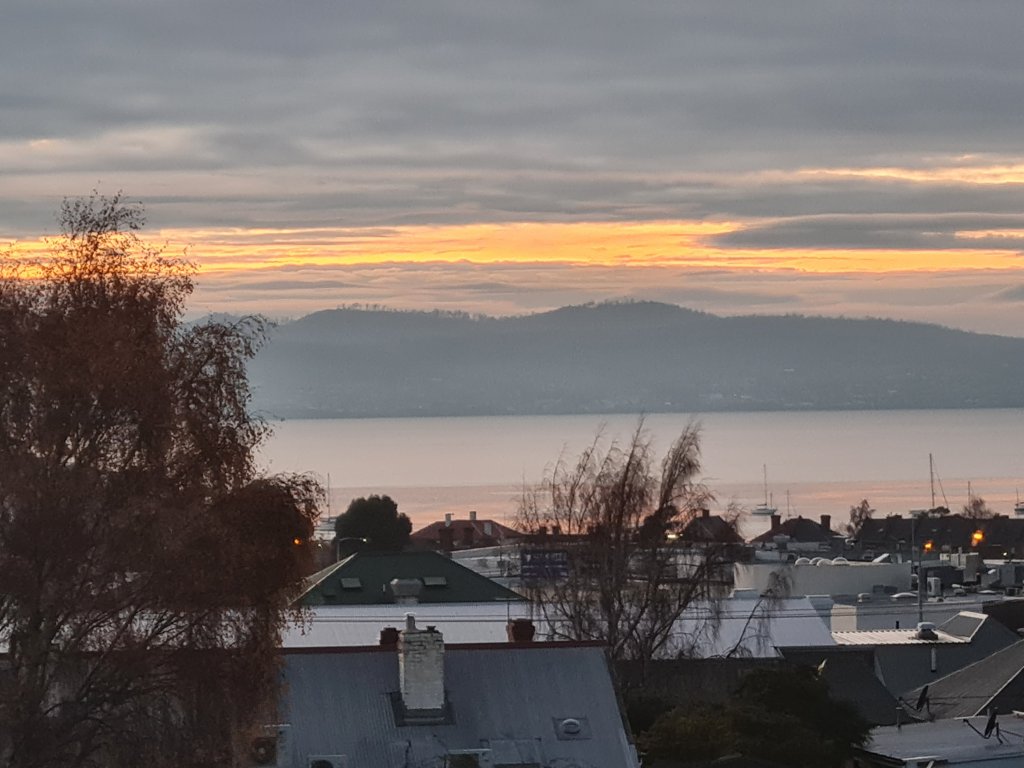
How often do we sit on the balcony of our by-the-sea residence and stare across the water, wondering what was on the other side?

We probably don’t, and if we were interested, it wouldn’t take long by car to find out.

My guess, a whole bunch of other people looking across the water wondering what’s on the other side.

Curiosity killed the cat!

So, having got that flippancy out of the way, what can be inspiring about this photograph.

Perhaps if we sent our minds back to 1804, there would be nothing on the other side except for trees. There may well have been aborigines there, going about their business, blissfully unaware of the white man, until they started arriving in big ships.

For them, it was the beginning of the end.

For those that lived on this side, in 1804, the other side would seem a long way off. There would be no bridges, no cars, and no other means of transport other than by boat.

My guess, some adventurous people would have got in a boat and rowed over there. More adventurous people would explore the coastline further north, and then 25 odd years later some bright spark would come up with the idea of creating a prison, and import a few thousand felons from the mother country, England.

It would make an interesting story, if the narrator was a boy or girl growing up in this new land.

The cinema of my dreams – Was it just another surveillance job – Episode 63

This story is now on the list to be finished so over the new few weeks, expect a new episode every few days.

The reason why new episodes have been sporadic, there are also other stories to write, and I’m not very good at prioritizing.

But, here we are, a few minutes opened up and it didn’t take long to get back into the groove.

Things are about to get complicated…


Two events happened simultaneously.

The door opened, a figure dressed in black appears and Jennifer grabbed her from behind and took her weapon then shoved her to the ground in the middle of the room, at the same time the USBs exploded in the microwave oven.

I went over to the figure and removed the balaclava, whilst Jennifer closed the door after a quick glance outside.

It was Jan. Why wasn’t I surprised.

“Just whose side are you on,” she said, grimacing, and holding her shoulder after it hit the floor very hard.

“You’re lucky it was Jennifer.  If it had been me, I might have strangled you by accident.  Why are you here?”

“The same as you?”

“No, in this flat.  I never told you anything about Jo.”

Jan looked over at the other woman sitting up against the wall, not exactly looking too well now.  She would need an ambulance soon.  Jan, probably sooner.

“It might have prevented this if you had.  It’s probably the only reason why you’re still alive, we needed you to lead us to her.  That’s Anna, isn’t it?”

“Yes.”

“And the data drives?”

“Kind of destroyed, which is where such information should end up.”

“It was not yours to do that.”

“No.  But left in the hands of people like you, where would it end up?  I’m sorry, but with all the lies and deception going on, I couldn’t trust anyone to do the right thing.”

My phone rang.

I looked at the screen.  Private number.  No prizes for guessing who.

“Dobbin?”

“What is going on in there?”

“Target practice.  Want to come and join the fun?”

“Is Jan alright?”

“She’ll live for now, but she is going to need medical assistance soon.  It’s up to you.”

“I’m coming up?”

“If you bring anyone else, they’re dead.”  I hung up.

I went over to the microwave, took out the remnants of the drives and flushed them down the toilet.  Just in case.

When I came back there was a knock on the door.

“I’ll get it,” I said to Jennifer.  “But if there is anyone else, shoot them.

Gun ready, I opened the door.  He had his hands where I could see them.  “Come in and join the fun.”

Jennifer had him covered, just in case.

I closed the door.

Dobbin looked at Anna.  He knew who she was.

“O’Connell is next door, dead.  Did Jan shoot him?”

“Hello, I’m in the room, Sam.  I did not.”

“Why do I find that hard to believe?”

“You have this all wrong, Sam.  We are not the bad guys,” Dobbin said.

“Well, if you are, and you’re lying, which is about all you have done since I first met you, you won’t be.  The USBs have been destroyed.”

Of course, in that instant, I realised that I may have been played again.  Anna had given up the location too easily, despite the threats of bodily harm, which if push came to shove, I might not have followed through on.  And if Anna surmised that, what was to stop her from having decoys just in case she was found?  Come to think of it, she didn’t seem very disappointed when I destroyed them.

A woman capable of torturing and murder was capable of anything, and she had proven herself very capable so far.

And, worse, Dobbin didn’t seem too upset at the news.

This was rapidly becoming a no-win situation.

© Charles Heath 2020-2023

365 Days of writing, 2026 – 58

Day 58 – Self motivation

The Hidden Engines that Keep Writers Moving

Why some authors seem to write on autopilot while others need a constant push


Introduction

If you’ve ever stared at a blank screen while a friend’s manuscript slides from page 1 to page 400, you’ve probably wondered what the secret sauce is. Sure, deadlines and a good editor can prod a writer into action, but the most prolific word‑smiths never rely on external pressure alone. They’ve cultivated internal “motors” that keep the ink flowing even when the muse is on vacation.

In this post we’ll unpack the less‑obvious levers that power a writer’s stamina: mindset tweaks, environmental hacks, social circuits, and ritualistic anchors. Think of them as the invisible gears that keep a writer’s engine humming—no alarm clock required.


1. Purpose‑Fuelled Writing (The “Why” Over the “What”)

The difference between goal and purpose

  • Goal: Finish a 2,000‑word article by Friday.
  • Purpose: Communicate a message that changes the way readers think about climate justice.

When the purpose is vivid, the work becomes a conduit rather than a chore. Ask yourself: What will happen when this piece lands in a reader’s hands? Write that answer down and keep it visible on your desk.

Practical tip

Create a “mission card” (index‑card or digital note) that states your purpose in a single sentence. Place it where you start writing every day. When resistance spikes, glance at the card and let the larger mission pull you forward.


2. The Micro‑Commitment Loop

Large projects feel intimidating because the brain treats them as a single, massive decision. Break the task into micro‑commitments that take 5–10 minutes each:

Micro‑commitmentHow it works
Open the document and type the titleSignals the brain that the work has begun
Write one sentence describing the opening sceneReduces the “blank‑page” anxiety
Set a timer for 7 minutes and draft a paragraphCreates a low‑stakes sprint
Highlight the paragraph you just wroteProvides instant gratification

The loop is simple: commit → act → reward (the reward can be as subtle as a mental “yes!” or a sip of coffee). Over time these micro‑wins accumulate into a full draft without the need for a looming deadline.


3. The “Storytelling” Habit: Treat Your Life Like a Narrative

Humans are wired to seek stories. If you start seeing your own day as a plot, you’ll naturally want to move the story forward.

  • Act 1 – Morning routine (setup)
  • Act 2 – Conflict (the “write‑or‑don’t‑write” dilemma)
  • Act 3 – Resolution (the first 300 words)

Write a one‑sentence “scene description” for each block of time you plan to work. For example: “In this scene, the protagonist (me) battles the distracting siren of social media and emerges with a fresh paragraph about the protagonist’s childhood.”

When you treat each writing block as a scene, you get the same momentum you’d feel watching a thriller—because you are living one.


4. Environmental Triggers: Design Your “Writing Habitat”

a. Sensory Anchors

  • Sound: A specific playlist, white‑noise, or the hum of a coffee shop can become a Pavlovian cue. Play the same 30‑second intro each time you sit down.
  • Smell: Light a scented candle (citrus for focus, sandalwood for calm) only during writing sessions. Your brain will associate that aroma with productivity.

b. Physical Boundaries

  • Dedicated space: Even a small corner of a couch can become “the writing nook” if you only ever sit there to write. The space itself becomes a trigger.
  • Desk posture: Sit upright, feet flat, screen at eye level. The subtle physical alertness reduces the temptation to slump into procrastination.

c. Digital Minimalism

  • Use a distraction‑free writing app (e.g., iA Writer, Scrivener’s “Compose” mode) that hides menus and notifications.
  • Keep a “browser whitelist” with only essential tabs (research, reference). Anything else is a deliberate, timed “break” activity.

5. Social Magnetism: The Power of “Writing with Others”

You don’t have to be in a co‑working space to benefit from community; you only need accountability signals.

MethodHow to Implement
Writing buddyPair up with a peer. Agree on a weekly word‑count exchange and a short debrief call.
Word‑count streaksJoin a public platform (e.g., NaNoWriMo, Camp NaNoWriMo) and post your daily totals. The fear of breaking a streak is a strong motivator.
Live‑stream writingOpen a Twitch or YouTube “write‑with‑me” stream. Knowing an audience is watching forces you to keep the keyboard moving.
Micro‑review circlesShare a 200‑word excerpt every two days for quick feedback. The anticipation of feedback fuels forward motion.

Social pressure isn’t about shaming; it’s about creating a network of tiny expectations that keep you honest to yourself.


6. The “End‑Game” Visualizer

Imagine the finished piece, not as a distant abstract, but as a concrete moment:

  • The cover page of a printed manuscript on your bookshelf.
  • An email notification that a publication accepted your article.
  • A reader’s comment that says, “This changed my perspective.”

Write down this visual in vivid detail (colour, sound, emotions) and place it where you start writing. When the words start to feel heavy, pull that mental image forward. It’s a form of future‑self alignment, where today’s effort is mapped directly to tomorrow’s payoff.


7. Energy Management: Write When You’re Naturally “On”

Not all writers thrive on a 9‑to‑5 schedule. Track your energy peaks for a week:

DayTime SlotEnergy Level (1‑10)Writing Output
Mon7‑9 am81,200 words
Tue2‑4 pm6500 words
Wed10‑11 am91,600 words

Schedule your most demanding drafting sessions during the top‑tier slots. Use low‑energy periods for lighter tasks (research, outlining, editing). Aligning work with natural rhythms removes the “I’m too tired to write” excuse entirely.


8. The “Zero‑Draft” Mindset

Perfectionism is the silent killer of motivation. Adopt a zero‑draft approach:

  1. Write anything—even nonsense.
  2. Label it “draft 0.”
  3. Commit to moving to draft 1 after a preset time (e.g., 30 minutes).

Because the goal is just to get something on the page, the inner critic stays quiet. Later you can sculpt, cut, and polish. The key is to remove judgment from the first pass; judgment belongs in revision, not creation.


9. Rituals that Signal “Start”

ritual is a repeatable, symbolic action that tells your brain: “It’s go‑time.” Some writers swear by:

  • Brewing a specific tea before the first paragraph.
  • Lighting a candle and reciting a single line of a favourite poem.
  • Doing a 2‑minute physical stretch or a short walk around the block.

Pick a ritual that takes less than five minutes—long enough to be meaningful, short enough not to become a procrastination loop. Consistency turns the ritual into a cue that bypasses decision fatigue.


10. The “Feedback Loop” of Intrinsic Rewards

External validation (likes, publication acceptance) is a nice bonus, but the real driver is an internal reward system:

  • Progress markers: Each 500‑word milestone triggers a small celebration (a piece of chocolate, a 5‑minute dance).
  • Narrative ownership: Remind yourself that the characters, arguments, or scenes belong to you—you are the creator, not a clerk.
  • Learning curve: Notice how each session adds a new skill (a tighter sentence, a more vivid metaphor). Celebrate that growth.

When you consciously notice these micro‑wins, dopamine floods the brain, reinforcing the habit loop without any external deadline.


TL;DR: Your Personal Motivation Blueprint

SecretHow to Activate
Purpose‑fuelWrite a mission card and keep it visible
Micro‑commitments5‑minute sprints with instant rewards
Story‑frame your dayTreat each block as a narrative scene
Sensory/environmental cuesConsistent sound, scent, and space
Social magnetismBuddy system, streaks, or live‑stream writing
Future‑self visualizerPaint a vivid picture of the finished piece
Energy alignmentWrite during natural high‑energy windows
Zero‑draft mindsetRemove judgment from the first pass
Start ritualsSimple, repeatable cues (tea, stretch, candle)
Intrinsic feedback loopCelebrate progress, skill gain, ownership

Closing Thought

Motivation isn’t a mysterious force that appears only when a deadline looms. It’s a network of tiny, repeatable habits and mental tricks that you can design, test, and refine. The moment you start treating writing as a system—rather than a solitary act—you’ll find that the words begin to flow even on the days when the muse seems to be on holiday.

Give yourself permission to experiment with the tools above. Pick one (perhaps the mission card) and commit to it for a week. Then add another. Before long you’ll have assembled a custom‑built engine that powers your writing, deadline or no deadline.

Happy writing! 🚀

Searching for locations: Port Macquarie – Day 1 – Part 2

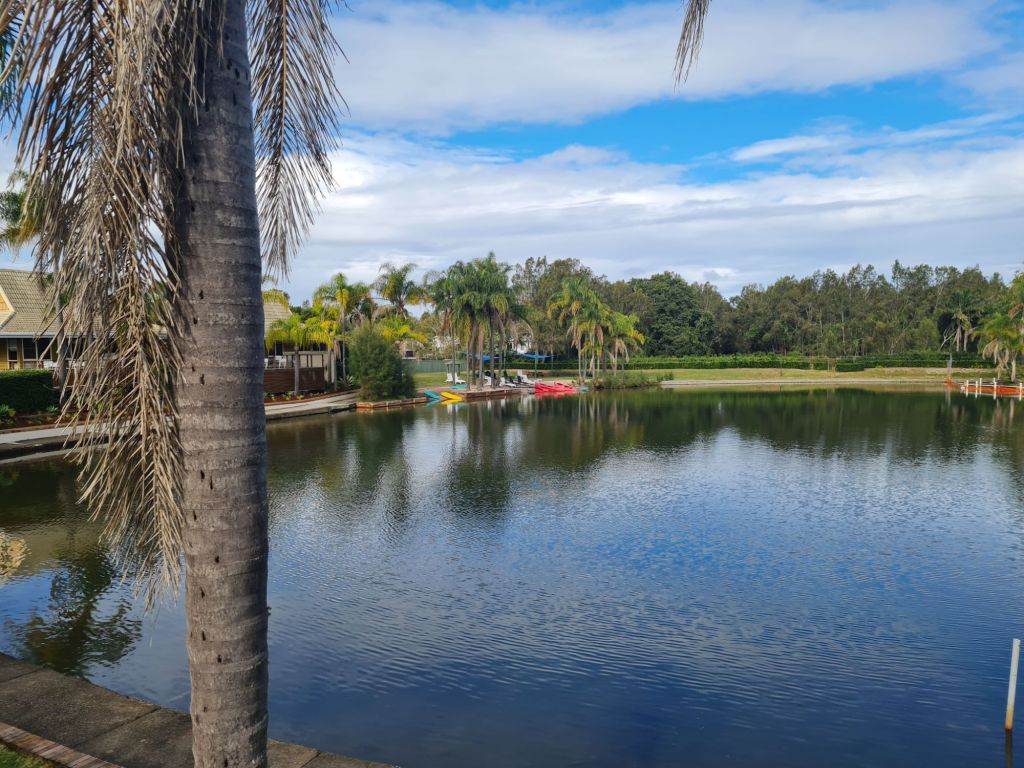
The resort had all the bungalows nestled in a tropical garden setting

And a number of the bungalows border on the lagoon, which looks great first thing in the morning.

There is also a clubhouse and indoor swimming pool.

And surprise, surprise, there are fish in the lagoon

Of course, a resort wouldn’t be the same without some friendly birds

What I learned about writing – So here’s the deal – you’re not as good as you think you are

I can attest to that. I’ve been through a story a dozen times, and still, there is something to be changed, or a detail or nuance missed. Our eyes play tricks on us; they seem to see what you want them to see rather than what is there.

It’s why we have other people look at our work.

Everyone can get hold of a style manual, a thesaurus and a dictionary.

My biggest bugbear is continuity and names, plot timing, and making sure events happen when they’re supposed to, not just when you write about it and hope it fits the timeline.

I have a problem with that right now with a story I’m writing, where people are living the events in two different time zones, and I need to get it right.

This is where a spreadsheet comes in handy, because you can use a formula to work out the time in a different time zone and run the event timeline in both zones.

It’s always great when the pilot tells you just before you land what time it is at the destination. Scary too sometimes when you’re flying from Brisbane backwards through time to London and find you’re landing 13 or so hours before. I left at 10 pm, and I’m landing at 5:30 in the morning on the same day.

A surefire way of discovering what your text sounds like is to run it through an AI text-to-speech converter and listen. When it sounds really weird, and it will at least once, then you know where to fix it.