An excerpt from “One Last Look”: Charlotte is no ordinary girl

This is currently available at Amazon herehttp://amzn.to/2CqUBcz

I’d read about out-of-body experiences, and like everyone else, thought it was nonsense.  Some people claimed to see themselves in the operating theatre, medical staff frantically trying to revive them, and being surrounded by white light.

I was definitely looking down, but it wasn’t me I was looking at.

It was two children, a boy and a girl, with their parents, in a park.

The boy was Alan.  He was about six or seven.  The girl was Louise, and she was five years old.  She had long red hair and looked the image of her mother.

I remember it now, it was Louise’s birthday and we went down to Bournemouth to visit our Grandmother, and it was the last time we were all together as a family.

We were flying homemade kites our father had made for us, and after we lay there looking up at the sky, making animals out of the clouds.  I saw an elephant, Louise saw a giraffe.

We were so happy then.

Before the tragedy.

When I looked again ten years had passed and we were living in hell.  Louise and I had become very adept at survival in a world we really didn’t understand, surrounded by people who wanted to crush our souls.

It was not a life a normal child had, our foster parents never quite the sort of people who were adequately equipped for two broken-hearted children.  They tried their best, but their best was not good enough.

Every day it was a battle, to avoid the Bannister’s and Archie in particular, every day he made advances towards Louise and every day she fended him off.

Until one day she couldn’t.

Now I was sitting in the hospital, holding Louise’s hand.  She was in a coma, and the doctors didn’t think she would wake from it.  The damage done to her was too severe.

The doctors were wrong.

She woke, briefly, to name her five assailants.  It was enough to have them arrested.  It was not enough to have them convicted.

Justice would have to be served by other means.

I was outside the Bannister’s home.

I’d made my way there without really thinking, after watching Louise die.  It was like being on autopilot, and I had no control over what I was doing.  I had murder in mind.  It was why I was holding an iron bar.

Skulking in the shadows.  It was not very different from the way the Bannister’s operated.

I waited till Archie came out.  I knew he eventually would.  The police had taken him to the station for questioning, and then let him go.  I didn’t understand why, nor did I care.

I followed him up the towpath, waiting till he stopped to light a cigarette, then came out of the shadows.

“Wotcha got there Alan?” he asked when he saw me.  He knew what it was, and what it was for.

It was the first time I’d seen the fear in his eyes.  He was alone.

“Justice.”

“For that slut of a sister of yours.  I had nuffing to do with it.”

“She said otherwise, Archie.”

“She never said nuffing, you just made it up.”  An attempt at bluster, but there was no confidence in his voice.

I held up the pipe.  It had blood on it.  Willy’s blood.  “She may or may not have Archie, but Willy didn’t make it up.  He sang like a bird.  That’s his blood, probably brains on the pipe too, Archie, and yours will be there soon enough.”

“He dunnit, not me.  Lyin’ bastard would say anything to save his own skin.”  Definitely scared now, he was looking to run away.

“No, Archie.  He didn’t.  I’m coming for you.  All of you Bannisters.  And everyone who touched my sister.”

It was the recurring nightmare I had for years afterwards.

I closed my eyes and tried to shut out the thoughts, the images of Louise, the phone call, the visit to the hospital and being there when she succumbed to her injuries.  Those were the very worst few hours of my life.

She had asked me to come to the railway station and walk home with her, and I was running late.  If I had left when I was supposed to, it would never have happened and for years afterwards, I blamed myself for her death.

If only I’d not been late…

When the police finally caught the rapists, I’d known all along who they’d be; antagonists from school, the ring leader, Archie Bannister, a spurned boyfriend, a boy whose parents, ubiquitously known to all as ‘the Bannister’s, dealt in violence and crime and who owned the neighbourhood.  The sins of the father had been very definitely passed onto the son.

At school, I used to be the whipping boy, Archie, a few grades ahead of me, made a point of belting me and a few of the other boys, to make sure the rest did as they were told.  He liked Louise, but she had no time for a bully like him, even when he promised he would ‘protect’ me.

I knew the gang members, the boys who tow-kowed to save getting beaten up, and after the police couldn’t get enough information to prosecute them because everyone was too afraid to speak out, I went after Willy.  There was always a weak link in a group, and he was it.

He worked in a factory, did long hours on a Wednesday and came home after dark alone.  It was a half mile walk, through a park.  The night I approached him, I smashed the lights and left it in darkness.  He nearly changed his mind and went the long way home.

He didn’t.

It took an hour and a half to get the names.  At first, when he saw me, he laughed.  He said I would be next, and that was four words more than he knew he should have said.

When I found him alone the next morning I showed him the iron bar and told him he was on the list.  I didn’t kill him then, he could wait his turn, and worry about what was going to happen to him.

When the police came to visit me shortly after that encounter, no doubt at the behest of the Bannister’s, the neighbourhood closed ranks and gave me an ironclad alibi.  The Bannister’s then came to visit me and threatened me.  I told them their days were numbered and showed them the door.

At the trial, he and his friends got off on a technicality.  The police had failed to do their job properly, but it was not the police, but a single policeman, corrupted by the Bannisters.

Archie could help but rub it in my face.  He was invincible.

Joe Collins took 12 bullets and six hours to bleed out.  He apologized, he pleaded, he cried, he begged.  I didn’t care.

Barry Mills, a strong lad with a mind to hurting people, Archie’s enforcer, almost got the better of me.  I had to hit him more times than I wanted to, and in the end, I had to be satisfied that he died a short but agonizing death.

I revisited Willy in the hospital.  He’d recovered enough to recognize me, and why I’d come.  Suffocation was too good for him.

David Williams, second in command of the gang, was as tough and nasty as the Bannisters.  His family were forging a partnership with the Bannister’s to make them even more powerful.  Outwardly David was a pleasant sort of chap, affable, polite, and well mannered.  A lot of people didn’t believe he could be like, or working with, the Bannisters.

He and I met in the pub.  We got along like old friends.  He said Willy had just named anyone he could think of, and that he was innocent of any charges.  We shook hands and parted as friends.

Three hours later he was sitting in a chair in the middle of a disused factory, blindfolded and scared.  I sat and watched him, listened to him, first threatening me, and then finally pleading with me.  He’d guessed who it was that had kidnapped him.

When it was dark, I took the blindfold off and shone a very bright light in his eyes.  I asked him if the violence he had visited upon my sister was worth it.  He told me he was just a spectator.

I’d read the coroner’s report.  They all had a turn.  He was a liar.

He took nineteen bullets to die.

Then came Archie.

The same factory only this time there were four seats.  Anna Bannister, brothel owner, Spike Bannister, head of the family, Emily Bannister, sister, and who had nothing to do with their criminal activities.  She just had the misfortune of sharing their name.

Archie’s father told me how he was going to destroy me, and everyone I knew.

A well-placed bullet between the eyes shut him up.

Archie’s mother cursed me.  I let her suffer for an hour before I put her out of her misery.

Archie remained stony-faced until I came to Emily.  The death of his parents meant he would become head of the family.  I guess their deaths meant as little to him as they did me.

He was a little more worried about his sister.

I told him it was confession time.

He told her it was little more than a forced confession and he had done nothing to deserve my retribution.

I shrugged and shot her, and we both watched her fall to the ground screaming in agony.  I told him if he wanted her to live, he had to genuinely confess to his crimes.  This time he did, it all poured out of him.

I went over to Emily.  He watched in horror as I untied her bindings and pulled her up off the floor, suffering only from a small wound in her arm.  Without saying a word she took the gun and walked over to stand behind him.

“Louise was my friend, Archie.  My friend.”

Then she shot him.  Six times.

To me, after saying what looked like a prayer, she said, “Killing them all will not bring her back, Alan, and I doubt she would approve of any of this.  May God have mercy on your soul.”

Now I was in jail.  I’d spent three hours detailing the deaths of the five boys, everything I’d done; a full confession.  Without my sister, my life was nothing.  I didn’t want to go back to the foster parents; I doubt they’d take back a murderer.

They were not allowed to.

For a month I lived in a small cell, in solitary, no visitors.  I believed I was in the queue to be executed, and I had mentally prepared myself for the end.

Then I was told I had a visitor, and I was expecting a priest.

Instead, it was a man called McTavish. Short, wiry, and with an accent that I could barely understand.

“You’ve been a bad boy, Alan.”

When I saw it was not the priest I told the jailers not to let him in, I didn’t want to speak to anyone.  They ignored me.  I’d expected he was a psychiatrist, come to see whether I should be shipped off to the asylum.

I was beginning to think I was going mad.

I ignored him.

“I am the difference between you living or dying Alan, it’s as simple as that.  You’d be a wise man to listen to what I have to offer.”

Death sounded good.  I told him to go away.

He didn’t.  Persistent bugger.

I was handcuffed to the table.  The prison officers thought I was dangerous.  Five, plus two, murders, I guess they had a right to think that.  McTavish sat opposite me, ignoring my request to leave.

“Why’d you do it?”

“You know why.”  Maybe if I spoke he’d go away.

“Your sister.  By all accounts, the scum that did for her deserved what they got.”

“It was murder just the same.  No difference between scum and proper people.”

“You like killing?”

“No-one does.”

“No, I dare say you’re right.  But you’re different, Alan.  As clean and merciless killing I’ve ever seen.  We can use a man like you.”

“We?”

“A group of individuals who clean up the scum.”

I looked up to see his expression, one of benevolence, totally out of character for a man like him.  It looked like I didn’t have a choice.

Trained, cleared, and ready to go.

I hadn’t realized there were so many people who were, for all intents and purposes, invisible.  People that came and went, in malls, in hotels, trains, buses, airports, everywhere, people no one gave a second glance.

People like me.

In a mall, I became a shopper.

In a hotel, I was just another guest heading to his room.

On a bus or a train, I was just another commuter.

At the airport, I became a pilot.  I didn’t need to know how to fly; everyone just accepted a pilot in a pilot suit was just what he looked like.

I had a passkey.

I had the correct documents to get me onto the plane.

That walk down the air bridge was the longest of my life.  Waiting for the call from the gate, waiting for one of the air bridge staff to challenge me, stepping onto the plane.

Two pilots and a steward.  A team.  On the plane early before the rest of the crew.  A group that was committing a crime, had committed a number of crimes and thought they’d got away with it.

Until the judge, the jury and their executioner arrived.

Me.

Quick, clean, merciless.  Done.

I was now an operational field agent.

I was older now, and I could see in the mirror I was starting to go grey at the sides.  It was far too early in my life for this, but I expect it had something to do with my employment.

I didn’t recognize the man who looked back at me.

It was certainly not Alan McKenzie, nor was there any part of that fifteen-year-old who had made the decision to exact revenge.

Given a choice; I would not have gone down this path.

Or so I kept telling myself each time a little more of my soul was sold to the devil.

I was Barry Gamble.

I was Lenny Buckman.

I was Jimmy Hosen.

I was anyone but the person I wanted to be.

That’s what I told Louise, standing in front of her grave, and trying to apologize for all the harm, all the people I’d killed for that one rash decision.  If she was still alive she would be horrified, and ashamed.

Head bowed, tears streamed down my face.

God had gone on holiday and wasn’t there to hand out any forgiveness.  Not that day.  Not any day.

New York, New Years Eve.

I was at the end of a long tour, dragged out of a holiday and back into the fray, chasing down another scumbag.  They were scumbags, and I’d become an automaton hunting them down and dispatching them to what McTavish called a better place.

This time I failed.

A few drinks to blot out the failure, a blonde woman who pushed my buttons, a room in a hotel, any hotel, it was like being on the merry-go-round, round and round and round…

Her name was Silvia or Sandra, or someone I’d met before, but couldn’t quite place her.  It could be an enemy agent for all I knew or all I cared right then.

I was done.

I’d had enough.

I gave her the gun.

I begged her to kill me.

She didn’t.

Instead, I simply cried, letting the pent up emotion loose after being suppressed for so long, and she stayed with me, holding me close, and saying I was safe, that she knew exactly how I felt.

How could she?  No one could know what I’d been through.

I remembered her name after she had gone.

Amanda.

I remembered she had an imperfection in her right eye.

Someone else had the same imperfection.

I couldn’t remember who that was.

Not then.

I had a dingy flat in Kensington, a place that I rarely stayed in if I could help it.  After five-star hotel rooms, it made me feel shabby.

The end of another mission, I was on my way home, the underground, a bus, and then a walk.

It was late.

People were spilling out of the pub after the last drinks.  Most in good spirits, others slightly more boisterous.

A loud-mouthed chap bumped into me, the sort who had one too many, and was ready to take on all comers.

He turned on me, “Watch where you’re going, you fool.”

Two of his friends dragged him away.  He shrugged them off, squared up.

I punched him hard, in the stomach, and he fell backwards onto the ground.  I looked at his two friends.  “Take him home before someone makes mincemeat out of him.”

They grabbed his arms, lifted him off the ground and took him away.

Out of the corner of my eye, I could see a woman, early thirties, quite attractive, but very, very drunk.  She staggered from the bar, bumped into me, and finished up sitting on the side of the road.

I looked around to see where her friends were.  The exodus from the pub was over and the few nearby were leaving to go home.

She was alone, drunk, and by the look of her, unable to move.

I sat beside her.  “Where are your friends?”

“Dunno.”

“You need help?”

She looked up, and sideways at me.  She didn’t look the sort who would get in this state.  Or maybe she was, I was a terrible judge of women.

“Who are you?” she asked.

“Nobody.”  I was exactly how I felt.

“Well Mr Nobody, I’m drunk, and I don’t care.  Just leave me here to rot.”

She put her head back between her knees, and it looked to me she was trying to stop the spinning sensation in her head.

Been there before, and it’s not a good feeling.

“Where are your friends?” I asked again.

“Got none.”

“Perhaps I should take you home.”

“I have no home.”

“You don’t look like a homeless person.  If I’m not mistaken, those shoes are worth more than my weekly salary.”  I’d seen them advertised, in the airline magazine, don’t ask me why the ad caught my attention.

She lifted her head and looked at me again.  “You a smart fucking arse are you?”

“I have my moments.”

“Have them somewhere else.”

She rested her head against my shoulder.  We were the only two left in the street, and suddenly in darkness when the proprietor turned off the outside lights.

“Take me home,” she said suddenly.

“Where is your place?”

“Don’t have one.  Take me to your place.”

“You won’t like it.”

“I’m drunk.  What’s not to like until tomorrow.”

I helped her to her feet.  “You have a name?”

“Charlotte.”

The wedding was in a small church.  We had been away for a weekend in the country, somewhere in the Cotswolds, and found this idyllic spot.  Graves going back to the dawn of time, a beautiful garden tended by the vicar and his wife, an astonishing vista over hills and down dales.

On a spring afternoon with the sun, the flowers, and the peacefulness of the country.

I had two people at the wedding, the best man, Bradley, and my boss, Watkins.

Charlotte had her sisters Melissa and Isobel, and Isobel’s husband Giovanni, and their daughter Felicity.

And one more person who was as mysterious as she was attractive, a rather interesting combination as she was well over retirement age.  She arrived late and left early.

Aunt Agatha.

She looked me up and down with what I’d call a withering look.  “There’s more to you than meets the eye,” she said enigmatically.

“Likewise I’m sure,” I said.  It earned me an elbow in the ribs from Charlotte.  It was clear she feared this woman.

“Why did you come,” Charlotte asked.

“You know why.”

Agatha looked at me.  “I like you.  Take care of my granddaughter.  You do not want me for an enemy.”

OK, now she officially scared me.

She thrust a cheque into my hand, smiled, and left.

“Who is she,” I asked after we watched her depart.

“Certainly not my fairy godmother.”

Charlotte never mentioned her again.

Zurich in summer, not exactly my favourite place.

Instead of going to visit her sister Isobel, we stayed at a hotel in Beethovenstrasse and Isobel and Felicity came to us.  Her husband was not with her this time.

Felicity was three or four and looked very much like her mother.  She also looked very much like Charlotte, and I’d remarked on it once before and it received a sharp rebuke.

We’d been twice before, and rather than talk to her sister, Charlotte spent her time with Felicity, and they were, together, like old friends.  For so few visits they had a remarkable rapport.

I had not broached the subject of children with Charlotte, not after one such discussion where she had said she had no desire to be a mother.  It had not been a subject before and wasn’t once since.

Perhaps like all Aunts, she liked the idea of playing with a child for a while and then give it back.

Felicity was curious as to who I was, but never ventured too close.  I believed a child could sense the evil in adults and had seen through my facade of friendliness.  We were never close.

But…

This time, when observing the two together, something quite out of left field popped into my head.  It was not possible, not by any stretch of the imagination, but I thought she looked like my mother.

And Charlotte had seen me looking in their direction.  “You seem distracted,” she said.

“I was just remembering my mother.  Odd moment, haven’t done so for a very long time.”

“Why now?”  I think she had a look of concern on her face.

“Her birthday, I guess,” I said, the first excuse I could think of.

Another look and I was wrong.  She looked like Isobel or Charlotte, or if I wanted to believe it possible, Melissa too.

I was crying, tears streaming down my face.

I was in pain, searing pain from my lower back stretching down into my legs, and I was barely able to breathe.

It was like coming up for air.

It was like Snow White bringing Prince Charming back to life.  I could feel what I thought was a gentle kiss and tears dropping on my cheeks, and when I opened my eyes, I saw Charlotte slowly lifting her head, a hand gently stroking the hair off my forehead.

And in a very soft voice, she said, “Hi.”

I could not speak, but I think I smiled.  It was the girl with the imperfection in her right eye.  Everything fell into place, and I knew, in that instant that we were irrevocably meant to be together.

“Welcome back.”

© Charles Heath 2016-2019
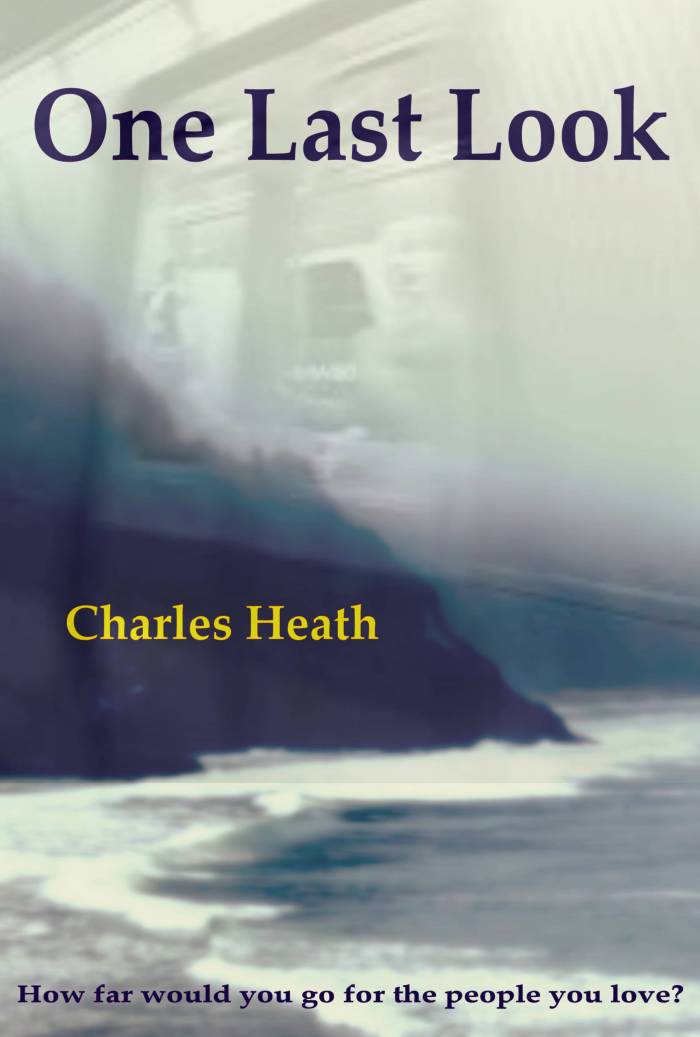
onelastlookcoverfinal2

Writing a book in 365 days – 359

Day 359

The Unwritten Prologue: How Natural-Born Writers Knew Their Story Begun

Every great writer’s journey has a beginning, often buried in the imagination long before they held a pencil. These are the natural-born writers—those who were storytellers at their core before they could write a single word. They didn’t wait for spelling lessons or grammar rules; their stories flowed in the language of play, whispers of narrative, and the cadence of their own dreams. How did they know, and how did they craft their art without ink or paper? Let’s explore the enchanted first chapters of these visionary creators.


The Pre-Writing Stage: Stories Before Writing

Long before literacy, natural writers are oral storytellers. They might have been the child inventing tales for stuffed animals, reenacting myths with wooden swords, or narrating their day to an invisible audience. Their imagination is a stage, and the world their audience. Even without words, they convey emotion through sound, gesture, and rhythm. Think of a toddler saying, “She took the cookie and ran like a princess” to a doll. That’s not just play—it’s storytelling in its rawest form.

Similarly, a love for language often emerges early. These writers-in-the-making are the ones “reading” picture books repeatedly, experimenting with invented words, or collecting poetry in their minds. They’re attuned to the music of language, humming stories to themselves before they can write them.


Signs of a Natural-Born Writer

  1. Compulsive Storytelling: They create worlds in play, crafting elaborate scenarios with toys or friends.
  2. Early Fascination with Letters and Sounds: They recognize letters before starting school, perhaps scribbling “I don’t know what this letter is, but it’s magic!”
  3. Imaginative Interpretations of Reality: They reimagine everyday events as adventures, turning a walk to the park into a quest.
  4. Emotional Resonance with Stories: They weep for characters in bedtime tales, proving they deeply connect with narrative.

From Oral to Written: How They Paved the Way

Natural-born writers often transition from oral to written storytelling with relentless curiosity. J.K. Rowling, for instance, has spoken about inventing stories as a child to amuse herself and her brother. Dr. Seuss’s rhymes as a child (and his iconic use of sound) hint at a writer born not just to write, but to make language sing.

Before formal training, these writers might:

  • Tell stories to family, refining their tales through feedback.
  • Use drawings or symbols, creating “books” with pictures and cryptic text.
  • Mime scenes, acting out dialogue as their own script.
  • Memorize and adapt fables, internalizing the structure of storytelling.

Even without words, they’re practicing the essence of writing: character, conflict, and craft. As Maya Angelou once said, “The writer’s biggest problem is always, to say something; to say it fresh; to say it in a way that it’s never been said before.” Natural writers are solving this puzzle long before they put pen to paper.


Case Study: Tolkien and the Power of Myth

J.R.R. Tolkien’s passion for languages and mythology began in childhood. Before he wrote The Hobbit, he crafted his own languages and sagas, scribbling in notebooks with imagined alphabets. His parents called him “a reader and a teller of tales from a very early age.” Without the ability to write fully, he likely told stories orally, nurturing the mythologies that later defined modern fantasy.


The Legacy of the Unwritten

Natural-born writers learn that storytelling is a muscle—grow it before you can spell narrative. Their journey teaches us that being a writer isn’t about talent alone, but about telling the story that only you can tell, regardless of tools. A child speaking to a toy, a teen journaling in code, or an adult crafting tales in their head—these are all valid forms of the writer’s craft.


To the Young (and Young at Heart) Writers

If you’ve ever built a castle in the clouds or whispered secrets to your teddy bear, embrace it. You are already a writer. Your letters may not be formed, your grammar unlearned, but your voice is real. As you grow, let those early stories guide you. The greats started with nothing more than a dream and a desire to share it.

So, tell your tale. Even if it’s just to the moon. Even if it’s all in your head. You’re already writing.


What story do you carry in your heart before it’s written down? Let it out. The world needs to hear it.

“What Sets Us Apart”, a mystery with a twist

David is a man troubled by a past he is trying to forget.

Susan is rebelling against a life of privilege and an exasperated mother who holds a secret that will determine her daughter’s destiny.

They are two people brought together by chance. Or was it?

When Susan discovers her mother’s secret, she goes in search of the truth that has been hidden from her since the day she was born.

When David realizes her absence is more than the usual cooling off after another heated argument, he finds himself being slowly drawn back into his former world of deceit and lies.

Then, back with his former employers, David quickly discovers nothing is what it seems as he embarks on a dangerous mission to find Susan before he loses her forever.

Find the kindle version on Amazon here:  http://amzn.to/2Eryfth

whatsetscover

In a word: Pear

Now, how did such a simple word that described a piece of fruit become so tangled?

The English language of course.

It throws up many a variation of the same sounding word, just to confuse us.

Just think, there is also pair, and pare.

But a pear, that’s a piece of fruit.

And if you’re not careful things can go pear shaped very quickly.

Then there’s pair, which means there’s two of something the same, such as a pair of socks

Except in my house it’s more than likely that pair of socks are an odd pair.

Then there’s pare, which is to take the outer layer off such as an orange.

It can also mean to cut down, as in staff after restructuring an organisation.

The story behind the story: A Case of Working With the Jones Brothers

To write a private detective serial has always been one of the items at the top of my to-do list, though trying to write novels and a serial, as well as a blog, and maintain a social media presence, well, you get the idea.

But I made it happen, from a bunch of episodes I wrote a long, long time ago, used these to start it, and then continue on, then as now, never having much of an idea where it was going to end up, or how long it would take to tell the story.

That, I think is the joy of ad hoc writing, even you, as the author, have as much idea of where it’s going as the reader does.

It’s basically been in the mill since 1990, and although I finished it last year, it looks like the beginning to end will have taken exactly 30 years.  Had you asked me 30 years ago if I’d ever get it finished, the answer would be maybe?

My private detective, Harry Walthenson

I’d like to say he’s from that great literary mold of Sam Spade, or Mickey Spillane, or Phillip Marlow, but he’s not.

But, I’ve watched Humphrey Bogart play Sam Spade with much interest, and modelled Harry and his office on it.  Similarly, I’ve watched Robert Micham play Phillip Marlow with great panache, if not detachment, and added a bit of him to the mix.

Other characters come into play, and all of them, no matter what period they’re from, always seem larger than life.  I’m not above stealing a little of Mary Astor, Peter Lorre or Sidney Greenstreet, to breathe life into beguiling women and dangerous men alike.

Then there’s the title, like

The Case of the Unintentional Mummy – this has so many meanings in so many contexts, though I imagine that back in Hollywood in the ’30s and ’40s, this would be excellent fodder for Abbott and Costello

The Case of the Three-Legged Dog – Yes, I suspect there may be a few real-life dogs with three legs, but this plot would involve something more sinister.  And if made out of plaster, yes, they’re always something else inside.

But for mine, to begin with, it was “The Case of the …”, because I had no idea what the case was going to be about, well, I did, but not specifically.

Then I liked the idea of calling it “The Case of the Brother’s Revenge” because I began to have a notion there was a brother no one knew about, but that’s stuff for other stories, not mine, so then went the way of the others.

Now it’s called ‘A Case of Working With the Jones Brothers’, finished the first three drafts, and at the editor for the last.

I have high hopes of publishing it in early 2021.  It even has a cover.

PIWalthJones1

The cinema of my dreams – I always wanted to write a war story – Episode 15

For a story that was conceived during those long boring hours flying in a steel cocoon, striving to keep away the thoughts that the plane and everyone in it could just simply disappear as planes have in the past, it has come a long way.

Whilst I have always had a fascination in what happened during the second world war, not the battles or fighting, but in the more obscure events that took place, I decided to pen my own little sidebar to what was a long and bitter war.

And, so, it continues…


The new leader of the resistance was the woman, Martina, best if I didn’t know her last name.  Fair enough.  There had been a necessary restructure after the infiltration, and untimely deaths of over half their number.

When I asked what happened to the former leader, I learned that he, and all but five other members were captured and taken to the castle.  They were now, for all intents and purposes, double agents, working for the Thompson at the castle.

The remaining five, of which Giuseppe and Martina belonged, had been forced to hide, dodging the men sent from the castle to hunt them down and kill them.

It was both the lack of reporting from the castle, followed by a message received regarding a possible traitor inside the resistance we had received in London, that set everything in motion, including my arrival to ascertain what was happening within the resistance group, and also at the castle.  Until that information reached us, there had been no reason to suspect that anything was wrong, and that the plans set in place to facilitate the defection of useful German scientists and, in some cases, high ranking officers, or that it had been infiltrated and to put it bluntly, original members had been killed and replaced.

I hadn’t realised who was in charge until the paratroopers had arrived and I’d become a prisoner.  Part of my brief had also been to verify the layout of the castle in accordance with old plans we had found using my archaeology background as a front, and Id managed to explore certain areas before Thompson had become suspicious and basically stopped me.  I’d searched part of the lower levels of the castle, but hadn’t got as far as the dungeons, where I eventually discovered becoming one myself, they were keeping many more prisoners.

I hadn’t long enough in the dungeons to discover whether any of the prisoners were part of the original team sent, whether there were any defectors being still held there, except for two that I’d seen, and definitely one I talked to, but there had to be more.

And, now that I’d found the remaining members of the resistance, it was my intention to return to rescue then, and retake the castle.  What was going to make it difficult, if not impossible, was the fact there were only five, and they were all busy trying not to get caught.  Still, I had to try, and I asked Martina if it was possible to get everyone together for a meeting.

Martina just laughed.  Whether it was my request or my plan to retake the castle was the cause of her mirth.

“With what?”  she said incredulously, “there are only five of us left, and we spend most of our time keeping one step ahead of the turncoats.”

“How many of them are there?”

“Too many, led by that bastard Francesco.  He didn’t like taking orders from a woman, thought we’d picked the wrong side, especially when the Germans killed about fifty of the villagers when we refused to give ourselves up.  They killed his wife and mother  after he refused to send them away.”

That didn’t seem right to me, to align yourself with that sort of enemy, not after what they had done.  Except there was no telling what anyone might do in the face of such an adversary, or circumstances.  But I had to ask, “Why would they?”

“They’ve got hostages from the village up there, in the dungeons.  That’s how they turned them.”

Damn.  I was not going to be able to turn them back, not when the lives of their friends, even family, was being threatened.

“Is that the case for those who didn’t surrender?”

“No.  Our relatives left when we could see what was going to happen.”

“So, the problem we have is, freeing the hostages, freeing the soldiers if there are any of the original group, retake the castle, and get the pipeline working again.”  And, I thought to myself, pull off seven miracles in fifteen minutes.

I was putting forward what was for all intents and purposes impossible.

“There’s more,” she said.  “There is a high-value scientist coming, last advice was that he was in transit from Germany to here.  We know, and they know, courtesy of Francesco.  They want him captured; we want him safely delivered to the submarine waiting to take him to England.  He’s due in three days, and he doesn’t know the castle’s allegiances have changed.”

“Then we’ll have to intercept him.”

“Yes, but we don’t know what he looks like, but we do have a code name.  Francesco and the castle don’t have that, only his real name.”

A name I saw on a highly confidential document on Forster’s desk the day he briefed me on my current mission.  Blackfoot.  I thought it was an operation.  I think that was the code name for the defector.

“Blackfoot?”

“How did you know?”

“A lucky guess.” 

The question I had was, why didn’t he tell me about it?  Did he think I was going to get captured and tortured?

“Well, you’re right.  But it means Francesco and his men are going to be looking extra hard for us, because without that codename, as soon as they fail to confirm their identity to him, he will kill himself rather than go back, which I’m guessing will be their least preferred option.  And to make matters worse, London’s orders are quite specific, this man must be delivered alive.  He has critical information they need, and which will hasten the end of the war”

“Then I think we should tell London the nature of our situation and see what they come up with.”


© Charles Heath 2019

The fourth attempt, let’s look at the location

Equally important is the location.  Dark and brooding characters need dark and brooding locations.  It’s undeniable that there’s evil everywhere; we just have to look for it.

Of course, that’s not what I do, but …

I have been in a few tight corners, with some possibly dark and brooding characters, where my heart rate has increased exponentially, and I was saved by quick thinking and a desire not to hang around and see what happens (for the purposes of a writable experience – no, I’m not that stupid).

As the story stands, we move from a small staff room or restroom, and then we move out to the car park of … what?  It’s not exactly clear where it is, only that Graham is leaving work to go home.

Whether it’s clear or not, Graham is a security guard, part of a team that works on an industrial estate where there are a number of factories and office blocks. 

Some of those buildings are empty, for a variety of reasons, so a back story for this might be created so that I can convey a clearer picture of not only the bricks and mortar, but what it’s like there.

Ergo, the first descriptive line, stepping outside into the epicentre of the South Pole.  There is snow everywhere, which meant it was falling while he was inside at work, but now, the moment he leaves, it’s stopped.  Cold, then, and clear.

So it begins…

Now, as a secondary theme, it might not be obvious that the owners are lax in the hiring of security staff to watch over their assets, staff that are relatively dubious in character, which might, in turn, mean that the notion of using cut-price security might mean something else is going on.

Are the empty factories empty?  Or have they been repurposed, and the guards are not sure what they’re guarding?  Do they want to know?  A job is a job, and in this situation, either from a hint from the employer or the words of an old hand, and it doesn’t pay to poke a nose in where it’s not wanted.

So, as you can see, when starting the story, I didn’t give proper thought to the background story, the fact that I could weave another or several storylines intertwined with what will be the master plotline.

What is the master plotline?

I have an idea or two, but let’s not get too ahead of ourselves.

Let’s stitch together a scenario or two for the back story and see where it takes us.  Remember that this was more or less part of the storyline originally in my mind, but may not have been articulated in what I wrote at the time.

Basically, then, we’re dealing with a large industrial site on the outskirts of a city in decline.  Everyone can relate to the problematic times we’re in now, but this was written at the height of the last global financial meltdown about fifteen years ago, which caused a deep recession.

Within that framework, a lot of businesses and people went to the wall.  Graham and others lost a decent-paying job, as well as their house, having finally got on the property ladder, only to find they couldn’t pay for it.

At the time, he was not alone in that respect.  And lenders were not immune either, so there’s a possibility that one or two industrial park owners may not have been entirely legitimate in some of their business dealings, especially after taking heavy financial hits.

In that scenario, there’s always the possibility of insurance fraud as a means of cutting losses, hence the need for security that might be asked to look the other way.

Another possibility could be that empty buildings and enterprising men, or women, fit the category of ‘the devil finds work for idle hands’. 

Or someone who recognises an opportunity to make some money.  That particular scenario opens the door to a plethora of ideas.

© Charles Heath 2024

The 2am Rant: How about this for a plotline?

No matter how hard you try, how seamless, on paper the plan is, the odds are something will go wrong. That is not to say I am a fatalist, or a glass half empty kind of traveler, because most of the trips I have planned, and taken, have been relatively painless.

Except our good luck had to finally run out.

It was not a matter of bad planning; it was just one of those times when events didn’t quite go according to plan. It happens.

For instance, the simple objective was to get from Brisbane in Australia to Florence in Italy. There is no direct flight. Booking on an airline site is a horrendous experience, fares are ridiculously high, and there is no accommodating stopovers.

This is a trip that only a travel agent can handle.

The objective, travel to London via Hong Kong, or Singapore, or any medium distant airport, then on to London, or Paris, or where-ever, then to Florence. No overnight stopover, staying in a hotel, not this time, in either of Hong Kong or London.

Simple.

Not.

It was as horrendous for the agent as it was navigating the airline’s internet site. It was not something that could be done, sitting opposite her as she deftly navigated the highways and byways of the travel system on her computer. This was a longer, more intricate job.

Two days later she had the solution for the Brisbane, Hong Kong, London, and thence Florence trip. It would require a stay of 10 hours in Hong Kong, the connections didn’t align according to price constraints, and then a 14 hour layover in London as flights to Florence were not aligned either. All well and good. Cathay Pacific for the trip to London and Vueling Airlines for the Florence leg. At least we would arrive in Florence at a reasonable hour, about 6pm.

On paper, it was the most practical solution in the circumstances.

Reality proved it to be something else entirely.

At Brisbane airport, we were given boarding passes for the flights through to London, but by some quirk of fate had our baggage checked through to Florence. How this could be done without boarding passes for the London to Florence flight was a surprise. Back in Brisbane, the check-in person told us she could not give us a boarding pass for the London to Florence leg because the system would not issue it. We could she said, get it easy enough when we arrived in London.

The first leg went smoothly enough, though we did not realize until we got on the plane that it stopped over in Cairns for an hour or so. This was not a problem, just made the time between Brisbane and Hong Kong longer than we anticipated.

In Hong Kong, we had no trouble getting into the lounge I’d booked. The problem came with the interpretation of using the bathroom facilities, and it took several hours before we finally realized that the bathroom facilities were not part of the lounge but operated independently and you had to book your place. By that time there were a large number of people ahead of us (who obviously knew the problems associated with these facilities) and it annoyed me that the lounge staff did not mention it when we arrived.

The Hong Kong to London leg was as all long haul flights are. We knew what to expect, and arrived in London around 6 am. We arrived at terminal three and the lounge we’d booked was in terminal three. All we needed was a boarding pass to get in.

Oops.

That was not the case.

Because we could not get back into terminal three without a forward boarding pass we had to exit and go through customs and immigration. We were told that the only way to get a boarding pass for the Florence flight was to go to the airline counter.

The problem was Vueling did not have an airline counter.

This is where tempers started to flare. 7:30 in the morning, no means of getting into the lounge which we had paid a lot on money for, and no one in the terminal being helpful.

The Vueling web site was impossible to use.

The telephone number rang out.

At this point, I was beginning to believe the airline didn’t exist and we had been ripped off.

Only by a quirk of fate, reading the departures board, did I see a flight for Vueling leaving at 10 am, with the check-in counter displayed.

By this time we had spent two very frustrating hours and I was nothing short of angry.
At the gate, the head of the check-in counter, a representative of Vueling was surprised we had any problems, particularly in Brisbane, but happily issued the boarding passes.

When we mentioned the baggage she advised us it was lucky we did, otherwise it would have gone missing. She took the tag numbers and sorted that problem out.

The airline, it seems, is well respected, and based on the service I received, I had to say I agreed

The problem was back in Brisbane with an inexperienced check in person.

There was only one problem in getting to the lounge, now four hours later than we had advised, the fact we had to go back through customs, and in doing so, the duty-free that we had brought from Hong Kong was now outside the limits allowed, and the customs staff were adamant despite the circumstances we could not take it with us. $400 worth of goods finished up in the bin.

It would be true to say that day the customs staff at Heathrow were not the best ambassadors for their country, and one, in particular, would be best doing service elsewhere where human contact was not a requirement. As for the others, they were as helpful as they could be, but rules unfortunately were rules.

At last, rather distressed over the duty-free, and the lateness of our arrival at the lounge, there was no possibility of getting a short sleep before going to Florence. At least we did not have the same problems using the bathroom facilities, our room I’d book had them included in the room.

We rested, and figured nothing else could go wrong.

Not. Again!

The plane was advertised to leave London at about 3 pm. We left the lounge expecting to get to the gate on time. We checked on the departure board for the flight to get the gate number, only to see a notice ‘delayed’. When that delay passed 5 pm, two hours later, we decided to go to the counter and find out what was happening.

Only to find there was no airline counter. Again!

We asked at least a dozen people, including the special helpers the airport who there is plenty of signage to say to go to if you have a problem, but not one of them knew where the counter was or who was looking after the affairs of the airline. By this time other irate passengers of the delayed flight were massing, also seeking answers. One discovered who the agent was, and we descended on the counter as a large group.

The first person I saw at the counter was the woman who had checked us in that morning. For her, it had been a long day, and it was getting longer.

The problem, the plane had been delayed on an earlier leg, yes it would be arriving, having just left the lat airport, and we would be embarking about 7:30. For our trouble, we got a meal voucher, and at least we could have a reasonably good dinner.

The plane arrived, we embarked, the service was good and the people on board as cheerful as they could be given the delays and the discontented passengers.

We arrived in Florence just before midnight, our driver to take us to the hotel was waiting for us, and the hotel upgraded us to a very nice room.

All in all a harrowing journey, but at the end, basically a six-hour delay, and two very tired, but happy people. And we were in Florence, in summer. What more could anyone want?

Writing a book in 365 days – 358

Day 358

The Doyen of Noir: What Raymond Chandler’s Life, Style, and Philip Marlowe Teach Us About Storytelling

When you think of classic American crime fiction, the name that instantly flickers to mind is Raymond Chandler – the heavyweight champion of hard‑boiled noir whose razor‑sharp prose still feels fresh after more than eighty years. Chandler didn’t just write detective stories; he invented a literary atmosphere that turned a gritty, rain‑slick Los Angeles into a character in its own right and gave us the unforgettable gumshoe Philip Marlowe.

But behind the sleek dialogues and smoky tavern scenes lay a life riddled with missteps, self‑destruction, and surprising twists. By digging into Chandler’s history, his flaws, and his unmistakable style, we can extract timeless lessons for writers, marketers, and anyone who wants to make an impact with words.


1. A Rocky Road to the Pen

MilestoneWhat HappenedWhy It Matters
Early Years (1888‑1912)Born in Chicago, moved to Colorado, a peripatetic childhood. Lost his mother at 12 and was sent to live with relatives in England.Early displacement instilled a sense of alienation that later seeped into his urban landscapes.
Oil‑Field Engineer (1912‑1932)Spent two decades drilling in Texas and Mexico, clashing with corporate bureaucracy and the harsh desert.The “outsider‑against‑system” mindset is a core theme in his novels.
World War I ServiceServed in the U.S. Army, briefly, then returned to the oil business.Experience with hierarchy and authority fed his skepticism of power.
The Downward Spiral (1932‑1934)The Great Depression wrecked the oil market; Chandler’s marriage collapsed. He turned to alcohol, gambling, and a series of odd jobs.The personal chaos sharpened his eye for the darker side of human nature—fuel for the noir aesthetic.
Breakthrough with The Big Sleep (1939)At 49, Chandler finally published his first novel, introducing Marlowe.Proved it’s never too late to start a successful second career.

Takeaway: Chandler’s path to literary fame wasn’t a straight line. It was a series of failures, relocations, and personal battles that forced him to confront his own darkness. For creators, this teaches that authentic storytelling often springs from lived adversity—the harder the journey, the richer the material.


2. The Signature Chandler Style

a. The “Hard‑Boiled” Voice

  • Economy of Language: Chandler favoured short, punchy sentences that carried weight.
    Example: “She was a cheap, cheap girl, and the cheapness rubbed off on the rest of us.”
  • Wry Similes & Metaphors: He turned ordinary observations into unforgettable images.
    Example: “He looked as if he’d been run over by a train and then dragged through a sandstorm.”
  • Moral Ambiguity: The lines between good and evil are blurred; even the hero has flaws.

b. Los Angeles as a Character

  • Concrete Details: From neon signs to desert highways, Chandler painted the city with a painter’s precision.
  • Atmospheric Consistency: Rain, fog, and darkness aren’t just weather—they’re mood setters that echo the protagonist’s inner turmoil.

c. Dialogue That Cuts

  • Witty Banter: Conversations feel like chess matches—each line a strategic move.
  • Understatement: Frequently, what isn’t said speaks louder than the spoken word.

Takeaway: Chandler’s style is a masterclass in restraint. He shows us that brevity, vivid imagery, and a strong sense of place can create a world that feels larger than the sum of its pages.


3. Philip Marlowe: The Archetype That Still Resonates

TraitHow Chandler Crafted ItModern Echo
World‑Weary CynicMarlowe narrates with a mix of sarcasm and weary empathy.Anti‑heroes in film/TV (e.g., Breaking BadThe Wire).
Moral CompassDespite his jaded outlook, Marlowe adheres to an internal code of honor.Brands that position themselves as “honest rebels” (e.g., Patagonia).
Lone WolfHe operates alone, skeptical of institutions.Freelance creatives, solopreneurs, and “maker” culture.
Sharp Observational SkillsHe notices the smallest details—a stray cigarette, a shaky handshake.Data‑driven marketers who derive insight from micro‑behaviors.

Marlowe’s lasting appeal lies in his human contradictions: tough yet tender, cynical yet idealistic. He’s a reminder that complex, flawed protagonists are far more compelling than flawless heroes.


4. What We Can Learn From Chandler’s Legacy

1. Embrace Your “Not‑So‑Great” Past

  • Your setbacks are a goldmine for narrative tension. Chandler turned his own bitterness into a voice that resonated with millions.
  • Practical tip: Keep a “failure journal.” Record moments that felt humiliating or painful; later, mine them for raw material.

2. Cultivate a Distinct Atmosphere

  • Whether you’re writing a novel or drafting a brand story, the setting is a silent storyteller.
  • Practical tip: Before writing, create a sensory map: list five smells, three sounds, and two visual motifs that define your world.

3. Write With the Economy of a Detective’s Pistol

  • Every word should earn its place. Trim the fluff, sharpen the similes, and let subtext do the heavy lifting.
  • Exercise: Take a paragraph you love and rewrite it using 30% fewer words without losing meaning.

4. Give Your Hero a Moral Compass, Even If It’s Bent

  • Audiences crave characters who stand for something, even if that something is a personal code that defies society.
  • Implementation: Define your protagonist’s “one rule they’ll never break” and let it guide every decision.

5. Let Dialogue Do the Detective Work

  • Bad dialogue is a dead giveaway of lazy writing. Let characters reveal plot, personality, and tension through how they speak—not just what they say.
  • Practice: Write a scene where two characters talk about a crime without mentioning the word “crime” at all.

5. Bringing It All Home: Your Own Noir Blueprint

StepActionOutcome
1. Harvest Personal GritList three moments of personal failure.Source of authentic conflict.
2. Choose a “City”Identify a physical or metaphorical setting that mirrors your theme.Creates immersive atmosphere.
3. Define the Hero’s CodeWrite a one‑sentence creed for your protagonist.Anchors moral ambiguity.
4. Draft with a “Marlowe Lens”Write every scene as if you’re a detective observing details.Boosts vividness and tension.
5. Polish for PunchCut words, sharpen similes, test dialogue for subtext.Delivers Chandler‑style impact.

Final Thoughts

Raymond Chandler’s journey from oil‑field engineer to the reigning monarch of noir proves that a writer’s personal turbulence can become a powerhouse of creativity. His blend of hard‑boiled prose, atmospheric detail, and a morally complex hero continues to shape everything from modern crime thrillers to brand narratives that crave authenticity.

If you can channel Chandler’s willingness to stare into his own darkness, harness it into a distinctive voice, and give your audience a world they can see, smell, and feel, you’ll not just write a story—you’ll craft an experience that endures.

Take a page from the master: own your scars, paint your city, and let your protagonist walk the line between the shadows and the light. The result? A story that, like Chandler’s, never truly fades.

Top 5 sights on the road less travelled – Brasilia

Discover Brasília’s Hidden Gems: 5 Under-the-Radar Adventures

Brasília, the futuristic capital of Brazil, is a city of sleek modernist architecture and political grandeur. But beyond the iconic landmarks like the National Congress and Cathedral of Brasília (Catedral de Brasília), there lies a quieter, more authentic Brasília waiting to be explored. If you’re ready to venture off the beaten path, here are five unique experiences that will make your visit unforgettable.


1. Step Back in Time at Cruzeiro Velho

Tucked away in the Setor Habitacional Jardim Botânico, Cruzeiro Velho is a charming neighbourhood that offers a glimpse into Brasília’s origins. Established in 1959, this area was one of the city’s first residential enclaves, featuring traditional Portuguese-style houses constructed from adobe and wooden beams. Unlike the city’s geometrically modern structures, Cruzeiro Velho exudes rural simplicity and warmth. Stroll through its narrow cobblestone streets, visit the historic Igreja de Nossa Senhora do Carmo (Church of Our Lady of Mount Carmel), and join locals at the community square for a slice of real Brasília life. Tip: Visit in the evening when the community hosts small cultural events, like folk music performances.


2. Admire Street Art in the Túnel das Artes

Hidden beneath Asa Sul, the Túnel das Artes (Arts Tunnel) is a vibrant canvas of local creativity. This 110-meter tunnel, once a utility passage, is now a kaleidoscope of murals, graffiti, and mosaics by Brasília’s most talented artists. The artwork reflects the city’s dynamic spirit and social narratives, making it a must-see for art enthusiasts. Since it’s a working-class thoroughfare, you’ll often spot locals enjoying the art amidst the hum of daily life. Pro Tip: Bring a camera and explore the tunnel during daytime when the lighting highlights the vivid colours.


3. Relax in the Tranquil Jardim Botânico de Brasília

Escape the city’s buzz at the Jardim Botânico de Brasília (Brasília Botanical Garden), a serene sanctuary housing over 2,000 plant species native to Brazil’s Cerrado and Amazon regions. While it’s a scientific institution, the garden’s peaceful atmosphere and scenic walking trails make it a beloved retreat for horticulturists and nature lovers alike. Don’t miss the Pavilhão das Orquídeas (Orchid Pavilion) and the Casebre (a replica of a traditional Cerrado house). Essential Info: Admission is free, and the garden is open daily from 8 AM to 6 PM.


4. Taste Local Flavours at Feira Central

One of Latin America’s largest markets, Feira Central, is where Brasília’s soul tastes best. This bustling hub, open Monday to Friday, is a sensory overload of sizzling street food, fresh produce, and handicrafts. Sample regional delicacies like feijoada (Brazilian stew), queijadinha (cheese cake), and quindim (egg custard in a caramel cup). The market is also a treasure trove for Afro-Brazilian art, leatherwork, and traditional cangaço-style jewellery. Traveller’s Note: Arrive early to avoid the midday heat and join locals for a lively pre-lunch tradition.


5. Discover Nature and Nostalgia at Parque da Torre de TV

Located in Asa Sul, Parque da Torre de TV blends history, nature, and fun. The park is anchored by the iconic Torre de TV, a 139-meter communications tower that once served as a vital link for Brazil’s media. Surrounding the tower is a scenic reservoir, walking paths, and a mini-zoo with native wildlife. Rent a paddleboat on the lake or hike the trails to the top of Morro da Mineirinha for panoramic views. It’s a family-friendly spot that feels worlds away from the city’s formal vibe. Insider Tip: Visit on weekends when the park hosts cultural fairs and open-air concerts.


Conclusion: Beyond the Blueprints
Brasília’s true magic lies not just in its architectural masterpieces but in the stories whispered through its lesser-known corners. Whether you’re savouring street food at Feira Central or wandering the adobe streets of Cruzeiro Velho, these off-the-beaten-path adventures reveal a city that’s as rich in culture as it is in innovation. So let curiosity be your guide, and discover Brasília beyond the blueprints.

Final Note: Before you go, check local event calendars for festivals, farmers’ markets, and art exhibitions that add spontaneity to your trip. Brasília’s hidden gems are best discovered with an open heart and a willing spirit.