Searching for locations – Gold Coast, Queensland, Australia – 1

I’m not going to spark a debate over what a holiday is and what isn’t, but …

We received an invitation to stay for a few days with my brother-in-law down at a coastal resort city, what is known as the Gold Coast, not far from where we live in Brisbane, about 70km north.

Not far, but some say far enough.

We come down every now and then, but before Covid, and before I retired into a more modest lifestyle, we used to stay once a month at the Gold Coast Hilton, dine at the restaurant and get luxurious massages at Eforia.

That was 2015, and this is 2023.

We are staying in a two-bedroom apartment right on the water, and it could not be better than that. Right now, I’m looking out the windows at what could only be described as an idyllic sunrise breaking over a relatively calm ocean, with the sound of waves continuously breaking on a pristine beach.

It’s just after 7 in the morning, and there are a lot of hardy souls taking their morning constitutional, some with exuberant dogs frolicking as they do at the waterline.

I’m not one of them. The thought of tackling the three fights of steps to get from the apartment to the ground floor is not so daunting going down. It is the going back up that’s the killer.

I did that trip six times yesterday moving stuff from the car to the room. By the sixth, I was done. The rest of that afternoon was watching the rain come in from the sea and towards the late afternoon, a rainbow that came with it, practically ending right on the beach in front of us.

No pot of gold, though.

The difference between staying in a hotel room and in a fully functional apartment is the fact you can cook your own food.

Whilst the nightly rate is basically the same for the room, not having to dine our every lunch and dinner can save a fortune.

The added benefit is that if you are doing this in another country, you can spend some very interesting hours in their supermarkets, or just markets looking at the different types of food they have.

We have done this in England, Italy, France, and China, to name a few. By far, the most fascinating was China. We couldn’t read the labels, so it was guess what’s in the packet.

Or not!

Of course, when on holiday, a must-do is to see the sights. After all, you don’t go on a holiday just to sit in the room…

…or on the balcony watching the waves roll in, or watch the clouds go by.

Given that neither of us is very mobile, it’s usually exactly what we do, but being with others, we will be doing some other activities.

Besides I’m one of those people who like to have a food theme whilst away, like the quest for the best meat pie, a quest for the best friend battered fish, or the best-fried potato chip.

Since we are by the sea, there will be a fish and chips moment, and though in this world of convenience, even fish and chip shops get their food in plastic bags, there are still some who batter their own fish and cut and cook their own chips.

The delight will be to find one and then savour every mouthful.

I’ll let you know if I find one.

What I learned about writing – Where do you write?

Where the Muse Strikes: Unearthing Your Most Comfortable Writing Nook

We’ve all been there. Staring at a blank screen, a half-finished manuscript, or a sudden spark of inspiration that demands to be captured. But where, oh where, do we find that perfect, almost magical, spot that unlocks our creative flow? It’s a question that sparks endless curiosity among writers, and the answers are as varied and unique as the stories we tell.

Is it the hushed reverence of a dedicated office, a sanctuary meticulously designed for productivity? Perhaps it’s a room with a breathtaking ocean view, where the rhythmic crash of waves whispers tales of distant lands. Or maybe, just maybe, it’s the allure of a dark, atmospheric basement, a place where shadows play and spooky narratives can truly come to life.

For some, inspiration might strike in the most unexpected of places. The hustle and bustle of a train station, with its constant movement and transient characters, could be a fertile ground for observation and storytelling. Even the familiar confines of work, while potentially rife with its own unique set of challenges, might surprisingly serve as a launchpad for that next great idea.

My own writing journey has seen a few different homes. My current dedicated space is a converted garage, a cozy nook lined with the comforting presence of countless books. It’s a space brimming with potential, though I must admit, it’s not always the most serene. A certain smart-aleck cat seems to have a knack for demanding attention right when a crucial plot point is about to unfold, adding an unpredictable element to my creative process.

When the feline supervisor is temporarily distracted, or when the late-night hour beckons, I often find myself drawn to the couch in the living room. There, amidst the quiet hum of the house, I can sometimes wrestle a thousand words from the depths of my imagination, the narrative flowing with a surprising ease, cat-related interruptions notwithstanding.

Then there are the times when the muse arrives disguised as a delicious meal. A cafe or restaurant can be an irresistible lure. It often starts innocently enough, with me scribbling notes on the ambiance, the food, the fascinating people around me. But before I know it, those observations morph into something more, drawing me deeper into the story and, on occasion, landing me in hot water with my patient dining companions. It seems a bit of intense introspection can sometimes be mistaken for complete disengagement from the present company!

And let’s not forget the technological marvels that have infiltrated our lives. The advent of writing programs for mobile phones is a double-edged sword. While they offer unparalleled portability, they also blur the lines between downtime and work, and frankly, sometimes I wonder if these devices have become too smart, outsmarting our own intentions with their constant connectivity and endless distractions. But hey, that’s a whole other story for another day, isn’t it?

So, where do you find your most comfortable writing place? Is it a grand study, a quiet corner of a coffee shop, or perhaps the backseat of a moving vehicle? Share your secret writing sanctuaries in the comments below – let’s inspire each other to find that perfect spot where our words can truly soar!

Searching for locations: The Mary Valley Rattler, Gympie, Queensland, Australia

I have a passion for visiting transport museums, to see old trains, planes, buses, cars, even ships if it’s possible.

This has led to taking a number of voyages on the TSS Earnslaw in Queenstown, New Zealand.

Many, many, many years ago on Puffing Billy, a steam train in the Dandenongs, Victoria, Australia.

The steam train in Kingston, New Zealand, before it was closed down, but hopefully it will reopen sometime in the future.

The London Transport Museum in London England, which had a lot of buses.

The Workshops Railway Museum in Ipswich, Queensland, where once the many steam engines were built and maintained, and now had only a handful of engines remaining.

However, in the quest for finding and experiencing old transportation methods, we came across the Mary Valley Rattler, which runs out of Gympie, Queensland, Australia.

The ride begins in Gympie at the old Gympie Railway station, and as can be seen below, is one of the relics of the past, and, nothing like the new more modern stations.  Thankfully.

If you’re going to have a vintage train, then you have to have a vintage station.

The Class of engine, seen below, is the C17, a superheated upgrade to the C16 it was based on, and first run in 1903.  This particular engine was built in 1951, although the first of its type was seen in  1920 and the last of 227 made in 1953.  It was the most popular of the steam engines used by Queensland Railways.

The C designation meant it had four driving axels and 17 was the diameter of the cylinder, 17 inches.  It is also known as a 4-8-0 steam locomotive
 and nicknamed one of the “Brown Bombers” because of its livery, brown with green and red trimming.

Also, this engine was built in Maryborough, not far from Gympie by Walkers Limited, one of 138.

This photo was taken as the train returned from Amamoor, a trip that takes up to an hour.

The locomotive is detached from the carriages, then driven to the huge turntable to turn around for the return journey to Amamoor.

This is the locomotive heading down to the water station, and then taking on water.  After that, it will switch lines, and reverse back to reconnect the carriages for the trip to Amamoor.

The carriages are completely restored and are extremely comfortable.  It brings back, for me, many memories of riding in older trains in Melbourne when I was a child.

The trains, then, were called Red Rattlers.

This is the locomotive climbing one of the hilly parts of the line before crossing over the Mary River on a trestle bridge.

This is the engine at Amamoor near the picnic area where young children and excited parents and grandparents can get on the locomotive itself and look inside where the driver sits.

And, no, I didn’t volunteer to shovel coal.

This particular locomotive spent most of its working life between Townsville and Mount Isa and was based in Cloncurry, Charters Towers, and Townsville, before being sent, at the end of its useful days in the late 1960s, to the Ipswich Railway Workshops.

Writing a book in 365 days – 251

Day 251

Waiting for the muse, maybe…

The Takeaway for All of Us

This isn’t just about writing. This philosophy applies to any creative pursuit, any skill you want to master, any goal you want to achieve.

  • Show up: Consistently dedicate time to your craft, even when you don’t feel like it.
  • Embrace the “awful”: Give yourself permission to create imperfect, messy first attempts. They are part of the process.
  • Be present: When you’re working, truly work. Minimize distractions and engage fully.
  • Trust the process: Believe that consistent, focused effort will eventually yield results, even if they’re not immediately apparent.

Stop waiting for the muse to give you permission to start. Show her you’re serious. Show her you’re committed. Show her you’re willing to put in the work, even the “boring and awful” work. That’s when she’ll finally say, “Okay, okay, I’ll come.” And that’s when your true creative journey really begins.


What’s your experience with the “muse”? Do you wait for inspiration, or do you dive into the work regardless? Share your thoughts in the comments below!

In a word: Toe

A toe is one of five at the end of your foot, and from time to time you wriggle.  It’s also one of the first things to go when you get frostbite.

And when was the last time you stubbed your toe?  It hurts!

It can also mean something at the tip or point, such as the toe of a country like Italy, or England.

What does it mean when someone treads on your toes?   You upset or annoy them.

What if you go toe to toe with someone?  Two people having a ‘robust discussion’.

What about that boss that keeps you on your toes, especially when he’s looking over your shoulder!

And what about a toe-poke, a hard kick of the football with your toe?

Of course, it’s not to be confused with the word tow, which basically means to pull something behind you.

Like a tow truck, pulling a broken down, or smashed up, vehicle.

But, do you toe the line, or tow the line?  Or both at different times?

It seems that to toe the line means to do as you are told, or conform to a standard.

Sadly, that doesn’t describe me!

Once Upon a Time… – A short story

Everyone knows someone who has a child that will not go to sleep.

You can set the bedtime at whatever early hour you like, but by the time they actually fall asleep, there have been two or three hours of up and down, in and out of bed, and at least one episode of a scary monster lurking under the bed, or, worse, outside the window.

After exhausting every method of achieving a result and failing, I thought I’d try reading.

The first book I picked up was, yes, you guessed it, about monsters. In fact, nearly every book for kids was about monsters, witches, ogres, dragons, and vampires.

I put them back and sighed. I would have to come up with a story of my own.

It started with, “Once upon a time…”

“But that,” Mary said, “only applies to fairy tales.”

“Well, this is going to be a fairy tale of sorts. Minus the fire-breathing dragons, and nasty trolls under drawbridges.”

“It’s not going to be much of a story, then. In fairy tales, there’s always a knight who slays the dragon and rides off with the princess.”

This was going to be a tough ask. I thought of going back to the book pile, but then, I could do this.

“So,” I began again, “Once upon a time there was a princess, who lived in a castle with her father, the king, her mother, the queen, and her brother, the steadfast and trusty knight in shining armour.”

“Why is their armour always shining?”

I was going to tell her to save the questions until after the story, by which time I had hoped I’d bored her enough to choose sleep over criticism. I was wrong.

“Because a knight always has to have shiny armour, otherwise the king would be disappointed.”

“Does the knight spend all night shining his armour?”

“No. He has an apprentice called a squire who cleans the armour and attends to anything else the knight needs.”

“And then he becomes a knight?”

“In good time. The apprentice is usually a boy of about 11 or 12 years old. First, he learns what it means to be a knight, then he has to do years of training until he comes of age.” I saw the question coming, and got in first, “When he is about 21 years old.”

She looked at me, and that meant I had to continue the story.

“The princess was very lucky and lived a very different life than her subjects, except she wished she had their freedom to play, and do ordinary things like cooking or collecting food from the markets. Because she was a princess, she had to stay in the castle and spend most of her time learning how to be a princess, and one day a queen, because when it was time, she would marry a prince who would become a king.”

“Doesn’t sound too lucky to me, being stuck at home. I like the idea of getting somebody to do everything for me though. She does have maids, doesn’t she?”

“Yes. And you’re right, she has everything done for her, including getting dressed. A maid to clean, a maid to dress her, a maid to bring her snacks. And it was these maids she envied.”

Maybe I should not make the story too interesting, or she’ll never go to sleep.

“Well, one day, she decided to change places with one of her maids. They were almost identical and when they exchanged clothes, the other maids could not tell they had changed places. At the end of the day, when the maids went home, the princess headed to the house where the maid she had taken the place of lived.

It was very different from the castle, and the room she usually had. The mother was at home, cooking the food for the evening meal, and it was nothing like what she usually had. A sort of soup with scraps of meat in it. There was a loaf of bread on the table. The father came home after working all day in the fields, very tired. They ate and then went to bed. Her bed was straw and a piece of cloth that hardly covered her. At least, by the fire, it was warm. It didn’t do anything for the pangs of hunger because there had barely been enough for all of them.

The next morning, she returned to the castle and changed places back again. When the maid she changed places with asked about her experience of what it was like in their life, the princess said she was surprised. She had never been told about how the people who served the king lived, and she had assumed that they were well looked after. Now she had experienced what it was like to be a subject, she was going to investigate it further.

After all, she told the maid, I must have all the facts if I’m going to approach the king.

And she thought to herself, a lot more courage than she had.

But, instead of lessons today, she was going to demand to be taken on a tour outside the castle and to see the people.

“This sounds like it’s not going to have a happy ending.”

No, I thought. Maybe I’ll get the dragon that her brother failed to slay to eat her.

“It will. Patience. But that’s enough for tonight. If you want to know what happens, you’ll have to go to sleep and then, tomorrow night, the story continues.”

I tucked her in, turned down the night light so it was only a glow, just enough to see where I was going, and left.

If I was lucky, she would go to sleep. The only problem was, I had to come up with more of the story.

Outside the door, her mother, Christine, was smiling. “Since when did you become an expert on Princesses?”

“When I married one.”

—-

© Charles Heath 2020-2023

Memories of the conversations with my cat – 87

As some may be aware, but many not, Chester, my faithful writing assistant, mice catcher, and general pain in the neck, passed away some years ago.

Recently I was running a series based on his adventures, under the title of Past Conversations with my cat.

For those who have not had the chance to read about all of his exploits I will run the series again from Episode 1

These are the memories of our time together…

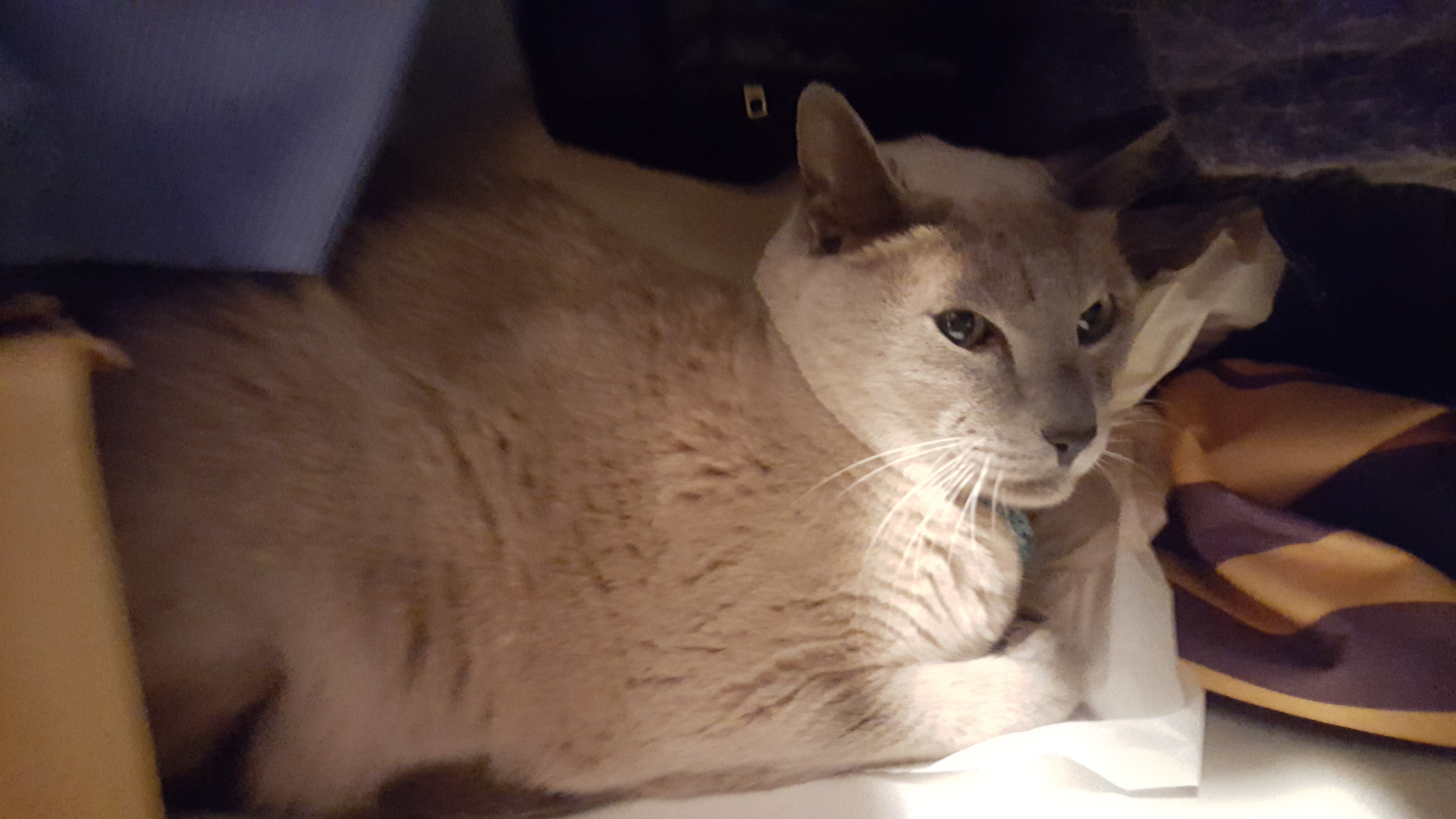
20160903_163858

This is Chester.  He was looking very benign before he left.

Now I can’t find him.

Anywhere.

He’s in none of the usual hiding spots.

He’s not hiding under any of the beds.

He’s not hiding in any of the cupboards.

I’m worried.


He’s planning something.  It might be my demise.  I’m still trying to figure out what he could gain from my death.  Not having to listen to me reading chapters of my books?

That, to him, might be a blessing.

I found a magazine on the floor open at an article entitled, ‘Ways to check if your spouse is trying to kill you’.

It’s got me doubly worried now.

I saw him on the kitchen bench near my coffee cup.

How hard could it be for him to dip his paw into some poison or other and then put it in my coffee cup?

That expressionless expression gives him away.

It’s what he’s not saying that’s telling me everything.

Behind that bland face, there’s the heart of a plotter, plotting something bigger than blowing up parliament by Guy Faulks.

I’m going to keep a very close eye on him.  Very, very close.

When I find where he’s hiding.

The cinema of my dreams – Was it just another surveillance job – Episode 53

This story is now on the list to be finished so over the new few weeks, expect a new episode every few days.

The reason why new episodes have been sporadic, there are also other stories to write, and I’m not very good at prioritizing.

But, here we are, a few minutes opened up and it didn’t take long to get back into the groove.

Things are about to get complicated…


I thanked the CCTV operator and left with Joanne to go back to the third floor and Monica’s office.  Joanne had called her the moment we made the discovery, and she was there to make sure I made it.

It was a passing thought I leave, but I would not get past the soldier at the front door.

We waited for a few minutes in the outer office where an efficient personal assistant was typing faster than I could think.

A buzzing sound broke the steady keyboard sounds, and she said we could go in.

I could imagine another page and a half being entered in the time it took for us to get from the chairs to the door.

Inside, the office had wooden panelling, shelves lined with books, a minibar, benchtops covered in trinkets picked up in many travels, and strategically placed in a corner, four chairs and a coffee table.

Monica was sitting on one, and she motioned for us to sit in two others.

Was a fourth person expected?

If there was we were not waiting for them.  As soon as I was seated, she asked, “What did you find?”

She already knew, via Joanne, but perhaps this was a test.

“There were two people at the café, or perhaps one, the intermediary that O’Connell was looking for inside, and another nearby, like out the back of the café.

“I’d been too wrapped up in surviving the aftermath of the bomb to see O’Connell head for an alley near the café.  I thought it might be to check on the intermediary, but apparently, it was to meet someone else who obviously survived.”

“Anna Jacovich.”

Of course, Joanne had briefed her.  No secrets among friends.

“What do we know about her?”

Joanne answered that one, “She’s a fugitive, and Interpol is looking for her, as are the local police.”

“And she’s here?”

“If she hasn’t run.  A bomb nearby can do that.  She has to know people are out there actively trying to kill her like they did her husband.”

“He originally created the USB?”

“It looks like it.  And my guess, Dobbin was using O’Connell to act as a journalist and buy the information off her before it went to the highest bidder.  If we were to throw hypotheses out there, it’s not a stretch to believe Severin and Maury, as Westcott and Salvin, supposedly ex-department, were charged to get inside the lab and investigate the data breach, found out who it was, followed them here, and then set up an off-book surveillance group to watch the players culminating in the botched operation I was just on.  Severin wasn’t working for Dobbin but someone else, which means someone else in this department has an active interest in the breach, and who was running his or her own operation.  That wouldn’t be you would it?”

“That would be someone in a corner office.  I can barely see daylight here.  In other words, not high enough up in the food chain.  Like you, I’m staggering around in the dark.  Dobbin has a corner office.”

“Who’s in charge of matters concerning biological weapons?”

“The MOD.  Not us.”

“But you have experts.  You must come across credible threats from time to time, and I doubt you just hand it over.”

“We’re supposed to.  There is a chain of command you know.  It’s not like the movies.”

The way this operation had been running, that was exactly what I thought.

“That’s what I think I know.  Still no indication O’Connell is alive, but I suspect Dobbin does know, and just not telling.  Might also know where he is.  Perhaps while I’m trying to find him, you go over Dobbin’s head and find out.”

“Easier said than done.  You need help?”

“No.  Everyone I work with has their own axe to grind, so I’m better off alone.”

“That Jan woman?”

“Especially her.”

“OK.  Keep me, via Joanne, informed.  If you need anything, tell Joanne.”

Meeting over.

© Charles Heath 2020-2023

Writing a book in 365 days – 249/250

Days 249 and 250

Just how is my novel going?

What works, and what do you like about it?

Given that the story had been written over quite a few years, and has changed in content a few times, and the start more than once, overall the story works as I’d originally intended.

A burned spy, who was almost killed on his most recent mission, and while in recovery, is contemplating retirement, is convinced to return to the job with a job that was meant to be an easy re-entry.

Of course, it is the very reason why he was nearly killed that is the reason why this new mission is blown before it gets off the ground. Perhaps for that reason, he decided to continue, knowing the odds are stacked against him.

What doesn’t work, and why?

I’m not so sure I want to keep the story that revolves around the outside of the mission he is on. The mission, to protect a keynote speaker on behalf of the government, turns into a localised effort to use the host country’s lack of human rights as a springboard for an attempted coup d’état. Our protagonist, of course, does not know the keynote speaker is working in concert with the revolutionaries, which just adds to the complexity of his position.

Thus, we have corrupt politicians, evil secret police, an incorruptible police commissioner, revolutionaries, a missing leader of the rebel forces, a son of that leader with overly ambitious aims and revenge uppermost on his agenda, and a variety of bit players who are all trying to steal the show.

What has to stay, and is there more to the story?

At this point, I’m satisfied that everyone with a role is staying. They fit together perfectly, from the menacing to the would-be heroes. If I stick simply to the revolution and the lead-up to it, it’s fine.

What has to go, and what gaps may need filling?

What might need to be removed is the search for and elimination of the people who are working against the organisation, the very people who caused the protagonist to be almost fatally injured. For the boss of that organisation to use our protagonist on the promise of getting those who caused his near-death crisis doesn’t really benefit the story.

The main story itself runs to about 70,000 words, so it doesn’t need the extra tale to confuse the main story, and in the end, it might serve as a sequel.

Searching for locations: The Mary Valley Rattler, Gympie, Queensland, Australia

I have a passion for visiting transport museums, to see old trains, planes, buses, cars, even ships if it’s possible.

This has led to taking a number of voyages on the TSS Earnslaw in Queenstown, New Zealand.

Many, many, many years ago on Puffing Billy, a steam train in the Dandenongs, Victoria, Australia.

The steam train in Kingston, New Zealand, before it was closed down, but hopefully it will reopen sometime in the future.

The London Transport Museum in London England, which had a lot of buses.

The Workshops Railway Museum in Ipswich, Queensland, where once the many steam engines were built and maintained, and now had only a handful of engines remaining.

However, in the quest for finding and experiencing old transportation methods, we came across the Mary Valley Rattler, which runs out of Gympie, Queensland, Australia.

The ride begins in Gympie at the old Gympie Railway station, and as can be seen below, is one of the relics of the past, and, nothing like the new more modern stations.  Thankfully.

If you’re going to have a vintage train, then you have to have a vintage station.

The Class of engine, seen below, is the C17, a superheated upgrade to the C16 it was based on, and first run in 1903.  This particular engine was built in 1951, although the first of its type was seen in  1920 and the last of 227 made in 1953.  It was the most popular of the steam engines used by Queensland Railways.

The C designation meant it had four driving axels and 17 was the diameter of the cylinder, 17 inches.  It is also known as a 4-8-0 steam locomotive
 and nicknamed one of the “Brown Bombers” because of its livery, brown with green and red trimming.

Also, this engine was built in Maryborough, not far from Gympie by Walkers Limited, one of 138.

This photo was taken as the train returned from Amamoor, a trip that takes up to an hour.

The locomotive is detached from the carriages, then driven to the huge turntable to turn around for the return journey to Amamoor.

This is the locomotive heading down to the water station, and then taking on water.  After that, it will switch lines, and reverse back to reconnect the carriages for the trip to Amamoor.

The carriages are completely restored and are extremely comfortable.  It brings back, for me, many memories of riding in older trains in Melbourne when I was a child.

The trains, then, were called Red Rattlers.

This is the locomotive climbing one of the hilly parts of the line before crossing over the Mary River on a trestle bridge.

This is the engine at Amamoor near the picnic area where young children and excited parents and grandparents can get on the locomotive itself and look inside where the driver sits.

And, no, I didn’t volunteer to shovel coal.

This particular locomotive spent most of its working life between Townsville and Mount Isa and was based in Cloncurry, Charters Towers, and Townsville, before being sent, at the end of its useful days in the late 1960s, to the Ipswich Railway Workshops.