What I learned about writing: The murky art of plotting (2)

Truth is stranger than fiction

The Unseen Shadows: When “Not Suspicious” Hides a Deadly Truth

In the quiet hum of suburban life, where hedges are trimmed and routines are sacred, sometimes the most chilling stories unfold not with a bang, but with a whisper. A seemingly ordinary day, an ordinary house, and a tragedy that, on the surface, appears tragically straightforward.

This week, a news blurb, easily missed, caught my eye. It spoke of a man and a woman, new in their courtship, found deceased in an ordinary suburban home following a welfare call. Their bodies lay side-by-side on the floor. The initial report was stark, almost dismissive: police were not treating the deaths as suspicious.

And that, my friends, is exactly where our story truly begins.

Because what if “not suspicious” is merely the first layer of a far more intricate, and sinister, narrative? What if that seemingly benign conclusion is precisely the moment when a seasoned investigator should lean a little closer, peer beyond the immediate, and ask: “But what if…?”

In our hypothetical deep dive, the scene, initially dismissed as a tragic dual overdose, starts to sing a different tune – one of carefully orchestrated deception.

The Discordant Notes Begin to Play

For a keen eye, particularly one belonging to someone like Detective Chief Inspector Barnes, the “simple case” quickly unravels:

  1. The Implausible Overdose: The immediate assumption was drugs. Yet, friends of the deceased knew them as anything but recreational users. And even if they were, “lying on the floor at home” didn’t align with their known habits. Most tellingly? No drugs were found in the house, save for residual traces on the bodies themselves. Sniffer dogs confirmed this, finding nothing else. This isn’t just unusual; it suggests a planting of evidence, a narrative carefully constructed.
  2. The Selective Theft: In an upstairs office, a laptop was missing – not the charger or the mouse, just the computer itself. Both their cell phones were also gone. Yet, amidst this targeted disappearance, a significant sum of cash, around £500, was left untouched. If this was a robbery, it was remarkably selective, focusing not on valuables, but on information. A thief with a very particular agenda.
  3. The Silent Bruise: A preliminary examination of the woman’s body revealed bruising on her neck. A subtle mark, easily overlooked, but one that strongly suggested a struggle, a chokehold perhaps. This detail alone pushes the needle firmly away from “natural causes” or “accidental overdose” and towards something far more violent. The coroner’s report would confirm, but the suspicion was planted.
  4. The Ghost in the System: And then, the final, chilling piece of the puzzle. A routine check on the male victim’s name returned an “access denied” flag. In our interconnected world, such a block isn’t accidental. It screams of a hidden identity, a past carefully shielded, perhaps even a life lived undercover.

From Misadventure to Murder

For Detective Chief Inspector Barnes, these four seemingly disparate points converged into a single, inescapable truth. What began as a welfare check, initially deemed tragic but benign, was rapidly transforming into something far more sinister: a potential double murder. The scene, far from being straightforward, was a meticulously staged tableau designed to mislead, to funnel investigators down a path of false assumptions.

This fictional scenario, drawn from the briefest of news items and a “what if” musing, serves as a powerful reminder: appearances can be deceiving. The most unassuming details often hold the key, and sometimes, the loudest silence speaks volumes. It’s a testament to the fact that true investigation isn’t about accepting the obvious, but about questioning everything, about looking for the unseen shadows lurking just beneath the surface of the “not suspicious.”

“Echoes From The Past”, the past doesn’t necessarily stay there


What happens when your past finally catches up with you?

Christmas is just around the corner, a time to be with family. For Will Mason, an orphan since he was fourteen, it is a time for reflection on what his life could have been, and what it could be.

Until a chance encounter brings back to life the reasons for his twenty years of self-imposed exile from a life only normal people could have. From that moment Will’s life slowly starts to unravel and it’s obvious to him it’s time to move on.

This time, however, there is more at stake.

Will has broken his number one rule, don’t get involved.

With his nemesis, Eddie Jamieson, suddenly within reach, and a blossoming relationship with an office colleague, Maria, about to change everything, Will has to make a choice. Quietly leave, or finally, make a stand.

But as Will soon discovers, when other people are involved there is going to be terrible consequences no matter what choice he makes.

https://amzn.to/2CYKxu4

newechocover5rs

Searching for locations – Gold Coast, Queensland, Australia – 4

Today’s theme for the arduous early morning walk is – spot the house that doesn’t have people out on the veranda having coffee and taking in the breathtaking scenery.

The cloud formations in the early morning are simply amazing and are literally worth getting out of bed just to see the early morning riding sun come up behind them.

As usual, at 7 am, the walkways and the beach had a large number of people, half of whom have dogs, and yes, even today, it’s hard to tell who’s walking whom. But it is the start of the working week, and there are fewer people around than the weekend.

It’s cool but refreshing, and I’m doing my best impression of Walter Brennan in Rio Bravo, my limp more accentuated after yesterday’s foray along the sandy beach.

He has an excuse. He got injured being a stuntman in the early years of Hollywood. I have no excuse and should be doing more of this exercise. Especially the trudging through loose sand. It’s like walking in a vat of treacle.

Mores the pity I don’t live by the ocean and have a dog that needs exercise.

Not that I’d I wanted to I could afford it. Just the tiny piece of land is worth a small fortune, but to put a three – or four-story house with a viewing veranda would be very expensive. This is one being built and there would be no change out of two or three million to buy it:

But it would make a statement and I would have no end of friends and acquaintances who would want to come around and join me.

Candles and French Champagne on the veranda, it has such a ring to it.

Sorry, I’m dreaming again.

It is back to the affordable suburbs with the one-floor house with no patio, overlooking the side fence, a weed-infested lawn, and a few succulents in pots.

And no exercise. There are too many hills to climb.

Perhaps I should try to get away more often.

But before we go home, the last stop is lunch at one of the surf life-saving clubs where patronising their establishment helps to fund the rescue of people in trouble in the ocean.

We opt for lunch in the dining room where there is an extensive selection of items. We have buffalo chicken wings, duck spring rolls, and pork belly as appetisers. Mains are more chicken wings, a vegetarian burger, and a Wagu beef burger.

There’s a lot to eat.

As far as I’m concerned, the service is great, the food is great, and I’d go back again. It was the perfect end to a very good lunch and the end of our sojourn.

An excerpt from “What Sets Us Apart”, a mystery with a twist

See the excerpt from the story below, just a taste of what’s in store…

http://amzn.to/2Eryfth

whatsetscover

McCallister was old school, a man who would most likely fit in perfectly campaigning on the battlefields of Europe during the Second World War. He’d been like a fish out of water in the army, post-Falklands, and while he retired a hero, he still felt he’d more to give.

He’d applied and was accepted as head of a SWAT team, and, watching him now as he and his men disembarked from the truck in almost military precision, a look passed between Annette, the police liaison officer, and I that said she’d seen it all before. I know I had.

There was a one in four chance his team would be selected for this operation, and she had been hoping it would be one of the other three. While waiting for them to arrive she filled me in on the various teams. His was the least co-operative, and the more likely to make ad-hoc decisions rather than adhere to the plan, or any orders that may come from the officer in charge.

This, she said quite bluntly, was going to end badly.

I still had no idea why Prendergast instructed me to attend the scene of what looked to be a normal domestic operation, but as the nominated expert in the field in these types of situations, it was fairly clear he wasn’t taking any chances. It was always a matter of opinion between us, and generally I lost.

In this case, it was an anonymous report identifying what the authorities believed were explosives in one of the dockside sheds where explosives were not supposed to be.

The only reason why the report was given any credence was the man, while not identifying himself by name, said he’d been an explosive expert once and recognized the boxes. That could mean anything, but the Chief Constable was a cautious man.

With his men settled and preparing their weapons, McCallister came over to the command post, not much more than the SUV my liaison and I arrived in, with weapons, bulletproof vests, and rolls of tape to cordon off the area afterward. We both had coffee, steaming in the cold early morning air. Dawn was slowly approaching and although rain had been forecast it had yet to arrive.

A man by the name of Benson was in charge. He too had groaned when he saw McCallister.

“A fine morning for it.” McCallister was the only enthusiastic one here.

He didn’t say what ‘it’ was, but I thought it might eventually be mayhem.

“Let’s hope the rain stays away. It’s going to be difficult enough without it,” Benson said, rubbing his hands together. We had been waiting for the SWAT team to arrive, and another team to take up their position under the wharf, and who was in the final stages of securing their position.

While we were waiting we drew up the plan. I’d go in first to check on what we were dealing with, and what type of explosives. The SWAT team, in the meantime, were to ensure all the exits to the shed were covered. When I gave the signal, they were to enter and secure the building. We were not expecting anyone inside or out, and no movement had been detected in the last hour since our arrival and deployment.

“What’s the current situation?”

“I’ve got eyes on the building, and a team coming in from the waterside, underneath. Its slow progress, but they’re nearly there. Once they’re in place, we’re sending McKenzie in.”

He looked in my direction.

“With due respect sir, shouldn’t it be one of us?” McCallister glared at me with the contempt that only a decorated military officer could.

“No. I have orders from above, much higher than I care to argue with, so, McCallister, no gung-ho heroics for the moment. Just be ready to move on my command, and make sure you have three teams at the exit points, ready to secure the building.”

McCallister opened his mouth, no doubt to question those orders, but instead closed it again. “Yes sir,” he muttered and turned away heading back to his men.

“You’re not going to have much time before he storms the battlements,” Benson quietly said to me, a hint of exasperation in his tone. “I’m dreading the paperwork.”

It was exactly what my liaison officer said when she saw McCallister arriving.

The water team sent their ‘in position’ signal, and we were ready to go.

In the hour or so we’d been on site nothing had stirred, no arrivals, no departures, and no sign anyone was inside, but that didn’t mean we were alone. Nor did it mean I was going to walk in and see immediately what was going on. If it was a cache of explosives then it was possible the building was booby-trapped in any number of ways, there could be sentries or guards, and they had eyes on us, or it might be a false alarm.

I was hoping for the latter.

I put on the bulletproof vest, thinking it was a poor substitute for full battle armor against an exploding bomb, but we were still treating this as a ‘suspected’ case. I noticed my liaison officer was pulling on her bulletproof vest too.

“You don’t have to go. This is my party, not yours,” I said.

“The Chief Constable told me to stick to you like glue, sir.”

I looked at Benson. “Talk some sense into her please, this is not a kindergarten outing.”

He shrugged. Seeing McCallister had taken all the fight out of him. “Orders are orders. If that’s what the Chief Constable requested …”

Madness. I glared at her, and she gave me a wan smile. “Stay behind me then, and don’t do anything stupid.”

“Believe me, I won’t be.” She pulled out and checked her weapon, chambering the first round. It made a reassuring sound.

Suited up, weapons readied, a last sip of the coffee in a stomach that was already churning from nerves and tension, I looked at the target, one hundred yards distant and thought it was going to be the longest hundred yards I’d ever traversed. At least for this week.

A swirling mist rolled in and caused a slight change in plans.

Because the front of the buildings was constantly illuminated by large overhead arc lamps, my intention had been to approach the building from the rear where there was less light and more cover. Despite the lack of movement, if there were explosives in that building, there’d be ‘enemy’ surveillance somewhere, and, after making that assumption, I believed it was going to be easier and less noticeable to use the darkness as a cover.

It was a result of the consultation, and studying the plans of the warehouse, plans that showed three entrances, the main front hangar type doors, a side entrance for truck entry and exit and a small door in the rear, at the end of an internal passage leading to several offices. I also assumed it was the exit used when smokers needed a break. Our entry would be by the rear door or failing that, the side entrance where a door was built into the larger sliding doors. In both cases, the locks would not present a problem.

The change in the weather made the approach shorter, and given the density of the mist now turning into a fog, we were able to approach by the front, hugging the walls, and moving quickly while there was cover. I could feel the dampness of the mist and shivered more than once.

It was nerves more than the cold.

I could also feel rather than see the presence of Annette behind me, and once felt her breath on my neck when we stopped for a quick reconnaissance.

It was the same for McCallister’s men. I could feel them following us, quickly and quietly, and expected, if I turned around, to see him breathing down my neck too.

It added to the tension.

My plan was still to enter by the back door.

We slipped up the alley between the two sheds to the rear corner and stopped. I heard a noise coming from the rear of the building, and the light tap on the shoulder told me Annette had heard it too. I put my hand up to signal her to wait, and as a swirl of mist rolled in, I slipped around the corner heading towards where I’d last seen the glow of a cigarette.

The mist cleared, and we saw each other at the same time. He was a bearded man in battle fatigues, not the average dockside security guard.

He was quick, but my slight element of surprise was his undoing, and he was down and unconscious in less than a few seconds with barely a sound beyond the body hitting the ground. Zip ties secured his hands and legs, and tape his mouth. Annette joined me a minute after securing him.

A glance at the body then me, “I can see why they, whoever they are, sent you.”

She’d asked who I worked for, and I didn’t answer. It was best she didn’t know.

“Stay behind me,” I said, more urgency in my tone. If there was one, there’d be another.

Luck was with us so far. A man outside smoking meant no booby traps on the back door, and quite possibly there’d be none inside. But it indicated there were more men inside, and if so, it appeared they were very well trained. If that were the case, they would be formidable opponents.

The fear factor increased exponentially.

I slowly opened the door and looked in. A pale light shone from within the warehouse itself, one that was not bright enough to be detected from outside. None of the offices had lights on, so it was possible they were vacant. I realized then they had blacked out the windows. Why hadn’t someone checked this?

Once inside, the door closed behind us, progress was slow and careful. She remained directly behind me, gun ready to shoot anything that moved. I had a momentary thought for McCallister and his men, securing the perimeter.

At the end of the corridor, the extent of the warehouse stretched before us. The pale lighting made it seem like a vast empty cavern, except for a long trestle table along one side, and, behind it, stacks of wooden crates, some opened. It looked like a production line.

To get to the table from where we were was a ten-yard walk in the open. There was no cover. If we stuck to the walls, there was equally no cover and a longer walk.

We needed a distraction.

As if on cue, the two main entrances disintegrated into flying shrapnel accompanied by a deafening explosion that momentarily disoriented both Annette and I. Through the smoke and dust kicked up I saw three men appear from behind the wooden crates, each with what looked like machine guns, spraying bullets in the direction of the incoming SWAT members.

They never had a chance, cut down before they made ten steps into the building.

By the time I’d recovered, my head heavy, eyes watering and ears still ringing, I took several steps towards them, managing to take down two of the gunmen but not the third.

I heard a voice, Annette’s I think, yell out, “Oh, God, he’s got a trigger,” just before another explosion, though all I remember in that split second was a bright flash, the intense heat, something very heavy smashing into my chest knocking the wind out of me, and then the sensation of flying, just before I hit the wall.

I spent four weeks in an induced coma, three months being stitched back together and another six learning to do all those basic actions everyone took for granted. It was twelve months almost to the day when I was released from the hospital, physically, except for a few alterations required after being hit by shrapnel, looking the same as I always had.

But mentally? The document I’d signed on release said it all, ‘not fit for active duty; discharged’.

It was in the name of David Cheney. For all intents and purposes, Alistair McKenzie was killed in that warehouse, and for the first time ever, an agent left the Department, the first to retire alive.

I was not sure I liked the idea of making history.

© Charles Heath 2016-2020

Writing a book in 365 days – 255

Day 255

Editing mistakes

Sharpen Your Prose: Banishing Blunders Like Mixed Metaphors, Faulty Parallelism, and Tense Troubles

Ever read something that makes your brain do a little somersault? You know, where you start nodding along, then suddenly hit a snag, and have to backtrack to figure out what the writer actually meant? More often than not, these jarring moments stem from a few common writing errors.

Today, we’re going to tackle three of the most prevalent culprits: mixed metaphors, faulty parallelism, and incorrect tense. Mastering these will not only make your writing clearer and more impactful but will also elevate your credibility as a communicator. Let’s dive in!

The Tangled Web of Mixed Metaphors

Metaphors are beautiful things. They allow us to paint vivid pictures in our readers’ minds by likening one thing to another, creating deeper understanding and engagement. But when you try to weave too many disparate comparisons together, or let a metaphor stray too far from its original intent, you end up with a tangled, nonsensical mess.

The Goal: To use a single, consistent, and effective metaphor to illustrate a point.

The Blunder: Combining two or more unrelated metaphors, creating confusion and often unintentional humor.

Examples:

  • Wrong: “We need to get our ducks in a row before we can really hit the ground running and climb the ladder of success.
    • Why it’s wrong: “Ducks in a row” implies organization and order. “Hit the ground running” suggests immediate action and speed. “Climb the ladder of success” is about progress and achievement. These are all fine individual ideas, but crammed together, they create a jumbled image. Are we a team of organized ducks, a sprinter, or a mountaineer?
  • Right: “We need to get our ducks in a row before we can begin implementing our new strategy.”
    • Why it’s right: This focuses solely on the “ducks in a row” metaphor, meaning to organize things properly, and it works.
  • Right: “We need to be ready to hit the ground running when the project launches.”
    • Why it’s right: This uses the “hit the ground running” metaphor to convey the need for immediate and energetic action.
  • Right: “Her dedication and hard work were instrumental in her climb up the ladder of success.”
    • Why it’s right: This uses the “ladder of success” metaphor effectively to describe career progression.

The Uneven Scales of Faulty Parallelism

Parallelism, or parallel structure, is about balance and rhythm in your writing. It means using the same grammatical form for elements in a series or comparison. When this balance is disrupted, your sentences can feel clunky and awkward, like a song with a broken beat.

The Goal: To present items in a series or comparison with consistent grammatical structure for clarity and flow.

The Blunder: Using different grammatical forms for elements that should be treated equally.

Examples:

  • Wrong: “She enjoys hikingto read, and swimming.”
    • Why it’s wrong: “Hiking” is a gerund (verb acting as a noun). “To read” is an infinitive. “Swimming” is another gerund. The shift from gerund to infinitive and back breaks the parallel structure.
  • Right: “She enjoys hikingreading, and swimming.”
    • Why it’s right: All elements are gerunds, creating a smooth and consistent list.
  • Right: “She enjoys to hiketo read, and to swim.”
    • Why it’s right: All elements are infinitives, also creating parallel structure.
  • Wrong: “The new software offers speedefficiency, and it is easy to use.”
    • Why it’s wrong: “Speed” and “efficiency” are nouns. “It is easy to use” is a clause.
  • Right: “The new software offers speedefficiency, and ease of use.”
    • Why it’s right: All elements are nouns, providing consistent structure.

The Shifting Sands of Incorrect Tense

Verb tense is the anchor that grounds your narrative in time. It tells your reader when an action is happening. Inconsistent or incorrect tense can lead to confusion about the sequence of events or the overall timeframe of your writing.

The Goal: To consistently use the appropriate verb tense to accurately reflect the time of the actions being described.

The Blunder: Shifting verb tenses unnecessarily within a sentence, paragraph, or narrative.

Examples:

  • Wrong: “Yesterday, I go to the store and buy some milk.”
    • Why it’s wrong: The action happened “yesterday,” which is in the past. The verbs should reflect this past action.
  • Right: “Yesterday, I went to the store and bought some milk.”
    • Why it’s right: Both verbs are in the simple past tense, accurately describing past events.
  • Wrong: “The character wakes uprealizes he is late, and runs for the bus.”
    • Why it’s wrong: While this can be used for vivid storytelling (present tense for immediacy), if the rest of the narrative is in the past tense, this shift is jarring.
  • Right (if the narrative is in the past): “The character woke uprealized he was late, and ran for the bus.”
    • Why it’s right: Consistent use of the past tense for a narrative set in the past.
  • Wrong: “She will tell you the secret if you ask her nicely.”
    • Why it’s wrong: Mixing future and present tense for actions that are concurrent or related in time.
  • Right: “She will tell you the secret if you ask her nicely.” (This is actually correct as it describes a future conditional event).
    • Let’s try another wrong example: “She told me that she will visit tomorrow.”
    • Why it’s wrong: “Told” is past tense, but “will visit” refers to a future event.
  • Right: “She told me that she would visit tomorrow.” (Using “would” for reported future in the past).
    • Or Right: “She tells me that she will visit tomorrow.” (If the telling is happening now).

Practice Makes Perfect (and Polished Prose!)

Don’t be discouraged if you find yourself making these errors. Most writers do, especially when they’re developing their voice. The key is to be aware of them and to actively proofread with these concepts in mind.

  • Read aloud: Hearing your writing can help you catch awkward phrasing and inconsistencies.
  • Enlist a fresh pair of eyes: Ask a friend or colleague to review your work.
  • Use grammar checkers: While not foolproof, they can highlight potential issues.
  • Study examples: Keep an eye out for effective (and ineffective) uses of metaphors, parallelism, and tense in the writing you admire.

By paying attention to these fundamental aspects of grammar and style, you can transform your writing from merely understandable to truly compelling. So, go forth and banish those blunders! Your readers will thank you for it.

PI Walthenson’s second case – A case of finding the ‘Flying Dutchman’.

Known only to a few, there is a legend that a ship named the ‘Flying Dutchman’ left Nazi Germany in the last weeks of the war and set sail for America, escorted by U-boats, under a different name. Aboard was a trove of treasure and gold worth a ‘king’s ransom’.

It was said that it had been sent to a group of American Nazis to create the Fourth Reich at an appropriate time. Over the years since many expeditions off the coast had searched, but found no trace of the vessel or the treasure.

In other words, it was just a legend created to boost tourism.

Fast forward to 2024. Our intrepid private detective, Harry Walthenson, overhears a conversation at Grand Central Station. It was the oddness of the message that caught his attention. An investigation turned up nothing out of the ordinary, and he thinks no more about it.

Then Harry is kidnapped, interrogated, and asked questions over and over about a date and a place, why he went there, and when he could not give satisfactory answers, he was beaten half to death and left for dead on a rubbish heap. He was lucky that it was a living space for homeless men; otherwise, he would have died.

In the aftermath, he once again gives it no more thought.

After resolving his first case successfully, there’s no rest. Harry’s angry mother comes to his office and demands that he find out where his father has gone. She believes he has run off with a mistress, not for the first time.

Perhaps it was not the wisest decision she has made, because Harry promises to investigate, and adds that she might not like what he finds.

He soon discovered he does not like what he finds, that his father’s friends, a cabal formed at University, have two who are his mother’s current lovers, and another, a criminal blackmailing his father.

Felicity, now his partner, working on a different case, and trying to get answers, uncovers a crime family involved in guarding a disused warehouse on the docks, where she believes Harry had been taken for interrogation, and subsequently dumped nearby to die.

Why are they up to? What is so important that the empty warehouse needs guarding? Who is employing them?

Harry, following up on the death of the blackmailer, traces his death back to an enforcer employed by his grandfather. His mother’s grandfather was a pre-war industrialist who made his fortune in war munitions and shipbuilding.

He was also a member of the American Nazi party.

When Harry also discovers a logbook belonging to a so-called wartime Liberty ship the “Paul Revere” in brackets ‘Freiheitskämpfer’, hidden by his father, and written in a code that is not readily identifiable.

It is no longer a matter of a father who has run off with his mistress; it is a very frightened man in fear of his life, running from a group who will stop at nothing to get the logbook back. And when Harry discovers a family connection to the group, it becomes a race against time to decode the log and find his father before his grandfather does.

Coming soon: Harry Walthenson’s new adventure – A case of finding the ‘Flying Dutchman’

In a Word: Egg


This is another of those words that can be used for manly different situations.

But…

What happened to it being just an egg, you know the sort you can have for breakfast, fried, scrambled or boiled.  Or eggs Benedict.

Or…

We can go down that path where the discussion is about what came first, the chicken or the egg?  Don’t ask me, it could be both.

So, now it seems egg has a few other meanings that could be considered somewhat obscure, such as,

He is a good egg.

Wow, comparing someone to an egg?  I guess I’d hate to be compared to a rotten egg.


What about, the crowd egged the man on to start a fight.

Well, perhaps a couple of rowdy schoolboys looking for some action behind the shelter shed, or at least that’s what we called it when I went to school (when I’m told, dinosaurs walked the earth)


Then,

If you do something embarrassing, then you are said to finish up with egg on your face.

Oh dear, been there a few times.


Or…

If you were to put all your money into that match tree forest in Ecuador, that’s the equivalent to putting all your eggs in one basket.

In other words, when you discover that the match tree forest in Ecuador was really your financial advisor’s private bank account and he’s now living in a non-extradition country, you understand just what that expression means.

In other words, diversify.

And lastly, if the above happens to you, then it’s time to go on an expedition, to find the goose that laid the golden egg.

Inspiration, Maybe – Volume 2

50 photographs, 50 stories, of which there is one of the 50 below.

They all start with –

A picture paints … well, as many words as you like.  For instance:

And, the story:

Have you ever watched your hopes and dreams simply just fly away?

Everything I thought I wanted and needed had just left in an aeroplane, and although I said I was not going to, i came to the airport to see the plane leave.  Not the person on it, that would have been far too difficult and emotional, but perhaps it was symbolic, the end of one life and the start of another.

But no matter what I thought or felt, we had both come to the right decision.  She needed the opportunity to spread her wings.  It was probably not the best idea for her to apply for the job without telling me, but I understood her reasons.

She was in a rut.  Though her job was a very good one, it was not as demanding as she had expected, particularly after the last promotion, but with it came resentment from others on her level, that she, the youngest of the group would get the position.

It was something that had been weighing down of her for the last three months, and if noticed it, the late nights, the moodiness, sometimes a flash of temper.  I knew she had one, no one could have such red hair and not, but she had always kept it in check.

And, then there was us, together, and after seven years, it felt like we were going nowhere.  Perhaps that was down to my lack of ambition, and though she never said it, lack of sophistication.  It hadn’t been an issue, well, not until her last promotion, and the fact she had to entertain more, and frankly I felt like an embarrassment to her.

So, there it was, three days ago, the beginning of the weekend, and we had planned to go away for a few days and take stock.  We both acknowledged we needed to talk, but it never seemed the right time.

It was then she said she had quit her job and found a new one.  Starting the following Monday.

Ok, that took me by surprise, not so much that it something I sort of guessed might happen, but that she would just blurt it out.

I think that right then, at that moment, I could feel her frustration with everything around her.

What surprised her was my reaction.  None.

I simply asked where who, and when.

A world-class newspaper, in New York, and she had to be there in a week.

A week.

It was all the time I had left with her.

I remember I just shrugged and asked if the planned weekend away was off.

She stood on the other side of the kitchen counter, hands around a cup of coffee she had just poured, and that one thing I remembered was the lone tear that ran down her cheek.

Is that all you want to know?

I did, yes, but we had lost that intimacy we used to have when she would have told me what was happening, and we would have brainstormed solutions. I might be a cabinet maker but I still had a brain, was what I overheard her tell a friend once.

There’s not much to ask, I said.  You’ve been desperately unhappy and haven’t been able to hide it all that well, you have been under a lot of pressure trying to deal with a group of troglodytes, and you’ve been leaning on Bentley’s shoulder instead of mine, and I get it, he’s got more experience in that place,  and the politics that go with it, and is still an ally.

Her immediate superior and instrumental in her getting the position, but unlike some men in his position he had not taken advantage of a situation like some men would.  And even if she had made a move, which I doubted, that was not the sort of woman she was, he would have politely declined.

One of the very few happily married men in that organisation, so I heard.

So, she said, you’re not just a pretty face.

Par for the course for a cabinet maker whose university degree is in psychology.  It doesn’t take rocket science to see what was happening to you.  I just didn’t think it was my place to jump in unless you asked me, and when you didn’t, well, that told me everything I needed to know.

Yes, our relationship had a use by date, and it was in the next few days.

I was thinking, she said, that you might come with me,  you can make cabinets anywhere.

I could, but I think the real problem wasn’t just the job.  It was everything around her and going with her, that would just be a constant reminder of what had been holding her back. I didn’t want that for her and said so.

Then the only question left was, what do we do now?

Go shopping for suitcases.  Bags to pack, and places to go.

Getting on the roller coaster is easy.  On the beginning, it’s a slow easy ride, followed by the slow climb to the top.  It’s much like some relationships, they start out easy, they require a little work to get to the next level, follows by the adrenaline rush when it all comes together.

What most people forget is that what comes down must go back up, and life is pretty much a roller coaster with highs and lows.

Our roller coaster had just come or of the final turn and we were braking so that it stops at the station.

There was no question of going with her to New York.  Yes, I promised I’d come over and visit her, but that was a promise with crossed fingers behind my back.  After a few months in t the new job the last thing shed want was a reminder of what she left behind.  New friends new life.

We packed her bags, three out everything she didn’t want, a free trips to the op shop with stiff she knew others would like to have, and basically, by the time she was ready to go, there was nothing left of her in the apartment, or anywhere.

Her friends would be seeing her off at the airport, and that’s when I told her I was not coming, that moment the taxi arrived to take her away forever.  I remember standing there, watching the taxi go.  It was going to be, and was, as hard as it was to watch the plane leave.

So, there I was, finally staring at the blank sky, around me a dozen other plane spotters, a rather motley crew of plane enthusiasts.

Already that morning there’s been 6 different types of plane depart, and I could hear another winding up its engines for take-off.

People coming, people going.

Maybe I would go to New York in a couple of months, not to see her, but just see what the attraction was.  Or maybe I would drop in, just to see how she was.

As one of my friends told me when I gave him the news, the future is never written in stone, and it’s about time you broadened your horizons.

Perhaps it was.


© Charles Heath 2020-2021

Coming soon.  Find the above story and 49 others like it in:

“Trouble in Store” – Short stories my way: Adding a catalyst

Just when there’s enough complication in the story, we could leave it there with the current three protagonists and see what happens.

But I like mayhem.

So rather than another customer, it’s time to add a complication; an off-duty policeman, or more to the point, policewoman.  A beat cop, if they still exist.

Her back story in a sentence or so:

It had been another long day at the office for Officer Margaret O’Donnell, or, out in the streets, coping with people who either didn’t know or didn’t care about the law.

People who couldn’t cross the road where there were crossings and lights to protect them, silly girls shoplifting on a dare, and boys who thought they were men and could walk on water.

The one they scraped off the road would never get to grow up, and his mother, well, she was not doing another call on a family to give them the bad news.

That was her day.  So far.

What is she doing near the shop?  She lives around the corner.  Perhaps she knows the reputation of the shopkeeper or perhaps not.  It’s not relevant, then, as it is a place she avoids.

Now, she may not have the option.  She sees the shop is still open, past the usual closing time.

Let’s continue:

She came around the corner into the street where she lived and saw the lights were on in the corner store.

She looked at her watch and saw it was ten minutes to midnight.  Long past closing time.  She looked through the window but from the other side of the road and could only see three heads and little else.

Damn, she thought, I’m going to have to check it out.  There were rumours, and she hoped they were not true.

Meanwhile, back in the shop how are the others faring?

The shopkeeper is in an invidious position, he can’t supply the kids with the drugs and get them out, not in front of the customer.

The fact the girl has a gun makes the situation almost impossible.  What would happen if he suggests the customer leave?  Without him, the situation would be simpler.

Alphonse had only a few moments to sum up the situation, and the sum of those deliberations was the remove the only problem, the customer.

He could still salvage this:

The shopkeeper changed his expression to one more placatory, and said quietly to the girl, ‘Look, this is not this chap’s problem.’  He nodded in the direction of the customer.  ‘I’m sure he’d rather not be here, and you would be glad of one less distraction.’

He could see she was wavering, she was not holding the gun so steadily, and the longer this dragged on, the more nervous and unpredictable she would become.

And in the longer game, the customer would sing his praises no matter what happened after he left.

The girl looked at Jack.  The shopkeeper was right.  If he wasn’t here this could be over.  But there was another problem.  It didn’t look like Simmo was in any shape to get away.  In fact, this was looking more like a suicide mission.

She waved the gun in his direction.  ‘Get out now, before I change my mind.’

As the gun turned to the shopkeeper, Jack wasn’t going to wait to be asked twice and started sidling towards the door.

What happens next?

And the story for this section, with a few minor changes:

It had been another long day at the office for Officer Margaret O’Donnell, or, out in the streets, coping with people who either didn’t know or didn’t care about the law.

People who couldn’t cross the road where there were crossings and lights to protect them, silly girls shoplifting on a dare, and boys who thought they were men and could walk on water.

The one they scraped of the road would never get to grow up, and his mother, well, she was not doing another call on a family to give them the bad news.

That was her day.  So far.  For now, she was glad to be getting home, putting her feet up, and forgetting about everything until the next morning when it would start all over again.

Coming around that last corner, the home stretch she called it, she was directly opposite the corner shop, usually closed at this hour of the night.  It was not.  The lights were still on.

She looked at her watch and saw it was ten minutes to midnight, and long past closing time.  She looked through the window but from the other side of the road and could only see three heads and little else.

Damn, she thought, I’m going to have to check it out.  There were rumours, and she hoped they were not true.

The shopkeeper changed his expression to one more placatory, and said quietly to the girl, ‘Look, this is not this chap’s problem.’  He nodded in the direction of the customer.  ‘I’m sure he’d rather not be here, and you would be glad of one less distraction.’

He could see she was wavering, she was not holding the gun so steadily, and the longer this dragged on, the more nervous and unpredictable she would become.

And in the longer game, the customer would sing his praises no matter what happened after he left.

The girl looked at Jack.  The shopkeeper was right.  If he wasn’t here this could be over.  But there was another problem.  It didn’t look like Simmo was in any shape to get away.  In fact, this was looking more like a suicide mission.

She waved the gun in his direction.  ‘Get out now, before I change my mind.’

As the gun turned to the shopkeeper, Jack wasn’t going to wait to be asked twice and started sidling towards the door.

Next:  Actions have consequences

© Charles Heath 2016-2023

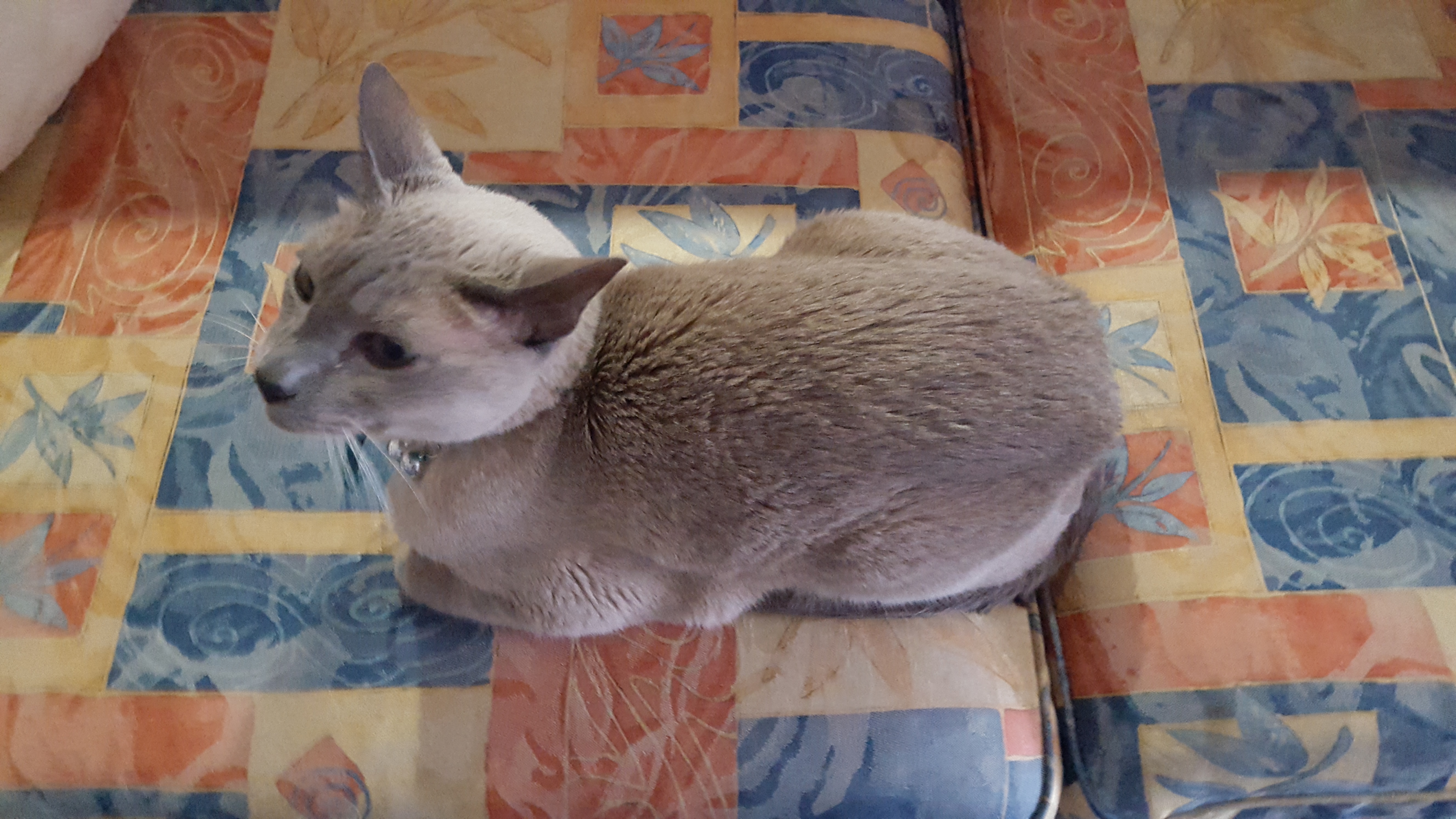
Memories of the conversations with my cat – 91

As some may be aware, but many not, Chester, my faithful writing assistant, mice catcher, and general pain in the neck, passed away some years ago.

Recently I was running a series based on his adventures, under the title of Past Conversations with my cat.

For those who have not had the chance to read about all of his exploits I will run the series again from Episode 1

These are the memories of our time together…

20161008_135125_001

This is Chester.

We’re having an interesting time in the quest for self-isolation.

It seems he doesn’t like the idea that we are still going out, and coming back, potentially bringing the virus back.

This, of course, despite the fact that there are no confirmed cases of the virus attacking cats.

That doesn’t mean that Chester might be the first cat that does.

Out of curiosity, and perhaps against my better judgment, I have to ask what his reasoning is.

Old age, he says.  If you are telling me the truth then I’m about 18 cat years old, which means it’s about 126 of your years.

I can see where this is going.  It’s my fault because I’ve left the running count of Coronavirus patients worldwide on one of my computer screens.

As of this morning, there are 393,000 cases worldwide.  He was sitting next to me when I  was looking at the statistical data on the various ages and pre-existing conditions.

For him, apparently, there was only one statistic that mattered.  Anyone over 90 in human years had little chance of surviving.

I reiterate the virus doesn’t attack cats.

I also tell him that I have no intention of getting the virus.  But it raises a point I hadn’t considered.

Going out anywhere always has a risk, whether to the supermarket or the pharmacy which are basically the only places I go.  Then there is the situation of my wife, who is still working and has to go to work.  That is a bigger risk considering one of the staff will be coming back from overseas.

How successful the self-isolation rule is, and whether everyone complies, is a matter of conjecture, and one has to wonder if 14 days in isolation is long enough.

Chester has raised a legitimate point, not necessarily in relation to himself.

Perhaps he might be worried about us.

And if that is the case, will the specter of this virus finally become the catalyst for a change in the relationship between cats and people, where they might realize we are more important to them than they currently believe.

Let’s see what happens.