The cinema of my dreams – Was it just another surveillance job – Episode 32

I’m back home and this story has been sitting on a back burner for a few months, waiting for some more to be written.

The trouble is, there are also other stories to write, and I’m not very good at prioritizing.

But, here we are, a few minutes opened up and it didn’t take long to get back into the groove.

Chasing leads, maybe


I ordered breakfast to be brought to my room, then sat back and read the paper, culminating in a second cup of coffee and a half-hearted attempt at the crossword.

My mind was not sufficiently clear of all the implications of what I’d seen last night, and before that.

The first task was to go back to the office and get onto the computer to track down the address the car was registered to.  It was not the flat.  My guess that it was a sort of safe house.  He may not have had reservations about Jan, or who she worked for, not until he became the prey.

Then it occurred to me that if Jan didn’t know where the USB was, then she had to realize he might have rumbled her perfidy.  Maybe he was not as easily fooled as I first thought.

But it didn’t explain why Nobbin was in the dark over the USB’s whereabouts, as he had told me to give Nobbin a message.  Perhaps there’s been a secret message behind that message.

Now, my mind was spinning out of control.

Like O’Connell/Quinley, and in accordance with more lessons on tradecraft, I too, had what I would like to have called a safe house, a small flat on the outskirts of Wimbledon.  

I also had an off-site parking space that was a reasonable distance from the flat, so that if I was being hunted, the car would not lead them to my hiding spot.

There I had a shower, changed, and headed for the underground.

I took the train to Charing Cross, getting there around nine, to take the short walk to the hotel.

Not expecting to find her in the room, I used my key to let myself in.

I was wrong.

She was in bed, still asleep.  Or was until I let the door slam shut.

She didn’t exactly come out from under the covers with a gun pointing at me, but I would be willing to be there was one under her pillow and her hand was on it.

“Sam?”  It was uttered sleepily, the sort that would normally send a shiver down my spine.  Not now.

“I hope you’re not intending to shoot me?”

“No.”

I could see her hand moving slowly withdrawing, and then watched her sit up and swing her legs over the side.

Still in basic clothes.  Obviously, no time to go and get some pyjamas then.

“What happened to you?”

“Got side-tracked on what I thought might be a lead, and it wasn’t.  Just a waste of time and a long night.  Thought I’d come here and get some shuteye.  Perhaps not.  Are you going to order breakfast?”

“Of course.”

“I’ll have a pot of coffee and a paper, preferably one with a crossword.”

She rang down a breakfast order, full English, then said she was having a quick shower.  I heard the water running and wondered if she was giving Severin a short report.  Old trick, running water hides conversations.

Breakfast arrived at the same time as she came out of the bathroom, hair up in a towel, and in one of the hotel dressing gowns.  My imagination got a five-second workout before I grabbed the paper and the coffee and sat in the corner.

She could have the desk.

“Do we know where Maury is?” I asked suddenly.

“Who?”

She hesitated before answering, a moment to give herself time to process the question, and if there were any hidden meanings.

“You know?  You dropped a tracker on him.”

“Oh, him.  He must have found and dumped it.  It was pinging about 100 yards from the flat.”

Of course.  There probably wasn’t one in the first place.

“Pity.  I’d like to turn up unannounced, give him a bit of a scare.”

I went back to the crossword, keeping an eye on her, noticing every now and then giving me a sideways glance.

“Did you go anywhere after the flat?”  Again sudden, out of left field.

“No.  Just come straight back here.  Do you want to keep the room for a few days?  See what happens.”

“Sounds like a good idea.  Look, I have to run an errand this morning, unfortunately, it’s not a work matter, so I’ll give you a call on my way back.  You must want to talk to your people and let them know what’s happening if you haven’t already.”

I finished the coffee, folded the paper, and stood.

“At the very least,” I added, “I have to go back into the office and report to Nobbin.  I’m sure he’ll be impressed with the lack of progress.”

“Won’t you run into that other fellow, what’s his name?”

“Severin?”

“Him, yes.”

“I don’t think so.  His name will probably be very high on the ‘we’d like to talk to you’ list if he shows his face.  Anyway, I’ve got your number.”

I deliberately waved the phone where she could see it, and the implication she could probably use it to track my movements.  That might have been the case if there was a sim card in it, and it was similar to the phone she last saw me with.

It was not.

Where I was going, no one was going to follow me or find me.

© Charles Heath 2020

Writing a book in 365 days – 228/229

Days 228 and 229

Mortal danger and the story that saves you

The Scheherazade Challenge: If My Life (and Your Attention) Depended On It…

Let’s play a dangerous game, shall we?

Imagine, for a fleeting moment, that the weight of an ancient dynasty rests on your shoulders. The Sultan, broken by betrayal and consumed by cynicism, has vowed to take a new bride each night and execute her by dawn. And then, there’s you. A single, fragile life against the tide of his despair, with only one weapon: a story.

Not just any story. A story so compelling, so intricate, so profoundly human, that it can outwit the executioner, melt a frozen heart, and stretch the boundaries of time itself. Your very survival, the fate of all women in the kingdom, hinges on your ability to spin a tale that leaves the Sultan hanging on your every word, desperate for the next sunrise to reveal its continuation.

Now, take a deep breath. We’re not in a dusty, lamp-lit palace, and (thankfully) my head isn’t on a literal chopping block. But as a writer in this wild, wonderful, and wonderfully noisy digital age, there are still stakes. My “Sultan” is you, dear reader, scrolling through an endless bazaar of content. My “dawn” is the moment you might click away, drawn by the siren song of another tab. And my “life” (or at least, my creative soul and my ability to connect with you) depends on telling an amazing story.

So, if I were Scheherazade, faced with that impossible mandate, what tale would I weave?

It wouldn’t be a simple adventure, nor a flat romance. It would need layers, heart, and a message so subtle yet profound that it could soften the hardest of souls.

My Life-Saving Story: “The Loom of Whispers and the Cartographer of Hidden Threads”

My story would begin in a city unlike any other, not built of stone and mortar, but of stories themselves. Let’s call it Aethelgard, the City of Echoes. Its streets are paved with forgotten proverbs, its buildings rise from ancient legends, and the very air hums with the whispers of every life ever lived within its bounds.

Our protagonist would be Elara, not a warrior or a princess, but a reclusive Cartographer of Hidden Threads. Her unique gift (and burden) is that she can see the invisible, iridescent threads that connect every living being in Aethelgard. Each thread represents a shared experience, a glance exchanged, a kindness given, a betrayal suffered, a dream whispered in unison. Most people only see their own thread, a solitary line stretching from their heart. But Elara sees the entirety: a magnificent, terrifying, ever-shifting tapestry of countless lives interwoven.

The story would begin with a creeping malaise. Aethelgard, once vibrant, is losing its color. Its echoes are fading. People are growing isolated, suspicious, convinced their own struggles are unique and paramount. The threads, once brilliantly intertwined, are fraying, even breaking. Elara knows the city is dying because its people are forgetting how deeply they are connected.

Her quest is not to slay a monster, but to mend the tapestry. She must journey not across lands, but through the stories themselves.

Each night, I would begin one of Elara’s “thread-following” expeditions:

  • Night One: She follows a flickering, almost invisible thread from a lonely old baker who believes no one cares for him. The thread leads her back through generations, revealing how his great-grandmother, a woman he never knew, once saved a merchant’s fortune with a single, anonymous act of kindness, and how that merchant’s lineage later funded the very orphanage where the baker himself found refuge as a child. The baker’s life, he would discover, was built on an ancient, forgotten thread of generosity.
  • Night Two: Elara traces a taut, angry thread between two feuding families, their hatred centuries old. As she follows it, she uncovers the true origin: not a grand slight, but a misinterpreted joke, a stolen flower, and a series of escalating misunderstandings, each fueled by pride and a refusal to truly listen. But she also finds faint counter-threads – moments of shared joy, unspoken longing for peace, nearly-forgiven transgressions – that still hum beneath the surface.
  • Night Three: She investigates a vibrant thread of innovation and creativity, discovering it’s not the solitary genius of a famous artist, but the culmination of countless, unacknowledged inspirations: a child’s forgotten drawing, a beggar’s hummed tune, a weaver’s discarded pattern, each contributing a vital, invisible strand to the masterpiece.

Through Elara’s journey, the Sultan (and you, dear reader) would witness the profound irony of human existence: we are all singular, yet inextricably bound. Our greatest joys and deepest pains are rarely our own alone. Every act, every word, every silence sends ripples through the great tapestry.

The “cliffhanger” each night wouldn’t be a sword fight, but a dawning realization. Elara would be on the verge of revealing a crucial, heart-wrenching, or profoundly beautiful connection that implicates seemingly disparate characters, perhaps even hinting at the Sultan’s own lineage, his own perceived isolation, as being a part of this vast, interconnected web.

The story would be a mirror, reflecting the Sultan’s own life back at him – not judging, but revealing. It would show him that just as a breaking thread in the farthest corner of Aethelgard could unravel the entire city, so too did his own actions send tremors through the lives of everyone around him. It would demonstrate that true power comes not from severing connections, but from understanding and honoring them.

By the final night, the Sultan wouldn’t just be entertained; he would be transformed. He would see himself not as an isolated ruler, but as a vital, powerful weaver in the Loom of Whispers. And with that understanding, perhaps, the desire to cut threads would vanish, replaced by a profound respect for the intricate, beautiful, and utterly inescapable tapestry of life.

What about you? If your life depended on it, what story would you tell? And what hidden threads would you uncover?

Searching for locations: Rome, Italy

We visited Rome in August

It was verrrry hot.

We flew into Rome’s Leonardo da Vinci-Fiumicino airport after a rather bumpy flight from London.  Unlike most other airports the plane parked at a satellite terminal and after we disembarked we had to catch a train to the main terminal.

The most notable memory of this airport was my daughter’s discovery of a salami shop.

We had booked a transfer to take us to the hotel the Roma Corso Trieste Mercure in Via Gradisca from the airport.  It was a white air-conditioned van and so far we had avoided the heat.

One of the rooms had faulty air conditioning an absolute must as the rooms were very hot without it and necessitated a room change which was done quickly and efficiently.

The hotel was in the suburbs and without a car we were dependent on public transport.  According to the reception staff, there was a bus stop nearby, and a longer walk to the tram or light railway.  The bus seemed to be the best option as it would take us to the central terminal near the railway station, where all tour buses also operated from, and particularly the open-top buses that went to all the major tourist attractions.

That first day basically was given over to travelling, arriving by plane and settling into the hotel, thus we didn’t get to feel the force of the heat.  That came the next day.

After a walk around the hotel precinct to get our bearings and see what shops and restaurants were available, on returning to the hotel we were faced with limited choices of room service or to go out for dinner.

My daughter and l go for a long walk up Via Nomentana to find several shops and a restaurant.  We went into the restaurant and sat down.   We waited for 10 minutes and got no service nor did anyone come and ask us if we wanted to order food so instead we left somewhat disappointed and go next door to what seemed to be the Italian version of a delicatessen and ordered sandwiches and beer.   I bought a half dozen cans of Moretti beer two of which I drank on the way home.

It was still very hot even at eight at night and the sandwiches are delicious.  It just might be by that time we were starving and anything would have tasted great.

The next morning we are up and ready to chance the weather and some history.  Breakfast at the hotel is limited but very good.

We were going to use public transport and I’d studied up on the Internet.

Travelling on the bus required pre-purchase of tickets which could be bought in certain shops and locally when exploring the area near the hotel, l found a tobacconist.

Next, we needed to understand how to use the tickets. There was no one on the bus who could help so when l tried to scan the tickets and it failed, l gave up.  We had the same issue each day and in the end, the tickets never got used.

The trip to central Rome by bus took about 15 minutes.  In the morning it was reasonably cool and showed us a little of suburban Rome.  We also saw the trams but we would not be able to use them because our hotel not on a direct route.

That first full day we decided to go and see the Vatican.

Not understanding buses and which one we needed to get to the Vatican, we took a taxi.

Wow.  It was the metaphorical equivalent of driving over the edge of a cliff with a daredevil.  It was quite literally terrifying.

Or maybe we just didn’t know that this was probably the way people drove in Rome.

Shaken but delivered in one piece we found ourselves in the square opposite St Peters Basilica.

The square is impressive, with the statues atop a circular colonnaded walkway.  The church is incredible and took a few hours to take in and to top off the day we did a tour of the Vatican museum which took the rest of the afternoon.

Then it was back to the delicatessen for more sandwiches and beer, and an interesting discussion with several elderly Italian ladies, of which I did not understand one word.

On the second full day we decided to use one of the open-top bus tours and eventually decided on the hop-on hop-off tour simply because the bus was at the central transport terminal for trains and buses and it was getting hotter.

Our first stop was the Colosseum.  There were other monuments nearby, such as the Arch of Constantine, but as the heat factor increased we joined the queue to go into the Colosseum and gladly welcomed the shade once we got inside.

The queue was long and the wait equally so, but it was worth the wait.  It would be more interesting if they could restore part of it to its former glory so we could get a sense of the place as it once was.  But alas that may never happen, but even so, it is still magnificent as a ruin.

Outside in the heat, it was off to the ruins which were a longish walk from the Colosseum, taking Via Sacra, not far from the Arch of Constantine.  This day in the walkway there were a number of illegal vendors, selling knockoff goods such as handbags and watches, and who, at the first sight of the police, packed up their wares in a blanket and ran.

Included in these ruins were The Roman Forum, or just a few columns remaining, the Palatine Hill, Imperial Fori, including the Forum of Augustus, the Forum of Caesar, and more specifically the Forum of Trajan.  It was, unfortunately very hot and dusty in the ruins the day we visited.

We walked all the way to the Foro Romano and the Septimus Severo Arch at the other end of the ruins, past the Temple of Caesar.  I found it very difficult to picture what it was like when the buildings were intact, so I bought a guide to the ruins which showed the buildings as ruins and an overlay of how they would have looked.  The buildings, then, would be as amazing as the Colosseum, and it would have been interesting to have lived back then, though perhaps not as a Christian.

I lost count of the number of bottles of water we bought, but the word ‘frizzante’ was ringing in my ears by the end of the day.  Fortunately, the water did not cost a lot to buy.

At the end of the day, we caught the hop on hop off the bus at the Colosseum and decided not to get off and see any more monuments but observe them from the bus.  The only one I remember seeing was Circo Massimo.  Perhaps if we’d known it was going to be twice as hot on the bus, yes, there was no air-conditioning; we may have chosen another form of transport to get back to the hotel.

On the third and last day in Rome, we decided to go to the Trevi Fountain, see the pantheon and walk up the Spanish Steps.  We spent most of the morning in the cool of a café watching the tourists at the fountain.  By the time we reached the top of the Spanish Steps, we were finished.

How would we survive without what we now take for granted?

There is a saying ‘you don’t know what you’ve got till it’s gone’.

For a long time, in days before the current technological age, I didn’t really understand what that meant.

Until now.

How many times, in the last few days have I heard the question, “Where’s my mobile phone?”.

It seems we can lose almost anything else but, without the phone, we are completely lost.

The same now applies to all of our household appliances.

Then, the other day I heard, “We aren’t able to do very much because the microwave oven is broken.”

How did we manage in the days before we had such devices?  I know my grandmother used to have a wood stove and cooked everything, bread, meat, fish, vegetables, cakes, puddings, even made a cup of tea with that stove.

I don’t think I ever had a cup of coffee at her house, but I have a lot of memories of some amazing food.  No such thing as electric kitchen appliances, or a microwave oven, not in that house.

We had the same experience ourselves when one of the fridge/freezer units broke down, and severely restricted what we could cook and store, especially the freezer.

And perhaps that’s the problem.  We take so many things for granted and live a life that is centered around convenience.

What would happen if those conveniences were taken away?

Certainly, for me, I know, what it’s like to lose the use of a kitchen appliance and having to improvise, but I’m not sure how we would react if we had a real catastrophe, like having no electricity.

We try not to think about what it would be like, just a short blackout is enough to frighten us.

But, I haven’t lost my phone yet.

Let’s hope it never happens.

An excerpt from “Betrayal” – a work in progress

It could have been anywhere in the world, she thought, but it wasn’t.  It was in a city where if anything were to go wrong…

She sighed and came away from the window and looked around the room.  It was quite large and expensively furnished.  It was one of several she had been visiting in the last three months.

Quite elegant too, as the hotel had its origins dating back to before the revolution in 1917.  At least, currently, there would not be a team of KGB agents somewhere in the basement monitoring everything that happened in the room.

There was no such thing as the KGB anymore, though there was an FSB, but such organisations were of no interest to her.

She was here to meet with Vladimir.

She smiled to herself when she thought of him, such an interesting man whose command of English was as good as her command of Russian, though she had not told him of that ability.

All he knew of her was that she was American, worked in the Embassy as a clerk, nothing important, whose life both at work and at home was boring.  Not that she had blurted that out the first they met, or even the second.

That first time, at a function in the Embassy, was a chance meeting, a catching of his eye as he looked around the room, looking, as he had told her later, for someone who might not be as boring as the function itself.

It was a celebration, honouring one of the Embassy officials on his service in Moscow, and the fact he was returning home after 10 years.  She had been there once, and still hadn’t met all the staff.

They had talked, Vladimir knew a great deal about England, having been stationed there for a year or two, and had politely asked questions about where she lived, her family, and of course what her role was, all questions she fended off with an air of disinterested interest.

It fascinated him, as she knew it would, a sort of mental sparring as one would do with swords if this was a fencing match.

They had said they might or might not meet again when the party was over, but she suspected there would be another opportunity.  She knew the signs of a man who was interested in her, and Vladimir was interested.

The second time came in the form of an invitation to an art gallery, and a viewing of the works of a prominent Russian artist, an invitation she politely declined.  After all, invitations issued to Embassy staff held all sorts of connotations, or so she was told by the Security officer when she told him.

Then, it went quiet for a month.  There was a party at the American embassy and along with several other staff members, she was invited.  She had not expected to meet Vladimir, but it was a pleasant surprise when she saw him, on the other side of the room, talking to several military men.

A pleasant afternoon ensued.

And it was no surprise that they kept running into each other at the various events on the diplomatic schedule.

By the fifth meeting, they were like old friends.  She had broached the subject of being involved in a plutonic relationship with him with the head of security at the embassy.  Normally for a member of her rank, it would not be allowed, but in this instance it was.

She did not work in any sensitive areas, and, as the security officer had said, she might just happen upon something that might be useful.  In that regard, she was to keep her eyes and ears open and file a report each time she met him.

After that discussion, she got the impression her superiors considered Vladimir more than just a casual visitor on the diplomatic circuit.  She also formed the impression that he might consider her an ‘asset’, a word that had been used at the meeting with security and the ambassador.

It was where the word ‘spy’ popped into her head and sent a tingle down her spine.  She was not a spy, but the thought of it, well, it would be fascinating to see what happened.

A Russian friend.  That’s what she would call him.

And over time, that relationship blossomed, until, after a visit to the ballet, late and snowing, he invited her to his apartment not far from the ballet venue.  It was like treading on thin ice, but after champagne and an introduction to caviar, she felt like a giddy schoolgirl.

Even so, she had made him promise that he remain on his best behaviour.  It could have been very easy to fall under the spell of a perfect evening, but he promised, showed her to a separate bedroom, and after a brief kiss, their first, she did not see him until the next morning.

So, it began.

It was an interesting report she filed after that encounter, one where she had expected to be reprimanded.

She wasn’t.

It wasn’t until six weeks had passed when he asked her if she would like to take a trip to the country.  It would involve staying in a hotel, that they would have separate rooms.  When she reported the invitation, no objection was raised, only a caution; keep her wits about her.

Perhaps, she had thought, they were looking forward to a more extensive report.  After all, her reports on the places, and the people, and the conversations she overheard, were no doubt entertaining reading for some.

But this visit was where the nature of the relationship changed, and it was one that she did not immediately report.  She had realised at some point before the weekend away, that she had feelings for him, and it was not that he was pushing her in that direction or manipulating her in any way.

It was just one of those moments where, after a grand dinner, a lot of champagne, and delightful company, things happen.  Standing at the door to her room, a lingering kiss, not intentional on her part, and it just happened.

And for not one moment did she believe she had been compromised, but for some reason she had not reported that subtle change in the relationship to the powers that be, and so far, no one had any inkling.

She took off her coat and placed it carefully of the back of one of the ornate chairs in the room.  She stopped for a moment to look at a framed photograph on the wall, one representing Red Square.

Then, after a minute or two, she went to the mini bar and took out the bottle of champagne that had been left there for them, a treat arranged by Vladimir for each encounter.

There were two champagne flutes set aside on the bar, next to a bowl of fruit.  She picked up the apple and thought how Eve must have felt in the garden of Eden, and the temptation.

Later perhaps, after…

She smiled at the thought and put the apple back.

A glance at her watch told her it was time for his arrival.  It was if anything, the one trait she didn’t like, and that was his punctuality.  A glance at the clock on the room wall was a minute slow.

The doorbell to the room rang, right on the appointed time.

She put the bottle down and walked over to the door.

A smile on her face, she opened the door.

It was not Vladimir.  It was her worst nightmare.

© Charles Heath 2020

Searching for locations: Arezzo, Italy

There’s nothing like being a few days early or a few days late for a major festival.

We have the dubious honour of being able to do both without thinking. I guess this is why you should try to plan your holiday around events, if possible.

We love Italy.

We’ve been several times, but the last visit was the best. Of course, it was not without a lot of hiccups just getting there, but in the end, later than we expected, actually about five minutes before they closed Florence airport, we made it.

So, little did we know there was such a thing as Calcio Fiorentino an early form of football and rugby that originated in 16th-century Italy and is thought to have started in the Piazza Santa Croce in Florence. But we were in Florence, at the right time, and even got to see the procession through the streets of Florence.

You can read more about the game and rules at https://en.wikipedia.org/wiki/Calcio_Fiorentino

We were not so lucky in Siena where we were about a week early for the Palio di Siena which was to take place on 2nd July.

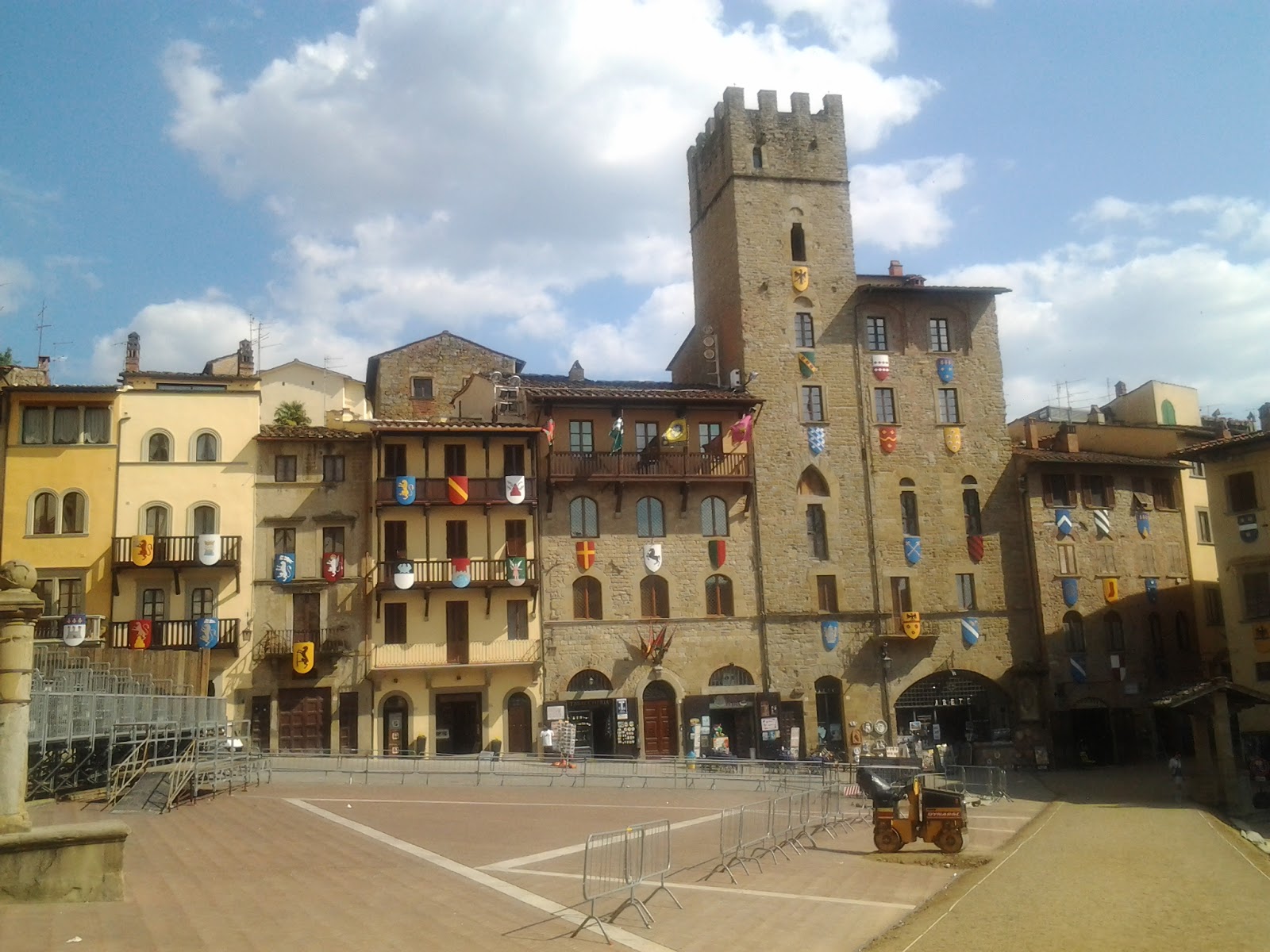
Nor were we in Arezzo at the right time for the Saracen Joust which was held on the penultimate Saturday in June. It is held at the Piazza Grande in the heart of Arezzo and is one of the most beautiful piazzas in Tuscany.

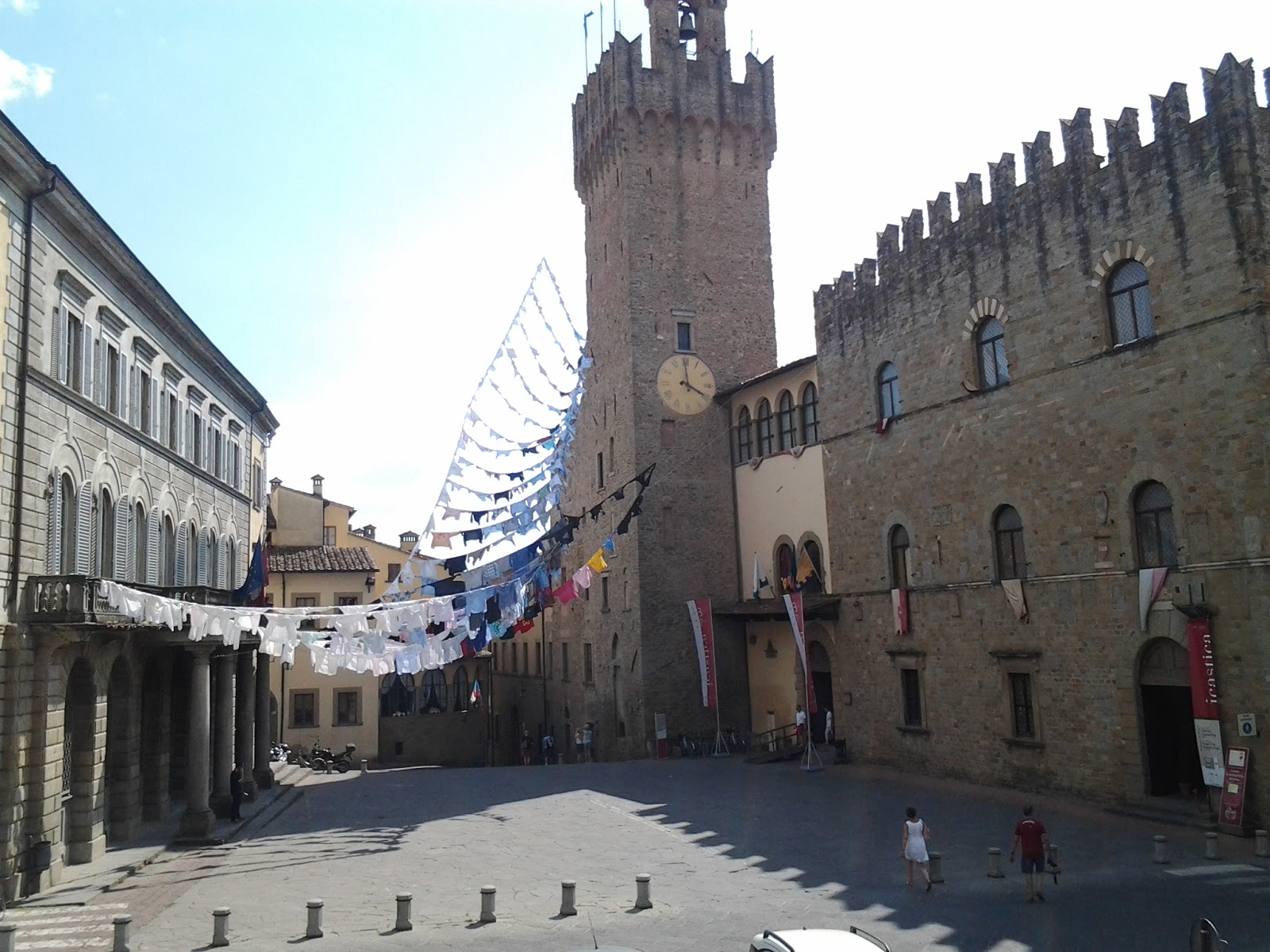
The Piazza Della Liberta and the Town Hall tower

The Piazza Grande, also known as Piazza Vasari, is said to be situated on the site of the ancient Roman Forum.  Here, it is being set up for the coming Joust.

A different view of Arezzo Cathedral | Cattedrale dei Santi Pietro e Donato

“The Things we do for Love”, the story behind the story

This story has been ongoing since I was seventeen, and just to let you know, I’m 71 this year.

Yes, it’s taken a long time to get it done.

Why, you might ask.

Well, I never gave it much interest because I started writing it after a small incident when I was 17, and working as a book packer for a book distributor in Melbourne

At the end of my first year, at Christmas, the employer had a Christmas party, and that year, it was at a venue in St Kilda.

I wasn’t going to go because at that age, I was an ordinary boy who was very introverted and basically scared of his own shadow and terrified by girls.

Back then, I would cross the street to avoid them

Also, other members of the staff in the shipping department were rough and ready types who were not backwards in telling me what happened, and being naive, perhaps they knew I’d be either shocked or intrigued.

I was both adamant I wasn’t coming and then got roped in on a dare.

Damn!

So, back then, in the early 70s, people looked the other way when it came to drinking, and of course, Dutch courage always takes away the concerns, especially when normally you wouldn’t do half the stuff you wouldn’t in a million years

I made it to the end, not as drunk and stupid as I thought I might be, and St Kilda being a salacious place if you knew where to look, my new friends decided to give me a surprise.

It didn’t take long to realise these men were ‘men about town’ as they kept saying, and we went on an odyssey.  Yes, those backstreet brothels where one could, I was told, have anything they could imagine.

Let me tell you, large quantities of alcohol and imagination were a very bad mix.

So, the odyssey in ‘The things we do’ was based on that, and then the encounter with Diana. Well, let’s just say I learned a great deal about girls that night.

Firstly, not all girls are nasty and spiteful, which seemed to be the case whenever I met one. There was a way to approach, greet, talk to, and behave.

It was also true that I could have had anything I wanted, but I decided what was in my imagination could stay there.  She was amused that all I wanted was to talk, but it was my money, and I could spend it how I liked.

And like any 17-year-old naive fool, I fell in love with her and had all these foolish notions.  Months later, I went back, but she had moved on, to where no one was saying or knew.

Needless to say, I was heartbroken and had to get over that first loss, which, like any 17-year-old, was like the end of the world.

But it was the best hour I’d ever spent in my life and would remain so until I met the woman I have been married to for the last 48 years.

As Henry, he was in part based on a rebel, the son of rich parents who despised them and their wealth, and he used to regale anyone who would listen about how they had messed up his life

If only I’d come from such a background!

And yes, I was only a run away from climbing up the stairs to get on board a ship, acting as a purser.

I worked for a shipping company and they gave their junior staff members an opportunity to spend a year at sea working as a purser on a cargo ship that sailed between Melbourne, Sydney and Hobart in Australia.

One of the other junior staff members’ turn came, and I would visit him on board when he would tell me stories about life on board, the officers, the crew, and other events. These stories, which sounded incredible to someone so impressionable, were a delight to hear.

Alas, by that time, I had tired of office work and moved on to be a tradesman at the place where my father worked.

It proved to be the right move, as that is where I met my wife.  Diana had been right; love would find me when I least expected it.

Writing a book in 365 days – 228/229

Days 228 and 229

Mortal danger and the story that saves you

The Scheherazade Challenge: If My Life (and Your Attention) Depended On It…

Let’s play a dangerous game, shall we?

Imagine, for a fleeting moment, that the weight of an ancient dynasty rests on your shoulders. The Sultan, broken by betrayal and consumed by cynicism, has vowed to take a new bride each night and execute her by dawn. And then, there’s you. A single, fragile life against the tide of his despair, with only one weapon: a story.

Not just any story. A story so compelling, so intricate, so profoundly human, that it can outwit the executioner, melt a frozen heart, and stretch the boundaries of time itself. Your very survival, the fate of all women in the kingdom, hinges on your ability to spin a tale that leaves the Sultan hanging on your every word, desperate for the next sunrise to reveal its continuation.

Now, take a deep breath. We’re not in a dusty, lamp-lit palace, and (thankfully) my head isn’t on a literal chopping block. But as a writer in this wild, wonderful, and wonderfully noisy digital age, there are still stakes. My “Sultan” is you, dear reader, scrolling through an endless bazaar of content. My “dawn” is the moment you might click away, drawn by the siren song of another tab. And my “life” (or at least, my creative soul and my ability to connect with you) depends on telling an amazing story.

So, if I were Scheherazade, faced with that impossible mandate, what tale would I weave?

It wouldn’t be a simple adventure, nor a flat romance. It would need layers, heart, and a message so subtle yet profound that it could soften the hardest of souls.

My Life-Saving Story: “The Loom of Whispers and the Cartographer of Hidden Threads”

My story would begin in a city unlike any other, not built of stone and mortar, but of stories themselves. Let’s call it Aethelgard, the City of Echoes. Its streets are paved with forgotten proverbs, its buildings rise from ancient legends, and the very air hums with the whispers of every life ever lived within its bounds.

Our protagonist would be Elara, not a warrior or a princess, but a reclusive Cartographer of Hidden Threads. Her unique gift (and burden) is that she can see the invisible, iridescent threads that connect every living being in Aethelgard. Each thread represents a shared experience, a glance exchanged, a kindness given, a betrayal suffered, a dream whispered in unison. Most people only see their own thread, a solitary line stretching from their heart. But Elara sees the entirety: a magnificent, terrifying, ever-shifting tapestry of countless lives interwoven.

The story would begin with a creeping malaise. Aethelgard, once vibrant, is losing its color. Its echoes are fading. People are growing isolated, suspicious, convinced their own struggles are unique and paramount. The threads, once brilliantly intertwined, are fraying, even breaking. Elara knows the city is dying because its people are forgetting how deeply they are connected.

Her quest is not to slay a monster, but to mend the tapestry. She must journey not across lands, but through the stories themselves.

Each night, I would begin one of Elara’s “thread-following” expeditions:

  • Night One: She follows a flickering, almost invisible thread from a lonely old baker who believes no one cares for him. The thread leads her back through generations, revealing how his great-grandmother, a woman he never knew, once saved a merchant’s fortune with a single, anonymous act of kindness, and how that merchant’s lineage later funded the very orphanage where the baker himself found refuge as a child. The baker’s life, he would discover, was built on an ancient, forgotten thread of generosity.
  • Night Two: Elara traces a taut, angry thread between two feuding families, their hatred centuries old. As she follows it, she uncovers the true origin: not a grand slight, but a misinterpreted joke, a stolen flower, and a series of escalating misunderstandings, each fueled by pride and a refusal to truly listen. But she also finds faint counter-threads – moments of shared joy, unspoken longing for peace, nearly-forgiven transgressions – that still hum beneath the surface.
  • Night Three: She investigates a vibrant thread of innovation and creativity, discovering it’s not the solitary genius of a famous artist, but the culmination of countless, unacknowledged inspirations: a child’s forgotten drawing, a beggar’s hummed tune, a weaver’s discarded pattern, each contributing a vital, invisible strand to the masterpiece.

Through Elara’s journey, the Sultan (and you, dear reader) would witness the profound irony of human existence: we are all singular, yet inextricably bound. Our greatest joys and deepest pains are rarely our own alone. Every act, every word, every silence sends ripples through the great tapestry.

The “cliffhanger” each night wouldn’t be a sword fight, but a dawning realization. Elara would be on the verge of revealing a crucial, heart-wrenching, or profoundly beautiful connection that implicates seemingly disparate characters, perhaps even hinting at the Sultan’s own lineage, his own perceived isolation, as being a part of this vast, interconnected web.

The story would be a mirror, reflecting the Sultan’s own life back at him – not judging, but revealing. It would show him that just as a breaking thread in the farthest corner of Aethelgard could unravel the entire city, so too did his own actions send tremors through the lives of everyone around him. It would demonstrate that true power comes not from severing connections, but from understanding and honoring them.

By the final night, the Sultan wouldn’t just be entertained; he would be transformed. He would see himself not as an isolated ruler, but as a vital, powerful weaver in the Loom of Whispers. And with that understanding, perhaps, the desire to cut threads would vanish, replaced by a profound respect for the intricate, beautiful, and utterly inescapable tapestry of life.

What about you? If your life depended on it, what story would you tell? And what hidden threads would you uncover?

An excerpt from “Sunday in New York”

Now available on Amazon at:  https://amzn.to/2H7ALs8

Williams’ Restaurant, East 65th Street, New York, Saturday, 8:00 p.m.

We met the Blaine’s at Williams’, a rather upmarket restaurant that the Blaine’s frequently visited, and had recommended.

Of course, during the taxi ride there, Alison reminded me that with my new job, we would be able to go to many more places like Williams’.  It was, at worst, more emotional blackmail, because as far as Alison was concerned, we were well on our way to posh restaurants, the Trump Tower Apartments, and the trappings of the ‘executive set’.

It would be a miracle if I didn’t strangle Elaine before the night was over.  It was she who had filled Alison’s head with all this stuff and nonsense.

Aside from the half frown half-smile, Alison was looking stunning.  It was months since she had last dressed up, and she was especially wearing the dress I’d bought her for our 5th anniversary that cost a month’s salary.  On her, it was worth it, and I would have paid more if I had to.  She had adored it, and me, for a week or so after.

For tonight, I think I was close to getting back on that pedestal.

She had the looks and figure to draw attention, the sort movie stars got on the red carpet, and when we walked into the restaurant, I swear there were at least five seconds silence, and many more gasps.

Even I had a sudden loss of breath earlier in the evening when she came out of the dressing room.  Once more I was reminded of how lucky I was that she had agreed to marry me.  Amid all those self-doubts, I couldn’t believe she had loved me when there were so many others ‘out there’ who were more appealing.

Elaine was out of her seat and came over just as the Head Waiter hovered into sight.  She personally escorted Alison to the table, allowing me to follow like the Queen’s consort, while she and Alison basked in the admiring glances of the other patrons.

More than once I heard the muted question, “Who is she?”

Jimmy stood, we shook hands, and then we sat together.  It was not the usual boy, girl, boy, girl seating arrangement.  Jimmy and I on one side and Elaine and Alison on the other.

The battle lines were drawn.

Jimmy was looking fashionable, with the permanent blade one beard, unkempt hair, and designer dinner suit that looked like he’d slept in it.  Alison insisted I wear a tuxedo, and I looked like the proverbial penguin or just a thinner version of Alfred Hitchcock.

The bow tie had been slightly crooked, but just before we stepped out she had straightened it.  And took the moment to look deeply into my soul.  It was one of those moments when words were not necessary.

Then it was gone.

I relived it briefly as I sat and she looked at me.  A penetrating look that told me to ‘behave’.

When we were settled, Elaine said, in that breathless, enthusiastic manner of hers when she was excited, “So, Harry, you are finally moving up.”  It was not a question, but a statement.

I was not sure what she meant by ‘finally’ but I accepted it with good grace.  Sometimes Elaine was prone to using figures of speech I didn’t understand.  I guessed she was talking about the new job.  “It was supposed to be a secret.”

She smiled widely.  “There are no secrets between Al and I, are there Al?”

I looked at ‘Al’ and saw a brief look of consternation.

I was not sure Alison liked the idea of being called Al.  I tried it once and was admonished.  But it was interesting her ‘best friend forever’ was allowed that distinction when I was not.  It was, perhaps, another indicator of how far I’d slipped in her estimation.

Perhaps, I thought, it was a necessary evil.  As I understood it, the Blaine’s were our mentors at the Trump Tower, because they didn’t just let ‘anyone’ in.  I didn’t ask if the Blaine’s thought we were just ‘anyone’ before I got the job offer.

And then there was that look between Alison and Elaine, quickly stolen before Alison realized I was looking at both of them.  I was out of my depth, in a place I didn’t belong, with people I didn’t understand.  And yet, apparently, Alison did.  I must have missed the memo.

“No,” Alison said softly, stealing a glance in my direction, “No secrets between friends.”

No secrets.  Her look conveyed something else entirely.

The waiter brought champagne, Krug, and poured glasses for each of us.  It was not the cheap stuff, and I was glad I brought a couple of thousand dollars with me.  We were going to need it.

Then, a toast.

To a new job and a new life.

“When did you decide?”  Elaine was effusive at the best of times, but with the champagne, it was worse.

Alison had a strange expression on her face.  It was obvious she had told Elaine it was a done deal, even before I’d made up my mind.  Perhaps she’d assumed I might be ‘refreshingly honest’ in front of Elaine, but it could also mean she didn’t really care what I might say or do.

Instead of consternation, she looked happy, and I realized it would be churlish, even silly if I made a scene.  I knew what I wanted to say.  I also knew that it would serve little purpose provoking Elaine, or upsetting Alison.  This was not the time or the place.  Alison had been looking forward to coming here, and I was not going to spoil it.

Instead, I said, smiling, “When I woke up this morning and found Alison missing.  If she had been there, I would not have noticed the water stain on the roof above our bed, and decide there and then how much I hated the place.” I used my reassuring smile, the one I used with the customers when all hell was breaking loose, and the forest fire was out of control.  “It’s the little things.  They all add up until one day …”  I shrugged.  “I guess that one day was today.”

I saw an incredulous look pass between Elaine and Alison, a non-verbal question; perhaps, is he for real?  Or; I told you he’d come around.

I had no idea the two were so close.

“How quaint,” Elaine said, which just about summed up her feelings towards me.  I think, at that moment, I lost some brownie points.  It was all I could come up with at short notice.

“Yes,” I added, with a little more emphasis than I wanted.  “Alison was off to get some study in with one of her friends.”

“Weren’t the two of you off to the Hamptons, a weekend with some friends?” Jimmy piped up, and immediately got the ‘shut up you fool’ look, that cut that line of conversation dead.  Someone forgot to feed Jimmy his lines.

It was followed by the condescending smile from Elaine, and “I need to powder my nose.  Care to join me, Al?”

A frown, then a forced smile for her new best friend.  “Yes.”

I watched them leave the table and head in the direction of the restroom, looking like they were in earnest conversation.  I thought ‘Al’ looked annoyed, but I could be wrong.

I had to say Jimmy looked more surprised than I did.

There was that odd moment of silence between us, Jimmy still smarting from his death stare, and for me, the Alison and Elaine show.  I was quite literally gob-smacked.

I drained my champagne glass gathering some courage and turned to him.  “By the way, we were going to have a weekend away, but this legal tutorial thing came up.  You know Alison is doing her law degree.”

He looked startled when he realized I had spoken.  He was looking intently at a woman several tables over from us, one who’d obviously forgotten some basic garments when getting dressed.  Or perhaps it was deliberate.  She’d definitely had some enhancements done.

He dragged his eyes back to me.  “Yes.  Elaine said something or other about it.  But I thought she said the tutor was out of town and it had been postponed until next week.  Perhaps I got it wrong.  I usually do.”

“Perhaps I’ve got it wrong.”  I shrugged, as the dark thoughts started swirling in my head again.  “This week or next, what does it matter?”

Of course, it mattered to me, and I digested what he said with a sinking heart.  It showed there was another problem between Alison and me; it was possible she was now telling me lies.  If what he said was true and I had no reason to doubt him, where was she going tomorrow morning, and had she really been with a friend studying today?

We poured some more champagne, had a drink, then he asked, “This promotion thing, what’s it worth?”

“Trouble, I suspect.  Definitely more money, but less time at home.”

“Oh,” raised eyebrows.  Obviously, the women had not talked about the job in front of him, or, at least, not all the details.  “You sure you want to do that?”

At last the voice of reason.  “Me?  No.”

“Yet you accepted the job.”

I sucked in a breath or two while I considered whether I could trust him.  Even if I couldn’t, I could see my ship was sinking, so it wouldn’t matter what I told him, or what Elaine might find out from him.  “Jimmy, between you and me I haven’t as yet decided one way or another.  To be honest, I won’t know until I go up to Barclay’s office and he asks me the question.”

“Barclay?”

“My boss.”

“Elaine’s doing a job for a Barclay that recently moved in the tower a block down from us.  I thought I recognized the name.”

“How did Elaine get the job?”

“Oh, Alison put him onto her.”

“When?”

“A couple of months ago.  Why?”

I shrugged and tried to keep a straight face, while my insides were churning up like the wake of a supertanker.  I felt sick, faint, and wanting to die all at the same moment.  “Perhaps she said something about it, but it didn’t connect at the time.  Too busy with work I expect.  I think I seriously need to get away for a while.”

I could hardly breathe, my throat was constricted and I knew I had to keep it together.  I could see Elaine and Alison coming back, so I had to calm down.  I sucked in some deep breaths, and put my ‘manage a complete and utter disaster’ look on my face.

And I had to change the subject, quickly, so I said, “Jimmy, Elaine told Alison, who told me, you were something of a guru of the cause and effects of the global economic meltdown.  Now, I have a couple of friends who have been expounding this theory …”

Like flicking a switch, I launched into the well-worn practice of ‘running a distraction’, like at work when we needed to keep the customer from discovering the truth.  It was one of the things I was good at, taking over a conversation and pushing it in a different direction.  It was salvaging a good result from an utter disaster, and if ever there was a time that it was required, it was right here, right now.

When Alison sat down and looked at me, she knew something had happened between Jimmy and I.  I might have looked pale or red-faced, or angry or disappointed, it didn’t matter.  If that didn’t seal the deal for her, the fact I took over the dining engagement did.  She knew well enough the only time I did that was when everything was about to go to hell in a handbasket.  She’d seen me in action before and had been suitably astonished.

But I got into gear, kept the champagne flowing and steered the conversation, as much as one could from a seasoned professional like Elaine, and, I think, in Jimmy’s eyes, he saw the battle lines and knew who took the crown on points.  Neither Elaine nor Jimmy suspected anything, and if the truth be told, I had improved my stocks with Elaine.  She was at times both surprised and interested, even willing to take a back seat.

Alison, on the other hand, tried poking around the edges, and, once when Elaine and Jimmy had got up to have a cigarette outside, questioned me directly.  I chose to ignore her, and pretend nothing had happened, instead of telling her how much I was enjoying the evening.

She had her ‘secrets’.  I had mine.

At the end of the evening, when I got up to go to the bathroom, I was physically sick from the pent up tension and the implications of what Jimmy had told me.  It took a while for me to pull myself together; so long, in fact, Jimmy came looking for me.  I told him I’d drunk too much champagne, and he seemed satisfied with that excuse.  When I returned, both Alison and Elaine noticed how pale I was but neither made any comment.

It was a sad way to end what was supposed to be a delightful evening, which to a large degree it was for the other three.  But I had achieved what I set out to do, and that was to play them at their own game, watching the deception, once I knew there was a deception, as warily as a cat watches its prey.

I had also discovered Jimmy’s real calling; a professor of economics at the same University Alison was doing her law degree.  It was no surprise in the end, on a night where surprises abounded, that the world could really be that small.

We parted in the early hours of the morning, a taxi whisking us back to the Lower East Side, another taking the Blaine’s back to the Upper West Side.  But, in our case, as Alison reminded me, it would not be for much longer.  She showed concern for my health, asked me what was wrong.  It took all the courage I could muster to tell her it was most likely something I ate and the champagne, and that I would be fine in the morning.

She could see quite plainly it was anything other than what I told her, but she didn’t pursue it.  Perhaps she just didn’t care what I was playing at.

And yet, after everything that had happened, once inside our ‘palace’, the events of the evening were discarded, like her clothing, and she again reminded me of what we had together in the early years before the problems had set in.

It left me confused and lost.

I couldn’t sleep because my mind had now gone down that irreversible path that told me I was losing her, that she had found someone else, and that our marriage was in its last death throes.

And now I knew it had something to do with Barclay.

© Charles Heath 2015-2020

Sunday In New York

In a word: Holiday

Some call time off from work whether it is for a day, a few days, a couple of weeks, or maybe longer, a holiday.

Or leave, leave of absence, annual leave, or long service leave.

Others may call it a vacation.

It depends on what part of the world you live in.

But the end result is the same, you do not go to work, so you stay home and do all those things that have mounted up, you drive up, and for some reason, it is always up, to the cabin, for a little hunting shooting fishing, or you get on a plane or a ship and try to get as far away from home and work as possible.

That’s called going overseas. It seems if there is an ocean between where you go and where you live, no one will be able to disturb you.

Sorry, I bet you didn’t leave that mobile phone or iPad at home did you?

But, of course, there are a few other obscure references to the word holiday.

For instance,

It can be a day set aside to commemorate an event or a person, a day when you are not expected to work, e.g. Memorial Day, Christmas Day, or Good Friday. In Britain, they used to be called Bank Holidays.

It can be a specified period that you may be excused from completing a task or doing something such as getting a one-year tax exemption, which might also be called a one-year tax holiday.

Yes, now that is an obscure reference, particularly when no tax department would ever grant anyone an exemption of any sort.