What did it mean, “Being ‘undead’ isn’t being alive”

I remember one day many, many years ago seeing a piece of graffiti in a railway tunnel:  “Being undead isn’t being alive”.

It was the ’70s right after a turbulent ’60s when everything changed, where only the young, as I was at the time, didn’t recognise what had changed.

Of course, this is the problem down through the generations, where the older generation witnesses the changes, too fast, too sudden, and too radical, and the young, they adopt them without thinking.

And that piece of graffiti was more than likely a cry for help that would never come.

After all, the older generation never knew what had happened, and there was no means of coping.  Words were not enough, and it was the beginning of a breakdown in discipline and a lot more that didn’t manifest itself for a generation.

But that sign lived on, through the ’80s and the ’90s.  I first saw it as a child, it was still there when I was going to and from work on the train.  It made me wonder often during those years what the graffitist was trying to tell the world.

Being undead?  What sort of expression is that?

I think he or she was alluding to the fact that being alive was more than just drawing breath, eating and sleeping.

Those early years of youthful emancipation brought on all sorts of maladies and drugs.  We were never warned about them, not like they are now in schools, and it seemed everyone knew someone who knew where to get them.

I never tried them.  Not for the usual reasons, it was just I never found myself in a situation where I could get them, or try them to see what all the fuss was about.

Perhaps I should be glad it worked out that way.

Of course, I would never find out what the graffitist meant, but I suspect it could have been one of those moments of rare clarity, in a drug-induced haze, or the depths of despair from not having had the next ‘fix’.

Or was it something simple, like he or she had just broken up with a long-term partner, that painful time when one or other calls it quits? Or that time after an argument with one of your parents, or a best friend, and it seemed there was no path back?  Or is it like that feeling of being betrayed, that awful feeling when you discover your partner is cheating on you, and inevitably everyone else knows, but you’re the last to find out?

No, the message wasn’t that simple, especially because of the psychedelic manner in which it was presented on that wall, I doubt the perpetrator had an artistic talent they wanted to show off.  That artistic bent was fuelled by something else, perhaps a dream or a vision.

Or, instead, there was no real reason, and it was the culmination of having the freedom you always wanted, and yet being left with an emptiness that cannot be filled no matter how many drugs you take.  Was that why so many people back then died from an overdose?

I’ll never know who it was that put that sign on the wall, whether they lived or died, or whether they found what they were looking for.  Nor will I ever know what it was like to be in their shoes.

Perhaps I was one of the lucky people, who knows?

An excerpt from “What Sets Us Apart”, a mystery with a twist

See the excerpt from the story below, just a taste of what’s in store…

http://amzn.to/2Eryfth

whatsetscover

McCallister was old school, a man who would most likely fit in perfectly campaigning on the battlefields of Europe during the Second World War. He’d been like a fish out of water in the army, post-Falklands, and while he retired a hero, he still felt he’d more to give.

He’d applied and was accepted as head of a SWAT team, and, watching him now as he and his men disembarked from the truck in almost military precision, a look passed between Annette, the police liaison officer, and I that said she’d seen it all before. I know I had.

There was a one in four chance his team would be selected for this operation, and she had been hoping it would be one of the other three. While waiting for them to arrive she filled me in on the various teams. His was the least co-operative, and the more likely to make ad-hoc decisions rather than adhere to the plan, or any orders that may come from the officer in charge.

This, she said quite bluntly, was going to end badly.

I still had no idea why Prendergast instructed me to attend the scene of what looked to be a normal domestic operation, but as the nominated expert in the field in these types of situations, it was fairly clear he wasn’t taking any chances. It was always a matter of opinion between us, and generally I lost.

In this case, it was an anonymous report identifying what the authorities believed were explosives in one of the dockside sheds where explosives were not supposed to be.

The only reason why the report was given any credence was the man, while not identifying himself by name, said he’d been an explosive expert once and recognized the boxes. That could mean anything, but the Chief Constable was a cautious man.

With his men settled and preparing their weapons, McCallister came over to the command post, not much more than the SUV my liaison and I arrived in, with weapons, bulletproof vests, and rolls of tape to cordon off the area afterward. We both had coffee, steaming in the cold early morning air. Dawn was slowly approaching and although rain had been forecast it had yet to arrive.

A man by the name of Benson was in charge. He too had groaned when he saw McCallister.

“A fine morning for it.” McCallister was the only enthusiastic one here.

He didn’t say what ‘it’ was, but I thought it might eventually be mayhem.

“Let’s hope the rain stays away. It’s going to be difficult enough without it,” Benson said, rubbing his hands together. We had been waiting for the SWAT team to arrive, and another team to take up their position under the wharf, and who was in the final stages of securing their position.

While we were waiting we drew up the plan. I’d go in first to check on what we were dealing with, and what type of explosives. The SWAT team, in the meantime, were to ensure all the exits to the shed were covered. When I gave the signal, they were to enter and secure the building. We were not expecting anyone inside or out, and no movement had been detected in the last hour since our arrival and deployment.

“What’s the current situation?”

“I’ve got eyes on the building, and a team coming in from the waterside, underneath. Its slow progress, but they’re nearly there. Once they’re in place, we’re sending McKenzie in.”

He looked in my direction.

“With due respect sir, shouldn’t it be one of us?” McCallister glared at me with the contempt that only a decorated military officer could.

“No. I have orders from above, much higher than I care to argue with, so, McCallister, no gung-ho heroics for the moment. Just be ready to move on my command, and make sure you have three teams at the exit points, ready to secure the building.”

McCallister opened his mouth, no doubt to question those orders, but instead closed it again. “Yes sir,” he muttered and turned away heading back to his men.

“You’re not going to have much time before he storms the battlements,” Benson quietly said to me, a hint of exasperation in his tone. “I’m dreading the paperwork.”

It was exactly what my liaison officer said when she saw McCallister arriving.

The water team sent their ‘in position’ signal, and we were ready to go.

In the hour or so we’d been on site nothing had stirred, no arrivals, no departures, and no sign anyone was inside, but that didn’t mean we were alone. Nor did it mean I was going to walk in and see immediately what was going on. If it was a cache of explosives then it was possible the building was booby-trapped in any number of ways, there could be sentries or guards, and they had eyes on us, or it might be a false alarm.

I was hoping for the latter.

I put on the bulletproof vest, thinking it was a poor substitute for full battle armor against an exploding bomb, but we were still treating this as a ‘suspected’ case. I noticed my liaison officer was pulling on her bulletproof vest too.

“You don’t have to go. This is my party, not yours,” I said.

“The Chief Constable told me to stick to you like glue, sir.”

I looked at Benson. “Talk some sense into her please, this is not a kindergarten outing.”

He shrugged. Seeing McCallister had taken all the fight out of him. “Orders are orders. If that’s what the Chief Constable requested …”

Madness. I glared at her, and she gave me a wan smile. “Stay behind me then, and don’t do anything stupid.”

“Believe me, I won’t be.” She pulled out and checked her weapon, chambering the first round. It made a reassuring sound.

Suited up, weapons readied, a last sip of the coffee in a stomach that was already churning from nerves and tension, I looked at the target, one hundred yards distant and thought it was going to be the longest hundred yards I’d ever traversed. At least for this week.

A swirling mist rolled in and caused a slight change in plans.

Because the front of the buildings was constantly illuminated by large overhead arc lamps, my intention had been to approach the building from the rear where there was less light and more cover. Despite the lack of movement, if there were explosives in that building, there’d be ‘enemy’ surveillance somewhere, and, after making that assumption, I believed it was going to be easier and less noticeable to use the darkness as a cover.

It was a result of the consultation, and studying the plans of the warehouse, plans that showed three entrances, the main front hangar type doors, a side entrance for truck entry and exit and a small door in the rear, at the end of an internal passage leading to several offices. I also assumed it was the exit used when smokers needed a break. Our entry would be by the rear door or failing that, the side entrance where a door was built into the larger sliding doors. In both cases, the locks would not present a problem.

The change in the weather made the approach shorter, and given the density of the mist now turning into a fog, we were able to approach by the front, hugging the walls, and moving quickly while there was cover. I could feel the dampness of the mist and shivered more than once.

It was nerves more than the cold.

I could also feel rather than see the presence of Annette behind me, and once felt her breath on my neck when we stopped for a quick reconnaissance.

It was the same for McCallister’s men. I could feel them following us, quickly and quietly, and expected, if I turned around, to see him breathing down my neck too.

It added to the tension.

My plan was still to enter by the back door.

We slipped up the alley between the two sheds to the rear corner and stopped. I heard a noise coming from the rear of the building, and the light tap on the shoulder told me Annette had heard it too. I put my hand up to signal her to wait, and as a swirl of mist rolled in, I slipped around the corner heading towards where I’d last seen the glow of a cigarette.

The mist cleared, and we saw each other at the same time. He was a bearded man in battle fatigues, not the average dockside security guard.

He was quick, but my slight element of surprise was his undoing, and he was down and unconscious in less than a few seconds with barely a sound beyond the body hitting the ground. Zip ties secured his hands and legs, and tape his mouth. Annette joined me a minute after securing him.

A glance at the body then me, “I can see why they, whoever they are, sent you.”

She’d asked who I worked for, and I didn’t answer. It was best she didn’t know.

“Stay behind me,” I said, more urgency in my tone. If there was one, there’d be another.

Luck was with us so far. A man outside smoking meant no booby traps on the back door, and quite possibly there’d be none inside. But it indicated there were more men inside, and if so, it appeared they were very well trained. If that were the case, they would be formidable opponents.

The fear factor increased exponentially.

I slowly opened the door and looked in. A pale light shone from within the warehouse itself, one that was not bright enough to be detected from outside. None of the offices had lights on, so it was possible they were vacant. I realized then they had blacked out the windows. Why hadn’t someone checked this?

Once inside, the door closed behind us, progress was slow and careful. She remained directly behind me, gun ready to shoot anything that moved. I had a momentary thought for McCallister and his men, securing the perimeter.

At the end of the corridor, the extent of the warehouse stretched before us. The pale lighting made it seem like a vast empty cavern, except for a long trestle table along one side, and, behind it, stacks of wooden crates, some opened. It looked like a production line.

To get to the table from where we were was a ten-yard walk in the open. There was no cover. If we stuck to the walls, there was equally no cover and a longer walk.

We needed a distraction.

As if on cue, the two main entrances disintegrated into flying shrapnel accompanied by a deafening explosion that momentarily disoriented both Annette and I. Through the smoke and dust kicked up I saw three men appear from behind the wooden crates, each with what looked like machine guns, spraying bullets in the direction of the incoming SWAT members.

They never had a chance, cut down before they made ten steps into the building.

By the time I’d recovered, my head heavy, eyes watering and ears still ringing, I took several steps towards them, managing to take down two of the gunmen but not the third.

I heard a voice, Annette’s I think, yell out, “Oh, God, he’s got a trigger,” just before another explosion, though all I remember in that split second was a bright flash, the intense heat, something very heavy smashing into my chest knocking the wind out of me, and then the sensation of flying, just before I hit the wall.

I spent four weeks in an induced coma, three months being stitched back together and another six learning to do all those basic actions everyone took for granted. It was twelve months almost to the day when I was released from the hospital, physically, except for a few alterations required after being hit by shrapnel, looking the same as I always had.

But mentally? The document I’d signed on release said it all, ‘not fit for active duty; discharged’.

It was in the name of David Cheney. For all intents and purposes, Alistair McKenzie was killed in that warehouse, and for the first time ever, an agent left the Department, the first to retire alive.

I was not sure I liked the idea of making history.

© Charles Heath 2016-2020

Searching for locations: Rome, Italy

We visited Rome in August

It was verrrry hot.

We flew into Rome’s Leonardo da Vinci-Fiumicino airport after a rather bumpy flight from London.  Unlike most other airports the plane parked at a satellite terminal and after we disembarked we had to catch a train to the main terminal.

The most notable memory of this airport was my daughter’s discovery of a salami shop.

We had booked a transfer to take us to the hotel the Roma Corso Trieste Mercure in Via Gradisca from the airport.  It was a white air-conditioned van and so far we had avoided the heat.

One of the rooms had faulty air conditioning an absolute must as the rooms were very hot without it and necessitated a room change which was done quickly and efficiently.

The hotel was in the suburbs and without a car we were dependent on public transport.  According to the reception staff, there was a bus stop nearby, and a longer walk to the tram or light railway.  The bus seemed to be the best option as it would take us to the central terminal near the railway station, where all tour buses also operated from, and particularly the open-top buses that went to all the major tourist attractions.

That first day basically was given over to travelling, arriving by plane and settling into the hotel, thus we didn’t get to feel the force of the heat.  That came the next day.

After a walk around the hotel precinct to get our bearings and see what shops and restaurants were available, on returning to the hotel we were faced with limited choices of room service or to go out for dinner.

My daughter and l go for a long walk up Via Nomentana to find several shops and a restaurant.  We went into the restaurant and sat down.   We waited for 10 minutes and got no service nor did anyone come and ask us if we wanted to order food so instead we left somewhat disappointed and go next door to what seemed to be the Italian version of a delicatessen and ordered sandwiches and beer.   I bought a half dozen cans of Moretti beer two of which I drank on the way home.

It was still very hot even at eight at night and the sandwiches are delicious.  It just might be by that time we were starving and anything would have tasted great.

The next morning we are up and ready to chance the weather and some history.  Breakfast at the hotel is limited but very good.

We were going to use public transport and I’d studied up on the Internet.

Travelling on the bus required pre-purchase of tickets which could be bought in certain shops and locally when exploring the area near the hotel, l found a tobacconist.

Next, we needed to understand how to use the tickets. There was no one on the bus who could help so when l tried to scan the tickets and it failed, l gave up.  We had the same issue each day and in the end, the tickets never got used.

The trip to central Rome by bus took about 15 minutes.  In the morning it was reasonably cool and showed us a little of suburban Rome.  We also saw the trams but we would not be able to use them because our hotel not on a direct route.

That first full day we decided to go and see the Vatican.

Not understanding buses and which one we needed to get to the Vatican, we took a taxi.

Wow.  It was the metaphorical equivalent of driving over the edge of a cliff with a daredevil.  It was quite literally terrifying.

Or maybe we just didn’t know that this was probably the way people drove in Rome.

Shaken but delivered in one piece we found ourselves in the square opposite St Peters Basilica.

The square is impressive, with the statues atop a circular colonnaded walkway.  The church is incredible and took a few hours to take in and to top off the day we did a tour of the Vatican museum which took the rest of the afternoon.

Then it was back to the delicatessen for more sandwiches and beer, and an interesting discussion with several elderly Italian ladies, of which I did not understand one word.

On the second full day we decided to use one of the open-top bus tours and eventually decided on the hop-on hop-off tour simply because the bus was at the central transport terminal for trains and buses and it was getting hotter.

Our first stop was the Colosseum.  There were other monuments nearby, such as the Arch of Constantine, but as the heat factor increased we joined the queue to go into the Colosseum and gladly welcomed the shade once we got inside.

The queue was long and the wait equally so, but it was worth the wait.  It would be more interesting if they could restore part of it to its former glory so we could get a sense of the place as it once was.  But alas that may never happen, but even so, it is still magnificent as a ruin.

Outside in the heat, it was off to the ruins which were a longish walk from the Colosseum, taking Via Sacra, not far from the Arch of Constantine.  This day in the walkway there were a number of illegal vendors, selling knockoff goods such as handbags and watches, and who, at the first sight of the police, packed up their wares in a blanket and ran.

Included in these ruins were The Roman Forum, or just a few columns remaining, the Palatine Hill, Imperial Fori, including the Forum of Augustus, the Forum of Caesar, and more specifically the Forum of Trajan.  It was, unfortunately very hot and dusty in the ruins the day we visited.

We walked all the way to the Foro Romano and the Septimus Severo Arch at the other end of the ruins, past the Temple of Caesar.  I found it very difficult to picture what it was like when the buildings were intact, so I bought a guide to the ruins which showed the buildings as ruins and an overlay of how they would have looked.  The buildings, then, would be as amazing as the Colosseum, and it would have been interesting to have lived back then, though perhaps not as a Christian.

I lost count of the number of bottles of water we bought, but the word ‘frizzante’ was ringing in my ears by the end of the day.  Fortunately, the water did not cost a lot to buy.

At the end of the day, we caught the hop on hop off the bus at the Colosseum and decided not to get off and see any more monuments but observe them from the bus.  The only one I remember seeing was Circo Massimo.  Perhaps if we’d known it was going to be twice as hot on the bus, yes, there was no air-conditioning; we may have chosen another form of transport to get back to the hotel.

On the third and last day in Rome, we decided to go to the Trevi Fountain, see the pantheon and walk up the Spanish Steps.  We spent most of the morning in the cool of a café watching the tourists at the fountain.  By the time we reached the top of the Spanish Steps, we were finished.

PI Walthenson’s second case – A case of finding the ‘Flying Dutchman’.

Known only to a few, there is a legend that a ship named the ‘Flying Dutchman’ left Nazi Germany in the last weeks of the war and set sail for America, escorted by U-boats, under a different name. Aboard was a trove of treasure and gold worth a ‘king’s ransom’.

It was said that it had been sent to a group of American Nazis to create the Fourth Reich at an appropriate time. Over the years since many expeditions off the coast had searched, but found no trace of the vessel or the treasure.

In other words, it was just a legend created to boost tourism.

Fast forward to 2024. Our intrepid private detective, Harry Walthenson, overhears a conversation at Grand Central Station. It was the oddness of the message that caught his attention. An investigation turned up nothing out of the ordinary, and he thinks no more about it.

Then Harry is kidnapped, interrogated, and asked questions over and over about a date and a place, why he went there, and when he could not give satisfactory answers, he was beaten half to death and left for dead on a rubbish heap. He was lucky that it was a living space for homeless men; otherwise, he would have died.

In the aftermath, he once again gives it no more thought.

After resolving his first case successfully, there’s no rest. Harry’s angry mother comes to his office and demands that he find out where his father has gone. She believes he has run off with a mistress, not for the first time.

Perhaps it was not the wisest decision she has made, because Harry promises to investigate, and adds that she might not like what he finds.

He soon discovered he does not like what he finds, that his father’s friends, a cabal formed at University, have two who are his mother’s current lovers, and another, a criminal blackmailing his father.

Felicity, now his partner, working on a different case, and trying to get answers, uncovers a crime family involved in guarding a disused warehouse on the docks, where she believes Harry had been taken for interrogation, and subsequently dumped nearby to die.

Why are they up to? What is so important that the empty warehouse needs guarding? Who is employing them?

Harry, following up on the death of the blackmailer, traces his death back to an enforcer employed by his grandfather. His mother’s grandfather was a pre-war industrialist who made his fortune in war munitions and shipbuilding.

He was also a member of the American Nazi party.

When Harry also discovers a logbook belonging to a so-called wartime Liberty ship the “Paul Revere” in brackets ‘Freiheitskämpfer’, hidden by his father, and written in a code that is not readily identifiable.

It is no longer a matter of a father who has run off with his mistress; it is a very frightened man in fear of his life, running from a group who will stop at nothing to get the logbook back. And when Harry discovers a family connection to the group, it becomes a race against time to decode the log and find his father before his grandfather does.

Coming soon: Harry Walthenson’s new adventure – A case of finding the ‘Flying Dutchman’

Writing a book in 365 days – 230

Day 230

Writing comedy

The Mirthful Art of Misunderstanding: Why Comedy Needs More Than Just Punchlines

What makes you laugh? Is it a clever turn of phrase? A perfectly timed pratfall? Or that specific, delicious moment when two realities collide in delightful chaos? For anyone who’s ever tried to craft a joke, a sketch, or an entire sitcom, you know that comedy is far more intricate than simply stringing together funny words. And at its heart, it requires one non-negotiable ingredient: a genuine sense of humor.

The Non-Negotiable: A Sense of Humor

It sounds obvious, doesn’t it? Writing comedy requires a sense of humor. Yet, you’d be surprised how often people try to reverse-engineer “funny” without that innate spark. You can learn comedic timing, structure, and even how to write a killer punchline, but if you don’t possess a fundamental understanding of what makes things absurd, ironic, or just plain ridiculous, your efforts will often fall flat.

A sense of humor isn’t just about telling jokes; it’s a way of seeing the world. It’s the ability to spot the unexpected juxtaposition, the human foibles, the inherent absurdity in everyday life. Without this lens, writing comedy becomes a technical exercise rather than an act of genuine creation. It’s like trying to be a chef without taste buds – you can follow the recipe, but you’ll never truly understand balance or flavor. So, if you’re venturing into comedy writing and find yourself consistently baffled by what causes laughter, that might be your first clue.

The Ingenious Engine: Creating the Misunderstanding

Once you have that internal funny bone, the next step is understanding comedy’s most powerful, enduring engine: the misunderstanding. This is the basic premise upon which so much successful comedy is built. It’s not about malice or cruelty, but about a delightful divergence of perception or information.

Think about it:

  • Mistaken Identity: Character A thinks Character B is someone else entirely.
  • Misinterpreted Intentions: Character C says something innocent, but Character D hears it in the worst possible way.
  • Conflicting Knowledge: The audience knows something the characters don’t, leading to dramatic (and comedic) irony.
  • Literal vs. Figurative: One character takes an idiom or figure of speech literally, while the other means it figuratively.

The brilliance of the misunderstanding lies in the tension it creates. We, the audience, are often in on the secret (or we quickly piece it together), and we squirm with anticipation as the characters dig themselves deeper into their respective holes. We see the train wreck coming, not with dread, but with a giddy excitement, knowing that the inevitable collision will be hilarious. The humor isn’t just in the individual lines; it’s in the gap between what is perceived and what is real.

The Satisfying Release: Clearing It Up

But the tension isn’t meant to last forever. The true comedic genius of the misunderstanding formula comes in the resolution. At the end, everything is cleared up. The mistaken identity is revealed, the intentions are clarified, the truth comes out.

Why is this so satisfying?

  • Relief: After the build-up of tension and absurdity, the release of understanding is a physical and emotional relief, often expressed through laughter.
  • The “Aha!” Moment: We see how all the threads connect, how the initial false premise led to all the hilarious subsequent events. It’s a puzzle solved, and often, the simple truth is funnier than the elaborate mistaken reality.
  • Catharsis: The characters (often) learn a lesson, or at least come to terms with the absurdity of what just transpired. And crucially, everyone is happy – not necessarily every character in the story (some might be embarrassed!), but the audience is left feeling satisfied, amused, and with a sense of completion. The world, briefly thrown into comical disarray, has been righted.

The Dance of Art and Instinct

So, for aspiring comedy writers, remember this dual approach. Cultivate that innate sense of humor – watch people, observe irony, find the funny in the everyday. But then, layer it with the powerful, proven structure of the misunderstanding. Build that tension, escalate the ridiculousness, and then, with a flourish, clear it all up, letting your audience bask in the delightful “aha!” of laughter.

Because ultimately, comedy isn’t just about telling jokes. It’s about taking us on a journey from confusion to clarity, from tension to release, and leaving us with that wonderful, unifying feeling of joy. And that, my friends, is no laughing matter. (Except, of course, when it is.)

Inspiration, Maybe – Volume 2

50 photographs, 50 stories, of which there is one of the 50 below.

They all start with –

A picture paints … well, as many words as you like.  For instance:

And, the story:

Have you ever watched your hopes and dreams simply just fly away?

Everything I thought I wanted and needed had just left in an aeroplane, and although I said I was not going to, i came to the airport to see the plane leave.  Not the person on it, that would have been far too difficult and emotional, but perhaps it was symbolic, the end of one life and the start of another.

But no matter what I thought or felt, we had both come to the right decision.  She needed the opportunity to spread her wings.  It was probably not the best idea for her to apply for the job without telling me, but I understood her reasons.

She was in a rut.  Though her job was a very good one, it was not as demanding as she had expected, particularly after the last promotion, but with it came resentment from others on her level, that she, the youngest of the group would get the position.

It was something that had been weighing down of her for the last three months, and if noticed it, the late nights, the moodiness, sometimes a flash of temper.  I knew she had one, no one could have such red hair and not, but she had always kept it in check.

And, then there was us, together, and after seven years, it felt like we were going nowhere.  Perhaps that was down to my lack of ambition, and though she never said it, lack of sophistication.  It hadn’t been an issue, well, not until her last promotion, and the fact she had to entertain more, and frankly I felt like an embarrassment to her.

So, there it was, three days ago, the beginning of the weekend, and we had planned to go away for a few days and take stock.  We both acknowledged we needed to talk, but it never seemed the right time.

It was then she said she had quit her job and found a new one.  Starting the following Monday.

Ok, that took me by surprise, not so much that it something I sort of guessed might happen, but that she would just blurt it out.

I think that right then, at that moment, I could feel her frustration with everything around her.

What surprised her was my reaction.  None.

I simply asked where who, and when.

A world-class newspaper, in New York, and she had to be there in a week.

A week.

It was all the time I had left with her.

I remember I just shrugged and asked if the planned weekend away was off.

She stood on the other side of the kitchen counter, hands around a cup of coffee she had just poured, and that one thing I remembered was the lone tear that ran down her cheek.

Is that all you want to know?

I did, yes, but we had lost that intimacy we used to have when she would have told me what was happening, and we would have brainstormed solutions. I might be a cabinet maker but I still had a brain, was what I overheard her tell a friend once.

There’s not much to ask, I said.  You’ve been desperately unhappy and haven’t been able to hide it all that well, you have been under a lot of pressure trying to deal with a group of troglodytes, and you’ve been leaning on Bentley’s shoulder instead of mine, and I get it, he’s got more experience in that place,  and the politics that go with it, and is still an ally.

Her immediate superior and instrumental in her getting the position, but unlike some men in his position he had not taken advantage of a situation like some men would.  And even if she had made a move, which I doubted, that was not the sort of woman she was, he would have politely declined.

One of the very few happily married men in that organisation, so I heard.

So, she said, you’re not just a pretty face.

Par for the course for a cabinet maker whose university degree is in psychology.  It doesn’t take rocket science to see what was happening to you.  I just didn’t think it was my place to jump in unless you asked me, and when you didn’t, well, that told me everything I needed to know.

Yes, our relationship had a use by date, and it was in the next few days.

I was thinking, she said, that you might come with me,  you can make cabinets anywhere.

I could, but I think the real problem wasn’t just the job.  It was everything around her and going with her, that would just be a constant reminder of what had been holding her back. I didn’t want that for her and said so.

Then the only question left was, what do we do now?

Go shopping for suitcases.  Bags to pack, and places to go.

Getting on the roller coaster is easy.  On the beginning, it’s a slow easy ride, followed by the slow climb to the top.  It’s much like some relationships, they start out easy, they require a little work to get to the next level, follows by the adrenaline rush when it all comes together.

What most people forget is that what comes down must go back up, and life is pretty much a roller coaster with highs and lows.

Our roller coaster had just come or of the final turn and we were braking so that it stops at the station.

There was no question of going with her to New York.  Yes, I promised I’d come over and visit her, but that was a promise with crossed fingers behind my back.  After a few months in t the new job the last thing shed want was a reminder of what she left behind.  New friends new life.

We packed her bags, three out everything she didn’t want, a free trips to the op shop with stiff she knew others would like to have, and basically, by the time she was ready to go, there was nothing left of her in the apartment, or anywhere.

Her friends would be seeing her off at the airport, and that’s when I told her I was not coming, that moment the taxi arrived to take her away forever.  I remember standing there, watching the taxi go.  It was going to be, and was, as hard as it was to watch the plane leave.

So, there I was, finally staring at the blank sky, around me a dozen other plane spotters, a rather motley crew of plane enthusiasts.

Already that morning there’s been 6 different types of plane depart, and I could hear another winding up its engines for take-off.

People coming, people going.

Maybe I would go to New York in a couple of months, not to see her, but just see what the attraction was.  Or maybe I would drop in, just to see how she was.

As one of my friends told me when I gave him the news, the future is never written in stone, and it’s about time you broadened your horizons.

Perhaps it was.


© Charles Heath 2020-2021

Coming soon.  Find the above story and 49 others like it in:

In a word: Flight

There is a saying, if God wanted us to fly then he would have given us wings.

Unfortunately, he didn’t, so we do not get to know what it’s like to be in flight,

Unless…

We take an aeroplane, which usually has a flight number such as QF607, or in conversation, ‘I’ll be taking the 6 o’clock flight’.

If someone runs away, then we say they have taken flight.

If we roll back a few years, say about 80, to World War 2, flight tales on a whole new meaning.

It refers to a group of planes, in one case a number of spitfires, or,

The man in charge, a flight lieutenant, also colloquially known as ‘flight’.

This is not be confused with the word flite which has several very obscure meanings,

First, it means to quarrel or argue, or engage in a debate, and

Second, to make a complaint.

But one that sticks in my my mind is Flyte, from Brideshead Revisited.  they were a very interesting family.

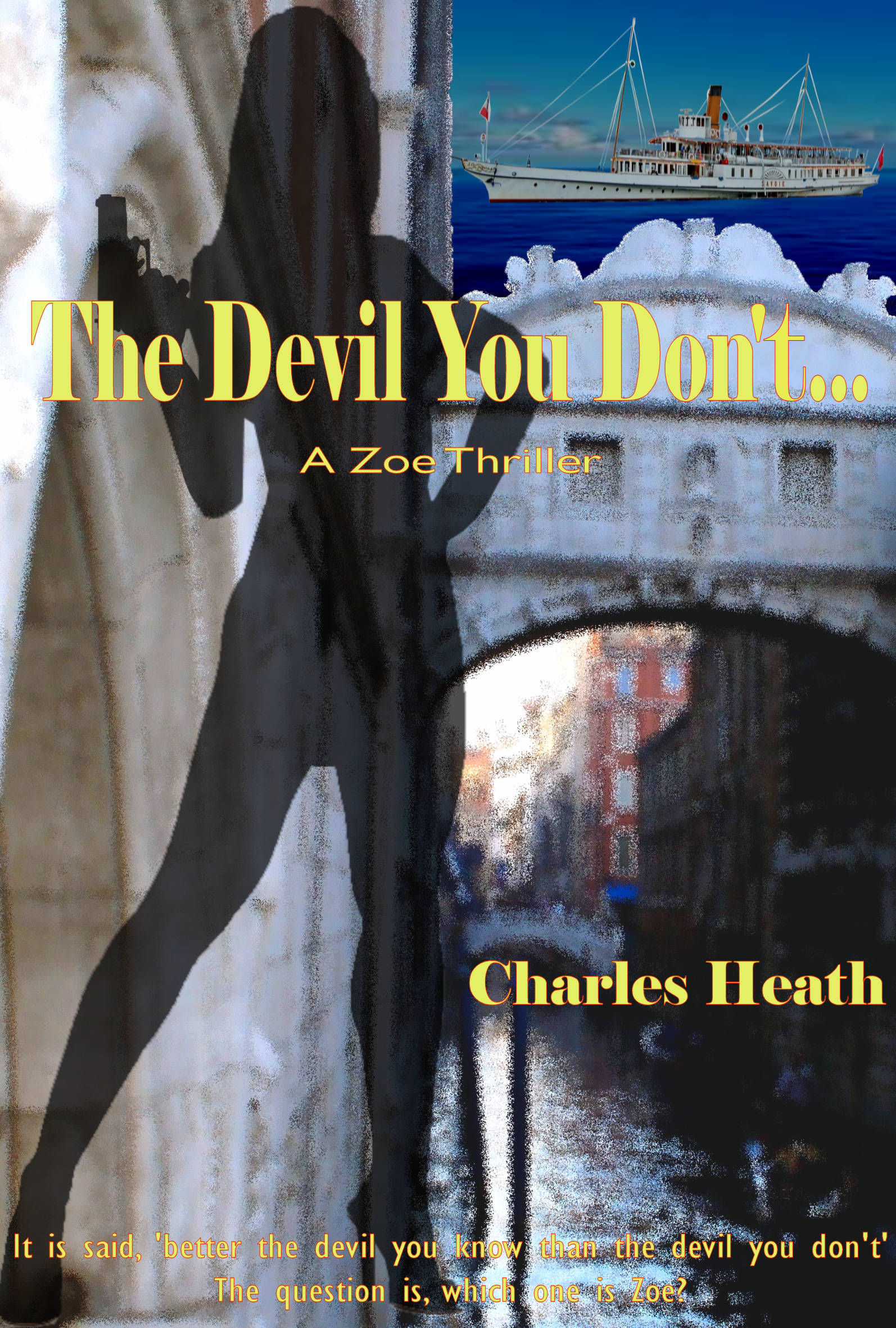
‘The Devil You Don’t’ – A beta reader’s view

It could be said that of all the women one could meet, whether contrived or by sheer luck, what are the odds it would turn out to be the woman who was being paid a very large sum to kill you.

John Pennington is a man who may be lucky in business, but not so lucky in love. He has just broken up with Phillipa Sternhaven, the woman he thought was the one, but relatives and circumstances, and perhaps because she was a ‘princess’, may also have contributed to the end result.

So, what do you do when you are heartbroken?

That is a story that slowly unfolds, from the first meeting with his nemesis on Lake Geneva, all the way to a hotel room in Sorrento, where he learns the shattering truth.

What should have been solace after disappointment, turns out to be something else entirely, and from that point, everything goes to hell in a handbasket.

He suddenly realizes his so-called friend Sebastian has not exactly told him the truth about a small job he asked him to do, the woman he is falling in love with is not quite who she says she is, and he is caught in the middle of a war between two men who consider people becoming collateral damage as part of their business.

The story paints the characters cleverly displaying all their flaws and weaknesses. The locations add to the story at times taking me back down memory lane, especially to Venice where, in those back streets I confess it’s not all that hard to get lost.

All in all a thoroughly entertaining story with, for once, a satisfying end.

Available on Amazon here: https://amzn.to/2Xyh1ow

“Going once, going twice…” – a short story

It was the small town that we had visited once, some years ago, that had enticed me back.

Those had been happier times, times when the stench of money hadn’t overtaken sensibility, and who we really were.

Not that I had changed all that much, except for the Upper West Side apartment, and posh car to go with it, but what had disappointed me was the change in Liz, the woman I thought once was the love of my life.

Without the trappings of wealth, she was the kindest, most thoughtful, and generous person I knew, but that changed when I became the recipient of an inheritance that beggared belief.  We both made a promise from the outset that it would not change us, but unfortunately, it did.

And that was probably the main reason I was standing outside an old fixer-upper house on several acres overlooking the ocean.

I’d asked Liz to come, but she was having a weekend away in Las Vegas with her new friends, or as one of the ladies rather salaciously said, ‘what happens in Vegas stays in Vegas’ kind of weekend.

Charmaine had told me about the house, one that she had admired for a long time, but didn’t have the means to buy it.

Charmaine was a painter, a rather good one, and both Liz and I had met her on a weekend away upstate, and I’d bought one of her landscapes to hang in our new apartment.  Liz hated it, but I think that had more to do with the painter than the painting, and that was because Charmaine had flirted with me, and that, I had observed over time, was how she was with everyone.

She called it her sales technique.  After all, it had worked on me.

I listened to the auctioneer go through the rules of the auction and then move on to a physical description of the property.  I’d attended several viewings and gained an idea of what was needed if I were to buy it.  It had good foundations and had only suffered from a lack of TLC.  It was how the auctioneer summed it up.

When he called for the first bid, I felt a hand slip into mine, and a glance sideways showed it to be Charmaine.  I had asked her along for support, but she had something else to do; it appeared now that she hadn’t.

“So,” she whispered next to my ear, “you were serious about this place?”

I had been dithering, not being able to make up my mind, but Liz, in the end, made the decision for me.  I’d overheard a snippet of conversation with one of her new friends, and to be honest, I’d been surprised.

“Perhaps it was time to find a hideaway.”

“Things that bad?”

I shrugged.  “Maybe I’m writing too much into it.  At any rate, I needed an excuse to get out of town, and being here was as good as any.”

The first bid came in at 450,000.   I knew the reserve was about 700,000, and I was prepared for 850,000.  I was hoping to spend less than that, as the renovations would be another 250,000.

“We could go and have a picnic.  It’ll certainly cost less than buying this place.”

“I’m here now.”

Holding hands was just one of Charmaine’s ‘things’, and I had never written anything into what might have been called a relationship of sorts.  We were not lovers, and the conversation had never been steered in that direction, but I did find myself gravitating towards her when Liz was off doing her thing with her friends.  To be honest, I simply liked the idea of a picnic and watching Charmaine paint her landscapes.

I raised the bid to 500,000.  Another from the previous bidder, 550,000.  Another at 600,000.  It seems there were three bidders for the property.  The other sixteen people attending were observers, undoubtedly locals interested in how this would help their property value.

I went 625,000 when the auctioneer changed the increment after a lack of bidding.  It was countered, and the next bid was 650,000.  Another at 657,500, and then the first bidder went to 700,000, the reserve.

“You do realise the other bidders are friends of the owner and are there to push the price up?” Charmaine whispered in my ear.

I’d heard of it happening, but I’d not suspected it until she mentioned it.

“Going once, going twice at 700,000.”  The auctioneer looked at me.  “I’ll accept 10,000 increments.”

I nodded.  710,000.  It quickly moved to 800,000, after I bid 790,000.

The auctioneer looked at me expectantly.  “810,000, sir?”

That was more than I wanted to spend, though an elbow in the ribs was the clincher, and when I declined, there was an air of disappointment.

“Going once, going twice, all done at 800,000?”  A look around the crowd confirmed we were all done, and the gavel came down.

“Looks like we’re going on a picnic,” she said.  “I’d expect a call in an hour or so.”

Two things happened that weekend, both of which surprised me.  The first, Charmaine was right, I did get a call, and finished up with a hideaway in the country, overlooking the ocean.  The second, Liz didn’t come back from Las Vegas.  She had apparently found someone new, someone more exciting, or so she said.

I was disappointed but not overly concerned.  She had changed, and I had not, and if the truth be told, we were drifting apart.  We parted amicably, sold the apartment, and moved on in different directions.

I had a new residence and renovations to take my mind off the break-up, and when I told Charmaine, she said she thought we were not a perfect match, in her opinion.  And in light of my new status, I could now ask her to come and stay in the spare bedroom, a lot better, I said, than the one-person tent she had been using, an offer she readily accepted.

Until, a year later, it became something more than that.

© Charles Heath 2025

Memories of the conversations with my cat – 66

As some may be aware, but many not, Chester, my faithful writing assistant, mice catcher, and general pain in the neck, passed away some years ago.

Recently I was running a series based on his adventures, under the title of Past Conversations with my cat.

For those who have not had the chance to read about all of his exploits I will run the series again from Episode 1

These are the memories of our time together…

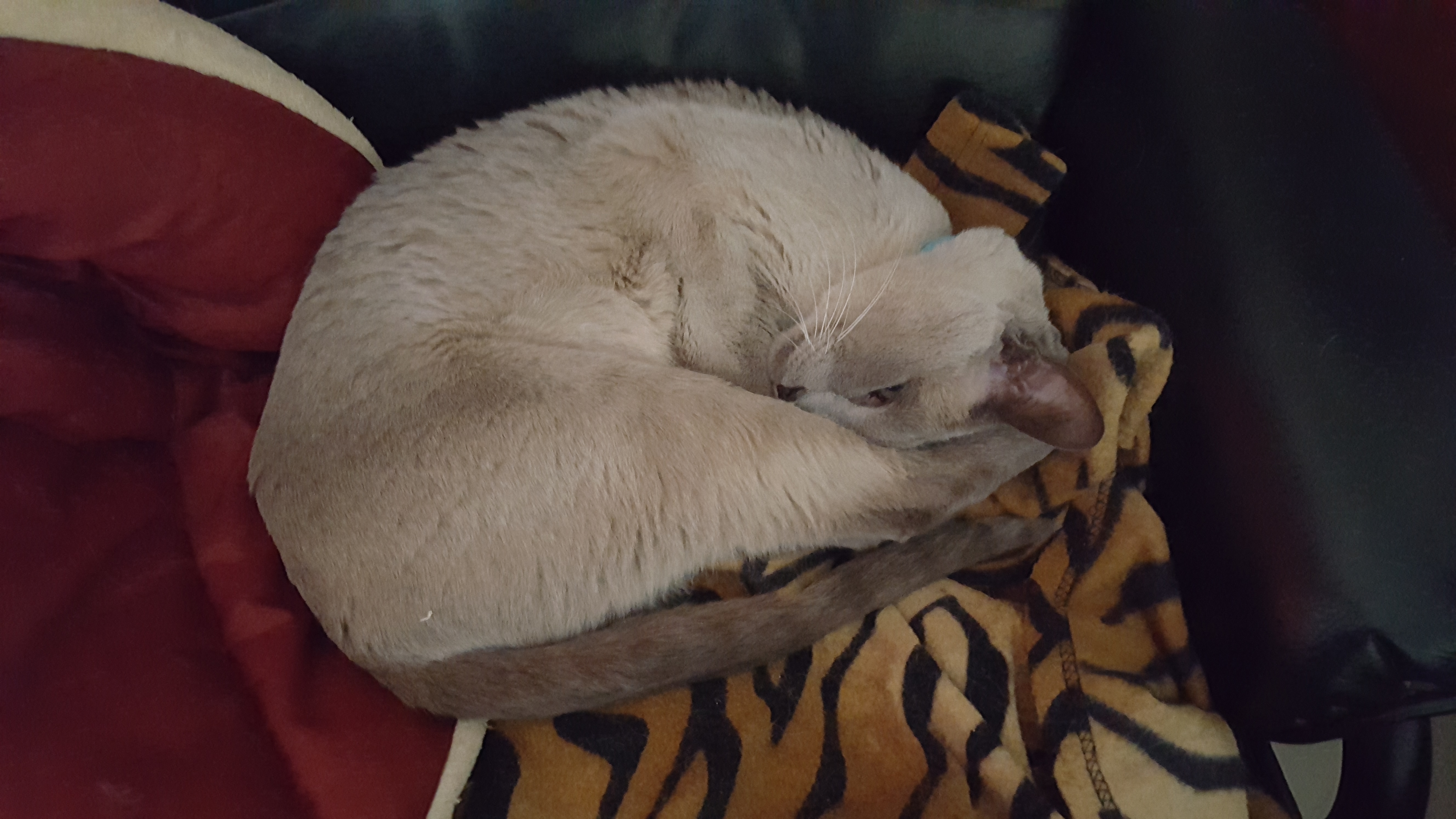
This is Chester. He’s feeling very smug.

Our focus has mainly centred on getting the NaNoWriMo project done each day, but in between all of this, a number of issues have arisen.

The first, the Maple Leads, and what Chester calls my obsession with ice hockey.

He doesn’t get it. No one plays ice hockey in this country at the same level, and you can never find it mentioned anywhere, so why bother.

Besides he adds in his most cutting tone, they’re a bunch of losers.

So they’ve lost six games in a row and sacked the 50 million dollar coach, but…

To him it’s but nothing. Chester now refuses to watch the ice hockey with me, not until they win again. That 6-1 drubbing two games back was the start of the slide.

I tell him that we’re missing key players and with the newish lineup it takes time to work as a team.

Right.

So we move to God Friended Me.

What the hell is going on there. Miles and Cara are stumbling, with doubts seeded, Rakesh has just had his heart torn to shreds and the incoming Bishop is at a crossroads.

So, for a little early advice…

What’s going to happen to Miles and Cara?

Chester: I’m cynical, their the heart of the show, they won’t be forced apart. It’s all about the ratings.

What’s going to happen to Rakesh?

Chester: Draw out the angst for another 14 episodes, we’ll have to keep tuning on to see what happens.

And the bishop and his girlfriend?

Chester: Send them to another parish, they’re just a distraction we don’t need.

I’m inclined to agree with him.

Except about the Maple Leafs. They’re in Pheonix tomorrow, maybe with a new head coach they might pull off a miracle.