Memories of the conversations with my cat – 69

As some may be aware, but many not, Chester, my faithful writing assistant, mice catcher, and general pain in the neck, passed away some years ago.

Recently I was running a series based on his adventures, under the title of Past Conversations with my cat.

For those who have not had the chance to read about all of his exploits I will run the series again from Episode 1

These are the memories of our time together…

This is Chester. He’s looking for a cool spot to lie down.

We’ve been having something of a heat wave for the last few days, temperatures soaring above the mid-thirties, and nearly as high as forty degrees centigrade.

So, this morning we watched the ice hockey, and even Chester stayed the distance, not so he could smirk when the Maple Leafs lost, but to channel the idea it was cold somewhere else in the world.

And it worked for a while. Having been to the ice hockey in Toronto in person, I know just how cold it was.

After that, it was a matter of leaving the doors opens to let what breeze there was flow through the house, so Chester first sat by the front door, then the back door, then came out to see me.

Time for the air conditioner.

Yes, we have air conditioning, and yes, the cost of electricity in this country is horrendous.  It was why we had solar panels put in.

I just leave it as long as possible before turning it on.

I thought about toying with him, but he’s sitting on the keyboard looking angry.

Now was the right time.

The cinema of my dreams – Was it just another surveillance job – Episode 35

I’m back home and this story has been sitting on a back burner for a few months, waiting for some more to be written.

The trouble is, there are also other stories to write, and I’m not very good at prioritizing.

But, here we are, a few minutes opened up and it didn’t take long to get back into the groove.

Chasing leads, maybe


She gave me a minute to think about the situation, and then said what I was thinking, “So he could be anywhere?”

“He was dead.  I felt for a pulse.  There wasn’t one.”

I could interpret that expression on her face, ‘you’re not a doctor’.

She turned another page, read a few lines, then made a note at the bottom.

It read, if my deciphering was up to scratch, ‘doesn’t know if subject dead or not’.

She looked up again.  “It appears these documents are out there,” she waved her hand in the air, “somewhere.  Fortunately, they have not turned up, not has someone tried to sell them back or to the newspapers, so we’re lucky.  So far.  That isn’t going to last for much longer.  Every extra day out there is another chance for the government to be embarrassed.”

“You know what the contents are?”

“Don’t be silly.  That’s above my pay grade, and besides, you and I are better off not knowing.  So, what you need to do is find O’Connell and/or find the documents on this USB drive.”

She slid a card across the table.  It had a name and a telephone number.  Monica Sherive.  A mobile number, a burner no doubt that couldn’t be traced back to her.

“You find either, you tell me first.”

“Nobbin?”

“Second, and when I tell you.”

“So you don’t trust him either?”

“At the moment, for both you and I have to be careful who we trust.”

I added her to the list of people I couldn’t trust, not that she had told me I could trust her.  Yet.

“And if I get contacted by Severin again?”

“Have you?”

I had thought about not telling her about that brief meeting where he told me about the USB drive, but it couldn’t do any harm.  At least she hadn’t asked me if I knew about the USB, which was something, I suppose.

“Yes.  Once.  Told me to keep my head down.  And asked me if O’Connell had time to talk to me.  It was the same answer I gave him back in the alley.  No.  I’d just managed to corner him when he was shot.”

“By Severin, or this other fellow,” she shuffled back several pages, then said, “Maury?”

“No.  That was what was odd about it.  The shot came from somewhere else.  A sniper I would have thought.”

And, my brain suddenly moving into overdrive, piecing together what might be a coincidence, but in our business, they were rarely coincidences.  A sniper shot him., say Nobbin or one of his people, he looks dead, waits for a call to the cleaners, intercepts it, and collects the so-called dead O’Connell.  It was a good conspiracy theory.

And as far-fetched as one.

Severin had to have the body somewhere, trying to figure out how to bring O’Connell back to life so he could torture the USB location out of him.

Hell, that was as twisted as the conspiracy theory.

Time to change the subject.  “Do you have any idea who Severin and Maury are?”

She went to the back of the file and pulled out some photographs, mug shots perhaps of staff members.  She put five faces in front of me and asked me if the two were there.

They were.  The first, with the name of David Westcott, and the fourth with the name of Bernie Salvin.

“Who are they?”

“They used to work in the training department for ten or so years ago.  Westcott was also a handler for several years.  They both requested a transfer to operations, and we give a mission.  Six agents were assigned, and all six were killed, an investigation after the fact found that their identities had been leaked to the enemy before they reached the target.”

“They gave them up?”

“Nobody knows for sure.  There were others in that group, but in the end, the department retired them all.  All their years in training served them well.  We found the place where you were trained.”

Another photograph of the main building.  I nodded.

“It was an old training facility closed down five years ago.  It was just sitting there waiting for an enterprising crew.  It won’t happen again.  Needless to say, we haven’t been able to find either of them, only the people they employed, who believed it was in good faith.  A mess in other words.  Now, go.  Find me answers.”

She stood.  The meeting was over.

© Charles Heath 2020

Writing a book in 365 days – 232

Day 232

Sometimes, the best books for writers bear little similarity to their medium

The Unconventional Muse: When Your Best Writing Lesson Comes From Anywhere But a ‘How-To’ Guide

We writers are always chasing that elusive spark, that deeper understanding of human nature and narrative that elevates our work from good to truly profound. We devour books on craft, attend workshops, and pore over articles dissecting plot points and character arcs. All valuable, of course.

But what if the most potent lessons for your writing don’t come from a book with “How To Write” in the title? What if your greatest storytelling mentor isn’t a famous novelist, but a philosopher, a historian, or even a scientist?

This isn’t just a quirky idea; it’s a fundamental truth for many successful writers. Sometimes, the best books for writers bear little similarity to their medium.

Why Look Beyond the Craft?

Writers are, at heart, observers and interpreters of the human condition. We craft worlds, yes, but those worlds gain their resonance from reflecting or distorting truths about our world. To truly understand the stories we tell, we need to understand the world itself – its history, its psychology, its moral dilemmas, its scientific wonders.

This is where seemingly unrelated disciplines become invaluable. They offer different lenses through which to view conflict, motivation, and the very fabric of reality.

The Playwright, the Philosopher, and the Clash of Two Rights

Let’s take a specific example that perfectly illustrates this premise: the playwright. Should a playwright read philosophy? An emphatic yes.

Consider the profound wisdom offered by thinkers like George Wilhelm Friedrich Hegel. His work, particularly his dialectical approach to history and conflict, provides an incredible framework for understanding the deepest dramatic tensions.

For Hegel, the true tragedy – and the most compelling drama – lies not in a clear-cut battle between good and evil, but in the irreconcilable clash of two rights.

Think about that for a moment. It’s not the simple Hollywood narrative where the hero is unequivocally good and the villain is purely evil. That kind of story, while sometimes entertaining, often lacks the true grit and complexity of human experience.

Instead, Hegel pointed to the underlying issues in Greek tragedy as a case in point. Take Sophocles’ Antigone. Here, the conflict isn’t between a righteous hero and an evil tyrant. It’s between Antigone’s undeniable moral right to bury her brother, honoring the divine laws and family duty, and Creon’s equally legitimate right to uphold the laws of the state, ensuring order and preventing further rebellion.

Both characters are, in their own frameworks, right. Both are acting out of deeply held convictions and duties. And it is precisely because both are “right” that their collision is so utterly devastating, leading to a profound, unavoidable tragedy. Neither can simply concede without betraying their core identity or belief system.

A Golden Key for Every Writer

This isn’t just an academic point for philosophers; it’s a golden key for anyone crafting a narrative, whether it’s a novel, a screenplay, a short story, or even a compelling blog post.

  • Complex Characters: When your antagonists aren’t just “bad” but are operating from their own deeply held, morally defensible (to them) positions, your characters instantly gain depth. Their motivations become understandable, even if you disagree with their actions.
  • Richer Conflict: The “two rights” dilemma elevates your plot beyond simplistic good vs. evil. It forces your characters, and your readers, to grapple with true moral ambiguity, making the stakes feel far higher and more authentic. Think of a nuanced political drama, a family saga fraught with misunderstanding, or even a personal internal struggle where the protagonist is torn between two equally valid, yet conflicting, desires.
  • Deeper Themes: This approach allows you to explore profound themes about ethics, justice, loyalty, and the inherent contradictions of human existence, without needing to preach. The conflict itself becomes the exploration.

When your characters operate from their own deeply held, morally defensible positions, the story becomes infinitely more resonant because it mirrors the complexities of real life.

Broaden Your Mind, Deepen Your Stories

So, what does this mean for your reading list?

Don’t limit yourself to books on plot structure or character arcs (though those are valuable!). Dive into history, neuroscience, poetry, economics, art criticism, and yes, philosophy. Seek out texts that grapple with ethics, existence, and the nature of reality. Read the great thinkers, not necessarily to agree with them, but to understand how they thought and what they wrestled with.

You’re not just reading to learn facts; you’re reading to broaden your understanding of the human experience itself. And that, my fellow writers, is the wellspring from which truly compelling stories flow. Expand your mind, expand your world, and watch your own narratives deepen and soar.

What unconventional books or fields of study have unexpectedly impacted your writing? Share your discoveries in the comments below!

Searching for locations: Venice, Italy (Again)

We have visited Venice twice, in 2006 and not so long ago.

Not much had changed from visit to visit.

Instead of staying in a hotel selected by a travel agent, the Savoia and Jolanda on the waterfront of Riva Degli Schiavoni, because I’m a Hilton Honors member, more recently we stayed at the Hilton Molino Stucky.  It was located on an island, Giudecca, and had its own transport from the hotel to St Mark’s Square for a very reasonable one-off charge for the stay.

hiltonmolinostuckey2

On our first visit, we traveled from Florence to Venice.  We were advised to take a water taxi to the hotel, not only the most direct route but to see some of Venice from the water.  The only drawback, you have to negotiate a price with the driver.

We were not very good negotiators, and it cost 60 Euros.

But, despite the cost, it was worth every Euro because the taxi driver took us by the scenic route, directly from the Station to the doorstep of our hotel.  For a first time in Venice, and you want to see it from the water, a water taxi is the best option.

2013-06-25 17.09.16

The first time we stayed at the Savoia and Jolanda Hotel, which was at the time quite old, and the room we had, on the ground floor, was comfortable enough, but being November, they had just stopped using the air conditioning, it was still quite warm and at times uncomfortable.

There were better rooms, but this was beyond the knowledge of the travel agent, and one of the reasons we stopped using agents to book hotels.

The most recent visit we had driven down from Salzburg to Venice airport where we had to return the hire car.  From there we were intending to take a private water taxi from the airport to the hotel, for an estimated 120 Euros.

We saved our money and took the ACTV public waterbus, from the airport to the hotel, with one stop.  It took a little over an hour and was equally as scenic.

venicecanals1

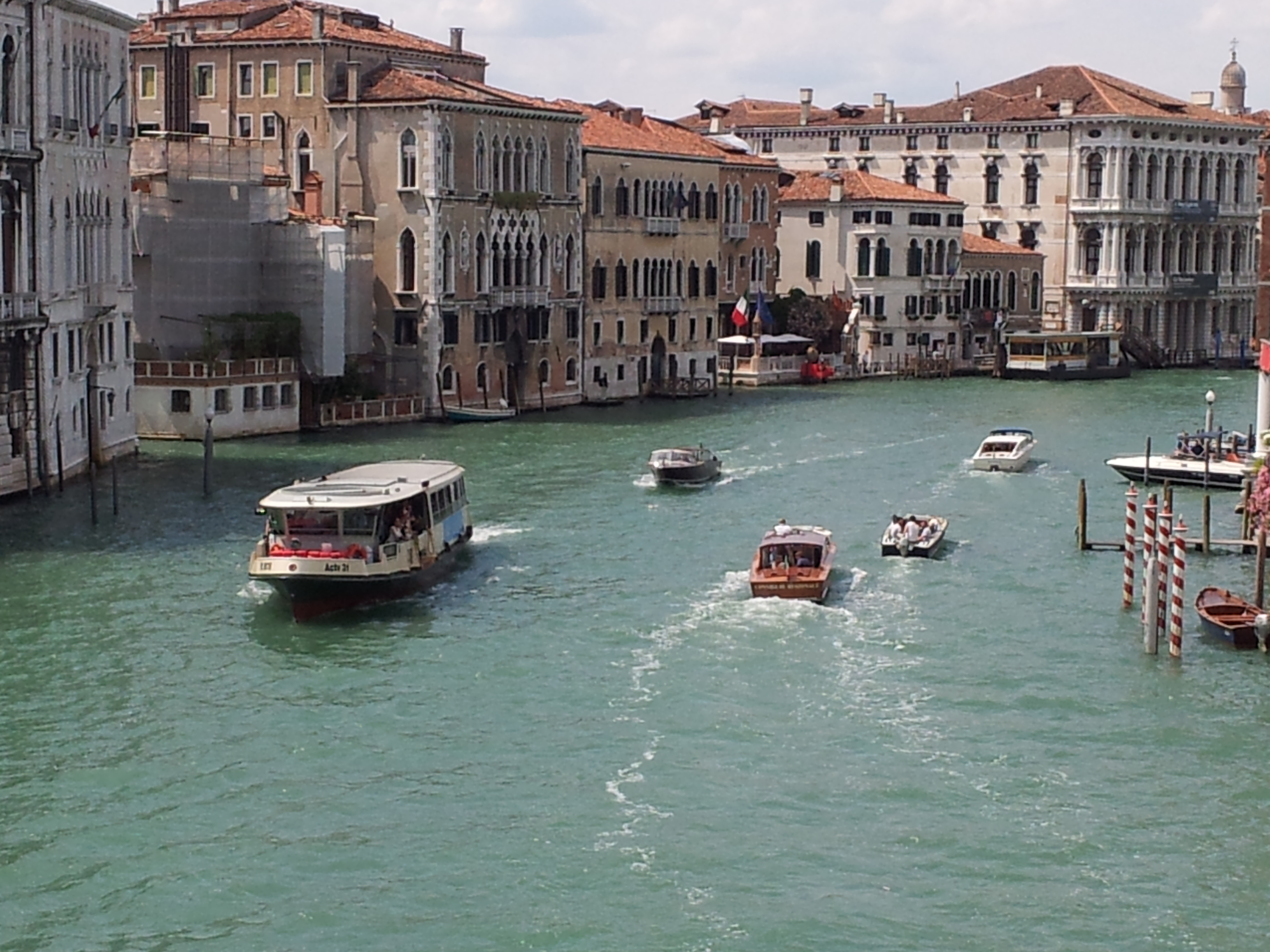
Our room in the Hilton was on one of the upper levels, floor four, and had a view of the canal, the large passenger ships coming and going, as well as a remarkable view of Venice itself as far up the canal to St Marks Square in one direction, and the port for the passenger ships in the other.

20130627_081601

We got to see three or four very large passenger ships come and go, along with a lot of other craft.  I hadn’t realized how busy the waterways, and the Grand Canal, were.

20130627_174408

Each evening after a day’s exploring we would end up in the Executive Lounge, and then one of the many restaurants, usually Il Molino for breakfast, and the Rialto Lobby Bar and Lounge for dinner.  After that, it was a stroll down the waterfront taking in the night air, and perhaps to walk off the delicious dinner.

Trying to pick up the pieces

I can see how it is that a writer’s life is one that, at times, has to be shut off from the outside world.

It’s a bit hard to keep a stream of thoughts going when in one ear is some banal detective show, and in the other, a conversation that you have to keep up with.  I know how hard it is because I’ve tried doing three things at once, and failed miserably in all three.

So, out I slink to the writing room and start by re-reading the previous chapters, to get back into the plot.  I should remember where I am, and get straight to it, but the devil is in the detail.

Going back, quite often I revise, and a plotline is tweaked, and a whole new window is opened.  God, I wish I didn’t do that!

Then I get to the blank page, ready to go, and…

The phone rings.

Damn.  Damn.  Damn.

Phone answered, back to the blank page, no, it’s gone, got yo go back, blast, another revision, and back to the blank page.

Half an hour shot to pieces.

The phone rings again.

Blast scam callers.  I nearly rip the cord out of the wall.

All through this the cat just watches, and, is that a knowing smile?

It can’t be, I’ve just learned that cats can’t smile, or make any sort of face.

I’m sure his thoughts are not a vague or scrambled, or wrestling with the ploys of several stories on the go, getting locations right, getting characters to think and do their thing with a fair degree of continuity.

The cat’s world is one of which chair to lie on, where is that elusive mouse be it real or otherwise, and is this fool going to feed me, and please, please, don’t let it be the lasagna.  I am not that cat!

Unlike other professions, it’s a steady, sometimes frustrating, slog where you can’t just walk away, have a great time, and come back and pick up where you left off.  Stories have to be written from beginning to end, not a bit here and a bit there.

It’s a bit like running a marathon.  You are in a zone, the first few miles are the hardest, the middle is just getting the rhythm and breathing under control, and then you hope you get to the end because it can seem that you’ve been going forever and the end is never in sight.

But, when you reach the end, oh, isn’t the feeling one of pure joy and relief.

Sorry, not there yet.

And no comment is required from the cat gallery, thankyou!


‘Sunday in New York’ – A beta reader’s view

I’m not a fan of romance novels but …

There was something about this one that resonated with me.

This is a novel about a world generally ruled by perception, and how people perceive what they see, what they are told, and what they want to believe.

I’ve been guilty of it myself as I’m sure we all have at one time or another.

For the main characters Harry and Alison there are other issues driving their relationship.

For Alison, it is a loss of self-worth through losing her job and from losing her mother and, in a sense, her sister.

For Harry, it is the fact he has a beautiful and desirable wife, and his belief she is the object of other men’s desires, and one in particular, his immediate superior.

Between observation, the less than honest motives of his friends, a lot of jumping to conclusions based on very little fact, and you have the basis of one very interesting story.

When it all comes to a head, Alison finds herself in a desperate situation, she realises only the truth will save their marriage.

But is it all the truth?

What would we do in similar circumstances?

Rarely does a book have me so enthralled that I could not put it down until I knew the result. They might be considered two people who should have known better, but as is often the case, they had to get past what they both thought was the truth.

And the moral of this story, if it could be said there is one, nothing is ever what it seems.

Available on Amazon here: amzn.to/2H7ALs8

Searching for Locations: Venice, Italy

Venice is definitely a city to explore.  It has an incredible number of canals and walkways, and each time we would start our exploration at St Marks square when it’s not underwater

Everyone I have spoken to about exploring Venice has told me how easy it is to get lost.  It has not happened to me, but with the infinite number of ways you can go, I guess it is possible.

We started our exploration of Venice in St Marks square, where, on one side there was the Museo di Palazzo Ducale and, next door, the Basilica di San Marco.  Early morning and/or at high tide, water can be seen bubbling up from under the square, partially flooding it.  I have seen this happen several times.  Each morning as we walked from the hotel (the time we stayed in the Savoia and Jolanda) we passed the Bridge of Sighs.

Around the other three sides of the square are archways and shops.  We have bought both confectionary and souvenirs from some of these stores, albeit relatively expensive.  Prices are cheaper in stores that are away from the square and we found some of these when we walked from St Marks square to the Railway station, through many walkways, and crossing many bridges, and passing through a number of small piazzas.

That day, after the trek, we caught the waterbus back to San Marco, and then went on the tour of the Museo di Palazzo Du which included the dungeons and the Bridge of Sighs from the inside.  It took a few hours, longer than I’d anticipated because there was so much to see.

The next day, we caught the waterbus from San Marco to the Ponte di Rialto bridge.  Just upstream from the wharf there was a very large passenger ship, and I noticed there were a number of passengers from the ship on the waterbus, one of whom spoke to us about visiting Venice.  I didn’t realize we looked like professional tourists who knew where we were going.

After a pleasant conversation, and taking in the views up and down the Grand Canal, we disembarked and headed for the bridge, looking at the shops, mostly selling upmarket and expensive gifts, and eventually crossing to the other side where there was a lot of small market type stalls selling souvenirs as well as clothes, and most importantly, it being a hot day, cold Limonata.  This was my first taste of Limonata and I was hooked.

Continuing on from there was a wide street at the end and a number of restaurants where we had lunch.  We had a map of Venice and I was going to plot a course back to the hotel, taking what would be a large circular route that would come out at the Accademia Bridge, and further on to the Terminal Fusina Venezia where there was another church to explore, the Santa Maria del Rosario.

This is a photo of the Hilton Hotel from the other side of the canal.

It was useful knowledge for the second time we visited Venice because the waterbus from the Hilton hotel made its first stop, before San Marco, there.  We also discovered on that second visit a number of restaurants on the way from the terminal and church to the Accademia Bridge.

This is looking back towards San Marco from the Accademia Bridge:

And this, looking towards the docks:

Items to note:

Restaurants off the beaten track were much cheaper and the food a lot different to that in the middle of the tourist areas.

There are a lot of churches, big and small, tucked away in interesting spots where there are small piazza’s.  You can look in all of them, though some asked for a small fee.

Souvenirs, coffee, and confectionary are very expensive in St Marks square.

An excerpt from “Echoes from the Past”

Available on Amazon Kindle here:  https://amzn.to/2CYKxu4

With my attention elsewhere, I walked into a man who was hurrying in the opposite direction.  He was a big man with a scar running down the left side of his face from eye socket to mouth, and who was also wearing a black shirt with a red tie.

That was all I remembered as my heart almost stopped.

He apologized as he stepped to one side, the same way I stepped, as I also muttered an apology.

I kept my eyes down.  He was not the sort of man I wanted to recognize later in a lineup.  I stepped to the other side and so did he.  It was one of those situations.  Finally getting out of sync, he kept going in his direction, and I towards the bus, which was now pulling away from the curb.

Getting my breath back, I just stood riveted to the spot watching it join the traffic.  I looked back over my shoulder, but the man I’d run into had gone.  I shrugged and looked at my watch.  It would be a few minutes before the next bus arrived.

Wait, or walk?  I could also go by subway, but it was a long walk to the station.  What the hell, I needed the exercise.

At the first intersection, the ‘Walk’ sign had just flashed to ‘Don’t Walk’.  I thought I’d save a few minutes by not waiting for the next green light.  As I stepped onto the road, I heard the screeching of tires.

A yellow car stopped inches from me.

It was a high powered sports car, perhaps a Lamborghini.  I knew what they looked like because Marcus Bartleby owned one, as did every other junior executive in the city with a rich father.

Everyone stopped to look at me, then the car.  It was that sort of car.  I could see the driver through the windscreen shaking his fist, and I could see he was yelling too, but I couldn’t hear him.  I stepped back onto the sidewalk, and he drove on.  The moment had passed and everyone went back to their business.

My heart rate hadn’t come down from the last encounter.   Now it was approaching cardiac arrest, so I took a few minutes and several sets of lights to regain composure.

At the next intersection, I waited for the green light, and then a few seconds more, just to be sure.  I was no longer in a hurry.

At the next, I heard what sounded like a gunshot.  A few people looked around, worried expressions on their faces, but when it happened again, I saw it was an old car backfiring.  I also saw another yellow car, much the same as the one before, stopped on the side of the road.  I thought nothing of it, other than it was the second yellow car I’d seen.

At the next intersection, I realized I was subconsciously heading towards Harry’s new bar.   It was somewhere on 6th Avenue, so I continued walking in what I thought was the right direction.

I don’t know why I looked behind me at the next intersection, but I did.  There was another yellow car on the side of the road, not far from me.  It, too, looked the same as the original Lamborghini, and I was starting to think it was not a coincidence.

Moments after crossing the road, I heard the roar of a sports car engine and saw the yellow car accelerate past me.  As it passed by, I saw there were two people in it, and the blurry image of the passenger; a large man with a red tie.

Now my imagination was playing tricks.

It could not be the same man.  He was going in a different direction.

In the few minutes I’d been standing on the pavement, it had started to snow; early for this time of year, and marking the start of what could be a long cold winter.  I shuddered, and it was not necessarily because of the temperature.

I looked up and saw a neon light advertising a bar, coincidentally the one Harry had ‘found’ and, looking once in the direction of the departing yellow car, I decided to go in.  I would have a few drinks and then leave by the back door if it had one.

Just in case.

© Charles Heath 2015-2020

newechocover5rs

Writing a book in 365 days – 232

Day 232

Sometimes, the best books for writers bear little similarity to their medium

The Unconventional Muse: When Your Best Writing Lesson Comes From Anywhere But a ‘How-To’ Guide

We writers are always chasing that elusive spark, that deeper understanding of human nature and narrative that elevates our work from good to truly profound. We devour books on craft, attend workshops, and pore over articles dissecting plot points and character arcs. All valuable, of course.

But what if the most potent lessons for your writing don’t come from a book with “How To Write” in the title? What if your greatest storytelling mentor isn’t a famous novelist, but a philosopher, a historian, or even a scientist?

This isn’t just a quirky idea; it’s a fundamental truth for many successful writers. Sometimes, the best books for writers bear little similarity to their medium.

Why Look Beyond the Craft?

Writers are, at heart, observers and interpreters of the human condition. We craft worlds, yes, but those worlds gain their resonance from reflecting or distorting truths about our world. To truly understand the stories we tell, we need to understand the world itself – its history, its psychology, its moral dilemmas, its scientific wonders.

This is where seemingly unrelated disciplines become invaluable. They offer different lenses through which to view conflict, motivation, and the very fabric of reality.

The Playwright, the Philosopher, and the Clash of Two Rights

Let’s take a specific example that perfectly illustrates this premise: the playwright. Should a playwright read philosophy? An emphatic yes.

Consider the profound wisdom offered by thinkers like George Wilhelm Friedrich Hegel. His work, particularly his dialectical approach to history and conflict, provides an incredible framework for understanding the deepest dramatic tensions.

For Hegel, the true tragedy – and the most compelling drama – lies not in a clear-cut battle between good and evil, but in the irreconcilable clash of two rights.

Think about that for a moment. It’s not the simple Hollywood narrative where the hero is unequivocally good and the villain is purely evil. That kind of story, while sometimes entertaining, often lacks the true grit and complexity of human experience.

Instead, Hegel pointed to the underlying issues in Greek tragedy as a case in point. Take Sophocles’ Antigone. Here, the conflict isn’t between a righteous hero and an evil tyrant. It’s between Antigone’s undeniable moral right to bury her brother, honoring the divine laws and family duty, and Creon’s equally legitimate right to uphold the laws of the state, ensuring order and preventing further rebellion.

Both characters are, in their own frameworks, right. Both are acting out of deeply held convictions and duties. And it is precisely because both are “right” that their collision is so utterly devastating, leading to a profound, unavoidable tragedy. Neither can simply concede without betraying their core identity or belief system.

A Golden Key for Every Writer

This isn’t just an academic point for philosophers; it’s a golden key for anyone crafting a narrative, whether it’s a novel, a screenplay, a short story, or even a compelling blog post.

  • Complex Characters: When your antagonists aren’t just “bad” but are operating from their own deeply held, morally defensible (to them) positions, your characters instantly gain depth. Their motivations become understandable, even if you disagree with their actions.
  • Richer Conflict: The “two rights” dilemma elevates your plot beyond simplistic good vs. evil. It forces your characters, and your readers, to grapple with true moral ambiguity, making the stakes feel far higher and more authentic. Think of a nuanced political drama, a family saga fraught with misunderstanding, or even a personal internal struggle where the protagonist is torn between two equally valid, yet conflicting, desires.
  • Deeper Themes: This approach allows you to explore profound themes about ethics, justice, loyalty, and the inherent contradictions of human existence, without needing to preach. The conflict itself becomes the exploration.

When your characters operate from their own deeply held, morally defensible positions, the story becomes infinitely more resonant because it mirrors the complexities of real life.

Broaden Your Mind, Deepen Your Stories

So, what does this mean for your reading list?

Don’t limit yourself to books on plot structure or character arcs (though those are valuable!). Dive into history, neuroscience, poetry, economics, art criticism, and yes, philosophy. Seek out texts that grapple with ethics, existence, and the nature of reality. Read the great thinkers, not necessarily to agree with them, but to understand how they thought and what they wrestled with.

You’re not just reading to learn facts; you’re reading to broaden your understanding of the human experience itself. And that, my fellow writers, is the wellspring from which truly compelling stories flow. Expand your mind, expand your world, and watch your own narratives deepen and soar.

What unconventional books or fields of study have unexpectedly impacted your writing? Share your discoveries in the comments below!

Inspiration, maybe – Volume 1

50 photographs, 50 stories, of which there is one of the 50 below.

They all start with –

A picture paints … well, as many words as you like.  For instance:

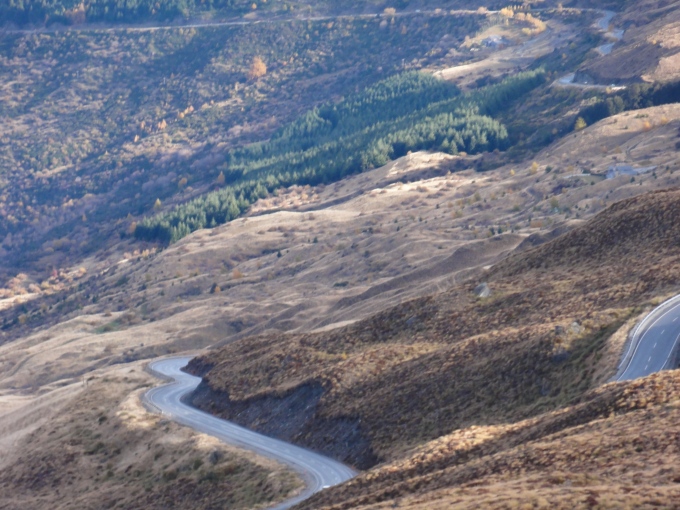
lookingdownfromcoronetpeak

And the story:

It was once said that a desperate man has everything to lose.

The man I was chasing was desperate, but I, on the other hand, was more desperate to catch him.

He’d left a trail of dead people from one end of the island to the other.

The team had put in a lot of effort to locate him, and now his capture was imminent.  We were following the car he was in, from a discrete distance, and, at the appropriate time, we would catch up, pull him over, and make the arrest.

There was nowhere for him to go.

The road led to a dead-end, and the only way off the mountain was back down the road were now on.  Which was why I was somewhat surprised when we discovered where he was.

Where was he going?

“Damn,” I heard Alan mutter.  He was driving, being careful not to get too close, but not far enough away to lose sight of him.

“What?”

“I think he’s made us.”

“How?”

“Dumb bad luck, I’m guessing.  Or he expected we’d follow him up the mountain.  He’s just sped up.”

“How far away?”

“A half-mile.  We should see him higher up when we turn the next corner.”

It took an eternity to get there, and when we did, Alan was right, only he was further on than we thought.”

“Step on it.  Let’s catch him up before he gets to the top.”

Easy to say, not so easy to do.  The road was treacherous, and in places just gravel, and there were no guard rails to stop a three thousand footfall down the mountainside.

Good thing then I had the foresight to have three agents on the hill for just such a scenario.

Ten minutes later, we were in sight of the car, still moving quickly, but we were going slightly faster.  We’d catch up just short of the summit car park.

Or so we thought.

Coming quickly around another corner we almost slammed into the car we’d been chasing.

“What the hell…” Aland muttered.

I was out of the car, and over to see if he was in it, but I knew that it was only a slender possibility.  The car was empty, and no indication where he went.

Certainly not up the road.  It was relatively straightforward for the next mile, at which we would have reached the summit.  Up the mountainside from here, or down.

I looked up.  Nothing.

Alan yelled out, “He’s not going down, not that I can see, but if he did, there’s hardly a foothold and that’s a long fall.”

Then where did he go?

Then a man looking very much like our quarry came out from behind a rock embedded just a short distance up the hill.

“Sorry,” he said quite calmly.  “Had to go if you know what I mean.”

I’d lost him.

It was as simple as that.

I had been led a merry chase up the hill, and all the time he was getting away in a different direction.

I’d fallen for the oldest trick in the book, letting my desperation blind me to the disguise that anyone else would see through in an instant.

It was a lonely sight, looking down that road, knowing that I had to go all that way down again, only this time, without having to throw caution to the wind.

“Maybe next time,” Alan said.

“We’ll get him.  It’s just a matter of time.”

© Charles Heath 2019-2021

Find this and other stories in “Inspiration, maybe”  available soon.

InspirationMaybe1v1