Searching for locations: Murano, Italy

The first time we visited Venice, there was not enough time left to visit the glass-blowing factories on Murano.  We saved this for the next visit, and now more comfortable with taking the Vaporetto, boarded at San Marco for the short journey.

The view looking towards the cemetery:

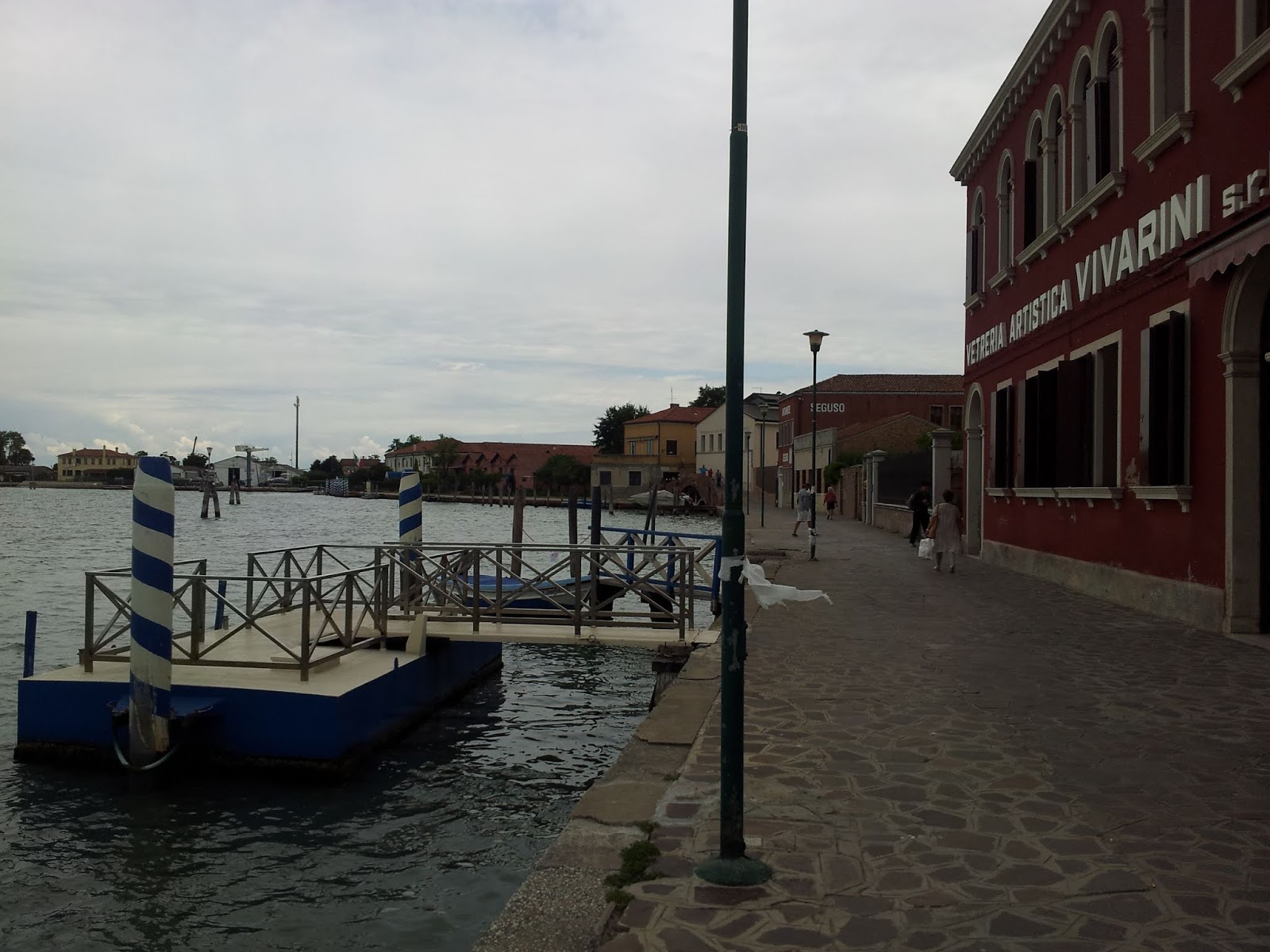
The view looking down what I think was the equivalent to the main street, or where several of the glass-blowing factories and display shops were located:

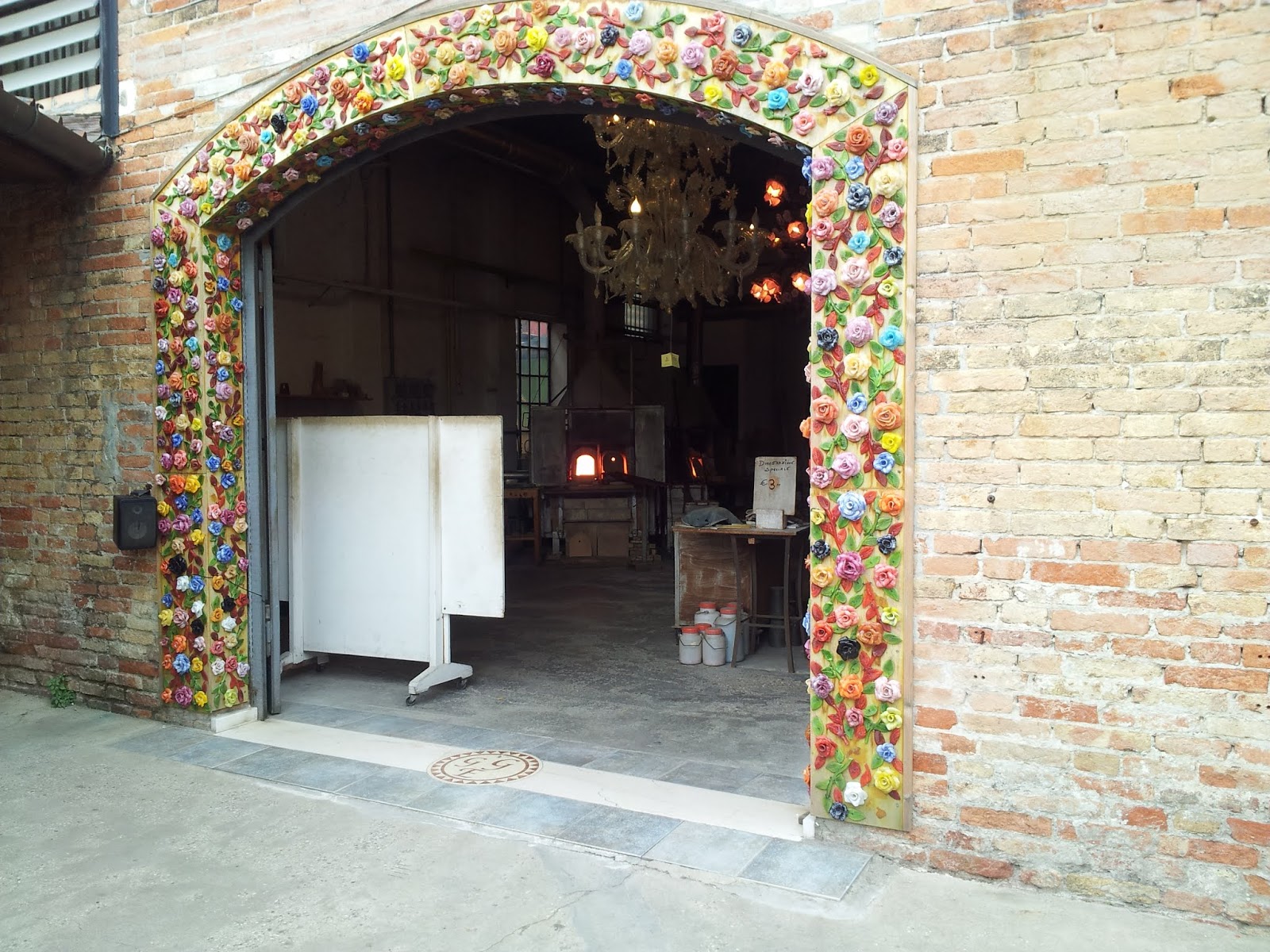
Looking towards a workshop, this one costs us each a Euro to go in and observe a demonstration of glass blowing, and it still surprises me that some people would not pay

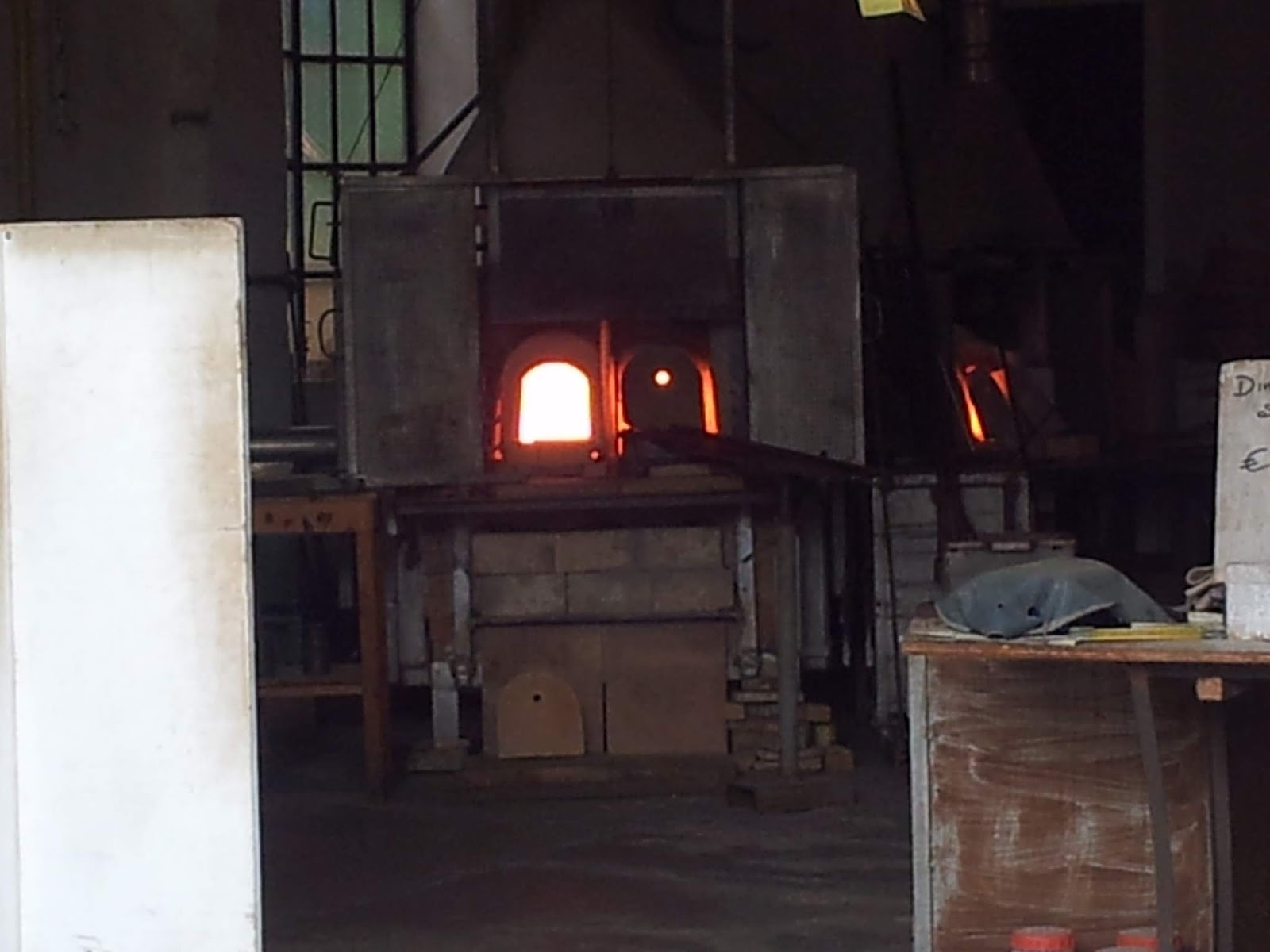
The oven where the glass is heated

And the finished product, the retail version of the horse that the glassblower created during the demonstration:

Then we bought some other glassware from the retail storefront, a candle holder

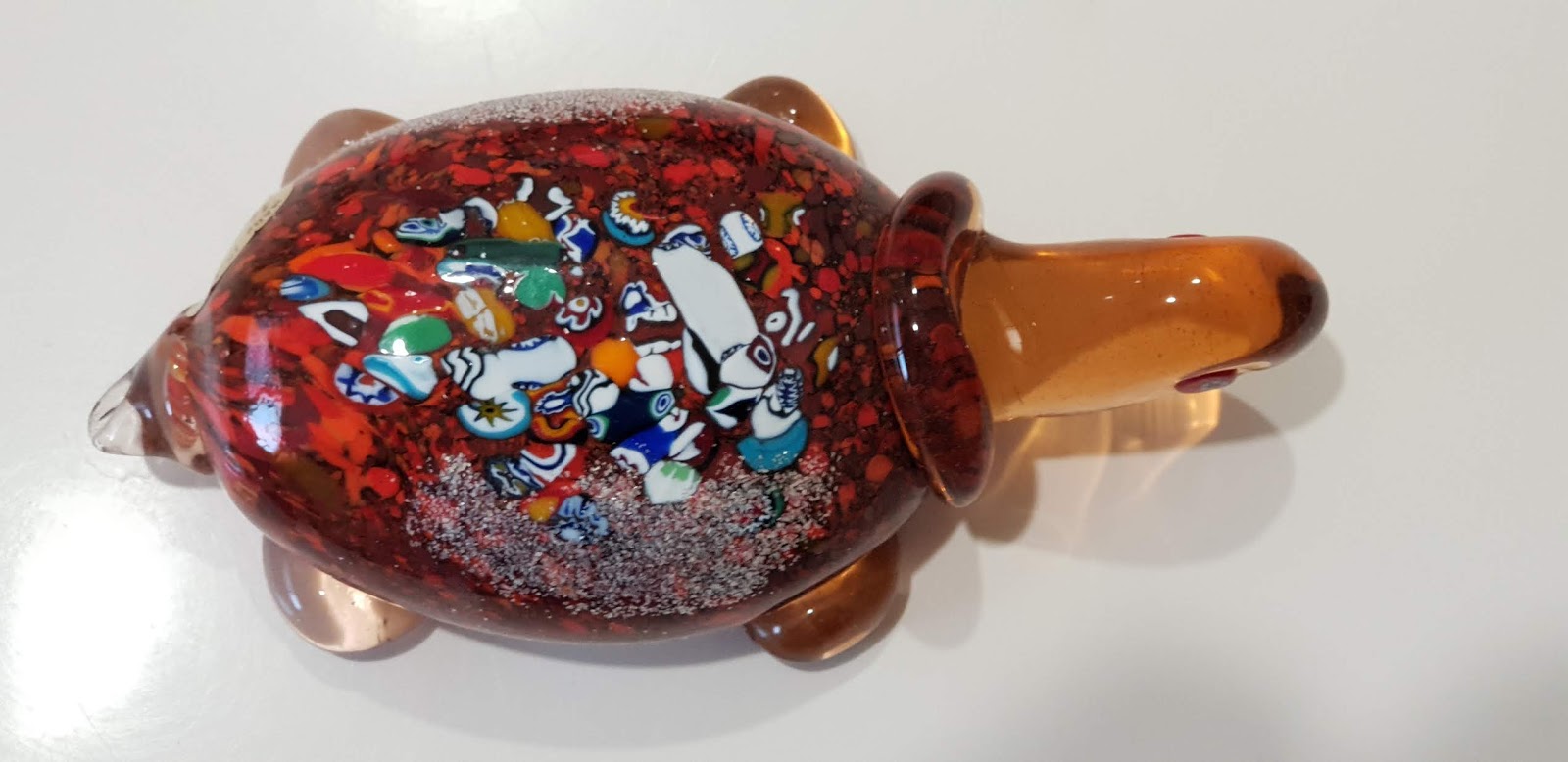
and a turtle.

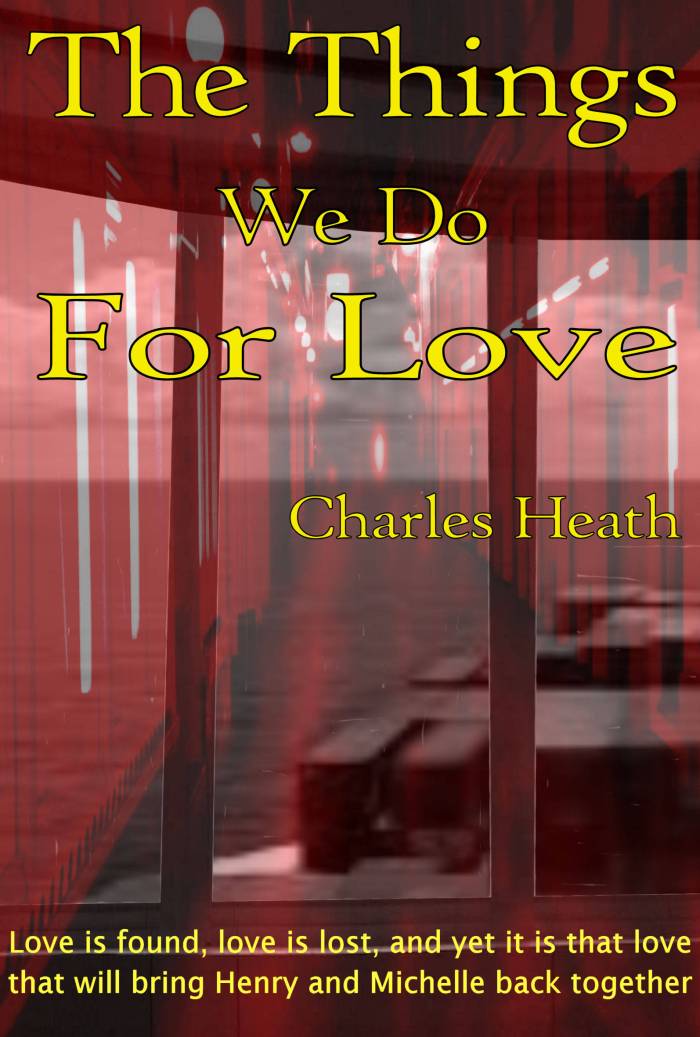
An excerpt from “The Things We Do For Love”; In love, Henry was all at sea!

In the distance, he could hear the dinner bell ringing and roused himself.  Feeling the dampness of the pillow, and fearing the ravages of pent-up emotion, he considered not going down but thought it best not to upset Mrs. Mac, especially after he said he would be dining.

In the event, he wished he had reneged, especially when he discovered he was not the only guest staying at the hotel.

Whilst he’d been reminiscing, another guest, a young lady, had arrived.  He’d heard her and Mrs. Mac coming up the stairs and then shown to a room on the same floor, perhaps at the other end of the passage.

Henry caught his first glimpse of her when she appeared at the door to the dining room, waiting for Mrs. Mac to show her to a table.

She was in her mid-twenties, slim, with long brown hair, and the grace and elegance of a woman associated with countless fashion magazines.  She was, he thought, stunningly beautiful with not a hair out of place, and make-up flawlessly applied.  Her clothes were black, simple, elegant, and expensive, the sort an heiress or wife of a millionaire might condescend to wear to a lesser occasion than dinner.

Then there was her expression; cold, forbidding, almost frightening in its intensity.  And her eyes, piercingly blue and yet laced with pain.  Dracula’s daughter was his immediate description of her.

All in all, he considered, the only thing they had in common was, like him, she seemed totally out of place.

Mrs. Mac came out of the kitchen, wiping her hands on her apron.  She was, she informed him earlier, chef, waitress, hotelier, barmaid, and cleaner all rolled into one.  Coming up to the new arrival she said, “Ah, Miss Andrews, I’m glad you decided to have dinner.  Would you like to sit with Mr. Henshaw, or would you like to have a table of your own?”

Henry could feel her icy stare as she sized up his appeal as a dining companion, making the hair on the back of his neck stand up.  He purposely didn’t look back.  In his estimation, his appeal rating was minus six.  Out of a thousand!

“If Mr. Henshaw doesn’t mind….”  She looked at him, leaving the query in mid-air.

He didn’t mind and said so.  Perhaps he’d underestimated his rating.

“Good.”  Mrs. Mac promptly ushered her over.  Henry stood, made sure she was seated properly and sat.

“Thank you.  You are most kind.”  The way she said it suggested snobbish overtones.

“I try to be when I can.”  It was supposed to nullify her sarcastic tone but made him sound a little silly, and when she gave him another of her icy glares, he regretted it.

Mrs. Mac quickly intervened, asking, “Would you care for the soup?”

They did, and, after writing the order on her pad, she gave them each a look, imperceptibly shook her head, and returned to the kitchen.

Before Michelle spoke to him again, she had another quick look at him, trying to fathom who and what he might be.  There was something about him.

His eyes, they mirrored the same sadness she felt, and, yes, there was something else, that it looked like he had been crying?  There was a tinge of redness.

Perhaps, she thought, he was here for the same reason she was.

No.  That wasn’t possible.

Then she said, without thinking, “Do you have any particular reason for coming here?”  Seconds later she realized she’d spoken it out loud, had hadn’t meant to actually ask, it just came out.

It took him by surprise, obviously not the first question he was expecting her to ask of him.

“No, other than it is as far from civilization, and home, as I could get.”

At least we agree on that, she thought.

It was obvious he was running away from something as well.

Given the isolation of the village and lack of geographic hospitality, it was, from her point of view, ideal.  All she had to do was avoid him, and that wouldn’t be difficult.

After getting through this evening first.

“Yes,” she agreed.  “It is that.”

A few seconds passed, and she thought she could feel his eyes on her and wasn’t going to look up.

Until he asked, “What’s your reason?”

Slightly abrupt in manner, perhaps, because of her question and how she asked it.

She looked up.  “Rest.  And have some time to myself.”

She hoped he would notice the emphasis she had placed on the word ‘herself’ and take due note.  No doubt, she thought, she had completely different ideas of what constituted a holiday than he, not that she had said she was here for a holiday.

Mrs. Mac arrived at a fortuitous moment to save them from further conversation.

Over the entree, she wondered if she had made a mistake coming to the hotel.  Of course, there had been no conceivable way she could know that anyone else might have booked the same hotel, but realized it was foolish to think she might end up in it by herself.

Was that what she was expecting?

Not a mistake then, but an unfortunate set of circumstances, which could be overcome by being sensible.

Yet, there he was, and it made her curious, not that he was a man, by himself, in the middle of nowhere, hiding like she was, but for quite varied reasons.

On discreet observance, whilst they ate, she gained the impression his air of light-heartedness was forced, and he had no sense of humour.

This feeling was engendered by his looks, unruly dark hair, and permanent frown.  And then there was his abysmal taste in clothes on a tall, lanky frame.  They were quality but totally unsuited to the wearer.

Rebellion was written all over him.

The only other thought crossing her mind, and incongruously, was he could do with a decent feed.  In that respect, she knew now from the mountain of food in front of her, he had come to the right place.

“Mr. Henshaw?”

He looked up.  “Henshaw is too formal.  Henry sounds much better,” he said, with a slight hint of gruffness.

“Then my name is Michelle.”

Mrs. Mac came in to take their order for the only main course, gather up the entree dishes, and then return to the kitchen.

“Staying long?” she asked.

“About three weeks.  Yourself?”

“About the same.”

The conversation dried up.

Neither looked at the other, rather at the walls, out the window, towards the kitchen, anywhere.  It was, she thought, unbearably awkward.

Mrs. Mac returned with a large tray with dishes on it, setting it down on the table next to theirs.

“Not as good as the usual cook,” she said, serving up the dinner expertly, “but it comes a good second, even if I do say so myself.  Care for some wine?”

Henry looked at Michelle.  “What do you think?”

“I’m used to my dining companions making the decision.”

You would, he thought.  He couldn’t help but notice the cutting edge of her tone.  Then, to Mrs. Mac, he named a particular White Burgundy he liked, and she bustled off.

“I hope you like it,” he said, acknowledging her previous comment with a smile that had nothing to do with humour.

“Yes, so do I.”

Both made a start on the main course, a concoction of chicken and vegetables that were delicious, Henry thought when compared to the bland food he received at home and sometimes aboard my ship.

It was five minutes before Mrs Mac returned with the bottle and two glasses.  After opening it and pouring the drinks, she left them alone again.

Henry resumed the conversation.  “How did you arrive?  I came by train.”

“By car.”

“Did you drive yourself?”

And he thought, a few seconds later, that was a silly question, otherwise she would not be alone, and certainly not sitting at this table. With him.

“After a fashion.”

He could see that she was formulating a retort in her mind, then changed it, instead, smiling for the first time, and it served to lighten the atmosphere.

And in doing so, it showed him she had another more pleasant side despite the fact she was trying not to look happy.

“My father reckons I’m just another of ‘those’ women drivers,” she added.

“Whatever for?”

“The first and only time he came with me I had an accident.  I ran up the back of another car.  Of course, it didn’t matter to him the other driver was driving like a startled rabbit.”

“It doesn’t help,” he agreed.

“Do you drive?”

“Mostly people up the wall.”  His attempt at humour failed.  “Actually,” he added quickly, “I’ve got a very old Morris that manages to get me where I’m going.”

The apple pie and cream for dessert came and went and the rapport between them improved as the wine disappeared and the coffee came.  Both had found, after getting to know each other better, their first impressions were not necessarily correct.

“Enjoy the food?” Mrs. Mac asked, suddenly reappearing.

“Beautifully cooked and delicious to eat,” Michelle said, and Henry endorsed her remarks.

“Ah, it does my heart good to hear such genuine compliments,” she said, smiling.  She collected the last of the dishes and disappeared yet again.

“What do you do for a living,” Michelle asked in an off-hand manner.

He had a feeling she was not particularly interested, and it was just making conversation.

“I’m a purser.”

“A what?”

“A purser.  I work on a ship doing the paperwork, that sort of thing.”

“I see.”

“And you?”

“I was a model.”

“Was?”

“Until I had an accident, a rather bad one.”

“Oh, I’m sorry.”

So that explained the odd feeling he had about her.

As the evening wore on, he began to think there might be something wrong, seriously wrong with her because she didn’t look too well.  Even the carefully applied makeup, from close, didn’t hide the very pale, and tired look, or the sunken, dark-ringed eyes.

“I try not to think about it, but it doesn’t necessarily work.  I’ve come here for peace and quiet, away from doctors and parents.”

“Then you will not have to worry about me annoying you.  I’m one of those fall-asleep-reading-a-book types.”

Perhaps it would be like ships passing in the night and then smiled to himself about the analogy.

Dinner over, they separated.

Henry went back to the lounge to read a few pages of his book before going to bed, and Michelle went up to her room to retire for the night.

But try as he might, he was unable to read, his mind dwelling on the unusual, yet compellingly mysterious person he would be sharing the hotel with.

Overlaying that original blurred image of her standing in the doorway was another of her haunting expressions that had, he finally conceded, taken his breath away, and a look that had sent more than one tingle down his spine.

She may not have thought much of him, but she had certainly made an impression on him.

© Charles Heath 2015-2024

lovecoverfinal1

Writing a book in 365 days – 234

Day 234

First lines have to make an impact

The Art of the Opening Line: Impact, Promise, and the Perfect Sentence

In the sprawling landscape of literature, where countless stories vie for attention and untold universes beckon, there’s a single, vital pivot point: the first line. It’s more than just a gentle nudge; it’s a carefully constructed piece of prose, a declaration, a whisper, or a shout that sets everything in motion. And if you’re a writer, or simply a discerning reader, you know this truth deep in your bones: the first line has to make an impact.

The immediate, undeniable truth is this: a first line must make an impact. In a world saturated with content, where endless scrolls and countless tabs compete for precious moments, your opening sentence is your do-or-die moment. It isn’t merely about grabbing attention; it’s about demanding it. It might shock, mystify, intrigue, or present a profound truth that resonates instantly. Think of “It was the best of times, it was the worst of times,” or “Call me Ishmael.” These aren’t just words; they’re literary thunderclaps, perfectly thrown darts hitting the bullseye of the reader’s curiosity. They don’t just invite you in; they pull you in, often before you even realize you’ve been hooked.

But impact alone, while crucial, is only half the story. While the subsequent chapters unfurl the full tapestry of your narrative, why wait? Why not offer a tantalizing glimpse, a foundational understanding of what awaits, right from the start? A well-crafted first line or paragraph subtly hints at the genre, the tone, the central conflict, or even the protagonist’s core dilemma. It’s a non-verbal contract with your reader, a promise of the journey to come. It says, “This is what you’re in for. This is the kind of world you’re about to enter.” It might promise wonder, dread, humor, or profound introspection. Even if the full qualification of these hints comes much later, the initial setup creates an expectation, a framework that encourages the reader to lean in and commit.

Which brings us to the bedrock of all this: the art of the sentence itself. The first line isn’t just a container for ideas; it is an idea, perfectly formed. It’s about meticulous word choice, the rhythm and cadence, the conciseness that packs a punch, and the elegance that makes it linger in the mind. Every word must earn its place, every punctuation mark serve a purpose. This isn’t just about conveying information; it’s about crafting an experience. When we talk about the “art of the first line,” we are, in essence, talking about the art of the sentence – its power to evoke, to define, to resonate, and to stand as a miniature masterpiece in its own right. It elevates prose from mere communication to an experience.

So, when you sit down to craft your opening, whether you’re a seasoned novelist or a budding blogger, remember it’s not just a starting point; it’s a destination in itself. It’s the initial impact that makes a reader pause, the subtle promise that makes them stay, and the sheer artistry of the sentence that makes them marvel. Invest in your first line. Polish it, perfect it, and let it sing. For in that one perfect sentence lies the entire universe of your story, waiting to unfold.

“One Last Look”, nothing is what it seems

A single event can have enormous consequences.

A single event driven by fate, after Ben told his wife Charlotte he would be late home one night, he left early, and by chance discovers his wife having dinner in their favourite restaurant with another man.

A single event where it could be said Ben was in the wrong place at the wrong time.

Who was this man? Why was she having dinner with him?

A simple truth to explain the single event was all Ben required. Instead, Charlotte told him a lie.

A single event that forces Ben to question everything he thought he knew about his wife, and the people who are around her.

After a near-death experience and forced retirement into a world he is unfamiliar with, Ben finds himself once again drawn back into that life of lies, violence, and intrigue.

From London to a small village in Tuscany, little by little Ben discovers who the woman he married is, and the real reason why fate had brought them together.

It is available on Amazon here:  http://amzn.to/2CqUBcz

In a word: Page

We as authors always like to see two little words in every review, page turner.

Alas, sometimes they’re not, but usually this applied to non fiction simple because they’re reference books. Then another two words apply: boat anchor.

The good stuff is usually over the page.

Page in this instance refers to a leaf in a book, which generally has many pages.

Then the is a page boy, not what you’d find lurking around these days but were more common in days past, but refers to a boy in training to become a knight, or an errand boy for a nobleman.

These days a page boy opens doors and runs messages in a hotel.

Another variation is being paged over the P.A. system, always a major cause of embarrassment because you and everyone else thinks your in trouble.

Of course, before there were mobile phones, there were pagers, and sometimes in the deathly silence of the classroom, it went off. Definitely not advisable to have one on you if you are trying to sneak up on someone. Same goes for the modern equivalent, the mobile phone.

For the person who uses a word processor, you are familiar with pages, and having the software generate page numbers, of course, not for the title page, and a different numbering for other pages like an index, before the story starts.

Complicated? Sometimes.

And many years ago a boss of mine often used to say I needed to turn over a new page, and it did make much sense to me. That might have been because I was young and stupid. But, later on I realised what he was really saying was that I needed to turn over a new leaf.

Kind of strange, but then a lot saying are.

And did I?

Eventually.

And just to end on a high note, Paige is also the name of a girl, I think, and one I’ve decided to use in a story.

Harry Walthenson, Private Detective – the second case – A case of finding the “Flying Dutchman”

What starts as a search for a missing husband soon develops into an unbelievable story of treachery, lies, and incredible riches.

It was meant to remain buried long enough for the dust to settle on what was once an unpalatable truth, when enough time had passed, and those who had been willing to wait could reap the rewards.

The problem was, no one knew where that treasure was hidden or the location of the logbook that held the secret.

At stake, billions of dollars’ worth of stolen Nazi loot brought to the United States in an anonymous tramp steamer and hidden in a specially constructed vault under a specifically owned plot of land on the once docklands of New York.

It may have remained hidden and unknown to only a few, if it had not been for a mere obscure detail being overheard …

… by our intrepid, newly minted private detective, Harry Walthenson …

… and it would have remained buried.

Now, through a series of unrelated events, or are they, that well-kept secret is out there, and Harry will not stop until the whole truth is uncovered.

Even if it almost costs him his life.  Again.

“Second Thoughts”, a short story

Get me to the church on time.

It was a tune out of My Fair Lady, and it was in my head the moment I woke up that morning.  And this day was, to quote some immortal’s line, was supposed to be the happiest day of my life.

But, somehow, it didn’t feel like that and lying under the warm covers of my bed, perhaps for the last time at my parent’s home, the last place I thought I’d find myself, I began to consider how it was I had ended up in this situation.

It was not a question of who the bride was, we had been friends from an early age and used to joke about getting married, but at the age of six or seven, that was a concept rather than something we might act on in the future.

Except that was how it panned out, and, not for the reasons one might think would lead to such an eventuality.

Yes, we were close friends till the early teens, then my family went in one direction, New York, and her family went in another, San Francisco, and in each place both families built successful businesses.

Josephine, the intended bride, and I met off and on over the next fifteen years, some of that mutually when we were at university together, and, I might add, living together.  Even then, there had been no suggestion of permanency because we each had to go home to eventually work in the family business.

In those few years, it had been easy because there had been no expectations by either of us.  We simply came together, stayed together, and parted at the end both happy to have enjoyed the experience.

Then, several events changed the course of our lives.

My father died unexpectedly at a crucial point in the company’s expansion, and without his direction, it began to flounder.  Then, Josephine arrived in New York to open a branch of her family’s business, and just happened to arrive on the day of my father’s funeral.

I thought it a coincidence and was grateful for her support at a time when I needed it.

A month after that, one of the lead investors in the new expansion plan pulled out, as was his right because the loan had been contingent on my father overseeing the project.  It was the end of a very bad week, and instead of being the last to leave the office, I left early, called up an old friend, Rollo, who had followed us to New York, and we went to his favourite bar.

He suggested a night on the town was called for and I agreed with him.  I think by that time I’d had enough of the problems for a few days.  But with Rollo, I learned no invitation was without its twists and turns, so when he said his sister was bringing a friend, I had to act happy even if I didn’t feel like it.  Her friends could be a little strange.

Another coincidence, the friend was Josephine.  Hearing from her once maybe, but twice in the same week, I didn’t think so, so I let it pass.  Yet despite my reservations, in the end, I had to admit I was glad to see her because the last thing I wanted to do was entertain a quirky woman I didn’t know.

Long story short, Josephine’s family business came aboard as the replacement investor, but not without some rather stringent requirements, and though no one on either side would admit it, it was suggested that perhaps Josephine and I would make an excellent match.  After all, we were childhood friends, had lived together without the problems that sometimes came with it, and we would be working very closely together.

I proposed, she accepted, and everyone was happy.

Well, not everyone.

I was down in the dining room getting breakfast, before the wedding, when Rollo arrived.  It went without saying Rollo was going to be the best man.

Curiously, he was neither surprised nor shocked to learn of my proposal, but it was a surprise to learn, in a roundabout way, he wasn’t exactly happy for me.  It was not anything I could put my finger on, but more of a feeling I had.  And, to be honest, before I had proposed to her, I was sure that Rollo had feelings for her, and at times I thought how much more sense it would make if they were together.

I’d even asked him once or twice if he liked her, and he just said they were friends.

The other side of that equation was his sister, Adrienne, who was, I thought, charming, funny, and sometimes a little offbeat, which is why I was drawn to her.  Over time, I think I may have developed feelings for her, but by the time those feelings were rising to the surface, I was advised that a woman of Josephine’s standing was more my type.

My mother could be very annoying at times, and whilst she might be looking after her son’s best interests, she was also looking after the company’s interests as best she could.  I suspect Josephine’s parents were the same, hoping their daughter would marry advantageously.

Rollo, being on the outside, had summed it up perfectly, ‘if this had been the eighteenth century there’s no doubt you two would be the perfect match’.

“You look as happy as I feel,” I said when I saw him.

“It’s going to be a big day, church wedding, in Latin of all languages, then the society event of the year.  What’s not to be happy about?”

Put like that, I shrugged.  “A registry office, burger and chips at the local diner, then a few days in the Catskills would have sufficed.”

“And on what planet do you think you are right now?”

I didn’t answer.  I simply poured another cup of black coffee and sat down.  It was a large room, with seats for a dozen, and I was the only one up.  I had expected a room full of family members, of which at least twenty were upstairs right now recovering from last night’s festivities.

Rollo poured some tea into a cup and sat opposite.  “OK.  What’s wrong?  Wedding day jitters?”

Could he read my mind?

“It just doesn’t seem right.  I mean, it seems we have been on this track forever, but you know, there’s something missing.”

“Love?”

Exactly.  It was another of those thoughts I had just before I got out of bed.  I liked her, maybe I loved her once, when I didn’t really know what love was, but now?  I don’t know what it was I felt about her.  I had been expecting those mythical thunderbolts to strike, but as the days, weeks, and months wore on, it just didn’t happen.

It was almost if we were going through the motions.

“It feels like it’s going to be a marriage of convenience.”  There, I said it.

And I expected Rollo to start having a fit.  Instead, he concentrated on putting three spoonful’s of sugar into his tea and stirring.  And stirring.  And stirring.

“Say something,” I said.  “Anything.  Tell me I’m being stupid, tell me to get out of my funk and screw my courage to the sticking place, or whatever it is you say in times like this.”

“It’s not like you to drop a bomb like this at a time like this…”

I felt he had more to say, the good part where he’d call me an ass, and then tell me to get my shit together.  It wouldn’t be the first time.

“But…”

“But I rather get the impression this wedding might not be going ahead.”

“It has to.  God knows how many people have put themselves out to be here.  It was, my mother said, a logistical nightmare.”

“It wouldn’t be the first time this has happened.”

“You’re supposed to be arguing for the wedding, not against it.”

“I would if I knew your heart was in it.  But it isn’t, is it?  I think you’ve spent so much time trying to please everyone else, that you have forgotten about yourself.  I know you’re not happy.  I also happen to know that Jo isn’t either.”

“You’ve spoken to her?”

“Just before I got here.  Call her.  You two need to talk.  In the meantime, you’re going to have to repay a huge debt after I somehow manage to sort this mess out.  My car’s outside.  Leave now, and I’ll let you know when it’s safe to return.”

“Where will I go?”

He smiled.  “I’m sure you’ll know by the time you get in the car.”

It was reckless and would cause a lot of pain and anguish for my mother, but I considered how much more pain it would cause to Josephine if I didn’t call it off.

I made the call on the way upstairs to finish dressing.

“I’m assuming you’ve spoken to Rollo?”  She didn’t wait for me to speak.

“You feel the same way?”

“It started out with the best of intentions, but I can’t help thinking if we were right for each other we would have married after university.  We are best friends, Alan, and I don’t think it’s ever going to progress from there.  I know you feel that too, it’s just the pressure from our families has managed to mask our true feelings.”

“Do you have any idea what sort of storm is about to erupt?”

“Everyone will get over it.  There’s too much at stake on both sides for there to be any real or lasting consequences.  I guess Rollo is going to have his work cut out for him.  I’ll see you one the other side.”

She didn’t say what other side, but I suspect it meant when the dust had settled.

I literally ran downstairs, mainly because I heard movement and didn’t want to run into anyone, and out the door towards Rollo’s car.

Once again I had to admire the fact he had exquisite taste in cars, and the one he’d brought was no exception, a Lamborghini, yellow, fast, and he knew I wanted to drive it.

What I didn’t expect. His sister, Phoebe, sitting in the passenger seat.

© Charles Heath 2019

Memories of the conversations with my cat – 70

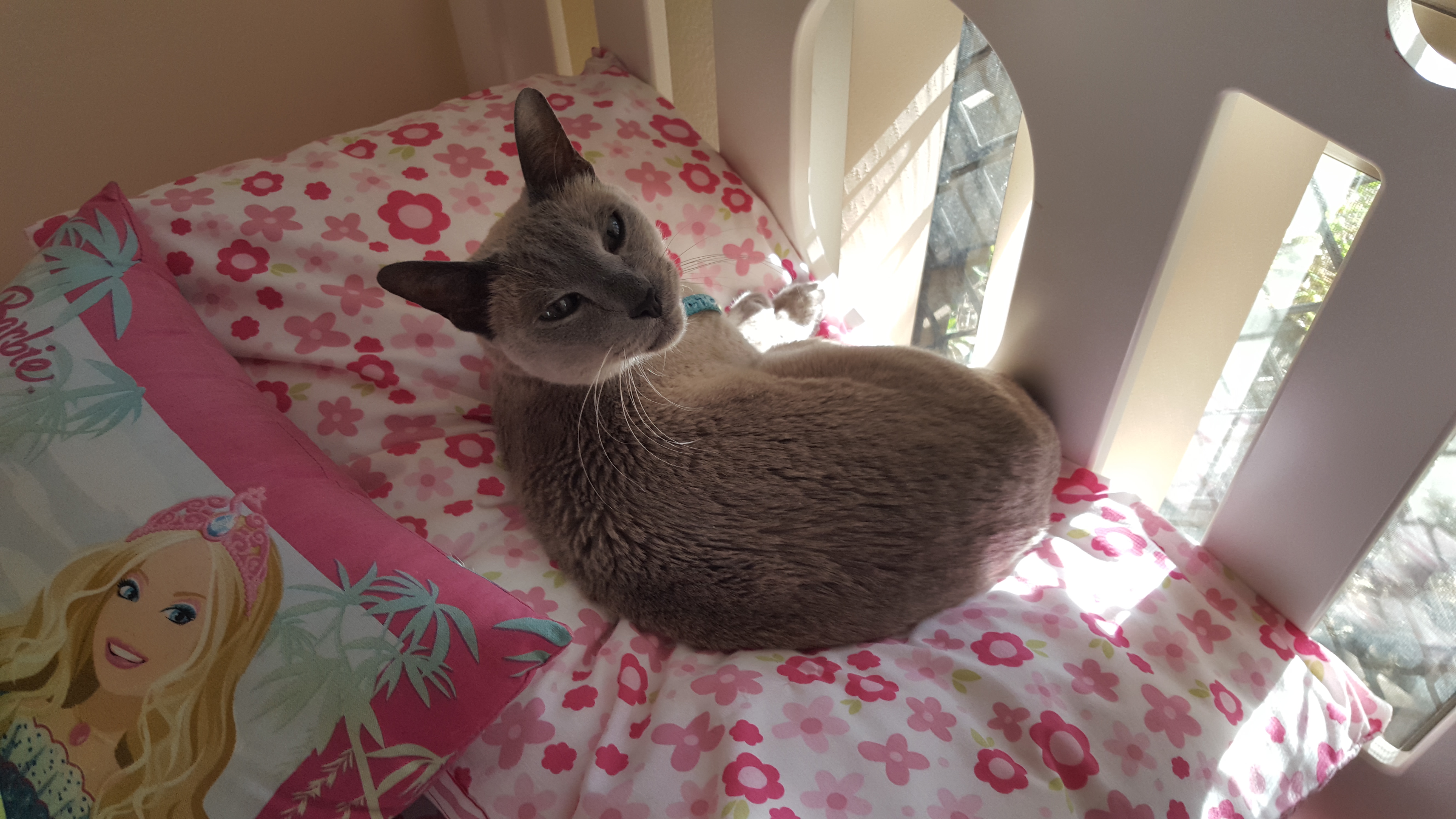
As some may be aware, but many not, Chester, my faithful writing assistant, mice catcher, and general pain in the neck, passed away some years ago.

Recently I was running a series based on his adventures, under the title of Past Conversations with my cat.

For those who have not had the chance to read about all of his exploits I will run the series again from Episode 1

These are the memories of our time together…

20161004_162739

This is Chester.  He’s checking the outside temperature.

And the heat goes on with no relief in sight.

Chester has taken to spreading out on the cool tiles floor, trying to get some sleep.

He tells me its too hot for the mice to come out.

I believe him.

I was going to chat about the so-called climate emergency, but here’s the thing. It’s been this hot before, endless days of relentless heat, days where the temperature hits 40 degrees centigrade in the shade.

It happened when we came to Queensland for a holiday 30 odd years ago, and long before Chester was thought of.

The first day it rained. After that it was nearly two weeks of very hot days.

We live in the tropics. You could expect more rain, but rain is a fickle thing.

We have bushfires everywhere, and Chester can’t sit at the doorways because of the pervading smoke permeating in the atmosphere.

I should be writing he says, but instead I’m on a settee in the living room, under a slowly rotating fan.

He jumps up and joins me, the sitting on my lap, not exactly the coolest spot to be. He’s getting the effects of the fan, I’m not and I’m guessing that’s the point.

I tell him he can go for a run outside, something I’ve never let him do.

He sees it for the gesture it is and climbs down, back to the cool floor. I get a long cold stare, and then he leaves me in peace.

No work today, for either of us. I can do without the verbal sparring.

Perhaps there will be a cool change tomorrow.

The cinema of my dreams – Was it just another surveillance job – Episode 36

I’m back home and this story has been sitting on a back burner for a few months, waiting for some more to be written.

The trouble is, there are also other stories to write, and I’m not very good at prioritizing.

But, here we are, a few minutes opened up and it didn’t take long to get back into the groove.

Chasing leads, maybe


I’m glad she didn’t ask me about Nobbin, or the fact a woman by the name of Josephine was working for him.  That went ditto for Severin, and Jan, who was working for him.

It was a tangled web.  Now, apparently, I was working for her.

I had another idea, and went back to the computer room to do another search, this time for the names of those who had been on my training course, and who was also assigned to the surveillance job.

I checked the name Jack Temple, and his file was marked closed, with a stark, red, deceased across the first page.

I checked the name Adam Alwin, and it was the same, deceased.

I checked the name Jennifer Underwood, and it had the label inactive, on medical leave.  She had been injured and was recovering.  There was no reference to her being in a hospital, or a recovery facility so I presumed she was at home.

It was another address to remember, this time what I assumed was a flat in Putney.  It was not something she had mentioned in all the time we have been together.  She had spoken of a house in Scotland.

But, then, who really told the truth when we were trained and continually told to lie about everything.  In the end I don’t think we quite knew who we were.  I knew her as Jennifer, but I doubted that was her real name.

Maybe I’d find out when I went to see her.  I needed help and from someone I could trust.  It was logical to select her.  We had, for at least six months, relying on each other to get through.


I cam out into the daylight and it hurt my eyes.  The artificial light, not that it was very bright, had queered my sight briefly.  No good, because for a minute at least I was vulnerable to an attack.

Good thing it didn’t happen.

But something else did.  A car pulled up on the side of the road, one I instantly recognised as the same Nobbin had used when he collected Josephine.

He wound down the rear kerbside window and said, “Sam.  Just the man I want to see.  Get in.”

I saw him slide over.  I opened the door, got in, and the driver drove off.

He seemed pleased with himself.

“How is the hunt?”

“How do you think it’s going?”

He looked quizzically at me.  “Why would I ask if I knew the answer?”

“I think you do.  I was at O’Connell’s flat when one of your assistants was there.  She discovered the same as I did, nothing.”

“What assistant?”  He tried to sound surprised.

“We’re not going to be very good friends if you are going to lie to me.  She called herself Josephine.  I wouldn’t be much of an agent if I didn’t have a few tricks up my sleeve.  And, lets be clear about one thing, if nothing else, you want to play games, fine.  So will I.”

“What did Monica want?”

“What everyone wants.  There appear to be secret documents on the loose.  Everyone thinks they’re on a USB, and that O’Connell has hidden them somewhere.  They’re not in his flat, and the cat wasn’t talking.”

“Just remember that O’Connell was working for me, and he was getting the documents for me.”

“So you know what these documents are about?”

“No.  He didn’t tell me because he didn’t look at them.  He couldn’t.  They’re encrypted, and he doesn’t have the code.”

Which wouldn’t do much good for me if I tried to see what the fuss was about.  Perhaps the best idea would be to destroy the USB so no one had these documents, given the trouble they’d caused so far.

“Anyone check O’Connell’s body properly for the USB?  He may have had it hidden in his clothing somewhere.”  I knew I didn’t have sufficient time to thoroughly check myself.

“No one knows where the body is.”

“I saw the cleaners arrive to process the scene.”

“Well, if they did, the job never reached the books.  According to the cleaners, no one was dispatched to take care of anything at the location.”

Which meant Severin had the body, had checked as I would if I had the time, and it was not on him.  Otherwise, he would not have paid me a visit.  It was back to Peaslake then, the next step in the investigation.

“Recovery of these documents is time-sensitive Sam.  You need to double your effort.”

“A lack of clues is not helping.  Nor is everyone working on their own agenda.”

“Then don’t lose focus.”

I saw him motion to the driver to pull over and let me out.

I waved as the car pulled back out into the traffic.


© Charles Heath 2020

Writing a book in 365 days – 233

Day 233

What is an acceptable age to stop writing

Pen Down? Never! Why There’s No ‘Acceptable Age’ to Stop Writing

It’s a question that might silently gnaw at writers, especially as the years accumulate: “Am I too old to be doing this? Is there an acceptable age to finally put the pen down?”

Let’s take a deep breath and shatter this myth right now.

The beautiful, liberating truth is: there isn’t one.

Unlike professional sports where physical peak defines a career, or industries that demand intense, rapid-fire innovation, writing thrives on something entirely different: life experience, wisdom, observation, and the enduring power of the human spirit. These are qualities that only deepen and enrich with time.

Why the Calendar Doesn’t Define Your Craft

The idea of an “acceptable age” to stop writing is a construct, a societal whisper that has no place in the world of storytelling. Here’s why you should ignore it:

  1. Wisdom is Your Superpower: Youth brings fresh perspectives, but age brings the nuanced understanding that only comes from living through joy, sorrow, triumph, and failure. Every single year you live adds another layer to your understanding of human nature, making your characters richer, your plots more profound, and your themes more resonant.
  2. A Richer Tapestry of Experience: Think of your life as a vast library. With every passing decade, you add new wings, new genres, new collections. This reservoir of lived experience is invaluable for a writer. You have more to draw from, more to reflect upon, and more unique insights to offer your readers.
  3. Writing as Lifelong Learning: The act of writing keeps your mind sharp, your curiosity piqued, and your creative muscles toned. It’s a fantastic form of mental exercise that can genuinely contribute to well-being as we age. Why would you want to stop something that is so beneficial?
  4. The Perspective of Time: Have you ever revisited an old memory and seen it in a completely new light? Age provides that distance and perspective, allowing you to craft narratives that explore complex emotions and historical events with greater clarity and depth. What felt overwhelming at 30 might become a powerful narrative at 70.
  5. Technology is Your Ally: Worried about typing speed or hand cramps? Dictation software, ergonomic keyboards, larger screens, and assistive technologies mean that physical limitations are no longer insurmountable barriers. Adaptation, not cessation, is the key.

Legends Who Wrote On (and On!)

History is filled with writers who found their voice late, or continued to produce masterpieces well into their golden years:

  • Laura Ingalls Wilder: Didn’t publish her first “Little House” book until she was 65!
  • Frank McCourt: Won a Pulitzer for Angela’s Ashes in 1997 when he was 66.
  • Agatha Christie: Continued to write bestsellers and intricate mysteries well into her 80s.
  • Toni Morrison: Published acclaimed novels throughout her 70s and 80s, including God Help the Child at 84.
  • Harriet Doerr: Published her first novel, Stones for Ibarra, and won a National Book Award at 74.

These are not anomalies; they are testaments to the enduring power of the written word and the human capacity for creation.

So, When Is the Acceptable Age to Stop Writing?

When the stories stop calling out to you. When your imagination runs dry. When the desire to connect, to share, to create, finally fades.

For most writers, that moment never truly arrives. The urge to tell stories is intrinsic, deeply woven into the fabric of who we are. It’s a fire that, if tended, can burn brightly for a lifetime.

Don’t let the calendar dictate your creative journey. Pick up that pen, open that laptop, and keep pouring your unique perspective onto the page. The world needs your stories, no matter how many candles are on your birthday cake.


What are your thoughts? Have you ever felt the pressure to “slow down” creatively because of your age? Share your experiences in the comments below!