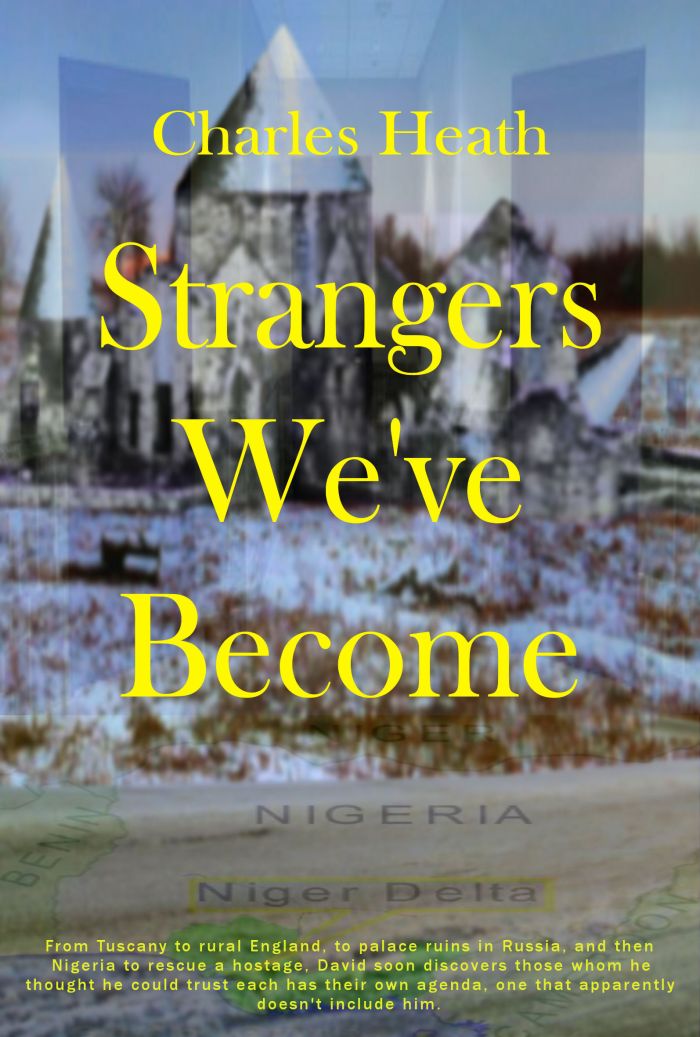
An excerpt from “Strangers We’ve Become” – Coming Soon

I wandered back to my villa.

It was in darkness.  I was sure I had left several lights on, especially over the door so I could see to unlock it.

I looked up and saw the globe was broken.

Instant alert.

I went to the first hiding spot for the gun, and it wasn’t there.  I went to the backup and it wasn’t there either.  Someone had found my carefully hidden stash of weapons and removed them.

Who?

There were four hiding spots and all were empty.  Someone had removed the weapons.  That could only mean one possibility.

I had a visitor, not necessarily here for a social call.

But, of course, being the well-trained agent I’d once been and not one to be caught unawares, I crossed over to my neighbor and relieved him of a weapon that, if found, would require a lot of explaining.

Suitably armed, it was time to return the surprise.

There were three entrances to the villa, the front door, the back door, and a rather strange escape hatch.  One of the more interesting attractions of the villa I’d rented was its heritage.  It was built in the late 1700s, by a man who was, by all accounts, a thief.  It had a hidden underground room which had been in the past a vault but was now a wine cellar, and it had an escape hatch by which the man could come and go undetected, particularly if there was a mob outside the door baying for his blood.

It now gave me the means to enter the villa without my visitors being alerted, unless, of course, they were near the vicinity of the doorway inside the villa, but that possibility was unlikely.  It was not where anyone could anticipate or expect a doorway to be.

The secret entrance was at the rear of the villa behind a large copse, two camouflaged wooden doors built into the ground.  I move aside some of the branches that covered them and lifted one side.  After I’d discovered the doors and rusty hinges, I’d oiled and cleaned them, and cleared the passageway of cobwebs and fallen rocks.  It had a mildew smell, but nothing would get rid of that.  I’d left torches at either end so I could see.

I closed the door after me, and went quietly down the steps, enveloped in darkness till I switched on the torch.  I traversed the short passage which turned ninety degrees about halfway to the door at the other end.  I carried the key to this door on the keyring, found it and opened the door.  It too had been oiled and swung open soundlessly.

I stepped in the darkness and closed the door.

I was on the lower level under the kitchen, now the wine cellar, the ‘door’ doubling as a set of shelves which had very little on them, less to fall and alert anyone in the villa.

Silence, an eerie silence.

I took the steps up to the kitchen, stopping when my head was level with the floor, checking to see if anyone was waiting.  There wasn’t.  It seemed to me to be an unlikely spot for an ambush.

I’d already considered the possibility of someone coming after me, especially because it had been Bespalov I’d killed, and I was sure he had friends, all equally as mad as he was.  Equally, I’d also considered it nigh on impossible for anyone to find out it was me who killed him because the only people who knew that were Prendergast, Alisha, a few others in the Department, and Susan.

That raised the question of who told them where I was.

If I was the man I used to be, my first suspect would be Susan.  The departure this morning, and now this was too coincidental.  But I was not that man.

Or was I?

I reached the start of the passageway that led from the kitchen to the front door and peered into the semi-darkness.  My eyes had got used to the dark, and it was no longer an inky void.  Fragments of light leaked in around the door from outside and through the edge of the window curtains where they didn’t fit properly.  A bone of contention upstairs in the morning, when first light shone and invariably woke me up hours before I wanted to.

Still nothing.

I took a moment to consider how I would approach the visitor’s job.  I would get a plan of the villa in my head, all entrances, where a target could be led to or attacked where there would be no escape.

Coming in the front door.  If I was not expecting anything, I’d just open the door and walk-in.  One shot would be all that was required.

Contract complete.

I sidled quietly up the passage staying close to the wall, edging closer to the front door.  There was an alcove where the shooter could be waiting.  It was an ideal spot to wait.

Crunch.

I stepped on some nutshells.

Not my nutshells.

I felt it before I heard it.  The bullet with my name on it.

And how the shooter missed, from point-blank range, and hit me in the arm, I had no idea.  I fired off two shots before a second shot from the shooter went wide and hit the door with a loud thwack.

I saw a red dot wavering as it honed in on me and I fell to the floor, stretching out, looking up where the origin of the light was coming and pulled the trigger three times, evenly spaced, and a second later I heard the sound of a body falling down the stairs and stopping at the bottom, not very far from me.

Two assassins.

I’d not expected that.

The assassin by the door was dead, a lucky shot on my part.  The second was still breathing.

I checked the body for any weapons and found a second gun and two knives.  Armed to the teeth!

I pulled off the balaclava; a man, early thirties, definitely Italian.  I was expecting a Russian.

I slapped his face, waking him up.  Blood was leaking from several slashes on his face when his head had hit the stairs on the way down.  The awkward angle of his arms and legs told me there were broken bones, probably a lot worse internally.  He was not long for this earth.

“Who employed you?”

He looked at me with dead eyes, a pursed mouth, perhaps a smile.  “Not today my friend.  You have made a very bad enemy.”  He coughed and blood poured out of his mouth.  “There will be more …”

Friends of Bespalov, no doubt.

I would have to leave.  Two unexplainable bodies, I’d have a hard time explaining my way out of this mess.  I dragged the two bodies into the lounge, clearing the passageway just in case someone had heard anything.

Just in case anyone was outside at the time, I sat in the dark, at the foot of the stairs, and tried to breathe normally.  I was trying not to connect dots that led back to Susan, but the coincidence was worrying me.

A half-hour passed and I hadn’t moved.  Deep in thought, I’d forgotten about being shot, unaware that blood was running down my arm and dripping onto the floor.

Until I heard a knock on my front door.

Two thoughts, it was either the police, alerted by the neighbors, or it was the second wave, though why would they be knocking on the door?

I stood, and immediately felt a stabbing pain in my arm.  I took out a handkerchief and turned it into a makeshift tourniquet, then wrapped a kitchen towel around the wound.

If it was the police, this was going to be a difficult situation.  Holding the gun behind my back, I opened the door a fraction and looked out.

No police, just Maria.  I hoped she was not part of the next ‘wave’.

“You left your phone behind on the table.  I thought you might be looking for it.”  She held it out in front of her.

When I didn’t open the door any further, she looked at me quizzically, and then asked, “Is anything wrong?”

I was going to thank her for returning the phone, but I heard her breathe in sharply, and add, breathlessly, “You’re bleeding.”

I looked at my arm and realized it was visible through the door, and not only that, the towel was soaked in blood.

“You need to go away now.”

Should I tell her the truth?  It was probably too late, and if she was any sort of law-abiding citizen she would go straight to the police.

She showed no signs of leaving, just an unnerving curiosity.  “What happened?”

I ran through several explanations, but none seemed plausible.  I went with the truth.  “My past caught up with me.”

“You need someone to fix that before you pass out from blood loss.  It doesn’t look good.”

“I can fix it.  You need to leave.  It is not safe to be here with me.”

The pain in my arm was not getting any better, and the blood was starting to run down my arm again as the tourniquet loosened.  She was right, I needed it fixed sooner rather than later.

I opened the door and let her in.  It was a mistake, a huge mistake, and I would have to deal with the consequences.  Once inside, she turned on the light and saw the pool of blood just inside the door and the trail leading to the lounge.  She followed the trail and turned into the lounge, turned on the light, and no doubt saw the two dead men.

I expected her to scream.  She didn’t.

She gave me a good hard look, perhaps trying to see if I was dangerous.  Killing people wasn’t something you looked the other way about.  She would have to go to the police.

“What happened here?”

“I came home from the cafe and two men were waiting for me.  I used to work for the Government, but no longer.  I suspect these men were here to repay a debt.  I was lucky.”

“Not so much, looking at your arm.”

She came closer and inspected it.

“Sit down.”

She found another towel and wrapped it around the wound, retightening the tourniquet to stem the bleeding.

“Do you have medical supplies?”

I nodded.  “Upstairs.”  I had a medical kit, and on the road, I usually made my own running repairs.  Another old habit I hadn’t quite shaken off yet.

She went upstairs, rummaged, and then came back.  I wondered briefly what she would think of the unmade bed though I was not sure why it might interest her.

She helped me remove my shirt, and then cleaned the wound.  Fortunately, she didn’t have to remove a bullet.  It was a clean wound but it would require stitches.

When she’d finished she said, “Your friend said one day this might happen.”

No prizes for guessing who that friend was, and it didn’t please me that she had involved Maria.

“Alisha?”

“She didn’t tell me her name, but I think she cares a lot about you.  She said trouble has a way of finding you, gave me a phone and said to call her if something like this happened.”

“That was wrong of her to do that.”

“Perhaps, perhaps not.  Will you call her?”

“Yes.  I can’t stay here now.  You should go now.  Hopefully, by the time I leave in the morning, no one will ever know what happened here, especially you.”

She smiled.  “As you say, I was never here.”

© Charles Heath 2018-2022

strangerscover9

Writing a book in 365 days – My story 38

More about my story

What is a Coup d’etat?

The Tumultuous Path of a Coup d’état: Understanding Its Mechanics, Motivations, and Risks

The phrase “coup d’état” – a sudden, often violent, seizure of power from a government – conjures images of military might and political upheaval. While usually associated with historical events, understanding its core mechanics, the reasons behind such desperate gambits, and the factors that contribute to their success or failure is crucial for comprehending political instability and the fragility of power.

What Exactly is a Coup d’état?

At its heart, a coup d’état (French for “stroke of state”) is an illegal and unconstitutional overthrow of a government, typically by a small group, most often from within the existing state apparatus. Unlike a revolution, which involves widespread popular participation and aims for fundamental societal change, a coup is generally swift, decisive, and carried out by an elite faction – often military officers, but sometimes political figures or intelligence agencies.

Key characteristics include:

  • Speed and Surprise: Coups rely on catching the existing leadership off guard.
  • Limited Scope: They usually target the top echelons of power, aiming to replace leaders rather than dismantle the entire system immediately.
  • Use of Force or Threat of Force: While not always bloody, the potential for violence is inherent.
  • Internal Actors: The plotters are typically insiders who have access to state resources and institutions.

Why Might a Coup Be Pursued?

The motivations behind attempting a coup d’état can be varied and often deeply rooted in perceived grievances and aspirations. Some common drivers include:

  • Discontent with the Current Leadership: This can stem from perceived corruption, incompetence, authoritarianism, or failure to address national crises (economic, social, or security).
  • Desire for Political Power: Ambitious individuals or factions may see a coup as the fastest and most direct route to seizing control.
  • Ideological Differences: A group may believe the current government’s policies or ideology are detrimental to the nation and seek to impose their own vision.
  • Ethnic or Regional Grievances: In diverse nations, a particular group might feel marginalized or oppressed and attempt to seize power to assert their dominance or secure their interests.
  • External Influence: Foreign powers may sometimes support or instigate coups to install friendly regimes or destabilize adversaries.

What is Needed to Make a Coup d’état Work?

A successful coup d’état is a meticulously planned and executed operation that requires a confluence of specific elements:

  • A Committed and Organized Core Group: This is the engine of the coup. They need a clear plan, leadership, and a unity of purpose.
  • Control of Key State Institutions: This is paramount. Access to and control over the military, police, intelligence agencies, and vital communication networks are essential for neutralizing opposition and projecting authority.
  • Disruption of Communications: Cutting off or controlling communication channels prevents the existing government from rallying support or issuing counter-orders.
  • Neutralization of Key Leaders: The swift arrest, detention, or elimination of the head of state, key ministers, and loyal military commanders is crucial to preventing organized resistance.
  • Public Apathy or Support (or at least acquiescence): While coups are not revolutions, the general populace’s reaction can be a significant factor. If the public is indifferent, divided, or even sympathetic to the coup plotters’ initial message, it can significantly ease their path.
  • Rapid Consolidation of Power: Once the initial seizure is complete, the plotters must quickly establish their authority, issue decrees, and begin to govern to prevent a vacuum or counter-coup.
  • Legitimizing Narrative: Even in an illegal act, plotters often try to frame their actions as necessary for the greater good, using propaganda to justify their takeover.

What Lets a Coup d’état Work or Fail?

The success or failure of a coup d’état is a delicate balance, with numerous factors tipping the scales:

Factors Contributing to Success:

  • Overwhelming Military Support: If the majority of the armed forces, especially elite units, back the coup, it’s very difficult for the existing government to resist.
  • Weakness of the Current Regime: A government that is already unpopular, fractured, and lacking in popular legitimacy is more vulnerable.
  • Effective Intelligence and Secrecy: The element of surprise is a powerful weapon. If the plot is kept secret until the last moment, the government has little time to react.
  • Swift and Decisive Action: Hesitation or botched initial moves can give the government time to regroup and retaliate.
  • Lack of Coordinated Opposition: If loyalist forces are disorganized or divided, they are less likely to mount an effective counter-attack.
  • International Non-Intervention: If major global powers remain neutral or even tacitly support the coup, it can increase its chances of survival.

Factors Leading to Failure:

  • Loyalist Resistance: If a significant portion of the military or security forces remains loyal to the government and can effectively organize resistance, the coup can be crushed.
  • Popular Uprising: While not a direct cause, widespread popular mobilization against the coup can create significant challenges and force the plotters to overextend their resources.
  • Internal Divisions Among Plotters: Disagreements within the coup leadership can lead to indecision, infighting, and ultimately, collapse.
  • Infiltration and Betrayal: If the plot is discovered prematurely or key members betray the plan, it can lead to the arrest of the plotters.
  • Ineffective Planning and Execution: Poorly organized coups, marked by confusion and disarray, are easily thwarted.
  • International Condemnation and Intervention: Strong international opposition, sanctions, or even direct intervention can undermine a coup’s legitimacy and effectiveness.
  • Failure to Consolidate Power: If the plotters fail to quickly establish control over essential services and institutions, they can find themselves in a precarious position.

In conclusion, a coup d’état is a high-stakes gamble that, while seemingly decisive in its initial moments, is fraught with uncertainty. Its success hinges on a complex interplay of internal political dynamics, military loyalty, strategic execution, and the ever-unpredictable reaction of the population and the international community. Understanding these elements provides a critical lens through which to analyze political instability and the enduring struggle for power in various nations.

Another excerpt from ‘Betrayal’; a work in progress

My next destination in the quest was the hotel we believed Anne Merriweather had stayed at.

I was, in a sense, flying blind because we had no concrete evidence she had been there, and the message she had left behind didn’t quite name the hotel or where Vladimir was going to take her.

Mindful of the fact that someone might have been following me, I checked to see if the person I’d assumed had followed me to Elizabeth’s apartment was still in place, but I couldn’t see him. Next, I made a mental note of seven different candidates and committed them to memory.

Then I set off to the hotel, hailing a taxi. There was the possibility the cab driver was one of them, but perhaps I was slightly more paranoid than I should be. I’d been watching the queue, and there were two others before me.

The journey took about an hour, during which time I kept an eye out the back to see if anyone had been following us. If anyone was, I couldn’t see them.

I had the cab drop me off a block from the hotel and then spent the next hour doing a complete circuit of the block the hotel was on, checking the front and rear entrances, the cameras in place, and the siting of the driveway into the underground carpark. There was a camera over the entrance, and one we hadn’t checked for footage. I sent a text message to Fritz to look into it.

The hotel lobby was large and busy, which was exactly what you’d want if you wanted to come and go without standing out. It would be different later at night, but I could see her arriving about mid-afternoon, and anonymous among the type of clientele the hotel attracted.

I spent an hour sitting in various positions in the lobby simply observing. I had already ascertained where the elevator lobby for the rooms was, and the elevator down to the car park. Fortunately, it was not ‘guarded’ but there was a steady stream of concierge staff coming and going to the lower levels, and, just from time to time, guests.

Then, when there was a commotion at the front door, what seemed to be a collision of guests and free-wheeling bags, I saw one of the seven potential taggers sitting by the front door. Waiting for me to leave? Or were they wondering why I was spending so much time there?

Taking advantage of that confusion, I picked my moment to head for the elevators that went down to the car park, pressed the down button, and waited.

The was no car on the ground level, so I had to wait, watching, like several others, the guests untangling themselves at the entrance, and an eye on my potential surveillance, still absorbed in the confusion.

The doors to the left car opened, and a concierge stepped out, gave me a quick look, then headed back to his desk. I stepped into the car, pressed the first level down, the level I expected cars to arrive on, and waited what seemed like a long time for the doors to close.

As they did, I was expecting to see a hand poke through the gap, a latecomer. Nothing happened, and I put it down to a television moment.

There were three basement levels, and for a moment, I let my imagination run wild and considered the possibility that there were more levels. Of course, there was no indication on the control panel that there were any other floors, and I’d yet to see anything like it in reality.

With a shake of my head to return to reality, the car arrived, the doors opened, and I stepped out.

A car pulled up, and the driver stepped out, went around to the rear of his car, and pulled out a case. I half expected him to throw me the keys, but the instant glance he gave me told him was not the concierge, and instead brushed past me like I wasn’t there.

He bashed the up button several times impatiently and cursed when the doors didn’t open immediately. Not a happy man.

Another car drove past on its way down to a lower level.

I looked up and saw the CCTV camera, pointing towards the entrance, visible in the distance. A gate that lifted up was just about back in position and then made a clunk when it finally closed. The footage from the camera would not prove much, even if it had been working, because it didn’t cover the life lobby, only in the direction of the car entrance.

The doors to the other elevator car opened, and a man in a suit stepped out.

“Can I help you, sir? You seem lost.”

Security, or something else. “It seems that way. I went to the elevator lobby, got in, and it went down rather than up. I must have been in the wrong place.”

“Lost it is, then, sir.” I could hear the contempt for Americans in his tone. “If you will accompany me, please.”

He put out a hand ready to guide me back into the elevator. I was only too happy to oblige him. There had been a sign near the button panel that said the basement levels were only to be accessed by the guests.

Once inside, he turned a key and pressed the lobby button. The doors closed, and we went up. He stood, facing the door, not speaking. A few seconds later, he was ushering me out to the lobby.

“Now, sir, if you are a guest…”

“Actually, I’m looking for one. She called me and said she would be staying in this hotel and to come down and visit her. I was trying to get to the sixth floor.”

“Good. Let’s go over the the desk and see what we can do for you.”

I followed him over to the reception desk, where he signalled one of the clerks, a young woman who looked and acted very efficiently, and told her of my request, but then remained to oversee the proceeding.

“Name of guest, sir?”

“Merriweather, Anne. I’m her brother, Alexander.” I reached into my coat pocket and pulled out my passport to prove that I was who I said I was. She glanced cursorily at it.

She typed the name into the computer, and then we waited a few seconds while it considered what to output. Then, she said, “That lady is not in the hotel, sir.”

Time to put on my best-confused look. “But she said she would be staying here for the week. I made a special trip to come here to see her.”

Another puzzled look from the clerk, then, “When did she call you?”

An interesting question to ask, and it set off a warning bell in my head. I couldn’t say today, it would have to be the day she was supposedly taken.

“Last Saturday, about four in the afternoon.”

Another look at the screen, then, “It appears she checked out Sunday morning. I’m afraid you have made a trip in vain.”

Indeed, I had. “Was she staying with anyone?”

I just managed to see the warning pass from the suited man to the clerk. I thought he had shown an interest when I mentioned the name, and now I had confirmation. He knew something about her disappearance. The trouble was, he wasn’t going to volunteer any information because he was more than just hotel security.

“No.”

“Odd,” I muttered. “I thought she told me she was staying with a man named Vladimir something or other. I’m not too good at pronouncing those Russian names. Are you sure?”

She didn’t look back at the screen. “Yes.”

“OK, now one thing I do know about staying in hotels is that you are required to ask guests with foreign passports their next destination, just in case they need to be found. Did she say where she was going next?” It was a long shot, but I thought I’d ask.

“Moscow. As I understand it, she lives in Moscow. That was the only address she gave us.”

I smiled. “Thank you. I know where that is. I probably should have gone there first.”

She didn’t answer; she didn’t have to, her expression did that perfectly.

The suited man spoke again, looking at the clerk. “Thank you.” He swivelled back to me. “I’m sorry we can’t help you.”

“No. You have more than you can know.”

“What was your name again, sir, just in case you still cannot find her?”

“Alexander Merriweather. Her brother. And if she is still missing, I will be posting a very large reward. At the moment, you can best contact me via the American Embassy.”

Money is always a great motivator, and that thoughtful expression on his face suggested he gave a moment’s thought to it.

I left him with that offer and left. If anything, the people who were holding her would know she had a brother, that her brother was looking for her, and equally that brother had money.

© Charles Heath – 2018-2025

In a word: Choice

We are often told that it’s the choices we make that shape our lives.

It’s true.

What distinguishes the basis of those choices is the circumstances of the individual.

What a lot of people don’t realize is the diversity of backgrounds of everyone, and that in a minority of cases, the few that really have no choices at all.

Yes, there are those who have no control over their circumstances, and therefore no choice whatsoever.

Inevitably, the people who are first to criticize those who apparently made the wrong choice, are those that have never found themselves in similar circumstances.

And probably never will.

This perhaps is the biggest problem with governments who are staffed with advisors who do not understand the plight of the common man.

I never had the same opportunities as those who could afford a university education.  My family were working class and were relatively poor.  Had I not hot a scholarship who knows what sort of education I would have got, if any.

Certainly, my father never got an opportunity to get a good education, but, at the time, during the great depression, his choices were limited, whereas those with any sort of wealth it was a different story.

And his lack of choices reflected on us, and that lack of opportunity haunted all of us as time passed.

It was always a case of the haves and the have not’s.

Yes, we all have choices, but sometimes it really is the lesser of two evils, and not whether we will have the fillet or the rib eye steak.

“Sunday in New York”, a romantic adventure that’s not a walk in the park!

“Sunday in New York” is ultimately a story about trust, and what happens when a marriage is stretched to its limits.

When Harry Steele attends a lunch with his manager, Barclay, to discuss a promotion that any junior executive would accept in a heartbeat, it is the fact his wife, Alison, who previously professed her reservations about Barclay, also agreed to attend, that casts a small element of doubt in his mind.

From that moment, his life, in the company, in deciding what to do, his marriage, his very life, spirals out of control.

There is no one big factor that can prove Harry’s worst fears, that his marriage is over, just a number of small, interconnecting events, when piled on top of each other, points to a cataclysmic end to everything he had believed in.

Trust is lost firstly in his best friend and mentor, Andy, who only hints of impending disaster, Sasha, a woman whom he saved, and who appears to have motives of her own, and then in his wife, Alison, as he discovered piece by piece damning evidence she is about to leave him for another man.

Can we trust what we see with our eyes or trust what we hear?

Haven’t we all jumped to conclusions at least once in our lives?

Can Alison, a woman whose self-belief and confidence is about to be put to the ultimate test, find a way of proving their relationship is as strong as it has ever been?

As they say in the classics, read on!

Purchase:

http://tinyurl.com/Amazon-SundayInNewYork

“Trouble in Store” – Short stories my way: Actions have consequences

It’s time for the policewoman to arrive.

There is such a thing as pure dumb luck.

If she had not walked through the door when she did, then Jack wouldn’t have walked away.

From the policewoman’s perspective:

She crossed the street from the corner instead of remaining on the same side of the street as she did every other night.  When she reached the other sidewalk, she was about twenty yards from the nearest window of the store.

As she crossed, she got a better view of the three people in the store and noticed the woman, or girl, was acting oddly as if she had something in her hand, and, from time to time looked down beside her.

A yard or two from the window she stopped, took a deep breath, and then moved slowly, getting a better view of the scene with each step.

Then she saw the gun in the girl’s hand, and the two men, the shopkeeper and a customer facing her both with their hands raised.

It was a convenience store robbery in progress.

She reached for her radio, but it wasn’t there.  She was off duty.  Instead, she withdrew, and called the station on her mobile phone, and reported the robbery.  The officer at the end of the phone said a car would be there in five minutes.

In five minutes there could be dead bodies.

She had to do something, and reached into her bag and pulled out a gun.  Not her service weapon, but one she carried in case of personal danger.

Guns are dangerous weapons in the hands of professional and amateur alike.  You would expect a professional who has trained to use a gun to not have a problem but consider what might happen in exceptional circumstances.

People freeze under pressure.  Alternately, some shoot first and ask questions later.

We have an edgy and frightened girl with a loaded gun, one bullet or thirteen in a magazine, it doesn’t matter.  It only takes one bullet to kill someone.

Then there’s the trigger pressure, light or heavy, the recoil after the shot and whether it causes the bullet to go into or above the intended target, especially if the person has never used a gun.

The policewoman, with training, will need two hands to take the shot, but in getting into the shop she will need one to open the door, and then be briefly distracted before using that hand to steady the other.

It will take a lifetime, even if it is only a few seconds.

Actions have consequences:

The policewoman crouched below the window shelf line so the girl wouldn’t see her and made it to the door before straightening.  She was in dark clothes so the chances were the girl would not see her against the dark street backdrop.

Her hand was on the door handle about to push it inwards when she could feel it being yanked hard from the other side, and the momentum and surprise of it caused her to lose balance and crash into the man who was trying to get out.

What the hell…

A second or two later both were on the floor in a tangled mess, her gun hand caught underneath her, and a glance in the direction of the girl with the gun told her the situation had deteriorated.

The girl had swung the gun around, aimed it at her, and squeezed the trigger twice.

The two bangs in the small room were almost deafening and disorientating.

Behind her, the glass door disintegrated when the bullet hit it.

Neither she nor the man beside her had been hit.

Yet.

She felt a kick in the back and the tickling of glass then broke free as the man she’d run into rolled out of the way.

Quickly on her feet, she saw the girl had gone, and wasted precious seconds getting up off the floor, then out the door to find she had disappeared.

She could hear a siren in the distance.  They’d find her.

If the policewoman had not picked that precise moment to enter the shop, maybe the man would have got away.

Maybe.

If he’d been aware of the fact he was allowed to leave.

He was lucky not to be shot.

Yet there were two shots, and we know at least one of them broke the door’s glass panel.

Next – The end of the story

© Charles Heath 2016-2024

Memories of the conversations with my cat – 92

As some may be aware, but many not, Chester, my faithful writing assistant, mice catcher, and general pain in the neck, passed away some years ago.

Recently I was running a series based on his adventures, under the title of Past Conversations with my cat.

For those who have not had the chance to read about all of his exploits I will run the series again from Episode 1

These are the memories of our time together…

20160922_162007

This is Chester.  He’s been missing a lot.

It’s the confined to quarters thing he doesn’t understand.  We had the discussion about the coronavirus, and the need to stay at home and only go out when there is a reason to go out, like to get food.

Which brought up another concern that he didn’t let go of,  that he didn’t think we had enough cat food or cat litter, or treats, though he didn’t define what he meant by treats.

I assumed it was real fish.

I didn’t tell him that it was a treat for us too, the cost of Barramundi and Salmon just a little expensive for pensioners.

Not that he remembered that we have been pensioners since April last year.

I swear that cat is getting more forgetful.  And, yes, that was another heated debate, whether he was getting dementia.

So, now he’s been taking to his hiding places, and keeping away from me, coming out only to get a pat or two from my other half, and give me the daggers look.  And eat, though some nights he turns his nose up at it.

You can tell his displeased because some of it ends up in his water bowl, and then sits by the water bowl and moans and groans till the water’s replaced.

I swear I’m going to go bonkers if we are forced to stay in the same place much longer.

His annual visit to the vet is coming up, and maybe I can get something for his grumpiness.


The cinema of my dreams – Was it just another surveillance job – Episode 58

This story is now on the list to be finished so over the new few weeks, expect a new episode every few days.

The reason why new episodes have been sporadic, there are also other stories to write, and I’m not very good at prioritizing.

But, here we are, a few minutes opened up and it didn’t take long to get back into the groove.

Things are about to get complicated…


“You’re not a target.  Yet.”

“Severin?”

“A loose end who was a rather bad blunt instrument, like his friend Maury.  They learned of a plan to steal some military secrets, tried to stop it and in the end almost destroyed 12 months of painstaking undercover work.  O’Connell had it within his grasp, and therefore in safe hands when those two wrecked a perfectly good retrieval.  Four potential agents dead and then there’s you, persistent I will admit, and one other, Jennifer, I believe her name is.”

“But you don’t have O’Connell, do you?”

“My, you have been working hard.  My first mistake was to trust O’Connell.  My second was to underestimate you, Jackson.  I don’t intend to make a third.  You don’t trust me, do you?”

Was it possible I’d get some version of the truth?

“Apparently he didn’t for some reason.”

“You found him.  Jan said you were being all secretive.  There was something you found in that flat in Peaslake.”

“No.  He told me that in the alley.” 

I sensed he knew way more than I did, but I had a missing piece, and he was going to play nice to get it.   The thing is, I didn’t know what that was.  Not the whole truth from me.

“Yes.  Of course, he did.”

“Perhaps it was self-preservation, not that it did much since someone did shoot him.”

“Not with the intention of killing him.  It was all arranged.”

“You knew he would be at that alley?”

“One of three escape routes.  Neither of us anticipated you would be good enough to follow him.  Severin got lucky with you, probably why he made you the lead.”

Severin hadn’t said as much when he told the group before the exercise began, that I would take point.  I thought it was simply because in the prior five tests, I’d only failed one.  Everyone else had varying results.

“Have you seen the CCTV footage of the explosion?”

“Several times.  It must have been harrowing for you to relive that and see how close you came.”

“It did.  But it did afford a view that I missed while preoccupied.  McConnell and the wife of the scientist I believe stole the formulas.”

“Yes, Anna.   What do you make of her?”

“From a single glimpse?”

“A good agent doesn’t need much to form an opinion.  As you know, that opinion could be the difference between life and death.”

He was starting to sound like Severin.  He said we had to be able to judge a book by its cover and make the right decision based on it.  What did I think of Anna?

“Capable, determined.  She survived an explosion that might well have been directed at her.  Not your average scientist’s wife. “

“Did you check her out?”

“Not yet.  I had this thing with Severin.”

“What did he want?”

“I don’t know.  Jan killed him before he could tell me.”

“A guess?”

“He wanted to come in from the cold before he ended up like Maury.  He knew his days were numbered.  It also means that he knew something that someone didn’t want to be repeated.  You, perhaps?  I mean, you can help make the connection.  Your idea for Jan to get his confidence?”

“Hers.  She’s a good agent, so don’t worry about her.  Find O’Connell.  When you do, you will find Anna, and perhaps, a copy of that USB.”

“And if I don’t?”

“Then the department has lost five million pounds.”

© Charles Heath 2020-2023

Writing a book in 365 days – 255

Day 255

Editing mistakes

Sharpen Your Prose: Banishing Blunders Like Mixed Metaphors, Faulty Parallelism, and Tense Troubles

Ever read something that makes your brain do a little somersault? You know, where you start nodding along, then suddenly hit a snag, and have to backtrack to figure out what the writer actually meant? More often than not, these jarring moments stem from a few common writing errors.

Today, we’re going to tackle three of the most prevalent culprits: mixed metaphors, faulty parallelism, and incorrect tense. Mastering these will not only make your writing clearer and more impactful but will also elevate your credibility as a communicator. Let’s dive in!

The Tangled Web of Mixed Metaphors

Metaphors are beautiful things. They allow us to paint vivid pictures in our readers’ minds by likening one thing to another, creating deeper understanding and engagement. But when you try to weave too many disparate comparisons together, or let a metaphor stray too far from its original intent, you end up with a tangled, nonsensical mess.

The Goal: To use a single, consistent, and effective metaphor to illustrate a point.

The Blunder: Combining two or more unrelated metaphors, creating confusion and often unintentional humor.

Examples:

  • Wrong: “We need to get our ducks in a row before we can really hit the ground running and climb the ladder of success.
    • Why it’s wrong: “Ducks in a row” implies organization and order. “Hit the ground running” suggests immediate action and speed. “Climb the ladder of success” is about progress and achievement. These are all fine individual ideas, but crammed together, they create a jumbled image. Are we a team of organized ducks, a sprinter, or a mountaineer?
  • Right: “We need to get our ducks in a row before we can begin implementing our new strategy.”
    • Why it’s right: This focuses solely on the “ducks in a row” metaphor, meaning to organize things properly, and it works.
  • Right: “We need to be ready to hit the ground running when the project launches.”
    • Why it’s right: This uses the “hit the ground running” metaphor to convey the need for immediate and energetic action.
  • Right: “Her dedication and hard work were instrumental in her climb up the ladder of success.”
    • Why it’s right: This uses the “ladder of success” metaphor effectively to describe career progression.

The Uneven Scales of Faulty Parallelism

Parallelism, or parallel structure, is about balance and rhythm in your writing. It means using the same grammatical form for elements in a series or comparison. When this balance is disrupted, your sentences can feel clunky and awkward, like a song with a broken beat.

The Goal: To present items in a series or comparison with consistent grammatical structure for clarity and flow.

The Blunder: Using different grammatical forms for elements that should be treated equally.

Examples:

  • Wrong: “She enjoys hikingto read, and swimming.”
    • Why it’s wrong: “Hiking” is a gerund (verb acting as a noun). “To read” is an infinitive. “Swimming” is another gerund. The shift from gerund to infinitive and back breaks the parallel structure.
  • Right: “She enjoys hikingreading, and swimming.”
    • Why it’s right: All elements are gerunds, creating a smooth and consistent list.
  • Right: “She enjoys to hiketo read, and to swim.”
    • Why it’s right: All elements are infinitives, also creating parallel structure.
  • Wrong: “The new software offers speedefficiency, and it is easy to use.”
    • Why it’s wrong: “Speed” and “efficiency” are nouns. “It is easy to use” is a clause.
  • Right: “The new software offers speedefficiency, and ease of use.”
    • Why it’s right: All elements are nouns, providing consistent structure.

The Shifting Sands of Incorrect Tense

Verb tense is the anchor that grounds your narrative in time. It tells your reader when an action is happening. Inconsistent or incorrect tense can lead to confusion about the sequence of events or the overall timeframe of your writing.

The Goal: To consistently use the appropriate verb tense to accurately reflect the time of the actions being described.

The Blunder: Shifting verb tenses unnecessarily within a sentence, paragraph, or narrative.

Examples:

  • Wrong: “Yesterday, I go to the store and buy some milk.”
    • Why it’s wrong: The action happened “yesterday,” which is in the past. The verbs should reflect this past action.
  • Right: “Yesterday, I went to the store and bought some milk.”
    • Why it’s right: Both verbs are in the simple past tense, accurately describing past events.
  • Wrong: “The character wakes uprealizes he is late, and runs for the bus.”
    • Why it’s wrong: While this can be used for vivid storytelling (present tense for immediacy), if the rest of the narrative is in the past tense, this shift is jarring.
  • Right (if the narrative is in the past): “The character woke uprealized he was late, and ran for the bus.”
    • Why it’s right: Consistent use of the past tense for a narrative set in the past.
  • Wrong: “She will tell you the secret if you ask her nicely.”
    • Why it’s wrong: Mixing future and present tense for actions that are concurrent or related in time.
  • Right: “She will tell you the secret if you ask her nicely.” (This is actually correct as it describes a future conditional event).
    • Let’s try another wrong example: “She told me that she will visit tomorrow.”
    • Why it’s wrong: “Told” is past tense, but “will visit” refers to a future event.
  • Right: “She told me that she would visit tomorrow.” (Using “would” for reported future in the past).
    • Or Right: “She tells me that she will visit tomorrow.” (If the telling is happening now).

Practice Makes Perfect (and Polished Prose!)

Don’t be discouraged if you find yourself making these errors. Most writers do, especially when they’re developing their voice. The key is to be aware of them and to actively proofread with these concepts in mind.

  • Read aloud: Hearing your writing can help you catch awkward phrasing and inconsistencies.
  • Enlist a fresh pair of eyes: Ask a friend or colleague to review your work.
  • Use grammar checkers: While not foolproof, they can highlight potential issues.
  • Study examples: Keep an eye out for effective (and ineffective) uses of metaphors, parallelism, and tense in the writing you admire.

By paying attention to these fundamental aspects of grammar and style, you can transform your writing from merely understandable to truly compelling. So, go forth and banish those blunders! Your readers will thank you for it.

Searching for locations – Dorrigo to Glenreagh, New South Wales, Australia

Once a bustling railway

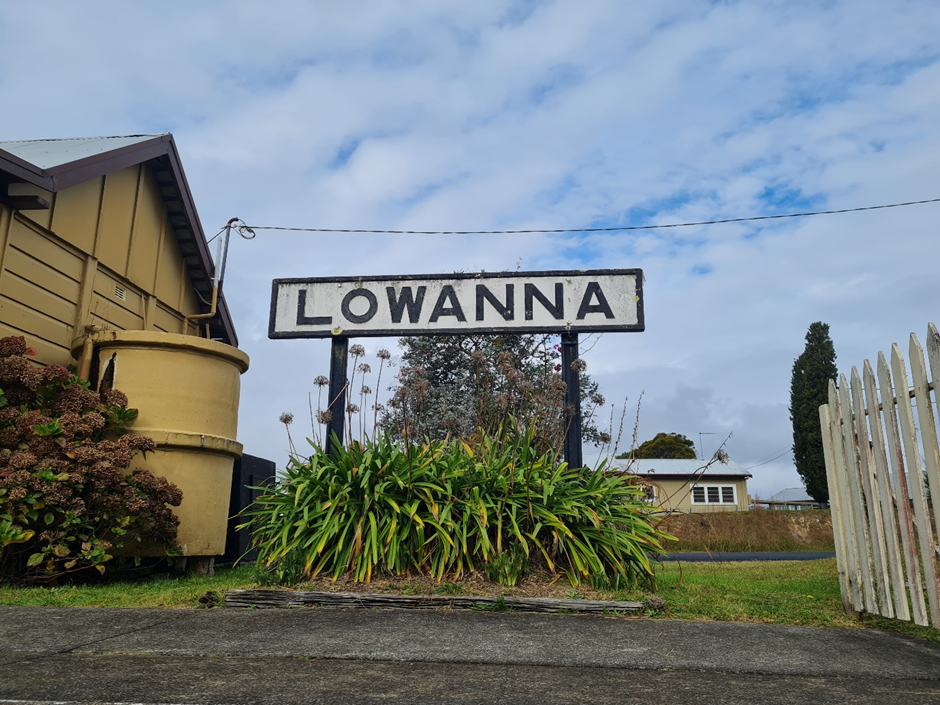
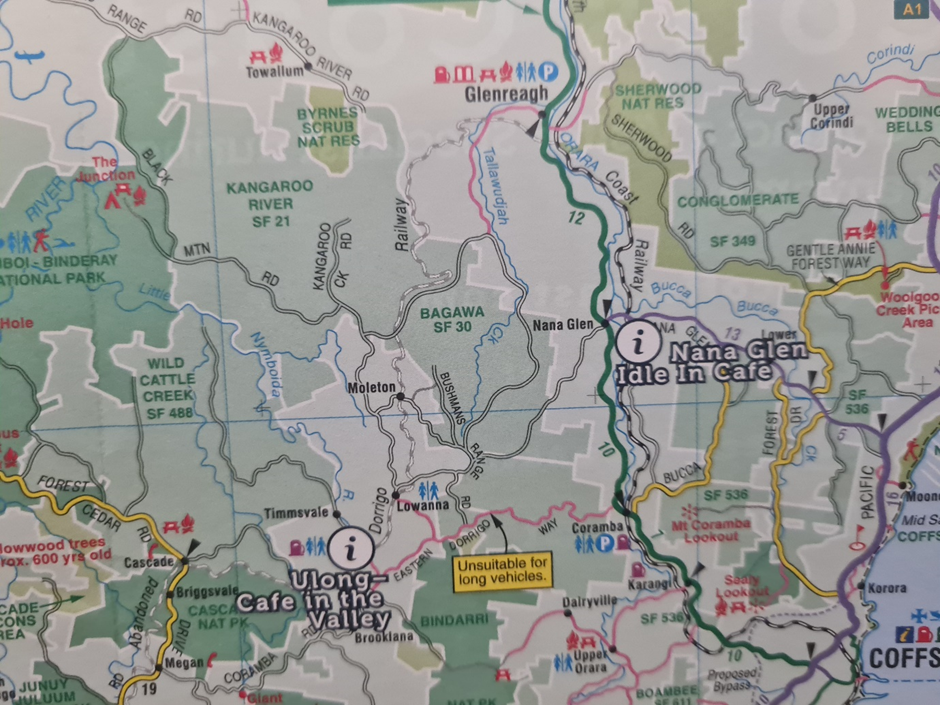
When you pick up a document that describes tourist attractions in Coffs Harbour, there’s one about the Orara Valley, and what caught my eye was firstly the Lowanna Railway Station.

To get there, you pass through Coramba, where the current railway line runs through it, but any attempt to find the railway station will be met with disappointment.

But …

That’s not the railway story we’re trying to visualise, that is the Glenreagh to Dorrigo line, first mooted in 1906, but not getting started until 1910, then halted because of the First World War and not completed until December 1924, and ran until October 1972.

However, back to Coramba momentarily…

The North Coast railway (the primary rail route in the Mid North Coast and Northern Rivers regions of New South Wales) passes through Coramba, which had a now-closed railway station from 1922.  An attempt to find the station took us to a private residence, which obviously was once the station. It was not what we were looking for.

And then to the right historic station, in Lowanna, not far from Coramba…

Lowanna was the largest of the intermediate stations. It was an attended station, with a crossing loop and siding. Most of the timber was loaded at this location. 

Opened  23-Dec-1924 and Closed 20-Sep-1975

What we were really looking for was the Lowanna Railway Station, which, when we put it in the GPS, almost got us lost.  We eventually found the refurbished station, a rather run-down platform, and rail tracks.

Lowanna was on the Dorrigo branch and lies on the north coast of NSW.  It branches off the North Coast Line at Glenreagh and climbs up to the Dorrigo Plateau.

The Dorrigo area was settled in the early 1900s by pastoralists and tree fellers. Due to the steep terrain, it was decided to build a railway to allow products to be brought to nearby port towns. Several routes were surveyed, with the route from Glenreagh eventually chosen. The line climbs 664m over a length of 69km.

Apart from the endpoints of Dorrigo and Glenreagh, the stations on this line were very small, often consisting of a short platform with a small shelter. The major traffic on this line was timber.

More on the other stations, not that much still exists, on the line from Dorrigo to Glenreagh. At Dorrigo, there is a very big surprise…