Memories of the conversations with my cat – 79

As some may be aware, but many not, Chester, my faithful writing assistant, mice catcher, and general pain in the neck, passed away some years ago.

Recently I was running a series based on his adventures, under the title of Past Conversations with my cat.

For those who have not had the chance to read about all of his exploits I will run the series again from Episode 1

These are the memories of our time together…

IMG_20160823_164129

This is Chester.  Now we’ve cleaned up the room there’s nowhere to hide.

That might just become a real problem for our furry friend.

The girls are on a mission, as we’ve set them a series of tasks in order to earn some pocket money during the school holidays.  And keep them out of mischief.

But, what does Chester think of all of this?

Not happy at all.

He was apprehensive at their arrival as he always is, and tries to hide away while they are here, but all that rummaging and boxes moving hither and thither, it’s not long before he comes out to see what’s happening.

The office is clean, the hiding spots are gone.  I watch him slink from spot to spot, the look of dismay lengthening.

This is wrong, he says, coming up and sitting at my feet.  You know I need to get away from time to time, spend some alone time to contemplate new ways to catch mice.

Right.

There were seven different spots where I know Chester hides away, and these are spots in cupboards and under beds, places that need cleaning and we can’t get to.

His ears prick up, hearing a noise from the other end of the house, and he’s off like the flash.  A few minutes later he’s back.  Another hiding spot is gone.

Absolutely not happy now.

The cinema of my dreams – Was it just another surveillance job – Episode 45

I’m back home and this story has been sitting on the back burner for a few months, waiting for some more to be written.

The trouble is, there are also other stories to write, and I’m not very good at prioritizing.

But, here we are, a few minutes opened up and it didn’t take long to get back into the groove.

Chasing leads, maybe


“Silly question, what were you doing in the hotel with this ‘operative’?”

Yes, it sounded odd the moment I said it, and, if it was the other way around, I’d be thinking the same.

“We joined forces, thinking we were in danger, at the time, not knowing that she was working with Dobbin.  I discovered that later, by chance.  She doesn’t know I know.”

“And she’ll be waiting at the hotel?”

“Dobbin wants the USB.  She believes we’re collaborating, after telling me she works for MI5, on a different mission involving O’Connell.  She had apparently been undercover as a fellow resident at the block where O’Connell had a flat, and a cat.  The cat, of course, had no idea his owner was a secret agent.  The flat was sparsely furnished and didn’t look lived in, so it may have been a safe house.”

“Wheels within wheels.”

“That’s the nature of the job.  Lies, lies, and more lies, nothing is as it seems, and trust no one.”

“Including you?”

“Including me, but keep an open mind, and try not to shoot me.  I’m as all at sea as you are.  And, just to be clear, I’m not sure I believe Quigley that the information is lost.  People like him, and especially his contact, if he was a journalist, tend to have two copies, just in case.  And the explosion might have killed the messenger, but not the information.  Lesson number one, anything is possible, nothing is impossible, and the truth, it really is stranger than fiction.”

“Great.”

A half-hour later I’d parked the car in a parking lot near Charing Cross station.  The plan, if it could be called that, was for me to go back to the room, and for Jennifer to remain in the foyer, and wait.  If anything went wrong she was to leave and wait for a call.  For all intents and purposes, no one knew of her, except perhaps for Severin and Maury, but I wasn’t expecting them to be lurking in the hotel foyer, waiting for me.

As for Dobbin, that was a different story.  It would depend on how impatient he was in getting information on the whereabouts of the USB, and whether he trusted Jan to find out.

I’d soon find out.

The elevator had three others in it, all of who had disembarked floors below mine.   As the last stepped out and the doors closed, it allayed fears of being attacked before I reached the room.

As the doors closed behind me, the silence of the hallway was working on my nerves, until a few steps towards my room I could hear the hissing of an air conditioning intake, and suddenly the starting up of a vacuum cleaner back in the direction I’d just come.

 A cleaner or….

Remember the training for going into confined spaces…

The room was at the end of the passage, a corner room, with two exits after exiting the front door.  I thought about knocking, but, it was my room too, so I used the key and went in.

Lying tied up on the bed was a very dead Maury, three shots to the heart.

And, over the sound of my heart beating very loudly, I could hear the sound of people out in the corridor, followed by pounding on the door.

Then, “Police.”

A second or two after that the door crashed open and six men came into the room, brandishing weapons and shouting for me to get on the floor and show my hands or I would be shot,”

© Charles Heath 2020-2021

Writing a book in 365 days – My Story 36

More about my story

Visiting the catacombs of the world to get background for a location in my story

Beyond the Grave: A Guide to the World’s Fascinating Catacombs

Beneath the bustling streets of some of the world’s most vibrant cities lie silent cities of the dead – the catacombs. These ancient burial grounds, often labyrinthine and filled with the echoes of centuries past, offer a unique and often profound glimpse into history, culture, and humanity’s relationship with mortality.

Far from being merely macabre, touring a catacomb is an opportunity to connect with the lives (and deaths) of those who came before us, to marvel at ancient engineering, and to contemplate the passage of time. If you’re ready to step into the cool, quiet depths below, here are some of the world’s most incredible catacombs open to visitors, and what you can expect to find.


Catacombs You Can Tour Around the World:

  1. The Catacombs of Paris, France
    • What it is: Arguably the most famous catacomb, this massive underground ossuary holds the remains of an estimated six million Parisians. It was created in the late 18th century to alleviate overcrowded cemeteries.
    • What to expect: Prepare for long queues (booking in advance is essential!). Once inside, you’ll descend 130 steps into a cool, damp, and dimly lit world. The main attraction is the “Empire of Death,” where neatly stacked femurs and skulls line miles of passages, often arranged in decorative patterns. It’s incredibly atmospheric, overwhelming in scale, and offers a powerful reflection on human mortality.
  2. The Catacombs of Rome, Italy
    • What it is: Rome boasts multiple catacomb systems, primarily early Christian burial sites dating from the 2nd to 5th centuries AD. The most famous include the Catacombs of St. CallixtusCatacombs of Priscilla, and Catacombs of Domitilla.
    • What to expect: These are less about decorative bone arrangements and more about exploring ancient, hand-dug underground cemeteries. You’ll navigate narrow, winding passages often stretching for miles. Expect to see:
      • Loculi: Simple niches carved into the walls where bodies were placed, then sealed with tiles or marble slabs.
      • Cubicula: Small chambers, often family tombs, sometimes decorated with frescoes depicting biblical scenes or everyday life.
      • Crypts: Larger, more significant burial areas for martyrs or early popes.
    • Note: Guided tours are mandatory and highly informative, covering the history of early Christianity and burial practices.
  3. The Capuchin Crypt (Santa Maria della Concezione dei Cappuccini), Rome, Italy
    • What it is: Not a catacomb in the traditional sense, but a series of small chapels beneath a church, decorated with the skeletal remains of over 3,700 Capuchin friars.
    • What to expect: An incredibly unique and artistic display. The bones (skulls, vertebrae, femurs, etc.) are meticulously arranged to form intricate patterns, chandeliers, and even full skeletal figures dressed in friar habits. It’s a “memento mori” – a reminder of the inevitability of death – designed to inspire reflection rather than fear. Photography is strictly prohibited.
  4. The Capuchin Catacombs of Palermo, Sicily, Italy
    • What it is: A truly astonishing and somewhat eerie catacomb containing the remarkably preserved bodies of thousands of Sicilians, dating from the 17th to 19th centuries.
    • What to expect: Unlike Rome’s catacombs or Paris’s ossuary, here you’ll find mummified, embalmed, and sometimes naturally desiccated bodies, often dressed in their finest clothes, standing or lying in open coffins. They are divided into sections for friars, men, women, virgins, professors, and children. The most famous resident is Rosalia Lombardo, a perfectly preserved two-year-old. It’s a poignant, sometimes unsettling, but always fascinating window into past lives and burial customs.
  5. The Catacombs of San Francisco Convent, Lima, Peru
    • What it is: Beneath one of Lima’s most beautiful and historic churches lies a vast catacomb housing the remains of an estimated 25,000 people.
    • What to expect: As part of a guided tour of the stunning convent and library above, you’ll descend into underground passages. The highlight is a series of large, circular ossuaries where bones (skulls, femurs) are meticulously organized and arranged in decorative patterns, creating a striking visual impact. It’s a blend of historical context, architectural beauty, and a powerful sense of the past.
  6. The Catacombs of San Gennaro, Naples, Italy
    • What it is: Naples’ most extensive and ancient Christian catacomb, spanning two levels and featuring grander spaces than some of Rome’s smaller catacombs.
    • What to expect: Wide tunnels, high ceilings, and an impressive sense of scale. You’ll see beautiful early Christian frescoes, mosaics, and intricate burial niches. It’s less crowded than Rome’s catacombs, offering a more intimate experience with ancient art and history. The unique two-level structure and the grandeur of some of the burial chambers are particularly striking.

What to Expect to Find & Feel When Visiting Catacombs:

  • Bones, Bones, and More Bones: This is the obvious. Skeletons, skulls, femurs, and other human remains are the primary “exhibit.” How they are presented varies wildly – from neatly stacked walls to artful arrangements, to individual mummified bodies.
  • Cool, Damp, and Dimly Lit Environments: Catacombs are underground, so expect cooler temperatures (even on a hot day) and a constant, slightly earthy dampness. Lighting is typically subdued for preservation and atmosphere, so your eyes will need time to adjust.
  • Narrow and Uneven Passages: Many catacombs feature tight, winding corridors. If you have claustrophobia, this is something to consider. Wear sturdy, comfortable shoes as the ground can be uneven.
  • A Tangible Sense of History: You are walking through spaces where people were laid to rest centuries ago. The air itself seems to carry the weight of memory. It’s a profoundly immersive historical experience.
  • Art and Architecture: Beyond the bones, look for ancient frescoes, carvings, mosaics, and ingenious engineering that allowed for the creation of these vast underground networks.
  • A Sense of Reverence and Reflection: These are sacred burial sites. Visitors are generally expected to be respectful, quiet, and reflective. Many people find catacombs to be powerful spaces for contemplating life, death, and human existence.
  • Guided Tours: For most major catacombs, especially in Rome and Naples, a guided tour is mandatory. These are invaluable for understanding the history, significance, and often intricate stories behind the bones and structures.
  • Limited Photography: Many catacombs restrict or prohibit photography to preserve the sites and maintain a respectful atmosphere. Always check the rules before you go.

Visiting catacombs is a journey into the past, a unique blend of history, archaeology, and human spirituality. While they might seem daunting, the experience is often described as awe-inspiring and deeply thought-provoking, leaving visitors with a truly unforgettable perspective on our shared human story.

Searching For Locations: Disneyland, Paris, France

Whilst I found this tree house to be interesting, it seems to be far from practical because there was little to keep the wind and rain out, though I suppose, in the book, that might not be such a problem.

Be that as it may, and if it was relatively waterproof, then the furnishings would probably survive, and one had to also assume that much of the furnishings, such as the writing desk below, would have washed up as debris from the shipwreck.

20140104_141622 (1)

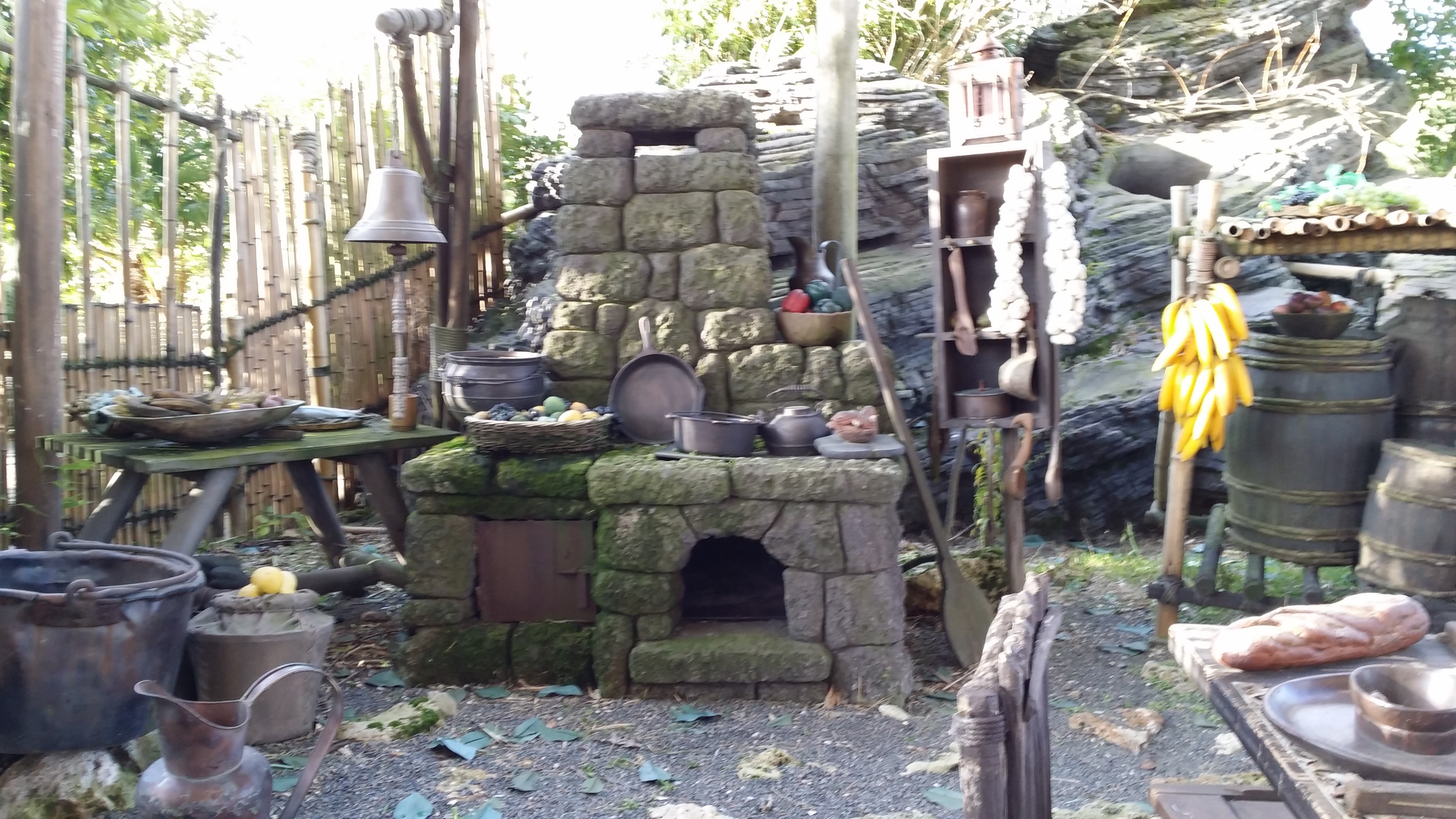
The stove and oven would have to be built by hand, and it is ‘remarkable’ such well-fitting stones were available.  It doesn’t look like it’s been used for a while judging by the amount of gree on it.  Perhaps it is not in a waterproof area.

20140104_141556 (2)

The dining table and the shelf in the background have that rough-hewn look about them

20140104_141553

A bit of man-made equipment here for drawing water from the stream

20140104_141703 (1)

And though not made in the era of electricity, there is an opportunity to use the water wheel to do more than it appears to be doing

20140104_141539 (2)

And tucked away in a corner the all-important study where one can read, or play a little music on the organ.  One could say, for the period, one had all the comforts of home.

20140104_141800 (2)

On the other end of medical mumbo jumbo

Who could imagine that one visit to the local hospital could fuel a medical nightmare?

Aside from the original suspicion I was having heart problems, doctors started lining up appointments for an endoscopy and colonoscopy, though I suspect these were for a different malady, and the main event, an angiogram.

I didn’t have heart problems though it was possible I had angina, the reason for the angiogram, but I did have acute kidney failure which was interesting, to say the least, and possibly attributed to ipBrufen, though it was impossible to say if the medication for psoriatic arthritis, a venomous little pill called methotrexate, was or was not a contributing factor.

But is was great to learn that my psioratic arthritis could lead to heart attack, and lung issues, a few problems my original arthritis consultant conveniently forgot to tell me about.

No sooner than I was released from the hospital after this first set of maladies, I was back three or four days later with hospital-acquired pneumonia, a devil of a problem that requires some very invasive searches for the type of bug so it could be treated properly.

It led to five days of antibiotics, a considerable inability to breathe without help from an oxygen mask, and several CT scans with and without dye to get a better look at the problem.

If only that was all that was wrong with me.

The CT scan showed up a lump or lesion on my right thyroid which led to further investigation, an ultrasound, a biopsy, and a visit to the surgeon to be told it had to come out.

But that’s not all.  No, I didn’t get a set of steak knives for being one the first ten this week to be diagnosed with anything, I was told my PSA reading was twice the average for my age, a clear indication I might have prostate cancer.

Wow.  Just to sort of news you need to hear before the weekend.  Worse perhaps than a rainstorm when camping in a floorless tent.  I had to now wait for the results of a new blood test.

Ok.  I get it that things are bound to go wrong when you get older, but what I object to is everything going wrong at once.

Perhaps when we stop the aging process a lot of these issues will go away, but I fear not.  The human body is surprisingly robust for quite a long time despite our attempts to test it to the limits of endurance.

It is advice too late for me to make sure my misspent youth is not wasted on being stupid or believing I’m indestructible.  The plain truth is, we are not, and I didn’t get the memo.

Now, I guess, it is time to actually do everything, or as much as I can, before I start to deteriorating further and not be able to do anything.  I have a few good years before arthritis sets in and makes life more difficult than it already is.

I’m not going to waste them.

An excerpt from “The Things We Do for Love”; In love, Henry was all at sea!

In the distance, he could hear the dinner bell ringing and roused himself.  Feeling the dampness of the pillow, and fearing the ravages of pent-up emotion, he considered not going down but thought it best not to upset Mrs. Mac, especially after he said he would be dining.

In the event, he wished he had reneged, especially when he discovered he was not the only guest staying at the hotel.

Whilst he’d been reminiscing, another guest, a young lady, had arrived.  He’d heard her and Mrs. Mac coming up the stairs and then shown to a room on the same floor, perhaps at the other end of the passage.

Henry caught his first glimpse of her when she appeared at the door to the dining room, waiting for Mrs. Mac to show her to a table.

She was in her mid-twenties, slim, with long brown hair, and the grace and elegance of a woman associated with countless fashion magazines.  She was, he thought, stunningly beautiful with not a hair out of place, and make-up flawlessly applied.  Her clothes were black, simple, elegant, and expensive, the sort an heiress or wife of a millionaire might condescend to wear to a lesser occasion than dinner.

Then there was her expression; cold, forbidding, almost frightening in its intensity.  And her eyes, piercingly blue and yet laced with pain.  Dracula’s daughter was his immediate description of her.

All in all, he considered, the only thing they had in common was, like him, she seemed totally out of place.

Mrs. Mac came out of the kitchen, wiping her hands on her apron.  She was, she informed him earlier, chef, waitress, hotelier, barmaid, and cleaner all rolled into one.  Coming up to the new arrival she said, “Ah, Miss Andrews, I’m glad you decided to have dinner.  Would you like to sit with Mr. Henshaw, or would you like to have a table of your own?”

Henry could feel her icy stare as she sized up his appeal as a dining companion, making the hair on the back of his neck stand up.  He purposely didn’t look back.  In his estimation, his appeal rating was minus six.  Out of a thousand!

“If Mr. Henshaw doesn’t mind….”  She looked at him, leaving the query in mid-air.

He didn’t mind and said so.  Perhaps he’d underestimated his rating.

“Good.”  Mrs. Mac promptly ushered her over.  Henry stood, made sure she was seated properly and sat.

“Thank you.  You are most kind.”  The way she said it suggested snobbish overtones.

“I try to be when I can.”  It was supposed to nullify her sarcastic tone but made him sound a little silly, and when she gave him another of her icy glares, he regretted it.

Mrs. Mac quickly intervened, asking, “Would you care for the soup?”

They did, and, after writing the order on her pad, she gave them each a look, imperceptibly shook her head, and returned to the kitchen.

Before Michelle spoke to him again, she had another quick look at him, trying to fathom who and what he might be.  There was something about him.

His eyes, they mirrored the same sadness she felt, and, yes, there was something else, that it looked like he had been crying?  There was a tinge of redness.

Perhaps, she thought, he was here for the same reason she was.

No.  That wasn’t possible.

Then she said, without thinking, “Do you have any particular reason for coming here?”  Seconds later she realized she’d spoken it out loud, had hadn’t meant to actually ask, it just came out.

It took him by surprise, obviously not the first question he was expecting her to ask of him.

“No, other than it is as far from civilization, and home, as I could get.”

At least we agree on that, she thought.

It was obvious he was running away from something as well.

Given the isolation of the village and lack of geographic hospitality, it was, from her point of view, ideal.  All she had to do was avoid him, and that wouldn’t be difficult.

After getting through this evening first.

“Yes,” she agreed.  “It is that.”

A few seconds passed, and she thought she could feel his eyes on her and wasn’t going to look up.

Until he asked, “What’s your reason?”

Slightly abrupt in manner, perhaps, because of her question and how she asked it.

She looked up.  “Rest.  And have some time to myself.”

She hoped he would notice the emphasis she had placed on the word ‘herself’ and take due note.  No doubt, she thought, she had completely different ideas of what constituted a holiday than he, not that she had said she was here for a holiday.

Mrs. Mac arrived at a fortuitous moment to save them from further conversation.

Over the entree, she wondered if she had made a mistake coming to the hotel.  Of course, there had been no conceivable way she could know that anyone else might have booked the same hotel, but realized it was foolish to think she might end up in it by herself.

Was that what she was expecting?

Not a mistake then, but an unfortunate set of circumstances, which could be overcome by being sensible.

Yet, there he was, and it made her curious, not that he was a man, by himself, in the middle of nowhere, hiding like she was, but for quite varied reasons.

On discreet observance, whilst they ate, she gained the impression his air of light-heartedness was forced, and he had no sense of humour.

This feeling was engendered by his looks, unruly dark hair, and permanent frown.  And then there was his abysmal taste in clothes on a tall, lanky frame.  They were quality but totally unsuited to the wearer.

Rebellion was written all over him.

The only other thought crossing her mind, and incongruously, was he could do with a decent feed.  In that respect, she knew now from the mountain of food in front of her, he had come to the right place.

“Mr. Henshaw?”

He looked up.  “Henshaw is too formal.  Henry sounds much better,” he said, with a slight hint of gruffness.

“Then my name is Michelle.”

Mrs. Mac came in to take their order for the only main course, gather up the entree dishes, and then return to the kitchen.

“Staying long?” she asked.

“About three weeks.  Yourself?”

“About the same.”

The conversation dried up.

Neither looked at the other, rather at the walls, out the window, towards the kitchen, anywhere.  It was, she thought, unbearably awkward.

Mrs. Mac returned with a large tray with dishes on it, setting it down on the table next to theirs.

“Not as good as the usual cook,” she said, serving up the dinner expertly, “but it comes a good second, even if I do say so myself.  Care for some wine?”

Henry looked at Michelle.  “What do you think?”

“I’m used to my dining companions making the decision.”

You would, he thought.  He couldn’t help but notice the cutting edge of her tone.  Then, to Mrs. Mac, he named a particular White Burgundy he liked, and she bustled off.

“I hope you like it,” he said, acknowledging her previous comment with a smile that had nothing to do with humour.

“Yes, so do I.”

Both made a start on the main course, a concoction of chicken and vegetables that were delicious, Henry thought when compared to the bland food he received at home and sometimes aboard my ship.

It was five minutes before Mrs Mac returned with the bottle and two glasses.  After opening it and pouring the drinks, she left them alone again.

Henry resumed the conversation.  “How did you arrive?  I came by train.”

“By car.”

“Did you drive yourself?”

And he thought, a few seconds later, that was a silly question, otherwise she would not be alone, and certainly not sitting at this table. With him.

“After a fashion.”

He could see that she was formulating a retort in her mind, then changed it, instead, smiling for the first time, and it served to lighten the atmosphere.

And in doing so, it showed him she had another more pleasant side despite the fact she was trying not to look happy.

“My father reckons I’m just another of ‘those’ women drivers,” she added.

“Whatever for?”

“The first and only time he came with me I had an accident.  I ran up the back of another car.  Of course, it didn’t matter to him the other driver was driving like a startled rabbit.”

“It doesn’t help,” he agreed.

“Do you drive?”

“Mostly people up the wall.”  His attempt at humour failed.  “Actually,” he added quickly, “I’ve got a very old Morris that manages to get me where I’m going.”

The apple pie and cream for dessert came and went and the rapport between them improved as the wine disappeared and the coffee came.  Both had found, after getting to know each other better, their first impressions were not necessarily correct.

“Enjoy the food?” Mrs. Mac asked, suddenly reappearing.

“Beautifully cooked and delicious to eat,” Michelle said, and Henry endorsed her remarks.

“Ah, it does my heart good to hear such genuine compliments,” she said, smiling.  She collected the last of the dishes and disappeared yet again.

“What do you do for a living,” Michelle asked in an off-hand manner.

He had a feeling she was not particularly interested, and it was just making conversation.

“I’m a purser.”

“A what?”

“A purser.  I work on a ship doing the paperwork, that sort of thing.”

“I see.”

“And you?”

“I was a model.”

“Was?”

“Until I had an accident, a rather bad one.”

“Oh, I’m sorry.”

So that explained the odd feeling he had about her.

As the evening wore on, he began to think there might be something wrong, seriously wrong with her because she didn’t look too well.  Even the carefully applied makeup, from close, didn’t hide the very pale, and tired look, or the sunken, dark-ringed eyes.

“I try not to think about it, but it doesn’t necessarily work.  I’ve come here for peace and quiet, away from doctors and parents.”

“Then you will not have to worry about me annoying you.  I’m one of those fall-asleep-reading-a-book types.”

Perhaps it would be like ships passing in the night and then smiled to himself about the analogy.

Dinner over, they separated.

Henry went back to the lounge to read a few pages of his book before going to bed, and Michelle went up to her room to retire for the night.

But try as he might, he was unable to read, his mind dwelling on the unusual, yet compellingly mysterious person he would be sharing the hotel with.

Overlaying that original blurred image of her standing in the doorway was another of her haunting expressions that had, he finally conceded, taken his breath away, and a look that had sent more than one tingle down his spine.

She may not have thought much of him, but she had certainly made an impression on him.

© Charles Heath 2015-2024
lovecoverfinal1

Searching for Locations: The Eiffel Tower, Paris, France

Sorry, reminiscing again…

It was a cold but far from a miserable day.  We were taking our grandchildren on a tour of the most interesting sites in Paris, the first of which was the Eiffel Tower.

We took the overground train, which had double-decker carriages, a first for the girls, to get to the tower.

We took the underground, or Metro, back, and they were fascinated with the fact the train carriages ran on road tires.

Because it was so cold, and windy, the tower was only open to the second level. It was a disappointment to us, but the girls were content to stay on the second level.

There they had the French version of chips.

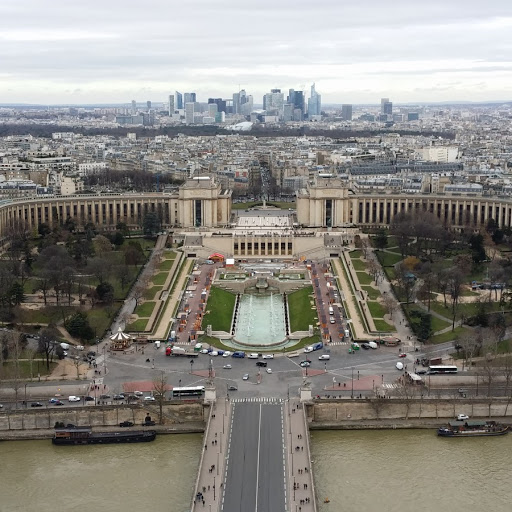
It was a dull day, but the views were magnificent.

20140107_132225

A view of the Seine

20140107_132859

20140107_132208

Sacre Coeur church at Montmartre in the distance.

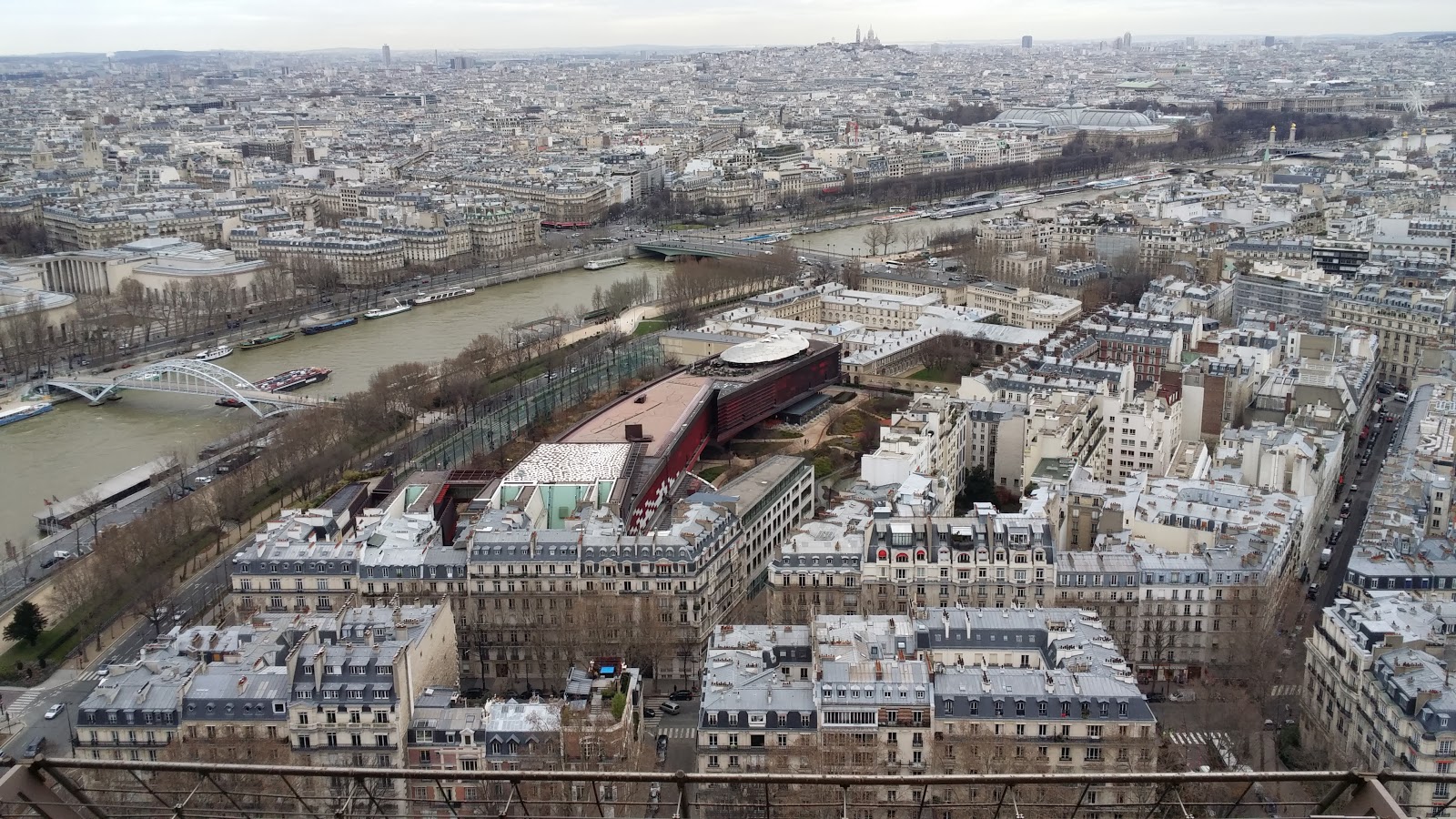
Another view along the river Seine

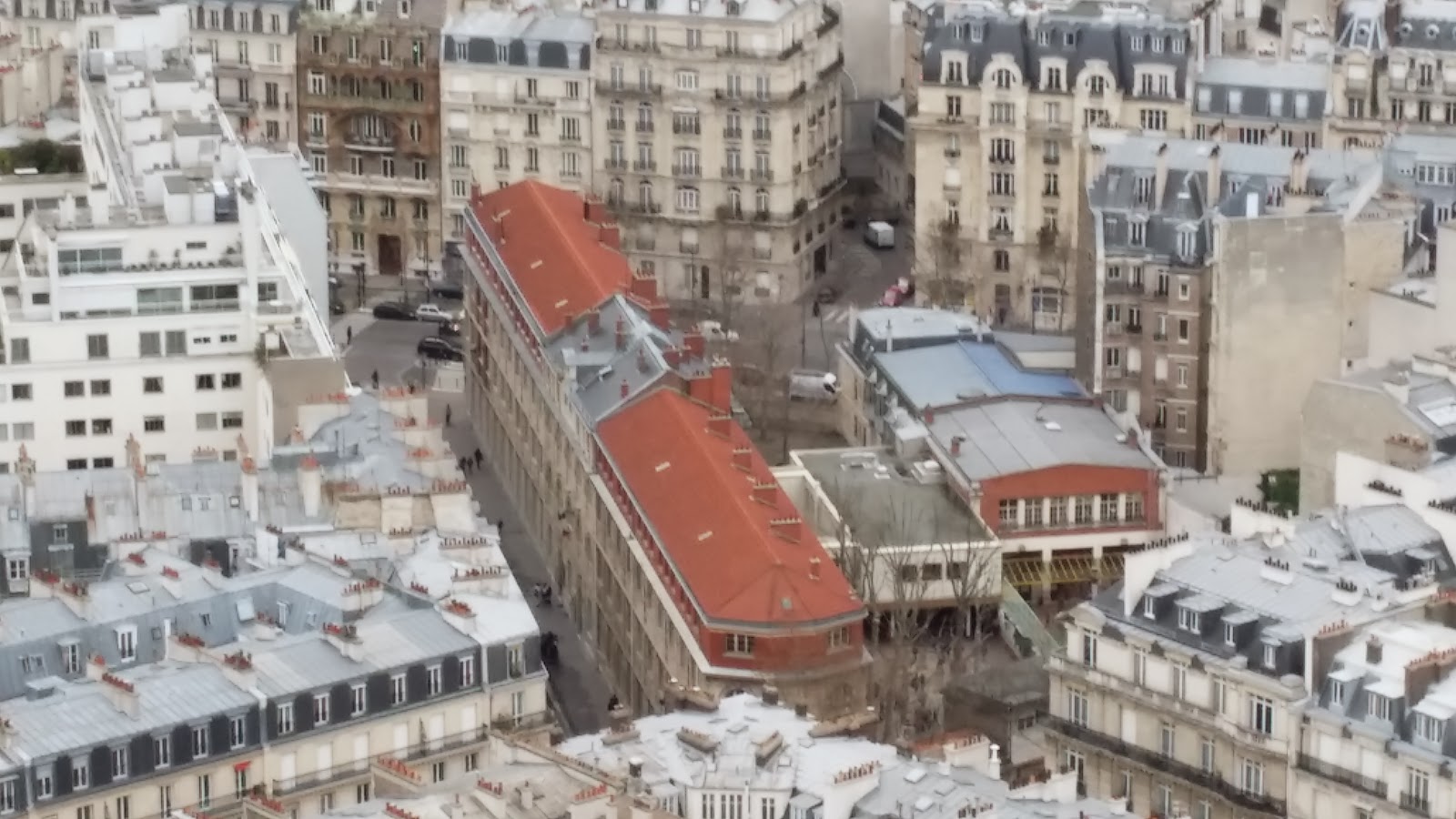
Overlooking the tightly packed apartment buildings

Looking along the opposite end of the river Seine

“One Last Look”, nothing is what it seems

A single event can have enormous consequences.

A single event driven by fate, after Ben told his wife Charlotte he would be late home one night, he left early, and by chance discovers his wife having dinner in their favourite restaurant with another man.

A single event where it could be said Ben was in the wrong place at the wrong time.

Who was this man? Why was she having dinner with him?

A simple truth to explain the single event was all Ben required. Instead, Charlotte told him a lie.

A single event that forces Ben to question everything he thought he knew about his wife, and the people who are around her.

After a near-death experience and forced retirement into a world he is unfamiliar with, Ben finds himself once again drawn back into that life of lies, violence, and intrigue.

From London to a small village in Tuscany, little by little Ben discovers who the woman he married is, and the real reason why fate had brought them together.

It is available on Amazon here:  http://amzn.to/2CqUBcz

Writing a book in 365 days – My Story 36

More about my story

Visiting the catacombs of the world to get background for a location in my story

Beyond the Grave: A Guide to the World’s Fascinating Catacombs

Beneath the bustling streets of some of the world’s most vibrant cities lie silent cities of the dead – the catacombs. These ancient burial grounds, often labyrinthine and filled with the echoes of centuries past, offer a unique and often profound glimpse into history, culture, and humanity’s relationship with mortality.

Far from being merely macabre, touring a catacomb is an opportunity to connect with the lives (and deaths) of those who came before us, to marvel at ancient engineering, and to contemplate the passage of time. If you’re ready to step into the cool, quiet depths below, here are some of the world’s most incredible catacombs open to visitors, and what you can expect to find.


Catacombs You Can Tour Around the World:

  1. The Catacombs of Paris, France
    • What it is: Arguably the most famous catacomb, this massive underground ossuary holds the remains of an estimated six million Parisians. It was created in the late 18th century to alleviate overcrowded cemeteries.
    • What to expect: Prepare for long queues (booking in advance is essential!). Once inside, you’ll descend 130 steps into a cool, damp, and dimly lit world. The main attraction is the “Empire of Death,” where neatly stacked femurs and skulls line miles of passages, often arranged in decorative patterns. It’s incredibly atmospheric, overwhelming in scale, and offers a powerful reflection on human mortality.
  2. The Catacombs of Rome, Italy
    • What it is: Rome boasts multiple catacomb systems, primarily early Christian burial sites dating from the 2nd to 5th centuries AD. The most famous include the Catacombs of St. CallixtusCatacombs of Priscilla, and Catacombs of Domitilla.
    • What to expect: These are less about decorative bone arrangements and more about exploring ancient, hand-dug underground cemeteries. You’ll navigate narrow, winding passages often stretching for miles. Expect to see:
      • Loculi: Simple niches carved into the walls where bodies were placed, then sealed with tiles or marble slabs.
      • Cubicula: Small chambers, often family tombs, sometimes decorated with frescoes depicting biblical scenes or everyday life.
      • Crypts: Larger, more significant burial areas for martyrs or early popes.
    • Note: Guided tours are mandatory and highly informative, covering the history of early Christianity and burial practices.
  3. The Capuchin Crypt (Santa Maria della Concezione dei Cappuccini), Rome, Italy
    • What it is: Not a catacomb in the traditional sense, but a series of small chapels beneath a church, decorated with the skeletal remains of over 3,700 Capuchin friars.
    • What to expect: An incredibly unique and artistic display. The bones (skulls, vertebrae, femurs, etc.) are meticulously arranged to form intricate patterns, chandeliers, and even full skeletal figures dressed in friar habits. It’s a “memento mori” – a reminder of the inevitability of death – designed to inspire reflection rather than fear. Photography is strictly prohibited.
  4. The Capuchin Catacombs of Palermo, Sicily, Italy
    • What it is: A truly astonishing and somewhat eerie catacomb containing the remarkably preserved bodies of thousands of Sicilians, dating from the 17th to 19th centuries.
    • What to expect: Unlike Rome’s catacombs or Paris’s ossuary, here you’ll find mummified, embalmed, and sometimes naturally desiccated bodies, often dressed in their finest clothes, standing or lying in open coffins. They are divided into sections for friars, men, women, virgins, professors, and children. The most famous resident is Rosalia Lombardo, a perfectly preserved two-year-old. It’s a poignant, sometimes unsettling, but always fascinating window into past lives and burial customs.
  5. The Catacombs of San Francisco Convent, Lima, Peru
    • What it is: Beneath one of Lima’s most beautiful and historic churches lies a vast catacomb housing the remains of an estimated 25,000 people.
    • What to expect: As part of a guided tour of the stunning convent and library above, you’ll descend into underground passages. The highlight is a series of large, circular ossuaries where bones (skulls, femurs) are meticulously organized and arranged in decorative patterns, creating a striking visual impact. It’s a blend of historical context, architectural beauty, and a powerful sense of the past.
  6. The Catacombs of San Gennaro, Naples, Italy
    • What it is: Naples’ most extensive and ancient Christian catacomb, spanning two levels and featuring grander spaces than some of Rome’s smaller catacombs.
    • What to expect: Wide tunnels, high ceilings, and an impressive sense of scale. You’ll see beautiful early Christian frescoes, mosaics, and intricate burial niches. It’s less crowded than Rome’s catacombs, offering a more intimate experience with ancient art and history. The unique two-level structure and the grandeur of some of the burial chambers are particularly striking.

What to Expect to Find & Feel When Visiting Catacombs:

  • Bones, Bones, and More Bones: This is the obvious. Skeletons, skulls, femurs, and other human remains are the primary “exhibit.” How they are presented varies wildly – from neatly stacked walls to artful arrangements, to individual mummified bodies.
  • Cool, Damp, and Dimly Lit Environments: Catacombs are underground, so expect cooler temperatures (even on a hot day) and a constant, slightly earthy dampness. Lighting is typically subdued for preservation and atmosphere, so your eyes will need time to adjust.
  • Narrow and Uneven Passages: Many catacombs feature tight, winding corridors. If you have claustrophobia, this is something to consider. Wear sturdy, comfortable shoes as the ground can be uneven.
  • A Tangible Sense of History: You are walking through spaces where people were laid to rest centuries ago. The air itself seems to carry the weight of memory. It’s a profoundly immersive historical experience.
  • Art and Architecture: Beyond the bones, look for ancient frescoes, carvings, mosaics, and ingenious engineering that allowed for the creation of these vast underground networks.
  • A Sense of Reverence and Reflection: These are sacred burial sites. Visitors are generally expected to be respectful, quiet, and reflective. Many people find catacombs to be powerful spaces for contemplating life, death, and human existence.
  • Guided Tours: For most major catacombs, especially in Rome and Naples, a guided tour is mandatory. These are invaluable for understanding the history, significance, and often intricate stories behind the bones and structures.
  • Limited Photography: Many catacombs restrict or prohibit photography to preserve the sites and maintain a respectful atmosphere. Always check the rules before you go.

Visiting catacombs is a journey into the past, a unique blend of history, archaeology, and human spirituality. While they might seem daunting, the experience is often described as awe-inspiring and deeply thought-provoking, leaving visitors with a truly unforgettable perspective on our shared human story.

PI Walthenson’s second case – A case of finding the ‘Flying Dutchman’.

Known only to a few, there is a legend that a ship named the ‘Flying Dutchman’ left Nazi Germany in the last weeks of the war and set sail for America, escorted by U-boats, under a different name. Aboard was a trove of treasure and gold worth a ‘king’s ransom’.

It was said that it had been sent to a group of American Nazis to create the Fourth Reich at an appropriate time. Over the years since many expeditions off the coast had searched, but found no trace of the vessel or the treasure.

In other words, it was just a legend created to boost tourism.

Fast forward to 2024. Our intrepid private detective, Harry Walthenson, overhears a conversation at Grand Central Station. It was the oddness of the message that caught his attention. An investigation turned up nothing out of the ordinary, and he thinks no more about it.

Then Harry is kidnapped, interrogated, and asked questions over and over about a date and a place, why he went there, and when he could not give satisfactory answers, he was beaten half to death and left for dead on a rubbish heap. He was lucky that it was a living space for homeless men; otherwise, he would have died.

In the aftermath, he once again gives it no more thought.

After resolving his first case successfully, there’s no rest. Harry’s angry mother comes to his office and demands that he find out where his father has gone. She believes he has run off with a mistress, not for the first time.

Perhaps it was not the wisest decision she has made, because Harry promises to investigate, and adds that she might not like what he finds.

He soon discovered he does not like what he finds, that his father’s friends, a cabal formed at University, have two who are his mother’s current lovers, and another, a criminal blackmailing his father.

Felicity, now his partner, working on a different case, and trying to get answers, uncovers a crime family involved in guarding a disused warehouse on the docks, where she believes Harry had been taken for interrogation, and subsequently dumped nearby to die.

Why are they up to? What is so important that the empty warehouse needs guarding? Who is employing them?

Harry, following up on the death of the blackmailer, traces his death back to an enforcer employed by his grandfather. His mother’s grandfather was a pre-war industrialist who made his fortune in war munitions and shipbuilding.

He was also a member of the American Nazi party.

When Harry also discovers a logbook belonging to a so-called wartime Liberty ship the “Paul Revere” in brackets ‘Freiheitskämpfer’, hidden by his father, and written in a code that is not readily identifiable.

It is no longer a matter of a father who has run off with his mistress; it is a very frightened man in fear of his life, running from a group who will stop at nothing to get the logbook back. And when Harry discovers a family connection to the group, it becomes a race against time to decode the log and find his father before his grandfather does.

Coming soon: Harry Walthenson’s new adventure – A case of finding the ‘Flying Dutchman’