Writing a book in 365 days – 246

Day 246

Horror stories

From Gothic Gloom to Psychological Dread: The Evolving Art of Horror

The chill that creeps up your spine when you read a truly terrifying tale. It’s a sensation as old as storytelling itself, yet it continues to evolve, morphing and adapting to the anxieties and imaginations of each new era. When we look back at the foundational figures of literary horror, like Edgar Allan Poe and Mary Shelley, we marvel at the sheer ingenuity of their creations. But understanding how they conjured such potent nightmares is key to appreciating the genre’s enduring power, and how authors like William Peter Blatty and Stephen King have, in turn, reshaped its landscape.

The Seeds of Terror: Poe and Shelley’s Gothic Visions

When Edgar Allan Poe penned tales of premature burial, haunted houses, and descent into madness, he tapped into a deep well of human fears. His horror wasn’t always about external monsters; it often lurked within the human psyche. Poe, a master of atmosphere and psychological introspection, drew inspiration from:

  • The Grim Realities of His Time: Poe lived through periods of significant social upheaval and personal tragedy. His own experiences with loss, poverty, and mental illness undoubtedly fueled his explorations of the darker aspects of the human condition.
  • Gothic Literary Traditions: He inherited a rich tradition of Gothic literature, with its crumbling castles, spectral apparitions, and brooding protagonists. Poe took these tropes and infused them with a more visceral, psychological intensity.
  • Scientific and Philosophical Debates: The burgeoning interest in science, death, and the nature of consciousness during his era likely played a role. He explored the fragility of the mind and the terrifying unknown that lay beyond the veil of sanity.

Similarly, Mary Shelley’s creation of Frankenstein wasn’t born in a vacuum. Her “modern Prometheus” was a product of:

  • Intellectual Circles and Revolutionary Ideas: Shelley was surrounded by Romantic poets and thinkers who debated the ethics of scientific advancement and the very essence of life. The scientific experiments of the time, aiming to understand and even replicate life, provided a fertile ground for her imagination.
  • Personal Loss and the Fear of the Unnatural: Shelley experienced profound grief with the loss of her mother and later her own children. This personal experience of death and the potential for “unnatural” creation likely fueled her exploration of a being brought to life through artificial means and the subsequent tragedy that ensued.
  • The Power of Myth and the Sublime: The idea of creating life, of playing God, is an ancient human fascination. Shelley tapped into this, blending it with the Romantic fascination for the sublime – the awe-inspiring, yet terrifying, power of nature and human endeavor.

Both Poe and Shelley, in their distinct ways, explored the anxieties of their times, the fragility of the human mind and body, and the intoxicating, often dangerous, allure of the unknown. Their horror was deeply rooted in the human experience, albeit amplified and distorted for terrifying effect.

The Evolution of Fear: Blatty and King’s Transformative Impact

Fast forward to the latter half of the 20th century, and the landscape of horror had broadened considerably. Authors like William Peter Blatty and Stephen King didn’t just build upon the foundations of their predecessors; they fundamentally altered the architecture of terror.

William Peter Blatty and the Resurgence of Supernatural Dread:

Blatty’s The Exorcist was a seismic event in horror. While supernatural threats existed before, Blatty’s novel brought a visceral, intensely religious horror to the forefront. His genius lay in:

  • Grounding the Supernatural in the Real: He took a seemingly ordinary family and an everyday setting and plunged them into extraordinary, terrifying events. This made the horror feel all the more potent because it could, theoretically, happen to anyone.
  • Exploring Faith and Doubt: The Exorcist delved into the battle between good and evil, faith and disbelief, and the terrifying possibility that malevolent forces could possess and corrupt even the innocent. This psychological and spiritual dimension resonated deeply with audiences.
  • Unflinching Realism in the Face of the Unexplained: Despite the supernatural elements, Blatty presented the demonic possession with a horrifyingly realistic depiction of physical and psychological torment, blurring the lines between the tangible and the infernal.

Stephen King: The Master of Modern Anxiety:

Stephen King, arguably the most prolific and influential horror writer of our time, has transformed the genre by making the mundane terrifying and by tapping into the collective anxieties of modern life. His impact is multifaceted:

  • Relatable Characters and Settings: King excels at creating ordinary people in extraordinary, often horrifying, circumstances. His characters are flawed, relatable, and deeply human, making their struggles against the forces of evil all the more compelling. His settings often feel familiar – small towns, suburban houses – making the intrusion of horror feel all the more shocking.
  • The Breadth of Horror: King’s monsters aren’t confined to ghosts or demons. He explores cosmic horrors (like in It), technological terrors, the monstrousness of human nature, and the psychological horrors of addiction, grief, and trauma. He’s a chameleon, masterfully adapting to and defining various subgenres of horror.
  • The Power of Childhood Fears: Many of King’s most iconic stories tap into the primal fears of childhood – the monster under the bed, the lurking stranger, the loss of innocence. He understands that these early anxieties can linger and become even more potent in adulthood.
  • Social Commentary Woven into Terror: King often uses his horror narratives to explore social issues and contemporary anxieties, from racism and prejudice in The Outsider to the emptiness of consumer culture in The Long Walk. His stories are often a reflection of the world around us, amplified to terrifying proportions.

The Throughline of Fear:

What connects Poe and Shelley to Blatty and King? It’s the fundamental human capacity for fear, coupled with the author’s ability to tap into our deepest anxieties, whether they are existential dread, the fear of the unknown, the fragility of sanity, or the encroaching darkness in the seemingly ordinary.

Poe gave us the internal descent into madness. Shelley showed us the terrifying consequences of unchecked ambition and the “unnatural.” Blatty brought the battle between good and evil into our homes and churches. And King, in his vast and varied career, has made us question the safety of our neighborhoods, the demons within ourselves, and the terrifying possibilities that lurk just a page away.

The art of horror is a constantly evolving beast. It adapts, it transforms, and it continues to enthrall us by reminding us, in the most exhilarating and terrifying ways, of our own vulnerabilities and the vast, mysterious darkness that surrounds us. And for that, we owe a deep debt of gratitude to these masters of the macabre, past and present.

Searching for locations: Toowoomba Flower Festival, Toowoomba, Queensland, Australia

The Toowoomba Carnival of Flowers is held in September, and generally runs for ten days at the end of the month.

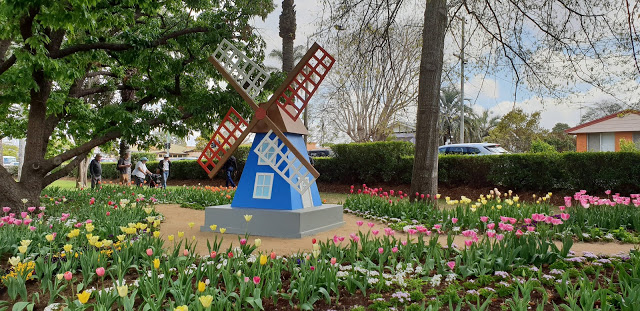
We visited the Laurel Bank Park, where there are beds of many colorful flowers,

open spaces,

statues,

an area set aside for not only tulips but a model windmill

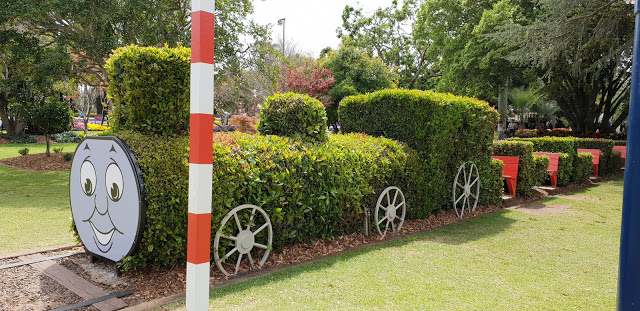
and quite a number of hedge sculptures

There was also the opportunity to go on a morning or afternoon garden tour which visited a number of private gardens of residences in Toowoomba.

The rainy day effect

I have to say that I prefer that time a month into Autumn (or as it is called in other parts of the world, Fall) when the temperatures become bearable, and often there is the soft patter of rain and it’s a calming effect.

It suits my mood and it helps me with my writing, those days when you don’t feel like going out, you just stare out the window contemplating nothing in particular.  These are days when it’s possible to write like you feel.

Melancholy, reflective.

Unlike a lot of people, I actually like the rain. The pattering of raindrops on the roof and on the leaves of the foliage outside the window, the droplets running down the glass of the windows.

It has a calming effect, a serenity about it, that with a fire burning in the background (and I mean a real fire with burning logs) and soft music, perhaps some gentle jazz, or a symphony (please, not the Pastoral Symphony, but maybe Vivaldi’s Four Seasons).

Moving closer to winter, it gets colder, but not that bone-chilling cold of minus 29 degrees Fahrenheit that Northern Hemisphere winters have) but the 16 degrees centigrade we have, along with the rain and the wind.

Different seasons have different winds.  Summer, they are strong and warm, Autumn, swirling and cool with that rustle through the leaves, Winter, hard and, well, not very cold as they are down south in places like Tasmania, and Spring, the gentle breeze with a hint of the coming summer.

On rare occasions, it can have the unnerving effect, sort of like the wailing of a banshee.  Or a sort of humming sound as it blows through the electricity lines.

It reminds me of a set of allegories I read about a long time ago,

Winter – sad

Spring – hope

Summer – Happy

Autumn – reflective

Perhaps it is a little early for me to be reflective because where I live, Autumn is just about over and Winter is coming.

But, of course, this year will be different.  Aside from the usual spate of colds and flu, we have a bigger problem, the possibility of never shaking off COVID 19.

We may have won a short-term victory but this is war, and as we all know, wars take years to win.

But in self-isolation, there is a silver lining.  I might get to write that trilogy I’ve always wanted to.

Inspiration, Maybe – Volume 2

50 photographs, 50 stories, of which there is one of the 50 below.

They all start with –

A picture paints … well, as many words as you like.  For instance:

And, the story:

Have you ever watched your hopes and dreams simply just fly away?

Everything I thought I wanted and needed had just left in an aeroplane, and although I said I was not going to, i came to the airport to see the plane leave.  Not the person on it, that would have been far too difficult and emotional, but perhaps it was symbolic, the end of one life and the start of another.

But no matter what I thought or felt, we had both come to the right decision.  She needed the opportunity to spread her wings.  It was probably not the best idea for her to apply for the job without telling me, but I understood her reasons.

She was in a rut.  Though her job was a very good one, it was not as demanding as she had expected, particularly after the last promotion, but with it came resentment from others on her level, that she, the youngest of the group would get the position.

It was something that had been weighing down of her for the last three months, and if noticed it, the late nights, the moodiness, sometimes a flash of temper.  I knew she had one, no one could have such red hair and not, but she had always kept it in check.

And, then there was us, together, and after seven years, it felt like we were going nowhere.  Perhaps that was down to my lack of ambition, and though she never said it, lack of sophistication.  It hadn’t been an issue, well, not until her last promotion, and the fact she had to entertain more, and frankly I felt like an embarrassment to her.

So, there it was, three days ago, the beginning of the weekend, and we had planned to go away for a few days and take stock.  We both acknowledged we needed to talk, but it never seemed the right time.

It was then she said she had quit her job and found a new one.  Starting the following Monday.

Ok, that took me by surprise, not so much that it something I sort of guessed might happen, but that she would just blurt it out.

I think that right then, at that moment, I could feel her frustration with everything around her.

What surprised her was my reaction.  None.

I simply asked where who, and when.

A world-class newspaper, in New York, and she had to be there in a week.

A week.

It was all the time I had left with her.

I remember I just shrugged and asked if the planned weekend away was off.

She stood on the other side of the kitchen counter, hands around a cup of coffee she had just poured, and that one thing I remembered was the lone tear that ran down her cheek.

Is that all you want to know?

I did, yes, but we had lost that intimacy we used to have when she would have told me what was happening, and we would have brainstormed solutions. I might be a cabinet maker but I still had a brain, was what I overheard her tell a friend once.

There’s not much to ask, I said.  You’ve been desperately unhappy and haven’t been able to hide it all that well, you have been under a lot of pressure trying to deal with a group of troglodytes, and you’ve been leaning on Bentley’s shoulder instead of mine, and I get it, he’s got more experience in that place,  and the politics that go with it, and is still an ally.

Her immediate superior and instrumental in her getting the position, but unlike some men in his position he had not taken advantage of a situation like some men would.  And even if she had made a move, which I doubted, that was not the sort of woman she was, he would have politely declined.

One of the very few happily married men in that organisation, so I heard.

So, she said, you’re not just a pretty face.

Par for the course for a cabinet maker whose university degree is in psychology.  It doesn’t take rocket science to see what was happening to you.  I just didn’t think it was my place to jump in unless you asked me, and when you didn’t, well, that told me everything I needed to know.

Yes, our relationship had a use by date, and it was in the next few days.

I was thinking, she said, that you might come with me,  you can make cabinets anywhere.

I could, but I think the real problem wasn’t just the job.  It was everything around her and going with her, that would just be a constant reminder of what had been holding her back. I didn’t want that for her and said so.

Then the only question left was, what do we do now?

Go shopping for suitcases.  Bags to pack, and places to go.

Getting on the roller coaster is easy.  On the beginning, it’s a slow easy ride, followed by the slow climb to the top.  It’s much like some relationships, they start out easy, they require a little work to get to the next level, follows by the adrenaline rush when it all comes together.

What most people forget is that what comes down must go back up, and life is pretty much a roller coaster with highs and lows.

Our roller coaster had just come or of the final turn and we were braking so that it stops at the station.

There was no question of going with her to New York.  Yes, I promised I’d come over and visit her, but that was a promise with crossed fingers behind my back.  After a few months in t the new job the last thing shed want was a reminder of what she left behind.  New friends new life.

We packed her bags, three out everything she didn’t want, a free trips to the op shop with stiff she knew others would like to have, and basically, by the time she was ready to go, there was nothing left of her in the apartment, or anywhere.

Her friends would be seeing her off at the airport, and that’s when I told her I was not coming, that moment the taxi arrived to take her away forever.  I remember standing there, watching the taxi go.  It was going to be, and was, as hard as it was to watch the plane leave.

So, there I was, finally staring at the blank sky, around me a dozen other plane spotters, a rather motley crew of plane enthusiasts.

Already that morning there’s been 6 different types of plane depart, and I could hear another winding up its engines for take-off.

People coming, people going.

Maybe I would go to New York in a couple of months, not to see her, but just see what the attraction was.  Or maybe I would drop in, just to see how she was.

As one of my friends told me when I gave him the news, the future is never written in stone, and it’s about time you broadened your horizons.

Perhaps it was.


© Charles Heath 2020-2021

Coming soon.  Find the above story and 49 others like it in:

Searching for locations: O’Reilly’s Vineyard, Canungra, Queensland, Australia

O’Reilly’s Canungra Valley Vineyards located on Lamington National Park Road, Canungra, Queensland, is a 15-acre vineyard with the 163-year-old historic homestead ‘Killowen’ set up with dining rooms and long verandahs, and extensive grounds that are next to the Canungra creek where it is possible to find Platypus and turtles while partaking in a picnic.

There are about 6,000 vines of the (white) Semillon, Verdelho and (red) Chambourcin, Shiraz and Petit Vedot varieties.

We visited there in December when the vines were just starting to produce fruit. 

That fruit is usually harvested in February and then turned into wine.
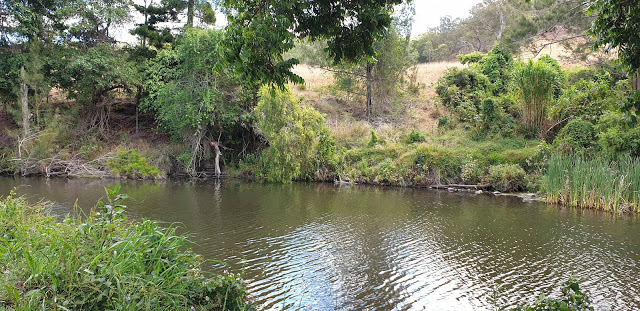
The setting for picnics is, on a warm Summer’s day is idyllic, where you can wade in the creek, or go looking for a platypus.  We did not see one there the day we visited but did spend some time sitting beside the creek.

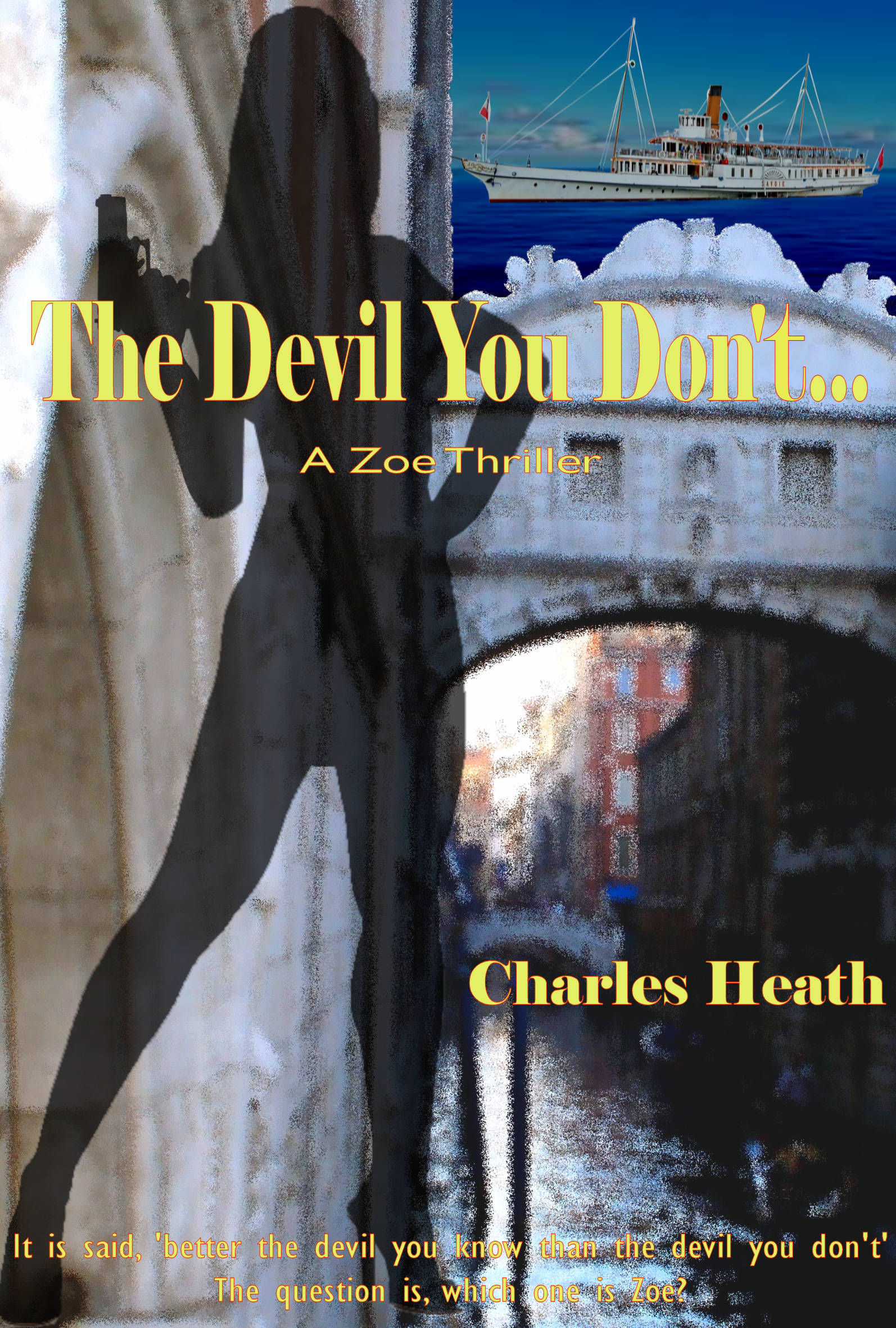
‘The Devil You Don’t’ – A beta reader’s view

It could be said that of all the women one could meet, whether contrived or by sheer luck, what are the odds it would turn out to be the woman who was being paid a very large sum to kill you.

John Pennington is a man who may be lucky in business, but not so lucky in love. He has just broken up with Phillipa Sternhaven, the woman he thought was the one, but relatives and circumstances, and perhaps because she was a ‘princess’, may also have contributed to the end result.

So, what do you do when you are heartbroken?

That is a story that slowly unfolds, from the first meeting with his nemesis on Lake Geneva, all the way to a hotel room in Sorrento, where he learns the shattering truth.

What should have been solace after disappointment, turns out to be something else entirely, and from that point, everything goes to hell in a handbasket.

He suddenly realizes his so-called friend Sebastian has not exactly told him the truth about a small job he asked him to do, the woman he is falling in love with is not quite who she says she is, and he is caught in the middle of a war between two men who consider people becoming collateral damage as part of their business.

The story paints the characters cleverly displaying all their flaws and weaknesses. The locations add to the story at times taking me back down memory lane, especially to Venice where, in those back streets I confess it’s not all that hard to get lost.

All in all a thoroughly entertaining story with, for once, a satisfying end.

Available on Amazon here: https://amzn.to/2Xyh1ow

Writing a book in 365 days – 246

Day 246

Horror stories

From Gothic Gloom to Psychological Dread: The Evolving Art of Horror

The chill that creeps up your spine when you read a truly terrifying tale. It’s a sensation as old as storytelling itself, yet it continues to evolve, morphing and adapting to the anxieties and imaginations of each new era. When we look back at the foundational figures of literary horror, like Edgar Allan Poe and Mary Shelley, we marvel at the sheer ingenuity of their creations. But understanding how they conjured such potent nightmares is key to appreciating the genre’s enduring power, and how authors like William Peter Blatty and Stephen King have, in turn, reshaped its landscape.

The Seeds of Terror: Poe and Shelley’s Gothic Visions

When Edgar Allan Poe penned tales of premature burial, haunted houses, and descent into madness, he tapped into a deep well of human fears. His horror wasn’t always about external monsters; it often lurked within the human psyche. Poe, a master of atmosphere and psychological introspection, drew inspiration from:

  • The Grim Realities of His Time: Poe lived through periods of significant social upheaval and personal tragedy. His own experiences with loss, poverty, and mental illness undoubtedly fueled his explorations of the darker aspects of the human condition.
  • Gothic Literary Traditions: He inherited a rich tradition of Gothic literature, with its crumbling castles, spectral apparitions, and brooding protagonists. Poe took these tropes and infused them with a more visceral, psychological intensity.
  • Scientific and Philosophical Debates: The burgeoning interest in science, death, and the nature of consciousness during his era likely played a role. He explored the fragility of the mind and the terrifying unknown that lay beyond the veil of sanity.

Similarly, Mary Shelley’s creation of Frankenstein wasn’t born in a vacuum. Her “modern Prometheus” was a product of:

  • Intellectual Circles and Revolutionary Ideas: Shelley was surrounded by Romantic poets and thinkers who debated the ethics of scientific advancement and the very essence of life. The scientific experiments of the time, aiming to understand and even replicate life, provided a fertile ground for her imagination.
  • Personal Loss and the Fear of the Unnatural: Shelley experienced profound grief with the loss of her mother and later her own children. This personal experience of death and the potential for “unnatural” creation likely fueled her exploration of a being brought to life through artificial means and the subsequent tragedy that ensued.
  • The Power of Myth and the Sublime: The idea of creating life, of playing God, is an ancient human fascination. Shelley tapped into this, blending it with the Romantic fascination for the sublime – the awe-inspiring, yet terrifying, power of nature and human endeavor.

Both Poe and Shelley, in their distinct ways, explored the anxieties of their times, the fragility of the human mind and body, and the intoxicating, often dangerous, allure of the unknown. Their horror was deeply rooted in the human experience, albeit amplified and distorted for terrifying effect.

The Evolution of Fear: Blatty and King’s Transformative Impact

Fast forward to the latter half of the 20th century, and the landscape of horror had broadened considerably. Authors like William Peter Blatty and Stephen King didn’t just build upon the foundations of their predecessors; they fundamentally altered the architecture of terror.

William Peter Blatty and the Resurgence of Supernatural Dread:

Blatty’s The Exorcist was a seismic event in horror. While supernatural threats existed before, Blatty’s novel brought a visceral, intensely religious horror to the forefront. His genius lay in:

  • Grounding the Supernatural in the Real: He took a seemingly ordinary family and an everyday setting and plunged them into extraordinary, terrifying events. This made the horror feel all the more potent because it could, theoretically, happen to anyone.
  • Exploring Faith and Doubt: The Exorcist delved into the battle between good and evil, faith and disbelief, and the terrifying possibility that malevolent forces could possess and corrupt even the innocent. This psychological and spiritual dimension resonated deeply with audiences.
  • Unflinching Realism in the Face of the Unexplained: Despite the supernatural elements, Blatty presented the demonic possession with a horrifyingly realistic depiction of physical and psychological torment, blurring the lines between the tangible and the infernal.

Stephen King: The Master of Modern Anxiety:

Stephen King, arguably the most prolific and influential horror writer of our time, has transformed the genre by making the mundane terrifying and by tapping into the collective anxieties of modern life. His impact is multifaceted:

  • Relatable Characters and Settings: King excels at creating ordinary people in extraordinary, often horrifying, circumstances. His characters are flawed, relatable, and deeply human, making their struggles against the forces of evil all the more compelling. His settings often feel familiar – small towns, suburban houses – making the intrusion of horror feel all the more shocking.
  • The Breadth of Horror: King’s monsters aren’t confined to ghosts or demons. He explores cosmic horrors (like in It), technological terrors, the monstrousness of human nature, and the psychological horrors of addiction, grief, and trauma. He’s a chameleon, masterfully adapting to and defining various subgenres of horror.
  • The Power of Childhood Fears: Many of King’s most iconic stories tap into the primal fears of childhood – the monster under the bed, the lurking stranger, the loss of innocence. He understands that these early anxieties can linger and become even more potent in adulthood.
  • Social Commentary Woven into Terror: King often uses his horror narratives to explore social issues and contemporary anxieties, from racism and prejudice in The Outsider to the emptiness of consumer culture in The Long Walk. His stories are often a reflection of the world around us, amplified to terrifying proportions.

The Throughline of Fear:

What connects Poe and Shelley to Blatty and King? It’s the fundamental human capacity for fear, coupled with the author’s ability to tap into our deepest anxieties, whether they are existential dread, the fear of the unknown, the fragility of sanity, or the encroaching darkness in the seemingly ordinary.

Poe gave us the internal descent into madness. Shelley showed us the terrifying consequences of unchecked ambition and the “unnatural.” Blatty brought the battle between good and evil into our homes and churches. And King, in his vast and varied career, has made us question the safety of our neighborhoods, the demons within ourselves, and the terrifying possibilities that lurk just a page away.

The art of horror is a constantly evolving beast. It adapts, it transforms, and it continues to enthrall us by reminding us, in the most exhilarating and terrifying ways, of our own vulnerabilities and the vast, mysterious darkness that surrounds us. And for that, we owe a deep debt of gratitude to these masters of the macabre, past and present.

An excerpt from “Betrayal” – a work in progress

It could have been anywhere in the world, she thought, but it wasn’t.  It was in a city where if anything were to go wrong…

She sighed and came away from the window and looked around the room.  It was quite large and expensively furnished.  It was one of several she had been visiting in the last three months.

Quite elegant too, as the hotel had its origins dating back to before the revolution in 1917.  At least, currently, there would not be a team of KGB agents somewhere in the basement monitoring everything that happened in the room.

There was no such thing as the KGB anymore, though there was an FSB, but such organisations were of no interest to her.

She was here to meet with Vladimir.

She smiled to herself when she thought of him, such an interesting man whose command of English was as good as her command of Russian, though she had not told him of that ability.

All he knew of her was that she was American, worked in the Embassy as a clerk, nothing important, whose life both at work and at home was boring.  Not that she had blurted that out the first they met, or even the second.

That first time, at a function in the Embassy, was a chance meeting, a catching of his eye as he looked around the room, looking, as he had told her later, for someone who might not be as boring as the function itself.

It was a celebration, honouring one of the Embassy officials on his service in Moscow, and the fact he was returning home after 10 years.  She had been there once, and still hadn’t met all the staff.

They had talked, Vladimir knew a great deal about England, having been stationed there for a year or two, and had politely asked questions about where she lived, her family, and of course what her role was, all questions she fended off with an air of disinterested interest.

It fascinated him, as she knew it would, a sort of mental sparring as one would do with swords if this was a fencing match.

They had said they might or might not meet again when the party was over, but she suspected there would be another opportunity.  She knew the signs of a man who was interested in her, and Vladimir was interested.

The second time came in the form of an invitation to an art gallery, and a viewing of the works of a prominent Russian artist, an invitation she politely declined.  After all, invitations issued to Embassy staff held all sorts of connotations, or so she was told by the Security officer when she told him.

Then, it went quiet for a month.  There was a party at the American embassy and along with several other staff members, she was invited.  She had not expected to meet Vladimir, but it was a pleasant surprise when she saw him, on the other side of the room, talking to several military men.

A pleasant afternoon ensued.

And it was no surprise that they kept running into each other at the various events on the diplomatic schedule.

By the fifth meeting, they were like old friends.  She had broached the subject of being involved in a plutonic relationship with him with the head of security at the embassy.  Normally for a member of her rank, it would not be allowed, but in this instance it was.

She did not work in any sensitive areas, and, as the security officer had said, she might just happen upon something that might be useful.  In that regard, she was to keep her eyes and ears open and file a report each time she met him.

After that discussion, she got the impression her superiors considered Vladimir more than just a casual visitor on the diplomatic circuit.  She also formed the impression that he might consider her an ‘asset’, a word that had been used at the meeting with security and the ambassador.

It was where the word ‘spy’ popped into her head and sent a tingle down her spine.  She was not a spy, but the thought of it, well, it would be fascinating to see what happened.

A Russian friend.  That’s what she would call him.

And over time, that relationship blossomed, until, after a visit to the ballet, late and snowing, he invited her to his apartment not far from the ballet venue.  It was like treading on thin ice, but after champagne and an introduction to caviar, she felt like a giddy schoolgirl.

Even so, she had made him promise that he remain on his best behaviour.  It could have been very easy to fall under the spell of a perfect evening, but he promised, showed her to a separate bedroom, and after a brief kiss, their first, she did not see him until the next morning.

So, it began.

It was an interesting report she filed after that encounter, one where she had expected to be reprimanded.

She wasn’t.

It wasn’t until six weeks had passed when he asked her if she would like to take a trip to the country.  It would involve staying in a hotel, that they would have separate rooms.  When she reported the invitation, no objection was raised, only a caution; keep her wits about her.

Perhaps, she had thought, they were looking forward to a more extensive report.  After all, her reports on the places, and the people, and the conversations she overheard, were no doubt entertaining reading for some.

But this visit was where the nature of the relationship changed, and it was one that she did not immediately report.  She had realised at some point before the weekend away, that she had feelings for him, and it was not that he was pushing her in that direction or manipulating her in any way.

It was just one of those moments where, after a grand dinner, a lot of champagne, and delightful company, things happen.  Standing at the door to her room, a lingering kiss, not intentional on her part, and it just happened.

And for not one moment did she believe she had been compromised, but for some reason she had not reported that subtle change in the relationship to the powers that be, and so far, no one had any inkling.

She took off her coat and placed it carefully of the back of one of the ornate chairs in the room.  She stopped for a moment to look at a framed photograph on the wall, one representing Red Square.

Then, after a minute or two, she went to the mini bar and took out the bottle of champagne that had been left there for them, a treat arranged by Vladimir for each encounter.

There were two champagne flutes set aside on the bar, next to a bowl of fruit.  She picked up the apple and thought how Eve must have felt in the garden of Eden, and the temptation.

Later perhaps, after…

She smiled at the thought and put the apple back.

A glance at her watch told her it was time for his arrival.  It was if anything, the one trait she didn’t like, and that was his punctuality.  A glance at the clock on the room wall was a minute slow.

The doorbell to the room rang, right on the appointed time.

She put the bottle down and walked over to the door.

A smile on her face, she opened the door.

It was not Vladimir.  It was her worst nightmare.

© Charles Heath 2020

In a word: Not

You will not go outside, you will not go to the movies.

The word not, when used by your parents when you are a child is the key in the lock keeping you from having fun.

It is the very definition of everything negative, and much harsher than just a plain no.

That you will ‘not…’ has been the gateway for many an exploit or adventure, because anything you have done contrary to the ‘not’ is all that much sweeter.

Until you get into trouble, but, then, isn’t that how you learn life’s lessons?

But if you are a programmer like me, not takes on a whole new meaning in a language like,

‘If not like …. then’

meaning in layman’s terms if something isn’t like a specific value then do something else.

Hang on, isn’t that a bit like reality?

This is not to be confused with the word Knot which is,

A blemish in a piece of wood

The speed of a ship, winds, and sometimes a plane

But basically,

Something you tie to keep your shoes on, or around your finger to remind you to tie your shoes before getting on the 36-knot high-speed ferry made of knotty wood.

It is also something you find in tangled hair and is very painful trying to remove it.

It is also an unpleasant tightness in body muscles and you need a masseuse to get rid of them.

“The Things we do for Love”, the story behind the story

This story has been ongoing since I was seventeen, and just to let you know, I’m 71 this year.

Yes, it’s taken a long time to get it done.

Why, you might ask.

Well, I never gave it much interest because I started writing it after a small incident when I was 17, and working as a book packer for a book distributor in Melbourne

At the end of my first year, at Christmas, the employer had a Christmas party, and that year, it was at a venue in St Kilda.

I wasn’t going to go because at that age, I was an ordinary boy who was very introverted and basically scared of his own shadow and terrified by girls.

Back then, I would cross the street to avoid them

Also, other members of the staff in the shipping department were rough and ready types who were not backwards in telling me what happened, and being naive, perhaps they knew I’d be either shocked or intrigued.

I was both adamant I wasn’t coming and then got roped in on a dare.

Damn!

So, back then, in the early 70s, people looked the other way when it came to drinking, and of course, Dutch courage always takes away the concerns, especially when normally you wouldn’t do half the stuff you wouldn’t in a million years

I made it to the end, not as drunk and stupid as I thought I might be, and St Kilda being a salacious place if you knew where to look, my new friends decided to give me a surprise.

It didn’t take long to realise these men were ‘men about town’ as they kept saying, and we went on an odyssey.  Yes, those backstreet brothels where one could, I was told, have anything they could imagine.

Let me tell you, large quantities of alcohol and imagination were a very bad mix.

So, the odyssey in ‘The things we do’ was based on that, and then the encounter with Diana. Well, let’s just say I learned a great deal about girls that night.

Firstly, not all girls are nasty and spiteful, which seemed to be the case whenever I met one. There was a way to approach, greet, talk to, and behave.

It was also true that I could have had anything I wanted, but I decided what was in my imagination could stay there.  She was amused that all I wanted was to talk, but it was my money, and I could spend it how I liked.

And like any 17-year-old naive fool, I fell in love with her and had all these foolish notions.  Months later, I went back, but she had moved on, to where no one was saying or knew.

Needless to say, I was heartbroken and had to get over that first loss, which, like any 17-year-old, was like the end of the world.

But it was the best hour I’d ever spent in my life and would remain so until I met the woman I have been married to for the last 48 years.

As Henry, he was in part based on a rebel, the son of rich parents who despised them and their wealth, and he used to regale anyone who would listen about how they had messed up his life

If only I’d come from such a background!

And yes, I was only a run away from climbing up the stairs to get on board a ship, acting as a purser.

I worked for a shipping company and they gave their junior staff members an opportunity to spend a year at sea working as a purser on a cargo ship that sailed between Melbourne, Sydney and Hobart in Australia.

One of the other junior staff members’ turn came, and I would visit him on board when he would tell me stories about life on board, the officers, the crew, and other events. These stories, which sounded incredible to someone so impressionable, were a delight to hear.

Alas, by that time, I had tired of office work and moved on to be a tradesman at the place where my father worked.

It proved to be the right move, as that is where I met my wife.  Diana had been right; love would find me when I least expected it.