What I learned about writing – How we saved our work through the ages

From Quill to Cloud: Charting the Journey of Recording Our Stories

The spark ignites. Ideas, characters, narratives – they swirl and coalesce, demanding to be brought into the world. You feel it, don’t you? That undeniable urge to capture those fleeting thoughts, to anchor them before they drift away. But then comes the crucial question, the one that bridges the gap between conception and creation: How am I going to record the words?

It’s a question that has echoed through humanity for millennia. The words are in my head, a vibrant symphony waiting to be played. Now, the challenge lies in the translation, in finding the right instrument to faithfully transcribe that inner music.

Think about it. We live in an age of unparalleled recording technology. Our smartphones are pocket-sized supercomputers, capable of capturing high-definition video and crystal-clear audio with a tap. Laptops hum with powerful word processing software. Digital recorders offer dedicated tools for capturing spoken thoughts. The possibilities for recording our words are, quite frankly, astounding.

But before we delve into the digital marvels of today, let’s take a moment to appreciate the foundational methods, the very origins of how we’ve managed to preserve our stories. Let’s trace the path from the earliest whispers of recorded thought to the sophisticated tools we now wield.

The Dawn of Imprint: Paper and Quill

Imagine a time before keyboards, before even the hum of a printing press. Our ancestors, blessed with the gift of language, faced the daunting task of preserving their knowledge, their histories, their very souls. Their solution was as elegant as it was laborious: paper and quill.

Picture a scribe, hunched over a parchment, meticulously dipping a sharpened feather into a pot of ink. Each stroke was a deliberate act, each letter a testament to the enduring power of the written word. This was not just recording; it was an act of devotion. Stories of gods and heroes, laws and treaties, the everyday observations of life – all were etched into existence, painstakingly, one word at a time.

The transition to a pen offered a slight improvement – perhaps faster, more consistent lines – but the core principle remained. The direct, physical connection between thought, hand, and surface was the primary means of saving our stories. These weren’t just documents; they were tangible artifacts, imbued with the effort and intention of their creators.

The Mechanical Muse: The Typewriter’s Revolution

Then came a mechanical marvel that truly shook things up: the typewriter. Suddenly, the speed and legibility of writing were amplified. The satisfying clatter of keys, the sharp ding of the carriage return – these became the soundtrack to a new era of writing. Authors could produce more text, faster, and with a clarity that made their words more accessible. The typewriter democratized the written word to an extent, making it easier for more people to express themselves in a lasting form.

The Digital Leap: Computers and Beyond

And then, the world changed irrevocably with the advent of the computer. What began as clunky behemoths capable of complex calculations evolved into the sleek, powerful devices we know today. Suddenly, recording our words became a fluid, dynamic process.

Word processors offered infinite room for revision, deletion, and rearrangement – a far cry from the indelible nature of ink on paper. The ability to save, copy, and share documents became instantaneous. The internet opened up global platforms for dissemination, allowing our stories to reach audiences we could only have dreamed of previously.

Beyond text, the digital age introduced a whole new dimension: the ability to record the spoken word directly. Microphones, built into our devices or available as standalone tools, allow us to capture the nuance and emotion of our voices. This opened doors for podcasters, audiobook narrators, oral historians, and anyone who simply wants to preserve their thoughts without the intermediary of typing.

The Enduring Quest

So, as you stand with your ideas buzzing, your words forming, the question of “how” remains. Will you embrace the tactile satisfaction of pen on paper, a nod to tradition? Will you find efficiency in the clatter of a keyboard, a testament to mechanical progress? Or will you harness the power of digital tools, with their boundless potential for creation and dissemination?

The method you choose will shape not only how your words are recorded but also how they are perceived. Each tool carries its own history, its own character. What matters most, however, is the act of recording itself. It is the commitment to giving your thoughts permanence, to sharing your unique perspective, to adding your voice to the grand, unfolding tapestry of human stories.

The journey from quill to cloud is a testament to our innate drive to communicate, to connect, and to leave a mark. So, which instrument will you choose to play your next word-song?

“One Last Look”, nothing is what it seems

A single event can have enormous consequences.

A single event driven by fate, after Ben told his wife Charlotte he would be late home one night, he left early, and by chance discovers his wife having dinner in their favourite restaurant with another man.

A single event where it could be said Ben was in the wrong place at the wrong time.

Who was this man? Why was she having dinner with him?

A simple truth to explain the single event was all Ben required. Instead, Charlotte told him a lie.

A single event that forces Ben to question everything he thought he knew about his wife, and the people who are around her.

After a near-death experience and forced retirement into a world he is unfamiliar with, Ben finds himself once again drawn back into that life of lies, violence, and intrigue.

From London to a small village in Tuscany, little by little Ben discovers who the woman he married is, and the real reason why fate had brought them together.

It is available on Amazon here:  http://amzn.to/2CqUBcz

Searching for locations: Brisbane botanical gardens, Australia

The flowers were out in full bloom the day we took the grandchildren for ‘a walk in the park’.

2011-10-29-12-13-31
2011-10-29-12-14-24
2011-10-29-12-14-01

Of particular interest was the Japanese garden with a trail with rocks,and mini waterfalls

2011-10-29-12-27-02

And as a fitting end to the day, a chance to feed a family of ducks

2011-10-29-13-15-41

Harry Walthenson, Private Detective – the second case – A case of finding the “Flying Dutchman”

What starts as a search for a missing husband soon develops into an unbelievable story of treachery, lies, and incredible riches.

It was meant to remain buried long enough for the dust to settle on what was once an unpalatable truth, when enough time had passed, and those who had been willing to wait could reap the rewards.

The problem was, no one knew where that treasure was hidden or the location of the logbook that held the secret.

At stake, billions of dollars’ worth of stolen Nazi loot brought to the United States in an anonymous tramp steamer and hidden in a specially constructed vault under a specifically owned plot of land on the once docklands of New York.

It may have remained hidden and unknown to only a few, if it had not been for a mere obscure detail being overheard …

… by our intrepid, newly minted private detective, Harry Walthenson …

… and it would have remained buried.

Now, through a series of unrelated events, or are they, that well-kept secret is out there, and Harry will not stop until the whole truth is uncovered.

Even if it almost costs him his life.  Again.

Writing a book in 365 days – 249/250

Days 249 and 250

Just how is my novel going?

What works, and what do you like about it?

Given that the story had been written over quite a few years, and has changed in content a few times, and the start more than once, overall the story works as I’d originally intended.

A burned spy, who was almost killed on his most recent mission, and while in recovery, is contemplating retirement, is convinced to return to the job with a job that was meant to be an easy re-entry.

Of course, it is the very reason why he was nearly killed that is the reason why this new mission is blown before it gets off the ground. Perhaps for that reason, he decided to continue, knowing the odds are stacked against him.

What doesn’t work, and why?

I’m not so sure I want to keep the story that revolves around the outside of the mission he is on. The mission, to protect a keynote speaker on behalf of the government, turns into a localised effort to use the host country’s lack of human rights as a springboard for an attempted coup d’état. Our protagonist, of course, does not know the keynote speaker is working in concert with the revolutionaries, which just adds to the complexity of his position.

Thus, we have corrupt politicians, evil secret police, an incorruptible police commissioner, revolutionaries, a missing leader of the rebel forces, a son of that leader with overly ambitious aims and revenge uppermost on his agenda, and a variety of bit players who are all trying to steal the show.

What has to stay, and is there more to the story?

At this point, I’m satisfied that everyone with a role is staying. They fit together perfectly, from the menacing to the would-be heroes. If I stick simply to the revolution and the lead-up to it, it’s fine.

What has to go, and what gaps may need filling?

What might need to be removed is the search for and elimination of the people who are working against the organisation, the very people who caused the protagonist to be almost fatally injured. For the boss of that organisation to use our protagonist on the promise of getting those who caused his near-death crisis doesn’t really benefit the story.

The main story itself runs to about 70,000 words, so it doesn’t need the extra tale to confuse the main story, and in the end, it might serve as a sequel.

An excerpt from “Mistaken Identity” – a work in progress

The odds of any one of us having a doppelganger are quite high. Whether or not you got to meet him or her, or be confronted by them was significantly lower. Except of course, unless you are a celebrity.

It was a phenomenon remarkable only for the fact, at times, certain high-profile people, notorious or not, had doubles if only to put off enemies or the general public. Sometimes we see people in the street, people who look like someone we knew, and made the mistake of approaching them like a long lost friend, only to discover an embarrassed individual desperately trying to get away for what they perceive is a stalker or worse.

And then sometimes it is a picture that looms up on a TV screen, an almost exact likeness of you. At first, you are fascinated, and then according to the circumstances, and narrative that is attached to that picture, either flattered or horrified.

For me one turned to the other when I saw an almost likeness of me flash up on the screen when I turned the TV on in my room. What looked to be my photo, with only minor differences, was in the corner of the screen, the newsreader speaking in rapid Italian, so fast I could only translate every second or third word.

But the one word I did recognize was murder. The photo of the man up on the screen was the subject of an extensive manhunt. The crime, the murder of a woman in the very same hotel I was staying, and it was being played out live several floors above me. The gist of the story, the woman had been seen with, and staying with the man who was my double, and, less than an hour ago, the body had been discovered by a chambermaid.

The killer, the announcer said, was believed to be still in the hotel because the woman had died shortly before she had been discovered.

I watched, at first fascinated at what I was seeing. I guess I should have been horrified, but at that moment it didn’t register that I might be mistaken for that man.

Not until another five minutes had passed, and I was watching the police in full riot gear, with a camera crew following behind, coming up a passage towards a room. Live action of the arrest of the suspected killer the breathless commentator said.

Then, suddenly, there was a pounding on the door. On the TV screen, plain to see, was the number of my room.
I looked through the peephole and saw an army of police officers. It didn’t take much to realize what had happened. The hotel staff identified me as the man in the photograph on the TV and called the police.

Horrified wasn’t what I was feeling right then.

It was fear.

My last memory was the door crashing open, the wood splintering, and men rushing into the room, screaming at me, waving guns, and when I put my hands up to defend myself, I heard a gunshot.

And in one very confused and probably near-death experience, I thought I saw my mother and thought what was she doing in Rome?

I was the archetypal nobody.

I lived in a small flat, I drove a nondescript car, had an average job in a low profile travel agency, was single, and currently not involved in a relationship, no children, and according to my workmates, no life.

They were wrong. I was one of those people who preferred their own company, I had a cat, and travelled whenever I could. And I did have a ‘thing’ for Rosalie, one of the reasons why I stayed at the travel agency. I didn’t expect anything to come of it, but one could always hope.

I was both pleased and excited to be going to the conference. It was my first, and the glimpse I had seen of it had whetted my appetite for more information about the nuances of my profession.

Some would say that a travel agent wasn’t much of a job, but to me, it was every bit as demanding as being an accountant or a lawyer. You were providing a customer with a service, and arguably more people needed a travel agent than a lawyer. At least that was what I told myself, as I watched more and more people start using the internet, and our relevance slowly dissipating.

This conference was about countering that trend.

The trip over had been uneventful. I was met at the airport and taken to the hotel where the conference was being held with a number of other delegates who had arrived on the same plane. I had mingled with a number of other delegates at the pre conference get together, including one whose name was Maryanne.

She was an unusual young woman, not the sort that I usually met, because she was the one who was usually surrounded by all the boys, the life of the party. In normal circumstances, I would not have introduced myself to her, but she had approached me. Why did I think that may have been significant? All of this ran through my mind, culminating in the last event on the highlight reel, the door bursting open, men rushing into my room, and then one of the policemen opened fire.

I replayed that last scene again, trying to see the face of my assailant, but it was just a sea of men in battle dress, bullet proof vests and helmets, accompanied by screaming and yelling, some of which I identified as “Get on the floor”.

Then came the shot.

Why ask me to get on the floor if all they were going to do was shoot me. I was putting my hands up at the time, in surrender, not reaching for a weapon.

Then I saw the face again, hovering in the background like a ghost. My mother. Only the hair was different, and her clothes, and then the image was going, perhaps a figment of my imagination brought on by pain killing drugs. I tried to imagine the scene again, but this time it played out, without the image of my mother.

I opened my eyes took stock of my surroundings. What I felt in that exact moment couldn’t be described. I should most likely be dead, the result of a gunshot wound. I guess I should be thankful the shooter hadn’t aimed at anything vital, but that was the only item on the plus side.

I was in a hospital room with a policeman by the door. He was reading a newspaper, and sitting uncomfortably on a small chair. He gave me a quick glance when he heard me move slightly, but didn’t acknowledge me with either a nod, or a greeting, just went back to the paper.

If I still had a police guard, then I was still considered a suspect. What was interesting was that I was not handcuffed to the bed. Perhaps that only happened in TV shows. Or maybe they knew I couldn’t run because my injuries were too serious. Or the guard would shoot me long before my feet hit the floor. I knew the police well enough now to know they would shoot first and ask questions later.

On the physical side, I had a large bandage over the top left corner of my chest, extending over my shoulder. A little poking and prodding determined the bullet had hit somewhere between the top of my rib cage and my shoulder. Nothing vital there, but my arm might be somewhat useless for a while, depending on what the bullet hit on the way in, or through.

It didn’t feel like there were any broken or damaged bones.

That was the good news.

On the other side of the ledger, my mental state, there was only one word that could describe it. Terrified. I was looking at a murder charge and jail time, a lot of it. Murder usually had a long time in jail attached to it.

Whatever had happened, I didn’t do it. I know I didn’t do it, but I had to try and explain this to people who had already made up their minds. I searched my mind for evidence. It was there, but in the confused state brought on by the medication, all I could think about was jail, and the sort of company I was going to have.

I think death would have been preferable.

Half an hour later, maybe longer, I was drifting in an out of consciousness, a nurse, or what I thought was a nurse, came into the room. The guard stood, checked her ID card, and then stood by the door.

She came over and stood beside the bed. “How are you?” she asked, first in Italian, and when I pretended I didn’t understand, she asked the same question in accented English.

“Alive, I guess,” I said. “No one has come and told what my condition is yet. You are my first visitor. Can you tell me?”

“Of course. You are very lucky to be alive. You will be fine and make a full recovery. The doctors here are excellent at their work.”

“What happens now?”

“I check you, and then you have a another visitor. He is from the British Embassy I think. But he will have to wait until I have finished my examination.”

I realized then she was a doctor, not a nurse.

My second visitor was a man, dressed in a suit the sort of which I associated with the British Civil Service.  He was not very old which told me he was probably a recent graduate on his first posting, the junior officer who drew the short straw.

The guard checked his ID but again did not leave the room, sitting back down and going back to his newspaper.

My visitor introduced himself as Alex Jordan from the British Embassy in Rome and that he had been asked by the Ambassador to sort out what he labelled a tricky mess.

For starters, it was good to see that someone cared about what happened to me.  But, equally, I knew the mantra, get into trouble overseas, and there is not much we can do to help you.  So, after that lengthy introduction, I had to wonder why he was here.

I said, “They think I am an international criminal by the name of Jacob Westerbury, whose picture looks just like me, and apparently for them it is an open and shut case.”  I could still hear the fragments of the yelling as the police burst through the door, at the same time telling me to get on the floor with my hands over my head.

“It’s not.  They know they’ve got the wrong man, which is why I’m here.  There is the issue of what had been described as excessive force, and the fact you were shot had made it an all-round embarrassment for them.”

“Then why are you here?  Shouldn’t they be here apologizing?”

“That is why you have another visitor.  I only took precedence because I insisted I speak with you first.  I have come, basically to ask you for a favour.  This situation has afforded us with an opportunity.  We would like you to sign the official document which basically indemnifies them against any legal proceedings.”

Curious.  What sort of opportunity was he talking about?  Was this a matter than could get difficult and I could be charged by the Italian Government, even if I wasn’t guilty, or was it one of those hush hush type deals, you do this for us, we’ll help you out with that.  “What sort of opportunity?”

“We want to get our hands on Jacob Westerbury as much as they do.  They’ve made a mistake, and we’d like to use that to get custody of him if or when he is arrested in this country.  I’m sure you would also like this man brought into custody as soon as possible so you will stop being confused with him.  I can only imagine what it was like to be arrested in the manner you were.  And I would not blame you if you wanted to get some compensation for what they’ve done.  But.  There are bigger issues in play here, and you would be doing this for your country.”

I wondered what would happen if I didn’t agree to his proposal.  I had to ask, “What if I don’t?”

His expression didn’t change.  “I’m sure you are a sensible man Mr Pargeter, who is more than willing to help his country whenever he can.  They have agreed to take care of all your hospital expenses, and refund the cost of the Conference, and travel.  I’m sure I could also get them to pay for a few days at Capri, or Sorrento if you like, before you go home.  What do you say?”

There was only one thing I could say.  Wasn’t it treason if you went against your country’s wishes?

“I’m not an unreasonable man, Alex.  Go do your deal, and I’ll sign the papers.”

“Good man.”

After Alex left, the doctor came back to announce the arrival of a woman, by the way she had announced herself, the publicity officer from the Italian police. When she came into the room, she was not dressed in a uniform.

The doctor left after giving a brief report to the civilian at the door. I understood the gist of it, “The patient has recovered excellently and the wounds are healing as expected. There is no cause for concern.”

That was a relief.

While the doctor was speaking to the civilian, I speculated on who she might be. She was young, not more than thirty, conservatively dressed so an official of some kind, but not necessarily with the police. Did they have prosecutors? I was unfamiliar with the Italian legal system.

She had long wavy black hair and the sort of sultry looks of an Italian movie star, and her presence made me more curious than fearful though I couldn’t say why.

The woman then spoke to the guard, and he reluctantly got up and left the room, closing the door behind him.
She checked the door, and then came back towards me, standing at the end of the bed. Now alone, she said, “A few questions before we begin.” Her English was only slightly accented. “Your name is Jack Pargeter?”

I nodded. “Yes.”

“You are in Rome to attend the Travel Agents Conference at the Hilton Hotel?”

“Yes.”

“You attended a preconference introduction on the evening of the 25th, after arriving from London at approximately 4:25 pm.”

“About that time, yes. I know it was about five when the bus came to collect me, and several others, to take us to the hotel.”

She smiled. It was then I noticed she was reading from a small notepad.

“It was ten past five to be precise. The driver had been held up in traffic. We have a number of witnesses who saw you on the plane, on the bus, at the hotel, and with the aid of closed circuit TV we have established you are not the criminal Jacob Westerbury.”

She put her note book back in her bag and then said, “My name is Vicenza Andretti and I am with the prosecutor’s office. I am here to formally apologize for the situation that can only be described as a case of mistaken identity. I assure you it is not the habit of our police officers to shoot people unless they have a very strong reason for doing so. I understand that in the confusion of the arrest one of our officers accidentally discharged his weapon. We are undergoing a very thorough investigation into the circumstances of this event.”

I was not sure why, but between the time I had spoken to the embassy official and now, something about letting them off so easily was bugging me. I could see why they had sent her. It would be difficult to be angry or annoyed with her.

But I was annoyed.

“Do you often send a whole squad of trigger happy riot police to arrest a single man?” It came out harsher than I intended.

“My men believed they were dealing with a dangerous criminal.”

“Do I look like a dangerous criminal?” And then I realized if it was mistaken identity, the answer would be yes.

She saw the look on my face, and said quietly, “I think you know the answer to that question, Mr. Pargeter.”

“Well, it was overkill.”

“As I said, we are very sorry for the circumstances you now find yourself in. You must understand that we honestly believed we were dealing with an armed and dangerous murderer, and we were acting within our mandate. My department will cover your medical expenses, and any other amounts for the inconvenience this has caused you. I believe you were attending a conference at your hotel. I am very sorry but given the medical circumstances you have, you will have to remain here for a few more days.”

“I guess, then, I should thank you for not killing me.”

Her expression told me that was not the best thing I could have said in the circumstances.

“I mean, I should thank you for the hospital and the care. But a question or two of my own. May I?”

She nodded.

“Did you catch this Jacob Westerbury character?”

“No. In the confusion created by your arrest he escaped. Once we realized we had made a mistake and reviewed the close circuit TV, we tracked him leaving by a rear exit.”

“Are you sure it was one of your men who shot me?”

I watched as her expression changed, to one of surprise.

“You don’t think it was one of my men?”

“Oddly enough no. But don’t ask me why.”

“It is very interesting that you should say that, because in our initial investigation, it appeared none of our officer’s weapons had been discharged. A forensic investigation into the bullet tells us it was one that is used in our weapons, but…”

I could see their dilemma.

“Have you any enemies that would want to shoot you Mr Pargeter?”

That was absurd because I had no enemies, at least none that I knew of, much less anyone who would want me dead.

“Not that I’m aware of.”

“Then it is strange, and will perhaps remain a mystery. I will let you know if anything more is revealed in our investigation.”

She took an envelope out of her briefcase and opened it, pulling out several sheets of paper.

I knew what it was. A verbal apology was one thing, but a signed waiver would cover them legally. They had sent a pretty girl to charm me. Perhaps using anyone else it would not have worked. There was potential for a huge litigation payout here, and someone more ruthless would jump at the chance of making a few million out of the Italian Government.

“We need a signature on this document,” she said.

“Absolving you of any wrong doing?”

“I have apologized. We will take whatever measures are required for your comfort after this event. We are accepting responsibility for our actions, and are being reasonable.”

They were. I took the pen from her and signed the documents.

“You couldn’t add dinner with you on that list of benefits?” No harm in asking.

“I am unfortunately unavailable.”

I smiled. “It wasn’t a request for a date, just dinner. You can tell me about Rome, as only a resident can. Please.”

She looked me up and down, searching for the ulterior motive. When she couldn’t find one, she said, “We shall see once the hospital discharges you in a few days.”

“Then I’ll pencil you in?”

She looked at me quizzically. “What is this pencil me in?”

“It’s an English colloquialism. It means maybe. As when you write something in pencil, it is easy to erase it.”

A momentary frown, then recognition and a smile. “I shall remember that. Thank-you for your time and co-operation Mr. Pargeter. Good morning.”

© Charles Heath 2015-2021

In a word: Steal

You know how it goes, somebody breaks into your house and they steal the family jewels, which means, they’ve taken something that’s not theirs.

Baseballers will be well familiar with the term steal a base because that sneaky second base runner is trying to get to third, before the pitcher fires in a curveball.

But then there’s that same thief trying to rob you is stealing his way downstairs.

You come across a bargain, that is the seller doesn’t quite know what they’ve got and assumed it’s junk, that’s a steal.

On stage, one actor can steal the limelight from another.  if a film, an actor with a lesser part, can, if their good enough, steal the scene.

And if you’re lucky enough, you might steal a kiss, or just get slapped.

Then there’s the government, using a certain event to change the laws, and it might just steal your liberty.

This is not to be confused with the word steel, which means something else entirely, like a very malleable metal that’s low in carbon.

Or like most of our heroes, they have nerves of steel, or if they are like us, they need to steel themselves with a suitable fortification, rum is my choice.

But for me, I like the phrase, he had a steely look on his face and it was hard to tell if that was good or bad.

Coming soon – “Strangers We’ve Become”, the sequel to “What Sets Us Apart”

Stranger’s We’ve Become, a sequel to What Sets Us Apart.

The blurb:

Is she or isn’t she, that is the question!

Susan has returned to David, but he is having difficulty dealing with the changes. Her time in captivity has changed her markedly, so much so that David decides to give her some time and space to re-adjust back into normal life.

But doubts about whether he chose the real Susan remain.

In the meantime, David has to deal with Susan’s new security chief, the discovery of her rebuilding a palace in Russia, evidence of an affair, and several attempts on his life. And, once again, David is drawn into another of Predergast’s games, one that could ultimately prove fatal.

From being reunited with the enigmatic Alisha, a strange visit to Susan’s country estate, to Russia and back, to a rescue mission in Nigeria, David soon discovers those whom he thought he could trust each has their own agenda, one that apparently doesn’t include him.

The Cover:

strangerscover9

Coming soon


“What are the odds…”, a short story


I’m not a betting man.

I’d been to the horse races a few times, but every time I backed a horse to win, it would come last, and if I backed it to place, it would come fourth.

Then, every time I bought a lottery ticket, my numbers never seemed to come out, as if they were lighter than the others.

You get the picture, gambling, and I didn’t get along.

That being said, Vernon, a friend from school days, and then, having made the graduate program for the same company, remained friends into adult life. He was a betting man, he bet me he would be married first, he picked horses that came first, and always walked out of a casino with more than he walked in with.

And he was right, he got married first, had children first, settled into a manager’s role, and was content.

I was not so eager to follow in his footsteps; I often said that I hadn’t found the right girl yet, but the truth was, I wasn’t exactly putting myself out there. A couple of bad experiences had put me off the whole idea.

He had a side bet with another of our friends that I would not get married before I was forty. He had mentioned it to me some time ago, and I’d agreed with him; it was a safe bet.

The thing was, Evie had learned about that bet, and it was, in her mind, a situation tailor-made for her, being Vernon’s very popular wife, and not one to pass up a romantic challenge. Not after Vernon had suddenly decided to make a bet with her, to find me a girlfriend. With a time limit, of course, of six weeks. Just to make it interesting.

Of course, I had no clue this challenge existed, not until much later.

What I did know was that she had a vast array of both married and single girlfriends and acquaintances and was known to throw memorable parties on a Friday night. She had issued me with a standing invitation a long time ago, one that I kept promising to honour, but I never seemed to get there.

I knew some of her friends were single, and that she had a reputation of being something of a matchmaker. Vernon told me that those Friday night affairs were where some of his other friends had found romance and that it wouldn’t surprise him if I was not a target.

I agreed with him, but coincidentally, right after he said this, I got a call from Evie, who all but ordered me to attend this Friday’s festivities. I was going to decline, but she added that it was Chloe’s fifth birthday, and as her Godfather, I was obligated to attend.

It had been an honour when Vernon first asked me; it still is, but it seemed to me it was going to be used for some other reason, so I was going to have to be on my guard.

Over the years, I had met most of Evie’s girlfriends, and they were fun, yes, I’d heard about the exploits on weekends in Vegas, but it was not for me. I was the quiet, shy type, and they, in a nutshell, were not.

I’d met most of Evie’s family. She was one of five girls, the one in the middle. The two older sisters were professionals, one a doctor, the other a lawyer. The two younger sisters were more hands-on; the second youngest, Zoe, was a home caterer, and the youngest, Yasmine, with no head for, or desire to own, a business, was more carefree. Like Evie, she was family-oriented and still lived with her parents. The most level-headed, and the one they all turned to for advice, was Melanie, the eldest.

She was the first person I saw after I arrived. I thought I would get there early because I never wanted to make an entrance.

“I haven’t seen you around for a while,” Melanie said, already with a champagne flute in her hand. Something else I knew, she liked to drink wine. She was also married, but as I remember, her husband was away a lot.

“Part of the low profile I try to keep. How is Leonard, still the king of frequent flyer points?” His travels had finally earned him a special card reserved for very few.

“He’s in Paris, probably with his mistress.” She shrugged. “Husbands are like accessories these days. You can keep them or throw them out. I’m sure Genevieve will get tired of him soon and send him back.”

A unique attitude, for one who was supposed to give advice.

“You’re still not married, I see. Good choice. Marriage these days seems to be only good for a year or two, then sue the other for everything they’ve got. Sorry, I lost a case today, so I’m feeling a little cynical. Come back when I’ve had a dozen champagnes.”

She suddenly spotted one of Vernon’s neighbours and headed in his direction.

Zoe was walking past with a tray of canapes in her hand and stopped. “Ian? It is you. It’s so long since I’ve seen you.”

“Geraldine’s wedding. You catered for that. A splendid feast, I might add.”

Geraldine’s wedding had been a year ago, and after everyone had gone home, I found Zoe out the back in tears. She didn’t tell me then what had happened, but we talked for hours. Out of all the Wolverhampton’s, she was the most sensible, and the one I liked the most. But, like all those like her, she was spoken for.

“It was. How have you been?”

“Working, eating, sleeping, repeat.”

“It’s a bit like that, isn’t it? It gets to the point where all the days seem to run into each other, and in the end, you don’t know what day it is. That’s why I have a smartphone. It’s certainly smarter than I am.”

Something I learned in that discussion was the fact that she suffered from low self-esteem, perhaps from being a younger sister, perhaps because her parents had higher hopes for her than just being a caterer. Given her grades at school and later university, she could have been anything.

I was going to disagree with her and sing her praises, but one of her serving staff came up and told her there was a problem.

She sighed, handed the tray to the new girl, and with a wan smile disappeared towards the back of the house.

I thought then that I should leave because I doubted I would be missed.

Whenever I had to go to a party, particularly like one of these, where no one was sitting, and everyone was mingling, I usually set myself a task, picking a focal point and then following it all night. That night, it turned out to be Zoe. I was curious about how she managed running staff, organising food and drinks, organising the waitstaff, and managing crises.

In between times, Evie was introducing me to various people, married and unmarried, without appearing to do her ‘magical’ thing. Vernon made sure I remained in the mainstream, and not ‘hiding’ as he called it, and the conversation centred on football and baseball when I was with the men, and about vacations and children when I was with the married women and their husbands, and gossip when I was with the single and divorced women.

And all the while I kept an eye on Zoe, zipping in and out of the back rooms, in earnest discussion with what I assumed were prospective new clients, and occasionally on the phone. Not once did she take a spell and relax for a few minutes.

It was, I had to admit by the end of the night, a pleasant way to spend a few hours, made all the more pleasant by not having to worry about Evie trying to ‘match’ me to any of her single friends, though she made sure I knew who they were. Of course, as always, there was not one or another that fitted what was my subconscious selection test. There was one whom I agreed to call and have coffee, but that was an open-ended arrangement, done to please Evie more than anything else.

After the last guest left, I wandered out the back. Vernon had asked me to stay and sample a new after-dinner wine he had discovered.

I’d been there for about half an hour when, instead of Vernon, Zoe came out with two glasses in hand.

“Vernon has stood you up, I’m afraid. He’s getting to be an old married man who has to be in bed before midnight. You’ll just have to settle for my company.”

“As long as you are not going to tell me how I should be married, have two and a half children, and be living in a grand house in the suburbs, your company will be fine.”

She handed me a glass and sat next to me on the swing seat. It was a clear, cool night, and I’d been spending time searching the stars for constellations. Sorry, I was never very good at astronomy.

“You don’t want that?”

“I don’t know what I want. Wouldn’t that all fall into place when you found the perfect partner?”

“Is there such a thing as a perfect partner? We start out thinking that, think we’ve found it, then the bastard goes off and has an affair.”

There was a lot of anger in those last few words of her statement. It explained the few heated exchanges I’d seen her have in what she thought were private moments. I wasn’t prying, I just happened to be nearby at the time.

“Then perhaps my expectations have been set too high. I’m sorry.”

“Don’t be. Everyone told me what he was like.” She shrugged. “Another box ticked for life’s experiences.”

We drank wine and sat in silence. Unlike some others that evening, where it was kind of awkward, I didn’t feel that with Zoe. In fact, I was not sure what it felt like. Companionable?

“Look, I don’t have the best sort of shoulder to cry on, but if you need someone to listen, it’s one thing I’m good at.”

Tears were forming in her eyes, and I’d only just noticed them in the moonlight.

“I could do with a hug. Are you any good at those?”

“I could try, and you could let me know. Always looking to add strings to that proverbial bow.”

She smiled. “What are you doing tomorrow?”

“Nothing in particular. Why?”

“I need someone to just take me away from all this, if only for a day or two. Vernon said you have a cabin by a lake, and I’ve never been fishing. Is it too forward for me to ask, I mean, sorry, sometimes I just speak before I think.”

“One thing at a time. Hug first, then fish. Maybe.”

Upstairs, Evie rested her head on Vernon’s shoulder as they both looked out over the back garden and, more specifically, at Ian and Zoe on the swing chair.

“What are the odds, Eve. I told you he had a thing for her,” Vernon said.

“I would have said ten to one against. It’s so unlike her. I mean, he’s just so boring.”

“Is he now? That’s just the impression he gives everyone else. So much for your matchmaking.”

© Charles Heath 2020-2025

Memories of the conversations with my cat – 86

As some may be aware, but many not, Chester, my faithful writing assistant, mice catcher, and general pain in the neck, passed away some years ago.

Recently I was running a series based on his adventures, under the title of Past Conversations with my cat.

For those who have not had the chance to read about all of his exploits I will run the series again from Episode 1

These are the memories of our time together…

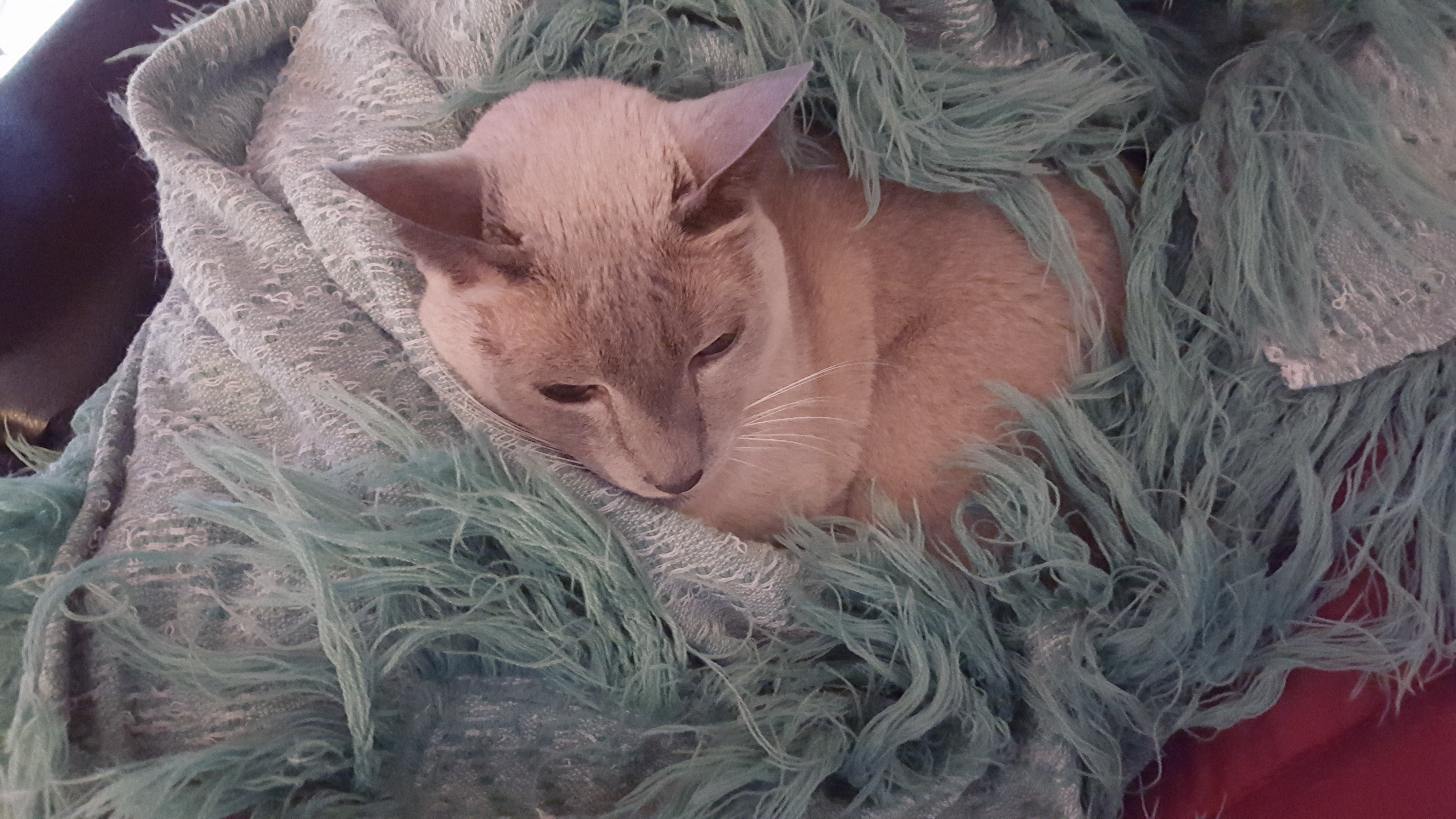
20160921_071452

This is Chester. He’s having a hard to trying to understand the notion of a day happening only once every four years.

I try to explain to him that it’s the fault of the Romans getting the calendar wrong.

He tosses that aside and mutters, Time is irrelevant.

How so? OK, I have to bite, because I’m sure I’m about to get a catlike pearl of wisdom.

It comes and it goes, and if it wasn’t for the fact there was night and day, you’d have absolutely no idea what time it is.

About to dismiss it as crazy, I stop to think about it.

And, damn him, he’s right.

Of course, one could argue semantics, and say if I was outside, I could approximate the time by the sun, or at night by the stars, but that’s a little beyond the cat’s imagination.

So, in a sense, you might be right, but I can usually guess what the time is.

Chester shakes his head.

You’re retired, time is irrelevant for you too. You can sleep all day and work at night if you want to. Or not do anything at all.

Like you?

Another shake of the head.

What is the point in having a serious discussion with you?  But just one question before I go?

That’ll be interesting.

Was I born on the 29th of February?”

No. Not that lucky, I’m afraid. Why?

If I was I would have no reason to feel every one of those 18 human years I’ve had to put up with your nonsense. It would only be 4 and a half.

He jumps off the seat and heads out the door.

Where are you going now?

To bed. It’s been a long morning.

You’ve only been here 10 minutes.

In your time. In cat time, it feels like hours. Only call me if you see a mouse.