Writing a book in 365 days – 223

Day 223

When Narrative Demands Your Soul: The Cost of True Immersion

For some writers, the act of crafting narrative isn’t just about putting words on a page, or even just building worlds in the mind. It’s something far more elemental, an almost involuntary ejection of the self from its own physical confines.

I know this intimately because it’s the only way I can truly write. To breathe life into a story, to make characters feel real enough to touch, to render scenery so vivid you can smell the pine needles or taste the salt spray – I have to step outside myself. My body becomes merely a vessel, an anchor perhaps, while my consciousness, my very soul, slips free.

I don’t just imagine the protagonist’s fear; I feel the icy grip of it. I don’t merely describe a character’s heartbreak; I experience the searing ache in my own chest. I become a disembodied observer, a spectral presence flitting through the scenes I’m creating, sometimes embodying a character, sometimes simply witnessing from the shadows. It’s a full-sensory, visceral dive into the very fabric of the fictional world, a complete surrender to the narrative unfolding before me.

And while this process grants an incredible depth and authenticity to the work – allowing a truth to emerge that simply couldn’t otherwise – it comes at a profound cost.

The Exhaustion is Absolute.

Imagine running a marathon not with your legs, but with every fiber of your being, every nerve ending firing, every emotion you possess stretched taut. That’s the post-narrative crash. When I finally pull myself back into my body, back into the ‘real’ world, I’m not just tired; I’m depleted. My mind feels scoured clean, my emotional reserves drained. There’s a hollowness, a reverberation of the story’s echoes in the empty spaces I’ve left behind. It’s a mental, emotional, and even physical fatigue that can linger for days, sometimes weeks.

The Danger is Real and Insidious.

But exhaustion is only part of the story. The true peril lies in the blurring of lines. When you exist for hours, days, weeks, suspended between worlds, there’s a risk you might not fully return. What if a piece of you remains, tangled in the narrative threads, forever attached to a fictional trauma or triumph?

Sometimes, the stories I enter are dark. They contain pain, despair, violence, or profound loss. When you don’t just observe these things, but experience them, even in a detached, spiritual sense, the impact leaves a mark. It’s like journeying through a treacherous wilderness, encountering shadows and beasts, and hoping you emerge whole. You wrestle with the emotions, the grim realities you’re creating, and they leave their imprint upon your own psyche. You carry the echoes of your characters’ suffering, the weight of their choices, long after the last word is typed.

And Redemption is Not Guaranteed.

This brings us to the most unsettling part of this peculiar creative process: one cannot be sure of redemption. There’s no guarantee that after venturing into the narrative abyss, you’ll fully reclaim your own self, untainted and unburdened. Will the lingering sadness fade? Will the fear release its grip? Will the trauma you’ve embodied truly dissipate?

There are moments, after a particularly intense writing session, when I feel a profound sense of dislocation, like an astronaut floating untethered, looking for a way back to their ship. The world outside the narrative feels thin, unreal, and the world I just left, alarmingly vivid. The “redemption” I seek is the full, comfortable re-entry into my own life, my own skin, without the ghost of the story clinging to me. And sometimes, that re-entry is slow, fraught, and incomplete.

So, why do we willingly undertake this perilous journey? Why open ourselves to the exhaustion, the danger, the uncertainty of return? Because for some of us, there simply is no other way to tell the story with the truth and raw honesty it deserves. We chase that glimmer of truth, that visceral connection, knowing the cost. It’s a compulsion, a calling, a necessary pilgrimage into the heart of imagination, even if the destination sometimes feels like the edge of ourselves.

Do you recognize this feeling in your own creative pursuits? How do you return from the depths of your work? Share your thoughts in the comments below.

Another excerpt from ‘Betrayal’; a work in progress

My next destination in the quest was the hotel we believed Anne Merriweather had stayed at.

I was, in a sense, flying blind because we had no concrete evidence she had been there, and the message she had left behind didn’t quite name the hotel or where Vladimir was going to take her.

Mindful of the fact that someone might have been following me, I checked to see if the person I’d assumed had followed me to Elizabeth’s apartment was still in place, but I couldn’t see him. Next, I made a mental note of seven different candidates and committed them to memory.

Then I set off to the hotel, hailing a taxi. There was the possibility the cab driver was one of them, but perhaps I was slightly more paranoid than I should be. I’d been watching the queue, and there were two others before me.

The journey took about an hour, during which time I kept an eye out the back to see if anyone had been following us. If anyone was, I couldn’t see them.

I had the cab drop me off a block from the hotel and then spent the next hour doing a complete circuit of the block the hotel was on, checking the front and rear entrances, the cameras in place, and the siting of the driveway into the underground carpark. There was a camera over the entrance, and one we hadn’t checked for footage. I sent a text message to Fritz to look into it.

The hotel lobby was large and busy, which was exactly what you’d want if you wanted to come and go without standing out. It would be different later at night, but I could see her arriving about mid-afternoon, and anonymous among the type of clientele the hotel attracted.

I spent an hour sitting in various positions in the lobby simply observing. I had already ascertained where the elevator lobby for the rooms was, and the elevator down to the car park. Fortunately, it was not ‘guarded’ but there was a steady stream of concierge staff coming and going to the lower levels, and, just from time to time, guests.

Then, when there was a commotion at the front door, what seemed to be a collision of guests and free-wheeling bags, I saw one of the seven potential taggers sitting by the front door. Waiting for me to leave? Or were they wondering why I was spending so much time there?

Taking advantage of that confusion, I picked my moment to head for the elevators that went down to the car park, pressed the down button, and waited.

The was no car on the ground level, so I had to wait, watching, like several others, the guests untangling themselves at the entrance, and an eye on my potential surveillance, still absorbed in the confusion.

The doors to the left car opened, and a concierge stepped out, gave me a quick look, then headed back to his desk. I stepped into the car, pressed the first level down, the level I expected cars to arrive on, and waited what seemed like a long time for the doors to close.

As they did, I was expecting to see a hand poke through the gap, a latecomer. Nothing happened, and I put it down to a television moment.

There were three basement levels, and for a moment, I let my imagination run wild and considered the possibility that there were more levels. Of course, there was no indication on the control panel that there were any other floors, and I’d yet to see anything like it in reality.

With a shake of my head to return to reality, the car arrived, the doors opened, and I stepped out.

A car pulled up, and the driver stepped out, went around to the rear of his car, and pulled out a case. I half expected him to throw me the keys, but the instant glance he gave me told him was not the concierge, and instead brushed past me like I wasn’t there.

He bashed the up button several times impatiently and cursed when the doors didn’t open immediately. Not a happy man.

Another car drove past on its way down to a lower level.

I looked up and saw the CCTV camera, pointing towards the entrance, visible in the distance. A gate that lifted up was just about back in position and then made a clunk when it finally closed. The footage from the camera would not prove much, even if it had been working, because it didn’t cover the life lobby, only in the direction of the car entrance.

The doors to the other elevator car opened, and a man in a suit stepped out.

“Can I help you, sir? You seem lost.”

Security, or something else. “It seems that way. I went to the elevator lobby, got in, and it went down rather than up. I must have been in the wrong place.”

“Lost it is, then, sir.” I could hear the contempt for Americans in his tone. “If you will accompany me, please.”

He put out a hand ready to guide me back into the elevator. I was only too happy to oblige him. There had been a sign near the button panel that said the basement levels were only to be accessed by the guests.

Once inside, he turned a key and pressed the lobby button. The doors closed, and we went up. He stood, facing the door, not speaking. A few seconds later, he was ushering me out to the lobby.

“Now, sir, if you are a guest…”

“Actually, I’m looking for one. She called me and said she would be staying in this hotel and to come down and visit her. I was trying to get to the sixth floor.”

“Good. Let’s go over the the desk and see what we can do for you.”

I followed him over to the reception desk, where he signalled one of the clerks, a young woman who looked and acted very efficiently, and told her of my request, but then remained to oversee the proceeding.

“Name of guest, sir?”

“Merriweather, Anne. I’m her brother, Alexander.” I reached into my coat pocket and pulled out my passport to prove that I was who I said I was. She glanced cursorily at it.

She typed the name into the computer, and then we waited a few seconds while it considered what to output. Then, she said, “That lady is not in the hotel, sir.”

Time to put on my best-confused look. “But she said she would be staying here for the week. I made a special trip to come here to see her.”

Another puzzled look from the clerk, then, “When did she call you?”

An interesting question to ask, and it set off a warning bell in my head. I couldn’t say today, it would have to be the day she was supposedly taken.

“Last Saturday, about four in the afternoon.”

Another look at the screen, then, “It appears she checked out Sunday morning. I’m afraid you have made a trip in vain.”

Indeed, I had. “Was she staying with anyone?”

I just managed to see the warning pass from the suited man to the clerk. I thought he had shown an interest when I mentioned the name, and now I had confirmation. He knew something about her disappearance. The trouble was, he wasn’t going to volunteer any information because he was more than just hotel security.

“No.”

“Odd,” I muttered. “I thought she told me she was staying with a man named Vladimir something or other. I’m not too good at pronouncing those Russian names. Are you sure?”

She didn’t look back at the screen. “Yes.”

“OK, now one thing I do know about staying in hotels is that you are required to ask guests with foreign passports their next destination, just in case they need to be found. Did she say where she was going next?” It was a long shot, but I thought I’d ask.

“Moscow. As I understand it, she lives in Moscow. That was the only address she gave us.”

I smiled. “Thank you. I know where that is. I probably should have gone there first.”

She didn’t answer; she didn’t have to, her expression did that perfectly.

The suited man spoke again, looking at the clerk. “Thank you.” He swivelled back to me. “I’m sorry we can’t help you.”

“No. You have more than you can know.”

“What was your name again, sir, just in case you still cannot find her?”

“Alexander Merriweather. Her brother. And if she is still missing, I will be posting a very large reward. At the moment, you can best contact me via the American Embassy.”

Money is always a great motivator, and that thoughtful expression on his face suggested he gave a moment’s thought to it.

I left him with that offer and left. If anything, the people who were holding her would know she had a brother, that her brother was looking for her, and equally that brother had money.

© Charles Heath – 2018-2025

In a word: Joe

Aside from being the short form of the name Joseph, ie a man’s name, there is also a derivative for women, Jo.

The name Joe is said to be used from the mid-1800s.

My favourite Joe name is Joe Bloggs, and he features in some of my stories.

It’s anonymous enough for someone to use as a cover when booking into a sleazy motel and is a little more refined than Smith or Jones, names that more than likely already feature in the register.

Jo could be a short form for Josephine, a name I’m sure some women would prefer not to be called.

But…

Did you know it’s also a name given to a cup of coffee?

Well, that didn’t make much of a splash.  I don’t think anyone these days refers to coffee as Joe because there are so many different variations with names I couldn’t pronounce let alone spell, I think it’s been lost in the mists of time because there was only one type of coffee.

It was called coffee.  Funny about that.

However…

There is another definition, and that is for the ‘average Joe’, an ordinary fellow who works for a living.

Odd, because I thought that was what most of us did, but perhaps it refers to tradespeople, or blue collar workers, not the white collar brigade.

Hang on, isn’t there a GI Joe, a universal description of the average soldier?

“Sunday in New York”, a romantic adventure that’s not a walk in the park!

“Sunday in New York” is ultimately a story about trust, and what happens when a marriage is stretched to its limits.

When Harry Steele attends a lunch with his manager, Barclay, to discuss a promotion that any junior executive would accept in a heartbeat, it is the fact his wife, Alison, who previously professed her reservations about Barclay, also agreed to attend, that casts a small element of doubt in his mind.

From that moment, his life, in the company, in deciding what to do, his marriage, his very life, spirals out of control.

There is no one big factor that can prove Harry’s worst fears, that his marriage is over, just a number of small, interconnecting events, when piled on top of each other, points to a cataclysmic end to everything he had believed in.

Trust is lost firstly in his best friend and mentor, Andy, who only hints of impending disaster, Sasha, a woman whom he saved, and who appears to have motives of her own, and then in his wife, Alison, as he discovered piece by piece damning evidence she is about to leave him for another man.

Can we trust what we see with our eyes or trust what we hear?

Haven’t we all jumped to conclusions at least once in our lives?

Can Alison, a woman whose self-belief and confidence is about to be put to the ultimate test, find a way of proving their relationship is as strong as it has ever been?

As they say in the classics, read on!

Purchase:

http://tinyurl.com/Amazon-SundayInNewYork

A long short story that can’t be tamed – I always wanted to rescue a damsel in distress – 9

Nine

If I had deliberately wanted to flush out the people following us, and eventually lose them, I would never have thought of renting a car at a suburban shop.  I had to wonder what James Bond would have done in similar circumstances.

But it worked.

Driving out of the carpark onto the main street, it wasn’t difficult to see several people caught unawares.  And on their cell phones making calls.

And it was Emily’s last-minute brainwave to cover the car’s registration plates so if they were to take a photo, they would not be able to track it.  Well, not straight away.  It was she who said London had a lot of CCTV cameras, but on the way to the carpark, she had checked out where they were, those that she could readily identify, and we could avoid.

Something I learned about Emily that I didn’t know; she was a computer nerd, and a hacker of sorts, not one of those dark web experts, but she knew enough to dig around in places most people wouldn’t go looking.

That skill might just come in useful.

And, for a few minutes, maybe an hour, we revelled in the thought we may have outwitted them, whoever ‘them’ was.

It was late afternoon when we finally found a hotel with a carpark, a long way from Cecile’s flat in Earl’s Court, and on the other side of the Greater London region in Mile End Road, not very far from the Stepney Green underground station, the result of Emily searching the web for a hotel with a carpark, and near public transport.

She also had our luggage delivered from the airport a little less than two hours from the moment she made the call.  I think I may have remarked that I might just employ her as my travel agent when I started my European odyssey, but she had fallen asleep, way past exhausted.

I wasn’t far behind her.  We had a long day tomorrow, if today was anything to go by.

I woke to the smell of coffee and that more interesting aroma of burnt toast.

There were shopping bags on the table, and it looked as though Emily had been up and around for a while.

I looked at my watch, it was not much past seven, and not an hour I found myself up back home.  I had an apartment in the city, and it was a ten-minute walk to the office, so early rising was not a necessity.  My parents lived in the suburbs, and more than an hour by public transport, and two by car.  It was the reason I moved.  I didn’t want to spend quarter of my life travelling to and from work.

Of course, London was so much larger than where I came from, and definitely not a place I would want to live, or work, despite the advantages that Cecile had tried to impress upon me.  And don’t get me get started on driving around London.  Yesterday had been harrowing, and left me, at times, shaken.

“Good morning, sleepyhead.”

Emily put a coffee plunger on the table, two cups, a plate of toast, bowls, and the cereal that was my favourite, though how she knew was anyone’s guess.

“You’ve been busy.”

“I like to get some exercise every morning, so I combined it with a shopping expedition

I had not attended this type of domesticity in a long time, at least not since I left home.  I had grown accustomed to being on my own, and that might have contributed to Cecile and I drifting apart.  It probably also had a lot to do with my awkwardness with girls, and rather than try to get over it, I just avoided them.

But, somehow, Emily was different, perhaps because she was younger and hadn’t been blunted by the vicissitudes of life.  She had finished school, and as far as I was aware, didn’t have a real job, preferring to spend her time pottering in her father’s office.

I had thought, much like in an 18th century romance novel, she was waiting for the right man to marry, but there were not too many of those running around these days.

Something else I just realised; how well I seemed to like being at ease in her company, much more so than when I was with Cecile, always on my guard not to say or do the wrong thing.

“I find going to a grocery store a trial, which is why I eat out a lot.”

She shook her head.  “You’re just lazy, like everyone else your age.  Convenience over practicality.  And you should think about doing some exercise.”

I could feel the eyes of the appraiser upon me and shivered.  It was good that I could not read her thoughts, but if I could, perhaps some might be considering those extra pounds that had found their way onto my frame after I stopped playing tennis and squash.

“I promise I’ll think about it.”

“Better still, I don’t think it’s all that safe to be jogging the streets in this neighbourhood early in the morning, so you can come with me as my protector.”

She saw my look of disdain, or was it the thought of having to exercise.

“Cheer up, I don’t go very fast.”

The sound of the phone vibrating on the table interrupted that thought, and conversation.

It was a private number, so I assumed it was the man from the day before.

“Yes?”

“Trafalgar Square, by the column, 12:30 pm today.”

It was the man’s voice.

“We’ll see you there.”

The call was disconnected.  Short and to the point.

“We have a lunch date.”

Before I could reach out to pick up my cup of coffee, the phone rang again.

Also a private number, I assumed it was the man ringing back with a change of plans.

“Yes?”

“We need to talk.”

A woman’s voice this time, not one that was familiar.

“About what?”  I was surprised, and didn’t have time to work on a better comeback.

“Your Cecile.  She is over her head.”

Aside from stating the obvious, who was this woman, how did she know about Cecile, and more important, how did she know my cell number?

“Who the hell are you?”

“The London end of the team that recruited her.  Time is of the essence, so we’ll come to you.  We’ll be there in half an hour.”

That line went dead before I could ask another pertinent question, how did she know where we were?

“Who was that?”  Emily had been oblivious to the turmoil I was feeling.

“Someone else who wants to talk about Cecile.”

“Who?”

“No idea, but the word recruited popped up, whatever that might mean.”

“Here?  No one knows we’re here.”

“Exactly.”

“Perhaps we should leave, like, right now.”

“No.  I have a feeling that we might find out what Cecile is up to.”

And, in the back of my mind, several small, associated details clicked into place.  At the time they didn’t make any sense, but now, in a bigger context, and given the circumstances, I think I knew now why she had come.

And, more importantly, I realised she had been dropping breadcrumbs for me to follow long before she had left.

©  Charles Heath 2024

Memories of the conversations with my cat – 59

As some may be aware, but many not, Chester, my faithful writing assistant, mice catcher, and general pain in the neck, passed away some months ago.

Recently I was running a series based on his adventures, under the title of Past Conversations with my cat.

For those who have not had the chance to read about all of his exploits I will run the series again from Episode 1

These are the memories of our time together…

20160921_071443

This is Chester.  He’s gone AWOL.

I know he’s somewhere in the house, and hasn’t escaped.  He’s done this before, particularly when he has to go visit the vet for his three monthly checkup.

This time I suspect it is a major case of the sulks.

We had to change his scratching post as the previous one has been shredded.  It was made out of some old carpet and had a box in the form of a house at the top.

He liked to use my lounge chair as a launching pad to get into the house.  I’ve watched him do that death-defying act a number of times, and it explains the claw marks on my chair.

So, rather than admonish him again, I bought a new scratching post, with a new house that’s not so high up,, and moved it to a different position so he could not use my chair.

First day, he ignored it.

Second day, he went over and sniffed it, then walked off with a snooty expression.

Third day, he didn’t go in the room.

Fourth day, I took him down there and put him in the house.  You’d think I had tried to lock him up in jail.

This is the fifth day, and he’s disappeared.

But…

He doesn’t know I’ve got a secret weapon.

Some old friends we haven’t seen for a while are coming to visit, and he likes them and makes a special effort to come and see them.

They arrive, and after a few minutes, out he comes, trotting down the passage and straight to them.

I glare at him.  You can run, but you can’t hide.

And you will use that scratching post.

The cinema of my dreams – Was it just another surveillance job – Episode 25

I’m back home and this story has been sitting on a back burner for a few months, waiting for some more to be written.

The trouble is, there are also other stories to write, and I’m not very good at prioritizing.

But, here we are, a few minutes opened up and it didn’t take long to get back into the groove.

Chasing leads, maybe


Jan hailed a taxi and had it drop us off a block from her building.  It was agreed that we would not just arrive out the front and trust to luck that everything would be fine.

I had a feeling that Nobbin would have come to the same conclusion I had, that it was possible the USB might be in the neighbor’s flat.  I’m sure Josephine hadn’t thought of that possibility.  Severin had, but I suspect he might not know of the cat.

Nor would Nobbin.

We did a circuit of the building before going in.  There were no suspicious cars, nr anyone lurking in the shadows.  If we had surveillance, it was really good, or there was none.  I preferred to think the latter option was right.  After all, neither Nobbin nor Severin knew exactly where I was.

Jan unlicked the front door and we went into the brightly lit foyer.

During the day there was a concierge sitting at the desk.  At night, it was empty.  The building manager couldn’t afford 24-hour security, beyond the bright lights, and camera in each quadrant recording the comings and goings of residents.  I’m not sure how Josephine got in, but I would have like to have the time to go through the old footage to check on O’Connell in the past, and Josephine, if she came through the front door, recently.

I glanced at the monitor, at present on screen saver mode, then followed Jan to the elevator lobby.

She pressed the button to go up, and the doors to the left-hand elevator opened.  We stepped in, she pressed the floor button, the doors closed, and we slowly went up.

It hesitated at the floor, jerked up about an inch or two, then a click signified it was level and the doors opened.

I could see her door from the elevator.  As we got closer, I could see it was open, ajar by about half an inch.  There was no tell-tale strip of light behind the opening so it could mean someone was in her flat searching by torchlight, or there was no one there.

After a minute waiting to see if there was a moving light somewhere in the flat, it remained dark.

Standing behind me, I could see she had pulled a gun out of her handbag and had it in one hand ready to use.  She could have used it any time since we first met, but she hadn’t.  

I pushed the door open slowly, and thankfully it didn’t make a creaking sound.  Wide enough to walk in, I took a few tentative steps into the first room.  There was little light, and my eyes took a while to adjust to the darkness.  

I could feel her going past me, further into the room, and with the gun raised and in two hands to steady the shot.  She took more steps, slowly towards the passage leading to her bedroom, I assumed, as it was a reverse copy of that next door, O’Connell’s.

There was no one in this part of the flat, and she had disappeared up the corridor and into her room.  Nothing there either.

“Clear,” she called out.

I stepped back to close and lock the door.  At the same time, she switched on the main room light and for a second it was almost blinding.

When my sight cleared, I could see the signs of a search, furniture tipped over, books dragged from the shelves, other items tossed on the floor, one of which was a vase, now broken into a number of pieces.

“Looks like they were in a hurry,” she said.

“Or frustrated.”  I could see clear marks of an item that had been thrown against the wall and dented the plasterwork.  The broken shards of the ornament were on the ground beneath the indentation.

I heard her sigh when she saw the broken pieces.

“Not the best way to treat a genuine Wedgewood antique.”

She disappeared into the bedroom again, and I could hear her calling the cat, Tibbles.  Interesting name for a cat.

I didn’t hear it answer back.  It was probably traumatized after the breaking and the smashing of crockery.

I had a quick look in places I thought the cat might hide, but it was not in any of them.  And, oddly enough, no traces of cat hair.  Usually, cats left fur wherever they lay down.  At least one cat I knew did that.  

She came back empty-handed. 

“I think it’s done a runner,” she said.  “He’s not in the usual place he hides, nor under the bed, or under the covers, as he sometimes does, usually when I’m trying to sleep.”

“Well, it was a good idea.  We might have to search outside.  The cat was allowed to go outside?”

“He’d escape, yes, but no.  O’Connell thought if he got out, he’d get run over.  It’s a reasonably busy road outside.”

“Better out there than in here, though.  Open windows?”

She did a quick check, but none were open.

“Did O’Connell ever come in here?”

“Once or twice, but he only dropped in if he was going away to ask if I would look after the cat, or when he came back.  Never further than the front door.”

“Knowing who is was, now, do you think he might have come in and hidden the USB in here?”

“He might, but there isn’t anywhere I could think he could put it.”

“But that doesn’t mean he didn’t.”

Both of us heard the scratching sound at the front door, not the sort made by a cat trying to get in, but by someone using a tool to unlock the door.

Someone was trying to break in.

© Charles Heath 2019-2020

Writing a book in 365 days – 221/222

Days 221 and 222

Starting the story,

At the foot of the mountain, she discovered…

It was never her intention to leave the cottage that morning, go for a walk, and suddenly discover that she didn’t know precisely where she was.

Her aunt had said the previous evening that it was time she stopped moping about the place and did something constructive, like go exploring. The lake was to the west, the mountains to the east, one village, Moreton, was north, and another village, Billson, was south.

Perhaps a walk to the start of the mountains in the east would provide the most interest, because there were ruins of a previous civilisation there, hidden behind the regrowth of the forest, and fossicking for artifacts might give her some purpose.

MaryAnne hadn’t chosen to come to her Aunt’s. She was sent under threat of a fate worse than death if she did, pr at least that was how she saw it in her mind. Her Aunt was ‘batty’, he father had said, having agreed that her mother’s punishment was a little severe, but he could only shrug.

He didn’t dare argue the merits of what was good or bad for their daughter because he had ceded control over her to her mother. Girls were not his bailiwick. Besides, he had three boys, and they were a handful enough.

So, fate decided, he took her to the overnight coach and put her aboard with the lament that it was only going to be three months.

To her, it was just so unfair.

But, that following morning, she got up, strangely feeling totally different, like during the night a fairy or elf had come and cast a magic spell on her, completely changing her attitude. She just didn’t feel like being the sad, sour, resentful granddaughter she had been for the first week.

After breakfast, her grandmother had given her a hand-drawn map with the four destinations drawn simplistically, with directions on how to get to each. Directions she had followed. But the hike had taken a toll, and when she reached the first of the ruins, she had some of the food her grandmother had packed for her, and then decided to rest before exploring.

Perhaps she should not have fallen asleep.

When she woke, it was as if she were in a different place, except that couldn’t be right because she remembered the ruins nearby. It was only when she looked back on the way she thought she had come, it looked different.

There was still time for her to explore and then worry about getting back to the cottage. It couldn’t be that difficult; all she had to do was retrace her steps.

The thing was, at first sight, the ruins did not look much different to the basics of the structures in her grandmother’s village. It meant that this place was just an older version that had been abandoned for some reason, but the people who had moved on.

Resources, perhaps? Available water, land to grow crops and graze animals? Perhaps the seasons were unkind because of their proximity to the mountains, or was there something in the mountains that caused them to move on?

As she got closer to the foot of the hills, the ruins became more distinct, and there were streets, leading to a central point which, she could now see, was a fountain. Beyond that was a facade, perhaps once the entrance to a large building or temple, now hidden away.

The fountain, curiously, had water in it, and when she dipped her hand in it, the fountain came to life, a small jet of water spraying up, then out to fill the bowls beneath. As each filled from the top, the water cascaded into the lower bowls and then the pond at the bottom.

Did she just activate it?

“I see you have the curiosity of a cat.” The words were spoken by a woman, about the same age as her mother, dressed like one of the temple princesses, and who had simply appeared.

She looked real.

“Who are you?” she asked.

“The guardian of the sacred ruins. We ensure that visitors who come here do not come with evil intent. You do not look like you are evil.”

“I am not. What place is this?”

“Brookmeadow. It was once a thriving town, but the evil mountain people came. Back then, we were people who trusted everyone had good intentions, because we did not believe in evil ways. We lived in harmony with the other people, the flora and the fauna. We pleased the Gods with seasonal sacrifices, and life was peaceful, and food and water were bountiful. Then evil came, and this is what remains. It will thrive again, one day.”

“I’m sorry to hear that. Maybe one day I will return.”

“Perhaps you will. Perhaps you were sent here for a reason. May your paths be clear, and intentions honourable, young Eliza.”

Then, as mysteriously as she had appeared, the princess disappeared.

Eliza shrugged and decided it was time to go back home. The way back seemed familiar again, and she set out along the path.

The princess joined three others who had been hiding in the shadows of the old temple, watching the young girl retreat.

“Is it she?” One asked.

“I believe it is. The next time she returns, we will begin the preparations.”

©  Charles Heath  2025

Searching for locations – Port Macquarie – Day 5 – Part 2

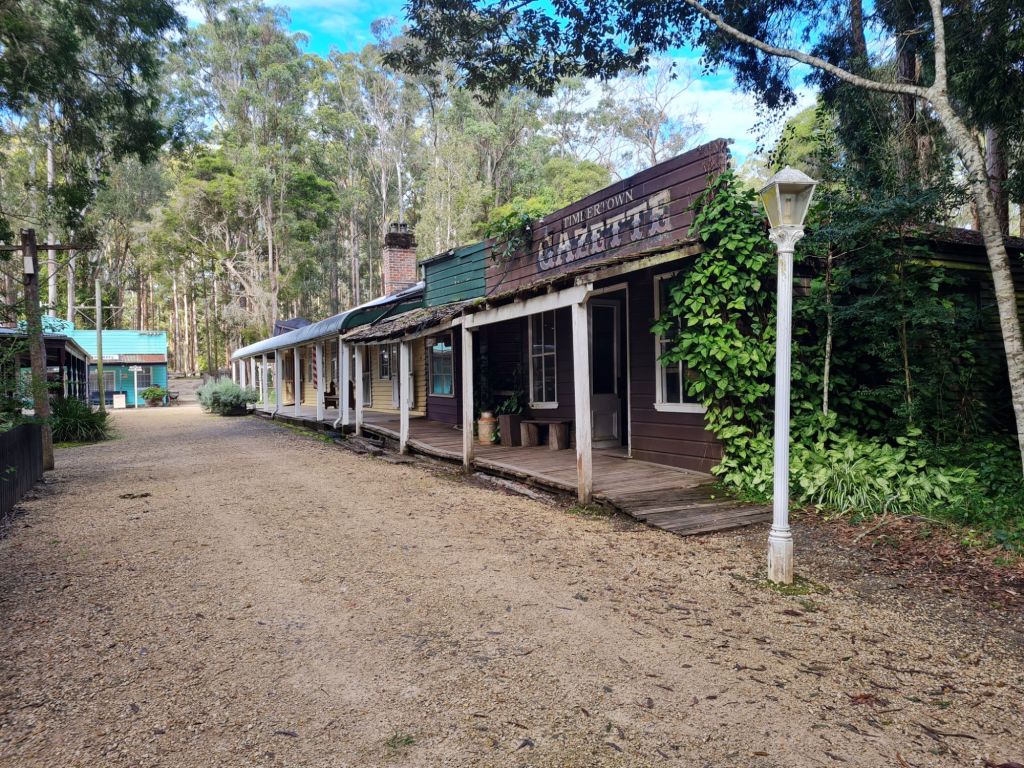
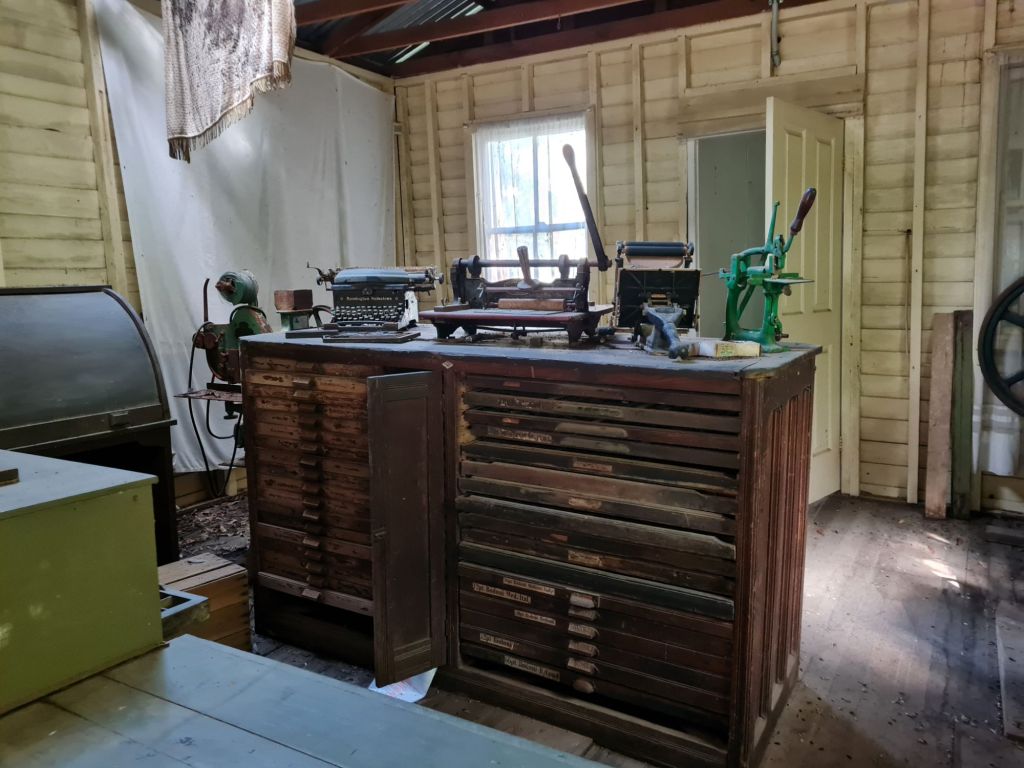
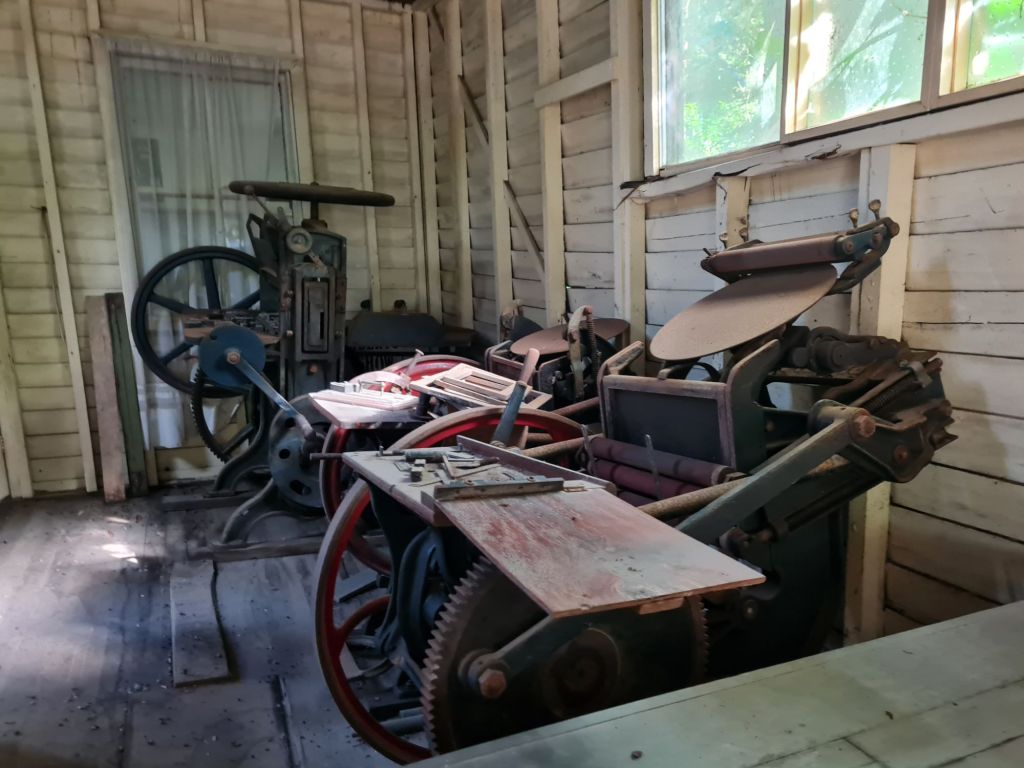
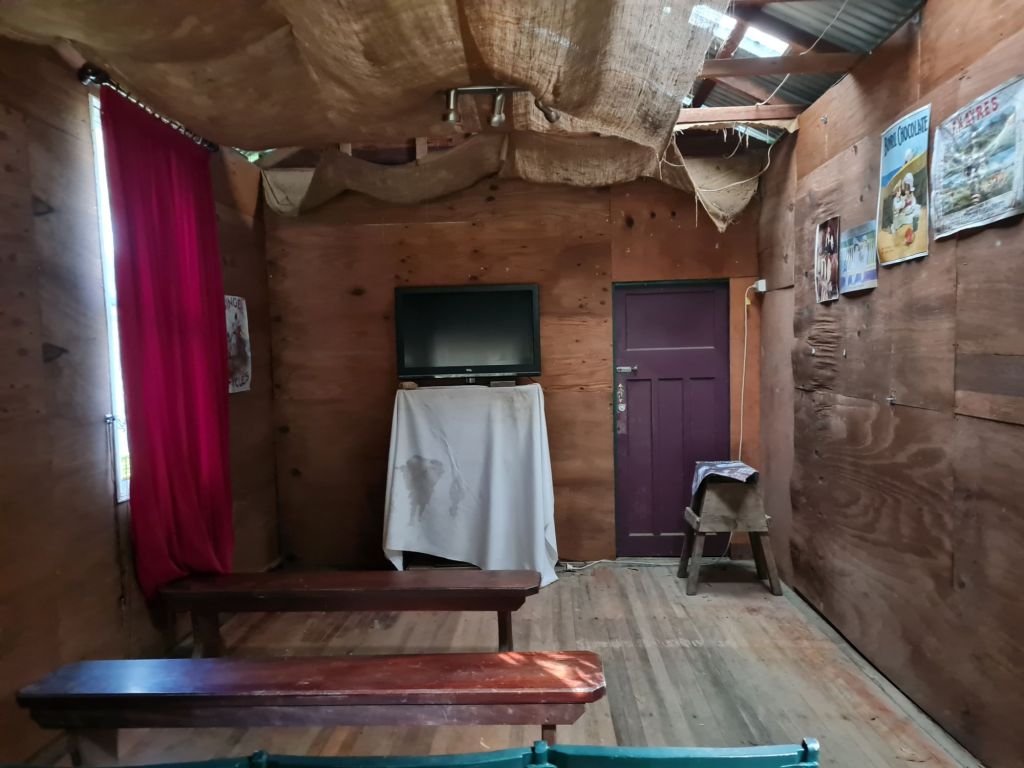
Timbertown – old-time shops

The street

The newspaper office and printers

This is apparently a theatre

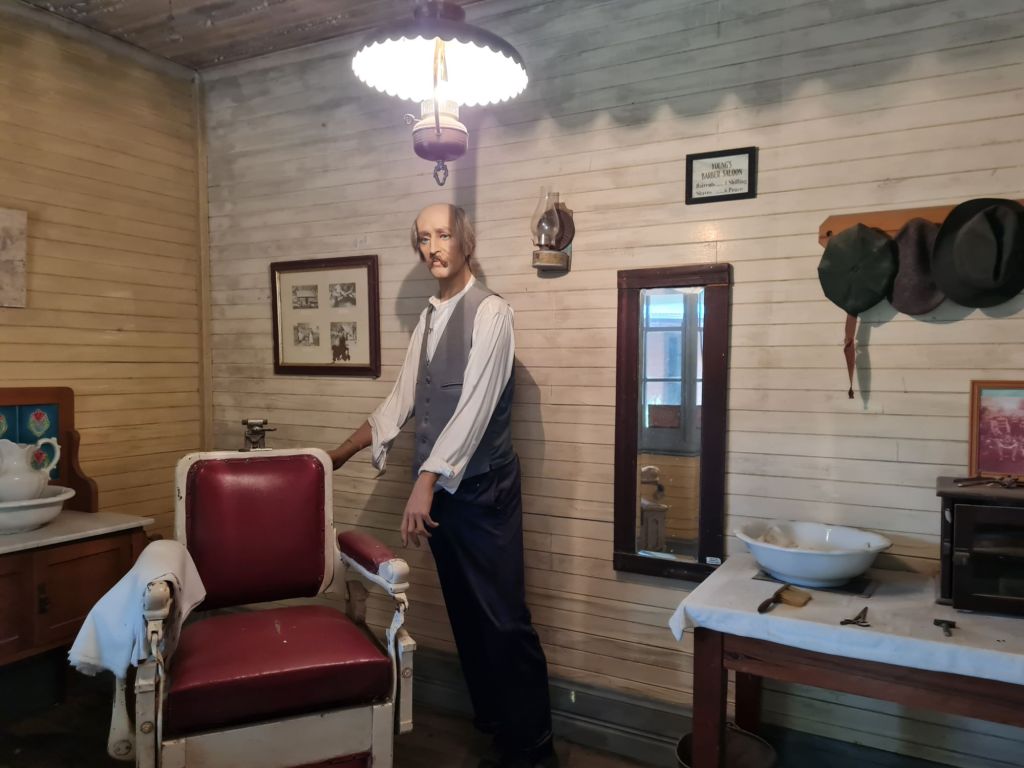
The barber shop

The bakery

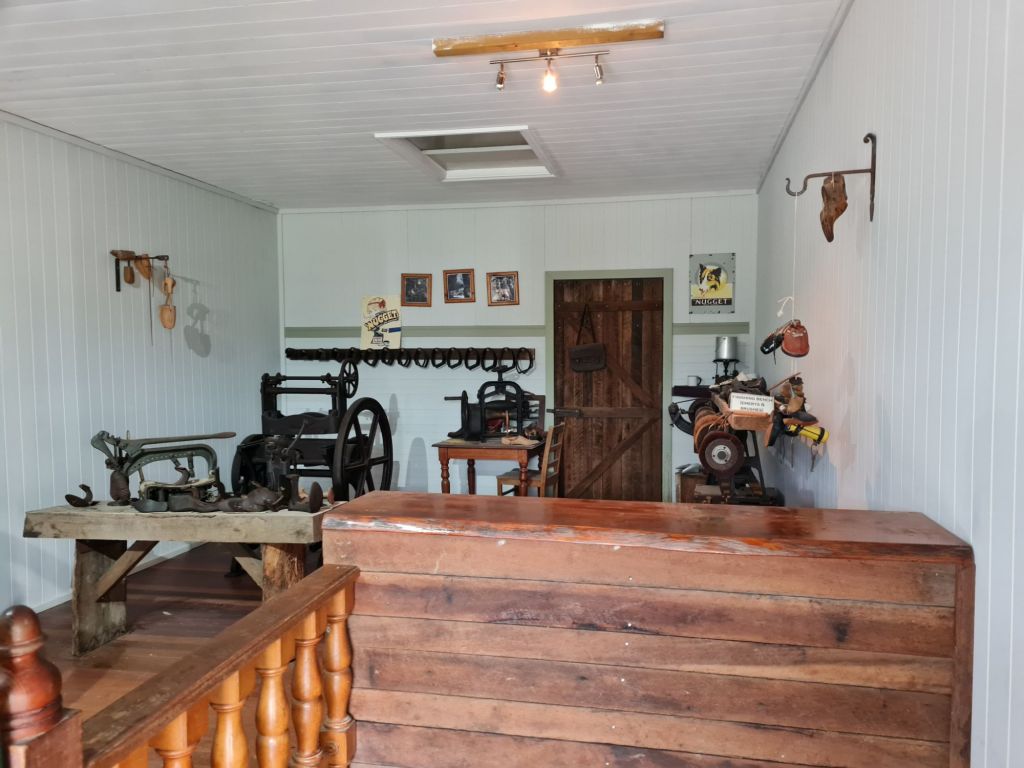
The Bootmaker

There was also a General Store, which was in operation

A blacksmith, sometimes in attendance

A livery stable

A Church, which can be hired for weddings

A school room

And, a dining hall.

I just want to be finished

Just when you think that the story is done, and you’re on the third re-read, just to make sure…

Damn!

I don’t like the way that chapter reads, and what’s worse, it’s about the tenth time I’ve looked at it.

It doesn’t matter the last three times you read it, it was just fine, or, the editor has read it and the chapter passed without any major comment.

I think the main problem I have is letting go.  For some odd reason, certain parts of a story sometimes seem to me as though they are not complete, or can be missing a vital clue or connection for the continuity of the story.

That, of course, happens when you rewrite a section that is earlier on in the story, and then have to make ongoing changes.

Yes, I hear the stern warnings, that I should have made a comprehensive outline at the beginning, but the trouble is, I can change the ending, as I’m writing it and then have to go back and add the hooks earlier on.  Not the best method, but isn’t that what an editor is for, to pick up the missed connections, and out of the blue events that happen for no reason?

I find that often after leaving a finished story for a month before the next reading, the whole picture must formulate itself in my head, so when I re-read, there was always a problem, one I didn’t want to think about until the re-read.

Even then it might survive a second pass.

I know the scene is in trouble when I get to it and alarm bells are going off.  I find anything else to do but look at it.

So, here I am, making major changes.

But, at least now I am satisfied with where it’s going.

Only 325 pages to go!