Inspiration, maybe – Volume 1

50 photographs, 50 stories, of which there is one of the 50 below.

They all start with –

A picture paints … well, as many words as you like.  For instance:

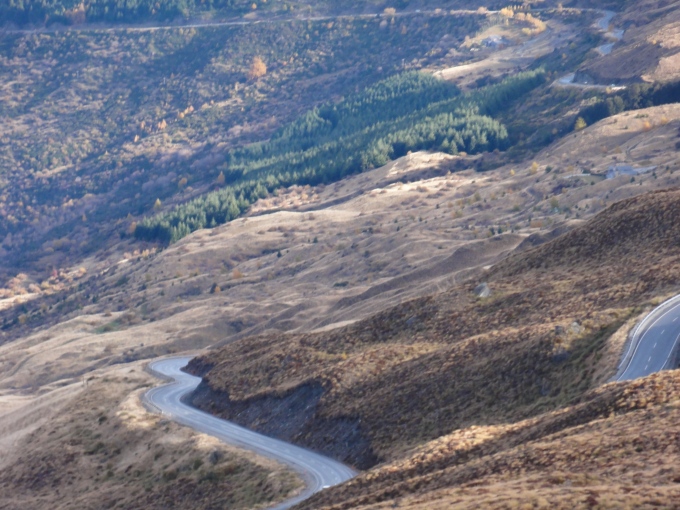
lookingdownfromcoronetpeak

And the story:

It was once said that a desperate man has everything to lose.

The man I was chasing was desperate, but I, on the other hand, was more desperate to catch him.

He’d left a trail of dead people from one end of the island to the other.

The team had put in a lot of effort to locate him, and now his capture was imminent.  We were following the car he was in, from a discrete distance, and, at the appropriate time, we would catch up, pull him over, and make the arrest.

There was nowhere for him to go.

The road led to a dead-end, and the only way off the mountain was back down the road were now on.  Which was why I was somewhat surprised when we discovered where he was.

Where was he going?

“Damn,” I heard Alan mutter.  He was driving, being careful not to get too close, but not far enough away to lose sight of him.

“What?”

“I think he’s made us.”

“How?”

“Dumb bad luck, I’m guessing.  Or he expected we’d follow him up the mountain.  He’s just sped up.”

“How far away?”

“A half-mile.  We should see him higher up when we turn the next corner.”

It took an eternity to get there, and when we did, Alan was right, only he was further on than we thought.”

“Step on it.  Let’s catch him up before he gets to the top.”

Easy to say, not so easy to do.  The road was treacherous, and in places just gravel, and there were no guard rails to stop a three thousand footfall down the mountainside.

Good thing then I had the foresight to have three agents on the hill for just such a scenario.

Ten minutes later, we were in sight of the car, still moving quickly, but we were going slightly faster.  We’d catch up just short of the summit car park.

Or so we thought.

Coming quickly around another corner we almost slammed into the car we’d been chasing.

“What the hell…” Aland muttered.

I was out of the car, and over to see if he was in it, but I knew that it was only a slender possibility.  The car was empty, and no indication where he went.

Certainly not up the road.  It was relatively straightforward for the next mile, at which we would have reached the summit.  Up the mountainside from here, or down.

I looked up.  Nothing.

Alan yelled out, “He’s not going down, not that I can see, but if he did, there’s hardly a foothold and that’s a long fall.”

Then where did he go?

Then a man looking very much like our quarry came out from behind a rock embedded just a short distance up the hill.

“Sorry,” he said quite calmly.  “Had to go if you know what I mean.”

I’d lost him.

It was as simple as that.

I had been led a merry chase up the hill, and all the time he was getting away in a different direction.

I’d fallen for the oldest trick in the book, letting my desperation blind me to the disguise that anyone else would see through in an instant.

It was a lonely sight, looking down that road, knowing that I had to go all that way down again, only this time, without having to throw caution to the wind.

“Maybe next time,” Alan said.

“We’ll get him.  It’s just a matter of time.”

© Charles Heath 2019-2021

Find this and other stories in “Inspiration, maybe”  available soon.

InspirationMaybe1v1

“Do you believe in g..g..ghosts…?”, a short story

Inside the old building, it was very quiet and almost cold.

Strange, perhaps, because outside the temperature was bordering on the record hottest day ever, nearly 45 degrees centigrade.

The people who’d built this building nearly a hundred years before must have known how to keep that heat at bay, using sandstone.

Back then, the sandstone would have looked very impressive, but now after many years of being closed off and left abandoned, the outside was stained by modern-day pollutants giving it a black streaky look, and inside layers of dust, easily stirred up as we walked slowly into the main foyer.

It was huge, the roof, ornate, with four huge chandelier lights hanging down, and wood paneling, giving way to a long counter with brass serving cages highlighting its former use; a bank.

In its day it would have conveyed the power and wealth so that its customers could trust the money to. Of course, that was before the global economy, online banking, and a raft of the new and different institutions all vying for that same money.

Then it was a simple choice of a few, now it was a few thousand.

“How many years had this been closed up?” I asked.

“Close to twenty, maybe twenty-five. It was supposed to be pulled down, but someone got it on the heritage list, and that put an end to it. “

Phil was the history nut. He’s spent a month looking into the building, finding construction plans, and correspondence dating back to before and during the construction.

Building methods, he said, that didn’t exist today and were far in advance of anything of its type for the period. It was the reason we were standing in the foyer now.

We were budding civil engineers, and the university had managed to organize a visit, at our own risk. The owner of the building had made sure we’d signed a health and safety waiver before granting access.

And the caretaker only took us as far as the front door. He gave us his cell number to call when we were finished. When we asked him why he didn’t want to come in with us, he didn’t say but it was clear to me he was afraid of something.

But neither of us believed in ghosts.

“You can see aspects of cathedrals in the design,” Phil said. ” You could quite easily turn this space into a church.”

“Or a very large wine cellar.” I brought a thermometer with me, and inside where we were standing it was the ideal temperature to store wine.

Behind the teller cages were four large iron doors to the vaults. They were huge, and once contained a large amount of cash, gold, and whatever else was deemed valuable.

They were all empty now, the shelves and floor had scattered pieces of bank stationery, and in a corner, several cardboard boxes, covered in even more dust.

Behind the vaults were offices, half-height with glass dividers, the desks and chairs still in place, and some with wooden filing cabinets drawers half-open.

Others had benches, and one, set in the corner, very large, and looked like the manager’s office. Unlike the other office which had linoleum tiles, this one had carpet. In a corner was a large mirror backed cabinet, with several half-empty bottles on it.

“Adds a whole new meaning to aged whiskey, don’t you think.” Phil looked at it but didn’t pick it up.

“I wonder why they left it,” I muttered. The place had the feel of having been left in a hurry, not taking everything with them.

I shivered, but it was not from the cold.

We went back to the foyer and the elevator lobby. They were fine examples of the sort of caged elevators that belonged in that time, and which there were very few working examples these days.

The elevators would have a driver, he would pull back an inner and outer door when the car arrived on a floor, and close both again when everyone was aboard.

Both cars were on the ground floor, with the shutter doors closed, and when I tried to open one, I found it had been welded shut. The other car was not sitting level with the floor and the reason for that, the cable that raised and lowered it was broken.

Restoring them would be a huge job and would not be in their original condition due to occupational health and safety issues.

The staircase wound around the elevator cage, going up to the mezzanine floor or down to the basement.

“Up or down?” He asked.

“Where do you want to go first?”

“Down. There’s supposed to be a large vault, probably where the safety deposit boxes are.”

And the restrooms I thought. Not that I was thinking of going.

As we descended the stairs it was like going down into a mine shaft, getting darker, and the rising odor of damp, and mustiness. I suspect it would have been the same back when it was first built being so close to the shoreline of the bay, not more than half a mile away.

The land this building and a number of others in a similar style, was built on was originally a swamp, and it was thought that the seawater still found its way this far inshore. But the foundations were incredibly strong and extensive which was why there’d been no shifting or cracking anywhere in the ten-story structure.

At the bottom, there was a huge arch, with built-in brass caging with two huge gates, both open. It was like the entrance to a mythical Aladdin’s cave.

There was also an indefinable aura coming from the depths of that room. That, and a movement of cold air. Curiously, the air down there was not musty but had a tinge of saltiness to it.

Was there a natural air freshener effect coming from somewhere within that vault.

“Are we going in?”

I checked my torch beam, still very bright. I pointed it into the blackness and after a minute checking, I said, “We’re here, so why not.”

We had to walk down a dozen steps then pass under through the open gates into the room. There was a second set of gates, the same as the first, about thirty feet from the first, and, in between, a number of cubicles where customers collected their boxes.

Beyond the second set of gates was a large circular reinforced safe door high enough for us to walk through.

This cavernous space stretched back quite a distance, and along the walls, rows, and rows of safety deposit boxes, some half hanging out of their housing, and a lot more stacked haphazardly on the floor.

I checked a few but they were all empty.

I shivered again. It felt like there was a presence in the room. I turned to ask Phil, but he wasn’t there. I hadn’t heard him walk away, and there were only two sets of footprints on the floor, his and mine, and both ended where I was standing.

It was as if he had disappeared into thin air.

I called out his name, and it echoed off the walls in the confined space. No answer from him.

I went further into the room, thinking he might have ventured towards the end while my back was turned, but he hadn’t. Nor had he left because there were only footprints coming in, not going out.

I turned to retrace my steps and stopped suddenly. An old man, in clothes that didn’t belong to this era, was standing where Phil had last been.

He was looking at me, but not inclined to talk.

“Hello. I didn’t see you come down.”

Seconds later the figure dissolved in front of me and there was no one but me standing in the room.

“Joe.”

Phil, from behind me. I turned and there he was large as life.

“Where were you?”

“I’ve been here all the time. Who were you just talking to?”

“There was an old man, standing just over there,” I said pointing to somewhere between Phil and the entrance.

“I didn’t see anyone. Are you sure you’re not having me on?”

“No. He’s right behind you.” The old man had reappeared.

Phil shook his head, believing I was trying to fool him.

That changed when the man touched his shoulder, and Phil shrieked.

And almost ran out of the room. It took a few minutes for him to catch his breath and steady the palpitating heart.

“Are you real?” I asked, not quite sure what to say.

“To me, I am. To anyone else, let’s just say you are the first not got faint, or run away.”

“Are you a ghost?” Phil wasn’t exactly sure what he was saying.

“Apparently I am and will be until you find out who killed me “

Ok, so what was it called, stuck in the afterlife or limbo until closure?

“When?”

“25 years ago, just before the bank closed. It’s the reason why it’s empty now.”

“And you’re saying we find the killer and you get to leave?”

“Exactly. Now shoo. Go and find him.”

We looked at each other in surprise, or more like shock, then back to the man. Only he was no longer there.

“What the…” Phil sail. “It’s time to go.”

“What about the man and finding his killer?”

“What man? We saw nothing. We’re done here.”

I shrugged. Phil turned to leave, but only managed to take three steps before the gates at the entrance closed with a loud clang.

When he crossed the room to stand in front, he tried pulling them open.

“Locked,” he said. Flat, and without panic, he added, “I guess it looks like we have a murder to solve.”

© Charles Heath 2019-202

Memories of the conversations with my cat – 60

As some may be aware, but many are not, Chester, my faithful writing assistant, mouse catcher, and general pain in the neck, passed away some years ago.

Recently, I was running a series based on his adventures, under the title of Past Conversations with my cat.

For those who have not had the chance to read about all of his exploits, I will run the series again from Episode 1

These are the memories of our time together…

20160903_010425

This is Chester.  Once again, we have a standoff.

This time it’s over the scratching post, and, I guess, where I’ve put it.  Silly me, I didn’t think it mattered where I put it.

But you’d think he would be grateful I spent nearly a whole day building it for him.

And many more hours trawling the pet shops trying to find a replacement that was better than the last one.  It’s amazing just how much these people want to charge for something that I could make for a lot less.

So, I did.

Is it possible that Chester wants me to spend a fortune on a new scratching extravaganza?  it’s not as if he knows anything about money, costs, and effort.

Or does he?

I’m beginning to think this cat is a lot smarter than he looks.

Still, once again, I pick him up, get the low growl because he knows where I’m taking him, and then put him on the top level.

Perhaps it’s the smell of the new carpet.  It certainly makes my nose wrinkle and doesn’t do much for allergy sufferers, but it is new, even if it is an offcut.  Surely, he couldn’t be offended at that, could he?

Perhaps I’ve won.  He’s sitting there looking at me.

Now, if only I could read his mind!


The cinema of my dreams – Was it just another surveillance job – Episode 26

I’m back home and this story has been sitting on a back burner for a few months, waiting for some more to be written.

The trouble is, there are also other stories to write, and I’m not very good at prioritizing.

But, here we are, a few minutes opened up and it didn’t take long to get back into the groove.

Maury drops in for a search


I moved to the doorway and switched off the light, sending the room back into inky darkness.  Not good for the eyes, going bright light to instant dark.  We stood together behind the door as it opened inwards, Jan ready with her gun.

The door opened slowly, at the same time letting light in from the corridor, making it easier to see.

Opened fully, the visitor tentatively stepped into the room, and once the shape moved past the door, I slammed it shut and Jan lunged with the gun.  

I was not sure what result she was expecting but the person fought back, and as they turned to wrench the gun out of her hand, I let loose a punch, aiming for the head, and as hard as I could.  I head a cracking sound followed by a thump as the body hit the ground.

When I turned the light back on, there were two surprises.  The first, that I’d managed to knock someone out, and the second, Maury was back for a second look.

Why?

It didn’t matter.  He wasn’t going to be unconscious for very long.  Jan had some twine in her room, I wasn’t going to ask why, and she tied his hands and legs together, trussed almost like a turkey.

We left him on the floor when he’d fallen.  Unconscious, he was too heavy to move, or lift.

“Is this man Severin, Maury or Nobbin?” she asked.  She’d saved the questions until after he’d been neutralized, and we’d taken his gun off him.  Also, a knife.  She’d also look through his pockets to see if he carried any identification.  He didn’t, and I wouldn’t expect to find anything.  At the moment I was the same, and since I threw the phone’s sim card, I was now completely anonymous.

“Maury,” I said.

“The attack dog?”

“Not able to attack us at the moment, but yes.  I wonder why he came back?”

“We should ask him,” she said, “when he wakes up.”

We were sitting in the chairs, turned around to face Maury lying on the ground.  He had wriggled, and realizing he was tied up, tried harder to escape the bonds, and then relaxed when he realized he couldn’t.

His eyes turned to us, and it felt like a death stare.  

“This is a mistake,” he said.  “untie these ropes and I might make an exception for you.

“Why are you here?” I asked him.

“That’s none of your business.”

“But it is mine.  This is my flat, and you’re trespassing,” Jan said.

He switched his death gaze to her.

“I’m not here to cause trouble.”

“Then why are you here?”

“To ask you if your next-door neighbor left anything here with you to collect at a later date.”

No doubt with a menacing attitude, which would end in violence because Maury was not the sort to take no for an answer.

“Most people would knock on the door, and politely wait until it was answered.”

Most people.

“I was told there would be no one at home.”

“And it couldn’t wait until I returned?  I’m sorry, but you have broken into my flat and I’m going to call the police.”

He looked at me.

“That’s not a good idea.  Tell her, Jackson.”

“I don’t work for you, or Severin, anymore.  In fact, when I went back into the office, I got dragged aside and interrogated.  No one seems to know who you and Severin are.”

“That’s because our operation was on a need to know basis.  How do you think our business works?  Not by telling everyone what you’re doing.  Now untie me, and I’ll be on my way.”

“No,” Jan said.  “Not until you tell us exactly who you are and who you work for, and why you deemed it necessary to murder O’Connell.”

Maury looked at me again, and there was no mistaking the anger.

“You do understand what the Official Secrets Act means, don’t you Jackson?”

“More or less.  But it depends on who it is you speak to whether that’s relevant or not.”

Back to Jan.  

“Who are you, then?”

“As you keep pulling out of your hat, it’s on a need to know basis, and, of course, we just tell everyone what we’re doing either.  But one thing I’m sure of, we do not go around killing agents.  As far as I can tell, O’Connell was working for an agency, possibly yours but I don’t think so, and in the course of his investigation, he came across some valuable information.  Information, I’m told, you want.  What is it and why?”

“Are you serious?”

He shifted his glare back to me.

“Seriously Jackson, who is this person?”

“Someone, I fear, who is going to cause you a great deal of grief if you don’t answer her questions.”

“Don’t be ridiculous.  I don’t have to tall you or anyone else the nature of my business.”

I saw her shake her head.  “I take it, that’s a no.”  She shrugged and pulled out her phone and dialed a number.  “Always the hard way with you people.”

“Sir,” she said when the call was answered.  “I’ve got a character named Maury tied up in my flat.  Breaking and entering for starters.  Yes, I’ll be here.”

She put the phone back in her bag.  “They’ll be here in ten minutes.”

All we had to do was hope that Maury didn’t have a backup.

© Charles Heath 2020

Writing a book in 365 days – 223

Day 223

When Narrative Demands Your Soul: The Cost of True Immersion

For some writers, the act of crafting narrative isn’t just about putting words on a page, or even just building worlds in the mind. It’s something far more elemental, an almost involuntary ejection of the self from its own physical confines.

I know this intimately because it’s the only way I can truly write. To breathe life into a story, to make characters feel real enough to touch, to render scenery so vivid you can smell the pine needles or taste the salt spray – I have to step outside myself. My body becomes merely a vessel, an anchor perhaps, while my consciousness, my very soul, slips free.

I don’t just imagine the protagonist’s fear; I feel the icy grip of it. I don’t merely describe a character’s heartbreak; I experience the searing ache in my own chest. I become a disembodied observer, a spectral presence flitting through the scenes I’m creating, sometimes embodying a character, sometimes simply witnessing from the shadows. It’s a full-sensory, visceral dive into the very fabric of the fictional world, a complete surrender to the narrative unfolding before me.

And while this process grants an incredible depth and authenticity to the work – allowing a truth to emerge that simply couldn’t otherwise – it comes at a profound cost.

The Exhaustion is Absolute.

Imagine running a marathon not with your legs, but with every fiber of your being, every nerve ending firing, every emotion you possess stretched taut. That’s the post-narrative crash. When I finally pull myself back into my body, back into the ‘real’ world, I’m not just tired; I’m depleted. My mind feels scoured clean, my emotional reserves drained. There’s a hollowness, a reverberation of the story’s echoes in the empty spaces I’ve left behind. It’s a mental, emotional, and even physical fatigue that can linger for days, sometimes weeks.

The Danger is Real and Insidious.

But exhaustion is only part of the story. The true peril lies in the blurring of lines. When you exist for hours, days, weeks, suspended between worlds, there’s a risk you might not fully return. What if a piece of you remains, tangled in the narrative threads, forever attached to a fictional trauma or triumph?

Sometimes, the stories I enter are dark. They contain pain, despair, violence, or profound loss. When you don’t just observe these things, but experience them, even in a detached, spiritual sense, the impact leaves a mark. It’s like journeying through a treacherous wilderness, encountering shadows and beasts, and hoping you emerge whole. You wrestle with the emotions, the grim realities you’re creating, and they leave their imprint upon your own psyche. You carry the echoes of your characters’ suffering, the weight of their choices, long after the last word is typed.

And Redemption is Not Guaranteed.

This brings us to the most unsettling part of this peculiar creative process: one cannot be sure of redemption. There’s no guarantee that after venturing into the narrative abyss, you’ll fully reclaim your own self, untainted and unburdened. Will the lingering sadness fade? Will the fear release its grip? Will the trauma you’ve embodied truly dissipate?

There are moments, after a particularly intense writing session, when I feel a profound sense of dislocation, like an astronaut floating untethered, looking for a way back to their ship. The world outside the narrative feels thin, unreal, and the world I just left, alarmingly vivid. The “redemption” I seek is the full, comfortable re-entry into my own life, my own skin, without the ghost of the story clinging to me. And sometimes, that re-entry is slow, fraught, and incomplete.

So, why do we willingly undertake this perilous journey? Why open ourselves to the exhaustion, the danger, the uncertainty of return? Because for some of us, there simply is no other way to tell the story with the truth and raw honesty it deserves. We chase that glimmer of truth, that visceral connection, knowing the cost. It’s a compulsion, a calling, a necessary pilgrimage into the heart of imagination, even if the destination sometimes feels like the edge of ourselves.

Do you recognize this feeling in your own creative pursuits? How do you return from the depths of your work? Share your thoughts in the comments below.

Searching for locations – Port Macquarie – Day 5 – Part 3

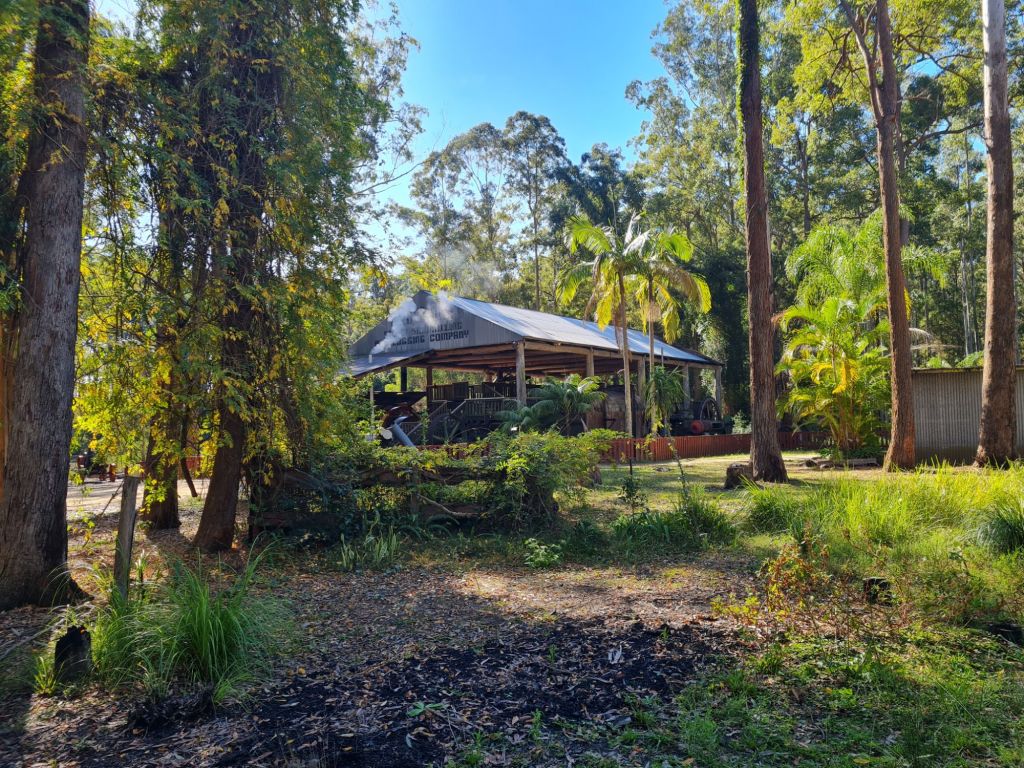
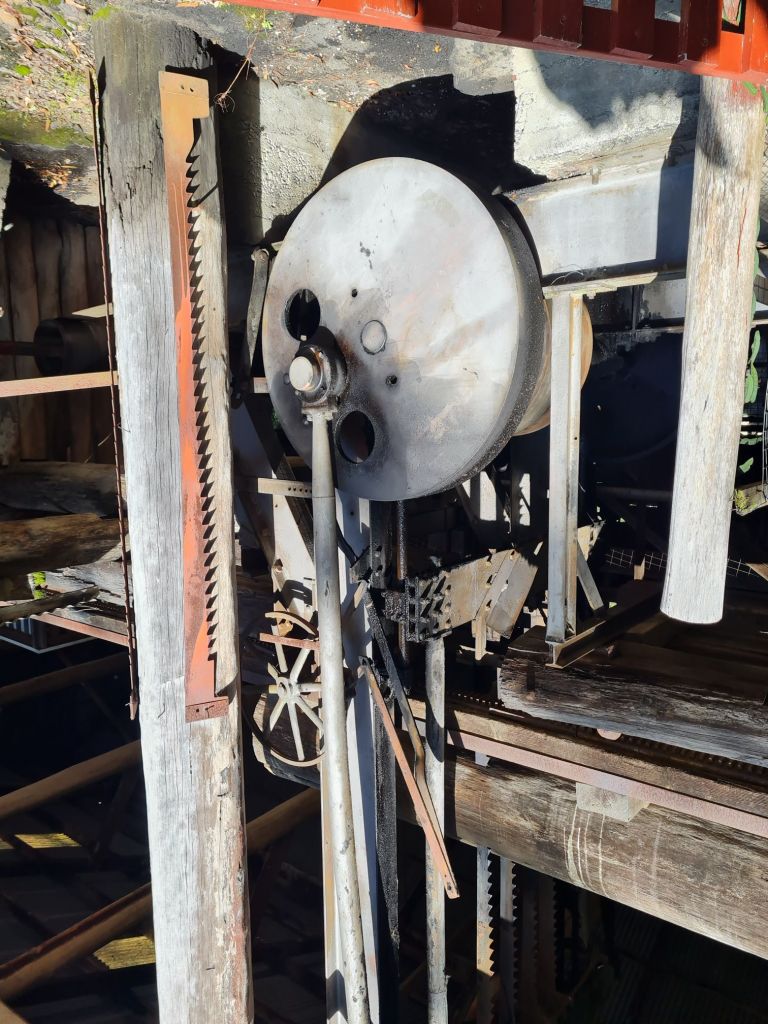
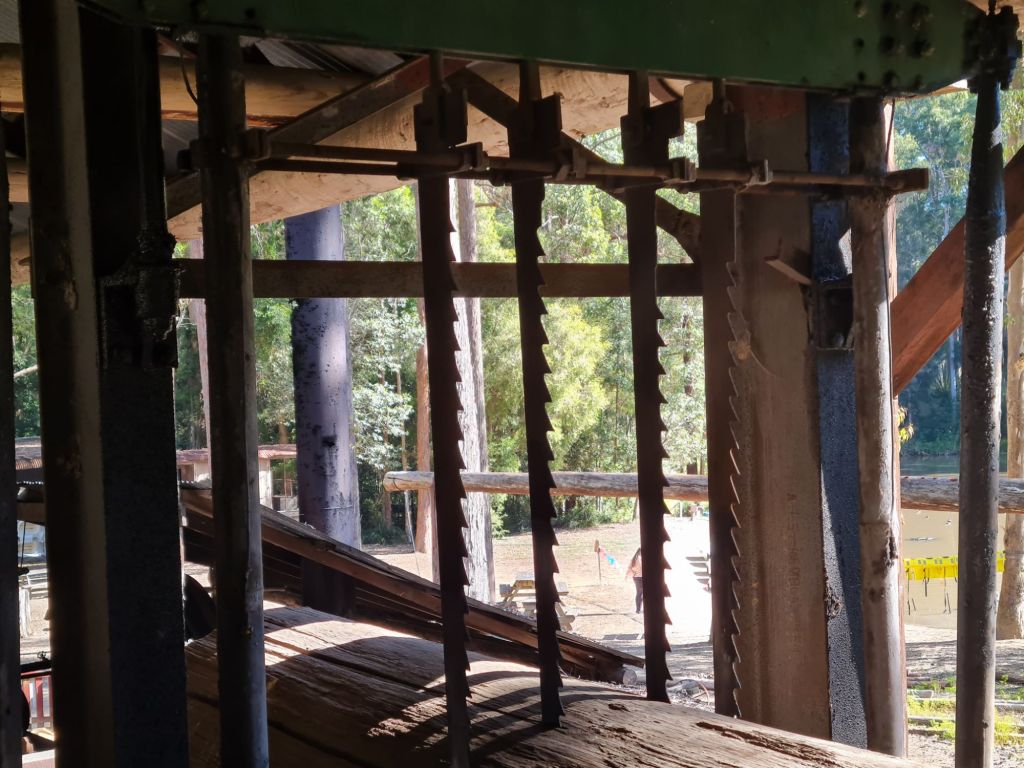
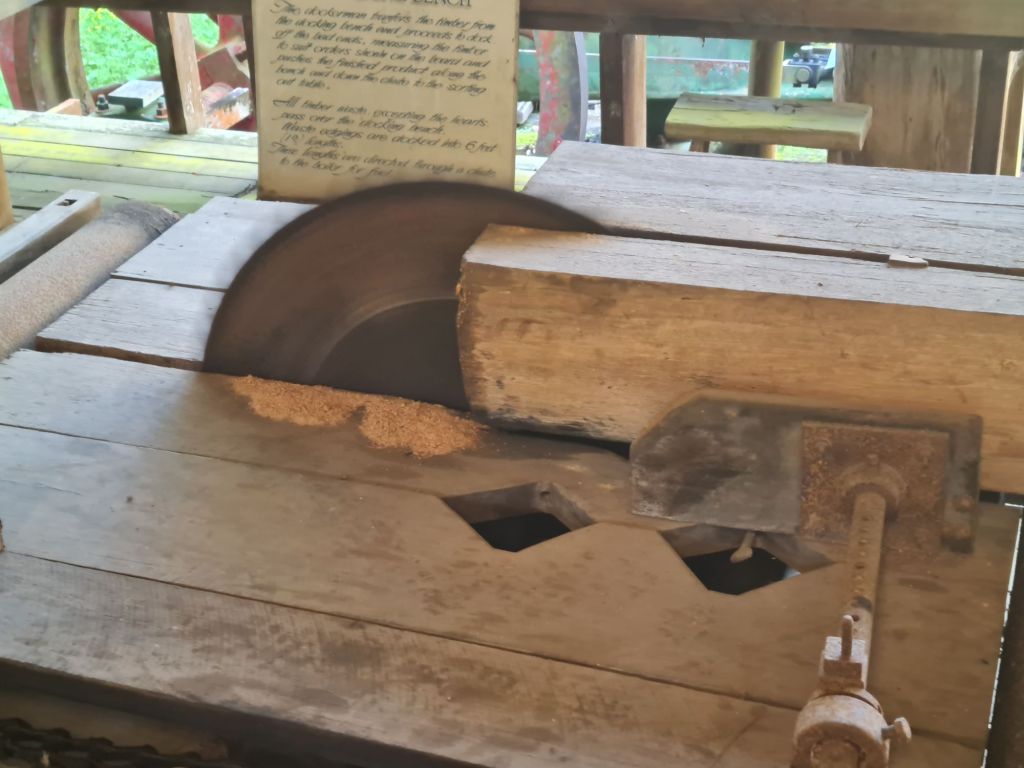
The timber mill

This timber mill was typical of the time, the mid to late 1800’s and into the 1900’s. It could be assembled and disassembled quite quickly and moved to where the wood was being felled.

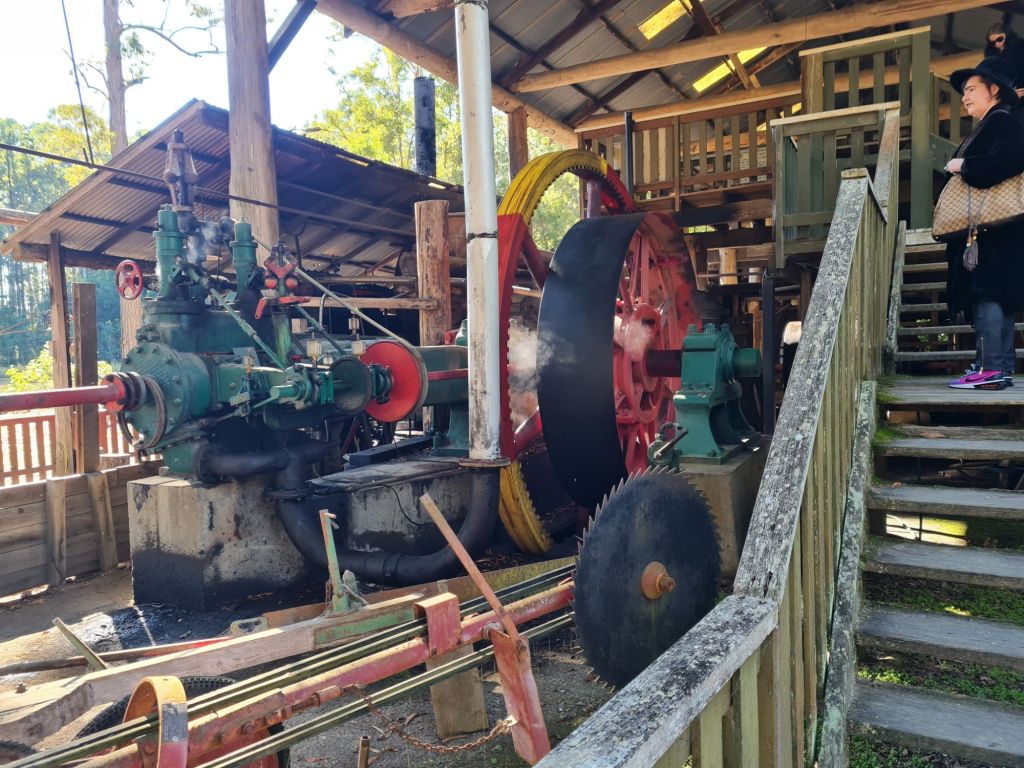
It was run by a single portable steam engine which made it possible to have a mill near where the trees were being felled

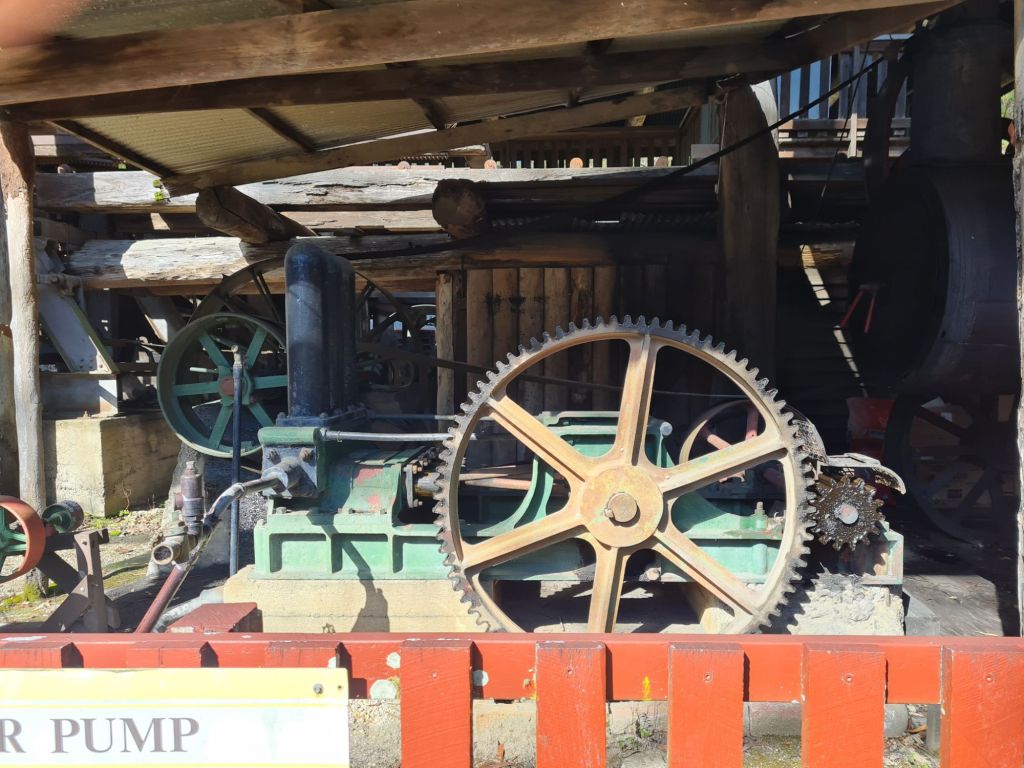
The engine drives vertical and horizontal saw blades by a series of belts and driveshafts

It’s good, it’s bad, and at times it can be very, very ugly

It was as if Microsoft Word was sent down from that place in the universe where a group of torturers sit around a table to find new ways of making our lives just that little bit more difficult.

I mean, most of the time it works really well and behaves itself.

But…

Then there are the times, usually when you are stressed about a deadline, or you are nearly at the end of what you believe to be the most brilliant writing you have ever put on paper.

Then…

Disaster strikes.

It could be the power goes off, even for just a few seconds, but it’s enough to kill the computer.  It could be that you have reached the end and closed Word down, thinking that it had autosaved, all the while ignoring that little pop up that says, ‘do you want to save your work’?

It’s been a long day, night, or session.  You’re tired and your mind is elsewhere, as it always is at the end.

You always assume that autosave is on.  It was the last time, it has been since the day you installed it however long ago that was.

So…

When the power comes back on, you start the computer, go into Word, and it brings back all the windows you had open when the power failed, and the one with the brilliant piece you just wrote, it’s just a blank sheet.

Or up to where it last autosaved, which is nowhere near the end.

Or it didn’t save at all.

You forget the software updated recently and that always brings changes.  Usually unwanted changes.

By which time you have that sinking feeling that all is lost, deadline missed, brilliant work lost, it’s the end of the world.

You promise yourself you’re going to get Scrivener, or something else, where this doesn’t happen.

Or if you’re like me, you put the cat on the keyboard and tell him to sort the mess out.

First Dig Two Graves

A sequel to “The Devil You Don’t”

Revenge is a dish best served cold – or preferably so when everything goes right

Of course, it rarely does, as Alistair, Zoe’s handler, discovers to his peril. Enter a wildcard, John, and whatever Alistair’s plan for dealing with Zoe was dies with him.

It leaves Zoe in completely unfamiliar territory.

John’s idyllic romance with a woman who is utterly out of his comfort zone is on borrowed time. She is still trying to reconcile her ambivalence, after being so indifferent for so long.

They agree to take a break, during which she disappears. John, thinking she has left without saying goodbye, refuses to accept the inevitable, calls on an old friend for help in finding her.

After the mayhem and being briefly reunited, she recognises an inevitable truth: there is a price to pay for taking out Alistair; she must leave and find them first, and he would be wise to keep a low profile.

But keeping a low profile just isn’t possible, and enlisting another friend, a private detective and his sister, a deft computer hacker, they track her to the border between Austria and Hungary.

What John doesn’t realise is that another enemy is tracking him to find her too. It could have been a grand tour of Europe. Instead, it becomes a race against time before enemies old and new converge for what will be an inevitable showdown.

Searching for locations – Port Macquarie – Day 5 – Part 2

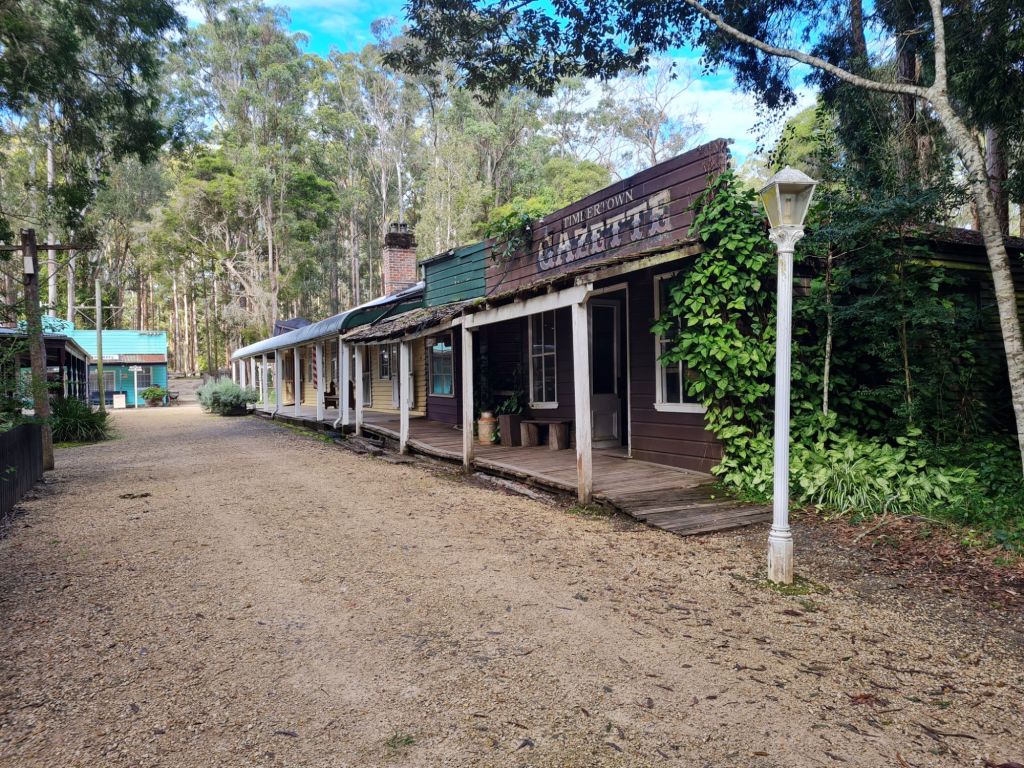
Timbertown – old-time shops

The street

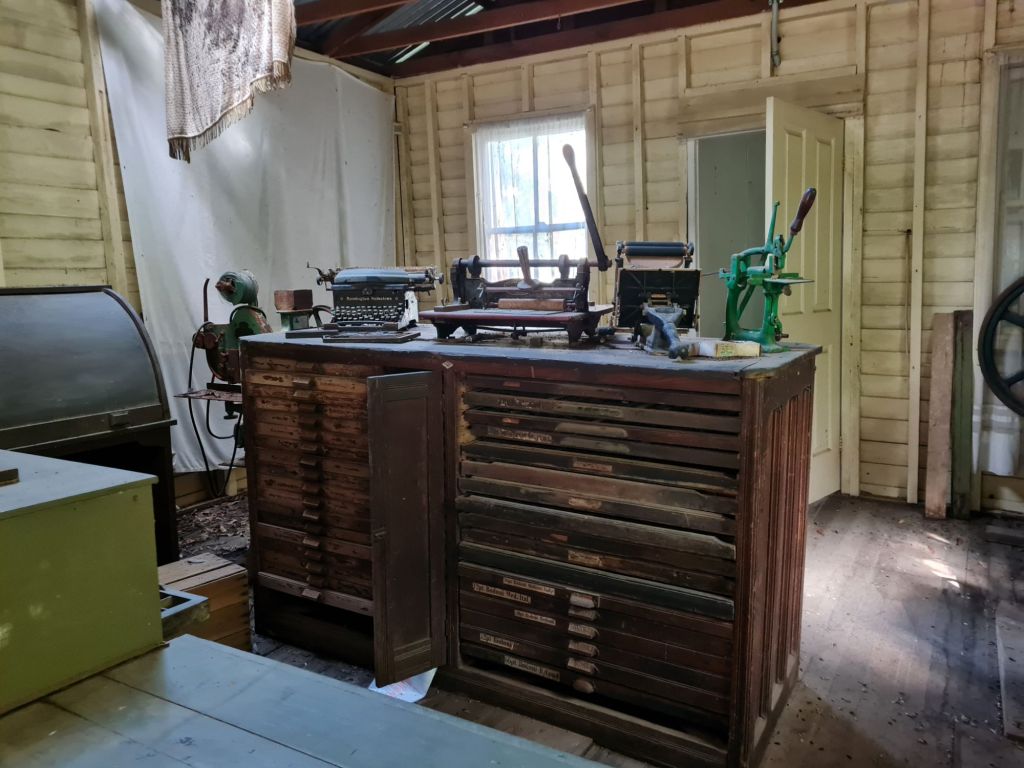
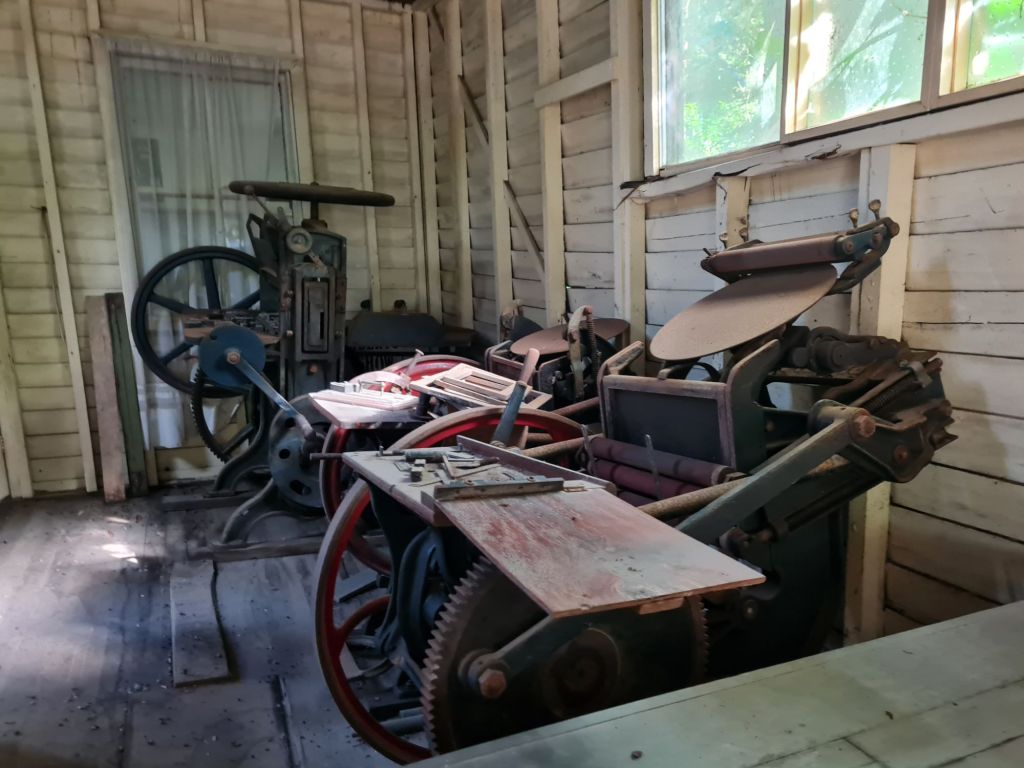
The newspaper office and printers

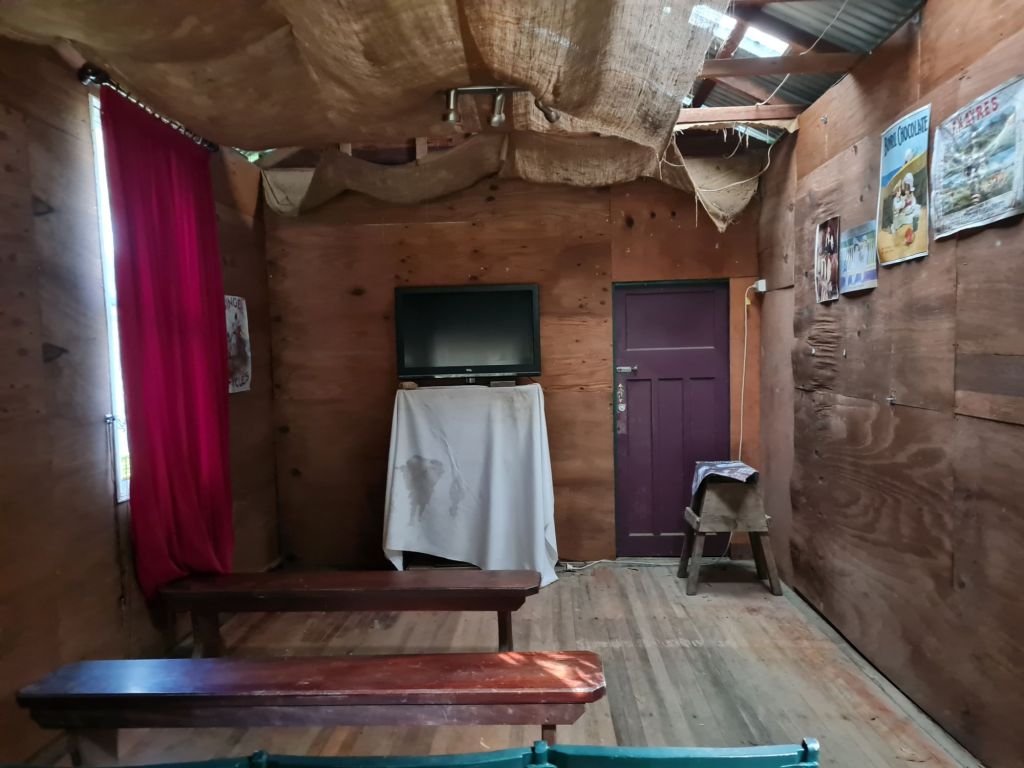
This is apparently a theatre

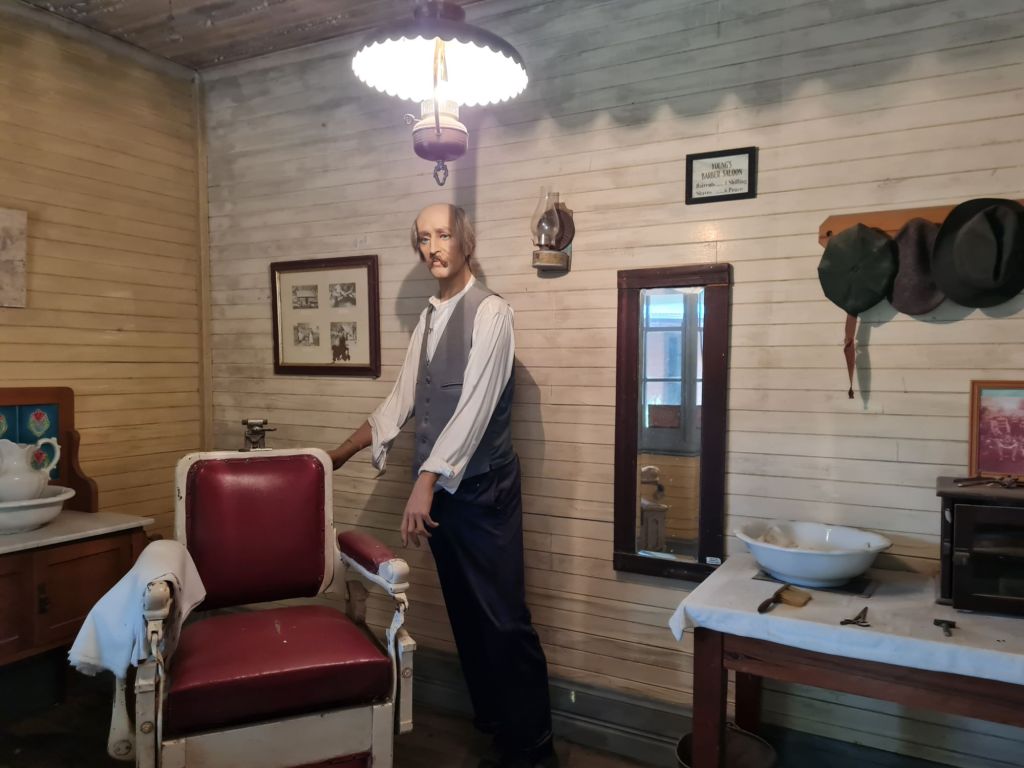
The barber shop

The bakery

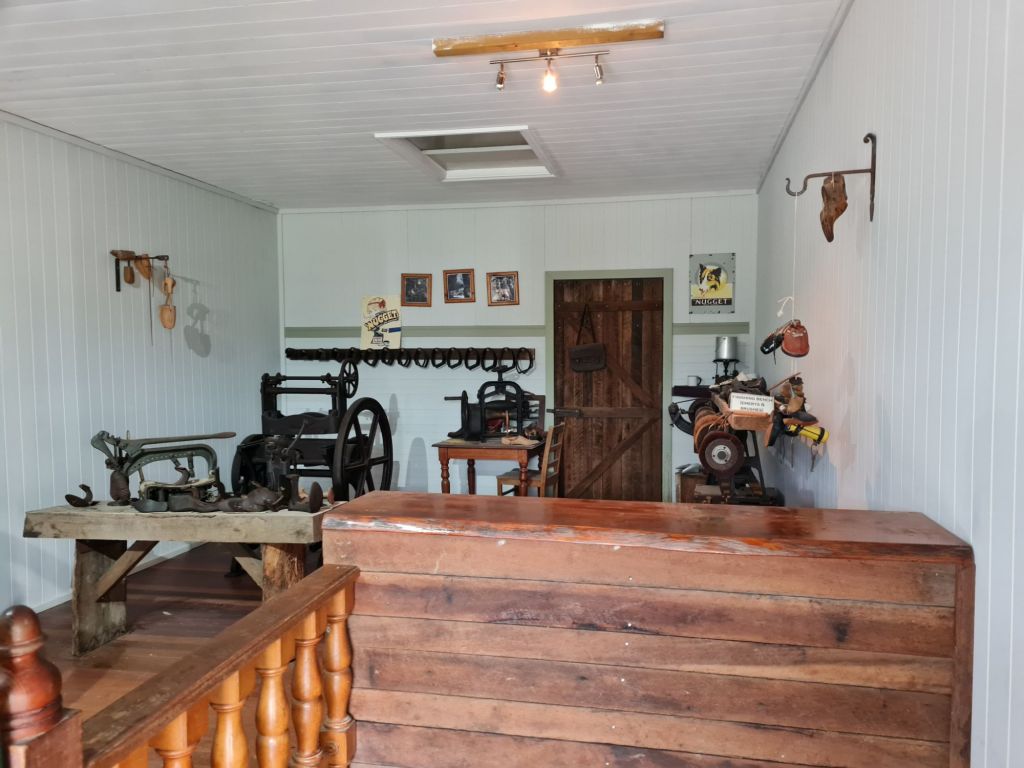
The Bootmaker

There was also a General Store, which was in operation

A blacksmith, sometimes in attendance

A livery stable

A Church, which can be hired for weddings

A school room

And, a dining hall.

An excerpt from “Strangers We’ve Become” – Coming Soon

I wandered back to my villa.

It was in darkness.  I was sure I had left several lights on, especially over the door so I could see to unlock it.

I looked up and saw the globe was broken.

Instant alert.

I went to the first hiding spot for the gun, and it wasn’t there.  I went to the backup and it wasn’t there either.  Someone had found my carefully hidden stash of weapons and removed them.

Who?

There were four hiding spots and all were empty.  Someone had removed the weapons.  That could only mean one possibility.

I had a visitor, not necessarily here for a social call.

But, of course, being the well-trained agent I’d once been and not one to be caught unawares, I crossed over to my neighbor and relieved him of a weapon that, if found, would require a lot of explaining.

Suitably armed, it was time to return the surprise.

There were three entrances to the villa, the front door, the back door, and a rather strange escape hatch.  One of the more interesting attractions of the villa I’d rented was its heritage.  It was built in the late 1700s, by a man who was, by all accounts, a thief.  It had a hidden underground room which had been in the past a vault but was now a wine cellar, and it had an escape hatch by which the man could come and go undetected, particularly if there was a mob outside the door baying for his blood.

It now gave me the means to enter the villa without my visitors being alerted, unless, of course, they were near the vicinity of the doorway inside the villa, but that possibility was unlikely.  It was not where anyone could anticipate or expect a doorway to be.

The secret entrance was at the rear of the villa behind a large copse, two camouflaged wooden doors built into the ground.  I move aside some of the branches that covered them and lifted one side.  After I’d discovered the doors and rusty hinges, I’d oiled and cleaned them, and cleared the passageway of cobwebs and fallen rocks.  It had a mildew smell, but nothing would get rid of that.  I’d left torches at either end so I could see.

I closed the door after me, and went quietly down the steps, enveloped in darkness till I switched on the torch.  I traversed the short passage which turned ninety degrees about halfway to the door at the other end.  I carried the key to this door on the keyring, found it and opened the door.  It too had been oiled and swung open soundlessly.

I stepped in the darkness and closed the door.

I was on the lower level under the kitchen, now the wine cellar, the ‘door’ doubling as a set of shelves which had very little on them, less to fall and alert anyone in the villa.

Silence, an eerie silence.

I took the steps up to the kitchen, stopping when my head was level with the floor, checking to see if anyone was waiting.  There wasn’t.  It seemed to me to be an unlikely spot for an ambush.

I’d already considered the possibility of someone coming after me, especially because it had been Bespalov I’d killed, and I was sure he had friends, all equally as mad as he was.  Equally, I’d also considered it nigh on impossible for anyone to find out it was me who killed him because the only people who knew that were Prendergast, Alisha, a few others in the Department, and Susan.

That raised the question of who told them where I was.

If I was the man I used to be, my first suspect would be Susan.  The departure this morning, and now this was too coincidental.  But I was not that man.

Or was I?

I reached the start of the passageway that led from the kitchen to the front door and peered into the semi-darkness.  My eyes had got used to the dark, and it was no longer an inky void.  Fragments of light leaked in around the door from outside and through the edge of the window curtains where they didn’t fit properly.  A bone of contention upstairs in the morning, when first light shone and invariably woke me up hours before I wanted to.

Still nothing.

I took a moment to consider how I would approach the visitor’s job.  I would get a plan of the villa in my head, all entrances, where a target could be led to or attacked where there would be no escape.

Coming in the front door.  If I was not expecting anything, I’d just open the door and walk-in.  One shot would be all that was required.

Contract complete.

I sidled quietly up the passage staying close to the wall, edging closer to the front door.  There was an alcove where the shooter could be waiting.  It was an ideal spot to wait.

Crunch.

I stepped on some nutshells.

Not my nutshells.

I felt it before I heard it.  The bullet with my name on it.

And how the shooter missed, from point-blank range, and hit me in the arm, I had no idea.  I fired off two shots before a second shot from the shooter went wide and hit the door with a loud thwack.

I saw a red dot wavering as it honed in on me and I fell to the floor, stretching out, looking up where the origin of the light was coming and pulled the trigger three times, evenly spaced, and a second later I heard the sound of a body falling down the stairs and stopping at the bottom, not very far from me.

Two assassins.

I’d not expected that.

The assassin by the door was dead, a lucky shot on my part.  The second was still breathing.

I checked the body for any weapons and found a second gun and two knives.  Armed to the teeth!

I pulled off the balaclava; a man, early thirties, definitely Italian.  I was expecting a Russian.

I slapped his face, waking him up.  Blood was leaking from several slashes on his face when his head had hit the stairs on the way down.  The awkward angle of his arms and legs told me there were broken bones, probably a lot worse internally.  He was not long for this earth.

“Who employed you?”

He looked at me with dead eyes, a pursed mouth, perhaps a smile.  “Not today my friend.  You have made a very bad enemy.”  He coughed and blood poured out of his mouth.  “There will be more …”

Friends of Bespalov, no doubt.

I would have to leave.  Two unexplainable bodies, I’d have a hard time explaining my way out of this mess.  I dragged the two bodies into the lounge, clearing the passageway just in case someone had heard anything.

Just in case anyone was outside at the time, I sat in the dark, at the foot of the stairs, and tried to breathe normally.  I was trying not to connect dots that led back to Susan, but the coincidence was worrying me.

A half-hour passed and I hadn’t moved.  Deep in thought, I’d forgotten about being shot, unaware that blood was running down my arm and dripping onto the floor.

Until I heard a knock on my front door.

Two thoughts, it was either the police, alerted by the neighbors, or it was the second wave, though why would they be knocking on the door?

I stood, and immediately felt a stabbing pain in my arm.  I took out a handkerchief and turned it into a makeshift tourniquet, then wrapped a kitchen towel around the wound.

If it was the police, this was going to be a difficult situation.  Holding the gun behind my back, I opened the door a fraction and looked out.

No police, just Maria.  I hoped she was not part of the next ‘wave’.

“You left your phone behind on the table.  I thought you might be looking for it.”  She held it out in front of her.

When I didn’t open the door any further, she looked at me quizzically, and then asked, “Is anything wrong?”

I was going to thank her for returning the phone, but I heard her breathe in sharply, and add, breathlessly, “You’re bleeding.”

I looked at my arm and realized it was visible through the door, and not only that, the towel was soaked in blood.

“You need to go away now.”

Should I tell her the truth?  It was probably too late, and if she was any sort of law-abiding citizen she would go straight to the police.

She showed no signs of leaving, just an unnerving curiosity.  “What happened?”

I ran through several explanations, but none seemed plausible.  I went with the truth.  “My past caught up with me.”

“You need someone to fix that before you pass out from blood loss.  It doesn’t look good.”

“I can fix it.  You need to leave.  It is not safe to be here with me.”

The pain in my arm was not getting any better, and the blood was starting to run down my arm again as the tourniquet loosened.  She was right, I needed it fixed sooner rather than later.

I opened the door and let her in.  It was a mistake, a huge mistake, and I would have to deal with the consequences.  Once inside, she turned on the light and saw the pool of blood just inside the door and the trail leading to the lounge.  She followed the trail and turned into the lounge, turned on the light, and no doubt saw the two dead men.

I expected her to scream.  She didn’t.

She gave me a good hard look, perhaps trying to see if I was dangerous.  Killing people wasn’t something you looked the other way about.  She would have to go to the police.

“What happened here?”

“I came home from the cafe and two men were waiting for me.  I used to work for the Government, but no longer.  I suspect these men were here to repay a debt.  I was lucky.”

“Not so much, looking at your arm.”

She came closer and inspected it.

“Sit down.”

She found another towel and wrapped it around the wound, retightening the tourniquet to stem the bleeding.

“Do you have medical supplies?”

I nodded.  “Upstairs.”  I had a medical kit, and on the road, I usually made my own running repairs.  Another old habit I hadn’t quite shaken off yet.

She went upstairs, rummaged, and then came back.  I wondered briefly what she would think of the unmade bed though I was not sure why it might interest her.

She helped me remove my shirt, and then cleaned the wound.  Fortunately, she didn’t have to remove a bullet.  It was a clean wound but it would require stitches.

When she’d finished she said, “Your friend said one day this might happen.”

No prizes for guessing who that friend was, and it didn’t please me that she had involved Maria.

“Alisha?”

“She didn’t tell me her name, but I think she cares a lot about you.  She said trouble has a way of finding you, gave me a phone and said to call her if something like this happened.”

“That was wrong of her to do that.”

“Perhaps, perhaps not.  Will you call her?”

“Yes.  I can’t stay here now.  You should go now.  Hopefully, by the time I leave in the morning, no one will ever know what happened here, especially you.”

She smiled.  “As you say, I was never here.”

© Charles Heath 2018-2022
strangerscover9