Memories of the conversations with my cat – 44

As some may be aware, but many are not, Chester, my faithful writing assistant, mouse catcher, and general pain in the neck, passed away some years ago.

Recently, I was running a series based on his adventures, under the title of Past Conversations with my cat.

For those who have not had the chance to read about all of his exploits, I will run the series again from Episode 1

These are the memories of our time together…

20160902_123157

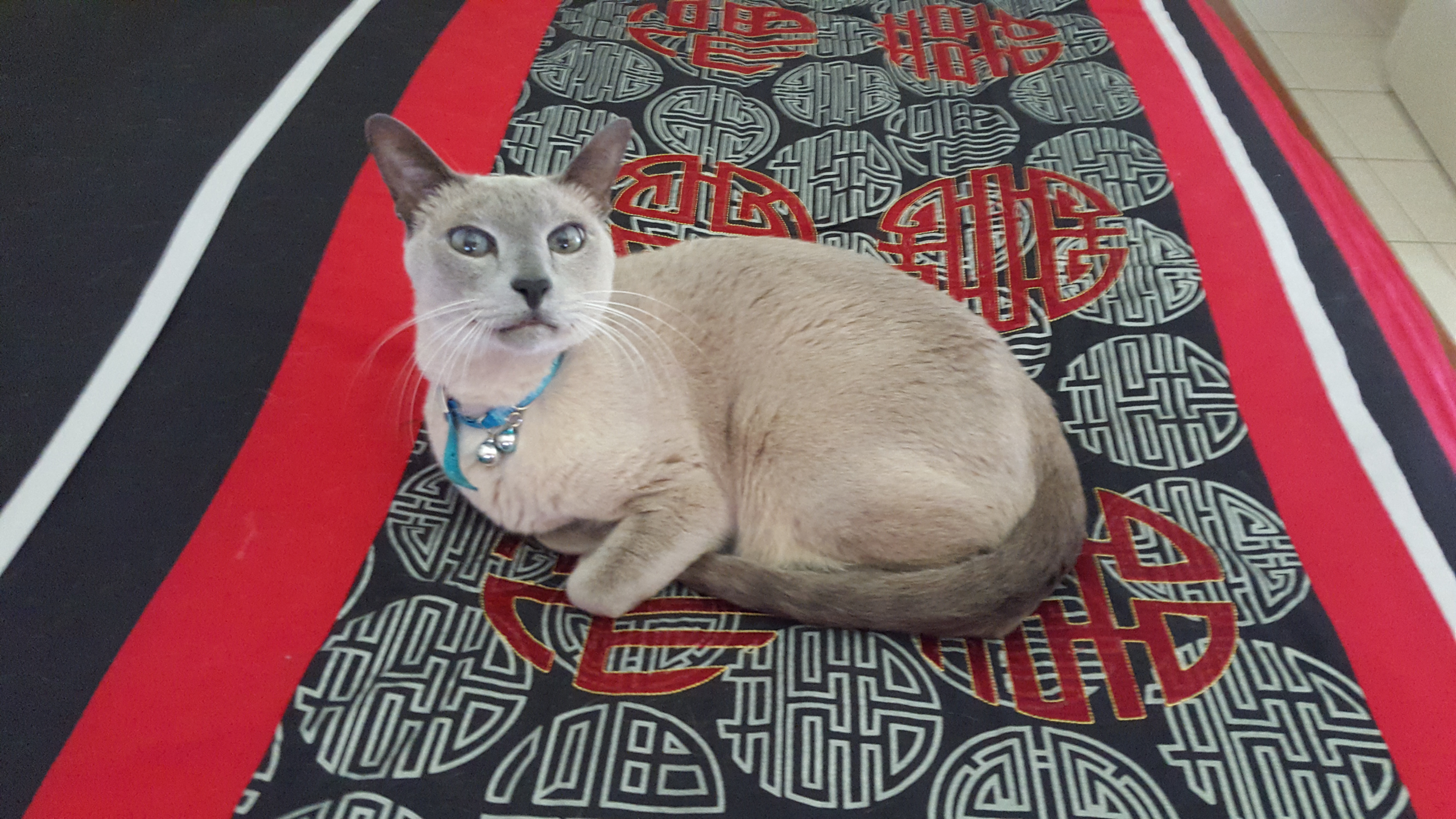
This is Chester.  I’ve just dropped the bombshell we’re thinking of getting a dog.

So, the first response from him:  Well, the last dog didn’t turn out so well, did it?

We didn’t tell him what happened to the dog, but maybe he’s psychic.

Or is that psycho?

Anyway, the last dog we had moved to my son’s place when he moved, and shortly after, broke his hip and had to be put down.

So I say, that dog moved when my son left.  I don’t have any more sons living in, so that won’t be a problem.

It’s going to be a mistake.

Oh, how?

You know they all start out like soft furry balls, like cat’s I’ll admit, but then they grow up, and up, and up, and up.  And eat you out of house and home.  Not like us lovable cats, we stay small furry balls, and don’t eat all that much.

No, you’re just fussy, and it’s like hell on earth getting you to eat.

Then stop buying the cheap stuff.

Cheap?  Cheap?  That last lot of food cost an arm and a leg.  At least with a dog, it will eat anything, including scraps from the table.

He gives me that condescending look reserved for people who think they own or know cats.

As you wish, my Lord.

Then he walks off, head in the air and tail swishing in annoyance.

The cinema of my dreams – Was it just another surveillance job – Episode 10

I’m back home and this story has been sitting on a back burner for a few months, waiting for some more to be written.

The trouble is, there are also other stories to write, and I’m not very good at prioritising.

But, here we are, a few minutes opened up and it didn’t take long to get back into the groove.

An interrogation continues


“So, take it from the top, give me a detailed rundown on the operation, from the briefing to coming here.”

That was an interesting request.  My usual report would not go into so much detail, and I had been compiling it on the go because if left until the end, crucial details were always omitted.

And, with the explosion, a lot of details had been mislaid in my mind, with more important or over-arching problems, getting a more prominent place in my memory.  It was a valuable lesson learned on reporting, we’d received from a man who most of my classmates thought odd, to the point of paranoid.

“I received the text message the night before to report to the midtown office for the briefing.  The code word was Chancellor and it was recognised at the security station.  If it was bogus I would not have made it in the building.”

“You go there for all your briefings?”

“Yes.”

“Same team?”

“For the previous five, yes.  This last one, a different team.  “One of us asked what happened to the previous team and we were told that it was none of our business.  We were given orders and sent out into the field to do a job.  That job, we were reminded, was not to ask irrelevant questions.”

“The leader told you that?”

“In no uncertain terms.”

“Go on.”

“We were given a photograph of the man that I have just given to you.  No mention was made of what he had done to warrant surveillance, only that we were to not lose him and to note everything he did.

“We were told where he might be found at a particular time, and a particular place, information that was correct.”

“Your team members?”

“Fiona Davis, Jack Venables, Walter Arbon, and me.”

“I take it you had the target under surveillance, ready to hand off to the next team member?”

“Before the explosion, yes, it was my leg.”

“You’re referring to the explosion in Church Street?”

“Yes.  I’d just past it when there was an explosion, and I was caught in the aftermath, and narrowly avoided the shrapnel raining down.  Others were not so lucky.”

“That’s where you lost him?”

“He was in front of me, thus avoiding the fallout.  It took a minute or so to get my bearings, and even then it was very hazy with the dust and carnage around me, but I did manage to see him in the distance heading towards the next person’s tag point.”

“You didn’t resume surveillance?”

“Couldn’t.  Too disoriented.  I put out an alert on the comms, but no one answered, not straight away.”

“You didn’t suspect anything?”

“Not then.,  I put it down to a malfunction from the blast.”

“You said ‘not straight away’?”

“About five minutes had passed when a voice came in my ear, asking for an update.  I didn’t think much about it at the time, because of the temporary disorientation, but it was about the time for the next team to take over.  There were two rolling teams of four.”

“Why did you think it odd?”

“Because they would know about the explosion.  Everyone within a mile radius would.  But at the time I simply said I was caught up in the aftermath and that the target was last seen heading towards the takeover point.  Then I was told the target was sighted.”

“I assume you then considered your role had ended?”

“Yes.  I’d been told to follow the advice of the medical staff on site.”

“Which was?”

“Go to the hospital for a check-up.”

“But you didn’t.”

“No.  I was heading away from the blast site when I saw the target again.  I stopped, watched, got out of sight, and waited.  He was coming back in my direction.”

“Was that an expected scenario, that he might backtrack?”

“No.  In the briefing we were told it was possible he would be moving from the point where we found him, to another for a clandestine meeting, away from the blast site.”

What did you do then?”

“Checked the position of the next member of the surveillance team. C I found him, and he was dead.  I made an assumption that the other two may have suffered a similar fate, and resumed surveillance on the target.”

“Did you report it?”

“Over the comms, yes.”

“What happened?”

“Nothing, no one answered.”

“Not even the director?”

“No.”

She made a note, crossed it out and wrote another with an underline.  A thick black line repeatedly, expressing her anger.

“You maintained surveillance?”

“Yes.”

“Until?”

“I’d cornered him in an alley, near a railway station.  I suspected he might head for it.  He’s seen me, and nearly dispatched me in the same manner as the others.  Luckily it was only a scratch.”

It was more than that and required 12 stitches but they didn’t need to know that.

“Then, Severin arrived, and out of nowhere, he was shot dead.”

“Did you speak to him?”

“Only to ask what he had done with the other members of my team.  He never answered.”

“Did you report that you’d caught him?”

“No.  Didn’t have to.  Severin arrived just after I had.”

“And that’s all of it?”

“In my report.  Yes.  When I get to write it, but I’ll need my phone.  It has the relevant details, except for the last part where I’d found him.”

“No name?”

“No.”

“You didn’t know he was one of ours?”

“No.  That fact only came to my attention when he told me.  When you’re given a target, you don’t ask what the relevance is, or what he’s done.  I’m sure you’re fully aware of the current practices and procedures.”

That last sentence slipped out, and by the look on her face, wasn’t well received.  I’d forgotten the golden rule.  Stick to the facts.  No embellishment, no emotion.

She made another note, closed the book, and got up.  “I’d like you to stay, just for the time being while we sort through the details.”

Then she left.


© Charles Heath 2019
Writing a book in 365 days – My Story 31

More about my novel

Willoughby.

Son of a Russian spy.

It seems ironic that he would end up becoming a spy himself, if that’s the right word for it.  He thinks of himself as one of those people who help to keep the general population safe in their beds at night.

It’s an interesting generalisation for a job that requires the person to do things that others wouldn’t do if they had a choice.

We like to think that those who are on that last line of defence, or the front line, or even on the thin blue line, will do what is necessary when the occasion demands it.

Policemen deal with criminals
Military policemen deal with military criminals
Federal or national police deal with country-wide problems
State police are for internal state matters.

Problems of an international scale that affect our country are dealt with by a different type of police.  In England, the differentiation is that MI5 is internal, and MI6 is external. In the USA, the FBI is internal, and the CIA is external.

I’m sure countries all over the world have their own organisations.

Writers like to invent their own, and I’m no exception.  I like the idea that we have organisations like that in Australia. I believe that the external force is called ASIO, but it’s rather shadowy, and they don’t advertise.

We also like to hide their offices in plain sight, much like the way Ian Fleming hid the 00s behind a company called Universal Exports or something similar.

The thing is, it’s more fun to create that organisation that lives in the shadows, run by some man who is about a hundred years old, with a very posh accent and no sense of humour, or by a woman who has a thorough no nonsense attitude, who would pass for the local busybody that runs the post office in a small English village.

As for the spies, sorry employees, they need to have military training, preferably seen action in some hellhole like Afghanistan, Iraq, or better still as a mercenary in Africa.  The more jaded the better.  Having no steady relationship with any woman, the last being with a high school sweetheart, who married the safe guy and had two point four children.

Thus, coming into the mid forties, the next bullet quite possibly having his name on it, the job is beginning to look a little passe.  Of course, and there is one other small problem: the people you’ve been hunting down and killing want retribution, and won’t stop until you are dead.

And worse still, one of your own people is trying to kill you, not because of what you did, but just because of who you work for.

Nothing personal.

Don’t you just love it when someone says that?

Well, that’s where the story starts…

Searching for locations: Turangi, New Zealand, it’s an interesting town

Located at the bottom of Lake Taupo, in New Zealand, staying here would make more sense if you were here for the fishing, and, well, the skiing or the hiking, or just a relaxing half hour in the thermal pools.

I saw a sign somewhere that said that Taurangi was New Zealand’s premier fishing spot. I might have got the wrong, but it seems to me they’re right. On the other side of town, heading towards Taupo, there’s a lodge that puts up fly fishermen, and where you can see a number of them in an adjacent river trying their luck.

It’s what I would be doing if I had the patience.

But Taurangi is a rather central place to stay, located at the southernmost point of the lake. From there it is not far from the snowfields of Whakapapa and Turoa. Equally, at different times of the year, those ski fields become walking or hiking tracks, and the opportunity to look into a dormant volcano, Ruapehu.

It is basically surrounded by hills and mountains on three sides and a lake on the other. Most mornings, and certainly everyone is different, there is a remarkable sunrise, particularly from where we were staying on the lake, where it could be cloudy, clear, or just cold and refreshing, with a kaleidoscope of colors from the rising sun.

I don’t think I’ve been there to see two days the same.

However, Taurangi, on most days we’ve visited, is even more desolate than Taupo, both on the main street and the central mall. The same couldn’t be said for the precinct where New World, the local supermarket, a Z petrol station can be found. There it is somewhat more lively. The fact there’s a few more shops and a restaurant might help traffic flow.

There is also a mini golf course, and in the middle of winter, it is a bleak place to be, especially in the threatening rain, and the wind. It had also seen better days and in parts, in need of a spruce up, but it’s winter, and there are no crowds, so I guess it will wait till the Spring.

In the mall, there’s the expected bank, newsagent, gift shop and post office combined, and a number of other gift shops/galleries. But the best place is the café which I’ve never seen empty and has an extended range of pies pastries and cakes, along with the fast food staples of chips and chicken.
Oh, and you can also get a decent cup of coffee there.

There are two other coffee shops but we found this one the first time we came, we were given a warm welcome and assistance, and have never thought to go anywhere else, despite two known change of owners.

But despite all these reasons why someone might want to stay there, we don’t.

We have a timeshare, and there’s a timeshare in Pukaki called Oreti Village. That’s where we stay.

It’s all about how you are going to ‘sell’ your book

There’s the cover, and, of course, the description.

Probably one of the hardest things for a first-time author is not so much the writing but what is needed after the book is written.

You need a good description.  Short, sharp, incisive!

There’s a ream of advice out there, and I have read it all.

And, still, I got it wrong.

Then there is the cover.

I wanted simplistic, a short description to give the reader a taste of what’s in store, and let the story speak for itself.

No.

Apparently, a good cover will attract the reader to the book.

When I tendered my books on various sites to advertise them, sites such as Goodreads, and ThirdScribe, all was well with what I had done.

Then I submitted my books to a third site and they rejected the covers as too simplistic and the descriptions mundane, and wouldn’t post them.

Wow.

There’s a huge blow to the ego.  And just the sort of advice that would make a writer think twice about even bothering to continue.

But…

Perhaps the person who wrote that critique was being cruel to be kind.

At any rate, I am changing the covers, and rewording the descriptions.

Will it be a case of ‘what a difference a cover makes’?

This, in one case, is the old cover,

And this is the new.

An excerpt from “Echoes from the Past”

Available on Amazon Kindle here:  https://amzn.to/2CYKxu4

With my attention elsewhere, I walked into a man who was hurrying in the opposite direction.  He was a big man with a scar running down the left side of his face from eye socket to mouth, and who was also wearing a black shirt with a red tie.

That was all I remembered as my heart almost stopped.

He apologized as he stepped to one side, the same way I stepped, as I also muttered an apology.

I kept my eyes down.  He was not the sort of man I wanted to recognize later in a lineup.  I stepped to the other side and so did he.  It was one of those situations.  Finally getting out of sync, he kept going in his direction, and I towards the bus, which was now pulling away from the curb.

Getting my breath back, I just stood riveted to the spot watching it join the traffic.  I looked back over my shoulder, but the man I’d run into had gone.  I shrugged and looked at my watch.  It would be a few minutes before the next bus arrived.

Wait, or walk?  I could also go by subway, but it was a long walk to the station.  What the hell, I needed the exercise.

At the first intersection, the ‘Walk’ sign had just flashed to ‘Don’t Walk’.  I thought I’d save a few minutes by not waiting for the next green light.  As I stepped onto the road, I heard the screeching of tires.

A yellow car stopped inches from me.

It was a high powered sports car, perhaps a Lamborghini.  I knew what they looked like because Marcus Bartleby owned one, as did every other junior executive in the city with a rich father.

Everyone stopped to look at me, then the car.  It was that sort of car.  I could see the driver through the windscreen shaking his fist, and I could see he was yelling too, but I couldn’t hear him.  I stepped back onto the sidewalk, and he drove on.  The moment had passed and everyone went back to their business.

My heart rate hadn’t come down from the last encounter.   Now it was approaching cardiac arrest, so I took a few minutes and several sets of lights to regain composure.

At the next intersection, I waited for the green light, and then a few seconds more, just to be sure.  I was no longer in a hurry.

At the next, I heard what sounded like a gunshot.  A few people looked around, worried expressions on their faces, but when it happened again, I saw it was an old car backfiring.  I also saw another yellow car, much the same as the one before, stopped on the side of the road.  I thought nothing of it, other than it was the second yellow car I’d seen.

At the next intersection, I realized I was subconsciously heading towards Harry’s new bar.   It was somewhere on 6th Avenue, so I continued walking in what I thought was the right direction.

I don’t know why I looked behind me at the next intersection, but I did.  There was another yellow car on the side of the road, not far from me.  It, too, looked the same as the original Lamborghini, and I was starting to think it was not a coincidence.

Moments after crossing the road, I heard the roar of a sports car engine and saw the yellow car accelerate past me.  As it passed by, I saw there were two people in it, and the blurry image of the passenger; a large man with a red tie.

Now my imagination was playing tricks.

It could not be the same man.  He was going in a different direction.

In the few minutes I’d been standing on the pavement, it had started to snow; early for this time of year, and marking the start of what could be a long cold winter.  I shuddered, and it was not necessarily because of the temperature.

I looked up and saw a neon light advertising a bar, coincidentally the one Harry had ‘found’ and, looking once in the direction of the departing yellow car, I decided to go in.  I would have a few drinks and then leave by the back door if it had one.

Just in case.

© Charles Heath 2015-2020

newechocover5rs

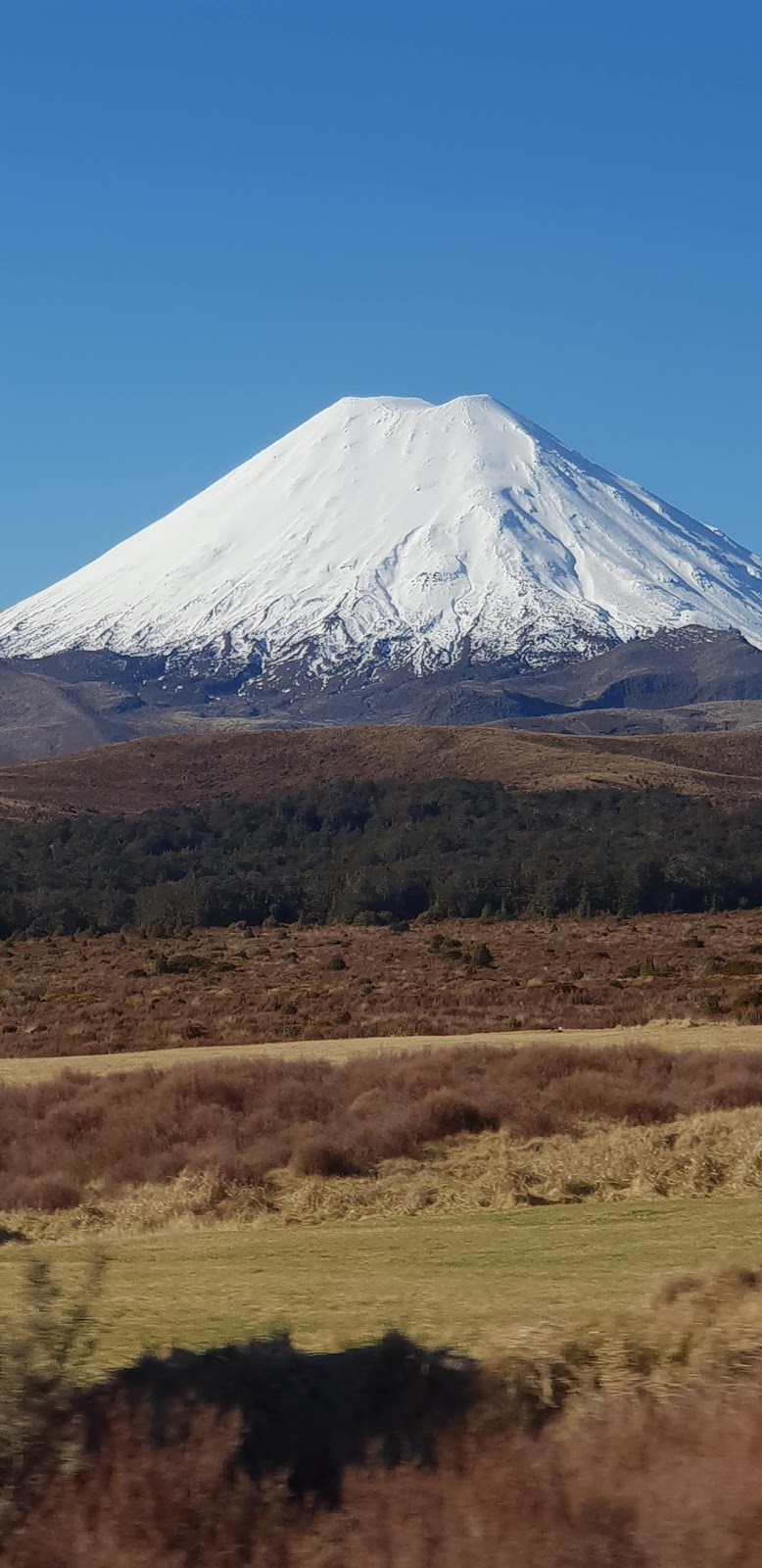
Searching for locations: Mount Ngauruhoe, New Zealand

Mount Ngauruhoe is apparently still an active volcano, has been for 2,500 years or so, and last erupted on 19th February 1975, and reportedly has erupted around 70 times since 1839.

The mountain is usually climbed from the western side, from the Mangatepopo track.

This photo was taken in summer from the Chateau Tongariro carpark.

In late autumn, on one of our many visits to the area, the mountain was covered with a light sprinkling of snow and ice.

On our most recent visit, this year, in winter, it was fully covered in snow.

It can be a breathtaking sight from the distance.

Inspiration, maybe – Volume 1

50 photographs, 50 stories, of which there is one of the 50 below.

They all start with –

A picture paints … well, as many words as you like.  For instance:

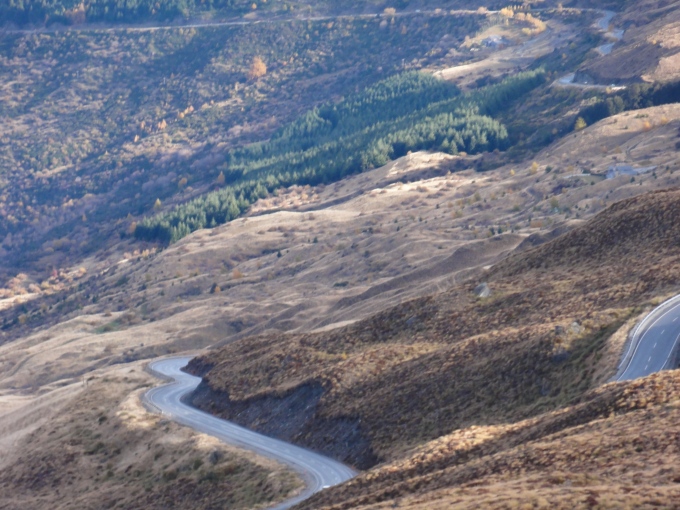
lookingdownfromcoronetpeak

And the story:

It was once said that a desperate man has everything to lose.

The man I was chasing was desperate, but I, on the other hand, was more desperate to catch him.

He’d left a trail of dead people from one end of the island to the other.

The team had put in a lot of effort to locate him, and now his capture was imminent.  We were following the car he was in, from a discrete distance, and, at the appropriate time, we would catch up, pull him over, and make the arrest.

There was nowhere for him to go.

The road led to a dead-end, and the only way off the mountain was back down the road were now on.  Which was why I was somewhat surprised when we discovered where he was.

Where was he going?

“Damn,” I heard Alan mutter.  He was driving, being careful not to get too close, but not far enough away to lose sight of him.

“What?”

“I think he’s made us.”

“How?”

“Dumb bad luck, I’m guessing.  Or he expected we’d follow him up the mountain.  He’s just sped up.”

“How far away?”

“A half-mile.  We should see him higher up when we turn the next corner.”

It took an eternity to get there, and when we did, Alan was right, only he was further on than we thought.”

“Step on it.  Let’s catch him up before he gets to the top.”

Easy to say, not so easy to do.  The road was treacherous, and in places just gravel, and there were no guard rails to stop a three thousand footfall down the mountainside.

Good thing then I had the foresight to have three agents on the hill for just such a scenario.

Ten minutes later, we were in sight of the car, still moving quickly, but we were going slightly faster.  We’d catch up just short of the summit car park.

Or so we thought.

Coming quickly around another corner we almost slammed into the car we’d been chasing.

“What the hell…” Aland muttered.

I was out of the car, and over to see if he was in it, but I knew that it was only a slender possibility.  The car was empty, and no indication where he went.

Certainly not up the road.  It was relatively straightforward for the next mile, at which we would have reached the summit.  Up the mountainside from here, or down.

I looked up.  Nothing.

Alan yelled out, “He’s not going down, not that I can see, but if he did, there’s hardly a foothold and that’s a long fall.”

Then where did he go?

Then a man looking very much like our quarry came out from behind a rock embedded just a short distance up the hill.

“Sorry,” he said quite calmly.  “Had to go if you know what I mean.”

I’d lost him.

It was as simple as that.

I had been led a merry chase up the hill, and all the time he was getting away in a different direction.

I’d fallen for the oldest trick in the book, letting my desperation blind me to the disguise that anyone else would see through in an instant.

It was a lonely sight, looking down that road, knowing that I had to go all that way down again, only this time, without having to throw caution to the wind.

“Maybe next time,” Alan said.

“We’ll get him.  It’s just a matter of time.”

© Charles Heath 2019-2021

Find this and other stories in “Inspiration, maybe”  available soon.

InspirationMaybe1v1

Writing a book in 365 days – My Story 31

More about my novel

Willoughby.

Son of a Russian spy.

It seems ironic that he would end up becoming a spy himself, if that’s the right word for it.  He thinks of himself as one of those people who help to keep the general population safe in their beds at night.

It’s an interesting generalisation for a job that requires the person to do things that others wouldn’t do if they had a choice.

We like to think that those who are on that last line of defence, or the front line, or even on the thin blue line, will do what is necessary when the occasion demands it.

Policemen deal with criminals
Military policemen deal with military criminals
Federal or national police deal with country-wide problems
State police are for internal state matters.

Problems of an international scale that affect our country are dealt with by a different type of police.  In England, the differentiation is that MI5 is internal, and MI6 is external. In the USA, the FBI is internal, and the CIA is external.

I’m sure countries all over the world have their own organisations.

Writers like to invent their own, and I’m no exception.  I like the idea that we have organisations like that in Australia. I believe that the external force is called ASIO, but it’s rather shadowy, and they don’t advertise.

We also like to hide their offices in plain sight, much like the way Ian Fleming hid the 00s behind a company called Universal Exports or something similar.

The thing is, it’s more fun to create that organisation that lives in the shadows, run by some man who is about a hundred years old, with a very posh accent and no sense of humour, or by a woman who has a thorough no nonsense attitude, who would pass for the local busybody that runs the post office in a small English village.

As for the spies, sorry employees, they need to have military training, preferably seen action in some hellhole like Afghanistan, Iraq, or better still as a mercenary in Africa.  The more jaded the better.  Having no steady relationship with any woman, the last being with a high school sweetheart, who married the safe guy and had two point four children.

Thus, coming into the mid forties, the next bullet quite possibly having his name on it, the job is beginning to look a little passe.  Of course, and there is one other small problem: the people you’ve been hunting down and killing want retribution, and won’t stop until you are dead.

And worse still, one of your own people is trying to kill you, not because of what you did, but just because of who you work for.

Nothing personal.

Don’t you just love it when someone says that?

Well, that’s where the story starts…

First Dig Two Graves

A sequel to “The Devil You Don’t”

Revenge is a dish best served cold – or preferably so when everything goes right

Of course, it rarely does, as Alistair, Zoe’s handler, discovers to his peril. Enter a wildcard, John, and whatever Alistair’s plan for dealing with Zoe was dies with him.

It leaves Zoe in completely unfamiliar territory.

John’s idyllic romance with a woman who is utterly out of his comfort zone is on borrowed time. She is still trying to reconcile her ambivalence, after being so indifferent for so long.

They agree to take a break, during which she disappears. John, thinking she has left without saying goodbye, refuses to accept the inevitable, calls on an old friend for help in finding her.

After the mayhem and being briefly reunited, she recognises an inevitable truth: there is a price to pay for taking out Alistair; she must leave and find them first, and he would be wise to keep a low profile.

But keeping a low profile just isn’t possible, and enlisting another friend, a private detective and his sister, a deft computer hacker, they track her to the border between Austria and Hungary.

What John doesn’t realise is that another enemy is tracking him to find her too. It could have been a grand tour of Europe. Instead, it becomes a race against time before enemies old and new converge for what will be an inevitable showdown.