I was just getting started when…

You know how it goes, you just get into a writing rhythm when the phone rings and it’s another of those pesky scam calls.

Or in my case not one but three, so far.

The first has to do with the NBN, which is Australia’s laughable answer to world-class internet, and which is, in reality, a complete stuff up that cost us, the taxpayers, 50 billion dollars, and for nothing.

Most nights during the peak hours, you cannot continuously stream without breaks, pixelation, or just nothing at all.  World-class?  I’m afraid not.  Perhaps I should relocate to Romania where I hear, the internet is much faster and more reliable.

Enough with the rant, the call this time around was the NBN scam, where they try logging into your computer and stealing everything, including banking information, credit card information, and the rest of your life, if it’s possible.

I have no life so they would be badly disappointed.

The second scam call is for solar panels.  Yes, they are selling solar panels, but they are the junk no one else wants, years out of date, and then charge three times what they’re worth, even when you get the government rebate.

I’ve got solar panels already, so I don’t care.  I just put the phone on the other side of the desk and let them prattle on.  They get the message eventually.

The next is for raffle tickets.  It generally relates to some form of charity, in which the caller goes through the charity’s functions chapter and verse and then tries to hit you up for ten tickets at a discounted price.

Sounds legit.  Yes, I’ve heard of the charity.  Yes, I know what it does.

But…

It’s not the real charity calling, but some scammer trying to get your credit card details, along with that all-important 3 digit cvc number.

Not today Josephine, or whatever your name was.

I’ve got an app on my phone that tells me if the caller is a scammer, and this one had red lights flashing and a large red ‘fraud’ stamped across it.

An hour later, all thoughts are gone.

I suppose I better have some lunch and try again later.

Inspiration, maybe – Volume 1

50 photographs, 50 stories, of which there is one of the 50 below.

They all start with –

A picture paints … well, as many words as you like.  For instance:

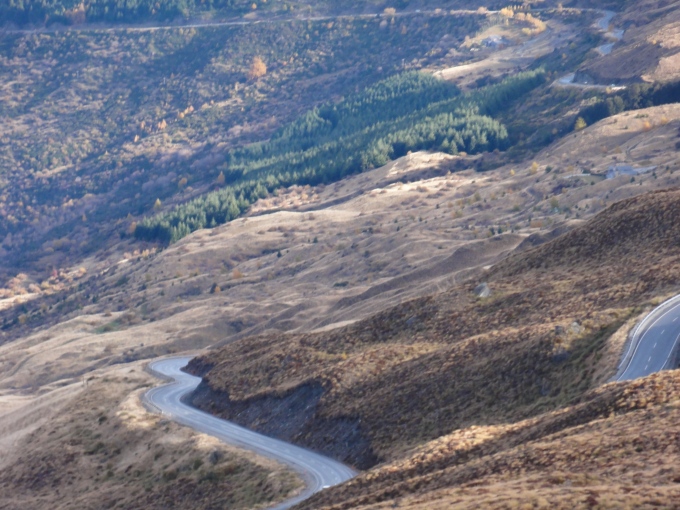
lookingdownfromcoronetpeak

And the story:

It was once said that a desperate man has everything to lose.

The man I was chasing was desperate, but I, on the other hand, was more desperate to catch him.

He’d left a trail of dead people from one end of the island to the other.

The team had put in a lot of effort to locate him, and now his capture was imminent.  We were following the car he was in, from a discrete distance, and, at the appropriate time, we would catch up, pull him over, and make the arrest.

There was nowhere for him to go.

The road led to a dead-end, and the only way off the mountain was back down the road were now on.  Which was why I was somewhat surprised when we discovered where he was.

Where was he going?

“Damn,” I heard Alan mutter.  He was driving, being careful not to get too close, but not far enough away to lose sight of him.

“What?”

“I think he’s made us.”

“How?”

“Dumb bad luck, I’m guessing.  Or he expected we’d follow him up the mountain.  He’s just sped up.”

“How far away?”

“A half-mile.  We should see him higher up when we turn the next corner.”

It took an eternity to get there, and when we did, Alan was right, only he was further on than we thought.”

“Step on it.  Let’s catch him up before he gets to the top.”

Easy to say, not so easy to do.  The road was treacherous, and in places just gravel, and there were no guard rails to stop a three thousand footfall down the mountainside.

Good thing then I had the foresight to have three agents on the hill for just such a scenario.

Ten minutes later, we were in sight of the car, still moving quickly, but we were going slightly faster.  We’d catch up just short of the summit car park.

Or so we thought.

Coming quickly around another corner we almost slammed into the car we’d been chasing.

“What the hell…” Aland muttered.

I was out of the car, and over to see if he was in it, but I knew that it was only a slender possibility.  The car was empty, and no indication where he went.

Certainly not up the road.  It was relatively straightforward for the next mile, at which we would have reached the summit.  Up the mountainside from here, or down.

I looked up.  Nothing.

Alan yelled out, “He’s not going down, not that I can see, but if he did, there’s hardly a foothold and that’s a long fall.”

Then where did he go?

Then a man looking very much like our quarry came out from behind a rock embedded just a short distance up the hill.

“Sorry,” he said quite calmly.  “Had to go if you know what I mean.”

I’d lost him.

It was as simple as that.

I had been led a merry chase up the hill, and all the time he was getting away in a different direction.

I’d fallen for the oldest trick in the book, letting my desperation blind me to the disguise that anyone else would see through in an instant.

It was a lonely sight, looking down that road, knowing that I had to go all that way down again, only this time, without having to throw caution to the wind.

“Maybe next time,” Alan said.

“We’ll get him.  It’s just a matter of time.”

© Charles Heath 2019-2021

Find this and other stories in “Inspiration, maybe”  available soon.

InspirationMaybe1v1

Searching for Locations: Port Macquarie – Day 1 – Part 4

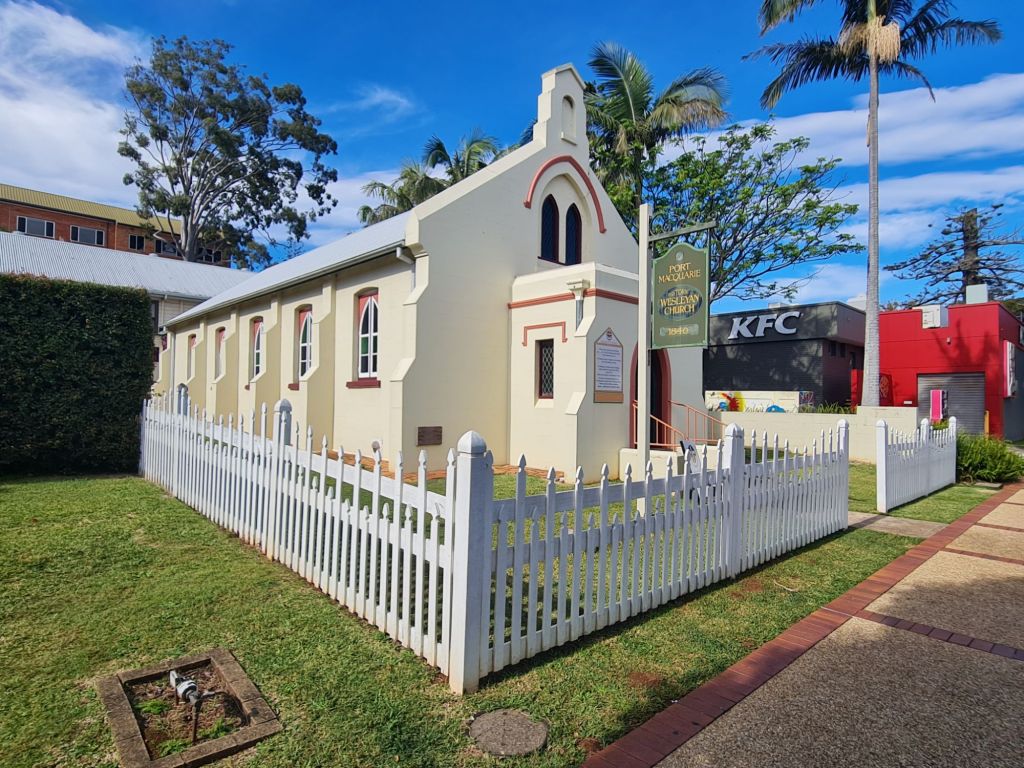
A group of churches

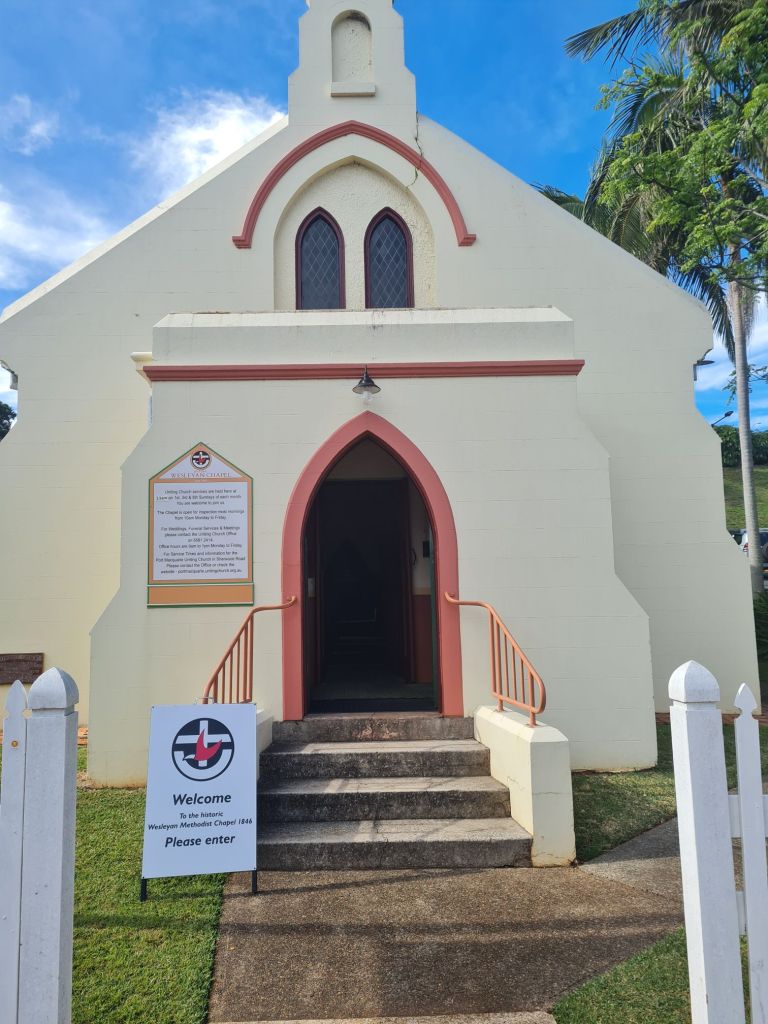
The oldest of the three is the Wesleyan Church

This Church was built between 1840 and 1846 on the Horton Street land allocated in 1835.  It was started in 1840, and then the building was suspended the same year due to bad economic times, only to be recommenced in 1844.

The first service was held in the unfinished chapel in November 1845, and the church was completed the following year.

St Thomas Church

This is the fifth oldest Anglican Church still in use in Australia and one of a few left built by convict labour.

The foundation stone was laid on 8th December 1824, took four years to build, and had the first service on the 28th February 1828.

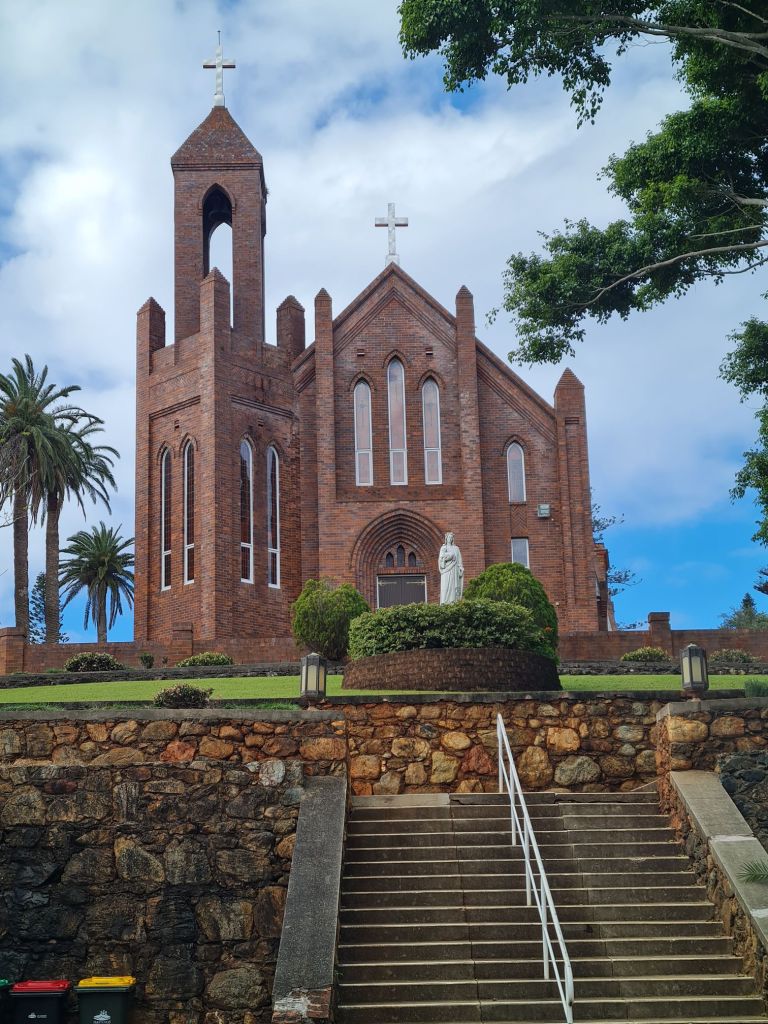
St Agnes Catholic Parish Church

The first St Agnes church was built in 1878, made of timber and stood for 62 years before it was replaced by the latest brick church finished in 1941, where it dominates the skyline.

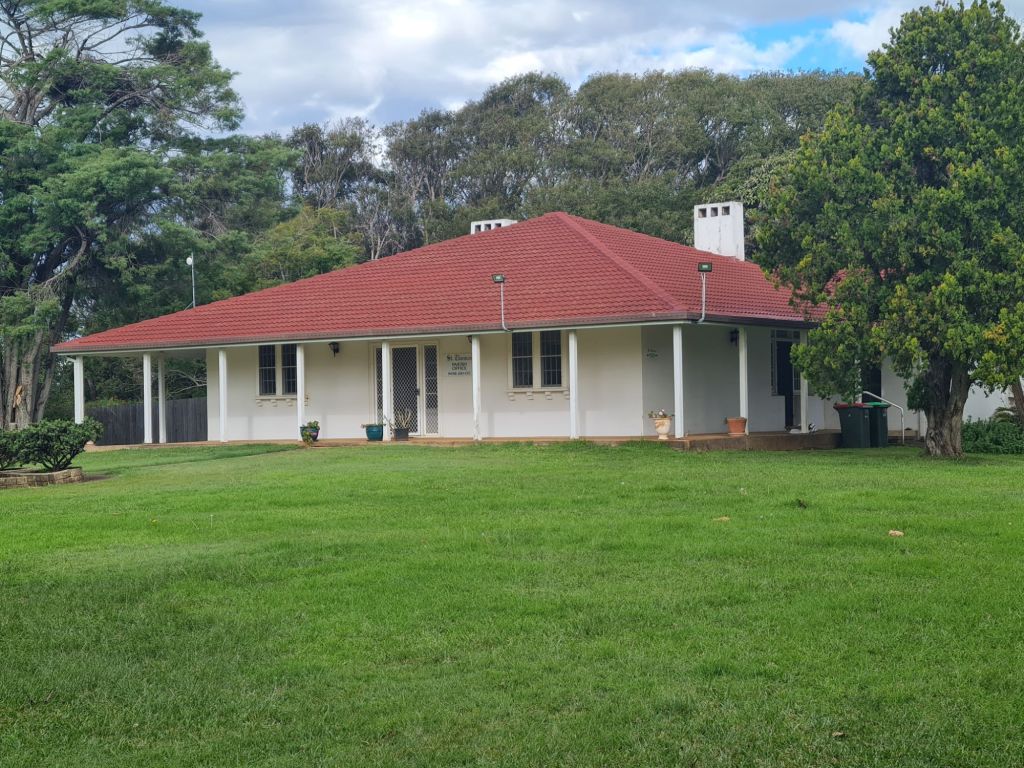
The Surgeon General’s House on Church Hill

The former residence of the penal settlement Surgeon General is now the St Thomas Anglican church administration office. The first building was erected in 1822, as a cottage and had a number of modifications until handed over to be used as the vicarage in 1847.

The dispensary

The Surgeon’s dispensary was also built in 1822 between the doctor’s residence and the hospital, until 1847 when it was used as the parish school for several years.

First Dig Two Graves

A sequel to “The Devil You Don’t”

Revenge is a dish best served cold – or preferably so when everything goes right

Of course, it rarely does, as Alistair, Zoe’s handler, discovers to his peril. Enter a wildcard, John, and whatever Alistair’s plan for dealing with Zoe was dies with him.

It leaves Zoe in completely unfamiliar territory.

John’s idyllic romance with a woman who is utterly out of his comfort zone is on borrowed time. She is still trying to reconcile her ambivalence, after being so indifferent for so long.

They agree to take a break, during which she disappears. John, thinking she has left without saying goodbye, refuses to accept the inevitable, calls on an old friend for help in finding her.

After the mayhem and being briefly reunited, she recognises an inevitable truth: there is a price to pay for taking out Alistair; she must leave and find them first, and he would be wise to keep a low profile.

But keeping a low profile just isn’t possible, and enlisting another friend, a private detective and his sister, a deft computer hacker, they track her to the border between Austria and Hungary.

What John doesn’t realise is that another enemy is tracking him to find her too. It could have been a grand tour of Europe. Instead, it becomes a race against time before enemies old and new converge for what will be an inevitable showdown.

Writing a book in 365 days – 214/215

Days 214 and 215

Taking an old story that has never been used and re-editing it

All of the thirteen passengers and crew, when the plane lifted off the runway on what had always been a routine hour-and-a-half flight, never thought they’d find themselves in what was, literally, a life and death situation.

Now, the air hung heavy with cigarette smoke, for nearly all smoked (and some for the first time).  Tension thickened the atmosphere to a point where it could almost be cut with a knife.

In the deathly quiet, all had time to reflect on the fate that had befallen them, and the resume of events read like the script of an archetypal disaster movie.

The first hint of trouble came when they’d lost one engine.  The pilot had been quite nonchalant about it because, he said, they had three others.  Only Harry thought he could detect a note of apprehension in his tone, a revelation he chose wisely to keep to himself.

Then, after a short time, they lost another engine.

Exactly twenty-five minutes later, they crashed.

Of the thirteen, in those precious seconds before impact, none believed they would survive, and all were shocked that only the pilot and co-pilot perished.  All admitted it had been a spectacular piece of flying on the pilot’s part, all, that is, except Rawlings.

Rawlings had been, from the departure lounge to moments before the plane crashed, the passenger from hell. Now, having recovered, he reverted to type. “A fine mess this blasted pilot has got us into,” Rawlings said for the umpteenth time.  No one had taken much notice before, and it was debatable whether anyone was taking notice now, for Rawlings had hardly endeared himself to the other passengers.

As the only person travelling first class, he made sure he received the best service (and the only one to receive any service for that matter) from the moment he came on board.  The fact that the airline had allocated only two stewardesses for the flight was the airline’s (and his fellow passengers’) problem, not his.

“After telling us how clever you are, Rawlings, why don’t you do something about it?”  An indistinguishable voice came from the rear of the plane.  It was an indication of the undercurrent of hate simmering beneath the icy calm.

Rawlings, still in the forward section of the plane, glared at the group, trying to put a face to the voice.  “To whom am I speaking?”

No one replied.

“No matter.”  He shrugged it off.  “Had the pilot managed to get the plane down in one piece, I could.  Since he didn’t, you can be assured I’ll think of something, which is more than I can say for some.”  It was, to him, a simple statement based on his assessment of the situation, but it served only to further alienate him from the others.

He was neither an aeronautical engineer nor apparently a problem solver.

Harry had known better days, and, not for the first time, he wished this had been one of them.  He’d had a premonition the previous night when he’d woken, bathed in sweat, an unconscious warning of an impending disaster.

Not that the threat of death was significant to him, for he knew it would come eventually, despite the doctor’s optimism, but not yet, not here, in the middle of nowhere, atop a mountain range in the freezing cold.

He glanced at his fellow passengers, a most curious mixture of travellers.

Rawlings was the egotistical, bombastic, thorough son-of-a-bitch.  He had gone out of his way to make the trip as miserable as possible for the others.  Status, to him, was all-important, even after the crash.

Harkness, Rawlings’ assistant (and relegated to Economy class because he was a servant), was the sort who said little and suffered a lot.  His defence of the pilot had caused Rawlings to ‘vent his spleen’ on him, after which, to Harkness, the silence must have been golden.

Daphne and her mother, Mrs Gaunt, two of the three women passengers on board, were congenial, cheerful people who bore up well considering they were terrified out of their wits.  Daphne, in fact, had taken over stewardess duties for the Economy passengers, along with a transferring airline employee, Winnie, a job much appreciated by them.

The remaining three passengers, geologists, were odd sorts who arrived late and almost drunk.  After take off, they’d fallen asleep and, in fact, had slept through the crash.  They were, Harry thought, in for one hell of a shock when they finally woke.

Of all on board, the stewardess named Bella had fared the worst, having, after the discovery of the death of the pilots, become hysterical.  It was an interesting development because she had kept a tight, calm grip on the situation all through the calamity.

Harry huddled closer under his blanket, only to remember his sore arm.  He didn’t think it was dislocated, but it certainly felt like it.  And the hell of it was, he couldn’t remember how it happened.  He shuddered as a gust of icy wind came through the rent in the fuselage near his seat.  But it was not only the cold which left him with almost uncontrollable shakes – it was also the onset of shock. 

In the back of his mind, he relived those cataclysmic minutes after successive engines failed.  It was then he wished he hadn’t been so insistent on having a window seat.

As the plane lurched sickeningly, the pilot calmly said they’d have to land immediately.  Of course, he added equally as calm, it would be difficult in mountainous country.  However, they were fortunate that it had been snowing recently.  All except Rawlings took the news with equanimity.  It was odd, someone said later, that with all his knowledge and self-praise, Rawlings didn’t take over the plane and fly them to safety.

The plane was barely in the air when the order came to brace themselves, and all were prepared when the plane hit the ground moments later.

The plane came to rest abruptly in a snow-covered valley; the silence, after the cacophony of tearing metal and involuntary screams, was almost maddening.  The first realisation each had was that they were still alive – the second, the icy wind coming in through the large cracks in the fuselage.

Harry was the first to move himself into action, and to make an appraisal of the situation.  The other passengers were more or less unharmed, except for the other stewardess, Alice, who was slightly dazed.  Then, Harkness joining him, they followed Bella forward to the flight deck.  When they managed to wrench the door open, they were greeted by a scene of total destruction.  Both pilots were dead, unrecognisable in the mass of twisted wreckage.  Bella screamed, then fainted. Harry quickly reclosed the door before he was physically ill.

At least it explained why the plane had stopped so abruptly:  they’d crashed into a rock in the last stages of the slide.  It was miraculous that the plane hadn’t caught fire.

Harry had no intention of taking charge; it just happened.  He told the others what the situation was briefly and in a calm and down to earth, then suggested they search for food and other items such as blankets.  Everyone noted Rawlings’ lack of enthusiasm to help, and if it had not been for Daphne, he would not have received blankets or food.  Most ignored him, wondering at the fact that he could still be so aloof in such tragic circumstances.

Because of the cold, they quickly organised themselves closer together for extra warmth, so they could wait for their rescue.  It wouldn’t, they reasoned relatively cheerfully, be long. We all expected the pilot to have radioed the flight path check point, the calamity details and an SOS.

Whilst the others may have considered Rawlings little more than a pain in the neck, it would have surprised them to learn that he despaired for them.  He couldn’t understand their attitude towards him, for all he wanted to do was make them feel better, and, if he could, help. At least that was what he was thinking.

But there was little chance of that occurring, and, in fact, as much chance as him receiving the treatment he considered he deserved.  It was clear in his own mind that there were two types of people in the world: the leaders and the led.  By his station in life, he was one of the leaders.  Why, he asked himself rhetorically, didn’t they realise that?  He glared at them, all studiously ignoring his presence.  There was, he thought bitterly, little prospect of getting any assistance from those people.

Conditions were unbearable during the first night.  Darkness had fallen quickly, and with no hot food to ward off even a fraction of the coldness that had settled on them, their relatively good spirits quickly dissipating. 

To Harry (and the others), the night seemed interminable, and he found it impossible to sleep for any length of time.  He was shaking almost uncontrollably, despite the warm clothing and number of blankets, and, as dawn broke, he wasted no time getting up and about to get his circulation going again, urging the others to do likewise.  It was something he remembered having seen in a film once: if the cold was allowed to take over, a person quickly succumbed and died.

His first venture outside was something of an experience.  In the first instance, it was colder outside than in, if that was possible, and in the second, the landscape was as bleak, in his opinion, as their prospects of rescue. Another thought he should keep to himself.

After trekking some distance through the rather solid snow and up a rise, he found he had a good view of the plane, and the fact that there were, strangely, no trees from one end of the valley to the other.  The same could not be said for the surrounding country.  It seemed an impossibility that the pilot had been able to find such a place, and, desperately unlucky, he should hit the only rock Harry could see in the line of the plane’s path.

The plane was half covered in snow.  It was apparent it had been snowing during the night, and by the look of the sky, more was on the way.  Low clouds continually swept through the valley, obscuring everything from view, and that, he considered, would make discovery from the air nigh on impossible.

What it really meant was that they would have to come up with their own plan of action rather than wait for hypothermia to take its toll.  It was something he had been thinking about most of the night, but he had been unable to progress to any sort of workable alternatives.

During a clear period, Harry saw Harkness coming towards him slowly.  He was rapidly gaining respect for Harkness, as he was not only surprisingly resilient(despite being blunted by the more dominant Rawlings), but he was also resourceful.

By the time he reached Harry, he was out of breath and needed a few minutes to recover.  Harry noted he looked a good deal older than he had first estimated.

“What a hike, but it sure beats the hell out of waiting down there,” Harkness said when he’d recovered sufficiently, nodding towards the wreckage.  “And, God knows how, I feel warm.”

“So do I.  It was one of the reasons I came here.”

“Those three geologists, or whatever they are, are finally awake.  Boy, you should have seen their faces.  One swore he’d give up drink forever.”

“He may get his wish sooner than he thinks.”

“You don’t rate our chances of discovery high, eh?”

“Take a look.”  Harry beckoned to the mist, which was back and swirling through the valley, obliterating everything in their view.  Harry, in fact, could hardly see the plane.

“Yes.  I see what you mean.  What do you think we should do?”

“God knows.  But one thing is for sure, I don’t think we can afford to sit and wait for someone to come and find us.  Not under the current circumstances, with more snow imminent.   It’ll take only another fall to completely hide us from any viewpoint.”

Harkness looked at the sky, then at the surroundings, and nodded in agreement, adding, after a minute, “It seems odd this is the only part of the country that’s clear of trees.  Do you think there’s any significance in that?”

“Exactly, would you believe, what I was thinking?”

“Do you think we might be near help?”

“Who knows.  But, because of the urgency of the situation, I think we should find out.  The question is, who is the ideal person?”  There was, however, no doubt in his mind.

“You’re mad, stark, staring mad,” Rawlings said when Harry told the others of the plan he and Harkness had formulated on their way back to the plane.

“I agree there is an element of risk….”

“Risk?” Rawlings exploded.  “Risk?  It’s bloody suicide.  My own view is that we should sit tight.  We have enough to eat, and we’re relatively warm.  It won’t be long before the search parties are out now we are overdue.”

“You haven’t been outside.  Circumstances dictate that we must seek help.  It’s been explained in detail.  If you cannot understand the situation, then don’t interfere.”  Harkness glared at his old chief, for the first time feeling more than a match for him.  Rawlings would never again dominate him.

“Then you’re fools, as are all the rest of you if you condone this idiocy.  I wash my hands of it.”  And he ignored them, going back to his book.  If that Davidson character wanted to kill himself, that was his business.

There were no other objections.  The others understood the realities of the situation, both Harkness and Harry had explained at length.  Harry would seek assistance.  Harkness would do his best to keep the others alive.

Then, after a good meal (in the circumstances) and taking enough food for two days, Harry left.  At the top of the rise, he stopped, briefly, looking at the scene.  It was, he thought, exactly as it had been in the dream.

For two days, it had snowed continuously.  The sub-zero temperatures had virtually sapped them all of whatever energy they had left, and, on the morning of the third day, they were all barely alive

At the end of the second day, Harkness had requested everybody to huddle together, including the standoffish Rawlings, who finally agreed, despite inner misgivings.  It was probably this single action that saved them.

Harkness, though he said nothing, had given up hope that Harry would still be alive.  No one could have survived the intensity of the blizzard.

Harkness had woken to inky darkness and a death-like silence, the storm having abated.  His first thought was that he had died, but that passed as the cold slowly made itself felt.  Soon after, finding his torch still worked, he roused everyone and cajoled or browbeat them into doing their exercises to ward off frostbite.

It was then that they heard the strange throbbing sound, and Harkness instinctively tried to get outside and found they’d been snowed in.  As the throbbing sound passed over them again, Harkness didn’t need to ask for assistance to make an opening through the snow.  They frantically dug their way out; luckily, the snow wall was only of powder-like consistency. 

Not long after daylight showed through, and then Harkness was out.  But the plane, or what he assumed to be a plane, had gone.

Instead, he was alone, by the snow mountain that covered the plane, greeted by a perfectly blue sky and the sun’s rays.  It was, he thought wryly, perfect skiing weather, but awfully lonely if no one could see where you were.

In a minute, he was joined by Daphne, and the disappointment was written on her face.  They waited, wordless, by the plane for an hour, glad to be out of the confined space of the fuselage, and were, at various times, joined by the others, escaping what Mrs Gaunt had said (now, after the rescue plane had gone) would probably be their grave.  The disbelief and joy of having survived the crash had now worn off, and Harkness knew that if they had to try to survive another night, some might not make it.

He was alone, striking out for the rise when the throbbing sound returned, coming from behind him.  And judging by the sound, it could not be a plane.  It was too low and too slow.  Thus, he was not surprised when a helicopter hovered over the rise and slowed as the occupants sighted him waving frantically, and yelling, quickly being joined by the others.

They all couldn’t believe they’d been rescued, all, that is, except Rawlings.  In every instance, Rawlings had been the exception, and it was not to his credit.  He was the only one who had suffered severely from frostbite.  He was, however, the one to say, when they finally reached what he called civilisation, that he’d been right:  that all they had to do was sit tight and wait.  They’d be rescued sooner or later.

That was when the leader of the rescue operation shattered his illusion – and shocked everyone else.  “That’s not necessarily so, Mr Rawlings.  You would have been discovered, but late in spring, after the thaw.  The plane was terribly off course, and, to be honest, after the second day, we’d given up any real hope of finding you.  The country around here is very rugged.  No, you owe a great deal to a fellow called Davidson.”

“Davidson, you say?” Harkness muttered.  “He’s alive?”

“Unfortunately, no.  He died soon after he told us about the plane and where it had crashed.  If he hadn’t, you’d still be there.”

“My God.”  Harkness slumped into a chair, only barely able to hear Rawlings say, quietly, “I told him it was suicide, but no one listened to me.  Suicide, I said.  And, as for that damn pilot…”

©  Charles Heath  2025

An excerpt from “Strangers We’ve Become” – Coming Soon

I wandered back to my villa.

It was in darkness.  I was sure I had left several lights on, especially over the door so I could see to unlock it.

I looked up and saw the globe was broken.

Instant alert.

I went to the first hiding spot for the gun, and it wasn’t there.  I went to the backup and it wasn’t there either.  Someone had found my carefully hidden stash of weapons and removed them.

Who?

There were four hiding spots and all were empty.  Someone had removed the weapons.  That could only mean one possibility.

I had a visitor, not necessarily here for a social call.

But, of course, being the well-trained agent I’d once been and not one to be caught unawares, I crossed over to my neighbor and relieved him of a weapon that, if found, would require a lot of explaining.

Suitably armed, it was time to return the surprise.

There were three entrances to the villa, the front door, the back door, and a rather strange escape hatch.  One of the more interesting attractions of the villa I’d rented was its heritage.  It was built in the late 1700s, by a man who was, by all accounts, a thief.  It had a hidden underground room which had been in the past a vault but was now a wine cellar, and it had an escape hatch by which the man could come and go undetected, particularly if there was a mob outside the door baying for his blood.

It now gave me the means to enter the villa without my visitors being alerted, unless, of course, they were near the vicinity of the doorway inside the villa, but that possibility was unlikely.  It was not where anyone could anticipate or expect a doorway to be.

The secret entrance was at the rear of the villa behind a large copse, two camouflaged wooden doors built into the ground.  I move aside some of the branches that covered them and lifted one side.  After I’d discovered the doors and rusty hinges, I’d oiled and cleaned them, and cleared the passageway of cobwebs and fallen rocks.  It had a mildew smell, but nothing would get rid of that.  I’d left torches at either end so I could see.

I closed the door after me, and went quietly down the steps, enveloped in darkness till I switched on the torch.  I traversed the short passage which turned ninety degrees about halfway to the door at the other end.  I carried the key to this door on the keyring, found it and opened the door.  It too had been oiled and swung open soundlessly.

I stepped in the darkness and closed the door.

I was on the lower level under the kitchen, now the wine cellar, the ‘door’ doubling as a set of shelves which had very little on them, less to fall and alert anyone in the villa.

Silence, an eerie silence.

I took the steps up to the kitchen, stopping when my head was level with the floor, checking to see if anyone was waiting.  There wasn’t.  It seemed to me to be an unlikely spot for an ambush.

I’d already considered the possibility of someone coming after me, especially because it had been Bespalov I’d killed, and I was sure he had friends, all equally as mad as he was.  Equally, I’d also considered it nigh on impossible for anyone to find out it was me who killed him because the only people who knew that were Prendergast, Alisha, a few others in the Department, and Susan.

That raised the question of who told them where I was.

If I was the man I used to be, my first suspect would be Susan.  The departure this morning, and now this was too coincidental.  But I was not that man.

Or was I?

I reached the start of the passageway that led from the kitchen to the front door and peered into the semi-darkness.  My eyes had got used to the dark, and it was no longer an inky void.  Fragments of light leaked in around the door from outside and through the edge of the window curtains where they didn’t fit properly.  A bone of contention upstairs in the morning, when first light shone and invariably woke me up hours before I wanted to.

Still nothing.

I took a moment to consider how I would approach the visitor’s job.  I would get a plan of the villa in my head, all entrances, where a target could be led to or attacked where there would be no escape.

Coming in the front door.  If I was not expecting anything, I’d just open the door and walk-in.  One shot would be all that was required.

Contract complete.

I sidled quietly up the passage staying close to the wall, edging closer to the front door.  There was an alcove where the shooter could be waiting.  It was an ideal spot to wait.

Crunch.

I stepped on some nutshells.

Not my nutshells.

I felt it before I heard it.  The bullet with my name on it.

And how the shooter missed, from point-blank range, and hit me in the arm, I had no idea.  I fired off two shots before a second shot from the shooter went wide and hit the door with a loud thwack.

I saw a red dot wavering as it honed in on me and I fell to the floor, stretching out, looking up where the origin of the light was coming and pulled the trigger three times, evenly spaced, and a second later I heard the sound of a body falling down the stairs and stopping at the bottom, not very far from me.

Two assassins.

I’d not expected that.

The assassin by the door was dead, a lucky shot on my part.  The second was still breathing.

I checked the body for any weapons and found a second gun and two knives.  Armed to the teeth!

I pulled off the balaclava; a man, early thirties, definitely Italian.  I was expecting a Russian.

I slapped his face, waking him up.  Blood was leaking from several slashes on his face when his head had hit the stairs on the way down.  The awkward angle of his arms and legs told me there were broken bones, probably a lot worse internally.  He was not long for this earth.

“Who employed you?”

He looked at me with dead eyes, a pursed mouth, perhaps a smile.  “Not today my friend.  You have made a very bad enemy.”  He coughed and blood poured out of his mouth.  “There will be more …”

Friends of Bespalov, no doubt.

I would have to leave.  Two unexplainable bodies, I’d have a hard time explaining my way out of this mess.  I dragged the two bodies into the lounge, clearing the passageway just in case someone had heard anything.

Just in case anyone was outside at the time, I sat in the dark, at the foot of the stairs, and tried to breathe normally.  I was trying not to connect dots that led back to Susan, but the coincidence was worrying me.

A half-hour passed and I hadn’t moved.  Deep in thought, I’d forgotten about being shot, unaware that blood was running down my arm and dripping onto the floor.

Until I heard a knock on my front door.

Two thoughts, it was either the police, alerted by the neighbors, or it was the second wave, though why would they be knocking on the door?

I stood, and immediately felt a stabbing pain in my arm.  I took out a handkerchief and turned it into a makeshift tourniquet, then wrapped a kitchen towel around the wound.

If it was the police, this was going to be a difficult situation.  Holding the gun behind my back, I opened the door a fraction and looked out.

No police, just Maria.  I hoped she was not part of the next ‘wave’.

“You left your phone behind on the table.  I thought you might be looking for it.”  She held it out in front of her.

When I didn’t open the door any further, she looked at me quizzically, and then asked, “Is anything wrong?”

I was going to thank her for returning the phone, but I heard her breathe in sharply, and add, breathlessly, “You’re bleeding.”

I looked at my arm and realized it was visible through the door, and not only that, the towel was soaked in blood.

“You need to go away now.”

Should I tell her the truth?  It was probably too late, and if she was any sort of law-abiding citizen she would go straight to the police.

She showed no signs of leaving, just an unnerving curiosity.  “What happened?”

I ran through several explanations, but none seemed plausible.  I went with the truth.  “My past caught up with me.”

“You need someone to fix that before you pass out from blood loss.  It doesn’t look good.”

“I can fix it.  You need to leave.  It is not safe to be here with me.”

The pain in my arm was not getting any better, and the blood was starting to run down my arm again as the tourniquet loosened.  She was right, I needed it fixed sooner rather than later.

I opened the door and let her in.  It was a mistake, a huge mistake, and I would have to deal with the consequences.  Once inside, she turned on the light and saw the pool of blood just inside the door and the trail leading to the lounge.  She followed the trail and turned into the lounge, turned on the light, and no doubt saw the two dead men.

I expected her to scream.  She didn’t.

She gave me a good hard look, perhaps trying to see if I was dangerous.  Killing people wasn’t something you looked the other way about.  She would have to go to the police.

“What happened here?”

“I came home from the cafe and two men were waiting for me.  I used to work for the Government, but no longer.  I suspect these men were here to repay a debt.  I was lucky.”

“Not so much, looking at your arm.”

She came closer and inspected it.

“Sit down.”

She found another towel and wrapped it around the wound, retightening the tourniquet to stem the bleeding.

“Do you have medical supplies?”

I nodded.  “Upstairs.”  I had a medical kit, and on the road, I usually made my own running repairs.  Another old habit I hadn’t quite shaken off yet.

She went upstairs, rummaged, and then came back.  I wondered briefly what she would think of the unmade bed though I was not sure why it might interest her.

She helped me remove my shirt, and then cleaned the wound.  Fortunately, she didn’t have to remove a bullet.  It was a clean wound but it would require stitches.

When she’d finished she said, “Your friend said one day this might happen.”

No prizes for guessing who that friend was, and it didn’t please me that she had involved Maria.

“Alisha?”

“She didn’t tell me her name, but I think she cares a lot about you.  She said trouble has a way of finding you, gave me a phone and said to call her if something like this happened.”

“That was wrong of her to do that.”

“Perhaps, perhaps not.  Will you call her?”

“Yes.  I can’t stay here now.  You should go now.  Hopefully, by the time I leave in the morning, no one will ever know what happened here, especially you.”

She smiled.  “As you say, I was never here.”

© Charles Heath 2018-2022

strangerscover9

In a word: Dear

Yes, it’s that simple word that we use to call someone affectionately.

Or sometimes, with a little accent on the word; yes, dear and no, dear.

In other words, it’s a person regarded with deep affection.

It can also mean expensive, by saying, that’s a bit dear, isn’t it, when we’re really saying it’s way overpriced.

I can’t remember how many times I’ve said something is ‘too dear’ to the children.

Grannies tend to use the expression, ‘be a dear and…’, to get you to do something for them.

Friends, sometimes tongue in cheek, will say, ‘oh dear, I’ve upset you’, when that was exactly what they meant to do.  Friends you say?  Yes, friends indeed.

And then we always start a letter (always?  Who writes letters any more?) with

Dear John (oops, not one of THOSE letters)

Dear Sir/Madam

Of course, instead of swearing, you could simply say ‘Oh dear, you’ve let us down again!’.

And when you lose your job, which is happening a lot at the moment, it is said it would cost you dear, though sometimes it would be more appropriate to use the adverb, dearly.

It is not to be confused with the word deer which is an animal, the males of which have antlers.

There are a number of different types of deer, such as reindeer and elk.  In Canada, they are called caribou.

In Robin Hood’s day, killing deer brought you very harsh punishment.

And one of my favourite meats is venison, meat from a deer, which are farmed in New Zealand along with sheep.

Another excerpt from ‘Betrayal’; a work in progress

My next destination in the quest was the hotel we believed Anne Merriweather had stayed at.

I was, in a sense, flying blind because we had no concrete evidence she had been there, and the message she had left behind didn’t quite name the hotel or where Vladimir was going to take her.

Mindful of the fact that someone might have been following me, I checked to see if the person I’d assumed had followed me to Elizabeth’s apartment was still in place, but I couldn’t see him. Next, I made a mental note of seven different candidates and committed them to memory.

Then I set off to the hotel, hailing a taxi. There was the possibility the cab driver was one of them, but perhaps I was slightly more paranoid than I should be. I’d been watching the queue, and there were two others before me.

The journey took about an hour, during which time I kept an eye out the back to see if anyone had been following us. If anyone was, I couldn’t see them.

I had the cab drop me off a block from the hotel and then spent the next hour doing a complete circuit of the block the hotel was on, checking the front and rear entrances, the cameras in place, and the siting of the driveway into the underground carpark. There was a camera over the entrance, and one we hadn’t checked for footage. I sent a text message to Fritz to look into it.

The hotel lobby was large and busy, which was exactly what you’d want if you wanted to come and go without standing out. It would be different later at night, but I could see her arriving about mid-afternoon, and anonymous among the type of clientele the hotel attracted.

I spent an hour sitting in various positions in the lobby simply observing. I had already ascertained where the elevator lobby for the rooms was, and the elevator down to the car park. Fortunately, it was not ‘guarded’ but there was a steady stream of concierge staff coming and going to the lower levels, and, just from time to time, guests.

Then, when there was a commotion at the front door, what seemed to be a collision of guests and free-wheeling bags, I saw one of the seven potential taggers sitting by the front door. Waiting for me to leave? Or were they wondering why I was spending so much time there?

Taking advantage of that confusion, I picked my moment to head for the elevators that went down to the car park, pressed the down button, and waited.

The was no car on the ground level, so I had to wait, watching, like several others, the guests untangling themselves at the entrance, and an eye on my potential surveillance, still absorbed in the confusion.

The doors to the left car opened, and a concierge stepped out, gave me a quick look, then headed back to his desk. I stepped into the car, pressed the first level down, the level I expected cars to arrive on, and waited what seemed like a long time for the doors to close.

As they did, I was expecting to see a hand poke through the gap, a latecomer. Nothing happened, and I put it down to a television moment.

There were three basement levels, and for a moment, I let my imagination run wild and considered the possibility that there were more levels. Of course, there was no indication on the control panel that there were any other floors, and I’d yet to see anything like it in reality.

With a shake of my head to return to reality, the car arrived, the doors opened, and I stepped out.

A car pulled up, and the driver stepped out, went around to the rear of his car, and pulled out a case. I half expected him to throw me the keys, but the instant glance he gave me told him was not the concierge, and instead brushed past me like I wasn’t there.

He bashed the up button several times impatiently and cursed when the doors didn’t open immediately. Not a happy man.

Another car drove past on its way down to a lower level.

I looked up and saw the CCTV camera, pointing towards the entrance, visible in the distance. A gate that lifted up was just about back in position and then made a clunk when it finally closed. The footage from the camera would not prove much, even if it had been working, because it didn’t cover the life lobby, only in the direction of the car entrance.

The doors to the other elevator car opened, and a man in a suit stepped out.

“Can I help you, sir? You seem lost.”

Security, or something else. “It seems that way. I went to the elevator lobby, got in, and it went down rather than up. I must have been in the wrong place.”

“Lost it is, then, sir.” I could hear the contempt for Americans in his tone. “If you will accompany me, please.”

He put out a hand ready to guide me back into the elevator. I was only too happy to oblige him. There had been a sign near the button panel that said the basement levels were only to be accessed by the guests.

Once inside, he turned a key and pressed the lobby button. The doors closed, and we went up. He stood, facing the door, not speaking. A few seconds later, he was ushering me out to the lobby.

“Now, sir, if you are a guest…”

“Actually, I’m looking for one. She called me and said she would be staying in this hotel and to come down and visit her. I was trying to get to the sixth floor.”

“Good. Let’s go over the the desk and see what we can do for you.”

I followed him over to the reception desk, where he signalled one of the clerks, a young woman who looked and acted very efficiently, and told her of my request, but then remained to oversee the proceeding.

“Name of guest, sir?”

“Merriweather, Anne. I’m her brother, Alexander.” I reached into my coat pocket and pulled out my passport to prove that I was who I said I was. She glanced cursorily at it.

She typed the name into the computer, and then we waited a few seconds while it considered what to output. Then, she said, “That lady is not in the hotel, sir.”

Time to put on my best-confused look. “But she said she would be staying here for the week. I made a special trip to come here to see her.”

Another puzzled look from the clerk, then, “When did she call you?”

An interesting question to ask, and it set off a warning bell in my head. I couldn’t say today, it would have to be the day she was supposedly taken.

“Last Saturday, about four in the afternoon.”

Another look at the screen, then, “It appears she checked out Sunday morning. I’m afraid you have made a trip in vain.”

Indeed, I had. “Was she staying with anyone?”

I just managed to see the warning pass from the suited man to the clerk. I thought he had shown an interest when I mentioned the name, and now I had confirmation. He knew something about her disappearance. The trouble was, he wasn’t going to volunteer any information because he was more than just hotel security.

“No.”

“Odd,” I muttered. “I thought she told me she was staying with a man named Vladimir something or other. I’m not too good at pronouncing those Russian names. Are you sure?”

She didn’t look back at the screen. “Yes.”

“OK, now one thing I do know about staying in hotels is that you are required to ask guests with foreign passports their next destination, just in case they need to be found. Did she say where she was going next?” It was a long shot, but I thought I’d ask.

“Moscow. As I understand it, she lives in Moscow. That was the only address she gave us.”

I smiled. “Thank you. I know where that is. I probably should have gone there first.”

She didn’t answer; she didn’t have to, her expression did that perfectly.

The suited man spoke again, looking at the clerk. “Thank you.” He swivelled back to me. “I’m sorry we can’t help you.”

“No. You have more than you can know.”

“What was your name again, sir, just in case you still cannot find her?”

“Alexander Merriweather. Her brother. And if she is still missing, I will be posting a very large reward. At the moment, you can best contact me via the American Embassy.”

Money is always a great motivator, and that thoughtful expression on his face suggested he gave a moment’s thought to it.

I left him with that offer and left. If anything, the people who were holding her would know she had a brother, that her brother was looking for her, and equally that brother had money.

© Charles Heath – 2018-2025

A long short story that can’t be tamed – I always wanted to rescue a damsel in distress – 1

One

It was not the practicality of the place, where many, many passengers began or ended their journey, whether to or from a holiday or place of work or something else.

It was not the fact many people worked there, in the cafe, as ticket sellers or collectors, as station assistants helping with the mail, parcels or other types of freight, or just there to assist passengers.

For me, it was a reminder of an ending, an end to the life I once knew and had hoped would last forever.

It was where I said bon-voyage to a very special person, hoping as the train pulled out of the station it was not a goodbye.

Three months later I received a text message that said, basically, she was not coming back, that she had met someone special.

Oddly enough I was at the very same station when I received that fateful text and after a hour’s contemplation, and a sudden realization that I had mentally prepared myself for the inevitable, and in fact had talked about it with her sister Emily, not three days before.

She had told me then she had received a very strange email from Cecile, almost as if it hadn’t been written by her, a prelude to that of not returning home.  She, too, had received a message similar to mine.

We thought it odd, but it was not out of character for her, and although it raised concerns with her parents Emily, and I, thought no more of it.

Not till nearly three months later when both Emily and I received another text, from a blocked number somewhere in England that simply said, “help cee”.

‘Cee’ was a name she had shared with Emily and I and would never necessarily give to anyone else to use, not unless she was very close to them.  Not even her parents could use it.  I had considered it was miss-sent, that it was for her ‘new’ friend and not me.

Not until there was a knock on the door of my apartment, and found Emily, and a packed bag, on my doorstep.

“Something is very wrong,” she said without preamble, then barged past, one of her suitcase wheels running over my foot.

I closed the door and leaned against it.  “What are you talking about?”

“You would have got the same message.  She would not use Cee to anyone other than us.”

She flopped down on the best seat in the room, looking tired and exasperated.

“I thought it was miss-sent.  A new boyfriend that’s keeping her there, surely she would accord him the same privilege.”

“You’re joking.  How long did it take you, before she told you?”

I’d known her since grade school, but it was not until we graduated from university, she accorded that privilege.  But she was right.

“OK.  So why did you come here?  If she’s in trouble, there’s not much I can do from here.”

She dug into a voluminous handbag, pulled out an envelope, and waved it in the air.  “We’re going to London.  Tonight.  Pack a bag.  Your passport is current, and I’ve got all the necessary documentation sorted.  You know my dad; he just made a few calls.”

I thought about it for a minute or two.  London was a large city and the odds of picking up her trail after so long was remote, even if we received the message in the last 24 hours, nor did it mean it emanated from London, but could be from anywhere.  Obviously, she knew something I didn’t.

“You know where that message came from?”

“Yes.  When that message was sent, it was near where she was living.  Dad has been talking to the police over there and said she was not home when they called.  It’s the first place we’re going once we get there.”  Then, a second later, she said, “don’t just stand there, get packing.”

It was like an expression I’d heard often, going from one extreme to the other.

When we left it was the middle of summer and coming down from a high of 42 degrees Celsius, to when we landed at just after 6 am to a temperature that was below zero.  We felt the first force of it going up the gangway, then delayed the full force of the weather until we got off the underground at Wimbledon.

Early morning on a workday people were flooding into the station on their way to work, only to discover delays.  We’d seen the snow come, first in a trickle and then a steady downpour that only eased off when we arrived.

It stopped just as we came out of the station onto Wimbledon Hill Road, and from there it was a short walk to Worple Road.  At least, if it held off long enough, we would get to her flat just cold, not wet and cold.  To be honest, the snow was a novelty for us, because where we lived, it didn’t snow.  We had to go to the mountains a few hundred miles away for that privilege.

But the fact it wasn’t snowing didn’t make it any more pleasant.  If anything, the exertion needed to traverse the icy pathways and nearly slipping over several times made it worse.   Emily wasn’t impressed that she had to carry her case instead of being able to drag it, and it certainly didn’t improve her temper.

For the distance, about a half-mile, it took longer than expected because of the weather and the state of the path.  Added to that, it just started to snow again, lightly at least, but we made it, went inside, and shook off the snow on the ground floor foyer, then went up the stairs to the third floor.

Her flat was 3c and overlooked the main road.

Emily opened the door and we both stood back as the door swung open.

It was not what we expected.

©  Charles Heath  2024

Memories of the conversations with my cat – 51

As some may be aware, but many are not, Chester, my faithful writing assistant, mouse catcher, and general pain in the neck, passed away some years ago.

Recently, I was running a series based on his adventures, under the title of Past Conversations with my cat.

For those who have not had the chance to read about all of his exploits, I will run the series again from Episode 1

These are the memories of our time together…

20151129_000912

This is Chester. Our standoff continues.

I can tell he’s not happy because when he’s going down the passage and I’m going in the opposite direction, he changes sides.

Instead of coming over to see what food he’s getting, he waits in another room. That is fine by me because it takes a little longer to find out he’s not in an eating mood.

And come to think of it, he no longer climbs up on the table when we’re having fish. I’ve told him more than once that eating off someone else’s plate is just not good manners.

Perhaps I should not be so concerned that he’s not talking to me, because he’s almost become the cat I’ve always wanted.

What’s that expression, cut your nose off to spite your face?

But it isn’t going to last. This morning, when I went down to the library, which is just a fancy name for my writing room, he was sitting on top of my closed laptop.

I never used to close it, but the last time I cleaned it I found cat hair, an allegation he vehemently denied and tried to tell me it was the dog we used to have.

I didn’t bother telling him the laptop is new, and the dog’s been gone for 12 years.

I ask him to move.

He yawns and makes himself more comfortable.

He still hasn’t realised that all I have to do is pick him up and move him, which I do.

I sit down to start work, he jumps up on the table and gives me that ‘I dare you to do that again’ look, and I stare back with the ‘do you really want to do this’ look.

Fifteen minutes later…