The first case of PI Walthenson – “A Case of Working With the Jones Brothers”

This case has everything, red herrings, jealous brothers, femme fatales, and at the heart of it all, greed.

See below for an excerpt from the book…

Coming soon!

PIWalthJones1

An excerpt from the book:

When Harry took the time to consider his position, a rather uncomfortable position at that, he concluded that he was somehow involved in another case that meant very little to him.

Not that it wasn’t important in some way he was yet to determine, it was just that his curiosity had got the better of him, and it had led to this: sitting in a chair, securely bound, waiting for someone one of his captors had called Doug.

It was not the name that worried him so much, it was the evil laugh that had come after the name was spoken.

Doug what? Doug the ‘destroyer’, Doug the ‘dangerous’, Doug the ‘deadly’; there was any number of sinister connotations, and perhaps that was the point of the laugh, to make it more frightening than it was.

But there was no doubt about one thing in his mind right then: he’d made a mistake. A very big. and costly, mistake. Just how big the cost, no doubt he would soon find out.

His mother, and his grandmother, the wisest person he had ever known, had once told him never to eavesdrop.

At the time he couldn’t help himself and instead of minding his own business, listening to a one-sided conversation which ended with a time and a place. The very nature of the person receiving the call was, at the very least, sinister, and, because of the cryptic conversation, there appeared to be, or at least to Harry, criminal activity involved.

For several days he had wrestled with the thought of whether he should go. Stay on the fringe, keep out of sight, observe and report to the police if it was a crime. Instead, he had willingly gone down the rabbit hole.

Now, sitting in an uncomfortable chair, several heat lamps hanging over his head, he was perspiring, and if perspiration could be used as a measure of fear, then Harry’s fear was at the highest level.

Another runnel of sweat rolled into his left eye, and, having his hands tied, literally, it made it impossible to clear it. The burning sensation momentarily took his mind off his predicament. He cursed and then shook his head trying to prevent a re-occurrence. It was to no avail.

Let the stinging sensation be a reminder of what was right and what was wrong.

It was obvious that it was the right place and the right time, but in considering his current perilous situation, it definitely was the wrong place to be, at the worst possible time.

It was meant to be his escape, an escape from the generations of lawyers, what were to Harry, dry, dusty men who had been in business since George Washington said to the first Walthenson to step foot on American soil, ‘Why don’t you become a lawyer?” when asked what he could do for the great man.

Or so it was handed down as lore, though Harry didn’t think Washington meant it literally, the Walthenson’s, then as now, were not shy of taking advice.

Except, of course, when it came to Harry.

He was, Harry’s father was prone to saying, the exception to every rule. Harry guessed his father was referring to the fact his son wanted to be a Private Detective rather than a dry, dusty lawyer. Just the clothes were enough to turn Harry off the profession.

So, with a little of the money Harry inherited from one of his aunts, he leased an office in Gramercy Park and had it renovated to look like the Sam Spade detective agency, you know the one, Spade and Archer, and The Maltese Falcon.

There’s a movie and a book by Dashiell Hammett if you’re interested.

So, there it was, painted on the opaque glass inset of the front door, ‘Harold Walthenson, Private Detective’.

There was enough money to hire an assistant, and it took a week before the right person came along, or, more to the point, didn’t just see his business plan as something sinister. Ellen, a tall cool woman in a long black dress, or so the words of a song in his head told him, fitted in perfectly.

She’d seen the movie, but she said with a grin, Harry was no Humphrey Bogart.

Of course not, he said, he didn’t smoke.

Three months on the job, and it had been a few calls, no ‘real’ cases, nothing but missing animals, and other miscellaneous items. What he really wanted was a missing person. Or perhaps a beguiling, sophisticated woman who was as deadly as she was charming, looking for an errant husband, perhaps one that she had already ‘dispatched’.

Or for a tall, dark and handsome foreigner who spoke in riddles and in heavily accented English, a spy, or perhaps an assassin, in town to take out the mayor. The man was such an imbecile Harry had considered doing it himself.

Now, in a back room of a disused warehouse, that wishful thinking might be just about to come to a very abrupt end, with none of the romanticized trappings of the business befalling him. No beguiling women, no sinister criminals, no stupid policemen.

Just a nasty little man whose only concern was how quickly or how slowly Harry’s end was going to be.

© Charles Heath 2019-2024

Writing a book in 365 days – 216

Day 216

Rejection – everyone is on the end of it – but it doesn’t have to be the end, or a negative

Here’s the good news – getting a rejection letter from a publisher declining to publish the book you thought was about to launch your writing career into the stratosphere, or on a lesser scale, a rejection of an article you wrote for your favourite magazine, is one of those things that goes with the territory.

It happens to everyone, and even those writers who are now No. 1 bestselling authors. The most notable rejection story I ever read was that of J K Rowling and her Harry Potter.

The trick is, don’t let it get the better of you. Never send away a piece of writing without keeping a little section of your hopes on hold so that if the improbable happens, it is not as devastating.

Then, before the soul searching, or wondering what was wrong, if the letter has reasons why they didn’t publish, and please let it not be as simple as sending a fishing story to a wedding magazine, look at the information as constructive criticism, and make changes.

If they don’t give any feedback, then try to take the editor’s seat, read the story and see if you can spot the problems from that editor’s point of view. You will be surprised at how easy it can be to see the error, and even easier to fix it.

You are always going to get ‘constructive’ criticism.

I never used to handle it well, but now, I talk on the advice of others. Sometimes I ignore it, but I am always willing to read what others think of my work, even if it is sometimes disparaging.

I cannot please all of the people all of the time.

But that doesn’t stop me from trying.

‘Sunday in New York’ – A beta reader’s view

I’m not a fan of romance novels but …

There was something about this one that resonated with me.

This is a novel about a world generally ruled by perception, and how people perceive what they see, what they are told, and what they want to believe.

I’ve been guilty of it myself as I’m sure we all have at one time or another.

For the main characters Harry and Alison there are other issues driving their relationship.

For Alison, it is a loss of self-worth through losing her job and from losing her mother and, in a sense, her sister.

For Harry, it is the fact he has a beautiful and desirable wife, and his belief she is the object of other men’s desires, and one in particular, his immediate superior.

Between observation, the less than honest motives of his friends, a lot of jumping to conclusions based on very little fact, and you have the basis of one very interesting story.

When it all comes to a head, Alison finds herself in a desperate situation, she realises only the truth will save their marriage.

But is it all the truth?

What would we do in similar circumstances?

Rarely does a book have me so enthralled that I could not put it down until I knew the result. They might be considered two people who should have known better, but as is often the case, they had to get past what they both thought was the truth.

And the moral of this story, if it could be said there is one, nothing is ever what it seems.

Available on Amazon here: amzn.to/2H7ALs8

In a word: Keep

Yes, this is an easy one.

I want to keep the car.  Especially if it’s a Lamborghini and it didn’t cost $500,000.

This form of the word simply means to hang on to something, or up the proper definition, to have or retain possession of

Paring it with other words is where it gets complicated.

For instance,

Keepings off, make sure that the ball doesn’t get into someone else’s possession.

Keep it to yourself, yes, here’s your chance to become the harbinger of secrets and not tell anyone else.  Not unless a lot of money is involved, or a Lamborghini.

You guessed it, the car is the running joke on this post.

How about, keep a low profile, been there tried that, it’s a lot harder than you think.

What about keeping your cards close to your chest, yes, this had both a literal and figurative meaning which makes it sort of unique.

That might follow the second definition, to continue, or cause to continue a particular state.

Another way of using keep is by delaying or stopping someone from doing something or getting somewhere; ie, I was kept waiting at the doctor’s surgery because he was late.

There are any number of examples of using the word keep in tandem with other words

One that specifically doesn’t relate to all the former examples, is simply the word keep.

What is it?

Usually the strongest part of the castle, and the last to fall in an attack.

At least, that was the theory.

An excerpt from “Echoes from the Past”

Available on Amazon Kindle here:  https://amzn.to/2CYKxu4

With my attention elsewhere, I walked into a man who was hurrying in the opposite direction.  He was a big man with a scar running down the left side of his face from eye socket to mouth, and who was also wearing a black shirt with a red tie.

That was all I remembered as my heart almost stopped.

He apologized as he stepped to one side, the same way I stepped, as I also muttered an apology.

I kept my eyes down.  He was not the sort of man I wanted to recognize later in a lineup.  I stepped to the other side and so did he.  It was one of those situations.  Finally getting out of sync, he kept going in his direction, and I towards the bus, which was now pulling away from the curb.

Getting my breath back, I just stood riveted to the spot watching it join the traffic.  I looked back over my shoulder, but the man I’d run into had gone.  I shrugged and looked at my watch.  It would be a few minutes before the next bus arrived.

Wait, or walk?  I could also go by subway, but it was a long walk to the station.  What the hell, I needed the exercise.

At the first intersection, the ‘Walk’ sign had just flashed to ‘Don’t Walk’.  I thought I’d save a few minutes by not waiting for the next green light.  As I stepped onto the road, I heard the screeching of tires.

A yellow car stopped inches from me.

It was a high powered sports car, perhaps a Lamborghini.  I knew what they looked like because Marcus Bartleby owned one, as did every other junior executive in the city with a rich father.

Everyone stopped to look at me, then the car.  It was that sort of car.  I could see the driver through the windscreen shaking his fist, and I could see he was yelling too, but I couldn’t hear him.  I stepped back onto the sidewalk, and he drove on.  The moment had passed and everyone went back to their business.

My heart rate hadn’t come down from the last encounter.   Now it was approaching cardiac arrest, so I took a few minutes and several sets of lights to regain composure.

At the next intersection, I waited for the green light, and then a few seconds more, just to be sure.  I was no longer in a hurry.

At the next, I heard what sounded like a gunshot.  A few people looked around, worried expressions on their faces, but when it happened again, I saw it was an old car backfiring.  I also saw another yellow car, much the same as the one before, stopped on the side of the road.  I thought nothing of it, other than it was the second yellow car I’d seen.

At the next intersection, I realized I was subconsciously heading towards Harry’s new bar.   It was somewhere on 6th Avenue, so I continued walking in what I thought was the right direction.

I don’t know why I looked behind me at the next intersection, but I did.  There was another yellow car on the side of the road, not far from me.  It, too, looked the same as the original Lamborghini, and I was starting to think it was not a coincidence.

Moments after crossing the road, I heard the roar of a sports car engine and saw the yellow car accelerate past me.  As it passed by, I saw there were two people in it, and the blurry image of the passenger; a large man with a red tie.

Now my imagination was playing tricks.

It could not be the same man.  He was going in a different direction.

In the few minutes I’d been standing on the pavement, it had started to snow; early for this time of year, and marking the start of what could be a long cold winter.  I shuddered, and it was not necessarily because of the temperature.

I looked up and saw a neon light advertising a bar, coincidentally the one Harry had ‘found’ and, looking once in the direction of the departing yellow car, I decided to go in.  I would have a few drinks and then leave by the back door if it had one.

Just in case.

© Charles Heath 2015-2020

newechocover5rs

A long short story that can’t be tamed – I always wanted to rescue a damsel in distress – 2

Two

Not the police.

“I think you have the wrong flat,” I said.

I went to close the door, but a size 20 shoe was blocking it.

“Where is Jake Mistrale?”

Heavily accented English, this man was a thug of the worst order.  There was nothing polite about his manner.  I needed to think quickly some way of getting rid of this man.  He was more than likely the one who tossed the flat before we arrived.

“I’ll tell you what.  We can keep talking, you could do something really stupid and break-in, and we can wait for the police to arrive.  I’m sure I’m not the only one who would like to know who you are, and who you work for.”

“You are bluffing.  There is no police.  Where is Jake?”

“I have a question, where is Cecile?”

He looked surprised.  “I do not know who this Cecile is.”

“I think she was Jake’s friend, and they are both missing, and I think you know where she is.”

We both heard the footsteps on the landing, just before reaching the floor.  The man looked sideways in the direction of the stairs, then, without waiting to see who it was, started walking in the opposite direction.  There must be another flight of stairs around the back.

Then two men appeared at the top of the stairs.  These men definitely looked like the police.

Both seemed to be surprised I was outside in the passage, perhaps to greet them before stepping into the room.  Another two, a man and a woman, dressed in protective clothing, followed them.

The first introduced himself.  “My name is Detective Inspector Chandler.”  The other man, now beside him, pulled out his warrant card, as Chandler said, “DS Williams.”

Hearing voices, or perhaps wondering what had happened to me, Emily came out into the passage.

“Ah, you must be Emily.  I spoke to your father about two hours ago, and he said you should be here.  Now, I will need you to remain outside while the forensic team does its magic.”

With that, the two forensic officers went in, and DS followed them, putting on a pair of rubber gloves.

“We didn’t touch anything, by the way.”  She then pulled a photo of Cecile out of her bag and handed it to Chandler.

I was waiting to see if she mentioned the note Cecile left.  If she did, I would hand it over, if she didn’t that would be our starting point.  If we didn’t make any progress, I would give it to Chandler and let him get on with the job.

He looked at it.  “I take it this is recent?”

Emily nodded.

“Anything else you can tell me?”

“We know she had a boyfriend named Jake who was not who she thought he was, that she was here a few days ago, and perhaps some of the others living here might know something.  We were going to start knocking on doors, but now that you’re here, we’ll get out of your hair and let you do your job.  I’ve put my phone number, and James too, just in case you can’t get me.”

Chandler turned to me.  “Where do you fit in?”

“Jake’s last name was Mistrale, by the way.  As for me, I’m an old family friend.  I received a text message a few days ago, which seemed rather odd, so we came over to see if everything was alright.  As you can see, when we saw this, things are not alright.”

“Do you have that phone with you?”

I did but I was not sure I wanted to give it up, but a glare told me I had to.  I found the text message and gave him the phone.

“Can we hang on to this until tomorrow?”  He gave me what looked like a business card with his address on it.  “You’ll be able to pick it up tomorrow morning.  I’ll get the tech guys to see if they can trace where that message came from.”

“No problems,” I said with a measure of reluctance.  Although it was unlikely, she might try to call or text again.

“Now, there’s nothing more you can do here.  I’ve got your numbers, and I expect I’ll see you tomorrow morning, by which time we should have made some progress.”

Nothing left to say, he went into the flat.

“Time to go,” Emily said.  “We have to get back to the hotel.”

It was loud enough that Chandler would hear her, but I knew what she meant.  Time to go to the hotel that featured in the note.

When we reached street level and outside of the block of flats, I had to ask, “Why didn’t you mention the note?”

“Because we would have to give it to him and lose the one clue we had.  If it doesn’t pan out then we can say we forgot about it, no harm done.  Telling him would only stop us from the investigation, and, if the police go there, anyone who might be able to help us would be less likely to help the police.”

I hadn’t thought of it like that, but it was a valid point.

“So, where is this hotel?” She asked with a touch of impatience in her tone.

“A fair distance away tucked away not far from Whitehall and past, if I’m not mistaken, Horseguards Parade.  We might get to take in a bit of British history in the process.”

©  Charles Heath  2024

Memories of the conversations with my cat – 52

As some may be aware, but many are not, Chester, my faithful writing assistant, mouse catcher, and general pain in the neck, passed away some years ago.

Recently, I was running a series based on his adventures, under the title of Past Conversations with my cat.

For those who have not had the chance to read about all of his exploits, I will run the series again from Episode 1

These are the memories of our time together…

20160902_094127

This is Chester.  He’s left a current edition of a news magazine on my keyboard.

And I think it’s meant to scare me.

The title is “Your cat isn’t trying to kill you, probably”

The operative word that goes with the malicious look on his face is probably.  In a stare down, I know I’m going to lose.

If I try to read his mind, well, all that’s going to get me is a migraine headache.

Perhaps I’m missing the point.  The first few lines tell me that cats don’t have the facial muscles that dogs do, so an expressionless cat is just that; they are not giving you the proverbial death stare.

I’m sure that it’s his way of reassuring me that I’m living on borrowed time.

Or, maybe not, because there are a few more lines further down telling me that cats are predators and they kill about a billion birds every year.  That, I’m guessing, hints that once the birds run out, humans are next.

Ah, now I know that benign expression holds no malice…

The cinema of my dreams – Was it just another surveillance job – Episode 18

As we all know, writing by the seat of your pants is almost the same as flying by the seat of your pants, a hazardous occupation.

As it happens, I like writing this way because like the reader, I don’t know what to expect next.

And equally, at times, you can write your self into a corner, much like painting, and then have to go back, make a few changes and//or repairs and then move forward.

It’s part of the writing process, only in this case, the changes occur before you’ve finished the novel, if you finish.  Quite often a lot of writers get only so far, then the manuscript hits the bottom drawer, to be brought out on a distant rainy day.

Or your cat has mocked your writing ability one too many times.

Therefore, we’re winding back to Episode 16, and moving forward once again, from there.  This is episode 18 revised…

Ever had the heart-stopping feeling when you’re in the wrong place, and someone has interrupted you?  Especially if you shouldn’t be there, or that you have no right to be there.

I stood quietly on the inside of the door and hoped whoever the visitor was would go away.  No answer meant no one was home, didn’t it?

Unless…

I heard a key in the door, and it turn in the lock.

I moved quickly to the other side of the door so I would be shielded when the person came into the room.  Too late to get out, I was of two minds what to do.  Hit the visitor over the head and flee, or ask them what they were doing, before they asked me that same question.

Then nothing.

Until a few seconds later I heard a voice, a man, say, “Jan, you’re back.  How was the visit to Philadelphia?”

I heard the slight rattle of Jan taking her hand off the handle and moving away from the door.  “Sad, as all funerals are.  Now, we are left with the house, and my father’s stuff; a huge collection of mostly junk over a long period of time.  Seems he never threw anything out.”

Jan?  Did she live here, with O’Connell?

“Yes, “I’m a bit like that.”

Another tenant, or the building super?

“I made sure Herman was looked after while you were away.  I don’t think he missed you at all?”

She laughed.  “He’s a cat, Fred.  We belong to them, not the other way around.”

“True.  Your friend has not been in for a week or so.”

“I know.  The last message I got from him, he was in Prague, lucky bastard.  He was going to take me with him, but at the last moment, they changed his itinerary.  Perhaps next time.  I was just going to make sure everything was OK, before going home myself.”

“I could look in if you want?”

“No.  Thanks anyway, but last time I was here I left a jacket behind.  Thanks, Fred.”

A moment later I could hear his footsteps heading away, and Jan moved back to the door, and opened it.

I heard the light switch, and then, suddenly, the room was filled with bright light.

The girl was unassuming, stepped into the room, and closed the door behind her.  Before she could take a step, I put a hand over her mouth and an arm around her neck and started squeezing.

Instinctively she started to struggle and call out for help.

I whispered in her ear, “I mean you no harm, but if you struggle, or yell out, it could turn out very bad for you.”

We had been taught how to subdue people without killing them, but that always didn’t go to plan.  There was that instinct to fight back in everyone, and it was sometimes hard not to apply excessive pressure which could, depending on the severity of resistance, see the target asphyxiated, or end up with a broken neck.

She was still struggling, which mean I had to exert more force.

“Stop fighting me or you will harm yourself,” I said, this time in a more forceful whisper.

It had an immediate effect, but I don’t think it was her obedience that caused it.  I gently lowered her to the floor and felt for a pulse.  Unconscious, not dead.  I sighed in relief.  I took a good long look at her so that I would remember what she looked like.  At some point, I was going to have to talk to her.

Then footsteps outside the door.  What else could go wrong?

Then knocking on the door.  Short and sharp.  Followed by, “Jan, are you in there?”

Fred, whoever he was.  What did he want?”

Another knock on the door, this time more urgent.  Damn.  O’Connell’s flat was like a busy store.

I looked around for an escape now there would be no going out the front door.  Not unless I had to disable another person, and assuming if he was the building super, he would not be a small man, so it would take a greater, and noisier, effort to subdue him.

A fire escape, all buildings usually had one down the side of the building, in case of fire.  I went over and checked the windows and found it.  The window needed a little force to open it, but the sound of a key in the door motivated me.

Out the window, close the window again, I made it down the stairs far enough that when I looked up, no one was following me.

That was close.  Too close.

© Charles Heath 2019-2022

Writing a book in 365 days – 214/215

Days 214 and 215

Taking an old story that has never been used and re-editing it

All of the thirteen passengers and crew, when the plane lifted off the runway on what had always been a routine hour-and-a-half flight, never thought they’d find themselves in what was, literally, a life and death situation.

Now, the air hung heavy with cigarette smoke, for nearly all smoked (and some for the first time).  Tension thickened the atmosphere to a point where it could almost be cut with a knife.

In the deathly quiet, all had time to reflect on the fate that had befallen them, and the resume of events read like the script of an archetypal disaster movie.

The first hint of trouble came when they’d lost one engine.  The pilot had been quite nonchalant about it because, he said, they had three others.  Only Harry thought he could detect a note of apprehension in his tone, a revelation he chose wisely to keep to himself.

Then, after a short time, they lost another engine.

Exactly twenty-five minutes later, they crashed.

Of the thirteen, in those precious seconds before impact, none believed they would survive, and all were shocked that only the pilot and co-pilot perished.  All admitted it had been a spectacular piece of flying on the pilot’s part, all, that is, except Rawlings.

Rawlings had been, from the departure lounge to moments before the plane crashed, the passenger from hell. Now, having recovered, he reverted to type. “A fine mess this blasted pilot has got us into,” Rawlings said for the umpteenth time.  No one had taken much notice before, and it was debatable whether anyone was taking notice now, for Rawlings had hardly endeared himself to the other passengers.

As the only person travelling first class, he made sure he received the best service (and the only one to receive any service for that matter) from the moment he came on board.  The fact that the airline had allocated only two stewardesses for the flight was the airline’s (and his fellow passengers’) problem, not his.

“After telling us how clever you are, Rawlings, why don’t you do something about it?”  An indistinguishable voice came from the rear of the plane.  It was an indication of the undercurrent of hate simmering beneath the icy calm.

Rawlings, still in the forward section of the plane, glared at the group, trying to put a face to the voice.  “To whom am I speaking?”

No one replied.

“No matter.”  He shrugged it off.  “Had the pilot managed to get the plane down in one piece, I could.  Since he didn’t, you can be assured I’ll think of something, which is more than I can say for some.”  It was, to him, a simple statement based on his assessment of the situation, but it served only to further alienate him from the others.

He was neither an aeronautical engineer nor apparently a problem solver.

Harry had known better days, and, not for the first time, he wished this had been one of them.  He’d had a premonition the previous night when he’d woken, bathed in sweat, an unconscious warning of an impending disaster.

Not that the threat of death was significant to him, for he knew it would come eventually, despite the doctor’s optimism, but not yet, not here, in the middle of nowhere, atop a mountain range in the freezing cold.

He glanced at his fellow passengers, a most curious mixture of travellers.

Rawlings was the egotistical, bombastic, thorough son-of-a-bitch.  He had gone out of his way to make the trip as miserable as possible for the others.  Status, to him, was all-important, even after the crash.

Harkness, Rawlings’ assistant (and relegated to Economy class because he was a servant), was the sort who said little and suffered a lot.  His defence of the pilot had caused Rawlings to ‘vent his spleen’ on him, after which, to Harkness, the silence must have been golden.

Daphne and her mother, Mrs Gaunt, two of the three women passengers on board, were congenial, cheerful people who bore up well considering they were terrified out of their wits.  Daphne, in fact, had taken over stewardess duties for the Economy passengers, along with a transferring airline employee, Winnie, a job much appreciated by them.

The remaining three passengers, geologists, were odd sorts who arrived late and almost drunk.  After take off, they’d fallen asleep and, in fact, had slept through the crash.  They were, Harry thought, in for one hell of a shock when they finally woke.

Of all on board, the stewardess named Bella had fared the worst, having, after the discovery of the death of the pilots, become hysterical.  It was an interesting development because she had kept a tight, calm grip on the situation all through the calamity.

Harry huddled closer under his blanket, only to remember his sore arm.  He didn’t think it was dislocated, but it certainly felt like it.  And the hell of it was, he couldn’t remember how it happened.  He shuddered as a gust of icy wind came through the rent in the fuselage near his seat.  But it was not only the cold which left him with almost uncontrollable shakes – it was also the onset of shock. 

In the back of his mind, he relived those cataclysmic minutes after successive engines failed.  It was then he wished he hadn’t been so insistent on having a window seat.

As the plane lurched sickeningly, the pilot calmly said they’d have to land immediately.  Of course, he added equally as calm, it would be difficult in mountainous country.  However, they were fortunate that it had been snowing recently.  All except Rawlings took the news with equanimity.  It was odd, someone said later, that with all his knowledge and self-praise, Rawlings didn’t take over the plane and fly them to safety.

The plane was barely in the air when the order came to brace themselves, and all were prepared when the plane hit the ground moments later.

The plane came to rest abruptly in a snow-covered valley; the silence, after the cacophony of tearing metal and involuntary screams, was almost maddening.  The first realisation each had was that they were still alive – the second, the icy wind coming in through the large cracks in the fuselage.

Harry was the first to move himself into action, and to make an appraisal of the situation.  The other passengers were more or less unharmed, except for the other stewardess, Alice, who was slightly dazed.  Then, Harkness joining him, they followed Bella forward to the flight deck.  When they managed to wrench the door open, they were greeted by a scene of total destruction.  Both pilots were dead, unrecognisable in the mass of twisted wreckage.  Bella screamed, then fainted. Harry quickly reclosed the door before he was physically ill.

At least it explained why the plane had stopped so abruptly:  they’d crashed into a rock in the last stages of the slide.  It was miraculous that the plane hadn’t caught fire.

Harry had no intention of taking charge; it just happened.  He told the others what the situation was briefly and in a calm and down to earth, then suggested they search for food and other items such as blankets.  Everyone noted Rawlings’ lack of enthusiasm to help, and if it had not been for Daphne, he would not have received blankets or food.  Most ignored him, wondering at the fact that he could still be so aloof in such tragic circumstances.

Because of the cold, they quickly organised themselves closer together for extra warmth, so they could wait for their rescue.  It wouldn’t, they reasoned relatively cheerfully, be long. We all expected the pilot to have radioed the flight path check point, the calamity details and an SOS.

Whilst the others may have considered Rawlings little more than a pain in the neck, it would have surprised them to learn that he despaired for them.  He couldn’t understand their attitude towards him, for all he wanted to do was make them feel better, and, if he could, help. At least that was what he was thinking.

But there was little chance of that occurring, and, in fact, as much chance as him receiving the treatment he considered he deserved.  It was clear in his own mind that there were two types of people in the world: the leaders and the led.  By his station in life, he was one of the leaders.  Why, he asked himself rhetorically, didn’t they realise that?  He glared at them, all studiously ignoring his presence.  There was, he thought bitterly, little prospect of getting any assistance from those people.

Conditions were unbearable during the first night.  Darkness had fallen quickly, and with no hot food to ward off even a fraction of the coldness that had settled on them, their relatively good spirits quickly dissipating. 

To Harry (and the others), the night seemed interminable, and he found it impossible to sleep for any length of time.  He was shaking almost uncontrollably, despite the warm clothing and number of blankets, and, as dawn broke, he wasted no time getting up and about to get his circulation going again, urging the others to do likewise.  It was something he remembered having seen in a film once: if the cold was allowed to take over, a person quickly succumbed and died.

His first venture outside was something of an experience.  In the first instance, it was colder outside than in, if that was possible, and in the second, the landscape was as bleak, in his opinion, as their prospects of rescue. Another thought he should keep to himself.

After trekking some distance through the rather solid snow and up a rise, he found he had a good view of the plane, and the fact that there were, strangely, no trees from one end of the valley to the other.  The same could not be said for the surrounding country.  It seemed an impossibility that the pilot had been able to find such a place, and, desperately unlucky, he should hit the only rock Harry could see in the line of the plane’s path.

The plane was half covered in snow.  It was apparent it had been snowing during the night, and by the look of the sky, more was on the way.  Low clouds continually swept through the valley, obscuring everything from view, and that, he considered, would make discovery from the air nigh on impossible.

What it really meant was that they would have to come up with their own plan of action rather than wait for hypothermia to take its toll.  It was something he had been thinking about most of the night, but he had been unable to progress to any sort of workable alternatives.

During a clear period, Harry saw Harkness coming towards him slowly.  He was rapidly gaining respect for Harkness, as he was not only surprisingly resilient(despite being blunted by the more dominant Rawlings), but he was also resourceful.

By the time he reached Harry, he was out of breath and needed a few minutes to recover.  Harry noted he looked a good deal older than he had first estimated.

“What a hike, but it sure beats the hell out of waiting down there,” Harkness said when he’d recovered sufficiently, nodding towards the wreckage.  “And, God knows how, I feel warm.”

“So do I.  It was one of the reasons I came here.”

“Those three geologists, or whatever they are, are finally awake.  Boy, you should have seen their faces.  One swore he’d give up drink forever.”

“He may get his wish sooner than he thinks.”

“You don’t rate our chances of discovery high, eh?”

“Take a look.”  Harry beckoned to the mist, which was back and swirling through the valley, obliterating everything in their view.  Harry, in fact, could hardly see the plane.

“Yes.  I see what you mean.  What do you think we should do?”

“God knows.  But one thing is for sure, I don’t think we can afford to sit and wait for someone to come and find us.  Not under the current circumstances, with more snow imminent.   It’ll take only another fall to completely hide us from any viewpoint.”

Harkness looked at the sky, then at the surroundings, and nodded in agreement, adding, after a minute, “It seems odd this is the only part of the country that’s clear of trees.  Do you think there’s any significance in that?”

“Exactly, would you believe, what I was thinking?”

“Do you think we might be near help?”

“Who knows.  But, because of the urgency of the situation, I think we should find out.  The question is, who is the ideal person?”  There was, however, no doubt in his mind.

“You’re mad, stark, staring mad,” Rawlings said when Harry told the others of the plan he and Harkness had formulated on their way back to the plane.

“I agree there is an element of risk….”

“Risk?” Rawlings exploded.  “Risk?  It’s bloody suicide.  My own view is that we should sit tight.  We have enough to eat, and we’re relatively warm.  It won’t be long before the search parties are out now we are overdue.”

“You haven’t been outside.  Circumstances dictate that we must seek help.  It’s been explained in detail.  If you cannot understand the situation, then don’t interfere.”  Harkness glared at his old chief, for the first time feeling more than a match for him.  Rawlings would never again dominate him.

“Then you’re fools, as are all the rest of you if you condone this idiocy.  I wash my hands of it.”  And he ignored them, going back to his book.  If that Davidson character wanted to kill himself, that was his business.

There were no other objections.  The others understood the realities of the situation, both Harkness and Harry had explained at length.  Harry would seek assistance.  Harkness would do his best to keep the others alive.

Then, after a good meal (in the circumstances) and taking enough food for two days, Harry left.  At the top of the rise, he stopped, briefly, looking at the scene.  It was, he thought, exactly as it had been in the dream.

For two days, it had snowed continuously.  The sub-zero temperatures had virtually sapped them all of whatever energy they had left, and, on the morning of the third day, they were all barely alive

At the end of the second day, Harkness had requested everybody to huddle together, including the standoffish Rawlings, who finally agreed, despite inner misgivings.  It was probably this single action that saved them.

Harkness, though he said nothing, had given up hope that Harry would still be alive.  No one could have survived the intensity of the blizzard.

Harkness had woken to inky darkness and a death-like silence, the storm having abated.  His first thought was that he had died, but that passed as the cold slowly made itself felt.  Soon after, finding his torch still worked, he roused everyone and cajoled or browbeat them into doing their exercises to ward off frostbite.

It was then that they heard the strange throbbing sound, and Harkness instinctively tried to get outside and found they’d been snowed in.  As the throbbing sound passed over them again, Harkness didn’t need to ask for assistance to make an opening through the snow.  They frantically dug their way out; luckily, the snow wall was only of powder-like consistency. 

Not long after daylight showed through, and then Harkness was out.  But the plane, or what he assumed to be a plane, had gone.

Instead, he was alone, by the snow mountain that covered the plane, greeted by a perfectly blue sky and the sun’s rays.  It was, he thought wryly, perfect skiing weather, but awfully lonely if no one could see where you were.

In a minute, he was joined by Daphne, and the disappointment was written on her face.  They waited, wordless, by the plane for an hour, glad to be out of the confined space of the fuselage, and were, at various times, joined by the others, escaping what Mrs Gaunt had said (now, after the rescue plane had gone) would probably be their grave.  The disbelief and joy of having survived the crash had now worn off, and Harkness knew that if they had to try to survive another night, some might not make it.

He was alone, striking out for the rise when the throbbing sound returned, coming from behind him.  And judging by the sound, it could not be a plane.  It was too low and too slow.  Thus, he was not surprised when a helicopter hovered over the rise and slowed as the occupants sighted him waving frantically, and yelling, quickly being joined by the others.

They all couldn’t believe they’d been rescued, all, that is, except Rawlings.  In every instance, Rawlings had been the exception, and it was not to his credit.  He was the only one who had suffered severely from frostbite.  He was, however, the one to say, when they finally reached what he called civilisation, that he’d been right:  that all they had to do was sit tight and wait.  They’d be rescued sooner or later.

That was when the leader of the rescue operation shattered his illusion – and shocked everyone else.  “That’s not necessarily so, Mr Rawlings.  You would have been discovered, but late in spring, after the thaw.  The plane was terribly off course, and, to be honest, after the second day, we’d given up any real hope of finding you.  The country around here is very rugged.  No, you owe a great deal to a fellow called Davidson.”

“Davidson, you say?” Harkness muttered.  “He’s alive?”

“Unfortunately, no.  He died soon after he told us about the plane and where it had crashed.  If he hadn’t, you’d still be there.”

“My God.”  Harkness slumped into a chair, only barely able to hear Rawlings say, quietly, “I told him it was suicide, but no one listened to me.  Suicide, I said.  And, as for that damn pilot…”

©  Charles Heath  2025

Searching for locations – Port Macquarie -Day 2 – Part 1

Wherever we go, we are always looking for historical sites, and points of interest.

For Coffs Harbour, it was the largest collection of old trains, both steam engines and passenger carriages, in the southern hemisphere.

And, of course, an old disused logging railway.

Here in Port Macquarie, there are no trains.

Here, there are a few remnants of the colonial past, and being on the coast, a rich history of ship wrecks.

But, sadly, I don’t dive, but they do have an excellent Maritime Museum, spread over various locations.

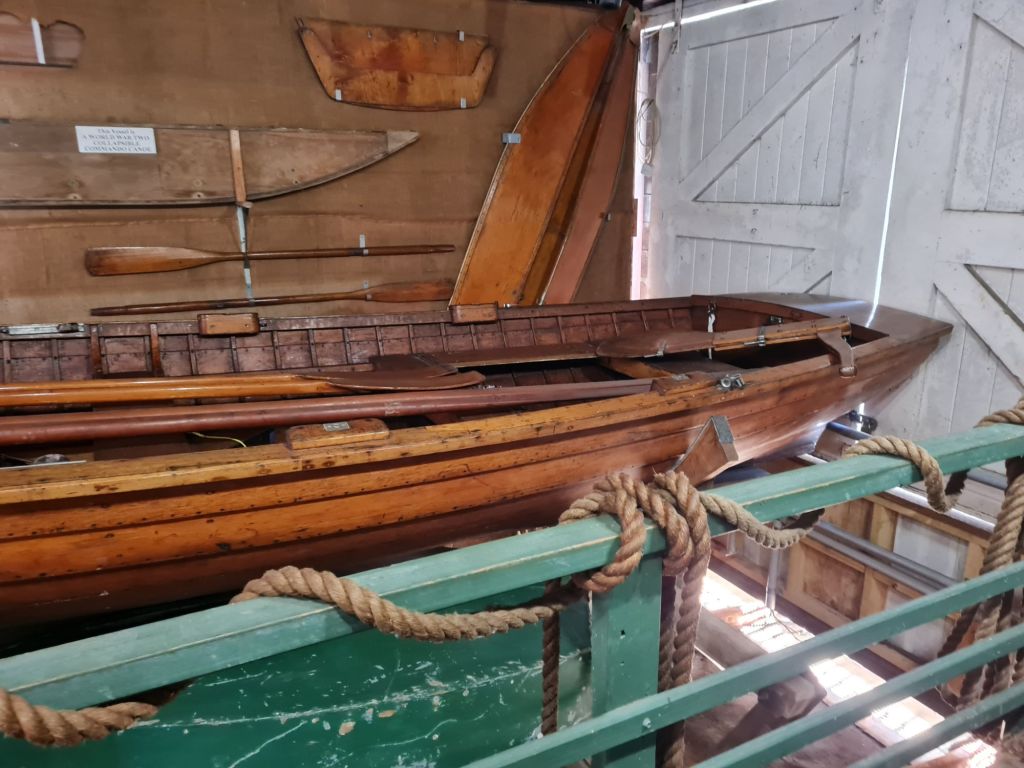
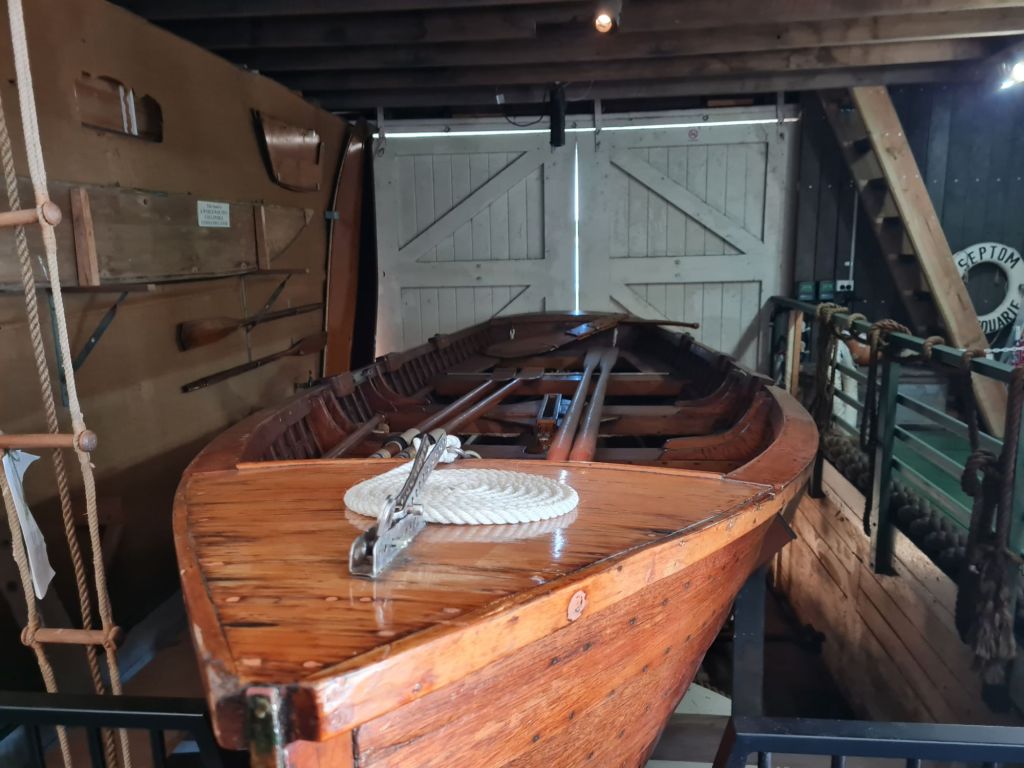
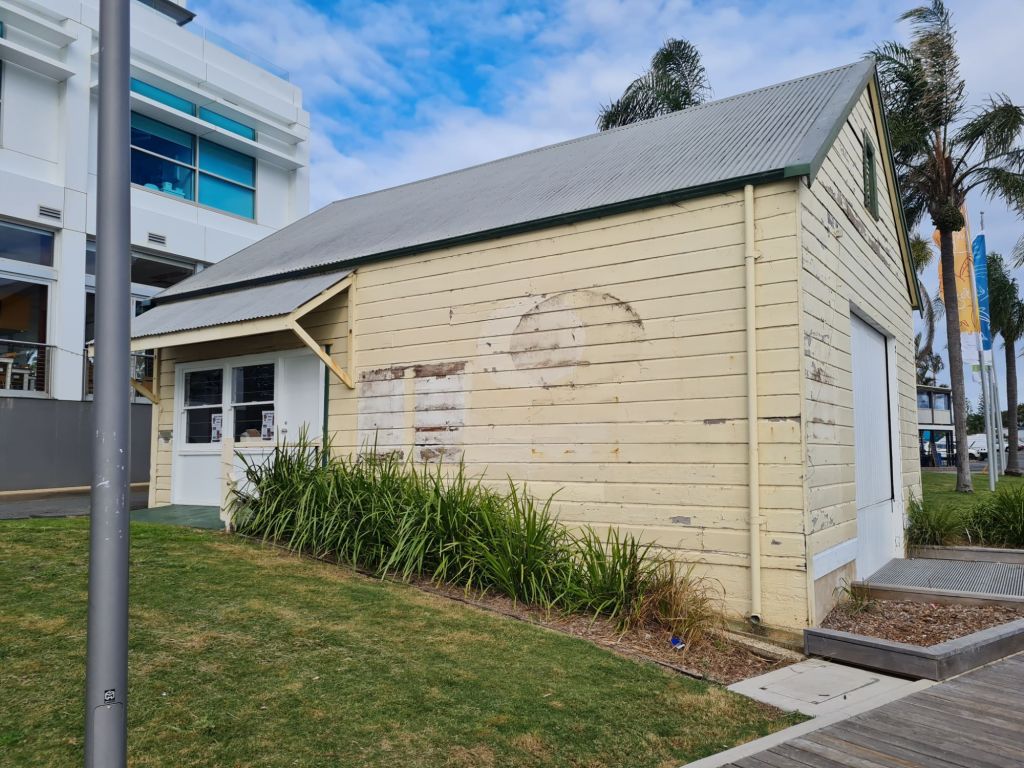
The first site we visited was the Pilot Boathouse.

Not exactly to sort of boat I would want to go out to a ship in, especially if it was a dark and stormy night.

Unfortunately, the sign doesn’t face the shed.

That’s the boatshed.

Inside, they also have model ships, which are for sale, if you like that sort of thing.