Memories of the conversations with my cat – 54

As some may be aware, but many are not, Chester, my faithful writing assistant, mouse catcher, and general pain in the neck, passed away some years ago.

Recently, I was running a series based on his adventures, under the title of Past Conversations with my cat.

For those who have not had the chance to read about all of his exploits, I will run the series again from Episode 1

These are the memories of our time together…

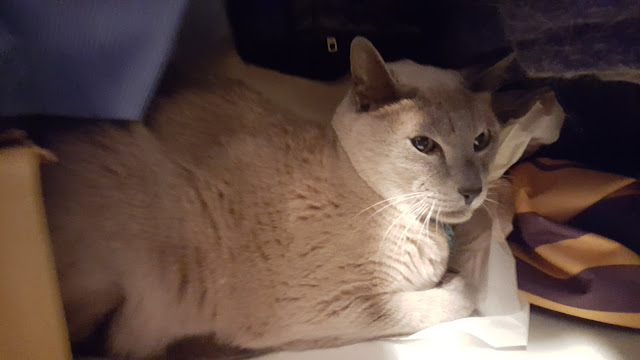
20160903_163858

This is Chester.  Did someone use the word ‘vet’ out loud?

It is odd how some animals can recognise some words and remember what activity is attached to it.

Chester knows the word vet, and his memory attaches a great deal of seemingly horrible experiences, not the worst of which is being transported in a pet basket.

Yes, we have just tried carrying him, but there is a sixth sense in every cat that tells them when they’re nearing a vet.  Within 50 metres of the front door, the hair stands up, and the cat starts hissing as if he were facing off against a formidable opponent.

We only carried him once, never again.

But the histrionics start in the house where we have to mount a search party to find him,  There are innumerable hiding places, and we have to be organised.

Invariably, each time something like this happens, he finds somewhere new to hide.  We keep forgetting he can use his paws to open sliding doors and close them again, a talent he had learned.

We’ve also learned to start looking a half-hour earlier than we used to.  The vet is only three minutes away, and we used to leave it to the last minute, but being late for the appointment happens only once.

Vets are worse than doctors when you miss appointments.  Perhaps Chester knows this and tries to use it to his advantage.  It no longer works.

Then, once we find him, the next exercise is to get him into the basket.  I’ve never seen so many tricks on how not to let the humans put him in it.

But, over time, we’ve learned, and sometimes it’s easy; others, I have the scars to prove it.

Then, once we get to the vet, it’s a completely different cat, not Chester, but some other cat disguised as him.  Chester has never given the vet an ounce of trouble.

Perhaps we should become vets.

Chester is fine, just a little off-colour perhaps from something he ate.  Not all pet food is agreeable, and we’ve been trying to get him to have something different.  I even specially cook fish for him, and maybe that was the problem.

What is off-putting is the ease with which he goes back into the basket for the vet.

But all is well, and he will be glad to get out…

The cinema of my dreams – Was it just another surveillance job – Episode 20

I’m back home and this story has been sitting on a back burner for a few months, waiting for some more to be written.

The trouble is, there are also other stories to write, and I’m not very good at prioritising.

But, here we are, a few minutes opened up and it didn’t take long to get back into the groove.

A chessboard of players

I sighed.  Someone else who wasn’t who they seemed to be.

At a guess, it was a gun in my back.  We were far enough away from anyone else for them to recognise what was happening.

“No need for whatever weapon you have in my back.  I’m neither armed nor dangerous.”

“Why are you following me?”

Should I tell her the truth or tell her a lie.  The latter would be the most expedient, but I needed to talk to her, so I went with the former.

“You know O’Connell.”

“Were you the one who attacked me?”

“I told you I meant you no harm.  What happened to you wasn’t my fault.”

Whatever was in my back was no longer there, so I turned around to face her.  She had changed her look since O’Connell’s flat, not only the change in hair colour and length but also the makeup, making it difficult for anyone to recognise her from a distance.  I’d been lucky.

“What do you want with him?”

“More than likely the same as you.  He made the mistake of thinking you were interested in him, but I suspect your assignment was to get close, and the flat next door was as close as you could get.”

“What are you babbling about?  We were friends.”

“How often did he stay in that flat?  Everything in it still has the price tag on it.”

“You’re loopy.  I’m going now, and I suggest you don’t follow me again.”

“I know where you live remember.  All I want is some answers.”

“There are no answers.  He was a friend, that’s it.  I’m going now.”  She turned and started to walk away.

“If I know who you are, the chances are the others do too.”

She stopped.  Interesting response.  In her shoes, my first reaction, if I was an innocent person, would be to call for a policeman to have me taken away for assaulting her.

She turned and took two steps back towards me.  “What are you talking about now?”

“O’Connell’s flat was like Marks and Spenser this morning.  I came and found another woman claiming to live next door, named Josephine, unconscious on the floor, and I didn’t do it by the way.  She works for a man named Nobbin, McConnell’s direct superior, and whom I think, indirectly I do too, and I suspect she was neutralised by another man named Severin.

“Whatever O’Connell was up to, there are a lot of people who want a missing USB with what I suspect is very interesting, and probably damaging information.  You wouldn’t have it, by the way?”

“Who are you?”

“That’s what I’m not sure about.  Like I said, I think I work for the same man whom O’Connell worked for, but before that, I worked with the people who had him killed for whatever was on the USB.”  It sounded far more horrible out loud than it had a few seconds earlier in my head.  God only knew what she was thinking about it.  “Who do you work for, because a woman who can do the transformation you just did is either a call girl or an agent?”  Another thought just occurred to me, a reason perhaps why she had changed her appearance so radically.  “Your flat was searched too, wasn’t it?”

No need to answer yes or no.  The look on her face was enough.

We ordered coffee and sat down.  She was still very wary of me, but since I seemed to know, or presumed to know, what had happened, she was going to ask me some questions I wasn’t going to be able to answer.

And not because the answers were in the top-secret category, it was simply because I didn’t know.

“So,” I asked, “who do you work for?”

“You don’t need to know.”

“But you were either keeping O’Connell close company by insinuating yourself into his life, or you were maintaining some sort of surveillance.”

She was plating it close, and with a poker face.  She was better at it than I was.

“Where is he, by the way?”

“Dead.”

“Dead?”  

No mistaking that look of fear the flickered on her face, then disappear again into rocky granite.

“Dead.  Seems he came across some information, and it caused his death.  I was there shortly before he died, shot by a sniper, I think, and there was nothing I could do about it.  Any idea what that information was?”

“I still don’t know what you’re talking about, but either way, if I did or I didn’t the answer would be the same, no.  He told me he was a reporter, working on a really big story, and that he would have to go away for a few days.  I knew that was his cover story.”

“Were you after that same information?”

“Probably, maybe, I don’t know.  Our information was mostly conjecture, a profile built up by our research department, based on his travels, and sightings at a location we know is running a network of agents.  The conclusion was that it was not one of ours, so I was assigned to find out exactly who they were.”

“O’Connell would not have told you.”

“Given the circumstances I find myself in, I’m beginning to think that.  If you worked with him, then he was on the same side as you, so are you good or bad?”

That was a rather interesting question to be asking me at this late stage, and especially after she had told me basically what I needed to know, bar who she worked for, but that, I was beginning to think, was MI6.

“A rather silly question to ask, don’t you think?  It stands to reason that if I was bad, then I would not have left you alive in O’Connell’s flat.”

“Not unless you wanted something from me and set this up as a trap.”

So that was the reason why she kept checking everyone she could see upstairs and monitoring the stairs to see who arrived and left.  We were in the right spot to keep tabs on everyone.  And I knew her gun wasn’t very far from her hand.

“Obviously you don’t have it, so my work is done here.  I suggest you don’t go back to that flat.”  I stood.  “Your location and probably who you are is compromised.  And two men and their attack dogs will be looking for you.  Good luck with that.”

“Aren’t you one of those two men attack dog, by your own admission?”

“I’m new and not cynical enough to shoot people out of hand.  You’re probably lucky in that regard.  And if someone like me can find you, then think what a seasoned professional would be able to do.  Have a nice life, what you have left of it.”

© Charles Heath 2019

Writing a book in 365 days – 217

Day 217

Writing exercise

“Everything that happened in that house was a catastrophe”

Sitting around the table in the lawyers’ conference room were seven very eager faces, and, at the other end, opposite Blanding, my parents’ lawyer.

It was time for the reading of the will.

The seven seated at the other end were, in age order, eldest to youngest: Jacob, John, Jesse, Julian, Judy, Jessica, and Jennifer.

I was named Ferdinand.  Yes, that apparently was a name, but I usually used my middle name of Aloysius, or more often than not, the short form, Al.

There was a reason why I was sitting away from the others.  Technically, I was not a brother, but the only child of my stepfather’s brother, adopted by him after my parents died a year after I was born.

It had remained a well-kept secret until the day my stepmother, who died a few hours earlier than my stepfather, was conscious long enough to tell the eldest son of my adoption.

From that moment, I became persona non grata with nearly all the other siblings. It went from thirty-five years of harmonious sibling rivalry to me instantly becoming an outcast.  I don’t think it was what the mother had intended, but then she hadn’t realised just how greedy and insecure her children were.

I had, though it had taken time.  The two eldest boys thought I was different, not just the fact that my name didn’t start with a j, but the fact that I had red hair and that I had slightly different characteristics.

While the parents were alive, no one really questioned it.  After they died and there was a fortune at stake, it came down to being one less to divvy up the pot of gold.

But here’s the thing.  None but one, Jennifer and I stayed to look after them in their home when neither could look after each other or themselves.  The others left home as soon as they could and only came back for handouts to save them from their stupidity.

For them, the memories of what happened in that house were a stark reminder of everything they should have become.  They had been given every opportunity, but none seemed to like the idea of having to work for it.

Jennifer and I both got the intended message and understood.  I remember the number of times the father had said, if only the others had been like Al.  He made a point of it.  The others blamed me when the father started rejecting their demands for assistance, saying that I had made their lives impossible.  Nothing in that house, as far as they were concerned, had led anywhere for any of them except to catastrophe.

In turn, I never understood them.  From a very young age, they all believed they would be looked after, that why they should not work or try to make their mark when, in the end, there would be a fortune waiting for each of them.

Or perhaps I did.  Their parents spoiled and indulged all of them.  Not me.  Perhaps that was the indication I should have seen that I was not really one of them.  The father never gave me anything, often telling me that he expected me to make something of myself, as his brother had.

I never understood what he had meant by that until the mother’s revelation.  Then everything made sense.

More than one he had said, privately to me, that I was not one of them, that I did not have to be like them, that they, meaning the eldest two boys, would never amount to anything.

He was right.

But it was his fault they turned out that way.  His and their mother.

Now, a greater catastrophe was likely to befall them if the father had carried out his threat to cut them all off.

I was there when he told them they had six months to turn their lives around, during which time they would not be getting their usual allowances.

As far as he was concerned, it was time for all of them to sort themselves out.  His ultimatum had been met with stunned silence and disbelief.  I don’t think any of them had considered the well might run dry.

The fact the parents died in an accident did raise a few questions in my mind, so soon after the ultimatum, and the thought, however unbelievable or insidious, was whether one of them, or all of them together, had ‘arranged’ for their deaths.

Jennifer was more inclined to believe they had.  None had a story that would stand deeper probing. Each was vouching for the others, alibis were shaky, and as far as she was concerned, the police had closed the case too quickly.  As far as they were concerned, it was an accident.

I looked at Blanding and caught his eye.  He had his inscrutable face on.  It was time to begin

“Right,” he said after clearing his throat.  “Shall we start?”

He looked around the table at all the expectant faces.  No one could tell whether he was about to deliver good news or bad.  Even I didn’t know.

All I had was a phone call from the lawyer’s office, a request to be there. The others tried to have me excluded, but Blanding would have none of it.  He simply told them that the reading could only progress if all eight of us attended, an explicit condition stipulated by both parents.

The room went silent.

“Now that the investigation into the untimely deaths of your parents has been concluded and a result of death by misadventure recorded, the will can now be read.  It doesn’t necessarily mean that any benefits will automatically be payable after this reading.  There are formalities, and these will take time.”

Eldest son:  “How much time?”

“As long as it takes.”  That was it.  No more.  Blanding took the will document out of the folder in front of him and removed the first page.  The good stuff presumably started on the next.

The eldest son was going to ask another question but then decided against it.  I got the impression he was kicked in the shin under the table.

Blanding continued.  “Your mother’s will has been read and wishes executed.  She died before your father, and her wish was for everything to go to her husband and several annuities for friends.  She never thought of her domestics as servants but friends.”

Eldest son:  “But she didn’t leave anything directly to any of us, not even the girls.”

“No.  Her intention was always to leave it to your father.  Had she, in fact, survived him, there was a small lump sum payment of approximately a thousand pounds each and the annuities.”

“What about the estate, the holiday houses, the apartments overseas?”

Yes, the eldest son had been doing his homework, listing all the places we went to, not realising that the property portfolio was largely smoke and mirrors.  I discovered the true nature of what they owned and what they rented, and it didn’t surprise me.

The father had been very clever to hide the fact that they were not as wealthy as most people believed, and having ready cash to give the children meant a gradual depletion of assets over time.

Being who they were didn’t mean they were filthy rich. The trick their father had told me once is to appear rich without anyone guessing what your true financial situation is.

Blanding put down the document and took off his glasses.  I thought he was going to massage his forehead like a person trying the assuage the pain of an oncoming headache.

Maybe he had one already.

He massaged the bridge of his nose. Maybe the glasses were new and weren’t sitting right.

Then he looked at Jacob.  “I’m sure you’ve been compiling a list of everything you believe should be in the estate.  Did you think to also compile a list of the sums of money you borrowed from your father?”

“Borrow?” Jacob’s expression changed.  “We did nothing of the sort.  He gave us…”

He stopped abruptly when he heard, rather than watched, a thick folder land on the desk with a thud, perhaps more for effect than emphasis.

“Every time your father loaned each of you money, you had to sign a document to say that at the end of a specific period, you would either repay the loan in full or start paying the interest.  I daresay you didn’t read the fine print or look at or listen to anything but simply thought your father would never expect anything in return.  So, back to my original question, did you compile a list of all your borrowings?”

“Of course, we didn’t.  Are you stupid?  The man is dead. There’s no one to pay it back to.”  John had the logic all worked out.

“Well, there’s the thing.  It became repayable when he died.  It’s stated very clearly in the documents, very legal documents, I might add.  But just for the sake of clarity, the aggregate sums borrowed by each child are: Jacob, 18 million, John, 9 million, Jesse, 6 million, Julian, 4 million, Judy, 15 million, Jessica, 7 million, Jennifer, zero, and Al, zero.  That’s close to 60 million pounds.  Where do you think that lot came from?”

The siblings were looking at each other but mistake at Jacob and Judy.  I thought I heard a muttered “What the hell did you do with 18 million, Jacob?”  If they asked me, if would tell them.  Gambling.

“The old man was loaded.  Inherited wealth, he said.”

“I’m sure he said a lot of things to which you chose not to hear.  Giving you all you asked for over the years cost a lot, so much so, he was forced to sell all of the properties, including, in the end, the manor house.  There wasn’t much in the rest, the paintings of forebears were worthless, the furniture and fittings all very old but not worth a fortune old. The manor house has been given to the new owner, who was gracious enough to allow your parents to remain in it, rented free, until they decided to move on.  It was always going to revert back to him.  So, scratch any property off your list of assets.”

“Cash, shares, bonds?”  The confidence in the tone before had gone as the realisation of what had happened sank in.

It would be long before the others turned on Jacob and Judy, even though all of them together caused the problem.

“You know the answer to that question, Jacob,” I said

He turned to me.  I could feel the hostility.  “How come you didn’t get anything.  Bet he knew you weren’t one of us and was never going to give you a penny.”

Jennifer rounded on him.  “Like me, he didn’t seek to burden your father because staying home and looking after him, we knew exactly what the financial situation was.  You all should be ashamed of yourselves.”

Jacob jumped to his feet.  “If that’s all?”

“There is the matter of repayment of the loans.”

Jacob laughed.  “Good luck with that old man.”  Then he left.  The others quickly followed him out the door.

Blanding sighed.  “Well, that went better than I thought it would.”

“Were you serious about the loans?” I asked.

“Your father was. We could take them all to court, but they don’t have anything, so it would be a meaningless exercise.  But at least they have no more opportunity to get anything more.  They have to make their own way now.  But, now for the rest of the will.”

“I thought all that was left was the three thousand odd pounds,” Jennifer said.

“After the sales of a few bongs we found in the bottom drawer of your father’s desk.  No, that’s what your father left you two.  He was very glad you stayed to help.  Both of them were.  It was always his intention to leave the manor house to you, and the proceeds from the sale of a half dozen paintings that used to hang in the Paris apartment, about 40 million pounds.  He set up trust funds for the two of you, so you have somewhere to live, and enough to keep you going.”

“And if the others find out?”

“They can contest it, even get a slice of the proceeds, but the estate has first lien on the money in repayment of their debts, and the proceeds would barely cover the repayments.  No.  There’s no point, and no legal firm would take the case.  Now go and enjoy it.” 

He put two sets of keys to the manor house on the table, the same two we’d given him when we arrived.

We shook his hand, and he left the room.  I may have been mistaken, but I think he had a smile on his face.  Jennifer was looking down the street, and I joined her.  Both of us saw the six other siblings exit onto the street, just as the heavens opened and dumped a heavy shower of rain on them.

“I think,” Jennifer said, “Mum and dad just got the last laugh.”

©   Charles Heath  2025

Searching for locations – Port Macquarie – Day 3 – Part 1

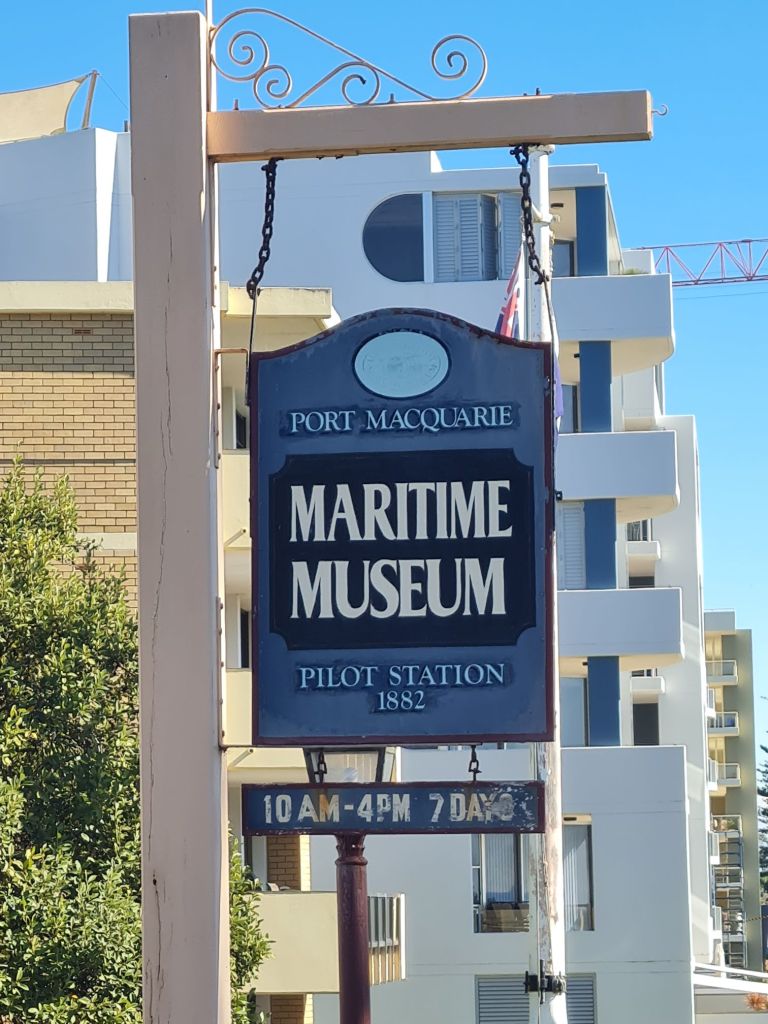
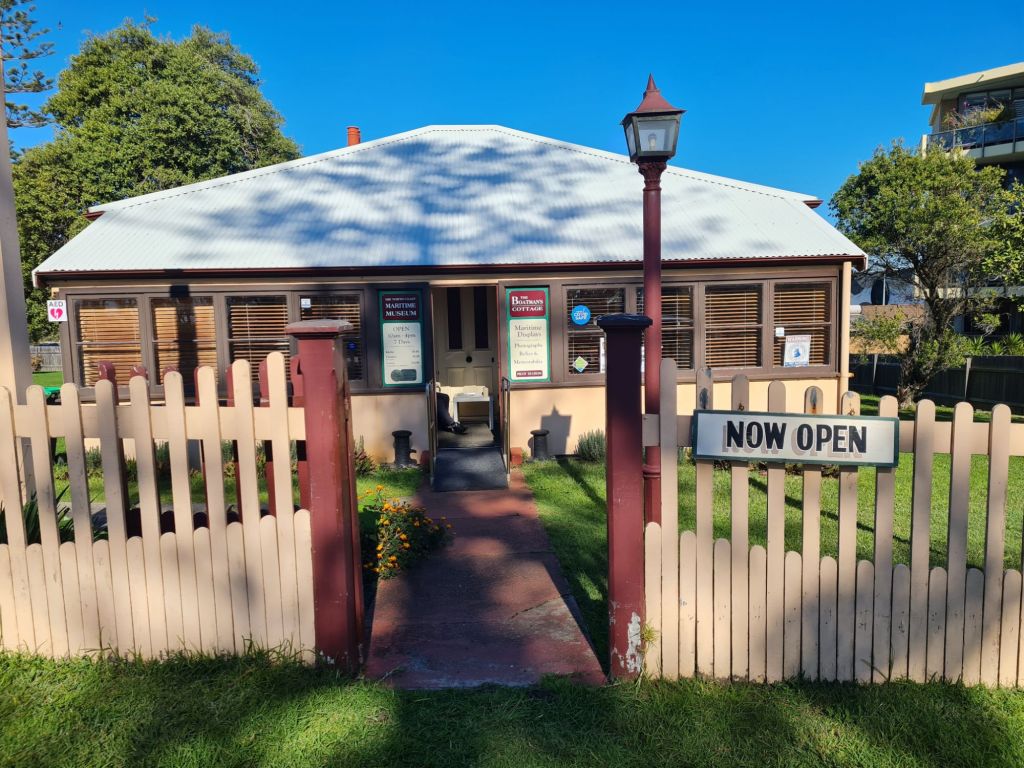
The Maritime Museum

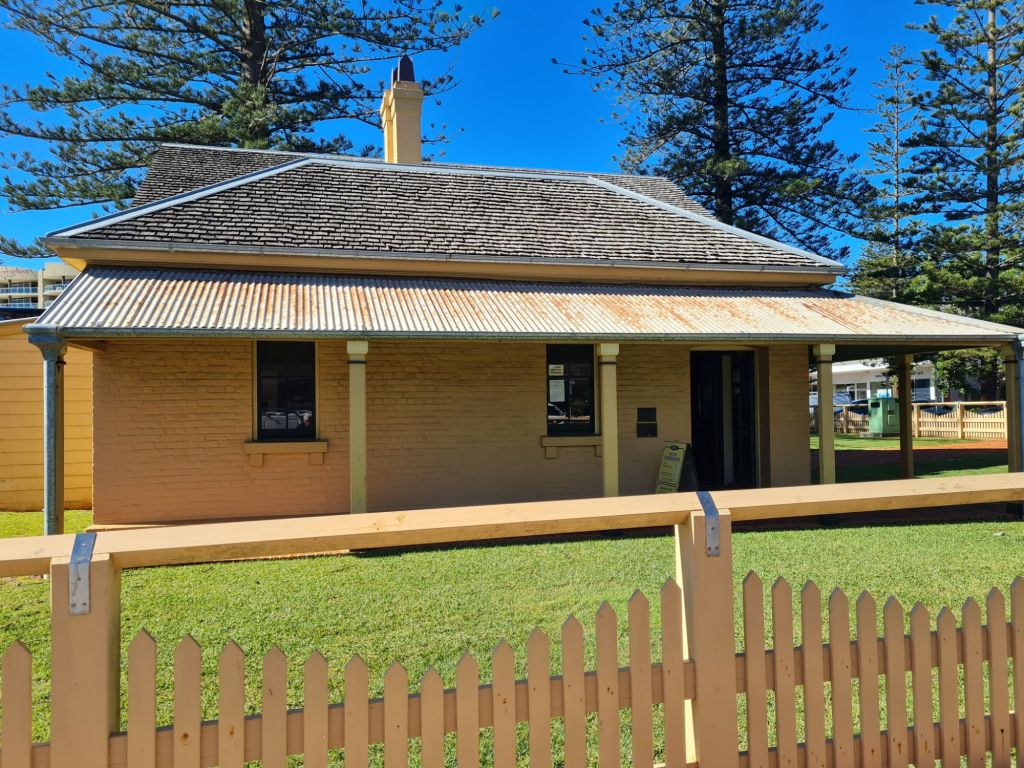
The three houses that make up the maritime museum used to be the pilot’s houses. They were built between 1896 and 1937. There used to be four but one was relocated to another part of Port Macquarie.

In between two of the buildings is, of all things, a sea mine

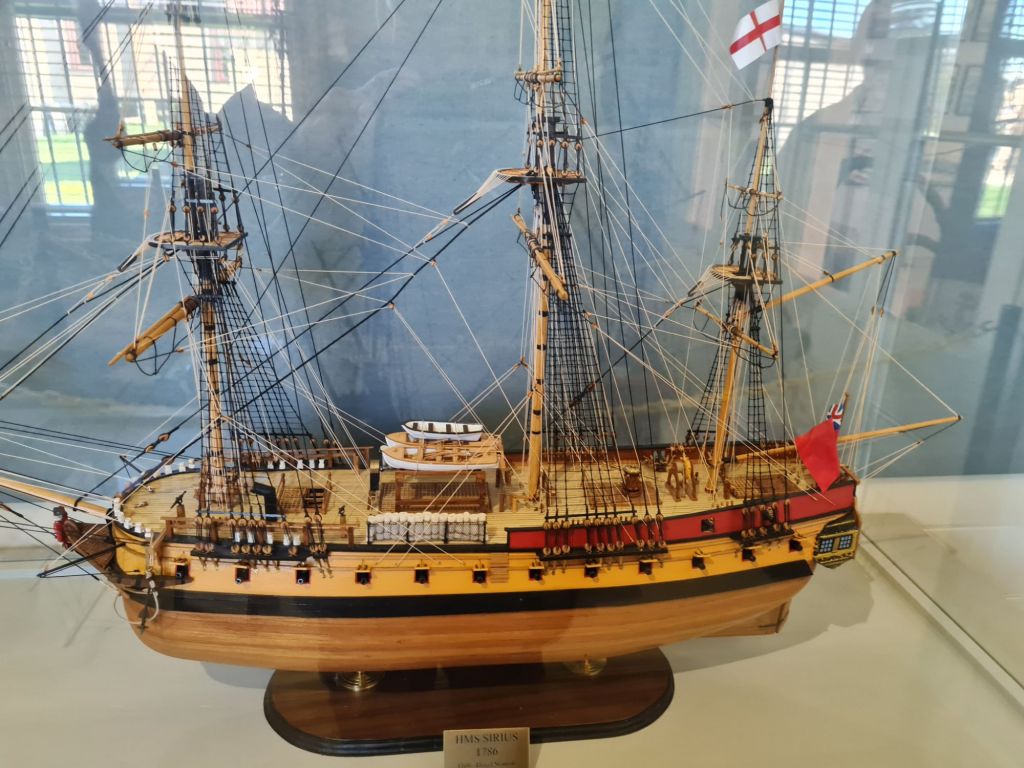
they also have several model ships which are up for sale.

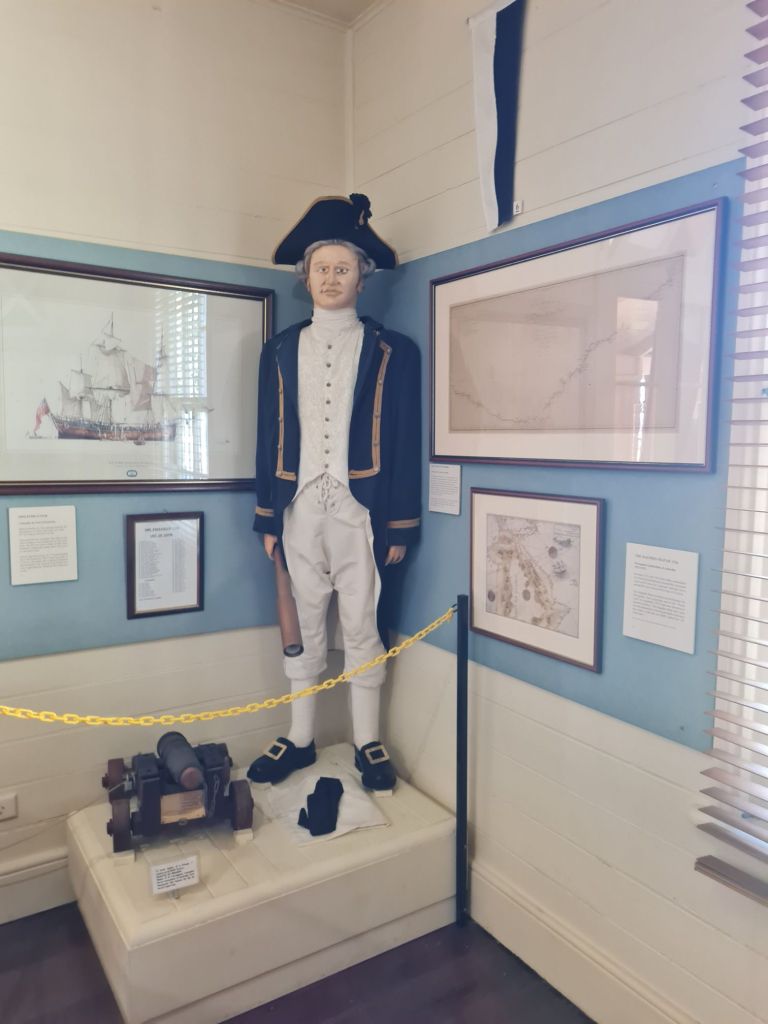
They have sailors dressed in the way they were back in the 1820s

A cannon of one their warships

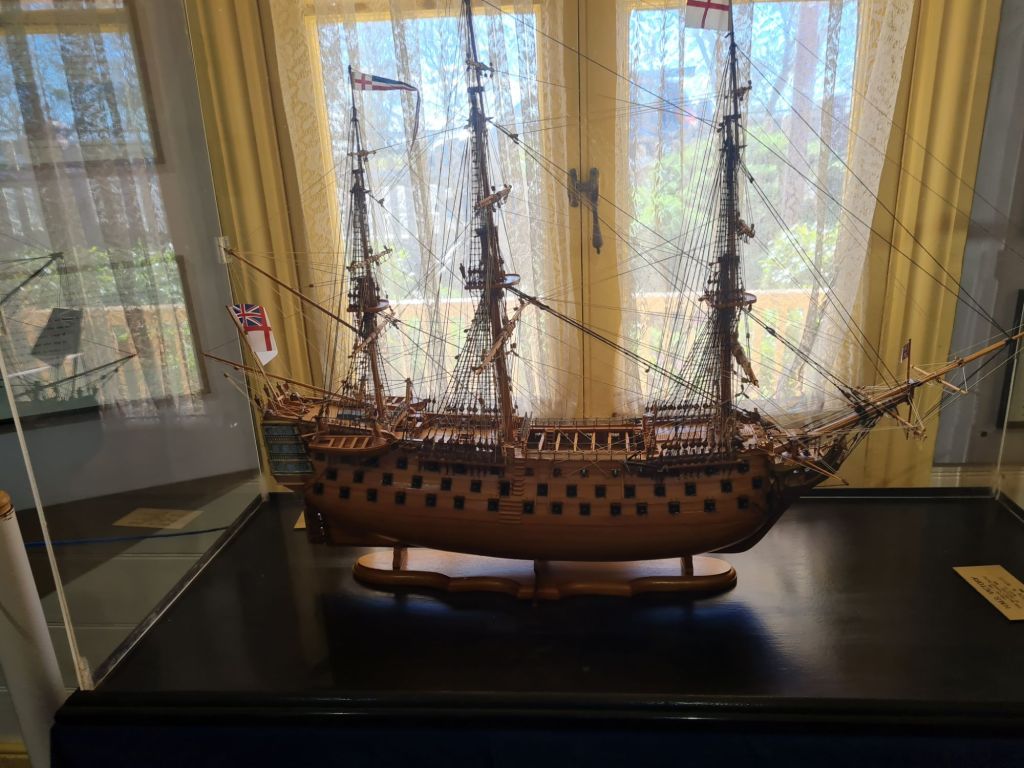
And models of the ships that brought the soldiers, convicts, and free settlers to Australia

There is an interesting collection of flags that were once used to communicate from ship to ship or shore, before the advent of radio.

When I should be sleeping…

My mind will not rest.

Down here, it is summer, and the last few days have been exhaustingly hot, well, it is summer after all, but tonight it is particularly hot.

So, as I can’t sleep, I’m lying on the couch staring at the ceiling, otherwise known as the cinema of my dreams.

Where am I?

Well, it has to be someplace other than here, of course.

I’d seen the Trevi Fountain in the movies, but, until now, it just seemed like any other fountain, only larger.

In reality, it was much more than that, and, so it seemed, it was also that for many other people.  Mid-afternoon on a warm sunny day, they were all standing in awe.

Perhaps some were making a wish, and I saw several toss coins in.  There would be a lot of money in there and I couldn’t help but think about what sort of job it would be to retrieve it.

Odd too, I thought, if they hadn’t, how many old and rare coins might be somewhere on the floor.  Of course, I only thought of the aesthetic value rather than the practicality of the water system that the Romans had built long before such feats of engineering were being contemplated.

No, I was here on holiday. 

After years of travelling to a great many places for my job, one that never really gave me any time for sightseeing, I’d decided it was time to indulge in a little tourism.

Before this, I’d been to the Colosseum, the old ruins, the Spanish Steps, and the Parthenon.  This was going to wrap up in the afternoon.

“So, are you here on business or pleasure?”

I turned to see Giuseppe, a man I’d had a rather complicated relationship with in the past, and one who is not told I was coming.

But, the fact he was here was no surprise.

It was however surprising that he could sneak up on me.  It showed I was slipping, or, more than likely, I was more susceptible to being distracted.

“I am but a humble tourist.  I’m sorry but you have been following me for nothing.”

“Why is it I find that difficult to believe?”

Maybe because of what I used to do, but it was not something I would openly admit.  And the only reason he was standing there was that someone else had made a mistake, and required a bit of diplomacy to smooth the waters.

Unfortunately, that had destroyed my invisibility in Italy, and probably most of Europe, and these days I spent most of my time in semi-retirement driving a desk.  Not entirely put out to pasture.

“As difficult as it might be, having your cover blown makes it impossible to continue, verified by the fact you’re here now.  Was it a red flag on my name, or facial recognition?”

“Just remember, we’re watching you.”

A last shake of his head, he walked over to a car parked a host distance away, got in, and drove off.  I had no doubt he was not the only one who had been watching me.

“It seems you were right.”

Another voice, This time a woman, and expected.  Carla had been waiting in the coffee shop for Giuseppe or someone like him to make an appearance.

“They were not exactly hiding the fact they had me under surveillance.”

She handed me the coffee with a smile.

“That means we can have some fun, does it not?”

That had been the plan.  I knew if I entered Italy using the identity I used the last time, it would put them on alert, and prompt a reaction.

“It still doesn’t mean they won’t suspect something is afoot.”

“And since when did you start doubting yourself?”

Since my last operation fell apart because I made one simple mistake that no agent would have made in a million years.  But, I had, and it basically ended two careers.

The other person had just handed me the coffee, and unaccountable seemed less angry with me than she should be.

“You of all people should know the answer to that.”

She sighed and took my hand in hers.  “What I do know is that there’s a very clever operation afoot and you’re the one who planned it.  And far from being on the sidelines, we have a new and very important role to play.  And speaking of play, it’s time you and I got into our roles.  Oh, and just for the record, I still love you and I know how you feel about me, and before I brought you coffee I made a wish.”

So had I, and it had been answered.

It was another of those dreams that might lead somewhere.  We’ll just have to wait and see.

© Charles Heath 2023

“One Last Look”, nothing is what it seems

A single event can have enormous consequences.

A single event driven by fate, after Ben told his wife Charlotte he would be late home one night, he left early, and by chance discovers his wife having dinner in their favourite restaurant with another man.

A single event where it could be said Ben was in the wrong place at the wrong time.

Who was this man? Why was she having dinner with him?

A simple truth to explain the single event was all Ben required. Instead, Charlotte told him a lie.

A single event that forces Ben to question everything he thought he knew about his wife, and the people who are around her.

After a near-death experience and forced retirement into a world he is unfamiliar with, Ben finds himself once again drawn back into that life of lies, violence, and intrigue.

From London to a small village in Tuscany, little by little Ben discovers who the woman he married is, and the real reason why fate had brought them together.

It is available on Amazon here:  http://amzn.to/2CqUBcz

Searching for locations – Port Macquarie – Day 2 – Part 2

The old courthouse

A number of the historical sites are conveniently located in the town centre, making it easy to stop for a morning coffee and unique muffin, visit some history, and then go shopping.

The courthouse is one such site on the corner of Clarence and Hay Streets.

It was designed by a Scottish architect responsible for a large number of courthouses, post offices, police stations, and lighthouses.

It was built in 1867 for 875 pounds and opened for business in 1869 and in use until 1986.

It was one of the early designs for the interior

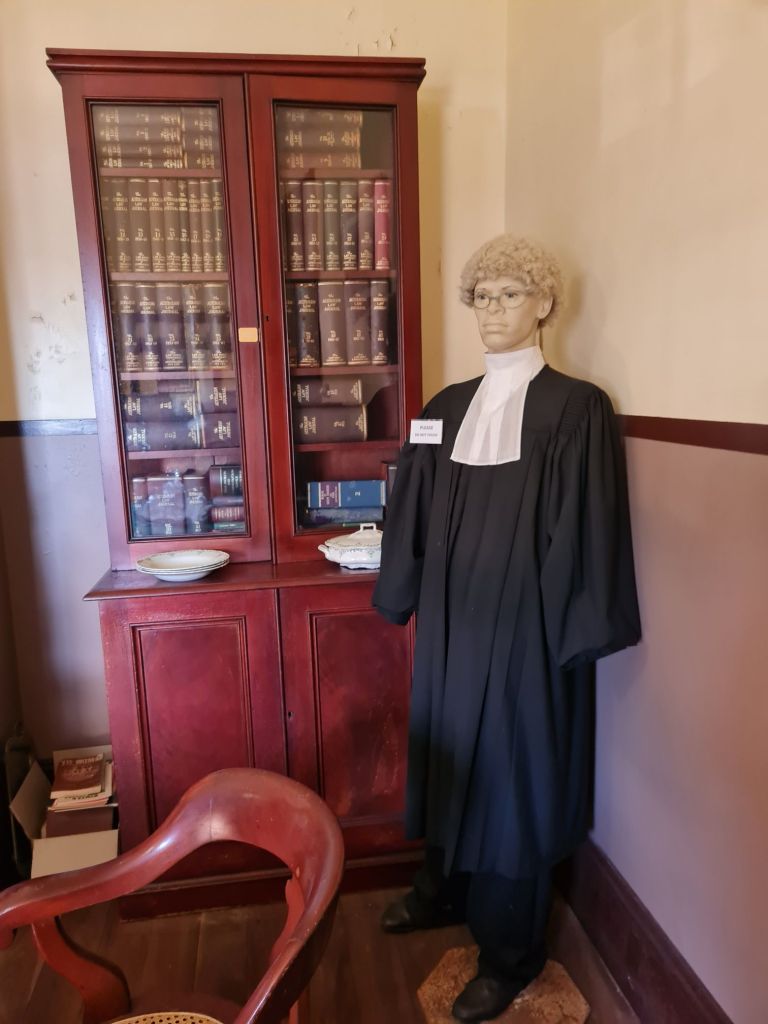
There’s even an opportunity to dress up as the judge

You can lock people in in the cage, though perhaps not a good idea.

There is the judge’s room to one side, complete with fire for cold days, and a lot of dusty reading

And a room for the clerk, and perhaps a soldier or two to guard the prisoners

PI Walthenson’s second case – A case of finding the ‘Flying Dutchman’.

Known only to a few, there is a legend that a ship named the ‘Flying Dutchman’ left Nazi Germany in the last weeks of the war and set sail for America, escorted by U-boats, under a different name. Aboard was a trove of treasure and gold worth a ‘king’s ransom’.

It was said that it had been sent to a group of American Nazis to create the Fourth Reich at an appropriate time. Over the years since many expeditions off the coast had searched, but found no trace of the vessel or the treasure.

In other words, it was just a legend created to boost tourism.

Fast forward to 2024. Our intrepid private detective, Harry Walthenson, overhears a conversation at Grand Central Station. It was the oddness of the message that caught his attention. An investigation turned up nothing out of the ordinary, and he thinks no more about it.

Then Harry is kidnapped, interrogated, and asked questions over and over about a date and a place, why he went there, and when he could not give satisfactory answers, he was beaten half to death and left for dead on a rubbish heap. He was lucky that it was a living space for homeless men; otherwise, he would have died.

In the aftermath, he once again gives it no more thought.

After resolving his first case successfully, there’s no rest. Harry’s angry mother comes to his office and demands that he find out where his father has gone. She believes he has run off with a mistress, not for the first time.

Perhaps it was not the wisest decision she has made, because Harry promises to investigate, and adds that she might not like what he finds.

He soon discovered he does not like what he finds, that his father’s friends, a cabal formed at University, have two who are his mother’s current lovers, and another, a criminal blackmailing his father.

Felicity, now his partner, working on a different case, and trying to get answers, uncovers a crime family involved in guarding a disused warehouse on the docks, where she believes Harry had been taken for interrogation, and subsequently dumped nearby to die.

Why are they up to? What is so important that the empty warehouse needs guarding? Who is employing them?

Harry, following up on the death of the blackmailer, traces his death back to an enforcer employed by his grandfather. His mother’s grandfather was a pre-war industrialist who made his fortune in war munitions and shipbuilding.

He was also a member of the American Nazi party.

When Harry also discovers a logbook belonging to a so-called wartime Liberty ship the “Paul Revere” in brackets ‘Freiheitskämpfer’, hidden by his father, and written in a code that is not readily identifiable.

It is no longer a matter of a father who has run off with his mistress; it is a very frightened man in fear of his life, running from a group who will stop at nothing to get the logbook back. And when Harry discovers a family connection to the group, it becomes a race against time to decode the log and find his father before his grandfather does.

Coming soon: Harry Walthenson’s new adventure – A case of finding the ‘Flying Dutchman’

Writing a book in 365 days – 217

Day 217

Writing exercise

“Everything that happened in that house was a catastrophe”

Sitting around the table in the lawyers’ conference room were seven very eager faces, and, at the other end, opposite Blanding, my parents’ lawyer.

It was time for the reading of the will.

The seven seated at the other end were, in age order, eldest to youngest: Jacob, John, Jesse, Julian, Judy, Jessica, and Jennifer.

I was named Ferdinand.  Yes, that apparently was a name, but I usually used my middle name of Aloysius, or more often than not, the short form, Al.

There was a reason why I was sitting away from the others.  Technically, I was not a brother, but the only child of my stepfather’s brother, adopted by him after my parents died a year after I was born.

It had remained a well-kept secret until the day my stepmother, who died a few hours earlier than my stepfather, was conscious long enough to tell the eldest son of my adoption.

From that moment, I became persona non grata with nearly all the other siblings. It went from thirty-five years of harmonious sibling rivalry to me instantly becoming an outcast.  I don’t think it was what the mother had intended, but then she hadn’t realised just how greedy and insecure her children were.

I had, though it had taken time.  The two eldest boys thought I was different, not just the fact that my name didn’t start with a j, but the fact that I had red hair and that I had slightly different characteristics.

While the parents were alive, no one really questioned it.  After they died and there was a fortune at stake, it came down to being one less to divvy up the pot of gold.

But here’s the thing.  None but one, Jennifer and I stayed to look after them in their home when neither could look after each other or themselves.  The others left home as soon as they could and only came back for handouts to save them from their stupidity.

For them, the memories of what happened in that house were a stark reminder of everything they should have become.  They had been given every opportunity, but none seemed to like the idea of having to work for it.

Jennifer and I both got the intended message and understood.  I remember the number of times the father had said, if only the others had been like Al.  He made a point of it.  The others blamed me when the father started rejecting their demands for assistance, saying that I had made their lives impossible.  Nothing in that house, as far as they were concerned, had led anywhere for any of them except to catastrophe.

In turn, I never understood them.  From a very young age, they all believed they would be looked after, that why they should not work or try to make their mark when, in the end, there would be a fortune waiting for each of them.

Or perhaps I did.  Their parents spoiled and indulged all of them.  Not me.  Perhaps that was the indication I should have seen that I was not really one of them.  The father never gave me anything, often telling me that he expected me to make something of myself, as his brother had.

I never understood what he had meant by that until the mother’s revelation.  Then everything made sense.

More than one he had said, privately to me, that I was not one of them, that I did not have to be like them, that they, meaning the eldest two boys, would never amount to anything.

He was right.

But it was his fault they turned out that way.  His and their mother.

Now, a greater catastrophe was likely to befall them if the father had carried out his threat to cut them all off.

I was there when he told them they had six months to turn their lives around, during which time they would not be getting their usual allowances.

As far as he was concerned, it was time for all of them to sort themselves out.  His ultimatum had been met with stunned silence and disbelief.  I don’t think any of them had considered the well might run dry.

The fact the parents died in an accident did raise a few questions in my mind, so soon after the ultimatum, and the thought, however unbelievable or insidious, was whether one of them, or all of them together, had ‘arranged’ for their deaths.

Jennifer was more inclined to believe they had.  None had a story that would stand deeper probing. Each was vouching for the others, alibis were shaky, and as far as she was concerned, the police had closed the case too quickly.  As far as they were concerned, it was an accident.

I looked at Blanding and caught his eye.  He had his inscrutable face on.  It was time to begin

“Right,” he said after clearing his throat.  “Shall we start?”

He looked around the table at all the expectant faces.  No one could tell whether he was about to deliver good news or bad.  Even I didn’t know.

All I had was a phone call from the lawyer’s office, a request to be there. The others tried to have me excluded, but Blanding would have none of it.  He simply told them that the reading could only progress if all eight of us attended, an explicit condition stipulated by both parents.

The room went silent.

“Now that the investigation into the untimely deaths of your parents has been concluded and a result of death by misadventure recorded, the will can now be read.  It doesn’t necessarily mean that any benefits will automatically be payable after this reading.  There are formalities, and these will take time.”

Eldest son:  “How much time?”

“As long as it takes.”  That was it.  No more.  Blanding took the will document out of the folder in front of him and removed the first page.  The good stuff presumably started on the next.

The eldest son was going to ask another question but then decided against it.  I got the impression he was kicked in the shin under the table.

Blanding continued.  “Your mother’s will has been read and wishes executed.  She died before your father, and her wish was for everything to go to her husband and several annuities for friends.  She never thought of her domestics as servants but friends.”

Eldest son:  “But she didn’t leave anything directly to any of us, not even the girls.”

“No.  Her intention was always to leave it to your father.  Had she, in fact, survived him, there was a small lump sum payment of approximately a thousand pounds each and the annuities.”

“What about the estate, the holiday houses, the apartments overseas?”

Yes, the eldest son had been doing his homework, listing all the places we went to, not realising that the property portfolio was largely smoke and mirrors.  I discovered the true nature of what they owned and what they rented, and it didn’t surprise me.

The father had been very clever to hide the fact that they were not as wealthy as most people believed, and having ready cash to give the children meant a gradual depletion of assets over time.

Being who they were didn’t mean they were filthy rich. The trick their father had told me once is to appear rich without anyone guessing what your true financial situation is.

Blanding put down the document and took off his glasses.  I thought he was going to massage his forehead like a person trying the assuage the pain of an oncoming headache.

Maybe he had one already.

He massaged the bridge of his nose. Maybe the glasses were new and weren’t sitting right.

Then he looked at Jacob.  “I’m sure you’ve been compiling a list of everything you believe should be in the estate.  Did you think to also compile a list of the sums of money you borrowed from your father?”

“Borrow?” Jacob’s expression changed.  “We did nothing of the sort.  He gave us…”

He stopped abruptly when he heard, rather than watched, a thick folder land on the desk with a thud, perhaps more for effect than emphasis.

“Every time your father loaned each of you money, you had to sign a document to say that at the end of a specific period, you would either repay the loan in full or start paying the interest.  I daresay you didn’t read the fine print or look at or listen to anything but simply thought your father would never expect anything in return.  So, back to my original question, did you compile a list of all your borrowings?”

“Of course, we didn’t.  Are you stupid?  The man is dead. There’s no one to pay it back to.”  John had the logic all worked out.

“Well, there’s the thing.  It became repayable when he died.  It’s stated very clearly in the documents, very legal documents, I might add.  But just for the sake of clarity, the aggregate sums borrowed by each child are: Jacob, 18 million, John, 9 million, Jesse, 6 million, Julian, 4 million, Judy, 15 million, Jessica, 7 million, Jennifer, zero, and Al, zero.  That’s close to 60 million pounds.  Where do you think that lot came from?”

The siblings were looking at each other but mistake at Jacob and Judy.  I thought I heard a muttered “What the hell did you do with 18 million, Jacob?”  If they asked me, if would tell them.  Gambling.

“The old man was loaded.  Inherited wealth, he said.”

“I’m sure he said a lot of things to which you chose not to hear.  Giving you all you asked for over the years cost a lot, so much so, he was forced to sell all of the properties, including, in the end, the manor house.  There wasn’t much in the rest, the paintings of forebears were worthless, the furniture and fittings all very old but not worth a fortune old. The manor house has been given to the new owner, who was gracious enough to allow your parents to remain in it, rented free, until they decided to move on.  It was always going to revert back to him.  So, scratch any property off your list of assets.”

“Cash, shares, bonds?”  The confidence in the tone before had gone as the realisation of what had happened sank in.

It would be long before the others turned on Jacob and Judy, even though all of them together caused the problem.

“You know the answer to that question, Jacob,” I said

He turned to me.  I could feel the hostility.  “How come you didn’t get anything.  Bet he knew you weren’t one of us and was never going to give you a penny.”

Jennifer rounded on him.  “Like me, he didn’t seek to burden your father because staying home and looking after him, we knew exactly what the financial situation was.  You all should be ashamed of yourselves.”

Jacob jumped to his feet.  “If that’s all?”

“There is the matter of repayment of the loans.”

Jacob laughed.  “Good luck with that old man.”  Then he left.  The others quickly followed him out the door.

Blanding sighed.  “Well, that went better than I thought it would.”

“Were you serious about the loans?” I asked.

“Your father was. We could take them all to court, but they don’t have anything, so it would be a meaningless exercise.  But at least they have no more opportunity to get anything more.  They have to make their own way now.  But, now for the rest of the will.”

“I thought all that was left was the three thousand odd pounds,” Jennifer said.

“After the sales of a few bongs we found in the bottom drawer of your father’s desk.  No, that’s what your father left you two.  He was very glad you stayed to help.  Both of them were.  It was always his intention to leave the manor house to you, and the proceeds from the sale of a half dozen paintings that used to hang in the Paris apartment, about 40 million pounds.  He set up trust funds for the two of you, so you have somewhere to live, and enough to keep you going.”

“And if the others find out?”

“They can contest it, even get a slice of the proceeds, but the estate has first lien on the money in repayment of their debts, and the proceeds would barely cover the repayments.  No.  There’s no point, and no legal firm would take the case.  Now go and enjoy it.” 

He put two sets of keys to the manor house on the table, the same two we’d given him when we arrived.

We shook his hand, and he left the room.  I may have been mistaken, but I think he had a smile on his face.  Jennifer was looking down the street, and I joined her.  Both of us saw the six other siblings exit onto the street, just as the heavens opened and dumped a heavy shower of rain on them.

“I think,” Jennifer said, “Mum and dad just got the last laugh.”

©   Charles Heath  2025

An excerpt from “Mistaken Identity” – a work in progress

The odds of any one of us having a doppelganger are quite high. Whether or not you got to meet him or her, or be confronted by them was significantly lower. Except of course, unless you are a celebrity.

It was a phenomenon remarkable only for the fact, at times, certain high-profile people, notorious or not, had doubles if only to put off enemies or the general public. Sometimes we see people in the street, people who look like someone we knew, and made the mistake of approaching them like a long lost friend, only to discover an embarrassed individual desperately trying to get away for what they perceive is a stalker or worse.

And then sometimes it is a picture that looms up on a TV screen, an almost exact likeness of you. At first, you are fascinated, and then according to the circumstances, and narrative that is attached to that picture, either flattered or horrified.

For me one turned to the other when I saw an almost likeness of me flash up on the screen when I turned the TV on in my room. What looked to be my photo, with only minor differences, was in the corner of the screen, the newsreader speaking in rapid Italian, so fast I could only translate every second or third word.

But the one word I did recognize was murder. The photo of the man up on the screen was the subject of an extensive manhunt. The crime, the murder of a woman in the very same hotel I was staying, and it was being played out live several floors above me. The gist of the story, the woman had been seen with, and staying with the man who was my double, and, less than an hour ago, the body had been discovered by a chambermaid.

The killer, the announcer said, was believed to be still in the hotel because the woman had died shortly before she had been discovered.

I watched, at first fascinated at what I was seeing. I guess I should have been horrified, but at that moment it didn’t register that I might be mistaken for that man.

Not until another five minutes had passed, and I was watching the police in full riot gear, with a camera crew following behind, coming up a passage towards a room. Live action of the arrest of the suspected killer the breathless commentator said.

Then, suddenly, there was a pounding on the door. On the TV screen, plain to see, was the number of my room.
I looked through the peephole and saw an army of police officers. It didn’t take much to realize what had happened. The hotel staff identified me as the man in the photograph on the TV and called the police.

Horrified wasn’t what I was feeling right then.

It was fear.

My last memory was the door crashing open, the wood splintering, and men rushing into the room, screaming at me, waving guns, and when I put my hands up to defend myself, I heard a gunshot.

And in one very confused and probably near-death experience, I thought I saw my mother and thought what was she doing in Rome?

I was the archetypal nobody.

I lived in a small flat, I drove a nondescript car, had an average job in a low profile travel agency, was single, and currently not involved in a relationship, no children, and according to my workmates, no life.

They were wrong. I was one of those people who preferred their own company, I had a cat, and travelled whenever I could. And I did have a ‘thing’ for Rosalie, one of the reasons why I stayed at the travel agency. I didn’t expect anything to come of it, but one could always hope.

I was both pleased and excited to be going to the conference. It was my first, and the glimpse I had seen of it had whetted my appetite for more information about the nuances of my profession.

Some would say that a travel agent wasn’t much of a job, but to me, it was every bit as demanding as being an accountant or a lawyer. You were providing a customer with a service, and arguably more people needed a travel agent than a lawyer. At least that was what I told myself, as I watched more and more people start using the internet, and our relevance slowly dissipating.

This conference was about countering that trend.

The trip over had been uneventful. I was met at the airport and taken to the hotel where the conference was being held with a number of other delegates who had arrived on the same plane. I had mingled with a number of other delegates at the pre conference get together, including one whose name was Maryanne.

She was an unusual young woman, not the sort that I usually met, because she was the one who was usually surrounded by all the boys, the life of the party. In normal circumstances, I would not have introduced myself to her, but she had approached me. Why did I think that may have been significant? All of this ran through my mind, culminating in the last event on the highlight reel, the door bursting open, men rushing into my room, and then one of the policemen opened fire.

I replayed that last scene again, trying to see the face of my assailant, but it was just a sea of men in battle dress, bullet proof vests and helmets, accompanied by screaming and yelling, some of which I identified as “Get on the floor”.

Then came the shot.

Why ask me to get on the floor if all they were going to do was shoot me. I was putting my hands up at the time, in surrender, not reaching for a weapon.

Then I saw the face again, hovering in the background like a ghost. My mother. Only the hair was different, and her clothes, and then the image was going, perhaps a figment of my imagination brought on by pain killing drugs. I tried to imagine the scene again, but this time it played out, without the image of my mother.

I opened my eyes took stock of my surroundings. What I felt in that exact moment couldn’t be described. I should most likely be dead, the result of a gunshot wound. I guess I should be thankful the shooter hadn’t aimed at anything vital, but that was the only item on the plus side.

I was in a hospital room with a policeman by the door. He was reading a newspaper, and sitting uncomfortably on a small chair. He gave me a quick glance when he heard me move slightly, but didn’t acknowledge me with either a nod, or a greeting, just went back to the paper.

If I still had a police guard, then I was still considered a suspect. What was interesting was that I was not handcuffed to the bed. Perhaps that only happened in TV shows. Or maybe they knew I couldn’t run because my injuries were too serious. Or the guard would shoot me long before my feet hit the floor. I knew the police well enough now to know they would shoot first and ask questions later.

On the physical side, I had a large bandage over the top left corner of my chest, extending over my shoulder. A little poking and prodding determined the bullet had hit somewhere between the top of my rib cage and my shoulder. Nothing vital there, but my arm might be somewhat useless for a while, depending on what the bullet hit on the way in, or through.

It didn’t feel like there were any broken or damaged bones.

That was the good news.

On the other side of the ledger, my mental state, there was only one word that could describe it. Terrified. I was looking at a murder charge and jail time, a lot of it. Murder usually had a long time in jail attached to it.

Whatever had happened, I didn’t do it. I know I didn’t do it, but I had to try and explain this to people who had already made up their minds. I searched my mind for evidence. It was there, but in the confused state brought on by the medication, all I could think about was jail, and the sort of company I was going to have.

I think death would have been preferable.

Half an hour later, maybe longer, I was drifting in an out of consciousness, a nurse, or what I thought was a nurse, came into the room. The guard stood, checked her ID card, and then stood by the door.

She came over and stood beside the bed. “How are you?” she asked, first in Italian, and when I pretended I didn’t understand, she asked the same question in accented English.

“Alive, I guess,” I said. “No one has come and told what my condition is yet. You are my first visitor. Can you tell me?”

“Of course. You are very lucky to be alive. You will be fine and make a full recovery. The doctors here are excellent at their work.”

“What happens now?”

“I check you, and then you have a another visitor. He is from the British Embassy I think. But he will have to wait until I have finished my examination.”

I realized then she was a doctor, not a nurse.

My second visitor was a man, dressed in a suit the sort of which I associated with the British Civil Service.  He was not very old which told me he was probably a recent graduate on his first posting, the junior officer who drew the short straw.

The guard checked his ID but again did not leave the room, sitting back down and going back to his newspaper.

My visitor introduced himself as Alex Jordan from the British Embassy in Rome and that he had been asked by the Ambassador to sort out what he labelled a tricky mess.

For starters, it was good to see that someone cared about what happened to me.  But, equally, I knew the mantra, get into trouble overseas, and there is not much we can do to help you.  So, after that lengthy introduction, I had to wonder why he was here.

I said, “They think I am an international criminal by the name of Jacob Westerbury, whose picture looks just like me, and apparently for them it is an open and shut case.”  I could still hear the fragments of the yelling as the police burst through the door, at the same time telling me to get on the floor with my hands over my head.

“It’s not.  They know they’ve got the wrong man, which is why I’m here.  There is the issue of what had been described as excessive force, and the fact you were shot had made it an all-round embarrassment for them.”

“Then why are you here?  Shouldn’t they be here apologizing?”

“That is why you have another visitor.  I only took precedence because I insisted I speak with you first.  I have come, basically to ask you for a favour.  This situation has afforded us with an opportunity.  We would like you to sign the official document which basically indemnifies them against any legal proceedings.”

Curious.  What sort of opportunity was he talking about?  Was this a matter than could get difficult and I could be charged by the Italian Government, even if I wasn’t guilty, or was it one of those hush hush type deals, you do this for us, we’ll help you out with that.  “What sort of opportunity?”

“We want to get our hands on Jacob Westerbury as much as they do.  They’ve made a mistake, and we’d like to use that to get custody of him if or when he is arrested in this country.  I’m sure you would also like this man brought into custody as soon as possible so you will stop being confused with him.  I can only imagine what it was like to be arrested in the manner you were.  And I would not blame you if you wanted to get some compensation for what they’ve done.  But.  There are bigger issues in play here, and you would be doing this for your country.”

I wondered what would happen if I didn’t agree to his proposal.  I had to ask, “What if I don’t?”

His expression didn’t change.  “I’m sure you are a sensible man Mr Pargeter, who is more than willing to help his country whenever he can.  They have agreed to take care of all your hospital expenses, and refund the cost of the Conference, and travel.  I’m sure I could also get them to pay for a few days at Capri, or Sorrento if you like, before you go home.  What do you say?”

There was only one thing I could say.  Wasn’t it treason if you went against your country’s wishes?

“I’m not an unreasonable man, Alex.  Go do your deal, and I’ll sign the papers.”

“Good man.”

After Alex left, the doctor came back to announce the arrival of a woman, by the way she had announced herself, the publicity officer from the Italian police. When she came into the room, she was not dressed in a uniform.

The doctor left after giving a brief report to the civilian at the door. I understood the gist of it, “The patient has recovered excellently and the wounds are healing as expected. There is no cause for concern.”

That was a relief.

While the doctor was speaking to the civilian, I speculated on who she might be. She was young, not more than thirty, conservatively dressed so an official of some kind, but not necessarily with the police. Did they have prosecutors? I was unfamiliar with the Italian legal system.

She had long wavy black hair and the sort of sultry looks of an Italian movie star, and her presence made me more curious than fearful though I couldn’t say why.

The woman then spoke to the guard, and he reluctantly got up and left the room, closing the door behind him.
She checked the door, and then came back towards me, standing at the end of the bed. Now alone, she said, “A few questions before we begin.” Her English was only slightly accented. “Your name is Jack Pargeter?”

I nodded. “Yes.”

“You are in Rome to attend the Travel Agents Conference at the Hilton Hotel?”

“Yes.”

“You attended a preconference introduction on the evening of the 25th, after arriving from London at approximately 4:25 pm.”

“About that time, yes. I know it was about five when the bus came to collect me, and several others, to take us to the hotel.”

She smiled. It was then I noticed she was reading from a small notepad.

“It was ten past five to be precise. The driver had been held up in traffic. We have a number of witnesses who saw you on the plane, on the bus, at the hotel, and with the aid of closed circuit TV we have established you are not the criminal Jacob Westerbury.”

She put her note book back in her bag and then said, “My name is Vicenza Andretti and I am with the prosecutor’s office. I am here to formally apologize for the situation that can only be described as a case of mistaken identity. I assure you it is not the habit of our police officers to shoot people unless they have a very strong reason for doing so. I understand that in the confusion of the arrest one of our officers accidentally discharged his weapon. We are undergoing a very thorough investigation into the circumstances of this event.”

I was not sure why, but between the time I had spoken to the embassy official and now, something about letting them off so easily was bugging me. I could see why they had sent her. It would be difficult to be angry or annoyed with her.

But I was annoyed.

“Do you often send a whole squad of trigger happy riot police to arrest a single man?” It came out harsher than I intended.

“My men believed they were dealing with a dangerous criminal.”

“Do I look like a dangerous criminal?” And then I realized if it was mistaken identity, the answer would be yes.

She saw the look on my face, and said quietly, “I think you know the answer to that question, Mr. Pargeter.”

“Well, it was overkill.”

“As I said, we are very sorry for the circumstances you now find yourself in. You must understand that we honestly believed we were dealing with an armed and dangerous murderer, and we were acting within our mandate. My department will cover your medical expenses, and any other amounts for the inconvenience this has caused you. I believe you were attending a conference at your hotel. I am very sorry but given the medical circumstances you have, you will have to remain here for a few more days.”

“I guess, then, I should thank you for not killing me.”

Her expression told me that was not the best thing I could have said in the circumstances.

“I mean, I should thank you for the hospital and the care. But a question or two of my own. May I?”

She nodded.

“Did you catch this Jacob Westerbury character?”

“No. In the confusion created by your arrest he escaped. Once we realized we had made a mistake and reviewed the close circuit TV, we tracked him leaving by a rear exit.”

“Are you sure it was one of your men who shot me?”

I watched as her expression changed, to one of surprise.

“You don’t think it was one of my men?”

“Oddly enough no. But don’t ask me why.”

“It is very interesting that you should say that, because in our initial investigation, it appeared none of our officer’s weapons had been discharged. A forensic investigation into the bullet tells us it was one that is used in our weapons, but…”

I could see their dilemma.

“Have you any enemies that would want to shoot you Mr Pargeter?”

That was absurd because I had no enemies, at least none that I knew of, much less anyone who would want me dead.

“Not that I’m aware of.”

“Then it is strange, and will perhaps remain a mystery. I will let you know if anything more is revealed in our investigation.”

She took an envelope out of her briefcase and opened it, pulling out several sheets of paper.

I knew what it was. A verbal apology was one thing, but a signed waiver would cover them legally. They had sent a pretty girl to charm me. Perhaps using anyone else it would not have worked. There was potential for a huge litigation payout here, and someone more ruthless would jump at the chance of making a few million out of the Italian Government.

“We need a signature on this document,” she said.

“Absolving you of any wrong doing?”

“I have apologized. We will take whatever measures are required for your comfort after this event. We are accepting responsibility for our actions, and are being reasonable.”

They were. I took the pen from her and signed the documents.

“You couldn’t add dinner with you on that list of benefits?” No harm in asking.

“I am unfortunately unavailable.”

I smiled. “It wasn’t a request for a date, just dinner. You can tell me about Rome, as only a resident can. Please.”

She looked me up and down, searching for the ulterior motive. When she couldn’t find one, she said, “We shall see once the hospital discharges you in a few days.”

“Then I’ll pencil you in?”

She looked at me quizzically. “What is this pencil me in?”

“It’s an English colloquialism. It means maybe. As when you write something in pencil, it is easy to erase it.”

A momentary frown, then recognition and a smile. “I shall remember that. Thank-you for your time and co-operation Mr. Pargeter. Good morning.”

© Charles Heath 2015-2021