A long short story that can’t be tamed – I always wanted to rescue a damsel in distress – 7

Seven

If I had deliberately wanted to flush out the people following us, and eventually lose them, I would never have thought of renting a car at a suburban shop.  I had to wonder what James Bond would have done in similar circumstances.

But it worked.

Driving out of the carpark onto the main street, it wasn’t difficult to see several people caught unawares.  And on their cell phones making calls.

And it was Emily’s last-minute brainwave to cover the car’s registration plates so if they were to take a photo, they would not be able to track it.  Well, not straight away.  It was she who said London had a lot of CCTV cameras, but on the way to the carpark, she had checked out where they were, those that she could readily identify, and we could avoid.

Something I learned about Emily that I didn’t know; she was a computer nerd, and a hacker of sorts, not one of those dark web experts, but she knew enough to dig around in places most people wouldn’t go looking.

That skill might just come in useful.

And, for a few minutes, maybe an hour, we revelled in the thought we may have outwitted them, whoever ‘them’ was.

It was late afternoon when we finally found a hotel with a carpark, a long way from Cecile’s flat in Earl’s Court, and on the other side of the Greater London region in Mile End Road, not very far from Stepney Green underground station, the result of Emily searching the web for a hotel with a carpark, and near public transport.

She also had our luggage delivered from the airport a little less than two hours from the moment she made the call.  I think I may have remarked that I might just employ her as my travel agent when I started my European odyssey, but she had fallen asleep, way past exhausted.

I wasn’t far behind her.  We had a long day tomorrow if today was anything to go by.

I woke to the smell of coffee and that more interesting aroma of burnt toast.

There were shopping bags on the table, and it looked as though Emily had been up and around for a while.

I looked at my watch, it was not much past seven, and not an hour I found myself up back home.  I had an apartment in the city, and it was a ten-minute walk to the office, so early rising was not a necessity.  My parents lived in the suburbs, and more than an hour by public transport, and two by car.  It was the reason I moved.  I didn’t want to spend a quarter of my life travelling to and from work.

Of course, London was so much larger than where I came from, and definitely not a place I would want to live, or work, despite the advantages that Cecile had tried to impress upon me.  And don’t get me get started on driving around London.  Yesterday had been harrowing, and left me, at times, shaken.

“Good morning, sleepyhead.”

Emily put a coffee plunger on the table, two cups, a plate of toast, bowls, and the cereal that was my favourite, though how she knew was anyone’s guess.

“You’ve been busy.”

“I like to get some exercise every morning, so I combined it with a shopping expedition

I had not attended this type of domesticity in a long time, at least not since I left home.  I had grown accustomed to being on my own, and that might have contributed to Cecile and I drifting apart.  It probably also had a lot to do with my awkwardness with girls, and rather than try to get over it, I just avoided them.

But, somehow, Emily was different, perhaps because she was younger and hadn’t been blunted by the vicissitudes of life.  She had finished school, and as far as I was aware, didn’t have a real job, preferring to spend her time pottering in her father’s office.

I had thought, much like in an 18th century romance novel, she was waiting for the right man to marry, but there were not too many of those running around these days.

Something else I just realised; how well I seemed to like being at ease in her company, much more so than when I was with Cecile, always on my guard not to say or do the wrong thing.

“I find going to a grocery store a trial, which is why I eat out a lot.”

She shook her head.  “You’re just lazy, like everyone else your age.  Convenience over practicality.  And you should think about doing some exercise.”

I could feel the eyes of the appraiser upon me and shivered.  It was good that I could not read her thoughts, but if I could, perhaps some might be considering those extra pounds that had found their way onto my frame after I stopped playing tennis and squash.

“I promise I’ll think about it.”

“Better still, I don’t think it’s all that safe to be jogging the streets in this neighbourhood early in the morning, so you can come with me as my protector.”

She saw my look of disdain, or was it the thought of having to exercise.

“Cheer up, I don’t go very fast.”

The sound of the phone vibrating on the table interrupted that thought, and conversation.

It was a private number, so I assumed it was the man from the day before.

“Yes?”

“Trafalgar Square, by the column, 12:30 pm today.”

It was the man’s voice.

“We’ll see you there.”

The call was disconnected.  Short and to the point.

“We have a lunch date.”

Before I could reach out to pick up my cup of coffee, the phone rang again.

Also a private number, I assumed it was the man ringing back with a change of plans.

“Yes?”

“We need to talk.”

A woman’s voice this time, not one that was familiar.

“About what?”  I was surprised and didn’t have time to work on a better comeback.

“Your Cecile.  She is over her head.”

Aside from stating the obvious, who was this woman, how did she know about Cecile, and more importantly, how did she know my cell number?

“Who the hell are you?”

“The London end of the team that recruited her.  Time is of the essence, so we’ll come to you.  We’ll be there in half an hour.”

That line went dead before I could ask another pertinent question, how did she know where we were?

“Who was that?”  Emily had been oblivious to the turmoil I was feeling.

“Someone else who wants to talk about Cecile.”

“Who?”

“No idea, but the word reruited popped up, whatever that might mean.”

“Here?  No one knows we’re here.”

“Exactly.”

“Perhaps we should leave, like, right now.”

“No.  I have a feeling that we might find out what Cecile is up to.”

And, in the back of my mind, several small, associated details clicked into place.  At the time they didn’t make any sense, but now, in a bigger context, and given the circumstances, I think I knew now why she had come.

And, more importantly, I realised she had been dropping breadcrumbs for me to follow long before she had left.

©  Charles Heath  2024

Memories of the conversations with my cat – 57

As some may be aware, but many are not, Chester, my faithful writing assistant, mouse catcher, and general pain in the neck, passed away some years ago.

Recently, I was running a series based on his adventures, under the title of Past Conversations with my cat.

For those who have not had the chance to read about all of his exploits, I will run the series again from Episode 1

These are the memories of our time together…

20160922_162007

This is Chester.  We have a major discussion coming up.

He knows I’m not happy.  We had a discussion about claws and furniture a while back, where it was clearly understood that the scratching post was where he worked on his anger management issues.

And for quite some time, I thought it was working.

More fool me.

The trouble is, there are certain parts of a room you don’t venture very often, and one of them is that small space behind the chairs in the lounge.  We have a cleaning lady, so we don’t venture there very often.

But it’s where we keep our DVD collection, not that we look at DVDs anymore, but someone else was looking for one.  That’s where I noticed the damage.  Near the scratching post, on the corner of the lounge chair, clear evidence of the cat’s work.

He thought if he did it out of sight, we wouldn’t notice.  He would be right, except for exceptional circumstances.

Now I’m looking for him.  He knows.  Perhaps that was the reason for the fearsome attitude the other day.  Where’s the tiger now?

I can wait.  He has to come out eventually.

The cinema of my dreams – Was it just another surveillance job – Episode 23

I’m back home and this story has been sitting on a back burner for a few months, waiting for some more to be written.

The trouble is, there are also other stories to write, and I’m not very good at prioritizing.

But, here we are, a few minutes opened up and it didn’t take long to get back into the groove.

An unlikely ally?


The bar in the hotel was tucked away in a small area behind the dining room, or perhaps it was part of the dining room, I wasn’t quite sure.  There were indoor shrubs blocking the view from the front entrance, so we could feel safe enough, and less strenuous in watching the continuous comings and goings of the hotel’s guests and their friends.

For a small hotel, it was quite busy.

We were lucky it was not yet dinner time, so the restaurant was still being set up for the evening dinner service.  I had a look at one of the menus, and the Shepherd’s Pie looked good.  It was mostly hearty British staples like Bangers and Mask and Toad in the Hole.  I guess by calling sausages by their real name sausages, no one really wanted them.

Three drinks down, and looking for the restroom, it ended up an exploration of the passage that led to a rear door, one that could be used by guests, but was mostly used by smoking staff.  When I went outside, there were two housekeepers and a concierge boy talking about the couple in 506.  I hope Jan and I were not labeled an ‘interesting couple’.

“Let’s go outside and make some calls.”  She finished her drink and slid off the barstool.  

I joined her and we went out the back entrance, along an alley to the next main street, then along the busy road to an underground station.  There were two other hotels I noticed along the way, so we would not be making it easy for them if they could track us.

I called Nobbin first using the card he left under the name Wilson, leaving the phone on speaker.

“Yes.”  There was no ring on the other end of the line.

“Wilson?”

“Yes.  Who is this?”

“Sam Jackson.  You said to call you if anything happened.  I have managed to track down an address for O’Connell.  I went there and found two women, one named Josephine, who was definitely not a resident or his friend as she claimed.  Then I met another, whose name I can’t remember, but I suspect she’s not who she said she was, nor a friend.”

“Were they looking for the USB?”

“I don’t know.  One was on the floor when I arrived, and I assumed she had been rendered unconscious by someone else.  I roused her, but she had nothing conclusive to say.  I think she was one of your operatives.”

Silence, then, “Why would you say that?”

“I followed her out onto the street.”

More silence, then, “She was asked to search the flat.”

“For what?”

“Anything that would be useful in telling us what he was doing.”

“I’m sure I told you that Severin was after a USB, so I thoroughly searched O’Connell’s flat and didn’t find it, or anything else.”

“Neither did she, which is unfortunate, but not unexpected.  O’Connell must have been worried about the information he’d uncovered, enough to not be carrying it with him.”

“Well, I don’t think it was his primary residence.  Still too many price tags on the furniture.  He had somewhere else to go, and that might be where the USB is.  I’m surprised you don’t seem to know very much about him or what he was doing given he was one of your operatives.  Unless, of course, he went off-book.”

“I assure you that isn’t the case, and O’Connell’s activities were on a need to know basis.  All I can say is that he was using a Journalist cover, investigating cyber currency being used to purchase weapons.  We were scheduled to meet for a report on his progress late afternoon on the day he was killed.  Are you sure there was no one else near the alley where he was killed?”

“It was empty except for Severin and Maury.

“And you.”

“Are you implying that I took it?”

“No, but there’s a compelling case that might fit you in the frame.  Do you know who the other woman was in O’Connell’s flat?”

“No.  Like I said, she gave me a name, but I don’t think it was real.  She claimed to be his neighbor, but so did Josephine, so it’s likely she wasn’t.  Other than that, she could be anyone.  If he had another place, you might want to try and find out where it was.  I’m going to take up the search tomorrow morning.”

“Are you sure there was nothing to point you in that direction lying around in the flat?”

“The man was a neatness freak.  I doubt it.  And now he’s dead.  The only possibility I can see is that he found out what Severin and Maury are about to do, and by now they will be far more desperate to find it.  We need to get to it first, so perhaps if you have some analysts looking for something to do, see if they can find that second residence.  I’m sure you can get a hold of any CCTV there is.  You might be able to find him that way.  If you do and you get an address, let me know and I’ll go straight there.”

“Yes, of course.  Keep in touch.”

The line went dead.

“Interesting man,” Jan said, “but not a trustworthy one.  You listen to the modulation of his voice.  That’s a man who wouldn’t know the truth even if he fell over it.  And if he does find that address, you will not be the first person he calls.”

I shrugged.  “Probably not.  As for Nobbin, isn’t that the very nature of our business, to tell endless lies in order to get to the truth?”

“Remind me, one day, to tell you about pathological liars.”

© Charles Heath 2019-2020

Writing a book in 365 days – 220

Day 220

How to pitch a story to a prospective publisher

From Spark to Submission: Unearthing Your Story’s Soul & Crafting the Perfect Publisher Pitch

You did it. You poured your heart, soul, and countless hours onto the page. You wrestled with characters, built worlds, shaped narratives, and perhaps, finally, typed “The End.” That’s a monumental achievement in itself. But for many writers, the real work, or at least the most daunting, begins after the last word is written: the journey from manuscript to published book.

This journey often involves two critical questions:

  1. What is your story really about?
  2. How do you pitch it to a publisher (or agent)?

Let’s dive in.


What is Your Story Really About? Beyond the Plot

This might seem like a simple question. “It’s about a wizard who goes on a quest!” or “It’s a memoir about overcoming a difficult childhood.” But a publisher (or agent) wants to know more than just the surface plot. They want to understand the heart, the hook, the unique selling proposition of your book.

Think of it as distilling your entire manuscript into a potent, irresistible essence.

Here’s how to dig deeper:

  1. The Core Conflict & Stakes: What is the central problem your protagonist faces? What will they lose if they fail? What will they gain if they succeed? The higher the stakes, the more compelling the story.
    • Example: Instead of “A wizard goes on a quest,” try: “A reluctant wizard must retrieve a mythical artifact to prevent a shadow realm from consuming his world, even if it means confronting the darkness within himself.”
  2. The “So What?” (Theme & Message): Beyond the events, what is your story saying? Is it about resilience, love, the corrupting nature of power, the complexities of family, the search for identity? This is the underlying universal truth that will resonate with readers long after they’ve turned the final page.
    • Ask yourself: What do I want readers to feel or think about after reading my book?
  3. The Character’s Arc: How does your protagonist change or grow throughout the story? What emotional journey do they undertake? Readers connect with characters, and compelling character arcs are the backbone of great narratives.
  4. The Unique Hook: What makes your story stand out from the thousands of others? Is it a fresh take on an old trope? A never-before-seen world? A voice unlike any other? A surprising twist? This is what will make an agent pause.
  5. The “Elevator Pitch” (Logline): Can you summarize your entire book in 1-2 sentences? This is a crucial exercise. It forces you to identify the core concept, protagonist, conflict, and stakes. Practice saying it out loud. If it doesn’t immediately grab attention, refine it.
    • Template Idea: “When [inciting incident happens to protagonist], [protagonist] must [goal/quest] before [stakes/consequences].”

Why is this important for pitching? Because an agent or editor needs to quickly grasp what your book is, why it matters, and who it’s for. If you can articulate this clearly, you’re halfway there.


Mastering the Publisher Pitch: Your Gateway Document (The Query Letter)

For fiction, and often for memoirs, the primary tool for pitching is the query letter. For non-fiction (like self-help, business, cookbooks), you’ll typically need a more extensive book proposal. Here, we’ll focus on the query letter, which serves as your book’s literary dating profile.

The Goal: To intrigue an agent (who will then pitch your book to publishers) or a publisher directly (if they accept unagented submissions) enough to request more of your manuscript.

Key Components of a Killer Query Letter:

  1. Personalization (The Research is Key):
    • Address the agent by name: “Dear Ms. Smith” or “Dear Mr. Jones.” Never “To Whom It May Concern.”
    • State why you’re contacting them: Mention a specific book they represented that resonates with yours, an interview where they expressed interest in your genre, or a conference where you heard them speak. This shows you’ve done your homework and aren’t just spamming everyone.
  2. The Hook (Your Logline in Action):
    • Start immediately with your compelling 1-2 sentence logline. This is your chance to grab their attention within the first few seconds. Make it punchy, intriguing, and hint at the core conflict.
  3. The Brief Synopsis (2-3 paragraphs):
    • This is not a chapter-by-chapter breakdown. It’s a concise, engaging summary of your book’s main plot points, character arc, and central conflict.
    • Introduce your protagonist, their world, and the inciting incident.
    • Detail the main rising action and the core struggles.
    • Crucially, do NOT reveal the ending. End on a suspenseful note that makes them want to read more. What is the climax the protagonist must face? What’s at stake?
  4. About the Author (The Credentials):
    • Keep this brief and relevant. Mention anything that lends credibility to your writing (previous publications, awards, relevant professional experience that informs the book).
    • If you have a significant author platform (large social media following, relevant professional network, speaking engagements), mention it, especially for non-fiction.
    • If you have no prior publications, that’s okay! Be honest and professional. Focus on your passion and the book itself.
  5. Comparable Titles (The “Comps”):
    • Suggest 2-3 recently published books (within the last 3-5 years) that are similar to yours in genre, tone, or target audience.
    • DO NOT compare your book to bestsellers like “The next Harry Potter” or classics like “War and Peace.”
    • Choose books that agents sold successfully. This shows you understand the current market and where your book fits.
    • Example: “My novel will appeal to readers who enjoyed the intricate world-building of [Book A] combined with the emotional depth of [Book B].”
  6. Word Count & Genre:
    • State your manuscript’s exact word count (e.g., “This standalone novel is complete at 85,000 words.”)
    • Clearly state its genre (e.g., “Young Adult Contemporary,” “Historical Fantasy,” “Literary Fiction”).
  7. The Professional Close:
    • Thank them for their time and consideration.
    • Reiterate that you’ve attached/included the requested materials (e.g., “Per your submission guidelines, I have included the first ten pages of my manuscript below.”).
    • “Sincerely,” or “All best,” followed by your full name.
    • Include your contact information (email, phone).

Common Pitfalls to Avoid:

  • Typos and Grammatical Errors: Proofread endlessly. Get others to proofread. This is your first impression.
  • Being Overly Familiar or Demanding: Maintain a professional and courteous tone.
  • Pitching an Unfinished Manuscript (for Fiction): Unless specifically requested, your fiction manuscript must be complete and polished before querying.
  • Revealing the Entire Plot/Ending: You want to entice, not summarize everything.
  • Too Long: A query letter should ideally be one page, 300-500 words maximum. Every word counts.
  • Begging or Desperation: Confidence in your work, not desperation, is attractive.
  • Not Following Guidelines: Every agent has specific submission guidelines (e.g., paste into email, attach as PDF, query form). Follow them exactly. Not doing so is an instant rejection.

The Road Ahead

Getting published is a marathon, not a sprint. It requires patience, resilience, and a thick skin. Expect rejections – they are a universal part of the process. Use them as motivation to refine your pitch, improve your manuscript, and keep learning.

Your story deserves to be heard. By understanding its true essence and mastering the art of the pitch, you’re giving it the best possible chance to find its way from your heart to a reader’s hands.

Now, tell us: What’s the very core of your story? And what’s one thing you’re most nervous about when it comes to pitching? Share in the comments below!

Where is that glamorous life of an Author?

I’m currently sitting in my car waiting to pick the grandchildren up from school wondering where that dream of the glamorous life of an author went.

Can it be said that any author leads a glamorous life, except for maybe J K Rowling, James Patterson, and a handful of others?

That dream is of course only a dream.  I did not start this writing caper to become rich and famous or live a glamorous life.  I started It, and it continues in the same vein, that I have a lot of stories in my head that I want to get on paper.

If anyone else wants to read them, then that’s a bonus.  If I happen to make enough money, rather than live high on the hog, an expression my father often used to describe the rich, I would happily invest in programs that get young people reading more.

It also strikes me that it would be difficult to write a literary novel in the vein of Jane Austen or the Bronte sisters, to name a few because modern-day life has no real meaning like it did then.

Instant news, instant communications, and the rest of the country, as well as the world, do close, we can go anywhere, and communicate instantly.  In the days of classic literature, the protagonist’s exchange of letters, and the arduous traveling to another part of the same country would be enough to generate a chapter, or the visit itself could generate several.

But those tales of life were always about people of means, not the ordinary people.  Stories that have the minutiae of daily life do not appeal.  No one wants to read about their lives, they want to be transported to another world where there is no such inanity like cooking, cleaning, washing, and picking up children.

I’m using this time to write another episode or chapter, or, in this case, a blog post.

As any parent will tell you, it is the calm before the storm.

Skeletons in the closet, and doppelgangers

A story called “Mistaken Identity”

How many of us have skeletons in the closet that we know nothing about? The skeletons we know about generally stay there, but those we do not, well, they have a habit of coming out of left field when we least expect it.

In this case, when you see your photo on a TV screen with the accompanying text that says you are wanted by every law enforcement agency in Europe, you’re in a state of shock, only to be compounded by those same police, armed and menacing, kicking the door down.

I’d been thinking about this premise for a while after I discovered my mother had a boyfriend before she married my father, a boyfriend who was, by all accounts, the man who was the love of her life.

Then, in terms of coming up with an idea for a story, what if she had a child by him that we didn’t know about, which might mean I had a half brother or sister I knew nothing about. It’s not an uncommon occurrence from what I’ve been researching.

There are many ways of putting a spin on this story.

Then, in the back of my mind, I remembered a story an acquaintance at work was once telling us over morning tea, that a friend of a friend had a mother who had a twin sister and that each of the sisters had a son by the same father, without each knowing of the father’s actions, both growing up without the other having any knowledge of their half brother, only to meet by accident on the other side of the world.

It was an encounter that in the scheme of things might never have happened, and each would have remained oblivious of the other.

For one sister, the relationship was over before she discovered she was pregnant, and therefore had not told the man he was a father. It was no surprise the relationship foundered when she discovered he was also having a relationship with her sister, a discovery that caused her to cut all ties with both of them and never speak to either from that day.

It’s a story with more twists and turns than a country lane!

And a great idea for a story.

That story is called ‘Mistaken Identity’.

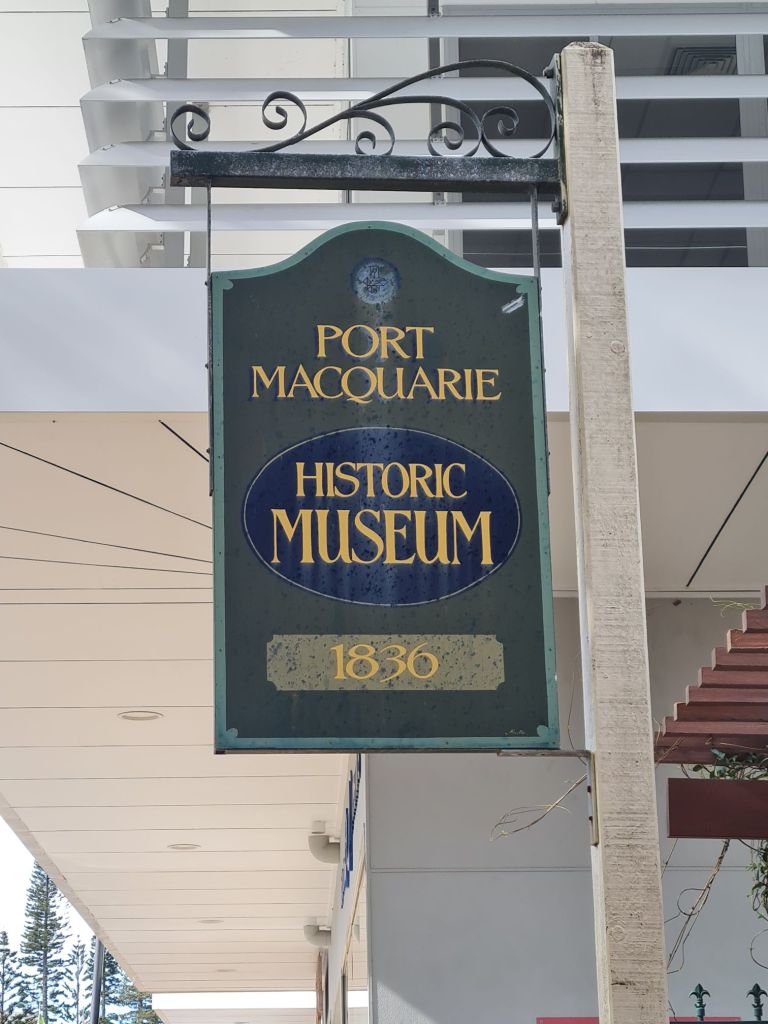
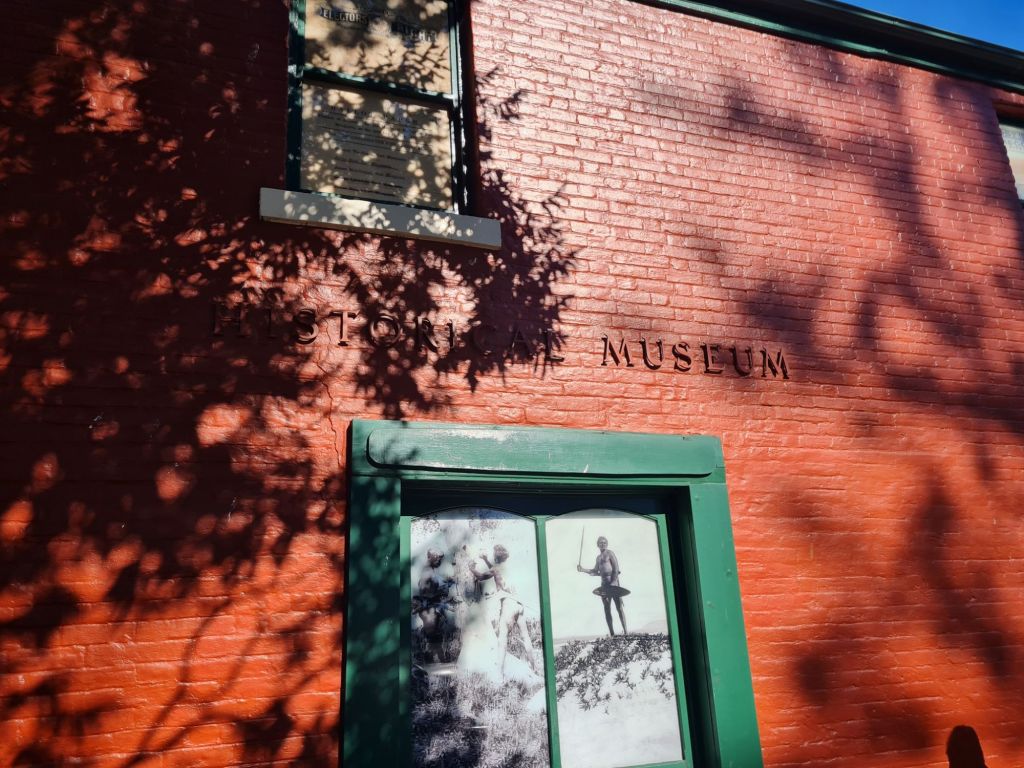
Searching for locations – Port Macquarie – Day 4 – Part 1

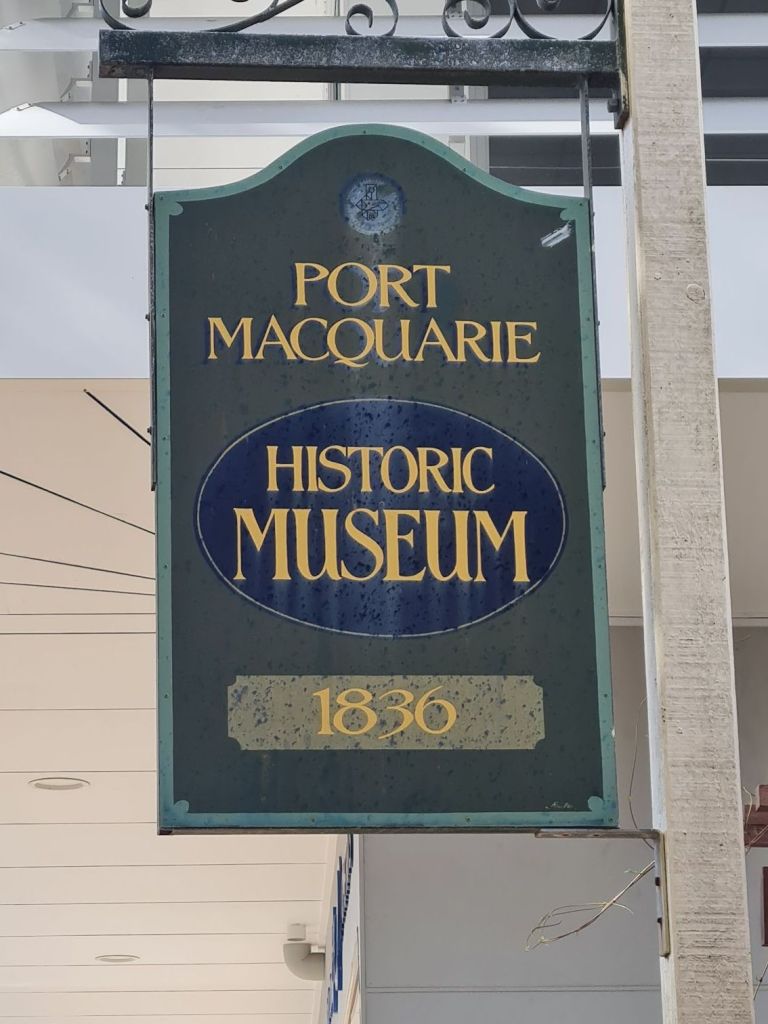
The Port Macquarie Museum

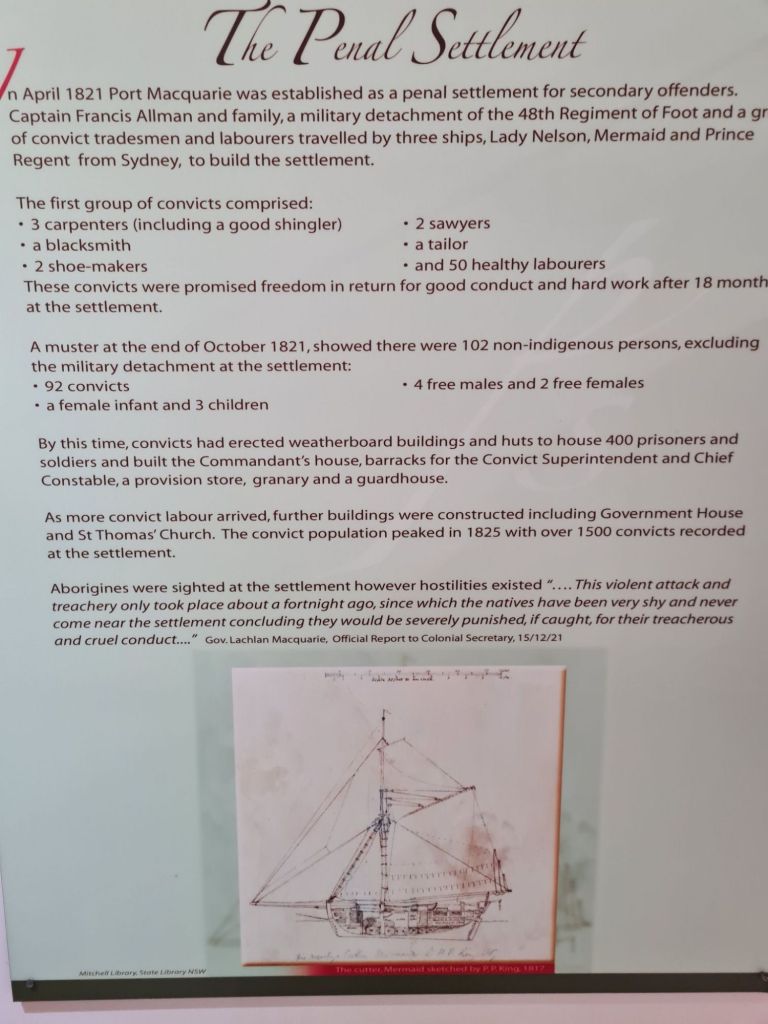
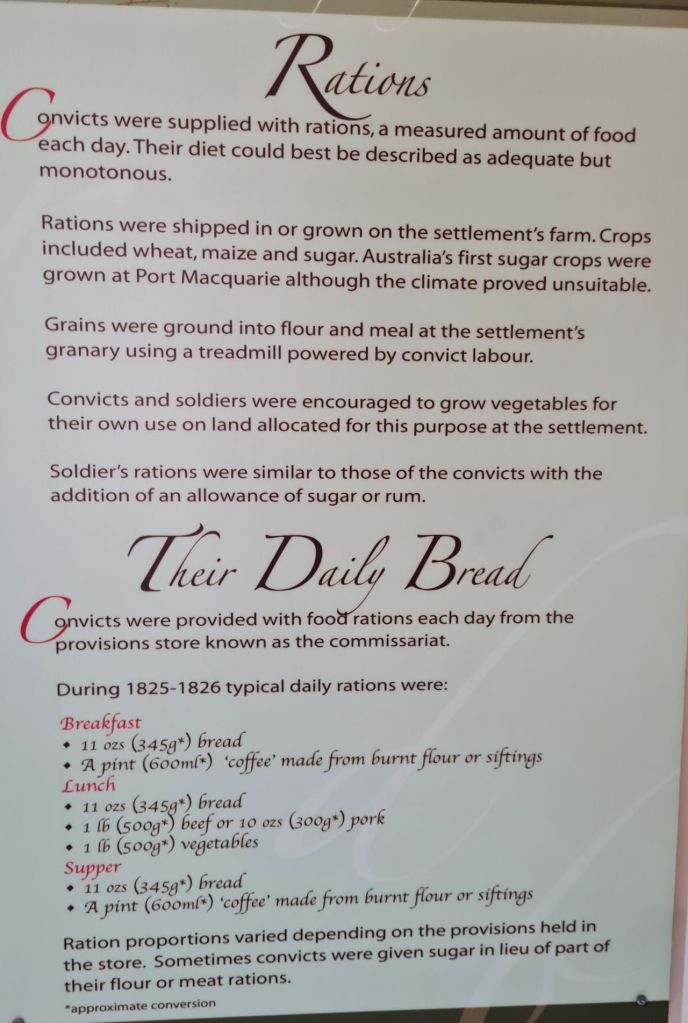
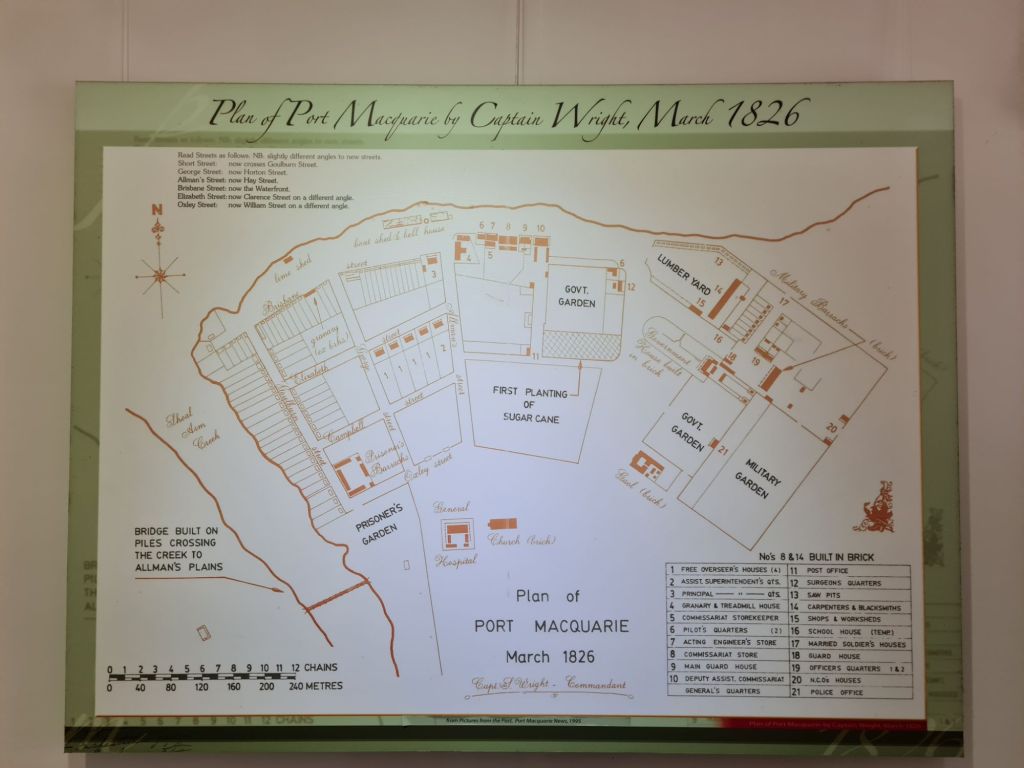
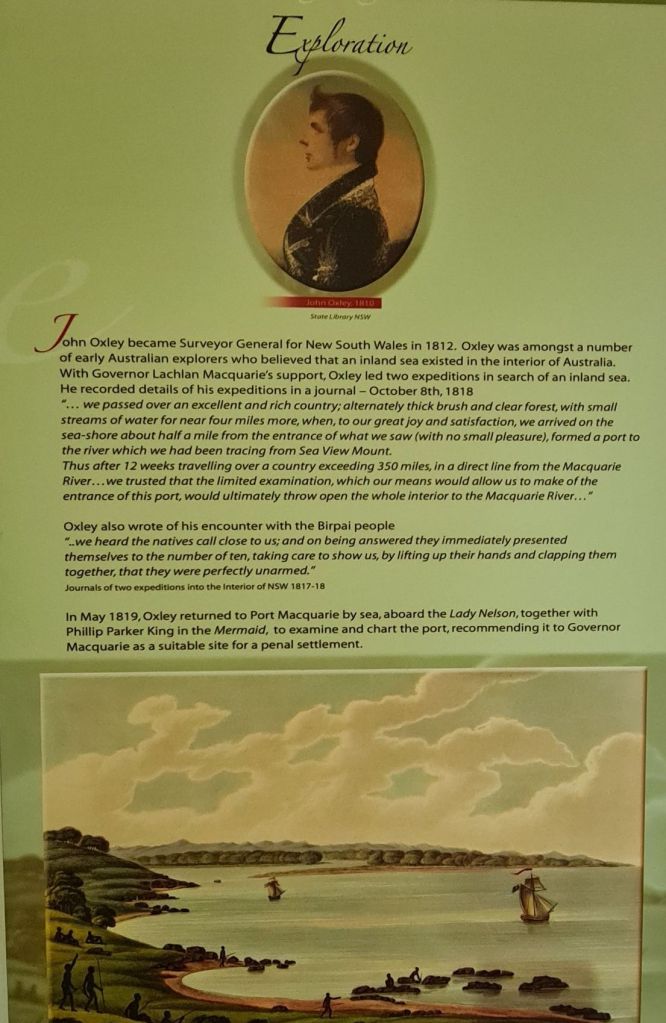
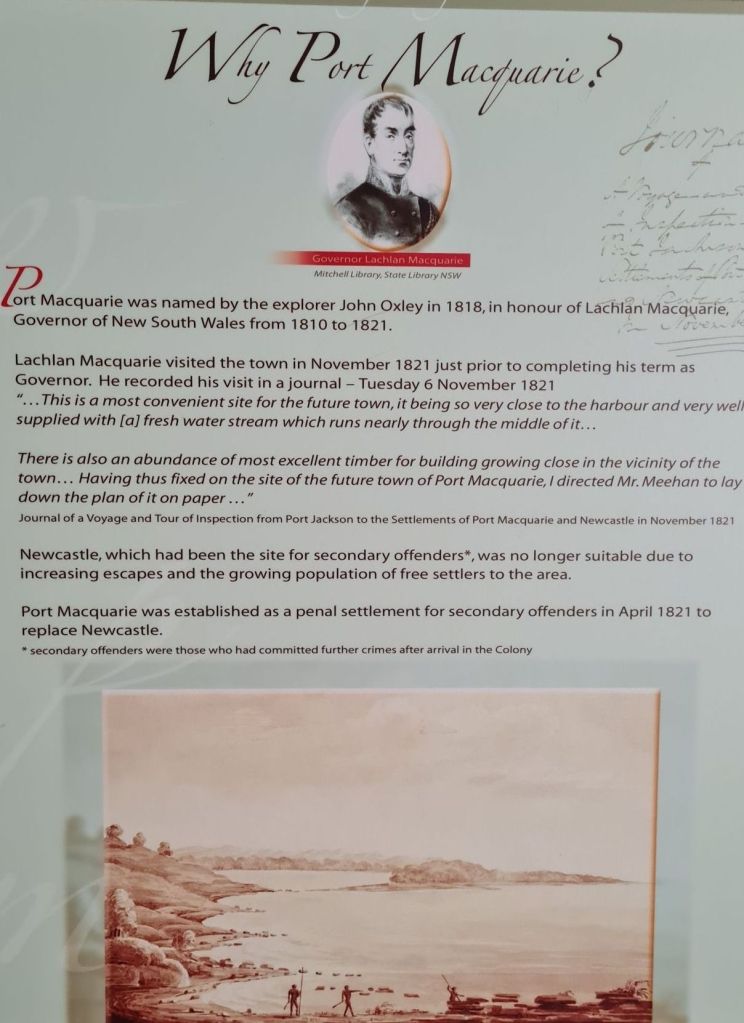
The first section of this museum relates the history, from the beginning, and through the 1800s, firstly as a convict settlement, and then for free settlers, to farm and wood logging.

The Hastings River was named after the Governor General of India in 1818, but it was not explored until 1819 by John Oxley who recommended the site suitable for farming and logging.

In 1821, Governor Macquarie sent Captain John Allman, 40 soldiers, and 60 convicts on three ships, the Lady Nelson, the Mermaid, and the Prince Regent to establish a penal settlement.

Normally a three-day voyage the weather kept the ships 14 days at Port Stephens and more than a week at Trial Bay. It was not until almost 28 days after leaving Sydney they arrived and then wrecked the ships trying to cross the shallow sandbar across the Hastings River entrance.

An excerpt from “Amnesia”, a work in progress

I remembered a bang.

I remembered the car slewing sideways.

I remember another bang, and then it was lights out.

When I opened my eyes again, I saw the sky.

Or I could be underwater.

Everything was blurred.

I tried to focus but I couldn’t. My eyes were full of water.

What happened?

Why was I lying down?

Where was I?

I cast my mind back, trying to remember.

It was a blank.

What, when, who, why and where, are questions I should easily be able to answer. These are questions any normal person could answer.

I tried to move. Bad, bad mistake.

I did not realise the scream I heard was my own. Just before my body shut down.

“My God! What happened?”

I could hear, not see. I was moving, lying down, looking up.

I was blind. Everything was black.

“Car accident; hit a tree, sent the passenger flying through the windscreen. Pity to poor bastard didn’t get the message that seat belts save lives.”

Was I that poor bastard?

“Report?” A new voice, male, authoritative.

“Multiple lacerations, broken collar bone, broken arm in three places, both legs broken below the knees, one badly. We are not sure of internal injuries, but ruptured spleen, cracked ribs and pierced right lung are fairly evident, x-rays will confirm that and anything else.”

“What isn’t broken?”

“His neck.”

“Then I would have to say we are looking at the luckiest man on the planet.”

I heard the shuffling of pages.

“OR1 ready?”

“Yes. On standby since we were first advised.”

“Good. Let’s see if we can weave some magic.”

Magic.

It was the first word that popped into my head when I surfaced from the bottom of the lake. That first breath, after holding it for so long, was sublime, and, in reality, agonising.

Magic, because it seemed like I’d spent a long time underwater.

Or somewhere.

I tried to speak but couldn’t. The words were just in my head.

Was it night or was it day?

Was it hot, or was it cold?

Where was I?

Around me, it felt cool.

It was incredibly quiet. No noise except for the hissing of air through an air-conditioning vent. Or that was the sound of pure silence.  And with it the revelation that silence was not silent. It was noisy.

I didn’t try to move.

Instinctively, somehow, I knew not to.

A previous unpleasant experience?

I heard what sounded like a door opening, and noticeably quiet footsteps slowly came into the room. They stopped. I could hear breathing, slightly laboured, a sound I’d heard before.

My grandfather.

He had smoked all his life until he was diagnosed with lung cancer. But for years before that he had emphysema. The person in the room was on their way, down the same path. I could smell the smoke.

I wanted to tell whoever it was the hazards of smoking.

I couldn’t.

I heard a metallic clanging sound from the end of the bed. A moment later the clicking of a pen, then writing.

“You are in a hospital.” A female voice suddenly said. “You’ve been in a bad accident. You cannot talk, or move, all you can do, for the moment, is listen to me. I am a nurse. You have been here for 45 days and just came out of a medically induced coma. There is nothing to be afraid of.”

She had a very soothing voice.

Her fingers stroked the back of my hand.

“Everything is fine.”

Define fine, I thought. I wanted to ask her what ‘fine’ meant.

“Just count backwards from 10.”

Why?

I didn’t reach seven.

Over the next ten days, that voice became my lifeline to sanity. Every morning, I longed to hear it, if only for the few moments she was in the room, those few waking moments when I believed she, and someone else who never spoke, were doing tests. I knew it had to be someone else because I could smell the essence of lavender. My grandmother had worn a similar scent.

It rose above the disinfectant.

She was another doctor, not the one who had been there the day I arrived. Not the one who had used some ‘magic’ and kept me alive.

It was then, in those moments before she put me under again, that I thought, what if I was paralysed? It would explain a lot. A chill went through me.

The next morning, she was back.

“My name is Winifred. We don’t know what your name is, not yet. In a few days, you will be better, and you will be able to ask us questions. You were in an accident, and you were very severely injured, but I can assure you there will be no lasting damage.”

More tests, and then when I expected the lights to go out, they didn’t. Not for a few minutes more. This was how I would be integrated back into the world. A little bit at a time.

The next morning, she came later than usual, and I’d been awake for a few minutes. “You have bandages over your eyes and face. You had bad lacerations to your face, and glass in your eyes. We will know more when the bandages come off in a few days. Your face will take longer to heal. It was necessary to do some plastic surgery.”

Lacerations, glass in my eyes, car accidents, plastic surgery. By logical deduction, I knew I was the poor bastard thrown through the windscreen. It was a fleeting memory from the day I was admitted.

How could that happen?

That was the first of many startling revelations. The second was the fact I could not remember the crash. Equally shocking, in that same moment was the fact I could not remember before the crash either, or only vague memories after.

But the most shattering of all these revelations was the one where I realised, I could not remember my name.

I tried to calm down, sensing a rising panic.

I was just disoriented, I told myself. After 45 days in an induced coma, it had messed with my mind, and it was only a temporary lapse. Yes, that’s what it was, a temporary lapse. I will remember tomorrow. Or the next day.

Sleep was a blessed relief.

The next day I didn’t wake up feeling nauseous. I think they’d lowered the pain medication. I’d heard that morphine could have that effect. Then, how could I know that but not who I am?

Now I knew Winifred the nurse was preparing me for something unbelievably bad. She was upbeat, and soothing, giving me a new piece of information each morning. This morning, “You do not need to be afraid. Everything is going to be fine. The doctor tells me you are going to recover with little scarring. You will need some physiotherapy to recover from your physical injuries, but that’s in the future. We need to let you mend a little bit more before then.”

So, I was not going to be able to leap out of bed and walk out of the hospital any time soon. I don’t suppose I’d ever leapt out of bed, except as a young boy. I suspect I’d sustained a few broken bones. I guess learning to walk again was the least of my problems.

But there was something else. I picked it up in the timbre of her voice, a hesitation, or reluctance. It sent another chill through me.

This time I was left awake for an hour before she returned.

This time sleep was restless.

Scenes were playing in my mind, nothing I recognised, and nothing lasting longer than a glimpse. Me. Others, people I didn’t know. Or I knew them and couldn’t remember them.

Until they disappeared, slowly like the glowing dot in the centre of the computer screen, before finally fading to black.

The morning the bandages were to come off she came in early and woke me. I had another restless night, the images becoming clearer, but nothing recognisable.

“This morning the doctor will be removing the bandages over your eyes. Don’t expect an immediate effect. Your sight may come back quickly, or it may come back slowly, but we believe it will come back.”

I wanted to believe I was not expecting anything, but I was. It was human nature. I did not want to be blind as well as paralysed. I had to have at least one reason to live.

I dozed again until I felt a gentle hand on my shoulder. I could smell the lavender; the other doctor was back. And I knew the hand on my shoulder was Winifred’s. She told me not to be frightened.

I was amazed to realise at that moment, I wasn’t.

I heard the scissors cutting the bandages.

I felt the bandage being removed, and the pressure coming off my eyes. I could feel the pads covering both eyes.

Then a moment when nothing happened.

Then the pads are gently lifted and removed.

Nothing.

I blinked my eyes, once, twice. Nothing.

“Just hold on a moment,” Winifred said. A few seconds later I could feel a cool towel wiping my face, and then gently wiping my eyes. There was ointment or something else in them.

Then a flash. Well, not a flash, but like when a light is turned on and off. A moment later, it was brighter, not the inky blackness of before, but a shade of grey.

She wiped my eyes again.

I blinked a few more times, and then the light returned, and it was like looking through water, at distorted and blurry objects in the distance.

I blinked again, and she wiped my eyes again.

Blurry objects took shape. A face looking down on me, an elderly lady with a kindly face, surely Winifred, who was smiling. And on the opposite side of the bed, the doctor, a Chinese woman of indescribable beauty.

I nodded.

“You can see?”

I nodded again.

“Clearly?”

I nodded.

“Very good. We will just draw the curtains now. We don’t want to overdo it. Tomorrow we will be taking off the bandages on your face. Then, it will be the next milestone. Talking.”

I couldn’t wait.

When morning came, I found myself afraid. Winifred had mentioned scarring, there were bandages on my face. I knew, but wasn’t quite sure how I knew, I wasn’t the most handsome of men before the accident, so this might be an improvement.

I was not sure why I didn’t think it would be the case.

They came at mid-morning, the nurse, Winifred, and the doctor, the exquisite Chinese. She was the distraction, taking my mind off the reality of what I was about to see.

Another doctor came into the room before the bandages were removed, and he was introduced as the plastic surgeon who had ‘repaired’ the ravages of the accident. It had been no easy job, but, with a degree of egotism, he did say he was one of the best in the world.

I found it hard to believe, if he were, that he would be at a small country hospital.

“Now just remember, what you might see now is not how you will look in a few months.”

Warning enough.

The Chinese doctor started removing the bandages. She did it slowly and made sure it did not hurt. My skin was very tender, and I suspect still bruised, either from the accident or the surgery, I didn’t know.

Then it was done.

The plastic surgeon gave his work a thorough examination and seemed pleased with his work. “Coming along nicely,” he said to the other doctor. He issued some instructions on how to manage the skin, nodded to me, and I thanked him before he left.

I noticed Winifred had a mirror in her hand and was reticent in using it. “As I said,” she said noticing me looking at the mirror, “what you see now will not be the result. The doctor said it was going to heal with little scarring. You have been extremely fortunate he was available. Are you ready?”

I nodded.

She showed me.

I tried not to be reviled at the red and purple mess that used to be my face. At a guess, I would have to say he had to put it all back together again, but not knowing what I looked like before, I had no benchmark. All I had was a snippet of memory that told me I was not the tall, dark, and handsome type.

And I still could not talk. There was a reason, he had worked in that area too. Just breathing hurt. I think I would save up anything I had to say for another day. I could not even smile. Or frown. Or grimace.

“We’ll leave you for a while. Everyone needs a little time to get used to the change. I suspect you are not sure if there has been an improvement in last year’s model. Well, time will tell.”

A new face?

I could not remember the old one.

My memory still hadn’t returned.

©  Charles Heath  2024

Writing a book in 365 days – 220

Day 220

How to pitch a story to a prospective publisher

From Spark to Submission: Unearthing Your Story’s Soul & Crafting the Perfect Publisher Pitch

You did it. You poured your heart, soul, and countless hours onto the page. You wrestled with characters, built worlds, shaped narratives, and perhaps, finally, typed “The End.” That’s a monumental achievement in itself. But for many writers, the real work, or at least the most daunting, begins after the last word is written: the journey from manuscript to published book.

This journey often involves two critical questions:

  1. What is your story really about?
  2. How do you pitch it to a publisher (or agent)?

Let’s dive in.


What is Your Story Really About? Beyond the Plot

This might seem like a simple question. “It’s about a wizard who goes on a quest!” or “It’s a memoir about overcoming a difficult childhood.” But a publisher (or agent) wants to know more than just the surface plot. They want to understand the heart, the hook, the unique selling proposition of your book.

Think of it as distilling your entire manuscript into a potent, irresistible essence.

Here’s how to dig deeper:

  1. The Core Conflict & Stakes: What is the central problem your protagonist faces? What will they lose if they fail? What will they gain if they succeed? The higher the stakes, the more compelling the story.
    • Example: Instead of “A wizard goes on a quest,” try: “A reluctant wizard must retrieve a mythical artifact to prevent a shadow realm from consuming his world, even if it means confronting the darkness within himself.”
  2. The “So What?” (Theme & Message): Beyond the events, what is your story saying? Is it about resilience, love, the corrupting nature of power, the complexities of family, the search for identity? This is the underlying universal truth that will resonate with readers long after they’ve turned the final page.
    • Ask yourself: What do I want readers to feel or think about after reading my book?
  3. The Character’s Arc: How does your protagonist change or grow throughout the story? What emotional journey do they undertake? Readers connect with characters, and compelling character arcs are the backbone of great narratives.
  4. The Unique Hook: What makes your story stand out from the thousands of others? Is it a fresh take on an old trope? A never-before-seen world? A voice unlike any other? A surprising twist? This is what will make an agent pause.
  5. The “Elevator Pitch” (Logline): Can you summarize your entire book in 1-2 sentences? This is a crucial exercise. It forces you to identify the core concept, protagonist, conflict, and stakes. Practice saying it out loud. If it doesn’t immediately grab attention, refine it.
    • Template Idea: “When [inciting incident happens to protagonist], [protagonist] must [goal/quest] before [stakes/consequences].”

Why is this important for pitching? Because an agent or editor needs to quickly grasp what your book is, why it matters, and who it’s for. If you can articulate this clearly, you’re halfway there.


Mastering the Publisher Pitch: Your Gateway Document (The Query Letter)

For fiction, and often for memoirs, the primary tool for pitching is the query letter. For non-fiction (like self-help, business, cookbooks), you’ll typically need a more extensive book proposal. Here, we’ll focus on the query letter, which serves as your book’s literary dating profile.

The Goal: To intrigue an agent (who will then pitch your book to publishers) or a publisher directly (if they accept unagented submissions) enough to request more of your manuscript.

Key Components of a Killer Query Letter:

  1. Personalization (The Research is Key):
    • Address the agent by name: “Dear Ms. Smith” or “Dear Mr. Jones.” Never “To Whom It May Concern.”
    • State why you’re contacting them: Mention a specific book they represented that resonates with yours, an interview where they expressed interest in your genre, or a conference where you heard them speak. This shows you’ve done your homework and aren’t just spamming everyone.
  2. The Hook (Your Logline in Action):
    • Start immediately with your compelling 1-2 sentence logline. This is your chance to grab their attention within the first few seconds. Make it punchy, intriguing, and hint at the core conflict.
  3. The Brief Synopsis (2-3 paragraphs):
    • This is not a chapter-by-chapter breakdown. It’s a concise, engaging summary of your book’s main plot points, character arc, and central conflict.
    • Introduce your protagonist, their world, and the inciting incident.
    • Detail the main rising action and the core struggles.
    • Crucially, do NOT reveal the ending. End on a suspenseful note that makes them want to read more. What is the climax the protagonist must face? What’s at stake?
  4. About the Author (The Credentials):
    • Keep this brief and relevant. Mention anything that lends credibility to your writing (previous publications, awards, relevant professional experience that informs the book).
    • If you have a significant author platform (large social media following, relevant professional network, speaking engagements), mention it, especially for non-fiction.
    • If you have no prior publications, that’s okay! Be honest and professional. Focus on your passion and the book itself.
  5. Comparable Titles (The “Comps”):
    • Suggest 2-3 recently published books (within the last 3-5 years) that are similar to yours in genre, tone, or target audience.
    • DO NOT compare your book to bestsellers like “The next Harry Potter” or classics like “War and Peace.”
    • Choose books that agents sold successfully. This shows you understand the current market and where your book fits.
    • Example: “My novel will appeal to readers who enjoyed the intricate world-building of [Book A] combined with the emotional depth of [Book B].”
  6. Word Count & Genre:
    • State your manuscript’s exact word count (e.g., “This standalone novel is complete at 85,000 words.”)
    • Clearly state its genre (e.g., “Young Adult Contemporary,” “Historical Fantasy,” “Literary Fiction”).
  7. The Professional Close:
    • Thank them for their time and consideration.
    • Reiterate that you’ve attached/included the requested materials (e.g., “Per your submission guidelines, I have included the first ten pages of my manuscript below.”).
    • “Sincerely,” or “All best,” followed by your full name.
    • Include your contact information (email, phone).

Common Pitfalls to Avoid:

  • Typos and Grammatical Errors: Proofread endlessly. Get others to proofread. This is your first impression.
  • Being Overly Familiar or Demanding: Maintain a professional and courteous tone.
  • Pitching an Unfinished Manuscript (for Fiction): Unless specifically requested, your fiction manuscript must be complete and polished before querying.
  • Revealing the Entire Plot/Ending: You want to entice, not summarize everything.
  • Too Long: A query letter should ideally be one page, 300-500 words maximum. Every word counts.
  • Begging or Desperation: Confidence in your work, not desperation, is attractive.
  • Not Following Guidelines: Every agent has specific submission guidelines (e.g., paste into email, attach as PDF, query form). Follow them exactly. Not doing so is an instant rejection.

The Road Ahead

Getting published is a marathon, not a sprint. It requires patience, resilience, and a thick skin. Expect rejections – they are a universal part of the process. Use them as motivation to refine your pitch, improve your manuscript, and keep learning.

Your story deserves to be heard. By understanding its true essence and mastering the art of the pitch, you’re giving it the best possible chance to find its way from your heart to a reader’s hands.

Now, tell us: What’s the very core of your story? And what’s one thing you’re most nervous about when it comes to pitching? Share in the comments below!