‘Sunday in New York’ – A beta reader’s view

I’m not a fan of romance novels but …

There was something about this one that resonated with me.

This is a novel about a world generally ruled by perception, and how people perceive what they see, what they are told, and what they want to believe.

I’ve been guilty of it myself as I’m sure we all have at one time or another.

For the main characters Harry and Alison there are other issues driving their relationship.

For Alison, it is a loss of self-worth through losing her job and from losing her mother and, in a sense, her sister.

For Harry, it is the fact he has a beautiful and desirable wife, and his belief she is the object of other men’s desires, and one in particular, his immediate superior.

Between observation, the less than honest motives of his friends, a lot of jumping to conclusions based on very little fact, and you have the basis of one very interesting story.

When it all comes to a head, Alison finds herself in a desperate situation, she realises only the truth will save their marriage.

But is it all the truth?

What would we do in similar circumstances?

Rarely does a book have me so enthralled that I could not put it down until I knew the result. They might be considered two people who should have known better, but as is often the case, they had to get past what they both thought was the truth.

And the moral of this story, if it could be said there is one, nothing is ever what it seems.

Available on Amazon here: amzn.to/2H7ALs8

Writing a book in 365 days – 191

Day 191

Is writing a solitary experience?

I can see how it is that a writer’s life can be a lonely one.  That’s why, I guess, so many writers have an animal as a pet, someone to talk to, or just feel as though you are not alone in this quest.

I’m often sitting in front of the computer screen, or in a large lounge chair with my trusty tablet computer, writing the words, or staring into space!

Sometimes the words don’t make any sense, sometimes the thoughts leading to those words don’t make any sense.

Sometimes the most sensible person in the room is the cat.

I’m sure his thoughts are not vague or scrambled, or wrestling with the ploys of several stories on the go, getting locations right, getting characters to think and do their thing with a fair degree of continuity.

The cat’s world is one of which chair to lie on, where is that elusive mouse, be it real or otherwise, and is this fool going to feed me, and please, please, don’t let it be the lasagna.  I am not that cat!

Unlike other professions, there is no 9 to 5, no overtime, no point where you can switch off and move into leisure time.  Not while you are writing that next masterpiece.  It’s a steady, sometimes frustrating slog where you can’t just walk away, have a great time, and come back and pick up where you left off.

Then there are those moments when you are staring off into space, contemplating the loneliness of it all.

Except you’re not.

There are what I call the sounds of silence, which for some reason are much easier to hear than during the daylight hours.

The bark of a dog.

The rustle of leaves in the trees.

The soft pattering of rain on the roof.

The sound of a train or truck horn from a long way away.

The sound of a truck using its brakes on the highway, also a long way away.

The sound of people talking in the street.

The thing is, you are never quite as alone as you might think or try to be.

An excerpt from “Echoes from the Past”

Available on Amazon Kindle here:  https://amzn.to/2CYKxu4

With my attention elsewhere, I walked into a man who was hurrying in the opposite direction.  He was a big man with a scar running down the left side of his face from eye socket to mouth, and who was also wearing a black shirt with a red tie.

That was all I remembered as my heart almost stopped.

He apologized as he stepped to one side, the same way I stepped, as I also muttered an apology.

I kept my eyes down.  He was not the sort of man I wanted to recognize later in a lineup.  I stepped to the other side and so did he.  It was one of those situations.  Finally getting out of sync, he kept going in his direction, and I towards the bus, which was now pulling away from the curb.

Getting my breath back, I just stood riveted to the spot watching it join the traffic.  I looked back over my shoulder, but the man I’d run into had gone.  I shrugged and looked at my watch.  It would be a few minutes before the next bus arrived.

Wait, or walk?  I could also go by subway, but it was a long walk to the station.  What the hell, I needed the exercise.

At the first intersection, the ‘Walk’ sign had just flashed to ‘Don’t Walk’.  I thought I’d save a few minutes by not waiting for the next green light.  As I stepped onto the road, I heard the screeching of tires.

A yellow car stopped inches from me.

It was a high powered sports car, perhaps a Lamborghini.  I knew what they looked like because Marcus Bartleby owned one, as did every other junior executive in the city with a rich father.

Everyone stopped to look at me, then the car.  It was that sort of car.  I could see the driver through the windscreen shaking his fist, and I could see he was yelling too, but I couldn’t hear him.  I stepped back onto the sidewalk, and he drove on.  The moment had passed and everyone went back to their business.

My heart rate hadn’t come down from the last encounter.   Now it was approaching cardiac arrest, so I took a few minutes and several sets of lights to regain composure.

At the next intersection, I waited for the green light, and then a few seconds more, just to be sure.  I was no longer in a hurry.

At the next, I heard what sounded like a gunshot.  A few people looked around, worried expressions on their faces, but when it happened again, I saw it was an old car backfiring.  I also saw another yellow car, much the same as the one before, stopped on the side of the road.  I thought nothing of it, other than it was the second yellow car I’d seen.

At the next intersection, I realized I was subconsciously heading towards Harry’s new bar.   It was somewhere on 6th Avenue, so I continued walking in what I thought was the right direction.

I don’t know why I looked behind me at the next intersection, but I did.  There was another yellow car on the side of the road, not far from me.  It, too, looked the same as the original Lamborghini, and I was starting to think it was not a coincidence.

Moments after crossing the road, I heard the roar of a sports car engine and saw the yellow car accelerate past me.  As it passed by, I saw there were two people in it, and the blurry image of the passenger; a large man with a red tie.

Now my imagination was playing tricks.

It could not be the same man.  He was going in a different direction.

In the few minutes I’d been standing on the pavement, it had started to snow; early for this time of year, and marking the start of what could be a long cold winter.  I shuddered, and it was not necessarily because of the temperature.

I looked up and saw a neon light advertising a bar, coincidentally the one Harry had ‘found’ and, looking once in the direction of the departing yellow car, I decided to go in.  I would have a few drinks and then leave by the back door if it had one.

Just in case.

© Charles Heath 2015-2020

newechocover5rs

In a word: Double

I was watching a TV program and the words ‘double standards’ kept being thrown about with little attention being paid to what it really means.

Like statistics, words can be used in any manner to support or debunk what someone else will call a fact.

Fact, of course, is another word that’s thrown around like a football.

But double standards, what does it really mean?

“a rule or principle which is unfairly applied in different ways to different people or groups”

Put simply, if you own a cat, and I hate cats, I’m likely to say to you I like cats because of who you are and what I might want from you.

It has far more reaching consequences in reality because some of us might profess they regard everyone as being equal ‘in the eyes of the Lord’ but have a very different private view.

Personally, I believe everyone should be treated equally.  The problem is, a great many people around me do not, and it seems that I am slowly becoming a minority in my own country.

How do we rectify this?

I don’t think we can.  Politicians are now running scared in their own constituencies because of the increasing multicultural population, and cannot be seen to favor one group or another.

Until lobby groups come into play, campaign funding to the politician is discussed, and very subtly, votes are bought.

Does your political representative work on the basis of double standards?

Maybe it’s time to find out before it’s too late, and you too will be living in shanty huts on a reservation.

Inspiration, maybe – Volume 1

50 photographs, 50 stories, of which there is one of the 50 below.

They all start with –

A picture paints … well, as many words as you like.  For instance:

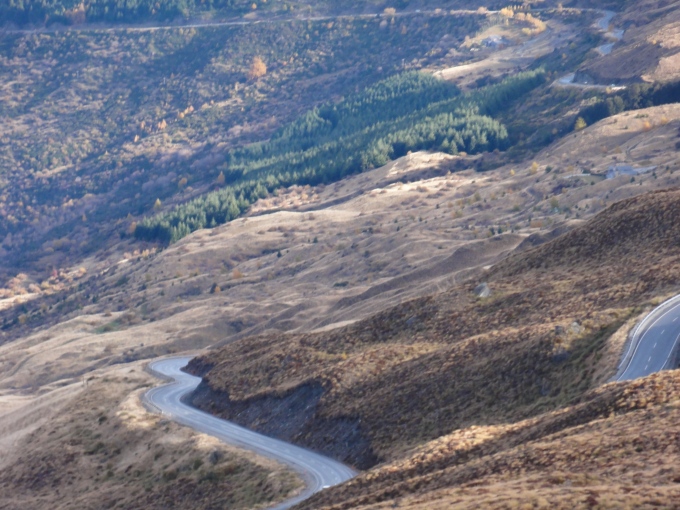
lookingdownfromcoronetpeak

And the story:

It was once said that a desperate man has everything to lose.

The man I was chasing was desperate, but I, on the other hand, was more desperate to catch him.

He’d left a trail of dead people from one end of the island to the other.

The team had put in a lot of effort to locate him, and now his capture was imminent.  We were following the car he was in, from a discrete distance, and, at the appropriate time, we would catch up, pull him over, and make the arrest.

There was nowhere for him to go.

The road led to a dead-end, and the only way off the mountain was back down the road were now on.  Which was why I was somewhat surprised when we discovered where he was.

Where was he going?

“Damn,” I heard Alan mutter.  He was driving, being careful not to get too close, but not far enough away to lose sight of him.

“What?”

“I think he’s made us.”

“How?”

“Dumb bad luck, I’m guessing.  Or he expected we’d follow him up the mountain.  He’s just sped up.”

“How far away?”

“A half-mile.  We should see him higher up when we turn the next corner.”

It took an eternity to get there, and when we did, Alan was right, only he was further on than we thought.”

“Step on it.  Let’s catch him up before he gets to the top.”

Easy to say, not so easy to do.  The road was treacherous, and in places just gravel, and there were no guard rails to stop a three thousand footfall down the mountainside.

Good thing then I had the foresight to have three agents on the hill for just such a scenario.

Ten minutes later, we were in sight of the car, still moving quickly, but we were going slightly faster.  We’d catch up just short of the summit car park.

Or so we thought.

Coming quickly around another corner we almost slammed into the car we’d been chasing.

“What the hell…” Aland muttered.

I was out of the car, and over to see if he was in it, but I knew that it was only a slender possibility.  The car was empty, and no indication where he went.

Certainly not up the road.  It was relatively straightforward for the next mile, at which we would have reached the summit.  Up the mountainside from here, or down.

I looked up.  Nothing.

Alan yelled out, “He’s not going down, not that I can see, but if he did, there’s hardly a foothold and that’s a long fall.”

Then where did he go?

Then a man looking very much like our quarry came out from behind a rock embedded just a short distance up the hill.

“Sorry,” he said quite calmly.  “Had to go if you know what I mean.”

I’d lost him.

It was as simple as that.

I had been led a merry chase up the hill, and all the time he was getting away in a different direction.

I’d fallen for the oldest trick in the book, letting my desperation blind me to the disguise that anyone else would see through in an instant.

It was a lonely sight, looking down that road, knowing that I had to go all that way down again, only this time, without having to throw caution to the wind.

“Maybe next time,” Alan said.

“We’ll get him.  It’s just a matter of time.”

© Charles Heath 2019-2021

Find this and other stories in “Inspiration, maybe”  available soon.

InspirationMaybe1v1

Curious children find a curiosity

I am constantly reminded of how curious grandchildren can be when they are not asking you what it was like to live with dinosaurs!

The second eldest who is a rather clever 17-year-old considers it interesting that I’m a writer, and having just met a ‘real’ author who came to visit them at school, asked me a few questions, some of which sounded like those that had been asked of my ‘real’ counterpart.

Like, “how old were you when you first wrote a story, and what was that story about?”

I didn’t think it was when I was at school, but sometime after that, and after a lot of reading.  Perhaps it had been one of those moments when a light bulb goes on in your head, and I said to myself, I can write these stories too.

Of course, that wasn’t an answer, so she asked again, when did I start writing?

That required a little thought, and there were several triggers that gave me a date, where I lived at the time, the fact I used my mother’s old portable typewriter, and the fact I had not been long out of school.  I was, in fact, about 17.  It was 53 years ago; I’ll let you do the math!

What was it about; that I couldn’t tell her, but I said I had rescued a lot of old scribbling of mine and put them in a box to look at later when I had the time.

I guess that time had arrived.

And, yes, there was the book, the individually typed pages, some with corrections, unfinished.

The pages were brown with age.

The story, well, I read the first few pages, and it seems I’d started down the thriller path then, the story so far, an agent comes ashore from a trawler to a bleak and isolated village, perhaps on the Scottish coast.

Then there was the inevitable next question; “What was the first story you read that put you on the path to wanting to become a writer”.

That was easy, Alistair Maclean’s HMS Ulysses.  I showed her a copy of the book.

That led to, “but this is about the British Royal Navy in World War 2…”

Perhaps I didn’t answer that correctly, it was after reading about a dozen of his novels, most of which were precursors to the modern-day thriller, perhaps more along the lines of action adventures.

The next question, understandably; “What was the first book you ever finished?”

That was The Starburst Conspiracy, the manuscript of which was in the box along with another completed novel, and quite a few short stories.

Back in those days, I remembered that I had sent some of my stories off to various publishers, and had entered a number of short story competitions, all to no avail.  And for a number of years, until I because to old, used to write and enter a novel in the Vogel novel competition but never made it to the shortlist.

It’s probably why I gave up writing for a number of years, until I worked for an interesting company who had a rich history of phosphate mining in the Pacific and being given permission to look into the archives, began writing what could only be described a saga, and by the time I’d left, it was over 1200 closely typed pages long.

I showed the bulky manuscript to her, but by this time her interest had moved to something else.

For me, however, it seemed there was a lot of unfinished business.

The cinema of my dreams – I always wanted to go on a treasure hunt – Episode 88

Here’s the thing…

Every time I close my eyes, I see something different.

I’d like to think the cinema of my dreams is playing a double feature but it’s a bit like a comedy cartoon night on Fox.

But these dreams are nothing to laugh about.

Once again there’s a new installment of an old feature, and we’re back on the treasure hunt.

We have a situation

Home wasn’t home anymore.

I stood inside the front door, as I had many times in the past, but this time it was different.

Maybe it was the near-death experience, maybe I hadn’t been there for a few days, maybe I had irrevocably changed in those few short days.

It seemed that I was someone else, that the old Sam had gone away, and a new version had replaced him.  Had I finally grown up, or was I still reeling from the ordeal and, more likely, mourning the loss of what had been my one true friend.

Right then, it felt like Boggs had never existed, and that Nadia had invaded that space.

Nadia.

Until now, right this moment, I hadn’t really thought about what I was about to do.  Since being in the hospital, every movement I’d made felt mechanical, and someone else was manipulating the controls.

Wanting to leave was a knee-jerk reaction, and one that failed to recognize others may have a role in what happened, like my mother.  I gad completely discounted her because of her association with Benderby, but what if that was no longer the case.

With Alex off the hook, they no longer had to worry about Nadia or what I might say or do, not that there was anything we could do.  I felt for Charlene who literally was between a rock and a hard place, having to compromise her principles to uphold justice and her disappointment in her father.

To be honest, his actions came as a surprise, despite the rumors of corruption.  It didn’t occur to me that it might have been the lesser of the evils, getting Vince off the streets, nobbling the Cossatinos, and to a lesser extent, using the situation as a bargaining chip with the Benderby’s.

But all of that was moot.  Another rumor circulating, according to the newspaper I’d seen at the hotel, was that a third term for the current sheriff was looking unlikely.  It was joined by an interview with Benderby on the construction of a new resort on the mall site.  Noticeably absent were any reports on Boggs, the treasure, or Cossatino.

I considered briefly whether I should go to the newspaper and tell them the whole story.  If he considered it had any element of truth, he’d publish it and be damned, but the thought of how his wife, an Ormiston, would take the news of finding her father, only for the body to disappear, would serve no purpose.  If there was a body, I would not hesitate.

But, now, it was enough to make a decision on what I would do next.  Pack a bag, tell my mother I was leaving, and call Nadia.

It was impossible to fit a lifetime into a bag.  It was fortunate, perhaps, that my situation had not afforded me the luxury of too many possessions, or anything of value.

Even so, what fitted wasn’t much.  I wanted to believe it was going to be a new start, but it seemed like I was just running away, that the problems I was running from would just come with me. 

And, then, there was Nadia.  I was today’s flavor of the month, but would I be in a month, or two? 

That thought was interrupted by the sound of the front door opening.  I stepped onto the passage just as my mother closed the door.

“Sam.  Where have you been?  I’ve been calling, and leaving messages.”

She wasn’t angry, but there was an edge to her tone.  I should have at the very least sent a message to say I was OK.  It didn’t help my phone battery had died.  I’d put it in the recharge, and minutes later continually dinged with missed messages

“I had to get away.  Either that or I would have done something I regretted.  I thought you’d moved in with Benderby.”

“You thought wrong.  This business with Alex.  I remember you told me he was responsible for what happened to you and Nadia, and when I overheard him arguing with his father, I realised you were telling me the truth, and neither of them could be trusted.  I just told him I needed some time to sort out some issues.”

“You’re not going back?”

“No.  What are you going to do?”

“There’s nothing for me here.  I’m not going back to the warehouse, nor do I want to be here anymore.  Not while Alex is put and about.  It’s only a matter of time before he comes after Nadia and I.”

“Then you’re still going to Italy with her.”

“For a while, see how it works out.  You should come too, at least for a holiday, think about what you’re going to do.  Personally, I think you should also leave, start fresh somewhere else.”

“Maybe you’re…”

We both heard the screeching tires of a car coming to a sudden stop outside, followed by the slamming of doors.

Alex not waiting to clean up his mess?

A sudden pounding on the door revised that assessment, if anyone was here to do us harm they would have kicked the door down.

I moved my mother behind me, and the protection of the door as I opened it.

The sheriff.

“We have a situation,” he said in his most serious tone

Warning us the Benderby’s were coming for us?

When neither of us responded, he added, “Elsie Boggs has the Benderby’s at gunpoint at the Blue Circle, and she will only talk to you.”

© Charles Heath 2020-2022

Memories of the conversations with my cat – 27

As some may be aware, but many not, Chester, my faithful writing assistant, mice catcher, and general pain in the neck, passed away some months ago.

Recently I was running a series based on his adventures, under the title of Past Conversations with my cat.

For those who have not had the chance to read about all of his exploits I will run the series again from Episode 1

These are the memories of our time together…

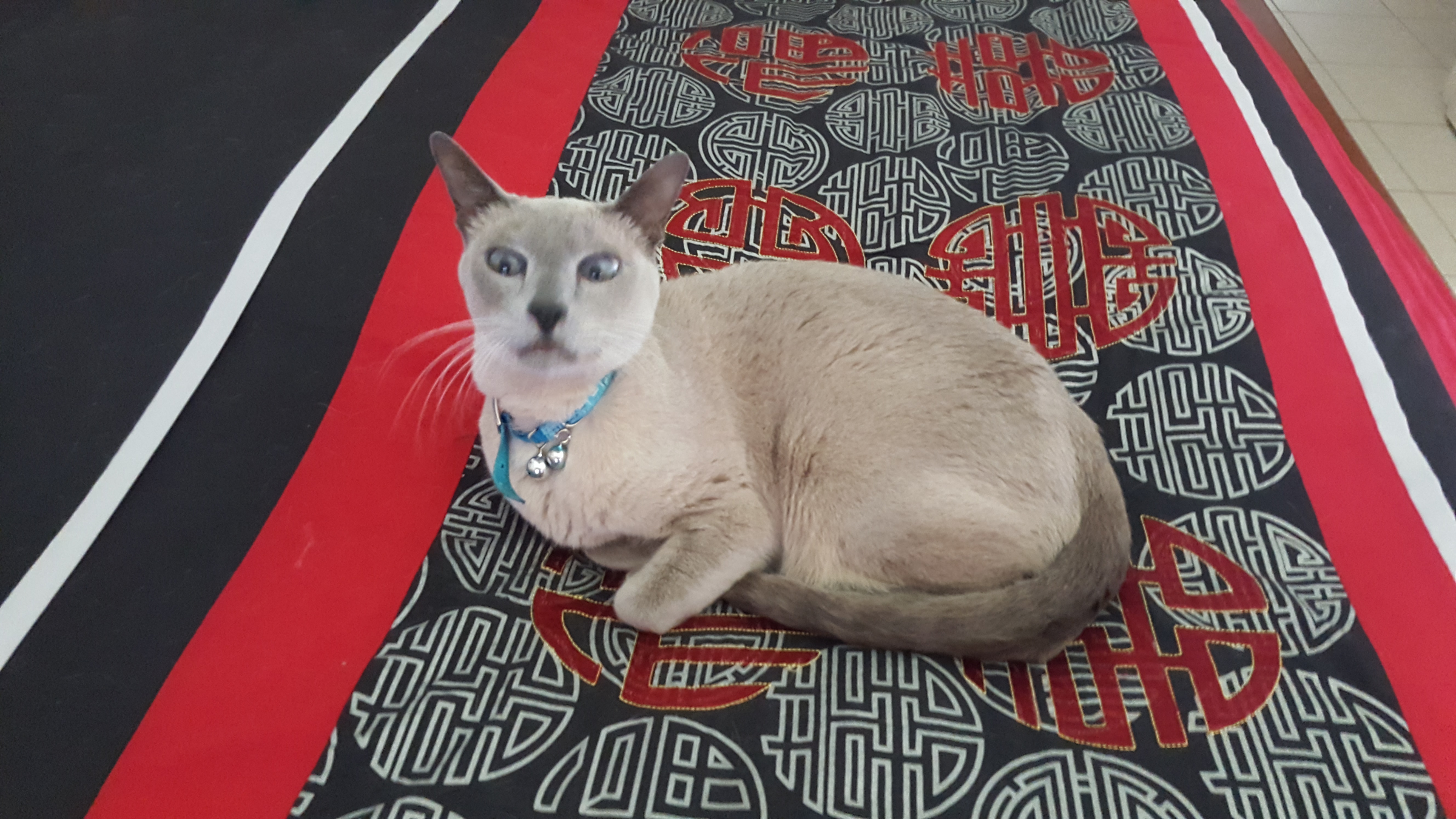
20160902_123201

This is Chester.  He knows it’s sheet changing day and he’s waiting.

You know how it goes.  If there’s an opening, he’s in it, rolling around, clawing at the invisible mice that he thinks are hiding at the end of the bed.

He fails to recognize that it’s simply the sheets flapping as they’re being smoothed out.

And telling him to stop being stupid elicits a dumb look that borders on insolence.

There he sits stretched out, between the sheets, where he thinks I can’t get him.

I’m not moving, he says.

You can’t make me.

I’m going to lie here till the snow covers me up.

He even pokes his tongue out at me.

Right!

I fold the sheets over, then over then over, step to the end of the bed, and lift.

Next minute he’s on the floor, a perfect landing on all four paws.

He looks up.  You win this time, but just you wait!

Perhaps I should shut the door to keep him out, but where would be the fun in that.

“Trouble in Store” – Short Stories My Way:  The re-write – Part 10

Now that I’ve gone through the story and made quite a few changes, it’s time to look at the story

Jack had heard there were moments where, in a split second, your whole life flashed before your eyes.  His life up to that moment did, and what he saw he didn’t like.

But nor was he very happy about the fact he was nearly out the door before the policewoman on the other side crashed into him and sent both of them sprawling to the floor, and back into the path of danger.

That was about the same fraction of a second he heard the gun go off, twice, or so he thought and knew he was a dead man, waiting for the bullet.  A life-defining fraction of a second.

Another fraction of a second passed as the policewoman tried to unravel the mess they’d become, and in that moment in time he felt a tugging at his sleeve and then, as if in slow motion, the sound of the glass door disintegrating behind him.

What may have been milliseconds in reality seemed like half a lifetime in his mind.  That he was still alive at the end of it was, he thought, a sign.

© Charles Heath 2016-2024

Writing a book in 365 days – 189

Day 189

Writing exercise – Everybody called him Einstein, but long before he had made his last big mistake, people had forgotten why.

Some legends are spoken at gatherings around night fires, times when folks liked to talk about olden times, times when life was different.

There were signs of a different civilisation, almost lost in the vegetation, of people who had lived very different lives from what we have now.

Our settlements were near these ruins, taking advantage of facilities that had been created or repurposed, and our progress was based on what we found.

But there was one legend of a person known as Buck, or perhaps his name could have been longer. The relic we found was only a small part of something larger.

One of the elders of our clan said he had heard, when he was young, of a relic called a book, where there was writing in a language that was once spoken by those who lived long ago.

It was still our language, taught down through the generations, as a mark of respect to the people we believed were our ancestors.

This Buck, he said, was also compared to another, a man called Einstein, a great man who lived many centuries before, one of many who contributed to creating the means of destroying the world, and nearly everyone on the planet.

That legend had faded because no one wanted to remember the people who had made our world the way it was, scarred, with often warring clans, fighting over the little resources we had. 

It seemed silly that we had to spend more time and effort defending what we had rather than living our lives in peace, but that was something else we learned: not to be greedy and to covet other people’s property.  It was a pity that other clans did not.

My question had been, if this man Buck was so clever, why were we not more advanced?  The thing was, no one really knew why this Buck was so clever, why he was compared to that man called Einstein specifically, and no one really cared.

The day dawned, a fine day without winds or storms, and warm.  It had been progressively getting warmer, and now, in my twentieth year, the cold only lasted for four months of the year. 

It was my turn to go to the well and get the water.  It was a morning chore that had its advantages.  I got to meet up with the other younger people in the clan, and one in particular, a girl of my age, Anna.

If I did everything right, our families would eventually meet, and the bargaining for the marriage between us would commence.  Everything had a value in trade. There was no money, a strange concept from long ago, only what we had to trade.  Furs, food, timber, mud bricks, tools, weapons.

We did not fight each other, only the other clans, if we were attacked.  Such a thing as crime and an ancient concept was not tolerated, and if committed, the perpetrator was expelled into the wastelands.

I joined the line and waited for my turn.  There was a water monitor whose job was to make sure everyone got their fair share.  I collected our water and then waited to see if Anna came.

She did, collected her water, and then came over time where I was waiting.

“Guy, how are you?”

“Anna.  I am well.  How are you?”

“I am also well.  I trust your family is well.”

“They are.  Yours?”

“They are also well.  It looks like we will have more warm days this year.  My father says it will extend the crops so we will have more food to store for the cold times.”

“That is good.  We are hoping to have more cattle and sheep for meat and milk.”

“There are more people.  My father says we will have to start exploring again.”

“We he be leading the expedition?  I would like to go with him this time, if i can get permission.”

“I will ask.  Now I must go.  It was nice talking to you, Guy.”

“It was nice talking to you, Anna.”

My trips to the well were not only to meet Anna, but also the thrill of getting another clue to how we came to be.

Her father was one of the few elders trusted with the history of our clan, who organised expeditions beyond the boundary of our village, sometimes put into the expanse.
.
No one ever ventured there. It was uninhabitable with no water, no vegetation, and only ruins of a much older and advanced civilisation.  The people, he said, had destroyed themselves through greed and paranoia.

It was said he had seen things no man should ever want to see or should.

He did not share these revelations with his family, but sometimes Anna acquired an artefact and would tell me, in hushed tones, or other times slip me a piece of paper she had written on, with the note to burn it when read.

It was all very secretive.

I checked my pocket, and there was a piece of much-folded paper.  When I was alone and not to be interrupted, I carefully unfolded it.  It was not handwriting.  It was very neat letters, what she had called printing, where all the writing was elegant and easily readable.

We didn’t have books, and I don’t think any of us had ever seen one.  We knew about paper, though our paper wasn’t the same as the relics we were told existed.  This page I had could get me into trouble because it was a relic.

It was about a man named Albert Einstein, who lived many centuries ago, a man who developed the theory of relativity and contributed to the photoelectric effect, which is a phenomenon related to the interaction between light and matter. 

It was obvious to me that to be classed as brilliant, you had to use words no one else could understand.  I folded the page up and his it.  I would give it back next time I saw her.

©  Charles Heath  2025