The cinema of my dreams – I always wanted to go on a treasure hunt – Episode 90

Here’s the thing…

Every time I close my eyes, I see something different.

I’d like to think the cinema of my dreams is playing a double feature but it’s a bit like a comedy cartoon night on Fox.

But these dreams are nothing to laugh about.

Once again there’s a new instalment of an old feature, and we’re back on the treasure hunt.

Mrs Boggs has a gun and will use it

The sheriff was looking at me.

“Don’t you have a negotiator?”

“Tried.  We have fifteen minutes before she starts shooting them.”

“Given the circumstances, surely there is a more simple solution.”

“She’s not in a position where we could neutralize the problem.”

I could see the scene in my mind.  Benderby’s passion for privacy was going to be his undoing.

“Why me?”

“She wants the truth about her son’s death.”

“I wasn’t there when he was killed.”

“You were when they confessed.”

“So were you?”

“The recording was inadmissible evidence, a confession gained under duress.”

“Then it doesn’t matter what I say, the same argument applies.”

“Just tell her what she wants to hear and get the gun.  We’ll take care of the rest.”

“And if she shoots Sam in the process?”  Finally, my mother decided to speak.

“I don’t think she will, but we will take precautions.”

“I’m not going to change her mind, but if it saves her life, I’ll try.”

I didn’t see how the bulletproof vest was going to help if her aim was off, a very genuine possibility.  It made me feel like I was overweight, and it restricted movement.

A large crowd had formed outside the venue, and it was hard to tell what they were thinking, other than this was yet another random act of gun violence.

The deputies cleared a path, and we went into the large room that was usually full of diners.  People within a six-table radius had moved away, leaving Benderby, and Alex, sitting somewhat stultified, glancing in the direction where Elsie Boggs was.

She was not visible from where we were standing, yet it appeared she could see us.

“That’s far enough, Sheriff.  Just send Sam here, and back off.

As the sheriff backed away, I walked slowly towards the table where I could now clearly see Benderby and Alex, and then I felt a shiver.  His first wife, rarely seen in public, and daughter, Alex’s younger sister were also at the table.  She had left him long before Benderby had embarked on his questionable ventures.

Wrong place, wrong time, and possible collateral damage.

I stopped about fifteen feet from both Elsie Boggs and the Benderby’s.   The two women were visibly terrified.

Elsie Boggs said nothing, which surprised me after asking for me.

“If you want justice for your son, this is not going to achieve it.  At least consider letting some of these people leave.  They have nothing to do with this.”

“No.  They’re witnesses.”

“To what exactly?”

“Alex’s confession.”

“It isn’t a confession if it’s under duress.  It won’t be admissible in a court of law, and you know as well as I do that Alex would confess to anything if he believed it would save himself.”

“It’s not him he’s going to save.”

I heard once the effective range of a handgun was about twenty feet, and in the hands of an amateur far less.  I was not sure if Mrs. Boggs knew how to use it, but she was certainly holding it steady, using both hands, like I’d seen on TV.

I suspect the weapon was Rico’s, because Boggs had shown me a gun he had found hidden away in the closet in the spare bedroom where Rico had been staying before being arrested.

I remembered it had a safety lock, but I couldn’t see it from where I was standing.

But the threat was real, she was aiming the gun at Alex’s sister.  That was not going to help her case when this was over.  It also brought into focus her state of mind, which was more than likely all over the place after losing her son.

I had to try, and talk her out of this course of action.

“This is not the way to get things done.  It’s a matter for the police, and I’m sure they will investigate any claims you make.”

She shook her head.  “The sheriff is in Benderby’s pocket.  There will be no investigation.  Their minds are already made up.”

She was right of course, and without any real assurances the sheriff was going to do anything, regret seemed little point to stop her.

“Look…”

She raised the gun towards the roof, over the heads of the Benderby’s, and shot a round into the ornate plasterwork, breaking it and showering them with plaster dust and normal dust.

It caused three of them to cough.

Two distinct points were resolved at that moment, the safety was off, and she could shoot.  Would distance be the only factor?

“You’re running out of time, Alex.”

I saw a slight movement in what would have been her peripheral vision, more armed police moving into several more accessible places, one improving the firing line for a marksman to eliminate the problem.

Unfortunately, she saw it too, and shot another round in that direction, hitting a female police officer who was one of three with weapons drawn.

Mrs. Boggs situation just went from bad to worse.

“I told you all to leave,” she yelled, “so whatever happens now is on you.”

The other two officers had to hold their fire because returning fire might hit one of the Benderby’s.  I hadn’t realized until then that she had also positioned herself so the Benderby’s became shields.

And if she shot at me, she would have to take the Benderby’s out of her sights, which might give a quick-thinking, or quick moving officer a chance of a shot.

This was where I should come up with some calming words, but it was clear that the last foray by the sheriff’s people had rattled her.  The gun was getting more unsteady in her hands.

“Alex,” she said, a tinge of hysteria on her tone, and an edge that indicated time was running out for someone at that table, “You’ve got five seconds.”

Alex was not the bravest of souls, but, sitting at that table with his father, maybe he feared being a failure in front of him, than losing a sister.

He turned towards her, and said, “Go to hell.”

Five seconds later it was over.

Mrs. Boggs changed the target and shot Alex in the head, changed aim, and shot Benderby, and before either body hit the floor, three officers shot Mrs. Boggs. 

The moment Alex spoke his words, I dropped to the floor, only registering what had happened after the five shots, and watching Mrs. Boggs collapse to the floor.  No husband, no son, Rico in jail, she had nothing left to live for.

© Charles Heath 2020-2022

Memories of the conversations with my cat – 29

As some may be aware, but many are not, Chester, my faithful writing assistant, mouse catcher, and general pain in the neck, passed away some years ago.

Recently, I was running a series based on his adventures, under the title of Past Conversations with my cat.

For those who have not had the chance to read about all of his exploits, I will run the series again from Episode 1

These are the memories of our time together…

20160903_163858

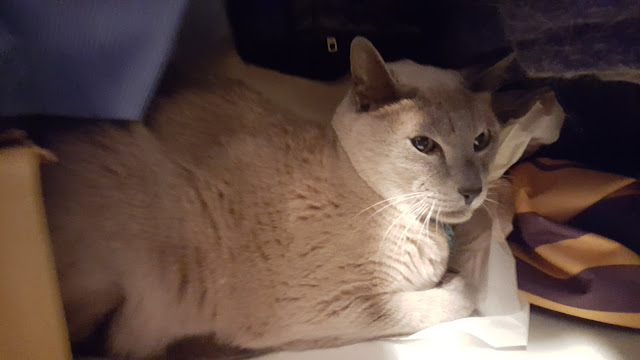
This is Chester.  He thinks he has managed to slip away without anyone noticing.

He doesn’t realise that we put a special collar on him so that we can hear him coming.

It was supposed to save the birds, stopping him from sneaking up on them, but we don’t let him outside.

Like all cats who have a dash of bravado in them, they don’t realise cars are not meant to be chased, and they are faster than cats think they are.

Or so the last three cats we had thought.  Chester is benefiting from their mistakes.

Not that he can be told.

Still…

He knows it’s reading days, where I need an opinion, and I’m guessing he’s not in the mood.

That’s OK.  I need a change of scenery.  And the chance to improve my surveillance skills.

Maybe I can use that experience in the story.


Short story writing – don’t try this at home! – Part 2

This is not a treatise, but a tongue in cheek, discussion on how to write short stories. Suffice to say this is not the definitive way of doing it, just mine. It works for me – it might not work for you.

There are two methods of writing, planning, sometimes meticulous planning, or flying by the seat of your pants, or being called a ‘pantser’.

The first has it all planned out before they start writing, from beginning to end, knowing what the end result will be. The second, well, we like to write and see where it takes us.

I like to think I fly by the seat of my pants, you know, like the reader who takes up the story and starts reading, not having a clue where it’s going to go. I prefer that blissful ignorance, of course, until I run out of ideas, roughly the equivalent of hitting a brick wall

Or that common enemy all writers have, the dreaded ‘writers block’.

I’ve tried both methods.

Each work, but in the case of the ‘planner’, you need to know where it’s going to start what’s going to happen in the middle and have the end firmly planted in your mind.

Not much good if a rotten character is making you angry and you want to kill him off, and in the most excruciatingly painful manner.

Flying blind gives you a little more creativeness and be able to go around a corner and see what’s there. It also allows for those complete changes of direction you come up with in the shower, the place that is a fertile ground for new ideas just when you’re running out of them.

But it can sometimes play havoc with word counts and if you’re trying to fit into 2,000 words, 5,000 words, or a lot less, taking the story where it wants to go is not a good idea, and sadly, I tend to let stories run their course.

And sometimes I like the idea of writing three different endings, and then can’t choose which one I like the best.

So, role model I am not. I like writing, and when I’m in the ‘zone’ it’s like I’m in another world.

But then, isn’t that the case for all of us?

More unclarity tomorrow!

Writing a book in 365 days – 192

Day 192

Writing exercise – All that glitters…

Perhaps if I’d thought about it long enough, I might have seen it coming, but it was taking that light at the end of the tunnel as a good thing, not the double-headed train pounding towards me at breakneck speed while tied to the tracks.

It would be easy to blame my mother.  She was the one who taught us to take everyone at face value, to see the good in the world, and, of course, eight times out of ten, everything was fine.

Until it wasn’t.

I was on the balcony overlooking the bay, the house that my grandfather had first built as a getaway shack, expanded into a holiday home, and then into my retreat, the place I could hide away from the world.

It was the same for my sister, who was still recovering from a bad relationship, one that she blamed herself for, but the truth was, she was not at fault, not for any of it.

But the scars ran deep, deep enough that in the pit of despair, she did the unforgivable, and it was a sixth sense that sent me to her in her in her time of need.

Now, she was well on the road to recovery, older and very much wiser.

For both of us.

“Did you see the report Jenkins sent?”

She was stretched out on the deckchair, taking in the sunshine that came with early spring.  It was warm but not hot, a gentle breeze rustling through the surrounding trees.

There were white caps out to sea, and there was a ship slowly plying its way past the bay.  It was a busy shipping lane, and it was the perfect distraction to watch the ships go by.

“I did.”

Jenkins was the company’s head of security, and I had asked him to investigate the man who had deceived and nearly destroyed my twin sister.  In an attempt to get justice, he had gotten off on a technicality and walked free.

It wasn’t justice, but justice sometimes could be blinded.

“Did you have any idea?”

I had to say I didn’t.  Who would, when the woman of your dreams, a woman who ticked all of the boxes, comes into your life when you least expect it.

At first, I believed it was too good to be true.  Jenkins checked her out, and everything was irreproachable.  It was not that I was the one who didn’t trust her. It was the people around me.

Once the investigation was over, I decided it was time.  We had been dating off and on for over a year, and it had been a slow burn.

Then Alisha discovered just who and what her boyfriend was, just in time to prevent a travesty.  She was worth a small fortune, and Jackson Pearce had very nearly stolen it all.

He only made one mistake.  He told, no, bragged, that he was about to take down the Bernadine’s, one of the wealthier and blue ribbon families.

He very neatly got away with it.  He was free, but he was penniless, but oddly not concerned or angry.

I asked Jenkins to find out why.

It was in the report sitting on the coffee table beside Alisha’s deckchair.

The woman I was about to marry in the wedding of the year, after letting her take control of the preparations and ceremony and spending close to three million dollars.

A lot of that money was channelled back to her brother Jackson Pearce.  Her real name was Milly Pearce.  She’d stuck to the Milly but was using her father’s mother’s birth surname, making it difficult to trace in a first scan of a family tree.

Or lack of one, which matched her assertion, she was an orphan, from an orphanage that no longer existed, and all records of her had been destroyed in a fire.

Only Jenkins thought it was suspicious, but we were all prepared to give her the benefit of the doubt.

“No. She is such a lovely person.”

“So was Jack, until…”  It was still painful for her, but not so that it hurt that much.  “What are you going to do?”

“Play.  Do you think you’re strong enough to join me?”

“Can I shoot her?”

I gave her a curious expression.  As much as I understood how she felt about that family, it was not worth the jail sentence.

“No.”

“Spoil sport.”

She sighed.  I took her attitude and the determination in her voice as good signs she was all but over her calamity.

Up to the unmasking of Jack, she had been almost like a sister to Milly.  I had thought it was the sort of bonding one would expect between the women.  Milly had been suitably disparaging towards the dastardly boyfriend, but whatever had been between them had been broken.

Knowing what she did now, it was difficult to imagine how she could be nice to her.

But it would be settled the next day.  I had promised to take Milly to a special lunch with just our family, mother, who was kept oblivious of the details of Alishas breakup and subsequent events, my older brother, Wally, who was the current CEO of the company, the one I would eventually take over, and myself, basically to talk about where she would fit into the echelons.

We had talked about it, and she had suggested a role suited to her standing.  She had also considered, to feel like she was part of the family and parcel of shares.

That alone should have set off alarm bells, but since Mother and Wally had suggested it, who was I to disagree?

“Are you going to tell Mother and Walter?”

It was like she was reading my mind.

“No.  Let’s play her game out and see where it goes.”

“Are you prepared for it?”

I don’t think I would ever be.  I had been hesitant to make our budding romance public, and on our eight-month anniversary, we were ambushed by the media.  She swore she had not told anyone, but she and I were the only two who knew.

It was the catalyst needed to push us to the next level.  Even then, I was not suspicious, accepting her explanation.  It was not impossible that I was being followed by a photographer looking for a scoop.

“What would be the upside for her?”

“Without sounding catty, Henry, if she is cut from the same cloth as her brother, there’s always a reason.”

“Fair enough.  We shall see.”

© Charles Heath  2025

Searching for locations: The Bund, Shanghai, China

The Bund

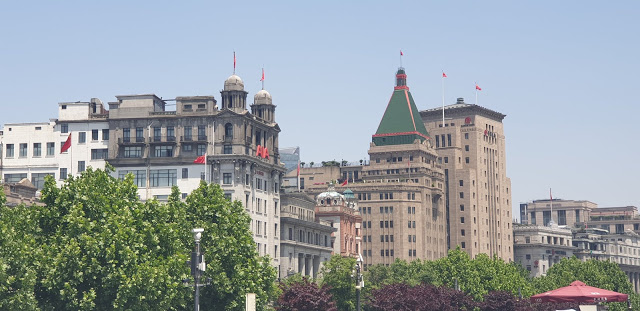
The architecture along the Bund or Waitan is a living museum of the colonial history of the 1800s.  The area centers on a section of Zhongshan Road within the former Shanghai International Settlement.

The word bund means an embankment or an embanked quay.   It was initially a British settlement; later the British and American settlements were combined in the International Settlement.

The Bund is a mile-long stretch of waterfront promenade along the Huangpu River. There are 52 buildings of various architectural styles, including Gothic, baroque, and neoclassical styles. The area is often referred to as “the museum of buildings”.

Building styles include Romanesque Revival, Gothic Revival, Renaissance Revival, Baroque Revival, Neo-Classical or Beaux-Arts, as well as a number in Art Deco style.

Having seen these buildings initially the night before, mostly lit up, our viewing this morning was from the land side, and particularly interesting in that the colonial architecture was really fascinating considering their location, but not surprising given Shanghai’s history.  A lot of these buildings would be more at home in London, that out in the far east.

The Bund waterfront is about two kilometers long and impossible to cover in the time allowed for this part of the tour.

There was just enough time to get photos of the waterfront and the old buildings.

Some of these buildings had odd shapes, like one on the far right that looks like a bottle opener.

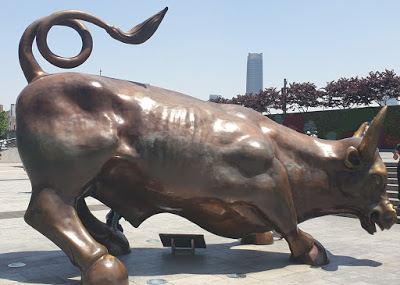
And, for some odd reason, a bull.

On the other side of the water, the sights that had been quite colorful the night before, were equally impressive though somewhat diminished by the haze.

PI Walthenson’s second case – A case of finding the ‘Flying Dutchman’.

Known only to a few, there is a legend that a ship named the ‘Flying Dutchman’ left Nazi Germany in the last weeks of the war and set sail for America, escorted by U-boats, under a different name. Aboard was a trove of treasure and gold worth a ‘king’s ransom’.

It was said that it had been sent to a group of American Nazis to create the Fourth Reich at an appropriate time. Over the years since many expeditions off the coast had searched, but found no trace of the vessel or the treasure.

In other words, it was just a legend created to boost tourism.

Fast forward to 2024. Our intrepid private detective, Harry Walthenson, overhears a conversation at Grand Central Station. It was the oddness of the message that caught his attention. An investigation turned up nothing out of the ordinary, and he thinks no more about it.

Then Harry is kidnapped, interrogated, and asked questions over and over about a date and a place, why he went there, and when he could not give satisfactory answers, he was beaten half to death and left for dead on a rubbish heap. He was lucky that it was a living space for homeless men; otherwise, he would have died.

In the aftermath, he once again gives it no more thought.

After resolving his first case successfully, there’s no rest. Harry’s angry mother comes to his office and demands that he find out where his father has gone. She believes he has run off with a mistress, not for the first time.

Perhaps it was not the wisest decision she has made, because Harry promises to investigate, and adds that she might not like what he finds.

He soon discovered he does not like what he finds, that his father’s friends, a cabal formed at University, have two who are his mother’s current lovers, and another, a criminal blackmailing his father.

Felicity, now his partner, working on a different case, and trying to get answers, uncovers a crime family involved in guarding a disused warehouse on the docks, where she believes Harry had been taken for interrogation, and subsequently dumped nearby to die.

Why are they up to? What is so important that the empty warehouse needs guarding? Who is employing them?

Harry, following up on the death of the blackmailer, traces his death back to an enforcer employed by his grandfather. His mother’s grandfather was a pre-war industrialist who made his fortune in war munitions and shipbuilding.

He was also a member of the American Nazi party.

When Harry also discovers a logbook belonging to a so-called wartime Liberty ship the “Paul Revere” in brackets ‘Freiheitskämpfer’, hidden by his father, and written in a code that is not readily identifiable.

It is no longer a matter of a father who has run off with his mistress; it is a very frightened man in fear of his life, running from a group who will stop at nothing to get the logbook back. And when Harry discovers a family connection to the group, it becomes a race against time to decode the log and find his father before his grandfather does.

Coming soon: Harry Walthenson’s new adventure – A case of finding the ‘Flying Dutchman’

Searching for locations: Shanghai, China, by night.

When we arrive at the embarkation site we find at least 100 buses all lined up and parked, and literally thousands of Chinese and other Asians streaming through the turnstiles to get on another boat leaving earlier than ours.

Buses were just literally arriving one after the other stopping near where we were standing with a dozen or so other groups waiting patiently, and with people were everywhere it could only be described as organized chaos.

Someone obviously knew where everyone was supposed to go, and when it was our turn, we joined the queue.  There were a lot of people in front of us, and a lot more behind, so I had to wonder just how big the boat was.

We soon found out.

And it was amusing to watch people running, yes, they were actually running, to get to the third level, or found available seating.  Being around the first to board, we had no trouble finding a seat on the second level.

I was not quite sure what the name of the boat was, but it had 3 decks and VIP rooms and it was huge, with marble staircases, the sort you could make a grand entrance on.  The last such ornate marble staircase we had seen was in a hotel in Hong Kong, and that was some staircase.

But who has marble staircases in a boat?

We’re going out across the water as far as the Bund and then turn around and come back about 30 to 40 minutes.   By the time everyone was on board, there was no room left on the third level, no seats on the second level nor standing room at the end of the second level where the stairs up to the third level were.

No one wanted to pay the extra to go into the VIP lounge.

We were sitting by very large windows where it was warm enough watching the steady procession of the colored lights of other vessels, and outside the buildings.

It was quite spectacular, as were some of the other boats going out on the harbor.

All the buildings of the Bund were lit up

And along that part of the Bund was a number of old English style buildings made from sandstone, and very impressive to say the least.

On the other side of the harbour were the more modern buildings, including the communications tower, a rather impressive structure.

I had to go to the rear of the vessel to get a photo, a very difficult proposition given here was no space on the railing, not even on the stairs going up or down.  It was just luck I managed to get some photos between passengers heads.

And, another view of that communications tower:

There was no doubt this was one of the most colourful night-time boat tours I’ve ever been on.  Certainly, when we saw the same buildings the following day, they were not half as spectacular in daylight.

I never did get up to the third level to see what the view was like.

An excerpt from “Mistaken Identity” – a work in progress

The odds of any one of us having a doppelganger are quite high. Whether or not you got to meet him or her, or be confronted by them was significantly lower. Except of course, unless you are a celebrity.

It was a phenomenon remarkable only for the fact, at times, certain high-profile people, notorious or not, had doubles if only to put off enemies or the general public. Sometimes we see people in the street, people who look like someone we knew, and made the mistake of approaching them like a long lost friend, only to discover an embarrassed individual desperately trying to get away for what they perceive is a stalker or worse.

And then sometimes it is a picture that looms up on a TV screen, an almost exact likeness of you. At first, you are fascinated, and then according to the circumstances, and narrative that is attached to that picture, either flattered or horrified.

For me one turned to the other when I saw an almost likeness of me flash up on the screen when I turned the TV on in my room. What looked to be my photo, with only minor differences, was in the corner of the screen, the newsreader speaking in rapid Italian, so fast I could only translate every second or third word.

But the one word I did recognize was murder. The photo of the man up on the screen was the subject of an extensive manhunt. The crime, the murder of a woman in the very same hotel I was staying, and it was being played out live several floors above me. The gist of the story, the woman had been seen with, and staying with the man who was my double, and, less than an hour ago, the body had been discovered by a chambermaid.

The killer, the announcer said, was believed to be still in the hotel because the woman had died shortly before she had been discovered.

I watched, at first fascinated at what I was seeing. I guess I should have been horrified, but at that moment it didn’t register that I might be mistaken for that man.

Not until another five minutes had passed, and I was watching the police in full riot gear, with a camera crew following behind, coming up a passage towards a room. Live action of the arrest of the suspected killer the breathless commentator said.

Then, suddenly, there was a pounding on the door. On the TV screen, plain to see, was the number of my room.
I looked through the peephole and saw an army of police officers. It didn’t take much to realize what had happened. The hotel staff identified me as the man in the photograph on the TV and called the police.

Horrified wasn’t what I was feeling right then.

It was fear.

My last memory was the door crashing open, the wood splintering, and men rushing into the room, screaming at me, waving guns, and when I put my hands up to defend myself, I heard a gunshot.

And in one very confused and probably near-death experience, I thought I saw my mother and thought what was she doing in Rome?

I was the archetypal nobody.

I lived in a small flat, I drove a nondescript car, had an average job in a low profile travel agency, was single, and currently not involved in a relationship, no children, and according to my workmates, no life.

They were wrong. I was one of those people who preferred their own company, I had a cat, and travelled whenever I could. And I did have a ‘thing’ for Rosalie, one of the reasons why I stayed at the travel agency. I didn’t expect anything to come of it, but one could always hope.

I was both pleased and excited to be going to the conference. It was my first, and the glimpse I had seen of it had whetted my appetite for more information about the nuances of my profession.

Some would say that a travel agent wasn’t much of a job, but to me, it was every bit as demanding as being an accountant or a lawyer. You were providing a customer with a service, and arguably more people needed a travel agent than a lawyer. At least that was what I told myself, as I watched more and more people start using the internet, and our relevance slowly dissipating.

This conference was about countering that trend.

The trip over had been uneventful. I was met at the airport and taken to the hotel where the conference was being held with a number of other delegates who had arrived on the same plane. I had mingled with a number of other delegates at the pre conference get together, including one whose name was Maryanne.

She was an unusual young woman, not the sort that I usually met, because she was the one who was usually surrounded by all the boys, the life of the party. In normal circumstances, I would not have introduced myself to her, but she had approached me. Why did I think that may have been significant? All of this ran through my mind, culminating in the last event on the highlight reel, the door bursting open, men rushing into my room, and then one of the policemen opened fire.

I replayed that last scene again, trying to see the face of my assailant, but it was just a sea of men in battle dress, bullet proof vests and helmets, accompanied by screaming and yelling, some of which I identified as “Get on the floor”.

Then came the shot.

Why ask me to get on the floor if all they were going to do was shoot me. I was putting my hands up at the time, in surrender, not reaching for a weapon.

Then I saw the face again, hovering in the background like a ghost. My mother. Only the hair was different, and her clothes, and then the image was going, perhaps a figment of my imagination brought on by pain killing drugs. I tried to imagine the scene again, but this time it played out, without the image of my mother.

I opened my eyes took stock of my surroundings. What I felt in that exact moment couldn’t be described. I should most likely be dead, the result of a gunshot wound. I guess I should be thankful the shooter hadn’t aimed at anything vital, but that was the only item on the plus side.

I was in a hospital room with a policeman by the door. He was reading a newspaper, and sitting uncomfortably on a small chair. He gave me a quick glance when he heard me move slightly, but didn’t acknowledge me with either a nod, or a greeting, just went back to the paper.

If I still had a police guard, then I was still considered a suspect. What was interesting was that I was not handcuffed to the bed. Perhaps that only happened in TV shows. Or maybe they knew I couldn’t run because my injuries were too serious. Or the guard would shoot me long before my feet hit the floor. I knew the police well enough now to know they would shoot first and ask questions later.

On the physical side, I had a large bandage over the top left corner of my chest, extending over my shoulder. A little poking and prodding determined the bullet had hit somewhere between the top of my rib cage and my shoulder. Nothing vital there, but my arm might be somewhat useless for a while, depending on what the bullet hit on the way in, or through.

It didn’t feel like there were any broken or damaged bones.

That was the good news.

On the other side of the ledger, my mental state, there was only one word that could describe it. Terrified. I was looking at a murder charge and jail time, a lot of it. Murder usually had a long time in jail attached to it.

Whatever had happened, I didn’t do it. I know I didn’t do it, but I had to try and explain this to people who had already made up their minds. I searched my mind for evidence. It was there, but in the confused state brought on by the medication, all I could think about was jail, and the sort of company I was going to have.

I think death would have been preferable.

Half an hour later, maybe longer, I was drifting in an out of consciousness, a nurse, or what I thought was a nurse, came into the room. The guard stood, checked her ID card, and then stood by the door.

She came over and stood beside the bed. “How are you?” she asked, first in Italian, and when I pretended I didn’t understand, she asked the same question in accented English.

“Alive, I guess,” I said. “No one has come and told what my condition is yet. You are my first visitor. Can you tell me?”

“Of course. You are very lucky to be alive. You will be fine and make a full recovery. The doctors here are excellent at their work.”

“What happens now?”

“I check you, and then you have a another visitor. He is from the British Embassy I think. But he will have to wait until I have finished my examination.”

I realized then she was a doctor, not a nurse.

My second visitor was a man, dressed in a suit the sort of which I associated with the British Civil Service.  He was not very old which told me he was probably a recent graduate on his first posting, the junior officer who drew the short straw.

The guard checked his ID but again did not leave the room, sitting back down and going back to his newspaper.

My visitor introduced himself as Alex Jordan from the British Embassy in Rome and that he had been asked by the Ambassador to sort out what he labelled a tricky mess.

For starters, it was good to see that someone cared about what happened to me.  But, equally, I knew the mantra, get into trouble overseas, and there is not much we can do to help you.  So, after that lengthy introduction, I had to wonder why he was here.

I said, “They think I am an international criminal by the name of Jacob Westerbury, whose picture looks just like me, and apparently for them it is an open and shut case.”  I could still hear the fragments of the yelling as the police burst through the door, at the same time telling me to get on the floor with my hands over my head.

“It’s not.  They know they’ve got the wrong man, which is why I’m here.  There is the issue of what had been described as excessive force, and the fact you were shot had made it an all-round embarrassment for them.”

“Then why are you here?  Shouldn’t they be here apologizing?”

“That is why you have another visitor.  I only took precedence because I insisted I speak with you first.  I have come, basically to ask you for a favour.  This situation has afforded us with an opportunity.  We would like you to sign the official document which basically indemnifies them against any legal proceedings.”

Curious.  What sort of opportunity was he talking about?  Was this a matter than could get difficult and I could be charged by the Italian Government, even if I wasn’t guilty, or was it one of those hush hush type deals, you do this for us, we’ll help you out with that.  “What sort of opportunity?”

“We want to get our hands on Jacob Westerbury as much as they do.  They’ve made a mistake, and we’d like to use that to get custody of him if or when he is arrested in this country.  I’m sure you would also like this man brought into custody as soon as possible so you will stop being confused with him.  I can only imagine what it was like to be arrested in the manner you were.  And I would not blame you if you wanted to get some compensation for what they’ve done.  But.  There are bigger issues in play here, and you would be doing this for your country.”

I wondered what would happen if I didn’t agree to his proposal.  I had to ask, “What if I don’t?”

His expression didn’t change.  “I’m sure you are a sensible man Mr Pargeter, who is more than willing to help his country whenever he can.  They have agreed to take care of all your hospital expenses, and refund the cost of the Conference, and travel.  I’m sure I could also get them to pay for a few days at Capri, or Sorrento if you like, before you go home.  What do you say?”

There was only one thing I could say.  Wasn’t it treason if you went against your country’s wishes?

“I’m not an unreasonable man, Alex.  Go do your deal, and I’ll sign the papers.”

“Good man.”

After Alex left, the doctor came back to announce the arrival of a woman, by the way she had announced herself, the publicity officer from the Italian police. When she came into the room, she was not dressed in a uniform.

The doctor left after giving a brief report to the civilian at the door. I understood the gist of it, “The patient has recovered excellently and the wounds are healing as expected. There is no cause for concern.”

That was a relief.

While the doctor was speaking to the civilian, I speculated on who she might be. She was young, not more than thirty, conservatively dressed so an official of some kind, but not necessarily with the police. Did they have prosecutors? I was unfamiliar with the Italian legal system.

She had long wavy black hair and the sort of sultry looks of an Italian movie star, and her presence made me more curious than fearful though I couldn’t say why.

The woman then spoke to the guard, and he reluctantly got up and left the room, closing the door behind him.
She checked the door, and then came back towards me, standing at the end of the bed. Now alone, she said, “A few questions before we begin.” Her English was only slightly accented. “Your name is Jack Pargeter?”

I nodded. “Yes.”

“You are in Rome to attend the Travel Agents Conference at the Hilton Hotel?”

“Yes.”

“You attended a preconference introduction on the evening of the 25th, after arriving from London at approximately 4:25 pm.”

“About that time, yes. I know it was about five when the bus came to collect me, and several others, to take us to the hotel.”

She smiled. It was then I noticed she was reading from a small notepad.

“It was ten past five to be precise. The driver had been held up in traffic. We have a number of witnesses who saw you on the plane, on the bus, at the hotel, and with the aid of closed circuit TV we have established you are not the criminal Jacob Westerbury.”

She put her note book back in her bag and then said, “My name is Vicenza Andretti and I am with the prosecutor’s office. I am here to formally apologize for the situation that can only be described as a case of mistaken identity. I assure you it is not the habit of our police officers to shoot people unless they have a very strong reason for doing so. I understand that in the confusion of the arrest one of our officers accidentally discharged his weapon. We are undergoing a very thorough investigation into the circumstances of this event.”

I was not sure why, but between the time I had spoken to the embassy official and now, something about letting them off so easily was bugging me. I could see why they had sent her. It would be difficult to be angry or annoyed with her.

But I was annoyed.

“Do you often send a whole squad of trigger happy riot police to arrest a single man?” It came out harsher than I intended.

“My men believed they were dealing with a dangerous criminal.”

“Do I look like a dangerous criminal?” And then I realized if it was mistaken identity, the answer would be yes.

She saw the look on my face, and said quietly, “I think you know the answer to that question, Mr. Pargeter.”

“Well, it was overkill.”

“As I said, we are very sorry for the circumstances you now find yourself in. You must understand that we honestly believed we were dealing with an armed and dangerous murderer, and we were acting within our mandate. My department will cover your medical expenses, and any other amounts for the inconvenience this has caused you. I believe you were attending a conference at your hotel. I am very sorry but given the medical circumstances you have, you will have to remain here for a few more days.”

“I guess, then, I should thank you for not killing me.”

Her expression told me that was not the best thing I could have said in the circumstances.

“I mean, I should thank you for the hospital and the care. But a question or two of my own. May I?”

She nodded.

“Did you catch this Jacob Westerbury character?”

“No. In the confusion created by your arrest he escaped. Once we realized we had made a mistake and reviewed the close circuit TV, we tracked him leaving by a rear exit.”

“Are you sure it was one of your men who shot me?”

I watched as her expression changed, to one of surprise.

“You don’t think it was one of my men?”

“Oddly enough no. But don’t ask me why.”

“It is very interesting that you should say that, because in our initial investigation, it appeared none of our officer’s weapons had been discharged. A forensic investigation into the bullet tells us it was one that is used in our weapons, but…”

I could see their dilemma.

“Have you any enemies that would want to shoot you Mr Pargeter?”

That was absurd because I had no enemies, at least none that I knew of, much less anyone who would want me dead.

“Not that I’m aware of.”

“Then it is strange, and will perhaps remain a mystery. I will let you know if anything more is revealed in our investigation.”

She took an envelope out of her briefcase and opened it, pulling out several sheets of paper.

I knew what it was. A verbal apology was one thing, but a signed waiver would cover them legally. They had sent a pretty girl to charm me. Perhaps using anyone else it would not have worked. There was potential for a huge litigation payout here, and someone more ruthless would jump at the chance of making a few million out of the Italian Government.

“We need a signature on this document,” she said.

“Absolving you of any wrong doing?”

“I have apologized. We will take whatever measures are required for your comfort after this event. We are accepting responsibility for our actions, and are being reasonable.”

They were. I took the pen from her and signed the documents.

“You couldn’t add dinner with you on that list of benefits?” No harm in asking.

“I am unfortunately unavailable.”

I smiled. “It wasn’t a request for a date, just dinner. You can tell me about Rome, as only a resident can. Please.”

She looked me up and down, searching for the ulterior motive. When she couldn’t find one, she said, “We shall see once the hospital discharges you in a few days.”

“Then I’ll pencil you in?”

She looked at me quizzically. “What is this pencil me in?”

“It’s an English colloquialism. It means maybe. As when you write something in pencil, it is easy to erase it.”

A momentary frown, then recognition and a smile. “I shall remember that. Thank-you for your time and co-operation Mr. Pargeter. Good morning.”

© Charles Heath 2015-2021

Writing a book in 365 days – 192

Day 192

Writing exercise – All that glitters…

Perhaps if I’d thought about it long enough, I might have seen it coming, but it was taking that light at the end of the tunnel as a good thing, not the double-headed train pounding towards me at breakneck speed while tied to the tracks.

It would be easy to blame my mother.  She was the one who taught us to take everyone at face value, to see the good in the world, and, of course, eight times out of ten, everything was fine.

Until it wasn’t.

I was on the balcony overlooking the bay, the house that my grandfather had first built as a getaway shack, expanded into a holiday home, and then into my retreat, the place I could hide away from the world.

It was the same for my sister, who was still recovering from a bad relationship, one that she blamed herself for, but the truth was, she was not at fault, not for any of it.

But the scars ran deep, deep enough that in the pit of despair, she did the unforgivable, and it was a sixth sense that sent me to her in her in her time of need.

Now, she was well on the road to recovery, older and very much wiser.

For both of us.

“Did you see the report Jenkins sent?”

She was stretched out on the deckchair, taking in the sunshine that came with early spring.  It was warm but not hot, a gentle breeze rustling through the surrounding trees.

There were white caps out to sea, and there was a ship slowly plying its way past the bay.  It was a busy shipping lane, and it was the perfect distraction to watch the ships go by.

“I did.”

Jenkins was the company’s head of security, and I had asked him to investigate the man who had deceived and nearly destroyed my twin sister.  In an attempt to get justice, he had gotten off on a technicality and walked free.

It wasn’t justice, but justice sometimes could be blinded.

“Did you have any idea?”

I had to say I didn’t.  Who would, when the woman of your dreams, a woman who ticked all of the boxes, comes into your life when you least expect it.

At first, I believed it was too good to be true.  Jenkins checked her out, and everything was irreproachable.  It was not that I was the one who didn’t trust her. It was the people around me.

Once the investigation was over, I decided it was time.  We had been dating off and on for over a year, and it had been a slow burn.

Then Alisha discovered just who and what her boyfriend was, just in time to prevent a travesty.  She was worth a small fortune, and Jackson Pearce had very nearly stolen it all.

He only made one mistake.  He told, no, bragged, that he was about to take down the Bernadine’s, one of the wealthier and blue ribbon families.

He very neatly got away with it.  He was free, but he was penniless, but oddly not concerned or angry.

I asked Jenkins to find out why.

It was in the report sitting on the coffee table beside Alisha’s deckchair.

The woman I was about to marry in the wedding of the year, after letting her take control of the preparations and ceremony and spending close to three million dollars.

A lot of that money was channelled back to her brother Jackson Pearce.  Her real name was Milly Pearce.  She’d stuck to the Milly but was using her father’s mother’s birth surname, making it difficult to trace in a first scan of a family tree.

Or lack of one, which matched her assertion, she was an orphan, from an orphanage that no longer existed, and all records of her had been destroyed in a fire.

Only Jenkins thought it was suspicious, but we were all prepared to give her the benefit of the doubt.

“No. She is such a lovely person.”

“So was Jack, until…”  It was still painful for her, but not so that it hurt that much.  “What are you going to do?”

“Play.  Do you think you’re strong enough to join me?”

“Can I shoot her?”

I gave her a curious expression.  As much as I understood how she felt about that family, it was not worth the jail sentence.

“No.”

“Spoil sport.”

She sighed.  I took her attitude and the determination in her voice as good signs she was all but over her calamity.

Up to the unmasking of Jack, she had been almost like a sister to Milly.  I had thought it was the sort of bonding one would expect between the women.  Milly had been suitably disparaging towards the dastardly boyfriend, but whatever had been between them had been broken.

Knowing what she did now, it was difficult to imagine how she could be nice to her.

But it would be settled the next day.  I had promised to take Milly to a special lunch with just our family, mother, who was kept oblivious of the details of Alishas breakup and subsequent events, my older brother, Wally, who was the current CEO of the company, the one I would eventually take over, and myself, basically to talk about where she would fit into the echelons.

We had talked about it, and she had suggested a role suited to her standing.  She had also considered, to feel like she was part of the family and parcel of shares.

That alone should have set off alarm bells, but since Mother and Wally had suggested it, who was I to disagree?

“Are you going to tell Mother and Walter?”

It was like she was reading my mind.

“No.  Let’s play her game out and see where it goes.”

“Are you prepared for it?”

I don’t think I would ever be.  I had been hesitant to make our budding romance public, and on our eight-month anniversary, we were ambushed by the media.  She swore she had not told anyone, but she and I were the only two who knew.

It was the catalyst needed to push us to the next level.  Even then, I was not suspicious, accepting her explanation.  It was not impossible that I was being followed by a photographer looking for a scoop.

“What would be the upside for her?”

“Without sounding catty, Henry, if she is cut from the same cloth as her brother, there’s always a reason.”

“Fair enough.  We shall see.”

© Charles Heath  2025

Coming soon – “Strangers We’ve Become”, the sequel to “What Sets Us Apart”

Stranger’s We’ve Become, a sequel to What Sets Us Apart.

The blurb:

Is she or isn’t she, that is the question!

Susan has returned to David, but he is having difficulty dealing with the changes. Her time in captivity has changed her markedly, so much so that David decides to give her some time and space to re-adjust back into normal life.

But doubts about whether he chose the real Susan remain.

In the meantime, David has to deal with Susan’s new security chief, the discovery of her rebuilding a palace in Russia, evidence of an affair, and several attempts on his life. And, once again, David is drawn into another of Predergast’s games, one that could ultimately prove fatal.

From being reunited with the enigmatic Alisha, a strange visit to Susan’s country estate, to Russia and back, to a rescue mission in Nigeria, David soon discovers those whom he thought he could trust each has their own agenda, one that apparently doesn’t include him.

The Cover:

strangerscover9

Coming soon