In a word: Green

Of course, it is a colour, one used for traffic lights, grass, and a lot of different shades.

It’s made up of blue and yellow, adjusting the amounts of each to get the shade you want.

I once had a dark green suit.

I don’t have any green emeralds.

When you get a green light, it means to go ahead, or just go, in traffic, or for the starting of a project

And a green run on the ski fields denotes the easiest run – just about my level!

Green with envy, yes, though I’m not sure why they picked green for envy

In England especially, green is a patch of grassy land, usually in the middle of a village

A green worker is one that is new to the job, and usually gets all the rotten jobs

Then there is the biggest money-spinner of all time: going green, which means eco-friendly.

I have only one question, why is it to go ‘green’ is to charge far more than normal

Oh, and by the way, political parties that are eco-centric are usually called the greens

And, these are the same people who chain themselves to trees, deterring bulldozers

The blue sea is really green, believe it or not!

“The Things We Do For Love”

Would you give up everything to be with the one you love?

Is love the metaphorical equivalent to ‘walking the plank’; a dive into uncharted waters?

For Henry, the only romance he was interested in was a life at sea, and when away from it, he strived to find sanctuary from his family and perhaps life itself.  It takes him to a small village by the sea, a place he never expected to find another just like him, Michelle, whom he soon discovers is as mysterious as she is beautiful.

Henry had long since given up the notion of finding romance, and Michelle couldn’t get involved for reasons she could never explain, but in the end, both acknowledge that something happened the moment they first met.  

Plans were made, plans were revised, and hopes were shattered.

A chance encounter causes Michelle’s past to catch up with her, and whatever hope she had of having a normal life with Henry, or anyone else, is gone.  To keep him alive she has to destroy her blossoming relationship, an act that breaks her heart and shatters his.

But can love conquer all?

It takes a few words of encouragement from an unlikely source to send Henry and his friend Radly on an odyssey into the darkest corners of the red-light district in a race against time to find and rescue the woman he finally realizes is the love of his life.

The cover, at the moment, looks like this:

lovecoverfinal1

Is love the metaphorical equivalent to ‘walking the plank’; a dive into uncharted waters?

For Henry, the only romance he was interested in was a life at sea, and when away from it, he strived to find sanctuary from his family and perhaps life itself.  It takes him to a small village by the sea, s place he never expected to find another just like him, Michelle, whom he soon discovers is as mysterious as she is beautiful.

Henry had long since given up the notion of finding romance, and Michelle couldn’t get involved for reasons she could never explain, but in the end, both acknowledge that something happened the moment they first met.  

Plans were made, plans were revised, and hopes were shattered.

A chance encounter causes Michelle’s past to catch up with her, and whatever hope she had of having a normal life with Henry, or anyone else, is gone.  To keep him alive she has to destroy her blossoming relationship, an act that breaks her heart and shatters his.

But can love conquer all?

It takes a few words of encouragement from an unlikely source to send Henry and his friend Radly on an odyssey into the darkest corners of the red-light district in a race against time to find and rescue the woman he finally realizes is the love of his life.

The cover, at the moment, looks like this:

lovecoverfinal1

Just when you think you’ve found the right word processor

It was as if Microsoft Word was sent down from that place in the universe where a group of torturers sit around a table to find new ways of making our lives just that little bit more difficult.

I mean, most of the time it works really well and behaves itself.

But…

Then there are the times, usually when you are stressed about a deadline, or you are nearly at the end of what you believe to be the most brilliant writing you have ever put on paper.

Then…

Disaster strikes.

It could be the power goes off, even for just a few seconds, but it’s enough to kill the computer.  It could be that you have reached the end and closed Word down, thinking that it had autosaved, all the while ignoring that little pop up that says, ‘do you want to save your work’?

It’s been a long day, night, or session.  You’re tired and your mind is elsewhere, as it always is at the end.

You always assume that autosave is on.  It was the last time, it has been since the day you installed it however long ago that was.

So…

When the power comes back on, you start the computer, go into Word, and it brings back all the windows you had open when the power failed, and the one with the brilliant piece you just wrote, it’s just a blank sheet.

Or up to where it last autosaved, which is nowhere near the end.

Or it didn’t save at all.

You forget the software updated recently and that always brings changes.  Usually unwanted changes.

By which time you have that sinking feeling that all is lost, deadline missed, brilliant work lost, it’s the end of the world.

You promise yourself you’re going to get Scrivener, or something else, where this doesn’t happen.

Or if you’re like me, you put the cat on the keyboard and tell him to sort the mess out.

Memories of the conversations with my cat – 5

As some may be aware, but many not, Chester, my faithful writing assistant, mouse catcher, and general pain in the neck, passed away about ten years ago.

Recently, I was running a series based on his adventures, under the title of Past Conversations with my cat.

For those who have not had the chance to read about all of his exploits, I will run the series again from Episode 1

These are the memories of our time together…

20151129_000912

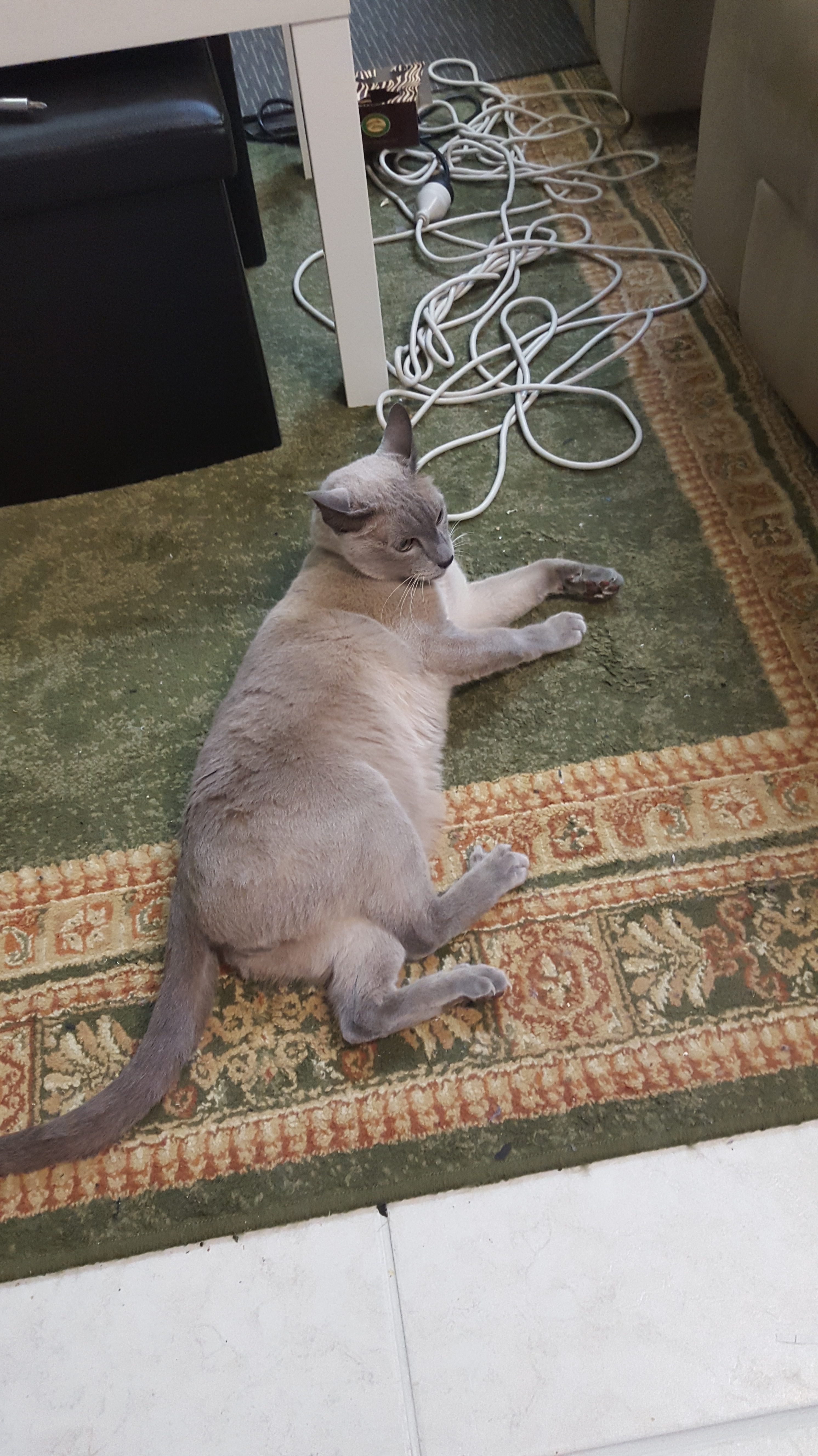
This is Chester.  He is contemplating the mess on the floor.

I’ve asked him many times to stop unravelling the extension cords or to play with it as if it was a ball of string.

I’m not sure he understands the implications of playing with electrical wires.

Yet.

He is recovering from the visit by our grandchildren.

Sometimes, when they’re very quiet, he assumes they have gone.  He comes down to see what’s for dinner, or if there are any ‘snacks’.

Then, suddenly he realizes they have not gone, and panic sets in.

Sometimes he gets away.

Sometimes he is trapped and forced to take large doses of child affection.

Yesterday, it was very close.

“Trouble in Store” – Short stories my way: Setting the scene

I used to like writing short stories, somewhere between two and five thousand words, but, in the end, it was too much hard work.

No chance of getting into stride with a location description, no real chance of giving a background to a character, it was simply a case of diving straight in.

But …

I’ve been thinking about writing a short story, starting it with a short succinct sentence that will set the tone.

Something like:  “Jack was staring down the barrel of a gun”

What then?

Should he start analyzing what sort of gun it was, did it have a light trigger, was the person holding it shaking, a man or a woman, or a child?

Location, in a house, a disused factory, a shop, a petrol station, the side of the road.

So, where was Jack?

Something like:  “He had gone down to the corner shop to get a pack of cigarettes.”

For himself or someone else?  Is it day, is it night, or somewhere in between?

Something like:  “He had to hustle because he knew the shopkeeper, Alphonse, liked to close at 11:00 pm sharp, and came through the door, the sound of the bell ringing loudly and the door bashed into it.”

So, Jack’s state of mind, he is in a hurry, careless coming through the door, not expecting anything out of the ordinary.

How would you react when you saw a gun, pointed at Alphonse until the sound of the door warning bell attracted the gunman’s attention?

Is it a gunman?

Something like:  “It took a second, perhaps three, to sum up the situation.  Young girl, about 16 or 17, scared, looking sideways at a man on the ground, Alphonse, and then Jack.  A Luger, German, a relic of WW2, perhaps her father’s souvenir, now pointing at him.”

The punch line:  Cigarettes can kill in more ways than one.

The revelation:  The corner store also supplied the local drug addicts.

The revised start is now:

Jack was staring down the barrel of a gun.

He had gone down to the corner shop to get a pack of cigarettes.

He had to hustle because he knew the shopkeeper, Alphonse, liked to close at 11:00 pm sharp.  His momentum propelled him through the door, causing the customer warning bell to ring loudly as the door bashed into it, and before the sound had died away, he knew he was in trouble.

It took a second, perhaps three, to sum up the situation. 

Young girl, about 16 or 17, scared, looking sideways at a man on the ground, then Alphonse, and then Jack.  He recognized the gun, a Luger, German, relic of WW2, perhaps her father’s souvenir, now pointing at him then Alphonse, then back to him.

Jack to another second or two to consider if he could disarm her.  No, the distance was too great.  He put his hands out where she could see them.  No sudden movements, try to remain calm, his heart rate up to the point of cardiac arrest.

Pointing with the gun, she said, “Come in, close the door, and move towards the counter.”

Everything but her hand steady as a rock.  The only telltale sign of stress, the bead of perspiration on her brow.  It was 40 degrees Fahrenheit in the shop.

Jack shivered and then did as he was told.  She was in an unpredictable category.

“What’s wrong with your friend?”  Jack tried the friendly approach, as he took several slow steps sideways towards the counter.

The shopkeeper, Alphonse, seemed calmer than usual, or the exact opposite spoke instead, “I suspect he’s an addict, looking for a score.  At the end of his tether, my guess, and came to the wrong place.” 

Wrong time, wrong place, in more ways than one Jack thought, now realizing he had walked into a very dangerous situation.  She didn’t look like a user.  The boy on the ground, he did, and he looked like he was going through the beginnings of withdrawal.

 “Simmo said you sell shit.  You wanna live, ante up.”  She was glaring at Alphonse. 

The language was not her own, she had been to a better class of school, a good girl going through a bad boy phase.

Nest time, point of view.

© Charles Heath 2016-2021

Writing a book in 365 days – 168

Day 168

Writing exercise

“Let me tell you a story you are not going to like.”

I remember like it was yesterday, the day my father came home from work earlier than usual, and instead of the usual greeting, shuffled from the front door to the study at the back of the house, shut the door, and didn’t come out until dinner time.

I remember my mother, after the exchange of looks as he went past, the slight nod of the head to say ‘not now’, and how it took her a minute before she resumed her pre-dinner chores.

I remember David, the youngest, Eloise, the middle, and me, Richard, the eldest son, watching briefly, and thinking nothing of it. We were too young to understand the way of the world outside grade school.

At dinner, that was the first thing my father said after we finished eating.

We didn’t understand what it meant, but we were disciplined enough to not question him.

“I had this speech all worked out, how to put the whole situation into perspective, but I forgot one very important element. You guys will have no idea what I’m talking about. I guess, to a certain degree, I don’t either. I come from a time where it wasn’t expedient pr possible to get a good enough education, not like what people need these days to just get out the door. We needed everyone working, and school was just a luxury we couldn’t.

“Then we got through the worst times, got better, employers retrained their employees, and it was full steam ahead. In prosperous times, everyone is looked after; in downturns, like the one we have been drifting into for several years, people are not so lucky.

“People like me. The problem, I was told today, by people who know much more about these things than I do, and in fact a lot of us at the factory, is that Americans are no longer buying American-made, and are buying cheaper imports from Asian countries.

“That forces the companies, like the one I work for, to try and cut costs to compete. They tried, they said, and I have been lucky in avoiding the last three sets of layoffs, but now they’ve decided to close the factory. It is no longer profitable. I’m not the only one affected. This factory sustained this town; it’s been the lifeblood of everyone who lives here.”

My mother had tears in her eyes. She knew what his words meant. “When?”

“Two weeks. We’ll get a severance check, but it will only sustain us for a few months, if we’re lucky.”

I figured something bad had happened at the factory because our teacher had said the whole town had been living on a knife edge, a curious expression that I asked him about, and he had said was like going over Niagara Falls in a barrel, which I sort of understood, and thought
I’d ask a practical question.

“Does that mean we won’t have to go to school anymore?”

“No. You will all be at school until we work out what we’re going to do.”

“Well, that’s probably not as difficult as it sounds. My parents said I could come back anytime I wanted, and this might be the time.”

What might have been suggested as a practical solution might have received a hearing, but given the conversation my father had with my mother’s father the last time they visited, about a year ago, still indelibly etched in my mind, I doubted he would want to hear it.

“We spoke about that when things were fine, and I accepted it. You know, and I know, I consciously made a decision when we were married that we would live here and I wouldn’t have to work. I wanted that, and here we are.”

“You know what happened the last time you worked for your father.”

That conversation I overheard didn’t sound like she worked for him; it sounded like she had been his personal slave, or so my father said, and it would be over his dead body that she would come back.

Words were said that couldn’t be taken back. It’s why her parents, our grandparents, had never returned, and it was something that annoyed my mother. No one would tell her the reason why. Of course, she could have asked me.

I guess that was the problem with being a kid. Everyone thought you should be seen and not heard. And people just pretended you were not there. That wasn’t the only conversation that I had overheard between my father and others, and between my mother and others.

“This time it would be different. I’m a lot older and much more resilient.”

“He hasn’t changed. People like him never change.”

I could see the looks exchanged between them were headed for an argument where one of the others would say something awful and storm out, and we would be living in what the three of us children called hell. It was fear, of course, because lately, the mood turned to the latent threat of violence. We had talked about it at school, the fact that sometimes fathers and mothers got angry, and sometimes they took that anger out on each other, or worse, their children. It had led to one of the kids in my class saying he had seen his father hitting his mother, and the sheriff had been called in. Violence like that, we were told, was not acceptable.

“Well,” I said, “I have a thought. I read it in a story, in a book we had to read in class. It was about a family whose house had burned to the ground. They were not able to pay their insurance premiums, but what that had to do with anything is not the point. The point is, they lost everything. Or at least they thought they had, until someone pointed out they still had each other. Come to think of it, the preacher down at the church is always telling us that no matter what happens, we still have each other, which is strange in a sense because he doesn’t have anyone else. But we’re all here. Isn’t that a good thing?”

Both of them glared at me. Time to consider an exit strategy.

Then my mother laughed. Was it hysteria? I’d seen her laugh once before and then burst into tears.

“Maybe Richie has a point, Doug.”

“We still have to live.” Not so hostile now.

“But the thing is, like ot or not, we have options. Most of those at the factory, except the University types and the bosses, have nothing. As much as it sounds like the end of the world, and for a moment there I thought it was, it isn’t. We’re just forgetting what’s important.”

Then she turned to me. “You’re right about the preacher, but he would tell you he has his flock, which is his family. And he does go on about stuff, doesn’t he?”

That was the summer when a once-thriving town turned into a ghost town. It was where, when
I was much older and, as my father called it, properly educated, when I discovered it was all part of fitting into the global economy. I had dreamed of becoming an accountant, like my mother, but in the end decided to become a bookshop owner, if only to make sure there was at least one place in the world where people could buy real books.

We went back to New York and spent a few years with my mother’s parents, where my father got a job that he liked and my mother toiled autonomously from her father, making enough money to get us a nice place in the country where she and my father could retire, and I could have my bookshop in the town, by the sea.

©  Charles Heath  2025

Searching for locations: Sydney to Beijing, China – Every flight is different

Sydney to Beijing – Qantas A330-200
Boarding 11:45, everyone on board by 12:02, for a 12:10 departure. Pushing back 12:12 Take off 12:27

Lunch
Airline food is getting better but the fact they serve it up to you in a metal tray with a thick aluminum lid does nothing for the quality of the food inside.  I get what the chef is trying to do but often there is too little of one thing and too much of another and what you finish up with is slop in a tray.  Sometimes it’s edible sometimes it’s not.  Sometimes the meat is tender and other times it’s like boot leather.  As it is today. I think it’s pork, I should have had the chicken.  Or perhaps it was chicken.  I hate it when you can’t tell what it is that you’re eating. But, the drinks were good.

Rest or Sleep, maybe
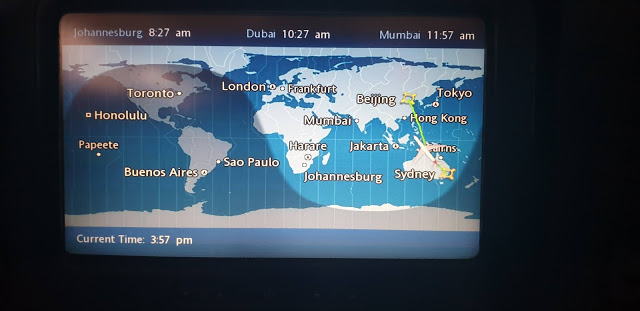
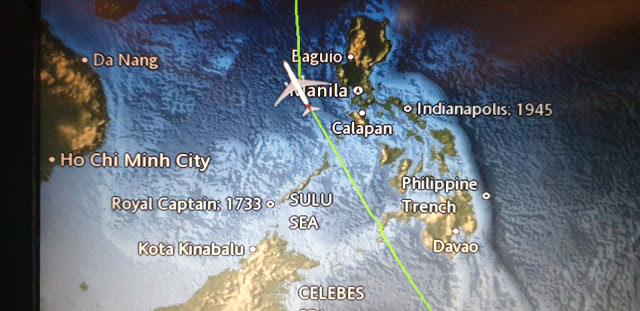
It’s going to take 11 hours and 20 minutes from Sydney to Beijing, a long time to sit in a plane with nothing much to do other than crosswords, read a book or newspaper or magazine, listen to music on your own device, or the in-flight entertainment, watch a movie again by the in-flight entertainment – if it works – or try to get some sleep. I started with the crosswords but got bored quickly. I fiddled with the in-flight entertainment, looked at the movies and tv shows but none really interested me, not then at least, so I set it to the flight path. Not exactly stellar entertainment, but it’s always interesting to know where the plane is. Or is it? If we crash, what good would it do me to know it’s somewhere over the ocean, not far from Manila, or somewhere else.  It’s not as if I could phone someone up, on the way down, to let them know where we are. But, just after dinner, we still haven’t left Australia

However, by the time I’ve finished fiddling with and dismissing all of the entertainment alternatives, it’s back to the flight path and now we are…

Somewhere approaching the Sulu Sea, which I’ve never heard of before, so it looks like I’ll have to study up on my geography when I get home.

OK, Manila looks like somewhere I’ve heard of, so we have to be flying over the Philippines.  Not far left of that is Vietnam.  Neither of those places is on my travel bucket list, so I’ll just look from up here and be satisfied with that.

Working, or not
Chronic boredom is setting in by the time we are just past halfway to our destination. We are over 6 hours into the flight and there no possible way I’m going to get any sleep. I brought my Galaxy Tab loaded with a few of my novel outlines, and planning for missing chapters, thinking I might get a little thinking time in.  Plane rides, I find, are excellent for getting an opportunity to write virtually unhindered by outside interruptions, if, of course, you discount the number of times people brush past, knocking your seat, the person in front lowering the seat into your face, or people around you continually asking you to turn off your light because they’re trying to sleep. Sorry, I say, but you can suffer my pain with me.  It’s one of the joys of flying with over two hundred others in a claustrophobic environment.  Besides, aren’t the lights supposed to be slanted so only I get the rays of light?  Except, I guess when the fixed light doesn’t line up with where the airline has fixed the seat (usually so they can squash more people in). So, sorry, not sorry, take it up with the airline.

Back to work, and I put in some quality time on a part of the story that had been eluding me for a while.  I knew what I wanted to write, but not how I was going to approach it, so that blissfully quiet and intense time worked in my favour, something that would not have happened back home. I won’t bore you with the synopsis, just suffice to say it’s finally down on paper, digitally that is, and it’s a huge step forward towards finishing it. There is, of course, the end play, the reading of the will but not before there are a few thrusts and parry’s by some of the players, but all in all the objective was to showcase a group of people with their strengths and weaknesses pushing their characters in various directions, some at odds with what is expected of them. But enough of that.   A quick check of our position shows we’re still over water but closer to our destination, so much so, we might start the pre-landing rituals, starting with food.

Dinner
7:00 – Dinner is served, well, the lights go on and a lot of tired people try to shake the sleep, and sleeplessness, out of their systems. Then flight attendants that are far too cheerful, and must have beamed in from somewhere else, serve another interesting concoction that says what’s in it but you can’t really be sure of the ingredients.  It comes and it goes.

9:10 – We begin our descent into Beijing, you know, that moment when the engines almost stop and there’s a sickening lurch and the plane heads downward. 9:56 – We touch down on the runway, in the dark and apparently it has been raining though from inside the plane you’d never know. 10:10 – the plane arrives at the gate,  the usual few minutes to open the door, and, being closer to the front of the plane this time, it doesn’t take that long before the queue is moving.

Early or late, it doesn’t matter.  After clearing customs and immigration, we have to go in search of our tour guide, waiting for us somewhere outside the arrivals terminal.

The cinema of my dreams – I always wanted to go on a treasure hunt – Episode 64

Here’s the thing…

Every time I close my eyes, I see something different.

I’d like to think the cinema of my dreams is playing a double feature but it’s a bit like a comedy cartoon night on Fox.

But these dreams are nothing to laugh about.

Once again there’s a new installment of an old feature, and we’re back on the treasure hunt.

The Ormiston’s from the papers

The Ormiston story and that of the thousand or so acres between the sea and the mountains are now known as Patterson’s reach, but once called The Grove, began in 1865 when the original Henrich Ormiston arrived from Germany.

Originally intending to go to Australia to grow grapes in South Australia, instead, his fate turned West to the Americas, and, eventually, this part of Florida.  He started out with the intention of growing grapes, but when that failed to materialize, he moved on to Oranges, hence the name, The Grove.

He had married before leaving Germany and had two children, Marta and Gunter before leaving, and Friedrich after he arrived in 1866.  That Friedrich died, according to the gravestone, in 1924.  Neither Marta nor Gunter stayed, leaving Friedrich to carry on the business, have an only child which he named after his father, Heinrich, born in 1899 and who died in 1976.  He in turn had a single son, which he named Friedrich, the infamous person with who Boggs father had a tempestuous business relationship.

Friedrich was born in 1932, during the depression, and it was about that time that the notion there might be buried treasure, somewhere along that coastal area of Florida, floated by a university professor, Emil Stravinsky, who specialized in old pirates.  He had published a book that basically speculated where treasure might be found, and one of those areas was right smack bang in the middle of The Grove.

This information was plucked from the paper’s births, death, and marriages column around the specified dates, the death notices giving some light on the respective Ormiston’s life and toils on their land.

Heinrich, Friedrich’s father, fell for the story hook line and sinker, and with a promise to share the proceeds of an estimated multimillion-dollar trove, invested a fair chunk of the savings he’d amassed over the years in the first of many treasure hunts.  The name Stravinsky rang a bell in my head.

A quick look forward to the most recent editions showed it was the man who had died on Rico’s boat, who was, in fact, a third-generation relative of the original professor, an archaeologist in his own right, and digging a bit further into the story, the paper had published a dozen or so extracts from the professor’s book, hinting their subject matter had been derived from a particular pirate’s log, and from notes made over the years of research by the professor.  It sounded like there was a diary.

I was going to have to find a copy of the professor’s book, which, if it had been published nearly 90 years ago, would now be out of print.

When the father, Heinrich had failed to locate the treasure, the son Friedrich continued the search, only he put more time and effort into more meticulous research rather than take the professor’s word of its whereabouts.

This was about the time Boggs’s father came into the picture.

He had lived and worked in the Caribbean and discovered quite by chance when a storm had blown his boat way off course on a weekend sailing run, the ruins of an encampment and hidden inlet on an uninhabited island where he believed the pirate had operated from.

While waiting to be rescued, the storm had damaged his boat, he took the time to explore, and although he hadn’t told anyone at the time of his rescue, he had discovered a box buried near where a building had once stood containing a map, several coins, a sextant, and a flag.  The news of those discoveries came some years later when it was revealed he’s struck a deal with Ormiston to renew the search for the treasure.

When the result of that expedition came to nothing, each of the partners blamed the other for the lack of success, with Ormiston all but telling anyone who would listen that Boggs had created the map himself for the purpose of extorting money under false pretenses.

Boggs then had to produce the map, where it was authenticated as a map that had been created at the time of the pirate’s reign, but no one could say whether it was just an invention of someone at the time, or it was real.  The fact nothing was found suggested the latter, and it marked to start of the feud between Boggs and Ormiston.

The question in my mind was whether Boggs had that particular map, and had he shown it briefly to me?  Certainly, one of the maps he had was quite old, but there were so many variations, and they all looked equally as old, it was hard to tell.

One point I was quite certain on, none of the maps I’d seen showed the treasure’s final resting place as being in a cave, and I got the impression just before when I’d run into Boggs, that it was exactly where he was going.

Had that been the clue his father had referred to?  Even with the so-called original map, if it showed the treasure hidden in a cave why did Boggs need Ormiston’s help?

Had Ormiston known that might be the final resting place of the treasure?

I would soon find out.  My next stop was the library.

© Charles Heath 2020-2022

“One Last Look”, nothing is what it seems

A single event can have enormous consequences.

A single event driven by fate, after Ben told his wife Charlotte he would be late home one night, he left early, and by chance discovers his wife having dinner in their favourite restaurant with another man.

A single event where it could be said Ben was in the wrong place at the wrong time.

Who was this man? Why was she having dinner with him?

A simple truth to explain the single event was all Ben required. Instead, Charlotte told him a lie.

A single event that forces Ben to question everything he thought he knew about his wife, and the people who are around her.

After a near-death experience and forced retirement into a world he is unfamiliar with, Ben finds himself once again drawn back into that life of lies, violence, and intrigue.

From London to a small village in Tuscany, little by little Ben discovers who the woman he married is, and the real reason why fate had brought them together.

It is available on Amazon here:  http://amzn.to/2CqUBcz

Searching for locations: Windsor Castle, London, England

A fine day, on this trip a rarity, we decided to take the train to Windsor and see the castle.

This is a real castle, and still in one piece, unlike a lot of castles.

Were we hoping to see the Queen, no, it was highly unlikely.

But there were a lot of planes flying overhead into Heathrow.  The wind must have been blowing the wrong day, and I’m sure, with one passing over every few minutes, it must annoy the Queen if she was looking for peace and quiet.

Good thing then, when it was built, it was an ideal spot, and not under the landing path.  I guess it was hard to predict what would happen 500 years in the future!

2013-06-30 12.09.56

I’m not sure if this was the front gate or back gate, but I was wary of any stray arrows coming out of those slits either side of the entrance.

You just never know!

2013-06-30 13.58.11

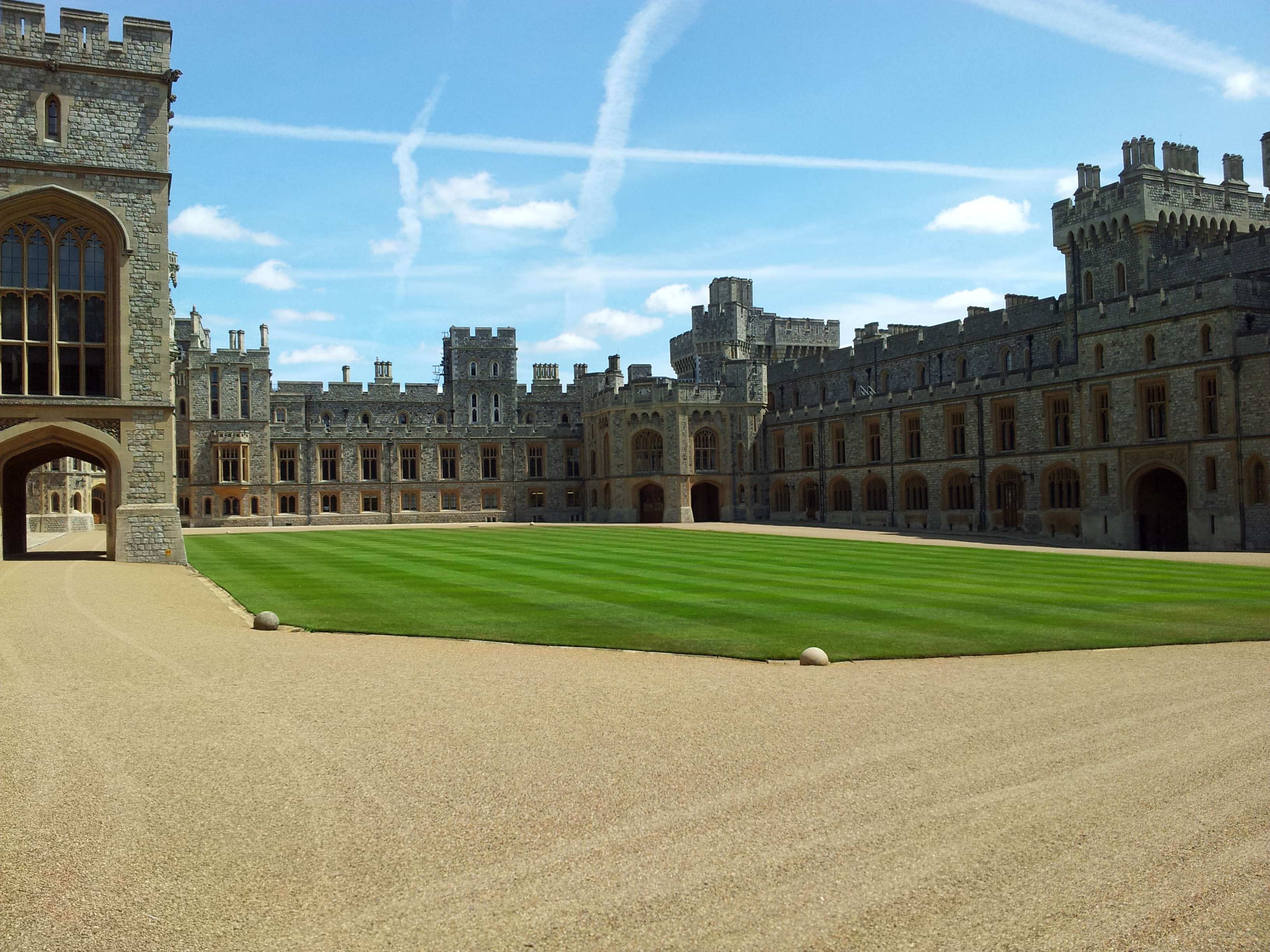
An excellent lawn for croquet.  This, I think, is the doorway, on the left, where dignitaries arrive by car.  The private apartments are across the back.

2013-06-30 13.58.00

The visitor’s apartments.  Not sure who that is on the horse.

2013-06-30 14.07.25

St George’s Chapel.  It’s a magnificent church for a private castle.  It’s been very busy the last few months with Royal weddings.

2013-06-30 12.12.29

The Round Tower, or the Keep.  It is the castle’s centerpiece.  Below it is the gardens.

2013-06-30 13.59.57

Those stairs are not for the faint-hearted, nor the Queen I suspect.  But I think quite a few royal children and their friends have been up and down them a few times.

2013-06-30 12.13.04

And well worth the effort to reach the bottom.

2013-06-30 14.00.40

Any faces peering out through the windows?