A photograph from the inspirational bin – 35

This is Railway Hotel in Gympie, adjacent to the old Gympie station

Just the name Railway Hotel conjured up a lot of interesting connotations. There’s one in almost every rural town that has Railway station, or perhaps a Junction Hotel, a Railway Hotel, or a Terminus Hotel.

And, once upon a time, there were nearly 600 of them, up until the 1920s, ubiquitous hotels build to house the people building the railways, and, then, when they were finished a lot disappeared, but a lot also remained to service the railway station and passengers coming and going.

These days, these old hotels that still exist are anachronisms of a bygone age, rather ornate wooden structures with big rooms and communal bathrooms, bars, saloons, and dining rooms, and only those curious about the past would stay there.

I’ve stayed in a few myself.

But, as for a story, well, the older, the better, because these would have ghosts.

They could also have infamous pasts, like a fire that destroys only part of the hotel, signs of which form part of the character.

A doorway into a now hidden room closed off because of something horrible happening there, could suddenly become a portal, where stepping through takes you back to the time of the event.

In fact, I’m in the mood to write just such a story…

Writing a book in 365 days – 142

Day 142

Don’t ease your way in; grab the reader’s attention by swarming them with flying bullets and dragging them on a roller coaster ride that simply doesn’t stop.

The bullet passed through my left sleeve, grazing the arm just below the shoulder.

I heard the shot, well, a rally of shots from the three men with automatic guns, and only realised one had almost found its mark when my arm started to hurt.

It was the least of my problems.  The three men were gaining on me, and their marksmanship could only improve as they got closer.

The darkness was supposed to cover us, but no one had predicted clear skies and a large moon.

“You said no one was home.”  The hissed statement came from the other person who’d been with me.

“Bad intel.  Shit happens.”

At the top of the hill, after running through a grove of trees to try and misdirect their aim, and skidding to a halt before going headfirst down.

Both of us were fit, but even so, the hard running, the dodging and weaving as bullets thwack into the trees beside us, we were still gasping for breath.

At least one part of the briefing had been right.

If we got into trouble, going down the hill and into the river would be the best escape route if things got bad.

“You’re joking.”  Alicia had stopped, bent over double, trying to suck air in and look at the slope at the same time.

“Death or glory,” I said.

A bullet hit the tree next to her head, and then I was following her down.  I doubted they would follow us.

A last glance back showed they had slowed down, and I got the feeling they knew something about the slope I didn’t.

Halfway there was a sudden explosion, the debris threw us sideways, and luckily, because there was another explosion just in front of where Alicia was heading.

“Mine,” I heard her gasp just before she started sliding on the loose scree.  I was right behind her.

A rocky ledge arrested the free fall, and we came to a sudden and abrasive stop.  Several bullets hitting rocks to the side of us forced us across and behind the dense shrubbery.

It was about another hundred yards to the water’s edge, but now, closer to the bottom, I could see a track.  We hadn’t been told there was a track around the lake.

And headlights in the distance.

Behind us, another two mines exploded, showering us with scree.

“Jesus.”  Alicia wasn’t used to being shot at or running through minefields.

“Better not look to the left then.”

She saw the approaching car.  “Oh, shit.  What else is going to go wrong?”

“Welcome to my world.  We need to be down and in the water before that vehicle reaches us.”

At that moment, a cloud covered the moon, and it went dark.  Or darker.

“Now.”

She didn’t need to be asked twice.

We were on the track before I could count to ten.  The headlights suddenly disappeared, perhaps going around a bend in the road.

“Ready to take a dip?”

“I always wanted to go for a midnight swim.”

The headlights started to reappear.

We slipped into the water and swam away from the shoreline, trying to make as little wake as possible, heading towards the island about eighty yards away, taking a circular track, keeping close to the rocky edge.

It took that car about forty-five seconds to reach the spot where we had got in the water, and by that time we had reached as far as the rocky outcrop that was the last cover before striking out towards the island.

At that point, we stopped to see what they were going to do.  Just as a light flickered to life.

A searchlight.

The beam slowly tracked out over the water towards the island.  Then, it slowly tracked back to the point where we had just slipped underwater.

Seconds later, we came back up for air, and I could see the search light reach the point where we had entered the water.

“What now.  They’re going to see us if we try to get to the island.”

“Go around the point and out of sight, give us time to consider options.  At the very least, get away from them.

We reached the other side just before the searchlight picked up the point where we had just been.  Around the corner was inky blackness, but it wasn’t going to last.  The clouds were breaking up, and the moon would be out again.

We climbed out and sat on the rocky ledge.  The slope leading down to the waterline was a rock climber’s paradise.  It wouldn’t have been too hard to climb up.

The thing is, we now have a new problem.

A motorboat was heading towards us, and in the distance, we could see a flashlight. At first, we pointed at the lake surface, then, when close to the shoreline, pointed at the cliff.

“We go up,” I said.

A few seconds later, we were climbing as fast as we could.

A few seconds after that, bullets started pinging off the rocks below us.

At the top and over onto the flat surface, bullets were still pinging off the rocks, but now harmlessly.

Alicia took a minute to breathe, as I did, that last part of the climb turning my legs to jelly.

“Are we safe now?”

“When we get to that treeline, about fifty yards, or a little more.”

She started running.

We’d both heard it, the thumping sound of a helicopter rotor.

These people were never going to give up.

© Charles Heath 2025

Searching For Locations: Disneyland, Paris, France

Whilst I found this tree house to be interesting, it seems to be far from practical because there was little to keep the wind and rain out, though I suppose, in the book, that might not be such a problem.

Be that as it may, and if it was relatively waterproof, then the furnishings would probably survive, and one had to also assume that much of the furnishings, such as the writing desk below, would have washed up as debris from the shipwreck.

20140104_141622 (1)

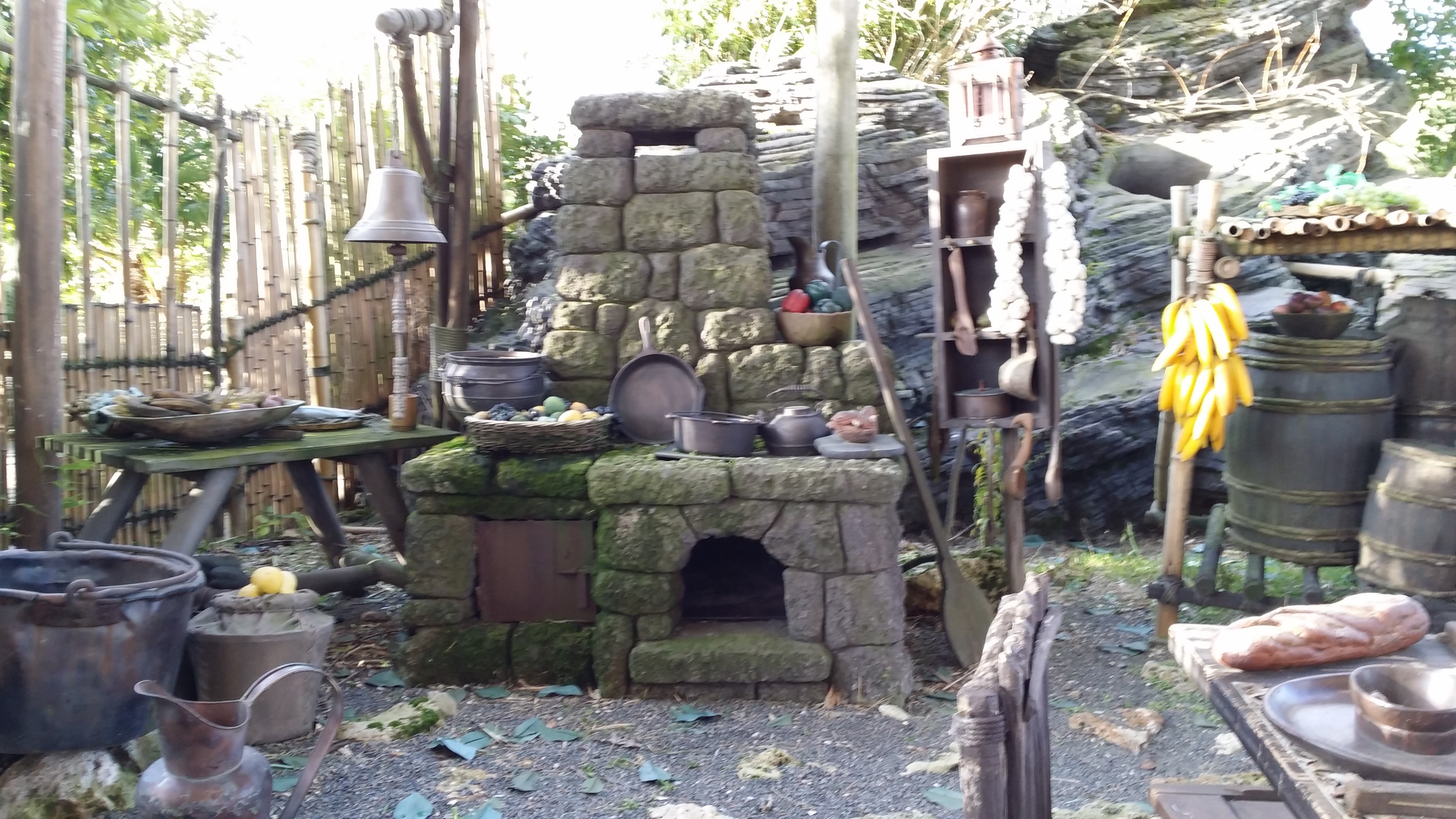
The stove and oven would have to be built by hand, and it is ‘remarkable’ such well-fitting stones were available.  It doesn’t look like it’s been used for a while judging by the amount of gree on it.  Perhaps it is not in a waterproof area.

20140104_141556 (2)

The dining table and the shelf in the background have that rough-hewn look about them

20140104_141553

A bit of man-made equipment here for drawing water from the stream

20140104_141703 (1)

And though not made in the era of electricity, there is an opportunity to use the water wheel to do more than it appears to be doing

20140104_141539 (2)

And tucked away in a corner the all-important study where one can read, or play a little music on the organ.  One could say, for the period, one had all the comforts of home.

20140104_141800 (2)

The cinema of my dreams – I always wanted to go on a treasure hunt – Episode 38

Here’s the thing…

Every time I close my eyes, I see something different.

I’d like to think the cinema of my dreams is playing a double feature but it’s a bit like a comedy cartoon night on Fox.

But these dreams are nothing to laugh about.

Once again there’s a new instalment of an old feature, and we’re back on the treasure hunt.

Before we embarked on the great driving expedition, for which I was beginning to think might be harder than it seemed to Boggs’ one-track mind, we decided to go and check out the mall, and if, indeed, there was an underground river, or, at the very least, if his flooding theory was correct. 

We were going to need very old clothes, and when I left the next morning, my mother noticed it.

“I’m going to do some gardening with Boggs.  He came up with this notion we could help out at the old folk’s home.”

“That’s a nice thought.”

And it was a lie I knew would eventually come back to bite me.  My mother hadn’t exactly told me to stop seeing Boggs, because she was beginning to think his mental capacity had been diminished after the beating.

It was a logical and perfectly acceptable reason for his odd behavior.

I went directly to Boggs’ house, and he was waiting for me.  From there it was about twenty minutes, to a spot where he knew the surrounding fence had a hole big enough for us to crawl through.

It was odd seeing the place again, sitting out a few miles from the town, looking forlorn.  At the front entrance, off the road specially built between it and the town, there were miles of cyclone fencing, with signs alternately telling people to keep out on threat of prosecution for trespass, and more recently, hazard signs proclaiming the whole area was unsafe.

From where we’d stopped, we could see the carpark, enough for hundreds of cars, a bus terminus, a taxi rank, and the front façade of the shopping center, mostly looking like the front of a castle, with towers and ramparts.

There had been auxiliary plans for a medieval theme park at one stage, that would have blended in with the mall buildings, but that had to be abandoned, even though the land allocated to it was stable.  Or so a surveyor said.

We continued on until we reached the side leading to the marina.  From this vantage point looking one way, there was the ocean, and the other, the damage to the side of the mall buildings, the cracks, and, in places, where the roof had collapsed.

This would be the first time I’d set foot in the place since it had been a mall.

It had been popular, and there was always plenty of people shopping, eating and drinking, going to the cinemas, or just having a day out.  There had also been a museum dedicated to the naval days.

Now there was nothing.

It was ironic that as many of the castles in the British Isles that had been reduced to rubble, that was exactly what was going to happen here if someone didn’t take a bulldozer to the lot and level it out.

And that might happen sooner rather than later.  This was reputed to be the site of many a disappearance of a local person.  Three girls, two men, and a boy were supposedly hidden somewhere inside the mall, but the bodies had never been found.

I was thinking of those missing people when I said, with a degree of trepidation, “Do you really want to do this?  I mean, if you’re sure there’s an underground waterway here, I’ll happily take your word for it.”

Boggs just shook his head.  “You’re the last person I’d expect to chicken out.”

“It not that.”

“Isn’t it?  I can go by myself if you’re worried about getting hurt.”

“No.  You and me together.  I have to learn to fight those fears.”

Another look, then, “OK.  “Just a little further.”

Another minute or so, we reached a large rusting cylinder which had an almost illegible sign on it say the tank held inflammable liquid.  I tapped on the metal and it sounded empty.  I guess as part of the shut down they would have had to drain the tank.  I followed the tangle of pipes that ran slightly downhill for about 20 yards and then saw the opening in the fence Boggs had referred to.

We left our bikes behind the tank, among some bushes.

We then walked down to the fence line where the pipes passed through, and Boggs pulled back the chain wire.  A closer look showed it had been cut halfway up, making it easy to slip by, easier if there were two people along for the visit.

“Did you cut the fence,” I asked him.

He didn’t answer.  I guess he wanted me to think he had.

“Have you been here before?”

“Through here, yes.  A few times.”  He held the wire away and I climbed through.  I did the same for him on the other side, and he joined me.  The two halves melded back together so from a distance no one could tell the fence had been tampered with.

From the fence, we had to cross the access road to the marina, and across a carpark, now overgrown with weeds, and bushes, with the odd tree springing up through the cracks in the concrete.

The wall, when we reached it, was where several large cracks joined, and part of the wall had fallen away leaving a hole large enough to crawl through.  I put my head through the crack and could barely see anything.  There was light coming from the seaward side, but on the other, it was inky darkness.

There was also a very disturbing aroma, like freshly laid concrete crossed with the smell of a garage repair shop.  Years of spilled oil and grease.

“Is it safe?”  I asked.

Boggs shrugged.  “It could all fall down at any moment.  You read the signs on the fence.  Basically, this is, on one hand, cheating death.  On the other, we could be on the verge of an interesting discovery.”  Then, without another word, he went through the gap and inside. 

A few seconds later, I could see the light from his cell phone.

I shrugged.  If anything happened, like the building falling on me, I probably wouldn’t feel it.  And he was right, we could be on the verge of an interesting discovery.

I followed him inside and slid down the broken concrete and bricks to a dirty but solid-feeling floor, where Boggs was waiting, the light from his phone pointed in the direction of a storefront.

And looking at a dummy still dressed in clothes left behind.

I couldn’t help but think I’d seen that style of clothes somewhere before.

© Charles Heath 2020

The cinema of my dreams – I always wanted to go on a treasure hunt – Episode 37

Here’s the thing…

Every time I close my eyes, I see something different.

I’d like to think the cinema of my dreams is playing a double feature but it’s a bit like a comedy cartoon night on Fox.

But these dreams are nothing to laugh about.

Once again there’s a new installment of an old feature, and we’re back on the treasure hunt.


I took a moment longer to study the differences in the maps, trying to see what our edge was.

“So, according to this map, Alex would be looking for a stretch of shore with two rivers going inland, which you say are no longer there.”

“I do because they’re not.  Well, they’re not visible these days from the seaward side, and not really visible from shore either because I think one of the two might have started where the mini marina is.”

The mini marina wasn’t as marina as such, rather an area of seawater surrounded by a promenade with a bridge over the entrance from the ocean, and a lot of expensive Italian tiles.  It was part of the redevelopment of the old marina when the shopping mall had been built.

“Wasn’t that the old marina, which was part of the old navy yard for PT boats?”

Everyone knew the potted history of the town and the navy yard that put it briefly on the map.  There had been an inlet where a marina was built in the early days.  Then with war looming, the navy was looking for a place to build PT boats, carry out repairs to medium-sized warships, and train PT crews.

“One and the same.  There’s very little in the archives about what happened back then, but I did manage to find a document, mentioned in my father’s notebook, about the navy set up a base.  Attached to it was a geological report that stated two facts, the first, they would be building over a watercourse which at the time was believed to be underground, and secondly, deep foundations would be required.  In the event all of it was ignored, they built the port and it was operational up until the end of the war.”

After which as everyone knew they shut the facility down, put up fences and signs with the words hazardous and dangerous, and trespassers would be shot, and it sat there like a festering eyesore until a plan was mooted to turn the site into a mall.

It was a favorite place for us children to go and play, having the fearless mentality that every child was born with.  Yes, there were hazards on the grounds, in for form of rusting metal and hundreds of barrels holding what must have been hazardous material, but best of all, there were two nearly intact boats moored there, and I remembered being captain at least once on a vessel that had taken on everything the enemy had.

“And then they built a mall.”

He nodded.  “My father always said that it was doomed to failure. There’s a section in his notebook about an earlier plan to rebuild the marina with facilities to repair those new larger ocean-going yachts that proliferate in Bermuda and places like that, only he couldn’t find anyone to back the project.  The Benderby’s at the time didn’t like the idea, and since they basically owned the town nothing was going to happen without their approval.”

The mall, however, was something the Benderby’s could get their hooks into, in the building of it, then a slice of every business that moved in.  It would also be good for employment, and people employed mean customers for their other criminal activities.  Deals were made with the Cossatino’s and everyone was happy.  For a few years anyway.

That’s when a newspaper expose on the mall was published.

Exposes were never plucked out of thin air and presented, there had to be a catalyst.  There had been allegations of corruption regarding all aspects of the mall, from planning through the opening day, and especially in the building.  Allegations of payoffs to get approvals, substandard materials used, and the worst allegation, that the builder had not properly cleaned up the site before building commenced.

All of this came to a head when, not long after the tenth anniversary of opening, large cracks started to appear in the floors and walls, so bad that nearly half the mall, that part that had been built over the old navy base, had to be closed, and now was in danger of collapse.

The mini marina, the focal point for the mall, had also been closed because the pool had become polluted from the old navy base waste that had been improperly disposed of in the foundations rather than being properly removed and stored in a special dump.  But there had also been other problems like excess water continuously flooding the lower level carparks, and flowing into the sea pool making it unusable, and at times, very smelly.

Boggs’s father had discovered at the same time as his research for the treasure maps, that the water came from the underground river that had been mentioned in the geological report made before the naval base had been built.  Just because it hadn’t been there at the time, didn’t mean it wasn’t there at all.  It just depended on rainfall back up in the hills, and the year the problems started for the mall coincided with the wettest period for the area in more than 50 years.

His father’s notebook was a goldmine of information, Boggs said.

“It appears there was a lake right where the map says it was, about a hundred years ago.  Since then an earthquake caused a fault line that drained the lake and makes a river instead.  That river ran from the hills to the sea.  Until someone decided to build on the old lake, raised the level and piped the river underground, and drawing from it for the towns and sounding areas water supply.  That in effect reduced the water flow from the lake to the sea to a trickle, or rather a stream.

“But every now and then when it rains heavily and for a long period, the stream becomes a river, and it backs up until with nowhere else to go, it floods the mall carparks.  The lowest level carpark is actually the lowest depth of the river, and it comes out at the sea where the pool now is.  Unfortunately, with the old naval waste rotting in those old rusting barrels, it collects that waste and not only stinks up the mall but also the pool area which is why it’s now closed.

“And the bad news is, it can’t be fixed.  But that’s got nothing to do with our quest.  It’s just an aside to our quest, proving that three of the landmarks on the treasure map actually existed once, and in some form still do.  The thing is, neither the Benderby’s or the Cossatino’s will realize that which means we have a clear run at getting past the first hurdle and with any luck we will be able to identify the river from the hills which is the starting point.”

A simple job, no doubt in Boggs’s mind.  He never had any trouble coming up with hair-brained schemes, only the logistics to carry them out.  This one required proper transport because there was no way we’re going to be able to cycle there and back in a morning, the only time I had free for exploring.

“How do you propose we do this?”

“Rico’s car.  It’s sitting in the marina carpark.  The keys for it are on his boat.”

“Do you know how to drive?”

“I’ve had a few lessons.  How hard could it be?”

Ⓒ Charles Heath 2020

The story behind the story: A Case of Working With the Jones Brothers

To write a private detective serial has always been one of the items at the top of my to-do list, though trying to write novels and a serial, as well as a blog, and maintain a social media presence, well, you get the idea.

But I made it happen, from a bunch of episodes I wrote a long, long time ago, used these to start it, and then continue on, then as now, never having much of an idea where it was going to end up, or how long it would take to tell the story.

That, I think is the joy of ad hoc writing, even you, as the author, have as much idea of where it’s going as the reader does.

It’s basically been in the mill since 1990, and although I finished it last year, it looks like the beginning to end will have taken exactly 30 years.  Had you asked me 30 years ago if I’d ever get it finished, the answer would be maybe?

My private detective, Harry Walthenson

I’d like to say he’s from that great literary mold of Sam Spade, or Mickey Spillane, or Phillip Marlow, but he’s not.

But, I’ve watched Humphrey Bogart play Sam Spade with much interest, and modelled Harry and his office on it.  Similarly, I’ve watched Robert Micham play Phillip Marlow with great panache, if not detachment, and added a bit of him to the mix.

Other characters come into play, and all of them, no matter what period they’re from, always seem larger than life.  I’m not above stealing a little of Mary Astor, Peter Lorre or Sidney Greenstreet, to breathe life into beguiling women and dangerous men alike.

Then there’s the title, like

The Case of the Unintentional Mummy – this has so many meanings in so many contexts, though I imagine that back in Hollywood in the ’30s and ’40s, this would be excellent fodder for Abbott and Costello

The Case of the Three-Legged Dog – Yes, I suspect there may be a few real-life dogs with three legs, but this plot would involve something more sinister.  And if made out of plaster, yes, they’re always something else inside.

But for mine, to begin with, it was “The Case of the …”, because I had no idea what the case was going to be about, well, I did, but not specifically.

Then I liked the idea of calling it “The Case of the Brother’s Revenge” because I began to have a notion there was a brother no one knew about, but that’s stuff for other stories, not mine, so then went the way of the others.

Now it’s called ‘A Case of Working With the Jones Brothers’, finished the first three drafts, and at the editor for the last.

I have high hopes of publishing it in early 2021.  It even has a cover.

PIWalthJones1

Searching for Locations: The Eiffel Tower, Paris, France

Sorry, reminiscing again…

It was a cold but far from a miserable day.  We were taking our grandchildren on a tour of the most interesting sites in Paris, the first of which was the Eiffel Tower.

We took the overground train, which had double-decker carriages, a first for the girls, to get to the tower.

We took the underground, or Metro, back, and they were fascinated with the fact the train carriages ran on road tires.

Because it was so cold, and windy, the tower was only open to the second level. It was a disappointment to us, but the girls were content to stay on the second level.

There they had the French version of chips.

It was a dull day, but the views were magnificent.

20140107_132225

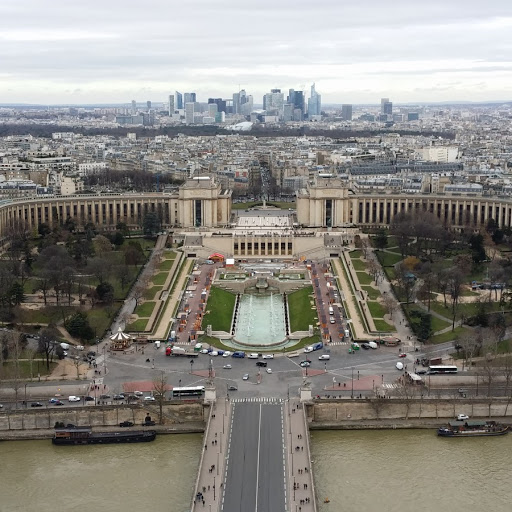
A view of the Seine

20140107_132859

20140107_132208

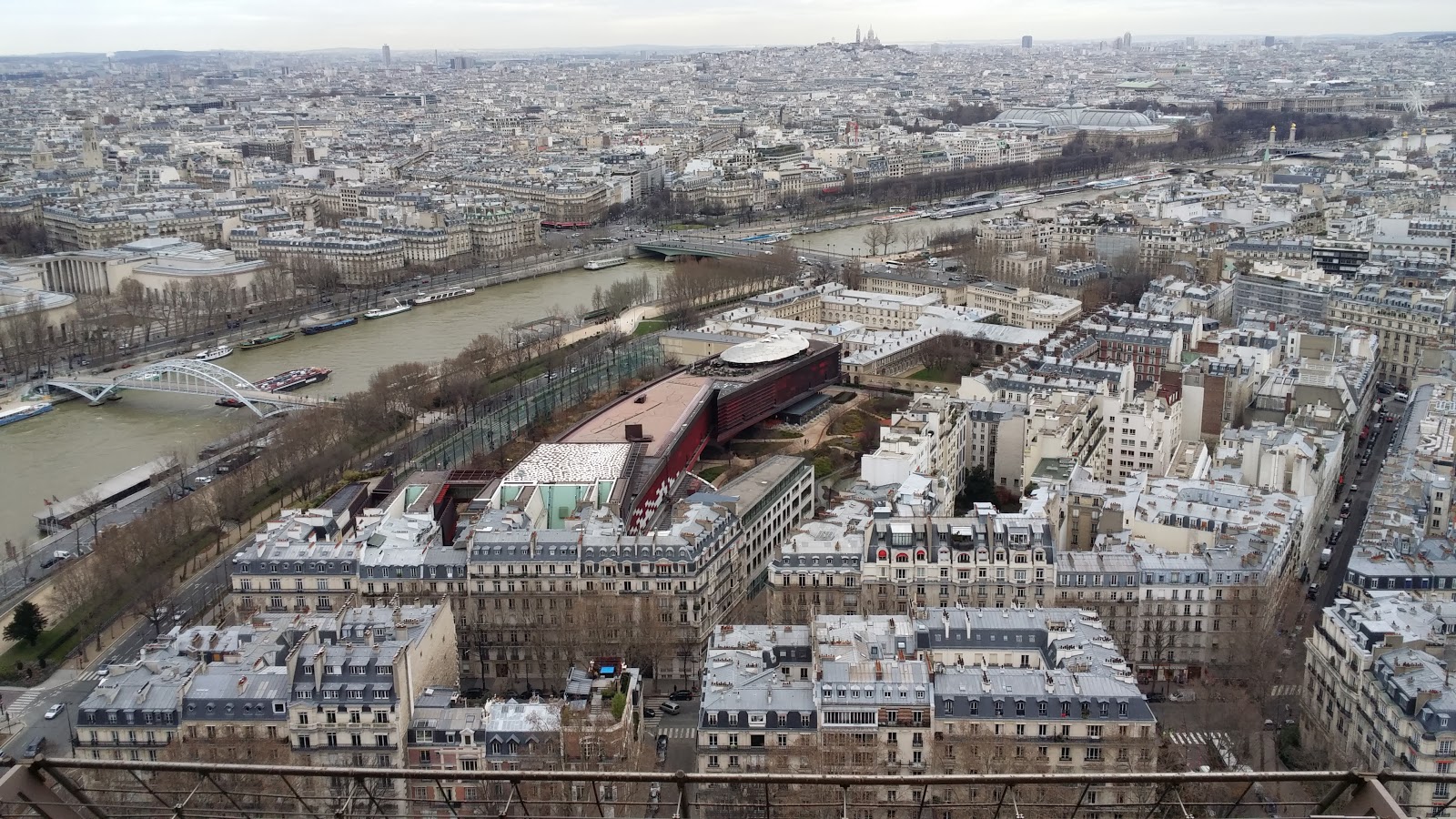
Sacre Coeur church at Montmartre in the distance.

Another view along the river Seine

Overlooking the tightly packed apartment buildings

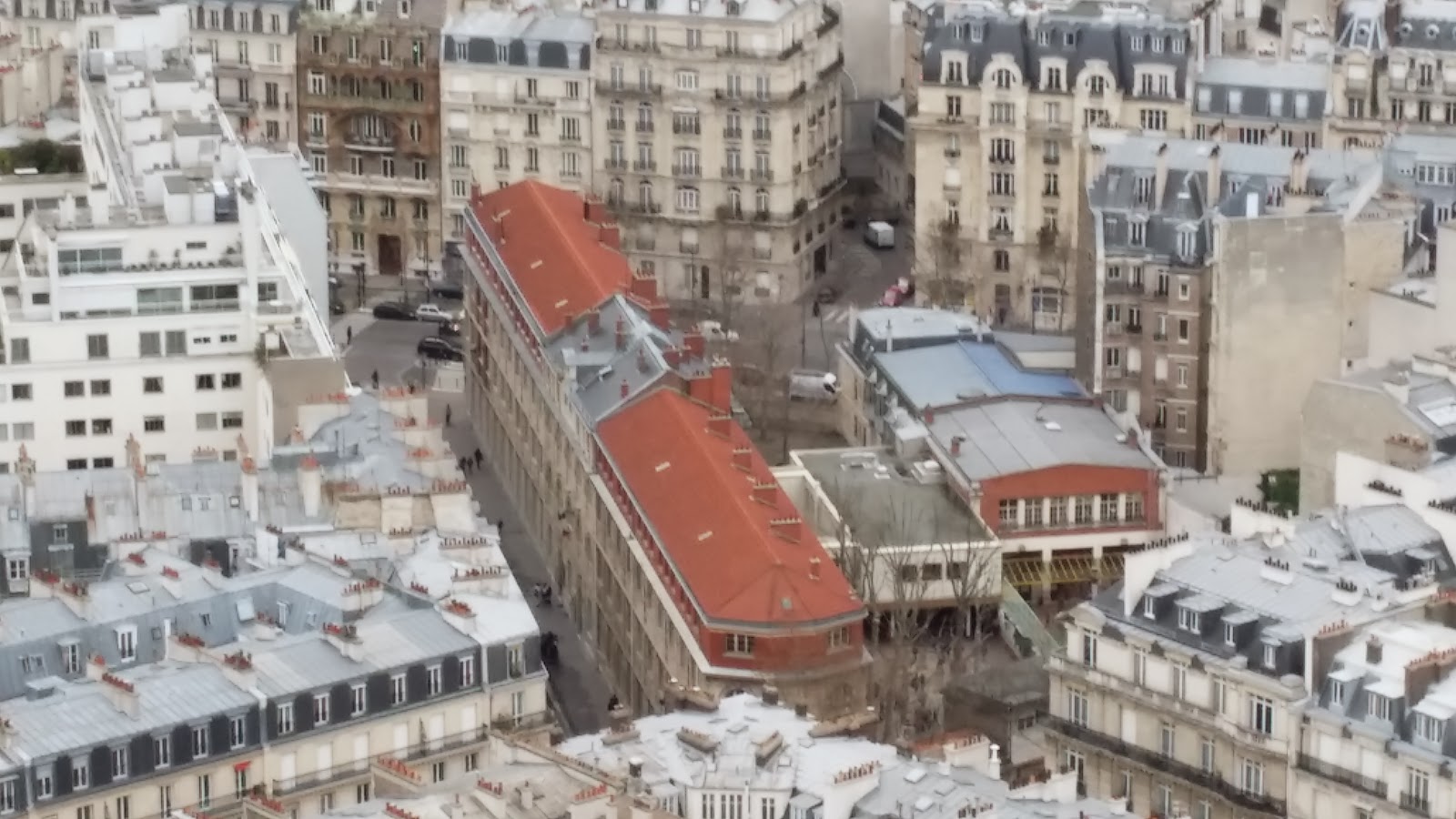
Looking along the opposite end of the river Seine

An excerpt from “The Devil You Don’t”

Available on Amazon Kindle here:  https://amzn.to/2Xyh1ow

By the time I returned to the Savoie, the rain had finally stopped, and there was a streak of blue sky to offer some hope the day would improve.

The ship was not crowded, the possibility of bad weather perhaps holding back potential passengers.  Of those I saw, a number of them would be aboard for the lunch by Phillippe Chevrier.  I thought about it, but the Concierge had told me about several restaurants in Yvoire and had given me a hand-drawn map of the village.  I think he came from the area because he spoke with the pride and knowledge of a resident.

I was looking down from the upper deck observing the last of the boarding passengers when I saw a woman, notable for her red coat and matching shoes, making a last-minute dash to get on board just before the gangway was removed.  In fact, her ungainly manner of boarding had also captured a few of the other passenger’s attention.  Now they would have something else to talk about, other than the possibility of further rain.

I saw her smile at the deckhand, but he did not smile back.  He was not impressed with her bravado, perhaps because of possible injury.  He looked at her ticket then nodded dismissively, and went back to his duties in getting the ship underway.  I was going to check the departure time, but I, like the other passengers, had my attention diverted to the woman in red.

From what I could see there was something about her.  It struck me when the light caught her as she turned to look down the deck, giving me a perfect profile.  I was going to say she looked foreign, but here, as in almost anywhere in Europe, that described just about everyone.  Perhaps I was just comparing her to Phillipa, so definitively British, whereas this woman was very definitely not.

She was perhaps in her 30’s, slim or perhaps the word I’d use was lissom, and had the look and manner of a model.  I say that because Phillipa had dragged me to most of the showings, whether in Milan, Rome, New York, London, or Paris.  The clothes were familiar, and in the back of my mind, I had a feeling I’d seen her before.

Or perhaps, to me, all models looked the same.

She looked up in my direction, and before I could divert my eyes, she locked on.  I could feel her gaze boring into me, and then it was gone as if she had been looking straight through me.  I remained out on deck as the ship got underway, watching her disappear inside the cabin.  My curiosity was piqued, so I decided to keep an eye out for her.

I could feel the coolness of the air as the ship picked up speed, not that it was going to be very fast.  With stops, the trip would take nearly two hours to get to my destination.  It would turn back almost immediately, but I was going to stay until the evening when it returned at about half eight.  It would give me enough time to sample the local fare, and take a tour of the medieval village.

Few other passengers ventured out on the deck, most staying inside or going to lunch.  After a short time, I came back down to the main deck and headed forward.  I wanted to clear my head by concentrating on the movement of the vessel through the water, breathing in the crisp, clean air, and let the peacefulness of the surroundings envelope me.

It didn’t work.

I knew it wouldn’t be long before I started thinking about why things hadn’t worked, and what part I played in it.  And the usual question that came to mind when something didn’t work out.  What was wrong with me?

I usually blamed it on my upbringing.

I had one of those so-called privileged lives, a nanny till I was old enough to go to boarding school, then sent to the best schools in the land.  There I learned everything I needed to be the son of a Duke, or, as my father called it in one of his lighter moments, nobility in waiting.

Had this been five or six hundred years ago, I would need to have sword and jousting skills, or if it had been a few hundred years later a keen military mind.  If nothing else I could ride a horse, and go on hunts, or did until they became not the thing to do.

I learned six languages, and everything I needed to become a diplomat in the far-flung British Empire, except the Empire had become the Commonwealth, and then, when no-one was looking, Britain’s influence in the world finally disappeared.  I was a man without a cause, without a vocation, and no place to go.

Computers were the new vogue and I had an aptitude for programming.  I guess that went hand in hand with mathematics, which although I hated the subject, I excelled in.  Both I and another noble outcast used to toss ideas around in school, but when it came to the end of our education, he chose to enter the public service, and I took a few of those ideas we had mulled over and turned them into a company.

About a year ago, I was made an offer I couldn’t refuse.  There were so many zeroes on the end of it I just said yes, put the money into a very grateful bank, and was still trying to come to terms with it.

Sadly, I still had no idea what I was going to do with the rest of my life.  My parents had asked me to come back home and help manage the estate, and I did for a few weeks.  It was as long as it took for my parents to drive me insane.

Back in the city, I spent a few months looking for a mundane job, but there were very few that suited the qualifications I had, and the rest, I think I intimidated the interviewer simply because of who I was.  In that time I’d also featured on the cover of the Economist, and through my well-meaning accountant, started involving myself with various charities, earning the title ‘philanthropist’.

And despite all of this exposure, even making one of those ubiquitous ‘eligible bachelor’ lists, I still could not find ‘the one’, the woman I wanted to spend the rest of my life with.  Phillipa seemed to fit the bill, but in time she proved to be a troubled soul with ‘Daddy’ issues.  I knew that in building a relationship compromise was necessary, but with her, in the end, everything was a compromise and what had happened was always going to be the end result.

It was perhaps a by-product of the whole nobility thing.  There was a certain expectation I had to fulfill, to my peers, contemporaries, parents and family, and those who either liked or hated what it represented.  The problem was, I didn’t feel like I belonged.  Not like my friend from schooldays, and now obscure acquaintance, Sebastian.  He had been elevated to his Dukedom early when his father died when he was in his twenties.  He had managed to fade from the limelight and was rarely mentioned either in the papers or the gossip columns.  He was one of the lucky ones.

I had managed to keep a similarly low profile until I met Phillipa.  From that moment, my obscurity disappeared.  It was, I could see now, part of a plan put in place by Phillipa’s father, a man who hogged the limelight with his daughter, to raise the profile of the family name and through it their businesses.  He was nothing if not the consummate self-advertisement.

Perhaps I was supposed to be the last piece of the puzzle, the attachment to the establishment, that link with a class of people he would not normally get in the front door.  There was nothing refined about him or his family, and more than once I’d noticed my contemporaries cringe at the mention of his name, or any reference of my association with him.

Yet could I truthfully say I really wanted to go back to the obscurity I had before Phillipa?  For all her faults, there were times when she had been fun to be with, particularly when I first met her when she had a certain air of unpredictability.  That had slowly disappeared as she became part of her father’s plan for the future.  She just failed to see how much he was using her.

Or perhaps, over time, I had become cynical.

I thought about calling her.  It was one of those moments of weakness when I felt alone, more alone than usual.

I diverted my attention back to my surroundings and the shoreline.  Out of the corner of my eye, I could see the woman in the red coat, making a move.  The red coat was like a beacon, a sort of fire engine red.  It was not the sort of coat most of the women I knew would wear, but on her, it looked terrific.  In fact, her sublime beauty was the one other attribute that was distinctly noticeable, along with the fact her hair was short, rather than long, and jet black.

I had to wrench my attention away from her.

A few minutes later several other passengers came out of the cabin for a walk around the deck, perhaps to get some exercise, perhaps checking up on me, or perhaps I was being paranoid.  I waited till they passed on their way forward, and I turned and headed aft.

I watched the wake sluicing out from under the stern for a few minutes, before retracing my steps to the front of the ship and there I stood against the railing, watching the bow carve its way through the water.  It was almost mesmerizing.  There, I emptied my mind of thoughts about Phillipa, and thoughts about the woman in the red coat.

Until a female voice behind me said, “Having a bad day?”

I started, caught by surprise, and slowly turned.  The woman in the red coat had somehow got very close me without my realizing it.  How did she do that?  I was so surprised I couldn’t answer immediately.

“I do hope you are not contemplating jumping.  I hear the water is very cold.”

Closer up, I could see what I’d missed when I saw her on the main deck.  There was a slight hint of Chinese, or Oriental, in her particularly around the eyes, and of her hair which was jet black.  An ancestor twice or more removed had left their mark, not in a dominant way, but more subtle, and easily missed except from a very short distance away, like now.

Other than that, she was quite possibly Eastern European, perhaps Russian, though that covered a lot of territory.  The incongruity of it was that she spoke with an American accent, and fluent enough for me to believe English was her first language.

Usually, I could ‘read’ people, but she was a clean slate.  Her expression was one of amusement, but with cold eyes.  My first thought, then, was to be careful.

“No.  Not yet.”  I coughed to clear my throat because I could hardly speak.  And blushed, because that was what I did when confronted by a woman, beautiful or otherwise.

The amusement gave way to a hint of a smile that brightened her demeanor as a little warmth reached her eyes.  “So that’s a maybe.  Should I change into my lifesaving gear, just in case?”

It conjured up a rather interesting image in my mind until I reluctantly dismissed it.

“Perhaps I should move away from the edge,” I said, moving sideways until I was back on the main deck, a few feet further away.  Her eyes had followed me, and when I stopped she turned to face me again.  She did not move closer.

I realized then she had removed her beret and it was in her left side coat pocket.  “Thanks for your concern …?”

“Zoe.”

“Thanks for your concern, Zoe.  By the way, my name is John.”

She smiled again, perhaps in an attempt to put me at ease.  “I saw you earlier, you looked so sad, I thought …”

“I might throw myself overboard?”

“An idiotic notion I admit, but it is better to be safe than sorry.”

Then she tilted her head to one side then the other, looking intently at me.  “You seem to be familiar.  Do I know you?”

I tried to think of where I may have seen her before, but all I could remember was what I’d thought earlier when I first saw her; she was a model and had been at one of the showings.  If she was, it would be more likely she would remember Phillipa, not me.  Phillipa always had to sit in the front row.

“Probably not.”  I also didn’t mention the fact she may have seen my picture in the society pages of several tabloid newspapers because she didn’t look the sort of woman who needed a daily dose of the comings and goings, and, more often than not, scandal associated with so-called celebrities.

She gave me a look, one that told me she had just realized who I was.  “Yes, I remember now.  You made the front cover of the Economist.  You sold your company for a small fortune.”

Of course.  She was not the first who had recognized me from that cover.  It had raised my profile considerably, but not the Sternhaven’s.  That article had not mentioned Phillipa or her family.  I suspect Grandmother had something to do with that, and it was, now I thought about it, another nail in the coffin that was my relationship with Phillipa.

“I wouldn’t say it was a fortune, small or otherwise, just fortunate.”  Each time, I found myself playing down the wealth aspect of the business deal.

“Perhaps then, as the journalist wrote, you were lucky.  It is not, I think, a good time for internet-based companies.”

The latter statement was an interesting fact, one she read in the Financial Times which had made that exact comment recently.

“But I am boring you.”  She smiled again.  “I should be minding my own business and leaving you to your thoughts.  I am sorry.”

She turned to leave and took a few steps towards the main cabin.

“You’re not boring me,” I said, thinking I was letting my paranoia get the better of me.  It had been Sebastian on learning of my good fortune, who had warned me against ‘a certain element here and abroad’ whose sole aim would be to separate me from my money.  He was not very subtle when he described their methods.

But I knew he was right.  I should have let her walk away.

She stopped and turned around.  “You seem nothing like the man I read about in the Economist.”

A sudden and awful thought popped into my head.  Those words were part of a very familiar opening gambit.  “Are you a reporter?”

I was not sure if she looked surprised, or amused.  “Do I look like one?”

I silently cursed myself for speaking before thinking, and then immediately ignored my own admonishment.  “People rarely look like what they are.”

I saw the subtle shake of the head and expected her to take her leave.  Instead she astonished me.

“I fear we have got off on the wrong foot.  To be honest, I’m not usually this forward, but you seemed like you needed cheering up when probably the opposite is true.  Aside from the fact this excursion was probably a bad idea.  And,” she added with a little shrug, “perhaps I talk too much.”

I was not sure what I thought of her after that extraordinary admission. It was not something I would do, but it was an interesting way to approach someone and have them ignoring their natural instinct.  I would let Sebastian whisper in my ear for a little longer and see where this was going.

“Oddly enough, I was thinking the same thing.  I was supposed to be traveling with my prospective bride.  I think you can imagine how that turned out.”

“She’s not here?”

“No.”

“She’s in the cabin?”  Her eyes strayed in that direction for a moment then came back to me.  She seemed surprised I might be traveling with someone.

“No.  She is back in England, and the wedding is off.  So is the relationship.  She dumped me by text.”

OK, why was I sharing this humiliating piece of information with her?  I still couldn’t be sure she was not a reporter.

She motioned to an empty seat, back from the edge.  No walking the plank today.  She moved towards it and sat down.  She showed no signs of being cold, nor interested in the breeze upsetting her hair.  Phillipa would be having a tantrum about now, being kept outside, and freaking out over what the breeze might be doing to her appearance.

I wondered, if only for a few seconds if she used this approach with anyone else.  I guess I was a little different, a seemingly rich businessman alone on a ferry on Lake Geneva, contemplating the way his life had gone so completely off track.

She watched as I sat at the other end of the bench, leaving about a yard between us.  After I leaned back and made myself as comfortable as I could, she said, “I have also experienced something similar, though not by text message.  It is difficult, the first few days.”

“I saw it coming.”

“I did not.”  She frowned, a sort of lifeless expression taking over, perhaps brought on by the memory of what had happened to her.  “But it is done, and I moved on.  Was she the love of your life?”

OK, that was unexpected.

When I didn’t answer, she said, “I am sorry.  Sometimes I ask personal questions without realizing what I’m doing.  It is none of my business.”  She shivered.  “Perhaps we should go back inside.”

She stood, and held out her hand.  Should I take it and be drawn into her web?  I thought of Sebastian.  What would he do in this situation?

I took her hand in mine and let her pull me gently to my feet.  “Wise choice,” she said, looking up at the sky.

It just started to rain.

© Charles Heath 2015-2023
newdevilcvr6

Writing a book in 365 days – 142

Day 142

Don’t ease your way in; grab the reader’s attention by swarming them with flying bullets and dragging them on a roller coaster ride that simply doesn’t stop.

The bullet passed through my left sleeve, grazing the arm just below the shoulder.

I heard the shot, well, a rally of shots from the three men with automatic guns, and only realised one had almost found its mark when my arm started to hurt.

It was the least of my problems.  The three men were gaining on me, and their marksmanship could only improve as they got closer.

The darkness was supposed to cover us, but no one had predicted clear skies and a large moon.

“You said no one was home.”  The hissed statement came from the other person who’d been with me.

“Bad intel.  Shit happens.”

At the top of the hill, after running through a grove of trees to try and misdirect their aim, and skidding to a halt before going headfirst down.

Both of us were fit, but even so, the hard running, the dodging and weaving as bullets thwack into the trees beside us, we were still gasping for breath.

At least one part of the briefing had been right.

If we got into trouble, going down the hill and into the river would be the best escape route if things got bad.

“You’re joking.”  Alicia had stopped, bent over double, trying to suck air in and look at the slope at the same time.

“Death or glory,” I said.

A bullet hit the tree next to her head, and then I was following her down.  I doubted they would follow us.

A last glance back showed they had slowed down, and I got the feeling they knew something about the slope I didn’t.

Halfway there was a sudden explosion, the debris threw us sideways, and luckily, because there was another explosion just in front of where Alicia was heading.

“Mine,” I heard her gasp just before she started sliding on the loose scree.  I was right behind her.

A rocky ledge arrested the free fall, and we came to a sudden and abrasive stop.  Several bullets hitting rocks to the side of us forced us across and behind the dense shrubbery.

It was about another hundred yards to the water’s edge, but now, closer to the bottom, I could see a track.  We hadn’t been told there was a track around the lake.

And headlights in the distance.

Behind us, another two mines exploded, showering us with scree.

“Jesus.”  Alicia wasn’t used to being shot at or running through minefields.

“Better not look to the left then.”

She saw the approaching car.  “Oh, shit.  What else is going to go wrong?”

“Welcome to my world.  We need to be down and in the water before that vehicle reaches us.”

At that moment, a cloud covered the moon, and it went dark.  Or darker.

“Now.”

She didn’t need to be asked twice.

We were on the track before I could count to ten.  The headlights suddenly disappeared, perhaps going around a bend in the road.

“Ready to take a dip?”

“I always wanted to go for a midnight swim.”

The headlights started to reappear.

We slipped into the water and swam away from the shoreline, trying to make as little wake as possible, heading towards the island about eighty yards away, taking a circular track, keeping close to the rocky edge.

It took that car about forty-five seconds to reach the spot where we had got in the water, and by that time we had reached as far as the rocky outcrop that was the last cover before striking out towards the island.

At that point, we stopped to see what they were going to do.  Just as a light flickered to life.

A searchlight.

The beam slowly tracked out over the water towards the island.  Then, it slowly tracked back to the point where we had just slipped underwater.

Seconds later, we came back up for air, and I could see the search light reach the point where we had entered the water.

“What now.  They’re going to see us if we try to get to the island.”

“Go around the point and out of sight, give us time to consider options.  At the very least, get away from them.

We reached the other side just before the searchlight picked up the point where we had just been.  Around the corner was inky blackness, but it wasn’t going to last.  The clouds were breaking up, and the moon would be out again.

We climbed out and sat on the rocky ledge.  The slope leading down to the waterline was a rock climber’s paradise.  It wouldn’t have been too hard to climb up.

The thing is, we now have a new problem.

A motorboat was heading towards us, and in the distance, we could see a flashlight. At first, we pointed at the lake surface, then, when close to the shoreline, pointed at the cliff.

“We go up,” I said.

A few seconds later, we were climbing as fast as we could.

A few seconds after that, bullets started pinging off the rocks below us.

At the top and over onto the flat surface, bullets were still pinging off the rocks, but now harmlessly.

Alicia took a minute to breathe, as I did, that last part of the climb turning my legs to jelly.

“Are we safe now?”

“When we get to that treeline, about fifty yards, or a little more.”

She started running.

We’d both heard it, the thumping sound of a helicopter rotor.

These people were never going to give up.

© Charles Heath 2025

“What Sets Us Apart”, a mystery with a twist

David is a man troubled by a past he is trying to forget.

Susan is rebelling against a life of privilege and an exasperated mother who holds a secret that will determine her daughter’s destiny.

They are two people brought together by chance. Or was it?

When Susan discovers her mother’s secret, she goes in search of the truth that has been hidden from her since the day she was born.

When David realizes her absence is more than the usual cooling off after another heated argument, he finds himself being slowly drawn back into his former world of deceit and lies.

Then, back with his former employers, David quickly discovers nothing is what it seems as he embarks on a dangerous mission to find Susan before he loses her forever.

Find the kindle version on Amazon here:  http://amzn.to/2Eryfth

whatsetscover