That word: Home – in sayings

I’m always on the lookout for inspiration for stories, especially the short stories I attach to photographs in my Being Inspired series, and one of the topics that has been suggested is along the lines of the following.

There is certainly a lot of scope with these.

Home is where the heart is

One’s home is the preferred place to all others, the one you are most emotionally attached, i.e. you have the deepest affection for. It may not necessarily be a physical place though.

I must say I tend to agree with this because every time I go away, I’m always looking forward to coming home.

Even when I’ve had to stay away for a few months, it’s not possible to call that home, it’s just another place to stay.

On the other hand…

It’s the name of a song by Elvis Presley.

And it has been the title of several films.

The Hallmark channel presses this point home time and time again.

Pliny the Elder is credited with coming up with the saying.

Home is what you make it

This is a similar saying, but, to me, it means something completely different

Though many will say this means that it’s where family and friends can come to, a place where memories can be made, I don’t believe it’s the same as the first saying.

What you make of it depends on your circumstances, you can hate it because it might be because you’re stuck with one parent with perhaps a step-parent. Or you might love it because you’ve escaped a bad situation.

But it’s not necessarily where your heart is.

Wherever I hang my hat I call home

Barbra Streisand made this song famous, and probably means that no matter where you are, it is home to you. It would be more fitting for someone who doesn’t necessarily see their true home very often, ie you work in the diplomatic service or in the military and you move around a lot.

Home away from home

This is a place that is as good as your real home.

Writing a book in 365 days – 105

Day 105

Write a story that has the line, “If you knew better, you would stop reading this right now, but I know you won’t.”

I looked down at the woman who called herself my mother and shook my head.

It was hard to reconcile the fact that over two hundred people turned out for the funeral, one hundred and ninety-nine of them I had never seen or met before.

Ten of them had stood up in front of the mourners and reminisced on the life of a woman that I had no idea was the person they were describing.

Kind, generous, loving, a friend to everyone…

… except her son.

The one I knew, her lawyer, who was overseeing the execution of her will.  That she would even remember me or put me in that will was a surprise.  I hadn’t seen her in forty years, the day her latest husband kicked a naive and very frightened fifteen-year-old out of ‘his’ house when she was away.

He had been just the latest of terrible men she had taken up with after the sudden death of my father, a year before.

I left and never came back.  I burned any letter that came from her until I eventually moved to the other side of the world and built a life of my own.

Until I got that fateful phone call.

My mother had died, and her last request was to find me.  I had changed names and disappeared several times, and yet I’d been found.

How?

The lawyer summed it up in a half dozen sentences.  She had a team of private investigators keep track of me.  Once she discovered what her latest ‘boyfriend’ had done, she had kicked him to the curb, an interesting expression for a lawyer, and set about finding me.  When I didn’t answer her letters, she didn’t lose interest. She just had them keep track of me, in case, one day, I changed my mind.

That I didn’t was her greatest sorrow.

I was of two minds whether to go back and attend the funeral, and nearly didn’t.  That was Noelle’s doing, insisting the lawyer pay for two first-class tickets, which he did.  That she said, spoke volumes, though not explaining what she meant.

Of course, Noelle knew the story.  Like everything about my life, she had wheedled and cajoled it out of me over a long period of time.  She knew when she met me, I was damaged goods, but I soon discovered she was everything I needed to heal.

I felt a hand slip into mine, and her aura enveloped me.  “She has passed Ian, and she can’t hurt you anymore.”

That was a matter of opinion because seeing her again dredged up a lot of very good memories after that kind, generous person they described until my father died.

It seemed odd to me that none of the other one hundred and ninety-nine attendees were very interested in me or why I was there.  But, then, nor was I interested in them.  They just seemed to melt away, leaving almost as if there were rented mourners.  Perhaps they were.

Ten minutes after the service, it was just the coffin, me, Noelle, and the lawyer, who had given me some time to be with her.  I was surprised that I hadn’t just left with everyone else.

“As I said earlier, Ian, there will be a reading of her will back in my office on Wednesday, and you are specifically requested to attend.”

“Is there any point.  I mean, after forty years, I hardly think we would ever remember she had a son.”

We’d had this same argument earlier, and he had no persuasive argument then.  This time, he had come prepared.  I could see an envelope in his hand.

“She knew that you might show some reluctance, so she wrote this letter,” he held up the envelope.  “I urge you to read it. It might explain a few things about her, or it may not.  I was not privy to the contents, only that I was given explicit instructions to give it to you at the funeral.”

He held it out.  I looked at it, then Noelle, who nodded.  I took it and put it in my coat pocket.

“Thank you, Ian.  I am very sorry for your loss, and I will leave you now.  Later, perhaps.”

He held out his hand, and I shook it.  It was my mother I hated, not him.

I remained there with her until the casket was closed and taken away for the cremation she had requested.

It was a silent drive back to the quaint hotel Noelle had found for us, and the room, she pointed out, a king back in the so-called dark ages, had stayed there. 

Given the modern look, I’d say that the King would not recognise the room now if he had stayed there, which was a remote possibility.  Just the same as an advertising hook to start there, it worked.

The letter was sitting on the table between two very comfortable leather chairs, and after dinner downstairs in the dining room, we had opened a bottle of champagne and sat in front of the fireplace, which we were told was used in winter.

It was cold but not that cold, but as I picked up the envelope, I shivered.

Her ghost?

“What did you think it said?”

“Perhaps a belated apology.  I don’t know.  She’s had forty years to think about it.”

“Are you going to read it?”

That was a question I had churned over in my mind the whole way from the church to the hotel.  Was there anything left to say, or anything she could say that would make a difference?

“Yes.”

The first few lines anyway.  I opened the envelope and pulled out several sheets of lined paper, and at first glance showed very neat and legible handwritten script, the sort that would take forever to write.  It was the sort of perfection she indulged in, and I remembered bringing with her when she used to write letters, being told at the same time that we should never lose the art of writing or communicating with others.

To her, a person who could not write or find a reason to write to someone else was not someone she would want to know.  I’m sure after I refused to write back, I fit into that category.

I unfolded the pages and steeled myself for what was to come.

My dear Ian,

If you are reading this, then I have passed.  It is regrettable that we did not speak again after you left in the spring of 1985, and sad that in the years that followed that you did not reply to my letters.

It took many months before I discovered what had happened in my absence, but it is no excuse to simply say it would not have happened in different circumstances.

In all likelihood, it would have happened anyway, then or later, because, in truth, after your father died, I stopped being your mother.  I have no excuse and offer none.  Nothing will ever make up for the injustice wrought upon you.

Though while you may have hated me, I never for one minute stopped loving you, and when I finally accepted you wanted nothing more to do with me, I asked some friends to keep an eye on you.  Although you may not have realised it, I have been able to help you in your endeavours, as a proud mother would in different circumstances.

I put the letter down for a moment and thought back over several key moments in my life, reflecting on how hard it had been to achieve certain milestones, against the odds and in the face of almost insurmountable obstacles.

Were they all that insurmountable if there was an invisible hand behind it?  Had I not achieved those milestones on my own?

Before you get all ‘het up’ over what you might consider interference, believe me when I tell you, you had achieved the unachievable all on your own, but sadly, your background was working against you.  I simply helped to level that so-called playing field.

I knew in my heart that if you wanted to reconnect with me, you would, and in that, I decided I would not interfere. Perhaps I will live to regret that, but it was never going to happen if I turned up on your doorstep.  And, believe me, there were many times I wanted to do just that.

I have said all that I wish to say about those matters.  What happened is what happened, and it can not be undone.  I hope you will see your way to come to my funeral.  It will be very strange with lots of people who will be very alien to you.

All they saw was the widow of a billionaire who was their benefactress, and hoping by paying their respects would continue to be so.  The same could not be said for you, you came because you wanted to, not because you to and for that I am very grateful.

Then, at the bottom of the page was, in a less tidy hand, the words, “If you knew better, you would stop reading this right now, but I know you won’t.”

Whatever followed was on the next page, except there wasn’t a next page.  I showed it to Noelle.

“What do you think of that?”

She read the words and turned the page over, thinking it might be on the back.  There was nothing on the back.  She looked at the page in the light, perhaps thinking there might be indentations, but there weren’t any.

“There was more, and it’s missing.  What do you think it said?”

“Something someone didn’t want me to read.  I guess we will be going to the reading of the will after all.”

“The game’s afoot?”

“Indeed.” 

©  Charles Heath  2025

Searching for locations: Oreti Village – No two sunrises are the same – 1

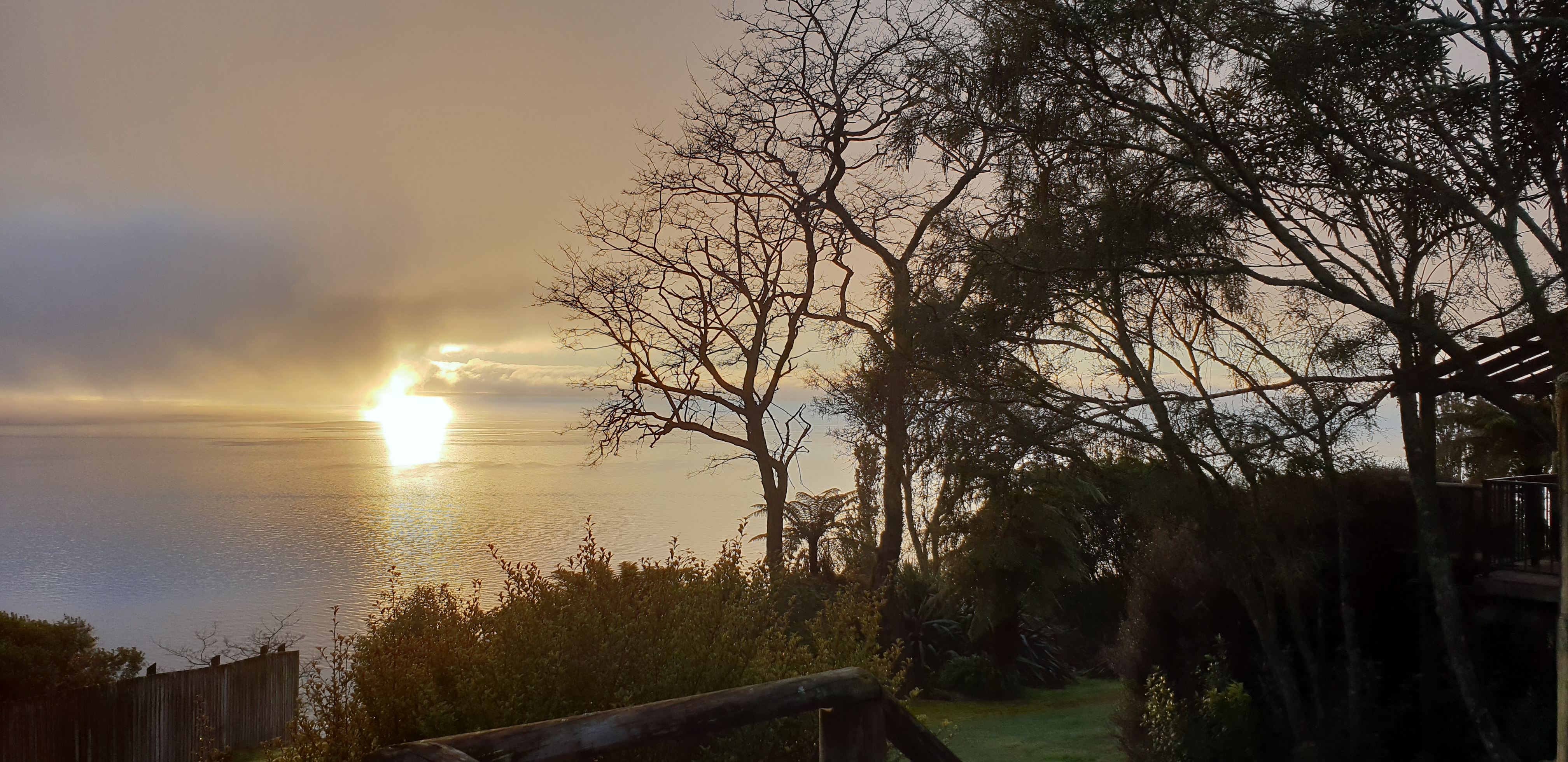
Oreti village, Pukawa Bay, North Island, New Zealand

On the southern tip of Lake Taupo

Our first morning there, a Saturday.  Winter.  Cold.  And a beautiful sunrise.

20180812_073230

This was taken from the balcony, overlooking the lake.

The sun is just creeping up over the horizon

20180812_073241

It gradually gets lighter, and then the sun breaks free of the low cloud

It lights up the balcony

20180811_074651

And the trees just beyond, a cascade of colorful ferns.

20180811_074622

It looks like its going to be a fine day, our first for this trip, and we will be heading to the mountains to see snow, for the first time for two of our granddaughters.

The cinema of my dreams – I always wanted to go on a treasure hunt – Episode 1

My mind will not rest.

Down here, it is summer, and the last few days have been rather hot, well, it is summer after all, but tonight it is particularly hot.

So, as I can’t sleep, I’m lying on the couch staring at the ceiling, otherwise known as the cinema of my dreams.

Where am I?

Well, it has to be someplace cool, of course.


I have no idea where or when I got sucked into this game of searching for treasure.  Boggs had been reading some newspaper article relating to a Spaniard who had survived a shipwreck off the coast and had supposedly come ashore dragging his treasure chest, all that he could save from the sinking ship.

I think my priorities may have been slightly different.

Standing on the beach where Boggs believed the man came ashore, we looked inland at the coastal plain now overbuilt with holiday houses and apartments, behind that, some parkland, under threat from the developers, and behind that, the mountains.

I could guess what Boggs was going to say next.

“It has to be somewhere in the mountains, a cave perhaps.”

My map told me there was a mountain face for about 25 miles in either direction and rising to two to three thousand feet up.  I didn’t calculate the area, I just considered it big.

“If he came ashore here, dragging a heavy chest, and barring all of this building, he would take the most direct route inland.”

He pointed in the direction he thought the Spaniard took.

My eyes followed his arm and stopped at a beacon halfway up the hillside. 

That was a long way, pulling a heavy chest.

“Not up the hill, maybe, but somewhere along the base.”

“And don’t you think every man and his dog would have made the same assumption, and covered the ground already.”  The treasure hunt was beginning to bore me.

His expression changed, the sort that told me he might not have considered that possibility.  Boggs was like that, always thinking he had the original idea.

“Perhaps, then, a drink and more thought on the matter.”

We trudged through the soft sand to the bar just off the sand, a small place called The Spaniard.  A sign on the window said ‘Treasure Maps for sale’.


Well, the bar was air-conditioned, and the beer was cold.  I have one myself and see where this cinematic experience goes


“Sunday in New York”, a romantic adventure that’s not a walk in the park!

“Sunday in New York” is ultimately a story about trust, and what happens when a marriage is stretched to its limits.

When Harry Steele attends a lunch with his manager, Barclay, to discuss a promotion that any junior executive would accept in a heartbeat, it is the fact his wife, Alison, who previously professed her reservations about Barclay, also agreed to attend, that casts a small element of doubt in his mind.

From that moment, his life, in the company, in deciding what to do, his marriage, his very life, spirals out of control.

There is no one big factor that can prove Harry’s worst fears, that his marriage is over, just a number of small, interconnecting events, when piled on top of each other, points to a cataclysmic end to everything he had believed in.

Trust is lost firstly in his best friend and mentor, Andy, who only hints of impending disaster, Sasha, a woman whom he saved, and who appears to have motives of her own, and then in his wife, Alison, as he discovered piece by piece damning evidence she is about to leave him for another man.

Can we trust what we see with our eyes or trust what we hear?

Haven’t we all jumped to conclusions at least once in our lives?

Can Alison, a woman whose self-belief and confidence is about to be put to the ultimate test, find a way of proving their relationship is as strong as it has ever been?

As they say in the classics, read on!

Purchase:

http://tinyurl.com/Amazon-SundayInNewYork

Searching for locations: The Kingston Flyer, Kingston, New Zealand

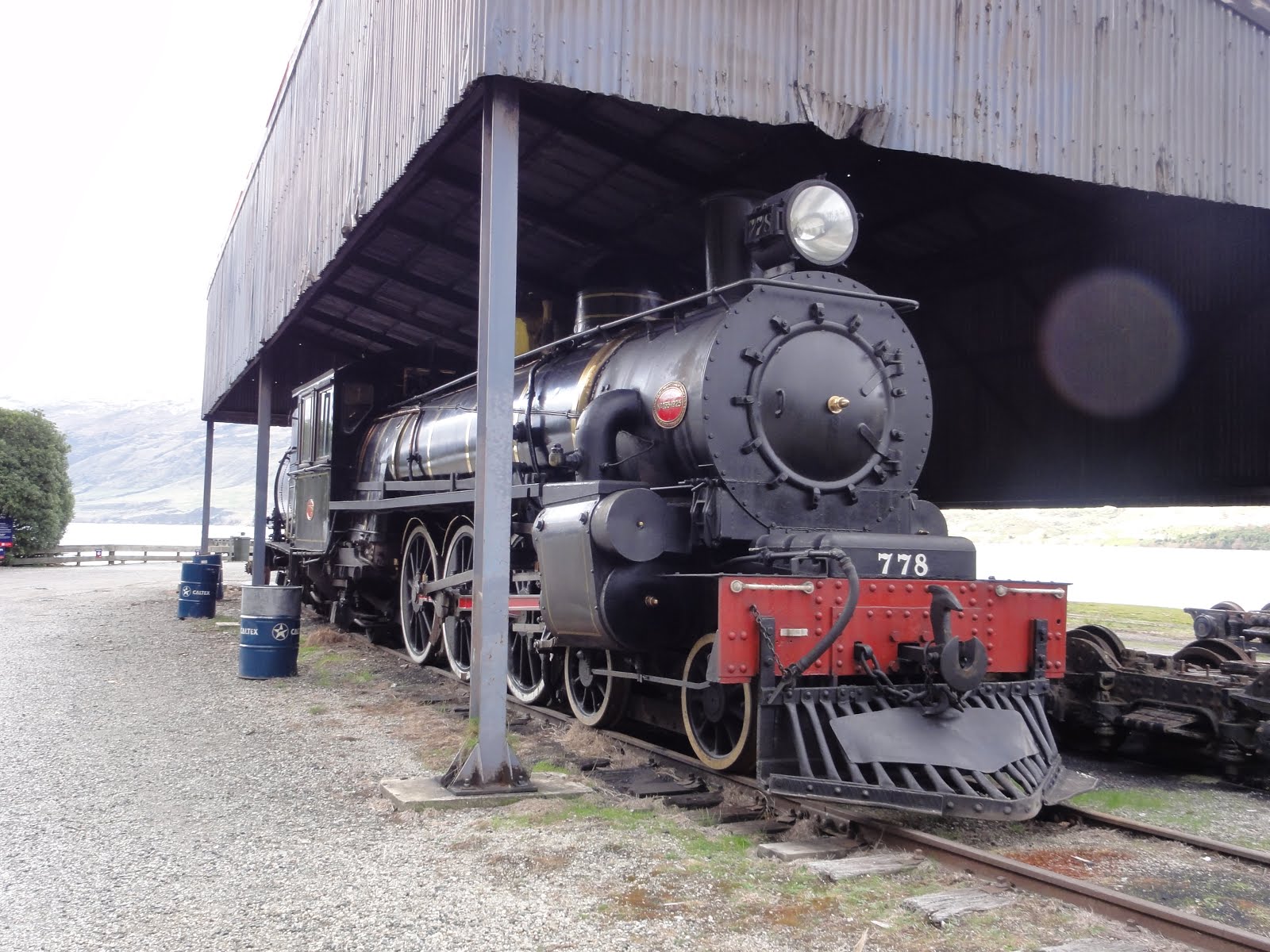
The Kingston Flyer was a vintage train that ran about 14km to Fairlight from Kingston, at the southern end of Lake Wakatipu, and back.

This tourist service was suspended in December 2012 because of locomotive issues.

However, before that, we managed to go on one of the tours, and it was a memorable trip.  Trying to drink a cup of tea from the restaurant car was very difficult, given how much the carriages moved around on the tracks.

The original Kingston Flyer ran between Kingston, Gore, Invercargill, and sometimes Dunedin, from the 1890s through to 1957.

There are two steam locomotives used for the Kingston Flyer service, the AB778 starting service in 1925, and the AB795 which started service in 1927.

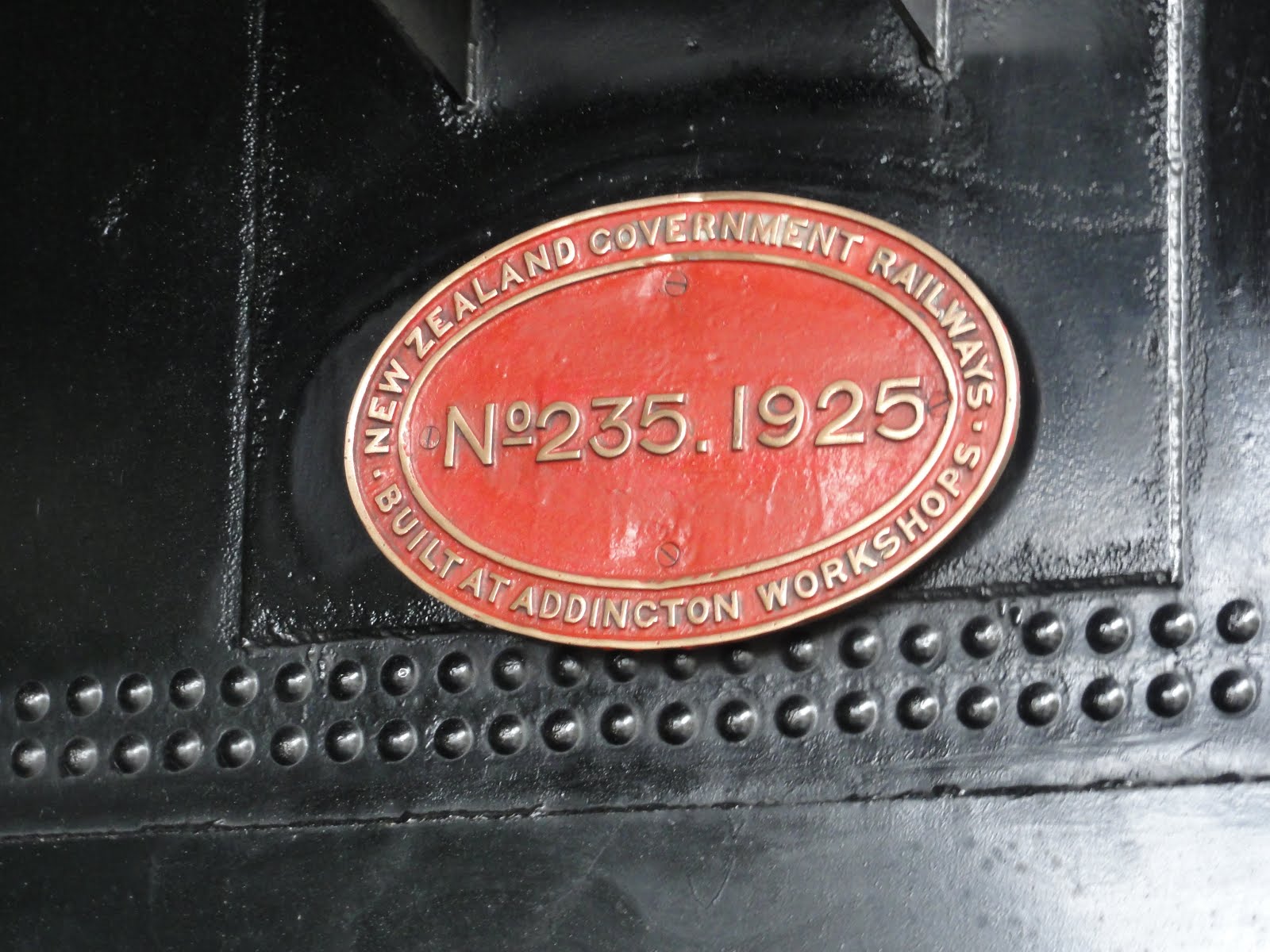
The AB class locomotive was a 4-6-2 Pacific steam locomotive with a Vanderbilt tender, of which 141 were built between 1915 and 1927 some of which by New Zealand Railways Addington Workshops.

No 235 is the builder’s number for the AB778

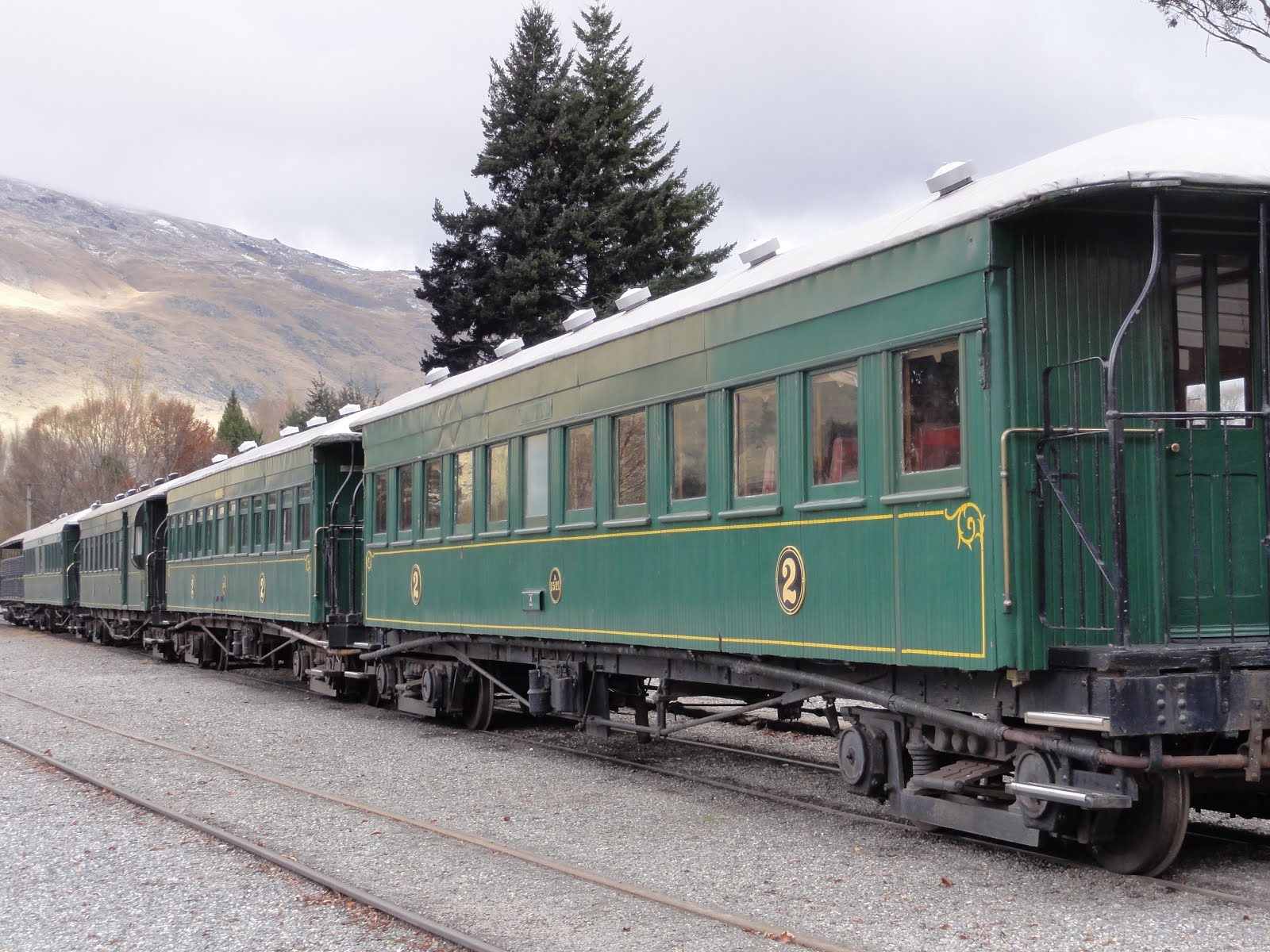
There were seven wooden bodied passenger carriages, three passenger coaches, one passenger/refreshments carriage and two car/vans.  The is also a Birdcage gallery coach.  Each of the rolling stock was built between 1900 and 1923.  They were built at either of Addington, Petone, or Hillside.

I suspect the 2 on the side means second class

The passenger coach we traveled in was very comfortable.

This is one of the guard’s vans, and for transporting cargo.

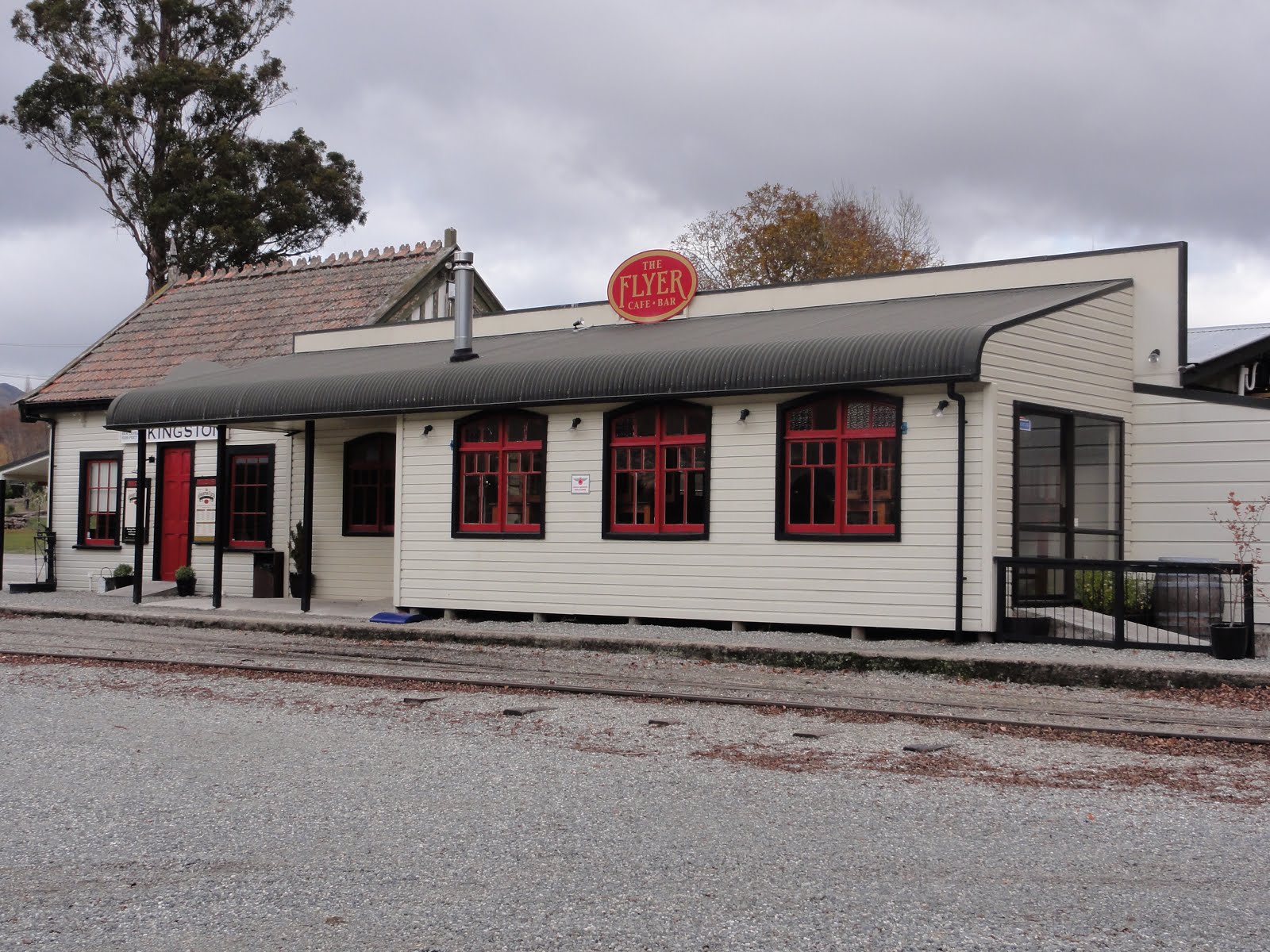
The Kingston Railway Station

and cafe.

A poster sign advertising the Kingston Flyer

The running times for the tourist services, when it was running.

“Echoes From The Past”, the past doesn’t necessarily stay there


What happens when your past finally catches up with you?

Christmas is just around the corner, a time to be with family. For Will Mason, an orphan since he was fourteen, it is a time for reflection on what his life could have been, and what it could be.

Until a chance encounter brings back to life the reasons for his twenty years of self-imposed exile from a life only normal people could have. From that moment Will’s life slowly starts to unravel and it’s obvious to him it’s time to move on.

This time, however, there is more at stake.

Will has broken his number one rule, don’t get involved.

With his nemesis, Eddie Jamieson, suddenly within reach, and a blossoming relationship with an office colleague, Maria, about to change everything, Will has to make a choice. Quietly leave, or finally, make a stand.

But as Will soon discovers, when other people are involved there is going to be terrible consequences no matter what choice he makes.

https://amzn.to/2CYKxu4

newechocover5rs

Writing a book in 365 days – 105

Day 105

Write a story that has the line, “If you knew better, you would stop reading this right now, but I know you won’t.”

I looked down at the woman who called herself my mother and shook my head.

It was hard to reconcile the fact that over two hundred people turned out for the funeral, one hundred and ninety-nine of them I had never seen or met before.

Ten of them had stood up in front of the mourners and reminisced on the life of a woman that I had no idea was the person they were describing.

Kind, generous, loving, a friend to everyone…

… except her son.

The one I knew, her lawyer, who was overseeing the execution of her will.  That she would even remember me or put me in that will was a surprise.  I hadn’t seen her in forty years, the day her latest husband kicked a naive and very frightened fifteen-year-old out of ‘his’ house when she was away.

He had been just the latest of terrible men she had taken up with after the sudden death of my father, a year before.

I left and never came back.  I burned any letter that came from her until I eventually moved to the other side of the world and built a life of my own.

Until I got that fateful phone call.

My mother had died, and her last request was to find me.  I had changed names and disappeared several times, and yet I’d been found.

How?

The lawyer summed it up in a half dozen sentences.  She had a team of private investigators keep track of me.  Once she discovered what her latest ‘boyfriend’ had done, she had kicked him to the curb, an interesting expression for a lawyer, and set about finding me.  When I didn’t answer her letters, she didn’t lose interest. She just had them keep track of me, in case, one day, I changed my mind.

That I didn’t was her greatest sorrow.

I was of two minds whether to go back and attend the funeral, and nearly didn’t.  That was Noelle’s doing, insisting the lawyer pay for two first-class tickets, which he did.  That she said, spoke volumes, though not explaining what she meant.

Of course, Noelle knew the story.  Like everything about my life, she had wheedled and cajoled it out of me over a long period of time.  She knew when she met me, I was damaged goods, but I soon discovered she was everything I needed to heal.

I felt a hand slip into mine, and her aura enveloped me.  “She has passed Ian, and she can’t hurt you anymore.”

That was a matter of opinion because seeing her again dredged up a lot of very good memories after that kind, generous person they described until my father died.

It seemed odd to me that none of the other one hundred and ninety-nine attendees were very interested in me or why I was there.  But, then, nor was I interested in them.  They just seemed to melt away, leaving almost as if there were rented mourners.  Perhaps they were.

Ten minutes after the service, it was just the coffin, me, Noelle, and the lawyer, who had given me some time to be with her.  I was surprised that I hadn’t just left with everyone else.

“As I said earlier, Ian, there will be a reading of her will back in my office on Wednesday, and you are specifically requested to attend.”

“Is there any point.  I mean, after forty years, I hardly think we would ever remember she had a son.”

We’d had this same argument earlier, and he had no persuasive argument then.  This time, he had come prepared.  I could see an envelope in his hand.

“She knew that you might show some reluctance, so she wrote this letter,” he held up the envelope.  “I urge you to read it. It might explain a few things about her, or it may not.  I was not privy to the contents, only that I was given explicit instructions to give it to you at the funeral.”

He held it out.  I looked at it, then Noelle, who nodded.  I took it and put it in my coat pocket.

“Thank you, Ian.  I am very sorry for your loss, and I will leave you now.  Later, perhaps.”

He held out his hand, and I shook it.  It was my mother I hated, not him.

I remained there with her until the casket was closed and taken away for the cremation she had requested.

It was a silent drive back to the quaint hotel Noelle had found for us, and the room, she pointed out, a king back in the so-called dark ages, had stayed there. 

Given the modern look, I’d say that the King would not recognise the room now if he had stayed there, which was a remote possibility.  Just the same as an advertising hook to start there, it worked.

The letter was sitting on the table between two very comfortable leather chairs, and after dinner downstairs in the dining room, we had opened a bottle of champagne and sat in front of the fireplace, which we were told was used in winter.

It was cold but not that cold, but as I picked up the envelope, I shivered.

Her ghost?

“What did you think it said?”

“Perhaps a belated apology.  I don’t know.  She’s had forty years to think about it.”

“Are you going to read it?”

That was a question I had churned over in my mind the whole way from the church to the hotel.  Was there anything left to say, or anything she could say that would make a difference?

“Yes.”

The first few lines anyway.  I opened the envelope and pulled out several sheets of lined paper, and at first glance showed very neat and legible handwritten script, the sort that would take forever to write.  It was the sort of perfection she indulged in, and I remembered bringing with her when she used to write letters, being told at the same time that we should never lose the art of writing or communicating with others.

To her, a person who could not write or find a reason to write to someone else was not someone she would want to know.  I’m sure after I refused to write back, I fit into that category.

I unfolded the pages and steeled myself for what was to come.

My dear Ian,

If you are reading this, then I have passed.  It is regrettable that we did not speak again after you left in the spring of 1985, and sad that in the years that followed that you did not reply to my letters.

It took many months before I discovered what had happened in my absence, but it is no excuse to simply say it would not have happened in different circumstances.

In all likelihood, it would have happened anyway, then or later, because, in truth, after your father died, I stopped being your mother.  I have no excuse and offer none.  Nothing will ever make up for the injustice wrought upon you.

Though while you may have hated me, I never for one minute stopped loving you, and when I finally accepted you wanted nothing more to do with me, I asked some friends to keep an eye on you.  Although you may not have realised it, I have been able to help you in your endeavours, as a proud mother would in different circumstances.

I put the letter down for a moment and thought back over several key moments in my life, reflecting on how hard it had been to achieve certain milestones, against the odds and in the face of almost insurmountable obstacles.

Were they all that insurmountable if there was an invisible hand behind it?  Had I not achieved those milestones on my own?

Before you get all ‘het up’ over what you might consider interference, believe me when I tell you, you had achieved the unachievable all on your own, but sadly, your background was working against you.  I simply helped to level that so-called playing field.

I knew in my heart that if you wanted to reconnect with me, you would, and in that, I decided I would not interfere. Perhaps I will live to regret that, but it was never going to happen if I turned up on your doorstep.  And, believe me, there were many times I wanted to do just that.

I have said all that I wish to say about those matters.  What happened is what happened, and it can not be undone.  I hope you will see your way to come to my funeral.  It will be very strange with lots of people who will be very alien to you.

All they saw was the widow of a billionaire who was their benefactress, and hoping by paying their respects would continue to be so.  The same could not be said for you, you came because you wanted to, not because you to and for that I am very grateful.

Then, at the bottom of the page was, in a less tidy hand, the words, “If you knew better, you would stop reading this right now, but I know you won’t.”

Whatever followed was on the next page, except there wasn’t a next page.  I showed it to Noelle.

“What do you think of that?”

She read the words and turned the page over, thinking it might be on the back.  There was nothing on the back.  She looked at the page in the light, perhaps thinking there might be indentations, but there weren’t any.

“There was more, and it’s missing.  What do you think it said?”

“Something someone didn’t want me to read.  I guess we will be going to the reading of the will after all.”

“The game’s afoot?”

“Indeed.” 

©  Charles Heath  2025

An excerpt from “What Sets Us Apart”, a mystery with a twist

See the excerpt from the story below, just a taste of what’s in store…

http://amzn.to/2Eryfth

whatsetscover

McCallister was old school, a man who would most likely fit in perfectly campaigning on the battlefields of Europe during the Second World War. He’d been like a fish out of water in the army, post-Falklands, and while he retired a hero, he still felt he’d more to give.

He’d applied and was accepted as head of a SWAT team, and, watching him now as he and his men disembarked from the truck in almost military precision, a look passed between Annette, the police liaison officer, and I that said she’d seen it all before. I know I had.

There was a one in four chance his team would be selected for this operation, and she had been hoping it would be one of the other three. While waiting for them to arrive she filled me in on the various teams. His was the least co-operative, and the more likely to make ad-hoc decisions rather than adhere to the plan, or any orders that may come from the officer in charge.

This, she said quite bluntly, was going to end badly.

I still had no idea why Prendergast instructed me to attend the scene of what looked to be a normal domestic operation, but as the nominated expert in the field in these types of situations, it was fairly clear he wasn’t taking any chances. It was always a matter of opinion between us, and generally I lost.

In this case, it was an anonymous report identifying what the authorities believed were explosives in one of the dockside sheds where explosives were not supposed to be.

The only reason why the report was given any credence was the man, while not identifying himself by name, said he’d been an explosive expert once and recognized the boxes. That could mean anything, but the Chief Constable was a cautious man.

With his men settled and preparing their weapons, McCallister came over to the command post, not much more than the SUV my liaison and I arrived in, with weapons, bulletproof vests, and rolls of tape to cordon off the area afterward. We both had coffee, steaming in the cold early morning air. Dawn was slowly approaching and although rain had been forecast it had yet to arrive.

A man by the name of Benson was in charge. He too had groaned when he saw McCallister.

“A fine morning for it.” McCallister was the only enthusiastic one here.

He didn’t say what ‘it’ was, but I thought it might eventually be mayhem.

“Let’s hope the rain stays away. It’s going to be difficult enough without it,” Benson said, rubbing his hands together. We had been waiting for the SWAT team to arrive, and another team to take up their position under the wharf, and who was in the final stages of securing their position.

While we were waiting we drew up the plan. I’d go in first to check on what we were dealing with, and what type of explosives. The SWAT team, in the meantime, were to ensure all the exits to the shed were covered. When I gave the signal, they were to enter and secure the building. We were not expecting anyone inside or out, and no movement had been detected in the last hour since our arrival and deployment.

“What’s the current situation?”

“I’ve got eyes on the building, and a team coming in from the waterside, underneath. Its slow progress, but they’re nearly there. Once they’re in place, we’re sending McKenzie in.”

He looked in my direction.

“With due respect sir, shouldn’t it be one of us?” McCallister glared at me with the contempt that only a decorated military officer could.

“No. I have orders from above, much higher than I care to argue with, so, McCallister, no gung-ho heroics for the moment. Just be ready to move on my command, and make sure you have three teams at the exit points, ready to secure the building.”

McCallister opened his mouth, no doubt to question those orders, but instead closed it again. “Yes sir,” he muttered and turned away heading back to his men.

“You’re not going to have much time before he storms the battlements,” Benson quietly said to me, a hint of exasperation in his tone. “I’m dreading the paperwork.”

It was exactly what my liaison officer said when she saw McCallister arriving.

The water team sent their ‘in position’ signal, and we were ready to go.

In the hour or so we’d been on site nothing had stirred, no arrivals, no departures, and no sign anyone was inside, but that didn’t mean we were alone. Nor did it mean I was going to walk in and see immediately what was going on. If it was a cache of explosives then it was possible the building was booby-trapped in any number of ways, there could be sentries or guards, and they had eyes on us, or it might be a false alarm.

I was hoping for the latter.

I put on the bulletproof vest, thinking it was a poor substitute for full battle armor against an exploding bomb, but we were still treating this as a ‘suspected’ case. I noticed my liaison officer was pulling on her bulletproof vest too.

“You don’t have to go. This is my party, not yours,” I said.

“The Chief Constable told me to stick to you like glue, sir.”

I looked at Benson. “Talk some sense into her please, this is not a kindergarten outing.”

He shrugged. Seeing McCallister had taken all the fight out of him. “Orders are orders. If that’s what the Chief Constable requested …”

Madness. I glared at her, and she gave me a wan smile. “Stay behind me then, and don’t do anything stupid.”

“Believe me, I won’t be.” She pulled out and checked her weapon, chambering the first round. It made a reassuring sound.

Suited up, weapons readied, a last sip of the coffee in a stomach that was already churning from nerves and tension, I looked at the target, one hundred yards distant and thought it was going to be the longest hundred yards I’d ever traversed. At least for this week.

A swirling mist rolled in and caused a slight change in plans.

Because the front of the buildings was constantly illuminated by large overhead arc lamps, my intention had been to approach the building from the rear where there was less light and more cover. Despite the lack of movement, if there were explosives in that building, there’d be ‘enemy’ surveillance somewhere, and, after making that assumption, I believed it was going to be easier and less noticeable to use the darkness as a cover.

It was a result of the consultation, and studying the plans of the warehouse, plans that showed three entrances, the main front hangar type doors, a side entrance for truck entry and exit and a small door in the rear, at the end of an internal passage leading to several offices. I also assumed it was the exit used when smokers needed a break. Our entry would be by the rear door or failing that, the side entrance where a door was built into the larger sliding doors. In both cases, the locks would not present a problem.

The change in the weather made the approach shorter, and given the density of the mist now turning into a fog, we were able to approach by the front, hugging the walls, and moving quickly while there was cover. I could feel the dampness of the mist and shivered more than once.

It was nerves more than the cold.

I could also feel rather than see the presence of Annette behind me, and once felt her breath on my neck when we stopped for a quick reconnaissance.

It was the same for McCallister’s men. I could feel them following us, quickly and quietly, and expected, if I turned around, to see him breathing down my neck too.

It added to the tension.

My plan was still to enter by the back door.

We slipped up the alley between the two sheds to the rear corner and stopped. I heard a noise coming from the rear of the building, and the light tap on the shoulder told me Annette had heard it too. I put my hand up to signal her to wait, and as a swirl of mist rolled in, I slipped around the corner heading towards where I’d last seen the glow of a cigarette.

The mist cleared, and we saw each other at the same time. He was a bearded man in battle fatigues, not the average dockside security guard.

He was quick, but my slight element of surprise was his undoing, and he was down and unconscious in less than a few seconds with barely a sound beyond the body hitting the ground. Zip ties secured his hands and legs, and tape his mouth. Annette joined me a minute after securing him.

A glance at the body then me, “I can see why they, whoever they are, sent you.”

She’d asked who I worked for, and I didn’t answer. It was best she didn’t know.

“Stay behind me,” I said, more urgency in my tone. If there was one, there’d be another.

Luck was with us so far. A man outside smoking meant no booby traps on the back door, and quite possibly there’d be none inside. But it indicated there were more men inside, and if so, it appeared they were very well trained. If that were the case, they would be formidable opponents.

The fear factor increased exponentially.

I slowly opened the door and looked in. A pale light shone from within the warehouse itself, one that was not bright enough to be detected from outside. None of the offices had lights on, so it was possible they were vacant. I realized then they had blacked out the windows. Why hadn’t someone checked this?

Once inside, the door closed behind us, progress was slow and careful. She remained directly behind me, gun ready to shoot anything that moved. I had a momentary thought for McCallister and his men, securing the perimeter.

At the end of the corridor, the extent of the warehouse stretched before us. The pale lighting made it seem like a vast empty cavern, except for a long trestle table along one side, and, behind it, stacks of wooden crates, some opened. It looked like a production line.

To get to the table from where we were was a ten-yard walk in the open. There was no cover. If we stuck to the walls, there was equally no cover and a longer walk.

We needed a distraction.

As if on cue, the two main entrances disintegrated into flying shrapnel accompanied by a deafening explosion that momentarily disoriented both Annette and I. Through the smoke and dust kicked up I saw three men appear from behind the wooden crates, each with what looked like machine guns, spraying bullets in the direction of the incoming SWAT members.

They never had a chance, cut down before they made ten steps into the building.

By the time I’d recovered, my head heavy, eyes watering and ears still ringing, I took several steps towards them, managing to take down two of the gunmen but not the third.

I heard a voice, Annette’s I think, yell out, “Oh, God, he’s got a trigger,” just before another explosion, though all I remember in that split second was a bright flash, the intense heat, something very heavy smashing into my chest knocking the wind out of me, and then the sensation of flying, just before I hit the wall.

I spent four weeks in an induced coma, three months being stitched back together and another six learning to do all those basic actions everyone took for granted. It was twelve months almost to the day when I was released from the hospital, physically, except for a few alterations required after being hit by shrapnel, looking the same as I always had.

But mentally? The document I’d signed on release said it all, ‘not fit for active duty; discharged’.

It was in the name of David Cheney. For all intents and purposes, Alistair McKenzie was killed in that warehouse, and for the first time ever, an agent left the Department, the first to retire alive.

I was not sure I liked the idea of making history.

© Charles Heath 2016-2020

In a word: Tap

There is nothing worse than, when lying in bed unable to get to sleep, you hear every noise in the house and out, but none worse than a dripping tap.

It’s often not because someone forgot to turn the tap off, but because a washer is on its last legs.

There are taps for the fallen brave, but aside from the fact that is the name of a piece of music, I think it’s also the title of a film.  But taps itself is a bugle call at dusk, and also played at military funerals.

Then there’s that income stream that you can tap into, other than your next-door neighbour’s power supply.

But what would be far more interesting than to tap into a phone line and listen in?  Even though eavesdroppers never hear anything good about themselves, you could learn something you didn’t want to know.

Then we can go back to the 1930s and a series of films that starred one of my favourite actors Fred Astaire, who was, of course, a tap dancer, along with Ginger Rogers.

In fact, my middle granddaughter is quite a good tap dancer.

And, lastly, was that a tap on the door, or a tap in the window?