The story behind the story – Echoes from the Past

The novel ‘Echoes from the past’ started out as a short story I wrote about 30 years ago, titled ‘The birthday’.

My idea was to take a normal person out of their comfort zone and led on a short but very frightening journey to a place where a surprise birthday party had been arranged.

Thus the very large man with a scar and a red tie was created.

So was the friend with the limousine who worked as a pilot.

So were the two women, Wendy and Angelina, who were Flight Attendants that the pilot friend asked to join the conspiracy.

I was going to rework the short story, then about ten pages long, into something a little more.

And like all re-writes, especially those I have anything to do with, it turned into a novel.

There was motivation.  I had told some colleagues at the place where I worked at the time that I liked writing, and they wanted a sample.  I was going to give them the re-worked short story.  Instead, I gave them ‘Echoes from the past’

Originally it was not set anywhere in particular.

But when considering a location, I had, at the time, recently been to New York in December, and visited Brooklyn and Queens, as well as a lot of New York itself.  We were there for New Years, and it was an experience I’ll never forget.

One evening we were out late, and finished up in Brooklyn Heights, near the waterfront, and there was rain and snow, it was cold and wet, and there were apartment buildings shimmering in the street light, and I thought, this is the place where my main character will live.

It had a very spooky atmosphere, the sort where ghosts would not be unexpected.  I felt more than one shiver go up and down my spine in the few minutes I was there.

I had taken notes, as I always do, of everywhere we went so I had a ready supply of locations I could use, changing the names in some cases.

Fifth Avenue near the Rockefeller center is amazing at first light, and late at night with the Seasonal decorations and lights.

The original main character was a shy and man of few friends, hence not expecting the surprise party.  I enhanced that shyness into purposely lonely because of an issue from his past that leaves him always looking over his shoulder and ready to move on at the slightest hint of trouble.  No friends, no relationships, just a very low profile.

Then I thought, what if he breaks the cardinal rule, and begins a relationship?

But it is also as much an exploration of a damaged soul, as it is the search for a normal life, without having any idea what normal was, and how the understanding of one person can sometimes make all the difference in what we may think or feel.

And, of course, I wanted a happy ending.

Except for the bad guys.

Get it here:  https://amzn.to/2CYKxu4
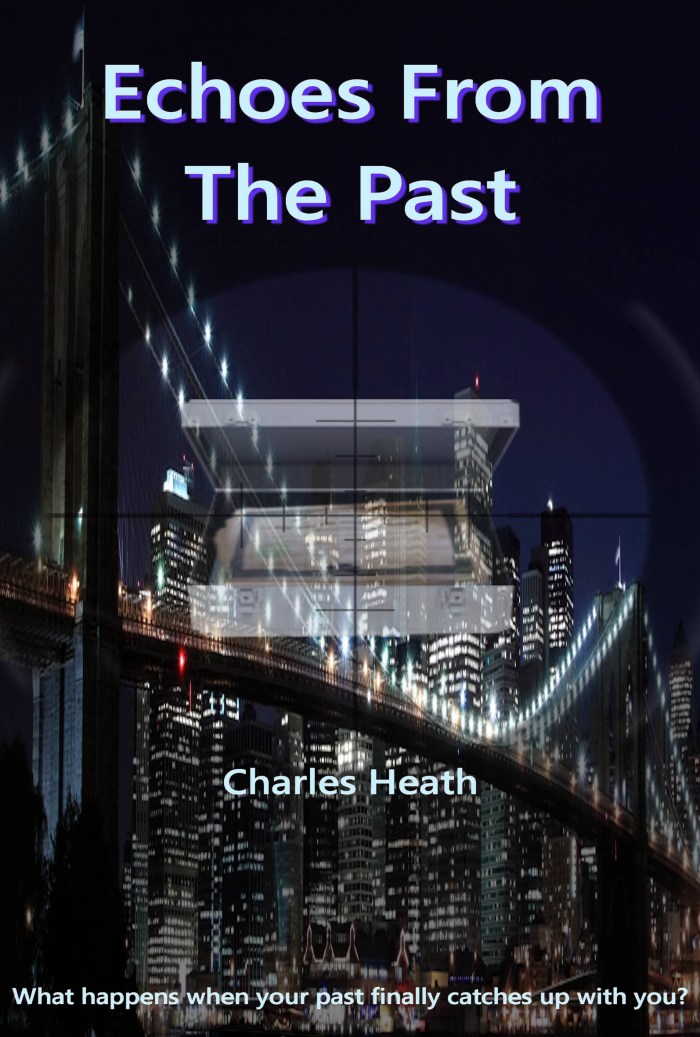
newechocover5rs

Searching for locations – Port Macquarie – Day 4 – Part 1

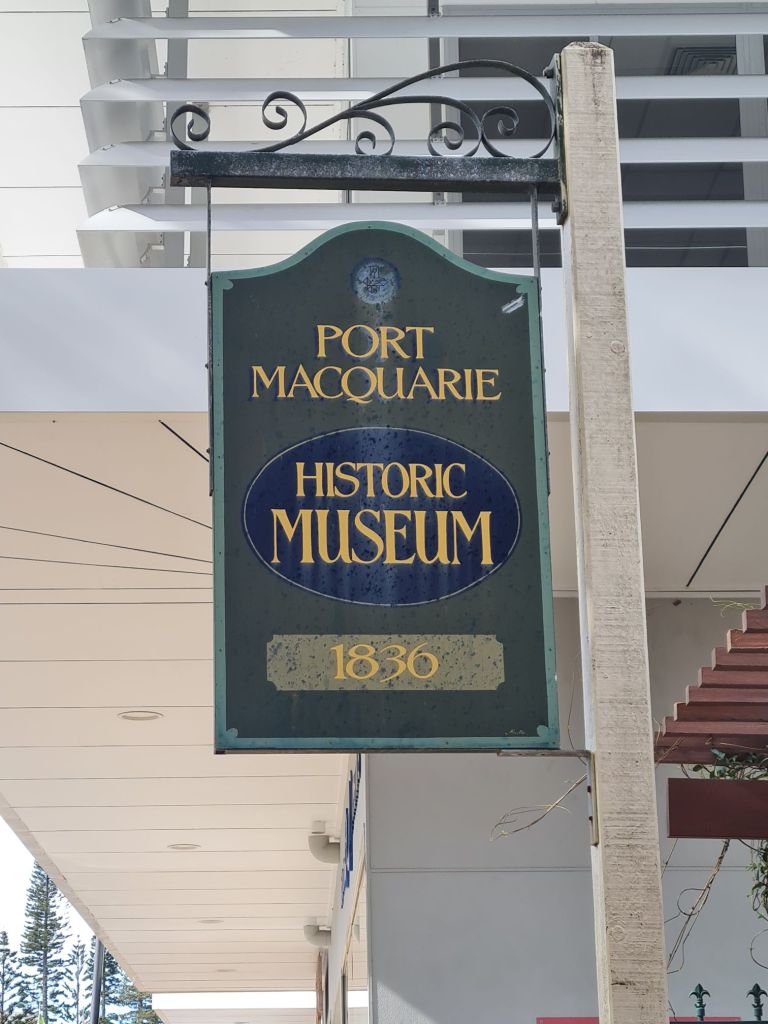
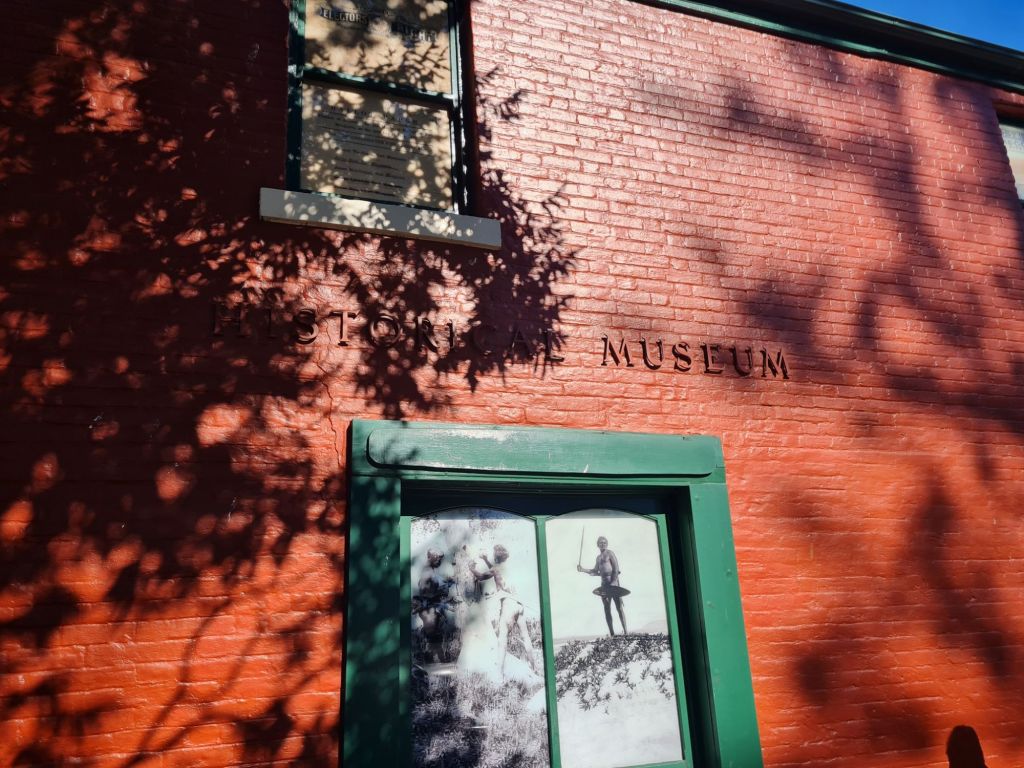
The Port Macquarie Museum

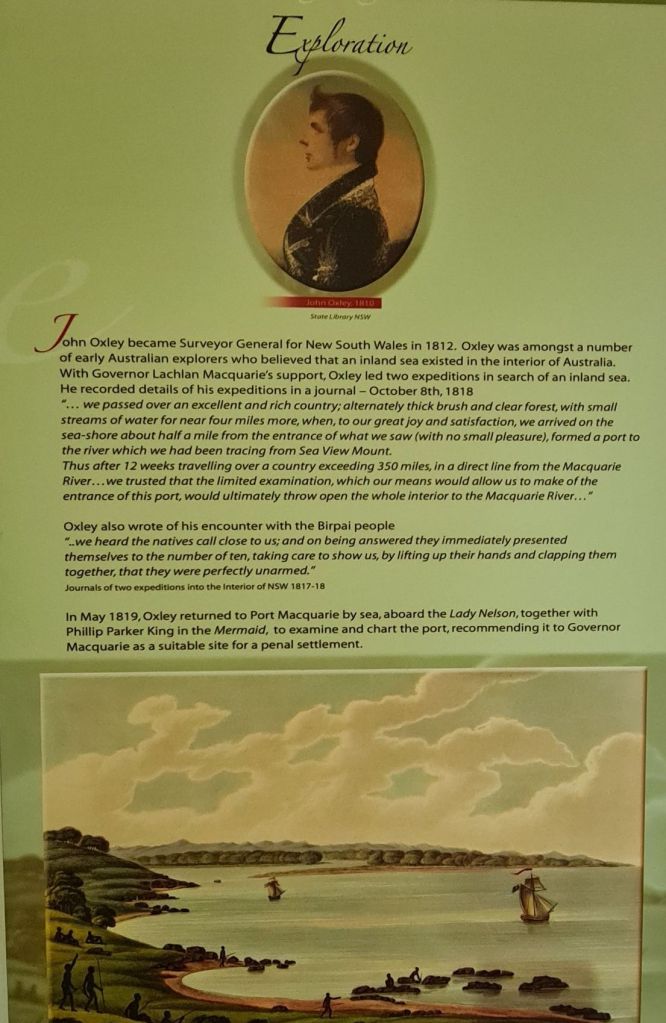
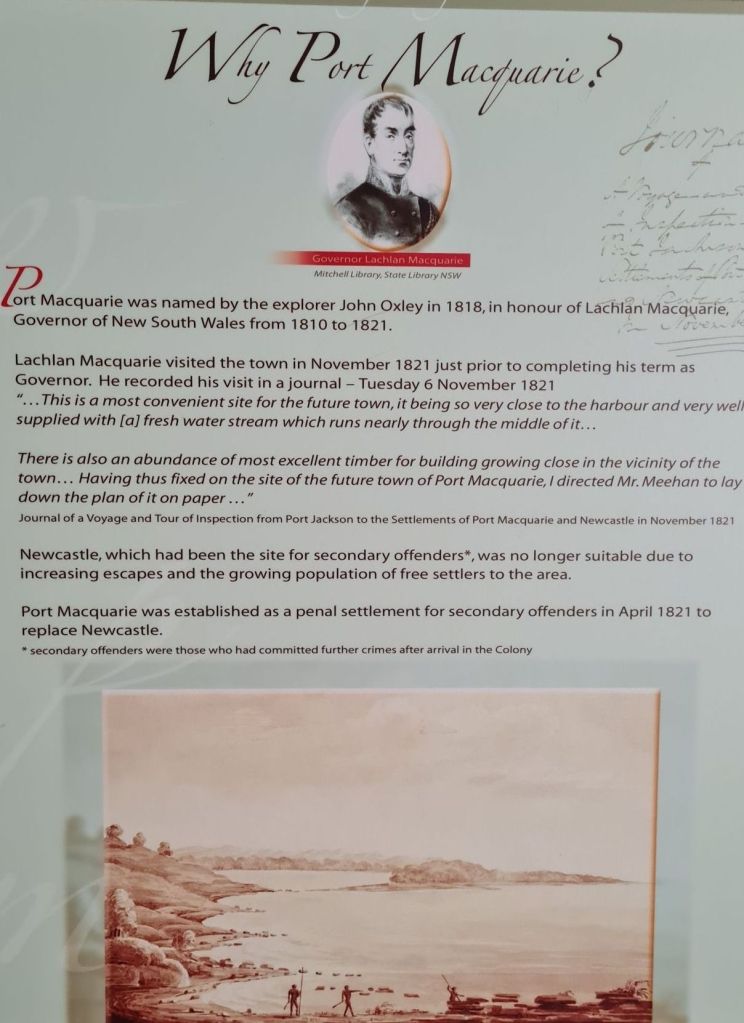
The first section of this museum relates the history, from the beginning, and through the 1800s, firstly as a convict settlement, and then for free settlers, to farm and wood logging.

The Hastings River was named after the Governor General of India in 1818, but it was not explored until 1819 by John Oxley who recommended the site suitable for farming and logging.

In 1821, Governor Macquarie sent Captain John Allman, 40 soldiers, and 60 convicts on three ships, the Lady Nelson, the Mermaid, and the Prince Regent to establish a penal settlement.

Normally a three-day voyage the weather kept the ships 14 days at Port Stephens and more than a week at Trial Bay. It was not until almost 28 days after leaving Sydney they arrived and then wrecked the ships trying to cross the shallow sandbar across the Hastings River entrance.

The first case of PI Walthenson – “A Case of Working With the Jones Brothers”

This case has everything, red herrings, jealous brothers, femme fatales, and at the heart of it all, greed.

See below for an excerpt from the book…

Coming soon!

PIWalthJones1

An excerpt from the book:

When Harry took the time to consider his position, a rather uncomfortable position at that, he concluded that he was somehow involved in another case that meant very little to him.

Not that it wasn’t important in some way he was yet to determine, it was just that his curiosity had got the better of him, and it had led to this: sitting in a chair, securely bound, waiting for someone one of his captors had called Doug.

It was not the name that worried him so much, it was the evil laugh that had come after the name was spoken.

Doug what? Doug the ‘destroyer’, Doug the ‘dangerous’, Doug the ‘deadly’; there was any number of sinister connotations, and perhaps that was the point of the laugh, to make it more frightening than it was.

But there was no doubt about one thing in his mind right then: he’d made a mistake. A very big. and costly, mistake. Just how big the cost, no doubt he would soon find out.

His mother, and his grandmother, the wisest person he had ever known, had once told him never to eavesdrop.

At the time he couldn’t help himself and instead of minding his own business, listening to a one-sided conversation which ended with a time and a place. The very nature of the person receiving the call was, at the very least, sinister, and, because of the cryptic conversation, there appeared to be, or at least to Harry, criminal activity involved.

For several days he had wrestled with the thought of whether he should go. Stay on the fringe, keep out of sight, observe and report to the police if it was a crime. Instead, he had willingly gone down the rabbit hole.

Now, sitting in an uncomfortable chair, several heat lamps hanging over his head, he was perspiring, and if perspiration could be used as a measure of fear, then Harry’s fear was at the highest level.

Another runnel of sweat rolled into his left eye, and, having his hands tied, literally, it made it impossible to clear it. The burning sensation momentarily took his mind off his predicament. He cursed and then shook his head trying to prevent a re-occurrence. It was to no avail.

Let the stinging sensation be a reminder of what was right and what was wrong.

It was obvious that it was the right place and the right time, but in considering his current perilous situation, it definitely was the wrong place to be, at the worst possible time.

It was meant to be his escape, an escape from the generations of lawyers, what were to Harry, dry, dusty men who had been in business since George Washington said to the first Walthenson to step foot on American soil, ‘Why don’t you become a lawyer?” when asked what he could do for the great man.

Or so it was handed down as lore, though Harry didn’t think Washington meant it literally, the Walthenson’s, then as now, were not shy of taking advice.

Except, of course, when it came to Harry.

He was, Harry’s father was prone to saying, the exception to every rule. Harry guessed his father was referring to the fact his son wanted to be a Private Detective rather than a dry, dusty lawyer. Just the clothes were enough to turn Harry off the profession.

So, with a little of the money Harry inherited from one of his aunts, he leased an office in Gramercy Park and had it renovated to look like the Sam Spade detective agency, you know the one, Spade and Archer, and The Maltese Falcon.

There’s a movie and a book by Dashiell Hammett if you’re interested.

So, there it was, painted on the opaque glass inset of the front door, ‘Harold Walthenson, Private Detective’.

There was enough money to hire an assistant, and it took a week before the right person came along, or, more to the point, didn’t just see his business plan as something sinister. Ellen, a tall cool woman in a long black dress, or so the words of a song in his head told him, fitted in perfectly.

She’d seen the movie, but she said with a grin, Harry was no Humphrey Bogart.

Of course not, he said, he didn’t smoke.

Three months on the job, and it had been a few calls, no ‘real’ cases, nothing but missing animals, and other miscellaneous items. What he really wanted was a missing person. Or perhaps a beguiling, sophisticated woman who was as deadly as she was charming, looking for an errant husband, perhaps one that she had already ‘dispatched’.

Or for a tall, dark and handsome foreigner who spoke in riddles and in heavily accented English, a spy, or perhaps an assassin, in town to take out the mayor. The man was such an imbecile Harry had considered doing it himself.

Now, in a back room of a disused warehouse, that wishful thinking might be just about to come to a very abrupt end, with none of the romanticized trappings of the business befalling him. No beguiling women, no sinister criminals, no stupid policemen.

Just a nasty little man whose only concern was how quickly or how slowly Harry’s end was going to be.

© Charles Heath 2019-2024

Writing a book in 365 days – 120

Day 120

Writing exercise – the wilds of Africa.

The ship took what seemed a long time from the ship’s last approach to being tied up at the wharf in Mombasa, Kenya.

I had watched the proceedings from the upper deck, the wharf swarming with people servicing other ships, and the groups waiting to take the ropes and tie us in between two similar ships to our own.

I had come for a safari, intrigued with the notion of coming face to face with a place called the Serengeti, to see native Africans and rich British and American tourists here to hunt wild animals.

By all accounts, they’d killed all their own and were branching out to new pastures.

We’d come from Southampton via the Mediterranean through the Suez Canal and down the Pacific side of Africa, what I would have called a wonderful voyage, but for others a torturous trek.

If you travelled steerage.  For those with money, it was the perfect way to spend a month away from the hectic life of living in a city.

For me, even though I’d travelled steerage, it was an experience, culminating in the arrival, enjoying the breeze that tempered the heat and the exhausting conditions that had prevailed after we left Port Said.

The moment I walked down the gangplank and onto the wharf, the heat suddenly increased in intensity.  It was only going to get worse.

I looked back on board and saw Louisa Bently, Lord and Lady Bently’s eldest daughter, along with the governess and two sisters.  He was here to join the Embassy.

She had wanted to stay in England and resented the fact she had to leave all her friends and acquaintances to come to some ‘God forsaken he’ll hole’.  She looked thoroughly miserable.

I was going to give her a wave, we had become friends of a sort during the voyage, but at her insistence, a secret from her parents and limited to stolen moments.  It was a friendship that would not go anywhere; we were from different ends of the social spectrum.  I saw her glance in my direction, then back to taking instructions from the governess.  Their car had just arrived on the dock.

There were four other American families who were here for a safari, the safari that I had been requested to join as one of three security officers.

There were rumours of a war between the natives and troubles along the way in the villages, and reported reprisals against the whites, trouble borne of interfering missionaries, and railway magnates trying to open up parts of the country.

It wasn’t the first time or the last that the native might attach their so-called British superiors.

The Americans had disembarked and were filing into a coach arranged to take them to their hotel.  I had to find my own way to the first campsite with the other officers.  My overnight hotel would not be posh, but it was not far from the wharf.

They would be taken to Mombasa itself.

The recruiting agent in London had told me that Africa was mostly hot and dusty, the cities bustling, the countryside wide open, grassy and limited shade.  It was hot, he said, but moderately so with temperate breezes, and sometimes it rained, sometimes torrential.  It was no worse than the Midwest of America in summer.

It was like that overnight, raining heavily, and when dawn came, the sky had cleared and the sun was bearing down, a hint of a hot, dry day to follow.  It didn’t take long for the water to disappear.

I had just enough time to get to the agent’s office and collect my ticket on what was known as the lunatic express from Mombasa to Kimusu on Lake Victoria, the gateway for the safari. I joined the advance party heading to set up the first camp. Five other men were there, fellow security guards, and a catering staff.

It promised to be two days of travel from British South Africa to Uganda, the perfect introduction to the conditions we would experience. However, after a few hours, once we left the coastal city and headed deeper inland, the heat and desolation increased noticeably.

Perhaps it would be the heat, the dry, dusty air and the look on the faces of the natives who all looked quite fierce, that would be more of a problem than the wild animals.  Those thoughts occupied my mind for most of the morning of that first day.

It only got worse from then on.

©  Charles Heath  2025

‘Sunday in New York’ – A beta reader’s view

I’m not a fan of romance novels but …

There was something about this one that resonated with me.

This is a novel about a world generally ruled by perception, and how people perceive what they see, what they are told, and what they want to believe.

I’ve been guilty of it myself as I’m sure we all have at one time or another.

For the main characters Harry and Alison there are other issues driving their relationship.

For Alison, it is a loss of self-worth through losing her job and from losing her mother and, in a sense, her sister.

For Harry, it is the fact he has a beautiful and desirable wife, and his belief she is the object of other men’s desires, and one in particular, his immediate superior.

Between observation, the less than honest motives of his friends, a lot of jumping to conclusions based on very little fact, and you have the basis of one very interesting story.

When it all comes to a head, Alison finds herself in a desperate situation, she realises only the truth will save their marriage.

But is it all the truth?

What would we do in similar circumstances?

Rarely does a book have me so enthralled that I could not put it down until I knew the result. They might be considered two people who should have known better, but as is often the case, they had to get past what they both thought was the truth.

And the moral of this story, if it could be said there is one, nothing is ever what it seems.

Available on Amazon here: amzn.to/2H7ALs8

In a word: Flower

It’s what we expect to see when we walk past the front of some houses but instead sometimes see lawn, rocks, or a disaster.

They are what makes the difference between a delightful street and an ugly one, and by that I mean flowers.

By definition though, it means the state or period in which the plant’s flowers have developed and opened/

Just beware the man who turns up with a bunch of flowers that look vaguely familiar to those that grow in your neighbour’s gardens.

They are also in abundance in horticultural gardens, and in florist shops.

My favourites are roses.

And just a word of warning, look out for triffids.  If you read John Wyndham’s science fiction you’ll know what I mean.

Another meaning for the word is to reach the optimum stage of development, though the word bloom could also be used to describe the same thing.

There is another similar-sounding word, flour, but this is the stuff used to make bread, scones, and puddings.

By definition, it is the result of grinding wheat or other grains to a powder.

If something is said to be floury, then it means it is bland.

An excerpt from “Echoes from the Past”

Available on Amazon Kindle here:  https://amzn.to/2CYKxu4

With my attention elsewhere, I walked into a man who was hurrying in the opposite direction.  He was a big man with a scar running down the left side of his face from eye socket to mouth, and who was also wearing a black shirt with a red tie.

That was all I remembered as my heart almost stopped.

He apologized as he stepped to one side, the same way I stepped, as I also muttered an apology.

I kept my eyes down.  He was not the sort of man I wanted to recognize later in a lineup.  I stepped to the other side and so did he.  It was one of those situations.  Finally getting out of sync, he kept going in his direction, and I towards the bus, which was now pulling away from the curb.

Getting my breath back, I just stood riveted to the spot watching it join the traffic.  I looked back over my shoulder, but the man I’d run into had gone.  I shrugged and looked at my watch.  It would be a few minutes before the next bus arrived.

Wait, or walk?  I could also go by subway, but it was a long walk to the station.  What the hell, I needed the exercise.

At the first intersection, the ‘Walk’ sign had just flashed to ‘Don’t Walk’.  I thought I’d save a few minutes by not waiting for the next green light.  As I stepped onto the road, I heard the screeching of tires.

A yellow car stopped inches from me.

It was a high powered sports car, perhaps a Lamborghini.  I knew what they looked like because Marcus Bartleby owned one, as did every other junior executive in the city with a rich father.

Everyone stopped to look at me, then the car.  It was that sort of car.  I could see the driver through the windscreen shaking his fist, and I could see he was yelling too, but I couldn’t hear him.  I stepped back onto the sidewalk, and he drove on.  The moment had passed and everyone went back to their business.

My heart rate hadn’t come down from the last encounter.   Now it was approaching cardiac arrest, so I took a few minutes and several sets of lights to regain composure.

At the next intersection, I waited for the green light, and then a few seconds more, just to be sure.  I was no longer in a hurry.

At the next, I heard what sounded like a gunshot.  A few people looked around, worried expressions on their faces, but when it happened again, I saw it was an old car backfiring.  I also saw another yellow car, much the same as the one before, stopped on the side of the road.  I thought nothing of it, other than it was the second yellow car I’d seen.

At the next intersection, I realized I was subconsciously heading towards Harry’s new bar.   It was somewhere on 6th Avenue, so I continued walking in what I thought was the right direction.

I don’t know why I looked behind me at the next intersection, but I did.  There was another yellow car on the side of the road, not far from me.  It, too, looked the same as the original Lamborghini, and I was starting to think it was not a coincidence.

Moments after crossing the road, I heard the roar of a sports car engine and saw the yellow car accelerate past me.  As it passed by, I saw there were two people in it, and the blurry image of the passenger; a large man with a red tie.

Now my imagination was playing tricks.

It could not be the same man.  He was going in a different direction.

In the few minutes I’d been standing on the pavement, it had started to snow; early for this time of year, and marking the start of what could be a long cold winter.  I shuddered, and it was not necessarily because of the temperature.

I looked up and saw a neon light advertising a bar, coincidentally the one Harry had ‘found’ and, looking once in the direction of the departing yellow car, I decided to go in.  I would have a few drinks and then leave by the back door if it had one.

Just in case.

© Charles Heath 2015-2020

newechocover5rs

Driving in suburbia

It was one of those beautiful Autumn mornings, blue sky with a smattering of clouds but a sunny day all the same.  It’s Sunday so there is not as much traffic on the road.

Anyone with any sense would be going to their favourite coffee place and settling down to their choice of coffee and perhaps a toaster or muffin to accompany the conversation.

This is what’s happening at the cafe where we go for coffee.  9:00 in the morning it is packed.  But great coffee is hard to find, and this is apparently great coffee.

It’s that in-between time before it gets windy, cold and wet, with the sort of chill you can feel in your bones, whether it’s the time when you have a barbeque in the mid-afternoon and get home before the cold sets in or take the kids to the park for some healthy exercise.

Today I have to take a drive from one side of suburbia to the other, taking a network of main roads with rather anonymous names such as North and South

We travel through the older suburbs, those with a collection of red or white bricks and timber dating back to the fifties and sixties.  They are not, for the most part, in a good state of repair, and rather than looking ramshackle, it’s more like they are slowly decaying.

Fences are rotting or falling over, extensions are like they have been glued on rather than added by an architect, and paint is either fading or missing.  For the most part, people are struggling to keep up with the cost of living and are too busy to worry about maintenance.

Some have been bulldozed and replaced, blocks are cleared awaiting new development, and others are being renovated.  Any way you look at them they are still worth a great deal of money being relatively close to the city.  Nut it’s a double-edged sword, worth a lot, but costing more to keep.

It’s a location we could never afford.  Because we were not affluent, we were pushed out to the less expensive outer suburbs.  This was of course 50 years ago, and now those outer suburbs are the new inner suburbs and people are buying up to 50 km further out in the new estates.  When I was young these suburbs were farms and open land.

It also surprises me that people would want to live on the main road because, with traffic as it is heading into the city, it would be difficult to leave or return by car.  At least for these people, public transport is better than in the outer suburbs.

Because it’s Sunday my trip takes a lot less time, except for those unpredictable traffic lights, some of which I missed and took a while to cycle through the other traffic before it was our time to move.  It’s the only disappointment of the modern era, the fact roads were never made to handle the traffic, and the fact they now have to bulldoze homes to make way for roads.

Pity they didn’t lay down the foundations of a proper transport system, much like they have in major European cities.

The cinema of my dreams – I always wanted to see the planets – Episode 12

Well, who are you people?

It was a distraction.

One minute I was looking at three people holding two of the freighter crew hostage, then next I was watching the three disintegrate into a matter stream, and disappear.

It was not possible, and yet I saw it with my own eyes.

I pressed the transmit button on my communicator and said, “What the hell was what?”

“A ship, twice the size of this vessel, came out of nowhere, appeared on screen for about a minute and then disappeared.”

“Along with our friends over here. They just dematerialised. It seems they can transport people whereas we can only transfer matter. On a good day.”

Another voice came over the freighter’s internal communications system, “Cargo supervisor to captain, it seems we have just lost a container of plutonium fuel rods, sir.”

“Did you hear that, sir?” I said.

“Those would be the rods needed on Venus we were sent to pick up. Without them, they’re about to go offline. Get back here now, we now have a humanitarian rescue mission. Out.”

I looked over at Myrtle. “We have to leave, I’ll be along in a minute.”

I walked over to Jacko who was looking far more relieved now he didn’t had a space gun being held to his head. “How did you get to be hauling Plutonium?”

“Only ship available, I guess. Freighters are stretched thin with this new building program on the outer planets. Can you call up head office and tell them we need repairs.”

“No comms?”

“No anything at the moment, except life support, and that’s likely to become a problem if they take their time. You know how it is.”

I did. Repairs never seemed to be a priority, not considering how much a ship cost.

“I’ll get the captain to get space command to put a rocket up them. Any idea who those people were?”

“Not any of us I reckon. I think we’ve just made first contact with a new species. And if they know what they can do with the plutonium, things might get a little interesting out here.”

Interesting indeed.

© Charles Heath 2021

A photograph from the inspirational bin – 12

Whilst we might be looking at the tree with the broken branch, there’s something else far more imaginative on offer.

A portal.

Yes, it looks very much like an ordinary archways leading from a walkway out onto the grass.

As the story goes…

Archie scoffed at the idea that there were alternate universes. It was the stuff of SciFi TV shows, and he’d seen quite a few. But whilst the notion that alternate universes were a possibility, in a skilled and fertile mind of a science fiction writer, no one had seen one, or been through one.

Or if they said they had, they were now hunkered down in the back room of an asylum.

Jerry had always been a believer, as much as he believed we were not alone in the universe, and that aliens visited the earth – how else could there be so many sightings of UFO’s?

But this latest assertion, that he had ‘accidentally’ found a portal, had even me questioning his sanity.

I had to ask, “What was it like on the other side?”

“Exactly the same. Except the people were different, dressed different, and there was no carpark.”

Impossible.

“Look, I know you think I’m making this up so we should go there.”

“Now?” It was almost night, the light failing fast.

“No. The same time tomorrow.”

“But if it’s a portal, it will be the same any time.”

“No, and that’s the thing. It isn’t. I’ve been through that archway a hundred times, but only once did everything on the other side change.”

“Even when you looked back?”

“”That’s not going to change. You have to have a way back.”

It made sense, in an odd sort of way, more questions that he couldn’t answer on the tip of my tongue, but one stood out. If the portal was only there at certain times of the day, if you lingered too long on the other side, was it possible you couldn’t return?

“Look, come with me tomorrow, see for yourself.”

It was an easy decision. He fervently believed what he was telling me, but I knew there had to be another more logical explanation, and I owed it to him to prove he wasn’t seeing what he thought he was seeing. Being dressed differently wasn’t a stretch because people often came in period clothes to have the photo taken in a rustic setting. As for the carpark, I was sure there was a logical explanation for that too.

“OK. When should I be here.”

“Three O’clock.”

“I’ll see you then.”

© Charles Heath 2021

Two titles come to mind, “Behind the invisible curtain”, and, “The other side”.