In a word: Mark

A teacher will mark a test in order to give the student a mark out of 100.  Yes, to mark a test means to ascertain right and wrong answers and score it accordingly, and getting a mark out of 100 could determine a great many different outcomes at school.

Whereas a mark on your clothes could mean you’ve been playing with fire, rolled in the mud or if much older having a salacious affair with an unexplainable lipstick mark on your collar.

A mark is someone that a con man believes will be easily deceived.

A mark is a catch in certain types of football.

You can have an identifying mark on some item of property.

it’s literally the x marks the spot for someone who cannot write, i.e. make your mark

There can be a mark on a rope that indicates the depth of water.

And many, many more…

But not to be confused with marque, which could be the make or model of a particular type of car

Or marc which is the refuse of grapes after being pressed


“One Last Look”, nothing is what it seems

A single event can have enormous consequences.

A single event driven by fate, after Ben told his wife Charlotte he would be late home one night, he left early, and by chance discovers his wife having dinner in their favourite restaurant with another man.

A single event where it could be said Ben was in the wrong place at the wrong time.

Who was this man? Why was she having dinner with him?

A simple truth to explain the single event was all Ben required. Instead, Charlotte told him a lie.

A single event that forces Ben to question everything he thought he knew about his wife, and the people who are around her.

After a near-death experience and forced retirement into a world he is unfamiliar with, Ben finds himself once again drawn back into that life of lies, violence, and intrigue.

From London to a small village in Tuscany, little by little Ben discovers who the woman he married is, and the real reason why fate had brought them together.

It is available on Amazon here:  http://amzn.to/2CqUBcz

If it’s Tuesday, it must be Belgium

And probably would be, if I was away on holidays in Europe, simply because I’ve always wanted to be in Belgium on a Tuesday just so I could use that line.

By the way, it’s out of a movie, but I’m not sure which one.  Obviously, it wasn’t that great if I can’t remember it.

But…

Searching for locations for my stories takes a lot of time and effort, using Google Earth and other means like street view.  Finding houses, or apartments required a great deal of real estate research, almost to the point of buying a property.

Is there any better way to see the street it’s in, the neighbors, the neighborhood, and inside the house and gardens.  Almost as if you lived there, which of course you do in the story.

In reality, I’m in Canada on the trans-Canada highway heading towards Banff, on icy roads in winter.  Yes, that’s where we were this year in early January, getting a feel for the place, the roads, the weather, the people, and the places.

Cold, yes.  Atmospheric, yes, exciting, double yes.  Sometimes research is really fun, well, I don’t call it that, otherwise everyone else will think it was not the birthday treat that it was meant to be.

And was.

My wife’s 65th birthday will be one she certainly will never forget.

So..,

Writing is proceeding better now that I’ve knuckled down.  The Trans-Canada experience has been translated into a story attached to a photo and will be posted soon

The treasure hunt has taken shape, now that it’s moved beyond the initial two episodes, and we’re digging in for the long haul.  New players, and contingency plans.  Evil will be lurking behind and under every rock.

And as for the helicopter crash and its aftermath, this morning a new idea and direction came to me, and this saw frantic scribble notes before I lost it.  At least, I was not in the shower this time.

It’s going to have three parts, the first is nearly done, the second, clearly formed in my mind, the third, well isn’t that always about retribution or revenge.

We shall see.

And the Being Inspired series just got 39 and 40 written, and ready to be published.

The cinema of my dreams – I always wanted to see the planets – Episode 27

Now, about those aliens…

Of course the first action I took was to call on security to disperse people across all decks and departments to make sure no one boarded our ship unnoticed.

We needed to find a way of detecting such boardings without having to deploy people, a matter I’d bring up at the first departmental heads meeting.

If there was ever going to be a time for it.

“Mallory to the Captain, can we meet urgently?”

Mallory was one of the three men in the shuttle that brought me to the ship, and he was, if I remember rightly, one of the scientists, his field being scanners. Just the man to ask about detecting alien presences.

“Come up the the bridge. We’ll talk in the day room.”

I handed over the bridge to number one, and met Mallory at the elevator. He took a few moments to take in the bridge, the screen, now showing both Uranus, and several of its moons.

“Great view “

“Sometimes it’s better not knowing what’s out there,” I said.

His expression told me that comment might have been a little too flippant in the circumstances.

“Come this way.” I led him to the day room, opened the door and followed him in.

“I assume,” I said after waiting till the door was closed, “that it’s not a matter you wanted to share with the rest of the bridge.”

“That’s for you to determine. But it’s about the ship that was just here.”

“We believe it’s alien.”

“It’s not.”

OK. That was a revelation, but how could he tell the difference? My immediate guess, they had no previous alien profile to run it against.

“How so?”

“We have scanners, and we have scanners.”

Confusing to say the least, but I think I knew what he was trying to say. We had a military presence, but until I became captain, I didn’t realise we also had military hardware.

What else did we have?

“We have the ability to scan other vessels, and in certain circumstances, check for lifesigns inside. But we only had earth created ships to use as a subject for testing, simply because we know the compounds used in our vessel’s structure, including this one.”

“So anything made by us can be scanned?”

“Yes, and that ship just standing off us, we could scan it and what and who was inside, which means it’s not an alien vessel.”

That was perfectly good reasoning, except as far as I was aware, this ship was not completely earth technology.

“There might be only one way to create the outer skins and superstructure, in any ship.”

“That’s possible, yes. But we anticipated that we might eventually run into something we couldn’t penetrate until we could work out what the ship was made of and then work out how to penetrate it. That so called alien ship, we could see inside.”

“It could still be an alien ship. After all, I assume you adjusted the scanners to work through the material this ship is made of, and I doubt you’re going to argue the metal used was the result of an accidental discovery.”

He looked uncomfortable, and for a moment I thought he was going to try, but just sighed. “It’s possible, but unlikely.”

“OK then, does it fit the profile of any earth vessels?”

I knew of about 200 different types of ship out here in space, not all as well as some, and the computer recognition system had hundreds more variations, so if we ran into another ship, we could identify it.

“One or two, but it’s been modified. Also, there’s only six people on board, and from our scan, it seems all were recently in custody at a Mars penitentiary outpost. They were given a so called vaccination which put nanites in their system so they could be recognised if or when they decided to rebel.”

“Are they escaped prisoners?”

“Given the discussion I just had with security, that seems to be the case. But to verify those assumptions I got onto the Mars station, and it seems they are unaware of any missing prisoners or ships, but have sent someone over to check “

“Don’t they guard prisoners anymore?”

“They do, but with robots, and due to the remoteness, infrequent fly bys. They were coming up for one.”

“How infrequent?”

“I was told a few months, but I suspect it’s been longer. As for getting a ship, a well organised gang could have rescued some space junk and brought it back to life. It’s possible. And space still is a bit like the wild west.”

A recent problem, now that there was an ever increasing demand for travel and freight across our particular galaxy. Venus, Mars had galactic hotels, Saturn a space station and fly bys, and mining on various of the planets.

It was disappointing to realise our first contact wasn’t a first contact with a new world, just criminals expanding their horizons.

“Do they have weapons?”

“If we do, they do. We think the two smaller ships are modified troop carriers, the larger vessel, a freighter, but they have tinkered with the exterior to make people think they’re something or someone else.”

“They move pretty fast, much faster that anything we’ve got.”

“Except for this ship which may have surprised them, as well as some of us.”

“Anything else I need to know about?”

“About the other ships no. The military boys will want to join in the discussion of our next move. Something else you might want to know is that we were checking the logs and indemnified where those so called aliens came aboard, and to safely transport from one point to another, you need markers at each end.”

“And you found them?”

“In two places, and immediately removed so there will be no more unwanted boardings.”

“It raises the question…”

“A traitor on board? I don’t believe so, because they looked like they’d been installed as part of the decking. The traitors are back at the space station where the vessel was built.”

“OK. We’d better get everyone in the conference room and work out what we’re going to do next. Don’t go too far.”

© Charles Heath 2021

A photograph from the inspirational bin – 27

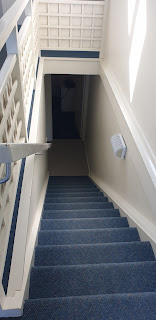
This is the staircase down to the bedroom level of a two-story holiday apartment at the Rosebud Country Club on the Mornington Peninsula in Victoria Australia.

It was the first time we stayed there for a long time.

However…

Innocuous stairs leading downwards to a black hole suggest a great many other things, especially if you left your imagination run wild.

For instance:

What if you are an only child being dropped off by your parents at your creepy grandparent’s place in the middle of the woods. Imagine driving up on a cold, wintry, windy, cloudless dark night, and when you get there, this old rambling mansion looks like the coven for witches.

What if when you get to the door this creepy old man who looks more dead than alive answers the door, and when you step over the threshold you hear what seems to be a high-pitched scream coming from outside the house.

What if, when you are being taken up the staircase, every single wooden step creaks or groans, that at the top of the stairs, every painting you pass, the eyes seem to follow you.

What if, when you explore, against the express wishes of your grandfather, you come across a door that leads down into a basement. There has to be some interesting stuff down there, a torture chamber, a medical laboratory with a half-finished Frankenstein, a workshop with coffins stacked in a corner.

The possibilities are endless

Writing a book in 365 days – 134

Day 134

Good twists and turns are hard for any writer to pull off. Write a story with a twist that no one sees coming.

Sometimes, when you are in the moment, you don’t get to see what comes out of left field.

First, the inheritance.

A castle, yes, a real castle with a moat and a drawbridge.  Towers at each corner and a thousand acres of adjoining lands

Second, the responsibility.

Not to hand it over to the blood sucking developers who wanted to the the property onto a gold course and millionaire condos.

Third, the fact that my life was so consumed with work, and then more work.

I didn’t know just how hard it was to run Sn estant such as the castle and surroundings.  I gad no idea how my grandmother had done it or why she picked me for the job.

Mu bother would have made a better fist of it, but he was too busy chasing the girl of his dreams in Bermuda. Now, he had his inheritance.

He actually felt sorry for me after briefly lamenting that our grandmother hadn’t left him the place.

Good thing, too. He would have sold it out from under us and blown away any chance of regaining the affinity we were supposed to have with the land we had inhabited since William the Conqueror.

Our names were in the Doomsday book.

This morning was like any other morning: busy, and I was out of my depth. The help I had, those who had last helped grandmother, had lost their patience with the new Master, and several had given their notice.

I was trying to organise replacements with a hiring compliant in London, and it looked like I would have to go down

That’s when broadest, the butler, whom my grandmother specifically asked to keep on, came in, after lightly rapping on the door to the study, which was supposed to be my refuge.

“What is it that you can’t wait?” I asked in a slightly testy tone.  It was not his fault I was losing it, but there was a limit, and I’d reached it.

“There’s a lady to see you, Miss Emily Wentworth.”

“Who is she?”

“I believe an old friend of your grandmother’s who hadn’t seen her for years and came to visit.”

“You did tell me she died recently?”

“Not part of my remit, sir,” with the most inscrutable expression I’d ever seen.  He could be covered in blood, a knife in each hand, and still look that inscrutable.

I glared at him.  Nothing, apparently, was part of his remit.

“Where is she?’

“In the drawing room, sir.”

“Tea for two?”

“Already in hand, sir.”

He could make the word sir sound like an insult, and had it not been for my grandmother’s insistence that he stay on, I would have long since tossed him to the wolves.

I looked over towards Mary, my late grandmother’s personal assistant, a woman who was as impossible to work with as she was a walking encyclopaedia of my grandmother’s reign as mistress.

“You know an Emily Wentworth?”

“No, sir.  Not in the ten years I was working with her.”

“Who do you think she is?”

“Someone from before my time.  She knew a lot of different people.  Hundreds of Christmas cards.  Christmas was an event, sir.”

“Thank you, Mary.  We’ll pick this up later.”

I went down the passage and left towards the drawing room, my favourite room in the building.  It was where breakfast was served, where the book collection, dating back well over two hundred years, existed.

When I was feeling overwhelmed, I just found a first edition of one of my favourite authors, the same into the luxurious leather lounge chairs, and read.

I opened the double doors to the room and went in.  The sun was out, and the gardens were looking immaculate.

An old lady, older than my grandmother, stood by the window looking out.  She turned as I came into the room.

“Young David, I believe?”

“Miss Wentworth.  You have me at a disadvantage.”

“Oh, I’m an old friend, very old, and hadn’t realised she had recently passed.  I am so sorry for your loss.”

“Thank you.  What can I do for you?”

“Your grandmother once said that I’d I ever needed a place to stay. I would be very welcome to stay here with her.  It seems that might be difficult now that she is no longer here.”

“Slightly.  She did not mention you in any of the papers she left for me.”  They had mentioned about a hundred others, some I was familiar with, others she warned me about, and the rest worth half a line or two.

At least there were no scheming relatives I had to challenge to a duel.

Yet.

She rummaged around in her voluminous handbag and pulled out a yellowed, crumpled envelope and handed it to me.  “This might explain the circumstances.”

I took it.  It had a furious aroma of mildew and mothballs.  I took out the single folded sheet and read,

My dear Emily,

It was with interest and alarm that I read of your predicament, first in the newspaper and then in your letter.

I always suspected that Adolf was one of those men.
You poor thing.  Of course, you may come and stay for as long as it takes to regain your sanity.

I am looking forward to your imminent arrival.

Love, Matilda

It was my grandmother’s writing.  But it was dated 13th December 1957, some 68 years ago.  The woman before me had to be approaching a hundred, but hardly looked a day over seventy.

“You do realise this invitation was written 69l8 years ago.”

“I was in America.  It took a long time to get here.”

I was waiting for her to tell me she had walked, but no.  She chose to leave the conversation right there.

I shrugged.

“Have you been here before?”

“On the occasion of her wedding to your grandfather.  Did she tell you about me?”

“She did not.”

“Pity.  It might have been possible you were my grandson, but your grandfather chose her, not me.  There’s a story there, but not today.”

Broadhurst appeared as if I had summoned him.  He had a habit of doing that, and it was scary.

“Sir?”

I shook my head.  “Take her to whatever spare room is available.  She will be staying for a while.  Tell the cook, there’s an extra person for dinner.”

“Thank you,” she said.  “Your grandmother was right about you.”

It wasn’t until after she left the room that I realised that it was impossible for her to know anything about me.  If she had not seen my grandmother in 68 years, how could she know about the 40-year-old grandson?

A question to ask at dinner.

..

I spent the afternoon reading through my grandmother’s diaries for that period from 75 years ago, and sure enough, Emily Wentwoth was there, large as life, the girl who was bold, brave, and rebellious

The girl who got into mischief at Miss Irene Davenport’s Finishing school, where apparently raggle-taggle guttersnipes were turned into elegant and charming young ladies.

I could not imagine my grandmother being a raggle-taggle guttersnipe.  Emily Wentworth was a different story and had that look of defiance even now.  I could be easily persuaded to believe Emily would lead her well and truly down the garden path.

I remember my mother once telling me how she had easily been led in her younger days.  It was hard to imagine it, in her later years, when she presented as almost formidable.

It seemed those days at the finishing school would have made interesting reading, but pages had been ripped out, perhaps because she preferred to forget about them.

There was, however, a section around the time of her wedding to my grandfather.

The incomparable and treacherous Miss Emily Wentworth arrived this morning; in defiance of mother’s orders, she was barred at the gate.

That despicable act of trying to entrap Herbert in an attempt to snatch him away from me was about as low as she could get.  This is the girl who could have any man she wanted.

And with Herbert denying the affair, well, this wedding is hanging by a knife’s edge.  Daddy wants to kill him and is certain to challenge him to a duel at dawn.

It’s an impossible situation.

There was nothing more written until two weeks later, the first day of her honeymoon, with the wonderful Herbert.

Two weeks of intrigue.  I was looking forward to dinner.

I had dined formally once since I had arrived at the castle.  A group of my grandmothers friends insisted on a wake, and Broadhurst and two serving girls presided over what could only be described as a feast.

Although there would be two of us, it would be no less a feast, presided over by Broadhurst and Anna, who attended breakfast time.

One feature of dinner was dressing up, a tradition I took seriously, as did Emily, who had an amazing gown befitting the dowager she was.

I escorted her into the dining room, and Broadhurst made sure she was seated comfortably.  There was no sitting at either end of a table that sat 24.  We’d need cell phones to talk.

We started with a glass of champagne and the first verbal duel. I led with the first question, “Tell me about Miss Irene Davenport’s Finishing School.”

She smiled, “My, if I were a betting woman, I would not have expected that question.  Miss Davenport.”  She closed her eyes and, after a few seconds, sighed.   “Yes.  All the girls believed she was a witch.”

“At that age, somewhere around sixteen, I think, all girls would have thought that.  After being indulged by your parents all your life, I guess running into a formidable disciplinarian would have been a shock.”

She looked at me with a curious expression, one that told me that she had probably thought I would not have such knowledge.

“You must have had some interesting conversations with your grandmother.”

“She maintained a diary, well, quite a few.”

An almost imperceptible change in expression.  “Well, that’s surprising.  She never struck me as a person who would.  Certainly, she never mentioned it, and we were best friends, shared everything when we were younger.”

Perhaps without realising that she had overstepped certain boundaries.  Or that Emily was that sort of friend who assumed she could.  I had read more about the relationship that existed between them, and my interpretation was that Emily was more worldly than her friend and had to a certain extent, both taken advantage of the situation and of her naivety.

It made me wonder just why she was here.

The question was asked in a tone that suggested an answer or comment to repudiate it was expected, a test to see exactly how much I knew.  She had not lost any of her powers of manipulation.

“Yes.  It was what I understood from her writing.  Typical girlish stuff.  She never mentioned anything about her time at Miss Davenport’s to my mother or to me, but she did tell me about her dancing lessons in Paris, under Mademoiselle Dubois.  She always insisted that the foundation for becoming a proper gentleman was grooming, manners, and being able to execute a perfect tango.”

“That’s one thing she excelled at, the tango.  It was what brought Matilda and Herbert together.  They could set the dance floor alight.”

Was it said as a wistful memory or with just a touch of envy?

“Sadly, my rendition of the tango is somewhat lacking.  She tried to smooth the rough edges, but I think in the end, she decided I was a lost cause.”

“Are you married?”

“No.  There hasn’t been a one to dazzle with my dancing skills or lack thereof.  I lack that certain charm my father and grandfather possessed.  Now, being lord of the manor, what girl would want to live in a draughty castle?”

“More than you could imagine.”  That was a wistful expression, and given what I’d read, perhaps she had at one time been one of them.

It was the right time for soup to be served.

Broadhurst had selected a very good Cabernet Sauvignon from the cellar and had poured two glasses.

The entrees were beef cheek, something I’d had before and found that a little went a long way, but no less an amazing dish.

A bit like the conversation at that time, she was picking over the memories of her best friend that she could share, perhaps with the intent of finding out how much I did know.

It was leading us into the main course, roast beef and Yorkshire pudding, which I’d had before and could take or leave.  But given the culinary experience of my grandmother’s selection of cook, I was preparing myself for an experience.

It was something I could get used to.

It also bothered me that it was difficult to consume all of the food that was prepared, given that there was mostly one of me, and the twenty-odd permanent staff who lived and worked in the castle, and on the estate.  There were a hundred or so others who didn’t.

My grandmother had decided that meals were to be provided for all those working in the castle and nearby, and I had extended that to everyone who requested a meal.  It meant hiring more staff, much needed in an area where unemployment was growing.  It was a discussion that I’d had with Mary, who had been juggling requests from organisations and individuals for employment opportunities, and one project in particular, a live-in farming community where troubled youth could break the spiral into crime and drugs by being given something useful to occupy their minds.

I know my grandmother would have taken it on in an instant.

“How are you finding being lord of the manor, as you call it?”

“More interesting than living in a tiny flat in a run-down building.”

She seemed surprised.  “You were not always wealthy.  Your mother, I believe, was a countess.”

Yes.  She was.  Married to a man who was a Count, a real Count with a real title, but one who had no money and had married her thinking he could tap into her family’s wealth and restore his fortunes.

It worked for a year before he got greedy, and his grandmother cut her off.  She got pregnant, he hung around until after I was born, and then he left.  Or not so much left as he started innumerable affairs, and Mother kicked him out.

After that, it was all downhill.  Grandmother and mother were estranged and never spoke to each other again after she had been cut off.  I visited from time to time once I left home, only because I knew my mother would explode if she knew I was seeing her.  Then mother died, a drug overdose, the end of a very unhappy life, and I disappeared into obscurity.  It seemed appropriate because, for a long time, I blamed her for my mother’s death.

“In name only, there was a title and nothing else but a pile of debts.  I’m ashamed to say my father was a scoundrel of the worst sort and only hastened my troubled mother’s path to the grave.  Wealth had never made her happy.  In fact, it was a curse.  To be honest, being lord of the manor has no real meaning. I live in a bigger house and eat better food, but my job is endlessly trying to juggle impossible projects and demanding people.”

“Perhaps you should just tell them all where to go and move to the Bahamas.  You don’t have to burden yourself with other people’s problems.”

Was that what she would do?  I had to ask.  “What would you do in my place?”

The look of amusement turned into a smile.  “I admit, once upon a time, I had thought about it.  Would it be worth pursuing Herbert to become the Marquis and Marquess?  I also admit that I envied Matilda because she had it all and never had to struggle once in her life.  It was annoying sometimes to listen to her complain endlessly about how bad it was.  I’m not sure what she writes, but I suspect there’ll be comments on me that are hardly flattering.”

She took a deep breath and took a moment.  Perhaps she was considering how far she would share her experiences.  Decision made.

“I get it.  We were teenagers, young, at times stupid, and sometimes volatile.  It’s one of the most testing times that period from 15 to 21, and we had some interesting arguments, bust ups, and reconciliations.  But we ended up best friends, as you can see by that letter, written after she married Herbert.”

Anna came and cleared the dishes from the table and left us wondering what was for dessert.  I could use some coffee to dilute the effects of the wine.

When Broadhurst brought out the tray, I knew instantly it was my favourite, a pudding my grandmother insisted on when I visited.

Roly Poly.

I could see Emily’s eyes light up when she saw it.

Of course, there could be no more conversation until we had devoured two helpings, one with custard, the other with clotted cream.  I could not remember the last time I had it because I could never find the recipe, or that is to say, the proper recipe.

Then, when the coffee came, along with a vintage Portuguese port, I could see she had more to say.

“Let’s stop dancing around the elephant in the room.”

It was a curious expression, one my grandmother used and at times my mother.  I’d been known to use it myself.

“You will have read, no doubt, about my efforts to steal Herbert away from your grandmother.  It’s true.  I did.  Try, that is.  I got tired of her telling me how he was the one, that he had only eyes for her, that there was no other woman for him.  It was tosh, but I doubt she would have believed me if I told her he was dating two other girls at the same time he was dating her.”

It was not surprising, after what my mother had told me.  The affairs continued after the wedding, mostly unknown to his wife.

“It was a month before the wedding, and Matilda had organised a birthday party for him and invited a few close friends.  One of those was a girl called Eloise, daughter of a Duke, another of Miss Davenport’s protégés, and as it happens, a former girlfriend of said Herbert.  I knew from a friend of a friend that they were still an item, only more on the hush-hush side because his family needed the family connection to Matildas.”

In my mind, I would have thought a Duke was better than a Marquis, but I could be wrong.  But the story that marriages were arranged for such reasons was common and had an element of truth, especially considering the times.  Could I believe it of my grandmother, perhaps?  She had always said she would have married for love, that she had never been forced into marriage, but it could have been orchestrated by scheming parents.

“Did you try?”

“Of course, and was disappointed when he turned up in my room late one night, one where Matilda decided she needed a heart-to-heart. It was as if I expected him to come; I had dropped hints, not expecting him to act on them.  He did. She came, and it all blew up.”

“Yet you came to the wedding?”

“Matilda’s mother contacted me about a week later, after Matilda had told Herbert that the wedding was off and that she never wanted to see me again.  It was quite an affair.  The problem was that Herbert’s parents couldn’t afford for this match, not to come to fruition.  She asked me what my game was, and I told her it was simply to prove that Herbert was not exactly the man he made himself out to be and that I never had any intention of trying to seduce him.”

At a time when there was a far stricter moral code enforced on daughters, it was not hard to imagine the scenes that played out in those weeks before the wedding.  Men could virtually do whatever they liked, and women couldn’t because of the risk to their virtue and getting a reputation that could ruin their position in society.  I remember my grandmother lamenting the fact that men had all the freedom and women had none.

It also gave me pause in how I considered my grandmother, given this information.  If it was correct.  I still didn’t know what the purpose of telling all this was.

“I can’t see my grandmother forgiving you.”

“It wasn’t the first time.  We were not exactly angels when we were at Miss Davenport’s.  That place was one where, if you were so inclined, you could get into a great deal of trouble.  Two of the girls in the class did.  The dance instructor, a devilishly handsome Frenchman with the most exotic accent, had his way with them, resulting in the worst possible outcome.  None of us was immune to his wiles.”

“Are you saying…”

“He had his way with her.  Yes.  But he did with me, too.  I think it was the first time for both of us, and as impressionable girls, it was a delirious, happy time followed by the depths of despair when we were rejected.  Still, although I never knew for certain because I didn’t see her again for about a year, I believe she got pregnant, had a child, and then had it adopted.  Or her parents would have.”

If it happened, I could see why it had been kept a secret.  Her reputation and character would be ruined.  But I was trying to reconcile the description Emily was giving me with what I knew of her.  It was impossible.

I took a deep breath.  “Why are you telling me this?”

“I’m not here to cause trouble.  Nor am I here to drag skeletons out of the closet.  The fact is, I’m here to warn you.  Heed it or not is up to you.  Believe me or not, it is up to you.  I still have friends, though, as you can imagine, most of them have passed.  I received a letter about three weeks ago from someone whose name I didn’t recognise.  It asked me if I knew the name of the baby your grandmother had.  The first baby.  You could have knocked me over with a feather.”

“What did you do?”

“I wrote back and told them wherever they got their information it was a lie.”

“Then they sent an official copy of the birth certificate with the girl’s name and the two parents, one of whom was Matilda.  It was her signature on the document.”

“Could it be a forgery?”

“It could, so I had it checked out.  It was legitimate.  Then I wrote back and told them I would not help them prove or disprove anything out of respect for my friend.  I fear these people will not go away.  If they have gone to all this effort, then they want something from you.”

“Money, and a lot of it, or a slice of the inheritance. The thing is, if it was legitimate, why haven’t they got lawyers onto it?  Did the person who wrote the letter have a name?”

She pulled out an envelope from a hidden pocket and slid it over to me.  Inside, there was the birth certificate and a copy of the first letter written and signed by Josephine Llewellen.

“I suggest you get a team of private investigators to check her out and get ahead of it.”

“What do you want?”

“Nothing.  I’m here out of respect for my friend and to warn you of what might be possible trouble.  Other than that, a place to rest my weary bones.  I’m not long for this earth, and this is the place where I was most happy.”

She slowly got out of her chair and stood for a moment.  “Thank you for your indulgence, and a room at the inn.  I am more grateful than you could ever know.”

It was still a strange experience to wake up in what was the master bedroom in the castle.  The bed itself was so large it could fit half a dozen people with room to move.

That same bed was over three hundred years old, an antique four-poster with the curtains more like tapestries than curtains.

Broadhurst had opened the curtains and brought water and the folder with the day’s activities.  I had a quick scan, and there was nothing to attract attention

It was another half hour before I came downstairs and into the morning room.  Anna was there, refreshing the coffee, making me marvellous again at how the internal communication system knew exactly where I was.

“Good morning, sir?”

“Good morning, Anna.  Has Emily been down for breakfast?”

“Who, sir?”  She looked genuinely surprised.

“The lady who arrived yesterday afternoon.  Emily Wentworth.  We had dinner last night.”

“No, sir.  There’s been no visitors.”

Broadhurst came into the room with a tray.

“Is there a problem, sir?”

“Emily Wentworth, the lady who arrived here yesterday afternoon.  You told me of her arrival.”

He looked blank; it was the only way I could describe his expression. 

“I don’t believe I did, sir.  There are no visitors in the house at present, just yourself.”

He put the tray down on the sideboard and brought the plate over to where I had just sat down.

“Then I must be going crazy.  I would have sworn there was a visitor and that I had dinner with her last night.”

He shrugged.  “This place can be a little strange at times, sir.  The mistress used to talk to people that she could only see.  Perhaps it may have been a dream, sir.  Did you sleep well last night?”

“I did.”

“It is this place, sir.  Hundreds of years of goings on, stories my mother used to tell me.  I don’t believe in ghosts, sir, but there are odd noises.”

It felt real enough.  I would go to the study later and see if the documents she had given me were still on the desk.

I went upstairs to the room she had been allocated, and it was empty.  Moreover, it had the look of not having been used for a while.

Then I went to the study, and there was no sign of the documents, certainly not where I left them or where i thought I left them.

Was it my imagination, or as Broadhurst suggested, a dream induced by the eeriness of the castle itself?  He wasn’t wrong. The first few nights were very creepy, and I swore I’d heard a ghost.

The chauffeur, yes, there was a chauffeur and a mechanic, and a fleet of five cars, and one of the downstairs maids had just arrived back from the town about 5 miles away, to refuel and collect the mail, and any particular stores the housekeeper needed.

I was reading a document on small farming techniques sent to me by email when Anna came in to deliver the mail.  We were still getting letters and invitations to events addressed to my grandmother, invitations that were extended to me in her stead, some of which seemed interesting.

Today’s pile had three more, and one other, a curiously old envelope with my name scrawled on it.  It was not the first time I’d seen one like it, one that belonged it a time past.

I opened it and found another inside.  Just like the one that Emily Wentworth had given me.  It had her name and address on ot, somewhere in France, but the postmark was what interested me.

It was 7th October 1943.

My hands were shaking when I took out the two sheets of paper.  One indeed was the birth certificate, the other a letter, also the same as the previous evening, signed by Josephine Llewellen.

What the hell?

I put everything back in the envelope in the top drawer under a pile of folders.  I needed air.

What was going on?

I got as far as the front foyer when I saw Mrs. Rattigan, the housekeeper, talking to a young girl. 

“Good morning, sir,” she said when she saw me.

“Good morning, Mrs Rattigan.”  She had said I could address her by her first name, but given how formidable she looked, I still couldn’t.

“A visitor?”

“In a sense.  We are interviewing for the position of assistant cook. This is Josephine Llewellen.”

©  Charles Heath  2025

Searching for locations: San Gimignano, Italy

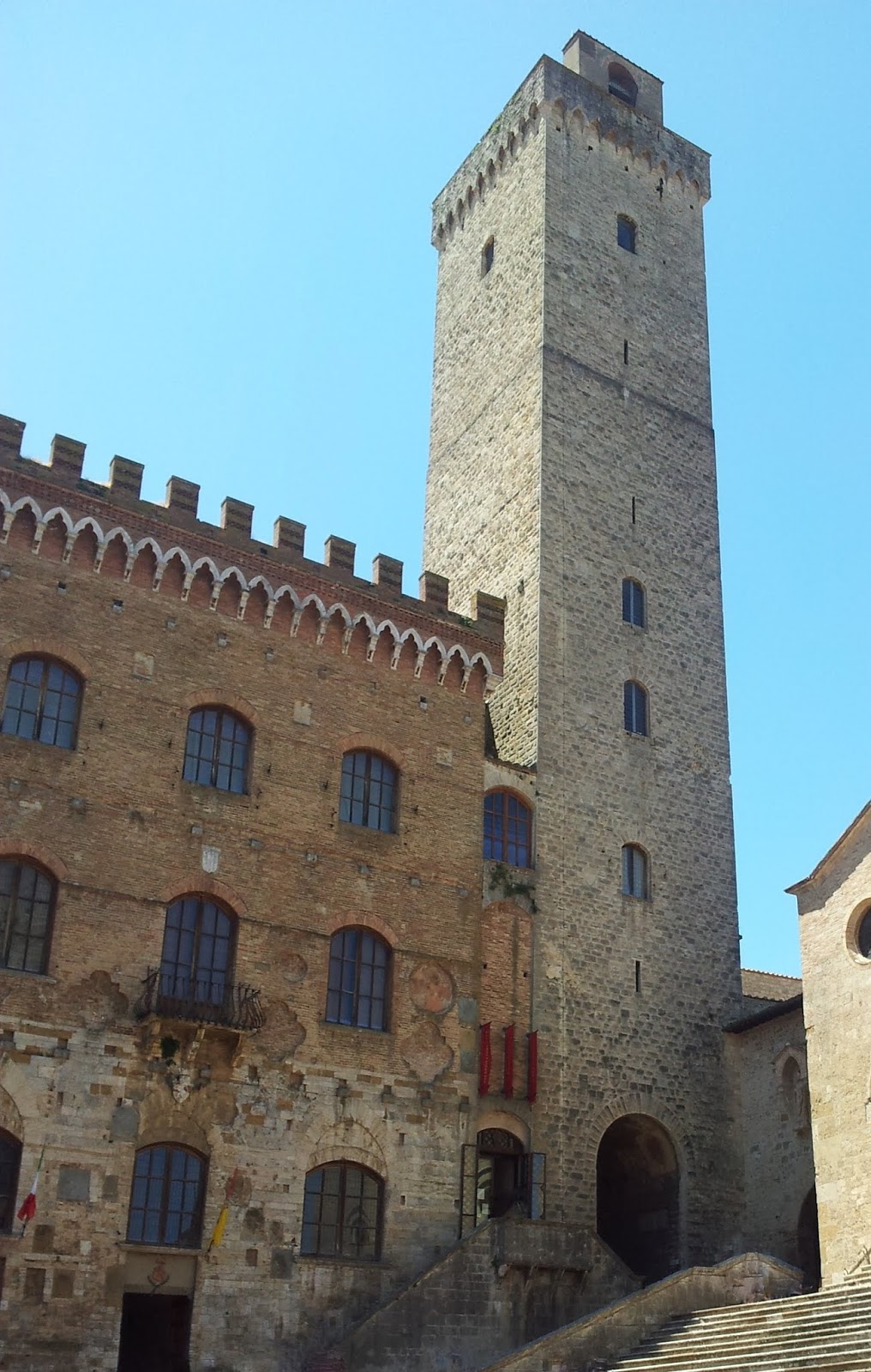
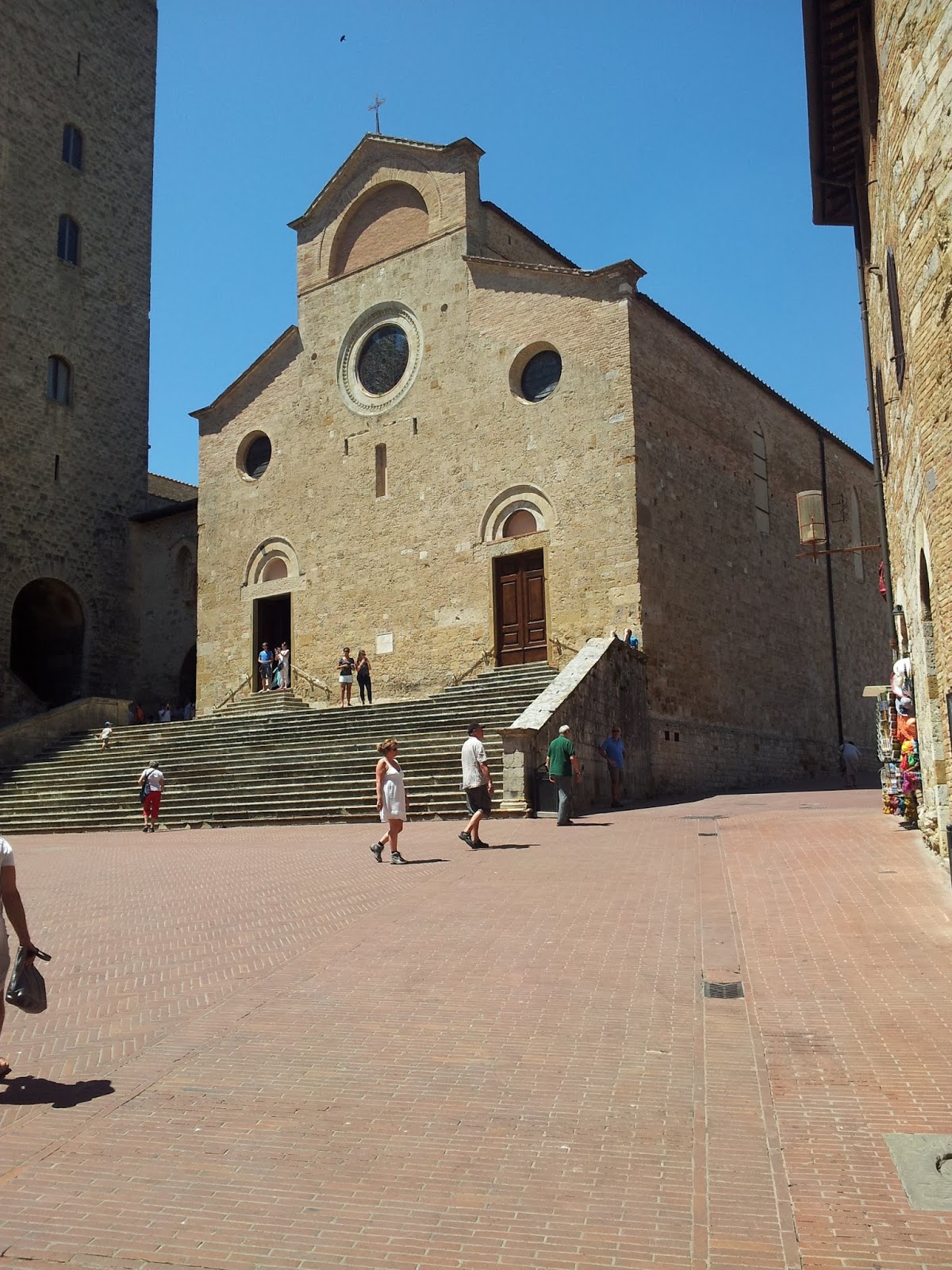
We have visited this town on a hill, famous for its fourteen towers, twice.  The first time we stayed in a hotel overlooking the main piazza, and the second time, for a day visit, and return to a little restaurant tucked away off the main piazza for its home cooking.

No cars are allowed inside the town and parking is provided outside the town walls.  You can drive up to the hotel to deliver your baggage, but the car must return to the carpark overnight.

This is one of the fourteen towers

I didn’t attempt to climb to the tower, which you can do in some of them, just getting up the church steps was enough for me.  Inside the building was, if I remember correctly, a museum.

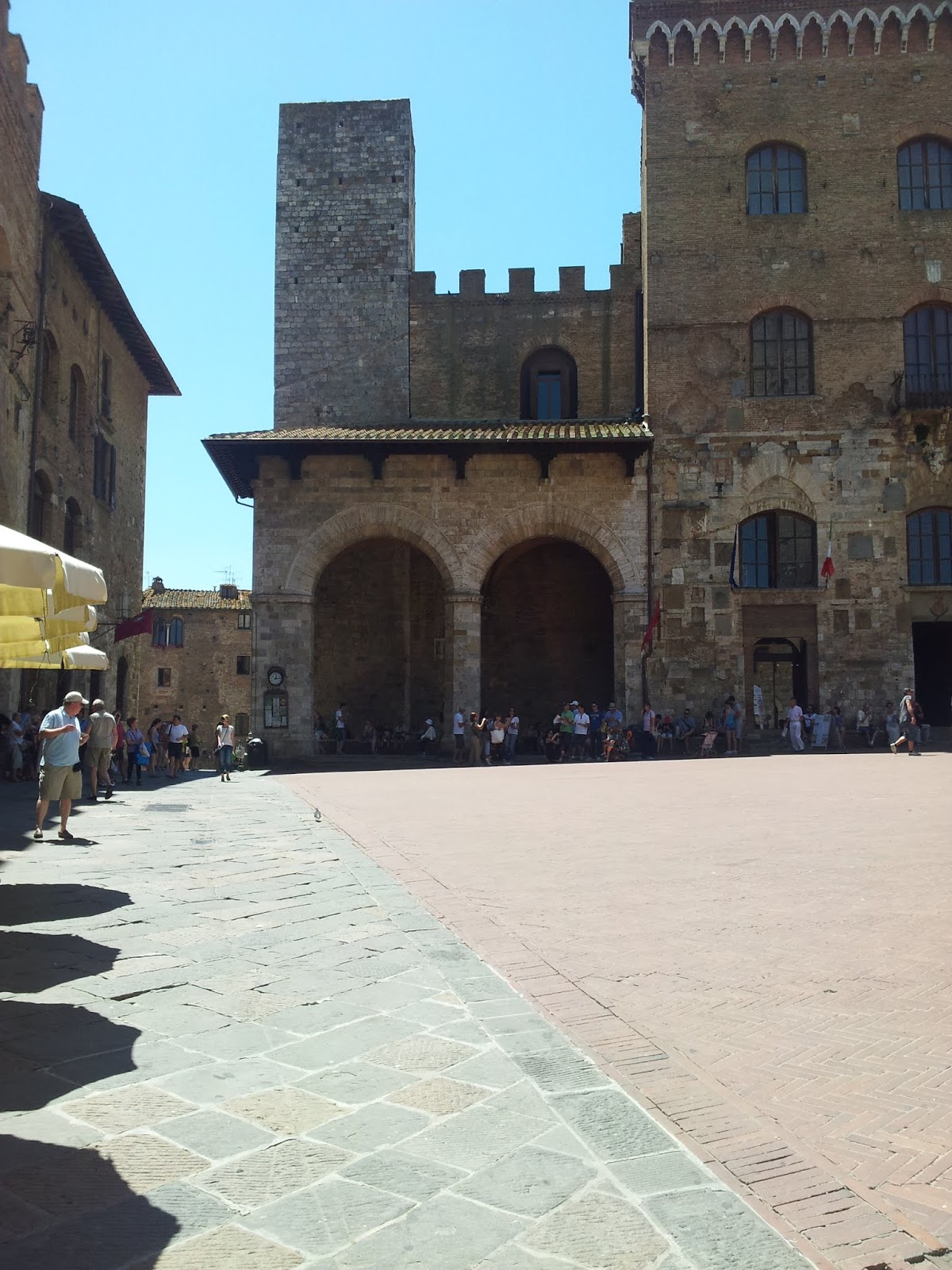
Looking up the piazza towards some battlements, and when you reach the top and turn left, there is a small restaurant on the right-hand side of the laneway that had the best wild boar pasta.

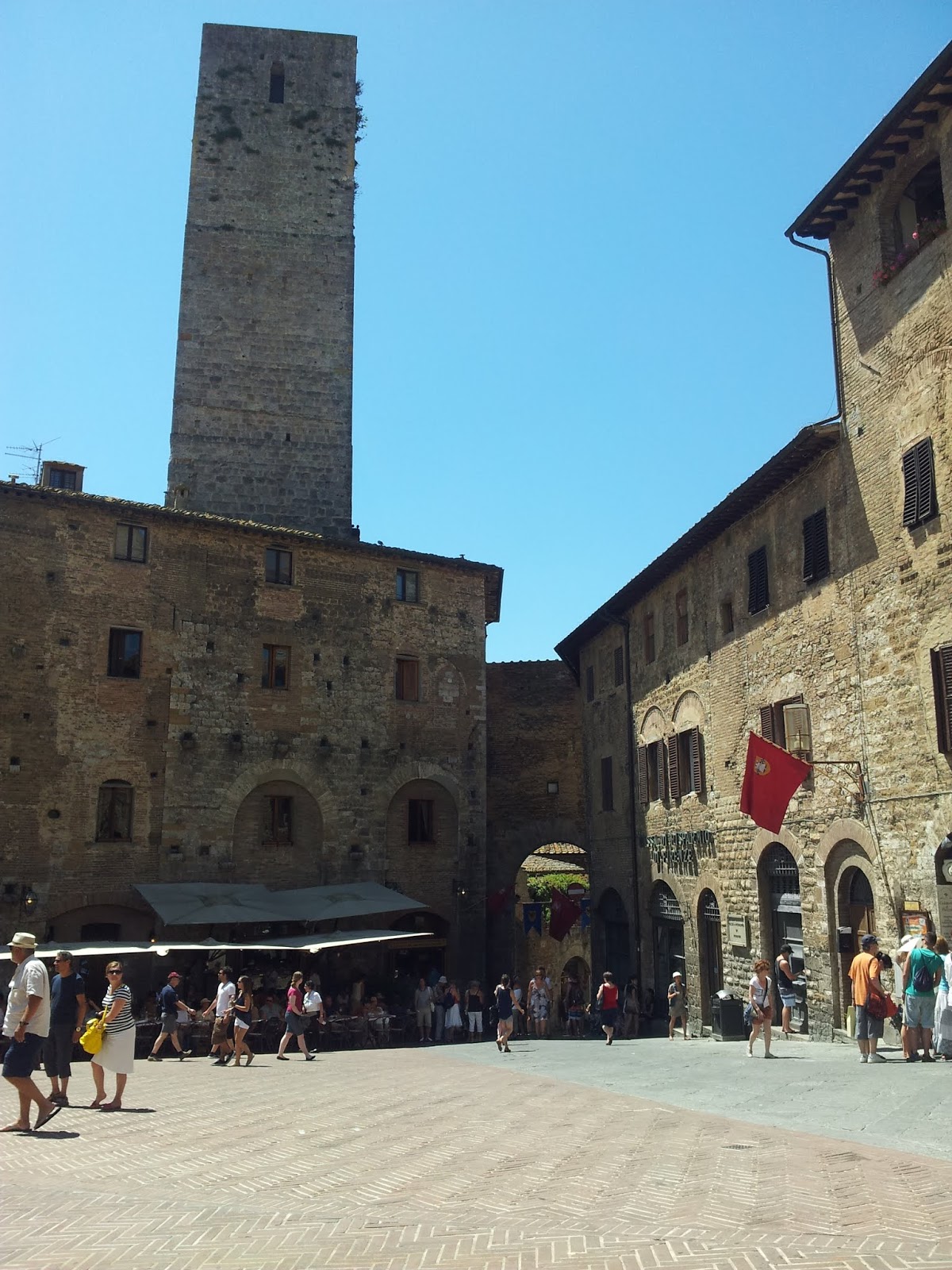
Another of the fourteen towers, and through the arch, down a lane to the gated fence that surrounds the town.  The fortifications are quite formidable and there are several places along the fence where you can stand and look down the hill at the oncoming enemy (if there was one).

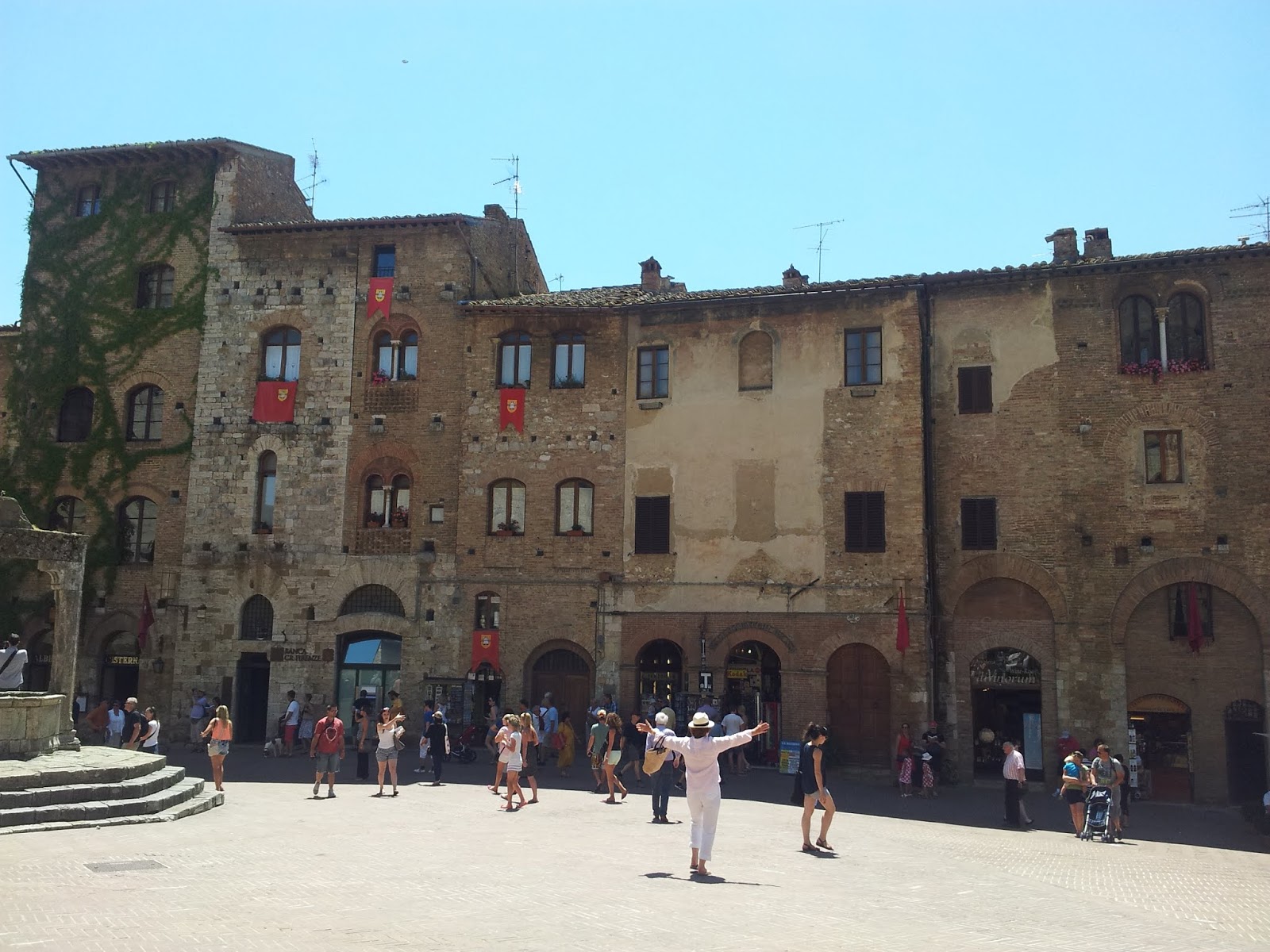
Part of the main piazza which is quite large, and on the right, the wishing well where my wish for a cooler day was not granted.

Officially, the Piazza della Cisterna is the most beautiful square of the town, San Gimignano.  The well was built in 1273 and enlarged in 1346 by Podestà Guccio dei Malavolti.

And not to be outdone by any other the other old towns, there is an old church, one of several.  It is the Collegiate Church or the Duomo di San Gimignano, a monument of Romanesque architecture built around 1000 and enlarged over time.

Next door is the Museum of Sacred Art.

And I guess it’s rather odd to see television aerials on top of houses that are quite literally about a thousand years old.  I wonder what they did back then for entertainment?

The cinema of my dreams – I always wanted to go on a treasure hunt – Episode 30

Here’s the thing…

Every time I close my eyes, I see something different.

I’d like to think the cinema of my dreams is playing a double feature but it’s a bit like a comedy cartoon night on Fox.

But these dreams are nothing to laugh about.

Once again there’s a new instalment of an old feature, and we’re back on the treasure hunt.


Was this going to be the very definition of dining with the devil?

Or was my curiosity going to be the death of me?

It was just one of a dozen questions I asked myself on that trip back to Nadia’s room.  One reason I was going there was not in the expectation of a romantic interlude.  No, this was something else.  I kept reminding myself that Nadia was, first and foremost, a Cossatino, and the Cossatino’s were not people you wanted to be friends with.

When we arrived, she asked for a few minutes so she could change, so I stayed out on the balcony.  It was a coolish night, a clear sky, and just a hint of salt in the air.  We were not far from the ocean, and it reminded me of another lifetime, one where I was young enough not to have to worry about all that grown-up stuff.

I heard the door open behind me.

“Thanks for waiting.”

I turned, not sure what I was expecting.  Certainly not a statuesque woman in training gear.  She looked to me ready to go for a training run.

I walked past her into the room, faintly smelling of some perfume, and sat in one of the two chairs in the room.  I watched her close the door, go over to the mini bar, get two bottles of beer out, and hand one to me.

It was an odd thought, being in a hotel room with Nadia, the last thing I’d ever be doing with her, let alone any other woman.  My choices had always been limited, or so I had thought.

“I had this thought,” she said, leaning against the desk on the opposite side of the room, “that we should try and beat Vince at his own game.”

An interesting thought, was Nadia thinking of joining in Boggs’s treasure hunt, take it over, or was this a ruse, and had she been working with Vince all this time, and using us to get to the prize by another route.  Or was it a rivalry with Vince that she wanted to win?  Wasn’t it Boggs’s call who joined the expedition?

“We as in you and me, or we as in Boggs and you, or…”

“You’re overthinking it Smidge.”

“A word of advice, Nadia, if you’re trying to appeal to my good side, you might consider dropping the nickname.  Only the people I hate use it, and I’m sure you don’t want me to add you to the list.”

Not necessarily warranted, and in my younger days I’d never dare to speak to her like that, but I felt I had the upper hand, at least for a short time.

“OK.  Note to self, call Smidge Sam.  Old habits are hard to break.”

In more ways than one, I thought. 

“Well, overthinking it or not, it’s not my call to make.  I’m assuming you want to join in on Boggs’s treasure hunt?”

“That was the idea.”

“You’re assuming that Boggs actually has the real map, or, in fact, there is such a thing.  You have to remember that his father created all those maps, and it wouldn’t be hard to make one look more authentic than another, just to get a better price.  Everything to do with the treasure seems to me like it’s one big hoax.”

“If that was the case, why do you think Vince is so wound up about it?  My point is, Vince is simply all muscle and no brains.  He always has been, so you have to assume that my grandfather has decided there’s something in the rumours.  Granted he may have been working in league with Boogs senior, but don’t you think that in order to create forgeries, there had to be some sort of map to work from.”

An interesting premise.

“If it led to treasure on an island in the Wast Indies, I’d be more likely to believe in it, but here, a million miles from any of the pirate trading routes, and having a deep abiding disbelieve in hidden treasure still not recovered in this day and age, what do you think?”

“Does Boggs’s know about your scepticism?”

“I’ve told him enough times, but he has this bee in his bonnet, and I’m his best friend, probably his only friend.  I humour him.  And I doubt seriously if he’ll ever go through with it, because he’s never finished anything in his life.  He gave me a copy of the map, but I suspect that was a copy of the one he gave Vince in the end.

“So, you think it’s not a worthwhile exercise?”

“What I think doesn’t matter.  But I’ve got a question for you.  Why have you come back here?”

“What if I told you it’s possible that the treasure is real.”

“I’d say you’ve been indulging in the drugs your family pedals.”

“What if I said I had proof?”

OK, where is this going?  Did that mean she had proof, or that the Cossatino’s had proof, and was she about to open a can of worms?

“I’m listening.”

“That man that you found dead on Rico’s boat.  His name was Jacob Stravinsky.  He was an authority on pirates and their lost treasure, and had over the years, uncovered evidence that pirates had come here supposedly fleeing from the authorities, and that at least two of them could have hidden some of their treasure somewhere along this coastline.  News of the discovery of several gold coins off the coast, not ten miles from here somehow caught Ales Benderby’s ear and he went to visit him.

“No one is sure what happened at that meeting, but I know Alex was there because that’s where I ran into him.  And, the fool that he is, got drunk and told me, no bragged about how he was going to find the treasure and prove his worth to his father.”

“Then how did this Stravinsky end up dead on Rico’s boat.”

“Because Alex got what he wanted and made sure no one else found out.”


© Charles Heath 2019

An excerpt from “Mistaken Identity” – a work in progress

The odds of any one of us having a doppelganger are quite high. Whether or not you got to meet him or her, or be confronted by them was significantly lower. Except of course, unless you are a celebrity.

It was a phenomenon remarkable only for the fact, at times, certain high-profile people, notorious or not, had doubles if only to put off enemies or the general public. Sometimes we see people in the street, people who look like someone we knew, and made the mistake of approaching them like a long lost friend, only to discover an embarrassed individual desperately trying to get away for what they perceive is a stalker or worse.

And then sometimes it is a picture that looms up on a TV screen, an almost exact likeness of you. At first, you are fascinated, and then according to the circumstances, and narrative that is attached to that picture, either flattered or horrified.

For me one turned to the other when I saw an almost likeness of me flash up on the screen when I turned the TV on in my room. What looked to be my photo, with only minor differences, was in the corner of the screen, the newsreader speaking in rapid Italian, so fast I could only translate every second or third word.

But the one word I did recognize was murder. The photo of the man up on the screen was the subject of an extensive manhunt. The crime, the murder of a woman in the very same hotel I was staying, and it was being played out live several floors above me. The gist of the story, the woman had been seen with, and staying with the man who was my double, and, less than an hour ago, the body had been discovered by a chambermaid.

The killer, the announcer said, was believed to be still in the hotel because the woman had died shortly before she had been discovered.

I watched, at first fascinated at what I was seeing. I guess I should have been horrified, but at that moment it didn’t register that I might be mistaken for that man.

Not until another five minutes had passed, and I was watching the police in full riot gear, with a camera crew following behind, coming up a passage towards a room. Live action of the arrest of the suspected killer the breathless commentator said.

Then, suddenly, there was a pounding on the door. On the TV screen, plain to see, was the number of my room.
I looked through the peephole and saw an army of police officers. It didn’t take much to realize what had happened. The hotel staff identified me as the man in the photograph on the TV and called the police.

Horrified wasn’t what I was feeling right then.

It was fear.

My last memory was the door crashing open, the wood splintering, and men rushing into the room, screaming at me, waving guns, and when I put my hands up to defend myself, I heard a gunshot.

And in one very confused and probably near-death experience, I thought I saw my mother and thought what was she doing in Rome?

I was the archetypal nobody.

I lived in a small flat, I drove a nondescript car, had an average job in a low profile travel agency, was single, and currently not involved in a relationship, no children, and according to my workmates, no life.

They were wrong. I was one of those people who preferred their own company, I had a cat, and travelled whenever I could. And I did have a ‘thing’ for Rosalie, one of the reasons why I stayed at the travel agency. I didn’t expect anything to come of it, but one could always hope.

I was both pleased and excited to be going to the conference. It was my first, and the glimpse I had seen of it had whetted my appetite for more information about the nuances of my profession.

Some would say that a travel agent wasn’t much of a job, but to me, it was every bit as demanding as being an accountant or a lawyer. You were providing a customer with a service, and arguably more people needed a travel agent than a lawyer. At least that was what I told myself, as I watched more and more people start using the internet, and our relevance slowly dissipating.

This conference was about countering that trend.

The trip over had been uneventful. I was met at the airport and taken to the hotel where the conference was being held with a number of other delegates who had arrived on the same plane. I had mingled with a number of other delegates at the pre conference get together, including one whose name was Maryanne.

She was an unusual young woman, not the sort that I usually met, because she was the one who was usually surrounded by all the boys, the life of the party. In normal circumstances, I would not have introduced myself to her, but she had approached me. Why did I think that may have been significant? All of this ran through my mind, culminating in the last event on the highlight reel, the door bursting open, men rushing into my room, and then one of the policemen opened fire.

I replayed that last scene again, trying to see the face of my assailant, but it was just a sea of men in battle dress, bullet proof vests and helmets, accompanied by screaming and yelling, some of which I identified as “Get on the floor”.

Then came the shot.

Why ask me to get on the floor if all they were going to do was shoot me. I was putting my hands up at the time, in surrender, not reaching for a weapon.

Then I saw the face again, hovering in the background like a ghost. My mother. Only the hair was different, and her clothes, and then the image was going, perhaps a figment of my imagination brought on by pain killing drugs. I tried to imagine the scene again, but this time it played out, without the image of my mother.

I opened my eyes took stock of my surroundings. What I felt in that exact moment couldn’t be described. I should most likely be dead, the result of a gunshot wound. I guess I should be thankful the shooter hadn’t aimed at anything vital, but that was the only item on the plus side.

I was in a hospital room with a policeman by the door. He was reading a newspaper, and sitting uncomfortably on a small chair. He gave me a quick glance when he heard me move slightly, but didn’t acknowledge me with either a nod, or a greeting, just went back to the paper.

If I still had a police guard, then I was still considered a suspect. What was interesting was that I was not handcuffed to the bed. Perhaps that only happened in TV shows. Or maybe they knew I couldn’t run because my injuries were too serious. Or the guard would shoot me long before my feet hit the floor. I knew the police well enough now to know they would shoot first and ask questions later.

On the physical side, I had a large bandage over the top left corner of my chest, extending over my shoulder. A little poking and prodding determined the bullet had hit somewhere between the top of my rib cage and my shoulder. Nothing vital there, but my arm might be somewhat useless for a while, depending on what the bullet hit on the way in, or through.

It didn’t feel like there were any broken or damaged bones.

That was the good news.

On the other side of the ledger, my mental state, there was only one word that could describe it. Terrified. I was looking at a murder charge and jail time, a lot of it. Murder usually had a long time in jail attached to it.

Whatever had happened, I didn’t do it. I know I didn’t do it, but I had to try and explain this to people who had already made up their minds. I searched my mind for evidence. It was there, but in the confused state brought on by the medication, all I could think about was jail, and the sort of company I was going to have.

I think death would have been preferable.

Half an hour later, maybe longer, I was drifting in an out of consciousness, a nurse, or what I thought was a nurse, came into the room. The guard stood, checked her ID card, and then stood by the door.

She came over and stood beside the bed. “How are you?” she asked, first in Italian, and when I pretended I didn’t understand, she asked the same question in accented English.

“Alive, I guess,” I said. “No one has come and told what my condition is yet. You are my first visitor. Can you tell me?”

“Of course. You are very lucky to be alive. You will be fine and make a full recovery. The doctors here are excellent at their work.”

“What happens now?”

“I check you, and then you have a another visitor. He is from the British Embassy I think. But he will have to wait until I have finished my examination.”

I realized then she was a doctor, not a nurse.

My second visitor was a man, dressed in a suit the sort of which I associated with the British Civil Service.  He was not very old which told me he was probably a recent graduate on his first posting, the junior officer who drew the short straw.

The guard checked his ID but again did not leave the room, sitting back down and going back to his newspaper.

My visitor introduced himself as Alex Jordan from the British Embassy in Rome and that he had been asked by the Ambassador to sort out what he labelled a tricky mess.

For starters, it was good to see that someone cared about what happened to me.  But, equally, I knew the mantra, get into trouble overseas, and there is not much we can do to help you.  So, after that lengthy introduction, I had to wonder why he was here.

I said, “They think I am an international criminal by the name of Jacob Westerbury, whose picture looks just like me, and apparently for them it is an open and shut case.”  I could still hear the fragments of the yelling as the police burst through the door, at the same time telling me to get on the floor with my hands over my head.

“It’s not.  They know they’ve got the wrong man, which is why I’m here.  There is the issue of what had been described as excessive force, and the fact you were shot had made it an all-round embarrassment for them.”

“Then why are you here?  Shouldn’t they be here apologizing?”

“That is why you have another visitor.  I only took precedence because I insisted I speak with you first.  I have come, basically to ask you for a favour.  This situation has afforded us with an opportunity.  We would like you to sign the official document which basically indemnifies them against any legal proceedings.”

Curious.  What sort of opportunity was he talking about?  Was this a matter than could get difficult and I could be charged by the Italian Government, even if I wasn’t guilty, or was it one of those hush hush type deals, you do this for us, we’ll help you out with that.  “What sort of opportunity?”

“We want to get our hands on Jacob Westerbury as much as they do.  They’ve made a mistake, and we’d like to use that to get custody of him if or when he is arrested in this country.  I’m sure you would also like this man brought into custody as soon as possible so you will stop being confused with him.  I can only imagine what it was like to be arrested in the manner you were.  And I would not blame you if you wanted to get some compensation for what they’ve done.  But.  There are bigger issues in play here, and you would be doing this for your country.”

I wondered what would happen if I didn’t agree to his proposal.  I had to ask, “What if I don’t?”

His expression didn’t change.  “I’m sure you are a sensible man Mr Pargeter, who is more than willing to help his country whenever he can.  They have agreed to take care of all your hospital expenses, and refund the cost of the Conference, and travel.  I’m sure I could also get them to pay for a few days at Capri, or Sorrento if you like, before you go home.  What do you say?”

There was only one thing I could say.  Wasn’t it treason if you went against your country’s wishes?

“I’m not an unreasonable man, Alex.  Go do your deal, and I’ll sign the papers.”

“Good man.”

After Alex left, the doctor came back to announce the arrival of a woman, by the way she had announced herself, the publicity officer from the Italian police. When she came into the room, she was not dressed in a uniform.

The doctor left after giving a brief report to the civilian at the door. I understood the gist of it, “The patient has recovered excellently and the wounds are healing as expected. There is no cause for concern.”

That was a relief.

While the doctor was speaking to the civilian, I speculated on who she might be. She was young, not more than thirty, conservatively dressed so an official of some kind, but not necessarily with the police. Did they have prosecutors? I was unfamiliar with the Italian legal system.

She had long wavy black hair and the sort of sultry looks of an Italian movie star, and her presence made me more curious than fearful though I couldn’t say why.

The woman then spoke to the guard, and he reluctantly got up and left the room, closing the door behind him.
She checked the door, and then came back towards me, standing at the end of the bed. Now alone, she said, “A few questions before we begin.” Her English was only slightly accented. “Your name is Jack Pargeter?”

I nodded. “Yes.”

“You are in Rome to attend the Travel Agents Conference at the Hilton Hotel?”

“Yes.”

“You attended a preconference introduction on the evening of the 25th, after arriving from London at approximately 4:25 pm.”

“About that time, yes. I know it was about five when the bus came to collect me, and several others, to take us to the hotel.”

She smiled. It was then I noticed she was reading from a small notepad.

“It was ten past five to be precise. The driver had been held up in traffic. We have a number of witnesses who saw you on the plane, on the bus, at the hotel, and with the aid of closed circuit TV we have established you are not the criminal Jacob Westerbury.”

She put her note book back in her bag and then said, “My name is Vicenza Andretti and I am with the prosecutor’s office. I am here to formally apologize for the situation that can only be described as a case of mistaken identity. I assure you it is not the habit of our police officers to shoot people unless they have a very strong reason for doing so. I understand that in the confusion of the arrest one of our officers accidentally discharged his weapon. We are undergoing a very thorough investigation into the circumstances of this event.”

I was not sure why, but between the time I had spoken to the embassy official and now, something about letting them off so easily was bugging me. I could see why they had sent her. It would be difficult to be angry or annoyed with her.

But I was annoyed.

“Do you often send a whole squad of trigger happy riot police to arrest a single man?” It came out harsher than I intended.

“My men believed they were dealing with a dangerous criminal.”

“Do I look like a dangerous criminal?” And then I realized if it was mistaken identity, the answer would be yes.

She saw the look on my face, and said quietly, “I think you know the answer to that question, Mr. Pargeter.”

“Well, it was overkill.”

“As I said, we are very sorry for the circumstances you now find yourself in. You must understand that we honestly believed we were dealing with an armed and dangerous murderer, and we were acting within our mandate. My department will cover your medical expenses, and any other amounts for the inconvenience this has caused you. I believe you were attending a conference at your hotel. I am very sorry but given the medical circumstances you have, you will have to remain here for a few more days.”

“I guess, then, I should thank you for not killing me.”

Her expression told me that was not the best thing I could have said in the circumstances.

“I mean, I should thank you for the hospital and the care. But a question or two of my own. May I?”

She nodded.

“Did you catch this Jacob Westerbury character?”

“No. In the confusion created by your arrest he escaped. Once we realized we had made a mistake and reviewed the close circuit TV, we tracked him leaving by a rear exit.”

“Are you sure it was one of your men who shot me?”

I watched as her expression changed, to one of surprise.

“You don’t think it was one of my men?”

“Oddly enough no. But don’t ask me why.”

“It is very interesting that you should say that, because in our initial investigation, it appeared none of our officer’s weapons had been discharged. A forensic investigation into the bullet tells us it was one that is used in our weapons, but…”

I could see their dilemma.

“Have you any enemies that would want to shoot you Mr Pargeter?”

That was absurd because I had no enemies, at least none that I knew of, much less anyone who would want me dead.

“Not that I’m aware of.”

“Then it is strange, and will perhaps remain a mystery. I will let you know if anything more is revealed in our investigation.”

She took an envelope out of her briefcase and opened it, pulling out several sheets of paper.

I knew what it was. A verbal apology was one thing, but a signed waiver would cover them legally. They had sent a pretty girl to charm me. Perhaps using anyone else it would not have worked. There was potential for a huge litigation payout here, and someone more ruthless would jump at the chance of making a few million out of the Italian Government.

“We need a signature on this document,” she said.

“Absolving you of any wrong doing?”

“I have apologized. We will take whatever measures are required for your comfort after this event. We are accepting responsibility for our actions, and are being reasonable.”

They were. I took the pen from her and signed the documents.

“You couldn’t add dinner with you on that list of benefits?” No harm in asking.

“I am unfortunately unavailable.”

I smiled. “It wasn’t a request for a date, just dinner. You can tell me about Rome, as only a resident can. Please.”

She looked me up and down, searching for the ulterior motive. When she couldn’t find one, she said, “We shall see once the hospital discharges you in a few days.”

“Then I’ll pencil you in?”

She looked at me quizzically. “What is this pencil me in?”

“It’s an English colloquialism. It means maybe. As when you write something in pencil, it is easy to erase it.”

A momentary frown, then recognition and a smile. “I shall remember that. Thank-you for your time and co-operation Mr. Pargeter. Good morning.”

© Charles Heath 2015-2021

Searching for locations: Murano, Italy

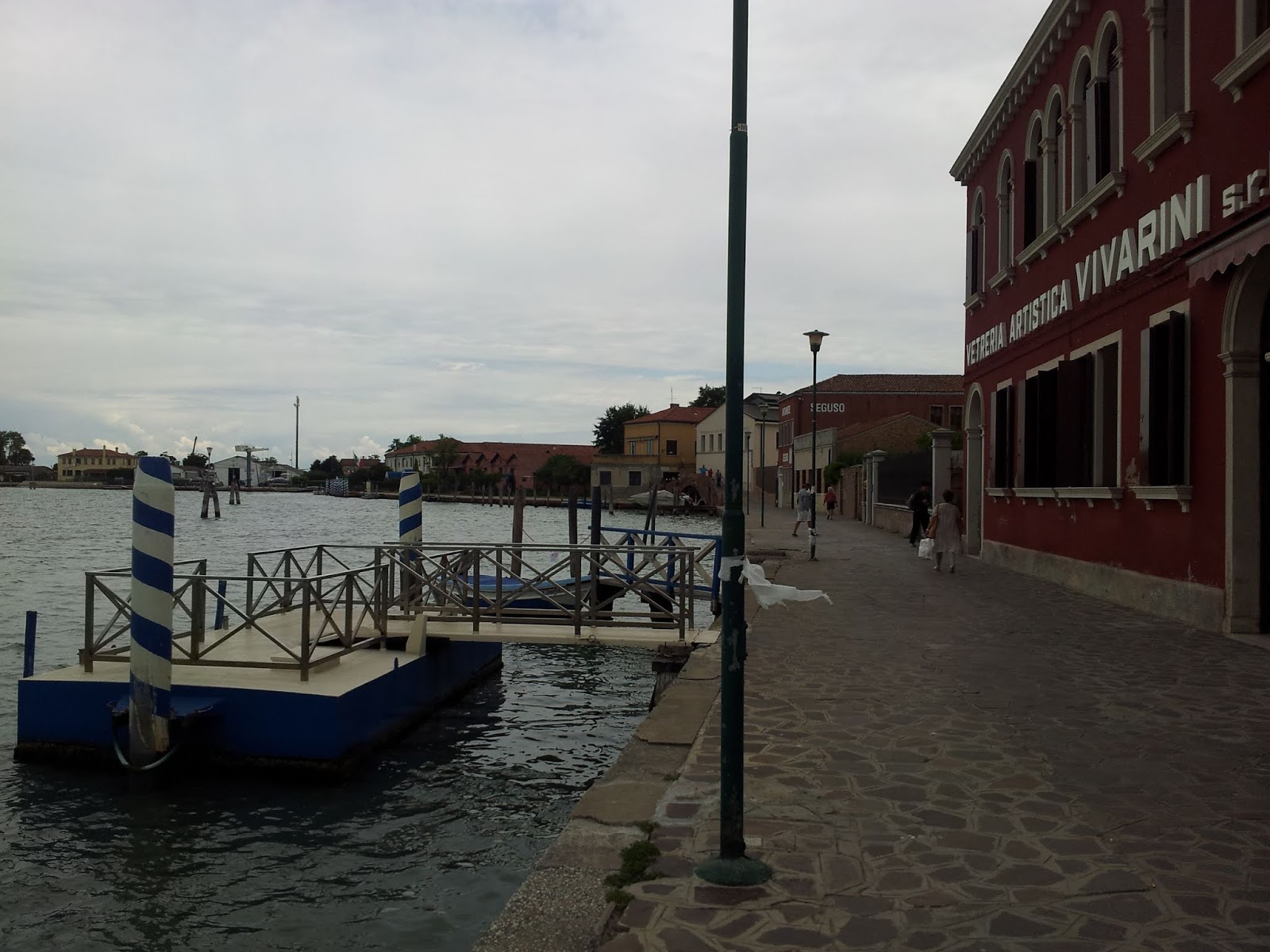
The first time we visited Venice, there was not enough time left to visit the glass-blowing factories on Murano.  We saved this for the next visit, and now more comfortable with taking the Vaporetto, boarded at San Marco for the short journey.

The view looking towards the cemetery:

The view looking down what I think was the equivalent to the main street, or where several of the glass-blowing factories and display shops were located:

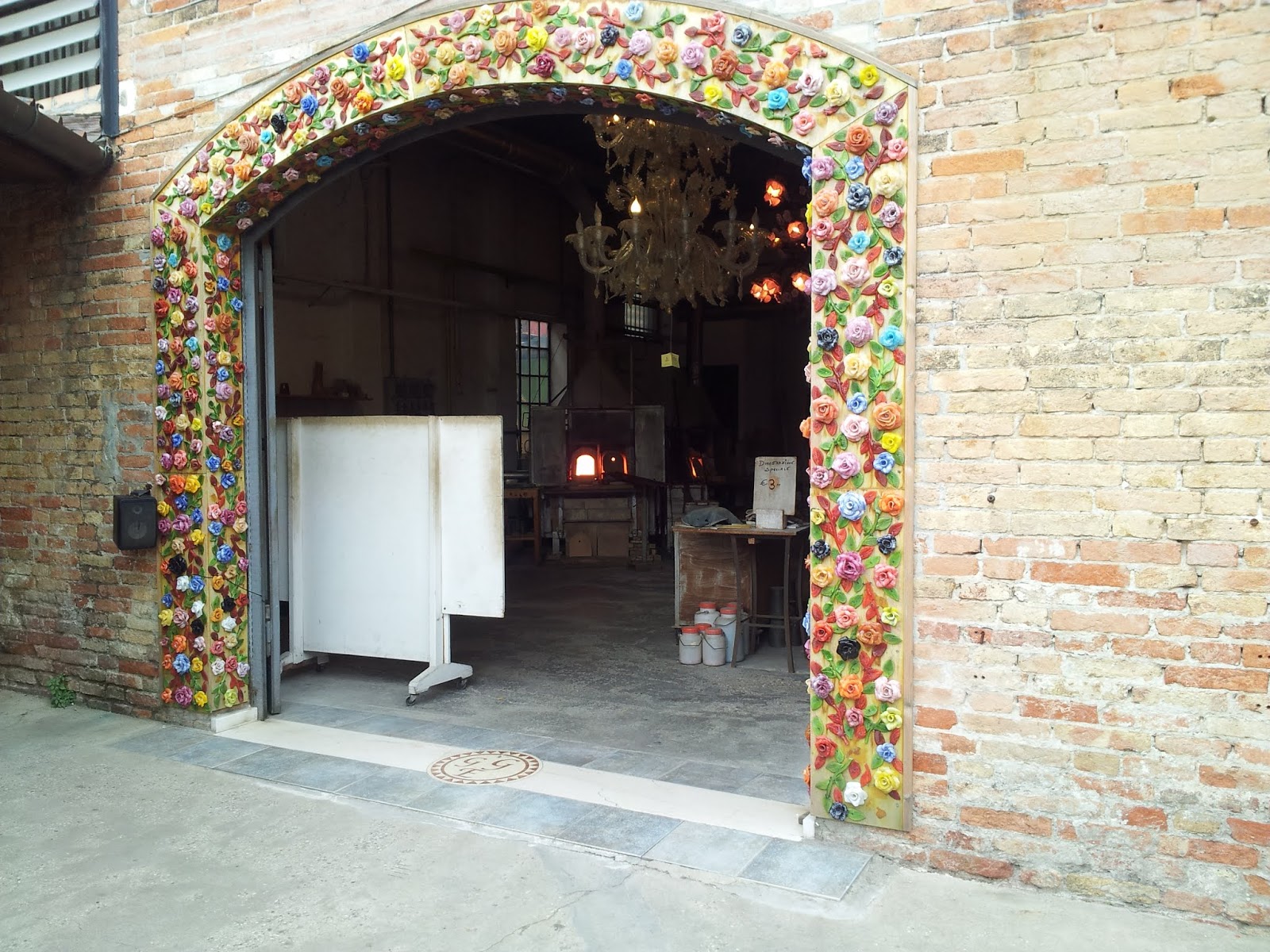
Looking towards a workshop, this one costs us each a Euro to go in and observe a demonstration of glass blowing, and it still surprises me that some people would not pay

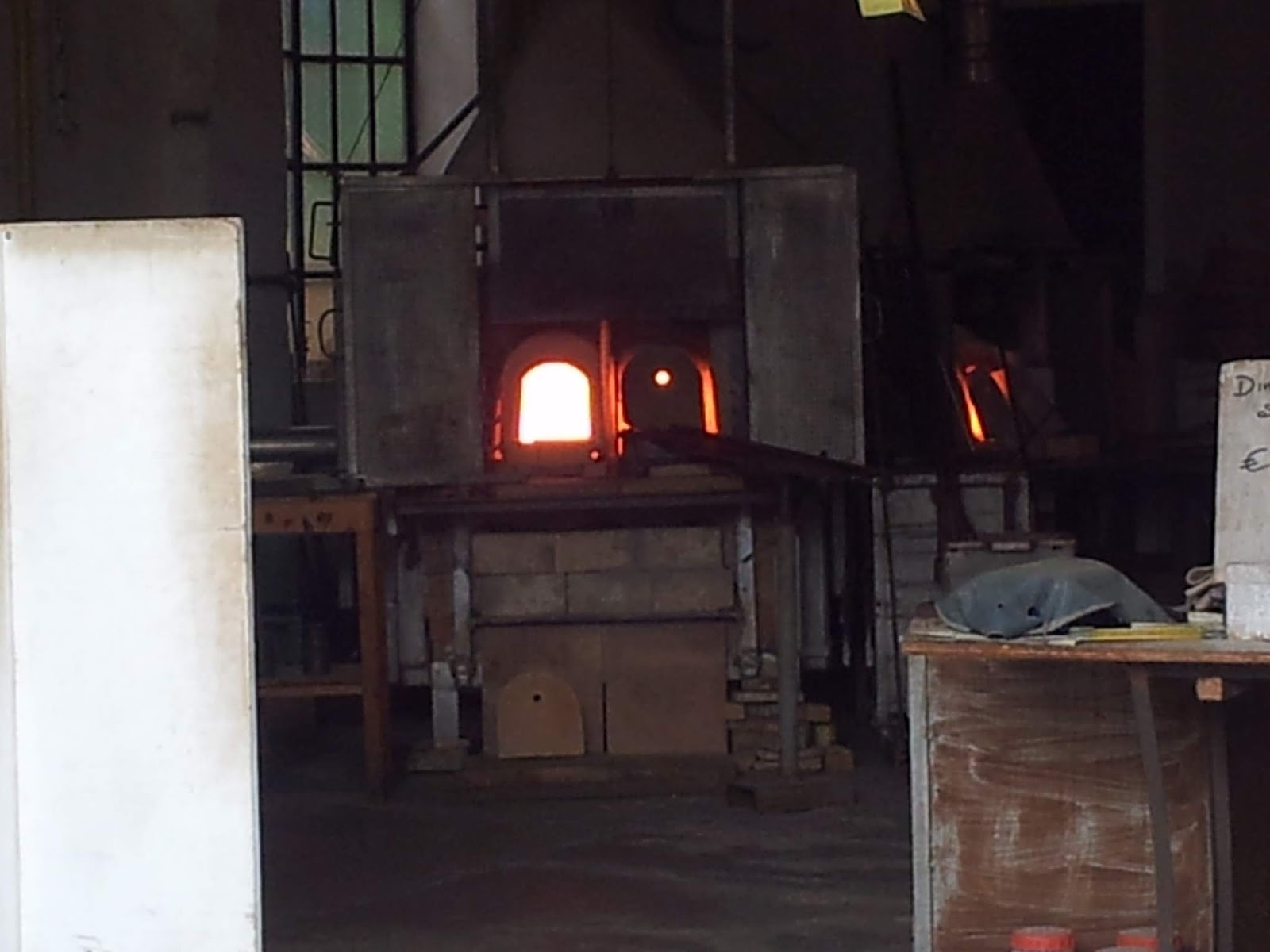
The oven where the glass is heated

And the finished product, the retail version of the horse that the glassblower created during the demonstration:

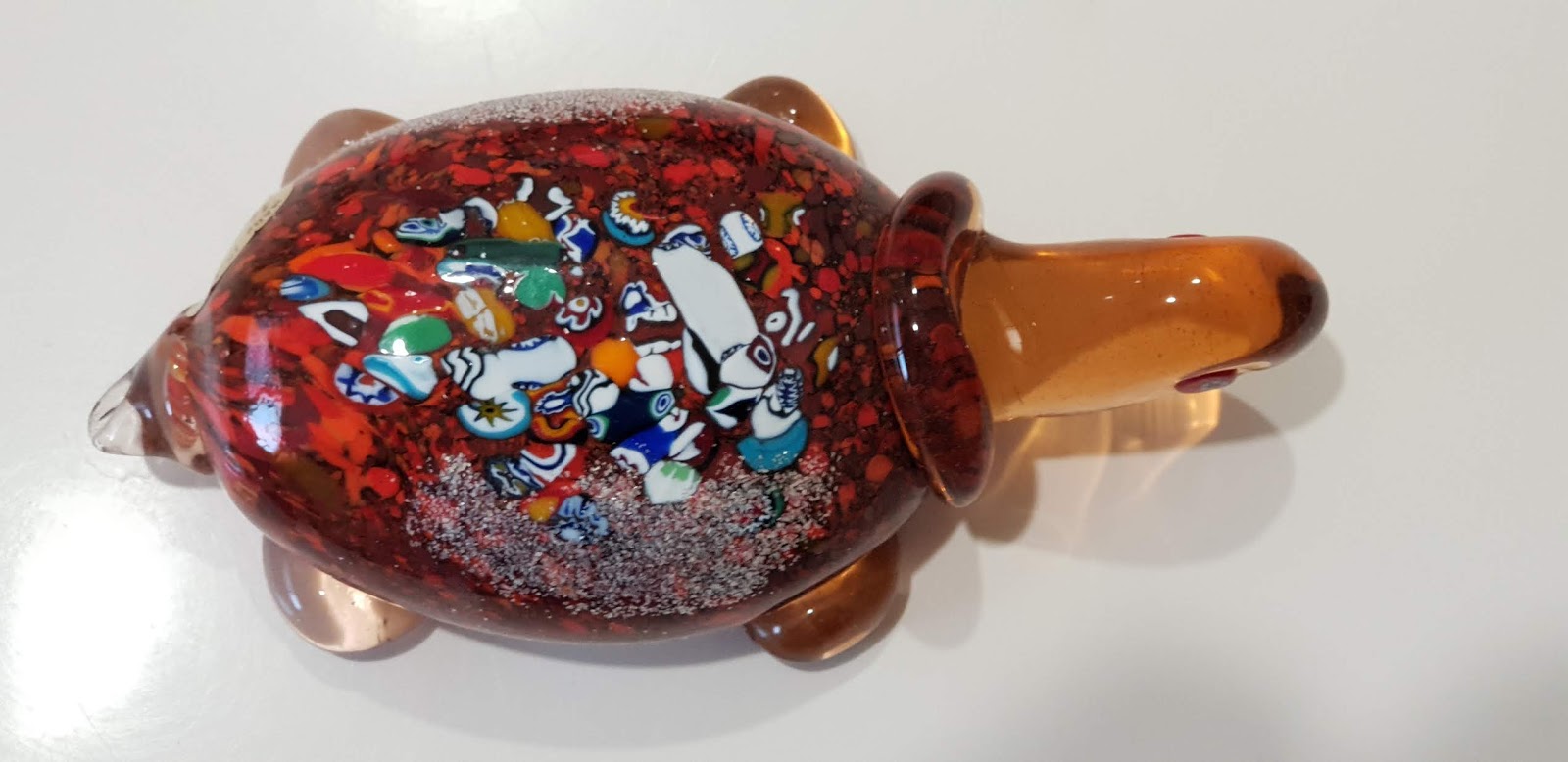
Then we bought some other glassware from the retail storefront, a candle holder

and a turtle.