A photograph from the inspirational bin – 52

What story does it inspire?

while poking around in what could be considered part of our colonial past, we came across a place that had a few remnants.

It’s hard to imagine that in the 1800s wagons like the above were a principal means of transport, with variations for transporting goods, or people, drawn by horses.

Whereas these days we can travel 300, 400 miles in a day in the modern car, and in relative comfort, to do the same distance in a horse-drawn vehicle, with no spring loaded axels, would take days.

And the journey is particularly uncomfortable over any distance. There would have to be a series of Inns and Hotels to stay overnight because travel at night would be difficult.

It’s hard to imagine where we would be without the modern motor car.

I have had a ride in a stagecoach once, over a short journey, and it was not something I would contemplate over a long distance.

But, then, what if we suddenly have no oil to create petrol, and we use up all the minerals needed for electric car batteries?

I think it could inspire a post-apocalypse world we would bearly be able to survive in.

Writing a book in 365 days – 39/40

Days 39 and 40

Another writing exercise, this time requiring three elements: a car accident, a betrayal, and a historical event. It’s not exactly a walk in the park, but with a little thought, perhaps we can conjure up a story.

A car accident, a betrayal, a historical event

When people refer to mixed marriages, they often refer to different religions, such as a protestant marrying a Catholic.

If only our problems were that simple.

No, we were from two opposing families whose views of their contribution to the founding of our city varied widely and had since the early 1800s.

Samantha and I had viewed all of this squabbling with very jaundiced eyes and largely ignored it as it blazed around us and had spent those first five years together blissfully, despite the turbulence.

That all changed when we arrived at her parent’s house, or rather a manor house, a place that they said reflected their standing in the town for our weekly dining engagement. 

This was one of the better dinners, even though there were twelve Benleys and only one Jacobson, me.  Partisanship was forgotten until over coffee at the end, and Samantha announced that she was pregnant.

Those statements, you could hear a pin drop, and you could cut the sir with a knife, were both equally relevant. 

Her father, at the head of the table, started turning purple and making strange sounds.  Her mother, sitting next to her, said in a quiet voice, “You said you were never having children,” and the horrified looks on her sisters’ faces spoke volumes.

Samantha looked at me and shrugged.

It was the first I knew that she was never having children, but I did remember her saying that before we were married, she had to make a silly promise to her father.  I guess I knew what it was now.

“Right,” I said in my calmest voice, “I think it’s time we left.  I have an early morning tomorrow.”

I stood and went over to Samantha and stood behind her seat.  I could see the disappointment on her face.  She had been overjoyed with the news because we had been trying for nearly a year.

She had not mentioned or agreed with whatever promise she had made.

She stood slowly, her mother relinquishing her hand.  “It is good news, Sam,” she said.

“This should not have happened.”  Her father had finally found his voice, and it was almost hoarse.  “The very idea!”

“It’s a child, not a monster.  And if you are going to behave like this, it will be a child you will never see.  Any of you.”

I could see the pink tinges reaching her cheeks, a sure sign she was getting very angry.  She was not someone you made angry.

“How dare you…”  he spluttered.

She tucked in a deep breath, and I could see she was trying to calm herself.  “How dare you.  Who do you think you are?  You seem to think that because you have all this land and this great big house, and fingers in everyone’s business you’re somebody in this city.  Perhaps in that fat head of yours, you are, but if you remember, I said I was going to research the origins of this city and our place in it.”

“We are this city.  It’s ours.  My forebears worked very hard to make it what it is.”

“Your forebears murdered and stole to get everything you hold so dear.  And I’m going to tell everyone at the Historical Society annual festival next week.  Shock, horror, you’ve been, wr all have been living off the proceeds of ill-gotten gain.  And you know what’s worse, you knew about all this time.  All of it.  So much for trying to sabotage my research efforts.  I’ll be honest, I’m glad I don’t have the Henley name anymore.”

The old man couldn’t speak and flipped back in his chair.  What was there to say?  I was as gobsmacked as everyone else around that table.  I mean, I knew the legends, but no one believed them.

I knew Samantha was researching the family history but not as far back as she had.  There was that one night when she came back from the state capital where she believed there were documents relating to the early days, the wild west she had called it.  There had been an arrangement with Wyatt Earp or one of those famous characters, and she had thought the Henleys had been lawmen.

Perhaps not.  Apparently, they had been on the other side of the law, but no one could produce anything because the documents were missing or perhaps didn’t exist.  That night, she had returned with the blackest of expressions, and I didn’t ask.

“Now, we’re leaving.  We will not be back.”

We walked calmly and quietly to the car, and before she got in, she looked back at the scene she had nearly every day of her life, the only real home she had known.

And now knowing it wasn’t really hers or the Henleys, if the legend was true, the original Henley worked for the then owner of the property which was basically everything, including the town, and then one night in the bar of the hotel they were playing poker, and the owner, plied with whiskey lost the title over a losing hand.

The story went, and he went home and was unable to live with the shame, set fire to the house, killing everyone in it.  That’s how the Henleys got their start.

“Legends only tell part of the story,” she said. “Only one person knew there was a survivor from the ranch burning down, a daughter, rescued from the ashes the next morning by one of the players in that eventful car game.  Henley cheated.  He was renowned for cheating at cards and killing the men who called him out.  The man who saved her told her how he did it.  She went to the sheriff and told him bur no one believed the word of a ten year old so nothing happened.

“Except he filed a report of the matter, and fifty or so years later, at another card game, he pulled the same trick and was called out.  He died in the ensuing duel.  Fifty years, no one put the evidence together or knew about it.”

“The girl?”

“Lived a comfortable life back east as a school teacher and let her memories of life on the ranch become the inspiration for a book, the manuscript I now have.  I found one of her direct relatives who had so many bits and pieces accumulated over the years.  Technically, this is all hers, theirs, but it’s a little too late.  Besides, she said they couldn’t be bothered trying to contest it.

“Sometimes it’s best just to be no one in particular.  Like us.”

We got in the car.  It was a sight at night, in the middle of a wide open space, virtually untouched from the time when it was built over a hundred years ago.

“Are you really going to tell everyone at the Historical Society?”

“No.  What’s the point.  People will just say it’s a legend that anyone can bend to say whatever they want.  There’s proof, but with the lawyers my father has, none of it will ever see the light of day.”

I shrugged.  She was right.  My father crossed Henley, and Henley sued him out of existence.

It was about a half mile from the ranchhouse to the main road and I took it slowly because the roadway was in need of repair.

The night was dark, clouds covering the moon making the headlights a necessity to see where we were going.

About half way we could hear the sound of another car but could not pick up the direction it was coming from. 

Until it came up behind us very quickly and crashed into the rear of our car shoving us into a spin and sliding off the side of the roadway into a ditch.

Not expecting it we were tossed around inside the cabin like rag dolls, the seat belts only saving us so much.  Both of us hit our heads and were dazed if not semi unconscious.  In a few seconds it was over.

The headlights showed the dust storm kicked up by the spinning cars and then through the dust I could see three men carrying rifles, masks covering their faces.

My mind returned to the old days of stagecoaches and outlaws holding them up. 

It was not possible.

They stopped about twenty feet from the car, loaded the first round, and aimed their weapons at us. In what I thought was a familiar voice, the middle one spoke, “This is what you get for meddling in other people’s affairs.”

He looked from one to the other, then started shooting.

©  Charles Heath  2025

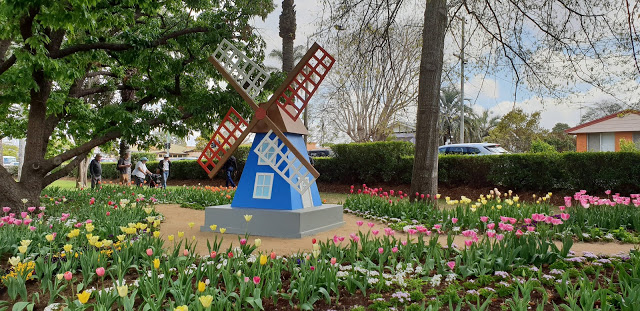
Searching for locations: Toowoomba Flower Festival, Toowoomba, Queensland, Australia

The Toowoomba Carnival of Flowers is held in September, and generally runs for ten days at the end of the month.

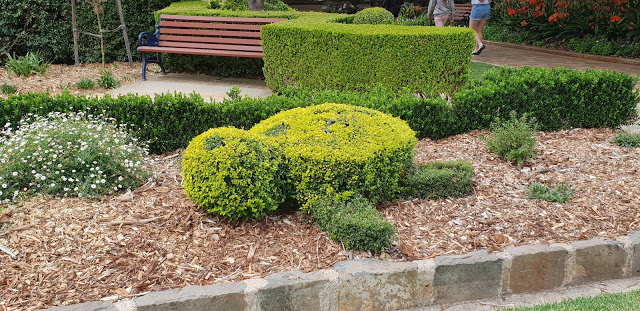
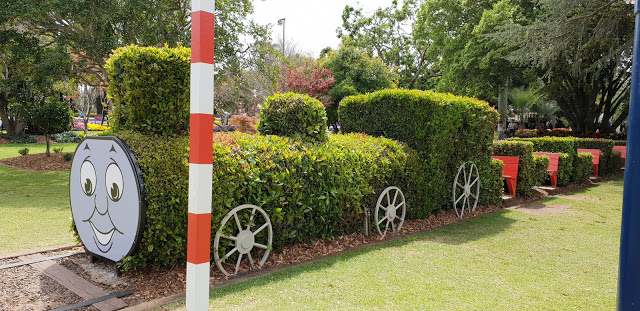
We visited the Laurel Bank Park, where there are beds of many colorful flowers,

open spaces,

statues,

an area set aside for not only tulips but a model windmill

and quite a number of hedge sculptures

There was also the opportunity to go on a morning or afternoon garden tour which visited a number of private gardens of residences in Toowoomba.

The writer’s toolbox

Travelling is always a good source of material to add to the writing store.

Writers collect anecdotes, descriptions of their fellow travellers, more the idiosyncrasies than an actual physical description, and of the experience, though it is all the better if it turns out to be really, really bad than good.

This equally applies to experiences in hotels, with hire cars, tourist spots and especially fellow travellers.

Start with the airline. This can make or break the start of a holiday and could be the difference between a great start or a horrid one.

We can usually accept the sardine arrangements, the lack of legroom, being within earshot of a screaming baby, or put up with the constant kicking in the back of the seat by the wretched uncontrollable child sitting behind you.

It’s having the person in front fully reclining their seat in your face that gets your goat. For an hour and a half or eight hours, it is still the biggest bone of contention when flying.

We are taking one airline down to Melbourne the one that makes a big deal out of the full service it provides, and another airline back, formerly a low-cost airline but now trying to match its so-called full-service rival.

The flight down is smooth, and the food reasonably good. The landing, even though the pilot was battling sharp crosswinds, was very heavy and left us in no doubt we had reached terra firma again. I’ve been on worse.

Hire cars are a rich field to pick over and I’ve read some interesting experiences involving even the best. So far I’ve not had a problem. I pre-booked as far in advance as possible to get a small fuel-efficient vehicle. Sometimes we are upgraded and while they think they are doing you a favour it is not necessarily the case, especially when you finish up with a large car that barely fits small provincial French roads one lane wide. It does happen.

There is also the waiting time at the car rental desk, particularly when it’s the rental company you picked, while other company desks are empty. You also quickly discover that most of the people in the queue didn’t think of pre-booking a car, which to my mind is expecting trouble with it being the peak holiday period.

We had to wait in a long queue after taking a chance it would be less crowded at the pick-up point than the desk in the airport terminal. It was no surprise to discover that a lot of other travellers had the same thought.

Hotels can also be one of the major letdowns of a holiday. If you are going to use a travel agent to pick a hotel for you, make sure you check as much as you can because no matter how it is described, seeing it, in reality, is always completely different than the pictures in a brochure and sometimes on the Internet. It requires research and a good look at TripAdvisor. Or word of mouth by someone you know and trust who has stayed there.

Take, for instance, staying in a five-star hotel the usual stomping ground of the rich and famous, it is always interesting to see how the less privileged fare. Where hotel staff are supposed to treat each guess equally it is not always the case. Certainly, if you’re flashing money around, the staff will be happy to take it though you may not necessarily get what you’re expecting.

We are lucky to be in the highest loyalty level and this accords us a number of privileges; this time working in our favour but it is not always the case. Privilege can sometimes count for nothing. It often depends on the humour of the front desk clerk and woe betide you if you get the receptionist from hell. Been there, done that, more than once.

Then there is the room. There is such a wide variety of rooms available even if the hotel site or brochure had representative pictures the odds are you can still get a room that is nothing like you’re expecting or were promised.

Believe me, there are rooms with a view, overlooking pigeon coops or air-conditioning vents.

A bone of contention often can be the location of the hotel and sometimes parking facilities not the least of which is the cost.  Valet parking; forget it.

We are reasonably near transport if we could walk, the km to the nearest bus or tram stop is a long long way when you can’t walk and that’s when the hotel starts to feel like a prison. Taxis may be cheap but when you have to use them three or four times a day it all adds up.

Be wary when a hotel says it is close to public transport. While that may be true in London, anywhere else especially in Europe you could find yourself in the middle of nowhere. Its when you discover your travel agent didn’t exactly lie but it is why that weekly rate was so cheap. In the end, the sum of the taxi fares and the accommodation turns out to be dearer than if you stayed at the Savoy.

So airline, hire car and hotel aside those front line experiences are fodder for the travel blogger, these people who are also known as road warriors.

I wondered why until we started travelling and discovered the incredible highs and lows, of flying, yes there are good and bad airlines and the bad are not confined to the low cost, of rental cars and of hotels. There is a very large gulf between five stars and three and sometimes three can be very generous. And of course, l now have a list of hotels l would never stay in again, the names of which might surprise you.

Unfortunately, my travel exploits are sometimes as boring as the day is long, but even then, there’s at least one calamity to deal with.

Our airport experiences are all without incident, although from time to time the sight of police or soldiers patrolling with guns can be disconcerting.

We have also experienced the odd problem in London at Heathrow firstly trying to get hep from the designated help staff and then to find the check-in desk of an airline apparently no one available knew existed.

That was momentarily exciting after phone calls were not answered and internet contact was not possible. Not until a little footwork found the agents desk and the misunderstanding was sorted out.

By the way, the airline itself was a pleasure to fly on, the staff pleasant and most of all we arrived just before the airport closed.

On the way home, only a flight stands between us and getting home. After days sometimes weeks it is that moment we all look forward to sleeping on our own beds making our own food and getting to the gym to work off those extra kilos put on by delicious hotel food or local fare where calorie counting is not part of the dining experience.

Of course, getting to the airport from the hotel can be an experience in itself whether by taxi perhaps the taxi driver from hell who knows only two speeds fast and stop and is also, unfortunately, colour blind.

Or whether you have arranged for a transfer only to discover it’s not coming because the company went out of business or you changed hotels and someone forgot to tell them.

Or the travel agent made a mistake or forgot to confirm the booking.

Oh yes, it happens.

We have a hire car and will be returning it t the same place. Let’s hope the signage at the airport makes it easy to find the rental place. In London we had a hell of a time trying to find it; good thing we were hours earlier than we should be.

And just because the sign says rental returns for the lane you’re in it doesn’t necessarily follow it’s the right lane. Then as you miss the exit, and get stuck on the one-way road system, all of a sudden you have left the airport and you’re heading back to the city.

If you’re running late …

But if everything goes to plan you get to the airport with time to spare.

We manage to arrive early at the airport. Rather than wait three hours for our flight we decide to try and get on an earlier departure. This will depend on our ticket type and whether there are seats available, preferably together.

We line up in the service queue, which by its very description means you have a long wait as service is mostly between difficult to impossible depending on the request.

We wait for twenty minutes. There’s a long queue behind us. Our request is taken care of quickly and efficiently making it almost seamless, certainly painless. I’m sure our request was one of the very few easy ones the staff will get.

Today it seems it is our lucky day. The transfer to an earlier flight is free and there are two seats available together. All we have to do is alert the pick-up driver at our destination we are going to be an hour earlier. Done.

Checking in bags is usually the bane of the traveller’s existence.

No matter which airport in whatever country you are departing from the only difference is the length of the queue; from incredibly long with a half-hour wait to the head of the line to up to an hour. Our queue is 15 to 20 minutes.

One assumes this is why intending passengers are asked to go to the airport two hours ahead of their fight. There are times of the day where the queues are horrendous, and that not only applies to Heathrow.

And if you are late, just panic.

And if your bags are overweight be prepared to have your credit card hammered.

Especially if you’re flying Air France from Venice to Paris. Domestically in Australia, it’s not so bad.

Now its time to relax. There is an hour before we have to be at the gate so just enough time to get coffee and a doughnut.

And be horrified at what shops charge for simple items like sandwiches. I think $10 is very expensive. But if you’re hungry and forgot to eat before getting to the airport then be prepared to pay more than you usually would for the same fare.

It’s also time to observe our fellow passengers, and there is always the one who has a last-minute dash for a plane that is just about to leave, passengers with panic-stricken looks.

We all know what happens if you miss the flight even as you’re downing that last cocktail in the airline lounge while thinking, yes they’ll hold the flight for me!

Apparently not because airlines want to keep their ‘on-time’ record.

Even so, there’s still three more calls for the missing passengers and then nothing. If they missed the plane there their problems are just beginning. It’s the same feeling you have when your name is called out before the flight starts loading.

Only once have we been called up and given an upgrade, and once in the US to be told we could take another flight because our flight was overbooked. Business-class was greatly appreciated and was worth the extra hour we had to wait.

The next bottleneck is the scanners and sometimes the queue here is very long and moving slowly because the scanners are set to pick up belts and shoes so people are scattered everywhere getting redressed and putting shoes on. Today being a weekday the queue is not so bad.

Loading is painless and reasonably organized except when the passengers in high numbered rows try to board by the front door instead of the rear door and clash midway in the plane. After they untangle themselves and get to their seats we’re ready to go.

This flight still has a manual safety demonstration which most people ignored but is slightly better than the video demonstration. Let’s hope we don’t go down over the water.

I’ve charted my path to the emergency exit and l have quite a few people before me. I guess there’s more than one way to be last off the plane.

Sometimes you get to pick who you get to sit next to, especially if you are travelling with your partner which this time l am, but in a three-seat arrangement, you have no control over who takes that third seat.

We are lucky this time because it will not become a tight squeeze but unfortunately, our fellow traveller has a cold and in a confined space for several hours it could turn out to be a problem.

The flight is smooth, the snacks edible, but there is no liquor service like the full-service rival but that might be a good thing.

No air rage on this flight.

Time flies, pardon the pun, and we have arrived. Even though it took forever for the baggage to be delivered we still got home early.

Until the next time, we fly.


“The Things We Do For Love”

Would you give up everything to be with the one you love?

Is love the metaphorical equivalent to ‘walking the plank’; a dive into uncharted waters?

For Henry, the only romance he was interested in was a life at sea, and when away from it, he strived to find sanctuary from his family and perhaps life itself.  It takes him to a small village by the sea, a place he never expected to find another just like him, Michelle, whom he soon discovers is as mysterious as she is beautiful.

Henry had long since given up the notion of finding romance, and Michelle couldn’t get involved for reasons she could never explain, but in the end, both acknowledge that something happened the moment they first met.  

Plans were made, plans were revised, and hopes were shattered.

A chance encounter causes Michelle’s past to catch up with her, and whatever hope she had of having a normal life with Henry, or anyone else, is gone.  To keep him alive she has to destroy her blossoming relationship, an act that breaks her heart and shatters his.

But can love conquer all?

It takes a few words of encouragement from an unlikely source to send Henry and his friend Radly on an odyssey into the darkest corners of the red-light district in a race against time to find and rescue the woman he finally realizes is the love of his life.

The cover, at the moment, looks like this:

lovecoverfinal1

Is love the metaphorical equivalent to ‘walking the plank’; a dive into uncharted waters?

For Henry, the only romance he was interested in was a life at sea, and when away from it, he strived to find sanctuary from his family and perhaps life itself.  It takes him to a small village by the sea, s place he never expected to find another just like him, Michelle, whom he soon discovers is as mysterious as she is beautiful.

Henry had long since given up the notion of finding romance, and Michelle couldn’t get involved for reasons she could never explain, but in the end, both acknowledge that something happened the moment they first met.  

Plans were made, plans were revised, and hopes were shattered.

A chance encounter causes Michelle’s past to catch up with her, and whatever hope she had of having a normal life with Henry, or anyone else, is gone.  To keep him alive she has to destroy her blossoming relationship, an act that breaks her heart and shatters his.

But can love conquer all?

It takes a few words of encouragement from an unlikely source to send Henry and his friend Radly on an odyssey into the darkest corners of the red-light district in a race against time to find and rescue the woman he finally realizes is the love of his life.

The cover, at the moment, looks like this:

lovecoverfinal1

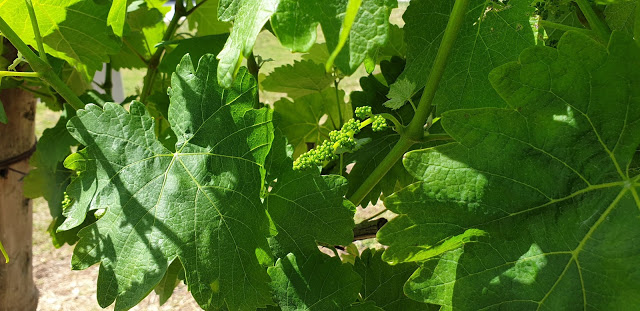
Searching for locations: O’Reilly’s Vineyard, Canungra, Queensland, Australia

O’Reilly’s Canungra Valley Vineyards located on Lamington National Park Road, Canungra, Queensland, is a 15-acre vineyard with the 163-year-old historic homestead ‘Killowen’ set up with dining rooms and long verandahs, and extensive grounds that are next to the Canungra creek where it is possible to find Platypus and turtles while partaking in a picnic.

There are about 6,000 vines of the (white) Semillon, Verdelho and (red) Chambourcin, Shiraz and Petit Vedot varieties.

We visited there in December when the vines were just starting to produce fruit. 

That fruit is usually harvested in February and then turned into wine.
The setting for picnics is, on a warm Summer’s day is idyllic, where you can wade in the creek, or go looking for a platypus.  We did not see one there the day we visited but did spend some time sitting beside the creek.

“One Last Look”, nothing is what it seems

A single event can have enormous consequences.

A single event driven by fate, after Ben told his wife Charlotte he would be late home one night, he left early, and by chance discovers his wife having dinner in their favourite restaurant with another man.

A single event where it could be said Ben was in the wrong place at the wrong time.

Who was this man? Why was she having dinner with him?

A simple truth to explain the single event was all Ben required. Instead, Charlotte told him a lie.

A single event that forces Ben to question everything he thought he knew about his wife, and the people who are around her.

After a near-death experience and forced retirement into a world he is unfamiliar with, Ben finds himself once again drawn back into that life of lies, violence, and intrigue.

From London to a small village in Tuscany, little by little Ben discovers who the woman he married is, and the real reason why fate had brought them together.

It is available on Amazon here:  http://amzn.to/2CqUBcz

Writing a book in 365 days – 39/40

Days 39 and 40

Another writing exercise, this time requiring three elements: a car accident, a betrayal, and a historical event. It’s not exactly a walk in the park, but with a little thought, perhaps we can conjure up a story.

A car accident, a betrayal, a historical event

When people refer to mixed marriages, they often refer to different religions, such as a protestant marrying a Catholic.

If only our problems were that simple.

No, we were from two opposing families whose views of their contribution to the founding of our city varied widely and had since the early 1800s.

Samantha and I had viewed all of this squabbling with very jaundiced eyes and largely ignored it as it blazed around us and had spent those first five years together blissfully, despite the turbulence.

That all changed when we arrived at her parent’s house, or rather a manor house, a place that they said reflected their standing in the town for our weekly dining engagement. 

This was one of the better dinners, even though there were twelve Benleys and only one Jacobson, me.  Partisanship was forgotten until over coffee at the end, and Samantha announced that she was pregnant.

Those statements, you could hear a pin drop, and you could cut the sir with a knife, were both equally relevant. 

Her father, at the head of the table, started turning purple and making strange sounds.  Her mother, sitting next to her, said in a quiet voice, “You said you were never having children,” and the horrified looks on her sisters’ faces spoke volumes.

Samantha looked at me and shrugged.

It was the first I knew that she was never having children, but I did remember her saying that before we were married, she had to make a silly promise to her father.  I guess I knew what it was now.

“Right,” I said in my calmest voice, “I think it’s time we left.  I have an early morning tomorrow.”

I stood and went over to Samantha and stood behind her seat.  I could see the disappointment on her face.  She had been overjoyed with the news because we had been trying for nearly a year.

She had not mentioned or agreed with whatever promise she had made.

She stood slowly, her mother relinquishing her hand.  “It is good news, Sam,” she said.

“This should not have happened.”  Her father had finally found his voice, and it was almost hoarse.  “The very idea!”

“It’s a child, not a monster.  And if you are going to behave like this, it will be a child you will never see.  Any of you.”

I could see the pink tinges reaching her cheeks, a sure sign she was getting very angry.  She was not someone you made angry.

“How dare you…”  he spluttered.

She tucked in a deep breath, and I could see she was trying to calm herself.  “How dare you.  Who do you think you are?  You seem to think that because you have all this land and this great big house, and fingers in everyone’s business you’re somebody in this city.  Perhaps in that fat head of yours, you are, but if you remember, I said I was going to research the origins of this city and our place in it.”

“We are this city.  It’s ours.  My forebears worked very hard to make it what it is.”

“Your forebears murdered and stole to get everything you hold so dear.  And I’m going to tell everyone at the Historical Society annual festival next week.  Shock, horror, you’ve been, wr all have been living off the proceeds of ill-gotten gain.  And you know what’s worse, you knew about all this time.  All of it.  So much for trying to sabotage my research efforts.  I’ll be honest, I’m glad I don’t have the Henley name anymore.”

The old man couldn’t speak and flipped back in his chair.  What was there to say?  I was as gobsmacked as everyone else around that table.  I mean, I knew the legends, but no one believed them.

I knew Samantha was researching the family history but not as far back as she had.  There was that one night when she came back from the state capital where she believed there were documents relating to the early days, the wild west she had called it.  There had been an arrangement with Wyatt Earp or one of those famous characters, and she had thought the Henleys had been lawmen.

Perhaps not.  Apparently, they had been on the other side of the law, but no one could produce anything because the documents were missing or perhaps didn’t exist.  That night, she had returned with the blackest of expressions, and I didn’t ask.

“Now, we’re leaving.  We will not be back.”

We walked calmly and quietly to the car, and before she got in, she looked back at the scene she had nearly every day of her life, the only real home she had known.

And now knowing it wasn’t really hers or the Henleys, if the legend was true, the original Henley worked for the then owner of the property which was basically everything, including the town, and then one night in the bar of the hotel they were playing poker, and the owner, plied with whiskey lost the title over a losing hand.

The story went, and he went home and was unable to live with the shame, set fire to the house, killing everyone in it.  That’s how the Henleys got their start.

“Legends only tell part of the story,” she said. “Only one person knew there was a survivor from the ranch burning down, a daughter, rescued from the ashes the next morning by one of the players in that eventful car game.  Henley cheated.  He was renowned for cheating at cards and killing the men who called him out.  The man who saved her told her how he did it.  She went to the sheriff and told him bur no one believed the word of a ten year old so nothing happened.

“Except he filed a report of the matter, and fifty or so years later, at another card game, he pulled the same trick and was called out.  He died in the ensuing duel.  Fifty years, no one put the evidence together or knew about it.”

“The girl?”

“Lived a comfortable life back east as a school teacher and let her memories of life on the ranch become the inspiration for a book, the manuscript I now have.  I found one of her direct relatives who had so many bits and pieces accumulated over the years.  Technically, this is all hers, theirs, but it’s a little too late.  Besides, she said they couldn’t be bothered trying to contest it.

“Sometimes it’s best just to be no one in particular.  Like us.”

We got in the car.  It was a sight at night, in the middle of a wide open space, virtually untouched from the time when it was built over a hundred years ago.

“Are you really going to tell everyone at the Historical Society?”

“No.  What’s the point.  People will just say it’s a legend that anyone can bend to say whatever they want.  There’s proof, but with the lawyers my father has, none of it will ever see the light of day.”

I shrugged.  She was right.  My father crossed Henley, and Henley sued him out of existence.

It was about a half mile from the ranchhouse to the main road and I took it slowly because the roadway was in need of repair.

The night was dark, clouds covering the moon making the headlights a necessity to see where we were going.

About half way we could hear the sound of another car but could not pick up the direction it was coming from. 

Until it came up behind us very quickly and crashed into the rear of our car shoving us into a spin and sliding off the side of the roadway into a ditch.

Not expecting it we were tossed around inside the cabin like rag dolls, the seat belts only saving us so much.  Both of us hit our heads and were dazed if not semi unconscious.  In a few seconds it was over.

The headlights showed the dust storm kicked up by the spinning cars and then through the dust I could see three men carrying rifles, masks covering their faces.

My mind returned to the old days of stagecoaches and outlaws holding them up. 

It was not possible.

They stopped about twenty feet from the car, loaded the first round, and aimed their weapons at us. In what I thought was a familiar voice, the middle one spoke, “This is what you get for meddling in other people’s affairs.”

He looked from one to the other, then started shooting.

©  Charles Heath  2025

An excerpt from “Mistaken Identity” – a work in progress

The odds of any one of us having a doppelganger are quite high. Whether or not you got to meet him or her, or be confronted by them was significantly lower. Except of course, unless you are a celebrity.

It was a phenomenon remarkable only for the fact, at times, certain high-profile people, notorious or not, had doubles if only to put off enemies or the general public. Sometimes we see people in the street, people who look like someone we knew, and made the mistake of approaching them like a long lost friend, only to discover an embarrassed individual desperately trying to get away for what they perceive is a stalker or worse.

And then sometimes it is a picture that looms up on a TV screen, an almost exact likeness of you. At first, you are fascinated, and then according to the circumstances, and narrative that is attached to that picture, either flattered or horrified.

For me one turned to the other when I saw an almost likeness of me flash up on the screen when I turned the TV on in my room. What looked to be my photo, with only minor differences, was in the corner of the screen, the newsreader speaking in rapid Italian, so fast I could only translate every second or third word.

But the one word I did recognize was murder. The photo of the man up on the screen was the subject of an extensive manhunt. The crime, the murder of a woman in the very same hotel I was staying, and it was being played out live several floors above me. The gist of the story, the woman had been seen with, and staying with the man who was my double, and, less than an hour ago, the body had been discovered by a chambermaid.

The killer, the announcer said, was believed to be still in the hotel because the woman had died shortly before she had been discovered.

I watched, at first fascinated at what I was seeing. I guess I should have been horrified, but at that moment it didn’t register that I might be mistaken for that man.

Not until another five minutes had passed, and I was watching the police in full riot gear, with a camera crew following behind, coming up a passage towards a room. Live action of the arrest of the suspected killer the breathless commentator said.

Then, suddenly, there was a pounding on the door. On the TV screen, plain to see, was the number of my room.
I looked through the peephole and saw an army of police officers. It didn’t take much to realize what had happened. The hotel staff identified me as the man in the photograph on the TV and called the police.

Horrified wasn’t what I was feeling right then.

It was fear.

My last memory was the door crashing open, the wood splintering, and men rushing into the room, screaming at me, waving guns, and when I put my hands up to defend myself, I heard a gunshot.

And in one very confused and probably near-death experience, I thought I saw my mother and thought what was she doing in Rome?

I was the archetypal nobody.

I lived in a small flat, I drove a nondescript car, had an average job in a low profile travel agency, was single, and currently not involved in a relationship, no children, and according to my workmates, no life.

They were wrong. I was one of those people who preferred their own company, I had a cat, and travelled whenever I could. And I did have a ‘thing’ for Rosalie, one of the reasons why I stayed at the travel agency. I didn’t expect anything to come of it, but one could always hope.

I was both pleased and excited to be going to the conference. It was my first, and the glimpse I had seen of it had whetted my appetite for more information about the nuances of my profession.

Some would say that a travel agent wasn’t much of a job, but to me, it was every bit as demanding as being an accountant or a lawyer. You were providing a customer with a service, and arguably more people needed a travel agent than a lawyer. At least that was what I told myself, as I watched more and more people start using the internet, and our relevance slowly dissipating.

This conference was about countering that trend.

The trip over had been uneventful. I was met at the airport and taken to the hotel where the conference was being held with a number of other delegates who had arrived on the same plane. I had mingled with a number of other delegates at the pre conference get together, including one whose name was Maryanne.

She was an unusual young woman, not the sort that I usually met, because she was the one who was usually surrounded by all the boys, the life of the party. In normal circumstances, I would not have introduced myself to her, but she had approached me. Why did I think that may have been significant? All of this ran through my mind, culminating in the last event on the highlight reel, the door bursting open, men rushing into my room, and then one of the policemen opened fire.

I replayed that last scene again, trying to see the face of my assailant, but it was just a sea of men in battle dress, bullet proof vests and helmets, accompanied by screaming and yelling, some of which I identified as “Get on the floor”.

Then came the shot.

Why ask me to get on the floor if all they were going to do was shoot me. I was putting my hands up at the time, in surrender, not reaching for a weapon.

Then I saw the face again, hovering in the background like a ghost. My mother. Only the hair was different, and her clothes, and then the image was going, perhaps a figment of my imagination brought on by pain killing drugs. I tried to imagine the scene again, but this time it played out, without the image of my mother.

I opened my eyes took stock of my surroundings. What I felt in that exact moment couldn’t be described. I should most likely be dead, the result of a gunshot wound. I guess I should be thankful the shooter hadn’t aimed at anything vital, but that was the only item on the plus side.

I was in a hospital room with a policeman by the door. He was reading a newspaper, and sitting uncomfortably on a small chair. He gave me a quick glance when he heard me move slightly, but didn’t acknowledge me with either a nod, or a greeting, just went back to the paper.

If I still had a police guard, then I was still considered a suspect. What was interesting was that I was not handcuffed to the bed. Perhaps that only happened in TV shows. Or maybe they knew I couldn’t run because my injuries were too serious. Or the guard would shoot me long before my feet hit the floor. I knew the police well enough now to know they would shoot first and ask questions later.

On the physical side, I had a large bandage over the top left corner of my chest, extending over my shoulder. A little poking and prodding determined the bullet had hit somewhere between the top of my rib cage and my shoulder. Nothing vital there, but my arm might be somewhat useless for a while, depending on what the bullet hit on the way in, or through.

It didn’t feel like there were any broken or damaged bones.

That was the good news.

On the other side of the ledger, my mental state, there was only one word that could describe it. Terrified. I was looking at a murder charge and jail time, a lot of it. Murder usually had a long time in jail attached to it.

Whatever had happened, I didn’t do it. I know I didn’t do it, but I had to try and explain this to people who had already made up their minds. I searched my mind for evidence. It was there, but in the confused state brought on by the medication, all I could think about was jail, and the sort of company I was going to have.

I think death would have been preferable.

Half an hour later, maybe longer, I was drifting in an out of consciousness, a nurse, or what I thought was a nurse, came into the room. The guard stood, checked her ID card, and then stood by the door.

She came over and stood beside the bed. “How are you?” she asked, first in Italian, and when I pretended I didn’t understand, she asked the same question in accented English.

“Alive, I guess,” I said. “No one has come and told what my condition is yet. You are my first visitor. Can you tell me?”

“Of course. You are very lucky to be alive. You will be fine and make a full recovery. The doctors here are excellent at their work.”

“What happens now?”

“I check you, and then you have a another visitor. He is from the British Embassy I think. But he will have to wait until I have finished my examination.”

I realized then she was a doctor, not a nurse.

My second visitor was a man, dressed in a suit the sort of which I associated with the British Civil Service.  He was not very old which told me he was probably a recent graduate on his first posting, the junior officer who drew the short straw.

The guard checked his ID but again did not leave the room, sitting back down and going back to his newspaper.

My visitor introduced himself as Alex Jordan from the British Embassy in Rome and that he had been asked by the Ambassador to sort out what he labelled a tricky mess.

For starters, it was good to see that someone cared about what happened to me.  But, equally, I knew the mantra, get into trouble overseas, and there is not much we can do to help you.  So, after that lengthy introduction, I had to wonder why he was here.

I said, “They think I am an international criminal by the name of Jacob Westerbury, whose picture looks just like me, and apparently for them it is an open and shut case.”  I could still hear the fragments of the yelling as the police burst through the door, at the same time telling me to get on the floor with my hands over my head.

“It’s not.  They know they’ve got the wrong man, which is why I’m here.  There is the issue of what had been described as excessive force, and the fact you were shot had made it an all-round embarrassment for them.”

“Then why are you here?  Shouldn’t they be here apologizing?”

“That is why you have another visitor.  I only took precedence because I insisted I speak with you first.  I have come, basically to ask you for a favour.  This situation has afforded us with an opportunity.  We would like you to sign the official document which basically indemnifies them against any legal proceedings.”

Curious.  What sort of opportunity was he talking about?  Was this a matter than could get difficult and I could be charged by the Italian Government, even if I wasn’t guilty, or was it one of those hush hush type deals, you do this for us, we’ll help you out with that.  “What sort of opportunity?”

“We want to get our hands on Jacob Westerbury as much as they do.  They’ve made a mistake, and we’d like to use that to get custody of him if or when he is arrested in this country.  I’m sure you would also like this man brought into custody as soon as possible so you will stop being confused with him.  I can only imagine what it was like to be arrested in the manner you were.  And I would not blame you if you wanted to get some compensation for what they’ve done.  But.  There are bigger issues in play here, and you would be doing this for your country.”

I wondered what would happen if I didn’t agree to his proposal.  I had to ask, “What if I don’t?”

His expression didn’t change.  “I’m sure you are a sensible man Mr Pargeter, who is more than willing to help his country whenever he can.  They have agreed to take care of all your hospital expenses, and refund the cost of the Conference, and travel.  I’m sure I could also get them to pay for a few days at Capri, or Sorrento if you like, before you go home.  What do you say?”

There was only one thing I could say.  Wasn’t it treason if you went against your country’s wishes?

“I’m not an unreasonable man, Alex.  Go do your deal, and I’ll sign the papers.”

“Good man.”

After Alex left, the doctor came back to announce the arrival of a woman, by the way she had announced herself, the publicity officer from the Italian police. When she came into the room, she was not dressed in a uniform.

The doctor left after giving a brief report to the civilian at the door. I understood the gist of it, “The patient has recovered excellently and the wounds are healing as expected. There is no cause for concern.”

That was a relief.

While the doctor was speaking to the civilian, I speculated on who she might be. She was young, not more than thirty, conservatively dressed so an official of some kind, but not necessarily with the police. Did they have prosecutors? I was unfamiliar with the Italian legal system.

She had long wavy black hair and the sort of sultry looks of an Italian movie star, and her presence made me more curious than fearful though I couldn’t say why.

The woman then spoke to the guard, and he reluctantly got up and left the room, closing the door behind him.
She checked the door, and then came back towards me, standing at the end of the bed. Now alone, she said, “A few questions before we begin.” Her English was only slightly accented. “Your name is Jack Pargeter?”

I nodded. “Yes.”

“You are in Rome to attend the Travel Agents Conference at the Hilton Hotel?”

“Yes.”

“You attended a preconference introduction on the evening of the 25th, after arriving from London at approximately 4:25 pm.”

“About that time, yes. I know it was about five when the bus came to collect me, and several others, to take us to the hotel.”

She smiled. It was then I noticed she was reading from a small notepad.

“It was ten past five to be precise. The driver had been held up in traffic. We have a number of witnesses who saw you on the plane, on the bus, at the hotel, and with the aid of closed circuit TV we have established you are not the criminal Jacob Westerbury.”

She put her note book back in her bag and then said, “My name is Vicenza Andretti and I am with the prosecutor’s office. I am here to formally apologize for the situation that can only be described as a case of mistaken identity. I assure you it is not the habit of our police officers to shoot people unless they have a very strong reason for doing so. I understand that in the confusion of the arrest one of our officers accidentally discharged his weapon. We are undergoing a very thorough investigation into the circumstances of this event.”

I was not sure why, but between the time I had spoken to the embassy official and now, something about letting them off so easily was bugging me. I could see why they had sent her. It would be difficult to be angry or annoyed with her.

But I was annoyed.

“Do you often send a whole squad of trigger happy riot police to arrest a single man?” It came out harsher than I intended.

“My men believed they were dealing with a dangerous criminal.”

“Do I look like a dangerous criminal?” And then I realized if it was mistaken identity, the answer would be yes.

She saw the look on my face, and said quietly, “I think you know the answer to that question, Mr. Pargeter.”

“Well, it was overkill.”

“As I said, we are very sorry for the circumstances you now find yourself in. You must understand that we honestly believed we were dealing with an armed and dangerous murderer, and we were acting within our mandate. My department will cover your medical expenses, and any other amounts for the inconvenience this has caused you. I believe you were attending a conference at your hotel. I am very sorry but given the medical circumstances you have, you will have to remain here for a few more days.”

“I guess, then, I should thank you for not killing me.”

Her expression told me that was not the best thing I could have said in the circumstances.

“I mean, I should thank you for the hospital and the care. But a question or two of my own. May I?”

She nodded.

“Did you catch this Jacob Westerbury character?”

“No. In the confusion created by your arrest he escaped. Once we realized we had made a mistake and reviewed the close circuit TV, we tracked him leaving by a rear exit.”

“Are you sure it was one of your men who shot me?”

I watched as her expression changed, to one of surprise.

“You don’t think it was one of my men?”

“Oddly enough no. But don’t ask me why.”

“It is very interesting that you should say that, because in our initial investigation, it appeared none of our officer’s weapons had been discharged. A forensic investigation into the bullet tells us it was one that is used in our weapons, but…”

I could see their dilemma.

“Have you any enemies that would want to shoot you Mr Pargeter?”

That was absurd because I had no enemies, at least none that I knew of, much less anyone who would want me dead.

“Not that I’m aware of.”

“Then it is strange, and will perhaps remain a mystery. I will let you know if anything more is revealed in our investigation.”

She took an envelope out of her briefcase and opened it, pulling out several sheets of paper.

I knew what it was. A verbal apology was one thing, but a signed waiver would cover them legally. They had sent a pretty girl to charm me. Perhaps using anyone else it would not have worked. There was potential for a huge litigation payout here, and someone more ruthless would jump at the chance of making a few million out of the Italian Government.

“We need a signature on this document,” she said.

“Absolving you of any wrong doing?”

“I have apologized. We will take whatever measures are required for your comfort after this event. We are accepting responsibility for our actions, and are being reasonable.”

They were. I took the pen from her and signed the documents.

“You couldn’t add dinner with you on that list of benefits?” No harm in asking.

“I am unfortunately unavailable.”

I smiled. “It wasn’t a request for a date, just dinner. You can tell me about Rome, as only a resident can. Please.”

She looked me up and down, searching for the ulterior motive. When she couldn’t find one, she said, “We shall see once the hospital discharges you in a few days.”

“Then I’ll pencil you in?”

She looked at me quizzically. “What is this pencil me in?”

“It’s an English colloquialism. It means maybe. As when you write something in pencil, it is easy to erase it.”

A momentary frown, then recognition and a smile. “I shall remember that. Thank-you for your time and co-operation Mr. Pargeter. Good morning.”

© Charles Heath 2015-2021

In a word: Good

There is a TV show on at the moment called ‘The Good Place’.

It’s really the bad place which makes you wonder if there really is a ‘good place’.

This started me thinking.

How many people do you know, when you ask them how they are, they say ‘good’.

Can we see behind the facade that is their expression how they really feel?

And how many of us reveal our true feelings?

It seems to me there is an acceptable level of understanding that we take people at their word and move on from there.

And how many times when we suspect there is something wrong, we tend to overlook it in what is regarded as respect for that person?

What if something awful happened?

What if we could have prevented it?

What if we could have tried to gently probe deeper?

The problem is we seem to be too polite and there is nothing wrong with that.

But maybe, just maybe, the next time …

It’s just a thought.