Searching for locations: The Castello di Brolio, Gaiole in Chianti, Tuscany, Italy

The castle is located in the southern Chianti Classico countryside and has been there for over ten centuries, and owned by the Ricasoli family since 1141.

Like any good castle, it has strong defences, and I was looking for a moat and drawbridge, but it looks like the moat has become a lawn.

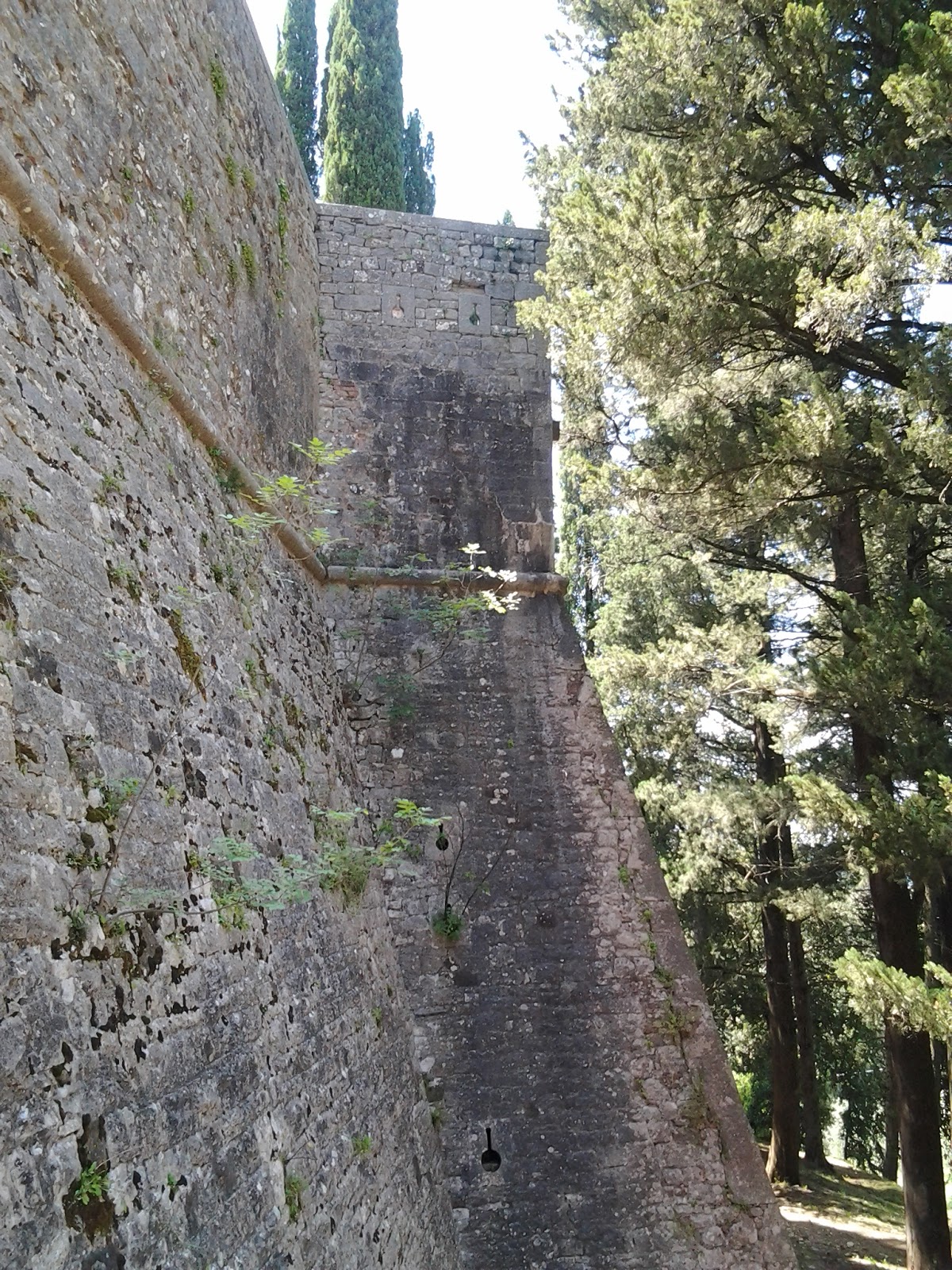
The very high walls in places no doubt were built to keep the enemy out

The castle has been destroyed and rebuilt many times over the last 900 years.  It was part of the Florentine defences, and withstood, and succumbed to many battles with Siena, which is only 20 km away.  More recently, it still bears the scars of artillery fire and bombing in WW2.

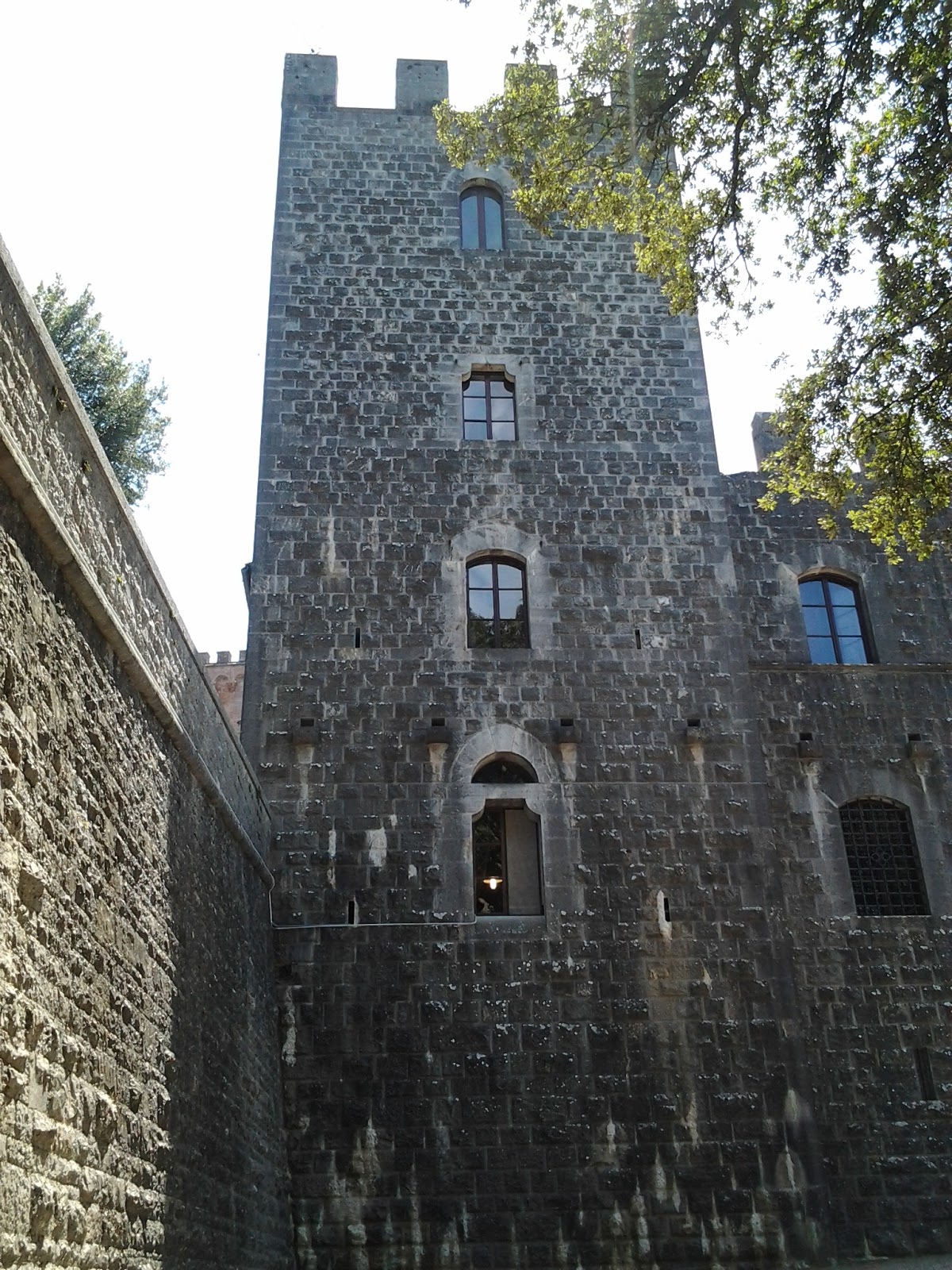
The room at the top of this tower would have an excellent view of the countryside.

Here you can see the old and the new, the red brick part of the rebuilding in the 1800’s in the style of an English Manor

We did not get to see where that archway led.

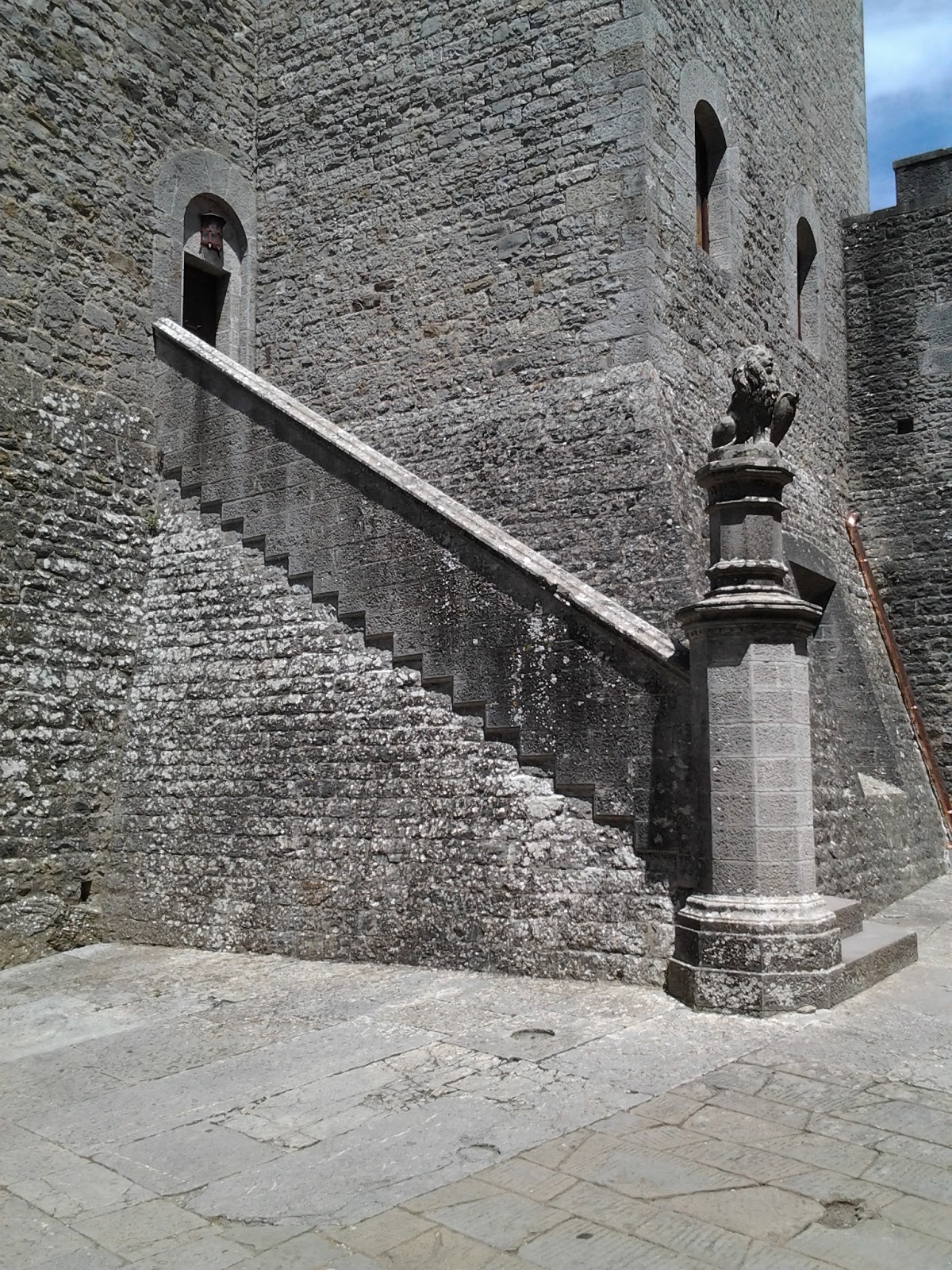
Nor what was behind door number one at the top of these stairs.  Rest assured, many, many years ago someone wearing armour would have made the climb.   It would not pass current occupational health and safety these days with a number of stairs before a landing.

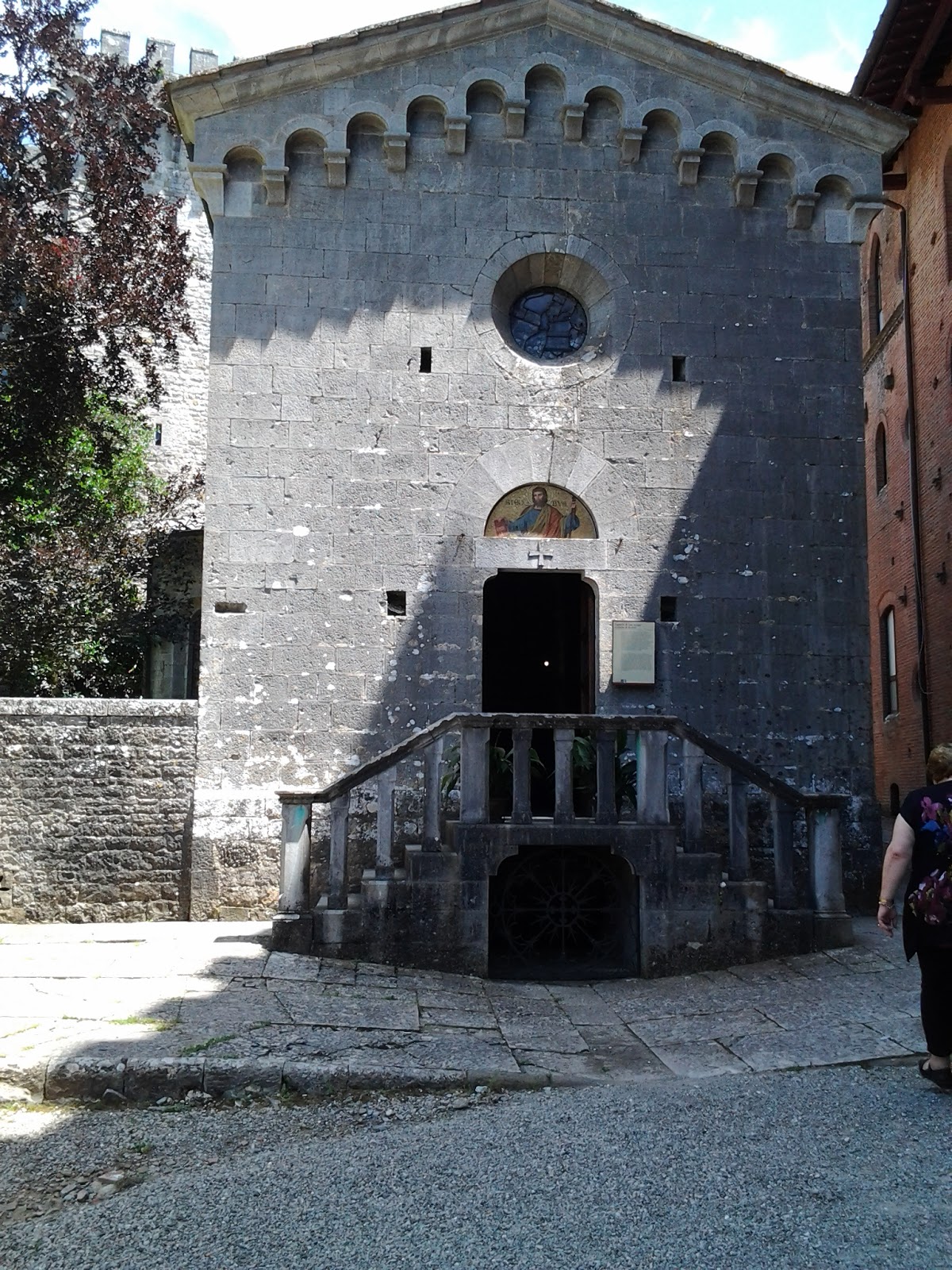
Cappella di San Jacopo.  Its foundations were laid in 1348.

Renovated in 1867-1869, it has a gabled façade preceded by a double stone staircase.  The interior, with a crypt where the members of the Ricasoli family are buried, has a nave divided into three spans with cross vaults.

The 1,200 hectares of the property include 240 hectares of vineyards and 26 of olive groves, in the commune of Gaiole.

An excerpt from “The Devil You Don’t”

Available on Amazon Kindle here:  https://amzn.to/2Xyh1ow

By the time I returned to the Savoie, the rain had finally stopped, and there was a streak of blue sky to offer some hope the day would improve.

The ship was not crowded, the possibility of bad weather perhaps holding back potential passengers.  Of those I saw, a number of them would be aboard for the lunch by Phillippe Chevrier.  I thought about it, but the Concierge had told me about several restaurants in Yvoire and had given me a hand-drawn map of the village.  I think he came from the area because he spoke with the pride and knowledge of a resident.

I was looking down from the upper deck observing the last of the boarding passengers when I saw a woman, notable for her red coat and matching shoes, making a last-minute dash to get on board just before the gangway was removed.  In fact, her ungainly manner of boarding had also captured a few of the other passenger’s attention.  Now they would have something else to talk about, other than the possibility of further rain.

I saw her smile at the deckhand, but he did not smile back.  He was not impressed with her bravado, perhaps because of possible injury.  He looked at her ticket then nodded dismissively, and went back to his duties in getting the ship underway.  I was going to check the departure time, but I, like the other passengers, had my attention diverted to the woman in red.

From what I could see there was something about her.  It struck me when the light caught her as she turned to look down the deck, giving me a perfect profile.  I was going to say she looked foreign, but here, as in almost anywhere in Europe, that described just about everyone.  Perhaps I was just comparing her to Phillipa, so definitively British, whereas this woman was very definitely not.

She was perhaps in her 30’s, slim or perhaps the word I’d use was lissom, and had the look and manner of a model.  I say that because Phillipa had dragged me to most of the showings, whether in Milan, Rome, New York, London, or Paris.  The clothes were familiar, and in the back of my mind, I had a feeling I’d seen her before.

Or perhaps, to me, all models looked the same.

She looked up in my direction, and before I could divert my eyes, she locked on.  I could feel her gaze boring into me, and then it was gone as if she had been looking straight through me.  I remained out on deck as the ship got underway, watching her disappear inside the cabin.  My curiosity was piqued, so I decided to keep an eye out for her.

I could feel the coolness of the air as the ship picked up speed, not that it was going to be very fast.  With stops, the trip would take nearly two hours to get to my destination.  It would turn back almost immediately, but I was going to stay until the evening when it returned at about half eight.  It would give me enough time to sample the local fare, and take a tour of the medieval village.

Few other passengers ventured out on the deck, most staying inside or going to lunch.  After a short time, I came back down to the main deck and headed forward.  I wanted to clear my head by concentrating on the movement of the vessel through the water, breathing in the crisp, clean air, and let the peacefulness of the surroundings envelope me.

It didn’t work.

I knew it wouldn’t be long before I started thinking about why things hadn’t worked, and what part I played in it.  And the usual question that came to mind when something didn’t work out.  What was wrong with me?

I usually blamed it on my upbringing.

I had one of those so-called privileged lives, a nanny till I was old enough to go to boarding school, then sent to the best schools in the land.  There I learned everything I needed to be the son of a Duke, or, as my father called it in one of his lighter moments, nobility in waiting.

Had this been five or six hundred years ago, I would need to have sword and jousting skills, or if it had been a few hundred years later a keen military mind.  If nothing else I could ride a horse, and go on hunts, or did until they became not the thing to do.

I learned six languages, and everything I needed to become a diplomat in the far-flung British Empire, except the Empire had become the Commonwealth, and then, when no-one was looking, Britain’s influence in the world finally disappeared.  I was a man without a cause, without a vocation, and no place to go.

Computers were the new vogue and I had an aptitude for programming.  I guess that went hand in hand with mathematics, which although I hated the subject, I excelled in.  Both I and another noble outcast used to toss ideas around in school, but when it came to the end of our education, he chose to enter the public service, and I took a few of those ideas we had mulled over and turned them into a company.

About a year ago, I was made an offer I couldn’t refuse.  There were so many zeroes on the end of it I just said yes, put the money into a very grateful bank, and was still trying to come to terms with it.

Sadly, I still had no idea what I was going to do with the rest of my life.  My parents had asked me to come back home and help manage the estate, and I did for a few weeks.  It was as long as it took for my parents to drive me insane.

Back in the city, I spent a few months looking for a mundane job, but there were very few that suited the qualifications I had, and the rest, I think I intimidated the interviewer simply because of who I was.  In that time I’d also featured on the cover of the Economist, and through my well-meaning accountant, started involving myself with various charities, earning the title ‘philanthropist’.

And despite all of this exposure, even making one of those ubiquitous ‘eligible bachelor’ lists, I still could not find ‘the one’, the woman I wanted to spend the rest of my life with.  Phillipa seemed to fit the bill, but in time she proved to be a troubled soul with ‘Daddy’ issues.  I knew that in building a relationship compromise was necessary, but with her, in the end, everything was a compromise and what had happened was always going to be the end result.

It was perhaps a by-product of the whole nobility thing.  There was a certain expectation I had to fulfill, to my peers, contemporaries, parents and family, and those who either liked or hated what it represented.  The problem was, I didn’t feel like I belonged.  Not like my friend from schooldays, and now obscure acquaintance, Sebastian.  He had been elevated to his Dukedom early when his father died when he was in his twenties.  He had managed to fade from the limelight and was rarely mentioned either in the papers or the gossip columns.  He was one of the lucky ones.

I had managed to keep a similarly low profile until I met Phillipa.  From that moment, my obscurity disappeared.  It was, I could see now, part of a plan put in place by Phillipa’s father, a man who hogged the limelight with his daughter, to raise the profile of the family name and through it their businesses.  He was nothing if not the consummate self-advertisement.

Perhaps I was supposed to be the last piece of the puzzle, the attachment to the establishment, that link with a class of people he would not normally get in the front door.  There was nothing refined about him or his family, and more than once I’d noticed my contemporaries cringe at the mention of his name, or any reference of my association with him.

Yet could I truthfully say I really wanted to go back to the obscurity I had before Phillipa?  For all her faults, there were times when she had been fun to be with, particularly when I first met her when she had a certain air of unpredictability.  That had slowly disappeared as she became part of her father’s plan for the future.  She just failed to see how much he was using her.

Or perhaps, over time, I had become cynical.

I thought about calling her.  It was one of those moments of weakness when I felt alone, more alone than usual.

I diverted my attention back to my surroundings and the shoreline.  Out of the corner of my eye, I could see the woman in the red coat, making a move.  The red coat was like a beacon, a sort of fire engine red.  It was not the sort of coat most of the women I knew would wear, but on her, it looked terrific.  In fact, her sublime beauty was the one other attribute that was distinctly noticeable, along with the fact her hair was short, rather than long, and jet black.

I had to wrench my attention away from her.

A few minutes later several other passengers came out of the cabin for a walk around the deck, perhaps to get some exercise, perhaps checking up on me, or perhaps I was being paranoid.  I waited till they passed on their way forward, and I turned and headed aft.

I watched the wake sluicing out from under the stern for a few minutes, before retracing my steps to the front of the ship and there I stood against the railing, watching the bow carve its way through the water.  It was almost mesmerizing.  There, I emptied my mind of thoughts about Phillipa, and thoughts about the woman in the red coat.

Until a female voice behind me said, “Having a bad day?”

I started, caught by surprise, and slowly turned.  The woman in the red coat had somehow got very close me without my realizing it.  How did she do that?  I was so surprised I couldn’t answer immediately.

“I do hope you are not contemplating jumping.  I hear the water is very cold.”

Closer up, I could see what I’d missed when I saw her on the main deck.  There was a slight hint of Chinese, or Oriental, in her particularly around the eyes, and of her hair which was jet black.  An ancestor twice or more removed had left their mark, not in a dominant way, but more subtle, and easily missed except from a very short distance away, like now.

Other than that, she was quite possibly Eastern European, perhaps Russian, though that covered a lot of territory.  The incongruity of it was that she spoke with an American accent, and fluent enough for me to believe English was her first language.

Usually, I could ‘read’ people, but she was a clean slate.  Her expression was one of amusement, but with cold eyes.  My first thought, then, was to be careful.

“No.  Not yet.”  I coughed to clear my throat because I could hardly speak.  And blushed, because that was what I did when confronted by a woman, beautiful or otherwise.

The amusement gave way to a hint of a smile that brightened her demeanor as a little warmth reached her eyes.  “So that’s a maybe.  Should I change into my lifesaving gear, just in case?”

It conjured up a rather interesting image in my mind until I reluctantly dismissed it.

“Perhaps I should move away from the edge,” I said, moving sideways until I was back on the main deck, a few feet further away.  Her eyes had followed me, and when I stopped she turned to face me again.  She did not move closer.

I realized then she had removed her beret and it was in her left side coat pocket.  “Thanks for your concern …?”

“Zoe.”

“Thanks for your concern, Zoe.  By the way, my name is John.”

She smiled again, perhaps in an attempt to put me at ease.  “I saw you earlier, you looked so sad, I thought …”

“I might throw myself overboard?”

“An idiotic notion I admit, but it is better to be safe than sorry.”

Then she tilted her head to one side then the other, looking intently at me.  “You seem to be familiar.  Do I know you?”

I tried to think of where I may have seen her before, but all I could remember was what I’d thought earlier when I first saw her; she was a model and had been at one of the showings.  If she was, it would be more likely she would remember Phillipa, not me.  Phillipa always had to sit in the front row.

“Probably not.”  I also didn’t mention the fact she may have seen my picture in the society pages of several tabloid newspapers because she didn’t look the sort of woman who needed a daily dose of the comings and goings, and, more often than not, scandal associated with so-called celebrities.

She gave me a look, one that told me she had just realized who I was.  “Yes, I remember now.  You made the front cover of the Economist.  You sold your company for a small fortune.”

Of course.  She was not the first who had recognized me from that cover.  It had raised my profile considerably, but not the Sternhaven’s.  That article had not mentioned Phillipa or her family.  I suspect Grandmother had something to do with that, and it was, now I thought about it, another nail in the coffin that was my relationship with Phillipa.

“I wouldn’t say it was a fortune, small or otherwise, just fortunate.”  Each time, I found myself playing down the wealth aspect of the business deal.

“Perhaps then, as the journalist wrote, you were lucky.  It is not, I think, a good time for internet-based companies.”

The latter statement was an interesting fact, one she read in the Financial Times which had made that exact comment recently.

“But I am boring you.”  She smiled again.  “I should be minding my own business and leaving you to your thoughts.  I am sorry.”

She turned to leave and took a few steps towards the main cabin.

“You’re not boring me,” I said, thinking I was letting my paranoia get the better of me.  It had been Sebastian on learning of my good fortune, who had warned me against ‘a certain element here and abroad’ whose sole aim would be to separate me from my money.  He was not very subtle when he described their methods.

But I knew he was right.  I should have let her walk away.

She stopped and turned around.  “You seem nothing like the man I read about in the Economist.”

A sudden and awful thought popped into my head.  Those words were part of a very familiar opening gambit.  “Are you a reporter?”

I was not sure if she looked surprised, or amused.  “Do I look like one?”

I silently cursed myself for speaking before thinking, and then immediately ignored my own admonishment.  “People rarely look like what they are.”

I saw the subtle shake of the head and expected her to take her leave.  Instead she astonished me.

“I fear we have got off on the wrong foot.  To be honest, I’m not usually this forward, but you seemed like you needed cheering up when probably the opposite is true.  Aside from the fact this excursion was probably a bad idea.  And,” she added with a little shrug, “perhaps I talk too much.”

I was not sure what I thought of her after that extraordinary admission. It was not something I would do, but it was an interesting way to approach someone and have them ignoring their natural instinct.  I would let Sebastian whisper in my ear for a little longer and see where this was going.

“Oddly enough, I was thinking the same thing.  I was supposed to be traveling with my prospective bride.  I think you can imagine how that turned out.”

“She’s not here?”

“No.”

“She’s in the cabin?”  Her eyes strayed in that direction for a moment then came back to me.  She seemed surprised I might be traveling with someone.

“No.  She is back in England, and the wedding is off.  So is the relationship.  She dumped me by text.”

OK, why was I sharing this humiliating piece of information with her?  I still couldn’t be sure she was not a reporter.

She motioned to an empty seat, back from the edge.  No walking the plank today.  She moved towards it and sat down.  She showed no signs of being cold, nor interested in the breeze upsetting her hair.  Phillipa would be having a tantrum about now, being kept outside, and freaking out over what the breeze might be doing to her appearance.

I wondered, if only for a few seconds if she used this approach with anyone else.  I guess I was a little different, a seemingly rich businessman alone on a ferry on Lake Geneva, contemplating the way his life had gone so completely off track.

She watched as I sat at the other end of the bench, leaving about a yard between us.  After I leaned back and made myself as comfortable as I could, she said, “I have also experienced something similar, though not by text message.  It is difficult, the first few days.”

“I saw it coming.”

“I did not.”  She frowned, a sort of lifeless expression taking over, perhaps brought on by the memory of what had happened to her.  “But it is done, and I moved on.  Was she the love of your life?”

OK, that was unexpected.

When I didn’t answer, she said, “I am sorry.  Sometimes I ask personal questions without realizing what I’m doing.  It is none of my business.”  She shivered.  “Perhaps we should go back inside.”

She stood, and held out her hand.  Should I take it and be drawn into her web?  I thought of Sebastian.  What would he do in this situation?

I took her hand in mine and let her pull me gently to my feet.  “Wise choice,” she said, looking up at the sky.

It just started to rain.

© Charles Heath 2015-2023

newdevilcvr6

Searching for locations: Hohensalzburg Castle, Salzburg, Austria

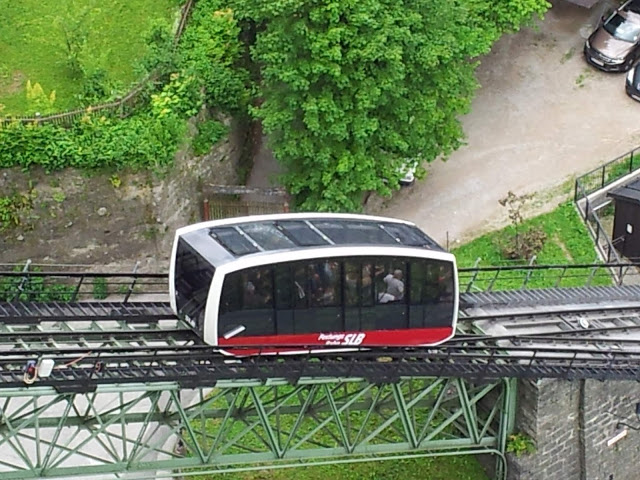
Hohensalzburg Castle sits atop the Festungsberg, accessed by a cable car.

The castle itself dominates the Salzburg skyline.

thecatle

Below is a view down into Salzburg from the castle walls.

We had lunch at a café, the Salzburg Fortress Café, that overlooked the countryside.  This was where we were introduced to Mozart Gold Chocolate Cream added to our coffee.

The square below featured in the Sound of Music.

salzburg1

Among the more interesting objects to be seen, the gun below shows what some of the castle’s armaments might have been.  These cannons, in the ‘Firing Gallery’ date back to the thirty years war in the early 1600’s.

“What Sets Us Apart”, a mystery with a twist

David is a man troubled by a past he is trying to forget.

Susan is rebelling against a life of privilege and an exasperated mother who holds a secret that will determine her daughter’s destiny.

They are two people brought together by chance. Or was it?

When Susan discovers her mother’s secret, she goes in search of the truth that has been hidden from her since the day she was born.

When David realizes her absence is more than the usual cooling off after another heated argument, he finds himself being slowly drawn back into his former world of deceit and lies.

Then, back with his former employers, David quickly discovers nothing is what it seems as he embarks on a dangerous mission to find Susan before he loses her forever.

Find the kindle version on Amazon here:  http://amzn.to/2Eryfth

whatsetscover

Writing a book in 365 days – 27

Day 27

Today it’s about writing English, the perfect words, the sentences, the paragraphs, the use and abuse of punctuation.

What is that we are supposed to start learning seriously in Grade 3 or 4 when we are 8 or 9 years old, and there are more interesting things to learn about.

Oh, and you start to write in ink, not those terrible biros that used to leak everywhere and smudge on the page, but a real pen, nib, and ink, with ink wells that an ink monitor would fill every Monday morning, and discover what the rodent children stuffed in them.

(Usually blotting paper).

I remember my first attempt was a disaster and the teacher sent me back to writing in pencil.

Then there were the words, adjectives, adverbs, nouns, verbs, subjects, predicates, etc.

That was four words too many.

Then there were commas, full stops, semicolons, colons, exclamation marks, question marks and other things that I think I have forgotten about.

Then there are all those words that are so confusing, they are spelt the same, spelt differently, but when pronounced are exactly the same to the ear. Blue, blew, so, sow, you get the idea.

I’m with Truman Capote, I do not practise what I preach!

That’s called writing style, and yes, I spell the words correctly, I review and correct any grammar errors, and then have an editor tell me it all runs like a well-oiled machine.

“The Things We Do For Love”

Would you give up everything to be with the one you love?

Is love the metaphorical equivalent to ‘walking the plank’; a dive into uncharted waters?

For Henry, the only romance he was interested in was a life at sea, and when away from it, he strived to find sanctuary from his family and perhaps life itself.  It takes him to a small village by the sea, a place he never expected to find another just like him, Michelle, whom he soon discovers is as mysterious as she is beautiful.

Henry had long since given up the notion of finding romance, and Michelle couldn’t get involved for reasons she could never explain, but in the end, both acknowledge that something happened the moment they first met.  

Plans were made, plans were revised, and hopes were shattered.

A chance encounter causes Michelle’s past to catch up with her, and whatever hope she had of having a normal life with Henry, or anyone else, is gone.  To keep him alive she has to destroy her blossoming relationship, an act that breaks her heart and shatters his.

But can love conquer all?

It takes a few words of encouragement from an unlikely source to send Henry and his friend Radly on an odyssey into the darkest corners of the red-light district in a race against time to find and rescue the woman he finally realizes is the love of his life.

The cover, at the moment, looks like this:

lovecoverfinal1

Is love the metaphorical equivalent to ‘walking the plank’; a dive into uncharted waters?

For Henry, the only romance he was interested in was a life at sea, and when away from it, he strived to find sanctuary from his family and perhaps life itself.  It takes him to a small village by the sea, s place he never expected to find another just like him, Michelle, whom he soon discovers is as mysterious as she is beautiful.

Henry had long since given up the notion of finding romance, and Michelle couldn’t get involved for reasons she could never explain, but in the end, both acknowledge that something happened the moment they first met.  

Plans were made, plans were revised, and hopes were shattered.

A chance encounter causes Michelle’s past to catch up with her, and whatever hope she had of having a normal life with Henry, or anyone else, is gone.  To keep him alive she has to destroy her blossoming relationship, an act that breaks her heart and shatters his.

But can love conquer all?

It takes a few words of encouragement from an unlikely source to send Henry and his friend Radly on an odyssey into the darkest corners of the red-light district in a race against time to find and rescue the woman he finally realizes is the love of his life.

The cover, at the moment, looks like this:

lovecoverfinal1

In a word: Pear

Now, how did such a simple word that described a piece of fruit become so tangled?

The English language of course.

It throws up many a variation of the same sounding word, just to confuse us.

Just think, there is also pair, and pare.

But a pear, that’s a piece of fruit.

And if you’re not careful things can go pear shaped very quickly.

Then there’s pair, which means there’s two of something the same, such as a pair of socks

Except in my house it’s more than likely that pair of socks are an odd pair.

Then there’s pare, which is to take the outer layer off such as an orange.

It can also mean to cut down, as in staff after restructuring an organisation.

“One Last Look”, nothing is what it seems

A single event can have enormous consequences.

A single event driven by fate, after Ben told his wife Charlotte he would be late home one night, he left early, and by chance discovers his wife having dinner in their favourite restaurant with another man.

A single event where it could be said Ben was in the wrong place at the wrong time.

Who was this man? Why was she having dinner with him?

A simple truth to explain the single event was all Ben required. Instead, Charlotte told him a lie.

A single event that forces Ben to question everything he thought he knew about his wife, and the people who are around her.

After a near-death experience and forced retirement into a world he is unfamiliar with, Ben finds himself once again drawn back into that life of lies, violence, and intrigue.

From London to a small village in Tuscany, little by little Ben discovers who the woman he married is, and the real reason why fate had brought them together.

It is available on Amazon here:  http://amzn.to/2CqUBcz

Whatever happened to free websites?

There’s nothing more certain than a favourite website you go to and use often, sooner or later starts charging a subscription ‘fee’.  I guess nothing in this life is free, they have to raise advertising to make it so, but…

The alternatives that charge do not give you the facilities you need unless you pay an exorbitant monthly or yearly charge.  And, if you accept the minimum charge, you get nothing other than a visual display of your books, and that’s about it.

And what author starting out can afford the $200 a month for the premium site to get all the bells and whistles, which coincidentally is the stuff the author needs just to sell.

Anyway…

I remember when the NANOWRIMO site had been updated, and the changes looked good.  At that moment the site was free, but you do get a lot of emails and requests to purchase products, which I think is a reasonable way to raise money for keeping the site free.

But, how long is this going to last before a ‘fee’ is introduced, and then a ‘fee’ to enter your book?

It’s the airline principle, it was a flat charge for the ticket, now you pay for this tax, that tax, fuel tax, baggage tax, tax on the tax, and then if that’s not enough, a charge for the food and water.  Soon it will be a charge for toilets, and then the air you breathe.

It’s inevitable, and once these charges start they don’t stop and only get higher with each passing year.

A lot of the sites I use are free.  Some have since started to charge and have put up a firewall to stop you from getting any free information.

I’m not a rich author, so sadly I have to discontinue using these sites.

Perhaps the problem is that the owner of the site has come up with a good idea, thousands of people sign up, and suddenly a small website becomes a big one, and hosting costs suddenly go through the roof.

Like airlines, it’s the user that pays.

Often I see or get an email from, various people with what looks to be a useful site.  Some start out by giving you a month free to have a look and use the facilities.  In some cases they are quite good, in others, well, there are a dozen others like it that are still free.

But, after a month, you have to pay.  What gets me with some of them, they are asking somewhere between 50 and 200 US dollars a month, you heard that right, a month, which you can basically double that for me after the exchange rate and a dozen bank fees.

Sometimes there are different levels, but basically, if you look at the fine print, the lowest level set, which gives you very little, is set low deliberately.  Say it’s 10 dollars a month.  It’s no different to the free version except they probably don’t have annoying ads and advertise, what for many, is non-existent 24/7 help (via an email, no guarantee they look at it more than once a week, if at all).  Money for jam for the site owner, as the saying goes.

Why can’t there be a more reasonable option?

But I get it.  Everyone wants to get rich quick, it’s an objective that’s built into all of us, but it seems I missed the inoculation given the day after you’re born.

I also get it that these people worked hard on coming up with the websites and facilities, and they deserve a reward for that hard work, but to me it would make more sense if they sold the service for 10 dollars or even 20 dollars a month if the systems were available and they worked.  And flowing from that wouldn’t 20,000 sales at 20 dollars, be better than 2000 at a 100 dollars?

The same seems to go for the so-called decent website hosts, like WordPress, Wix and GoDaddy.  The free option is good but just for show and tell, but I’m sure they deliberately nobble it so it’s slow and kludgy just the sort of attributes that turn potential visitors off.

I thought if I paid a monthly charge for Wix, and reading the inclusions for what my site could do over the free one was very persuasive, so I signed up.  The site was no better than it was before and half the options that were on the list weren’t available, and still aren’t.  But I suspect if I paid them 100 plus dollars a month or more for their premium package I’d get it.

But, to pay for it I would have to be selling a million books a month, and I doubt, no matter how good my web site is, it wouldn’t attract that kind of business.

Not one of the basic packages, read affordable for me, has the ability to allow downloads after sales.  You can’t even have a sales page where you can actually sell books to people like you were a bookshop.  That’s in all of the premium packages, so they say, and that costs far too much.

GoDaddy was by far the worst, telling me if I signed up for the 60-dollar-a-month package I could have sales and downloads.  I tried to add it to the web page, which I might add was as difficult to create as all hell, and when it didn’t work, rang up to ask why I couldn’t have downloading after sales and was met with silence.

No, that’s not available at the moment, I was told, and not likely in the future.  What am I paying all this money for?  I don’t have a GoDaddy site any more.  I had a Wix site that I paid for, and I don’t have that any more.  They don’t offer anything useful, and they too, make it virtually impossible to create a useful site, so it sits out there in the ether with disappointment written all over it.

Perhaps others have had better luck, or things have changed in the last few years but I won’t be going back.

Maybe one day someone might understand the needs of the majority who can afford to pay exorbitant monthly charges but just not as much as we are expected to, for very little in return.

What’s that saying, hope springs eternal.

PS Sorry about the rant!

The cinema of my dreams – It continued in London – Episode 40

Safe in an anonymous hotel

There was no time for an explanation, picking up on the urgency in my tone.  They gathered up a few belongings because I added they couldn’t come back, and, after Cecelia and I tossed the work phones on the kitchen bench, we headed down the stairs to the basement.

By the time the call with Alfie ended, I realized that we were just supposed to find her, Rodby had a whole other team on standby ready to ‘extract’ her.  And, if I was not mistaken, it would be against her will if she didn’t want to go with them.  It was why she greeted us with a gun, she knew what might happen.

Perhaps she knew the Rodby’s better than I did.

Like certain parts of London various groups of building basements were used by the defence forces and government offices, and the one Juliet was staying in might have been one because the basement was connected to another and another, and it felt like it had once been offices, given the green walls, arrows and exit signs, and overhead lighting.

At the end, we came out into a narrow alley between buildings and not far from that, Russell Square underground.  Just before descending, Cecilia gave me a new phone.  She had brought another two burner phones, acting on instinct, or perhaps knowing how much of a maverick I was.  Or she had simply changed roles, and become a maverick of her own.

We took the train to the one place I thought, for the moment, to be the safest.  Heathrow airport, and on the way, Cecelia booked two rooms at the hotel nearest to the underground station.  Five more people, some with bags would not look out of place.  But just Cecelia and I checked in with other IDs, and took a room each, and the others wandered up after us.

Almost an hour and a half later we were sitting in the room Cecelia booked for her and me, both with a second bedroom, but this one had a dining area.  She smiled at me when I realised there were two rooms.

“Now, I’m going to assume that you will trust me to a certain degree, and when I say I have no idea what is going on, except that it has to do with the Burkhardt family, there’s an inheritance that needs to be claimed in a few days, and there’s someone trying to assassinate Juliet, who appears to be a direct descendant of the count and an eligible heir.”

I looked at Vittoria, who was still very confused with the turn of events, and probably evaluating whether I could be trusted or not.  “I now believe you are Juliet’s mother.”  Now that mother and daughter were sitting side by side, the similarities between them.

Vittoria and the countess were sharing another pizza that Celecia had ordered up through room service, along with several bottles of red wine.  Juliet went over to the kitchenette, opened one, and poured five glasses.

It was not a bad wine, perhaps an Italian Sangiovese.

Juliet remained standing and looked at her mother.  “Even I’m confused at the moment.  When do you and the countess become friends?”

“We have been for quite some time, particularly after I realised she had nothing to do with my banishment.  That was the count, at the behest of his mother, who has been the true villain in both our lives.”  

Vittoria looked at her daughter, “I’ve come to realize the threats against all of us are the work of that vile woman.  This is the third or fourth attempt on your life, I’ve been attacked twice, and now the countess just escaped from what I perceive to be a threat, instigated by her.”

“Are you saying my old friend is working with her?  I hardly think she knows who the old woman is.  And assuming that she doesn’t, what other reason would she have to do with what just happened.”  She looked at me, “You came to the opera with us, so you must know her.”

“Not because I was a friend of the family, I’m not.  I think now I was asked along for a very specific reason, one she might not have been privy to, but that her husband, my old employer, was.  And my experience over the years is that nothing to do with him is ever straightforward.”

“Are you one of his people now?”  The way she said it, it sounded like she considered me a hatchet man.

“No, not exactly, nor is Cecelia.  We just do this and that from time to time.  I thought I was in retirement, Cecelia is in between acting roles, and he simply asked us to find you.”

“Then if you were seeking the countess, how did you know about me, and turn up at the conference hall, coincidentally when an assassin tried to kill me?”  Juliet made a good argument.

“I may have done a little research.  The countesses feud with Vittoria, and the uncovering of photographs, one of which had the teen version of you with your mother, Vittoria, at the Chateau in Sorrento, the same Chateau where the countess resides.  Sometimes we get lucky.  I was surprised though Juliet, given your history.  I didn’t bring them, and, by the way, I was the one who nearly got shot and killed.”

I could see Vittoria shaking her head.  “If you can make the distinction, then others can too.  Neither of us are now safe.  At least I can discount orange ribbon girl.  I knew she was tailing me, and I thought I lost her.”

Cecelia smiled.  “You wish.  Top of my class for surveillance.

I thought I would add a little spice to the conversation, “Why did you give the impression you’ve been trying to kill the countess?”

That brought a look of consternation from both.  The countess answered, “Only for the sake of appearances, and to keep the rest of the family away from the idea that we had joined forces, which is the only way we’re going to keep them from realizing we know more about them than they think we do.”

“But not enough to stop them from trying to stop both of you and now all three of you, from claiming the inheritance?”

“It is actually all of the business.  The Count held all the shares.  It was his, passed down from his father, and all he had to do with the rest of the family members was give them jobs.  That ownership would be passed to me, or any children of ours if there were any.  We could not, but he told me on his death bed there was one.”

“Juliet.”

“Whose mother was the woman he wanted to marry but was not allowed to, but whom he had got pregnant and promised to look after.  Nobility and their secrets.  But he also told his brother, Alessandro, who in turn told the mother, who really is a nasty piece of work.  She made it perfectly clear to me before I came to London that it would be for the best if I did not attend the signing of the inheritance papers in a few days’ time.  If I chose not to, I would be given a house to live in and a large sum of money for my helpfulness.  It is the reason I got away from the hotel the night of the opera, because I believe Alessandro had arranged for me to be kidnapped, or worse.”

“Who would get the assets, if not you?” I asked.

“As per the provisions of the will, Alessandro who is the next male heir, who had arrived at the hotel and was waiting in my room to see me.  I understand it would not be good business for the company to be run by a woman.  Especially one without any experience and had been sent to make sure it didn’t happen.”

“That story about a bitter rival?”

“It was always Alessandro.  I had first met him, and we had one date before I was swept up by the Count and taken away from him.  He never forgave me for passing him over.  He had always expected his older brother would marry for love and let him take over the business.”

“And you suspected he was there to remove you when he knew that with the girl the count had confessed existed with a stronger claim?  I doubt that was why he was there.  You are not a threat to them.  Not according to the terms of the will.”

The countess glared at me.  “How do you know this?”

“Let’s just say I know.”  I turned back to Vittoria.  “Why were you trying to get close to Alessandro, surely he knew you were his brother’s former lover?”

“To be honest, I have no idea.  Perhaps I have changed since those early days.  I was surprised she didn’t recognise me from the time I spent with the Count.  It was mostly to find out what they were planning, but he wasn’t that interested in me, or would he talk about the family.  Perhaps he knew I had a romantic attachment to his brother all those years ago, though at times he seemed too stupid to know what day it was.  He couldn’t run the business; if you want an opinion, it is the old woman who wants it and nothing ever stands in her way.  She is ruthless.  I wouldn’t be surprised if she killed the count.  And now she is after my beautiful daughter.”

“Well, we can’t let that happen.”

The whole story was a tangled web of deceit and lies, just the sort of stuff that really old families like the Burkehardt’s were.  And typically the old women were the matriarchs that kept everything going.

But I wasn’t so sure Alessandro was as stupid as Vittoria made out.

“How do you two know each other?”  Vittoria’s gaze went from me back to Juliet.

Juliet answered.  “He was injured and spent time in hospital.  I was there working on rehabilitation programmes, and I drew the short straw.  We spent a lot of time together, it went on for a little after he was discharged, and then my world exploded.  We ran into each other recently when I got into some trouble with an old acquaintance who used my stepbrother as leverage.  Evan got him freed and sorted the problem.  We didn’t get back together.”

“And yet you speak so fondly of him?”

I hoped Vittoria was not one of those match-making mothers.

“He saved my brother, and me.  That’s it.”

And to prevent any more discussion, I said, “We need to formulate a plan that gets you to Italy as soon as possible but not by conventional means.  Rodby is already all over the trains, planes, and ferries.”

“What other way is there?”

“Where there’s a will there’s a way.  I’ll let you know tomorrow.”

© Charles Heath 2023