The cinema of my dreams – I always wanted to see the planets – Episode 49

A matter of diplomacy

I had to wonder, in that brief moment standing there, how I had come from a contented life plying space in a nomadic cargo vessel, to this, in charge of over 2000 crew, on a spaceship the size of a small town, on a mission to find new life out beyond the known edge of space.

And succeeding beyond all expectations without the loss of a single life, or perhaps that wasn’t quite true, the previous captain had become a casualty in exceptional circumstances.

I looked over at the head of Diplomacy.  “Have you given any thought to my suggestion?”

After coming back from the alien vessel, I had immediately gone to the head of the Diplomatic mission and told him to pick a team to go down to the alien planet, telling him that we had been given permission to learn about their culture and others in their galaxy.

There had been no shortage of volunteers, and they had left not much more than an hour after I arrived back on board.  It was an opportunity not to be missed.

The other matter was about leaving some people there until we came back, or the next earth vessel arrived.  It was not what had been considered back on earth before the mission left, but to me it had some merit, perhaps setting up what might be a galactic embassy smoothing the way for other vessels like ours.

A sea of expectant faces, only one asked the question on everyone’s mind, giving my diplomatic chief a little more time to come up with an answer.

“Who are they, and are they like us?”  The fourth officer had finally appeared from his room in engineering where his interest lay, but from a practical standpoint, was there in case the bridge was lost.

“No.  And yes.  They are consciousness in an artificial body that looks like us, but I imagine it would take the form of any being they came in contact with.  I suspect they have evolved beyond the need for a body that wears out over time, which it seems is our problem, and we are only at the threshold of robotics as replacement parts, even bodies.  I don’t know the whole story, but that’s one for the medical people.  But…”

I turned back to my diplomatic expert, “we are going to have to talk to these people and not only that, we need to understand them and their customs before more of us blunder into their territory and do everything wrong.  You have permission to send two representatives to the planet to talk to their scribes, which I believe are most likely historians.  They are going to tell us about the peoples of this galaxy and perhaps beyond.  It will at least give us something to work with before as they rightly put it blunder our way into possible diplomatic nightmares.”

“Do you think they’d let us set up a diplomatic outpost?”

“You could work on a proposal, but for now we have about six days or so to get as much information as we can.  Anything else is your department, and for you to decide.  I understand there are some in your department who signed on in the hope they might get to stay in a new world, but, again, you will have to make a threat assessment based on all of the contacts so far.  I have endured all of the recordings of our encounters are available.”

“How long have I got?”

“Until we reach the Princesses home planet in about three days’ time.”

Not a lot of time to review and assess given most of the encounters were hostile.  But an arrangement with these people would be considered advantageous as a first stop on the way to other galaxies.  And I had no doubt they had a vast store of knowledge of other alien life forms which would be invaluable.

“How did we get stuck with taking the Princess home, and how do we know they will want her back?  We don’t know the precise circumstances of how she got there in the first place.”

The second officer was not backwards in voicing concerns.  He was the ship’s resident Mr doom and gloom.  But for all that, his was a view that could be used as a counterbalance when making a decision.

“A good question and one I intend to get answers to right after we finish here.”

That left general business on the table, departmental reports, crew statuses, and the all-important ship systems.

Good to know the crew was reasonably happy, all performing their duties through the various crises, and systems had only minor failed that the skeleton shipbuilders crew were able to fix, one way or another.

Best of all, the chief engineer was happy, so far.

An hour later, it was time to visit the Princess.

© Charles Heath 2021-2022

A long short story that can’t be tamed – I always wanted to rescue a damsel in distress – 4

Four

I’d been to London before, mot with Cecile but my parents on an end of school graduation present.  My father had called it a mission to see how the other half live, and why, in his opinion our country didn’t need a Queen to be our head of state.

A Republican, not a royalist.  But it had done little to change my opinion, simply because it didn’t matter to me who ran the country, all positions of any colour were equally as useless.

But I remembered the trek over London, seeing the horse guards, number 10 downing street, the houses of parliament, Westminster Abbey and Buckingham palace.  A whirlwind of ancient buildings that had been in existence long before our country had been discovered.

A little of that sense of awe I had then came back when passing by Trafalgar square and heading down Whitehall as far as Whitehall place.

If we were not on a mission, I would have liked to spend more time exploring because the last time had been so quick and disjointed.  My father had not been one for being a tourist.  Neither, apparently, was Emily.

In sight of the hotel, I felt a shiver go down my spine, either a sign of the cold weather or there was something wrong.

I stopped suddenly and turned.  Emily nearly crashed into me, eliciting a grunt between disapproval and annoyance.  “What is the matter with you?”

She turned also to see what had caught my interest.  She was too late, but I hadn’t.  Two people, what looked to be a man and a woman, had almost managed to blend into the background, but not before I caught a glimpse of them.

They were familiar in the sense that I could swear I’d already seen them before, way back at Trafalgar square trying to act like tourists, which was what caught my attention.

“There’s nothing there, you’re jumping at shadows.”

I still kept an eye on that direction, waiting to see if they showed themselves.  They didn’t, but that didn’t mean they were not there.  And if they were following is, I was leading them to the hotel where if we discovered nothing, they no doubt had the resources that could.

Better I didn’t lead them there.

“Believe it or not, there’s two people following us and I’m not going to lead them to the hotel.  We are going past it and onto the gardens, then along the riverside to the Houses of Parliament if we have to, to lose them.”.

It took a combination of the cold weather and luck to shake off the people following us.

In fact, by the time I realized they were no longer there, I had begun to believe it was just a case of nerves and imagination.

We’d walked quite a distance up the Embankment, almost to Westminster Abbey before coming back down Whitehall.  Even with snow lightly falling, there were the intrepid tourists vying to get their photos taken with the Horseguards standing in guard duty.

It was not a job I could do in all sorts of weather, but standing still on a day that is cold, snowing, or worse raining, would be debilitating, if not impossible.

Emily had not said very much while we dodged and weaved, and, to her, it must have seemed comical.  And after I said I thought we were in the clear she said, “Are you sure you’re not suffering from an overactive imagination?”

At that moment, in the middle of Whitehall with the snow coming down, her comment seemed valid.  “That’s quite likely, but I honestly thought I saw someone, possibly two people more than once.”

“There’s a lot of people out and about, so seeing them more than once doesn’t necessarily mean they’re following us.”

True, but it was better to be safe than sorry.  And I had a very bad feeling we were going to run into them again.  Whatever Cecile had done, it had to be serious if she was trying this hard not to be found.

It didn’t take long, after walking a brisk pace in the cold, spurred on by the fact the snow was falling more densely, and it was getting harder to see anything through the white shroud before we reached the hotel again.  I checked again, waiting a minute or two, just to make sure we’d got away from them before escorting Emily through the door.

Once inside, after shaking off the snow, it was considerably warmer.  I notice then my hands had begun to freeze, and stepping back into warmth cause a tingling sensation through them.  Another hour and they’d be iceblocks.

We took off our coats and went over to the reception counter.

The check-in clerk with the name tag ‘Wendy’, hung up the phone, the call she was on completed, then turned her attention to us.

“How may I help you?”

“I’m hoping you have a guest here named Cecile Robinson.  She would have checked in four days ago.  My name is James Bentley and she was expecting me.”

Wendy typed the name into the computer.  It took about a minute before her expression changed, possibly indicating she’d found something.

“I’ll be just a moment.”

Without waiting for my response as she went through a door almost behind her, onto an office of sorts.  I could see two people in there just before the door closed.

The reception desk manager, or security.

I just hoped she wasn’t calling the police.

©  Charles Heath  2024

Writing about writing a book – Day 15

Our main character Bill probably needs to give an account of the situation he found himself in.  I have, for a while, considered that he is just another soldier who found himself in the wrong place at the wrong time, but now, I want to add a dimension.

He finishes up where he is, in the end, because he chose to be there, and it was something of a rocky ride to get there.

That I’m still planning in my head.

In the meantime, this is the initial piece I wrote for his situation description:

I used to joke about telling people my middle name was ‘danger’.  It seemed I was not the only one, and for a time, worked with a group of soldiers and ex-soldiers in a capacity similar to that of being a mercenary.

Each one of us had a specialty.  Mine was being the sniper.  Johnny had knife skills and not the sort that was used in a kitchen.  Freddie, explosives, Bill, well, you just left Bill alone because he had a grudge against the world and everyone in it.

The Colonel used to say we were all handpicked, but that wasn’t necessarily the case.  I knew for a fact some of the team came straight out of the stockade before their time was up.

Because some of us were expendable.

The thing was; none of us cared.  For those who were ‘rescued’, it was better out in the jungle, dodging bullets, than being inside, your fate left in the hands of the Gods. 

I knew how it was.  I’d been there once or twice myself.

This morning had started the same as many others.  Rise and shine, a breakfast of sorts, into the chopper, and after an hour or so, dropping into a grassy patch, with nothing but jungle in every direction.  Our mission was to find and liberate a number of our people who had gone missing, read captured, on the border between Cambodia and Vietnam.  It was a familiar country because I had, over the last year or so, gone hunting missing POW’s in the area.  Old prisons had been converted into drug laboratories, and we’d broken up a few of those too.

The noise of the chopper put paid to any sort of stealthy approach and, by the time it dropped us off, if there was anyone nearby, our advantage, if we ever had one, was gone.  The trouble was, to cover the same distance by foot would take a week, and, by the time we arrived, if we arrived, more than half the team would be dead.  We may have been good, but we were not that good.  It was not our home turf.

It was hot, sticky, and nothing like home.  There wasn’t a day that passed when I thought to myself it was getting harder and harder to remember when I wasn’t constantly hot and sweaty, nor as frightened.  It happened that way, towards the end of a tour.

Once on the ground, every man was on full alert.  We changed the lead and tail end constantly, to make sure we didn’t lose anyone.  And it was hard going, the constant heat, sweat, punctuated with slight relief when it rained.

Then as quickly as it came, it went, leaving you wet then sticky.

And if that wasn’t enough to contend with, there was the enemy.   You couldn’t see them, nor hear them yet you had the feeling he was watching you the whole time, and it made your skin crawl.

Sometimes the enemy attacked when we had to camp, invisibly swooping, shooting from the trees, and firing a mortar or two, then disappearing back into the luminous greenery without a trace.  These were the remnants of the Viet Cong, Cambodian armed forces, disaffected Laotians, or the Chinese, or so we believed, but they were well-trained mercenaries and just the sort of people the drug cartels would use.

And surviving the operation, any operation, was like playing Russian roulette.  Was it your turn this time, or someone else’s?  You could be walking along, straining your eyes and ears, and next minute, find the man who was covering your back, dead.  Booby traps were silent and swift.  Landmines are loud and very messy.  Both hangovers from the war, and never cleaned up.  People you’d meet, you never knew whose side they were on, so it was best to avoid all contact.

© Charles Heath 2015-2023

Searching for locations: Driving in ice and snow, Canada

This morning started with a visit to the car rental place in Vancouver.  It reinforced the notion that you can be given the address and still not find the place.  It happened in Washington where it was hiding in the back of the main railway station, and it happened again in Vancouver when it was hidden inside a hotel.

We simply walked straight past it.  Pity there wasn’t a sign to let people know.

However…

We went in expecting a Grand Jeep Cherokee and walked out with a Ford Flex, suitable for three people and four large suitcases.  It actually seats 7, but forget the baggage, you’d be lucky to get two large suitcases in that configuration.

It is more than adequate for our requirements.

Things to note, it was delivered with just over a quarter of a tank of gas, and it had only done about 11,000 km, so it’s relatively new.  It’s reasonably spacious, and when the extra seats are folded down, there is plenty of baggage space.

So far, so good.

We finally leave the hotel at about half-past ten, and it is raining.  It is a simple task to get on Highway 1, the TransCanada Highway, initially, and then onto Highway 5, the Coquihalla Highway for the trip to Kamloops.

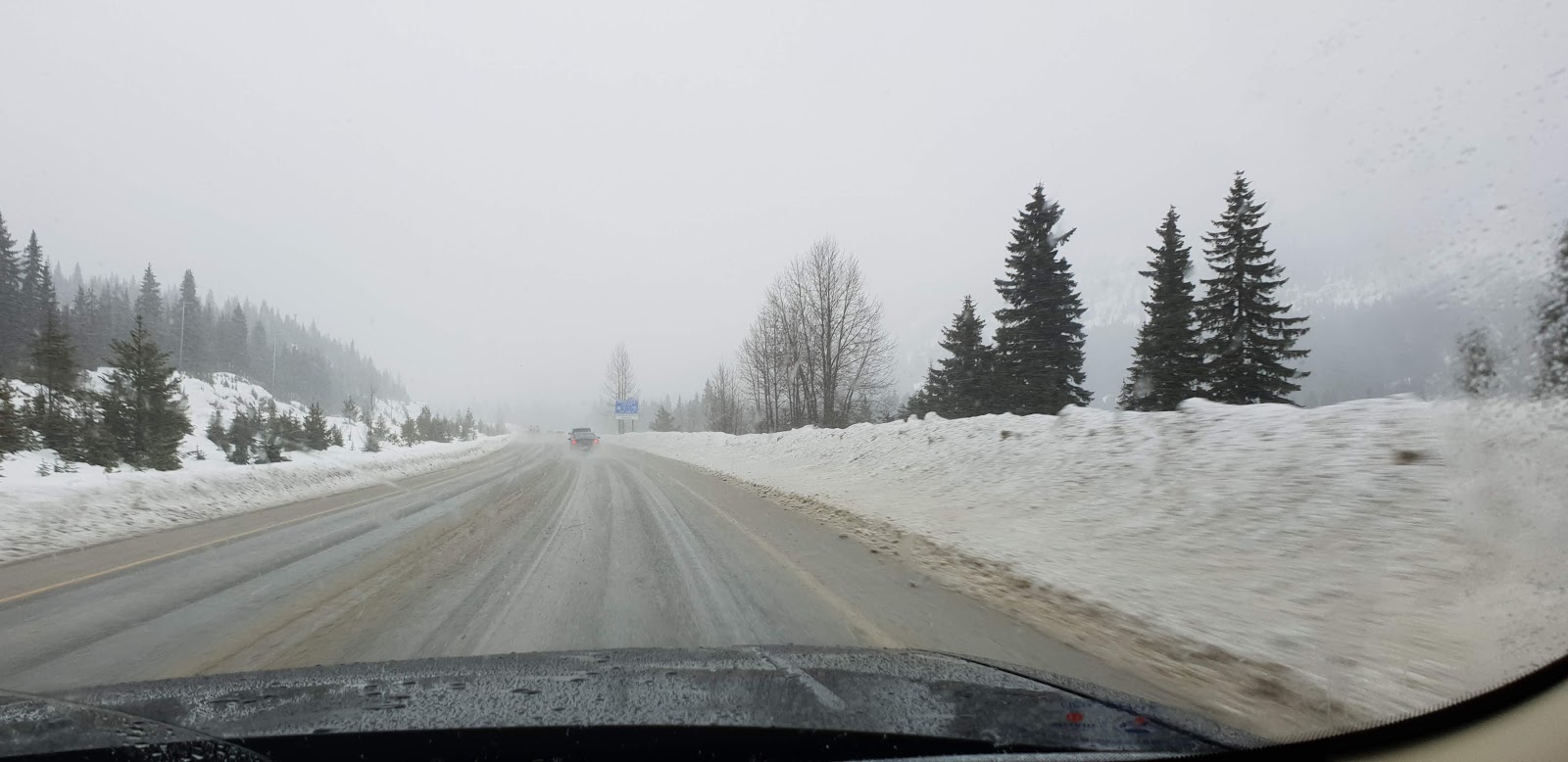
It rains all the way to the top of the mountain, progress hampered from time to time by water sprays from both vehicles and trucks.  The rain is relentless.  At the top of the mountain, the rain turns into snow and the road surface to slush.  It’s 0 degrees, but being the afternoon, I was not expecting it to turn to ice very quickly.

On the other side of the mountain, closer to Kamloops, there was sleet, then rain, then nothing, the last 100kms or so, in reasonably dry conditions.

Outside Kamloops, and in the town itself, there was evidence of snow recently cleared, and slushy roads.  Cars in various places were covered in snow, indicating the most recent falls had been the night before.

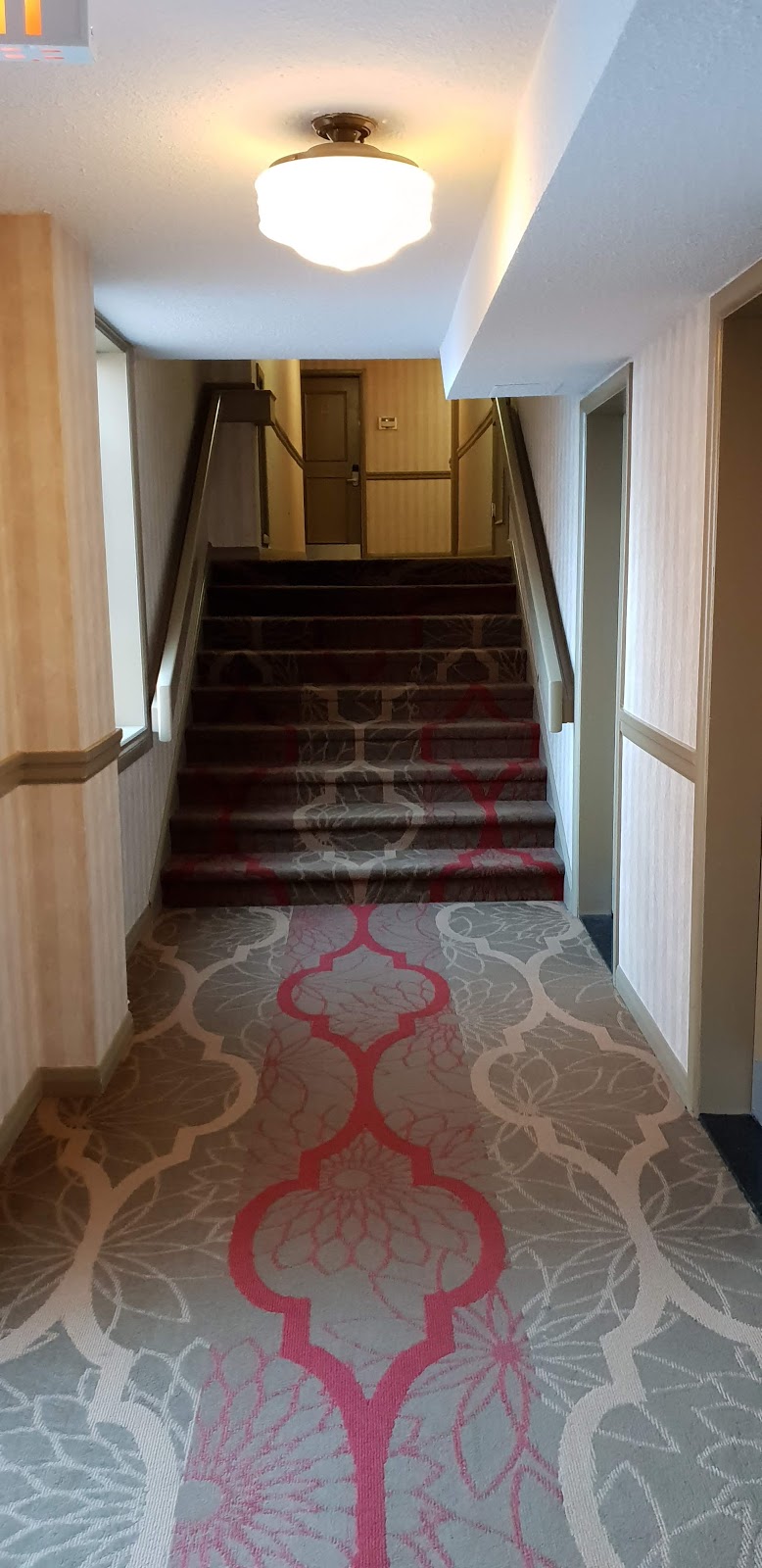
We’re staying at the Park Hotel, a heritage building, apparently built in the later 1920s.  In the style of the time, it is a little like a rabbit warren with passages turning off in a number of directions, and showing it is spread across a number of different buildings.

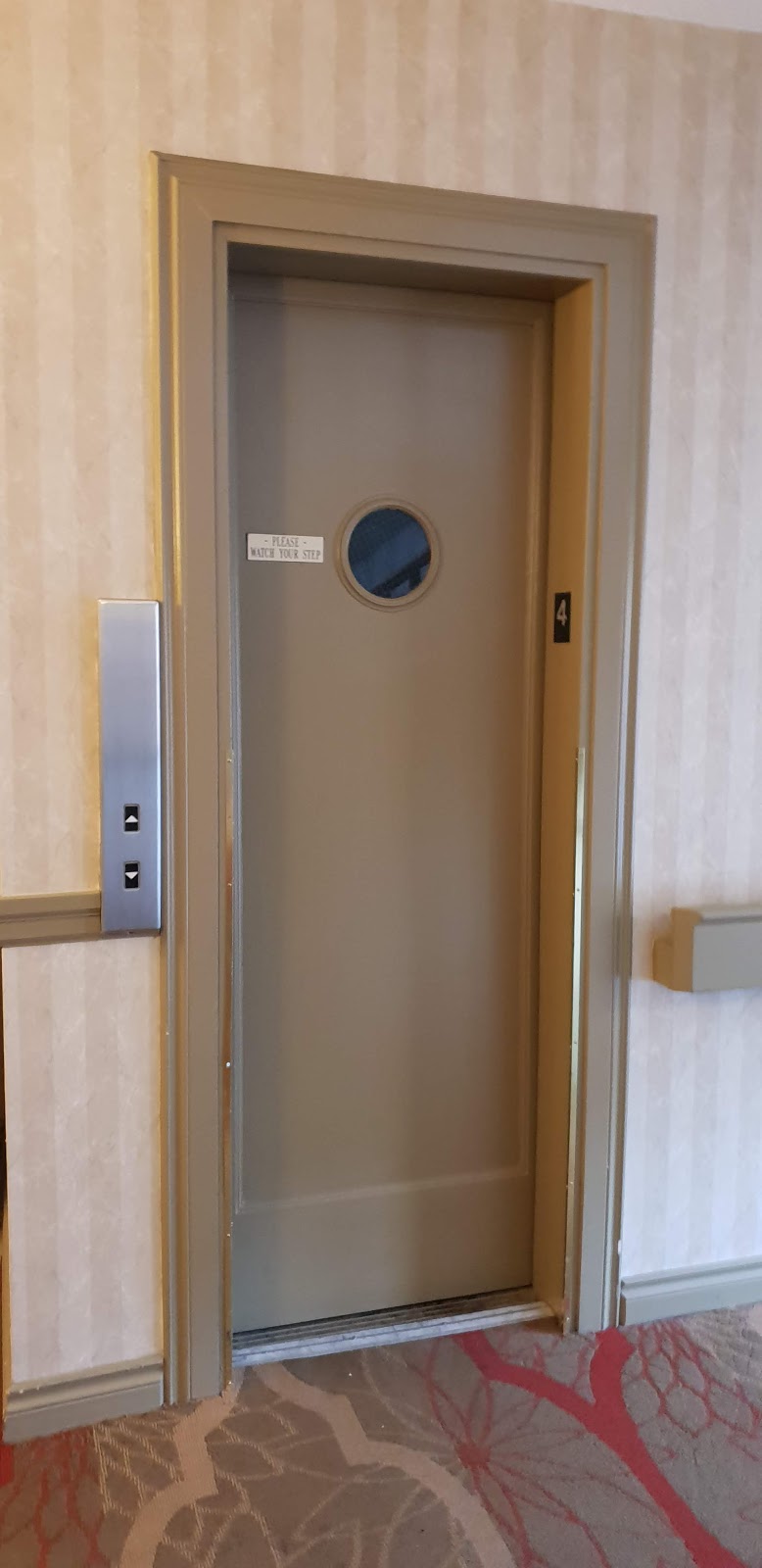
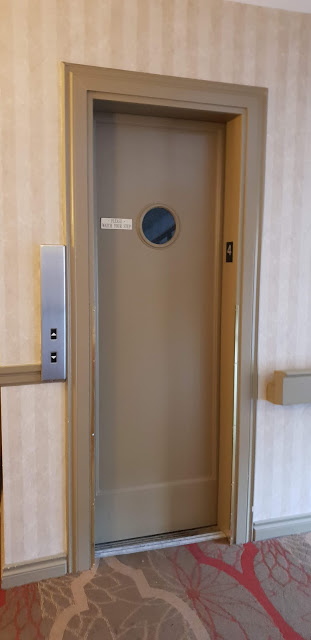
It has the original Otis elevator that can take a maximum of four passengers, and a sign on the wall that says “no horseplay inside the elevator” which is a rather interesting expression that only someone of my vintage would understand.  And, for those without a sense of humor, you definitely couldn’t fit a horse in it to play with.

The thing is, how do you find a balance between keeping the old world charm with modern-day expectations.  You can’t.  Some hotels try valiantly to get that balance.  Here, it is simply old world charm, which I guess we should be grateful for because sooner rather than later it’s going to disappear forever.

In my writer’s mind, given the importance of the railways, this was probably a thriving place for travelers, and once upon a time, there were a lot more hotels like this one.

Who do you think you are?

I have seen this television program once or twice, where a television personality digs into their past and sometimes they discover they had famous, or sometimes infamous, relatives.

I don’t think I would be so lucky, or unlucky as the case may be.

But, to be honest I haven’t really been interested in digging into the past.

On the other hand, my older brother has a keen interest in genealogy in general, borne from a desire to find out more about our family tree.

And he has gone back to the 1600s, for the relatives who came out from England, and no, they have no transported convicts, or at least he’s not saying.

Genealogy is a rather fascinating subject, and, I’ve discovered, is taught in university as a degree.  My brother has one now. 

What I didn’t realize is that I’ve been playing with it for years because in writing what might be called sagas you need to create your own set of mythical families, and then trace to forebears back in time.

I have one novel I’m writing that has required a family tree, and recently another for a story that required starting with a character who participated in the Eureka Stockade.  We had to create parents, a migration from England to Australia, and then construct a family tree through to today so we could write a story from the perspective of a fourth-generation girl at school doing a school project.

If that sounds complicated, believe me, it is.  But from my granddaughter who came up with the idea, she is very excited about it.

Much better than sitting in front of a computer playing games or a tv watching cartoons.

But once again I digress…

I have found a lot of genealogy stuff that my mother had been working on, and I’m taking it to my brother, and at the same time, l will get the latest installment on our family.

So far I’ve learned that I come from a combination of British relatives on both my mother and father’s side, the most recent my father’s mother who was born in England, and German from my mother’s side, her surname being Auhl.

No doubt, and with a great deal of irony, my relatives probably fought against each other in two world wars.

I’m sure more will be revealed on Wednesday.

But, the more I learn the more I feel inclined to create a fictionalized history with my family members as characters in the story.  At the moment a biographical account of the family would be reasonably boring since as yet no one notorious had been discovered.

An excerpt from “Strangers We’ve Become” – Coming Soon

I wandered back to my villa.

It was in darkness.  I was sure I had left several lights on, especially over the door so I could see to unlock it.

I looked up and saw the globe was broken.

Instant alert.

I went to the first hiding spot for the gun, and it wasn’t there.  I went to the backup and it wasn’t there either.  Someone had found my carefully hidden stash of weapons and removed them.

Who?

There were four hiding spots and all were empty.  Someone had removed the weapons.  That could only mean one possibility.

I had a visitor, not necessarily here for a social call.

But, of course, being the well-trained agent I’d once been and not one to be caught unawares, I crossed over to my neighbor and relieved him of a weapon that, if found, would require a lot of explaining.

Suitably armed, it was time to return the surprise.

There were three entrances to the villa, the front door, the back door, and a rather strange escape hatch.  One of the more interesting attractions of the villa I’d rented was its heritage.  It was built in the late 1700s, by a man who was, by all accounts, a thief.  It had a hidden underground room which had been in the past a vault but was now a wine cellar, and it had an escape hatch by which the man could come and go undetected, particularly if there was a mob outside the door baying for his blood.

It now gave me the means to enter the villa without my visitors being alerted, unless, of course, they were near the vicinity of the doorway inside the villa, but that possibility was unlikely.  It was not where anyone could anticipate or expect a doorway to be.

The secret entrance was at the rear of the villa behind a large copse, two camouflaged wooden doors built into the ground.  I move aside some of the branches that covered them and lifted one side.  After I’d discovered the doors and rusty hinges, I’d oiled and cleaned them, and cleared the passageway of cobwebs and fallen rocks.  It had a mildew smell, but nothing would get rid of that.  I’d left torches at either end so I could see.

I closed the door after me, and went quietly down the steps, enveloped in darkness till I switched on the torch.  I traversed the short passage which turned ninety degrees about halfway to the door at the other end.  I carried the key to this door on the keyring, found it and opened the door.  It too had been oiled and swung open soundlessly.

I stepped in the darkness and closed the door.

I was on the lower level under the kitchen, now the wine cellar, the ‘door’ doubling as a set of shelves which had very little on them, less to fall and alert anyone in the villa.

Silence, an eerie silence.

I took the steps up to the kitchen, stopping when my head was level with the floor, checking to see if anyone was waiting.  There wasn’t.  It seemed to me to be an unlikely spot for an ambush.

I’d already considered the possibility of someone coming after me, especially because it had been Bespalov I’d killed, and I was sure he had friends, all equally as mad as he was.  Equally, I’d also considered it nigh on impossible for anyone to find out it was me who killed him because the only people who knew that were Prendergast, Alisha, a few others in the Department, and Susan.

That raised the question of who told them where I was.

If I was the man I used to be, my first suspect would be Susan.  The departure this morning, and now this was too coincidental.  But I was not that man.

Or was I?

I reached the start of the passageway that led from the kitchen to the front door and peered into the semi-darkness.  My eyes had got used to the dark, and it was no longer an inky void.  Fragments of light leaked in around the door from outside and through the edge of the window curtains where they didn’t fit properly.  A bone of contention upstairs in the morning, when first light shone and invariably woke me up hours before I wanted to.

Still nothing.

I took a moment to consider how I would approach the visitor’s job.  I would get a plan of the villa in my head, all entrances, where a target could be led to or attacked where there would be no escape.

Coming in the front door.  If I was not expecting anything, I’d just open the door and walk-in.  One shot would be all that was required.

Contract complete.

I sidled quietly up the passage staying close to the wall, edging closer to the front door.  There was an alcove where the shooter could be waiting.  It was an ideal spot to wait.

Crunch.

I stepped on some nutshells.

Not my nutshells.

I felt it before I heard it.  The bullet with my name on it.

And how the shooter missed, from point-blank range, and hit me in the arm, I had no idea.  I fired off two shots before a second shot from the shooter went wide and hit the door with a loud thwack.

I saw a red dot wavering as it honed in on me and I fell to the floor, stretching out, looking up where the origin of the light was coming and pulled the trigger three times, evenly spaced, and a second later I heard the sound of a body falling down the stairs and stopping at the bottom, not very far from me.

Two assassins.

I’d not expected that.

The assassin by the door was dead, a lucky shot on my part.  The second was still breathing.

I checked the body for any weapons and found a second gun and two knives.  Armed to the teeth!

I pulled off the balaclava; a man, early thirties, definitely Italian.  I was expecting a Russian.

I slapped his face, waking him up.  Blood was leaking from several slashes on his face when his head had hit the stairs on the way down.  The awkward angle of his arms and legs told me there were broken bones, probably a lot worse internally.  He was not long for this earth.

“Who employed you?”

He looked at me with dead eyes, a pursed mouth, perhaps a smile.  “Not today my friend.  You have made a very bad enemy.”  He coughed and blood poured out of his mouth.  “There will be more …”

Friends of Bespalov, no doubt.

I would have to leave.  Two unexplainable bodies, I’d have a hard time explaining my way out of this mess.  I dragged the two bodies into the lounge, clearing the passageway just in case someone had heard anything.

Just in case anyone was outside at the time, I sat in the dark, at the foot of the stairs, and tried to breathe normally.  I was trying not to connect dots that led back to Susan, but the coincidence was worrying me.

A half-hour passed and I hadn’t moved.  Deep in thought, I’d forgotten about being shot, unaware that blood was running down my arm and dripping onto the floor.

Until I heard a knock on my front door.

Two thoughts, it was either the police, alerted by the neighbors, or it was the second wave, though why would they be knocking on the door?

I stood, and immediately felt a stabbing pain in my arm.  I took out a handkerchief and turned it into a makeshift tourniquet, then wrapped a kitchen towel around the wound.

If it was the police, this was going to be a difficult situation.  Holding the gun behind my back, I opened the door a fraction and looked out.

No police, just Maria.  I hoped she was not part of the next ‘wave’.

“You left your phone behind on the table.  I thought you might be looking for it.”  She held it out in front of her.

When I didn’t open the door any further, she looked at me quizzically, and then asked, “Is anything wrong?”

I was going to thank her for returning the phone, but I heard her breathe in sharply, and add, breathlessly, “You’re bleeding.”

I looked at my arm and realized it was visible through the door, and not only that, the towel was soaked in blood.

“You need to go away now.”

Should I tell her the truth?  It was probably too late, and if she was any sort of law-abiding citizen she would go straight to the police.

She showed no signs of leaving, just an unnerving curiosity.  “What happened?”

I ran through several explanations, but none seemed plausible.  I went with the truth.  “My past caught up with me.”

“You need someone to fix that before you pass out from blood loss.  It doesn’t look good.”

“I can fix it.  You need to leave.  It is not safe to be here with me.”

The pain in my arm was not getting any better, and the blood was starting to run down my arm again as the tourniquet loosened.  She was right, I needed it fixed sooner rather than later.

I opened the door and let her in.  It was a mistake, a huge mistake, and I would have to deal with the consequences.  Once inside, she turned on the light and saw the pool of blood just inside the door and the trail leading to the lounge.  She followed the trail and turned into the lounge, turned on the light, and no doubt saw the two dead men.

I expected her to scream.  She didn’t.

She gave me a good hard look, perhaps trying to see if I was dangerous.  Killing people wasn’t something you looked the other way about.  She would have to go to the police.

“What happened here?”

“I came home from the cafe and two men were waiting for me.  I used to work for the Government, but no longer.  I suspect these men were here to repay a debt.  I was lucky.”

“Not so much, looking at your arm.”

She came closer and inspected it.

“Sit down.”

She found another towel and wrapped it around the wound, retightening the tourniquet to stem the bleeding.

“Do you have medical supplies?”

I nodded.  “Upstairs.”  I had a medical kit, and on the road, I usually made my own running repairs.  Another old habit I hadn’t quite shaken off yet.

She went upstairs, rummaged, and then came back.  I wondered briefly what she would think of the unmade bed though I was not sure why it might interest her.

She helped me remove my shirt, and then cleaned the wound.  Fortunately, she didn’t have to remove a bullet.  It was a clean wound but it would require stitches.

When she’d finished she said, “Your friend said one day this might happen.”

No prizes for guessing who that friend was, and it didn’t please me that she had involved Maria.

“Alisha?”

“She didn’t tell me her name, but I think she cares a lot about you.  She said trouble has a way of finding you, gave me a phone and said to call her if something like this happened.”

“That was wrong of her to do that.”

“Perhaps, perhaps not.  Will you call her?”

“Yes.  I can’t stay here now.  You should go now.  Hopefully, by the time I leave in the morning, no one will ever know what happened here, especially you.”

She smiled.  “As you say, I was never here.”

© Charles Heath 2018-2022

strangerscover9

Searching for locations: Vancouver to Kamloops, Canada

This morning started with a visit to the car rental place in Vancouver.  It reinforced the notion that you can be given the address and still not find the place.  It happened in Washington where it was hiding in the back of the main railway station, and it happened again in Vancouver when it was hidden inside a hotel.

We simply walked straight past it.  Pity there wasn’t a sign to let people know.

However…

We went in expecting a Grand Jeep Cherokee and walked out with a Ford Flex, suitable for three people and four large suitcases.  It actually seats 7, but forget the baggage, you’d be lucky to get two large suitcases in that configuration.

It is more than adequate for our requirements.

Things to note, it was delivered with just over a quarter of a tank of gas, and it had only done about 11,000 km, so it’s relatively new.  It’s reasonably spacious, and when the extra seats are folded down, there is plenty of baggage space.

So far, so good.

We finally leave the hotel about half-past ten, and it is raining.  It is a simple task to get on Highway 1, the TransCanada Highway, initially, and then onto Highway 5, the Coquihalla highway for the trip to Kamloops.

It rains all the way to the top of the mountain, progress hampered from time to time by water sprays from both vehicles and trucks.  The rain is relentless.  At the top of the mountain, the rain turns into snow and the road surface to slush.  It’s 0 degrees, but being the afternoon, I was not expecting it to turn to ice very quickly.

On the other side of the mountain, closer to Kamloops, there was sleet, then rain, then nothing, the last 100kms or so, in reasonably dry conditions.

Outside Kamloops, and in the town itself, there was evidence of snow recently cleared, and slushy roads.  Cars in various places were covered in snow, indicating the most recent falls had been the night before.

We’re staying at the Park Hotel, a heritage building, apparently built in the later 1920s.  In the style of the time, it is a little like a rabbit warren with passages turning off in a number of directions, and showing it is spread across a number of different buildings.

It has the original Otis elevator that can take a maximum of four passengers, and a sign on the wall that says “no horseplay inside the elevator” which is a rather interesting expression that only someone of my vintage would understand.  And, for those without a sense of humor, you definitely couldn’t fit a horse in it to play with.

The thing is, how do you find a balance between keeping the old world charm with modern day expectations.  You can’t.  Some hotels try valiantly to get that balance.  Here, it is simply old world charm, which I guess we should be grateful for because sooner rather than later it’s going to disappear forever.

In my writer’s mind, given the importance of the railways, this was probably a thriving place for travelers and once upon a time, there were a lot more hotels like this one.

“Sunday in New York”, a romantic adventure that’s not a walk in the park!

“Sunday in New York” is ultimately a story about trust, and what happens when a marriage is stretched to its limits.

When Harry Steele attends a lunch with his manager, Barclay, to discuss a promotion that any junior executive would accept in a heartbeat, it is the fact his wife, Alison, who previously professed her reservations about Barclay, also agreed to attend, that casts a small element of doubt in his mind.

From that moment, his life, in the company, in deciding what to do, his marriage, his very life, spirals out of control.

There is no one big factor that can prove Harry’s worst fears, that his marriage is over, just a number of small, interconnecting events, when piled on top of each other, points to a cataclysmic end to everything he had believed in.

Trust is lost firstly in his best friend and mentor, Andy, who only hints of impending disaster, Sasha, a woman whom he saved, and who appears to have motives of her own, and then in his wife, Alison, as he discovered piece by piece damning evidence she is about to leave him for another man.

Can we trust what we see with our eyes or trust what we hear?

Haven’t we all jumped to conclusions at least once in our lives?

Can Alison, a woman whose self-belief and confidence is about to be put to the ultimate test, find a way of proving their relationship is as strong as it has ever been?

As they say in the classics, read on!

Purchase:

http://tinyurl.com/Amazon-SundayInNewYork

Writing about writing a book – Day 15

Our main character Bill probably needs to give an account of the situation he found himself in.  I have, for a while, considered that he is just another soldier who found himself in the wrong place at the wrong time, but now, I want to add a dimension.

He finishes up where he is, in the end, because he chose to be there, and it was something of a rocky ride to get there.

That I’m still planning in my head.

In the meantime, this is the initial piece I wrote for his situation description:

I used to joke about telling people my middle name was ‘danger’.  It seemed I was not the only one, and for a time, worked with a group of soldiers and ex-soldiers in a capacity similar to that of being a mercenary.

Each one of us had a specialty.  Mine was being the sniper.  Johnny had knife skills and not the sort that was used in a kitchen.  Freddie, explosives, Bill, well, you just left Bill alone because he had a grudge against the world and everyone in it.

The Colonel used to say we were all handpicked, but that wasn’t necessarily the case.  I knew for a fact some of the team came straight out of the stockade before their time was up.

Because some of us were expendable.

The thing was; none of us cared.  For those who were ‘rescued’, it was better out in the jungle, dodging bullets, than being inside, your fate left in the hands of the Gods. 

I knew how it was.  I’d been there once or twice myself.

This morning had started the same as many others.  Rise and shine, a breakfast of sorts, into the chopper, and after an hour or so, dropping into a grassy patch, with nothing but jungle in every direction.  Our mission was to find and liberate a number of our people who had gone missing, read captured, on the border between Cambodia and Vietnam.  It was a familiar country because I had, over the last year or so, gone hunting missing POW’s in the area.  Old prisons had been converted into drug laboratories, and we’d broken up a few of those too.

The noise of the chopper put paid to any sort of stealthy approach and, by the time it dropped us off, if there was anyone nearby, our advantage, if we ever had one, was gone.  The trouble was, to cover the same distance by foot would take a week, and, by the time we arrived, if we arrived, more than half the team would be dead.  We may have been good, but we were not that good.  It was not our home turf.

It was hot, sticky, and nothing like home.  There wasn’t a day that passed when I thought to myself it was getting harder and harder to remember when I wasn’t constantly hot and sweaty, nor as frightened.  It happened that way, towards the end of a tour.

Once on the ground, every man was on full alert.  We changed the lead and tail end constantly, to make sure we didn’t lose anyone.  And it was hard going, the constant heat, sweat, punctuated with slight relief when it rained.

Then as quickly as it came, it went, leaving you wet then sticky.

And if that wasn’t enough to contend with, there was the enemy.   You couldn’t see them, nor hear them yet you had the feeling he was watching you the whole time, and it made your skin crawl.

Sometimes the enemy attacked when we had to camp, invisibly swooping, shooting from the trees, and firing a mortar or two, then disappearing back into the luminous greenery without a trace.  These were the remnants of the Viet Cong, Cambodian armed forces, disaffected Laotians, or the Chinese, or so we believed, but they were well-trained mercenaries and just the sort of people the drug cartels would use.

And surviving the operation, any operation, was like playing Russian roulette.  Was it your turn this time, or someone else’s?  You could be walking along, straining your eyes and ears, and next minute, find the man who was covering your back, dead.  Booby traps were silent and swift.  Landmines are loud and very messy.  Both hangovers from the war, and never cleaned up.  People you’d meet, you never knew whose side they were on, so it was best to avoid all contact.

© Charles Heath 2015-2023

“Echoes From The Past”, the past doesn’t necessarily stay there


What happens when your past finally catches up with you?

Christmas is just around the corner, a time to be with family. For Will Mason, an orphan since he was fourteen, it is a time for reflection on what his life could have been, and what it could be.

Until a chance encounter brings back to life the reasons for his twenty years of self-imposed exile from a life only normal people could have. From that moment Will’s life slowly starts to unravel and it’s obvious to him it’s time to move on.

This time, however, there is more at stake.

Will has broken his number one rule, don’t get involved.

With his nemesis, Eddie Jamieson, suddenly within reach, and a blossoming relationship with an office colleague, Maria, about to change everything, Will has to make a choice. Quietly leave, or finally, make a stand.

But as Will soon discovers, when other people are involved there is going to be terrible consequences no matter what choice he makes.

https://amzn.to/2CYKxu4

newechocover5rs