The cinema of my dreams – I always wanted to see the planets – Episode 56

Would a Mexican standoff work?

I couldn’t help thinking just how far behind the technological ball we were, and that even if we had to ability to travel far into space, we were always going to find people more advanced than us.

I remembered back to the time, before this mission was to get underway, an almost finished spacecraft waiting for a crew, the round table discussions that were held to talk about what we might expect and how we would react.

I said then that we would not be able to treat them like we would other nationalities on our own planet, which seemed to be the consensus for first contact.

Some thought it unlikely we’d run into anyone else.

And where we were right now was largely uncharted territory.  Of course, there was a whole team aboard whose job was specifically to handle alien encounters, and all of them had been huddled in their meeting room since day one of our first encounter with the Foroi, taking extensive notes, analysing every aspect of each encounter, and contributing information they thought I would find useful in my dealings with them.

It was there I headed now.

I had already been admonished by their leader, Emily Jacques, over my handling of certain situations, particularly when I chose what he called the ‘death or glory’ option.

I told her it was like the nuclear option, where each side held an arsenal of weapons at the ready, threatening to use them, but never with the intention of doing so.  The old ‘Mexican standoff’.

I told her I based my decision on the fact that we were simply dealing with more evolved human beings who’d moved beyond the corporeal life we were still stuck with.  But, for all their advances, the notion of creating a nuclear wasteland still held respect. I doubted anyone, no matter how advanced, could get past the finality of a nuclear attack on a home planet.

And if they had been on ours and seen the effect of the single time our leaders had decided on pre-emptive and retaliatory strikes, they would see the wastelands of what London, New York, and Moscow looked like. How much we hadn’t learned from our mistakes beggared belief.

The table was full, a dozen experts with a lot of books, papers, and computers, all talking at once, a half dozen conversations, each trying to be heard above the others.

I came in, leaned on my chair, and the noise subsided. The leader of the team, Emily Jacques, was down the other end of the table.

I looked at each one of them, experts in fields related to humans, and not one had any idea what an alien might be like.  They were trying to apply the human factors to the aliens, and every decision they made had been based on a flawed theory.

The aliens were nothing like us.

We knew nothing about them, but they knew everything about us.

When I looked at Emily, she said, “The consensus is that we should let her people take her back to her homeland.”

“What if she doesn’t want to go?”

“Is it worth possibly sacrificing this ship and crew just to make a stand?  We want to make friends with these people, not enemies.”

“Did you consider the possibility that if we let her people take her, the other group might object?  I get the impression that no matter what we do, it is going to end badly.”

Was that a possibility they hadn’t considered?

“What do you think we should do?”  Alexandra was the crew representative, and not formally a member of the team, but a person who should have a seat at the table when matters were discussed that concerned the crew.

It was a position I had insisted on before we left on this odyssey, with far-reaching authority to make decisions that would resolve crew issues in a fair and balanced manner.  That included discipline and punishment when warranted.  I did not want the crew to think that their fate rested in the hands of the ship’s officers.  I had ultimate authority but rarely intervened in any decision she made.

“She had offered to become a mediator so that we could sit down and discuss their intentions.  She has also requested what back on earth we would call asylum, she wants to not be taken by either group.  Did anyone back on earth before this began ever consider the possibility that we might be asked for asylum?”

“No.”  Jacob was the international law expert, well-versed in all matters that related to problems back home and was sent with the possibility of his learning or creating a set of rules for intergalactic relations.  “My superiors didn’t think we’d meet any alien races, but now we have, all I have as a basis is earth’s international law, and it has provisions for asylum, and as such, we should be able to extend it galactically, I can’t believe I actually said that, but we may have problems in getting these people to agree to anything we propose.”

“But there’s no reason why we can’t grant her asylum if she formally requests it.  Something that might help, these people, as I understand it, have spent time on our planet, which means that aliens have been walking among us for a very long time.”

“Did she tell you that?  It might just be a ploy to gain your trust.”

“She’s not the only one.  The captain of the first vessel we encountered said the same.  They know of us, and our ways, and they’ve been watching our evolution over a very long period.”

“Why didn’t they just invade us, then.  We’re obviously technologically inferior.”  The technological expert, the person who was charged with getting his hands on alien technology, if we found any, asked.

“It explains the UFO’s then,” said another.

“You know what we would have done the moment their ships arrived.  Shoot first and ask questions later.  It’s probably what they’re expecting from us now.  We have to be better than that.” To the lawyer, I said, “Start drafting some intergalactic rules for asylum.  Everyone else, start formulating questions to ask the Princess about anything and everything.  I’m going to see the Chief Engineer.”

© Charles Heath 2021-2023

The second attempt looks a little better, but not much

The process of writing is rewriting editing and more rewriting.

The other day l wrote some words.  I didn’t like them.  But it had laid the groundwork for a second draft.

Here it is:


Growing up I did not believe l had one of those lovable faces.

My brother, known in school as the best-looking boy of his graduating class, said it was a face only a mother could love.

He was mean.

Simone, a girl who was a friend, not a girlfriend, said my face had character.

She was charming and polite.

Looking now, in the mirror, l decided I’d aged gracefully.

I could truthfully say my brother had not, but that was as far as the comparison went.

My overachieving brother was the epitome of business success, a veritable god-zillionaire.  Everything he touched turned to gold.

My ultra-successful sister, Penelope, had married into the right family perhaps by chance, but she was also a very learned scholar whose life was divided between her chair and the university and her social life with the rich and famous.

Then there was me.

I gave up on my chance at university because l was not the scholarly sort and didn’t last long.  Sadly, l was the first of my family to be sent down from Oxford.

Instead, l took on a series of professions such as seasonal labourer, farmhand, factory worker, and lastly, night watchman.  At least now I had a uniform and looked like I’d made something of myself.

It would not be enough for my parents who every year didn’t say it out loud, but the disappointment was always there in their expressions.

My brother in his usual blunt manner said l was a loser and would never change.

My sister was not so blunt.  She simply said it was disappointing so much potential was going to waste.  I only asked her once what she meant and lost me after the first four-syllable word.

Finally, I’d taken their comments to heart and decided l would not be going home to the family Christmas holiday reunion.

I told my boss that l was available to work the night shift over the holidays, the shift no one else wanted.

It was he said the time for reflection.  He hated his family as much as I did so we would be able to lament our bad luck through the long cold hours from dusk till dawn.

It was 3 a.m. and it was like standing on the exact epicenter of the North Pole.  I’d just stepped from the warehouse into the car park.

The car was covered in snow.  The weather was clear now, but more snow was coming.

It was going to be a white Christmas, all I needed.  I hoped I remembered to put the antifreeze in my radiator this time.

As I approached my car, the light went on in an SUV parked next to mine.  The door opened and what looked like a woman was climbing down from the driver’s seat.

She closed the door and leaned against the side of the car.  “Graham?”

It was a voice I was familiar with, though I hadn’t heard it for a long time, my ultra-successful sister, Penelope.  From what I could see, she didn’t look too well.

“What do you want?”

“Help.”

My help, I was the last person to help her or anyone for that matter.  But curiosity got the better of me.  “Why?”

“Because my husband is trying to kill me.”

The instant the last word left her lips I saw her jerk back into the car and then start sliding down to the ground.  There was no mistaking the red streak following her as she fell.

She’d been shot by what could be a sniper rifle, which meant …

It still needs work, but I’ve got the gist of where I want to go.

The idea is not to make a character so loathsome no one would want to read about him.

This will evolve and you can if you like come along for the ride!


© Charles Heath 2024

Writing about writing a book – Day 21 continues

I’m still working on Bill’s backstory, and how he got mixed up in the war, and as a general background to his situation, and life before Davenport.

This is still in his own words:


But whether we were stupid or naive, or completely mad, we were all eager to get into battle, filled with the sort of hate only Army propaganda films could fill you with.  They were our enemy, and they deserved to concede or die.

A fresh face in a hardened platoon, I was eager to get on with it.  They looked knowingly, having seen it all before.  No idea of the reality, and no time to tell us.  Have a few beers to celebrate, and then, the next morning, go out on patrol.  No problem.

There was camaraderie, but it was subdued.  We walked single file, the seasoned campaigners in front and at the rear, treading carefully, demanding quiet, and a general cautiousness.  In the middle of nowhere, where only the sound of rain, or the animals and birds for company, we were naive enough to think this was going to be a doddle.

Then it happened, six hours out, and just before we reached a small clearing.  I thought to myself it was odd there should be such a clear space with jungle all around it.  There must be a reason.

There was.

We had walked into an ambush, and everyone hit the ground.  I was bringing up the rear with another soldier, a veteran not much older than myself whose name was Scotty, a little farther back from the main group.  Bullets sprayed the undergrowth, pinging off trees and leaves.  I buried my face in the dirt, praying I would not die on my first patrol.

We became separated from the others, lying in a hollow, with no idea how far away help was.  He was muttering to himself.  “God, I hate this.  You can never see the bastards.  They’re out there, but you can never bloody well see them.”  Then he crawled up the embankment, gun first.

He let off a few rounds, causing a return of machine-gun fire, spattering the dirt at the top.  Next thing I knew he was sliding down the hill with half his face shot away.  Dead.  I threw up there and then.  What an initiation.

Then one of the enemy soldiers came over the hill to check on his ‘kill’.  I saw him at the same time he saw me and aimed my gun and shot.  It was instinct more than anything else, and I hadn’t stopped to think of the consequences.  He fell down, finishing up next to me, staring at me from black, lifeless eyes. 

Dead. 

I’ll never forget those lifeless eyes.  I just got up and ran, making it back to the rest of the group without getting hit.  No one could explain how I made it safely through the hail of gunfire, from our side and theirs.

Back in the camp later, the veterans remarked on how unlucky Scotty was and how lucky I was to shoot one of the enemies, and not be killed myself.  They all thought it was worth a celebration.

Before we went out the next day to do it all again.

I spent the night vomiting, unable to sleep, haunted look on his face, one I finally realized that reflected complete astonishment.


There will be more, as the story develops.


© Charles Heath 2016-2024

Searching for locations: We’ve just arrived in Beijing International Airport, China

Instead of making a grand entrance, arriving in style and being greeted by important dignitaries, we are slinking in via an airplane, late at night. It’s hardly the entrance I’d envisaged. At 9:56 the plane touches down on the runway.  Outside the plane, it is dark and gloomy and from what I could see, it had been raining.  That could, of course, simply be condensation.

Once on the ground, everyone was frantically gathering together everything from seat pockets and sending pillows and blankets to the floor.  A few were turning their mobile phones back on, and checking for a signal, and, perhaps, looking for messages sent to them during the last 12 hours. Or perhaps they were just suffering from mobile phone deprivation.

It took 10 minutes for the plane to arrive at the gate. That’s when everyone moves into overdrive, unbuckling belts, some before the seatbelt sign goes off, and are first out of their seats and into the overhead lockers.  Most are not taking care that their luggage may have moved, but fortunately, no bags fall out onto someone’s head. The flight had been relatively turbulent free.

When as many people and bags have squeezed into that impossibly small aisle space, we wait for the door to open, and then the privileged few business and first-class passengers to depart before we can begin to leave. As we are somewhere near the middle of the plane, our wait will not be as long as it usually is.  This time we avoided being at the back of the plane.  Perhaps that privilege awaits us on the return trip.

Once off the plane, it is a matter of following the signs, some of which are not as clear as they could be.  It’s why it took another 30 odd minutes to get through immigration, but that was not necessarily without a few hiccups along the way. We got sidetracked at the fingerprint machines, which seemed to have a problem if your fingers were not straight, not in the center of the glass, and then if it was generally cranky, which ours were, continue to tell you to try again, and again, and again, and again…That took 10 to 15 minutes before we joined an incredibly long queue of other arrivals,

A glance at the time, and suddenly it’s nearly an hour from the moment we left the plane.

And…

That’s when we got to the immigration officer, and it became apparent we were going to have to do the fingerprints yet again.  Fortunately this time, it didn’t take as long.  Once that done, we collected our bags, cleared customs by putting our bags through a huge x-ray machine, and it was off to find our tour guide.


We found several tour guides with their trip-a-deal flags waiting for us to come out of the arrivals hall.  It wasn’t a difficult process in the end.  We were in the blue group.  Other people we had met on the plane were in the red group or the yellow group.  The tour guide found, or as it turned out she found us, it was simply a matter of waiting for the rest of the group, of which there were eventually 28.Gathered together we were told we would be taking the bags to one place and then ourselves to the bus in another.  A glance in the direction of the bus park, there were a lot of busses.

Here’s a thought, imagine being told your bus is the white one with blue writing on the side.

Yes, yours is, and 25 others because all of the tourist coaches are the same.  An early reminder, so that you do not get lost, or, God forbid, get on the wrong bus, for the three days in Beijing, is to get the last five numbers of the bus registration plate and commit them to memory.  It’s important.  Failing that, the guide’s name is in the front passenger window.

Also, don’t be alarmed if your baggage goes in one direction, and you go in another. In a rather peculiar set up the bags are taken to the hotel by what the guide called the baggage porter.  It is an opportunity to see how baggage handlers treat your luggage; much better than the airlines it appears.


That said, if you’re staying at the Beijing Friendship Hotel, be prepared for a long drive from the airport.  It took us nearly an hour, and bear in mind that it was very late on a Sunday night.

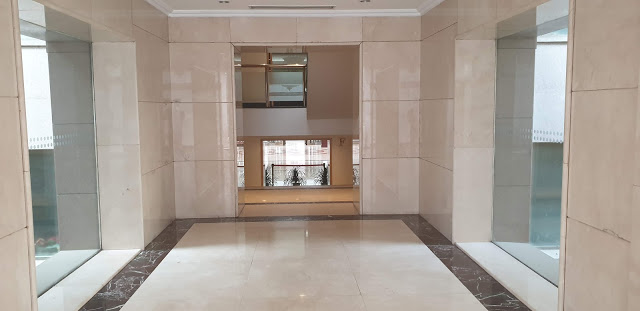
Climbing out of the bus after what seemed a convoluted drive through a park with buildings, we arrive at the building that will be our hotel for the next three days.  From the outside, it looks quite good, and once inside the foyer, that first impression is good.  Lots of space, marble, and glass.  If you are not already exhausted by the time you arrive, the next task is to get your room key, find your bags, get to your room, and try to get to be ready the next morning at a reasonable hour.

Sorry, that boat has sailed.

We were lucky, we were told, that our plane arrived on time, and we still arrived at the hotel at 12:52.  Imagine if the incoming plane is late.

This was taken the following morning.  It didn’t look half as bland late at night.

This is the back entrance to Building No 4 but is quite representative of the whole foyer, made completely of marble and glass.  It all looked very impressive under the artificial lights, but not so much in the cold hard light of early morning.

This the foyer of the floor our room was on.  Marble with interesting carpet designs.  Those first impressions of it being a plush hotel were slowly dissipating as we got nearer and nearer to the room.  From the elevator, it was a long, long walk.

So…Did I tell you about the bathroom in our room?

The shower and the toilet both share the same space with no divide and the shower curtain doesn’t reach to the floor.  Water pressure is phenomenal.  Having a shower floods the whole shower plus toilet area so when you go to the toilet you’re basically underwater.

Don’t leave your book or magazine on the floor or it will end up a watery mess.

And the water pressure is so hard that it could cut you in half.  Only a small turn of the tap is required to get that tingling sensation going.

It’s after 1:30 before we finally get to sleep.

As for the bed, well, that’s a whole other story.

Why is writing so hard

In just about every book about how to be a good writer, there seems to be a pile of problems that at some time in a writer’s life will need to be overcome.

Writer’s block

Don’t have it.  The ideas pour out of my head like water over a waterfall

Don’t use abstract descriptions in your writing

Damn, I do that all the time

But, back to writer’s block, is that where you write 37 chapters and there the story stops?

Oops.

Plan your book and have an outline so you can write it from start to finish

Plan?  What Plan?

That only happens when I’ve written the book and prior to the first edit, I make a precise of each chapter to make sure of continuity.

Plan your characters and give them a timeline

Oh God is that why characters’ names are often changing as the story progresses.

Believe it or not, I’m working on this issue.

Manage your time.

Still can’t get it right.

Write at least a thousand words a day, no matter if it’s rubbish or not.

Does that include writing for social media?

Apparently not.

At least this is one of the requirements I follow religiously. Sometimes it’s a lot more words but a least some writing finished up either on paper in on the word processor.

Now it’s time to write those thousand words.

Look, there, I’ve at least got one part of time management under control.

Inspiration, maybe – Volume 1

50 photographs, 50 stories, of which there is one of the 50 below.

They all start with –

A picture paints … well, as many words as you like.  For instance:

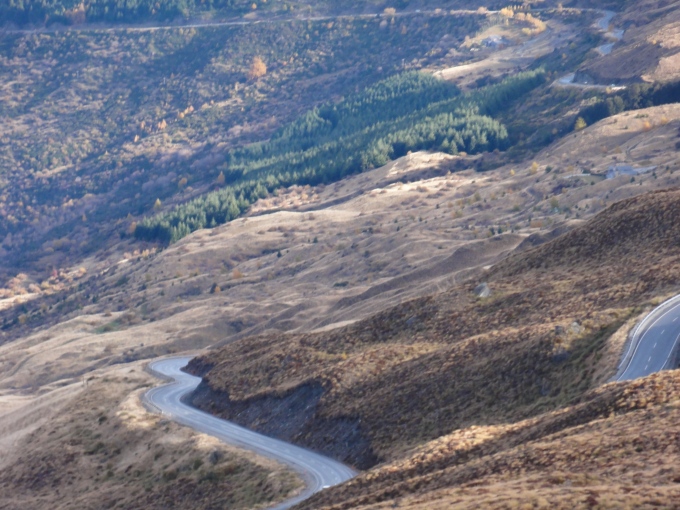
lookingdownfromcoronetpeak

And the story:

It was once said that a desperate man has everything to lose.

The man I was chasing was desperate, but I, on the other hand, was more desperate to catch him.

He’d left a trail of dead people from one end of the island to the other.

The team had put in a lot of effort to locate him, and now his capture was imminent.  We were following the car he was in, from a discrete distance, and, at the appropriate time, we would catch up, pull him over, and make the arrest.

There was nowhere for him to go.

The road led to a dead-end, and the only way off the mountain was back down the road were now on.  Which was why I was somewhat surprised when we discovered where he was.

Where was he going?

“Damn,” I heard Alan mutter.  He was driving, being careful not to get too close, but not far enough away to lose sight of him.

“What?”

“I think he’s made us.”

“How?”

“Dumb bad luck, I’m guessing.  Or he expected we’d follow him up the mountain.  He’s just sped up.”

“How far away?”

“A half-mile.  We should see him higher up when we turn the next corner.”

It took an eternity to get there, and when we did, Alan was right, only he was further on than we thought.”

“Step on it.  Let’s catch him up before he gets to the top.”

Easy to say, not so easy to do.  The road was treacherous, and in places just gravel, and there were no guard rails to stop a three thousand footfall down the mountainside.

Good thing then I had the foresight to have three agents on the hill for just such a scenario.

Ten minutes later, we were in sight of the car, still moving quickly, but we were going slightly faster.  We’d catch up just short of the summit car park.

Or so we thought.

Coming quickly around another corner we almost slammed into the car we’d been chasing.

“What the hell…” Aland muttered.

I was out of the car, and over to see if he was in it, but I knew that it was only a slender possibility.  The car was empty, and no indication where he went.

Certainly not up the road.  It was relatively straightforward for the next mile, at which we would have reached the summit.  Up the mountainside from here, or down.

I looked up.  Nothing.

Alan yelled out, “He’s not going down, not that I can see, but if he did, there’s hardly a foothold and that’s a long fall.”

Then where did he go?

Then a man looking very much like our quarry came out from behind a rock embedded just a short distance up the hill.

“Sorry,” he said quite calmly.  “Had to go if you know what I mean.”

I’d lost him.

It was as simple as that.

I had been led a merry chase up the hill, and all the time he was getting away in a different direction.

I’d fallen for the oldest trick in the book, letting my desperation blind me to the disguise that anyone else would see through in an instant.

It was a lonely sight, looking down that road, knowing that I had to go all that way down again, only this time, without having to throw caution to the wind.

“Maybe next time,” Alan said.

“We’ll get him.  It’s just a matter of time.”

© Charles Heath 2019-2021

Find this and other stories in “Inspiration, maybe”  available soon.

InspirationMaybe1v1

Searching for locations: Sydney to Beijing, China – Every flight is different

Sydney to Beijing – Qantas A330-200
Boarding 11:45, everyone on board by 12:02, for a 12:10 departure. Pushing back 12:12 Take off 12:27

Lunch
Airline food is getting better but the fact they serve it up to you in a metal tray with a thick aluminum lid does nothing for the quality of the food inside.  I get what the chef is trying to do but often there is too little of one thing and too much of another and what you finish up with is slop in a tray.  Sometimes it’s edible sometimes it’s not.  Sometimes the meat is tender and other times it’s like boot leather.  As it is today. I think it’s pork, I should have had the chicken.  Or perhaps it was chicken.  I hate it when you can’t tell what it is that you’re eating. But, the drinks were good.

Rest or Sleep, maybe
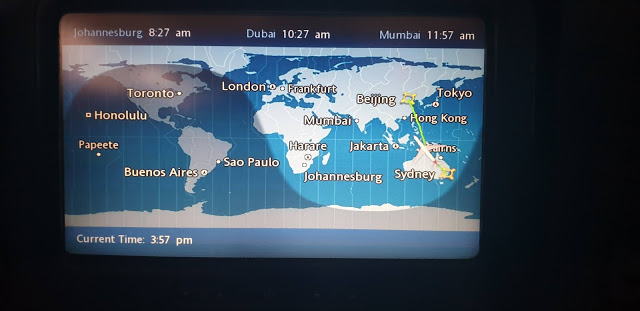
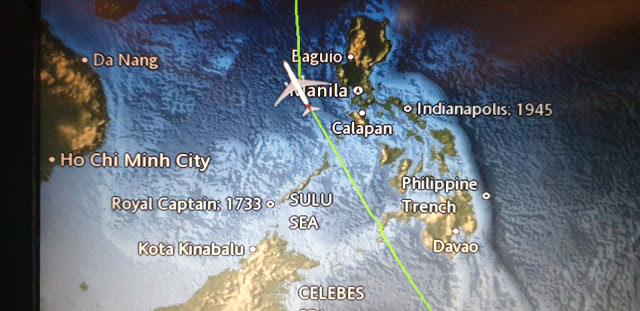
It’s going to take 11 hours and 20 minutes from Sydney to Beijing, a long time to sit in a plane with nothing much to do other than crosswords, read a book or newspaper or magazine, listen to music on your own device, or the in-flight entertainment, watch a movie again by the in-flight entertainment – if it works – or try to get some sleep. I started with the crosswords but got bored quickly. I fiddled with the in-flight entertainment, looked at the movies and tv shows but none really interested me, not then at least, so I set it to the flight path. Not exactly stellar entertainment, but it’s always interesting to know where the plane is. Or is it? If we crash, what good would it do me to know it’s somewhere over the ocean, not far from Manila, or somewhere else.  It’s not as if I could phone someone up, on the way down, to let them know where we are. But, just after dinner, we still haven’t left Australia

However, by the time I’ve finished fiddling with and dismissing all of the entertainment alternatives, it’s back to the flight path and now we are…

Somewhere approaching the Sulu Sea, which I’ve never heard of before, so it looks like I’ll have to study up on my geography when I get home.

OK, Manila looks like somewhere I’ve heard of, so we have to be flying over the Philippines.  Not far left of that is Vietnam.  Neither of those places is on my travel bucket list, so I’ll just look from up here and be satisfied with that.

Working, or not
Chronic boredom is setting in by the time we are just past halfway to our destination. We are over 6 hours into the flight and there no possible way I’m going to get any sleep. I brought my Galaxy Tab loaded with a few of my novel outlines, and planning for missing chapters, thinking I might get a little thinking time in.  Plane rides, I find, are excellent for getting an opportunity to write virtually unhindered by outside interruptions, if, of course, you discount the number of times people brush past, knocking your seat, the person in front lowering the seat into your face, or people around you continually asking you to turn off your light because they’re trying to sleep. Sorry, I say, but you can suffer my pain with me.  It’s one of the joys of flying with over two hundred others in a claustrophobic environment.  Besides, aren’t the lights supposed to be slanted so only I get the rays of light?  Except, I guess when the fixed light doesn’t line up with where the airline has fixed the seat (usually so they can squash more people in). So, sorry, not sorry, take it up with the airline.

Back to work, and I put in some quality time on a part of the story that had been eluding me for a while.  I knew what I wanted to write, but not how I was going to approach it, so that blissfully quiet and intense time worked in my favour, something that would not have happened back home. I won’t bore you with the synopsis, just suffice to say it’s finally down on paper, digitally that is, and it’s a huge step forward towards finishing it. There is, of course, the end play, the reading of the will but not before there are a few thrusts and parry’s by some of the players, but all in all the objective was to showcase a group of people with their strengths and weaknesses pushing their characters in various directions, some at odds with what is expected of them. But enough of that.   A quick check of our position shows we’re still over water but closer to our destination, so much so, we might start the pre-landing rituals, starting with food.

Dinner
7:00 – Dinner is served, well, the lights go on and a lot of tired people try to shake the sleep, and sleeplessness, out of their systems. Then flight attendants that are far too cheerful, and must have beamed in from somewhere else, serve another interesting concoction that says what’s in it but you can’t really be sure of the ingredients.  It comes and it goes.

9:10 – We begin our descent into Beijing, you know, that moment when the engines almost stop and there’s a sickening lurch and the plane heads downward. 9:56 – We touch down on the runway, in the dark and apparently it has been raining though from inside the plane you’d never know. 10:10 – the plane arrives at the gate,  the usual few minutes to open the door, and, being closer to the front of the plane this time, it doesn’t take that long before the queue is moving.

Early or late, it doesn’t matter.  After clearing customs and immigration, we have to go in search of our tour guide, waiting for us somewhere outside the arrivals terminal.

An excerpt from “Strangers We’ve Become” – Coming Soon

I wandered back to my villa.

It was in darkness.  I was sure I had left several lights on, especially over the door so I could see to unlock it.

I looked up and saw the globe was broken.

Instant alert.

I went to the first hiding spot for the gun, and it wasn’t there.  I went to the backup and it wasn’t there either.  Someone had found my carefully hidden stash of weapons and removed them.

Who?

There were four hiding spots and all were empty.  Someone had removed the weapons.  That could only mean one possibility.

I had a visitor, not necessarily here for a social call.

But, of course, being the well-trained agent I’d once been and not one to be caught unawares, I crossed over to my neighbor and relieved him of a weapon that, if found, would require a lot of explaining.

Suitably armed, it was time to return the surprise.

There were three entrances to the villa, the front door, the back door, and a rather strange escape hatch.  One of the more interesting attractions of the villa I’d rented was its heritage.  It was built in the late 1700s, by a man who was, by all accounts, a thief.  It had a hidden underground room which had been in the past a vault but was now a wine cellar, and it had an escape hatch by which the man could come and go undetected, particularly if there was a mob outside the door baying for his blood.

It now gave me the means to enter the villa without my visitors being alerted, unless, of course, they were near the vicinity of the doorway inside the villa, but that possibility was unlikely.  It was not where anyone could anticipate or expect a doorway to be.

The secret entrance was at the rear of the villa behind a large copse, two camouflaged wooden doors built into the ground.  I move aside some of the branches that covered them and lifted one side.  After I’d discovered the doors and rusty hinges, I’d oiled and cleaned them, and cleared the passageway of cobwebs and fallen rocks.  It had a mildew smell, but nothing would get rid of that.  I’d left torches at either end so I could see.

I closed the door after me, and went quietly down the steps, enveloped in darkness till I switched on the torch.  I traversed the short passage which turned ninety degrees about halfway to the door at the other end.  I carried the key to this door on the keyring, found it and opened the door.  It too had been oiled and swung open soundlessly.

I stepped in the darkness and closed the door.

I was on the lower level under the kitchen, now the wine cellar, the ‘door’ doubling as a set of shelves which had very little on them, less to fall and alert anyone in the villa.

Silence, an eerie silence.

I took the steps up to the kitchen, stopping when my head was level with the floor, checking to see if anyone was waiting.  There wasn’t.  It seemed to me to be an unlikely spot for an ambush.

I’d already considered the possibility of someone coming after me, especially because it had been Bespalov I’d killed, and I was sure he had friends, all equally as mad as he was.  Equally, I’d also considered it nigh on impossible for anyone to find out it was me who killed him because the only people who knew that were Prendergast, Alisha, a few others in the Department, and Susan.

That raised the question of who told them where I was.

If I was the man I used to be, my first suspect would be Susan.  The departure this morning, and now this was too coincidental.  But I was not that man.

Or was I?

I reached the start of the passageway that led from the kitchen to the front door and peered into the semi-darkness.  My eyes had got used to the dark, and it was no longer an inky void.  Fragments of light leaked in around the door from outside and through the edge of the window curtains where they didn’t fit properly.  A bone of contention upstairs in the morning, when first light shone and invariably woke me up hours before I wanted to.

Still nothing.

I took a moment to consider how I would approach the visitor’s job.  I would get a plan of the villa in my head, all entrances, where a target could be led to or attacked where there would be no escape.

Coming in the front door.  If I was not expecting anything, I’d just open the door and walk-in.  One shot would be all that was required.

Contract complete.

I sidled quietly up the passage staying close to the wall, edging closer to the front door.  There was an alcove where the shooter could be waiting.  It was an ideal spot to wait.

Crunch.

I stepped on some nutshells.

Not my nutshells.

I felt it before I heard it.  The bullet with my name on it.

And how the shooter missed, from point-blank range, and hit me in the arm, I had no idea.  I fired off two shots before a second shot from the shooter went wide and hit the door with a loud thwack.

I saw a red dot wavering as it honed in on me and I fell to the floor, stretching out, looking up where the origin of the light was coming and pulled the trigger three times, evenly spaced, and a second later I heard the sound of a body falling down the stairs and stopping at the bottom, not very far from me.

Two assassins.

I’d not expected that.

The assassin by the door was dead, a lucky shot on my part.  The second was still breathing.

I checked the body for any weapons and found a second gun and two knives.  Armed to the teeth!

I pulled off the balaclava; a man, early thirties, definitely Italian.  I was expecting a Russian.

I slapped his face, waking him up.  Blood was leaking from several slashes on his face when his head had hit the stairs on the way down.  The awkward angle of his arms and legs told me there were broken bones, probably a lot worse internally.  He was not long for this earth.

“Who employed you?”

He looked at me with dead eyes, a pursed mouth, perhaps a smile.  “Not today my friend.  You have made a very bad enemy.”  He coughed and blood poured out of his mouth.  “There will be more …”

Friends of Bespalov, no doubt.

I would have to leave.  Two unexplainable bodies, I’d have a hard time explaining my way out of this mess.  I dragged the two bodies into the lounge, clearing the passageway just in case someone had heard anything.

Just in case anyone was outside at the time, I sat in the dark, at the foot of the stairs, and tried to breathe normally.  I was trying not to connect dots that led back to Susan, but the coincidence was worrying me.

A half-hour passed and I hadn’t moved.  Deep in thought, I’d forgotten about being shot, unaware that blood was running down my arm and dripping onto the floor.

Until I heard a knock on my front door.

Two thoughts, it was either the police, alerted by the neighbors, or it was the second wave, though why would they be knocking on the door?

I stood, and immediately felt a stabbing pain in my arm.  I took out a handkerchief and turned it into a makeshift tourniquet, then wrapped a kitchen towel around the wound.

If it was the police, this was going to be a difficult situation.  Holding the gun behind my back, I opened the door a fraction and looked out.

No police, just Maria.  I hoped she was not part of the next ‘wave’.

“You left your phone behind on the table.  I thought you might be looking for it.”  She held it out in front of her.

When I didn’t open the door any further, she looked at me quizzically, and then asked, “Is anything wrong?”

I was going to thank her for returning the phone, but I heard her breathe in sharply, and add, breathlessly, “You’re bleeding.”

I looked at my arm and realized it was visible through the door, and not only that, the towel was soaked in blood.

“You need to go away now.”

Should I tell her the truth?  It was probably too late, and if she was any sort of law-abiding citizen she would go straight to the police.

She showed no signs of leaving, just an unnerving curiosity.  “What happened?”

I ran through several explanations, but none seemed plausible.  I went with the truth.  “My past caught up with me.”

“You need someone to fix that before you pass out from blood loss.  It doesn’t look good.”

“I can fix it.  You need to leave.  It is not safe to be here with me.”

The pain in my arm was not getting any better, and the blood was starting to run down my arm again as the tourniquet loosened.  She was right, I needed it fixed sooner rather than later.

I opened the door and let her in.  It was a mistake, a huge mistake, and I would have to deal with the consequences.  Once inside, she turned on the light and saw the pool of blood just inside the door and the trail leading to the lounge.  She followed the trail and turned into the lounge, turned on the light, and no doubt saw the two dead men.

I expected her to scream.  She didn’t.

She gave me a good hard look, perhaps trying to see if I was dangerous.  Killing people wasn’t something you looked the other way about.  She would have to go to the police.

“What happened here?”

“I came home from the cafe and two men were waiting for me.  I used to work for the Government, but no longer.  I suspect these men were here to repay a debt.  I was lucky.”

“Not so much, looking at your arm.”

She came closer and inspected it.

“Sit down.”

She found another towel and wrapped it around the wound, retightening the tourniquet to stem the bleeding.

“Do you have medical supplies?”

I nodded.  “Upstairs.”  I had a medical kit, and on the road, I usually made my own running repairs.  Another old habit I hadn’t quite shaken off yet.

She went upstairs, rummaged, and then came back.  I wondered briefly what she would think of the unmade bed though I was not sure why it might interest her.

She helped me remove my shirt, and then cleaned the wound.  Fortunately, she didn’t have to remove a bullet.  It was a clean wound but it would require stitches.

When she’d finished she said, “Your friend said one day this might happen.”

No prizes for guessing who that friend was, and it didn’t please me that she had involved Maria.

“Alisha?”

“She didn’t tell me her name, but I think she cares a lot about you.  She said trouble has a way of finding you, gave me a phone and said to call her if something like this happened.”

“That was wrong of her to do that.”

“Perhaps, perhaps not.  Will you call her?”

“Yes.  I can’t stay here now.  You should go now.  Hopefully, by the time I leave in the morning, no one will ever know what happened here, especially you.”

She smiled.  “As you say, I was never here.”

© Charles Heath 2018-2022

strangerscover9

Writing about writing a book – Day 21 continues

I’m still working on Bill’s backstory, and how he got mixed up in the war, and as a general background to his situation, and life before Davenport.

This is still in his own words:


But whether we were stupid or naive, or completely mad, we were all eager to get into battle, filled with the sort of hate only Army propaganda films could fill you with.  They were our enemy, and they deserved to concede or die.

A fresh face in a hardened platoon, I was eager to get on with it.  They looked knowingly, having seen it all before.  No idea of the reality, and no time to tell us.  Have a few beers to celebrate, and then, the next morning, go out on patrol.  No problem.

There was camaraderie, but it was subdued.  We walked single file, the seasoned campaigners in front and at the rear, treading carefully, demanding quiet, and a general cautiousness.  In the middle of nowhere, where only the sound of rain, or the animals and birds for company, we were naive enough to think this was going to be a doddle.

Then it happened, six hours out, and just before we reached a small clearing.  I thought to myself it was odd there should be such a clear space with jungle all around it.  There must be a reason.

There was.

We had walked into an ambush, and everyone hit the ground.  I was bringing up the rear with another soldier, a veteran not much older than myself whose name was Scotty, a little farther back from the main group.  Bullets sprayed the undergrowth, pinging off trees and leaves.  I buried my face in the dirt, praying I would not die on my first patrol.

We became separated from the others, lying in a hollow, with no idea how far away help was.  He was muttering to himself.  “God, I hate this.  You can never see the bastards.  They’re out there, but you can never bloody well see them.”  Then he crawled up the embankment, gun first.

He let off a few rounds, causing a return of machine-gun fire, spattering the dirt at the top.  Next thing I knew he was sliding down the hill with half his face shot away.  Dead.  I threw up there and then.  What an initiation.

Then one of the enemy soldiers came over the hill to check on his ‘kill’.  I saw him at the same time he saw me and aimed my gun and shot.  It was instinct more than anything else, and I hadn’t stopped to think of the consequences.  He fell down, finishing up next to me, staring at me from black, lifeless eyes. 

Dead. 

I’ll never forget those lifeless eyes.  I just got up and ran, making it back to the rest of the group without getting hit.  No one could explain how I made it safely through the hail of gunfire, from our side and theirs.

Back in the camp later, the veterans remarked on how unlucky Scotty was and how lucky I was to shoot one of the enemies, and not be killed myself.  They all thought it was worth a celebration.

Before we went out the next day to do it all again.

I spent the night vomiting, unable to sleep, haunted look on his face, one I finally realized that reflected complete astonishment.


There will be more, as the story develops.


© Charles Heath 2016-2024

“Sunday in New York”, a romantic adventure that’s not a walk in the park!

“Sunday in New York” is ultimately a story about trust, and what happens when a marriage is stretched to its limits.

When Harry Steele attends a lunch with his manager, Barclay, to discuss a promotion that any junior executive would accept in a heartbeat, it is the fact his wife, Alison, who previously professed her reservations about Barclay, also agreed to attend, that casts a small element of doubt in his mind.

From that moment, his life, in the company, in deciding what to do, his marriage, his very life, spirals out of control.

There is no one big factor that can prove Harry’s worst fears, that his marriage is over, just a number of small, interconnecting events, when piled on top of each other, points to a cataclysmic end to everything he had believed in.

Trust is lost firstly in his best friend and mentor, Andy, who only hints of impending disaster, Sasha, a woman whom he saved, and who appears to have motives of her own, and then in his wife, Alison, as he discovered piece by piece damning evidence she is about to leave him for another man.

Can we trust what we see with our eyes or trust what we hear?

Haven’t we all jumped to conclusions at least once in our lives?

Can Alison, a woman whose self-belief and confidence is about to be put to the ultimate test, find a way of proving their relationship is as strong as it has ever been?

As they say in the classics, read on!

Purchase:

http://tinyurl.com/Amazon-SundayInNewYork