Burning the midnight oil

It’s an interesting phrase, one that means someone is working overtime at the office till late at night, or early next morning.

You know, “Been burning the midnight oil again, Frank?”

It prompted me to look up its real meaning.  It goes back to the days before electricity where a worker toiled into the night using only an oil lamp or candles.

In my office, I now have LED lights that are reasonably bright, not like the neon lights I used to have that made me feel like I was in a television studio.  Either way, it’s not quite the atmosphere needed when looking for inspiration.

That inspiration might be better attained in a more subdued atmosphere, perhaps even using candles.  In one of the other rooms, we have a wood fire and that projects a very soothing glow, as well as providing warmth, and there I sit sometimes, Galaxy Tab in hand, writing.

But all of that aside, those hours leading up to and after midnight are the best time for me to write.

At times the silence is deafening, another rather quaint but relatively true expression.

At others, there are what I call the sounds of silence, which for some reason are much easier to hear than during the daylight hours.

The bark of a dog.

The rustle of leaves in the trees.

The soft pattering of rain on the roof.

The sound of a train horn from a long way away.

The sound of a truck using its brakes on the highway, also a long way away.

The sound of people talking in the street.

I’ve never really thought about it until now, but it will be something I can use in one of my stories.

Perhaps it will be the theme of another.

Damn, sidetracked again!

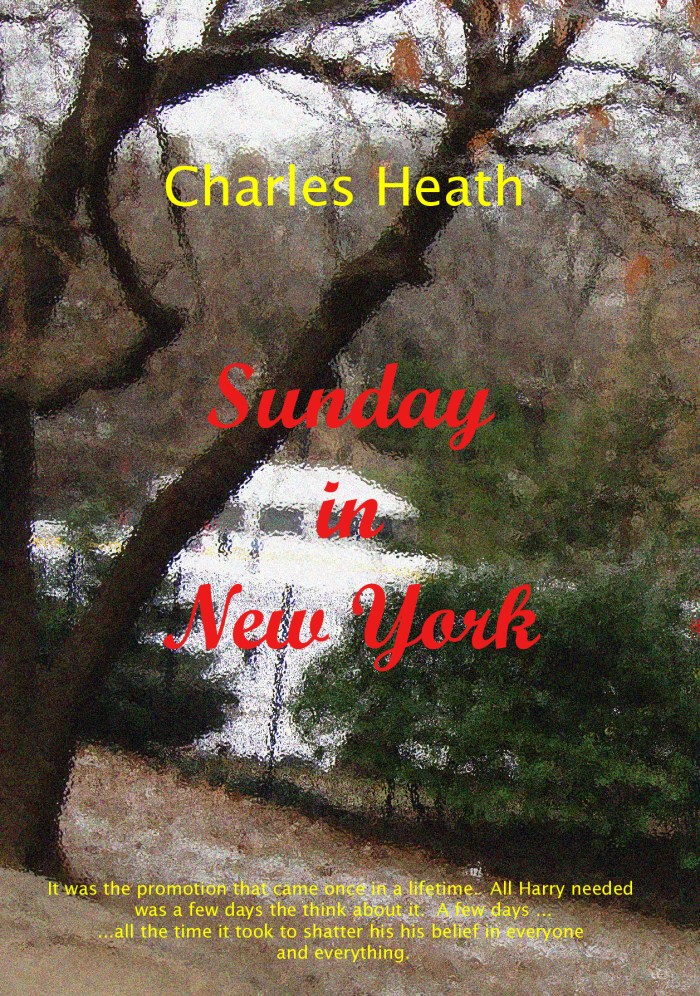
“Sunday in New York”, a romantic adventure that’s not a walk in the park!

“Sunday in New York” is ultimately a story about trust, and what happens when a marriage is stretched to its limits.

When Harry Steele attends a lunch with his manager, Barclay, to discuss a promotion that any junior executive would accept in a heartbeat, it is the fact his wife, Alison, who previously professed her reservations about Barclay, also agreed to attend, that casts a small element of doubt in his mind.

From that moment, his life, in the company, in deciding what to do, his marriage, his very life, spirals out of control.

There is no one big factor that can prove Harry’s worst fears, that his marriage is over, just a number of small, interconnecting events, when piled on top of each other, points to a cataclysmic end to everything he had believed in.

Trust is lost firstly in his best friend and mentor, Andy, who only hints of impending disaster, Sasha, a woman whom he saved, and who appears to have motives of her own, and then in his wife, Alison, as he discovered piece by piece damning evidence she is about to leave him for another man.

Can we trust what we see with our eyes or trust what we hear?

Haven’t we all jumped to conclusions at least once in our lives?

Can Alison, a woman whose self-belief and confidence is about to be put to the ultimate test, find a way of proving their relationship is as strong as it has ever been?

As they say in the classics, read on!

Purchase:

http://tinyurl.com/Amazon-SundayInNewYork

“Echoes From The Past”, the past doesn’t necessarily stay there


What happens when your past finally catches up with you?

Christmas is just around the corner, a time to be with family. For Will Mason, an orphan since he was fourteen, it is a time for reflection on what his life could have been, and what it could be.

Until a chance encounter brings back to life the reasons for his twenty years of self-imposed exile from a life only normal people could have. From that moment Will’s life slowly starts to unravel and it’s obvious to him it’s time to move on.

This time, however, there is more at stake.

Will has broken his number one rule, don’t get involved.

With his nemesis, Eddie Jamieson, suddenly within reach, and a blossoming relationship with an office colleague, Maria, about to change everything, Will has to make a choice. Quietly leave, or finally, make a stand.

But as Will soon discovers, when other people are involved there is going to be terrible consequences no matter what choice he makes.

https://amzn.to/2CYKxu4

newechocover5rs

Searching for locations: Vancouver, Canada – 2

This morning we wake up to rain.  Or so we thought.  Taking a closer look out the window of our room on the 16th floor, we notice the rain is speckled with snowflakes.  As the morning progressed the snow got harder until there were flurries.

 Later we discover this is called wet snow by the local Vancouverians, and whilst they winge a lot over the endless rain, to them rain is infinitely better than snow.

To us, by the afternoon, it was almost blizzard conditions, with lots of snow.  Then the only thing is that it does not accumulate on most of the ground so there are no drifts to play in.

Because the weather is so dismal we decided not to go into Vancouver to do some sightseeing because the clouds were down to the ground and then the snow set in.

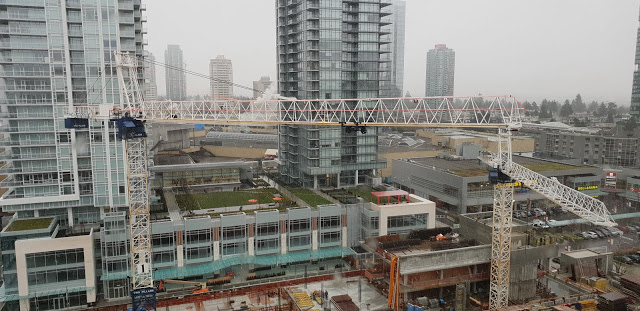
Another interesting fact is that construction workers do not go off the job if it’s raining, or worse when it is snowing.  Our room overlooks a new apartment complex under construction and the workers battled on through what seemed like appalling conditions.

At four in the afternoon, the Maple Leafs are playing the Ohio Blue Jackets, in Ohio.  It is a game we expect they will win.  Sparks is the goalkeeper, not Anderson, they’re playing back to back games and Anderson’s starting tomorrow.

They win, four goals to two.  

Just before darkness falls, about four thirty, the snow stops and there is a little rain, which melts the snow.

Time to go up to the executive lounge to get some snacks and coffee, then sleep because the next day we’re taking on the Trans Canada highway from Vancouver to Kamloops.

The forecast is for snow, more snow, and just for a change, more snow.

First Dig Two Graves – the editor’s final draft – Day 26

This book has been sitting in the ‘to-be-done’ tray, so this month it is going to get the final revision.

I’m going over the conversation Olga is having with John now that he is her prisoner.

On the first run through it seemed to make sense, but as we all know, when you read the conversation out loud, often it sounds terrible.

A question of, “Would I say that?”

Whilst snatching John off the street was a rather simple task, made easier by the fact he was not expecting it, Olga is not sure whether it is a big act.

Working with Irina has made her wary of everyone and everything, even more so since Irina had left her charge, but she knows just how much Irina evolved into the Zoe her son tried to keep on a leash, with spectacularly awful results.

Had she been training John to be like her?

Has Sebastian been training John to become a spy, or was he one already?  After all, why is someone like John, if he is that reputed computer nerd type, doing with a girl like Irina.

Her preference would have to be someone strong, authoritative, and masculine, like Alistair.  The problem was she hadn’t driven out all of the emotions in the time she spent with her.

So, sitting opposite each other, John and Olga try to do their individual assessments.

She finally admits that she doesn’t want to kill Irina, just rehabilitate her.

John, of course, is horrified at the thought of them brainwashing her, especially if they send her after him again.

It comes down to a single point.  Will he do as she asks, and invite her to come and get him?

Neither of them realizes Irina already knows where they are, and any plans Olga might have will be useless.

An excerpt from “What Sets Us Apart”, a mystery with a twist

See the excerpt from the story below, just a taste of what’s in store…

http://amzn.to/2Eryfth

whatsetscover

McCallister was old school, a man who would most likely fit in perfectly campaigning on the battlefields of Europe during the Second World War. He’d been like a fish out of water in the army, post-Falklands, and while he retired a hero, he still felt he’d more to give.

He’d applied and was accepted as head of a SWAT team, and, watching him now as he and his men disembarked from the truck in almost military precision, a look passed between Annette, the police liaison officer, and I that said she’d seen it all before. I know I had.

There was a one in four chance his team would be selected for this operation, and she had been hoping it would be one of the other three. While waiting for them to arrive she filled me in on the various teams. His was the least co-operative, and the more likely to make ad-hoc decisions rather than adhere to the plan, or any orders that may come from the officer in charge.

This, she said quite bluntly, was going to end badly.

I still had no idea why Prendergast instructed me to attend the scene of what looked to be a normal domestic operation, but as the nominated expert in the field in these types of situations, it was fairly clear he wasn’t taking any chances. It was always a matter of opinion between us, and generally I lost.

In this case, it was an anonymous report identifying what the authorities believed were explosives in one of the dockside sheds where explosives were not supposed to be.

The only reason why the report was given any credence was the man, while not identifying himself by name, said he’d been an explosive expert once and recognized the boxes. That could mean anything, but the Chief Constable was a cautious man.

With his men settled and preparing their weapons, McCallister came over to the command post, not much more than the SUV my liaison and I arrived in, with weapons, bulletproof vests, and rolls of tape to cordon off the area afterward. We both had coffee, steaming in the cold early morning air. Dawn was slowly approaching and although rain had been forecast it had yet to arrive.

A man by the name of Benson was in charge. He too had groaned when he saw McCallister.

“A fine morning for it.” McCallister was the only enthusiastic one here.

He didn’t say what ‘it’ was, but I thought it might eventually be mayhem.

“Let’s hope the rain stays away. It’s going to be difficult enough without it,” Benson said, rubbing his hands together. We had been waiting for the SWAT team to arrive, and another team to take up their position under the wharf, and who was in the final stages of securing their position.

While we were waiting we drew up the plan. I’d go in first to check on what we were dealing with, and what type of explosives. The SWAT team, in the meantime, were to ensure all the exits to the shed were covered. When I gave the signal, they were to enter and secure the building. We were not expecting anyone inside or out, and no movement had been detected in the last hour since our arrival and deployment.

“What’s the current situation?”

“I’ve got eyes on the building, and a team coming in from the waterside, underneath. Its slow progress, but they’re nearly there. Once they’re in place, we’re sending McKenzie in.”

He looked in my direction.

“With due respect sir, shouldn’t it be one of us?” McCallister glared at me with the contempt that only a decorated military officer could.

“No. I have orders from above, much higher than I care to argue with, so, McCallister, no gung-ho heroics for the moment. Just be ready to move on my command, and make sure you have three teams at the exit points, ready to secure the building.”

McCallister opened his mouth, no doubt to question those orders, but instead closed it again. “Yes sir,” he muttered and turned away heading back to his men.

“You’re not going to have much time before he storms the battlements,” Benson quietly said to me, a hint of exasperation in his tone. “I’m dreading the paperwork.”

It was exactly what my liaison officer said when she saw McCallister arriving.

The water team sent their ‘in position’ signal, and we were ready to go.

In the hour or so we’d been on site nothing had stirred, no arrivals, no departures, and no sign anyone was inside, but that didn’t mean we were alone. Nor did it mean I was going to walk in and see immediately what was going on. If it was a cache of explosives then it was possible the building was booby-trapped in any number of ways, there could be sentries or guards, and they had eyes on us, or it might be a false alarm.

I was hoping for the latter.

I put on the bulletproof vest, thinking it was a poor substitute for full battle armor against an exploding bomb, but we were still treating this as a ‘suspected’ case. I noticed my liaison officer was pulling on her bulletproof vest too.

“You don’t have to go. This is my party, not yours,” I said.

“The Chief Constable told me to stick to you like glue, sir.”

I looked at Benson. “Talk some sense into her please, this is not a kindergarten outing.”

He shrugged. Seeing McCallister had taken all the fight out of him. “Orders are orders. If that’s what the Chief Constable requested …”

Madness. I glared at her, and she gave me a wan smile. “Stay behind me then, and don’t do anything stupid.”

“Believe me, I won’t be.” She pulled out and checked her weapon, chambering the first round. It made a reassuring sound.

Suited up, weapons readied, a last sip of the coffee in a stomach that was already churning from nerves and tension, I looked at the target, one hundred yards distant and thought it was going to be the longest hundred yards I’d ever traversed. At least for this week.

A swirling mist rolled in and caused a slight change in plans.

Because the front of the buildings was constantly illuminated by large overhead arc lamps, my intention had been to approach the building from the rear where there was less light and more cover. Despite the lack of movement, if there were explosives in that building, there’d be ‘enemy’ surveillance somewhere, and, after making that assumption, I believed it was going to be easier and less noticeable to use the darkness as a cover.

It was a result of the consultation, and studying the plans of the warehouse, plans that showed three entrances, the main front hangar type doors, a side entrance for truck entry and exit and a small door in the rear, at the end of an internal passage leading to several offices. I also assumed it was the exit used when smokers needed a break. Our entry would be by the rear door or failing that, the side entrance where a door was built into the larger sliding doors. In both cases, the locks would not present a problem.

The change in the weather made the approach shorter, and given the density of the mist now turning into a fog, we were able to approach by the front, hugging the walls, and moving quickly while there was cover. I could feel the dampness of the mist and shivered more than once.

It was nerves more than the cold.

I could also feel rather than see the presence of Annette behind me, and once felt her breath on my neck when we stopped for a quick reconnaissance.

It was the same for McCallister’s men. I could feel them following us, quickly and quietly, and expected, if I turned around, to see him breathing down my neck too.

It added to the tension.

My plan was still to enter by the back door.

We slipped up the alley between the two sheds to the rear corner and stopped. I heard a noise coming from the rear of the building, and the light tap on the shoulder told me Annette had heard it too. I put my hand up to signal her to wait, and as a swirl of mist rolled in, I slipped around the corner heading towards where I’d last seen the glow of a cigarette.

The mist cleared, and we saw each other at the same time. He was a bearded man in battle fatigues, not the average dockside security guard.

He was quick, but my slight element of surprise was his undoing, and he was down and unconscious in less than a few seconds with barely a sound beyond the body hitting the ground. Zip ties secured his hands and legs, and tape his mouth. Annette joined me a minute after securing him.

A glance at the body then me, “I can see why they, whoever they are, sent you.”

She’d asked who I worked for, and I didn’t answer. It was best she didn’t know.

“Stay behind me,” I said, more urgency in my tone. If there was one, there’d be another.

Luck was with us so far. A man outside smoking meant no booby traps on the back door, and quite possibly there’d be none inside. But it indicated there were more men inside, and if so, it appeared they were very well trained. If that were the case, they would be formidable opponents.

The fear factor increased exponentially.

I slowly opened the door and looked in. A pale light shone from within the warehouse itself, one that was not bright enough to be detected from outside. None of the offices had lights on, so it was possible they were vacant. I realized then they had blacked out the windows. Why hadn’t someone checked this?

Once inside, the door closed behind us, progress was slow and careful. She remained directly behind me, gun ready to shoot anything that moved. I had a momentary thought for McCallister and his men, securing the perimeter.

At the end of the corridor, the extent of the warehouse stretched before us. The pale lighting made it seem like a vast empty cavern, except for a long trestle table along one side, and, behind it, stacks of wooden crates, some opened. It looked like a production line.

To get to the table from where we were was a ten-yard walk in the open. There was no cover. If we stuck to the walls, there was equally no cover and a longer walk.

We needed a distraction.

As if on cue, the two main entrances disintegrated into flying shrapnel accompanied by a deafening explosion that momentarily disoriented both Annette and I. Through the smoke and dust kicked up I saw three men appear from behind the wooden crates, each with what looked like machine guns, spraying bullets in the direction of the incoming SWAT members.

They never had a chance, cut down before they made ten steps into the building.

By the time I’d recovered, my head heavy, eyes watering and ears still ringing, I took several steps towards them, managing to take down two of the gunmen but not the third.

I heard a voice, Annette’s I think, yell out, “Oh, God, he’s got a trigger,” just before another explosion, though all I remember in that split second was a bright flash, the intense heat, something very heavy smashing into my chest knocking the wind out of me, and then the sensation of flying, just before I hit the wall.

I spent four weeks in an induced coma, three months being stitched back together and another six learning to do all those basic actions everyone took for granted. It was twelve months almost to the day when I was released from the hospital, physically, except for a few alterations required after being hit by shrapnel, looking the same as I always had.

But mentally? The document I’d signed on release said it all, ‘not fit for active duty; discharged’.

It was in the name of David Cheney. For all intents and purposes, Alistair McKenzie was killed in that warehouse, and for the first time ever, an agent left the Department, the first to retire alive.

I was not sure I liked the idea of making history.

© Charles Heath 2016-2020
In a word: Prior

Of course, prior means gone before, as in past history, or perhaps only a few moments ago; it happened prior to my arrival on the scene.

But it can also mean, quite confusingly, to something in the future, when trying to get out of a meeting by saying I’ve got a prior appointment.

If you are an aficionado of American police dramas then you will be well acquainted with the prior, meaning a previous criminal conviction.


And for something quite different, a prior is a priest of sorts, who to me were named as such in the middle ages.  A prior is below an Abbot and is head of a house of friars.  By the way, the most notable friar I know is Friar Tuck

A prior could also be a magistrate in the medieval republic of Florence.


It is not to be doubly confused with Pryer or Prier

Someone who pries into another’s business, the most notable prier, the woman across the road from Samantha, in Bewitched.


Inspiration, Maybe – Volume Two

50 photographs, 50 stories, of which there is one of the 50 below.

They all start with –

A picture paints … well, as many words as you like.  For instance:

And, the story:

Have you ever watched your hopes and dreams simply just fly away?

Everything I thought I wanted and needed had just left in an aeroplane, and although I said I was not going to, i came to the airport to see the plane leave.  Not the person on it, that would have been far too difficult and emotional, but perhaps it was symbolic, the end of one life and the start of another.

But no matter what I thought or felt, we had both come to the right decision.  She needed the opportunity to spread her wings.  It was probably not the best idea for her to apply for the job without telling me, but I understood her reasons.

She was in a rut.  Though her job was a very good one, it was not as demanding as she had expected, particularly after the last promotion, but with it came resentment from others on her level, that she, the youngest of the group would get the position.

It was something that had been weighing down of her for the last three months, and if noticed it, the late nights, the moodiness, sometimes a flash of temper.  I knew she had one, no one could have such red hair and not, but she had always kept it in check.

And, then there was us, together, and after seven years, it felt like we were going nowhere.  Perhaps that was down to my lack of ambition, and though she never said it, lack of sophistication.  It hadn’t been an issue, well, not until her last promotion, and the fact she had to entertain more, and frankly I felt like an embarrassment to her.

So, there it was, three days ago, the beginning of the weekend, and we had planned to go away for a few days and take stock.  We both acknowledged we needed to talk, but it never seemed the right time.

It was then she said she had quit her job and found a new one.  Starting the following Monday.

Ok, that took me by surprise, not so much that it something I sort of guessed might happen, but that she would just blurt it out.

I think that right then, at that moment, I could feel her frustration with everything around her.

What surprised her was my reaction.  None.

I simply asked where who, and when.

A world-class newspaper, in New York, and she had to be there in a week.

A week.

It was all the time I had left with her.

I remember I just shrugged and asked if the planned weekend away was off.

She stood on the other side of the kitchen counter, hands around a cup of coffee she had just poured, and that one thing I remembered was the lone tear that ran down her cheek.

Is that all you want to know?

I did, yes, but we had lost that intimacy we used to have when she would have told me what was happening, and we would have brainstormed solutions. I might be a cabinet maker but I still had a brain, was what I overheard her tell a friend once.

There’s not much to ask, I said.  You’ve been desperately unhappy and haven’t been able to hide it all that well, you have been under a lot of pressure trying to deal with a group of troglodytes, and you’ve been leaning on Bentley’s shoulder instead of mine, and I get it, he’s got more experience in that place,  and the politics that go with it, and is still an ally.

Her immediate superior and instrumental in her getting the position, but unlike some men in his position he had not taken advantage of a situation like some men would.  And even if she had made a move, which I doubted, that was not the sort of woman she was, he would have politely declined.

One of the very few happily married men in that organisation, so I heard.

So, she said, you’re not just a pretty face.

Par for the course for a cabinet maker whose university degree is in psychology.  It doesn’t take rocket science to see what was happening to you.  I just didn’t think it was my place to jump in unless you asked me, and when you didn’t, well, that told me everything I needed to know.

Yes, our relationship had a use by date, and it was in the next few days.

I was thinking, she said, that you might come with me,  you can make cabinets anywhere.

I could, but I think the real problem wasn’t just the job.  It was everything around her and going with her, that would just be a constant reminder of what had been holding her back. I didn’t want that for her and said so.

Then the only question left was, what do we do now?

Go shopping for suitcases.  Bags to pack, and places to go.

Getting on the roller coaster is easy.  On the beginning, it’s a slow easy ride, followed by the slow climb to the top.  It’s much like some relationships, they start out easy, they require a little work to get to the next level, follows by the adrenaline rush when it all comes together.

What most people forget is that what comes down must go back up, and life is pretty much a roller coaster with highs and lows.

Our roller coaster had just come or of the final turn and we were braking so that it stops at the station.

There was no question of going with her to New York.  Yes, I promised I’d come over and visit her, but that was a promise with crossed fingers behind my back.  After a few months in t the new job the last thing shed want was a reminder of what she left behind.  New friends new life.

We packed her bags, three out everything she didn’t want, a free trips to the op shop with stiff she knew others would like to have, and basically, by the time she was ready to go, there was nothing left of her in the apartment, or anywhere.

Her friends would be seeing her off at the airport, and that’s when I told her I was not coming, that moment the taxi arrived to take her away forever.  I remember standing there, watching the taxi go.  It was going to be, and was, as hard as it was to watch the plane leave.

So, there I was, finally staring at the blank sky, around me a dozen other plane spotters, a rather motley crew of plane enthusiasts.

Already that morning there’s been 6 different types of plane depart, and I could hear another winding up its engines for take-off.

People coming, people going.

Maybe I would go to New York in a couple of months, not to see her, but just see what the attraction was.  Or maybe I would drop in, just to see how she was.

As one of my friends told me when I gave him the news, the future is never written in stone, and it’s about time you broadened your horizons.

Perhaps it was.


© Charles Heath 2020-2021

Coming soon.  Find the above story and 49 others like it in:

The cinema of my dreams – I always wanted to go on a treasure hunt – Episode 5

My mind will not rest.

Down here, it is summer, and the last few days have been rather hot, well, it is summer after all, but tonight it is particularly hot.

So, as I can’t sleep, I’m lying on the couch staring at the ceiling, otherwise known as the cinema of my dreams.

Where am I?

Well, the location is in keeping with the weather, hot, humid, and cold drinks are mandatory.

I’ve got one now!

A sleepless night did nothing to make the idea of going on a treasure hunt and more palatable. I couldn’t say I didn’t see it coming, because Boggs had been hinting he’d found something of his father’s when poking through his old stuff.

I was hoping it was money.

And visiting the bar, I thought that he had found a lead in his quest to find some information about his parents, two people he realized now, he knew very little about.

In that quest, I was only too willing to help.

When he finally told me about the treasure, I didn’t think he was the sort to believe in fairy tales, because everyone knew it was little more than that.

I didn’t flat out debunk the myth, but I could see I was going to have to carefully get him off this track.  Real or not, we were hardly equipped, mentally or physically, to deal with whatever this quest might throw up.

Yes, in my mind’s eye I had a Raiders of the Lost Ark scenario running through my head, from large rolling stones, through to a snake pit.  I hated snakes too.

In fact, with the addition of Boggs uncle Rico in the mix, it seemed to me we would be better off spending our time looking for work rather than using any excuse to not, but that was the problem with our neighborhood, too many people looking for work and not enough jobs.  Prosperity seemed to be everywhere else.

“No lounging around in bed, Sam.”  My mother’s voice came from the kitchen where she would be throwing food into a container for her lunch.

She was suffering from the lack of employment too, being a qualified accounts clerk, but for the time being, working check out at the local supermarket.

A job was a job, but it barely paid the bills.

I made it to the kitchen just as she was about to leave.

“You need to try harder,” she said.  “Walter said they’re looking for people in the warehouse again.  Promise me you’ll go see them.”

I could see the strain of the odd shifts she worked, the fact she didn’t want to be there, but unlike my father, she accepted responsibility, no matter what it cost.

“I promise.”

A kiss on the forehead and she was gone.

The jobs at the warehouse were little more than slave labor, minimum pay, very hard work, and ungratefully supervisors.  Most of those like Boggs and I lasted a week, or less because that way they didn’t have to pay you for the few days you worked.

But it was a job, and it was time I stepped up.

The treasure hunt would have to wait.

© Charles Heath 2019-2021

The cinema of my dreams – I never wanted to go to Africa – Episode 29

Our hero knows he’s in serious trouble.

The problem is, there are familiar faces and a question of who is a friend and who is foe made all the more difficult because of the enemy, if it was the enemy, simply because it didn’t look or sound or act like the enemy.

Now, it appears, his problems stem from another operation he participated in.


I had to wonder if Lallo had already called the number on the phone he had handed Jacobi, and then considered, if that was the case, there would be no need for Jacobi to call anyone.  Or Lallo had got an answer, just not the answer he was expecting.

Jacobi looked at the phone, and I got the impression he was weighing his options.  The first was how long Lallo would hold him in custody.  That I think we could both assumed to be forever if necessary.  There was, no doubt, a cell at a black site with his name on it already.  The second, if he did call his contact, would that contact co-operate, though it was hard what it was Lallo was expecting Jacobi’s co-operation for.

But there was no doubt Lallo had a plan.

Jacobi took a moment to consider any further options I hadn’t thought of, and then made the call.  We were only going to get one side of the call.

A raised eyebrow indicated Jacobi had an answer on the other end.

“It’s me.”

Why did everyone say it’s me when asked to identify themselves, or as in the case announce themselves?

“No.  An unfortunate set of circumstances, and a gross breach of our agreement.  I am supposed to have autonomy of operations at home.  These bumbling idiots may have blown my cover.”

Somehow, the fact he was sitting in a small room told me his cover was more than likely a myth.  If this was our supposed point man in the failed operation I’d been on, then I could see why it cost a lot of good men their lives.

He had been playing both sides of the fence and sold us out.

“You would have to ask them.”

A moment later he handed the phone to Lallo.  “Prepare to die,” was all Jacobi said.

It didn’t move Lallo in the slightest,

He took the phone and asked, “Whom am I speaking to?”

The expression change told me that it was most likely none of his business.

“This man is responsible for the deaths of a good many men.”  A minute’s silence, then, “I doubt that would be the case considering the number of phones and their credentials.  He had been playing you, and perhaps many others.”

The silence was a lot longer, but the expressions changing by the minute told me that Lallo was not going to get what he wanted.

“No, that is not going to happen, not in the circumstances you describe.  I will be sending him back, yes, but for another mission.  I think it’s time you realized he’s been feeding you false intel for some time.”  Silence again, then, “By the time you do, he will no longer be here, there.  I’m sorry.”

He disconnected the call and put the phone back in the plastic evidence bag.

Then he sat, and gave Jacobi a long, hard stare.

No effect.

“What is happening,” Jacobi finally asked.

“You’re going home.”

“Good.  I expect once I get back there you will leave me alone.”

“On the contrary, Mr Jacobi, you will not be going back alone.  In fact, I’m sending you back with my team, and we are going to extract the same people you were supposed to help us extract the last time.”

“I had nothing to do with that.  It was simply your incompetence.”

“Be that as it may, you will do as I ask.”

“You are a fool.  Why would I do anything for you, and especially since they are both probably dead now, or, if not, past the point of saving.”

“You will then want to hope that isn’t the case, simply because if they are, then three members of your family will be executed.  You can say goodbye to them before you leave, or tell them you will see them again, it’s your choice.”

Lallo, it seems, was no fool, and had ensured he had the necessary leverage.  There was no mistaking the shock on Jacobi’s face.

“You lie.”

Lallo got up from his seat and knocked on the door.  It opened and two men brought in a large screen connected to a computer on a trolley.  They moved it to the vacant wall and left.  Lallo pressed several keys and a picture came up on the screen.  A woman and two small children, and judging from the expression on Jacobi’s face, exactly who he was hoping he would not see.

There were two hooded soldiers either side with guns loosely pointing in their direction.

“One word from me, and they will be shot.  Considering the treachery you have perpetrated, it’s taking a great deal of restraint for me not to give the order to kill them.”

He took a few seconds to regain his composure.  “This serves no purpose,” Jacobi said in a rising pitch, “your people are most likely dead.  It has been a long time.”

“I don’t think so.  We have word from a different source, a more reliable source, that they are still alive.  Barely, but alive, serving a life sentence for treason.  And helping the General with information.  All you need to do is get a small team of mine in and assist them to effect an escape.  They come home alive and, well, your family lives.  They don’t come back alive, well, I don’t think that’s an option, is it?”

Jacobi was in an invidious position of being damned if he did help us, or damned if he didn’t.  Either way, it didn’t guarantee his co-operation or assistance.  Painted into a corner, sometimes people like Jacobi chose the easy road, sacrificing everything to stay alive.  No doubt, until this predicament, he was well in favour with Bahti, and from what I’d heard, Bahti was not a man to cross.  There was a graveyard in the prison that was full of the remains of his enemies.  And people who were once his friends.

I knew firsthand what it was like to be between the proverbial rock and a hard place, and unfortunately, there was no upside.  No doubt the team leader of this new folly would have orders to shoot Jacobi once his work was done.  Lallo would not be able to leave a man in his position alive because of what he knew.

And from my perspective, I felt sorry for the team Lallo had selected to go on what could quite possibly be another suicide mission.


© Charles Heath 2019