The Cinema of My Dreams – It ended in Sorrento – Episode 44

So, how does Mrs Rodby know the Countess?

Her name was Isabella Agostini, but I suspect that was not her real name.  I had stood to one side after we entered the solicitor’s rooms, and let her state why she was there.

I could have been wrong about her, but I had to admit if I wasn’t, she was quick on her feet.  There was no doubt she knew who I was, not why I was there, and I had to state my business, which gave away information I preferred not to.

Now she knew why I was there, and that I was working with the countess, though I had to believe she already knew that too.  The question was, were they using me to find the countess.

There were a half dozen chairs in that waiting room, and I chose to sit next to her.  It surprised her, or I hope it did.

“You here for any particular reason,” I asked. 

I did so only because I had to maintain that I-don’t-know-Italian thing.  If I did, I’d know it was for a matter of making a will.  I accompanied the question with a look of sincere interest.

“Legal stuff,” she said.  It sounded quaint with her Italian accent which suddenly crept in. 

Had I caught her off guard?

“You?” she asked, trying to make it sound like an offhand comment.

“Legal stuff, boring really.  I’d rather be touring the Vatican, maybe I’ll get there later.  Seen it?”

‘What?”

OK.  She was losing interest in the small talk and had started looking at her cell phone.

“The Vatican?”

‘Yes.  Big.”  And went back to her phone, a sign the small talk was over.

Perhaps it was a sign.  The solicitor, Benito, came out and called my name, gave the girl a dismissive look and motioned me to follow him.

Benito was one of those old, tired, family retainers, who had been doing the job for a hundred years, and looking forward to the next.

He obviously had a set of clients who paid well, because the rooms, not to mention the building, reeked money.

He was dressed in an expensive, but tired suit, and was slightly unkempt, part of an act, I thought, to keep people guessing as to his competence.  The other lawyers, not his clients.

“The girl belong to you?”

“No.  She followed me in.  She says she’s here to see you about making a will.”

“Odd.  She works for a private detective agency, and knowing the Burkehardt’s as I do, she’s probably working for them.

“How could they know I’m here?”

He shrugged.  “They seem to know everything.

“Except where the countess is, so it stands to reason they would follow her associates and see if they lead them to her.  Why the interest in the countess?”

“The damage she could do to their business.”

“You mean she’s not a good businesswoman?”

“Oh, I’m sure she could do that.  It’s the other business.

“You mean the Burkehardt’s are criminals?”

“Not in so many words, and it would be a brave man to accuse them.  But some of the business they do, on the side, is illegal.  I’ve tried to tell the countess that it would be unwise to try and fulfil her late husband’s wishes, but she says it was his fervent wish she did.”

“What would she get if she walked away?”

“They offered her a house and an income.  I believe it is a fair offer, but she seems reticent.  It’s better than the alternative.  They have judges who will deliver verdicts they want, and they will give her nothing.”

“Is she entitled to it?”

“According to the law, but there can be exceptions.  They will use one of those exceptions.  I can fight it, but even if we prove his intent she should inherit, it might not go our way.  What is your interest in this matter?  The countess has not mentioned you before today.”

“A friend of a friend.  Mrs Rodby asked me if I could help her persuade the Burkehardt’s to honour their son’s will.”

“I’m not surprised Mrs Rodby is concerned.  You do know she is the countess’s stepsister, don’t you.”

© Charles Heath 2023

Motive, means, and opportunity – Episode 12

Bryson and Worthey confer

Detective Worthey arrived at the Bergman residence at the same time as the first team of crime scene investigators.

He had come directly from interviewing Sandra Worsley, Bergman’s daughter.

“The list of suspects is getting longer and longer,” Worthey said, after joining Bryson by his car, having a cigarette, the first in a number of months.

“Why am I not surprised.”

“I thought you gave up smoking.”

“I thought I did too, but this case.  There’s something odd going on here, and I’m sure when I find out what it is, I’m not going to like it.”

“Odd, funny or odd, hairs on the back of the neck?”

“Why does an import/export trader have a rented house in an obscure location with a large basement and a dozen filing cabinets?”

“Can’t be too obscure if his scorned wife knows where it is.”

“She’s been having him followed by a private detective.  Met him just before.  There’s more to him than meets the eye.”

Bryson had dealt with a lot of Private Detectives in his time, and they usually fell into two categories, those that found missing pets, and the photographs of cheating spouses, and those that were proper investigators, ex police, ex FBI, even ex CIA.  Davidson was in the latter category, and he wasn’t simply investigating a cheating husband.

“Will I add him to the ever-growing list?”

“No.  I’ll look into him.  I have a feeling it’s going to end up above our pay grade.”

That was the other thing Bryson noted.  The dynamic between Stacy and Davidson.  It was more than just Investigator and client.  He was either a relative, or they were more than just friends.  Looks and words exchanged between the two were ‘noticeable’ to a trained eye.  How did it go with the daughter?”

“Sandra?  A father’s favorite daughter.  She did not speak badly of him.  Certainly, does not like the wife, Stacey, and speaks kindly of Wendy Anderson.  Appears she had known her for most of her life, in fact, I got the impression Wendy was her mother.  She certainly has some of her physical characteristics.”

“Interesting.  Another question we can put to James Anderson.  I’m willing to bet he knows nothing about her.  What does she do for a living?”

“Schoolteacher, up in Yonkers.  Comes to stay with her father once every few months.  She just happened to be here this week for a conference.  They were supposed to have dinner at her favourite restaurant on the night he died, but he called to cancel, saying he had an unscheduled meeting with a friend who needed to see him.”

“A friend?  Could be the person who shot him.  He didn’t happen to give her a name?”

“No.  We’re not that lucky, but she thought it might be a woman rather than a man.”

“Chances are she is totally unaware of his philandering, other women in his life, and the fact his business was going badly.  Did you ask her if she knew what his business was?

“I did.  She said he told her it was importing and exporting, but she thought that was a euphemism for something else, not necessarily illegal, but she did say he used to be in the army as a Quartermaster, she heard him mention it to another man in a conversation recently.  He never told her what he did, but she assumed that was because he’d been in Iraq or somewhere like that.  When she mentioned his service I did a quick check, and it hit a brick wall.”

“Classified?”

“Like there is no record of him being in the military.”

Bryson looked over at the entrance to the house and saw one of the crime scene investigators coming towards him.

He’d worked with him before, enough to be able to interpret the expression on his face as impending bad news.

“What have we?”

“The filing cabinets, John.”

“Weapons, contraband, or artifacts?”

“What look to be artifacts in several, weapons in another, what you might call the spoils of war.  Nothing earth-shattering, but definitely worthy of the real owners getting slightly upset.  Several of the items appear to match the descriptions of items that were supposedly destroyed by ISIS.”

“We’re dealing with black market artifacts then?”

“Quite possibly.  I’m getting an expert to come in and tell us exactly what the items are.  If you’re looking for a motive for his death, then these items would definitely fit that.  There’s a lot of foreign weaponry too, the sort collectors pay a small fortune for.”

“Thanks.”

“I’ll let you know more later.”

Worthey sighed as he watched the man return to the house.  “Why couldn’t this be a simple case of a jealous husband shooting his wife’s secret lover?”

“Why indeed.”

© Charles Heath 2019-2023

The cinema of my dreams – Was it just another surveillance job – Episode 30

I’m back home and this story has been sitting on a back burner for a few months, waiting for some more to be written.

The trouble is, there are also other stories to write, and I’m not very good at prioritizing.

But, here we are, a few minutes opened up and it didn’t take long to get back into the groove.

Chasing leads, maybe


Collecting the car was easy because it was not kept near my flat.  I could not afford to park nearby, and couldn’t get a permit to park on the street.  I had cursed my bad luck at the time, but now it was very useful.

I spend a few hours resting in the car, stopping along the way at a park, and then, well past nightfall, I drove to the block in Oakwood Avenue, easily recognizable from the exterior photo also provided by the realtor.

Twice around the block, I stopped around the corner, past the block, and noted that I could walk back and then take cover from the trees and shrubs growing in front of, and around the building.  To reach the right flat, I would have to pass down the inner side towards the rear where, hopefully, there might be a door.

Otherwise, it would have to be the hard way.

At 00:45, I left the car, and walked back to the block, keeping an eye out form people walking, or looking out their windows on either side of the street.  Then, satisfied I hadn’t been seen, I ducked through the trees and quickly walked the distance from the front to the side where I stopped and waited.  After a few minutes, and nothing had stirred, I started down the side of the building.

Several flats had lights on, but the curtains were drawn.  Being the ground floor, I doubted whether those curtains would be open at night.  It didn’t take long to be alongside the flat in question.

It was in total darkness, and the curtains had been drawn.

First problem.  There was no back door.  The traditional entry point would be the front door, and no doubt there was a communal back door as well.  Next, I checked the windows, and those that I could see were complete glass and non-opening.  Worse still they had a metal grilled across them to deter thieves.

Near the corner, leading to the rear of the building was a window, higher up and ajar.  By its location, I guessed this was the bathroom or the toilet.  I was hoping for the former.

It took a few minutes to unlatch the window and several more to scramble up the wall, and it through the window opening, which wasn’t much wider than me.  I had to be careful not to drop any of the bottles on the inner ledge.

Once down of the other side, inside the room, it was a narrow bathroom, without a bath, and almost impossible to see.  I fixed the window and put everything back on the ledge, just in case someone did a circuit of the building at a security measure.

Once inside, and after one in the morning, little stirred.

I could just faintly hear the flat owners above, hardly enough noise to be concerned about, and bringing a thought; shouldn’t they be asleep like everyone else.

It was certainly a quiet neighborhood.

I brought a small torch from the car with me and sparingly used it to find my way around.  When my eyes got used to the semi-darkness, I found that the flow from small lights of appliances adequately lit the rooms.

It had two bedrooms, one empty and being used as a storeroom, a lounge room, a dining area, and the bathroom, and kitchen area.  It was big enough for a couple, or even a couple with one child.

Inside what I assumed was the front door, I found several letters shoved under the door.  They were addressed to Mr. Adam Quinley.

I hoped that I’d not made a mistake and broken into a flat belonging to another person.  O’Connell didn’t see to me to be a Quinley, because it was an unusual name.

The dates on the letters went back a week and told me whoever the flat belonged to, they hadn’t visited it for a while.  I went back to the lounge room and over to a desk.  There were the familiar cords leading to no computer, but there was a printer.  It meant he had a laptop he carried with him.

A laptop that no one had found.  It suggested to me that he had it somewhere near him, perhaps in a car, which may be still parked in a garage, or parking station somewhere.

I searched through the neat pile of documents on the desk, and in a folder marked ‘Accounts’ and found one for the car registration, in the name of Quigley.  I noted the registration and type of car, and just in case I forgot it, folded the piece of paper and put it in my pocket.  It would be the subject of my next search if nothing showed up.

The next half hour I made a thorough search of the flat and found nothing of use.  I checked for all the spots he might have hidden the USB, but it was not there.  He had kept it somewhere else.

Done, I left the flat by the front door, and for good measure, checked his mailbox, outside, and found a number of letters.  I took them and would look at them back in the car.  Just as I made the tree line to walk back, a car stopped outside the building.

The door opened and I watched the driver get out of the car, stop and look up and down the street, then walk towards the front door,

By chance, the occupant of the flat above the door switched on a light in the room which, uncurtained, spilled out to shed light on the person now at the front entrance.

I recognized her immediately, just before the light was switched off and darkness took over.

It was Jan.


© Charles Heath 2020

“The Document” – the editor’s final draft – Day 26

This book has been sitting in the ‘to-be-done’ tray, so this month it is going to get the final revision.

And so it begins…

Something had to change

And that, my friends, is the words on the document.

When I conceived the original story, the words were quite simple, a memo from one man to another, words that should not be committed to paper.

Ah, yes, the dreaded paper trail.

Those words were adequate at the time, but now, with developments in the story and a shift or two in the plotline, it’s time to change those words.

They need to be damaging enough to kill a lot of people in the line of making both the words and the document they appear on, disappear forever.

And here’s the thing…

No one ever counted on the fact deleting on a computer is not deleting.

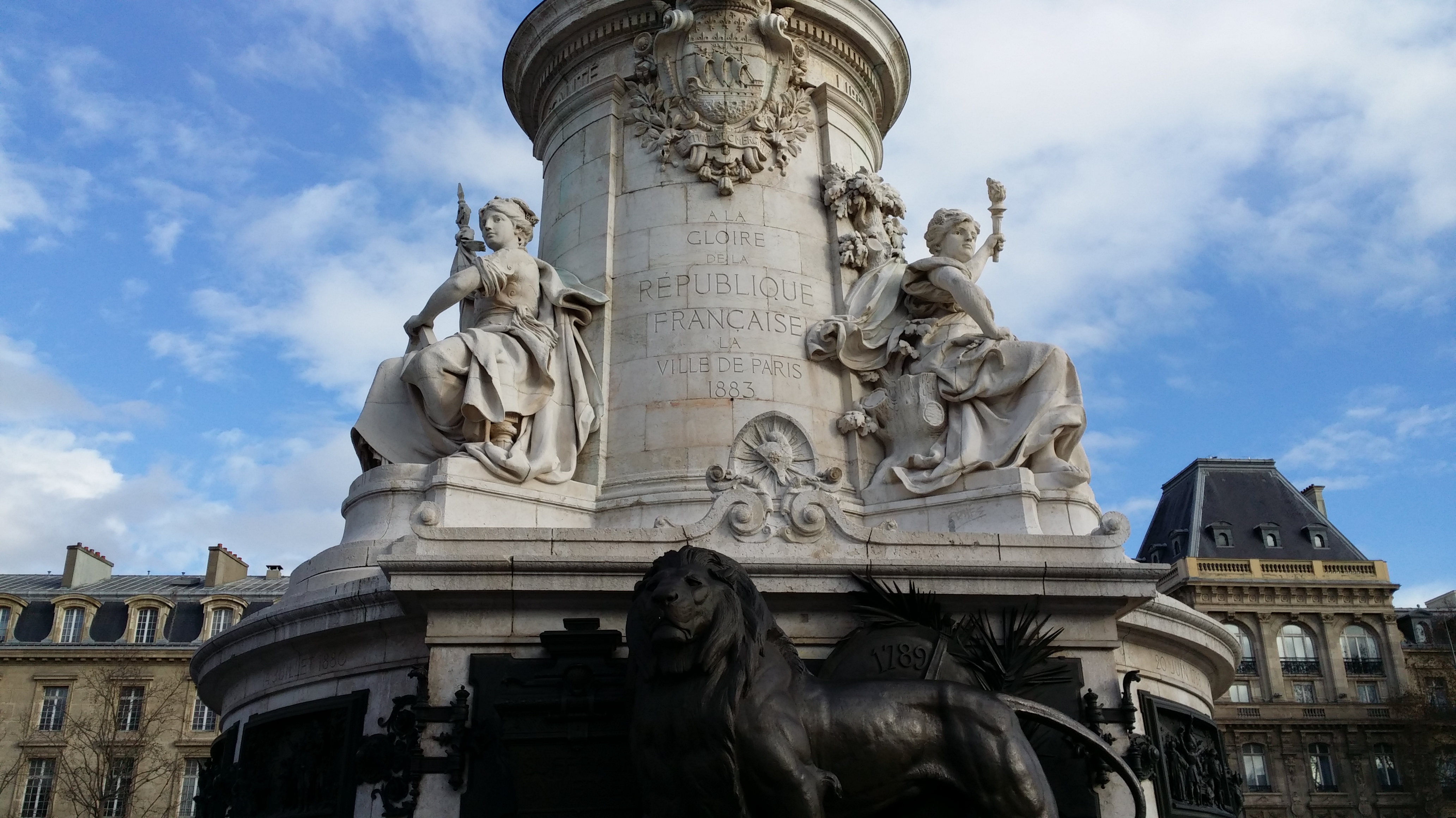
Searching for locations: Paris, France: Place de la Republique

Whilst a rather important place for the French, for us visitors, it has a convenient hotel located just behind the square, and an underground, or Metro station, underneath.

2014-01-07 11.43.05

Added to that was equally convenient cafes, one of which, The Cafe Republique, we had dinner every night.  The service and food were excellent, and we had no problems with the language barriers.

At the top of the monument is a bronze statue of Marianne, said to be the personification of France.

2014-01-07 11.43.41

Surrounding Marianne is three more statues, representing liberty, equality, and fraternity.

2014-01-07 11.43.32

At the base is a lion guarding what is said to be a ballot box.

I am my own worst enemy, again!

I think most authors are.

Just when you think that the story is done, and you’re on the third re-read, just to make sure…

Damn!

I don’t like the way that chapter reads, and what’s worse, it’s about the tenth time I’ve looked at it.

It doesn’t matter the last three times you read it, it was just fine, or, the editor has read it and the chapter passed without any major comment.

I think the main problem I have is letting go.  For some odd reason, certain parts of a story sometimes seem to me as though they are not complete, or can be missing a vital clue or connection for the continuity of the story.

That, of course, happens when you rewrite a section that is earlier on in the story, and then have to make ongoing changes.

Yes, I hear the stern warnings, that I should have made a comprehensive outline at the beginning, but the trouble is, I can change the ending, as I’m writing it and then have to go back and add the hooks earlier on.  Not the best method, but isn’t that what an editor is for, to pick up the missed connections, and out of the blue events that happen for no reason?

I find that often after leaving a finished story for a month before the next reading, the whole picture must formulate itself in my head, so when I re-read, there was always a problem, one I didn’t want to think about until the re-read.

Even then it might survive a second pass.

I know the scene is in trouble when I get to it and alarm bells are going off.  I find anything else to do but look at it.

So, here I am, making major changes.

But, at least now I am satisfied with where it’s going.

Only 325 pages to go!

“What Sets Us Apart”, a mystery with a twist

David is a man troubled by a past he is trying to forget.

Susan is rebelling against a life of privilege and an exasperated mother who holds a secret that will determine her daughter’s destiny.

They are two people brought together by chance. Or was it?

When Susan discovers her mother’s secret, she goes in search of the truth that has been hidden from her since the day she was born.

When David realizes her absence is more than the usual cooling off after another heated argument, he finds himself being slowly drawn back into his former world of deceit and lies.

Then, back with his former employers, David quickly discovers nothing is what it seems as he embarks on a dangerous mission to find Susan before he loses her forever.

Find the kindle version on Amazon here:  http://amzn.to/2Eryfth

whatsetscover

Searching for locations: Hohensalzburg Castle, Salzburg, Austria

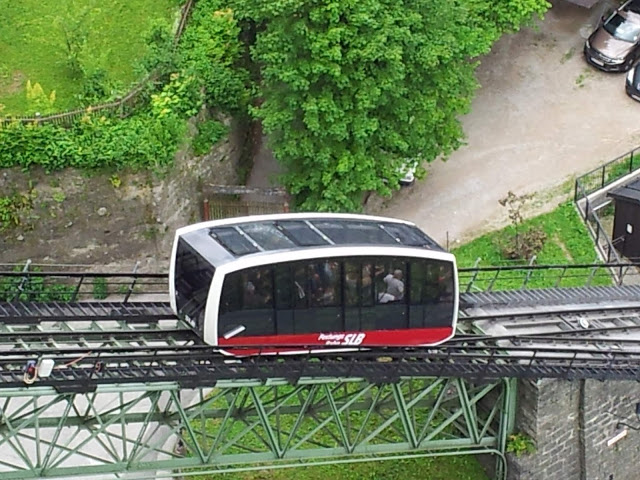
Hohensalzburg Castle sits atop the Festungsberg, accessed by a cable car.

The castle itself dominates the Salzburg skyline.

thecatle

Below is a view down into Salzburg from the castle walls.

We had lunch at a café, the Salzburg Fortress Café, that overlooked the countryside.  This was where we were introduced to Mozart Gold Chocolate Cream added to our coffee.

The square below featured in the Sound of Music.

salzburg1

Among the more interesting objects to be seen, the gun below shows what some of the castle’s armaments might have been.  These cannons, in the ‘Firing Gallery’ date back to the thirty years war in the early 1600’s.

An excerpt from “The Things We Do For Love”; In love, Henry was all at sea!

In the distance, he could hear the dinner bell ringing and roused himself.  Feeling the dampness of the pillow, and fearing the ravages of pent-up emotion, he considered not going down but thought it best not to upset Mrs. Mac, especially after he said he would be dining.

In the event, he wished he had reneged, especially when he discovered he was not the only guest staying at the hotel.

Whilst he’d been reminiscing, another guest, a young lady, had arrived.  He’d heard her and Mrs. Mac coming up the stairs and then shown to a room on the same floor, perhaps at the other end of the passage.

Henry caught his first glimpse of her when she appeared at the door to the dining room, waiting for Mrs. Mac to show her to a table.

She was in her mid-twenties, slim, with long brown hair, and the grace and elegance of a woman associated with countless fashion magazines.  She was, he thought, stunningly beautiful with not a hair out of place, and make-up flawlessly applied.  Her clothes were black, simple, elegant, and expensive, the sort an heiress or wife of a millionaire might condescend to wear to a lesser occasion than dinner.

Then there was her expression; cold, forbidding, almost frightening in its intensity.  And her eyes, piercingly blue and yet laced with pain.  Dracula’s daughter was his immediate description of her.

All in all, he considered, the only thing they had in common was, like him, she seemed totally out of place.

Mrs. Mac came out of the kitchen, wiping her hands on her apron.  She was, she informed him earlier, chef, waitress, hotelier, barmaid, and cleaner all rolled into one.  Coming up to the new arrival she said, “Ah, Miss Andrews, I’m glad you decided to have dinner.  Would you like to sit with Mr. Henshaw, or would you like to have a table of your own?”

Henry could feel her icy stare as she sized up his appeal as a dining companion, making the hair on the back of his neck stand up.  He purposely didn’t look back.  In his estimation, his appeal rating was minus six.  Out of a thousand!

“If Mr. Henshaw doesn’t mind….”  She looked at him, leaving the query in mid-air.

He didn’t mind and said so.  Perhaps he’d underestimated his rating.

“Good.”  Mrs. Mac promptly ushered her over.  Henry stood, made sure she was seated properly and sat.

“Thank you.  You are most kind.”  The way she said it suggested snobbish overtones.

“I try to be when I can.”  It was supposed to nullify her sarcastic tone but made him sound a little silly, and when she gave him another of her icy glares, he regretted it.

Mrs. Mac quickly intervened, asking, “Would you care for the soup?”

They did, and, after writing the order on her pad, she gave them each a look, imperceptibly shook her head, and returned to the kitchen.

Before Michelle spoke to him again, she had another quick look at him, trying to fathom who and what he might be.  There was something about him.

His eyes, they mirrored the same sadness she felt, and, yes, there was something else, that it looked like he had been crying?  There was a tinge of redness.

Perhaps, she thought, he was here for the same reason she was.

No.  That wasn’t possible.

Then she said, without thinking, “Do you have any particular reason for coming here?”  Seconds later she realized she’d spoken it out loud, had hadn’t meant to actually ask, it just came out.

It took him by surprise, obviously not the first question he was expecting her to ask of him.

“No, other than it is as far from civilization, and home, as I could get.”

At least we agree on that, she thought.

It was obvious he was running away from something as well.

Given the isolation of the village and lack of geographic hospitality, it was, from her point of view, ideal.  All she had to do was avoid him, and that wouldn’t be difficult.

After getting through this evening first.

“Yes,” she agreed.  “It is that.”

A few seconds passed, and she thought she could feel his eyes on her and wasn’t going to look up.

Until he asked, “What’s your reason?”

Slightly abrupt in manner, perhaps, because of her question and how she asked it.

She looked up.  “Rest.  And have some time to myself.”

She hoped he would notice the emphasis she had placed on the word ‘herself’ and take due note.  No doubt, she thought, she had completely different ideas of what constituted a holiday than he, not that she had said she was here for a holiday.

Mrs. Mac arrived at a fortuitous moment to save them from further conversation.

Over the entree, she wondered if she had made a mistake coming to the hotel.  Of course, there had been no conceivable way she could know that anyone else might have booked the same hotel, but realized it was foolish to think she might end up in it by herself.

Was that what she was expecting?

Not a mistake then, but an unfortunate set of circumstances, which could be overcome by being sensible.

Yet, there he was, and it made her curious, not that he was a man, by himself, in the middle of nowhere, hiding like she was, but for quite varied reasons.

On discreet observance, whilst they ate, she gained the impression his air of light-heartedness was forced, and he had no sense of humour.

This feeling was engendered by his looks, unruly dark hair, and permanent frown.  And then there was his abysmal taste in clothes on a tall, lanky frame.  They were quality but totally unsuited to the wearer.

Rebellion was written all over him.

The only other thought crossing her mind, and incongruously, was he could do with a decent feed.  In that respect, she knew now from the mountain of food in front of her, he had come to the right place.

“Mr. Henshaw?”

He looked up.  “Henshaw is too formal.  Henry sounds much better,” he said, with a slight hint of gruffness.

“Then my name is Michelle.”

Mrs. Mac came in to take their order for the only main course, gather up the entree dishes, and then return to the kitchen.

“Staying long?” she asked.

“About three weeks.  Yourself?”

“About the same.”

The conversation dried up.

Neither looked at the other, rather at the walls, out the window, towards the kitchen, anywhere.  It was, she thought, unbearably awkward.

Mrs. Mac returned with a large tray with dishes on it, setting it down on the table next to theirs.

“Not as good as the usual cook,” she said, serving up the dinner expertly, “but it comes a good second, even if I do say so myself.  Care for some wine?”

Henry looked at Michelle.  “What do you think?”

“I’m used to my dining companions making the decision.”

You would, he thought.  He couldn’t help but notice the cutting edge of her tone.  Then, to Mrs. Mac, he named a particular White Burgundy he liked, and she bustled off.

“I hope you like it,” he said, acknowledging her previous comment with a smile that had nothing to do with humour.

“Yes, so do I.”

Both made a start on the main course, a concoction of chicken and vegetables that were delicious, Henry thought when compared to the bland food he received at home and sometimes aboard my ship.

It was five minutes before Mrs Mac returned with the bottle and two glasses.  After opening it and pouring the drinks, she left them alone again.

Henry resumed the conversation.  “How did you arrive?  I came by train.”

“By car.”

“Did you drive yourself?”

And he thought, a few seconds later, that was a silly question, otherwise she would not be alone, and certainly not sitting at this table. With him.

“After a fashion.”

He could see that she was formulating a retort in her mind, then changed it, instead, smiling for the first time, and it served to lighten the atmosphere.

And in doing so, it showed him she had another more pleasant side despite the fact she was trying not to look happy.

“My father reckons I’m just another of ‘those’ women drivers,” she added.

“Whatever for?”

“The first and only time he came with me I had an accident.  I ran up the back of another car.  Of course, it didn’t matter to him the other driver was driving like a startled rabbit.”

“It doesn’t help,” he agreed.

“Do you drive?”

“Mostly people up the wall.”  His attempt at humour failed.  “Actually,” he added quickly, “I’ve got a very old Morris that manages to get me where I’m going.”

The apple pie and cream for dessert came and went and the rapport between them improved as the wine disappeared and the coffee came.  Both had found, after getting to know each other better, their first impressions were not necessarily correct.

“Enjoy the food?” Mrs. Mac asked, suddenly reappearing.

“Beautifully cooked and delicious to eat,” Michelle said, and Henry endorsed her remarks.

“Ah, it does my heart good to hear such genuine compliments,” she said, smiling.  She collected the last of the dishes and disappeared yet again.

“What do you do for a living,” Michelle asked in an off-hand manner.

He had a feeling she was not particularly interested, and it was just making conversation.

“I’m a purser.”

“A what?”

“A purser.  I work on a ship doing the paperwork, that sort of thing.”

“I see.”

“And you?”

“I was a model.”

“Was?”

“Until I had an accident, a rather bad one.”

“Oh, I’m sorry.”

So that explained the odd feeling he had about her.

As the evening wore on, he began to think there might be something wrong, seriously wrong with her because she didn’t look too well.  Even the carefully applied makeup, from close, didn’t hide the very pale, and tired look, or the sunken, dark-ringed eyes.

“I try not to think about it, but it doesn’t necessarily work.  I’ve come here for peace and quiet, away from doctors and parents.”

“Then you will not have to worry about me annoying you.  I’m one of those fall-asleep-reading-a-book types.”

Perhaps it would be like ships passing in the night and then smiled to himself about the analogy.

Dinner over, they separated.

Henry went back to the lounge to read a few pages of his book before going to bed, and Michelle went up to her room to retire for the night.

But try as he might, he was unable to read, his mind dwelling on the unusual, yet compellingly mysterious person he would be sharing the hotel with.

Overlaying that original blurred image of her standing in the doorway was another of her haunting expressions that had, he finally conceded, taken his breath away, and a look that had sent more than one tingle down his spine.

She may not have thought much of him, but she had certainly made an impression on him.

© Charles Heath 2015-2024

lovecoverfinal1

“The Document” – the editor’s final draft – Day 25

This book has been sitting in the ‘to-be-done’ tray, so this month it is going to get the final revision.

And so it begins…

The end is nigh, for someone!

For all those people out there who think the end of the world is coming, it is not.

For all those people out there who think my story is getting to the end, I really hope so.

I’m writing three separate chapters, each a little at a time, trying to dovetail the sequence of events that will lead to the unmasking of the murderer and finding the whereabouts of 30-odd missing persons.

What had begun as a simple quest has turned into a convoluted tale of lies, distortions, and people whose propensity for being something other than who they appear, had muddied the waters,.

Yep, everything you’d expect in a completely unexpected ending.

I hope.