An excerpt from “The Things We Do For Love”; In love, Henry was all at sea!

In the distance, he could hear the dinner bell ringing and roused himself.  Feeling the dampness of the pillow, and fearing the ravages of pent-up emotion, he considered not going down but thought it best not to upset Mrs. Mac, especially after he said he would be dining.

In the event, he wished he had reneged, especially when he discovered he was not the only guest staying at the hotel.

Whilst he’d been reminiscing, another guest, a young lady, had arrived.  He’d heard her and Mrs. Mac coming up the stairs and then shown to a room on the same floor, perhaps at the other end of the passage.

Henry caught his first glimpse of her when she appeared at the door to the dining room, waiting for Mrs. Mac to show her to a table.

She was in her mid-twenties, slim, with long brown hair, and the grace and elegance of a woman associated with countless fashion magazines.  She was, he thought, stunningly beautiful with not a hair out of place, and make-up flawlessly applied.  Her clothes were black, simple, elegant, and expensive, the sort an heiress or wife of a millionaire might condescend to wear to a lesser occasion than dinner.

Then there was her expression; cold, forbidding, almost frightening in its intensity.  And her eyes, piercingly blue and yet laced with pain.  Dracula’s daughter was his immediate description of her.

All in all, he considered, the only thing they had in common was, like him, she seemed totally out of place.

Mrs. Mac came out of the kitchen, wiping her hands on her apron.  She was, she informed him earlier, chef, waitress, hotelier, barmaid, and cleaner all rolled into one.  Coming up to the new arrival she said, “Ah, Miss Andrews, I’m glad you decided to have dinner.  Would you like to sit with Mr. Henshaw, or would you like to have a table of your own?”

Henry could feel her icy stare as she sized up his appeal as a dining companion, making the hair on the back of his neck stand up.  He purposely didn’t look back.  In his estimation, his appeal rating was minus six.  Out of a thousand!

“If Mr. Henshaw doesn’t mind….”  She looked at him, leaving the query in mid-air.

He didn’t mind and said so.  Perhaps he’d underestimated his rating.

“Good.”  Mrs. Mac promptly ushered her over.  Henry stood, made sure she was seated properly and sat.

“Thank you.  You are most kind.”  The way she said it suggested snobbish overtones.

“I try to be when I can.”  It was supposed to nullify her sarcastic tone but made him sound a little silly, and when she gave him another of her icy glares, he regretted it.

Mrs. Mac quickly intervened, asking, “Would you care for the soup?”

They did, and, after writing the order on her pad, she gave them each a look, imperceptibly shook her head, and returned to the kitchen.

Before Michelle spoke to him again, she had another quick look at him, trying to fathom who and what he might be.  There was something about him.

His eyes, they mirrored the same sadness she felt, and, yes, there was something else, that it looked like he had been crying?  There was a tinge of redness.

Perhaps, she thought, he was here for the same reason she was.

No.  That wasn’t possible.

Then she said, without thinking, “Do you have any particular reason for coming here?”  Seconds later she realized she’d spoken it out loud, had hadn’t meant to actually ask, it just came out.

It took him by surprise, obviously not the first question he was expecting her to ask of him.

“No, other than it is as far from civilization, and home, as I could get.”

At least we agree on that, she thought.

It was obvious he was running away from something as well.

Given the isolation of the village and lack of geographic hospitality, it was, from her point of view, ideal.  All she had to do was avoid him, and that wouldn’t be difficult.

After getting through this evening first.

“Yes,” she agreed.  “It is that.”

A few seconds passed, and she thought she could feel his eyes on her and wasn’t going to look up.

Until he asked, “What’s your reason?”

Slightly abrupt in manner, perhaps, because of her question and how she asked it.

She looked up.  “Rest.  And have some time to myself.”

She hoped he would notice the emphasis she had placed on the word ‘herself’ and take due note.  No doubt, she thought, she had completely different ideas of what constituted a holiday than he, not that she had said she was here for a holiday.

Mrs. Mac arrived at a fortuitous moment to save them from further conversation.

Over the entree, she wondered if she had made a mistake coming to the hotel.  Of course, there had been no conceivable way she could know that anyone else might have booked the same hotel, but realized it was foolish to think she might end up in it by herself.

Was that what she was expecting?

Not a mistake then, but an unfortunate set of circumstances, which could be overcome by being sensible.

Yet, there he was, and it made her curious, not that he was a man, by himself, in the middle of nowhere, hiding like she was, but for quite varied reasons.

On discreet observance, whilst they ate, she gained the impression his air of light-heartedness was forced, and he had no sense of humour.

This feeling was engendered by his looks, unruly dark hair, and permanent frown.  And then there was his abysmal taste in clothes on a tall, lanky frame.  They were quality but totally unsuited to the wearer.

Rebellion was written all over him.

The only other thought crossing her mind, and incongruously, was he could do with a decent feed.  In that respect, she knew now from the mountain of food in front of her, he had come to the right place.

“Mr. Henshaw?”

He looked up.  “Henshaw is too formal.  Henry sounds much better,” he said, with a slight hint of gruffness.

“Then my name is Michelle.”

Mrs. Mac came in to take their order for the only main course, gather up the entree dishes, and then return to the kitchen.

“Staying long?” she asked.

“About three weeks.  Yourself?”

“About the same.”

The conversation dried up.

Neither looked at the other, rather at the walls, out the window, towards the kitchen, anywhere.  It was, she thought, unbearably awkward.

Mrs. Mac returned with a large tray with dishes on it, setting it down on the table next to theirs.

“Not as good as the usual cook,” she said, serving up the dinner expertly, “but it comes a good second, even if I do say so myself.  Care for some wine?”

Henry looked at Michelle.  “What do you think?”

“I’m used to my dining companions making the decision.”

You would, he thought.  He couldn’t help but notice the cutting edge of her tone.  Then, to Mrs. Mac, he named a particular White Burgundy he liked, and she bustled off.

“I hope you like it,” he said, acknowledging her previous comment with a smile that had nothing to do with humour.

“Yes, so do I.”

Both made a start on the main course, a concoction of chicken and vegetables that were delicious, Henry thought when compared to the bland food he received at home and sometimes aboard my ship.

It was five minutes before Mrs Mac returned with the bottle and two glasses.  After opening it and pouring the drinks, she left them alone again.

Henry resumed the conversation.  “How did you arrive?  I came by train.”

“By car.”

“Did you drive yourself?”

And he thought, a few seconds later, that was a silly question, otherwise she would not be alone, and certainly not sitting at this table. With him.

“After a fashion.”

He could see that she was formulating a retort in her mind, then changed it, instead, smiling for the first time, and it served to lighten the atmosphere.

And in doing so, it showed him she had another more pleasant side despite the fact she was trying not to look happy.

“My father reckons I’m just another of ‘those’ women drivers,” she added.

“Whatever for?”

“The first and only time he came with me I had an accident.  I ran up the back of another car.  Of course, it didn’t matter to him the other driver was driving like a startled rabbit.”

“It doesn’t help,” he agreed.

“Do you drive?”

“Mostly people up the wall.”  His attempt at humour failed.  “Actually,” he added quickly, “I’ve got a very old Morris that manages to get me where I’m going.”

The apple pie and cream for dessert came and went and the rapport between them improved as the wine disappeared and the coffee came.  Both had found, after getting to know each other better, their first impressions were not necessarily correct.

“Enjoy the food?” Mrs. Mac asked, suddenly reappearing.

“Beautifully cooked and delicious to eat,” Michelle said, and Henry endorsed her remarks.

“Ah, it does my heart good to hear such genuine compliments,” she said, smiling.  She collected the last of the dishes and disappeared yet again.

“What do you do for a living,” Michelle asked in an off-hand manner.

He had a feeling she was not particularly interested, and it was just making conversation.

“I’m a purser.”

“A what?”

“A purser.  I work on a ship doing the paperwork, that sort of thing.”

“I see.”

“And you?”

“I was a model.”

“Was?”

“Until I had an accident, a rather bad one.”

“Oh, I’m sorry.”

So that explained the odd feeling he had about her.

As the evening wore on, he began to think there might be something wrong, seriously wrong with her because she didn’t look too well.  Even the carefully applied makeup, from close, didn’t hide the very pale, and tired look, or the sunken, dark-ringed eyes.

“I try not to think about it, but it doesn’t necessarily work.  I’ve come here for peace and quiet, away from doctors and parents.”

“Then you will not have to worry about me annoying you.  I’m one of those fall-asleep-reading-a-book types.”

Perhaps it would be like ships passing in the night and then smiled to himself about the analogy.

Dinner over, they separated.

Henry went back to the lounge to read a few pages of his book before going to bed, and Michelle went up to her room to retire for the night.

But try as he might, he was unable to read, his mind dwelling on the unusual, yet compellingly mysterious person he would be sharing the hotel with.

Overlaying that original blurred image of her standing in the doorway was another of her haunting expressions that had, he finally conceded, taken his breath away, and a look that had sent more than one tingle down his spine.

She may not have thought much of him, but she had certainly made an impression on him.

© Charles Heath 2015-2024

lovecoverfinal1

In a word: play

I’m going to play a game. 

Is that a video game on the computer, or I’d that a board game with friends?

In reality, I didn’t play games with friends because I’m a poor loser.  Especially monopoly.

But to play a game often means you take on a persona or a role, as one, or one of many.

Personally, I like role-playing games like dungeons and dragons.

I’m going to a play

This is a stage production of a scripted story with various people in roles.

A play can have a star, a lead actor in a pivotal role to draw in the viewers

I’ve been to good plays and bad ones with great actors and some not-so-great ones.

A play can be hard to understand, it can be a musical with singing and dancing, or it can be rollicking good fun where the audience dances in their seats.

The worst play I ever saw was Dr Zhivago, it never seemed to end.

The best play, The Pyjama Game, with John Inman from Are You Being Served, a British comedy TV show.

I’m going to play the game

There’s a slight difference between this and the first example because it means instead of doing something your own way, you’re going to do eat everyone else does, prompting the analogy, you’re going to fight fire with fire.

Yep, even the explanations can be confusing.  You have to love the English language for being that.

I’m going to play a role

So many connotations to this one.  For instance, I’m going to be someone I’m not.  If I’m a kind person, then I’m going to pretend I’m mean.

I’m going to join a group of like-minded people and help further their cause, that is to say, together we changed the course of history, and I had a role in that.

Let’s hope it was for the betterment of mankind and not a leap towards infamy.

And of course, if you play a part in a play, it means you are pretending to be someone else.  I like the idea of playing God, but that’s usually the lead actor, I’m usually the janitor, servant, or just plain dogsbody.

“One Last Look”, nothing is what it seems

A single event can have enormous consequences.

A single event driven by fate, after Ben told his wife Charlotte he would be late home one night, he left early, and by chance discovers his wife having dinner in their favourite restaurant with another man.

A single event where it could be said Ben was in the wrong place at the wrong time.

Who was this man? Why was she having dinner with him?

A simple truth to explain the single event was all Ben required. Instead, Charlotte told him a lie.

A single event that forces Ben to question everything he thought he knew about his wife, and the people who are around her.

After a near-death experience and forced retirement into a world he is unfamiliar with, Ben finds himself once again drawn back into that life of lies, violence, and intrigue.

From London to a small village in Tuscany, little by little Ben discovers who the woman he married is, and the real reason why fate had brought them together.

It is available on Amazon here:  http://amzn.to/2CqUBcz

The Cinema of My Dreams – It ended in Sorrento – Episode 49

A conversation with Francesca

The drive down to Sorrento was interesting, not only for the stilted conversation with Francesca but the fact we were being followed.  I found it hard to believe they didn’t trust her.

Or, it might be something, or someone, else.

I didn’t tell her.  I didn’t want to scare her.

Later, we could have branched off to go to Naples or Pompei, I would certainly want to go to the latter, but time was of the essence.  Instead, I drove directly to Sorrento, and it took about three and a half hours, with one small stop on the way for more coffee.  And to check out the person who was following us.

I would have liked to look at the scenery but couldn’t.

I had another go at small talk. “Where do you come from?”

She looked round at me with a frown.  Was I interrupting her sightseeing?  She blinked a lot, so I assumed she was nervous.  She didn’t have the red spots on her cheeks now, but I wondered it that was a sign she was angrier.

Then having decided, on what I didn’t know, she said, “Milan.  I wanted to be a model, but it didn’t work out.”

“What happened?”

“It’s a long story.”

“We’ve got time.”

“My mother thought it best I get married to a nice man and have children.  It seems women, to her, are meant only to be dutiful wives.  I had no such aspirations.”

“Then what stopped you?”

“The awful man I picked to be my agent.  Wanted me to sleep with him before he took me on.  I taught him a lesson he’ll never forget.”

“How did you get to be an art historian?”

“I liked going to art galleries and looking at paintings.  I wanted to know more, got into university, and it was fun.”

“And working as a private detective?”

“A friend of my father heard I knew something about old paintings and asked me to come and look at some that had been recovered from a robbery.  He thought they were fakes, which they were.  Offered me a job, gave me the training, just in case I wanted some variety, and here I am.”

“You just need to work on your surveillance skills and maintaining a low profile.”

“For such a so-called good agent, you were easy to pick up at the airport.”

“I wasn’t trying to hide.  There are two ways I could have arrived, the first is so that no one knew I was coming.  The second, make a splash, identify the surveillance, and then remove it.”

“And if two men come up to you in the street, throw you into a white van, and drive off…”

“Always be aware of your surroundings.”

“Is that a hint that I should have been looking for anything unusual while on this road trip.  If it is a subtle dig, then I would not be surprised if you have already picked up the man in the yellow Fiat three cars back.  He;’s been there for a while.”

“Not one of yours?”

“No.  Why would there be?”

“Your boss still thinks you’re not clever enough to outwit me.”

“Or I’m smarter than he thinks I am.  I’m with you, you’re not considering me a problem, I get to see and do everything you do, that’s pretty smart don’t you think?”

I had to admit if you were to put that spin on what she was doing, it was.  I hoped her boss wasn’t an ungrateful sod.

Conversation over, she went back to her phone and worked on a crossword.  She changed the radio station to classical music, and I didn’t change it back.  It was Ravel’s Bolero, and for some reason it made me think of Cecelia.

“Do you think we should play cat and mouse with our tail?”

“Why would you want to do that.”  She gave me a sideways glance that I interpreted as ‘Are you stupid?’

“Just say I have a strange sense of humour.”

With that, I slowed down and pulled off onto the side of the road, and being such a sudden move, my tail didn’t have time to do likewise, and if he did, he would have given himself away.

I watched him drive by, noting that he glanced in our direction as he passed.

I pulled out from the side onto the road after several cars passed, then settled in to follow him.  I expected him to pull over and stop, just to see what I would do, but he didn’t.

“What exactly did you achieve?” she said.

“Nothing yet, but the day is young.  Once we get to Sorrento, I will not be letting him know where we’re going.”

© Charles Heath 2023

The cinema of my dreams – I never wanted to go to Africa – Episode 5

It a ‘Houston, we have a problem’ moment

Our hero has survived the crash, now he’s stuck in enemy territory.

This was supposed to be a milk run.  There had been no reported activity in our zone and the pilot had decided to go up just the log some more air time.

He was hoping after reaching a 1,000 hours so he might be able to move to fixed wing aircraft and then move on to becoming an airline pilot.  Unfortunately, he was not going become anything now.

That didn’t explain why we encountered a convoy out in the desert, especially one with a rocket launcher and English speaking soldier types.

Did we stumble across another outfit running a secret operation and mistook us for the enemy?  It didn’t seem the case, our helicopter was distinctively marked just so we wouldn’t be mistaken, and then there was the fact the man knew my name.

How could that happen?  It would need someone back at the base to tell someone of the fact the helicopter was going up and who was in it, and there weren’t too many people who knew that information.

And only one who knew exactly when and where we would be.  Unless, of course, the pilot had strayed into a no-fly zone.  There was only one that I knew of and it was nowhere near our flight path.  Of course, it wouldn’t take much to bamboozle me in the air because I had no sense of direction.

Unless the pilot had another agenda.  I could hardly tell where we were because desert all looked the same to me, and navigation wasn’t my strongest point.

After the first few miles of very bumpy road, I managed to get into a sitting position and look in the direction we were heading.

More desert.

Ten minutes later I could see an encampment in the distance, literally an oasis in the middle of nowhere.  A secret base camp or something else?

As we got closer I could see it was mostly covered by camouflage so it couldn’t be seen from above. Clever.  Chances were we had no idea this place was in the desert.

Who or what is waiting for him?

© Charles Heath 2019-2021

The cinema of my dreams – Was it just another surveillance job – Episode 37

I’m back home and this story has been sitting on a back burner for a few months, waiting for some more to be written.

The trouble is, there are also other stories to write, and I’m not very good at prioritizing.

But, here we are, a few minutes opened up and it didn’t take long to get back into the groove.

Chasing leads, maybe

I had a change of mind before I went on an odyssey to Peaslake. I needed help, and I was going to try and convince Jennifer to help me. If she had been injured, that might be more difficult.

I caught a train and a bus to Putney and then walked the remaining fifty yards to her front door. It was a flat over the top of a shop, and, when I read the name of the shop, I thought I knew why she was there. The shop, and quite likely the building belonged to her family, not that it was her surname, but I could be hopeful.

I went up the side stairs and reached the landing. There were two doors, one with 1A on it, and one with 1B on it. Hers was 1A.

I knocked on the door.

A minute later nothing had happened.

I knocked again, this time a little harder.

There was no answer, again, but there was a movement in the flat next door, then the door opened and a scruffy young man, perhaps a university student put his head out.

“She’s not here.”

“Not here, and in no longer living here, or not here as in she is out somewhere and will be back.”

He looked at me blankly, like I’d spoken too fast, or used too many words for him to understand. Possibly he’d just woken up.

He shook his head. “Just out probably getting coffee or something. The shops on the other side of the road, three or four doors up. Can’t miss it, it smells like coffee.”

He gave me a look up and down, gauging whether or not I could be of interest to her, then went back inside his room and closed the door.

It might be a lie, but I was going to take him at his word.

I went back down the stairs and out onto the sidewalk and looked up and down both sides of the street. There was a café, on the other side, not far away.

I waited for a break in the traffic, then crossed the road.

She was inside, reading a paper, oblivious to those around her, and, in particular, those coming from outside. She should be casually keeping an eye out for trouble.

I managed to get inside and take the seat next to her before she raised her head to see who it was.

No surprise.

“You,” she said. “You made it out alive too?”

“You should be more careful.”

“I was told I was no longer employed, that the people who hired me were ex-agents with some sort of agenda.”

I glanced at the open page of the newspaper. The jobs vacant page.

“Then it might come as a bit of a surprise to realize you’re still on their books, just assigned to a different department. Same as me.”

“They told me I was redundant.”

“Who told you?”

“A woman. Monica Sherive she said her name was.”

“I spoke to her earlier this morning. I didn’t ask, but I will the next time I’m in the office. What do you remember about the assignment?”

“We were supposed to maintain surveillance on a man, no name, just a photograph. I heard you had him in sight and was about to pass him off to Adam. I didn’t hear Adam acknowledge. I heard an explosion and all hell broke loose. No point carrying on, so I left.”

And that was what saved her life. Incorrect procedure. Unless she reported in.

“Did you report to the overseer.”

“Over the radio. He told me to go. What happened to Adam and Jack?”

“Dead. Murdered by the target, I think. The target’s dead too. A chap by the name of O’Connell, though the more I find out about him, the more interesting it gets.”

I could see the cogs ticking over behind her eyes as she put one and one together. “So…”

“You should be dead too. What saved your life was just up and leaving.”

“How did you escape?”

“I didn’t. I found the target again after the explosion and followed him to an alley. When I got there he told me I was making a mistake, and then he was shot. Severin and Maury turned up, and that was it.”

“Did they kill him?”

“No. It was a sniper, and I’m still wondering why I didn’t get shot too.”

“The woman told me Severin and Maury didn’t work for the organization. How could that be? They seemed real to me. I think whatever they and we were doing became a mess that needed to be cleaned up by getting rid of everyone associated with it. I liked that job. Now I have to go back to a daily drudge job.”

“Don’t think so. Like I said, I saw your name listed as active in the same department as me, the head of which is a guy called Nobbin. I’ve met him, I’m supposed to be investigating O’Connell, who, by the way, was one of his people, who had allegedly some documents on him when he died. You feel like helping out?”

“I would, but are you sure I’m supposed to be working for these people, God, I don’t know who they are or what I was doing anymore.”

“We can go to the office and ask questions. Get this Monica and get her to tell you. But in the meantime, I had a job I need to do, and it would be better with two. Can you help?”

“If you come with me to the office?”

“Sure.”

She folded the paper and slid off the seat. “Then, let’s go.”

© Charles Heath 2020

First Dig Two Graves – the editor’s final draft – Day 3

This book has been sitting in the ‘to-be-done’ tray, so this month it is going to get the final revision.

OK. So the story is about Alistair’s mother seeking revenge on Zoe for killing her son.

She’s not the only one.

Zoe is or was an assassin. She had a substantial number of kills to her credit, she doesn’t share numbers so we won’t find out exactly how many, and there are others who seek revenge too.

One is co-incidentally, the head of the intelligence service John’s friend Sebastian works for, a man by the name of Worthington, who had a twin brother whom she killed by mistake.

He has been using his position in intelligence to track the woman who executed his brother for some time, and being in Venice at the time of the Alistair affair, catches sight of Zoe recovering in a hospital after requesting to meet Sebastian’s newest recruit.

Of course, Sebastian is playing fast and loose with the truth, as always, but the damage is done.

Zoe aka Mary Anne aka Chantal is not being hunted by three different people and has just had a bounty put on her head guaranteeing even more people searching for her.

All while heading to a meeting in Marseilles about a freelance hit.

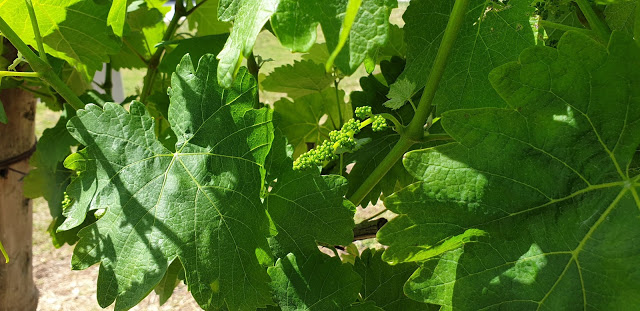
Searching for locations: O’Reilly’s Vineyard, Canungra, Queensland, Australia

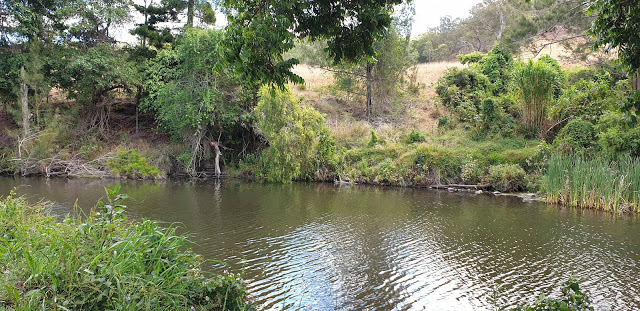
O’Reilly’s Canungra Valley Vineyards located on Lamington National Park Road, Canungra, Queensland, is a 15-acre vineyard with the 163-year-old historic homestead ‘Killowen’ set up with dining rooms and long verandahs, and extensive grounds that are next to the Canungra creek where it is possible to find Platypus and turtles while partaking in a picnic.

There are about 6,000 vines of the (white) Semillon, Verdelho and (red) Chambourcin, Shiraz and Petit Vedot varieties.

We visited there in December when the vines were just starting to produce fruit. 

That fruit is usually harvested in February and then turned into wine.
The setting for picnics is, on a warm Summer’s day is idyllic, where you can wade in the creek, or go looking for a platypus.  We did not see one there the day we visited but did spend some time sitting beside the creek.

We all need a little attention now and then

When I was last in Europe we decided to get the Eurostar, from London, through the Chunnel, to Paris Disneyland.  Not exactly as fast as the Japanese bullet trains, but faster than anything we have in this country.

You are hurtling along at up to 160 kph, though it feels a lot faster, and then you begin to brake, and it seems like nothing is happening, except for some outside friction noise, and the speed dropping.

I feel like that now, on my way to the bottom of the abyss.

At the end of that fall, it is something referred to as hitting rock bottom.

I’m told once you hit rock bottom the only way is up.

The question is, who do you know that has fallen into the abyss and come back to tell you about it?

Put into layman’s terms, hurling down the abyss is like having a severe episode of depression.  There are different types, some worse than others.  Hitting the ground is roughly the equivalent of looking for a way out that eases the pain and not finding one, and that, for some people, is a quite drastic answer.

But the sign that the free fall is braking, like the express train slowing down, is a sign that you’ve seen the light, that there are external forces that can render assistance.

I see them now, the hands of friends, the hands of people I don’t know, but who are concerned.

Writers like any other professional people are the same as everyone else, but with one rather interesting difference.  It is a profession where a lot of the time you are on your own, alone with your thoughts, your characters, your fantasy world, which sometimes so frighteningly drifts into your reality.

Some of us will make a fortune, some of us will make an adequate living, and live the ‘dream’ of doing the one job they always wanted to, and most will not.

I’m not rich, I’m not one who gets an adequate income, yet.

But I will get out of this abyss.

I can feel the brakes.

My eldest granddaughter, who is 15, tells me the fantasy story where she is a princess I’m writing for her is brilliant.

The free fall has stopped.  I step out into the sunshine.

All I needed was a little praise.

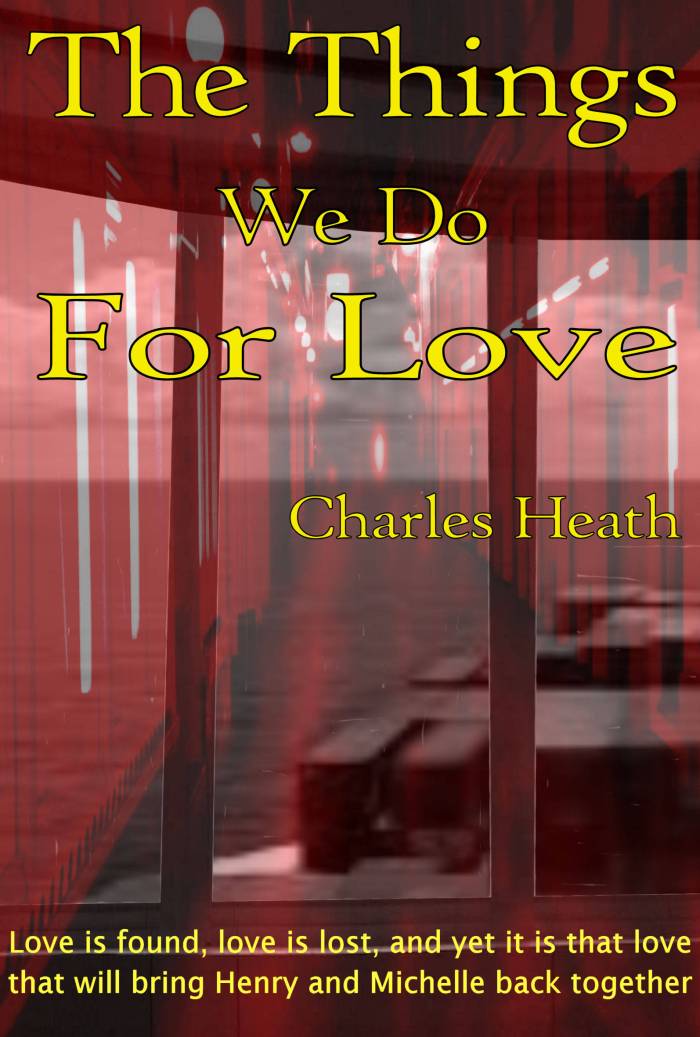
“The Things We Do For Love”

Would you give up everything to be with the one you love?

Is love the metaphorical equivalent to ‘walking the plank’; a dive into uncharted waters?

For Henry, the only romance he was interested in was a life at sea, and when away from it, he strived to find sanctuary from his family and perhaps life itself.  It takes him to a small village by the sea, a place he never expected to find another just like him, Michelle, whom he soon discovers is as mysterious as she is beautiful.

Henry had long since given up the notion of finding romance, and Michelle couldn’t get involved for reasons she could never explain, but in the end, both acknowledge that something happened the moment they first met.  

Plans were made, plans were revised, and hopes were shattered.

A chance encounter causes Michelle’s past to catch up with her, and whatever hope she had of having a normal life with Henry, or anyone else, is gone.  To keep him alive she has to destroy her blossoming relationship, an act that breaks her heart and shatters his.

But can love conquer all?

It takes a few words of encouragement from an unlikely source to send Henry and his friend Radly on an odyssey into the darkest corners of the red-light district in a race against time to find and rescue the woman he finally realizes is the love of his life.

The cover, at the moment, looks like this:

lovecoverfinal1

Is love the metaphorical equivalent to ‘walking the plank’; a dive into uncharted waters?

For Henry the only romance he was interested in was a life at sea, and when away from it, he strived to find sanctuary from his family and perhaps life itself.  It takes him to a small village by the sea, s place he never expected to find another just like him, Michelle, whom he soon discovers is as mysterious as she is beautiful.

Henry had long since given up the notion of finding romance, and Michelle couldn’t get involved for reasons she could never explain, but in the end both acknowledge that something happened the moment they first met.  

Plans were made, plans were revised, and hopes were shattered.

A chance encounter causes Michelle’s past to catch up with her, and whatever hope she had of having a normal life with Henry, or anyone else, is gone.  To keep him alive she has to destroy her blossoming relationship, an act that breaks her heart and shatters his.

But can love conquer all?

It takes a few words of encouragement from an unlikely source to send Henry and his friend Radly on an odyssey into the darkest corners of the red light district in a race against time to find and rescue the woman he finally realizes is the love of his life.

The cover, at the moment, looks like this:

lovecoverfinal1