The cinema of my dreams – Was it just another surveillance job – Episode 7

I’m back home and this story has been sitting on a back burner for a few months, waiting for some more to be written.

The trouble is, there are also other stories to write, and I’m not very good at prioritising.

But, here we are, a few minutes opened up and it didn’t take long to get back into the groove.

A body and a whole bunch of questions.


A full minute passed, with only one car passing, the rest of the time there was a strange sort of silence.

The man on the ground didn’t move.  Whoever shot him had shot to kill.  I took the few steps to stand beside him and could see the hole and the bloodstain of the wound.  Shot in the heart, instant death.

Usually, if it was a sniper, it was a head shot.  Less chance of missing a vital organ and leaving the target alive.

Odd too that it was just before he told me where some ‘evidence’ was located.  And who the hell was this Alfred Nobbin?

I heard a car turn into the alley and come towards me.  Halfway, it stopped, the engine switched off, and the doors opened.

Two men.  Maury, my handler, and Severin, the instructor.  Neither was carrying a gun, so neither had shot him.  That meant someone else was still in play.

I said, “I had him, but someone shot him.”

Stating the obvious, Maury’s expression told me.

“You’re not dead.”

“Perhaps I wasn’t a target.”

“Today.  Did he say who he was?”

“No.”

No hesitation or they’ll think I’m lying, which I am.  I was not sure why, but was it because I detected a note of sincerity in the target’s tone?

“Checked for identification yet?”

“Just about to.”  I knelt down and went through his pockets.  Nothing.  I told Maury that.

“Pity.”  He hadn’t moved from where he stopped.  Severin had been looking back up the alley, no doubt looking for where the bullet came from.

Had he reached the same conclusion I had, a balcony on the third floor of the left-hand building?  The shooter would be long gone by now.

A white van pulled into the lane and pulled up behind Maury’s car.  The cleaners.

It raided questions.  How did Maury know we’d be here, and that the target would be shot dead?  Or had he assumed I’d all but kill him in revenge for what had happened to the others.

What had happened to the others?

“The rest of the team,” I asked.

“Two dead, one critical.  One safe.  Let’s go.  We need to have a debriefing.”

I took a last look at the body, the joined Maury and Severin in the car.  I had questions of my own.

“A bad day’s work,” Severin muttered, as he drove off.

“But conclusive proof we have a traitor, the last thing we need right now.”

I was surprised they were discussing high-level matters that I considered above my pay grade.  And, I had to say, it worried me.


© Charles Heath 2019

“The Document” – the editor’s final draft – Day 3

This book has been sitting in the ‘to-be-done’ tray, so this month it is going to get the final revision.

And so it begins…

So, finally, the plan is working

The story is progressing and I can see, for the moment, that the story is heading in the right direction.

Of course, in saying that, it might just jinx the project.

There was a small moment of hesitation though, one of those, perhaps this might be a ‘better way moment’ that caused a brief stoppage while I considered the consequences. Then of course I make that fatal change that will have consequences later on.

Then I just added another sticky note to the four hundred others lining the monitor and nearby shelves and went back to work.

Who needs a good memory when you’ve got a hundred pads of stick notes just waiting to be used.

Got to get those 1,667 words revised.

Port Macquarie – Day 5 – Part 1

Timbertown

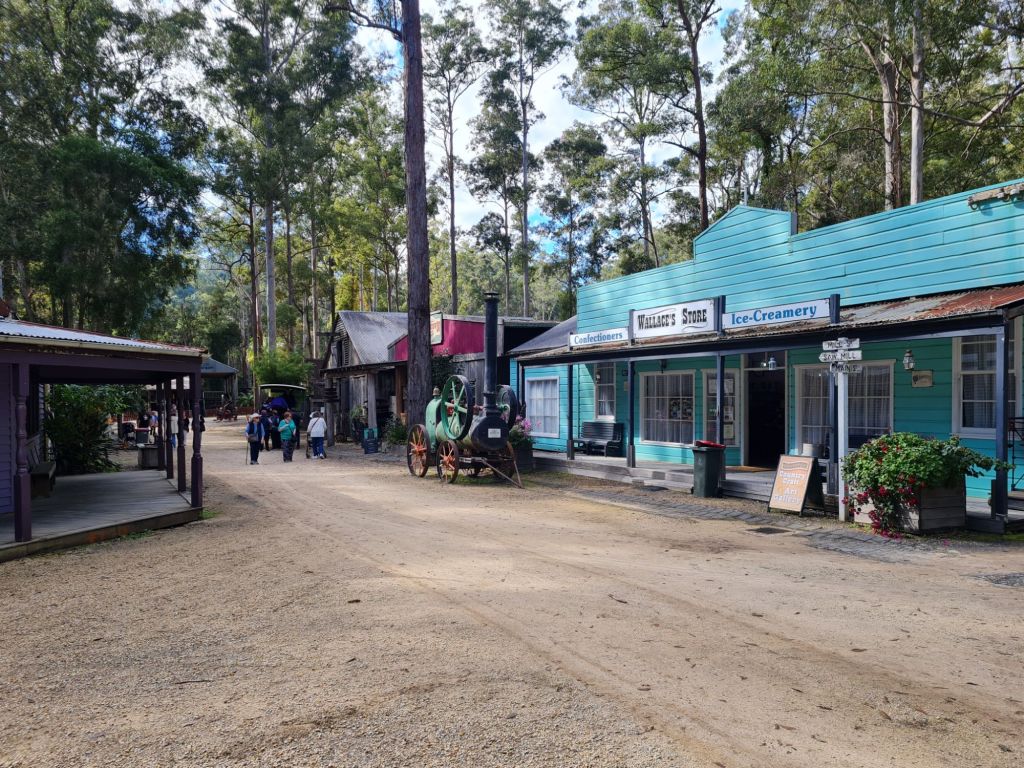
Timbertown is based on a timber getters township between 1880 and 1910. All the buildings are based on original plans and sit among Tallowwoods and Blackbutts. Most of the red cedar has been cut down.

it might have made a bigger impact if there were people dressed in period costumes enacting roles in the various buildings.

Only one was used being used as a General Store.

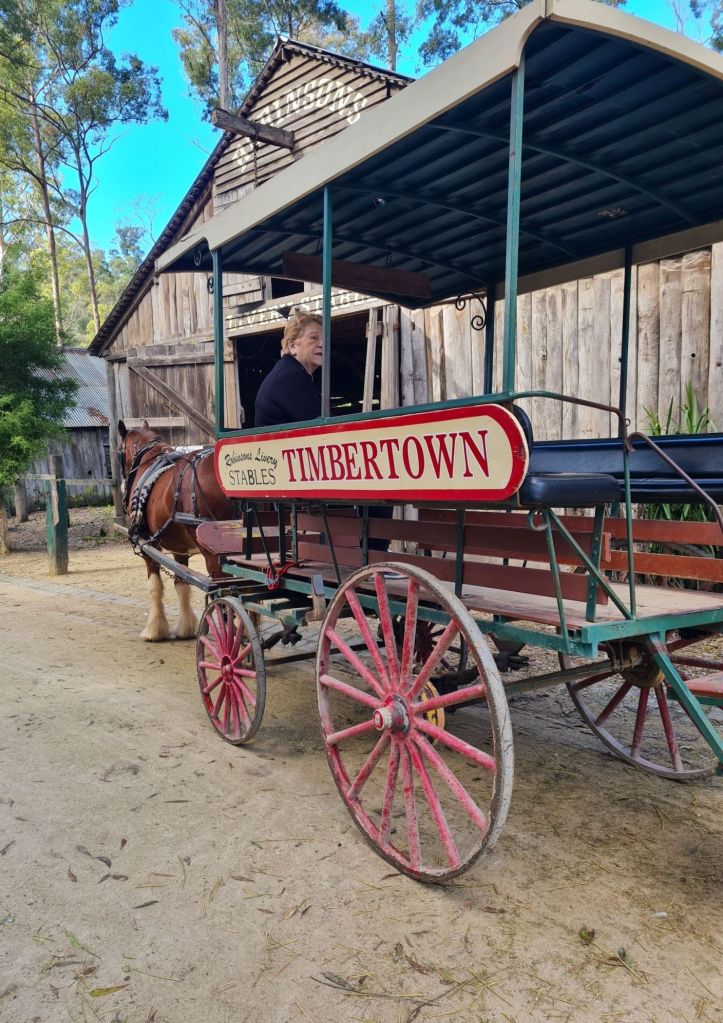
The stables where the carriages are kept

There was a horse-drawn carriage, which does a circuit of the town.

It would not be a comfortable ride these days with independent suspension and solid steel wheels, giving bone-jarring passing through the potholes.

And a ride in a stagecoach from city to city, you would have to think long and hard before you travel.

Nothing is infallible, computers or memory

It’s late at night and there are twenty other story ideas that are currently running around in my head, instead of the story I should be working on.

These ideas are impinging on the current story, and somehow are finding their way onto the page.

Writing, cursing, deleting, re-writing, deleting, cursing.

I’m working on the latest book and it is not going well.  I don’t have writer’s block, I think it is more a case of self-doubt.  It’s why I can’t concentrate.

It’s why I’m thinking about the next story and not staying on track.  And that pesky outline, or synopsis, or whatever it wants to be called has gone missing under a pile of paper.

Next resolution, clean up this goddam mess!

This leads me to be over critical of what I have written and much pressing of the delete key.  Only to realize that an action taken in haste can be regrettable, and makes me feel even more depressed when I realize the deletions are irrecoverable.

Damn.  Whatever happened to ‘undo’?

I think I’d be happier in a garret somewhere channeling van Gogh’s rage.

Lesson learned – don’t delete, save it to a text file so it can be retrieved when sanity returns.

If it returns…

I was not happy with the previous start.  Funny about that, because until a few weeks ago I thought the start was perfect.

What a difference a week makes or is that politics?

Perhaps I should consider adding some political satire.

But I digress…

It seems it’s been like that for a few weeks now, not being able to stick to the job in hand, doing anything but what I’m supposed to be doing.  I recognize the restlessness, I’m not happy with the story as it is, so rather than getting on with it, I find myself writing words just for the sake of writing words.

Any words are better than none, right?

So I rewrote the start, added about a hundred pages and now I have to do a mass of rewriting of what was basically the whole book.

But here’s the thing.

This morning I woke up and looked at the new start, and it has inspired me.

Perhaps all I needed was several weeks of teeth gnashing, and self doubt to get myself back on track.


“Sunday in New York”, a romantic adventure that’s not a walk in the park!

“Sunday in New York” is ultimately a story about trust, and what happens when a marriage is stretched to its limits.

When Harry Steele attends a lunch with his manager, Barclay, to discuss a promotion that any junior executive would accept in a heartbeat, it is the fact his wife, Alison, who previously professed her reservations about Barclay, also agreed to attend, that casts a small element of doubt in his mind.

From that moment, his life, in the company, in deciding what to do, his marriage, his very life, spirals out of control.

There is no one big factor that can prove Harry’s worst fears, that his marriage is over, just a number of small, interconnecting events, when piled on top of each other, points to a cataclysmic end to everything he had believed in.

Trust is lost firstly in his best friend and mentor, Andy, who only hints of impending disaster, Sasha, a woman whom he saved, and who appears to have motives of her own, and then in his wife, Alison, as he discovered piece by piece damning evidence she is about to leave him for another man.

Can we trust what we see with our eyes or trust what we hear?

Haven’t we all jumped to conclusions at least once in our lives?

Can Alison, a woman whose self-belief and confidence is about to be put to the ultimate test, find a way of proving their relationship is as strong as it has ever been?

As they say in the classics, read on!

Purchase:

http://tinyurl.com/Amazon-SundayInNewYork

Port Macquarie – Day 4 – Part 1

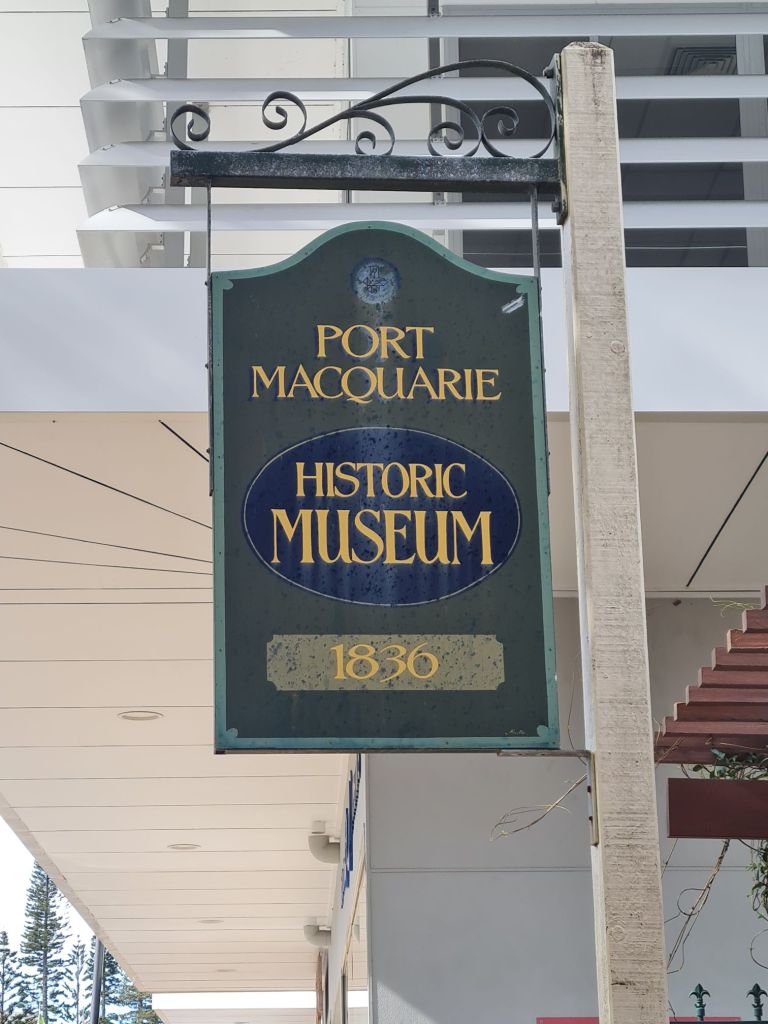
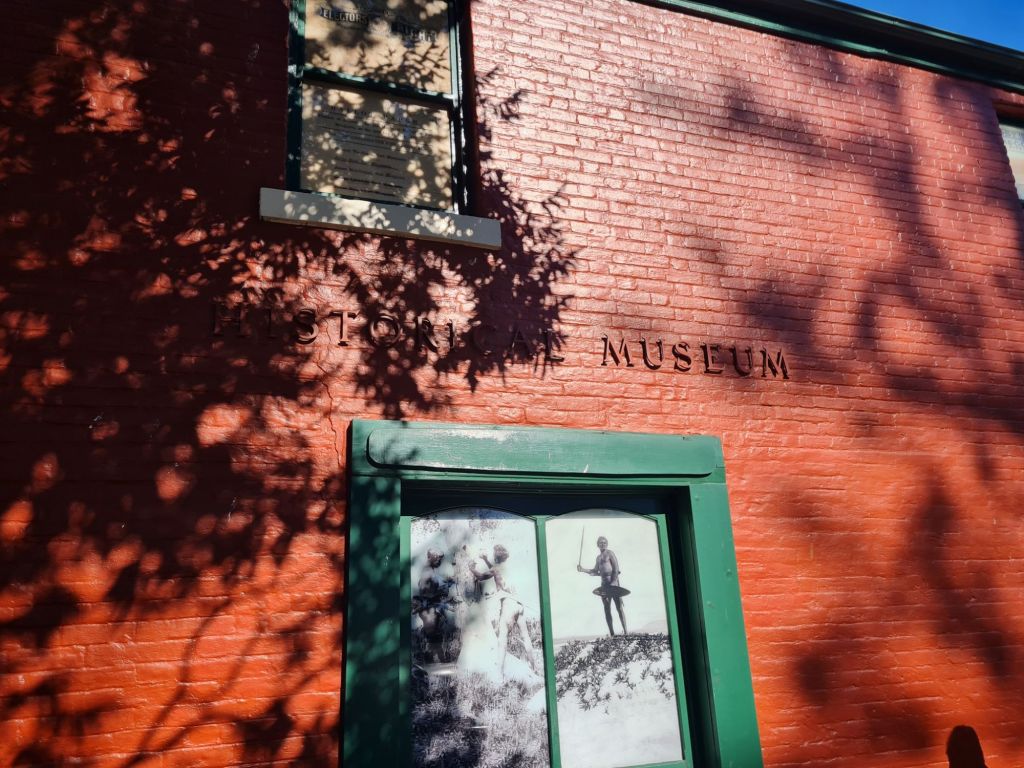
The Port Macquarie Museum

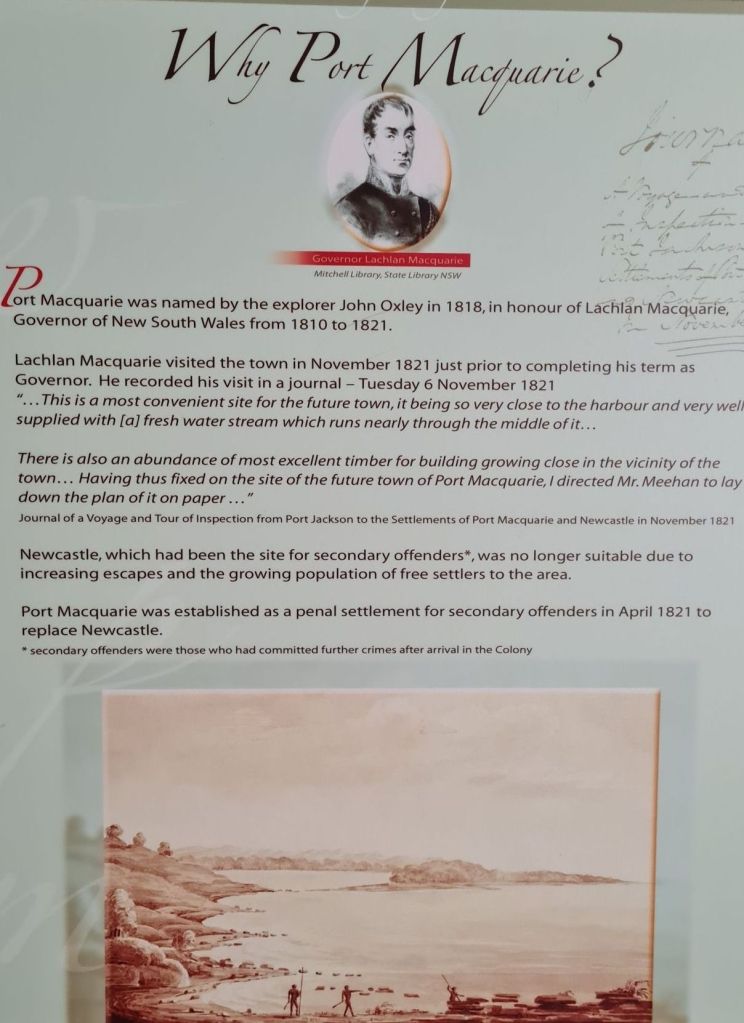
The first section of this museum relates the history, from the beginning, and through the 1800s, firstly as a convict settlement, and then for free settlers, to farm and wood logging.

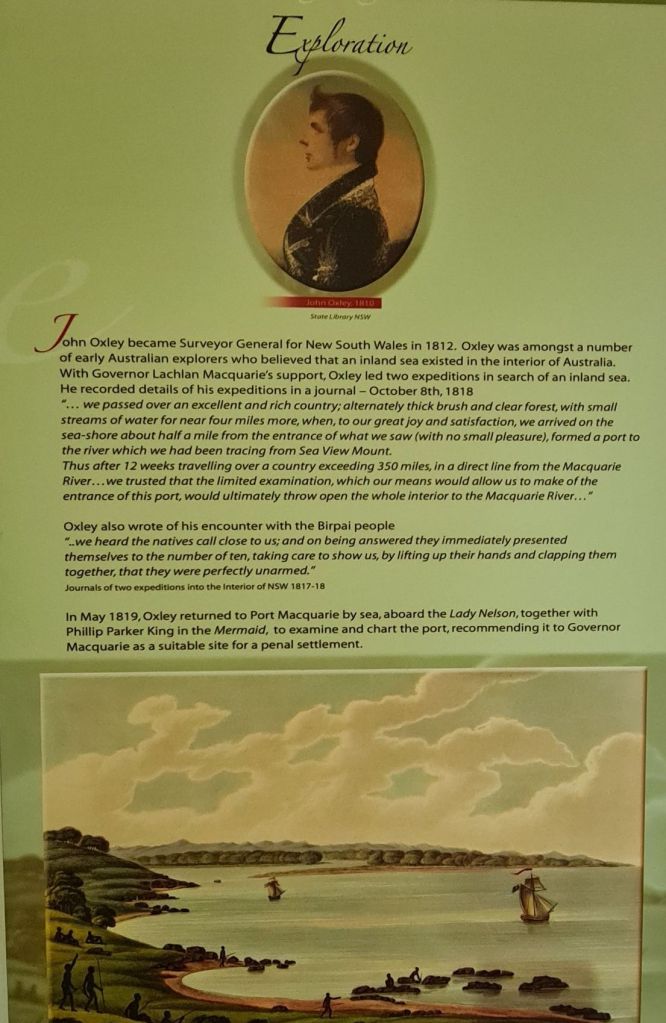
The Hastings River was named after the Governor General of India in 1818, but it was not explored until 1819 by John Oxley who recommended the site suitable for farming and logging.

In 1821, Governor Macquarie sent Captain John Allman, 40 soldiers, and 60 convicts on three ships, the Lady Nelson, the Mermaid, and the Prince Regent to establish a penal settlement.

Normally a three-day voyage the weather kept the ships 14 days at Port Stephens and more than a week at Trial Bay. It was not until almost 28 days after leaving Sydney they arrived and then wrecked the ships trying to cross the shallow sandbar across the Hastings River entrance.

“Echoes From The Past”, the past doesn’t necessarily stay there


What happens when your past finally catches up with you?

Christmas is just around the corner, a time to be with family. For Will Mason, an orphan since he was fourteen, it is a time for reflection on what his life could have been, and what it could be.

Until a chance encounter brings back to life the reasons for his twenty years of self-imposed exile from a life only normal people could have. From that moment Will’s life slowly starts to unravel and it’s obvious to him it’s time to move on.

This time, however, there is more at stake.

Will has broken his number one rule, don’t get involved.

With his nemesis, Eddie Jamieson, suddenly within reach, and a blossoming relationship with an office colleague, Maria, about to change everything, Will has to make a choice. Quietly leave, or finally, make a stand.

But as Will soon discovers, when other people are involved there is going to be terrible consequences no matter what choice he makes.

https://amzn.to/2CYKxu4

newechocover5rs

“The Document” – the editor’s final draft – Day 2

This book has been sitting in the ‘to-be-done’ tray, so this month it is going to get the final revision.

And so, it begins…

At last, a chance to get words on paper

Planning is fine but it’s not much good if you are up against a deadline. I’ve given myself 30 days to get this done, using the methodology I use for NaNoWriMo.

(Picture me shaking my head right here!)

I know where this story is going to end up, that isn’t going to change, but some elements of it might. That’s the ramifications of yesterday’s tangent.

I guess writing a story is always a fluid situation, but it’s not a first for me.

I’m generally a fly-by-the-seat of my pants writer so let’s see where this takes me.

For now, it’s back to the pen and paper.

I haven’t edited my quota of words for today yet.

An excerpt from “What Sets Us Apart”, a mystery with a twist

See the excerpt from the story below, just a taste of what’s in store…

http://amzn.to/2Eryfth

whatsetscover

McCallister was old school, a man who would most likely fit in perfectly campaigning on the battlefields of Europe during the Second World War. He’d been like a fish out of water in the army, post-Falklands, and while he retired a hero, he still felt he’d more to give.

He’d applied and was accepted as head of a SWAT team, and, watching him now as he and his men disembarked from the truck in almost military precision, a look passed between Annette, the police liaison officer, and I that said she’d seen it all before. I know I had.

There was a one in four chance his team would be selected for this operation, and she had been hoping it would be one of the other three. While waiting for them to arrive she filled me in on the various teams. His was the least co-operative, and the more likely to make ad-hoc decisions rather than adhere to the plan, or any orders that may come from the officer in charge.

This, she said quite bluntly, was going to end badly.

I still had no idea why Prendergast instructed me to attend the scene of what looked to be a normal domestic operation, but as the nominated expert in the field in these types of situations, it was fairly clear he wasn’t taking any chances. It was always a matter of opinion between us, and generally I lost.

In this case, it was an anonymous report identifying what the authorities believed were explosives in one of the dockside sheds where explosives were not supposed to be.

The only reason why the report was given any credence was the man, while not identifying himself by name, said he’d been an explosive expert once and recognized the boxes. That could mean anything, but the Chief Constable was a cautious man.

With his men settled and preparing their weapons, McCallister came over to the command post, not much more than the SUV my liaison and I arrived in, with weapons, bulletproof vests, and rolls of tape to cordon off the area afterward. We both had coffee, steaming in the cold early morning air. Dawn was slowly approaching and although rain had been forecast it had yet to arrive.

A man by the name of Benson was in charge. He too had groaned when he saw McCallister.

“A fine morning for it.” McCallister was the only enthusiastic one here.

He didn’t say what ‘it’ was, but I thought it might eventually be mayhem.

“Let’s hope the rain stays away. It’s going to be difficult enough without it,” Benson said, rubbing his hands together. We had been waiting for the SWAT team to arrive, and another team to take up their position under the wharf, and who was in the final stages of securing their position.

While we were waiting we drew up the plan. I’d go in first to check on what we were dealing with, and what type of explosives. The SWAT team, in the meantime, were to ensure all the exits to the shed were covered. When I gave the signal, they were to enter and secure the building. We were not expecting anyone inside or out, and no movement had been detected in the last hour since our arrival and deployment.

“What’s the current situation?”

“I’ve got eyes on the building, and a team coming in from the waterside, underneath. Its slow progress, but they’re nearly there. Once they’re in place, we’re sending McKenzie in.”

He looked in my direction.

“With due respect sir, shouldn’t it be one of us?” McCallister glared at me with the contempt that only a decorated military officer could.

“No. I have orders from above, much higher than I care to argue with, so, McCallister, no gung-ho heroics for the moment. Just be ready to move on my command, and make sure you have three teams at the exit points, ready to secure the building.”

McCallister opened his mouth, no doubt to question those orders, but instead closed it again. “Yes sir,” he muttered and turned away heading back to his men.

“You’re not going to have much time before he storms the battlements,” Benson quietly said to me, a hint of exasperation in his tone. “I’m dreading the paperwork.”

It was exactly what my liaison officer said when she saw McCallister arriving.

The water team sent their ‘in position’ signal, and we were ready to go.

In the hour or so we’d been on site nothing had stirred, no arrivals, no departures, and no sign anyone was inside, but that didn’t mean we were alone. Nor did it mean I was going to walk in and see immediately what was going on. If it was a cache of explosives then it was possible the building was booby-trapped in any number of ways, there could be sentries or guards, and they had eyes on us, or it might be a false alarm.

I was hoping for the latter.

I put on the bulletproof vest, thinking it was a poor substitute for full battle armor against an exploding bomb, but we were still treating this as a ‘suspected’ case. I noticed my liaison officer was pulling on her bulletproof vest too.

“You don’t have to go. This is my party, not yours,” I said.

“The Chief Constable told me to stick to you like glue, sir.”

I looked at Benson. “Talk some sense into her please, this is not a kindergarten outing.”

He shrugged. Seeing McCallister had taken all the fight out of him. “Orders are orders. If that’s what the Chief Constable requested …”

Madness. I glared at her, and she gave me a wan smile. “Stay behind me then, and don’t do anything stupid.”

“Believe me, I won’t be.” She pulled out and checked her weapon, chambering the first round. It made a reassuring sound.

Suited up, weapons readied, a last sip of the coffee in a stomach that was already churning from nerves and tension, I looked at the target, one hundred yards distant and thought it was going to be the longest hundred yards I’d ever traversed. At least for this week.

A swirling mist rolled in and caused a slight change in plans.

Because the front of the buildings was constantly illuminated by large overhead arc lamps, my intention had been to approach the building from the rear where there was less light and more cover. Despite the lack of movement, if there were explosives in that building, there’d be ‘enemy’ surveillance somewhere, and, after making that assumption, I believed it was going to be easier and less noticeable to use the darkness as a cover.

It was a result of the consultation, and studying the plans of the warehouse, plans that showed three entrances, the main front hangar type doors, a side entrance for truck entry and exit and a small door in the rear, at the end of an internal passage leading to several offices. I also assumed it was the exit used when smokers needed a break. Our entry would be by the rear door or failing that, the side entrance where a door was built into the larger sliding doors. In both cases, the locks would not present a problem.

The change in the weather made the approach shorter, and given the density of the mist now turning into a fog, we were able to approach by the front, hugging the walls, and moving quickly while there was cover. I could feel the dampness of the mist and shivered more than once.

It was nerves more than the cold.

I could also feel rather than see the presence of Annette behind me, and once felt her breath on my neck when we stopped for a quick reconnaissance.

It was the same for McCallister’s men. I could feel them following us, quickly and quietly, and expected, if I turned around, to see him breathing down my neck too.

It added to the tension.

My plan was still to enter by the back door.

We slipped up the alley between the two sheds to the rear corner and stopped. I heard a noise coming from the rear of the building, and the light tap on the shoulder told me Annette had heard it too. I put my hand up to signal her to wait, and as a swirl of mist rolled in, I slipped around the corner heading towards where I’d last seen the glow of a cigarette.

The mist cleared, and we saw each other at the same time. He was a bearded man in battle fatigues, not the average dockside security guard.

He was quick, but my slight element of surprise was his undoing, and he was down and unconscious in less than a few seconds with barely a sound beyond the body hitting the ground. Zip ties secured his hands and legs, and tape his mouth. Annette joined me a minute after securing him.

A glance at the body then me, “I can see why they, whoever they are, sent you.”

She’d asked who I worked for, and I didn’t answer. It was best she didn’t know.

“Stay behind me,” I said, more urgency in my tone. If there was one, there’d be another.

Luck was with us so far. A man outside smoking meant no booby traps on the back door, and quite possibly there’d be none inside. But it indicated there were more men inside, and if so, it appeared they were very well trained. If that were the case, they would be formidable opponents.

The fear factor increased exponentially.

I slowly opened the door and looked in. A pale light shone from within the warehouse itself, one that was not bright enough to be detected from outside. None of the offices had lights on, so it was possible they were vacant. I realized then they had blacked out the windows. Why hadn’t someone checked this?

Once inside, the door closed behind us, progress was slow and careful. She remained directly behind me, gun ready to shoot anything that moved. I had a momentary thought for McCallister and his men, securing the perimeter.

At the end of the corridor, the extent of the warehouse stretched before us. The pale lighting made it seem like a vast empty cavern, except for a long trestle table along one side, and, behind it, stacks of wooden crates, some opened. It looked like a production line.

To get to the table from where we were was a ten-yard walk in the open. There was no cover. If we stuck to the walls, there was equally no cover and a longer walk.

We needed a distraction.

As if on cue, the two main entrances disintegrated into flying shrapnel accompanied by a deafening explosion that momentarily disoriented both Annette and I. Through the smoke and dust kicked up I saw three men appear from behind the wooden crates, each with what looked like machine guns, spraying bullets in the direction of the incoming SWAT members.

They never had a chance, cut down before they made ten steps into the building.

By the time I’d recovered, my head heavy, eyes watering and ears still ringing, I took several steps towards them, managing to take down two of the gunmen but not the third.

I heard a voice, Annette’s I think, yell out, “Oh, God, he’s got a trigger,” just before another explosion, though all I remember in that split second was a bright flash, the intense heat, something very heavy smashing into my chest knocking the wind out of me, and then the sensation of flying, just before I hit the wall.

I spent four weeks in an induced coma, three months being stitched back together and another six learning to do all those basic actions everyone took for granted. It was twelve months almost to the day when I was released from the hospital, physically, except for a few alterations required after being hit by shrapnel, looking the same as I always had.

But mentally? The document I’d signed on release said it all, ‘not fit for active duty; discharged’.

It was in the name of David Cheney. For all intents and purposes, Alistair McKenzie was killed in that warehouse, and for the first time ever, an agent left the Department, the first to retire alive.

I was not sure I liked the idea of making history.

© Charles Heath 2016-2020

In a word: Story

All of us writers know what this is, the sort of combination of words that all come together as a story.  A tale about anything whether it is true or just plain fiction.

A story can be long, or it can be short.  It could be a magazine or newspaper article, or it could be what a child tells his or her mother or father when they get into trouble.

Come to think of it, I think that’s where I got an interest in writing stories because as a child I was always in trouble.

Of course, if you are telling certain types of stories, then it’s bound to be a lie.  And made even worse if it is gossip!

That story might even be my interpretation of events, and as it happens, it’s possible no two stories are the same, especially if I and others had witnessed the same event.

This is not to be confused with the other version, storey, which is a single level in a building, one that might have thirty or more stories.

And, just to add to the confusion, living in Brisbane in Australia we have the Storey Bridge.