“The Things We Do For Love”

Would you give up everything to be with the one you love?

Is love the metaphorical equivalent to ‘walking the plank’; a dive into uncharted waters?

For Henry, the only romance he was interested in was a life at sea, and when away from it, he strived to find sanctuary from his family and perhaps life itself.  It takes him to a small village by the sea, a place he never expected to find another just like him, Michelle, whom he soon discovers is as mysterious as she is beautiful.

Henry had long since given up the notion of finding romance, and Michelle couldn’t get involved for reasons she could never explain, but in the end, both acknowledge that something happened the moment they first met.  

Plans were made, plans were revised, and hopes were shattered.

A chance encounter causes Michelle’s past to catch up with her, and whatever hope she had of having a normal life with Henry, or anyone else, is gone.  To keep him alive she has to destroy her blossoming relationship, an act that breaks her heart and shatters his.

But can love conquer all?

It takes a few words of encouragement from an unlikely source to send Henry and his friend Radly on an odyssey into the darkest corners of the red-light district in a race against time to find and rescue the woman he finally realizes is the love of his life.

The cover, at the moment, looks like this:

lovecoverfinal1

Is love the metaphorical equivalent to ‘walking the plank’; a dive into uncharted waters?

For Henry the only romance he was interested in was a life at sea, and when away from it, he strived to find sanctuary from his family and perhaps life itself.  It takes him to a small village by the sea, s place he never expected to find another just like him, Michelle, whom he soon discovers is as mysterious as she is beautiful.

Henry had long since given up the notion of finding romance, and Michelle couldn’t get involved for reasons she could never explain, but in the end both acknowledge that something happened the moment they first met.  

Plans were made, plans were revised, and hopes were shattered.

A chance encounter causes Michelle’s past to catch up with her, and whatever hope she had of having a normal life with Henry, or anyone else, is gone.  To keep him alive she has to destroy her blossoming relationship, an act that breaks her heart and shatters his.

But can love conquer all?

It takes a few words of encouragement from an unlikely source to send Henry and his friend Radly on an odyssey into the darkest corners of the red light district in a race against time to find and rescue the woman he finally realizes is the love of his life.

The cover, at the moment, looks like this:
lovecoverfinal1

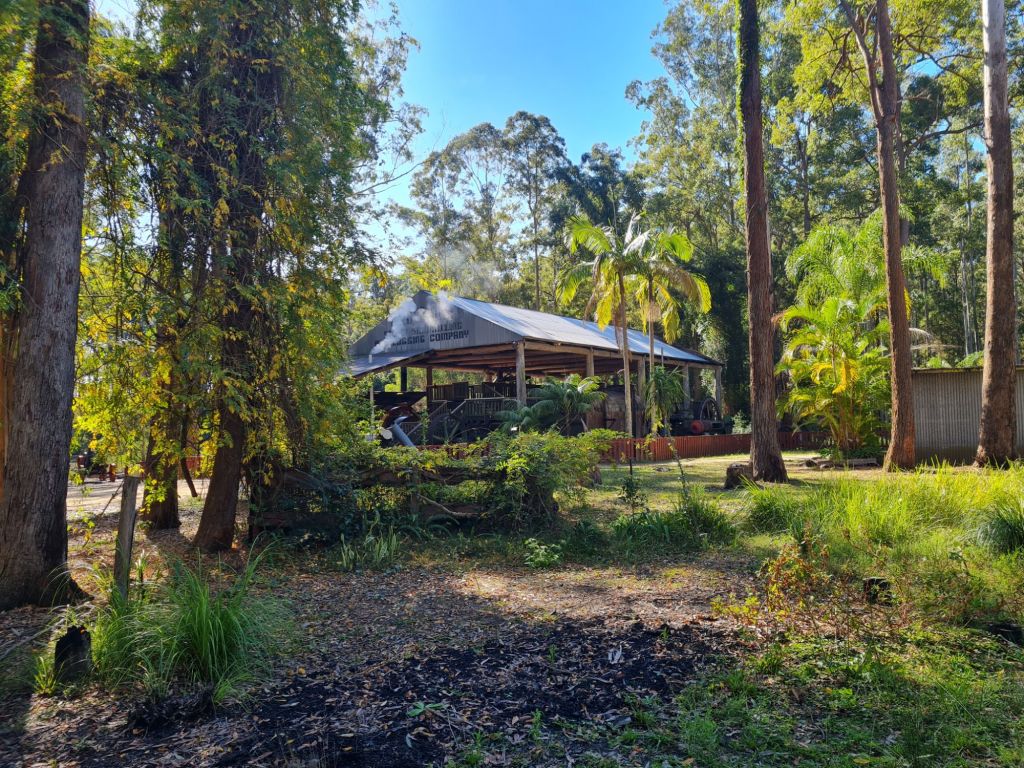
Port Macquarie – Day 5 – Part 3

The timber mill

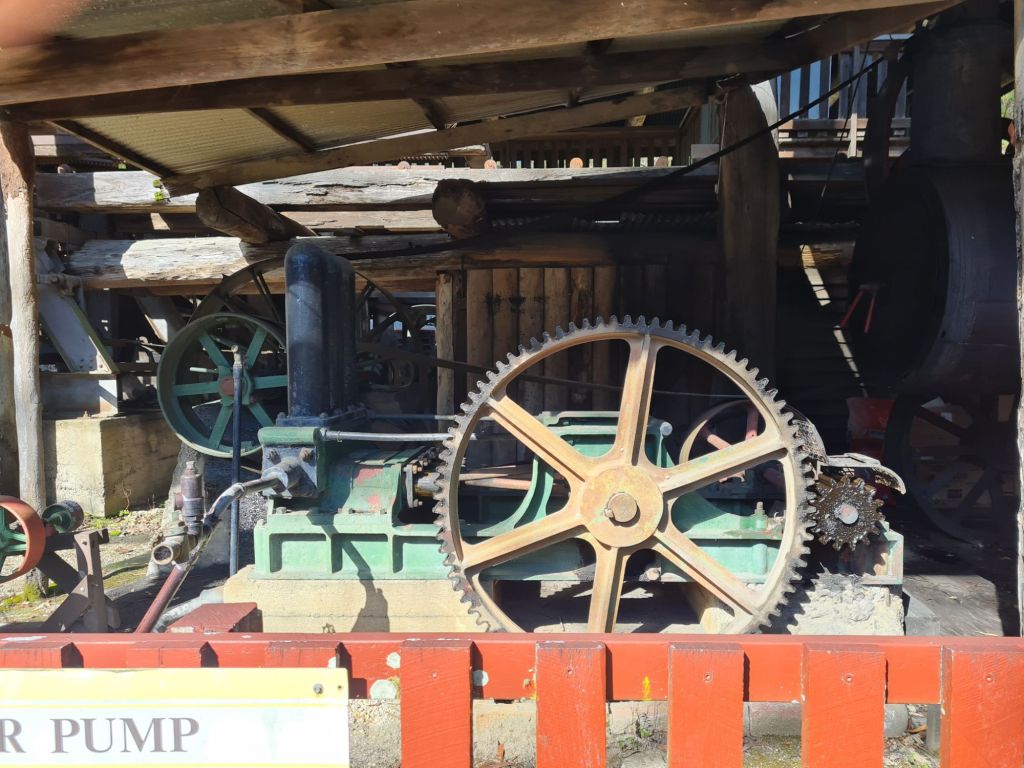
This timber mill was typical of the time, the mid to late 1800’s and into the 1900’s. It could be assembled and disassembled quite quickly and moved to where the wood was being felled.

It was run by a single portable steam engine which made it possible to have a mill near where the trees were being felled

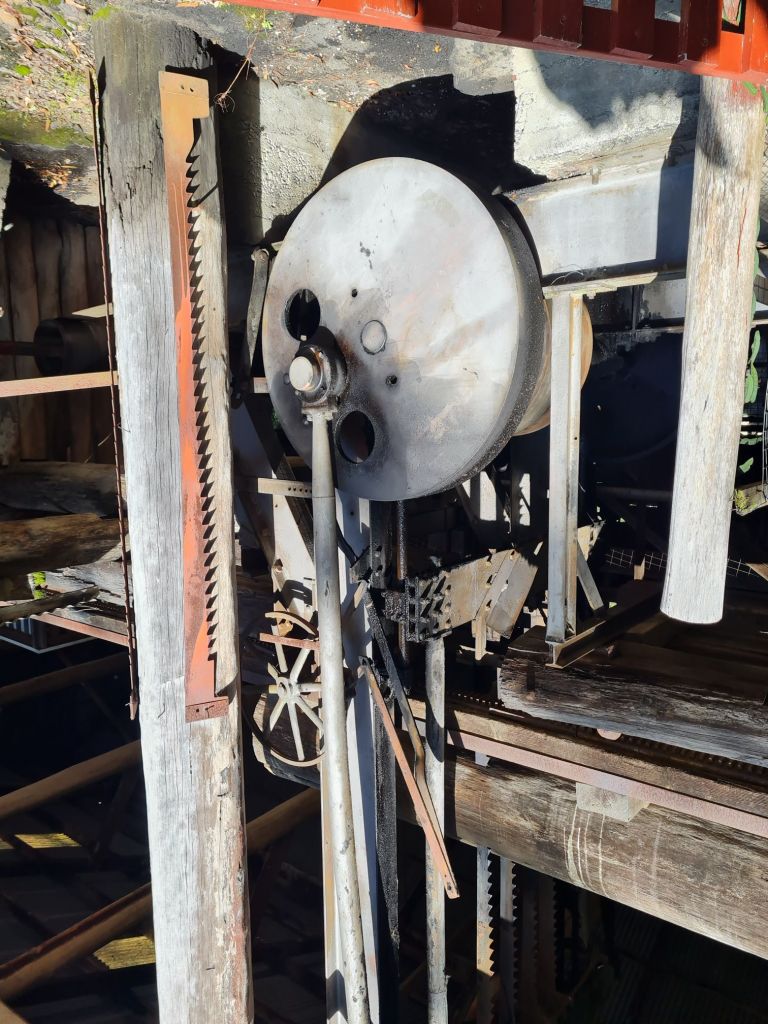
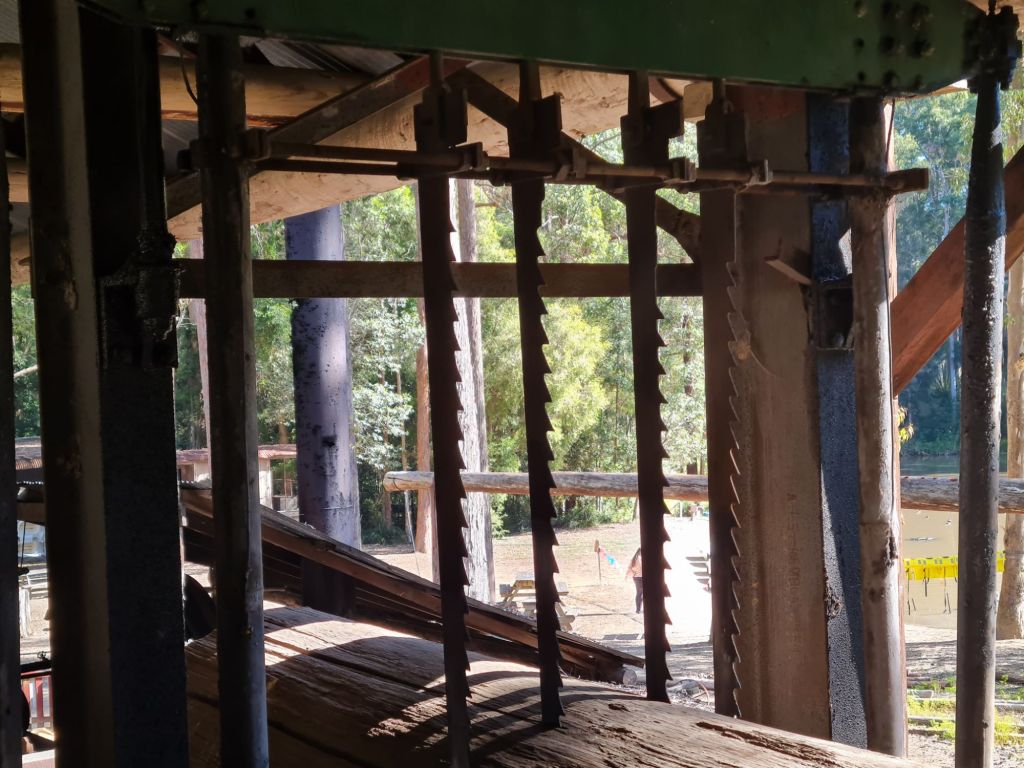
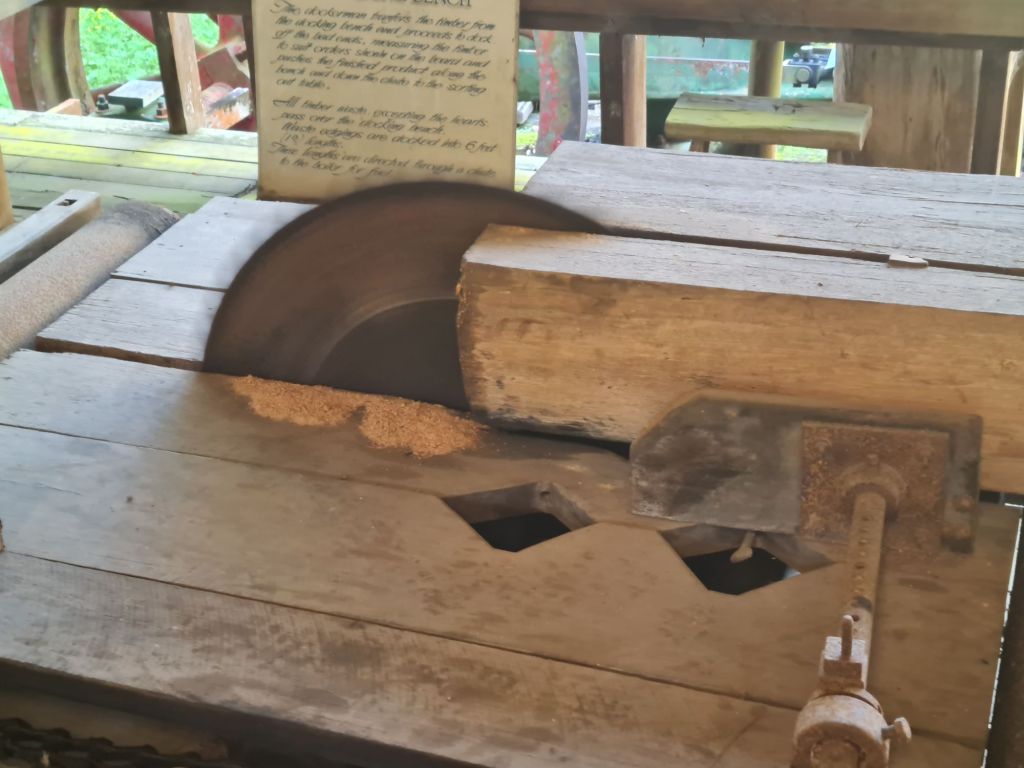
The engine drives vertical and horizontal saw blades by a series of belts and driveshafts

An excerpt from “If Only” – a work in progress

Investigation of crimes doesn’t always go according to plan, nor does the perpetrator get either found or punished.

That was particularly true in my case.  The murderer was incredibly careful in not leaving any evidence behind, to the extent that the police could not rule out whether it was a male or a female.

At one stage the police thought I had murdered my own wife though how I could be on a train at the time of the murder was beyond me.  I had witnesses and a cast-iron alibi.

The officer in charge was Detective First Grade Gabrielle Walters.  She came to me on the day after the murder seeking answers to the usual questions like, when was the last time you saw your wife, did you argue, the neighbors reckon there were heated discussions the day before.

Routine was the word she used.

Her fellow detective was a surly piece of work whose intention was to get answers or, more likely, a confession by any or all means possible.  I could sense the raging violence within him.  Fortunately, common sense prevailed.

Over the course of the next few weeks, once I’d been cleared of committing the crime, Gabrielle made a point of keeping me informed of the progress.

After three months the updates were more sporadic, and when, for lack of progress, it became a cold case, communication ceased.

But it was not the last I saw of Gabrielle.

The shock of finding Vanessa was more devastating than the fact she was now gone, and those images lived on in the same nightmare that came to visit me every night when I closed my eyes.

For months I was barely functioning, to the extent I had all but lost my job, and quite a few friends, particularly those who were more attached to Vanessa rather than me.

They didn’t understand how it could affect me so much, and since it had not happened to them, my tart replies of ‘you wouldn’t understand’ were met with equally short retorts.  Some questioned my sanity, even, for a time, so did I.

No one, it seemed, could understand what it was like, no one except Gabrielle.

She was by her own admission, damaged goods, having been the victim of a similar incident, a boyfriend who turned out to be an awfully bad boy.  Her story varied only in she had been made to witness his execution.  Her nightmare, in reliving that moment in time, was how she was still alive and, to this day, had no idea why she’d been spared.

It was a story she told me one night, some months after the investigation had been scaled down.  I was still looking for the bottom of a bottle and an emotional mess.  Perhaps it struck a resonance with her; she’d been there and managed to come out the other side.

What happened become our secret, a once-only night together that meant a great deal to me, and by mutual agreement, it was not spoken of again.  It was as if she knew exactly what was required to set me on the path to recovery.

And it had.

Since then, we saw each about once a month in a cafe.   I had been surprised to hear from her again shortly after that eventful night when she called to set it up, ostensibly for her to provide me with any updates on the case, but perhaps we had, after that unspoken night, formed a closer bond than either of us wanted to admit.

We generally talked for hours over wine, then dinner and coffee.  It took a while for me to realize that all she had was her work, personal relationships were nigh on impossible in a job that left little or no spare time for anything else.

She’d always said that if I had any questions or problems about the case, or if there was anything that might come to me that might be relevant, even after all this time, all I had to do was call her.

I wondered if this text message was in that category.  I was certain it would interest the police and I had no doubt they could trace the message’s origin, but there was that tiny degree of doubt, about whether or not I could trust her to tell me what the message meant.

I reached for the phone then put it back down again.  I’d think about it and decide tomorrow.

© Charles Heath 2018-2020

“The Document” – the editor’s final draft – Day 6

This book has been sitting in the ‘to-be-done’ tray, so this month it is going to get the final revision.

And so it begins…

You see, this commitment to revising so many words a day becomes a little like a pressure cooker.

Having a plan is one thing, getting it done is another, but to keep going, now, there’s the thing.

Like this morning, sitting in front of the computer, knowing only five minutes before sitting down what I wanted to write about. A new twist in the tale.

Then the phone rings.

Up from the table, over to the phone, answer it.

A nuisance call, someone saying I had an accident when I didn’t, a new group of scammers trying to leverage money out of me. On top of the telecommunication scammers, and the endless charities looking for donations.

Distractions.

I sit down again, but my mind has switched off.

The words are gone.

Breakfast is looking good.

‘What Sets Us Apart’ – A beta readers view

There’s something to be said for a story that starts like a James Bond movie, throwing you straight in the deep end, a perfect way of getting to know the main character, David, or is that Alistair?

A retired spy, well not so much a spy as a retired errand boy, David’s rather wry description of his talents, and a woman that most men would give their left arm for, not exactly the ideal couple, but there is a spark in a meeting that may or may not have been a setup.

But as the story progressed, the question I kept asking myself was why he’d bother.

And, page after unrelenting page, you find out.

Susan is exactly the sort of woman to pique his interest.  Then, inexplicably, she disappears.  That might have been the end to it, but Prendergast, that shadowy enigma, David’s ex-boss who loves playing games with real people, gives him an ultimatum, find her or come back to work.

Nothing like an offer that’s a double-edged sword!

A dragon for a mother, a sister he didn’t know about, Susan’s BFF who is not what she seems or a friend indeed, and Susan’s father who, up till David meets her, couldn’t be less interested, his nemesis proves to be the impossible dream, and he’s always just that one step behind.

When the rollercoaster finally came to a halt, and I could start breathing again, it was an ending that was completely unexpected.

I’ve been told there’s a sequel in the works.

Bring it on!

The book can be purchased here:  http://amzn.to/2Eryfth

In a word: Line

The English language has some marvelous words that can be used so as to have any number of meanings

For instance,

Draw a line in the sand

We would all like to do this with our children, our job, our relationships, but for some reason, the idea sounds really good in our heads, but it never quite works out in reality. What does it mean, whatever it is, this I’d where it ends or changes because it can’t keep going the way it is.

Inevitably it leads to,

You’ve crossed the line

Which at some point in our lives, and particularly when children, we all do a few times until, if we’re lucky we learn where that line is. It’s usually considered 8n tandem with pushing boundaries.

Of course, there is

A line you should never cross

And I like to think we all know where that is. Unfortunately, some do not and often find their seemingly idyllic life totally shattered beyond repair. An affair from either side of a marriage or relationship can do that.

You couldn’t walk a straight line if you tried

While we might debate what straight might mean in this context, for this adaptation it means staying on the right side of legality. Some people find a life of crime more appealing than doing honest days work.

This goes hand in hand with,

You’re spinning me a line

Which means you are being somewhat loose with the truth, perhaps in explaining where you’ve been and what you’ve been doing. I think sometimes liars forget they need to have good memories.

Then there are the more practical uses of the word, such as

I have a new line of products

Is that a new fishing line?

Those I think most of us get, but it’s the more ambiguous that we have trouble with. Still, ambiguity is a writer’s best friend and we can make up a lot of stuff from just using one word.

The story behind the story: A Case of Working With the Jones Brothers

To write a private detective serial has always been one of the items at the top of my to-do list, though trying to write novels and a serial, as well as a blog, and maintain a social media presence, well, you get the idea.

But I made it happen, from a bunch of episodes I wrote a long, long time ago, used these to start it, and then continue on, then as now, never having much of an idea where it was going to end up, or how long it would take to tell the story.

That, I think is the joy of ad hoc writing, even you, as the author, have as much idea of where it’s going as the reader does.

It’s basically been in the mill since 1990, and although I finished it last year, it looks like the beginning to end will have taken exactly 30 years.  Had you asked me 30 years ago if I’d ever get it finished, the answer would be maybe?

My private detective, Harry Walthenson

I’d like to say he’s from that great literary mold of Sam Spade, or Mickey Spillane, or Phillip Marlow, but he’s not.

But, I’ve watched Humphrey Bogart play Sam Spade with much interest, and modelled Harry and his office on it.  Similarly, I’ve watched Robert Micham play Phillip Marlow with great panache, if not detachment, and added a bit of him to the mix.

Other characters come into play, and all of them, no matter what period they’re from, always seem larger than life.  I’m not above stealing a little of Mary Astor, Peter Lorre or Sidney Greenstreet, to breathe life into beguiling women and dangerous men alike.

Then there’s the title, like

The Case of the Unintentional Mummy – this has so many meanings in so many contexts, though I imagine that back in Hollywood in the ’30s and ’40s, this would be excellent fodder for Abbott and Costello

The Case of the Three-Legged Dog – Yes, I suspect there may be a few real-life dogs with three legs, but this plot would involve something more sinister.  And if made out of plaster, yes, they’re always something else inside.

But for mine, to begin with, it was “The Case of the …”, because I had no idea what the case was going to be about, well, I did, but not specifically.

Then I liked the idea of calling it “The Case of the Brother’s Revenge” because I began to have a notion there was a brother no one knew about, but that’s stuff for other stories, not mine, so then went the way of the others.

Now it’s called ‘A Case of Working With the Jones Brothers’, finished the first three drafts, and at the editor for the last.

I have high hopes of publishing it in early 2021.  It even has a cover.

PIWalthJones1

The cinema of my dreams – It continued in London – Episode 23

What’s the Opera got to do with it?

I had hoped never to see Rodby again, and yet here I was in that oppressively warm wood polish-smelling office of his, sitting uncomfortably opposite him, a very large and clear desk between us.

In all the time I’d known him, and those visits to his office, there had never been anything on it.  Not even a phone.

The last time I was in this position, to inform him of my retirement, I’d been reluctant to put the resignation envelope on the pristine surface.

Significantly, it was a month to the day after I left Larry’s mother’s house in Sorrento.

The day after I went with Cecilia to her audition, and she smashed it, getting the role from a rather astonished casting director, and director.  He was calling it a possible break-out performance, in a whole different language that I didn’t understand.

That same night I found Juliet dining alone in the hotel restaurant and told her the good news, but her brother had already called her.  We had dinner, and it could have been more, but there was that Cecilia thing in the back of her mind so we parted as friends.

And at a loose end, Venice no longer hold any significance for me, I moved back to London.

I should have gone to Paris.  There, it would have been harder for Alfie to find me.

He had been giving me the ‘come back’ look, one that I had taken a long time to learn how to ignore.

Seeing he wasn’t making any impact, he said, “They found Larry.”

An enigmatic statement.  Who found Larry?

“The Italian police recovered the body, in a little-used area of Lake Como.  No signs of physical damage, not shot or stabbed, but apparently, he died of natural causes.  We’re still waiting for a definitive coroner’s report.  You never really elaborated on what happened at his mother’s house.”

My report was short and lacked detail, more notable for what I didn’t say rather than what I did.

“Nothing to tell.  Brenda just told him his days of running the organization were over, she and Jaime Meyers had collaboratively taken over, and things would be different.  I notice several other hard-line criminals have been taken off the streets since, so Inspector Crowley’s arrangement with her is working.  A win-win situation.  And you don’t have to deal with Larry anymore.”

“That’s the problem.  If something is too good to be true, it generally is. I have to wonder what has replaced him.”

“I’m retired sir.  No longer interested.  Why am I here?”

I could see he had more, possibly to pique my interest, but just shrugged.

“Nothing of any importance.  I thought you might want to know what happened to Larry.  And Martha wants me to go to the opera tonight and she specifically asked me to ask you, and as you know she does not take no for an answer.”

I shrugged.  He was right about his wife, a force of nature to be reckoned with.  I had met her several times, and she had been intrigued with Violetta and had been devastated when she learned of her death.

“Then I guess I’d better dust off the monkey suit.”

“Good.  I’ll text you where and when and send a driver to pick you up.”

© Charles Heath 2022

Sayings: Irons in the fire

There is an expression you hear a lot, here, there, and everywhere when referring to someone who is very busy, ‘oh, he has a lot of irons in the fire’.

These days we use it as an analogy not to have too many things on the go at the same time, and, in the end, none of them will be finished properly, or finished at all.

There are two old-time literal meanings that can apply to this analogy, the first being that in laundries, they used to have their irons in the fire, warming so that clothes could be ironed. Having too many meant sometimes one would be left too long, and end up scorching the clothes being ironed.

Hopefully, that didn’t happen to a very expensive dress!

The second meaning came from a blacksmith’s foundry where he had iron bars in the fire, heating up so that they could be worked on. Having too many in the fire at once sometimes meant that one became overheated, and ruined.

Conversely, having too many pieces of iron in the fire might cause the fire to be too cool to heat any of the metal bars.

These days, a lot of people need to have a lot of projects on the go at once, in the hope that one or more might suddenly become a winner.

Sadly, that doesn’t happen very often.

And, no, buying a lot of lottery tickets hoping one will win, that is not very likely either.

The cinema of my dreams – Was it just another surveillance job – Episode 9

I’m back home and this story has been sitting on a back burner for a few months, waiting for some more to be written.

The trouble is, there are also other stories to write, and I’m not very good at prioritising.

But, here we are, a few minutes opened up and it didn’t take long to get back into the groove.

An interrogation and a revelation.

I think I just about reached that same conclusion just seconds before she uttered it.  But, I didn’t think this was the time to air my own thoughts on the matter.

The question I did ask was, “It appears our service has been compromised.”

She glanced at me almost condescendingly.  “It appears so.  Have you got your cell phone?”

I had it with me and gave it to her.  I had it ready because I knew they would ask for it.  It had a record of orders given, and phone conversations made, before, during, and after the operation.

For a review, or in this case, a search for the guilty.

I watched her put in the passcode, and go to the messages, and bring up the one sent to me, to attend the briefing.  It was all in order, no different to the previous five, with all the right designations and protocols.

“There was no reason to suspect it was anything but a real callout.”

Another glance at the screen, she put it on the desk next to the file.  “No, it looks real enough.”

Thought best kept to myself; how the hell did someone outside our organisation, know so well our inner workings?  I wanted to ask the question but refrained from doing so.

It also explained, now that I thought about it, the reason why the target had said he was one of us.  We had been hunting him so someone else, and enemy organisation perhaps, so they could kill him.  The question was, why?  Had he made a discovery, the evidence he was referring to that a certain Alfred Nobbin might have.

Perhaps a good idea, for the time being, to keep that snippet of information to myself.  After all, this new person in front of me could be one of Severin’s people.

Where I was sitting was not a familiar place to me, though I had been to the building before, which is why I knew where to go for this interview.  AS for the people, everyone I’d met so far, other than the other team members, bar one, I’d known from training.

So, now another expected question from me, or at least, if I was on the other side of the table, it’s one I’d expect to be asked.  “Just who was I working for, if it was not for us?”

Assuming she was one of us.

“That’s what we intend to find out.  Who was the target?”

I gave her the description we’d been given, and a copy of his photograph that had been circulated at the briefing.  I’d kept one of them, and luckily no one noticed it missing.  It was fortuitous that’s I’d copied the photo before I had to give it to her, which was right then.

There was not a flicker of recognition in her eyes.

“So, not one of us?” I asked.

For an interrogation, she wasn’t asking many relevant questions.

She looked up.  “Why would you say that, if your mission was to keep him under surveillance?”

“Which we now know was not sanctioned, so we have to assume that we had been persuaded to find and track one of our own agents.  You look as though you didn’t recognise him?”

“I don’t try to remember every agent we have in the field, here and overseas.  There a few too many for that.  But I’ve got a request out for his identity.  He didn’t say who he was?”

“No.”

“Anything at all that might be useful?”

“That he was one of us, who’d made a mistake, and feared we’d set the dogs on him.”

“Yes.  Someone definitely did that.”

© Charles Heath 2019