Searching for locations: Oreti Village – No two sunrises are the same – 1

Oreti village, Pukawa Bay, North Island, New Zealand

On the southern tip of Lake Taupo

Our first morning there, a Saturday.  Winter.  Cold.  And a beautiful sunrise.

20180812_073230

This was taken from the balcony, overlooking the lake.

The sun is just creeping up over the horizon

20180812_073241

It gradually gets lighter, and then the sun breaks free of the low cloud

It lights up the balcony

20180811_074651

And the trees just beyond, a cascade of colorful ferns.

20180811_074622

It looks like its going to be a fine day, our first for this trip, and we will be heading to the mountains to see snow, for the first time for two of our granddaughters.

Skeletons in the closet, and doppelgangers

A story called “Mistaken Identity”

How many of us have skeletons in the closet that we know nothing about? The skeletons we know about generally stay there, but those we do not, well, they have a habit of coming out of left field when we least expect it.

In this case, when you see your photo on a TV screen with the accompanying text that says you are wanted by every law enforcement agency in Europe, you’re in a state of shock, only to be compounded by those same police, armed and menacing, kicking the door down.

I’d been thinking about this premise for a while after I discovered my mother had a boyfriend before she married my father, a boyfriend who was, by all accounts, the man who was the love of her life.

Then, in terms of coming up with an idea for a story, what if she had a child by him that we didn’t know about, which might mean I had a half brother or sister I knew nothing about. It’s not an uncommon occurrence from what I’ve been researching.

There are many ways of putting a spin on this story.

Then, in the back of my mind, I remembered a story an acquaintance at work was once telling us over morning tea, that a friend of a friend had a mother who had a twin sister and that each of the sisters had a son by the same father, without each knowing of the father’s actions, both growing up without the other having any knowledge of their half brother, only to meet by accident on the other side of the world.

It was an encounter that in the scheme of things might never have happened, and each would have remained oblivious of the other.

For one sister, the relationship was over before she discovered she was pregnant, and therefore had not told the man he was a father. It was no surprise the relationship foundered when she discovered he was also having a relationship with her sister, a discovery that caused her to cut all ties with both of them and never speak to either from that day.

It’s a story with more twists and turns than a country lane!

And a great idea for a story.

That story is called ‘Mistaken Identity’.

“The Document” – the editor’s final draft – Day 14

This book has been sitting in the ‘to-be-done’ tray, so this month it is going to get the final revision.

And so it begins…

I’m ahead of target so time for more serious revision

Whenever I’m writing, especially when I’m working on a plan, things never quite go the way I’d originally envisaged.

You get so far, and an idea pops into your head, and then, thinking it will work well, often it requires a little extra in previously written work.

Of course, when also writing under a time constraint, that’s not always possible, so your desk, computer keyboard or monitor becomes a repository for endless yellow Post-it notes reminding you of the plot holes to be fixed.

I have time, and today I will be fixing them.

I also suspect this might make my word count for the project exceed the required 50,000.

We shall see!

An excerpt from “Amnesia”, a work in progress

I remembered a bang.

I remembered the car slewing sideways.

I remember another bang, and then it was lights out.

When I opened my eyes again, I saw the sky.

Or I could be underwater.

Everything was blurred.

I tried to focus but I couldn’t. My eyes were full of water.

What happened?

Why was I lying down?

Where was I?

I cast my mind back, trying to remember.

It was a blank.

What, when, who, why and where, are questions I should easily be able to answer. These are questions any normal person could answer.

I tried to move. Bad, bad mistake.

I did not realise the scream I heard was my own. Just before my body shut down.

“My God! What happened?”

I could hear, not see. I was moving, lying down, looking up.

I was blind. Everything was black.

“Car accident; hit a tree, sent the passenger flying through the windscreen. Pity to poor bastard didn’t get the message that seat belts save lives.”

Was I that poor bastard?

“Report?” A new voice, male, authoritative.

“Multiple lacerations, broken collar bone, broken arm in three places, both legs broken below the knees, one badly. We are not sure of internal injuries, but ruptured spleen, cracked ribs and pierced right lung are fairly evident, x-rays will confirm that and anything else.”

“What isn’t broken?”

“His neck.”

“Then I would have to say we are looking at the luckiest man on the planet.”

I heard the shuffling of pages.

“OR1 ready?”

“Yes. On standby since we were first advised.”

“Good. Let’s see if we can weave some magic.”

Magic.

It was the first word that popped into my head when I surfaced from the bottom of the lake. That first breath, after holding it for so long, was sublime, and, in reality, agonising.

Magic, because it seemed like I’d spent a long time underwater.

Or somewhere.

I tried to speak but couldn’t. The words were just in my head.

Was it night or was it day?

Was it hot, or was it cold?

Where was I?

Around me, it felt cool.

It was incredibly quiet. No noise except for the hissing of air through an air-conditioning vent. Or that was the sound of pure silence.  And with it the revelation that silence was not silent. It was noisy.

I didn’t try to move.

Instinctively, somehow, I knew not to.

A previous unpleasant experience?

I heard what sounded like a door opening, and noticeably quiet footsteps slowly came into the room. They stopped. I could hear breathing, slightly laboured, a sound I’d heard before.

My grandfather.

He had smoked all his life until he was diagnosed with lung cancer. But for years before that he had emphysema. The person in the room was on their way, down the same path. I could smell the smoke.

I wanted to tell whoever it was the hazards of smoking.

I couldn’t.

I heard a metallic clanging sound from the end of the bed. A moment later the clicking of a pen, then writing.

“You are in a hospital.” A female voice suddenly said. “You’ve been in a bad accident. You cannot talk, or move, all you can do, for the moment, is listen to me. I am a nurse. You have been here for 45 days and just came out of a medically induced coma. There is nothing to be afraid of.”

She had a very soothing voice.

Her fingers stroked the back of my hand.

“Everything is fine.”

Define fine, I thought. I wanted to ask her what ‘fine’ meant.

“Just count backwards from 10.”

Why?

I didn’t reach seven.

Over the next ten days, that voice became my lifeline to sanity. Every morning, I longed to hear it, if only for the few moments she was in the room, those few waking moments when I believed she, and someone else who never spoke, were doing tests. I knew it had to be someone else because I could smell the essence of lavender. My grandmother had worn a similar scent.

It rose above the disinfectant.

She was another doctor, not the one who had been there the day I arrived. Not the one who had used some ‘magic’ and kept me alive.

It was then, in those moments before she put me under again, that I thought, what if I was paralysed? It would explain a lot. A chill went through me.

The next morning, she was back.

“My name is Winifred. We don’t know what your name is, not yet. In a few days, you will be better, and you will be able to ask us questions. You were in an accident, and you were very severely injured, but I can assure you there will be no lasting damage.”

More tests, and then when I expected the lights to go out, they didn’t. Not for a few minutes more. This was how I would be integrated back into the world. A little bit at a time.

The next morning, she came later than usual, and I’d been awake for a few minutes. “You have bandages over your eyes and face. You had bad lacerations to your face, and glass in your eyes. We will know more when the bandages come off in a few days. Your face will take longer to heal. It was necessary to do some plastic surgery.”

Lacerations, glass in my eyes, car accidents, plastic surgery. By logical deduction, I knew I was the poor bastard thrown through the windscreen. It was a fleeting memory from the day I was admitted.

How could that happen?

That was the first of many startling revelations. The second was the fact I could not remember the crash. Equally shocking, in that same moment was the fact I could not remember before the crash either, or only vague memories after.

But the most shattering of all these revelations was the one where I realised, I could not remember my name.

I tried to calm down, sensing a rising panic.

I was just disoriented, I told myself. After 45 days in an induced coma, it had messed with my mind, and it was only a temporary lapse. Yes, that’s what it was, a temporary lapse. I will remember tomorrow. Or the next day.

Sleep was a blessed relief.

The next day I didn’t wake up feeling nauseous. I think they’d lowered the pain medication. I’d heard that morphine could have that effect. Then, how could I know that but not who I am?

Now I knew Winifred the nurse was preparing me for something unbelievably bad. She was upbeat, and soothing, giving me a new piece of information each morning. This morning, “You do not need to be afraid. Everything is going to be fine. The doctor tells me you are going to recover with little scarring. You will need some physiotherapy to recover from your physical injuries, but that’s in the future. We need to let you mend a little bit more before then.”

So, I was not going to be able to leap out of bed and walk out of the hospital any time soon. I don’t suppose I’d ever leapt out of bed, except as a young boy. I suspect I’d sustained a few broken bones. I guess learning to walk again was the least of my problems.

But there was something else. I picked it up in the timbre of her voice, a hesitation, or reluctance. It sent another chill through me.

This time I was left awake for an hour before she returned.

This time sleep was restless.

Scenes were playing in my mind, nothing I recognised, and nothing lasting longer than a glimpse. Me. Others, people I didn’t know. Or I knew them and couldn’t remember them.

Until they disappeared, slowly like the glowing dot in the centre of the computer screen, before finally fading to black.

The morning the bandages were to come off she came in early and woke me. I had another restless night, the images becoming clearer, but nothing recognisable.

“This morning the doctor will be removing the bandages over your eyes. Don’t expect an immediate effect. Your sight may come back quickly, or it may come back slowly, but we believe it will come back.”

I wanted to believe I was not expecting anything, but I was. It was human nature. I did not want to be blind as well as paralysed. I had to have at least one reason to live.

I dozed again until I felt a gentle hand on my shoulder. I could smell the lavender; the other doctor was back. And I knew the hand on my shoulder was Winifred’s. She told me not to be frightened.

I was amazed to realise at that moment, I wasn’t.

I heard the scissors cutting the bandages.

I felt the bandage being removed, and the pressure coming off my eyes. I could feel the pads covering both eyes.

Then a moment when nothing happened.

Then the pads are gently lifted and removed.

Nothing.

I blinked my eyes, once, twice. Nothing.

“Just hold on a moment,” Winifred said. A few seconds later I could feel a cool towel wiping my face, and then gently wiping my eyes. There was ointment or something else in them.

Then a flash. Well, not a flash, but like when a light is turned on and off. A moment later, it was brighter, not the inky blackness of before, but a shade of grey.

She wiped my eyes again.

I blinked a few more times, and then the light returned, and it was like looking through water, at distorted and blurry objects in the distance.

I blinked again, and she wiped my eyes again.

Blurry objects took shape. A face looking down on me, an elderly lady with a kindly face, surely Winifred, who was smiling. And on the opposite side of the bed, the doctor, a Chinese woman of indescribable beauty.

I nodded.

“You can see?”

I nodded again.

“Clearly?”

I nodded.

“Very good. We will just draw the curtains now. We don’t want to overdo it. Tomorrow we will be taking off the bandages on your face. Then, it will be the next milestone. Talking.”

I couldn’t wait.

When morning came, I found myself afraid. Winifred had mentioned scarring, there were bandages on my face. I knew, but wasn’t quite sure how I knew, I wasn’t the most handsome of men before the accident, so this might be an improvement.

I was not sure why I didn’t think it would be the case.

They came at mid-morning, the nurse, Winifred, and the doctor, the exquisite Chinese. She was the distraction, taking my mind off the reality of what I was about to see.

Another doctor came into the room before the bandages were removed, and he was introduced as the plastic surgeon who had ‘repaired’ the ravages of the accident. It had been no easy job, but, with a degree of egotism, he did say he was one of the best in the world.

I found it hard to believe, if he were, that he would be at a small country hospital.

“Now just remember, what you might see now is not how you will look in a few months.”

Warning enough.

The Chinese doctor started removing the bandages. She did it slowly and made sure it did not hurt. My skin was very tender, and I suspect still bruised, either from the accident or the surgery, I didn’t know.

Then it was done.

The plastic surgeon gave his work a thorough examination and seemed pleased with his work. “Coming along nicely,” he said to the other doctor. He issued some instructions on how to manage the skin, nodded to me, and I thanked him before he left.

I noticed Winifred had a mirror in her hand and was reticent in using it. “As I said,” she said noticing me looking at the mirror, “what you see now will not be the result. The doctor said it was going to heal with little scarring. You have been extremely fortunate he was available. Are you ready?”

I nodded.

She showed me.

I tried not to be reviled at the red and purple mess that used to be my face. At a guess, I would have to say he had to put it all back together again, but not knowing what I looked like before, I had no benchmark. All I had was a snippet of memory that told me I was not the tall, dark, and handsome type.

And I still could not talk. There was a reason, he had worked in that area too. Just breathing hurt. I think I would save up anything I had to say for another day. I could not even smile. Or frown. Or grimace.

“We’ll leave you for a while. Everyone needs a little time to get used to the change. I suspect you are not sure if there has been an improvement in last year’s model. Well, time will tell.”

A new face?

I could not remember the old one.

My memory still hadn’t returned.

©  Charles Heath  2024

In a word: Minor

It’s, on the one hand, the opposite of major, and not the military rank, but the lesser of two evils.

It was a minor misdemeanor, so you won’t be going to jail for life, just 20 years, maybe.

Or perhaps you’re referring to a child who is also known as a minor.

And, once upon a time, there was a car called a Morris Minor. I know, my father owned one.

And one of my uncles owned a Morris Major, yea, the Morris car company didn’t have much imagination.

Music-wise it is having intervals of a semitone between the second and third degrees, and others.

It is also qualifying in a subsidiary subject in college in America.

And while we’re still in America, there are the minors, a rather interesting description for the minor baseball league.

Something I remember when reading books about children in British private schools, was where there were two boys in different grades, one would have minor attached to his name, e.g. Smith minor.

The Billy Bunter books spring to mind, but the discrimination police would have them banned these days.

Of course, there’s another word that sounds somewhat similar, miner.

We all know that a miner digs ore out of the ground, a name given to a single man, or a huge corporation.

A computer program could be called a data miner.

A miner is a South American bird, and it’s also an Australian bird.

It also describes a person who obtains units of cryptocurrency using a specific computer program.

There is another variation, mynah, but that used to describe a bird.

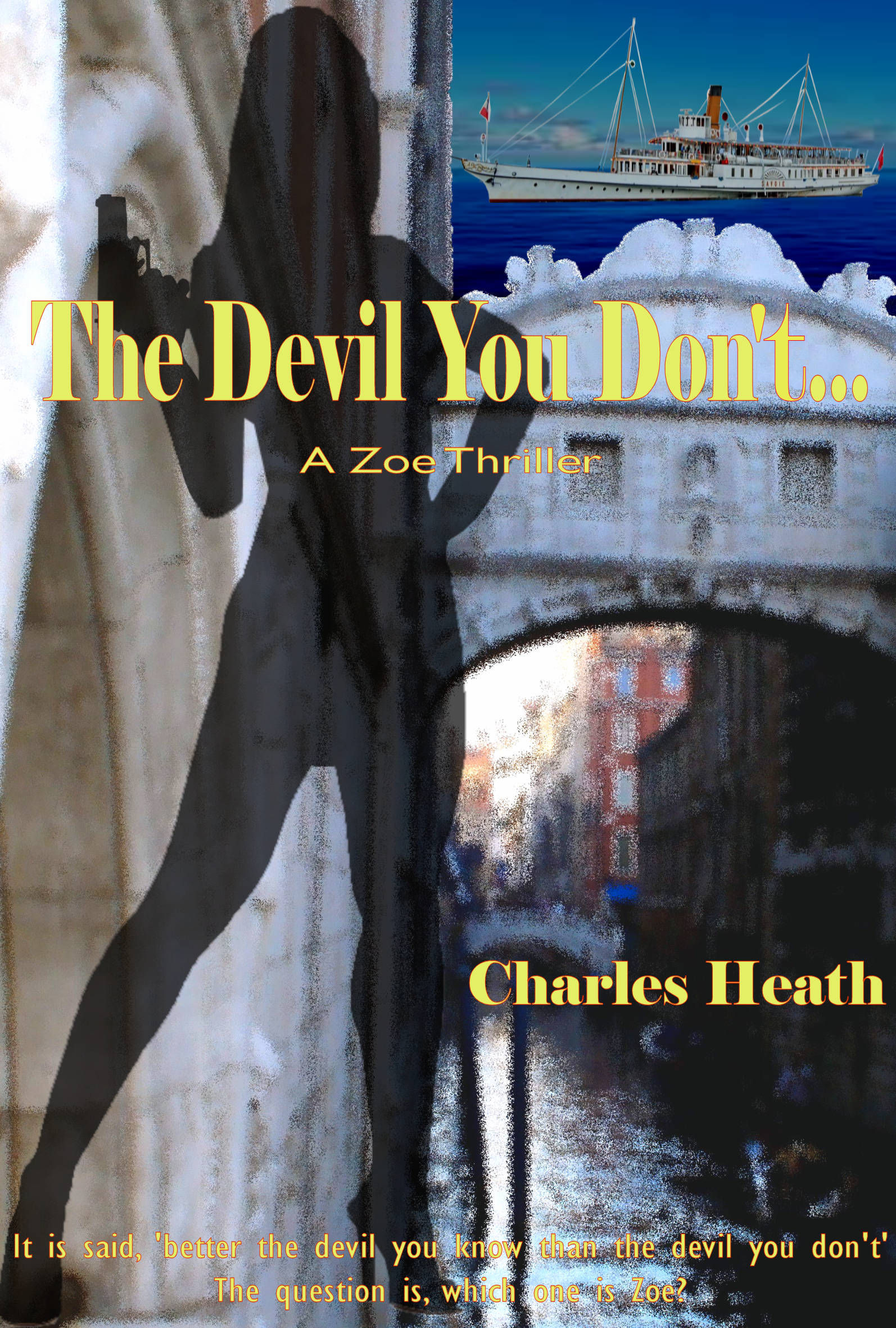
“The Devil You Don’t”, she was the girl you would not take home to your mother!

Now only $0.99 at https://amzn.to/2Xyh1ow

John Pennington’s life is in the doldrums. Looking for new opportunities, and prevaricating about getting married, the only joy on the horizon was an upcoming visit to his grandmother in Sorrento, Italy.

Suddenly he is left at the check-in counter with a message on his phone telling him the marriage is off, and the relationship is over.

If only he hadn’t promised a friend he would do a favour for him in Rome.

At the first stop, Geneva, he has a chance encounter with Zoe, an intriguing woman who captures his imagination from the moment she boards the Savoire, and his life ventures into uncharted territory in more ways than one.

That ‘favour’ for his friend suddenly becomes a life-changing event, and when Zoe, the woman who he knows is too good to be true, reappears, danger and death follow.

Shot at, lied to, seduced, and drawn into a world where nothing is what it seems, John is dragged into an adrenaline-charged undertaking, where he may have been wiser to stay with the ‘devil you know’ rather than opt for the ‘devil you don’t’.

newdevilcvr6

The cinema of my dreams – It continued in London – Episode 31

An interview with Alessandro

The disguise was almost perfect.  Detective Inspector Johnson was that typical policeman, based in the man who taught me, the suit, slightly crumpled, the while shirt with tie not completely knotted. The sort a wife, if he had one, would have fixed before he left for work.  The shoes, practical, the overcoat, seen better days but well looked after.

All that was missing was the slightly overworked and frustrated look, hair slightly askew, a ritual cup of coffee in a cardboard cup almost drunk.  The man looking back at me in the hotel window was almost the epitome of the Detect Inspector I modelled myself on.

It was just another day at the office.

I got out of the car and told the two officers Anothony had arranged to meet me, ic case there was trouble, to sit tight until I called them.

I went in and crossed purposefully to the reception desk and pulled out my warrant card.  When the clerk looked at me, I showed him the card.  “Detective Inspector Johnson, Metropolitan police. Can you tell me if Alessandro Burkehardt is in the hotel?”

The clerk looked at the warrant card, then excused himself and went into a back room where no doubt the man in charge was lurking.

A few minutes later, a woman came out, the clerk following her.

“What is the nature of your business with Mr Burkehardt?”

“The disappearance of his sister-in-law, the Countess Burkehardt.  You might be able to tell me, when did she check out?”

“I’ve told the police already.”

“Then you’re going to tell me again.  And after that, I would like to know where Mr Burkehardt is, and then a detailed explanation as to why only the CCTV camera in the areas where the Congress would be noticed coming and going were conveniently non-functional.”

“Who…”

“Told me?  I asked the security company that installed your system just how many cameras there were and their locations.  You haven’t been very helpful in our inquiries which is why I’m now here.  Now, if you have any objections, I will have you arrested for obstructing a police officer.”

Then I glared at her.

This was a very high-up manager, used to treating anyone under the status of King like dirt under her feet.  I knew the type.

“Mr Burkhardt is dining in the breakfast room.”

“Thank you.  I’ll be back.”

I had no doubt at some point Rodby would learn of my arrival, and if she was a friend of Mrs Rodby, that would make matters worse.  There was an old boys’ network, but there was also an old girls’ network, and they were not people to cross.

It wasn’t hard to pick him out among the diners, sitting at a table with a cup of coffee and a newspaper.  It was the same man I had seen in the hotel when bringing the countess back.  For a moment I wondered if he had seen me arrive with the countess, and he had asked about me.  This would go badly if he knew I was not a Detective inspector.

Only one wat to find out.  “Mr Alessandro Burkehardt?”

He lowered the paper a fraction and looked at me.  Nothing like the man in the tuxedo the other day, and no recognition in his eyes.

“Who are you?”

“Detective Inspector Johnson, of the Metropolitan Police.  I have come to ask you about your Sister-in-law, the Contessa.  She had been reported as missing.”

“That’s absurd.”

“Then you know where she is?  Thank goodness for that.  People are worried.  Tell me, where is she now?”

“If I knew that, I’d tell you.  But she is not missing as you say.  If she was, my family would know.  She has security you know?”

“I didn’t.  Where can I find them, or at least a representative who could tell me her location.”

“That’s none of your business.  If I say she’s not missing, she’s not missing.  Now go about your business.”

I smiled wanly, as the good Inspector did when he was about to deliver bad news.  “Fine.  But out front there are two officers waiting to take you into protective custody.  The fact you cannot tell me where she is, tells me that there is something going on in relation to her safety.  This will unfortunately create a scene for which I apologise in advance, but it is necessary.  Unless you have a more truthful answer to my question.”

“Are you accusing me of lying?”

He stood up quickly dropping the newspaper on the table and bumping his chair.  People around us were curious, to begin with, but now it had developed into a showstopping event.  All I needed was a newspaper photographer or reporter to be nearby and this would go viral.

“You are not being straight with me, nor were you with the first police responders when they asked if you knew where she was.  Once in protective custody, you will have the opportunity to talk to a superior officer if you feel you have been treated incorrectly.  But I warn you, the fact the countess is missing has caused concern at the highest levels, and they only call me when the situation is serious.”

I was trying to keep calm and the tremor of fear out of my tone, but this was getting out of control very quickly.  I had expected pushback, but not to the extent that he was giving me.  I knew he knew something about her whereabouts and was using bluff to get past me.  If I had to take him back to the office, Rodby was going to have a meltdown.

“Let’s take this to a conference room.”

He too had noticed the furore it was creating.

I had won a momentary reprieve.

© Charles Heath 2023

Motive, means, and opportunity – My side of the story

You could say there was a story to tell, because when it came down to it, the answers to the specific questions put to me during an interview which I learned later, had been fueled by another interview, required truthful answers, and those answers were, in reality, quite damning.

It just shows what can happen when you’re ambushed by a very clever detective seeking a specific result.

It ran, in part, thus:

The first: did you know (name).

The simple answer was: yes

So, if I left it at that, the note in the detective’s notebook would say, the suspect knew the victim.

Next question, did you know the victim was dating your ex-wife?

The simple answer to that question was yes. But there was more to it than just a yes, but I was not given the chance to explain the complexities of that answer.

But here’s the story that goes with that answer: I knew my ex was seeing someone else long before we broke up, but it only became clear who it was when she moved out. He inadvertently came to the house when she was out, but that was just confirmation.

It had to be one of her old boyfriends, she had hinted at it often enough.

Did it surprise me? No. She had to be seeing someone because she wasn’t talking to me, and her grief had become more manageable over time. And given her dislike of psychiatrists, she wasn’t getting help from that quarter.

But I was not asked about those circumstances, nor when I tried to, was I given a hearing. If I had anything further to add, I would be given the chance later.

Instead, we moved on to the next question, laying the foundations of the case against me.

What did you think of Garry given his relationship with your wife?

Answer: I didn’t think anything. It was clear early on that the marriage was irrevocably broken, I’m sure you are aware of the circumstances that led to that breakdown, and that it was inevitable she would seek solace elsewhere. She put the blame for the death of our son on my doorstep and was never going to forgive me.

At that point, there was a subtle change in the detective.

Did he or did he not know what the cause of our marital breakdown was? He tried to make it look like he didn’t, but if I knew (name) it would be the second item out of her mouth, after the accusation I was the perpetrator.

He said: You can see how this looks?

I said: How what looks? I was guessing this was the time to start acting dumb and being careful what I said.

As far as the detective was concerned, and had been hinting at, was that I had a motive, and it wouldn’t, in the end, matter what I said, or left unsaid, he had already decided who was guilty.

Me.

The cinema of my dreams – Was it just another surveillance job – Episode 17

As we all know, writing by the seat of your pants is almost the same as flying by the seat of your pants, a hazardous occupation.

As it happens, I like writing this way because like the reader, I don’t know what to expect next.

And equally, at times, you can write your self into a corner, much like painting, and then have to go back, make a few changes and//or repairs and then move forward.

It’s part of the writing process, only in this case, the changes occur before you’ve finished the novel, if you finish.  Quite often a lot of writers get only so far, then the manuscript hits the bottom drawer, to be brought out on a distant rainy day.

Or your cat has mocked your writing ability one too many times.

Therefore, we’re winding back to Episode 16, and moving forward once again, from there.

Why didn’t it surprise me that Nobbin was playing all ends against the middle if that was the expression?  What really bothered was that he wasn’t prepared to tell me the truth or trust me to help find the missing information.  But he had known I might become interested and do some investigating of my own.

Perhaps Nobbin feared Severin might track me down, as he had, and if I had found the USB, run the list of losing it to his foe.

Nor was it a surprise that someone else, namely Severin, was after the information, and he would have access to everything Nobbin did, and he was equally disadvantaged.  It was either Severin or one of his agents, that was caught in O’Connell’s flat and found ‘Josephine’ there.

I didn’t believe her name was Josephine, or that she lived in the flat next door.  And I didn’t think Severin had found anything going by the way the flat had been turned over, and the fact it looked like no one had lived there.

Having now dealt with both men, I was still on the fence about who was on the right side and who was on the wrong side, or whether they were both of questionable character.  What made it difficult to understand was how Severin could run an operation inside the organisation.  Surely someone knew about it, or from a high level, sanctioned it?

Knowing I would not be interrupted this time, I went back up to the third floor, and into O’Connell’s flat, a simple job since the front door was still unlocked.  The girl had assumed it was no value to them which told me she had already searched the place before being attacked.

Just in case anyone was likely to return, or there was another party interested in O’Connell, I locked the door from the inside.  At least no one had yet crashed through the door, smashing the lock and timber.

I stood in the middle of the main room, and did a slow 360-degree turn, looking at everything intently.  The thing with searches like this, it was more likely the object of any search was hidden in plain sight.  The usual places, such as the freezer, sections of fridges, stashed in bottles or packets in the pantry, under beds, inside mattresses, pillows, or under blankets, or with a form of glue on the inside of televisions or computers would prove fruitless.

We were taught to hide things such as USB sticks where they would be least expected to be found, such as a toy on a keyring, tossed in a bowl of pens, pins, clips, or other small insignificant items that all looked uninteresting.

My first thought was in the pocket of a coat in the closet, but all his clothes were strewn over the floor in the bedroom showing signs of being turned out.  Perhaps the searcher or searchers had thought like me.

There was no keyring in the kitchen or the bedroom, no was there any sort of stand inside the door, a place to put mail, and other items such as keys.  If there were any, they would have been on him when Severin had him killed.  I had not found, not felt, any in his pockets, not unusual for an agent in the field.  If you were captured or killed, you wanted nothing on you that could identify you or what you were doing.

Next I thought, a hidden compartment.  I was not going to predict he had a safe in the flat, but just in case, I did search thoroughly where one might be located.  The cheap watercolour on the wall hid nothing but some discoloured wallpaper.

I checked all the skirting boards, and inside walls of the robes, but there was nothing.  I also checked the robes thoroughly for false backs, or sides, or compartments hidden in the roof.  The floor was made from wood, so I checked to see if there were any loose boards, but in the end, considered that was a ruse used only in the movies and on television.

An hour later, I was no wiser as to where it could be, if at all, in the flat, but, looking around, it was certainly now a little more organised because in checking everything in case the previous searchers had missed anything, I’d put everything neatly in stacks.

And, no, there was nothing under the bed.  The previous searchers had thought of that too.

But, in one corner of the main room, there was a desk that had been completely turned out, papers were strewn everywhere.  There had been a computer, now missing, because there was a cable running from the printer, and a power cable in the wall, both running into thin air.

The papers yielded nothing of interest, other than he was researching a holiday to Russia and Poland. 

For two.

A break.  There was a significant other.  I made a more serious search of the papers that I’d gathered up off the floor and found a shred of a quickly torn up piece of paper, of which only this piece remained.  A name:  Jan, scribbled on it, with half another word ‘ord’.

Did this Jan also live in this block?  Did she work at the same place?  There were a hundred variations of that theme, but it was a start.  He might have trusted the USB to her safekeeping without telling her what it was, and it was possible she didn’t know he was dead.

I’d noticed that O’Connell’s death had been reported as a John Doe on the wrong end of an alleged mugging, the small dismissive paragraph on page seven reported the body was missing when police went to investigate a pool of blood in an alley, along with several other crimes of which police were seeking further information.  That alley hadn’t any CCTV cameras, so Severin knew he could easily shoot O’Connell without anyone knowing it was him.

There was nothing else of interest in the documents, other than the holiday, if it was a holiday, was to be in a month’s time.

My work was done.  I had a lead.  It was time to leave.

Except for one small problem.  Someone was knocking on the door.

© Charles Heath 2019-2022

“The Document” – the editor’s final draft – Day 13

This book has been sitting in the ‘to-be-done’ tray, so this month it is going to get the final revision.

And so it begins…

It’s that unlucky number


Hopefully, it won’t hex my writing.

It’s day 13 and I’m over halfway in that devil on the shoulder word count, 27, 275 words to be exact.

That is if Microsoft Word is not playing ‘Friday the Thirteenth’ tricks on me. Good thing it’s not Friday.

Part 2 is proceeding as expected with no surprises, and the characters are behaving themselves, well, in the writing sense.

I’ve found that I now need to write another chapter, before the end of the first part, to help explain, later on, some of the plot nuances. This sort of issue often arises for me when getting to a particular point in a later section, I realize the reader needs a pointer or a nuance earlier on so that the revelation makes sense, not come out of left field.

Sorry, I have to get back to work, I don’t know where the time goes.