“The Document” – the editor’s second draft – Day 20

This book has finally come back from the Editor, so this month it is going to get a second revision, a second draft for the editor, and beta readers.

And so it begins…

Reworking the synopsis

Yes, it’s that time, nearly three weeks in, and writing a story sequentially from start to finish has some perils involved with it.

Like the plotting, and like any good actor given a bit part in a movie, the objective is to make it their own.

I think it’s called, grabbing hold of your fifteen minutes of fame and using it.

Characters do this us, they force themselves out of their restrictive cacoon.  One of mine has taken her bit part and is now the frontrunner for the villain.

How do you make such personable people drip with evil?

“The Things We Do For Love”

Would you give up everything to be with the one you love?

Is love the metaphorical equivalent to ‘walking the plank’; a dive into uncharted waters?

For Henry, the only romance he was interested in was a life at sea, and when away from it, he strived to find sanctuary from his family and perhaps life itself.  It takes him to a small village by the sea, a place he never expected to find another just like him, Michelle, whom he soon discovers is as mysterious as she is beautiful.

Henry had long since given up the notion of finding romance, and Michelle couldn’t get involved for reasons she could never explain, but in the end, both acknowledge that something happened the moment they first met.  

Plans were made, plans were revised, and hopes were shattered.

A chance encounter causes Michelle’s past to catch up with her, and whatever hope she had of having a normal life with Henry, or anyone else, is gone.  To keep him alive she has to destroy her blossoming relationship, an act that breaks her heart and shatters his.

But can love conquer all?

It takes a few words of encouragement from an unlikely source to send Henry and his friend Radly on an odyssey into the darkest corners of the red-light district in a race against time to find and rescue the woman he finally realizes is the love of his life.

The cover, at the moment, looks like this:

lovecoverfinal1

Is love the metaphorical equivalent to ‘walking the plank’; a dive into uncharted waters?

For Henry the only romance he was interested in was a life at sea, and when away from it, he strived to find sanctuary from his family and perhaps life itself.  It takes him to a small village by the sea, s place he never expected to find another just like him, Michelle, whom he soon discovers is as mysterious as she is beautiful.

Henry had long since given up the notion of finding romance, and Michelle couldn’t get involved for reasons she could never explain, but in the end both acknowledge that something happened the moment they first met.  

Plans were made, plans were revised, and hopes were shattered.

A chance encounter causes Michelle’s past to catch up with her, and whatever hope she had of having a normal life with Henry, or anyone else, is gone.  To keep him alive she has to destroy her blossoming relationship, an act that breaks her heart and shatters his.

But can love conquer all?

It takes a few words of encouragement from an unlikely source to send Henry and his friend Radly on an odyssey into the darkest corners of the red light district in a race against time to find and rescue the woman he finally realizes is the love of his life.

The cover, at the moment, looks like this:

lovecoverfinal1

In a word: birth

The most common use of the word, giving birth to a child, is perhaps one of the more miraculous and inspiring events ever to be witnessed.

But it can be used similarly in giving birth to an idea. More generally it could be said that it is the coming into existence of something, animate or inanimate.

It can be used to state lineage or descent, i.e. he was Italian by birth, or he was a Duke by birth, but a politician by trade.

You could use birth pain in other expressions like trying to get a club or team together, those initial stages where everything goes wrong.

And that old favourite, wanted by every man and his dog, what is your date of birth?

On the other hand, a berth is a place where a ship or boat ties up after a long or short voyage.

It’s also a bed on a ship, not necessarily in a stateroom, but could be in one of those shared cabins below the waterline that do not cost a lot, and only a place to sleep, or for some, to recuperate. It doesn’t necessarily have to be on a ship, it could be on a train.

It could be the distance between two ships or the shore.

You could also use it to describe your job or position in the company.

Then, you could say you gave the enemy’s camp a wide berth, or just a group of people we don’t want to pass in the street.

An excerpt from “If Only” – a work in progress

Investigation of crimes doesn’t always go according to plan, nor does the perpetrator get either found or punished.

That was particularly true in my case.  The murderer was incredibly careful in not leaving any evidence behind, to the extent that the police could not rule out whether it was a male or a female.

At one stage the police thought I had murdered my own wife though how I could be on a train at the time of the murder was beyond me.  I had witnesses and a cast-iron alibi.

The officer in charge was Detective First Grade Gabrielle Walters.  She came to me on the day after the murder seeking answers to the usual questions like, when was the last time you saw your wife, did you argue, the neighbors reckon there were heated discussions the day before.

Routine was the word she used.

Her fellow detective was a surly piece of work whose intention was to get answers or, more likely, a confession by any or all means possible.  I could sense the raging violence within him.  Fortunately, common sense prevailed.

Over the course of the next few weeks, once I’d been cleared of committing the crime, Gabrielle made a point of keeping me informed of the progress.

After three months the updates were more sporadic, and when, for lack of progress, it became a cold case, communication ceased.

But it was not the last I saw of Gabrielle.

The shock of finding Vanessa was more devastating than the fact she was now gone, and those images lived on in the same nightmare that came to visit me every night when I closed my eyes.

For months I was barely functioning, to the extent I had all but lost my job, and quite a few friends, particularly those who were more attached to Vanessa rather than me.

They didn’t understand how it could affect me so much, and since it had not happened to them, my tart replies of ‘you wouldn’t understand’ were met with equally short retorts.  Some questioned my sanity, even, for a time, so did I.

No one, it seemed, could understand what it was like, no one except Gabrielle.

She was by her own admission, damaged goods, having been the victim of a similar incident, a boyfriend who turned out to be an awfully bad boy.  Her story varied only in she had been made to witness his execution.  Her nightmare, in reliving that moment in time, was how she was still alive and, to this day, had no idea why she’d been spared.

It was a story she told me one night, some months after the investigation had been scaled down.  I was still looking for the bottom of a bottle and an emotional mess.  Perhaps it struck a resonance with her; she’d been there and managed to come out the other side.

What happened become our secret, a once-only night together that meant a great deal to me, and by mutual agreement, it was not spoken of again.  It was as if she knew exactly what was required to set me on the path to recovery.

And it had.

Since then, we saw each about once a month in a cafe.   I had been surprised to hear from her again shortly after that eventful night when she called to set it up, ostensibly for her to provide me with any updates on the case, but perhaps we had, after that unspoken night, formed a closer bond than either of us wanted to admit.

We generally talked for hours over wine, then dinner and coffee.  It took a while for me to realize that all she had was her work, personal relationships were nigh on impossible in a job that left little or no spare time for anything else.

She’d always said that if I had any questions or problems about the case, or if there was anything that might come to me that might be relevant, even after all this time, all I had to do was call her.

I wondered if this text message was in that category.  I was certain it would interest the police and I had no doubt they could trace the message’s origin, but there was that tiny degree of doubt, about whether or not I could trust her to tell me what the message meant.

I reached for the phone then put it back down again.  I’d think about it and decide tomorrow.

© Charles Heath 2018-2020

The cinema of my dreams – It continued in London – Episode 37

A talk with Juliet

If I had the time over again, I might have chosen a different path in advising her of the possible connection to the Burkhardt’s, but that cat was now out of the bag.  I had to play that card when the police started asking difficult questions.  It’s a bit hard to give a plausible reason for people shooting at you.

“It’s possible but unlikely, but it seems someone thinks you might be, hence the assassination attempt.”

“Do you think my father was the Count, and my mother one of the servants?”  There was a curious inflection in her tone like she was mentally calculating the billions she might be worth.

“What did your adoptive mother tell you about your father, other than he was important?

“Nothing.”

“Then the description ‘important person’ could be the butler or the head gardener to a lowly servant girl, so I wouldn’t be getting too many ideas.  The count has never admitted to having any children outside of marriage, and, in fact, had only one surviving family member, the countess.  Have you ever met her?”

“Seen her only in papers, and once from afar when I was watching the house in Sorrento.  Head gardener or butler, you do know how to dash a girl’s dreams.”

“Better to understand the reality before the family lawyers shred you in court if you try to press any sort of a claim.  And if they do know about you, and they believed you were an heir, then you could be in trouble.”

“You seem to know a lot about the family.  Are you working for them?”

An astute observation.  “The answer to that question is no.  My only interest in this was to escort the countess to the Opera as a favour to the man whom I used to work for, yes, I’m still retired, or getting there.  So, I’ve met the countess, but she never mentioned anything about children, only the count dying on her, and now, from my boss, the fact she is missing.  The truth of the matter, I’m only here to find the countess, then I’m back to Venice, or Paris, or anywhere other than here.”

“But there’s more to it than that.  I know you, there’s wheels within wheels.”

There might be, but I wasn’t going to humour her.  “Well, if she’s missing and doesn’t sign the inheritance papers, the estate goes to the next brother, Alessandro.  If he was aware there was a possibly more direct heir, if the count was your father, his situation would demand that you were eliminated from the list.  If he was that way inclined.”

“Then he’s your man.”

“He’s not.  I’ve spoken to him already.  But I have another more viable candidate, your birth mother, who could tell us if the count was your father, though, as a servant girl, and later criminal, I doubt the courts would believe her.”

“You know who my birth mother is then?”  it was spoken with a little more curiosity than she should, which told me she already knew and was covering it.  I wondered if Ceceila had any success.  I would sneak away and send her a text soon.  And ask her to drop in if she could.

“We think we do.”  After analysing everything Juliet said, and the physical evidence we had, like the photograph, it was possible that Vittoria was not.  All the evidence we had was circumstantial.

The waiter chose to arrive at our table with the pizza, and I decided we had to eat first, leaving her with a look of annoyance.  It could wait another few minutes, time taken to look at her and for any resemblance to Vittoria and the Count.  It seemed to me there was none, but Cecilia would know.  Time to send her a text to meet us at the restaurant, and what I wanted her to do.  I excused myself and went to the restrooms.

Just before I went in the door I glanced back and saw she was on the phone.  Who could she be calling?

When I came back, I decided to keep going down the direct route.  “Do you know a woman by the name of Vittoria Romano?”

I watched her carefully as I asked the question.  Everyone had a tell, and I think I knew hers.

“Should I?”

The curious thing about that reply was another of those inflections in her tone, one that told me she did.

That just added a whole new layer to the game.  It also told me why she was not so shaken up by the turn of events.  It might have been a surprise to see me, but not getting shot at.

“I have reason to believe she is your mother.  She has been trying to get closer to Alessandro, but the countess had warned him of her intentions.  We understand this Vittoria was getting a payment to look after you, whether by blackmail or otherwise, and when that stopped, she started making trouble.    She is, by the way, in London at the moment though we don’t know where.”

“And you think I might?”

“If I accompanied you to your apartment, would she be there?”

“I said I didn’t know her.”  She tried to put on an aggrieved tome that I would think that she was lying.

“You’ve said a lot of things in the past, especially to me, that are not true.  We know each other fairly well, Juliet.”

That tone was now accompanied by a pained expression that was mean to convey annoyance.  “I should get up and walk out, but as you say, we know each other fairly well, and I’m guessing you’d construe that as guilt.  I am disappointed.”

I saw Cecilia arrive outside, and now that the restaurant was quite full, she was easily able to get to our table without Juliet seeing her, not until she dropped into the third seat, and sigh, “Do you have any idea what it’s like getting across this city in the rush hour?”

The look on Juliet’s face was priceless.

© Charles Heath 2023

Motive, means, and opportunity – Episode 7

Detective Bryson talks to Richard Hollingsworth

The first order of business, once Bryson arrived back in the office, was to call Richard Hollingsworth.  At 6:30 pm where he was, it would be about that in the morning.  Bright and early, just the time to catch people off guard.

He dialled the number.

It took twelve rings, almost to the point where the answering service kicked in, but a sleepy Hollingsworth answered, “Yes?”

“Richard Hollingsworth?”

“Who is this, and do you realise what time it is?”

“My name is Detective Bryson from the NYPD.  I’m calling to advise you if you do not already know, that your employer, James Bergman died as a result of a gunshot wound yesterday.  I am sorry for your loss.”

“Gunshot wound?  Dead?  This is not a prank, is it?”

“Why would you ask that?”

“Crank calls at the office.  Bergman wasn’t exactly a well-loved person.  And, to be candid, I’m not surprised.”

A sentiment held by nearly all those who worked with him or were close to him.  This Bergman seems to be a bad piece of work with a lot of enemies.

“May I ask a few routine questions so we can get an idea about the man and his business?”

“It’s early, but I’m awake now.  Go ahead.”

“What is your role in the company?”

“He makes the deals with the suppliers, and I go and fill the orders in person, and arrange for the shipping.  Can’t trust these people to do anything correctly, or economically.”

“The office PA says you are in Manila?”

“Yes.  Been here for a week, and it’s driving me up the wall.  I’m due to return in two days’ time.  I’m not sure what I’ll be returning to.”

“Why do you say that?”

“The company is all but bankrupt.  Stacy, my sister, has been taking funds from the accounts and basically left very little for operating expenses.  No doubt you are aware she is divorcing him.  It’s very acrimonious.  What she’s been doing had to be illegal.”

A note, Stacy has been embezzling funds, with the hope of destroying the business?

Can you think of anyone who would want to kill him?

“Just about every husband on the planet.  And a few business rivals.”

That sounded like what he had heard from the PA and he had to wonder f she hadn’t called him the moment he walked out of the office so they could get their stories straight.

“Do you know what he was doing the last few days?”

“No.  He doesn’t tell me anything unless it impacts what I’m doing.”

“Was he due to go on a break or holiday?”

“Not that I’m aware of.  Have you spoken to Ann in the office yet?  She had access to his diary, though he doesn’t always write stuff down because I think he conducts some of his personal business during the day.”

“When you say personal business, you mean liaisons with women?”

“Not for me to say, but one time when I rang him, he was definitely not at work?”

“Would you know the name of his current girlfriend?”

“Ask my sister.  She put a tribe of private detectives on his tail to see what he’s up to and she has reams of reports and dozens of photographs.  She’s obsessed with taking him down, one way or another.”

“Would she kill him?”

A brief moment of silence.  If he has to think about it, Bryson thought, then he must think she might be capable.

“Yes, but she wouldn’t use a gun.  After all isn’t a woman’s method of murder, poison.  she’d definitely poison him.  But, in this instance, no.  She needs him alive to suffer the humiliation she was planning to put him through.  Him and his latest unknown woman.  Like I said, ask her.  She knows everything.”

“One last item.  You say the company is bankrupt.”

“All but.  He was in the process of getting Chapter 11.  You might want to talk to his lawyer.  Ann will have it.  Is that all?”

“For the time being.  Thank you.”

© Charles Heath 2019-2023

The cinema of my dreams – Was it just another surveillance job – Episode 25

I’m back home and this story has been sitting on a back burner for a few months, waiting for some more to be written.

The trouble is, there are also other stories to write, and I’m not very good at prioritizing.

But, here we are, a few minutes opened up and it didn’t take long to get back into the groove.

Chasing leads, maybe


Jan hailed a taxi and had it drop us off a block from her building.  It was agreed that we would not just arrive out the front and trust to luck that everything would be fine.

I had a feeling that Nobbin would have come to the same conclusion I had, that it was possible the USB might be in the neighbor’s flat.  I’m sure Josephine hadn’t thought of that possibility.  Severin had, but I suspect he might not know of the cat.

Nor would Nobbin.

We did a circuit of the building before going in.  There were no suspicious cars, nr anyone lurking in the shadows.  If we had surveillance, it was really good, or there was none.  I preferred to think the latter option was right.  After all, neither Nobbin nor Severin knew exactly where I was.

Jan unlicked the front door and we went into the brightly lit foyer.

During the day there was a concierge sitting at the desk.  At night, it was empty.  The building manager couldn’t afford 24-hour security, beyond the bright lights, and camera in each quadrant recording the comings and goings of residents.  I’m not sure how Josephine got in, but I would have like to have the time to go through the old footage to check on O’Connell in the past, and Josephine, if she came through the front door, recently.

I glanced at the monitor, at present on screen saver mode, then followed Jan to the elevator lobby.

She pressed the button to go up, and the doors to the left-hand elevator opened.  We stepped in, she pressed the floor button, the doors closed, and we slowly went up.

It hesitated at the floor, jerked up about an inch or two, then a click signified it was level and the doors opened.

I could see her door from the elevator.  As we got closer, I could see it was open, ajar by about half an inch.  There was no tell-tale strip of light behind the opening so it could mean someone was in her flat searching by torchlight, or there was no one there.

After a minute waiting to see if there was a moving light somewhere in the flat, it remained dark.

Standing behind me, I could see she had pulled a gun out of her handbag and had it in one hand ready to use.  She could have used it any time since we first met, but she hadn’t.  

I pushed the door open slowly, and thankfully it didn’t make a creaking sound.  Wide enough to walk in, I took a few tentative steps into the first room.  There was little light, and my eyes took a while to adjust to the darkness.  

I could feel her going past me, further into the room, and with the gun raised and in two hands to steady the shot.  She took more steps, slowly towards the passage leading to her bedroom, I assumed, as it was a reverse copy of that next door, O’Connell’s.

There was no one in this part of the flat, and she had disappeared up the corridor and into her room.  Nothing there either.

“Clear,” she called out.

I stepped back to close and lock the door.  At the same time, she switched on the main room light and for a second it was almost blinding.

When my sight cleared, I could see the signs of a search, furniture tipped over, books dragged from the shelves, other items tossed on the floor, one of which was a vase, now broken into a number of pieces.

“Looks like they were in a hurry,” she said.

“Or frustrated.”  I could see clear marks of an item that had been thrown against the wall and dented the plasterwork.  The broken shards of the ornament were on the ground beneath the indentation.

I heard her sigh when she saw the broken pieces.

“Not the best way to treat a genuine Wedgewood antique.”

She disappeared into the bedroom again, and I could hear her calling the cat, Tibbles.  Interesting name for a cat.

I didn’t hear it answer back.  It was probably traumatized after the breaking and the smashing of crockery.

I had a quick look in places I thought the cat might hide, but it was not in any of them.  And, oddly enough, no traces of cat hair.  Usually, cats left fur wherever they lay down.  At least one cat I knew did that.  

She came back empty-handed. 

“I think it’s done a runner,” she said.  “He’s not in the usual place he hides, nor under the bed, or under the covers, as he sometimes does, usually when I’m trying to sleep.”

“Well, it was a good idea.  We might have to search outside.  The cat was allowed to go outside?”

“He’d escape, yes, but no.  O’Connell thought if he got out, he’d get run over.  It’s a reasonably busy road outside.”

“Better out there than in here, though.  Open windows?”

She did a quick check, but none were open.

“Did O’Connell ever come in here?”

“Once or twice, but he only dropped in if he was going away to ask if I would look after the cat, or when he came back.  Never further than the front door.”

“Knowing who is was, now, do you think he might have come in and hidden the USB in here?”

“He might, but there isn’t anywhere I could think he could put it.”

“But that doesn’t mean he didn’t.”

Both of us heard the scratching sound at the front door, not the sort made by a cat trying to get in, but by someone using a tool to unlock the door.

Someone was trying to break in.

© Charles Heath 2019-2020

“The Document” – the editor’s final draft – Day 21

This book has been sitting in the ‘to-be-done’ tray, so this month it is going to get the final revision.

And so it begins…

Not long to go, need to revise faster!

Three weeks down and the finish line is just around the corner, and over that invisible hill.

The legs are like rubber, and the going is getting harder.  I’ve never run in a marathon but I’m beginning to think I know what it might be like.

I’d hate to run out of steam and get only 49,999 words written before they cart me off to the rehydration tent.

It’s hard work, lonely work, but like building a house, you get to see the physical results of that work.

Enough, I’ve got to get back to work.

I can see the top of the hill!

Searching for locations: The Kingston Flyer, Kingston, New Zealand

The Kingston Flyer was a vintage train that ran about 14km to Fairlight from Kingston, at the southern end of Lake Wakatipu, and back.

This tourist service was suspended in December 2012 because of locomotive issues.

However, before that, we managed to go on one of the tours, and it was a memorable trip.  Trying to drink a cup of tea from the restaurant car was very difficult, given how much the carriages moved around on the tracks.

The original Kingston Flyer ran between Kingston, Gore, Invercargill, and sometimes Dunedin, from the 1890s through to 1957.

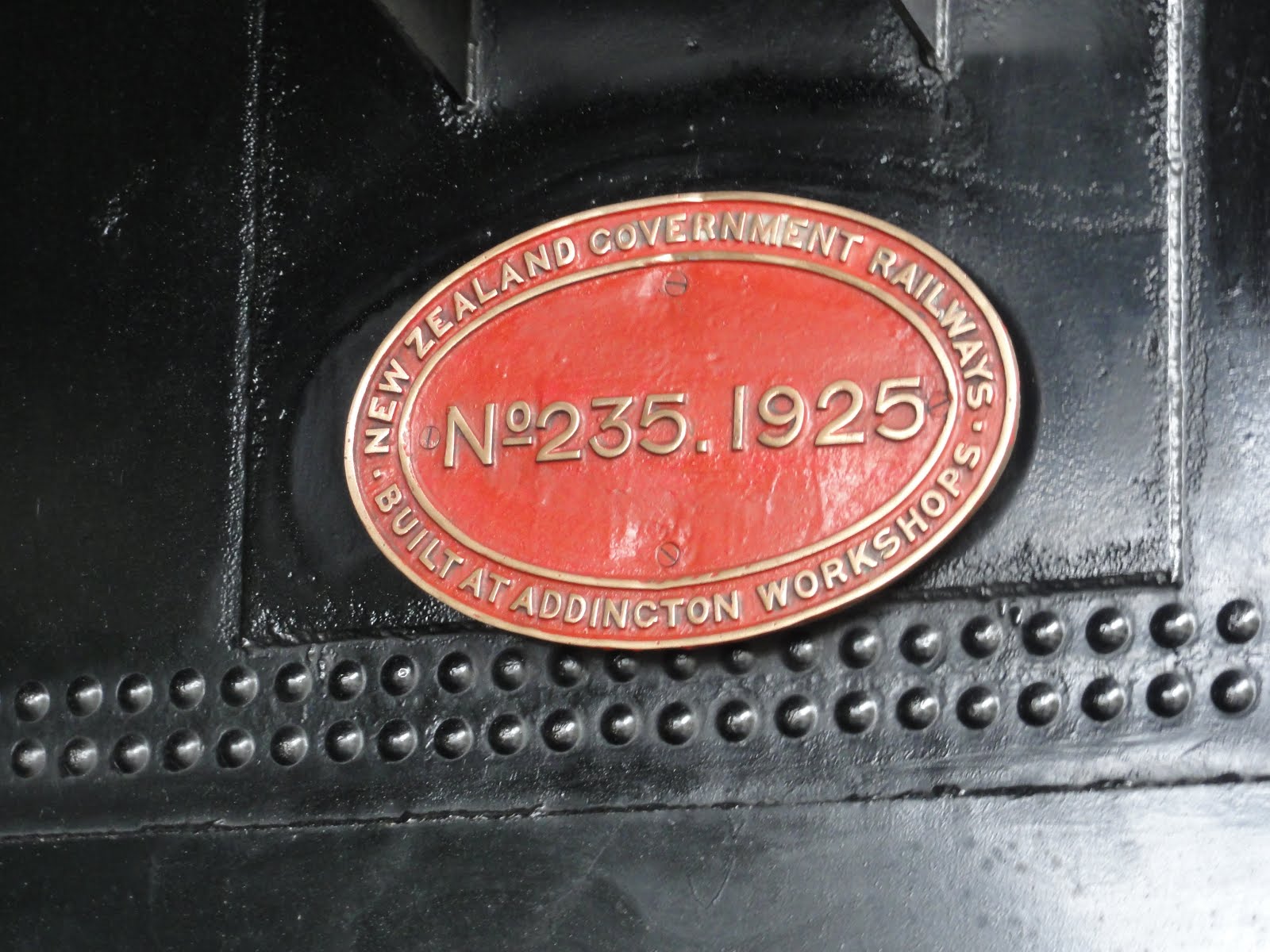
There are two steam locomotives used for the Kingston Flyer service, the AB778 starting service in 1925, and the AB795 which started service in 1927.

The AB class locomotive was a 4-6-2 Pacific steam locomotive with a Vanderbilt tender, of which 141 were built between 1915 and 1927 some of which by New Zealand Railways Addington Workshops.

No 235 is the builder’s number for the AB778

There were seven wooden bodied passenger carriages, three passenger coaches, one passenger/refreshments carriage and two car/vans.  The is also a Birdcage gallery coach.  Each of the rolling stock was built between 1900 and 1923.  They were built at either of Addington, Petone, or Hillside.

I suspect the 2 on the side means second class

The passenger coach we traveled in was very comfortable.

This is one of the guard’s vans, and for transporting cargo.

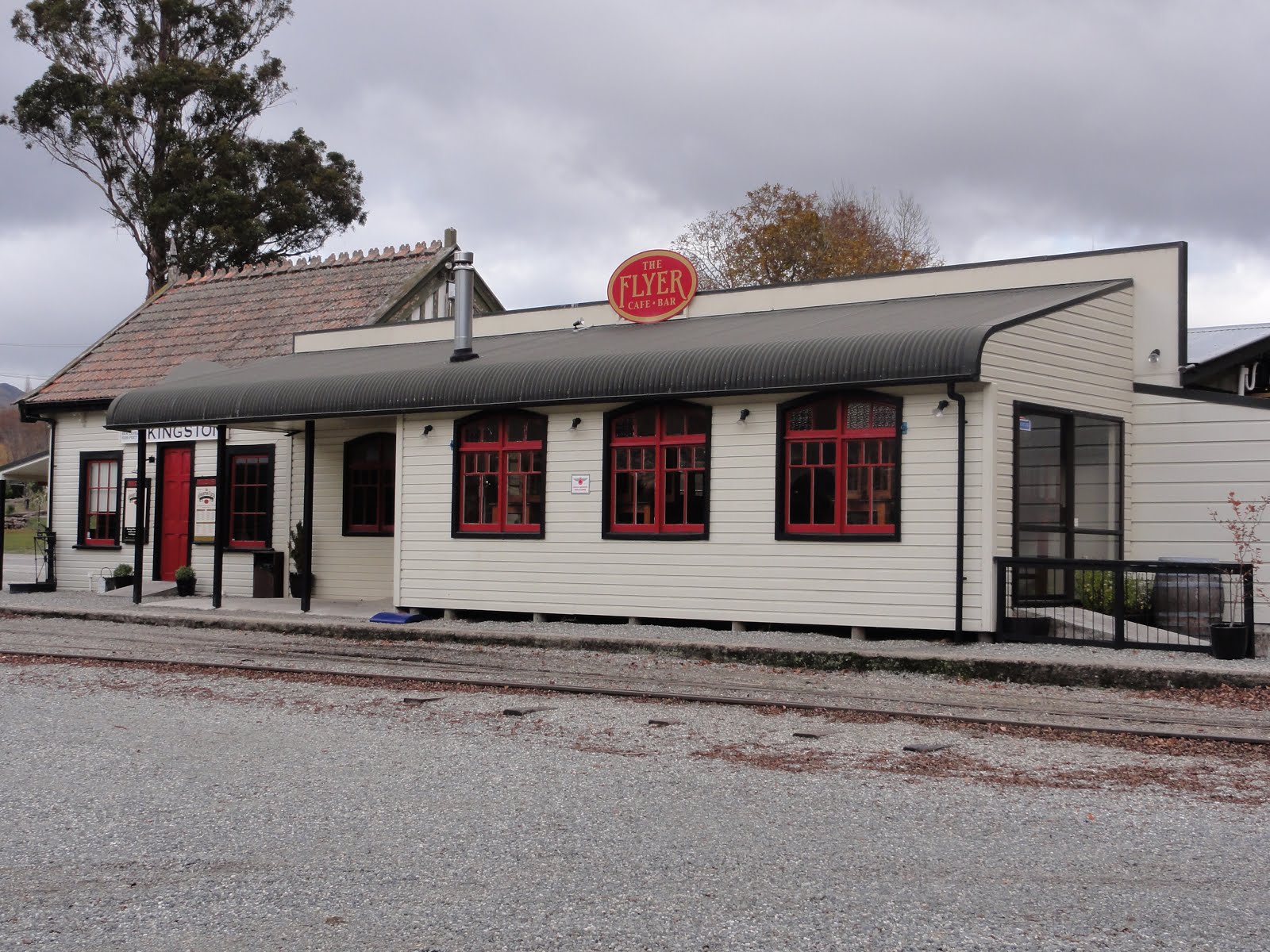
The Kingston Railway Station

and cafe.

A poster sign advertising the Kingston Flyer

The running times for the tourist services, when it was running.

Back to those ‘old days’ again

I started out by saying I didn’t want to be a lone voice in the wilderness.

Apparently, I am, still.

Well, that might be a little harsh in the circumstances, but the monkey on my shoulder is telling me I should start writing something that someone might want to read.

I guess the trials and tribulations of a writer who basically is a lone voice in the wilderness is as boring as everyday life.

I mean, who wants to read about someone’s miserable, or, on rare occasions, good, day.

Yet, if I were to pick up any book written in the 18th and 19th centuries, all it seems to be about is everyday life, but what makes it interesting is the fact we never lived it, nor realized how hard it was for some, and how good it could be for others.

Best not to be born poor.

So, I was wondering, in 200 years when someone sits down to read about the vicissitudes of my life, will it be interesting to know what it was like back in the ‘old days’ that is really today for me?

Interesting how a change in time frame makes something interesting, and ‘classic’ literature.

But one difference between then and now is the fact we, today, can write about science fiction, spies and all manner of events that come out of recent inventions.  Odd too, that people are still the same, those who tell the truth, those who are pure of heart, those who are as evil as the devil himself.

Some things never change.

Just the when, where, and how.