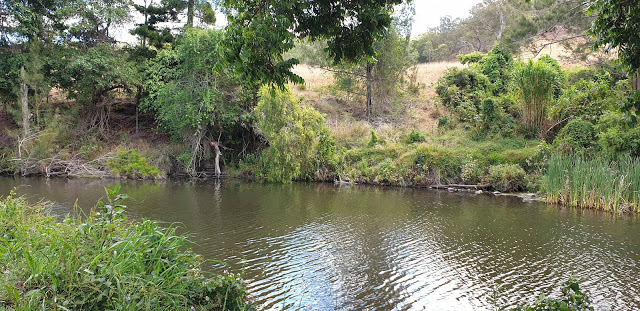
“The End of the Road”, a short story

The man who had said that we would never make the distance was right.

It had been my idea to go ‘troppo’, forsake everything, hop on a motorbike and go around Australia.  I was, at that stage fed up with everything and, catching Harry in one of his low spots, he decided there and then he would join me.

For the first few days, we believed we were stark staring mad and talked about calling it quits, but perseverance made all the difference.  After two months we were glad we had the resolve to keep going, and in that time we had managed to see more of the Australian countryside than we’d seen all our lives.

That was until this particular morning when we arrived in Berrigum, what could have been called a one-horse town.  It consisted of one hotel, one general store (that sold everything from toothpicks to petrol) and an agricultural machinery depot.  It also had a station and some wheat silos, and this appeared to be the only reason for a town in this particular spot in the middle of nowhere.

And it was the railway station that interested Harry, who was, by this time, getting a little homesick and fed up with his motorbike.

After coughing and spluttering for the last week it had finally died, and the five-mile walk to Berrigum had not helped either his temper, or his disposition, and had only served to firm his resolve to return home.

It was hot but not unbearably so, unlike a hot summer’s day in the city, and even worse still in public transport.  For miles around as we tramped those five miles all we could see was acres and acres of wheat, but no sign of life.  It was the same when we reached the town.  It appeared all the people were either hiding or had left.  Harry suspected the latter given the state of the road, and the buildings, more or less the epitome of a ghost town.

Standing at the end of what could have been called the main street with only our own dust for company, one look took in the whole town.  In a car, one wouldn’t have given it a second look, if one had time to give it a first.  I didn’t remember seeing neither any speed restriction signs nor signpost advertising a town ahead.

And since no amount of argument could sway him from his resolve, the first objective was to get a train timetable, if such a thing existed, and make arrangements for Harry’s return.

The station was as deserted as the town itself, and a quick glance in the stationmaster’s office showed no sign of life.

Leaving the bikes on the platform outside the office, we headed for the hotel for both a drink and make enquiries about rail services.  Being a hot day and the morning’s tramp somewhat hot and dusty, we were looking forward to a cold glass (or two) of beer.

The hotel looked as though it was a hundred years old though there was no doubting a few relentless summers would reduce it to the same state.  It was as bad inside as out, though the temperature was several degrees lower, and we could sit down in what appeared to be the main bar.  We were the only occupants and still to find any sign of life.  Overhead, two fans were struggling to move the hot air around.

More than once Harry reckoned it was a ghost town and I was beginning to believe him when, after five minutes, no one arrived.

After ten, we stood, ready to leave, only to stop halfway out of our chairs when a voice behind us said, “Surely you’re not going back out there without refreshment?”

“I was beginning to think the town was deserted,” I said.

“It is during the day, but when the sun goes down…”

I didn’t ask.  We followed him to the bar where he had stationed himself behind the counter.  “The name is Jack.”  He stretched out his hand towards us.  “We don’t bother with last names here.”

“Bill,” I said, shaking it, and nodding to Harry, “Harry.”

Harry nodded and shook his hand too.

“The first one’s on the house.”  He poured three glasses and put ours in front of us.  “Cheers.”

In all cases, it went down without touching the sides (as they say) and he poured a second, at the same time asking, “What brings you to our little corner of the earth?”

“Just passing through,” I said, “Or at least for me.”

“And you?”  Jack looked at Harry.

“I can’t hack the pace.  I can truthfully say I have thoroughly enjoyed the trip so far, except for a few mishaps, but for me, it’s time to get back to the big smoke.  My ‘do your own thing’ has run out of momentum.  Do you know if there is a train that goes anywhere important?”

The publican looked at him almost pityingly.  “Important, eh?”  He rubbed his chin feigning thought.  “You make it sound like you are in purgatory.”

“Aren’t we?”

I suppose one could hardly blame Harry for his attitude.  After all, at the beginning, he had numerous accidents, caught a virus that stayed with him (and a couple of torrential downpours had done little to help it), and now his motorbike had finally died.  No wonder his humour was at an all-time low.

For a moment I thought the publican was going to tell Harry what he thought of him, but then he smiled and the tension passed.  “Perhaps to a city fellow like you it might be,” he said.  “The mail train which has a passenger carriage comes through once a week, and, my good man, you’re in luck.  Today’s the day.”

“Good.  How do I get a ticket?”

“You’d have to see the Station Master.”

“And where might he be at the moment?  We were at the station a while back and there was no sign of life.”

“Nor will there be until the train comes.  Meanwhile, there’s time enough for lunch.  I’m sure you will stay?”  He looked questioningly at us.

I looked at Harry, who nodded.

“Why not.”

Over lunch, we talked.

I remember not so long ago when I had to attend a large number of lunches where the talk was of business, or, if anything, mostly about subjects that I had no interest in.  It was always some posh restaurant, time seemed important, the atmosphere never really relaxed, and to get into a relaxed state it took a large amount of alcohol to deaden the despair and distaste of that one had to fete in order to secure their business.

How different it was here.

We talked about the country, and, after seeing as much of it, and worked on it as we had to fund our odyssey, we could talk about it authoritatively.  And, most of all, it was interesting.

The atmosphere too was entirely different than it had been in the city.  Out here the people were always friendly, people always willing to stop and talk, particularly farmers; share a drink or some food.

There was none of this carefree purposefulness in the city, and more than once I’d thought of the fact one could travel in the same train with the same people for year after year and still not know any of them.  It was the same at work.  Even after five years I still hadn’t known three-quarters of the office staff, and most of them probably didn’t want to know me.  Harry was virtually the only real friend I’d had at work.

But here, in ‘the middle of nowhere’ as Harry had called it, I felt as though I’d known the publican all of my life instead of the few short hours.

Some hours later and after much argument, where Jack and I tried to talk Harry into staying (Jack said he knew someone who could fix anything including Harry’s bike), Harry remained unconvinced and resolute.  Jack, to round off the occasion (we were the first real guests from outside he had had in a week) provided another on-the-house ale and then saw us to the station.  “After all”, he had said, “I’ve nothing else to do at the moment.”

By that time the station was showing a little more life than it had before.  A station assistant, moving several parcels with a hand trolley, slowly ambled towards the end of the platform.

And whether it could be called a platform was a debatable point.  It was a gravel and grass affair that looked more like part of cutting through a hill than a station.

At the station, Jack portentously announced he was also the stationmaster and would be only too happy to take care of Harry’s requirements.  It would be, he added, “the first passenger ticket sold for several months.”  Certainly, the ticket he handed Harry bore witness to that.  It had yellowed with age.

One would have thought with the imminent arrival of the train there would be more people, but no.  The only event had been the station assistant’s stroll to the end of the platform and back.  Now both he and Jack had disappeared into the office and we were left alone on the platform.  Very little in the whole town stirred, nor had it the whole time we’d been there.

“Well,” I said to break the silence.  “I’m sorry to see you going through with it.  I thought I might have been able to talk you out of it…”  I shrugged, leaving the sentence unfinished.

“I’m sorry to be going too, but a body can take only so much bad luck, and God knows that’s all I’ve had.”

“Yes.”  I couldn’t think of much else to say.  “But it’s been good to have your company these last few months.”

“And you.  When do you think you’ll get back?”

“When I get sick of it I suppose.”

“Look us up then when you get back.”

“I will.”

Thankfully the appearance of the train in the distance broke off the conversation.  I had begun to think of what it was going to be like out on the road with no one to talk to but myself.  The thought was a little depressing and I tried not to let it show.

We said little else until the train pulled in, three flat cars, seven enclosed wagons, a passenger carriage and the guard’s van.  The train stopped with only part of the passenger carriage and the guard’s van at the station.

The guard took aboard the parcels the station assistant had left for him earlier, and then put those that were for Berrigum on the trolley.

I shook Harry’s hand and said I’d see him around.  Then he, the motorbike, and the guard were aboard and the train was off, disappearing slowly into the afternoon haze.

The station assistant then repeated his amble to the end of the platform to collect the hand trolley.

“Staying or moving on.”  Jack had come up behind me and gave me a bit of a start.

“Staying I guess, until tomorrow or maybe later.”

“I had heard one of the farm hands is leaving tomorrow heading back to Sydney.  There could be a vacancy.”

“Sounds like a plan,” I said.

“I could put in a word for you.”

“Thanks.”

Jack just grinned and we headed for the hotel.

© Charles Heath 2016-2019

“Trouble in Store” – Short Stories my way: Annalisa’s story

 It’s time to look at what’s been written for the unfortunate Annalisa, who had been caught up in a situation that is rapidly getting out of her control, not that she had it under control in the first place.  Perhaps it’s time to start reassessing her bad boy phase and think about a new lifestyle. 

Drugs, for her, were fun to begin with, but she kept doing them and now it had got her into this predicament…

Annalisa looked at the two men facing her.

Simmo, the boy on the floor, had told her that the shopkeeper would be a pushover, he was an old man who’d just hand over the drugs, rather than cause trouble for himself.

Where Simmo had discovered the shopkeeper’s true vocation, dispensing drugs to the neighbourhood addicts, she didn’t know, but it was not the first place like this they had visited.

She had always known Simmo had a problem, but he had assured her he had it under control.  Until a month ago, when he tried something new.

It had changed him.

The breaking point came earlier that day when seeing how sick he was, she threatened to leave.  It brought out the monster within him, and he threatened to kill her.  Not long after he had changed into a whimpering child pleading with her to stay, that he hadn’t meant anything he’d said before.

All he needed was one more ‘score’ to get his ‘shit’ together, and he would do as she asked, and find help.

She believed him.

He said he knew a place not far from the apartment, a small shop where what he needed was available, and said he had the money.

That should have been the first sign he was not telling the truth because she had been funding his habit until her parents cut off the money supply.  She suspected her father had put a private detective on to find her, had, and reported back, and rather than make a scene, just cut her off so she would have to come home or starve.  Her father was no better than Simmo.

And, as soon as they stepped into the shop, Simmo pulled out the gun,

Instead of the shopkeeper cowering like Simmo said he would, he had laughed at them and told them to get out.  Simmo started ranting and waving the gun around, then all of a sudden collapsed. 

There was a race for the gun which spilled out of Simmo’s hand, and she won. 

That was just before the customer burst into the shop.

It had been shortly before closing time.  Simmo had said there would be no one else around.

Wrong again.

Now she had another problem to deal with, a man who was clearly as scared shitless as she was.

This was worse than any bad hair day, or getting out of the wrong side of bed day, this was, she was convinced, the last day of her life.

She heard a strange sound come from beside her and looked down.  There was a trickle of blood coming out of his mouth and Simmo was making strange sounds like he was choking.

Any other time she might have been concerned, but the hard reality of it was, Simmo was never going to change.  She was only surprised at the fact it took so long for her to realize it.

As for the man standing in front of her, she was safe from the shopkeeper with him around, so he would have to stay.

“No.  Stay.”

Another glance at the shopkeeper told her she had made the right decision, his expression said it all.  Gun or no gun, the moment she was alone with him, he would kill her.

© Charles Heath 2018-2022

The cinema of my dreams – Was it just another surveillance job – Episode 64

This story is now on the list to be finished so over the new few weeks, expect a new episode every few days.

The reason why new episodes have been sporadic, there are also other stories to write, and I’m not very good at prioritizing.

But, here we are, a few minutes opened up and it didn’t take long to get back into the groove.

Things are about to get complicated…


There were so many pieces to this puzzle that most of it defied logic.

According to Quigley/O’Connell, Severin and Maury were the security guards at the lab where the USB secrets originated.  Their job had been to make sure the data wasn’t stolen and failed miserably.  But the inference was made that they had helped the person smuggle the data out.

At that time the data was stolen by a male scientist and put on the USB.  That scientist had a wife, Anna. Sometime after the data removal, the male scientist was murdered, and Anna, his wife, got a hold of the USB.

Quigley/O’Connell also asserted that he believed Severin and Maury helped her smuggle the data out of the facility.  Was it possible she was having an affair with one or the other, possibly Severin.  He seemed the more potential candidate.

So fact: data is stolen, data finds its way to Anna, and Severin let her leave the complex with the data.

The next question:  when did the data go up for sale, or, as Quigley/O’Connell said, become available for the newspapers to bid on?  And, following that, when did Dobbin find out, and use O’Connell to arrange for the purchase and delivery of the data.

That then led to when Severin and Maury realised that Anna had double-crossed them because that would be the only reason why they would set up an oversight surveillance team to follow the man they assumed was going to buy the data from Anna.

Why was there a six-month hiatus?  Was it because Anna had to stay in hiding until the ruckus about the theft blew over.  Did the owners of the lab actually tell anyone what had happened?  No, it seems.

So, need to find out why it took six months to seal the deal.

Next fact, Severin’s surveillance operation swings into action when O’Connell; goes to pick up the data.  The date was specific because it had been on Severin’s calendar at the training facility.

The surveillance goes awry.

The café where the meeting is to take place explodes when a bomb goes off.  O’Connell did not go in and was spared.  Whoever was in the café was thought to be killed and the USB was lost.  Later analysis of the CCTV footage at the time showed Anna rising from the ashes.  She still has the USB.

But…

Everyone believed because O’Connell survived the explosion, he had obtained the USB and became the focus of their attention.  And forces the continuation of the surveillance operation, when I tracked him to an alley where he was shot and killed.

Question:  How did the sniper know to be at that alley for the shot?

It is at this point that O’Connell advises he is working for Dobbin.  Thus, Dobbin knows about the USB and the history of it.  Dobbin had arranged to meet O’Connell at that alley, and had he been killed by the sniper or not, was taking him away.  Dobbin no doubt discovers at this point there is no USB in O’Connell’s hands.

Inference:  Dobbin was tracking O’Connell.  He had to be, to know where he was and for his squad to get there so quickly.

New Twist:  O’Connell discovered something about Dobbin, and disappears, presumably to re-hook up with Anna, who is now Josephine.  Dobbin employs me to find O’Connell and the USB but doesn’t say why O’Connell had gone rogue.

Assumption:  Josephine/Anna kills both Severin and Maury.  Why then does she torture Maury before killing him.  He doesn’t have the USB or any information useful to her.

Fact:  Dobbin has Jan on secondment from MI6.  Why, and for what purpose.  Jan is also working with Severin.  Why?  Dobbin says she is using initiative, but what is she after?

Supposition, did Jan kill Severin and Maury.  Based on what I saw at the park when I went to see him, it looked like Jan, but when we caught her, she furiously denied the accusation.  A good act or the truth? 

And if it wasn’t her, then who did kill them, and then more recently O’Connell, and why?

Fact:  Anna still had both the USBs and was running.

Fact:  O’Connell was with Anna up to the point where he was killed.  Logically it had to be Anna, not wanting to share the five million.  Greed trumps common sense.

What was left out of all of this was Monica and what she knew of and was party to, along with her operative, Joanne.  She had always been lurking on the fringe of my investigation, but I was beginning to think I’d been tiled by Joanne the whole time.

They were not in the room, so I had only the people in front of me to fill in the gaps.

© Charles Heath 2020-2023

Mistaken Identity – The Final Editor’s Draft – Day 29

This book has finally reached the Final Editor’s draft, so this month it is going to get the last revision, and a reread for the beta readers.

I know it’s premature, but I have begun thinking about the next adventure Jack is to embark on.

Six months down the track, the relationship with Rosalie founders, he is looking for something, anything, to lift him out of the sea of self-pity.

Is it a case of ‘be careful what you wish for’.

It’s a hell of a title for the story, too.

Maryanne is going to come out of left field and drag him down the rabbit hole of adventure because her latest assignment, and the one that will eventually determine whether she stays or goes, requires a boyfriend as cover.

How is she going to convince Jack? Well, I’m glad you asked, that’s a very interesting story.

Back in the other story, the one that should be finished but isn’t…

Jack finds himself in the seedier part of London looking for McCallister and Jacob and finds more than he bargained for.

Yes, that blockbuster cinematic ending I’ve been promising…

More tomorrow.

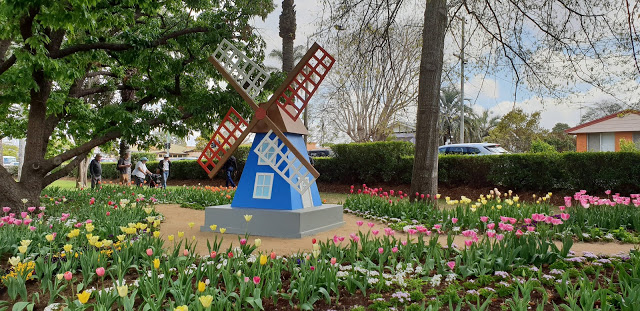
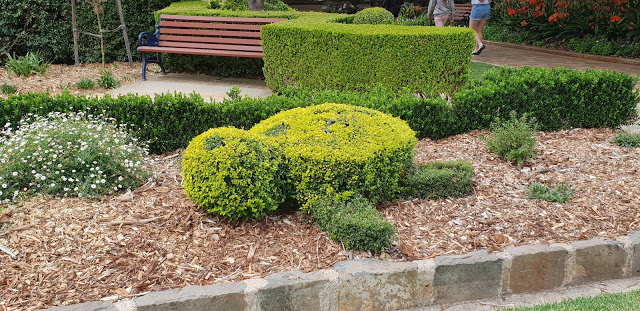
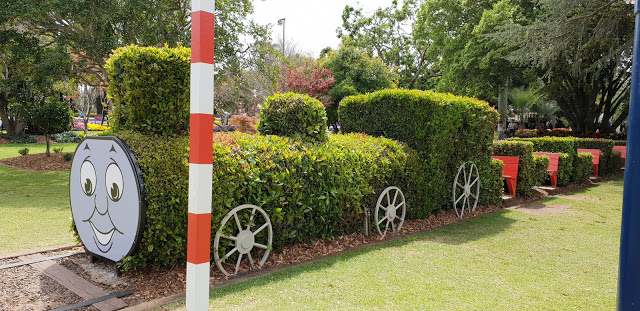
Searching for locations: Toowoomba Flower Festival, Toowoomba, Queensland, Australia

The Toowoomba Carnival of Flowers is held in September, and generally runs for ten days at the end of the month.

We visited the Laurel Bank Park, where there are beds of many colorful flowers,

open spaces,

statues,

an area set aside for not only tulips but a model windmill

and quite a number of hedge sculptures

There was also the opportunity to go on a morning or afternoon garden tour which visited a number of private gardens of residences in Toowoomba.

My grandchildren are now working in their first job

It’s hard to believe that both the 20-year-old and the 17-year-old have joined the workforce and started on their path of working for the next 50 to 60 years. The 14-year-old is about to start in the next few weeks. How quickly they grow up.

They seem quite amused at the thought, and not without reason, and are not really considering the idea. Not yet, anyway.

The novelty is still quite new, and it has a sense of excitement, but this will no doubt wear off in the coming months. After all, as new workers, they only have to do between 3 and 5-hour shifts.

I guess the fact they decided to work at such a young age reminded me of my experience, way back when I was the same age.

Unlike them, who will be afforded to opportunity to remain in school to the end, Year 12, and possibly the chance to go to University, in my case we did not have the money to continue education beyond Year 10, and there was no question of ever going to University. Only the rich could afford that, and we were anything but rich.

Instead, I guess hating school helped facilitate my departure, and the notion that I would have to pay my own way forced me into working.

Of course, it helped to live in a small country town, and my father had a job that brought him in contact with everyone who was anyone and thus got offers to work in whatever profession I chose.

I ended up in the Post Office, what I considered the easiest of jobs, originally employed as a telegram delivery boy, and mail collector from the post boxes scatted about the town. As you can imagine, there were not many telegrams to deliver, so other duties included sorting mail, and then mail delivery. Yes, I became a postman!

Then, after a few months, I became the night switchboard operator, and with a host of other operators, had some of the most interesting and varied conversations imaginable.

It was a bit of a wrench when we finally moved from the country town back to the city.

When we did, my father bought a small business, and for a year or so, I became a shop assistant.

That lasted for a year or two until I was 17. Realising that a lack of education was going to make it difficult to ever get a good-paying job, I took the opportunity to go back to night school while I had the chance, and it necessitated finding another job to help pay for it.

That was packing books for a wholesale bookseller, part of a small team hidden away in the basement of a very old building. It might not be the best-paying job or the best working conditions, but I suspect it was the universe telling me something.

That job, and being surrounded by books started me off on a journey of reading and eventually writing.

An excerpt from “The Things We Do For Love”; In love, Henry was all at sea!

In the distance he could hear the dinner bell ringing and roused himself.  Feeling the dampness of the pillow, and fearing the ravages of pent up emotion, he considered not going down but thought it best not to upset Mrs. Mac, especially after he said he would be dining.

In the event, he wished he had reneged, especially when he discovered he was not the only guest staying at the hotel.

Whilst he’d been reminiscing, another guest, a young lady, had arrived.  He’d heard her and Mrs. Mac coming up the stairs, and then shown to a room on the same floor, perhaps at the other end of the passage.

Henry caught his first glimpse of her when she appeared at the door to the dining room, waiting for Mrs. Mac to show her to a table.

She was about mid-twenties, slim, long brown hair, and the grace and elegance of a woman associated with countless fashion magazines.  She was, he thought, stunningly beautiful with not a hair out of place, and make-up flawlessly applied.  Her clothes were black, simple, elegant, and expensive, the sort an heiress or wife of a millionaire might condescend to wear to a lesser occasion than dinner.

Then there was her expression; cold, forbidding, almost frightening in its intensity.  And her eyes, piercingly blue and yet laced with pain.  Dracula’s daughter was his immediate description of her.

All in all, he considered, the only thing they had in common was, like him, she seemed totally out of place.

Mrs. Mac came out of the kitchen, wiping her hands on her apron.  She was, she informed him earlier, chef, waitress, hotelier, barmaid, and cleaner all rolled into one.  Coming up to the new arrival she said, “Ah, Miss Andrews, I’m glad you decided to have dinner.  Would you like to sit with Mr. Henshaw, or would you like to have a table of your own?”

Henry could feel her icy stare as she sized up his appeal as a dining companion, making the hair on the back on his neck stand up.  He purposely didn’t look back.  In his estimation, his appeal rating was minus six.  Out of a thousand!

“If Mr. Henshaw doesn’t mind….”  She looked at him, leaving the query in mid-air.

He didn’t mind and said so.  Perhaps he’d underestimated his rating.

“Good.”  Mrs. Mac promptly ushered her over.  Henry stood, made sure she was seated properly and sat.

“Thank you.  You are most kind.”  The way she said it suggested snobbish overtones.

“I try to be when I can.”  It was supposed to nullify her sarcastic tone but made him sound a little silly, and when she gave him another of her icy glares, he regretted it.

Mrs. Mac quickly intervened, asking, “Would you care for the soup?”

They did, and, after writing the order on her pad, she gave them each a look, imperceptibly shook her head, and returned to the kitchen.

Before Michelle spoke to him again, she had another quick look at him, trying to fathom who and what he might be.  There was something about him.

His eyes, they mirrored the same sadness she felt, and, yes, there was something else, that it looked like he had been crying?  There was a tinge of redness.

Perhaps, she thought, he was here for the same reason she was.

No.  That wasn’t possible.

Then she said, without thinking, “Do you have any particular reason for coming here?”  Seconds later she realized she’s spoken it out loud, had hadn’t meant to actually ask, it just came out.

It took him by surprise, obviously not the first question he was expecting her to ask of him.

“No, other than it is as far from civilization, and home, as I could get.”

At least we agree on that, she thought.

It was obvious he was running away from something as well.

Given the isolation of the village and lack of geographic hospitality, it was, from her point of view, ideal.  All she had to do was avoid him, and that wouldn’t be difficult.

After getting through this evening first.

“Yes,” she agreed.  “It is that.”

A few seconds passed, and she thought she could feel his eyes on her and wasn’t going to look up.

Until he asked, “What’s your reason?”

Slight abrupt in manner, perhaps as a result of her question, and the manner in which she asked it.

She looked up.  “Rest.  And have some time to myself.”

She hoped he would notice the emphasis she had placed on the word ‘herself’ and take due note.  No doubt, she thought,  she had completely different ideas of what constituted a holiday than he, not that she had actually said she was here for a holiday.

Mrs. Mac arrived at a fortuitous moment to save them from further conversation.

Over the entree, she wondered if she had made a mistake coming to the hotel.  Of course, there had been no possible way she could know than anyone else might have booked the same hotel, but realized it was foolish to think she might end up in it by herself.

Was that what she was expecting?

Not a mistake then, but an unfortunate set of circumstances, which could be overcome by being sensible.

Yet, there he was, and it made her curious, not that he was a man, by himself, in the middle of nowhere, hiding like she was, but for very different reasons.

On discreet observance whilst they ate, she gained the impression his air of light-heartedness was forced and he had no sense of humor.

This feeling was engendered by his looks, unruly dark hair, and permanent frown.  And then there was his abysmal taste in clothes on a tall, lanky frame.  They were quality but totally unsuited to the wearer.

Rebellion was written all over him.

The only other thought crossing her mind, and rather incongruously, was he could do with a decent feed.  In that respect, she knew now from the mountain of food in front of her, he had come to the right place.

“Mr. Henshaw?”

He looked up.  “Henshaw is too formal.  Henry sounds much better,” he said, with a slight hint of gruffness.

“Then my name is Michelle.”

Mrs. Mac came in to take their order for the only main course, gather up the entree dishes, then return to the kitchen.

“Staying long?” she asked.

“About three weeks.  Yourself?”

“About the same.”

The conversation dried up.

Neither looked at the other, rather at the walls, out the window, towards the kitchen, anywhere.  It was, she thought, almost unbearably awkward.

Mrs. Mac returned with a large tray with dishes on it, setting it down on the table next to theirs.

“Not as good as the usual cook,” she said, serving up the dinner expertly, “but it comes a good second, even if I do say so myself.  Care for some wine?”

Henry looked at Michelle.  “What do you think?”

“I’m used to my dining companions making the decision.”

You would, he thought.  He couldn’t help but notice the cutting edge of her tone.  Then, to Mrs. Mac, he named a particular White Burgundy he liked and she bustled off.

“I hope you like it,” he said, acknowledging her previous comment with a smile that had nothing to do with humor.

“Yes, so do I.”

Both made a start on the main course, a concoction of chicken and vegetables that were delicious, Henry thought, when compared to the bland food he received at home and sometimes aboard my ship.

It was five minutes before Mrs. Mac returned with the bottle and two glasses.  After opening it and pouring the drinks, she left them alone again.

Henry resumed the conversation.  “How did you arrive?  I came by train.”

“By car.”

“Did you drive yourself?”

And he thought, a few seconds later, that was a silly question, otherwise she would not be alone, and certainly not sitting at this table. With him.

“After a fashion.”

He could see that she was formulating a retort in her mind, then changed it, instead, smiling for the first time, and it served to lighten the atmosphere.

And in doing so, it showed him she had another more pleasant side despite the fact she was trying not to look happy.

“My father reckons I’m just another of ‘those’ women drivers,” she added.

“Whatever for?”

“The first and only time he came with me I had an accident.  I ran up the back of another car.  Of course, it didn’t matter to him the other driver was driving like a startled rabbit.”

“It doesn’t help,” he agreed.

“Do you drive?”

“Mostly people up the wall.”  His attempt at humor failed.  “Actually,” he added quickly, “I’ve got a very old Morris that manages to get me where I’m going.”

The apple pie and cream for dessert came and went and the rapport between them improved as the wine disappeared and the coffee came.  Both had found, after getting to know each other better, their first impressions were not necessarily correct.

“Enjoy the food?” Mrs. Mac asked, suddenly reappearing.

“Beautifully cooked and delicious to eat,” Michelle said, and Henry endorsed her remarks.

“Ah, it does my heart good to hear such genuine compliments,” she said, smiling.  She collected the last of the dishes and disappeared yet again.

“What do you do for a living,” Michelle asked in an off-hand manner.

He had a feeling she was not particularly interested and it was just making conversation.

“I’m a purser.”

“A what?”

“A purser.  I work on a ship doing the paperwork, that sort of thing.”

“I see.”

“And you?”

“I was a model.”

“Was?”

“Until I had an accident, a rather bad one.”

“Oh, I’m sorry.”

So that explained the odd feeling he had about her.

As the evening had worn on, he began to think there might be something wrong, seriously wrong with her because she didn’t look too well.  Even the carefully applied makeup, from close up, didn’t hide the very pale, and tired look, or the sunken, dark ringed eyes.

“I try not to think about it, but it doesn’t necessarily work.  I’ve come here for peace and quiet, away from doctors and parents.”

“Then you will not have to worry about me annoying you.  I’m one of those fall-asleep-reading-a-book types.”

Perhaps it would be like ships passing in the night and then smiled to himself about the analogy.

Dinner now over, they separated.

Henry went back to the lounge to read a few pages of his book before going to bed, and Michelle went up to her room to retire for the night.

But try as he might, he was unable to read, his mind dwelling on the unusual, yet the compellingly mysterious person he would be sharing the hotel with.

Overlaying that original blurred image of her standing in the doorway was another of her haunting expressions that had, he finally conceded, taken his breath away, and a look that had sent more than one tingle down his spine.

She may not have thought much of him, but she had certainly made an impression on him.

© Charles Heath 2015-2020

lovecoverfinal1

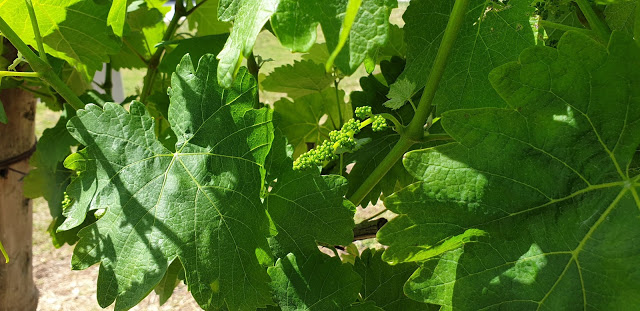
Searching for locations: O’Reilly’s Vineyard, Canungra, Queensland, Australia

O’Reilly’s Canungra Valley Vineyards located on Lamington National Park Road, Canungra, Queensland, is a 15-acre vineyard with the 163-year-old historic homestead ‘Killowen’ set up with dining rooms and long verandahs, and extensive grounds that are next to the Canungra creek where it is possible to find Platypus and turtles while partaking in a picnic.

There are about 6,000 vines of the (white) Semillon, Verdelho and (red) Chambourcin, Shiraz and Petit Vedot varieties.

We visited there in December when the vines were just starting to produce fruit. 

That fruit is usually harvested in February and then turned into wine.
The setting for picnics is, on a warm Summer’s day is idyllic, where you can wade in the creek, or go looking for a platypus.  We did not see one there the day we visited but did spend some time sitting beside the creek.

“One Last Look”, nothing is what it seems

A single event can have enormous consequences.

A single event driven by fate, after Ben told his wife Charlotte he would be late home one night, he left early, and by chance discovers his wife having dinner in their favourite restaurant with another man.

A single event where it could be said Ben was in the wrong place at the wrong time.

Who was this man? Why was she having dinner with him?

A simple truth to explain the single event was all Ben required. Instead, Charlotte told him a lie.

A single event that forces Ben to question everything he thought he knew about his wife, and the people who are around her.

After a near-death experience and forced retirement into a world he is unfamiliar with, Ben finds himself once again drawn back into that life of lies, violence, and intrigue.

From London to a small village in Tuscany, little by little Ben discovers who the woman he married is, and the real reason why fate had brought them together.

It is available on Amazon here:  http://amzn.to/2CqUBcz

Mistaken Identity – The Final Editor’s Draft – Day 29

This book has finally reached the Final Editor’s draft, so this month it is going to get the last revision, and a reread for the beta readers.

I know it’s premature, but I have begun thinking about the next adventure Jack is to embark on.

Six months down the track, the relationship with Rosalie founders, he is looking for something, anything, to lift him out of the sea of self-pity.

Is it a case of ‘be careful what you wish for’.

It’s a hell of a title for the story, too.

Maryanne is going to come out of left field and drag him down the rabbit hole of adventure because her latest assignment, and the one that will eventually determine whether she stays or goes, requires a boyfriend as cover.

How is she going to convince Jack? Well, I’m glad you asked, that’s a very interesting story.

Back in the other story, the one that should be finished but isn’t…

Jack finds himself in the seedier part of London looking for McCallister and Jacob and finds more than he bargained for.

Yes, that blockbuster cinematic ending I’ve been promising…

More tomorrow.