An excerpt from “What Sets Us Apart”, a mystery with a twist

See the excerpt from the story below, just a taste of what’s in store…

http://amzn.to/2Eryfth

whatsetscover

McCallister was old school, a man who would most likely fit in perfectly campaigning on the battlefields of Europe during the Second World War. He’d been like a fish out of water in the army, post-Falklands, and while he retired a hero, he still felt he’d more to give.

He’d applied and was accepted as head of a SWAT team, and, watching him now as he and his men disembarked from the truck in almost military precision, a look passed between Annette, the police liaison officer, and I that said she’d seen it all before. I know I had.

There was a one in four chance his team would be selected for this operation, and she had been hoping it would be one of the other three. While waiting for them to arrive she filled me in on the various teams. His was the least co-operative, and the more likely to make ad-hoc decisions rather than adhere to the plan, or any orders that may come from the officer in charge.

This, she said quite bluntly, was going to end badly.

I still had no idea why Prendergast instructed me to attend the scene of what looked to be a normal domestic operation, but as the nominated expert in the field in these types of situations, it was fairly clear he wasn’t taking any chances. It was always a matter of opinion between us, and generally I lost.

In this case, it was an anonymous report identifying what the authorities believed were explosives in one of the dockside sheds where explosives were not supposed to be.

The only reason why the report was given any credence was the man, while not identifying himself by name, said he’d been an explosive expert once and recognized the boxes. That could mean anything, but the Chief Constable was a cautious man.

With his men settled and preparing their weapons, McCallister came over to the command post, not much more than the SUV my liaison and I arrived in, with weapons, bulletproof vests, and rolls of tape to cordon off the area afterward. We both had coffee, steaming in the cold early morning air. Dawn was slowly approaching and although rain had been forecast it had yet to arrive.

A man by the name of Benson was in charge. He too had groaned when he saw McCallister.

“A fine morning for it.” McCallister was the only enthusiastic one here.

He didn’t say what ‘it’ was, but I thought it might eventually be mayhem.

“Let’s hope the rain stays away. It’s going to be difficult enough without it,” Benson said, rubbing his hands together. We had been waiting for the SWAT team to arrive, and another team to take up their position under the wharf, and who was in the final stages of securing their position.

While we were waiting we drew up the plan. I’d go in first to check on what we were dealing with, and what type of explosives. The SWAT team, in the meantime, were to ensure all the exits to the shed were covered. When I gave the signal, they were to enter and secure the building. We were not expecting anyone inside or out, and no movement had been detected in the last hour since our arrival and deployment.

“What’s the current situation?”

“I’ve got eyes on the building, and a team coming in from the waterside, underneath. Its slow progress, but they’re nearly there. Once they’re in place, we’re sending McKenzie in.”

He looked in my direction.

“With due respect sir, shouldn’t it be one of us?” McCallister glared at me with the contempt that only a decorated military officer could.

“No. I have orders from above, much higher than I care to argue with, so, McCallister, no gung-ho heroics for the moment. Just be ready to move on my command, and make sure you have three teams at the exit points, ready to secure the building.”

McCallister opened his mouth, no doubt to question those orders, but instead closed it again. “Yes sir,” he muttered and turned away heading back to his men.

“You’re not going to have much time before he storms the battlements,” Benson quietly said to me, a hint of exasperation in his tone. “I’m dreading the paperwork.”

It was exactly what my liaison officer said when she saw McCallister arriving.

The water team sent their ‘in position’ signal, and we were ready to go.

In the hour or so we’d been on site nothing had stirred, no arrivals, no departures, and no sign anyone was inside, but that didn’t mean we were alone. Nor did it mean I was going to walk in and see immediately what was going on. If it was a cache of explosives then it was possible the building was booby-trapped in any number of ways, there could be sentries or guards, and they had eyes on us, or it might be a false alarm.

I was hoping for the latter.

I put on the bulletproof vest, thinking it was a poor substitute for full battle armor against an exploding bomb, but we were still treating this as a ‘suspected’ case. I noticed my liaison officer was pulling on her bulletproof vest too.

“You don’t have to go. This is my party, not yours,” I said.

“The Chief Constable told me to stick to you like glue, sir.”

I looked at Benson. “Talk some sense into her please, this is not a kindergarten outing.”

He shrugged. Seeing McCallister had taken all the fight out of him. “Orders are orders. If that’s what the Chief Constable requested …”

Madness. I glared at her, and she gave me a wan smile. “Stay behind me then, and don’t do anything stupid.”

“Believe me, I won’t be.” She pulled out and checked her weapon, chambering the first round. It made a reassuring sound.

Suited up, weapons readied, a last sip of the coffee in a stomach that was already churning from nerves and tension, I looked at the target, one hundred yards distant and thought it was going to be the longest hundred yards I’d ever traversed. At least for this week.

A swirling mist rolled in and caused a slight change in plans.

Because the front of the buildings was constantly illuminated by large overhead arc lamps, my intention had been to approach the building from the rear where there was less light and more cover. Despite the lack of movement, if there were explosives in that building, there’d be ‘enemy’ surveillance somewhere, and, after making that assumption, I believed it was going to be easier and less noticeable to use the darkness as a cover.

It was a result of the consultation, and studying the plans of the warehouse, plans that showed three entrances, the main front hangar type doors, a side entrance for truck entry and exit and a small door in the rear, at the end of an internal passage leading to several offices. I also assumed it was the exit used when smokers needed a break. Our entry would be by the rear door or failing that, the side entrance where a door was built into the larger sliding doors. In both cases, the locks would not present a problem.

The change in the weather made the approach shorter, and given the density of the mist now turning into a fog, we were able to approach by the front, hugging the walls, and moving quickly while there was cover. I could feel the dampness of the mist and shivered more than once.

It was nerves more than the cold.

I could also feel rather than see the presence of Annette behind me, and once felt her breath on my neck when we stopped for a quick reconnaissance.

It was the same for McCallister’s men. I could feel them following us, quickly and quietly, and expected, if I turned around, to see him breathing down my neck too.

It added to the tension.

My plan was still to enter by the back door.

We slipped up the alley between the two sheds to the rear corner and stopped. I heard a noise coming from the rear of the building, and the light tap on the shoulder told me Annette had heard it too. I put my hand up to signal her to wait, and as a swirl of mist rolled in, I slipped around the corner heading towards where I’d last seen the glow of a cigarette.

The mist cleared, and we saw each other at the same time. He was a bearded man in battle fatigues, not the average dockside security guard.

He was quick, but my slight element of surprise was his undoing, and he was down and unconscious in less than a few seconds with barely a sound beyond the body hitting the ground. Zip ties secured his hands and legs, and tape his mouth. Annette joined me a minute after securing him.

A glance at the body then me, “I can see why they, whoever they are, sent you.”

She’d asked who I worked for, and I didn’t answer. It was best she didn’t know.

“Stay behind me,” I said, more urgency in my tone. If there was one, there’d be another.

Luck was with us so far. A man outside smoking meant no booby traps on the back door, and quite possibly there’d be none inside. But it indicated there were more men inside, and if so, it appeared they were very well trained. If that were the case, they would be formidable opponents.

The fear factor increased exponentially.

I slowly opened the door and looked in. A pale light shone from within the warehouse itself, one that was not bright enough to be detected from outside. None of the offices had lights on, so it was possible they were vacant. I realized then they had blacked out the windows. Why hadn’t someone checked this?

Once inside, the door closed behind us, progress was slow and careful. She remained directly behind me, gun ready to shoot anything that moved. I had a momentary thought for McCallister and his men, securing the perimeter.

At the end of the corridor, the extent of the warehouse stretched before us. The pale lighting made it seem like a vast empty cavern, except for a long trestle table along one side, and, behind it, stacks of wooden crates, some opened. It looked like a production line.

To get to the table from where we were was a ten-yard walk in the open. There was no cover. If we stuck to the walls, there was equally no cover and a longer walk.

We needed a distraction.

As if on cue, the two main entrances disintegrated into flying shrapnel accompanied by a deafening explosion that momentarily disoriented both Annette and I. Through the smoke and dust kicked up I saw three men appear from behind the wooden crates, each with what looked like machine guns, spraying bullets in the direction of the incoming SWAT members.

They never had a chance, cut down before they made ten steps into the building.

By the time I’d recovered, my head heavy, eyes watering and ears still ringing, I took several steps towards them, managing to take down two of the gunmen but not the third.

I heard a voice, Annette’s I think, yell out, “Oh, God, he’s got a trigger,” just before another explosion, though all I remember in that split second was a bright flash, the intense heat, something very heavy smashing into my chest knocking the wind out of me, and then the sensation of flying, just before I hit the wall.

I spent four weeks in an induced coma, three months being stitched back together and another six learning to do all those basic actions everyone took for granted. It was twelve months almost to the day when I was released from the hospital, physically, except for a few alterations required after being hit by shrapnel, looking the same as I always had.

But mentally? The document I’d signed on release said it all, ‘not fit for active duty; discharged’.

It was in the name of David Cheney. For all intents and purposes, Alistair McKenzie was killed in that warehouse, and for the first time ever, an agent left the Department, the first to retire alive.

I was not sure I liked the idea of making history.

© Charles Heath 2016-2020

In a word: There

Yes, the dog is over there. It’s a place somewhere other than where you are currently.

Or, you could say, there was a brave man, but he couldn’t help so there was no hope. It doesn’t refer to a place.

Or I’m taking you to the border, but from there you’re on your own.

Confused yet?

Let’s try by adding a similar word, their

It means belonging to a group as in, it was their dog that caused the damage.

Of course, this can be twisted a little, and you could say, everyone has to bring their own pack, meaning at times it could refer to one, or many,

Then just when you thought it was safe to go back into the water, there’s they’re.

This is a contraction for they are, so it’s they’re not going to fo as their told.

Wow, it starts getting complicated when you use two or more of those similar words in the same sentence.

Confusing?

That’s why it always pays to have a dictionary handy.

Just in case autocorrect fails, which it seems to quite often for me. I’m not sure why.

Jump Now – A short story

It was 2 am, the ideal time to assemble a team that would be clandestinely boarding a vessel.

Dark and moonless, it was fortuitous rather than planned, and, dressed in black from head to toe, it was hard to see the others in the inky darkness.  At least something was on our side.

Up until this point, we’d had nothing but bad luck, though I was more of the opinion we had a traitor in our midst because some of the events could not have any other explanation.

It had caused me to be far more selective in who I gave details of the mission to.

Each of the four team members had arrived and let themselves into the shed.  It was not far from the ocean, and a small pier where there was a landing craft waiting.  From there, it would be a half-hour trip out to the ship in question, where, if we got close enough, we would either have to go over the side and swim, or pull alongside, but either way we’d have to go up a rope.

A lot depended on the crew member we had recruited getting a rope overboard, and given the luck we had so far, if there was a flaw in the plan, that was it.

Aside from the four people sitting in front of me, there were only three others privy to what was about to happen.  Now, with recent events, it was hard to imagine that one of them could betray us. That’s why I hadn’t completely told them what they were about to do, just that they needed to be prepared to get wet.

“I’m sure, now we’re here, you can tell us what’s going on.”  Robert was the most trusted of my team and my best friend.

“And why all the hush-hush,”  Linda added.  She had been amused at the secrecy and my explanation.

I was never very good at spinning a story.  She knew that but had not questioned why.

“It’s been touch and go for the last week.  It’s why we’ve all been on standby, with this last-minute call out.  We’ve been waiting for a particular ship to leave port, and now it has.  So, without further ado, let’s get to it.  A boat ride, just enough time to gather the courage to the sticking point, and then with any luck we won’t have to go into the water and swim, but a short shimmy up a rope.  I hope you’ve all been working out.”

The boat ride was in silence.  I’d worked with this group before and they were not big on talking.  Aside from the fact that noise traveled over water, and since we had a specially silenced motor on the boat, there was not going to be any unnecessary conversation.

We could see the ship once we reached the headland, and aside from it’s running lights, there were lights where I presumed the bridge was, and several in the crew quarters.  Closer again, I got the impression it was not moving, or if it was, it was very slow.  It was hard to tell in the darkness.  That same darkness aided our approach.

When we were within several hundred yards I could see that the ship was not moving, and, in fact, had the anchor out.

That was not expected.  Were they waiting for us?  Had they discovered the cream member who was working with us?  We’d know soon enough if there was no rope in the designated point, not far forward of the stern, a spot where we could maneuver the boat under the hull curvature.

The driver piloted the boat slowly to the designated point and the rope was there.  He would stay with the boat and wait.  The four of us would go up and collect what we came for.

I watched the three go up the rope before me, waiting for the last to stop at the top and then go over the side onto the deck.  It took nearly a minute before I got the signal it was clear to follow.

It had been too easy.

I went up the rope slowly, slower than the others, something else other than the object of the exercise on my mind.  Not three days before I had a conversation with my boss, telling him that I’d been doing the job too long and that it was time to retire.  Approaching forty wasn’t exactly retirement age, but in this job, lasting that long was almost a miracle.  The places I’d been, the sights I’d seen, and the people I’d met.  And how many lives I’d used up.

It was a dangerous thing, thinking about anything other than the job when you’re on the job.

I reached the top and pulled myself over the railing and onto the deck.  A little off balance it took a moment to stand.  By then it was too late.

Two of the three other members of the team were sitting by the superstructure, heads on their heads, two members of the crew were watching them, guns at the ready, and Linda had one pointing at me.

“I can’t imagine how MacIntyre thought he was going to convince Petra to defect.  Or how this charade of a rescue attempt was ever going to work.”

I put my hands up.  Not entirely unexpected.  “It was not the mission objective.”

“What…”

I was surprised that she had made her move so early.  If it was my operation, I would wait until we were well into the superstructure, heading to the cabin where Petra would be waiting, and then make the move.

Three seconds, three shots, two guards taken out, and Linda incapacitated.  She would not be moving or fighting back any time soon.  The Petra came out of the shadows, and I collected Linda’s gun and stood near her, just in case Petra missed the target.

Petra cut the two other’s bindings, and said, “get to the side and jump now.”

Linda looked up at me.  “What now?”

I shrugged.  “Time for us to leave.”  I gave Petra a nod, and she went over to the side, took one look back at Linda, shook her head, then jumped.

“You’re just going to leave me here?”

“If it were up to me, I’d shoot you, but MacIntire is getting a little soft in his old age.  But yes, I’m leaving you here.  Now, I really must go.”

I took a last look at Linda, who realized that if she moved it would only worsen her injury, and jumped, not exactly my preferred way of leaving the ship.

The boat came up alongside me and two hands dragged me on board, at the same time we could hear the sound of the anchor chain being pulled up, and the propellers creating a wash as the ship started moving.

Job done, and not one that pleased me.  “Let’s go home,” I told the driver, “it’s past my bedtime.”

—-

© Charles Heath 2020-2021

“Trouble in Store” – Short Stories My Way:  The re-write – Part 10

Now that I’ve gone through the story and made quite a few changes, it’s time to look at the story

Jack had heard there were moments where, in a split second, your whole life flashed before your eyes.  His life up to that moment did, and what he saw he didn’t like.

But nor was he very happy about the fact he was nearly out the door before the policewoman on the other side crashed into him and sent both of them sprawling to the floor, and back into the path of danger.

That was about the same fraction of a second he heard the gun go off, twice, or so he thought and knew he was a dead man, waiting for the bullet.  A life-defining fraction of a second.

Another fraction of a second passed as the policewoman tried to unravel the mess they’d become, and in that moment in time he felt a tugging at his sleeve and then, as if in slow motion, the sound of the glass door disintegrating behind him.

What may have been milliseconds in reality seemed like half a lifetime in his mind.  That he was still alive at the end of it was, he thought, a sign.

© Charles Heath 2016-2024

The cinema of my dreams – I always wanted to see the planets – Episode 7

It’s not like you can pull over to the side of the road…

In space, it’s a little difficult to just suddenly stop.

But, given several hundred thousand kilometers, anything is possible.

Especially when there’s a request to divert to Venus.

You can’t always tell when the ship drops out of cruise speed to what could be considered a dead stop, not that a dead stop is necessarily achievable.

I was down in the mess hall when the call came from the officer of the deck for me to return. I was halfway through a half decent cup of coffee, and had just had the donut delivered.

Both now had to be sacrificed.

I looked out the window into the inky blackness of space and it was difficult to say if we were in idle mode. There was, however, another ship just off the port bow, a old cargo ship that had seen better days, and we both looked like we were drifting together.

I suspect that meant we were keeping station, much the same as we would if we were visiting a planet.

I took the elevator and arrived on the bridge where the captain was in earnest conversation with the chief engineer and chief scientist.

He looked up when he saw me approach.

“Ah, number one, there’s a team waiting down on the transport deck. The Aloysius 5 has some vital equipment and personnel on board for repairs at the mining colony on Venus, and we’ve been diverted to pick them up and take them there post haste.”

“Is the other ship out of commission?”

“A temporary issue with the drive. We’re sending an engineering team over to help with the repairs and will check their progress on the way back.”

“Yes, sir.”

Should be simple, I thought. Take one of the shuttle craft over, load up, drop the engineers, get back, head for Venus, about 5 hours from our current position. Much the same as a pleasant drive in the country.

And I needed more shuttle time.

In the elevator I was joined by one of the security staff, a gung-ho type lieutenant named Andrews. A man always looking for trouble, the sort who would shoot first and ask questions later.

Maybe it was not going to be a pleasant outing after all.

© Charles Heath 2021

A score to settle – The Second Editor’s draft – Day 9

The time has come to work on the second draft for the editor, taking into account all of the suggested changes, and there are quite a few. So much for thinking I could put in an almost flawless manuscript.

It’s time for two events to happen. The first is a possible chance meeting with a woman in a bar, which, in ordinary circumstances, might just be a chance meeting in a bar, but for an agent, it’s always something else.

The second, Teresa finally arrives on our main character’s doorstep, uninvited and unwelcome.

I’ve been looking at photos of various places in the Middle East, and I was hoping to go with a vibe similar to Cairo in Egypt, but there seems to be a lot of what I’m looking for in countries like Oman and Jordan, like below

Nizwa City, City, Beautiful, Old Town, Architecture

This scenery gives me the elements of the story, being near the mountains, there’s a large square that can be used for military parades, and buildings I’d expect to find in the location of the story.

It’s a pity we still cannot travel, at least not like we used to.

Today’s word count: 1,288 words, for a running total of 19,764.

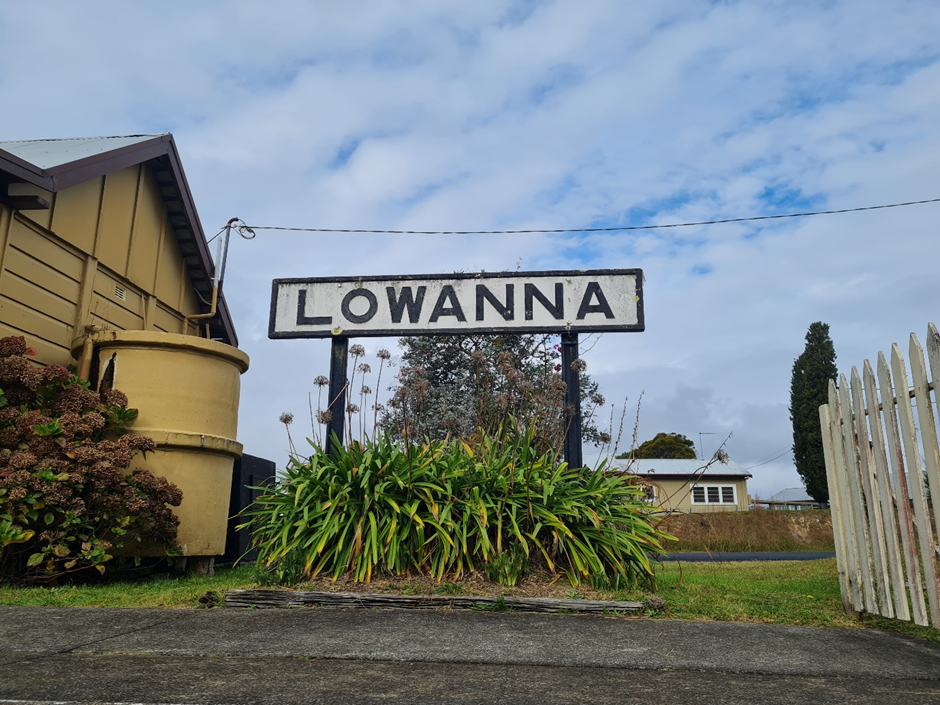
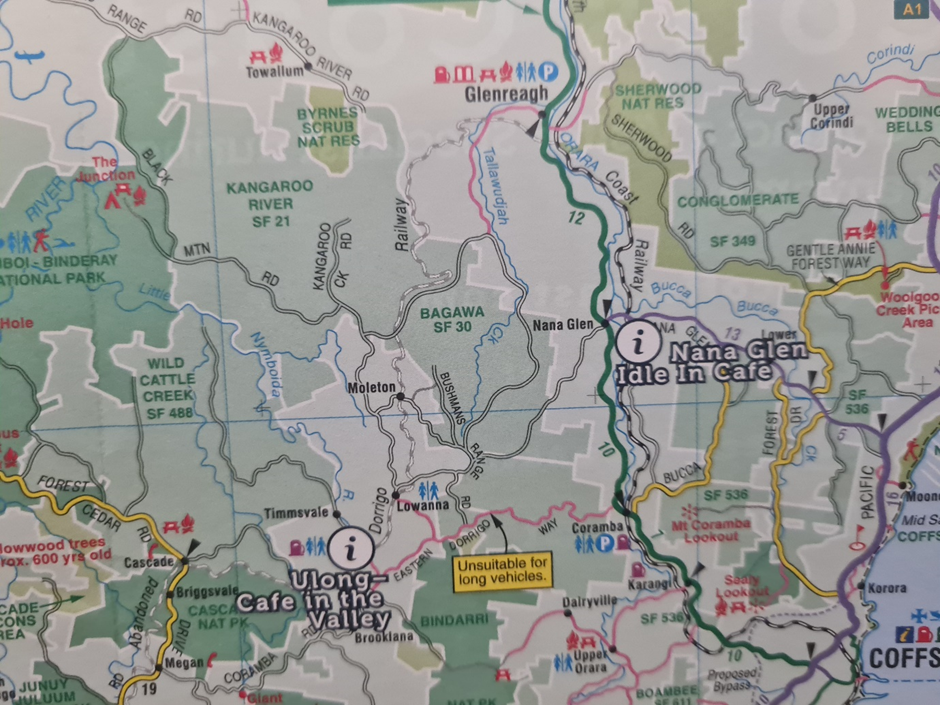
Searching for locations – Coramba – Lowanna, New South Wales, Australia

Once a bustling railway

When You pick up a document that describes tourist attractions in Coffs Harbour, there’s one about the Orara Valley, and what caught my eye was firstly the Lowanna Railway Station.

To get there, you pass through Coramba, which has a railway line running through it, but any attempt to find the railway station will be met with disappointment.

But …

That’s not the railway story, that is the Glenreagh to Dorrigo line, first mooted in 1906, but not getting started until 1910, then halted because of the First World War and not completed until December 1924, and ran until October 1972.

However, back to Coramba…

The North Coast railway (the primary rail route in the Mid North Coast and Northern Rivers regions of New South Wales) passes through Coramba, which had a now-closed railway station from 1922.  An attempt to find the station took us to a private residence, which obviously was once the station.

And then to the right historic station, in Lowanna…

Lowanna was the largest of the intermediate stations. It was an attended station, with a crossing loop and siding. Most of the timber was loaded at this location. 

Opened  23-Dec-1924 and Closed 20-Sep-1975

What we were really looking for was the Lowanna Railway Station, which, when we put it in the GPS almost got us lost.  We eventually found the refurbished station, and a rather run down platform, and rail tracks.

Lowanna was on the Dorrigo branch and lies on the north coast of NSW.  It branches off the North Coast Line at Glenreagh and climbs up to the Dorrigo Plateau.

The Dorrigo area was settled in the early 1900s by pastoralists and tree fellers. Due to the steep terrain, it was decided to build a railway to allow products to be brought to nearby port towns. Several routes were surveyed, with the route from Glenreagh eventually chosen. The line climbs 664m over a length of 69km.

Apart from the endpoints of Dorrigo and Glenreagh, the station on this line was very small, often consisting of a short platform with a small shelter. The major traffic on this line was timber.

The rainy day effect

I have to say that I prefer that time a month into Autumn (or as it is called in other parts of the world, Fall) when the temperatures become bearable, and often there is the soft patter of rain and it’s a calming effect.

It suits my mood and it helps me with my writing, those days when you don’t feel like going out, you just stare out the window contemplating nothing in particular.  These are days when it’s possible to write like you feel.

Melancholy, reflective.

Unlike a lot of people, I actually like the rain. The pattering of raindrops on the roof and on the leaves of the foliage outside the window, the droplets running down the glass of the windows.

It has a calming effect, a serenity about it, that with a fire burning in the background (and I mean a real fire with burning logs) and soft music, perhaps some gentle jazz, or a symphony (please, not the Pastoral Symphony, but maybe Vivaldi’s Four Seasons).

Moving closer to winter, it gets colder, but not that bone-chilling cold of minus 29 degrees Fahrenheit that Northern Hemisphere winters have) but the 16 degrees centigrade we have, along with the rain and the wind.

Different seasons have different winds.  Summer, they are strong and warm, Autumn, swirling and cool with that rustle through the leaves, Winter, hard and, well, not very cold as they are down south in places like Tasmania, and Spring, the gentle breeze with a hint of the coming summer.

On rare occasions, it can have the unnerving effect, sort of like the wailing of a banshee.  Or a sort of humming sound as it blows through the electricity lines.

It reminds me of a set of allegories I read about a long time ago,

Winter – sad

Spring – hope

Summer – Happy

Autumn – reflective

Perhaps it is a little early for me to be reflective because where I live, Autumn is just about over and Winter is coming.

But, of course, this year will be different.  Aside from the usual spate of colds and flu, we have a bigger problem, the possibility of never shaking off COVID 19.

We may have won a short-term victory but this is war, and as we all know, wars take years to win.

But in self-isolation, there is a silver lining.  I might get to write that trilogy I’ve always wanted to.

An excerpt from “Amnesia”, a work in progress

I remembered a bang.
I remembered the car slewing sideways.
I remember another bang, and then it was lights out.
When I opened my eyes again, I saw the sky.
Or I could be underwater.
Everything was blurred.
I tried to focus but I couldn’t. My eyes were full of water.
What happened?
Why was I lying down?
Where was I?
I cast my mind back, trying to remember.
It was a blank.
What, when, who, why and where, questions I should easily be able to answer. Questions any normal person could answer.
I tried to move. Bad, bad mistake.
I did not realise the scream I heard was my own. Just before my body shut down.

“My God! What happened?”
I could hear, not see. I was moving, lying down, looking up.
I was blind. Everything was black.
“Car accident, hit a tree, sent the passenger flying through the windscreen. Pity to poor bastard didn’t get the message that seat belts save lives.”
Was I that poor bastard?
“Report?” A new voice, male, authoritative.
“Multiple lacerations, broken collar bone, broken arm in three places, both legs broken below the knees, one badly. We are not sure of internal injuries, but ruptured spleen, cracked ribs and pierced right lung are fairly evident, x-rays will confirm that and anything else.”
“What isn’t broken?”
“His neck.”
“Then I would have to say we are looking at the luckiest man on the planet.”
I heard shuffling of pages.
“OR1 ready?”
“Yes. On standby since we were first advised.”
“Good. Let’s see if we can weave some magic.”

Magic.
It was the first word that popped into my head when I surfaced from the bottom of the lake. That first breath, after holding it for so long, was sublime, and, in reality, agonising.

Magic, because it seemed like I’d spent a long time under water.
Or somewhere.
I tried to speak, but couldn’t. The words were just in my head.
Was it night or was it day?
Was it hot, or was it cold?
Where was I?
Around me it felt cool.
It was very quiet. No noise except for the hissing of air through an air-conditioning vent. Or perhaps that was the sound of pure silence. And with it the revelation that silence was not silent. It was noisy.
I didn’t try to move.
Instinctively, somehow I knew not to.
A previous bad experience?
I heard what sounded like a door opening, and very quiet footsteps slowly come into the room. They stopped. I could hear breathing, slightly laboured, a sound I’d heard before.
My grandfather.
He had smoked all his life, until he was diagnosed with lung cancer. But for years before that he had emphysema. The person in the room was on their way, down the same path. I could smell the smoke.
I wanted to tell whoever it was the hazards of smoking.
I couldn’t.
I heard a metallic clanging sound from the end of the bed. A moment later the clicking of a pen, then writing.
“You are in a hospital.” A female voice suddenly said. “You’ve been in a very bad accident. You cannot talk, or move, all you can do, for the moment, is listen to me. I am a nurse. You have been here for 45 days, and just come out of a medically induced coma. There is nothing to be afraid of.”
She had a very soothing voice.
I felt her fingers stroke the back of my hand.
“Everything is fine.”
Define fine, I thought. I wanted to ask her what ‘fine’ meant.
“Just count backwards from 10.”
Why?
I didn’t reach seven.

Over the next ten days, that voice became my lifeline to sanity. Every morning I longed to hear it, if only for the few moments she was in the room, those few waking moments when I believed she, and someone else who never spoke, were doing tests. I knew it had to be someone else because I could smell the essence of lavender. My grandmother had worn a similar scent.
It rose above the disinfectant.
I also believed she was another doctor, not the one who had been there the day I arrived. Not the one who had used some ‘magic’ and kept me alive.
It was then, in those moments before she put me under again, that I thought, what if I was paralysed? It would explain a lot. A chill went through me.

The next morning she was back.
“My name is Winifred. We don’t know what your name is, not yet. In a few days, you will be better, and you will be able to ask us questions. You were in an accident, and you were very badly injured, but I can assure you there will be no lasting damage.”
More tests, and then, when I expected the lights to go out, they didn’t. Not for a few minutes more. Perhaps this was how I would be integrated back into the world. A little bit at a time.
The next morning, she came later than usual, and I’d been awake for a few minutes. “You have bandages over your eyes and face. You had bad lacerations to your face, and glass in your eyes. We will know more when the bandages come off in a few days. Your face will take longer to heal. It was necessary to do some plastic surgery.”
Lacerations, glass in my eyes, car accident, plastic surgery. By logical deduction, I knew I was the poor bastard thrown through the windscreen. It was a fleeting memory from the day I was admitted.
How could that happen?
That was the first of many startling revelations. The second was the fact I could not remember the crash. Equally shocking, in that same moment was the fact I could not remember before the crash either, and only vague memories after.
But the most shattering of all these revelations was the one where I realised I could not remember my name.
I tried to calm down, sensing a rising panic.
I was just disoriented, I told myself. After 45 days in an induced coma, it had messed with my mind, and it was only a temporary lapse. Yes, that’s what it was, a temporary lapse. I would remember tomorrow. Or the next day.
Sleep was a blessed relief.

The next day I didn’t wake feeling nauseous. Perhaps they’d lowered the pain medication. I’d heard that morphine could have that effect. Then, how could I know that, but not who I am?
I knew now Winifred the nurse was preparing me for something very bad. She was upbeat, and soothing, giving me a new piece of information each morning. This morning, “You do not need to be afraid. Everything is going to be fine. The doctor tells me you are going to recover with very little scarring. You will need some physiotherapy to recover from your physical injuries, but that’s in the future. We need to let you mend a little bit more before then.”
So, I was not going to be able to leap out of bed, and walk out of the hospital any time soon. I don’t suppose I’d ever leapt out of bed, except as a young boy. I suspect I’d sustained a few broken bones. I guess learning to walk again was the least of my problems.
But, there was something else. I picked it up in the timbre of her voice, a hesitation, or reluctance. It sent another chill through me.
This time I was left awake for an hour before she returned.
This time sleep was restless.
There were scenes playing in my mind, nothing I recognised, and nothing lasting longer than a glimpse. Me. Others, people I didn’t know. Or perhaps I knew them and couldn’t remember them.
Until they disappeared, slowly like the glowing dot in the centre of the computer screen, before finally fading to black.

The morning the bandages were to come off she came in bright and early and woken me. I had another restless night, the images becoming clearer, but nothing recognisable.
“This morning the doctor will be removing the bandages over your eyes. Don’t expect an immediate effect. Your sight may come back quickly or it may come back slowly, but we believe it will come back.”
I wanted to believe I was not expecting anything, but I was. It was probably human nature. I did not want to be blind as well as paralysed. I had to have at least one reason to live.
I dozed again until I felt a gentle hand on my shoulder. I could smell the lavender, the other doctor was back. And I knew the hand on my shoulder was Winifred’s. She told me not to be frightened.
I was amazed to realise in that moment, I wasn’t.
I heard the scissors cutting the bandages.
I felt the bandage being removed, and the pressure coming off my eyes. I could feel the pads covering both eyes.
Then a moment where nothing happened.
Then the pads being gently lift and removed.
Nothing.
I blinked my eyes, once, twice. Nothing.
“Just hold on a moment,” Winifred said. A few seconds later I could feel a cool towel wiping my face, and then gently wiping my eyes. Perhaps there was ointment, or something else in them.
Then a flash. Well, not a flash, but like when a light is turned on and off. A moment later, it was brighter, not the inky blackness of before, but a shade of grey.
She wiped my eyes again.
I blinked a few more times, and then the light returned, and it was like looking through water, at distorted and blurry objects in the distance.
I blinked again, and she wiped my eyes again.
Blurry objects took shape. A face looking down on me, an elderly lady with a kindly face, surely Winifred, who was smiling. And on the opposite side of the bed, the doctor, a Chinese woman of indescribable beauty.
I nodded.
“You can see?”
I nodded again.
“Clearly?”
I nodded.
“Very good. We will just draw the curtains now. We don’t want to overdo it. Tomorrow we will be taking off the bandages on your face. Then, it will be the next milestone. Talking.”
I couldn’t wait.

When morning came, I found myself afraid. Winifred had mentioned scarring, there were bandages on my face. I knew, but wasn’t quite sure how I knew, I wasn’t the handsomest of men before the accident, so this might be an improvement.
I was not sure why I didn’t think it would be the case.
They came at mid morning, the nurse, Winifred, and the doctor, the exquisite Chinese. Perhaps she was the distraction, taking my mind of the reality of what I was about to see.
Another doctor came into the room, before the bandages were removed, and he was introduced as the plastic surgeon that had ‘repaired’ the ravages of the accident. It had been no easy job, but, with a degree of egotism, he did say he was one of the best in the world.
I found it hard to believe, if he was, that he would be at a small country hospital.
“Now just remember, what you might see now is not how you will look in a few months time.”
Warning enough.
The Chinese doctor started removing the bandages. She did it slowly, and made sure it did not hurt. My skin was very tender, and I suspect still bruised, either from the accident or the surgery, I didn’t know.
Then it was done.
The plastic surgeon gave his work a thorough examination and seemed pleased with his work. “Coming along nicely,” he said to the other doctor. He issued some instructions on how to manage the skin, nodded to me, and I thanked him before he left.
I noticed Winifred had a mirror in her hand, and was somewhat reticent in using it. “As I said,” she said noticing me looking at the mirror, “what you see now will not be the final result. The doctor said it was going to heal with very little scarring. You have been very fortunate he was available. Are you ready?”
I nodded.
She showed me.
I tried not to be reviled at the red and purple mess that used to be my face. At a guess I would have to say he had to put it all back together again, but, not knowing what I looked like before, I had no benchmark. All I had was a snippet of memory that told me I was not the tall, dark, and handsome type.
And I still could not talk. There was a reason, he had worked on that area too. Just breathing hurt. I think I would save up anything I had to say for another day. I could not even smile. Or frown. Or grimace.
“We’ll leave you for a while. Everyone needs a little time to get used to the change. I suspect you are not sure if there has been an improvement on last year’s model. Well, time will tell.”
A new face?
I could not remember the old one.
My memory still hadn’t returned.

Searching for locations – Gold Coast, Queensland, Australia – 3

Quite often on holidays, we train ourselves to get up early because when you’re away in a different place, you don’t want to waste the day.

I’d like to think that since we can’t do a lot of the usual touristy activities we can sleep in and take a more leisurely approach to the day.

Not this morning.

Not yesterday, either, but for different reasons.

Today, it was the shooting pains down my leg from the bad back. Perhaps that walk to the coffee shop aggravated it, but since when did exercise harm you?

Anyway, finally giving up the notion of sleeping, I bounded out of bed, sorry slowly climbed out of bed with care, at 6:40 a.m. Unless you’re going on a tour that is the greatest thing since sliced bread, who, on holidays, gets out of bed at that hour.

Me, apparently.

Just four minutes after sunrise, which I missed.

I managed to get yesterday’s and was hoping to go one better and catch the sun coming over the horizon. Maybe tomorrow.

So, what do you do in such a hideous hour of the morning?

With the beach just 50 meters away, it was beckoning me to take a walk. When I looked, there were probably a half dozen people with their dogs taking a walk. And another three or four out for a power walk.

For me, it was going to be a leisurely stroll after picking my way across the loose sand to where it was a lot more solid.

The tide was on the way in, so every now and then, the water came up the beach near where most people walked.

By the time I started the foot traffic on the path had increased exponentially as had that on the shoreline along with the number of dogs exercising their owners, and a number of fishermen perhaps trying to land a fish for breakfast.

I had time to keep an eye on the cloud formations, and the waves came in, some a lot higher than others. That meant there were also a small number of die-hard surfers hoping to catch a big one.

You could see the rain out to sea, and with the forecast for rain later I entered of it was sitting out there waiting to arrive at the appointed time. I was just hoping it didn’t rain while I was out.

All in all, it was a pleasant hour or so up the beach and back. The hardest part, trudging over the loose sand, particularly after walking for the hour.

The fishermen had caught nothing.

The number of dogs had increased, but the power walkers had been replaced by families, visitors, and older people. I think if I lived here, I would be one more of the old people, out getting my daily exercise, and then stopping off at the coffee shop for a flat white and a cake.

And the best thing about it. It was still only half past eight in the morning and just in time for breakfast.

Pity I was the designated chef.