In a word: Spark

So, as far as I’m concerned the word ‘spark’ is something that is created by a fire, and can create havoc.

But…

Another meaning is that a ‘spark’ is created by a ‘spark plug’ in order to force the pistons of an engine to drive the crankshaft

This leads to…

There is no spark in this relationship, so perhaps it’s going nowhere.  No, we’re not looking for a fiery spark, but a small amount of very intense feeling

Spark?

I was watching God Friended Me last night and I’m sure like many others we were waiting to see that spark that would change their relationship from the friend zone, to something else.

And…

I think it was there.  Of course, we’ll have to wait till next week to find out.

As for the word spark, well there several different meanings, one of which I am familiar with when I was young.

Being called a ‘bright spark’

Depending on who used that remark, it could either mean you were clever or you were a smart ass, which I suspect was the reference to me.

Then, moving on

Saying something inflammatory ‘sparked’ the crowd into action.  A single remark can be equated to a literal ‘spark’ that can ignite a reaction.

A lynching perhaps?

And what about, once upon a time, a ship’s radio officer, he was called ‘sparks’ or ‘sparkie’, also a name that sometimes refers to an electrician.

I can see plenty of uses for this word in a story.

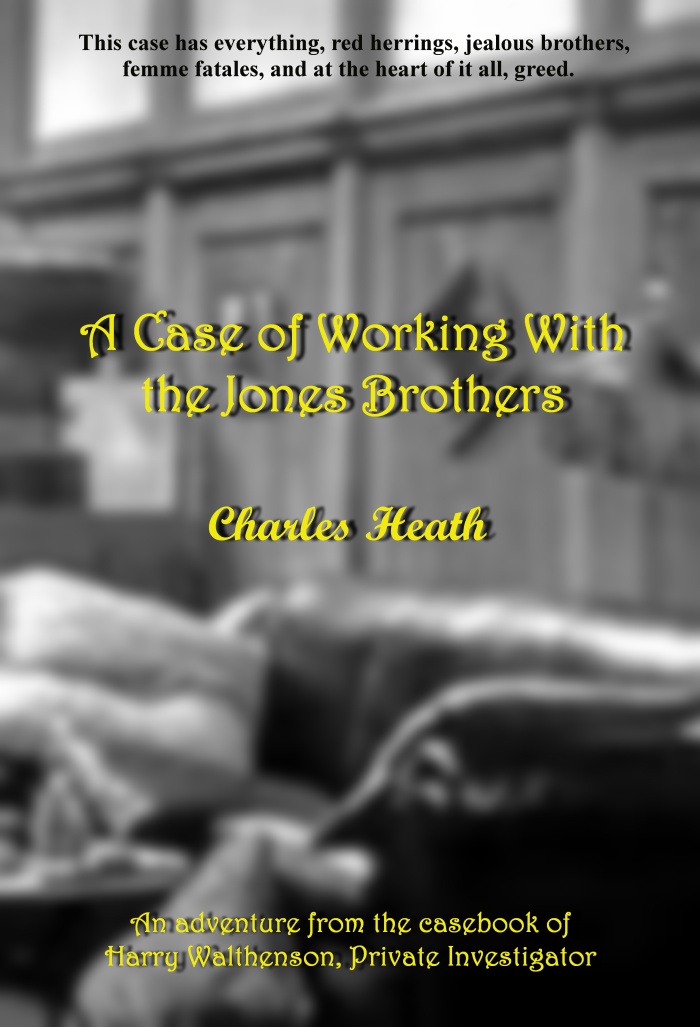
The first case of PI Walthenson – “A Case of Working With the Jones Brothers”

This case has everything, red herrings, jealous brothers, femme fatales, and at the heart of it all, greed.

See below for an excerpt from the book…

Coming soon!
PIWalthJones1

An excerpt from the book:

When Harry took the time to consider his position, a rather uncomfortable position at that, he concluded that he was somehow involved in another case that meant very little to him.

Not that it wasn’t important in some way he was yet to determine, it was just that his curiosity had got the better of him, and it had led to this: sitting in a chair, securely bound, waiting for someone one of his captors had called Doug.

It was not the name that worried him so much, it was the evil laugh that had come after the name was spoken.

Doug what? Doug the ‘destroyer’, Doug the ‘dangerous’, Doug the ‘deadly’; there was any number of sinister connotations, and perhaps that was the point of the laugh, to make it more frightening than it was.

But there was no doubt about one thing in his mind right then: he’d made a mistake. A very big. and costly, mistake. Just how big the cost, no doubt he would soon find out.

His mother, and his grandmother, the wisest person he had ever known, had once told him never to eavesdrop.

At the time he couldn’t help himself and instead of minding his own business, listening to a one-sided conversation which ended with a time and a place. The very nature of the person receiving the call was, at the very least, sinister, and, because of the cryptic conversation, there appeared to be, or at least to Harry, criminal activity involved.

For several days he had wrestled with the thought of whether he should go. Stay on the fringe, keep out of sight, observe and report to the police if it was a crime. Instead, he had willingly gone down the rabbit hole.

Now, sitting in an uncomfortable chair, several heat lamps hanging over his head, he was perspiring, and if perspiration could be used as a measure of fear, then Harry’s fear was at the highest level.

Another runnel of sweat rolled into his left eye, and, having his hands tied, literally, it made it impossible to clear it. The burning sensation momentarily took his mind off his predicament. He cursed and then shook his head trying to prevent a re-occurrence. It was to no avail.

Let the stinging sensation be a reminder of what was right and what was wrong.

It was obvious that it was the right place and the right time, but in considering his current perilous situation, it definitely was the wrong place to be, at the worst possible time.

It was meant to be his escape, an escape from the generations of lawyers, what were to Harry, dry, dusty men who had been in business since George Washington said to the first Walthenson to step foot on American soil, ‘Why don’t you become a lawyer?” when asked what he could do for the great man.

Or so it was handed down as lore, though Harry didn’t think Washington meant it literally, the Walthenson’s, then as now, were not shy of taking advice.

Except, of course, when it came to Harry.

He was, Harry’s father was prone to saying, the exception to every rule. Harry guessed his father was referring to the fact his son wanted to be a Private Detective rather than a dry, dusty lawyer. Just the clothes were enough to turn Harry off the profession.

So, with a little of the money Harry inherited from one of his aunts, he leased an office in Gramercy Park and had it renovated to look like the Sam Spade detective agency, you know the one, Spade and Archer, and The Maltese Falcon.

There’s a movie and a book by Dashiell Hammett if you’re interested.

So, there it was, painted on the opaque glass inset of the front door, ‘Harold Walthenson, Private Detective’.

There was enough money to hire an assistant, and it took a week before the right person came along, or, more to the point, didn’t just see his business plan as something sinister. Ellen, a tall cool woman in a long black dress, or so the words of a song in his head told him, fitted in perfectly.

She’d seen the movie, but she said with a grin, Harry was no Humphrey Bogart.

Of course not, he said, he didn’t smoke.

Three months on the job, and it had been a few calls, no ‘real’ cases, nothing but missing animals, and other miscellaneous items. What he really wanted was a missing person. Or perhaps a beguiling, sophisticated woman who was as deadly as she was charming, looking for an errant husband, perhaps one that she had already ‘dispatched’.

Or for a tall, dark and handsome foreigner who spoke in riddles and in heavily accented English, a spy, or perhaps an assassin, in town to take out the mayor. The man was such an imbecile Harry had considered doing it himself.

Now, in a back room of a disused warehouse, that wishful thinking might be just about to come to a very abrupt end, with none of the romanticized trappings of the business befalling him. No beguiling women, no sinister criminals, no stupid policemen.

Just a nasty little man whose only concern was how quickly or how slowly Harry’s end was going to be.

© Charles Heath 2019

“Because it’s not me” – a short story

If the was one fault I had, it was prevarication.

For a long time, I had always been afraid of making a mistake, after I had done exactly that.  They said our mistakes didn’t define us, but that one had.  I had lost the trust of everyone, from my parents to friends.

It was only a small lie, or so I told myself, but it had far-reaching ramifications, and almost cost someone their life.  But whilst I believed it was not all that bad, and the police had agreed that anyone who had been put in the same position would have done the same, there were those who didn’t agree.

It was a moment in time I often relived in my mind, over and over, and eventually led to several outcomes.

The first, I left home, the town where up till then I’d lived all of my life, walking away from family and those who used to be friends, knowing that what they said and what they felt were two entirely different things.  For all concerned, it was better that I left, cutting all ties, and make a fresh start, away from those whom I knew would never forget, even though they forgave me.

The second, and most dire, I changed my name, and my history, even how I looked.  Today, I was a very different person to that of thirty years ago.

The third, I moved to another country and vowed never to return, always looking constantly over my shoulder, expecting someone from the past to find me.  I instinctively knew that I would never escape, that one day a stark reminder would come back and destroy everything.

I picked the one occupation that would keep me both occupied and invisible.

Journalist.

I had started at the bottom, literally writing death notices, and worked my way up to what is ubiquitously known as ‘foreign correspondent’, going to places where no one else would go, those hotbeds of unrest, and war zones, reporting from both sides.

Perhaps it could say I had a death wish, a statement my editor had once said when he came to see me in hospital back in London after I’d been caught up in a rocket attack and repatriated.  He had come to offer me a job back home, to tell me my tour was over.

I declined the opportunity, and he left, shaking his head.

But that was not the only visitor that came to the hospital that day.  The other visitor was an elderly man, immaculately dressed in a pinstripe suit and bowler hat.  It screamed public servant, and the moment I saw him wandering up the passage, a chill ran down my spine.

Although he looked like he was looking for someone else, I knew he would eventually finish up in my doorway.

Five minutes after I first saw him.

When he appeared at the door, I thought about ignoring him, but realized that wasn’t going to change anything.  Besides that, I guess I wanted to know why he would want to see me.

“James Wilson?”

“Would it make any difference if I said no?”  Well, it didn’t mean I couldn’t spar with him, just a little.  “Who are you.”

“Do you mind if I come in?”

I got the impression he would do it anyway, irrespective of what I said.  I said no, and as I suspected he came in anyway, closing the door behind him, then took a minute or two to make himself comfortable in the visitor’s chair, which was an impossible task.

Then, settled, he said, “I understand you have just been repatriated from Syria.”

“I was in the wrong place at the wrong time.”

It wasn’t common knowledge where I’d come from, so this person knew something about me, which was immediate cause for concern.

“The bane of a reporter trying to cover a dangerous situation,” he said, with just the right amount of levity in his tone.  “I get it, by the way.  I once had that devil may care attitude you need to get the story.  I was chasing a Pulitzer, believe it or not, and used a few of those nine lives in the process.  Which one are you up to?”

I was going to say that awards didn’t matter but among those who made up the press pack in those God-forsaken places, there was an unwritten desire to be rewarded other than by pay.  For me, though, it was not a defining factor.

“Lost count.  But why would that interest you, or whoever it is you represent?  By the way, just who do you represent?”

Second attempt at finding out who this man was.  If he was dodging and weaving, it would suggest a clandestine organization.

“People who would like to use your unique talent in getting into trouble spots around the world.  We’re not asking you to come work for us exclusively, rather piggyback on the job that you already do so well.”

An unnamed man from an unnamed organization.  What he was offering wasn’t unheard of, and I had been warned, more than once, that jobs, like he was suggesting, were more often than not offered to people like me.  With that came one line of advice, turn around and run like hell.

But, with nothing to amuse me in hospital, I was curious.  “Doing what exactly?”

The fact his expression changed indicated my response had taken him by surprise.  Perhaps he was used to being told where to go.  Not yet.  I had this fanciful notion in the back of my mind that what he might offer might get me closer to the story.

“Keeping your eyes and ears open.  We’ll tell you what to look for, all you’ll be doing is looking for evidence.  There will be no need to go looking for trouble, if there’s evidence we ask you to report it, if not, no harm done.”

Not so hard.  If that was all it was.  The trouble was, if something sounds simple, which that did, but inevitably, it was going to be anything but.  I’d heard stories and the consequences.

“You’re presuming that my editor will send me back.  He just offered me a job at home.”

“I think both of us know you’re not interested in domesticity.  If he isn’t willing to adhere to your wishes, I’m sure we could find someone else who would be willing to take you on.  You have had several offers recently, have you not?”

So, without a doubt, he knew a lot about me, especially if he asked around.  I had had several offers, but I was happy where I was.  I liked the no questions about your past that my current employer had promised.

Yes, looking at the determination on this man’s face, I had no doubt they or he could do what he said.  No one comes to a meeting like this without holding all the cards.  Also, not that I wanted it to be so, It told me that my agreement was not necessarily going to be optional.

But I was happy to dither and find out.  “Since I’m not sure when the hospital is going to discharge me, and the fact I’m not exactly very mobile at the moment, can I consider the proposal.  Right now, as you can imagine, getting back to work is not exactly a priority.”

“Of course.”  He took a card out of his coat pocket and put it on the bedside table.  “By all means.  Call me on that number when you’ve decided.”

He stood.  “It will be a great opportunity.  Thank you for your time.”

Of course, the two impressions I was left with were, one, he had me mixed up with someone else, and two, that I would never see him again.

It was an impossible task, for me at least, because I did not have a poker face, and could barely carry a lie.  I would be the last person they’d want for the job.

And thinking that, I rolled over, put it out of my mind, and went back to sleep.


© Charles Heath 2021

“Trouble in Store” – Short Stories My Way:  The re-write – Part 12

Now that I’ve gone through the story and made quite a few changes, it’s time to look at the story

It took fifteen seconds to disentangle herself from the customer, push him away, get to her feet, and get out into the street, weapon aimed.

At nothing but air.

The girl had gone, and then she had the vague recollection of a shadow passing her as she was facing the other way getting to her feet.

And that same shadow running through the door.

Five more valuable seconds as her brain processed this piece of information before it issued the command to go out the door and see which way she went.

Another few seconds to get out the door and see the police car coming from the same direction she had earlier, screeching to a halt outside the shop, a door opening, and an officer getting out.

Margaret was gesturing for the driver to go further down the road where she assumed the girl had run, managing to yell breathlessly at the office getting out, “She’s gone that way,” and pointing.

The officer relayed the message and closed the door as the car sped off.

“What happened?”

“Shots fired by a woman, more a girl, in the process of a robbery.”

She ran back inside the officer following.

The customer had moved away from the doorway having got to his feet and was checking the damage to his coat where the bullet held felt earlier had passed through the fabric and missed everything else.

“Over behind the counter.”  She pointed at the wall where he had been standing.  There was a shopkeeper.  He was standing there.”

The policeman rounded the end of the counter and looked down.  “He’s here.  It’s not looking good.”

Margaret didn’t hear him.  She was calling an ambulance.

© Charles Heath 2016-2024

The cinema of my dreams – I always wanted to see the planets – Episode 9

What’s the worst that could happen?

Captains invariably hated the word ‘problem’. I did too, because it conjured up so many different scenarios, each more scarier than the last, and maginified exponentially because we were in space.

We took a closer look, and it was the sort of damage if it was back on Earth, one would associate with weapons fire, lasers to be exact.

Yes, in the 24th century we had ray guns, handheld, and ship bound.

The only problem was, only the cruise class vessels, like the one I was now on, were allowed to have them, and using them, well, the paperwork alone could keep a complement of 20 working day and night for a month.

Test them, yes, less paperwork, use them, no. There had never been a reason to.

But someone had, and on a freighter, which only meant one possibility, that whatever the freighter had been carrying, had been worth violating a thousand regulations and rules.

And bring their ship and selves out into the light.

It was, of course, Space Command’s worst nightmare realised, that the ideal of space exploration as a united effort by everyone, had a member who had decided against unity.

Unless, of course, the improbably had happened, there was life outside our solar system, and we were dealing with a new planet, or people.

Except I would not expect them to use something as conventional as a laser.

Myrtle had put us very close to the damaged area and taken a number of photographs, and the engineer had analysed the damaged area.

Then, cleared to enter the freighter, she took us up to the cargo doors and waited as we watched them open.

It was the same time the engineer’s hand held computer started beeping.

And a warning light on the console in front of Myrtle started flashing, accompanied by a warning klaxon.

Another vessel had just entered our proximity zone.

© Charles Heath 2021

A score to settle – The Second Editor’s draft – Day 11

The time has come to work on the second draft for the editor, taking into account all of the suggested changes, and there are quite a few. So much for thinking I could put in an almost flawless manuscript.

Lying awake in bed at 3am is bad enough, you get to hear all those strange noises that happen while you’re asleep, and, if you have an active imagination, it doesn’t take long before you start associating those noises with bad things.

That’s only part of it.

I think the main reason I’m still awake is my subconscious telling me that it doesn’t like the title.

Here’s the thing…

It was appropriate when the story was going to shift to finding out who it was that set our main character up for assassination. Yes, I’m writing the parts where those who were complicit are having their backstory relayed where it involves them in the events leading up to it, but I’m beginning to think that’s a story in itself.

I was reviewing the plan, and the chapter list as it stands, and that part of the story will add about 12 to 15 chapters at an average of 2,500 words each.

Added to the 75 others. That’s a lot of words, and work, to fit into the 30 days. So far the word count is around 20,000 for 10 days, so an end is not looking likely by the end of the month.

Not unless I give up the notion of sleep.

So, perhaps it’s not just the title that’s keeping me up.

OK, that was a loud bang and definitely not a cat or possum landing on the roof. I’m going to check, and if I don’t come back…

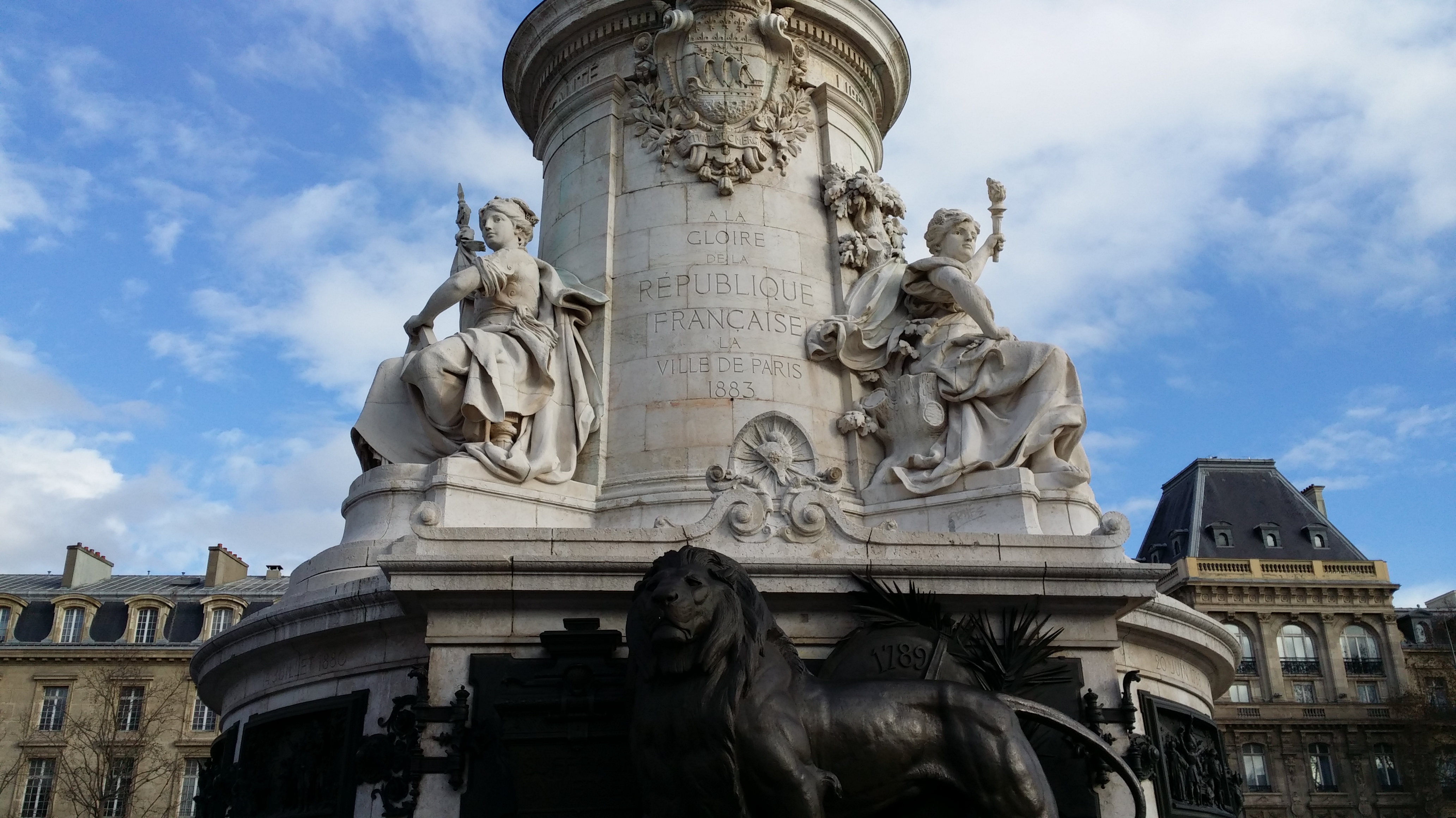
Searching for locations: Paris, France: Place de la Republique

Whilst a rather important place for the French, for us visitors, it has a convenient hotel located just behind the square, and an underground, or Metro station, underneath.

2014-01-07 11.43.05

Added to that was equally convenient cafes, one of which, The Cafe Republique, we had dinner every night.  The service and food were excellent, and we had no problems with the language barriers.

At the top of the monument is a bronze statue of Marianne, said to be the personification of France.

2014-01-07 11.43.41

Surrounding Marianne is three more statues, representing liberty, equality, and fraternity.

2014-01-07 11.43.32

At the base is a lion guarding what is said to be a ballot box.

My 800 words on writing

Writing is one of those occupations that requires a lot of hard work for, sometimes, very little output.  We, as writers, strive to produce a certain number of words per day, or, sometimes, just a few words just to keep oiling the machine and keeping it in working order.

When this creative process stops we tend to call it writer’s block, or something else entirely.  For me it is a point where I have lost the way, and the next chapter, scene, or plot development is not clear.  Time for a shower, sleep, or a walk in the park.

Other times, the creative processes are firing on all 12 cylinders and ideas, thoughts, plot lines, and words are pouring out of you like water over a waterfall at thaw time, or in a flood.

Sorry, shouldn’t be using metaphors, bad writing.

At the moment I have finished my next novel, yes, it sounds really good, and in itself, it gives me a sense of achievement.  In another sense it fills me with dread because I have to start editing, and, more importantly, make sure the first part of the book blends with the new developments that only occurred to me later.

Sometimes I go back and add notes at the appropriate place where the story needs to be corrected, or I just sit there and fix it on the spot.

But, editing is a horrible job.  Making sure of continuity, making sure the characters names didn’t change, or they suddenly go from being short, overweight and red hair to thin, tall and blonde hair.  Making sure the English is correct, grammar correct, spelling correct, and fore’s not confused with four’s.

And not start my sentences with and or but.  Sorry, again, bad habits die hard.

I have read that it’s a good idea to let that first draft sit on the shelf for a few weeks and let the dust settle around it, ruminating on it sub-consciously.  Good idea.  It’s another excuse to put off the inevitable.

So, is it time to have a holiday, take time out from the business of writing, or catch up with all that social media stuff, tweeting, facebooking, tumblring, instagramming, or whatever it is.  Oh yes, that’s right, as an indie author I have to do my own ‘pitching’ to the reading public.

Time to plan a campaign to get my title out there, and generate some interest.

Time in fact to hit the internet and see how others have done it.

42,647,345 hits on Google.  Damn, I didn’t think there were that many writers.  I’m starting to feel very, very insignificant in the greater scheme of things.

OK, that goes in the too hard basket for the moment.  Moving on.

On those days when the creative juices were on overdrive, I fill notebooks with the ideas for stories, short and long.  When out, waiting around for doctors, and others, I have my mobile phone which has a notebook type app called SomNote which I write.  I find it is very easy to lose oneself in a story when there is so much inspiration around.

These notes are then sent via email to my computer and stored in an email directory, ready for me to look at, at a later date.

That later date has arrived.

I start looking through the ‘ideas’ list, a cavalcade of story titles,

Amnesia- the story of a man who wakes up in hospital with amnesia, and then is led to believe he is someone other than who he is.  The plot needs some work, well, a lot of work.

The Will – the story of a grandson trying to stop the greedy and selfish siblings from selling out the family heritage, I’m sure I saw a British movie about this not so long ago

Mistaken Identity – The story of a man who is an illegitimate son, and has a brother who is both an evil man and his exact doppelganger.  He was never told about it, and comes face to face with his doppelganger in extraordinary circumstances.

Strangers in the night – no not the song, but a story about two disparate people who have no time for anything but work and career, who have a chance encounter.

Breaking the rules – a story about a pair of cat burglars who run into each other, on separate heists in the same building.  This has potential.

More than three hours have passed, I’ve been reading the stories, notes, plotlines, and staring at the ceiling looking for inspiration.

Chester, our cat, my friend and confidant, always likes the last word.  He wanders into the office, climbs up on the chair and sits, selecting the pile of papers for The Will.

It will be the title of my next book

“Sunday in New York”, a romantic adventure that’s not a walk in the park!

“Sunday in New York” is ultimately a story about trust, and what happens when a marriage is stretched to its limits.

When Harry Steele attends a lunch with his manager, Barclay, to discuss a promotion that any junior executive would accept in a heartbeat, it is the fact his wife, Alison, who previously professed her reservations about Barclay, also agreed to attend, that casts a small element of doubt in his mind.

From that moment, his life, in the company, in deciding what to do, his marriage, his very life, spirals out of control.

There is no one big factor that can prove Harry’s worst fears, that his marriage is over, just a number of small, interconnecting events, when piled on top of each other, points to a cataclysmic end to everything he had believed in.

Trust is lost firstly in his best friend and mentor, Andy, who only hints of impending disaster, Sasha, a woman whom he saved, and who appears to have motives of her own, and then in his wife, Alison, as he discovered piece by piece damning evidence she is about to leave him for another man.

Can we trust what we see with our eyes or trust what we hear?

Haven’t we all jumped to conclusions at least once in our lives?

Can Alison, a woman whose self-belief and confidence is about to be put to the ultimate test, find a way of proving their relationship is as strong as it has ever been?

As they say in the classics, read on!

Purchase:

http://tinyurl.com/Amazon-SundayInNewYork

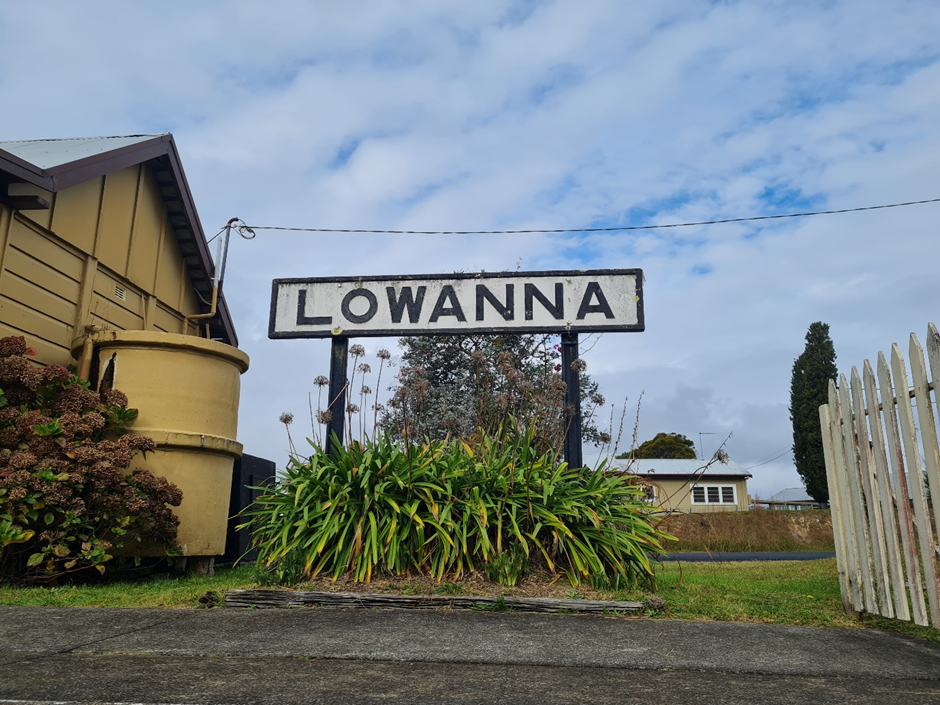
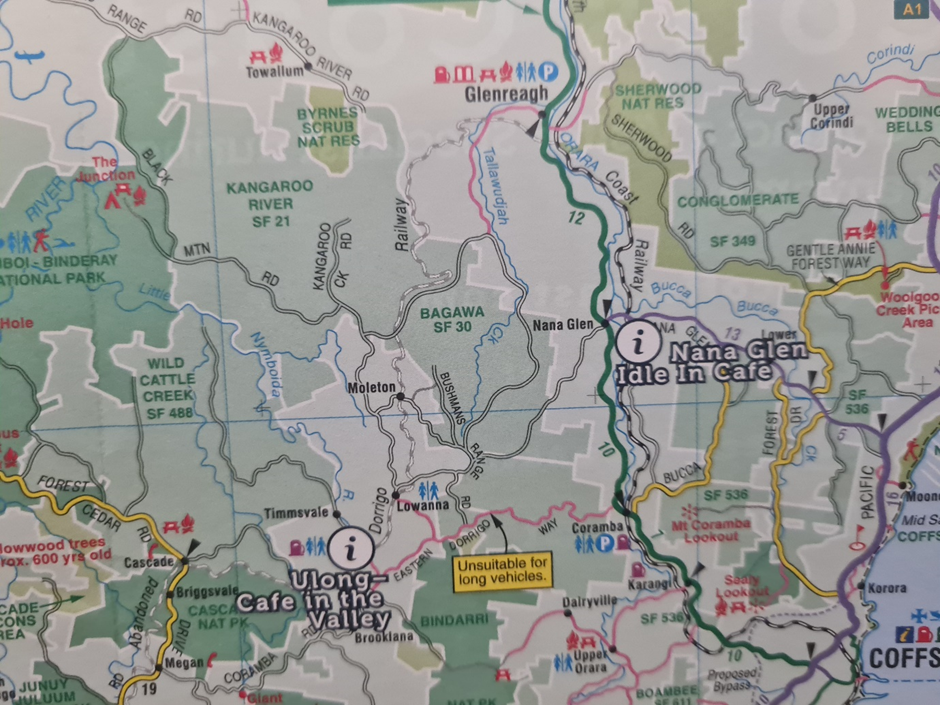
Searching for locations – Coramba – Lowanna, New South Wales, Australia

Once a bustling railway

When You pick up a document that describes tourist attractions in Coffs Harbour, there’s one about the Orara Valley, and what caught my eye was firstly the Lowanna Railway Station.

To get there, you pass through Coramba, which has a railway line running through it, but any attempt to find the railway station will be met with disappointment.

But …

That’s not the railway story, that is the Glenreagh to Dorrigo line, first mooted in 1906, but not getting started until 1910, then halted because of the First World War and not completed until December 1924, and ran until October 1972.

However, back to Coramba…

The North Coast railway (the primary rail route in the Mid North Coast and Northern Rivers regions of New South Wales) passes through Coramba, which had a now-closed railway station from 1922.  An attempt to find the station took us to a private residence, which obviously was once the station.

And then to the right historic station, in Lowanna…

Lowanna was the largest of the intermediate stations. It was an attended station, with a crossing loop and siding. Most of the timber was loaded at this location. 

Opened  23-Dec-1924 and Closed 20-Sep-1975

What we were really looking for was the Lowanna Railway Station, which, when we put it in the GPS almost got us lost.  We eventually found the refurbished station, and a rather run down platform, and rail tracks.

Lowanna was on the Dorrigo branch and lies on the north coast of NSW.  It branches off the North Coast Line at Glenreagh and climbs up to the Dorrigo Plateau.

The Dorrigo area was settled in the early 1900s by pastoralists and tree fellers. Due to the steep terrain, it was decided to build a railway to allow products to be brought to nearby port towns. Several routes were surveyed, with the route from Glenreagh eventually chosen. The line climbs 664m over a length of 69km.

Apart from the endpoints of Dorrigo and Glenreagh, the station on this line was very small, often consisting of a short platform with a small shelter. The major traffic on this line was timber.