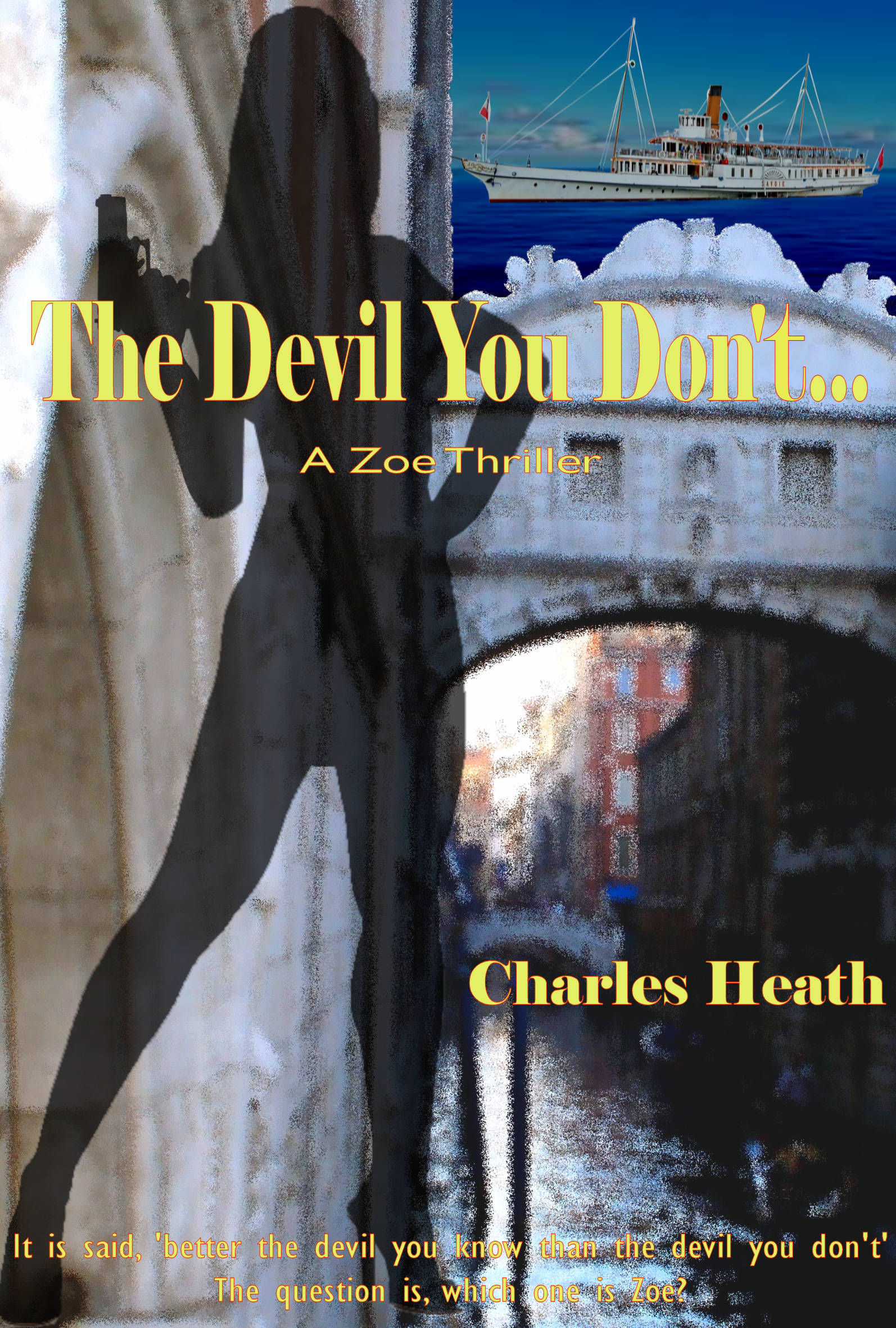
‘The Devil You Don’t’ – A beta reader’s view

It could be said that of all the women one could meet, whether contrived or by sheer luck, what are the odds it would turn out to be the woman who was being paid a very large sum to kill you.

John Pennington is a man who may be lucky in business, but not so lucky in love. He has just broken up with Phillipa Sternhaven, the woman he thought was the one, but relatives and circumstances, and perhaps because she was a ‘princess’, may also have contributed to the end result.

So, what do you do when you are heartbroken?

That is a story that slowly unfolds, from the first meeting with his nemesis on Lake Geneva, all the way to a hotel room in Sorrento, where he learns the shattering truth.

What should have been solace after disappointment, turns out to be something else entirely, and from that point, everything goes to hell in a handbasket.

He suddenly realizes his so-called friend Sebastian has not exactly told him the truth about a small job he asked him to do, the woman he is falling in love with is not quite who she says she is, and he is caught in the middle of a war between two men who consider people becoming collateral damage as part of their business.

The story paints the characters cleverly displaying all their flaws and weaknesses. The locations add to the story at times taking me back down memory lane, especially to Venice where, in those back streets I confess it’s not all that hard to get lost.

All in all a thoroughly entertaining story with, for once, a satisfying end.

Available on Amazon here: https://amzn.to/2Xyh1ow

In a word: Mine

Well, that’s his, and this is mine.  Possession is 9 points of the law, or so they say.

What’s mine is mine and what’s his is mine.  Sound like a divorce settlement?  Sure is!

There are often a lot of arguments over the possession of goods, and who they belong to.  Perhaps it’s best to own nothing, then no one can take it from you.

Sound like a lawyer contesting his own divorce?  Probably.

But that’s not the only mine.  Take for instance a land mine or a sea mine.

Devilish things to walk on, or brush up against.  It spawned a new type of ship, a minesweeper, and I’ve read a few books about the exploits of those aboard, and how close they come to death when a ship hits one.

And land mines, the damage they can cause.

Then, of course, you can go underground, way underground, into a mine.

Gold in South Africa, coal in Wales, tin in Sumatra, copper in New Guinea.

And it doesn’t have to be underground.  You can have an open cut mine, which accounts for a lot of coal mines in Australia.

Oddly, you can mine data, the sort that’s stored in databases on computers.  I’ve done a bit of that in a former life.

You can mine talent,

Or you can mine bitcoin, but that’s a whole different ballgame, and everyone seems to be in on some sort of scam when it comes to bitcoin.  It seems to me the only way you would make money out of bitcoin was to buy units the very first day it was released.

It’s not, and never will be, something I’ll dabble in.

An excerpt from “Betrayal” – a work in progress

It could have been anywhere in the world, she thought, but it wasn’t.  It was in a city where if anything were to go wrong…

She sighed and came away from the window and looked around the room.  It was quite large and expensively furnished.  It was one of several she had been visiting in the last three months.

Quite elegant too, as the hotel had its origins dating back to before the revolution in 1917.  At least, currently, there would not be a team of KGB agents somewhere in the basement monitoring everything that happened in the room.

There was no such thing as the KGB anymore, though there was an FSB, but such organisations were of no interest to her.

She was here to meet with Vladimir.

She smiled to herself when she thought of him, such an interesting man whose command of English was as good as her command of Russian, though she had not told him of that ability.

All he knew of her was that she was American, worked in the Embassy as a clerk, nothing important, whose life both at work and at home was boring.  Not that she had blurted that out the first they met, or even the second.

That first time, at a function in the Embassy, was a chance meeting, a catching of his eye as he looked around the room, looking, as he had told her later, for someone who might not be as boring as the function itself.

It was a celebration, honouring one of the Embassy officials on his service in Moscow, and the fact he was returning home after 10 years.  She had been there once, and still hadn’t met all the staff.

They had talked, Vladimir knew a great deal about England, having been stationed there for a year or two, and had politely asked questions about where she lived, her family, and of course what her role was, all questions she fended off with an air of disinterested interest.

It fascinated him, as she knew it would, a sort of mental sparring as one would do with swords if this was a fencing match.

They had said they might or might not meet again when the party was over, but she suspected there would be another opportunity.  She knew the signs of a man who was interested in her, and Vladimir was interested.

The second time came in the form of an invitation to an art gallery, and a viewing of the works of a prominent Russian artist, an invitation she politely declined.  After all, invitations issued to Embassy staff held all sorts of connotations, or so she was told by the Security officer when she told him.

Then, it went quiet for a month.  There was a party at the American embassy and along with several other staff members, she was invited.  She had not expected to meet Vladimir, but it was a pleasant surprise when she saw him, on the other side of the room, talking to several military men.

A pleasant afternoon ensued.

And it was no surprise that they kept running into each other at the various events on the diplomatic schedule.

By the fifth meeting, they were like old friends.  She had broached the subject of being involved in a plutonic relationship with him with the head of security at the embassy.  Normally for a member of her rank, it would not be allowed, but in this instance it was.

She did not work in any sensitive areas, and, as the security officer had said, she might just happen upon something that might be useful.  In that regard, she was to keep her eyes and ears open and file a report each time she met him.

After that discussion, she got the impression her superiors considered Vladimir more than just a casual visitor on the diplomatic circuit.  She also formed the impression that he might consider her an ‘asset’, a word that had been used at the meeting with security and the ambassador.

It was where the word ‘spy’ popped into her head and sent a tingle down her spine.  She was not a spy, but the thought of it, well, it would be fascinating to see what happened.

A Russian friend.  That’s what she would call him.

And over time, that relationship blossomed, until, after a visit to the ballet, late and snowing, he invited her to his apartment not far from the ballet venue.  It was like treading on thin ice, but after champagne and an introduction to caviar, she felt like a giddy schoolgirl.

Even so, she had made him promise that he remain on his best behaviour.  It could have been very easy to fall under the spell of a perfect evening, but he promised, showed her to a separate bedroom, and after a brief kiss, their first, she did not see him until the next morning.

So, it began.

It was an interesting report she filed after that encounter, one where she had expected to be reprimanded.

She wasn’t.

It wasn’t until six weeks had passed when he asked her if she would like to take a trip to the country.  It would involve staying in a hotel, that they would have separate rooms.  When she reported the invitation, no objection was raised, only a caution; keep her wits about her.

Perhaps, she had thought, they were looking forward to a more extensive report.  After all, her reports on the places, and the people, and the conversations she overheard, were no doubt entertaining reading for some.

But this visit was where the nature of the relationship changed, and it was one that she did not immediately report.  She had realised at some point before the weekend away, that she had feelings for him, and it was not that he was pushing her in that direction or manipulating her in any way.

It was just one of those moments where, after a grand dinner, a lot of champagne, and delightful company, things happen.  Standing at the door to her room, a lingering kiss, not intentional on her part, and it just happened.

And for not one moment did she believe she had been compromised, but for some reason she had not reported that subtle change in the relationship to the powers that be, and so far, no one had any inkling.

She took off her coat and placed it carefully of the back of one of the ornate chairs in the room.  She stopped for a moment to look at a framed photograph on the wall, one representing Red Square.

Then, after a minute or two, she went to the mini bar and took out the bottle of champagne that had been left there for them, a treat arranged by Vladimir for each encounter.

There were two champagne flutes set aside on the bar, next to a bowl of fruit.  She picked up the apple and thought how Eve must have felt in the garden of Eden, and the temptation.

Later perhaps, after…

She smiled at the thought and put the apple back.

A glance at her watch told her it was time for his arrival.  It was if anything, the one trait she didn’t like, and that was his punctuality.  A glance at the clock on the room wall was a minute slow.

The doorbell to the room rang, right on the appointed time.

She put the bottle down and walked over to the door.

A smile on her face, she opened the door.

It was not Vladimir.  It was her worst nightmare.

© Charles Heath 2020

“Uncanny good luck shines upon me…” – a short story


I never did take advice very seriously.  Especially when they were issued by old man Taggard, a man of some mystery that we all, adults and children alike wanted to know about.

Everyone in the street knew him as he had lived in the almost derelict mansion at the end of the cul-de-sac forever, way longer than anyone else in the neighbourhood had.  In fact, it was rumoured he had owned all the land around and sold it off bit by bit over time, the reason why there were so many houses of varying age in the estate.

Ours was one of the older houses, a few doors up from it.  We were close enough to observe Taggard’s habit, like sitting on the porch on an old swing chair in the afternoons, to the late-night wanderings in the street.  Some said he was accompanied by the ghost of his long-dead wife, which led to stories being told of the house he lived in being haunted.

As children, we had been brought up on a diet of TV shows such as ‘The Munsters’ and ‘The Addams Family’, and had invented our own make-believe show called ‘The Taggard Mansion’, the house with ghosts, and the neighborhood center for strange goings-on.

And as children were wont to do, we had to ‘investigate’.

There was a ‘gang’ even though we didn’t refer to it as such, about seven of us who lived in nearby houses, and all of whom had very active imaginations.  We also met in the cubby house out the back of our house to plan forays to find out whether the rumours were true.  The thing is we never got very far as he seemed to know when we were sneaking in and scared us off, so for years, the rumours remained just that, rumours.

But as grown-ups, and by that I mean, middle teens, our plans became bolder and more sophisticated, based on a whole new breed of TV shows, where the seemingly impossible was no longer that.  And Andy Boswell, my older brother’s best friend, his father was a private detective, or so he told us, and he had managed to ‘secure’ some of his father’s tools of the trade; a camera on the end of a wire that could connect to a cell phone, a listening device that could hear through walls, and in-ear communicators.  We could now, if we were close enough, see under doors, and hear if anyone was in.  We could all keep in touch, though I couldn’t see how this would help.

But a plan was formulated.  All seven of us had a role to play.  My brother Ron and Delilah, his girlfriend, were taking point, whatever that meant, Andy and I were going to take point, while Jack, Jill, and Kim were going to run distraction.  The theory was, they’d make enough noise to keep the old man occupied chasing them.  No one had been inside the house, ever.  Andy and I were going to be the first.

Andy had drawn up a plan and it was up on the wall.  He had charted the house, and had a very accurate picture of the house’s footprint, where doors and windows were, likely entrance points, including a hatchway down into what he assumed was a basement, though he preferred to call it the dungeon, and a layout of the grounds.  Apparently under the undergrowth were paths and gardens, even a large fountain that once graced the grounds of the three-story mansion made of sandstone, and built sometime during the middle of the 1800s.

Andy had done some research, mostly from old newspapers, and also discovered that the old man had once been married, they had a half dozen children, three of whom had died, the others scattered around the world.  It explained why no one ever visited the place.

The distraction team would be going in through the front gate, easy enough because it had come off its hinges and just needed a shove to open.  The old man usually emerged from the house via the driveway, or what was once a drive where cars could enter one side of the property, stop under a huge canopy, and emerge onto the road further along.  But it’s overgrown stare, the width of the pathway was now about six feet.  The fact it was once an amazing feature was the roadside lights, now all but disappearing behind the undergrowth.

Andy had found a photograph in the paper of it, and it had looked magnificent, as had the gardens, the overhanging canopy, and all the lights.  To think such magnificence was now lost.  And having seen it for what it once was, it was not hard to imagine any number of scenarios, my favourite, rescuing a damsel in distress from the tower.  Yes, it even had a tower, two, in fact, at each end of the house.  My brother always said I had an overactive imagination.

Andy and I would be going in by the less-used car exit, and heading for the left side of the building where Andy said were several floor-to-ceiling windows that looked to him like French doors.  Of course, none of us knew what French doors were, and my brother cut Andy short when he tried to explain.

Failing that, there was a door at the rear that seemed to be open, and we’d try that next.  We would get into position, advise the distraction team, and the operation would be a go.  The only debate was about what time of the day were we going to do it.  My brother preferred late in the afternoon.  Andy said it was better at dawn, or soon after if we were looking for maximum confusion about the target.

Dawn, confusion, tactics, target, Andy was in his element.  He was going to be a spy when he grew up.  My brother said he would never grow up, but then, my brother said I was a dreamer and would never amount to anything.  We ignored his advice, well, we pretty much ignored everything he said.

We were going in at dawn.

At 5 a.m. on Saturday morning, we gathered at the cubby house ready for action.  We all took a communicator and put it in our ears, and then had fun saying stupid stuff, and hearing it through the earpieces.  It was weird but added an exciting element to the adventure.  I know my heart was beating faster in anticipation.  Andy was pretending to be cool and failing.  I suspected my brother and Delilah had other plans when we left them alone in the cubby house.  The distraction team was ready to go.

Shortly after the sun came up, it was cool and the air still.  It was going to be a hot day, and in that first hour, everything was almost perfect.  It seemed a waste to do anything but let the early morning serenity settle over us.  Not today.  Andy and I went to our position, slowly feeling our way through the bushes, taking bearings from the light poles, and every now and then seeing the guttering and what looked to be a concrete path.  Beyond that was once a garden, and I tried, more than once, to imagine what it was like.

In my ear I could hear the others in the distraction team setting up at the start of the driveway, ready to go.  We reached our position, about twenty feet from the so-called French windows, the view into the house blocked by curtains, but beyond that, what we could see was darkness inside the house.  Taking in the whole side of the house, there were no lights on behind any of the windows.  If we didn’t know better, we could have assumed the house was empty.

I heard Andy say, “Ready.  Start making noise.”

A minute later we could both hear the distraction team in the distance and through the communicators.  It took two minutes before we heard the old man, yelling, “What the hell do you think you’re doing?”  Their job done, getting him out of the house, all they had to do was retreat.

Time for Andy and I to go.

Working on the basis that no one else was at the house, and the fact we had no evidence there was, we were not overly worried about making a stealthy approach.  I could hear in my earpiece, the gasping of those in the distraction team, having just made it outside the gate, and to tell us the old man had stopped them at the gate.  I doubt he had been running, but his yelling was just as effective.

That had stopped, and a sort of silence fell over the area.

We were now at the French doors, and Andy produced another tool that he’d forgotten to tell us about, a lock pick.  The fact it didn’t take long to unlock the door told me he was either very talented, or the lock was old and presented no problems.  Either way, he opened the door and ushered me in.

I brushed the curtains aside for him to follow, then moved in as he followed, closing the door behind him.

I’d taken five steps before I heard a woman’s voice say.  “Uncanny good luck shines upon me.  My knights in shining armour.  You’ve come to rescue me, no?”

© Charles Heath 2020-2023

Short story writing: Don’t try this at home – Part 5

This is not meant to be a treatise on short story writing.  Far be it for me to advise anyone on the subject.  I prefer to say how it is that I do it so you can learn all of the pitfalls in one go.

Now, there’s this thing called continuity, but it covers a whole range of writing sins, most of which I eventually get caught out.  Films sometimes miss a few items, like back in the roman days, there are plane trails in the sky, in a 1920’s period piece, there’s a mobile phone sitting on a desk.

Like one minute the hero has a gun, and the next he’s fighting for his life with a knife, and, hey presto, there’s that gun again.  The error might not be that big but you can’t pull out a weapon you don’t have or wasn’t there in the first place.

Similarly, the hero pulls out a mobile phone, but there’s only one problem, it’s 1980, and there are no mobile phones.  Our problem might be that we are so used to doing and using certain things that we might forget, for a minute or two, that were not available in the past.

The same goes for the fashion of the day.

And my all-time favourite, getting the right make and model of car.

Oh, and just for good measure, back in the old days they used acoustic couplers to attach to phones via a serial port to dial-up not a server, but a BBS, Bulletin Board Service, at a rate of 300 baud, or a little while later, 1,200 baud.

There was no internet in general use.  If you wanted to call the office when out, use a telephone box.  Or carrier pigeon.

And the use of language, there’s a lot of stuff relevant today that was not used back then, and there was a lot of stuff back then that isn’t tolerated now.  Some of it might be hard to get your head around.  It isn’t for me, because I can remember the 1970s and 1980s, but I’m not too sure about allowing some of what happened then to creep into my work.

So, you get the picture.  Try to use the past as the past, or leave it in the past.

Unless it’s a book about time travel, then all bets are off.

The cinema of my dreams – I always wanted to see the planets – Episode 20

Just what do you talk to aliens about?

We were standing off the two ships, each about half the size of our ship.

I wondered briefly if the people on board were thinking the same as us.

What were the people like, friendly or hostile, what weapons the other had, and what technology?  We knew they could board us, by beaming in combatants, so I’d sent the third officer to organize the security team and other crew members to spread out through the ship and keep an eye out for boarders.

At the very least they knew we couldn’t send people over to their ships.

I walked over to the communications officer’s console where the communication expert sat, waiting.

“Can we broadcast a message so the other ship can hear us?”

“Assuming they understand any or all of the 32 languages we can convert any message to.”

And, if I read the crew briefing note on her correctly, she could speak fluently in every one of them.  Just, perhaps, not alien, but up till now, she didn’t have to.

“The last one I spoke to understood me just fine.”

“Very good.  Just speak when you are ready.  We’re transmitting now.”

I went back to stand in front of the Captain’s chair though I was not sure why.  I took a moment to consider what I should say, then proceeded with, “This is the commanding officer of the Earth space ship “Nautilus” hailing the two ships nearby.  We are following the vessel that kidnapped two of our crew members.  We have no quarrel with you, and this being the case, we will be proceeding with our pursuit forthwith.”

I put my hand up to indicate the message was done.

“Are systems online and ready to go?” I said in the direction of the helmsman who, like the rest of the crew, were looking at me.  Why I wasn’t sure.

The helmsman replied, “Ready when you are.”

I was going to give the alien ships five minutes, then leave.  They were either going to board us, or shoot at us, or maybe just let us go.

I looked at the military specialist.  “I assume we can retaliate if they start shooting at us?”

“It’s possible if they don’t hit any vital parts of the ship.”

It was a rather sardonic reply, or maybe that was her usual tone.  I didn’t get time to reflect on it.

“You might want to reconsider that plan, Earth ship Nautilus.”

It was an accented version of English, British perhaps, but very precise, and most likely the result of a translator.

“Who am I speaking to?”

“You may call me the commanding officer of my spaceship. 

“Are you with the people who kidnapped my crew members?”

There was silence, a period where I assumed they were considering a response.  Then, “I am not sure what you mean by with but were are of the same people, yes, but the one you speak of is not like us.  We have been seeking them as you appear to be, but for different reasons.”

“So why are here, impeding our progress, if you are not helping them?”

“We wanted to see who they have mistreated, and what they have done.  This is not the first time they have ventured into uncharted space.”

“Where have you come from?”

“Several thousands of what you call light-years away, in a system similar to yours, only each of the planets have a different people.  The people who have taken your crew come from one of the planets who are looking for weapons to fight a war they are losing.”

“Then I think you people are in a great deal of trouble.  They have also stolen a shipment of plutonium, which if they know what they’re doing, can be used to make bombs that can render a place unliveable for thousands of what we call years.  Believe me when I say it’s a very long time.”

“Nuclear bombs?”

“You’ve heard of them?”

“In a roundabout way.  You should know we are currently chasing the people who did this, and we are here to advise against you proceeding with your rescue mission.  The people you are chasing have a vastly superior ship, and weapons than you, as I suspect your ship is to you, a marvel, but to us, about a hundred of your earth years behind us.  We always believed your differences with your fellow humans would always hinder your space programs to the point where Mars would be the furthest you could travel.”

“You should realize we are out there on the very edge of our galaxy ready to find new ones.”

“That we cannot stop.  But I give you this warning, not everyone out there is ready to accept new people from other planets or systems.  And they are all more technologically advanced.”

Nothing surprising there.

“We’re still going out there, danger withstanding.”

“Be that on your head.  I suggest, however, that you do not follow those who have taken your crew members.  We will take care of them, and return your people in due course.”

“Thanks for the warning, but we do not abandon our people.”

“Then don’t say I didn’t warn you.”

Then, before our eyes, the two ships left, or that is to say, disappeared into a bright light that lasted a few seconds before the inky black returned.

“What just happened,” I said before I realized I’d said it out loud.

A voice from behind said, in reply, “I believe they disappeared into what might be described as a wormhole.”

© Charles Heath 2021-2023

A score to settle – The Second Editor’s draft – Day 22

The time has come to work on the second draft for the editor, taking into account all of the suggested changes, and there are quite a few. So much for thinking I could put in an almost flawless manuscript.

It’s hard to know just how someone would react in real life to a situation that is not normally expected to happen.

Like, for instance, a gunman walks into a supermarket and suddenly starts shooting randomly.

But, in the USA, that seems to be a situation that could happen anywhere, anytime and with tragic results.

What would I do in such a situation?

It’s probably impossible to tell unless it really happened.

Why do I ask this question?

There’s a lot of effort required to plan out what each character is going to do in any given situation. What he or she might do has a lot to do with how they have been previously portrayed.

If they were nervous or frightened at the little things, it’s hardly likely that they would run into a hail of bullets unless there was a very good reason like saving a child, and even then it might be a stretch to believe they would.

So, I’m writing about a dangerous situation, and it’s taking a lot longer than I expected because my characters have to fit their previous profiles, and I have to remember them, or, what I should have done in the first place, create profiles from which to draw on when necessary.

Another lesson learned the hard way, is that planning is necessary, even if it appears tedious.

Searching for locations: Venice, Italy (Again)

We have visited Venice twice, in 2006 and not so long ago.

Not much had changed from visit to visit.

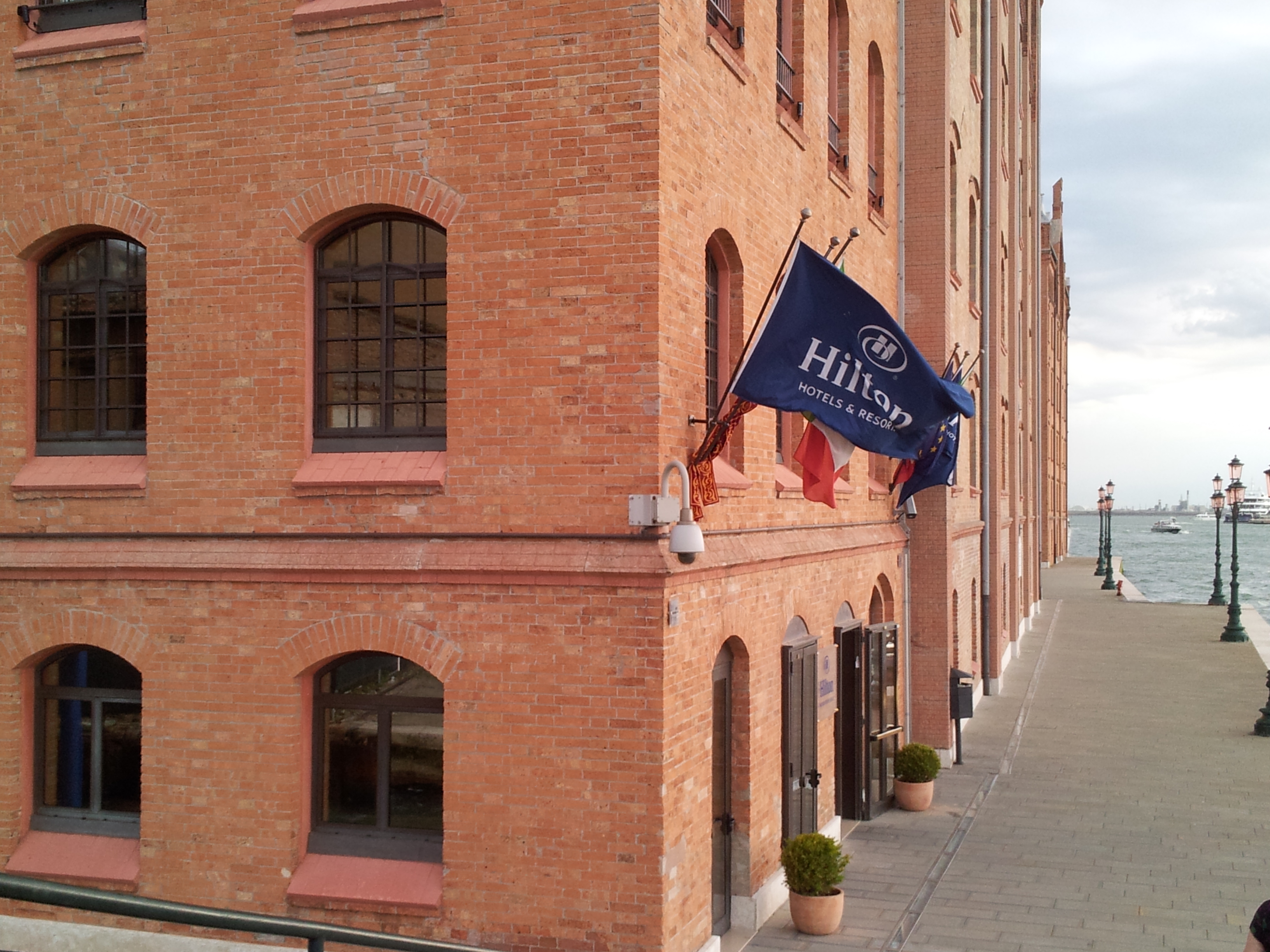
Instead of staying in a hotel selected by a travel agent, the Savoia and Jolanda on the waterfront of Riva Degli Schiavoni, because I’m a Hilton Honors member, more recently we stayed at the Hilton Molino Stucky.  It was located on an island, Giudecca, and had its own transport from the hotel to St Mark’s Square for a very reasonable one-off charge for the stay.

hiltonmolinostuckey2

On our first visit, we traveled from Florence to Venice.  We were advised to take a water taxi to the hotel, not only the most direct route but to see some of Venice from the water.  The only drawback, you have to negotiate a price with the driver.

We were not very good negotiators, and it cost 60 Euros.

But, despite the cost, it was worth every Euro because the taxi driver took us by the scenic route, directly from the Station to the doorstep of our hotel.  For a first time in Venice, and you want to see it from the water, a water taxi is the best option.

2013-06-25 17.09.16

The first time we stayed at the Savoia and Jolanda Hotel, which was at the time quite old, and the room we had, on the ground floor, was comfortable enough, but being November, they had just stopped using the air conditioning, it was still quite warm and at times uncomfortable.

There were better rooms, but this was beyond the knowledge of the travel agent, and one of the reasons we stopped using agents to book hotels.

The most recent visit we had driven down from Salzburg to Venice airport where we had to return the hire car.  From there we were intending to take a private water taxi from the airport to the hotel, for an estimated 120 Euros.

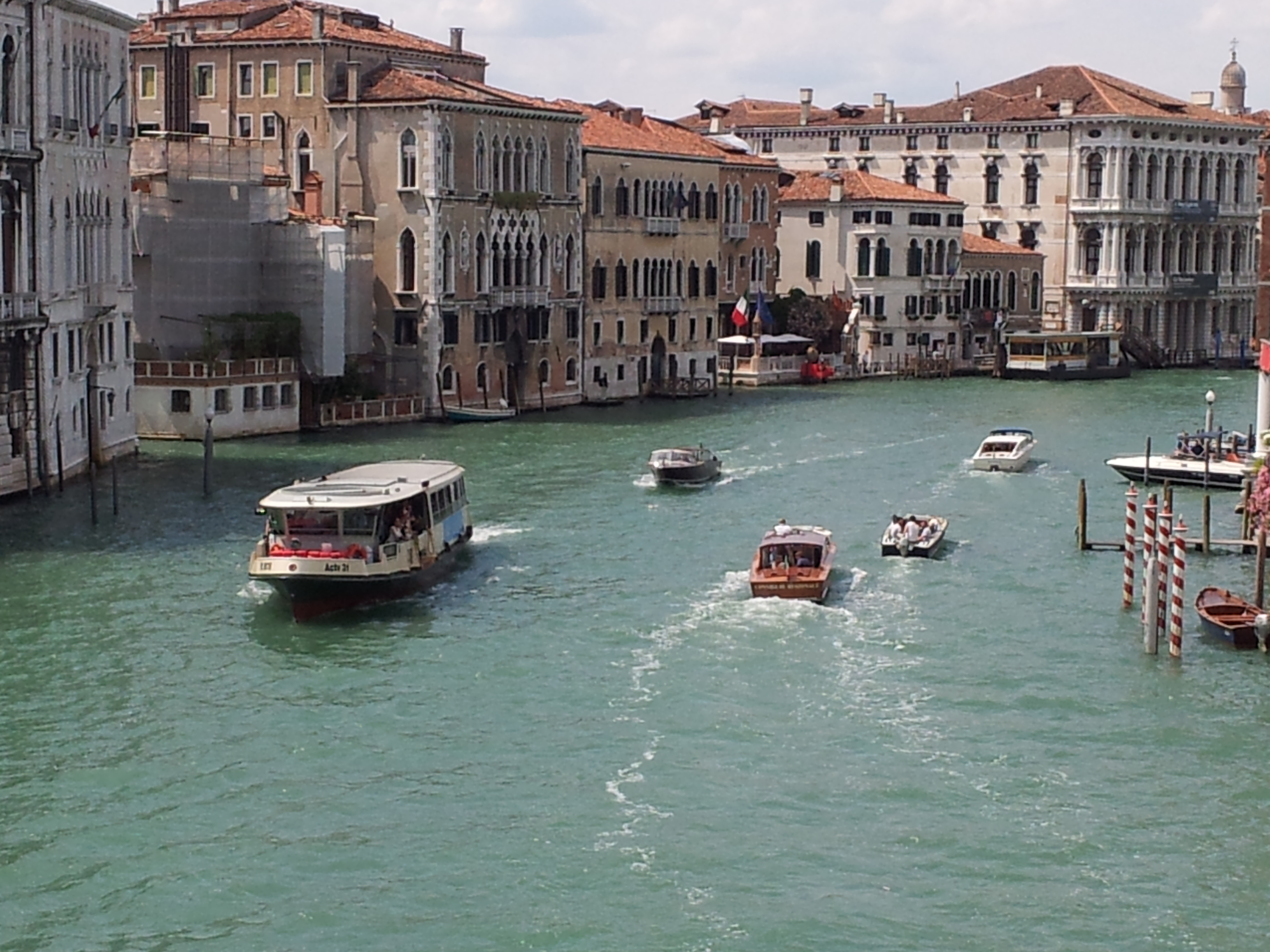
We saved our money and took the ACTV public waterbus, from the airport to the hotel, with one stop.  It took a little over an hour and was equally as scenic.

venicecanals1

Our room in the Hilton was on one of the upper levels, floor four, and had a view of the canal, the large passenger ships coming and going, as well as a remarkable view of Venice itself as far up the canal to St Marks Square in one direction, and the port for the passenger ships in the other.

20130627_081601

We got to see three or four very large passenger ships come and go, along with a lot of other craft.  I hadn’t realized how busy the waterways, and the Grand Canal, were.

20130627_174408

Each evening after a day’s exploring we would end up in the Executive Lounge, and then one of the many restaurants, usually Il Molino for breakfast, and the Rialto Lobby Bar and Lounge for dinner.  After that, it was a stroll down the waterfront taking in the night air, and perhaps to walk off the delicious dinner.

Plots ripped from newspaper headlines

Truth is stranger than fiction

I’ve been reading about an anomaly in Google Maps where people are looking at maps that display weird objects in places where they shouldn’t be,

For instance, one of the recent occurrences of this places a plane, either an Airbus A320 or a Boeing 737, is on the ground, in the middle of a clearing of a dense forest with trees all around it.

No one is missing a plane so where did it come from, and how could it possibly get there?

Another occurrence was a car at the bottom of a lake, though there has been more than one occurrence of this. 

But, sometimes those objects actually are there, like, for instance, one of those cars where the body of a man who had been missing for 20-odd years was discovered.

There is a rational reason why people are seeing what are objects that cannot be explained.  It is an instance where two images have been taken, and one is a ‘ghost’, and in the case of the aeroplane, it could have been flying very low over the area in question when the photo was taken.

So.

What if …

Someone was using the map program to look at various places, places that did not get the usual public scrutiny, or perhaps not at all.

After all, what does one do with the leisure hours when there’s nothing else to do?

Mick was a tramper, one of those people who liked to trail blaze, find new paths through forests and make odd discoveries, one of which, several years before, had uncovered a lost village of some archaeological value.

He sees what seems to be wreckage dispersed in the forest, notes the date of the photograph, nearly a year before, and checks newspapers and media sources for any news of missing small lanes, but discovers none.

But just in case his mind is playing tricks, he asks a friend to come and verify the discovery, and, lo and behold, it is no longer there.

Perhaps it was his imagination, wanting to find something.

Until he checked the date of the photograph and notes it’s been updated to another, a year later.

With nothing else to do, perhaps it was time for another walking holiday, and to see what was there.

An excerpt from “One Last Look”: Charlotte is no ordinary girl

This is currently available at Amazon herehttp://amzn.to/2CqUBcz

I’d read about out-of-body experiences, and like everyone else, thought it was nonsense.  Some people claimed to see themselves in the operating theatre, medical staff frantically trying to revive them, and being surrounded by white light.

I was definitely looking down, but it wasn’t me I was looking at.

It was two children, a boy and a girl, with their parents, in a park.

The boy was Alan.  He was about six or seven.  The girl was Louise, and she was five years old.  She had long red hair and looked the image of her mother.

I remember it now, it was Louise’s birthday and we went down to Bournemouth to visit our Grandmother, and it was the last time we were all together as a family.

We were flying homemade kites our father had made for us, and after we lay there looking up at the sky, making animals out of the clouds.  I saw an elephant, Louise saw a giraffe.

We were so happy then.

Before the tragedy.

When I looked again ten years had passed and we were living in hell.  Louise and I had become very adept at survival in a world we really didn’t understand, surrounded by people who wanted to crush our souls.

It was not a life a normal child had, our foster parents never quite the sort of people who were adequately equipped for two broken-hearted children.  They tried their best, but their best was not good enough.

Every day it was a battle, to avoid the Bannister’s and Archie in particular, every day he made advances towards Louise and every day she fended him off.

Until one day she couldn’t.

Now I was sitting in the hospital, holding Louise’s hand.  She was in a coma, and the doctors didn’t think she would wake from it.  The damage done to her was too severe.

The doctors were wrong.

She woke, briefly, to name her five assailants.  It was enough to have them arrested.  It was not enough to have them convicted.

Justice would have to be served by other means.

I was outside the Bannister’s home.

I’d made my way there without really thinking, after watching Louise die.  It was like being on autopilot, and I had no control over what I was doing.  I had murder in mind.  It was why I was holding an iron bar.

Skulking in the shadows.  It was not very different from the way the Bannister’s operated.

I waited till Archie came out.  I knew he eventually would.  The police had taken him to the station for questioning, and then let him go.  I didn’t understand why, nor did I care.

I followed him up the towpath, waiting till he stopped to light a cigarette, then came out of the shadows.

“Wotcha got there Alan?” he asked when he saw me.  He knew what it was, and what it was for.

It was the first time I’d seen the fear in his eyes.  He was alone.

“Justice.”

“For that slut of a sister of yours.  I had nuffing to do with it.”

“She said otherwise, Archie.”

“She never said nuffing, you just made it up.”  An attempt at bluster, but there was no confidence in his voice.

I held up the pipe.  It had blood on it.  Willy’s blood.  “She may or may not have Archie, but Willy didn’t make it up.  He sang like a bird.  That’s his blood, probably brains on the pipe too, Archie, and yours will be there soon enough.”

“He dunnit, not me.  Lyin’ bastard would say anything to save his own skin.”  Definitely scared now, he was looking to run away.

“No, Archie.  He didn’t.  I’m coming for you.  All of you Bannisters.  And everyone who touched my sister.”

It was the recurring nightmare I had for years afterwards.

I closed my eyes and tried to shut out the thoughts, the images of Louise, the phone call, the visit to the hospital and being there when she succumbed to her injuries.  Those were the very worst few hours of my life.

She had asked me to come to the railway station and walk home with her, and I was running late.  If I had left when I was supposed to, it would never have happened and for years afterwards, I blamed myself for her death.

If only I’d not been late…

When the police finally caught the rapists, I’d known all along who they’d be; antagonists from school, the ring leader, Archie Bannister, a spurned boyfriend, a boy whose parents, ubiquitously known to all as ‘the Bannister’s, dealt in violence and crime and who owned the neighbourhood.  The sins of the father had been very definitely passed onto the son.

At school, I used to be the whipping boy, Archie, a few grades ahead of me, made a point of belting me and a few of the other boys, to make sure the rest did as they were told.  He liked Louise, but she had no time for a bully like him, even when he promised he would ‘protect’ me.

I knew the gang members, the boys who tow-kowed to save getting beaten up, and after the police couldn’t get enough information to prosecute them because everyone was too afraid to speak out, I went after Willy.  There was always a weak link in a group, and he was it.

He worked in a factory, did long hours on a Wednesday and came home after dark alone.  It was a half mile walk, through a park.  The night I approached him, I smashed the lights and left it in darkness.  He nearly changed his mind and went the long way home.

He didn’t.

It took an hour and a half to get the names.  At first, when he saw me, he laughed.  He said I would be next, and that was four words more than he knew he should have said.

When I found him alone the next morning I showed him the iron bar and told him he was on the list.  I didn’t kill him then, he could wait his turn, and worry about what was going to happen to him.

When the police came to visit me shortly after that encounter, no doubt at the behest of the Bannister’s, the neighbourhood closed ranks and gave me an ironclad alibi.  The Bannister’s then came to visit me and threatened me.  I told them their days were numbered and showed them the door.

At the trial, he and his friends got off on a technicality.  The police had failed to do their job properly, but it was not the police, but a single policeman, corrupted by the Bannisters.

Archie could help but rub it in my face.  He was invincible.

Joe Collins took 12 bullets and six hours to bleed out.  He apologized, he pleaded, he cried, he begged.  I didn’t care.

Barry Mills, a strong lad with a mind to hurting people, Archie’s enforcer, almost got the better of me.  I had to hit him more times than I wanted to, and in the end, I had to be satisfied that he died a short but agonizing death.

I revisited Willy in the hospital.  He’d recovered enough to recognize me, and why I’d come.  Suffocation was too good for him.

David Williams, second in command of the gang, was as tough and nasty as the Bannisters.  His family were forging a partnership with the Bannister’s to make them even more powerful.  Outwardly David was a pleasant sort of chap, affable, polite, and well mannered.  A lot of people didn’t believe he could be like, or working with, the Bannisters.

He and I met in the pub.  We got along like old friends.  He said Willy had just named anyone he could think of, and that he was innocent of any charges.  We shook hands and parted as friends.

Three hours later he was sitting in a chair in the middle of a disused factory, blindfolded and scared.  I sat and watched him, listened to him, first threatening me, and then finally pleading with me.  He’d guessed who it was that had kidnapped him.

When it was dark, I took the blindfold off and shone a very bright light in his eyes.  I asked him if the violence he had visited upon my sister was worth it.  He told me he was just a spectator.

I’d read the coroner’s report.  They all had a turn.  He was a liar.

He took nineteen bullets to die.

Then came Archie.

The same factory only this time there were four seats.  Anna Bannister, brothel owner, Spike Bannister, head of the family, Emily Bannister, sister, and who had nothing to do with their criminal activities.  She just had the misfortune of sharing their name.

Archie’s father told me how he was going to destroy me, and everyone I knew.

A well-placed bullet between the eyes shut him up.

Archie’s mother cursed me.  I let her suffer for an hour before I put her out of her misery.

Archie remained stony-faced until I came to Emily.  The death of his parents meant he would become head of the family.  I guess their deaths meant as little to him as they did me.

He was a little more worried about his sister.

I told him it was confession time.

He told her it was little more than a forced confession and he had done nothing to deserve my retribution.

I shrugged and shot her, and we both watched her fall to the ground screaming in agony.  I told him if he wanted her to live, he had to genuinely confess to his crimes.  This time he did, it all poured out of him.

I went over to Emily.  He watched in horror as I untied her bindings and pulled her up off the floor, suffering only from a small wound in her arm.  Without saying a word she took the gun and walked over to stand behind him.

“Louise was my friend, Archie.  My friend.”

Then she shot him.  Six times.

To me, after saying what looked like a prayer, she said, “Killing them all will not bring her back, Alan, and I doubt she would approve of any of this.  May God have mercy on your soul.”

Now I was in jail.  I’d spent three hours detailing the deaths of the five boys, everything I’d done; a full confession.  Without my sister, my life was nothing.  I didn’t want to go back to the foster parents; I doubt they’d take back a murderer.

They were not allowed to.

For a month I lived in a small cell, in solitary, no visitors.  I believed I was in the queue to be executed, and I had mentally prepared myself for the end.

Then I was told I had a visitor, and I was expecting a priest.

Instead, it was a man called McTavish. Short, wiry, and with an accent that I could barely understand.

“You’ve been a bad boy, Alan.”

When I saw it was not the priest I told the jailers not to let him in, I didn’t want to speak to anyone.  They ignored me.  I’d expected he was a psychiatrist, come to see whether I should be shipped off to the asylum.

I was beginning to think I was going mad.

I ignored him.

“I am the difference between you living or dying Alan, it’s as simple as that.  You’d be a wise man to listen to what I have to offer.”

Death sounded good.  I told him to go away.

He didn’t.  Persistent bugger.

I was handcuffed to the table.  The prison officers thought I was dangerous.  Five, plus two, murders, I guess they had a right to think that.  McTavish sat opposite me, ignoring my request to leave.

“Why’d you do it?”

“You know why.”  Maybe if I spoke he’d go away.

“Your sister.  By all accounts, the scum that did for her deserved what they got.”

“It was murder just the same.  No difference between scum and proper people.”

“You like killing?”

“No-one does.”

“No, I dare say you’re right.  But you’re different, Alan.  As clean and merciless killing I’ve ever seen.  We can use a man like you.”

“We?”

“A group of individuals who clean up the scum.”

I looked up to see his expression, one of benevolence, totally out of character for a man like him.  It looked like I didn’t have a choice.

Trained, cleared, and ready to go.

I hadn’t realized there were so many people who were, for all intents and purposes, invisible.  People that came and went, in malls, in hotels, trains, buses, airports, everywhere, people no one gave a second glance.

People like me.

In a mall, I became a shopper.

In a hotel, I was just another guest heading to his room.

On a bus or a train, I was just another commuter.

At the airport, I became a pilot.  I didn’t need to know how to fly; everyone just accepted a pilot in a pilot suit was just what he looked like.

I had a passkey.

I had the correct documents to get me onto the plane.

That walk down the air bridge was the longest of my life.  Waiting for the call from the gate, waiting for one of the air bridge staff to challenge me, stepping onto the plane.

Two pilots and a steward.  A team.  On the plane early before the rest of the crew.  A group that was committing a crime, had committed a number of crimes and thought they’d got away with it.

Until the judge, the jury and their executioner arrived.

Me.

Quick, clean, merciless.  Done.

I was now an operational field agent.

I was older now, and I could see in the mirror I was starting to go grey at the sides.  It was far too early in my life for this, but I expect it had something to do with my employment.

I didn’t recognize the man who looked back at me.

It was certainly not Alan McKenzie, nor was there any part of that fifteen-year-old who had made the decision to exact revenge.

Given a choice; I would not have gone down this path.

Or so I kept telling myself each time a little more of my soul was sold to the devil.

I was Barry Gamble.

I was Lenny Buckman.

I was Jimmy Hosen.

I was anyone but the person I wanted to be.

That’s what I told Louise, standing in front of her grave, and trying to apologize for all the harm, all the people I’d killed for that one rash decision.  If she was still alive she would be horrified, and ashamed.

Head bowed, tears streamed down my face.

God had gone on holiday and wasn’t there to hand out any forgiveness.  Not that day.  Not any day.

New York, New Years Eve.

I was at the end of a long tour, dragged out of a holiday and back into the fray, chasing down another scumbag.  They were scumbags, and I’d become an automaton hunting them down and dispatching them to what McTavish called a better place.

This time I failed.

A few drinks to blot out the failure, a blonde woman who pushed my buttons, a room in a hotel, any hotel, it was like being on the merry-go-round, round and round and round…

Her name was Silvia or Sandra, or someone I’d met before, but couldn’t quite place her.  It could be an enemy agent for all I knew or all I cared right then.

I was done.

I’d had enough.

I gave her the gun.

I begged her to kill me.

She didn’t.

Instead, I simply cried, letting the pent up emotion loose after being suppressed for so long, and she stayed with me, holding me close, and saying I was safe, that she knew exactly how I felt.

How could she?  No one could know what I’d been through.

I remembered her name after she had gone.

Amanda.

I remembered she had an imperfection in her right eye.

Someone else had the same imperfection.

I couldn’t remember who that was.

Not then.

I had a dingy flat in Kensington, a place that I rarely stayed in if I could help it.  After five-star hotel rooms, it made me feel shabby.

The end of another mission, I was on my way home, the underground, a bus, and then a walk.

It was late.

People were spilling out of the pub after the last drinks.  Most in good spirits, others slightly more boisterous.

A loud-mouthed chap bumped into me, the sort who had one too many, and was ready to take on all comers.

He turned on me, “Watch where you’re going, you fool.”

Two of his friends dragged him away.  He shrugged them off, squared up.

I punched him hard, in the stomach, and he fell backwards onto the ground.  I looked at his two friends.  “Take him home before someone makes mincemeat out of him.”

They grabbed his arms, lifted him off the ground and took him away.

Out of the corner of my eye, I could see a woman, early thirties, quite attractive, but very, very drunk.  She staggered from the bar, bumped into me, and finished up sitting on the side of the road.

I looked around to see where her friends were.  The exodus from the pub was over and the few nearby were leaving to go home.

She was alone, drunk, and by the look of her, unable to move.

I sat beside her.  “Where are your friends?”

“Dunno.”

“You need help?”

She looked up, and sideways at me.  She didn’t look the sort who would get in this state.  Or maybe she was, I was a terrible judge of women.

“Who are you?” she asked.

“Nobody.”  I was exactly how I felt.

“Well Mr Nobody, I’m drunk, and I don’t care.  Just leave me here to rot.”

She put her head back between her knees, and it looked to me she was trying to stop the spinning sensation in her head.

Been there before, and it’s not a good feeling.

“Where are your friends?” I asked again.

“Got none.”

“Perhaps I should take you home.”

“I have no home.”

“You don’t look like a homeless person.  If I’m not mistaken, those shoes are worth more than my weekly salary.”  I’d seen them advertised, in the airline magazine, don’t ask me why the ad caught my attention.

She lifted her head and looked at me again.  “You a smart fucking arse are you?”

“I have my moments.”

“Have them somewhere else.”

She rested her head against my shoulder.  We were the only two left in the street, and suddenly in darkness when the proprietor turned off the outside lights.

“Take me home,” she said suddenly.

“Where is your place?”

“Don’t have one.  Take me to your place.”

“You won’t like it.”

“I’m drunk.  What’s not to like until tomorrow.”

I helped her to her feet.  “You have a name?”

“Charlotte.”

The wedding was in a small church.  We had been away for a weekend in the country, somewhere in the Cotswolds, and found this idyllic spot.  Graves going back to the dawn of time, a beautiful garden tended by the vicar and his wife, an astonishing vista over hills and down dales.

On a spring afternoon with the sun, the flowers, and the peacefulness of the country.

I had two people at the wedding, the best man, Bradley, and my boss, Watkins.

Charlotte had her sisters Melissa and Isobel, and Isobel’s husband Giovanni, and their daughter Felicity.

And one more person who was as mysterious as she was attractive, a rather interesting combination as she was well over retirement age.  She arrived late and left early.

Aunt Agatha.

She looked me up and down with what I’d call a withering look.  “There’s more to you than meets the eye,” she said enigmatically.

“Likewise I’m sure,” I said.  It earned me an elbow in the ribs from Charlotte.  It was clear she feared this woman.

“Why did you come,” Charlotte asked.

“You know why.”

Agatha looked at me.  “I like you.  Take care of my granddaughter.  You do not want me for an enemy.”

OK, now she officially scared me.

She thrust a cheque into my hand, smiled, and left.

“Who is she,” I asked after we watched her depart.

“Certainly not my fairy godmother.”

Charlotte never mentioned her again.

Zurich in summer, not exactly my favourite place.

Instead of going to visit her sister Isobel, we stayed at a hotel in Beethovenstrasse and Isobel and Felicity came to us.  Her husband was not with her this time.

Felicity was three or four and looked very much like her mother.  She also looked very much like Charlotte, and I’d remarked on it once before and it received a sharp rebuke.

We’d been twice before, and rather than talk to her sister, Charlotte spent her time with Felicity, and they were, together, like old friends.  For so few visits they had a remarkable rapport.

I had not broached the subject of children with Charlotte, not after one such discussion where she had said she had no desire to be a mother.  It had not been a subject before and wasn’t once since.

Perhaps like all Aunts, she liked the idea of playing with a child for a while and then give it back.

Felicity was curious as to who I was, but never ventured too close.  I believed a child could sense the evil in adults and had seen through my facade of friendliness.  We were never close.

But…

This time, when observing the two together, something quite out of left field popped into my head.  It was not possible, not by any stretch of the imagination, but I thought she looked like my mother.

And Charlotte had seen me looking in their direction.  “You seem distracted,” she said.

“I was just remembering my mother.  Odd moment, haven’t done so for a very long time.”

“Why now?”  I think she had a look of concern on her face.

“Her birthday, I guess,” I said, the first excuse I could think of.

Another look and I was wrong.  She looked like Isobel or Charlotte, or if I wanted to believe it possible, Melissa too.

I was crying, tears streaming down my face.

I was in pain, searing pain from my lower back stretching down into my legs, and I was barely able to breathe.

It was like coming up for air.

It was like Snow White bringing Prince Charming back to life.  I could feel what I thought was a gentle kiss and tears dropping on my cheeks, and when I opened my eyes, I saw Charlotte slowly lifting her head, a hand gently stroking the hair off my forehead.

And in a very soft voice, she said, “Hi.”

I could not speak, but I think I smiled.  It was the girl with the imperfection in her right eye.  Everything fell into place, and I knew, in that instant that we were irrevocably meant to be together.

“Welcome back.”

© Charles Heath 2016-2019

onelastlookcoverfinal2