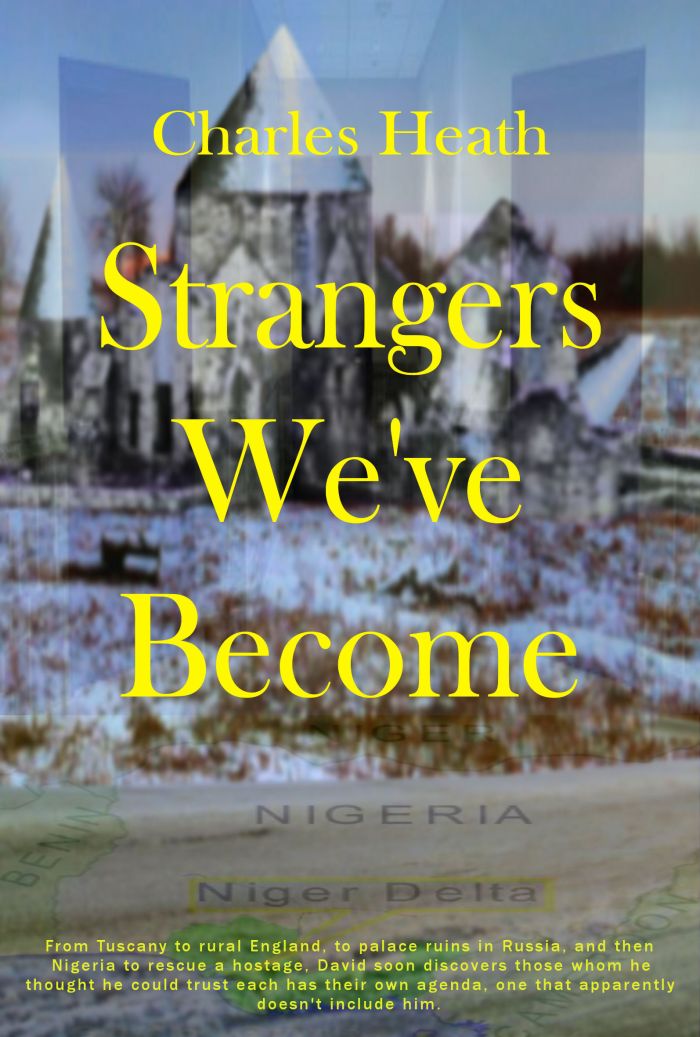
An excerpt from “Strangers We’ve Become” – Coming Soon

I wandered back to my villa.

It was in darkness.  I was sure I had left several lights on, especially over the door so I could see to unlock it.

I looked up and saw the globe was broken.

Instant alert.

I went to the first hiding spot for the gun, and it wasn’t there.  I went to the backup and it wasn’t there either.  Someone had found my carefully hidden stash of weapons and removed them.

Who?

There were four hiding spots and all were empty.  Someone had removed the weapons.  That could only mean one possibility.

I had a visitor, not necessarily here for a social call.

But, of course, being the well-trained agent I’d once been and not one to be caught unawares, I crossed over to my neighbor and relieved him of a weapon that, if found, would require a lot of explaining.

Suitably armed, it was time to return the surprise.

There were three entrances to the villa, the front door, the back door, and a rather strange escape hatch.  One of the more interesting attractions of the villa I’d rented was its heritage.  It was built in the late 1700s, by a man who was, by all accounts, a thief.  It had a hidden underground room which had been in the past a vault but was now a wine cellar, and it had an escape hatch by which the man could come and go undetected, particularly if there was a mob outside the door baying for his blood.

It now gave me the means to enter the villa without my visitors being alerted, unless, of course, they were near the vicinity of the doorway inside the villa, but that possibility was unlikely.  It was not where anyone could anticipate or expect a doorway to be.

The secret entrance was at the rear of the villa behind a large copse, two camouflaged wooden doors built into the ground.  I move aside some of the branches that covered them and lifted one side.  After I’d discovered the doors and rusty hinges, I’d oiled and cleaned them, and cleared the passageway of cobwebs and fallen rocks.  It had a mildew smell, but nothing would get rid of that.  I’d left torches at either end so I could see.

I closed the door after me, and went quietly down the steps, enveloped in darkness till I switched on the torch.  I traversed the short passage which turned ninety degrees about halfway to the door at the other end.  I carried the key to this door on the keyring, found it and opened the door.  It too had been oiled and swung open soundlessly.

I stepped in the darkness and closed the door.

I was on the lower level under the kitchen, now the wine cellar, the ‘door’ doubling as a set of shelves which had very little on them, less to fall and alert anyone in the villa.

Silence, an eerie silence.

I took the steps up to the kitchen, stopping when my head was level with the floor, checking to see if anyone was waiting.  There wasn’t.  It seemed to me to be an unlikely spot for an ambush.

I’d already considered the possibility of someone coming after me, especially because it had been Bespalov I’d killed, and I was sure he had friends, all equally as mad as he was.  Equally, I’d also considered it nigh on impossible for anyone to find out it was me who killed him because the only people who knew that were Prendergast, Alisha, a few others in the Department, and Susan.

That raised the question of who told them where I was.

If I was the man I used to be, my first suspect would be Susan.  The departure this morning, and now this was too coincidental.  But I was not that man.

Or was I?

I reached the start of the passageway that led from the kitchen to the front door and peered into the semi-darkness.  My eyes had got used to the dark, and it was no longer an inky void.  Fragments of light leaked in around the door from outside and through the edge of the window curtains where they didn’t fit properly.  A bone of contention upstairs in the morning, when first light shone and invariably woke me up hours before I wanted to.

Still nothing.

I took a moment to consider how I would approach the visitor’s job.  I would get a plan of the villa in my head, all entrances, where a target could be led to or attacked where there would be no escape.

Coming in the front door.  If I was not expecting anything, I’d just open the door and walk-in.  One shot would be all that was required.

Contract complete.

I sidled quietly up the passage staying close to the wall, edging closer to the front door.  There was an alcove where the shooter could be waiting.  It was an ideal spot to wait.

Crunch.

I stepped on some nutshells.

Not my nutshells.

I felt it before I heard it.  The bullet with my name on it.

And how the shooter missed, from point-blank range, and hit me in the arm, I had no idea.  I fired off two shots before a second shot from the shooter went wide and hit the door with a loud thwack.

I saw a red dot wavering as it honed in on me and I fell to the floor, stretching out, looking up where the origin of the light was coming and pulled the trigger three times, evenly spaced, and a second later I heard the sound of a body falling down the stairs and stopping at the bottom, not very far from me.

Two assassins.

I’d not expected that.

The assassin by the door was dead, a lucky shot on my part.  The second was still breathing.

I checked the body for any weapons and found a second gun and two knives.  Armed to the teeth!

I pulled off the balaclava; a man, early thirties, definitely Italian.  I was expecting a Russian.

I slapped his face, waking him up.  Blood was leaking from several slashes on his face when his head had hit the stairs on the way down.  The awkward angle of his arms and legs told me there were broken bones, probably a lot worse internally.  He was not long for this earth.

“Who employed you?”

He looked at me with dead eyes, a pursed mouth, perhaps a smile.  “Not today my friend.  You have made a very bad enemy.”  He coughed and blood poured out of his mouth.  “There will be more …”

Friends of Bespalov, no doubt.

I would have to leave.  Two unexplainable bodies, I’d have a hard time explaining my way out of this mess.  I dragged the two bodies into the lounge, clearing the passageway just in case someone had heard anything.

Just in case anyone was outside at the time, I sat in the dark, at the foot of the stairs, and tried to breathe normally.  I was trying not to connect dots that led back to Susan, but the coincidence was worrying me.

A half-hour passed and I hadn’t moved.  Deep in thought, I’d forgotten about being shot, unaware that blood was running down my arm and dripping onto the floor.

Until I heard a knock on my front door.

Two thoughts, it was either the police, alerted by the neighbors, or it was the second wave, though why would they be knocking on the door?

I stood, and immediately felt a stabbing pain in my arm.  I took out a handkerchief and turned it into a makeshift tourniquet, then wrapped a kitchen towel around the wound.

If it was the police, this was going to be a difficult situation.  Holding the gun behind my back, I opened the door a fraction and looked out.

No police, just Maria.  I hoped she was not part of the next ‘wave’.

“You left your phone behind on the table.  I thought you might be looking for it.”  She held it out in front of her.

When I didn’t open the door any further, she looked at me quizzically, and then asked, “Is anything wrong?”

I was going to thank her for returning the phone, but I heard her breathe in sharply, and add, breathlessly, “You’re bleeding.”

I looked at my arm and realized it was visible through the door, and not only that, the towel was soaked in blood.

“You need to go away now.”

Should I tell her the truth?  It was probably too late, and if she was any sort of law-abiding citizen she would go straight to the police.

She showed no signs of leaving, just an unnerving curiosity.  “What happened?”

I ran through several explanations, but none seemed plausible.  I went with the truth.  “My past caught up with me.”

“You need someone to fix that before you pass out from blood loss.  It doesn’t look good.”

“I can fix it.  You need to leave.  It is not safe to be here with me.”

The pain in my arm was not getting any better, and the blood was starting to run down my arm again as the tourniquet loosened.  She was right, I needed it fixed sooner rather than later.

I opened the door and let her in.  It was a mistake, a huge mistake, and I would have to deal with the consequences.  Once inside, she turned on the light and saw the pool of blood just inside the door and the trail leading to the lounge.  She followed the trail and turned into the lounge, turned on the light, and no doubt saw the two dead men.

I expected her to scream.  She didn’t.

She gave me a good hard look, perhaps trying to see if I was dangerous.  Killing people wasn’t something you looked the other way about.  She would have to go to the police.

“What happened here?”

“I came home from the cafe and two men were waiting for me.  I used to work for the Government, but no longer.  I suspect these men were here to repay a debt.  I was lucky.”

“Not so much, looking at your arm.”

She came closer and inspected it.

“Sit down.”

She found another towel and wrapped it around the wound, retightening the tourniquet to stem the bleeding.

“Do you have medical supplies?”

I nodded.  “Upstairs.”  I had a medical kit, and on the road, I usually made my own running repairs.  Another old habit I hadn’t quite shaken off yet.

She went upstairs, rummaged, and then came back.  I wondered briefly what she would think of the unmade bed though I was not sure why it might interest her.

She helped me remove my shirt, and then cleaned the wound.  Fortunately, she didn’t have to remove a bullet.  It was a clean wound but it would require stitches.

When she’d finished she said, “Your friend said one day this might happen.”

No prizes for guessing who that friend was, and it didn’t please me that she had involved Maria.

“Alisha?”

“She didn’t tell me her name, but I think she cares a lot about you.  She said trouble has a way of finding you, gave me a phone and said to call her if something like this happened.”

“That was wrong of her to do that.”

“Perhaps, perhaps not.  Will you call her?”

“Yes.  I can’t stay here now.  You should go now.  Hopefully, by the time I leave in the morning, no one will ever know what happened here, especially you.”

She smiled.  “As you say, I was never here.”

© Charles Heath 2018-2022

strangerscover9

First Dig Two Graves – the editor’s second draft – Day 30

Here’s the thing.

Ever had an itch you can’t scratch; that’s a part of what you’ve written, you have reservations, and you’re not sure what to write in its place.

For a few days now the start, or maybe the end, has been swirling around in my head.  To be honest, I don’t like the start, and I can’t get a feel for it.  I have about five different starting points, but none of them feels right.

I’ve been thinking of writing it from John’s perspective, but there are so many peripheral characters that need to be drawn in, people he doesn’t really know much about, or some who have a vested interest in his current girlfriend if she could be called that.

So I thought I’d throw a few words down and see how they sit:

You would not know by looking at MaryAnne that she was probably one of the best assassins in the world.  You would be more inclined to consider she was just another spoilt American brat on the loose on holiday.

She was certainly one of the most beautiful women I’d ever met.

And she was certainly one of the most deadly.  I could personally attest to that having seen her in action.

I could also attest to the fact that somewhere under that hard, conscienceless exterior, there was a heart, and sometimes it was visible.  After all, I was a target, her target, once, and I’m still alive thanks to her.

It was a small detail I omitted when I introduced her to my parents, but that was one little step on a long road that I thought was going somewhere.

Perhaps, after all this time, I’d misinterpreted the signs, and I was wrong.

We were sitting on the balcony of our hotel room on the 45th floor of the hotel we were staying in downtown Surfer’s Paradise, a mecca for holidaymakers from the rest of Australia, and overseas.

It was perfect for tourists.

The champagne was cold, and although it was a hot 35 degrees Celsius out in the sunlight, the mood on the balcony was as decidedly cool as the champagne.

Today was the six-month anniversary of the first day we had spent together as, well, I was not sure, now, what we were.

She turned to look at me.  She was nothing like the Zoe of old, and I had finally gotten used to Mary Anne.  It was an amazing transformation, but with it, I had thought she had finally shrugged off the Zoe persona.

She hadn’t.  That hardened expression that I had hoped would be gone forever, had returned.

“It’s time to go back home, John.”

It was also that tone, the one when she spoke, that sent shivers down my spine, not the good shivers, but the one that told me trouble was ahead.  Deadly trouble.

“I need to do something.  Don’t get me wrong, this had been a delightful rest, and I could not ask for a better companion, but it is time.  We both knew this was going to happen.”

I noticed her features had softened a little when she mentioned my name, but the message was the same.  We had talked about this moment at the outset.  There was always going to be a use-by date on this adventure, for me at least.

It was also the time when she would, she said, decide where I would fit, if I fitted, in her future.  When we originally spoke about it, she was still unsure of her feelings towards me.  Over time, I had also hoped that they would be the same as mine for her.

Perhaps I had been expecting too much.

“When did you decide?”

“About thirty seconds ago.  That’s when I realized it doesn’t matter where we are in the world, I still want to be with you.  So, how do you like the idea of going into the assassination business?”

I’m not sure what John might think of this development, but I think you will agree with me, so long as he is with Zoe, he’s happy.

© Copyright, Charles Heath 2018-2024

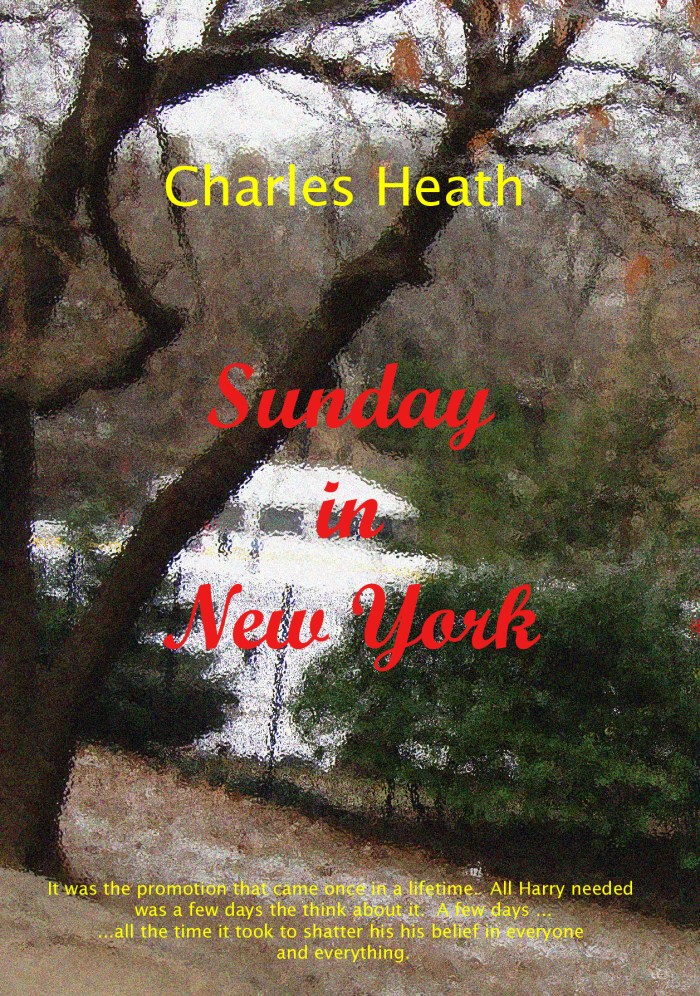
“Sunday in New York”, a romantic adventure that’s not a walk in the park!

“Sunday in New York” is ultimately a story about trust, and what happens when a marriage is stretched to its limits.

When Harry Steele attends a lunch with his manager, Barclay, to discuss a promotion that any junior executive would accept in a heartbeat, it is the fact his wife, Alison, who previously professed her reservations about Barclay, also agreed to attend, that casts a small element of doubt in his mind.

From that moment, his life, in the company, in deciding what to do, his marriage, his very life, spirals out of control.

There is no one big factor that can prove Harry’s worst fears, that his marriage is over, just a number of small, interconnecting events, when piled on top of each other, points to a cataclysmic end to everything he had believed in.

Trust is lost firstly in his best friend and mentor, Andy, who only hints of impending disaster, Sasha, a woman whom he saved, and who appears to have motives of her own, and then in his wife, Alison, as he discovered piece by piece damning evidence she is about to leave him for another man.

Can we trust what we see with our eyes or trust what we hear?

Haven’t we all jumped to conclusions at least once in our lives?

Can Alison, a woman whose self-belief and confidence is about to be put to the ultimate test, find a way of proving their relationship is as strong as it has ever been?

As they say in the classics, read on!

Purchase:

http://tinyurl.com/Amazon-SundayInNewYork

In a word: will

Now that I’ve hit the age of 65, I now have to give some consideration to creating a will.

You know, that document that specifies which child gets what, or if you think any or all of them don’t deserve what’s left of the hard-earned millions, which cat or dog will inherit a fortune.

A will is both a reason for siblings or beneficiaries to kill to get a reward or the fact you have to make one so that the state doesn’t inherit your fortune.

This is only one use of the word.

Another might be that it’s possible to have something like the will to carry on.

Carry on what?

Life, a marriage, a business relationship.

Does it require will power, or is it a matter of where there’s a will there’s a way?

I will come over. I will turn up tomorrow.

In this sense, it is promoting futility.

Of course, seeing is believing.

And as a bit of self-serving advertising, I’m going to promote a new story, actually titled, The Will.

Inheritance can resolve monetary problems, and not only that, set one of the siblings up financially for life. All they have to do is wrest the family home from the dying fingers of a mother who had seen it all.

Into the mix comes the grandson, a man who sometimes is a son but mostly a grandson, someone who doesn’t fit in, who doesn’t want to follow family tradition, and who prefers to go to his grandmothers rather than going home to his family.

He is constantly appalled at his mother’s lack of respect for her mother and suddenly finds himself in the middle of a battle between his grandmother and her daughter, his mother, over the family estate.

Who will win?

That’s a question that will be answered when you read the book.

“Echoes From The Past”, the past doesn’t necessarily stay there


What happens when your past finally catches up with you?

Christmas is just around the corner, a time to be with family. For Will Mason, an orphan since he was fourteen, it is a time for reflection on what his life could have been, and what it could be.

Until a chance encounter brings back to life the reasons for his twenty years of self-imposed exile from a life only normal people could have. From that moment Will’s life slowly starts to unravel and it’s obvious to him it’s time to move on.

This time, however, there is more at stake.

Will has broken his number one rule, don’t get involved.

With his nemesis, Eddie Jamieson, suddenly within reach, and a blossoming relationship with an office colleague, Maria, about to change everything, Will has to make a choice. Quietly leave, or finally, make a stand.

But as Will soon discovers, when other people are involved there is going to be terrible consequences no matter what choice he makes.

https://amzn.to/2CYKxu4

newechocover5rs

A to Z Blog Challenge – April 2024 – E is for Eccentric

It often came as a surprise to anyone who knew me that I reached adulthood with anything that resembled sanity.

My parents died early in my life, when j was about seven, probably a good age, if it could be said that there was anything good about it, having been shoved in a boarding school, and having parents who travelled the world as diplomats.  They had been interested in everything bar their son, so consequently I didn’t miss them as much as I should.

But…

What to do with a seven-year-old that no one really wanted.  I remember sitting in the headmaster’s office waiting to be taken to the funeral.  I didn’t know what to expect, all the headmaster had said was that my grandparents were coming.

That gave me a choice.  My father’s parents, the severe, strict, bible-thumping minister and his wife, a more sinister-looking pair than anything I’d seen before and was positively petrified when we visited them twice a year.

Then there were my mother’s parents who lived in a castle, not the fairy tale sort, but one with over a hundred rooms and a dungeon, and places where children should never venture.  Of course, telling a child no was the same as saying go for it, and that was a source of contention.

Needless to say, I knew who I wanted it to be.

Equally, I knew who I wanted to live with, but we always never got what we wanted, or so I had been told repeatedly by everyone.

So, until I was old enough to leave school and fend for myself, I had to split my time between the two, not that there was much left after school.  And, yes, neither took me out of boarding school, deciding that a break in my routine would be a disaster.

Nobody thought to ask me my opinion.

When I left school, finally, it was with the necessary qualifications, but not necessarily life skills.  Those were supposedly learned in the family environment.  Of the two, if I strictly applied what I learned in those few brief weeks at home each year was, on one hand, eccentric based on based on the notion I would become a minister, or eccentricity based on the notion I would become lord of the manor.

At no time was it suggested I would become a diplomat, even though I had applied when my parents’ old boss who came to the funeral offered me a pass to join the ranks after graduation.  You know, like father like son.

It gave me an escape, to get away from the stifling life I’d had for the past twelve years, standing at the station waiting for the train to take me away from basically everything I knew, and everyone, it seemed like the end of the world.

Perhaps then, had I not accepted an invitation to go on a holiday with Horace Arbuthnot Esq., my life might have turned out a lot differently.

Or not.  After all, destiny is what it was because it was not written in stone.

Twenty years on, when looking back, it seemed almost an eternity.

That summer, the year I turned eighteen, was memorable for many reasons.  I started out being introduced to Horace’s family and acquaintances as the eccentric Mr Alexander Wilberstone, the only son of highly regarded diplomatic problem solvers who disappeared mysteriously in the uncharted jungle of Africa.

The way he spun the tale was so much different from the reality of what happened, being gunned down on the back streets of Nairobi in a random drive-by shooting. I was, at that time, almost as mysterious as my parents, and the sort of character that added street cred to a lonely boy with no friends.

I didn’t tell him I was in the same boat, but since I was heading for the minister’s manse anything other than that was a godsend.  Besides, I like Horace and the tales he spun to make his ordinary life far more interesting.  And the fact he used my looks and charm to get girls to come and talk to us.

That was the second memorable thing about that year, Anna Louise Romano, an American girl with her family visiting Italian relations in Florence. 

She had a friend who I eventually discovered had been planning to meet Horace in Italy and it only dawned on me later why he seemed to move about constantly seeking tourist attractions and after each visit, noticing his mounting despair.

That of course led to the third thing about turning eighteen, it unlocked my inheritance which was, when an old dusty lawyer in an old dusty office right out of a Dickens novel, told me one dusty afternoon in London.  It was, to an eighteen-year-old, an unimaginably large sum to do whatever I liked.

Within reason, of course.  The minister and the lord of the manor had taught me one thing; to be miserly.

Perhaps Horace had known about it. He certainly knew everything about everyone, ensuring he was not bullied or his friends, the advantage of which I recognised early on.  He was always perpetually short on funds and was always going to pay me back, the mysteriously unavailable funds just about to drop when…  well put any excuse you like in there.

I didn’t mind paying his way.  Twelve years of friendship needed repaying.  And I regarded it my job to ensure he got to meet the love of his life. As for myself, just enough time to fall hopelessly in love, to spend the most incredible four weeks of my life, and then watch her slip through my fingers like the sands of an hourglass.

Horace was lucky, though, in time, he convinced me that very little came to anyone being lucky.  He married his girl, moved to Tuscany, started a vineyard and winery, and told me I had a home any time I wanted one.

I travelled the world, noted all the shortcomings of travel agencies, and everything else in between and created an app that solved firstly my problems and then everyone else’s and sold it for a staggeringly large sum, more staggering than the original inheritance, and on the very day of my thirty-eighth birthday moved into a quaint loft in Brooklyn, New York, to contemplate my next venture.

And as it happened, Horace and Beverly were in the city, and I was taking them to dinner, a sort of birthday party to celebrate everything.  All that was missing was the girl I could share my life with.

I’d tried over the years, but there was never that one, not the Anna Louise Remano that I fell in love with and would never forget, as much as I tried to.  But don’t get me wrong.  I was happy.  I had experienced in those few short weeks what many couples never could in a lifetime.

The restaurant was not far from the apartment, and I’d invited Horace to stay with me, far less expensive than a hotel, and easier for me to show them the city starting the next day.  They had brought their children two remarkable but seemingly unrelated people who had ideas of their own that didn’t include being seen with us old people.  I hired a nanny, much to their dismay.  Until they met her.

We walked, the evening warm but not hot.  It was an ideal time of the year.  Horace was different. He’d lost weight and was looking fit and healthy, more than he had when he was a child.  Life in the countryside, hard work, and finding the perfect partner had cast a spell on him.  I was happy for him. His life had always been harder than mine.

But there was something.  It was like he had a secret, and it was going to burst out of him.  He was making small talk, and he only ever did that when he had a secret and was trying hard not to spill it

Until that moment…

When we reached the restaurant, he opened the door for me.  Usually, it was the other way around.  I gestured for Beverly to go first, but she hung back.

Had he invited one of our old friends, one I hadn’t seen for a long time.  He’d been skirting around the old memories, the time we had been in Florence, taken the train to Piza and driven to Venice.

The mention of Venice had brought back a flood of memories, all of which involved what I had believed to be the love of my life.

Anna Louise Romano.

And the moment I stepped through that door, I knew she was there.  It didn’t matter that the restaurant was crowded, I had that tingling sensation go up and down my spine.

And it was as if the crowd parted and there standing before me was the girl herself, all grown up and as beautiful as the first day I saw her.

Then he was beside me.  “Surprise!”

“How? Where?”

“You were just two ships passing in the night, Alex.  She’s recovering from a nasty divorce, so treat her with kid gloves.  Who knows what might happen?”

Memories of the conversations with my cat – 88

As some may be aware, but many not, Chester, my faithful writing assistant, mice catcher, and general pain in the neck, passed away some years ago.

Recently I was running a series based on his adventures, under the title of Past Conversations with my cat.

For those who have not had the chance to read about all of his exploits I will run the series again from Episode 1

These are the memories of our time together…

20160909_062838-2

This is Chester.  He had reminded me that it is Dr. Seuss’s birthday

Or perhaps that of the Cat in the Hat.

Chester told me once he auditioned for the role of Cat in the Hat, but he couldn’t get the hat to sit right.

A stitch-up, really, he added.  There was this fat cat, and he told everyone the role was his.

Period.

So, I had to ask, did he get the role?

No.  You’ve seen the Cat in the Hat, haven’t you?  Nothing like him.

So, other than trying to intimidate the competition, what was so scary about him?

Oh, I wasn’t scared or anything like that.  I just didn’t want to make a scene in front of the ladies.

I take a minute, trying to equate the cat in front of me, and that of the Cat in the Hat.

No resemblance at all.

And as for the scaredy-cat part, I decide not to remind him of his all-conquering fear of the grandchildren.

I’ll just wait until the next time they visit…

In less than two hours.

The cinema of my dreams – Was it just another surveillance job – Episode 37

I’m back home and this story has been sitting on a back burner for a few months, waiting for some more to be written.

The trouble is, there are also other stories to write, and I’m not very good at prioritizing.

But, here we are, a few minutes opened up and it didn’t take long to get back into the groove.

Chasing leads, maybe

I had a change of mind before I went on an odyssey to Peaslake. I needed help, and I was going to try and convince Jennifer to help me. If she had been injured, that might be more difficult.

I caught a train and a bus to Putney and then walked the remaining fifty yards to her front door. It was a flat over the top of a shop, and, when I read the name of the shop, I thought I knew why she was there. The shop, and quite likely the building belonged to her family, not that it was her surname, but I could be hopeful.

I went up the side stairs and reached the landing. There were two doors, one with 1A on it, and one with 1B on it. Hers was 1A.

I knocked on the door.

A minute later nothing had happened.

I knocked again, this time a little harder.

There was no answer, again, but there was a movement in the flat next door, then the door opened and a scruffy young man, perhaps a university student put his head out.

“She’s not here.”

“Not here, and in no longer living here, or not here as in she is out somewhere and will be back.”

He looked at me blankly, like I’d spoken too fast, or used too many words for him to understand. Possibly he’d just woken up.

He shook his head. “Just out probably getting coffee or something. The shops on the other side of the road, three or four doors up. Can’t miss it, it smells like coffee.”

He gave me a look up and down, gauging whether or not I could be of interest to her, then went back inside his room and closed the door.

It might be a lie, but I was going to take him at his word.

I went back down the stairs and out onto the sidewalk and looked up and down both sides of the street. There was a café, on the other side, not far away.

I waited for a break in the traffic, then crossed the road.

She was inside, reading a paper, oblivious to those around her, and, in particular, those coming from outside. She should be casually keeping an eye out for trouble.

I managed to get inside and take the seat next to her before she raised her head to see who it was.

No surprise.

“You,” she said. “You made it out alive too?”

“You should be more careful.”

“I was told I was no longer employed, that the people who hired me were ex-agents with some sort of agenda.”

I glanced at the open page of the newspaper. The jobs vacant page.

“Then it might come as a bit of a surprise to realize you’re still on their books, just assigned to a different department. Same as me.”

“They told me I was redundant.”

“Who told you?”

“A woman. Monica Sherive she said her name was.”

“I spoke to her earlier this morning. I didn’t ask, but I will the next time I’m in the office. What do you remember about the assignment?”

“We were supposed to maintain surveillance on a man, no name, just a photograph. I heard you had him in sight and was about to pass him off to Adam. I didn’t hear Adam acknowledge. I heard an explosion and all hell broke loose. No point carrying on, so I left.”

And that was what saved her life. Incorrect procedure. Unless she reported in.

“Did you report to the overseer.”

“Over the radio. He told me to go. What happened to Adam and Jack?”

“Dead. Murdered by the target, I think. The target’s dead too. A chap by the name of O’Connell, though the more I find out about him, the more interesting it gets.”

I could see the cogs ticking over behind her eyes as she put one and one together. “So…”

“You should be dead too. What saved your life was just up and leaving.”

“How did you escape?”

“I didn’t. I found the target again after the explosion and followed him to an alley. When I got there he told me I was making a mistake, and then he was shot. Severin and Maury turned up, and that was it.”

“Did they kill him?”

“No. It was a sniper, and I’m still wondering why I didn’t get shot too.”

“The woman told me Severin and Maury didn’t work for the organization. How could that be? They seemed real to me. I think whatever they and we were doing became a mess that needed to be cleaned up by getting rid of everyone associated with it. I liked that job. Now I have to go back to a daily drudge job.”

“Don’t think so. Like I said, I saw your name listed as active in the same department as me, the head of which is a guy called Nobbin. I’ve met him, I’m supposed to be investigating O’Connell, who, by the way, was one of his people, who had allegedly some documents on him when he died. You feel like helping out?”

“I would, but are you sure I’m supposed to be working for these people, God, I don’t know who they are or what I was doing anymore.”

“We can go to the office and ask questions. Get this Monica and get her to tell you. But in the meantime, I had a job I need to do, and it would be better with two. Can you help?”

“If you come with me to the office?”

“Sure.”

She folded the paper and slid off the seat. “Then, let’s go.”

© Charles Heath 2020

“Mistaken Identity” – The Final Editor’s Draft- Day 2

This book has finally reached the Final Editor’s draft, so this month it is going to get the last revision, and a reread for the beta readers.

Writing proceeds apace and the next chapter seems to have gone on a bit longer than I wanted, but that was because I was having fun. The editor’s suggestions brought a whole new light to the story, with the two main characters being together, not exactly by choice, but as the result of circumstances.

I have also been making notes at the same time, of situations that will arise from their being together, and establishing the reasons behind a lot of what happens later.

I have also re-established the timeline with actions that stretch further into the story and wrote a few little sections at the same time because the story was almost writing itself, and in moments like those, I find it best to get it down on paper, no matter how roughly it turns out.

I am also doing a quick edit of this section of writing because it will be most likely two or three chapters, not just one.

More tomorrow.

Searching for locations: The Kingston Flyer, Kingston, New Zealand

The Kingston Flyer was a vintage train that ran about 14km to Fairlight from Kingston, at the southern end of Lake Wakatipu, and back.

This tourist service was suspended in December 2012 because of locomotive issues.

However, before that, we managed to go on one of the tours, and it was a memorable trip.  Trying to drink a cup of tea from the restaurant car was very difficult, given how much the carriages moved around on the tracks.

The original Kingston Flyer ran between Kingston, Gore, Invercargill, and sometimes Dunedin, from the 1890s through to 1957.

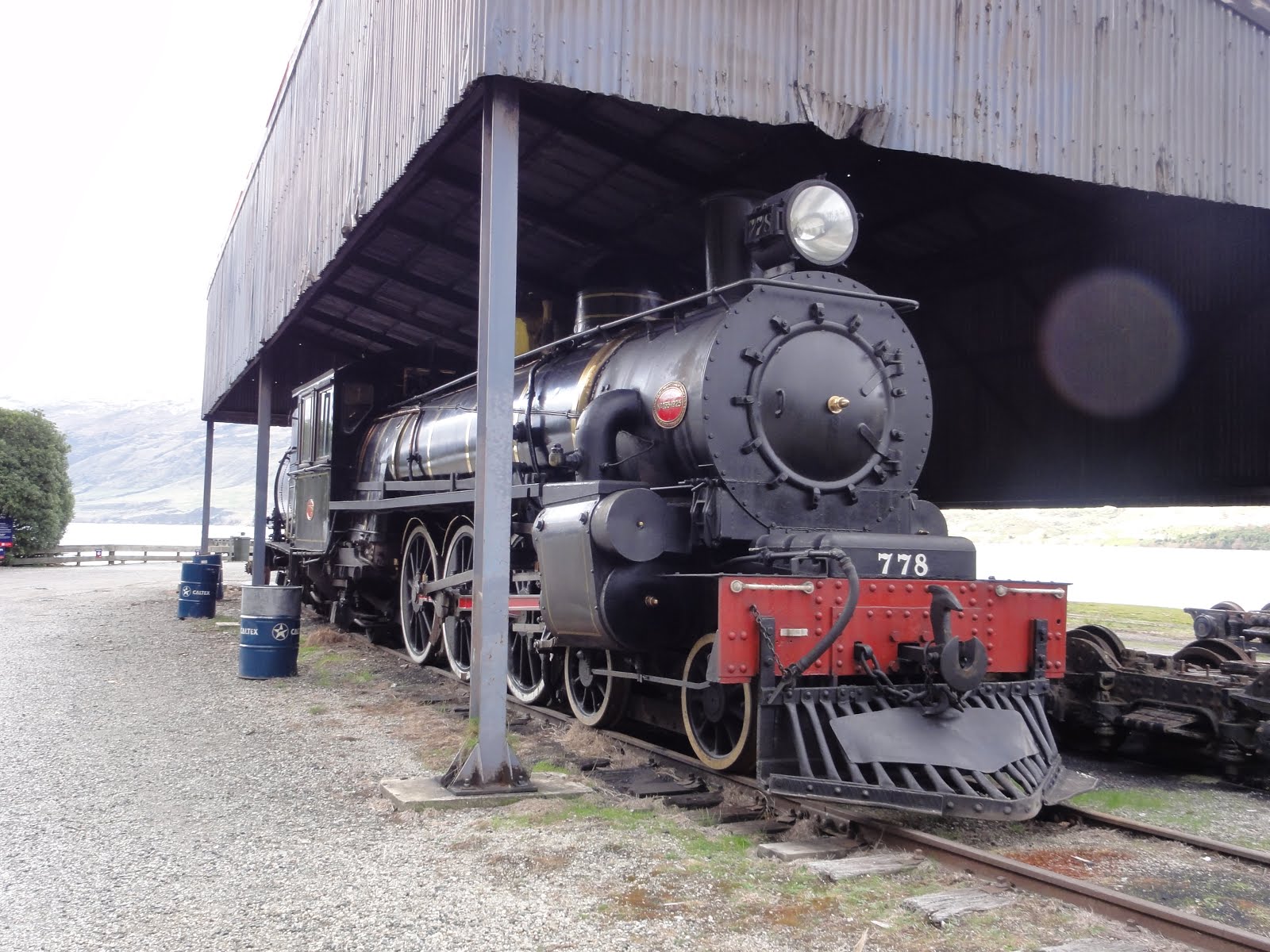
There are two steam locomotives used for the Kingston Flyer service, the AB778 starting service in 1925, and the AB795 which started service in 1927.

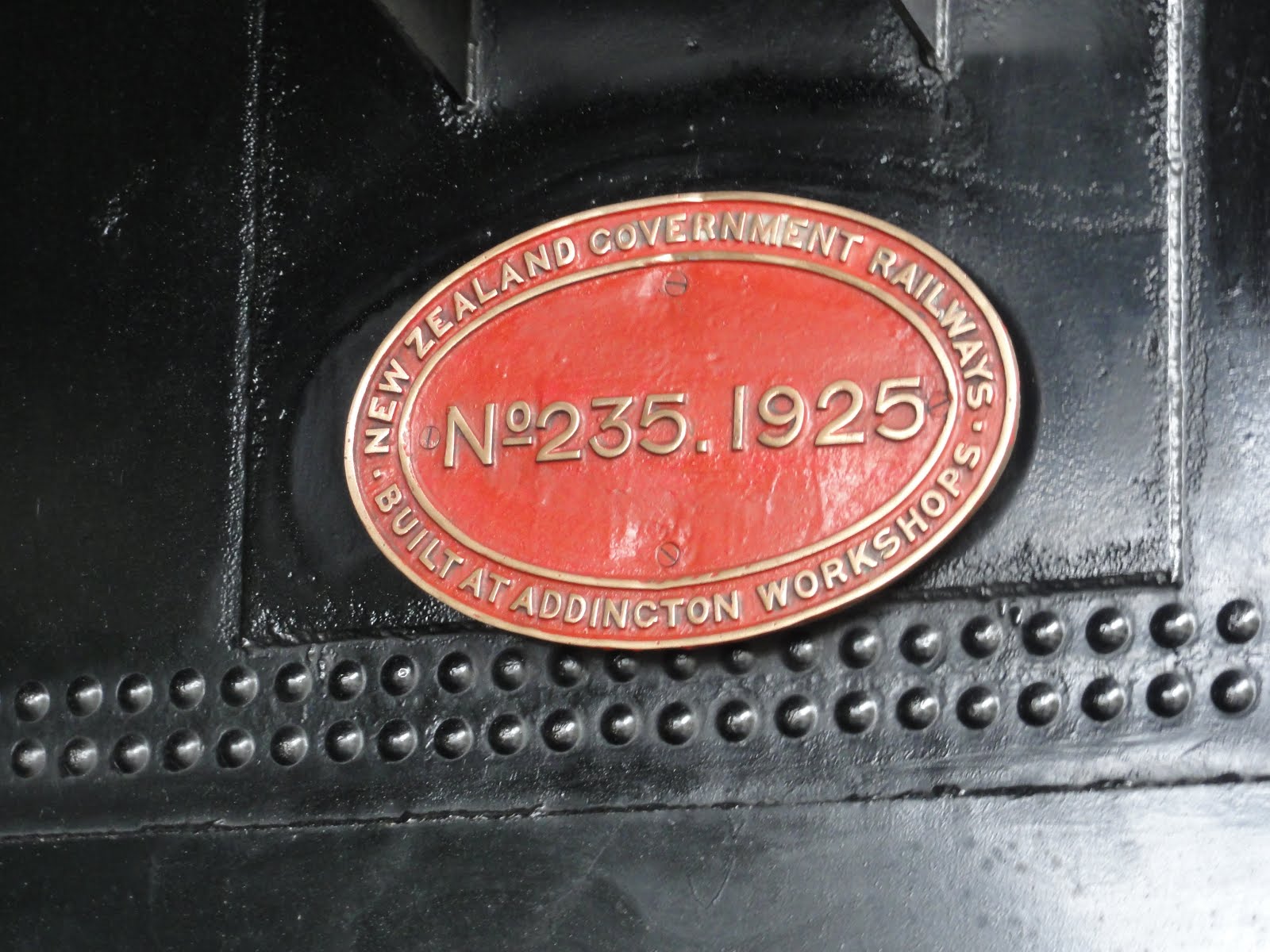
The AB class locomotive was a 4-6-2 Pacific steam locomotive with a Vanderbilt tender, of which 141 were built between 1915 and 1927 some of which by New Zealand Railways Addington Workshops.

No 235 is the builder’s number for the AB778

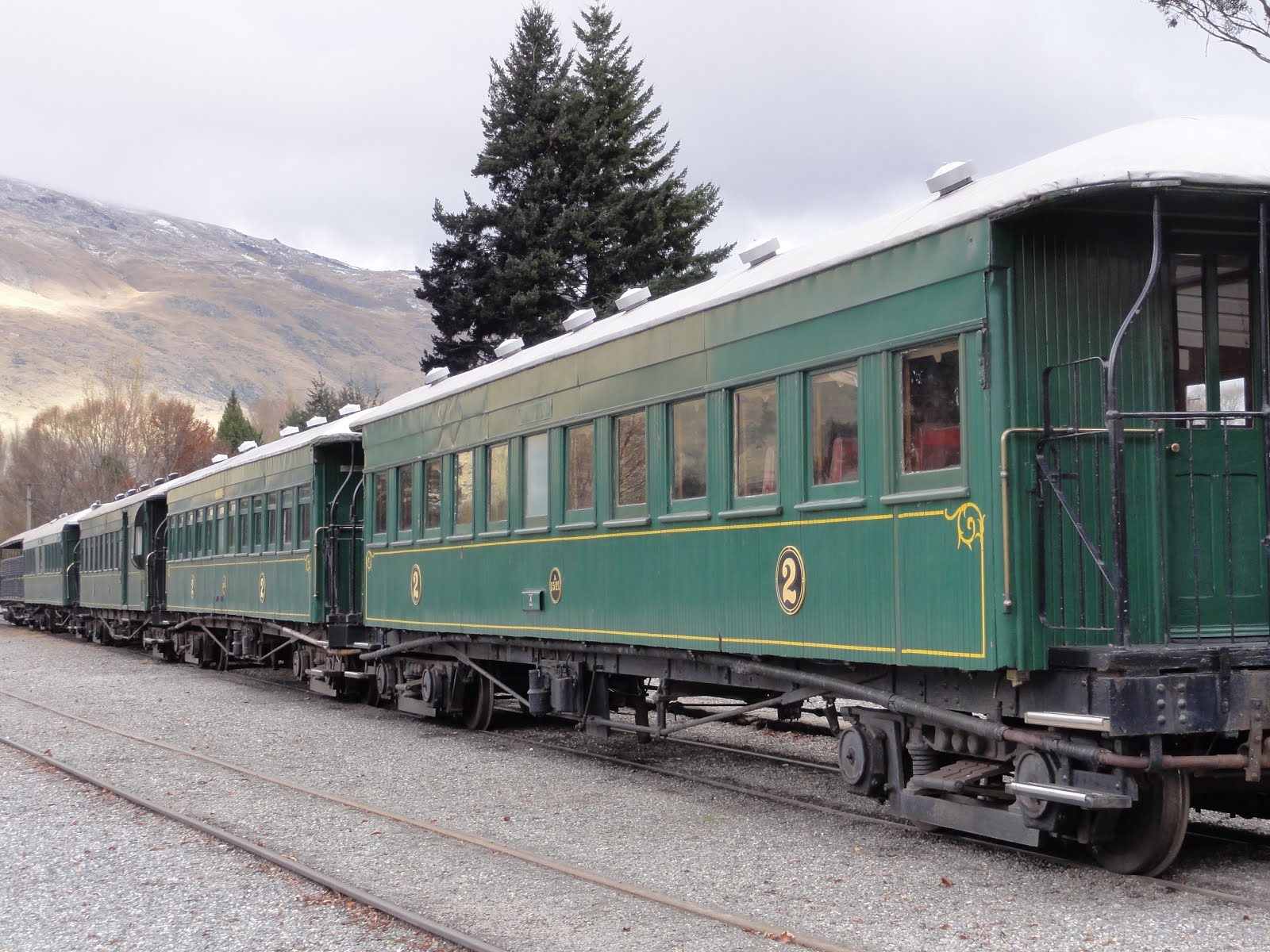
There were seven wooden bodied passenger carriages, three passenger coaches, one passenger/refreshments carriage and two car/vans.  The is also a Birdcage gallery coach.  Each of the rolling stock was built between 1900 and 1923.  They were built at either of Addington, Petone, or Hillside.

I suspect the 2 on the side means second class

The passenger coach we traveled in was very comfortable.

This is one of the guard’s vans, and for transporting cargo.

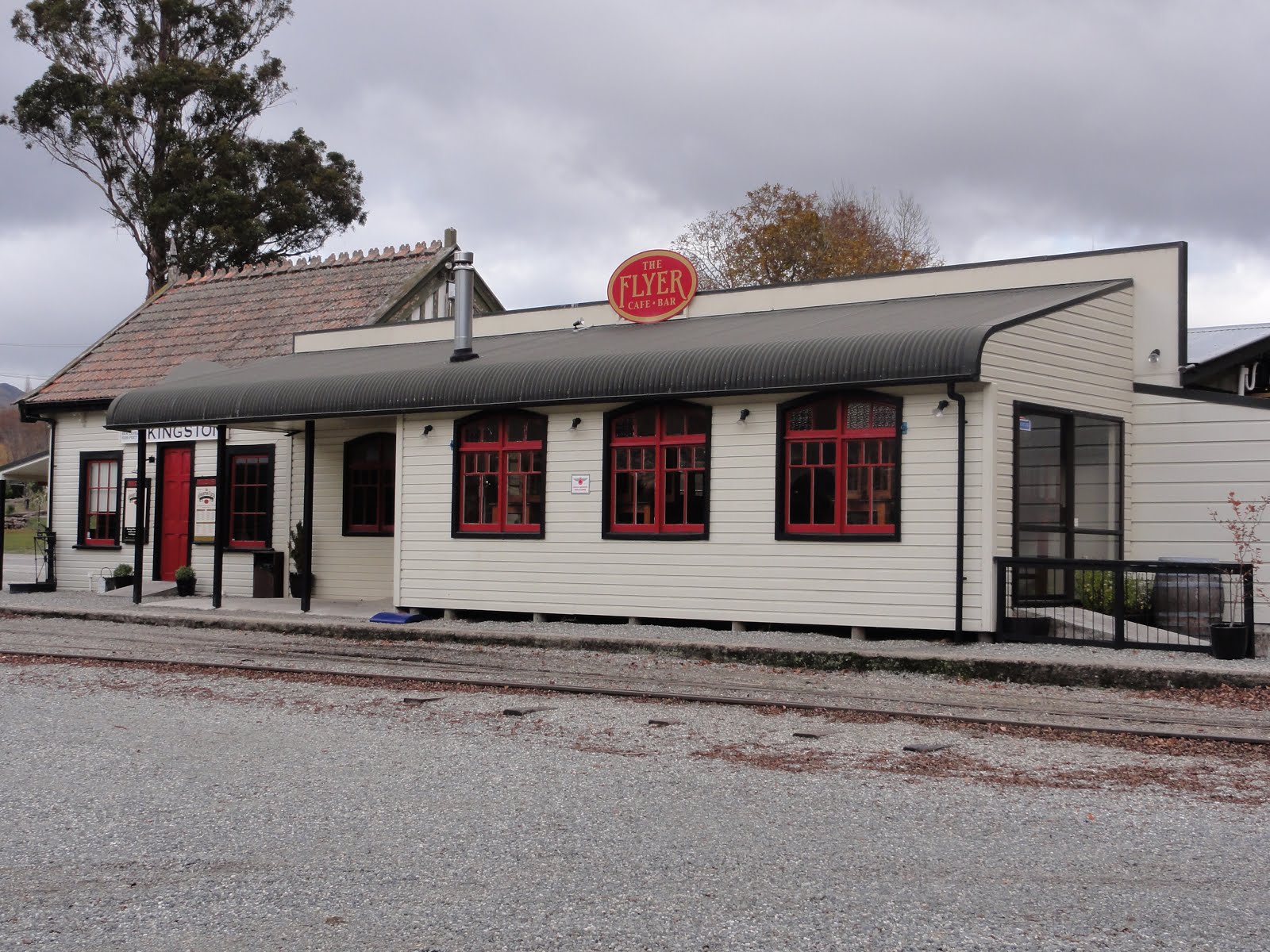
The Kingston Railway Station

and cafe.

A poster sign advertising the Kingston Flyer

The running times for the tourist services, when it was running.