In a word: Steal

You know how it goes, somebody breaks into your house and they steal the family jewels, which means, they’ve taken something that’s not theirs.

Baseballers will be well familiar with the term steal a base because that sneaky second base runner is trying to get to third, before the pitcher fires in a curveball.

But then there’s that same thief trying to rob you is stealing his way downstairs.

You come across a bargain, that is the seller doesn’t quite know what they’ve got and assumed it’s junk, that’s a steal.

On stage, one actor can steal the limelight from another.  if a film, an actor with a lesser part, can, if their good enough, steal the scene.

And if you’re lucky enough, you might steal a kiss, or just get slapped.

Then there’s the government, using a certain event to change the laws, and it might just steal your liberty.

This is not to be confused with the word steel, which means something else entirely, like a very malleable metal that’s low in carbon.

Or like most of our heroes, they have nerves of steel, or if they are like us, they need to steel themselves with a suitable fortification, rum is my choice.

But for me, I like the phrase, he had a steely look on his face and it was hard to tell if that was good or bad.

‘Sunday in New York’ – A beta reader’s view

I’m not a fan of romance novels but …

There was something about this one that resonated with me.

This is a novel about a world generally ruled by perception, and how people perceive what they see, what they are told, and what they want to believe.

I’ve been guilty of it myself as I’m sure we all have at one time or another.

For the main characters Harry and Alison there are other issues driving their relationship.

For Alison, it is a loss of self-worth through losing her job and from losing her mother and, in a sense, her sister.

For Harry, it is the fact he has a beautiful and desirable wife, and his belief she is the object of other men’s desires, and one in particular, his immediate superior.

Between observation, the less than honest motives of his friends, a lot of jumping to conclusions based on very little fact, and you have the basis of one very interesting story.

When it all comes to a head, Alison finds herself in a desperate situation, she realises only the truth will save their marriage.

But is it all the truth?

What would we do in similar circumstances?

Rarely does a book have me so enthralled that I could not put it down until I knew the result. They might be considered two people who should have known better, but as is often the case, they had to get past what they both thought was the truth.

And the moral of this story, if it could be said there is one, nothing is ever what it seems.

Available on Amazon here: amzn.to/2H7ALs8

A photograph from the inspirational bin – 47

What story does it inspire?

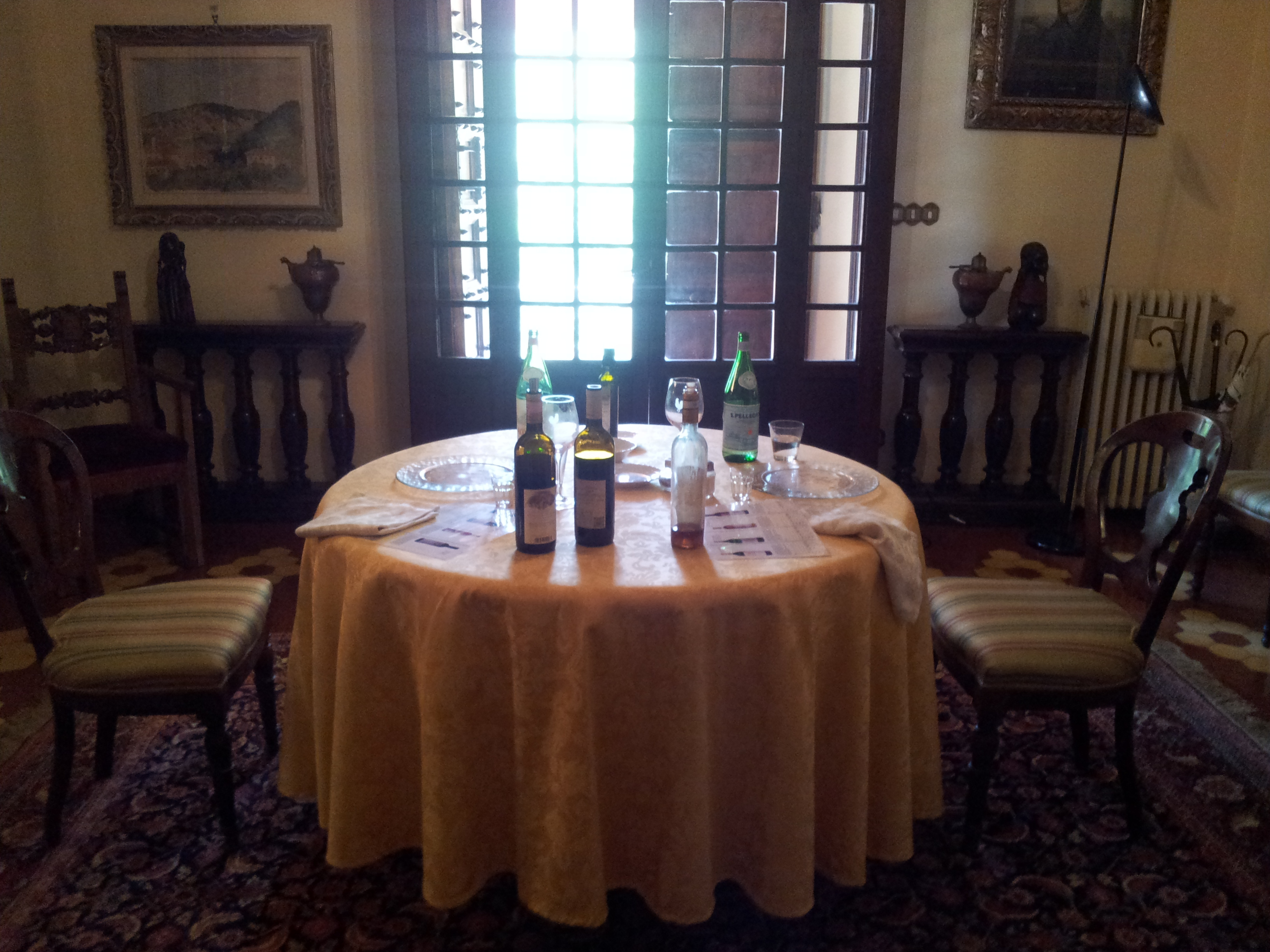
A table for two…

This was at a winery in Italy where, on the tour we took, we had lunch as part of the tour, after, of course, a tour of the winery.

It was a picturesque setting, and the food, and matching wines, were exquisite, and perhaps we may have had slightly more than we should have.

But, they did leave the wine behind…

However…

Inspirationally, we could base the story around a lunch or dinner, two people looking to get their relationship back on track, deciding to take time out alone to see if the part is still there.

How could it not in a setting like this?

It could be the setting for a chef, trying out his new menu, or working on a new menu, getting tourists to sample the courses and wines.

We’d have to make the chef a man, or woman, on the edge of disaster, and looking to recover from a disaster of some description – like a failed restaurant and the need for second chances…

Or…

A failing chateau, typified by the declining visitor number and warring family members, all of whom were left a share in the large but rapidly deteriorating mansion.

Should they renovate and turn it into a hotel with a 5 star restaurant, or should they sell to developers and see it bulldozed, or will one, secretly very wealthy, offer to buy them all out and preserve the ancestral home?

Anything is possible…

Memories of the conversations with my cat – 68

As some may be aware, but many not, Chester, my faithful writing assistant, mice catcher, and general pain in the neck, passed away some years ago.

Recently I was running a series based on his adventures, under the title of Past Conversations with my cat.

For those who have not had the chance to read about all of his exploits I will run the series again from Episode 1

These are the memories of our time together…

20160902_093736

This is Chester.  We’re both a little tired this morning.

I spent a little too much time on the next few chapters of my NaNoWriMo project and lost track of time.  It was going so well, I thought it best not to interrupt the flow of words.

But…

This morning, after getting to bed about 2:30 am, I found it hard to get out of bed.

Fortunately, as usual, I had the cat alarm clock wake me out of deep sleep to be informed that it was breakfast.

I looked at the clock and saw it was 6:30 am.

I mean to say, Chester was with me at 2:30 when I was writing, and he didn’t tell me that it was time to go to bed, much earlier than I did.

I think he enjoys torturing me like this.

So…

I get up, get him breakfast, some smelly fish food that even he turns his nose up at, and go out to the writing room with the intention of getting on with the story.

Next thing I know, there’s a gentle tapping on my forehead,

I wake up and it’s Chester.

What? I ask.  You can’t possibly want more food.

No.  I thought you were dead.

That’s amusing, he sees me asleep in bed and doesn’t think I’m dead.

How could you think that?

There are only two reasons why people become inanimate in their chair, they have suffered a heart attack or stroke, or they’re dead.

What about simply falling asleep because they’re too tired, and their faithful assistant didn’t tell them to go to bed earlier?

Look, let’s not make a beak deal out of this.  I was concerned.  Perhaps I won’t be next time.  A final glare and he jumps down off the keyboard, which left a page of endless d’s on the page I had been working on.

Perhaps he’s getting old and forgetful, or, suddenly he realises I mean more to him than just giving him food and cleaning the litter.  No, stop deluding yourself.  You’re his friend, he’s not your friend.

Oh, well, for a moment there…

The cinema of my dreams – Was it just another surveillance job – Episode 17

As we all know, writing by the seat of your pants is almost the same as flying by the seat of your pants, a hazardous occupation.

As it happens, I like writing this way because like the reader, I don’t know what to expect next.

And equally, at times, you can write your self into a corner, much like painting, and then have to go back, make a few changes and//or repairs and then move forward.

It’s part of the writing process, only in this case, the changes occur before you’ve finished the novel, if you finish.  Quite often a lot of writers get only so far, then the manuscript hits the bottom drawer, to be brought out on a distant rainy day.

Or your cat has mocked your writing ability one too many times.

Therefore, we’re winding back to Episode 16, and moving forward once again, from there.

Why didn’t it surprise me that Nobbin was playing all ends against the middle if that was the expression?  What really bothered was that he wasn’t prepared to tell me the truth or trust me to help find the missing information.  But he had known I might become interested and do some investigating of my own.

Perhaps Nobbin feared Severin might track me down, as he had, and if I had found the USB, run the list of losing it to his foe.

Nor was it a surprise that someone else, namely Severin, was after the information, and he would have access to everything Nobbin did, and he was equally disadvantaged.  It was either Severin or one of his agents, that was caught in O’Connell’s flat and found ‘Josephine’ there.

I didn’t believe her name was Josephine, or that she lived in the flat next door.  And I didn’t think Severin had found anything going by the way the flat had been turned over, and the fact it looked like no one had lived there.

Having now dealt with both men, I was still on the fence about who was on the right side and who was on the wrong side, or whether they were both of questionable character.  What made it difficult to understand was how Severin could run an operation inside the organisation.  Surely someone knew about it, or from a high level, sanctioned it?

Knowing I would not be interrupted this time, I went back up to the third floor, and into O’Connell’s flat, a simple job since the front door was still unlocked.  The girl had assumed it was no value to them which told me she had already searched the place before being attacked.

Just in case anyone was likely to return, or there was another party interested in O’Connell, I locked the door from the inside.  At least no one had yet crashed through the door, smashing the lock and timber.

I stood in the middle of the main room, and did a slow 360-degree turn, looking at everything intently.  The thing with searches like this, it was more likely the object of any search was hidden in plain sight.  The usual places, such as the freezer, sections of fridges, stashed in bottles or packets in the pantry, under beds, inside mattresses, pillows, or under blankets, or with a form of glue on the inside of televisions or computers would prove fruitless.

We were taught to hide things such as USB sticks where they would be least expected to be found, such as a toy on a keyring, tossed in a bowl of pens, pins, clips, or other small insignificant items that all looked uninteresting.

My first thought was in the pocket of a coat in the closet, but all his clothes were strewn over the floor in the bedroom showing signs of being turned out.  Perhaps the searcher or searchers had thought like me.

There was no keyring in the kitchen or the bedroom, no was there any sort of stand inside the door, a place to put mail, and other items such as keys.  If there were any, they would have been on him when Severin had him killed.  I had not found, not felt, any in his pockets, not unusual for an agent in the field.  If you were captured or killed, you wanted nothing on you that could identify you or what you were doing.

Next I thought, a hidden compartment.  I was not going to predict he had a safe in the flat, but just in case, I did search thoroughly where one might be located.  The cheap watercolour on the wall hid nothing but some discoloured wallpaper.

I checked all the skirting boards, and inside walls of the robes, but there was nothing.  I also checked the robes thoroughly for false backs, or sides, or compartments hidden in the roof.  The floor was made from wood, so I checked to see if there were any loose boards, but in the end, considered that was a ruse used only in the movies and on television.

An hour later, I was no wiser as to where it could be, if at all, in the flat, but, looking around, it was certainly now a little more organised because in checking everything in case the previous searchers had missed anything, I’d put everything neatly in stacks.

And, no, there was nothing under the bed.  The previous searchers had thought of that too.

But, in one corner of the main room, there was a desk that had been completely turned out, papers were strewn everywhere.  There had been a computer, now missing, because there was a cable running from the printer, and a power cable in the wall, both running into thin air.

The papers yielded nothing of interest, other than he was researching a holiday to Russia and Poland. 

For two.

A break.  There was a significant other.  I made a more serious search of the papers that I’d gathered up off the floor and found a shred of a quickly torn up piece of paper, of which only this piece remained.  A name:  Jan, scribbled on it, with half another word ‘ord’.

Did this Jan also live in this block?  Did she work at the same place?  There were a hundred variations of that theme, but it was a start.  He might have trusted the USB to her safekeeping without telling her what it was, and it was possible she didn’t know he was dead.

I’d noticed that O’Connell’s death had been reported as a John Doe on the wrong end of an alleged mugging, the small dismissive paragraph on page seven reported the body was missing when police went to investigate a pool of blood in an alley, along with several other crimes of which police were seeking further information.  That alley hadn’t any CCTV cameras, so Severin knew he could easily shoot O’Connell without anyone knowing it was him.

There was nothing else of interest in the documents, other than the holiday, if it was a holiday, was to be in a month’s time.

My work was done.  I had a lead.  It was time to leave.

Except for one small problem.  Someone was knocking on the door.

© Charles Heath 2019-2022

First Dig Two Graves – the editor’s second draft – Day 12

This book has finally come back from the Editor, so this month it is going to get a second revision, a second draft for the editor, and beta readers.

Today we are in Vienna, at the hotel where Zoe was staying trying to get information out of the hotel staff. This leads to a contact on a riverboat that goes from Vienna to Bratislava in Slovakia.

Yes, we’re off to Bratislava, chasing Zoe down.

In the background, we have the shadowy Worthington, pulling endless strings, gathering information on her whereabouts for John. He had deduced that if John can find her, she will pause long enough for Worthington’s hit team to get there.

John does not realize he has ulterior motives, but, then John doesn’t fully understand the spy business.

John also tasks his newfound private investigators to track her down, and Isobel doesn’t disappoint.

Then, a photo of her from Worthington arrives, she is discovered, and, as you can surmise, all hell breaks loose.

I’ve always wanted to go to Bratislava, ever since I saw it in a James Bond movie. That showed it had trams, and I’m one of those people who love trams, trains, buses, and anything that reeks of travel.

I would also like to hop a boat and travel up the river, perhaps from Vienna to Bratislava, or beyond.

One day.

Today’s writing, with John desperately trying to find Zoe, 2,525 words, for a total of 36,812.

Searching for locations: Shanghai, China, by night.

When we arrive at the embarkation site we find at least 100 buses all lined up and parked, and literally thousands of Chinese and other Asians streaming through the turnstiles to get on another boat leaving earlier than ours.

Buses were just literally arriving one after the other stopping near where we were standing with a dozen or so other groups waiting patiently, and with people were everywhere it could only be described as organized chaos.

Someone obviously knew where everyone was supposed to go, and when it was our turn, we joined the queue.  There were a lot of people in front of us, and a lot more behind, so I had to wonder just how big the boat was.

We soon found out.

And it was amusing to watch people running, yes, they were actually running, to get to the third level, or found available seating.  Being around the first to board, we had no trouble finding a seat on the second level.

I was not quite sure what the name of the boat was, but it had 3 decks and VIP rooms and it was huge, with marble staircases, the sort you could make a grand entrance on.  The last such ornate marble staircase we had seen was in a hotel in Hong Kong, and that was some staircase.

But who has marble staircases in a boat?

We’re going out across the water as far as the Bund and then turn around and come back about 30 to 40 minutes.   By the time everyone was on board, there was no room left on the third level, no seats on the second level nor standing room at the end of the second level where the stairs up to the third level were.

No one wanted to pay the extra to go into the VIP lounge.

We were sitting by very large windows where it was warm enough watching the steady procession of the colored lights of other vessels, and outside the buildings.

It was quite spectacular, as were some of the other boats going out on the harbor.

All the buildings of the Bund were lit up

And along that part of the Bund was a number of old English style buildings made from sandstone, and very impressive to say the least.

On the other side of the harbour were the more modern buildings, including the communications tower, a rather impressive structure.

I had to go to the rear of the vessel to get a photo, a very difficult proposition given here was no space on the railing, not even on the stairs going up or down.  It was just luck I managed to get some photos between passengers heads.

And, another view of that communications tower:

There was no doubt this was one of the most colourful night-time boat tours I’ve ever been on.  Certainly, when we saw the same buildings the following day, they were not half as spectacular in daylight.

I never did get up to the third level to see what the view was like.

It’s been an interesting day

Today we have been delving into the past in a way that makes history interesting.

Also, it’s another way to get young children to take an interest in the past, seeing that is often very difficult to part them from their iPad, smartphones and computer games.

It is part of a weekend devoted to history.

First up is a ride on an old steam train, the engine dating back to the 1950s, as are some of the carriages. Now, for someone like me who is only two years younger, it doesn’t seem that old, but to them, it’s a relic.

And for the youngest of our granddaughters who tells me that this will be her first ride on a train, any train, it’s going to be vastly different from her next ride on a train.

I don’t think it went faster than about 30, whether that’s miles an hour or kilometres, so we had time to take in the bushland, the river crossings and the smell of the coal-generated smoke.

And the biggest treat was for them to climb up into the engine cabin to see who drives it, and how it all works.

I try to tell them this is a far cry from the 300kph bullet trains in China that we recently travelled on. This ride was rattly, noisy, and we were barely able to sit still, whereas on the bullet trains you hardly knew you were moving and was so smooth and silent you didn’t know you were moving until you looked out the window.

Tomorrow we’re going to a historical township, built out of digging for gold in the area. It will be of significance to the elder granddaughter as she is working on a project on Eureka, where there was a watershed between the miners and the authorities.

History, in my opinion, cannot be taught entirely by books, there must be visual and active participation in simulated events for them to get a better understanding. That, and then writing about it in the way historical fiction often brings moments in history alive.

We are all looking forward to tomorrow!

“What Sets Us Apart”, a mystery with a twist

David is a man troubled by a past he is trying to forget.

Susan is rebelling against a life of privilege and an exasperated mother who holds a secret that will determine her daughter’s destiny.

They are two people brought together by chance. Or was it?

When Susan discovers her mother’s secret, she goes in search of the truth that has been hidden from her since the day she was born.

When David realizes her absence is more than the usual cooling off after another heated argument, he finds himself being slowly drawn back into his former world of deceit and lies.

Then, back with his former employers, David quickly discovers nothing is what it seems as he embarks on a dangerous mission to find Susan before he loses her forever.

Find the kindle version on Amazon here:  http://amzn.to/2Eryfth

whatsetscover

Searching for locations: The Lingering Gardens, Suzhou, China

The Lingering Garden

These gardens are very tightly put together and are interspersed with buildings that you can go in and look at as distinct from just looking in from the outside.

There are lots of paths that wind around interspersed with rocks which may or may not be sculpted, and equally interspersed with trees, bushes, and small plants.  In the middle is a lake which usually has lotus plants in bloom, but they are not in season.

The gardens were built around a small lake that was filled with fish of all sizes and colours

The buildings were also a contrast for those built for the men

and those for the women

In the middle of the garden was a significant rock pillar

surrounded by certain areas of the garden that had smaller rock formations


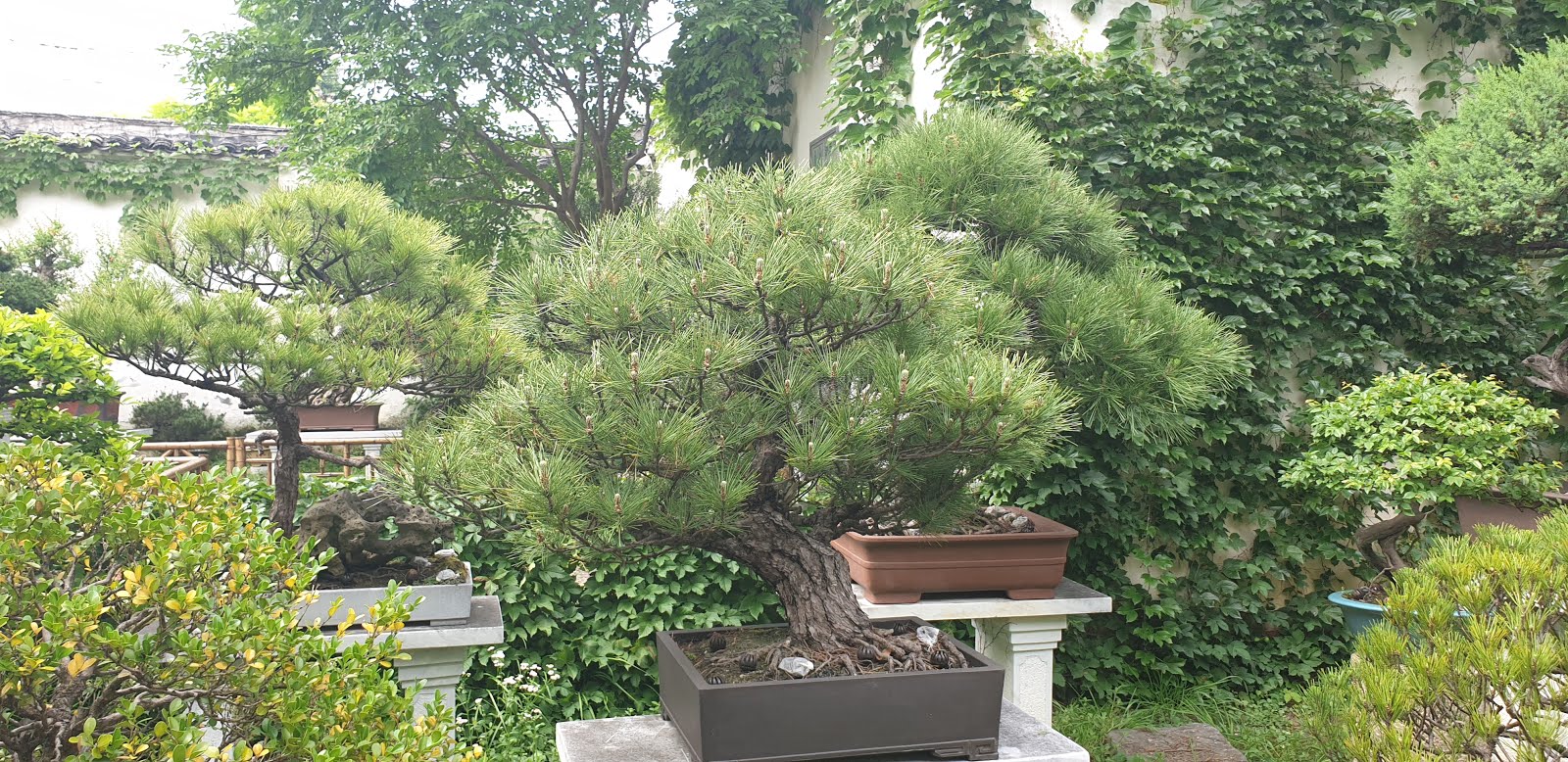
At the end of the garden is a large collection of bonsai trees, some of which are quite exquisite.