The cinema of my dreams – I always wanted to go on a treasure hunt – Episode 77

Here’s the thing…

Every time I close my eyes, I see something different.

I’d like to think the cinema of my dreams is playing a double feature but it’s a bit like a comedy cartoon night on Fox.

But these dreams are nothing to laugh about.

Once again there’s a new installment of an old feature, and we’re back on the treasure hunt.

Boggs is not a happy man

I could feel the waves of hate emanating from Boggs as he was staring at Nadia, who was doing her best to ignore him.

The previous evening when I made the suggestion to her that we should do whatever we could to aid in his search, on the Cossatino’s beach head without involving the Cossatinos, and in an attempt to have a backup plan if they caught up with us, met the same stony silence as it had when I told Boggs.

Her response was a stony, ‘don’t expect me to go up against my father and Vince, I’m not that brave.”

All Cossatino’s were tarred with the same brush, he said, just short of telling me he was convinced she was working with them, trying to find out what he knew via me.  He didn’t believe me when I told him she had done anything but interrogate me.

I wanted to believe she was not on their side, but just in case he might be right, my idea was to keep the enemy, if she was playing me, close.  Certainly, if the family turned up to thwart us, then I’d be convinced she was against us.

But, at least we’d then know, and it would make little difference in the end.  What Boggs was planning, with or without me, was basically suicide.

And she had voiced exactly the arguments that I’d already expected, although stopping short of saying she would not be part of it.

What had surprised me, Boggs had actually come, knowing Nadia would be there.

I let the silence reign for a minute or so, then dived in.

“Right.”

Both heads turned towards me, and I could feel the temperature rise about 10 degrees.

“I had imagined this would go so much better when I planned it in my head, but I can see quite plainly there are trust issues on either side.  The point is, Boggs, you can’t do this on your own.  You tried once and failed.  You might get lucky a second time, but I suspect the Cossatinos know now what you’re trying to do, and will be waiting.”

“They tried to kill me,” he muttered.

That might be putting it a bit strongly, because he had said as much to the sheriff, and the Cossatino’s denied it, as expected, but the evidence was quite clear, Boggs’s rope had been severed with a knife, located when the sheriff had visited the site and found the rope still attached to the top of the cliff.

The Cossatinos had been sloppy in covering their tracks, and the excuse they had been rock climbing hadn’t been taken seriously since no equipment had been found at the house, and none of them could provide any details of doing so elsewhere.

Evidence or not, no charges had been laid yet, nor had the Cossatinos proceeded with a trespass charge, perhaps fearing a more detailed investigation might be too intrusive or prove Boggs’s case.  In turn,  Boggs had been forced to agree not to go back, but simple words on the paper he signed, meant nothing.

“Deter you, I’d say,” Nadia said, “because killing you would bring unwanted attention to their activities.” 

Nadia was probably right because Boggs’s quest was too well known, as was the theory that the treasure was still on The Grove.  Already, the story was on the front page of the local paper, and Lenny was trying to get interviews.

And it was attracting attention from other media.  If anything, the Cossatinos would want to hose it down, not throw fuel on the fire.

“Well, you’re not dead,” I said, “fortuitously we found you, and now if you are going to persist with this quest, there has to be a plan, and Nadia has to be part of it.”

“I’ve already told you I don’t need anyone’s help.”

“OK.  Then I’ll start my own quest, with Nadia’s help, and we’ll see who gets to the treasure first.  I told you I believe I know where it is, and I think you believe you know too.  Your problem will be getting back there, whereas, I have no such problem.  So,” I pointed to the door, “you can leave any time, but don’t call me again.  We’re done.”

I glared back at him, and while not exactly squirming in his seat, he appeared to be mulling over the ultimatum.  I hadn’t planned to give him one, but he was pushing all the wrong buttons.

It also elicited an interesting look from Nadia, because it was the first time she was hearing that I knew where the treasure was.  It was a calculated risk telling her, but I’d know soon enough whose side she was on.

“If you sign a document forfeiting any rights over the treasure you have a deal.  Both of you.”

So, it came down to the money, pure and simple.  I thought I’d made it clear long ago that I wasn’t interested in anything to do with the treasure because it was cursed.  “No problem.”

I looked at Nadia.

“God no, I want nothing to do with it.  I’ve seen what the obsession with wealth can do to people, and families, and it’s why I left.  I’m happy to sign anything you want.”

He pulled what looked to be sheets of folded paper from his pocket, unfolded them, and gave one to each of us.

“Call me when they’re notarized.”  With a final glare, he left.

That left Nadia looking at me with a curious expression.  “You know where the treasure is?”

“Maybe.  I just wanted to put the wind up him because I think he does.  There are clues that Boggs doesn’t know about, and I haven’t told him about.  I believe according to some of the information I’ve found, that he was in the right place when we found him.”

“I didn’t see any caves or tunnels, or any sort of hiding place, just rocks.”

“There are a few factors involved that make that area a likely spot and the reasons that spot was chosen.  One is that there doesn’t seem to be apparent access by land, other than the way we came, across the rocks, but at the time the pirates might not have had the time or the know-how to get there by anything other than the sea.”

“So, you’re saying they came by sea.  How did they get past the reefs?  And how the hell could they see a cave or tunnel in that rockface?”

“It’s been a couple of hundred years, and I think back then that shoreline would have been a lot different.  I’m not a geologist but that cliff face shows signs of rockfalls and slippage, so it’s possible it’s now concealed.  From what I’ve read, just in the newspaper archives alone, there’s been seismic activity occurring for the last seventy-odd years and maybe even during the last few centuries, just look at the fact there used to be a lake further inland.  Then, I suspect they came ashore by an abnormally high tide.  For an experienced seafarer, it has the pluses, and precise navigation through the reef, and it’s the hardest to get to spot on the Grove’s coastline.  An ideal spot that is to everyone other than a master mariner, an unlikely place to get to.

She looked like she was weighing up the pros and cons of what I’d told her.

“I’m surprised you’re telling me this.”

“The chances of the treasure still being there or that I’m right about the location is quite remote, so it doesn’t really matter.  Anyway, up to now, you haven’t given me a reason not to trust you, so if there’s anything you want to tell me, now would be the time.”

So, she had considered how it might look to me, the family name and reputation she had inherited.

“I’ve told you what my situation is.  To be honest, I don’t think there’s any treasure to be found either.  I once heard a discussion between family members, when I was very young and didn’t understand what they were talking about, involving putting a story out there that there was a treasure, and if they sold it well enough, people would pay plenty for maps.  In my opinion, the treasure story is a Cossatino special money-making scheme built off Ormiston’s and layer, Boggs’s obsession.  The myth has been perpetuated by articles in papers, and new maps surfacing from time to time.  I’d be surprised if you did find anything, but for Boggs’s sake, it’s better he learn the truth than hang on to false hope.”

“So you know it’s all a hoax?”

“On the face of it, you would think so, but Vince, not the sharpest of people, bought into it, especially when Boggs’s father came on board to draw the maps.  He was a cartographer you know, and worked for the county authorities in mapping the area.  I’m guessing that’s how he got started on this treasure thing.  That was another story my father liked to tell us, how Boggs had found a cave that was a pirates lair, only to see it destroyed not long after in one of the recent earthquakes.  That discovery turned him into a true believer and was happy to help the Cossatino’s so he could muddy the water while he searched for it.  There have always been rumors of treasure along this coastline.  It might be possible there was treasure somewhere, but don’t you think it’d be found by now?”

“Logic dictates that it would be, but anything’s possible.  Why did you take me on that coin-seeking exercise?”

“The truth Sam?  I heard Vince talking about Boggs snooping around, and I was hoping we’d find nothing.  Vince can be an ass most of the time, and I want to believe he wouldn’t do anything to seriously hurt Boggs, just put the wind up him.  Thankfully nothing happened, and it’s the best I could do in the circumstances.  I’m sorry.”

Was she by definition somewhere between a rock and a hard place?

“This time we were lucky.  Next time it might be a very different story.  I’ll understand if you want to quit now, because you may have to pick a side.”

“Let’s hope then it doesn’t come to that.”

© Charles Heath 2020-2022

The Things We Do For Love – The final editor’s draft – Day 23

After a fruitless search, Henry decides not to go home but stay in one of the more salubrious hotels nearby.  The next day, refreshed, he has his eyes firmly on the prize.

Once the darkness sets in, they’re off to the address that Angie had given him the previous night.  Expecting to see Michelle, instead, Henry discovers no one is at home, but an old lady who hears him knocking on the door tells him where the occupant works.

Another interestingly named establishment.

Which, when they go there, discover to be a cut above some they’d been to, and it’s back to the conversation with one of the girls, hoping to gain some information.

Only this girl, Diana, is a little trickier to deal with in that she does not let him escape without having to do the dance first.  He asks his questions, gets oblique answers, and has an experience he will never forget.


Which, when they go there, discover to be a cut above some they’d been to, and it’s back to the conversation with one of the girls, hoping to gain some information.

Only this girl, Diana, is a little trickier to deal with in that she does not let him escape without having to do the dance first.  He asks his questions, gets oblique answers, and has an experience he will never forget.

With a line almost crossed, Henry staggers back out into the heat of the night, wondering himself exactly what just happened, only to find Radly waiting with two other men.

The police, and none other than colleagues of Inspector Banner.  It’s time for a visit to the police station.

This is where we get to learn a little bit more about Banner and his mission.  Then a long chat with Henry about Michelle, the girl he is looking for, and how dangerous it is.  Then, in the end, Banner gives him her address, one that is different from Angie’s, and asks Henry to deliver a message.

Then he is standing at the door and the girl herself is looking back at him.

Searching for locations: The Mary Valley Rattler, Gympie, Queensland, Australia

I have a passion for visiting transport museums, to see old trains, planes, buses, cars, even ships if it’s possible.

This has led to taking a number of voyages on the TSS Earnslaw in Queenstown, New Zealand.

Many, many, many years ago on Puffing Billy, a steam train in the Dandenongs, Victoria, Australia.

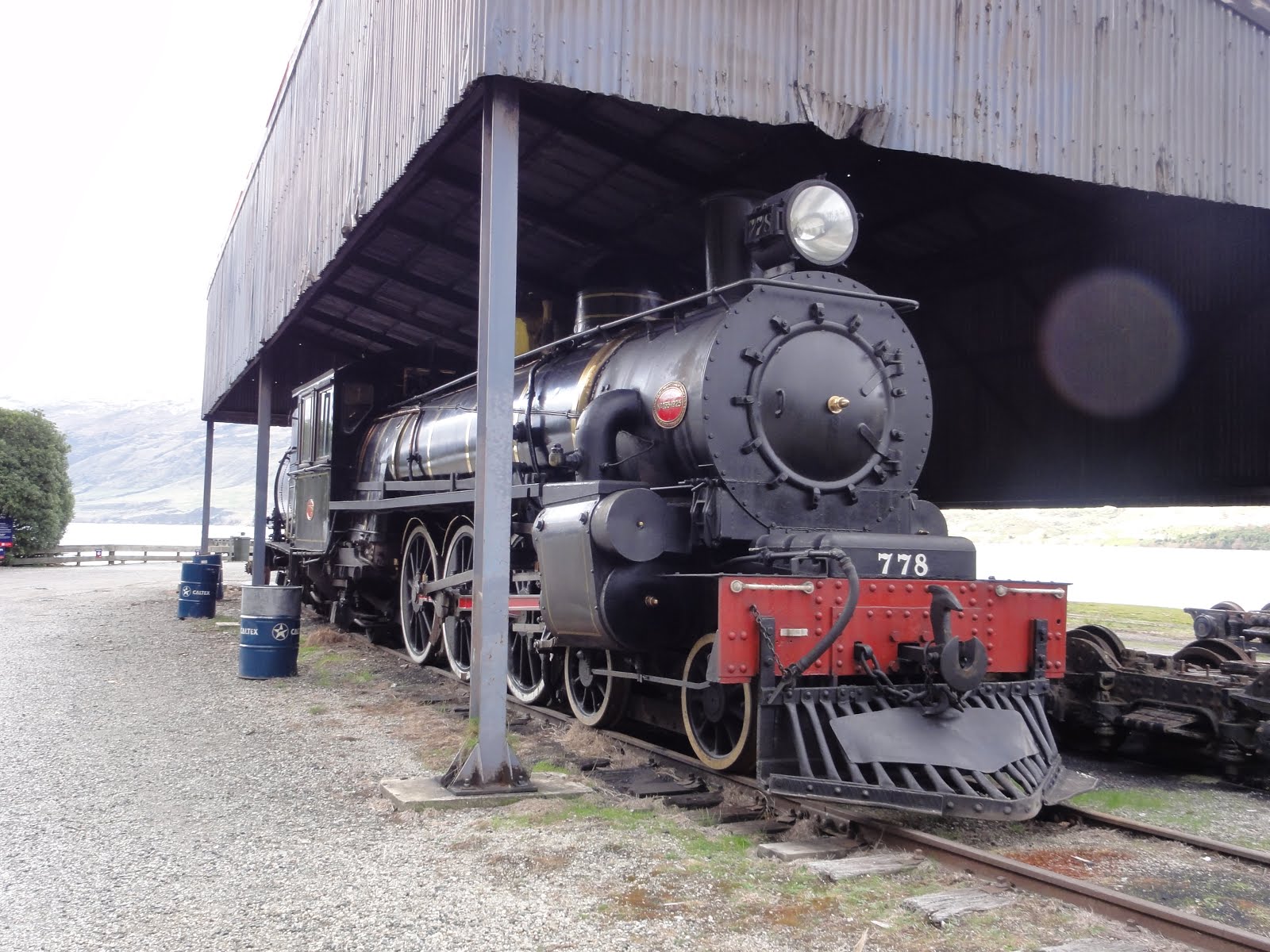
The steam train in Kingston, New Zealand, before it was closed down, but hopefully it will reopen sometime in the future.

The London Transport Museum in London England, which had a lot of buses.

The Workshops Railway Museum in Ipswich, Queensland, where once the many steam engines were built and maintained, and now had only a handful of engines remaining.

However, in the quest for finding and experiencing old transportation methods, we came across the Mary Valley Rattler, which runs out of Gympie, Queensland, Australia.

The ride begins in Gympie at the old Gympie Railway station, and as can be seen below, is one of the relics of the past, and, nothing like the new more modern stations.  Thankfully.

If you’re going to have a vintage train, then you have to have a vintage station.

The Class of engine, seen below, is the C17, a superheated upgrade to the C16 it was based on, and first run in 1903.  This particular engine was built in 1951, although the first of its type was seen in  1920 and the last of 227 made in 1953.  It was the most popular of the steam engines used by Queensland Railways.

The C designation meant it had four driving axels and 17 was the diameter of the cylinder, 17 inches.  It is also known as a 4-8-0 steam locomotive
 and nicknamed one of the “Brown Bombers” because of its livery, brown with green and red trimming.

Also, this engine was built in Maryborough, not far from Gympie by Walkers Limited, one of 138.

This photo was taken as the train returned from Amamoor, a trip that takes up to an hour.

The locomotive is detached from the carriages, then driven to the huge turntable to turn around for the return journey to Amamoor.

This is the locomotive heading down to the water station, and then taking on water.  After that, it will switch lines, and reverse back to reconnect the carriages for the trip to Amamoor.

The carriages are completely restored and are extremely comfortable.  It brings back, for me, many memories of riding in older trains in Melbourne when I was a child.

The trains, then, were called Red Rattlers.

This is the locomotive climbing one of the hilly parts of the line before crossing over the Mary River on a trestle bridge.

This is the engine at Amamoor near the picnic area where young children and excited parents and grandparents can get on the locomotive itself and look inside where the driver sits.

And, no, I didn’t volunteer to shovel coal.

This particular locomotive spent most of its working life between Townsville and Mount Isa and was based in Cloncurry, Charters Towers, and Townsville, before being sent, at the end of its useful days in the late 1960s, to the Ipswich Railway Workshops.

I think the asylum is beckoning

I’m sitting at my desk surrounded by any number of scraps of paper with more storylines, written excepts, parts of stories, and a number of chapters of a work in progress.

Does this happen to anyone else?

The business of writing requires a talent to keep focused on the one project, and silence all the other screaming voices in your head, pouring out their side of the story.

But it’s not working.

I try to be determined in my efforts to edit my current completed novel, after letting it ‘rest’ in my head for a few months.

I planned to have so time off, but all of those prisoners in my head started clamoring for my attention.  A story I started some time ago needs revising, another story I wrote last year of NANOWRIMO has come back to haunt me, and characters, well, they’re out in the waiting room, pacing up and down, ready to tell me their life stories.

Is the temporary cure coffee or wine?

Now I think I really do need a holiday

Or a trip to the asylum.  Thank God this is not the early 20th century, or I might never return.  And if it’s named Bellview, it would be just another story to be written.

The Author that went Bonkers!

Does it ever end?

An excerpt from “Amnesia”, a work in progress

I remembered a bang.
I remembered the car slewing sideways.
I remember another bang, and then it was lights out.
When I opened my eyes again, I saw the sky.
Or I could be underwater.
Everything was blurred.
I tried to focus but I couldn’t. My eyes were full of water.
What happened?
Why was I lying down?
Where was I?
I cast my mind back, trying to remember.
It was a blank.
What, when, who, why and where, questions I should easily be able to answer. Questions any normal person could answer.
I tried to move. Bad, bad mistake.
I did not realise the scream I heard was my own. Just before my body shut down.

“My God! What happened?”
I could hear, not see. I was moving, lying down, looking up.
I was blind. Everything was black.
“Car accident, hit a tree, sent the passenger flying through the windscreen. Pity to poor bastard didn’t get the message that seat belts save lives.”
Was I that poor bastard?
“Report?” A new voice, male, authoritative.
“Multiple lacerations, broken collar bone, broken arm in three places, both legs broken below the knees, one badly. We are not sure of internal injuries, but ruptured spleen, cracked ribs and pierced right lung are fairly evident, x-rays will confirm that and anything else.”
“What isn’t broken?”
“His neck.”
“Then I would have to say we are looking at the luckiest man on the planet.”
I heard shuffling of pages.
“OR1 ready?”
“Yes. On standby since we were first advised.”
“Good. Let’s see if we can weave some magic.”

Magic.
It was the first word that popped into my head when I surfaced from the bottom of the lake. That first breath, after holding it for so long, was sublime, and, in reality, agonising.

Magic, because it seemed like I’d spent a long time under water.
Or somewhere.
I tried to speak, but couldn’t. The words were just in my head.
Was it night or was it day?
Was it hot, or was it cold?
Where was I?
Around me it felt cool.
It was very quiet. No noise except for the hissing of air through an air-conditioning vent. Or perhaps that was the sound of pure silence. And with it the revelation that silence was not silent. It was noisy.
I didn’t try to move.
Instinctively, somehow I knew not to.
A previous bad experience?
I heard what sounded like a door opening, and very quiet footsteps slowly come into the room. They stopped. I could hear breathing, slightly laboured, a sound I’d heard before.
My grandfather.
He had smoked all his life, until he was diagnosed with lung cancer. But for years before that he had emphysema. The person in the room was on their way, down the same path. I could smell the smoke.
I wanted to tell whoever it was the hazards of smoking.
I couldn’t.
I heard a metallic clanging sound from the end of the bed. A moment later the clicking of a pen, then writing.
“You are in a hospital.” A female voice suddenly said. “You’ve been in a very bad accident. You cannot talk, or move, all you can do, for the moment, is listen to me. I am a nurse. You have been here for 45 days, and just come out of a medically induced coma. There is nothing to be afraid of.”
She had a very soothing voice.
I felt her fingers stroke the back of my hand.
“Everything is fine.”
Define fine, I thought. I wanted to ask her what ‘fine’ meant.
“Just count backwards from 10.”
Why?
I didn’t reach seven.

Over the next ten days, that voice became my lifeline to sanity. Every morning I longed to hear it, if only for the few moments she was in the room, those few waking moments when I believed she, and someone else who never spoke, were doing tests. I knew it had to be someone else because I could smell the essence of lavender. My grandmother had worn a similar scent.
It rose above the disinfectant.
I also believed she was another doctor, not the one who had been there the day I arrived. Not the one who had used some ‘magic’ and kept me alive.
It was then, in those moments before she put me under again, that I thought, what if I was paralysed? It would explain a lot. A chill went through me.

The next morning she was back.
“My name is Winifred. We don’t know what your name is, not yet. In a few days, you will be better, and you will be able to ask us questions. You were in an accident, and you were very badly injured, but I can assure you there will be no lasting damage.”
More tests, and then, when I expected the lights to go out, they didn’t. Not for a few minutes more. Perhaps this was how I would be integrated back into the world. A little bit at a time.
The next morning, she came later than usual, and I’d been awake for a few minutes. “You have bandages over your eyes and face. You had bad lacerations to your face, and glass in your eyes. We will know more when the bandages come off in a few days. Your face will take longer to heal. It was necessary to do some plastic surgery.”
Lacerations, glass in my eyes, car accident, plastic surgery. By logical deduction, I knew I was the poor bastard thrown through the windscreen. It was a fleeting memory from the day I was admitted.
How could that happen?
That was the first of many startling revelations. The second was the fact I could not remember the crash. Equally shocking, in that same moment was the fact I could not remember before the crash either, and only vague memories after.
But the most shattering of all these revelations was the one where I realised I could not remember my name.
I tried to calm down, sensing a rising panic.
I was just disoriented, I told myself. After 45 days in an induced coma, it had messed with my mind, and it was only a temporary lapse. Yes, that’s what it was, a temporary lapse. I would remember tomorrow. Or the next day.
Sleep was a blessed relief.

The next day I didn’t wake feeling nauseous. Perhaps they’d lowered the pain medication. I’d heard that morphine could have that effect. Then, how could I know that, but not who I am?
I knew now Winifred the nurse was preparing me for something very bad. She was upbeat, and soothing, giving me a new piece of information each morning. This morning, “You do not need to be afraid. Everything is going to be fine. The doctor tells me you are going to recover with very little scarring. You will need some physiotherapy to recover from your physical injuries, but that’s in the future. We need to let you mend a little bit more before then.”
So, I was not going to be able to leap out of bed, and walk out of the hospital any time soon. I don’t suppose I’d ever leapt out of bed, except as a young boy. I suspect I’d sustained a few broken bones. I guess learning to walk again was the least of my problems.
But, there was something else. I picked it up in the timbre of her voice, a hesitation, or reluctance. It sent another chill through me.
This time I was left awake for an hour before she returned.
This time sleep was restless.
There were scenes playing in my mind, nothing I recognised, and nothing lasting longer than a glimpse. Me. Others, people I didn’t know. Or perhaps I knew them and couldn’t remember them.
Until they disappeared, slowly like the glowing dot in the centre of the computer screen, before finally fading to black.

The morning the bandages were to come off she came in bright and early and woken me. I had another restless night, the images becoming clearer, but nothing recognisable.
“This morning the doctor will be removing the bandages over your eyes. Don’t expect an immediate effect. Your sight may come back quickly or it may come back slowly, but we believe it will come back.”
I wanted to believe I was not expecting anything, but I was. It was probably human nature. I did not want to be blind as well as paralysed. I had to have at least one reason to live.
I dozed again until I felt a gentle hand on my shoulder. I could smell the lavender, the other doctor was back. And I knew the hand on my shoulder was Winifred’s. She told me not to be frightened.
I was amazed to realise in that moment, I wasn’t.
I heard the scissors cutting the bandages.
I felt the bandage being removed, and the pressure coming off my eyes. I could feel the pads covering both eyes.
Then a moment where nothing happened.
Then the pads being gently lift and removed.
Nothing.
I blinked my eyes, once, twice. Nothing.
“Just hold on a moment,” Winifred said. A few seconds later I could feel a cool towel wiping my face, and then gently wiping my eyes. Perhaps there was ointment, or something else in them.
Then a flash. Well, not a flash, but like when a light is turned on and off. A moment later, it was brighter, not the inky blackness of before, but a shade of grey.
She wiped my eyes again.
I blinked a few more times, and then the light returned, and it was like looking through water, at distorted and blurry objects in the distance.
I blinked again, and she wiped my eyes again.
Blurry objects took shape. A face looking down on me, an elderly lady with a kindly face, surely Winifred, who was smiling. And on the opposite side of the bed, the doctor, a Chinese woman of indescribable beauty.
I nodded.
“You can see?”
I nodded again.
“Clearly?”
I nodded.
“Very good. We will just draw the curtains now. We don’t want to overdo it. Tomorrow we will be taking off the bandages on your face. Then, it will be the next milestone. Talking.”
I couldn’t wait.

When morning came, I found myself afraid. Winifred had mentioned scarring, there were bandages on my face. I knew, but wasn’t quite sure how I knew, I wasn’t the handsomest of men before the accident, so this might be an improvement.
I was not sure why I didn’t think it would be the case.
They came at mid morning, the nurse, Winifred, and the doctor, the exquisite Chinese. Perhaps she was the distraction, taking my mind of the reality of what I was about to see.
Another doctor came into the room, before the bandages were removed, and he was introduced as the plastic surgeon that had ‘repaired’ the ravages of the accident. It had been no easy job, but, with a degree of egotism, he did say he was one of the best in the world.
I found it hard to believe, if he was, that he would be at a small country hospital.
“Now just remember, what you might see now is not how you will look in a few months time.”
Warning enough.
The Chinese doctor started removing the bandages. She did it slowly, and made sure it did not hurt. My skin was very tender, and I suspect still bruised, either from the accident or the surgery, I didn’t know.
Then it was done.
The plastic surgeon gave his work a thorough examination and seemed pleased with his work. “Coming along nicely,” he said to the other doctor. He issued some instructions on how to manage the skin, nodded to me, and I thanked him before he left.
I noticed Winifred had a mirror in her hand, and was somewhat reticent in using it. “As I said,” she said noticing me looking at the mirror, “what you see now will not be the final result. The doctor said it was going to heal with very little scarring. You have been very fortunate he was available. Are you ready?”
I nodded.
She showed me.
I tried not to be reviled at the red and purple mess that used to be my face. At a guess I would have to say he had to put it all back together again, but, not knowing what I looked like before, I had no benchmark. All I had was a snippet of memory that told me I was not the tall, dark, and handsome type.
And I still could not talk. There was a reason, he had worked on that area too. Just breathing hurt. I think I would save up anything I had to say for another day. I could not even smile. Or frown. Or grimace.
“We’ll leave you for a while. Everyone needs a little time to get used to the change. I suspect you are not sure if there has been an improvement on last year’s model. Well, time will tell.”
A new face?
I could not remember the old one.
My memory still hadn’t returned.

Searching for locations: The Kingston Flyer, Kingston, New Zealand

The Kingston Flyer was a vintage train that ran about 14km to Fairlight from Kingston, at the southern end of Lake Wakatipu, and back.

This tourist service was suspended in December 2012 because of locomotive issues.

However, before that, we managed to go on one of the tours, and it was a memorable trip.  Trying to drink a cup of tea from the restaurant car was very difficult, given how much the carriages moved around on the tracks.

The original Kingston Flyer ran between Kingston, Gore, Invercargill, and sometimes Dunedin, from the 1890s through to 1957.

There are two steam locomotives used for the Kingston Flyer service, the AB778 starting service in 1925, and the AB795 which started service in 1927.

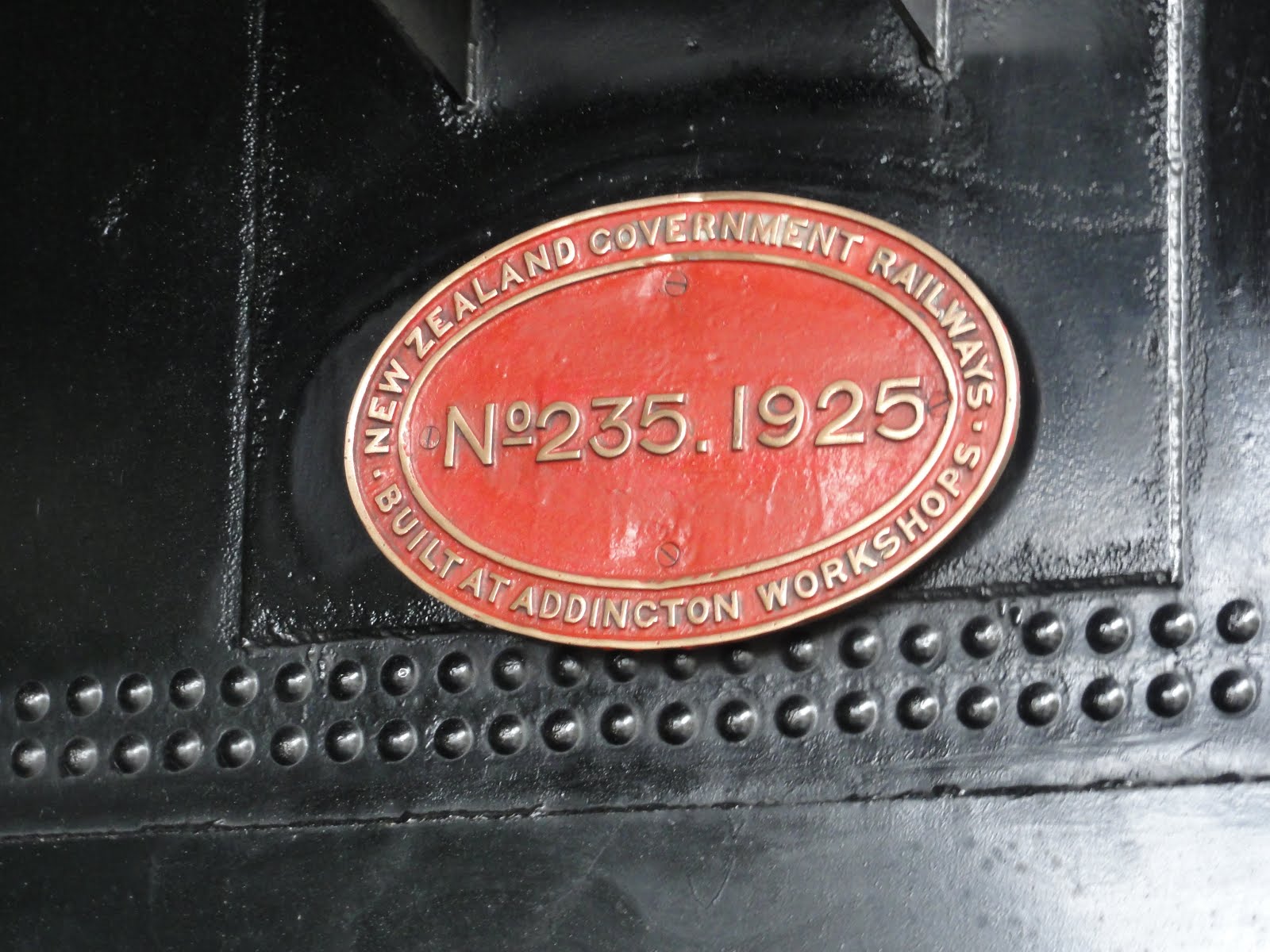
The AB class locomotive was a 4-6-2 Pacific steam locomotive with a Vanderbilt tender, of which 141 were built between 1915 and 1927 some of which by New Zealand Railways Addington Workshops.

No 235 is the builder’s number for the AB778

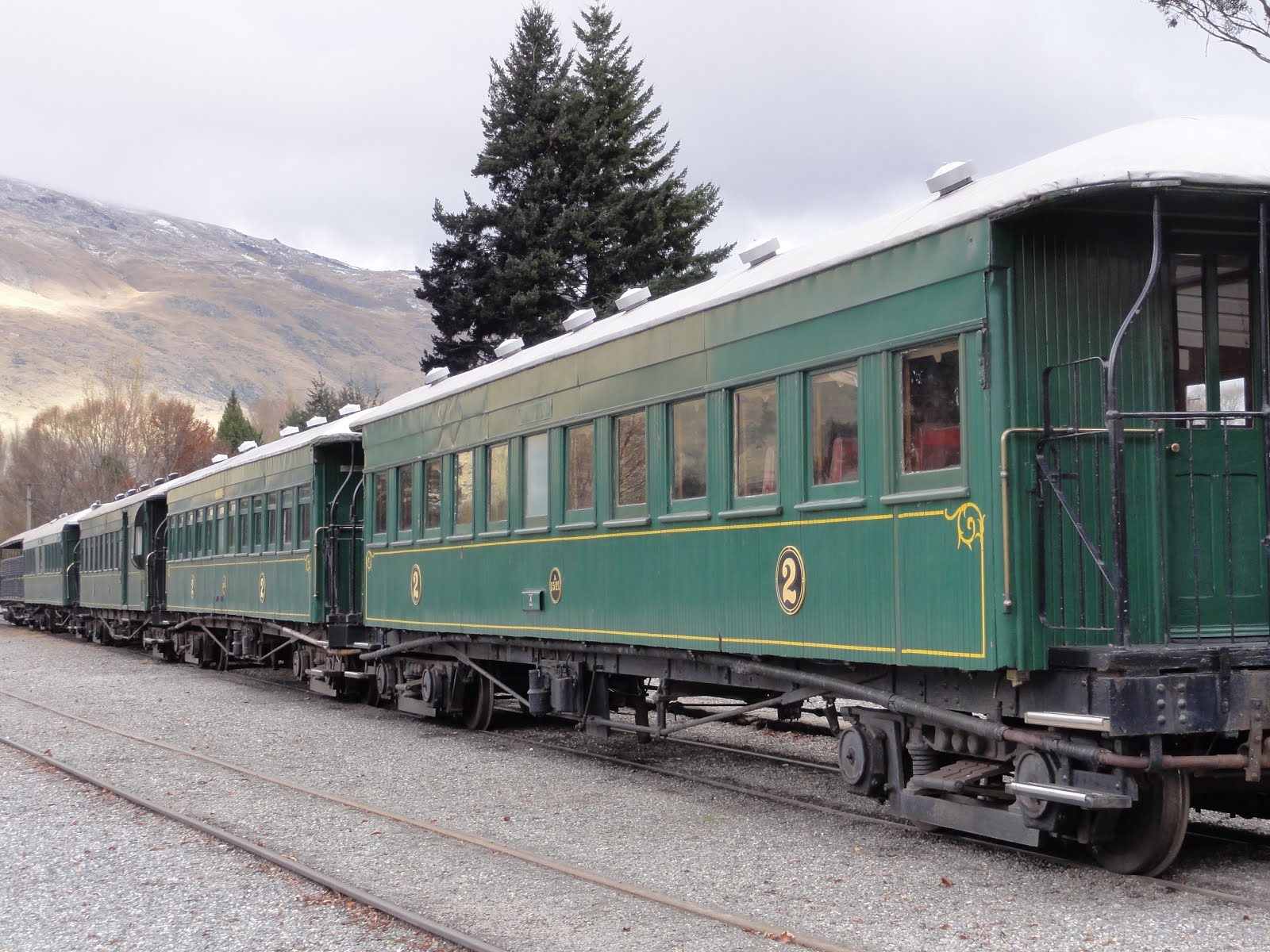
There were seven wooden bodied passenger carriages, three passenger coaches, one passenger/refreshments carriage and two car/vans.  The is also a Birdcage gallery coach.  Each of the rolling stock was built between 1900 and 1923.  They were built at either of Addington, Petone, or Hillside.

I suspect the 2 on the side means second class

The passenger coach we traveled in was very comfortable.

This is one of the guard’s vans, and for transporting cargo.

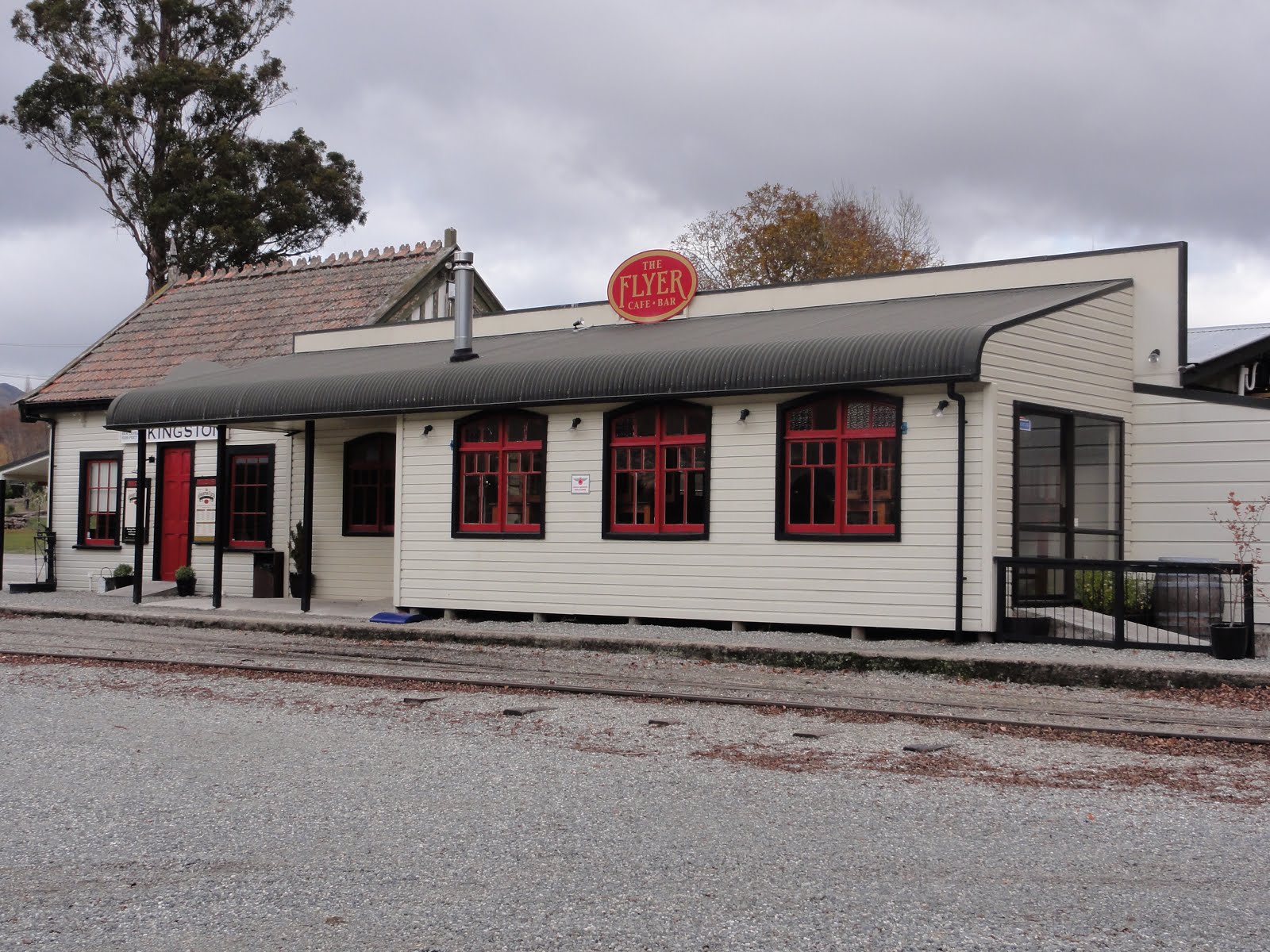
The Kingston Railway Station

and cafe.

A poster sign advertising the Kingston Flyer

The running times for the tourist services, when it was running.

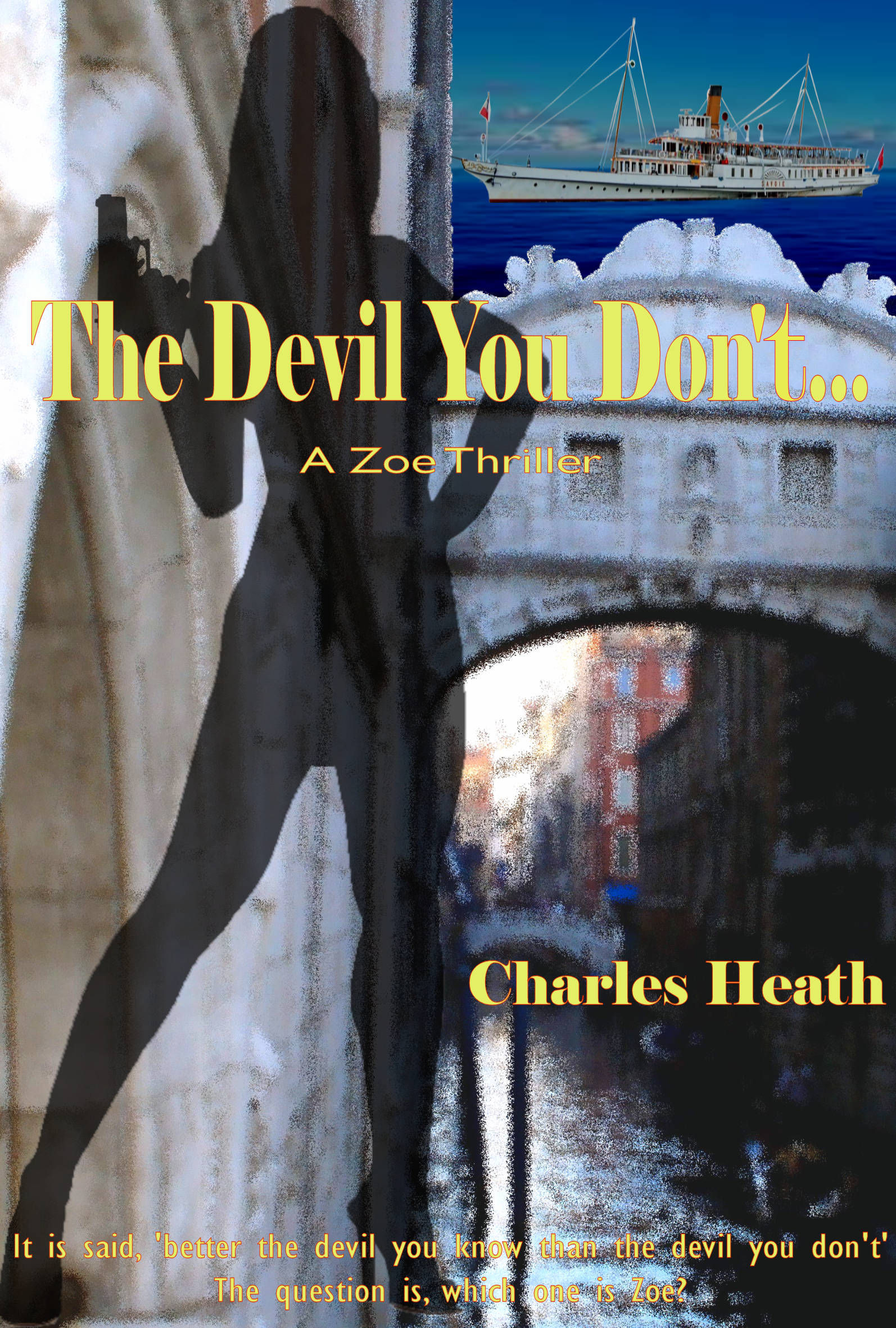
“The Devil You Don’t”, she was the girl you would not take home to your mother!

Now only $0.99 at https://amzn.to/2Xyh1ow

John Pennington’s life is in the doldrums. Looking for new opportunities, and prevaricating about getting married, the only joy on the horizon was an upcoming visit to his grandmother in Sorrento, Italy.

Suddenly he is left at the check-in counter with a message on his phone telling him the marriage is off, and the relationship is over.

If only he hadn’t promised a friend he would do a favour for him in Rome.

At the first stop, Geneva, he has a chance encounter with Zoe, an intriguing woman who captures his imagination from the moment she boards the Savoire, and his life ventures into uncharted territory in more ways than one.

That ‘favour’ for his friend suddenly becomes a life-changing event, and when Zoe, the woman who he knows is too good to be true, reappears, danger and death follow.

Shot at, lied to, seduced, and drawn into a world where nothing is what it seems, John is dragged into an adrenaline-charged undertaking, where he may have been wiser to stay with the ‘devil you know’ rather than opt for the ‘devil you don’t’.

newdevilcvr6

The Things We Do For Love – The final editor’s draft – Day 23

After a fruitless search, Henry decides not to go home but stay in one of the more salubrious hotels nearby.  The next day, refreshed, he has his eyes firmly on the prize.

Once the darkness sets in, they’re off to the address that Angie had given him the previous night.  Expecting to see Michelle, instead, Henry discovers no one is at home, but an old lady who hears him knocking on the door tells him where the occupant works.

Another interestingly named establishment.

Which, when they go there, discover to be a cut above some they’d been to, and it’s back to the conversation with one of the girls, hoping to gain some information.

Only this girl, Diana, is a little trickier to deal with in that she does not let him escape without having to do the dance first.  He asks his questions, gets oblique answers, and has an experience he will never forget.


Which, when they go there, discover to be a cut above some they’d been to, and it’s back to the conversation with one of the girls, hoping to gain some information.

Only this girl, Diana, is a little trickier to deal with in that she does not let him escape without having to do the dance first.  He asks his questions, gets oblique answers, and has an experience he will never forget.

With a line almost crossed, Henry staggers back out into the heat of the night, wondering himself exactly what just happened, only to find Radly waiting with two other men.

The police, and none other than colleagues of Inspector Banner.  It’s time for a visit to the police station.

This is where we get to learn a little bit more about Banner and his mission.  Then a long chat with Henry about Michelle, the girl he is looking for, and how dangerous it is.  Then, in the end, Banner gives him her address, one that is different from Angie’s, and asks Henry to deliver a message.

Then he is standing at the door and the girl herself is looking back at him.

An excerpt from “One Last Look”: Charlotte is no ordinary girl

This is currently available at Amazon herehttp://amzn.to/2CqUBcz

I’d read about out-of-body experiences, and like everyone else, thought it was nonsense.  Some people claimed to see themselves in the operating theatre, medical staff frantically trying to revive them, and being surrounded by white light.

I was definitely looking down, but it wasn’t me I was looking at.

It was two children, a boy and a girl, with their parents, in a park.

The boy was Alan.  He was about six or seven.  The girl was Louise, and she was five years old.  She had long red hair and looked the image of her mother.

I remember it now, it was Louise’s birthday and we went down to Bournemouth to visit our Grandmother, and it was the last time we were all together as a family.

We were flying homemade kites our father had made for us, and after we lay there looking up at the sky, making animals out of the clouds.  I saw an elephant, Louise saw a giraffe.

We were so happy then.

Before the tragedy.

When I looked again ten years had passed and we were living in hell.  Louise and I had become very adept at survival in a world we really didn’t understand, surrounded by people who wanted to crush our souls.

It was not a life a normal child had, our foster parents never quite the sort of people who were adequately equipped for two broken-hearted children.  They tried their best, but their best was not good enough.

Every day it was a battle, to avoid the Bannister’s and Archie in particular, every day he made advances towards Louise and every day she fended him off.

Until one day she couldn’t.

Now I was sitting in the hospital, holding Louise’s hand.  She was in a coma, and the doctors didn’t think she would wake from it.  The damage done to her was too severe.

The doctors were wrong.

She woke, briefly, to name her five assailants.  It was enough to have them arrested.  It was not enough to have them convicted.

Justice would have to be served by other means.

I was outside the Bannister’s home.

I’d made my way there without really thinking, after watching Louise die.  It was like being on autopilot, and I had no control over what I was doing.  I had murder in mind.  It was why I was holding an iron bar.

Skulking in the shadows.  It was not very different from the way the Bannister’s operated.

I waited till Archie came out.  I knew he eventually would.  The police had taken him to the station for questioning, and then let him go.  I didn’t understand why, nor did I care.

I followed him up the towpath, waiting till he stopped to light a cigarette, then came out of the shadows.

“Wotcha got there Alan?” he asked when he saw me.  He knew what it was, and what it was for.

It was the first time I’d seen the fear in his eyes.  He was alone.

“Justice.”

“For that slut of a sister of yours.  I had nuffing to do with it.”

“She said otherwise, Archie.”

“She never said nuffing, you just made it up.”  An attempt at bluster, but there was no confidence in his voice.

I held up the pipe.  It had blood on it.  Willy’s blood.  “She may or may not have Archie, but Willy didn’t make it up.  He sang like a bird.  That’s his blood, probably brains on the pipe too, Archie, and yours will be there soon enough.”

“He dunnit, not me.  Lyin’ bastard would say anything to save his own skin.”  Definitely scared now, he was looking to run away.

“No, Archie.  He didn’t.  I’m coming for you.  All of you Bannisters.  And everyone who touched my sister.”

It was the recurring nightmare I had for years afterwards.

I closed my eyes and tried to shut out the thoughts, the images of Louise, the phone call, the visit to the hospital and being there when she succumbed to her injuries.  Those were the very worst few hours of my life.

She had asked me to come to the railway station and walk home with her, and I was running late.  If I had left when I was supposed to, it would never have happened and for years afterwards, I blamed myself for her death.

If only I’d not been late…

When the police finally caught the rapists, I’d known all along who they’d be; antagonists from school, the ring leader, Archie Bannister, a spurned boyfriend, a boy whose parents, ubiquitously known to all as ‘the Bannister’s, dealt in violence and crime and who owned the neighbourhood.  The sins of the father had been very definitely passed onto the son.

At school, I used to be the whipping boy, Archie, a few grades ahead of me, made a point of belting me and a few of the other boys, to make sure the rest did as they were told.  He liked Louise, but she had no time for a bully like him, even when he promised he would ‘protect’ me.

I knew the gang members, the boys who tow-kowed to save getting beaten up, and after the police couldn’t get enough information to prosecute them because everyone was too afraid to speak out, I went after Willy.  There was always a weak link in a group, and he was it.

He worked in a factory, did long hours on a Wednesday and came home after dark alone.  It was a half mile walk, through a park.  The night I approached him, I smashed the lights and left it in darkness.  He nearly changed his mind and went the long way home.

He didn’t.

It took an hour and a half to get the names.  At first, when he saw me, he laughed.  He said I would be next, and that was four words more than he knew he should have said.

When I found him alone the next morning I showed him the iron bar and told him he was on the list.  I didn’t kill him then, he could wait his turn, and worry about what was going to happen to him.

When the police came to visit me shortly after that encounter, no doubt at the behest of the Bannister’s, the neighbourhood closed ranks and gave me an ironclad alibi.  The Bannister’s then came to visit me and threatened me.  I told them their days were numbered and showed them the door.

At the trial, he and his friends got off on a technicality.  The police had failed to do their job properly, but it was not the police, but a single policeman, corrupted by the Bannisters.

Archie could help but rub it in my face.  He was invincible.

Joe Collins took 12 bullets and six hours to bleed out.  He apologized, he pleaded, he cried, he begged.  I didn’t care.

Barry Mills, a strong lad with a mind to hurting people, Archie’s enforcer, almost got the better of me.  I had to hit him more times than I wanted to, and in the end, I had to be satisfied that he died a short but agonizing death.

I revisited Willy in the hospital.  He’d recovered enough to recognize me, and why I’d come.  Suffocation was too good for him.

David Williams, second in command of the gang, was as tough and nasty as the Bannisters.  His family were forging a partnership with the Bannister’s to make them even more powerful.  Outwardly David was a pleasant sort of chap, affable, polite, and well mannered.  A lot of people didn’t believe he could be like, or working with, the Bannisters.

He and I met in the pub.  We got along like old friends.  He said Willy had just named anyone he could think of, and that he was innocent of any charges.  We shook hands and parted as friends.

Three hours later he was sitting in a chair in the middle of a disused factory, blindfolded and scared.  I sat and watched him, listened to him, first threatening me, and then finally pleading with me.  He’d guessed who it was that had kidnapped him.

When it was dark, I took the blindfold off and shone a very bright light in his eyes.  I asked him if the violence he had visited upon my sister was worth it.  He told me he was just a spectator.

I’d read the coroner’s report.  They all had a turn.  He was a liar.

He took nineteen bullets to die.

Then came Archie.

The same factory only this time there were four seats.  Anna Bannister, brothel owner, Spike Bannister, head of the family, Emily Bannister, sister, and who had nothing to do with their criminal activities.  She just had the misfortune of sharing their name.

Archie’s father told me how he was going to destroy me, and everyone I knew.

A well-placed bullet between the eyes shut him up.

Archie’s mother cursed me.  I let her suffer for an hour before I put her out of her misery.

Archie remained stony-faced until I came to Emily.  The death of his parents meant he would become head of the family.  I guess their deaths meant as little to him as they did me.

He was a little more worried about his sister.

I told him it was confession time.

He told her it was little more than a forced confession and he had done nothing to deserve my retribution.

I shrugged and shot her, and we both watched her fall to the ground screaming in agony.  I told him if he wanted her to live, he had to genuinely confess to his crimes.  This time he did, it all poured out of him.

I went over to Emily.  He watched in horror as I untied her bindings and pulled her up off the floor, suffering only from a small wound in her arm.  Without saying a word she took the gun and walked over to stand behind him.

“Louise was my friend, Archie.  My friend.”

Then she shot him.  Six times.

To me, after saying what looked like a prayer, she said, “Killing them all will not bring her back, Alan, and I doubt she would approve of any of this.  May God have mercy on your soul.”

Now I was in jail.  I’d spent three hours detailing the deaths of the five boys, everything I’d done; a full confession.  Without my sister, my life was nothing.  I didn’t want to go back to the foster parents; I doubt they’d take back a murderer.

They were not allowed to.

For a month I lived in a small cell, in solitary, no visitors.  I believed I was in the queue to be executed, and I had mentally prepared myself for the end.

Then I was told I had a visitor, and I was expecting a priest.

Instead, it was a man called McTavish. Short, wiry, and with an accent that I could barely understand.

“You’ve been a bad boy, Alan.”

When I saw it was not the priest I told the jailers not to let him in, I didn’t want to speak to anyone.  They ignored me.  I’d expected he was a psychiatrist, come to see whether I should be shipped off to the asylum.

I was beginning to think I was going mad.

I ignored him.

“I am the difference between you living or dying Alan, it’s as simple as that.  You’d be a wise man to listen to what I have to offer.”

Death sounded good.  I told him to go away.

He didn’t.  Persistent bugger.

I was handcuffed to the table.  The prison officers thought I was dangerous.  Five, plus two, murders, I guess they had a right to think that.  McTavish sat opposite me, ignoring my request to leave.

“Why’d you do it?”

“You know why.”  Maybe if I spoke he’d go away.

“Your sister.  By all accounts, the scum that did for her deserved what they got.”

“It was murder just the same.  No difference between scum and proper people.”

“You like killing?”

“No-one does.”

“No, I dare say you’re right.  But you’re different, Alan.  As clean and merciless killing I’ve ever seen.  We can use a man like you.”

“We?”

“A group of individuals who clean up the scum.”

I looked up to see his expression, one of benevolence, totally out of character for a man like him.  It looked like I didn’t have a choice.

Trained, cleared, and ready to go.

I hadn’t realized there were so many people who were, for all intents and purposes, invisible.  People that came and went, in malls, in hotels, trains, buses, airports, everywhere, people no one gave a second glance.

People like me.

In a mall, I became a shopper.

In a hotel, I was just another guest heading to his room.

On a bus or a train, I was just another commuter.

At the airport, I became a pilot.  I didn’t need to know how to fly; everyone just accepted a pilot in a pilot suit was just what he looked like.

I had a passkey.

I had the correct documents to get me onto the plane.

That walk down the air bridge was the longest of my life.  Waiting for the call from the gate, waiting for one of the air bridge staff to challenge me, stepping onto the plane.

Two pilots and a steward.  A team.  On the plane early before the rest of the crew.  A group that was committing a crime, had committed a number of crimes and thought they’d got away with it.

Until the judge, the jury and their executioner arrived.

Me.

Quick, clean, merciless.  Done.

I was now an operational field agent.

I was older now, and I could see in the mirror I was starting to go grey at the sides.  It was far too early in my life for this, but I expect it had something to do with my employment.

I didn’t recognize the man who looked back at me.

It was certainly not Alan McKenzie, nor was there any part of that fifteen-year-old who had made the decision to exact revenge.

Given a choice; I would not have gone down this path.

Or so I kept telling myself each time a little more of my soul was sold to the devil.

I was Barry Gamble.

I was Lenny Buckman.

I was Jimmy Hosen.

I was anyone but the person I wanted to be.

That’s what I told Louise, standing in front of her grave, and trying to apologize for all the harm, all the people I’d killed for that one rash decision.  If she was still alive she would be horrified, and ashamed.

Head bowed, tears streamed down my face.

God had gone on holiday and wasn’t there to hand out any forgiveness.  Not that day.  Not any day.

New York, New Years Eve.

I was at the end of a long tour, dragged out of a holiday and back into the fray, chasing down another scumbag.  They were scumbags, and I’d become an automaton hunting them down and dispatching them to what McTavish called a better place.

This time I failed.

A few drinks to blot out the failure, a blonde woman who pushed my buttons, a room in a hotel, any hotel, it was like being on the merry-go-round, round and round and round…

Her name was Silvia or Sandra, or someone I’d met before, but couldn’t quite place her.  It could be an enemy agent for all I knew or all I cared right then.

I was done.

I’d had enough.

I gave her the gun.

I begged her to kill me.

She didn’t.

Instead, I simply cried, letting the pent up emotion loose after being suppressed for so long, and she stayed with me, holding me close, and saying I was safe, that she knew exactly how I felt.

How could she?  No one could know what I’d been through.

I remembered her name after she had gone.

Amanda.

I remembered she had an imperfection in her right eye.

Someone else had the same imperfection.

I couldn’t remember who that was.

Not then.

I had a dingy flat in Kensington, a place that I rarely stayed in if I could help it.  After five-star hotel rooms, it made me feel shabby.

The end of another mission, I was on my way home, the underground, a bus, and then a walk.

It was late.

People were spilling out of the pub after the last drinks.  Most in good spirits, others slightly more boisterous.

A loud-mouthed chap bumped into me, the sort who had one too many, and was ready to take on all comers.

He turned on me, “Watch where you’re going, you fool.”

Two of his friends dragged him away.  He shrugged them off, squared up.

I punched him hard, in the stomach, and he fell backwards onto the ground.  I looked at his two friends.  “Take him home before someone makes mincemeat out of him.”

They grabbed his arms, lifted him off the ground and took him away.

Out of the corner of my eye, I could see a woman, early thirties, quite attractive, but very, very drunk.  She staggered from the bar, bumped into me, and finished up sitting on the side of the road.

I looked around to see where her friends were.  The exodus from the pub was over and the few nearby were leaving to go home.

She was alone, drunk, and by the look of her, unable to move.

I sat beside her.  “Where are your friends?”

“Dunno.”

“You need help?”

She looked up, and sideways at me.  She didn’t look the sort who would get in this state.  Or maybe she was, I was a terrible judge of women.

“Who are you?” she asked.

“Nobody.”  I was exactly how I felt.

“Well Mr Nobody, I’m drunk, and I don’t care.  Just leave me here to rot.”

She put her head back between her knees, and it looked to me she was trying to stop the spinning sensation in her head.

Been there before, and it’s not a good feeling.

“Where are your friends?” I asked again.

“Got none.”

“Perhaps I should take you home.”

“I have no home.”

“You don’t look like a homeless person.  If I’m not mistaken, those shoes are worth more than my weekly salary.”  I’d seen them advertised, in the airline magazine, don’t ask me why the ad caught my attention.

She lifted her head and looked at me again.  “You a smart fucking arse are you?”

“I have my moments.”

“Have them somewhere else.”

She rested her head against my shoulder.  We were the only two left in the street, and suddenly in darkness when the proprietor turned off the outside lights.

“Take me home,” she said suddenly.

“Where is your place?”

“Don’t have one.  Take me to your place.”

“You won’t like it.”

“I’m drunk.  What’s not to like until tomorrow.”

I helped her to her feet.  “You have a name?”

“Charlotte.”

The wedding was in a small church.  We had been away for a weekend in the country, somewhere in the Cotswolds, and found this idyllic spot.  Graves going back to the dawn of time, a beautiful garden tended by the vicar and his wife, an astonishing vista over hills and down dales.

On a spring afternoon with the sun, the flowers, and the peacefulness of the country.

I had two people at the wedding, the best man, Bradley, and my boss, Watkins.

Charlotte had her sisters Melissa and Isobel, and Isobel’s husband Giovanni, and their daughter Felicity.

And one more person who was as mysterious as she was attractive, a rather interesting combination as she was well over retirement age.  She arrived late and left early.

Aunt Agatha.

She looked me up and down with what I’d call a withering look.  “There’s more to you than meets the eye,” she said enigmatically.

“Likewise I’m sure,” I said.  It earned me an elbow in the ribs from Charlotte.  It was clear she feared this woman.

“Why did you come,” Charlotte asked.

“You know why.”

Agatha looked at me.  “I like you.  Take care of my granddaughter.  You do not want me for an enemy.”

OK, now she officially scared me.

She thrust a cheque into my hand, smiled, and left.

“Who is she,” I asked after we watched her depart.

“Certainly not my fairy godmother.”

Charlotte never mentioned her again.

Zurich in summer, not exactly my favourite place.

Instead of going to visit her sister Isobel, we stayed at a hotel in Beethovenstrasse and Isobel and Felicity came to us.  Her husband was not with her this time.

Felicity was three or four and looked very much like her mother.  She also looked very much like Charlotte, and I’d remarked on it once before and it received a sharp rebuke.

We’d been twice before, and rather than talk to her sister, Charlotte spent her time with Felicity, and they were, together, like old friends.  For so few visits they had a remarkable rapport.

I had not broached the subject of children with Charlotte, not after one such discussion where she had said she had no desire to be a mother.  It had not been a subject before and wasn’t once since.

Perhaps like all Aunts, she liked the idea of playing with a child for a while and then give it back.

Felicity was curious as to who I was, but never ventured too close.  I believed a child could sense the evil in adults and had seen through my facade of friendliness.  We were never close.

But…

This time, when observing the two together, something quite out of left field popped into my head.  It was not possible, not by any stretch of the imagination, but I thought she looked like my mother.

And Charlotte had seen me looking in their direction.  “You seem distracted,” she said.

“I was just remembering my mother.  Odd moment, haven’t done so for a very long time.”

“Why now?”  I think she had a look of concern on her face.

“Her birthday, I guess,” I said, the first excuse I could think of.

Another look and I was wrong.  She looked like Isobel or Charlotte, or if I wanted to believe it possible, Melissa too.

I was crying, tears streaming down my face.

I was in pain, searing pain from my lower back stretching down into my legs, and I was barely able to breathe.

It was like coming up for air.

It was like Snow White bringing Prince Charming back to life.  I could feel what I thought was a gentle kiss and tears dropping on my cheeks, and when I opened my eyes, I saw Charlotte slowly lifting her head, a hand gently stroking the hair off my forehead.

And in a very soft voice, she said, “Hi.”

I could not speak, but I think I smiled.  It was the girl with the imperfection in her right eye.  Everything fell into place, and I knew, in that instant that we were irrevocably meant to be together.

“Welcome back.”

© Charles Heath 2016-2019

onelastlookcoverfinal2

In a word: Left

The word left conjures up many interesting connotations such as:

Left at the altar, not a very nice occurrence but an oft-used scenario to fuel a Romcom

Should have turned left at Albuquerque, used by Bugs Bunny in a cartoon I saw once, and now basically is the go-to phrase when you get lost and have to tell someone

Lefties, not exactly the word but oft used to describe one side of politics usually leaning towards socialism or communism, or perhaps simply because they don’t agree with us

They’re coming at us left, right, and centre, meaning people, or some other object, are coming from everywhere, that is, from all directions

But one of some more simple explanations, I’m left-handed, which means I write with my left hand.

Only that doesn’t mean that I’m left-handed at everything because I’m right-handed using a bat and playing golf.  How does that work?

Turn left which means you turn in a specific direction, directly opposite to another direction, right, but I defy you to describe exactly how to turn left!

Oh, and by the way, I often get left and right mixed up.

There was only one slice of cake left, which means someone else ate it all, or that there’s one slice remaining, and you’d better be quick getting it.

Or probably the saddest of the examples, I left London to go home, meaning that I had to depart a place I wanted to stay but circumstances dictated I had to leave.  Usually, you have to go back to work where you came from, but more realistically you couldn’t afford to stay.

In politics, if you are a right-wing conservative, anyone from the other side is a left-wing lunatic.  Politics can be very polarising and there is often an all-or-nothing approach to the opposition. Rarely is there a middle of the road.