Almost nonsensical descriptions we sometimes use without thinking

I found this explanation on the internet which seems to sum up what odd phrases like ‘you can’t judge a book by its cover’ mean: ‘a word or phrase used in a non-literal sense for rhetorical or vivid effect.’

We, as writers, are constantly reminded that we should not use these in our writing because most people might not understand their use.

But, being that unconventional, never to be told, type, I honestly think that it sometimes adds a degree of whimsy to the story.

I remember some years ago when I working with a Russian chap who’d not been in the country very long, and though he had a reasonable use of English, was not quite up with our figures of speech.

And made me realize when he kept asking me what they meant, just how many I used in everyday conversation.

Most of these figures of speech use descriptions that do not necessarily match the word being described, such as ‘I dance like I have two left feet’.

And that pretty much sums up how good I can dance.  But …

‘Like a bat out of hell’, not sure how this got into the vernacular, but it means to get the hell out of dodge quickly.  Hang on, that’s another saying, American, and the way Dodge city was in western American folklore, if you irritated a gunslinger, then best be on your way, fast.

Otherwise, yes, you guessed it, you were at the end of another saying, you would get a one-way ticket to boot hill.  In other words, the cemetery.

And while I’m digressing, again, Yul Brynner made a trip to boot hill very memorable in The Magnificent Seven.

Then,

‘Like a bull in a China shop’, describes a toddler let loose

‘More front than Myers’, as my mother used to say, but in context, Myers is the Australian version of the English Selfridges or Harrods or Paris Galleries Lafayette.  It refers to the width of street frontage of the stores

‘As mad as a hatter’, though not necessarily of the millinery kind, but, well, you can guess

‘As nutty as a fruitcake’, provided your fruitcake has nuts in it

You can see, if you get the references, they are somewhat apt, and, yes, they sometimes creep into my stories.

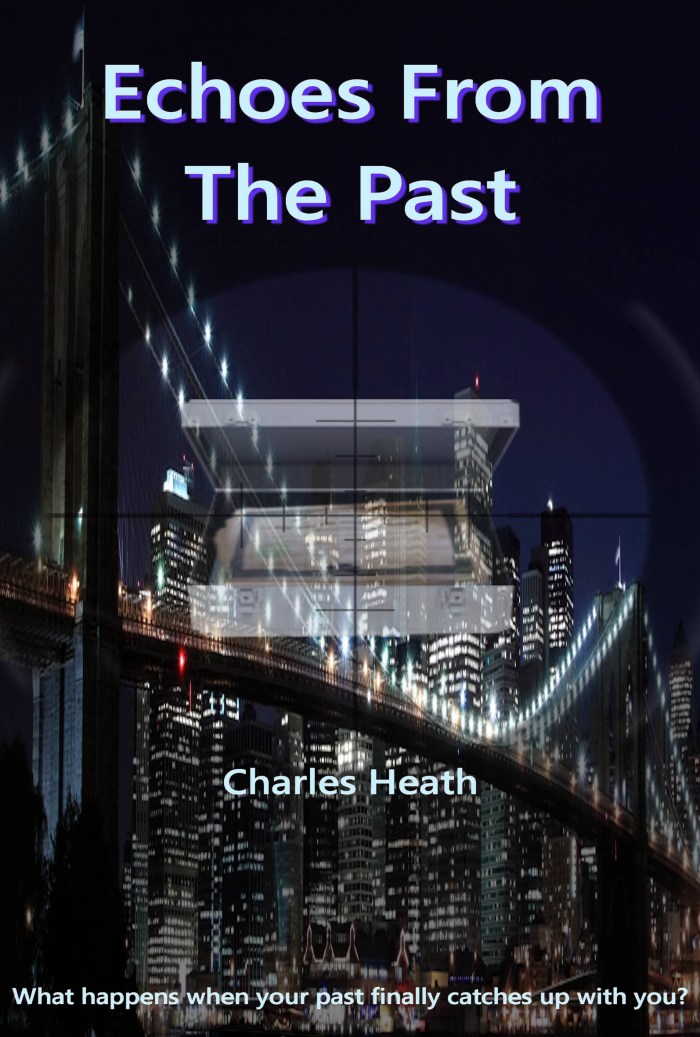
The story behind the story – Echoes from the Past

The novel ‘Echoes from the past’ started out as a short story I wrote about 30 years ago, titled ‘The birthday’.

My idea was to take a normal person out of their comfort zone and led on a short but very frightening journey to a place where a surprise birthday party had been arranged.

Thus the very large man with a scar and a red tie was created.

So was the friend with the limousine who worked as a pilot.

So were the two women, Wendy and Angelina, who were Flight Attendants that the pilot friend asked to join the conspiracy.

I was going to rework the short story, then about ten pages long, into something a little more.

And like all re-writes, especially those I have anything to do with, it turned into a novel.

There was motivation.  I had told some colleagues at the place where I worked at the time that I liked writing, and they wanted a sample.  I was going to give them the re-worked short story.  Instead, I gave them ‘Echoes from the past’

Originally it was not set anywhere in particular.

But when considering a location, I had, at the time, recently been to New York in December, and visited Brooklyn and Queens, as well as a lot of New York itself.  We were there for New Years, and it was an experience I’ll never forget.

One evening we were out late, and finished up in Brooklyn Heights, near the waterfront, and there was rain and snow, it was cold and wet, and there were apartment buildings shimmering in the street light, and I thought, this is the place where my main character will live.

It had a very spooky atmosphere, the sort where ghosts would not be unexpected.  I felt more than one shiver go up and down my spine in the few minutes I was there.

I had taken notes, as I always do, of everywhere we went so I had a ready supply of locations I could use, changing the names in some cases.

Fifth Avenue near the Rockefeller center is amazing at first light, and late at night with the Seasonal decorations and lights.

The original main character was a shy and man of few friends, hence not expecting the surprise party.  I enhanced that shyness into purposely lonely because of an issue from his past that leaves him always looking over his shoulder and ready to move on at the slightest hint of trouble.  No friends, no relationships, just a very low profile.

Then I thought, what if he breaks the cardinal rule, and begins a relationship?

But it is also as much an exploration of a damaged soul, as it is the search for a normal life, without having any idea what normal was, and how the understanding of one person can sometimes make all the difference in what we may think or feel.

And, of course, I wanted a happy ending.

Except for the bad guys.


Get it here:  https://amzn.to/2CYKxu4

newechocover5rs


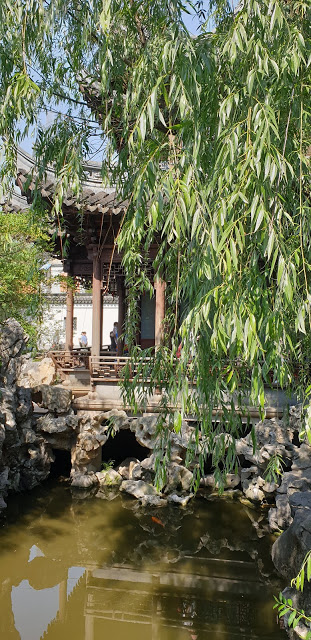
Searching for locations: The Yu Gardens, Shanghai, China

The Yu Gardens or Yuyuan Gardens

The Yu Gardens (or Yuyuan Gardens) are located at No. 137, Anren Street, Huangpu District, very close to the Old City God Temple, in the northeast of the Old City of Shanghai at Huangpu.

Yu Garden was first built in 1559 during the Ming Dynasty by Pan Yunduan and finished approximately 1577, created specifically as a private garden of the Pan family for Pan Yunduan’s parents to enjoy in their old age.

Yu Garden occupies an area of 5 acres, and is divided into six general areas:

  -Sansui Hall which includes the Grand Rockery was originally used to entertain guests,

  -Wanhua Chamber is a delicate building surrounded by derious cloisters,

  -Dianchun Hall, built in 1820, includes Treasury Hall and the Hall of Harmony,

  -Huijing Hall which includes Jade Water Corridor.

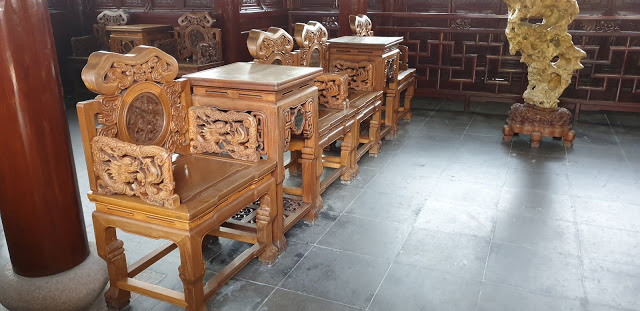
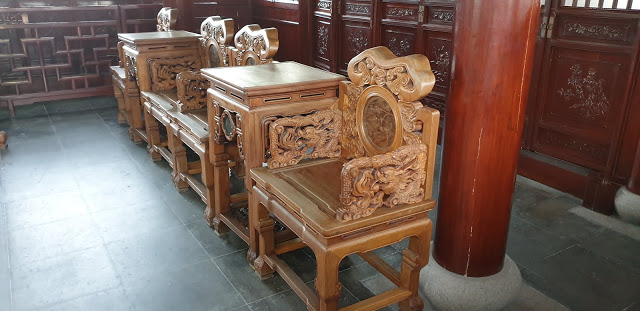
  -Yuhua Hall which is furnished with rosewood pieces from the Ming Dynasty, and,

  -The Inner Garden with rockeries, ponds, pavilions, and towers; first laid out in 1709.  As the quietest part of Yu Gardens, it includes the Hall of Serenity and the Acting and Singing Stage.

The Mid-Lake Pavilion Teahouse, within the gardens, is the oldest teahouse in Shanghai.

A centerpiece of the gardens is the Exquisite Jade Rock, a 5-ton boulder that was originally meant for the Huizong Emperor (Northern Song Dynasty from 1100-1126 AD) but was salvaged from the Huangpu River after the boat carrying it had sunk.

These gardens house a lot of buildings that seemed to be a perfect blend of the old and the new, and if it was up to me, I’d keep the old.  Both the building and the gardens they are set in are like an oasis in the middle of an industrial complex, and perhaps impractical for the number of people living in Shanghai.

All of the ponds had a lot of fish in them

It was a pleasant afternoon, for both a stroll through the gardens

In and out of the rockery on narrow pathways

And to look inside the buildings that were sparsely furnished

There was even an area set aside for entertainment.

The first case of PI Walthenson – “A Case of Working With the Jones Brothers”

This case has everything, red herrings, jealous brothers, femme fatales, and at the heart of it all, greed.

See below for an excerpt from the book…

Coming soon!

PIWalthJones1

An excerpt from the book:

When Harry took the time to consider his position, a rather uncomfortable position at that, he concluded that he was somehow involved in another case that meant very little to him.

Not that it wasn’t important in some way he was yet to determine, it was just that his curiosity had got the better of him, and it had led to this: sitting in a chair, securely bound, waiting for someone one of his captors had called Doug.

It was not the name that worried him so much, it was the evil laugh that had come after the name was spoken.

Doug what? Doug the ‘destroyer’, Doug the ‘dangerous’, Doug the ‘deadly’; there was any number of sinister connotations, and perhaps that was the point of the laugh, to make it more frightening than it was.

But there was no doubt about one thing in his mind right then: he’d made a mistake. A very big. and costly, mistake. Just how big the cost, no doubt he would soon find out.

His mother, and his grandmother, the wisest person he had ever known, had once told him never to eavesdrop.

At the time he couldn’t help himself and instead of minding his own business, listening to a one-sided conversation which ended with a time and a place. The very nature of the person receiving the call was, at the very least, sinister, and, because of the cryptic conversation, there appeared to be, or at least to Harry, criminal activity involved.

For several days he had wrestled with the thought of whether he should go. Stay on the fringe, keep out of sight, observe and report to the police if it was a crime. Instead, he had willingly gone down the rabbit hole.

Now, sitting in an uncomfortable chair, several heat lamps hanging over his head, he was perspiring, and if perspiration could be used as a measure of fear, then Harry’s fear was at the highest level.

Another runnel of sweat rolled into his left eye, and, having his hands tied, literally, it made it impossible to clear it. The burning sensation momentarily took his mind off his predicament. He cursed and then shook his head trying to prevent a re-occurrence. It was to no avail.

Let the stinging sensation be a reminder of what was right and what was wrong.

It was obvious that it was the right place and the right time, but in considering his current perilous situation, it definitely was the wrong place to be, at the worst possible time.

It was meant to be his escape, an escape from the generations of lawyers, what were to Harry, dry, dusty men who had been in business since George Washington said to the first Walthenson to step foot on American soil, ‘Why don’t you become a lawyer?” when asked what he could do for the great man.

Or so it was handed down as lore, though Harry didn’t think Washington meant it literally, the Walthenson’s, then as now, were not shy of taking advice.

Except, of course, when it came to Harry.

He was, Harry’s father was prone to saying, the exception to every rule. Harry guessed his father was referring to the fact his son wanted to be a Private Detective rather than a dry, dusty lawyer. Just the clothes were enough to turn Harry off the profession.

So, with a little of the money Harry inherited from one of his aunts, he leased an office in Gramercy Park and had it renovated to look like the Sam Spade detective agency, you know the one, Spade and Archer, and The Maltese Falcon.

There’s a movie and a book by Dashiell Hammett if you’re interested.

So, there it was, painted on the opaque glass inset of the front door, ‘Harold Walthenson, Private Detective’.

There was enough money to hire an assistant, and it took a week before the right person came along, or, more to the point, didn’t just see his business plan as something sinister. Ellen, a tall cool woman in a long black dress, or so the words of a song in his head told him, fitted in perfectly.

She’d seen the movie, but she said with a grin, Harry was no Humphrey Bogart.

Of course not, he said, he didn’t smoke.

Three months on the job, and it had been a few calls, no ‘real’ cases, nothing but missing animals, and other miscellaneous items. What he really wanted was a missing person. Or perhaps a beguiling, sophisticated woman who was as deadly as she was charming, looking for an errant husband, perhaps one that she had already ‘dispatched’.

Or for a tall, dark and handsome foreigner who spoke in riddles and in heavily accented English, a spy, or perhaps an assassin, in town to take out the mayor. The man was such an imbecile Harry had considered doing it himself.

Now, in a back room of a disused warehouse, that wishful thinking might be just about to come to a very abrupt end, with none of the romanticized trappings of the business befalling him. No beguiling women, no sinister criminals, no stupid policemen.

Just a nasty little man whose only concern was how quickly or how slowly Harry’s end was going to be.

© Charles Heath 2019
“The Enemy Within” – a thirty-day revision – Day 2

This book has also been written for some time, like The Document, and the manuscript was also sitting in a box with half a dozen others gathering dust and not quite as complete, so this month it is going to get the makeover, a first draft for the editor.

And so it begins…

The best-laid plans of mice and men …

All come to grief when you begin writing. Sure, you have a plan, it may be meticulous, it might be scrambled, it might be almost perfect.

I thought mine was almost perfect.

Then chapter one started and I reached a fork in the road. This way or that, or another altogether.

It was a possibility I didn’t see in the planning stage.

Will it affect the outcome?

Too early to tell.

Part of chapter one has now become chapter two, and the ripple effect has changed the number of chapters. It’s a common feature in a rewrite.

The good news, 2,241 words were revised.

Let you know more tomorrow!

‘Sunday in New York’ – A beta reader’s view

I’m not a fan of romance novels but …

There was something about this one that resonated with me.

This is a novel about a world generally ruled by perception, and how people perceive what they see, what they are told, and what they want to believe.

I’ve been guilty of it myself as I’m sure we all have at one time or another.

For the main characters Harry and Alison there are other issues driving their relationship.

For Alison, it is a loss of self-worth through losing her job and from losing her mother and, in a sense, her sister.

For Harry, it is the fact he has a beautiful and desirable wife, and his belief she is the object of other men’s desires, and one in particular, his immediate superior.

Between observation, the less than honest motives of his friends, a lot of jumping to conclusions based on very little fact, and you have the basis of one very interesting story.

When it all comes to a head, Alison finds herself in a desperate situation, she realises only the truth will save their marriage.

But is it all the truth?

What would we do in similar circumstances?

Rarely does a book have me so enthralled that I could not put it down until I knew the result. They might be considered two people who should have known better, but as is often the case, they had to get past what they both thought was the truth.

And the moral of this story, if it could be said there is one, nothing is ever what it seems.

Available on Amazon here: amzn.to/2H7ALs8

In a word: Pilot

Everyone knows the man or woman in the left seat up the front of the airplane, is the person we entrust with our lives the moment we get into the air. It is usually an airplane, but it can also be a balloon, or a helicopter.

There are some who still say, if God had meant us to fly, he would have given us wings. Still, it’s quicker to fly sometimes, than drive, and I’ve always had the desire to learn to fly a plane but just never got around to it.

A pilot doesn’t have to be in charge of a plane, he or she can also be in charge of a ship, generally when they arrive at a port and have specific navigational information getting the ship to the berth.

Of course, it can apply to anyone who is steering the ship.

And it can also mean to guide, people through a difficult phase, a forest, or a hike.

First episode, when a TV show is commissioned the first episode is always called a pilot. It’s used to test the audience’s reaction, and sometimes it still amazes me what succeeds and what fails. It seems my favourite shows generally last only one season.

There’s a pilot light, which is a small continuous fire, used to ignite a larger one.

A pilot program is one that is rolled out to a few people as a test before introducing it on a much larger scale. I used to use these when creating teaching programs for computer skills.

An excerpt from “Echoes from the Past”

Available on Amazon Kindle here:  https://amzn.to/2CYKxu4

With my attention elsewhere, I walked into a man who was hurrying in the opposite direction.  He was a big man with a scar running down the left side of his face from eye socket to mouth, and who was also wearing a black shirt with a red tie.

That was all I remembered as my heart almost stopped.

He apologized as he stepped to one side, the same way I stepped, as I also muttered an apology.

I kept my eyes down.  He was not the sort of man I wanted to recognize later in a lineup.  I stepped to the other side and so did he.  It was one of those situations.  Finally getting out of sync, he kept going in his direction, and I towards the bus, which was now pulling away from the curb.

Getting my breath back, I just stood riveted to the spot watching it join the traffic.  I looked back over my shoulder, but the man I’d run into had gone.  I shrugged and looked at my watch.  It would be a few minutes before the next bus arrived.

Wait, or walk?  I could also go by subway, but it was a long walk to the station.  What the hell, I needed the exercise.

At the first intersection, the ‘Walk’ sign had just flashed to ‘Don’t Walk’.  I thought I’d save a few minutes by not waiting for the next green light.  As I stepped onto the road, I heard the screeching of tires.

A yellow car stopped inches from me.

It was a high powered sports car, perhaps a Lamborghini.  I knew what they looked like because Marcus Bartleby owned one, as did every other junior executive in the city with a rich father.

Everyone stopped to look at me, then the car.  It was that sort of car.  I could see the driver through the windscreen shaking his fist, and I could see he was yelling too, but I couldn’t hear him.  I stepped back onto the sidewalk, and he drove on.  The moment had passed and everyone went back to their business.

My heart rate hadn’t come down from the last encounter.   Now it was approaching cardiac arrest, so I took a few minutes and several sets of lights to regain composure.

At the next intersection, I waited for the green light, and then a few seconds more, just to be sure.  I was no longer in a hurry.

At the next, I heard what sounded like a gunshot.  A few people looked around, worried expressions on their faces, but when it happened again, I saw it was an old car backfiring.  I also saw another yellow car, much the same as the one before, stopped on the side of the road.  I thought nothing of it, other than it was the second yellow car I’d seen.

At the next intersection, I realized I was subconsciously heading towards Harry’s new bar.   It was somewhere on 6th Avenue, so I continued walking in what I thought was the right direction.

I don’t know why I looked behind me at the next intersection, but I did.  There was another yellow car on the side of the road, not far from me.  It, too, looked the same as the original Lamborghini, and I was starting to think it was not a coincidence.

Moments after crossing the road, I heard the roar of a sports car engine and saw the yellow car accelerate past me.  As it passed by, I saw there were two people in it, and the blurry image of the passenger; a large man with a red tie.

Now my imagination was playing tricks.

It could not be the same man.  He was going in a different direction.

In the few minutes I’d been standing on the pavement, it had started to snow; early for this time of year, and marking the start of what could be a long cold winter.  I shuddered, and it was not necessarily because of the temperature.

I looked up and saw a neon light advertising a bar, coincidentally the one Harry had ‘found’ and, looking once in the direction of the departing yellow car, I decided to go in.  I would have a few drinks and then leave by the back door if it had one.

Just in case.

© Charles Heath 2015-2020

newechocover5rs

Writing about writing a book – Day 30

I’m having fun with chapter one.

Can you reach a point where you are never satisfied with what you’ve written?

What more can I say?

Looking at the mess constituting my room and my life, slob may have been an appropriate description.  I considered myself old, overweight though not necessarily fat, hair graying at the edges, and few wrinkles around the eyes, there were no real pluses in my description.

Some said I had a kindly face, but perhaps I had the look of a paternalistic grandfather.  There were several men in the office who were the same age and had grandchildren.  And some who had children at a time when they should be planning for retirement, not parenthood.

World-weary and perpetually tired, I’d passed the mid-life crisis, wondering what it was that affected other men my age.  Twenty-odd years later, I was still wondering.

I used to think I’d missed a lot in half a lifetime.

Now, I didn’t know what to think.

Did I deserve pity?  No.

Did I deserve sympathy?  No!

The only person who could get me out of the rut was myself.  For years I’d traded on Ellen’s good nature.  She deserved better, left me, and was now happier in the arms of a man who I wanted to believe treated her far better than I.  She had told me so herself, and judging by her manner, it had to be true.  Only recently had she got her smile back, the one that lit her face up, one that infectiously spread happiness to anyone near her.

There were reasons why I became the person I was now.  Some might say they were valid.  In the cold, hard light of dawn, I could see it was time I stopped using my past as a crutch and got on with the business of living.

Perhaps today would be the first day of the rest of my life.

I took the bus rather than drove.  At that hour of the morning, the traffic would be bad, and there would be no parking spaces left.  And I was using public transport more and more, have become accustomed to the convenience.  Time to read the paper, or a good book, or just dream about a different life.

This morning I thought about Ellen.  I hadn’t for a while, but that might have been fueled by the arrival of the divorce papers she wanted me to sign.  I’d had my time to be angry, and disappointed, she’d said, and she was right.  It was time to move on.

And she had stuck by me through thick and thin, coming back from overseas service a basket case after nine months in a POW camp, after a war that was more horrible than anyone could imagine.  Two mental breakdowns, periods of indolence and lassitude, leaving her to bring up the girls on her own.  I had not been a great father, and much less a husband.

I remembered that argument word for word.

I could see the looks of pain in the girl’s faces.

I remembered the hug, the kiss on the cheek, the tears.  It had not been out of hate, but a necessity.  For her and the children.  Until I found some lasting peace, they were better off at arm’s length.  Away from the arguing, the silences, the absences.

And disappointment.

After she left I tried to get my life in order.  Drugs, professional help, alcohol, meditation, then work.

Over ten years ago, it took a year, perhaps a little more before sanity returned.

She did not.

By then I knew she had found someone else, a mystery man, whom neither she would tell me who, and the girls honestly didn’t know.  She’d promised that much, any new man in her life would not get to meet the girls.  And she would tell me, and then when she was ready.

Then, suddenly, the children were no longer children but young adults and out in the world on their own, and I had become more a banker than a father, an observer rather than a participant, and it was as if we were more like ships passing in the night.  And overnight, the ships had sailed to the other side of the world.

My own fault, of course, and a bit late now to change history.  I could see Ellen’s influence over them, her prejudices and dislikes, and their contempt, like their mother, for me, simmering beneath the surface, but in fairness to them, I really hadn’t been much of a help as a parent should be.

And now I was getting my life back in order, perhaps I could try and make it up to them, and that first meeting, with them and Ellen, nearly a month ago, had been a step in the right direction.  They’d agreed to see me again, without her, during the holidays, which had now arrived.  All I had to do was make the call, and get on a plane.

This mess I was heading into, it would not take long.  I pulled out my phone and after searching for a travel agent near where I worked, I made an appointment to see about going overseas.

She had spoken to me about the divorce papers several days ago, alternately pleading with, and then abusing, me.  There had been some very strong language in the conversation, words I’d thought her incapable of using, but I confess, finally, I didn’t really know her all that well anymore.

Since then I had been calling her to arrange a meeting.  She had not yet replied.  With some distance to go before I reached the office, I tried calling her again.  I was almost glad when she didn’t answer.

I never realized just how hard it was to revise and re-write, and how much time it takes.

Perhaps that’s why first novels take so long to write!

© Charles Heath 2016-2023

Questions, sometimes without answers

At what point does a writer become a journalist?

Quite often journalists become writers because of their vast experience in observing and writing about the news, sometimes in the category of ‘truth is stranger than fiction’.

I did journalism at University and thought I would never get to use it.  I had to interview people, write articles, and act as an editor.  The hardest part was the headlines.

How much does that resemble the job of coming up with a title for your book?

Well, several opportunities arose over the last few months to dig out the journalist hat, put it on, and go to work.

Where?

Hospital.  I’ve had to go there a few times more in the last few months than I have in recent years.

And I’d forgotten just how hospitals are interesting places, especially the waiting room in Emergency.

After the second or third visit, I started to observe the people who were waiting and ran through various scenarios as to the reason for their visit.  None may have been true, but it certainly was an exercise in creative writing and would make an excellent article.

Similarly, once we got inside the inner sanctum, where the real work is done, there is any number of crises and operations going on, and plenty of material for when I might need to include a hospital scene in one of my stories.

Or I could write a volume in praise of the people who work there and what they have to endure.  Tending the sick, injured and badly injured is not a job for the faint-hearted.

Research, if it could be called that, turns up in the unlikeliest of places.  Doctors who answer questions, not necessarily about the malady, nurses who tell you about what it’s like in Emergency on nights you really don’t want to be there, and other patients and their families, all of whom have a story to tell, or just wait patiently for a diagnosis and then treatment so they can go home.

We get to go this time at about four in the morning.  Everyone is tired.  More people are waiting.  Outside it is cool and the first rays of light are coming over the horizon as dawn is about to break.

I ponder the question without an answer, a question one of the nurses asked a youngish doctor, tossed out in conversation, but was there a more intent to it; what he was doing on Saturday night.

He didn’t answer.  Another crisis, another patient.

I suspect he was on duty in Emergency.