The cinema of my dreams – I always wanted to write a war story – Episode 17

For a story that was conceived during those long boring hours flying in a steel cocoon, striving to keep away the thoughts that the plane and everyone in it could just simply disappear as planes have in the past, it has come a long way.

Whilst I have always had a fascination in what happened during the second world war, not the battles or fighting, but in the more obscure events that took place, I decided to pen my own little sidebar to what was a long and bitter war.

And, so, it continues…


Jack was the first to realise that Marina was coming back, hearing her outside long before I did.  He stood up and looked in the direction of where he expected to see her.

A minute later she appeared, looking and sounding out of breath, as if she had been in a hurry? 

Chased, or had some urgent news?

“Is everything OK?” I asked, waiting till she came in and shut the door behind her.

The building we were in used to be a factory or a repair shop.  The strange smell I’d picked up a few hours ago was that of machine oil.

“We need to have a chat with the two who picked you up.”

“Where are they now?”

“I’ve organised to meet them at another facility we have.  Not everyone comes here.  It’s why we are still here.  Francesco nor any of the resistance he took with him were aware of this location.

I considered myself lucky to be among the few.

“Is there a reason why I need to be there?”

“Yes.  But it’ll wait until we get there.  Let’s go.”

She had barely got in the door, nor caught her breath.  It was just enough time to collect a spare clip of ammunition for a gun she had on her, but I couldn’t see.

I followed her out into the darkness, not realising it was night, for the first time since I’d arrived, and once outside, realised that it was an underground bunker rather than a building on an allotment, so it couldn’t be easily seen from any direction.  It was surrounded by trees and bushes, looking as though they had not been tended properly for some time.

It was as much as I could see, close by because it was a moonless night.

We went up some stairs and came out in a clump of bushes, and walked several yards where there was a disguised walkway zig-zagging through the bushes.  It, too, would be hard to see from a distance.  When we came out the other side, I could just barely see a car parked under a tree, looking rather worse for wear, and I thought it had been abandoned there. 

When Marina told me to get in, I realised it was, like everything else, well disguised.

The surrounding area was that of forest and farms.  It was hard to imagine that this part of the world was in the grip of a world war, and not too far away, there was the castle, and further north, the Germans and what was left of the Italian military forces dug in for a last-ditch effort.  The tide was turning, but ever so slowly.

It was hard to imagine just how dangerous it was for those defectors to try and get through without being shot.

And, just for good measure, Marina said, there were quite a few soldiers, disguised as ordinary workers who had infiltrated the villages, and surrounding farms, and reporting back what they saw and heard.

We were, in going about in the vehicle, attracting unwanted attention, but it was why we were doing this at night, she said, perhaps gleaning from my expression the fact I was worried about getting caught.

“The people at the castle tend not to go out at night for fear of being picked off.  I’m surprised you didn’t learn this when you were there.”

“I suspect the suspended any activities from the moment I arrived.  One of the prisoners told me that all movements of people had stopped, and they were waiting to be shipped out.  Obviously, they thought I might discover what was going on.  They definitely stopped me from going below the main floor.”

“I was told you have some knowledge of the castle layout?”

“Some.  We have old plans back in London, but I suspect those would be out of date now and since the German occupation.  The only time I got to look downstairs was when I tried to escape and found an old below ground exit, then when they locked me in a cell, and then when I was set free.  It matched much of what I remember seeing on the plans.  But, I suspect there’s more because I didn’t get to see the holding cells with the other prisoners.”

“Perhaps Carlo can help you with that.”

“We spoke about it.  I think he’s going to pay them a visit and exact revenge.”

“I told him we have to wait for some reinforcements.”

“No word from London?”

“Not yet.”

We stopped and parked the car between a church and what was left of what might have been a rectory, set aside from some other buildings that looked like part of a village.  It was not that dark that I couldn’t see that several of the buildings had been bombed, minus roofs, and one had the front section reduced to rubble.  No attempt had been made to clean it up.

“German tanks,” Marina said.  “An early landing party of your army parachuted in about a kilometre behind the church.  The local commander mobilised his forces and chased them into those buildings, which, at the time, housed four families.  They were given the option to surrender.  They didn’t, so the commander gave the order to raze the buildings to the ground, with them in there.  Along with the four innocent families.  No one survived.”

“The church?”

“The commander thought it would be bad luck to destroy the house of God.  The soldiers should have hidden in there.  They shot the priest anyway.”

It seemed odd to me that any sort of group would parachute into this part of Italy for any reason, castle withstanding.  There was, as far as I knew, nothing of interest or importance here.  Perhaps I’d ask when I made it back to London.  If I made it back.

I followed her through the rubble and in through a side entrance to the church.  Inside it was dark, and Marina was using her torchlight sparingly in case someone was watching.  From what I could see, the inside of the church was untouched, but everything was covered in dust from disuse.

“No one thought to send another priest?” I asked.

“No.  When they heard what happened to the last one, they decided to wait until the war was over.  Besides, with everything that’s happened, the people around here believe God has abandoned them.”

Perhaps he had.  I know that I wasn’t all that religious to begin with, but a lot of people I knew had lost their faith in a God that allowed such tragedies to happen.

We passed through a door at the back of the church, behind the nave, and into what looked like the vestment room.  To one side was another door, and then steps down.  The church had a cellar.

At the bottom of the stairs, there was a large storage area lit by a portable lantern.

Carlo was standing to one side, his weapon ready to use.

Opposite him were a man and a woman, the woman I’d seen before, she was the one who shot me with the tranquilizer.  The man, I’d not seen him before.


© Charles Heath 2019

Mistaken Identity – The Editor’s Draft – Day 10

I have been working on the story, the editor is asking for a second draft after making suggested changes – and I’m now working on it

One third of the month is gone and this writing job is not getting any easier.

The notion that we can sit down and over a period of 30 days, we can write a 50,000 word novel would be, to some, a preposterous notion.

For me, it is not. I have done it for three years in a row, and even without having a plan.

This one has a plan, but that plan only sometimes stretches to a day or two ahead, depending on how I’m going.

Today, it had been hard going because I set time aside to just sit down and write it, but you all know how fickle that can be. Devote time, and the words don’t come, have no time and try scratching in between a lot of other jobs, and the words are flowing.

It is annoying to say the least.

Bit, for today, Jack has discovered he does, indeed, have a doppelganger, and that he is related, which explains the uncanny likeness. Of course, he has been followed to the island, and run to ground in a park where the two meet face to face. Oh, and the doppelganger has a name, Jacob.

It could have got ugly, but Maryanne is there, though Jack is still not sure why, and her presence averts what could have been an ugly showdown,

Instead, some words of advice. Jack must ask his mother for the answers.

A fine time for Jack to discover that his mother has been lying to him for his whole life.

But, of course, any attempt to get her on the phone is proving difficult.

And it might mean the end of his holiday.

Our Jack is not a happy man.

Today’s effort amounts to 2,873 words, for a total, so far, of 25,485.

Yes, word wise we have reached the half way mark, but story wise, it appears it make take a little longer.

More tomorrow.

Searching for locations: Toowoomba Flower Festival, Toowoomba, Queensland, Australia

The Toowoomba Carnival of Flowers is held in September, and generally runs for ten days at the end of the month.

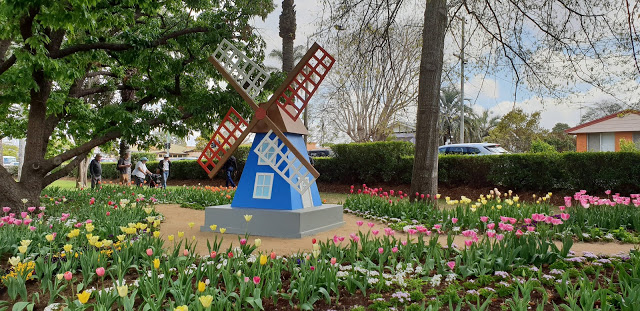
We visited the Laurel Bank Park, where there are beds of many colorful flowers,

open spaces,

statues,

an area set aside for not only tulips but a model windmill

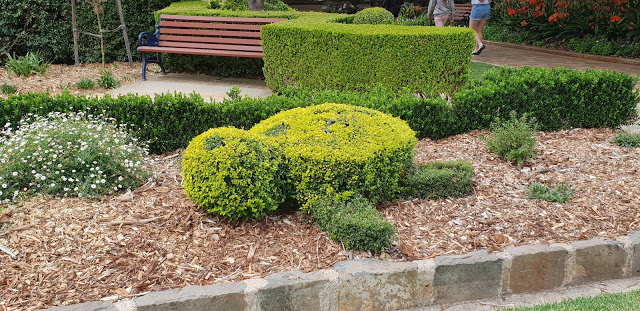
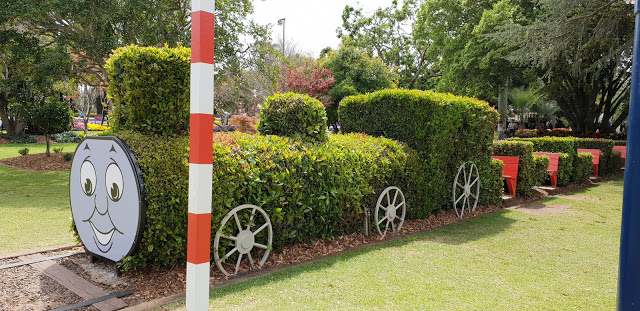
and quite a number of hedge sculptures

There was also the opportunity to go on a morning or afternoon garden tour which visited a number of private gardens of residences in Toowoomba.

Sometimes it’s better to say that an expressed opinion is your own

It’s always a good thing to get that across especially if you work for an organization that could misinterpret what that opinion is, or generally have an opposing opinion.  Of course, by saying your opinions are your own, you’re covering yourself from becoming unemployed, but is this a futile act?

Perhaps its better to not say anything because everything you say and do eventually find its way to those you want most not to hear about it, perhaps one of the big negatives of the internet and social media.

And…

It seems odd to me that you can’t have an opinion of your own, even if it is contrary to that of the organization you work for, and especially if their opinion has changed over time.  An opposing opinion, not delivered in a derogatory manner, would have the expectation of sparking healthy debate, but it doesn’t always end up like that.

I’m sure there are others out there that will disagree, and use the overused word, loyalty’.   Perhaps their mantra will be ‘keep your opinions to yourself’.

This, too, often crops up in personal relationships, and adds weight to the statement, ‘you can pick your friends but not your relatives’.

I’m told I have an opinion on everything, a statement delivered in a manner that suggests sarcasm.  Whether it’s true or not, isn’t the essence of free speech, working within the parameters of not inciting hate, bigotry, racism, or sexism, a fundamental right of anyone in a democracy?

Seems not.

There’s always someone out there, higher up the food chain, with an opinion of their own, obviously the right one, and who will not hesitate to silence yours.  But, isn’t it strange that in order to silence you, they have to use leverage, like your job, to get theirs across.

Well, my opinions are in my writing, and whether or not you agree with them or not, I’m sure you will let me know.  In a robust but respectful manner.

Unlike some, my door is always open.

The cinema of my dreams – I never wanted to go to Africa – Episode 42

Our hero knows he’s in serious trouble.

The problem is, there are familiar faces and a question of who is a friend and who is foe made all the more difficult because of the enemy, if it was the enemy, simply because it didn’t look or sound or act like the enemy.

Now, it appears, his problems stem from another operation he participated in, and because of it, he has now been roped into what might be called a suicide mission.

I was not sure how the Congo commander was going to react when four cars with people who looked more like mercenaries than a film crew turned up at the front gate.

Not that we had the film equipment to use as a cover. I guess that was the reason the kidnappers had removed it from our cars. One less reason to believe our story. I would have been curious to hear just how the commander had described us to his Congo counterpart.

Or what sort of treatment we were going to get. I don’t think the hostages were going to like the idea of becoming hostages again, albeit with a new set of ransom demands, and probably a lot of harsher treatment. Mercenaries could be rough, but they needed resources, and trying to negotiate with overly damaged goods wouldn’t set much of an example.

The Government military, on the other hand, would not be too particular. And capturing an invading enemy force, spies if you will, well, that was going to be a feather in the cap of the airfield commander.

But would he tip his hand at the gate or wait till we pulled up outside the headquarters building. If there was one.

We were about to find out. The gate was in sight and flanked by two very bright lights which we had all seen for about the last half mile, flickering through the undergrowth. The road was well made, and we would have made good time, but I deliberately slowed down to give Monroe time to get into place.

Another brief report from the Colonel told me they reckoned on 20 troops deployed at different parts of the field, just in case we decided to ‘sneak’ in on foot.

At the gate the road widened into a large turning circle for turning back cars.

I stopped right on top of the gate. A non-commissioned officer came out of a small shack by the gate and joined two men standing either side of the gate. Weapons weren’t pointed in our direction, but that could change quickly.

I was going with the film crew going home story first.

“Who are you?” I noticed the officer had a clipboard and made a show of looking at it, and the page underneath. “You are not on my list.”

“Probably not. We have been filming a documentary, and it’s time to go home. We have an aircraft coming in tomorrow morning to pick us up.”

One of the guards came through the gate and went down one side of each car, then came back up the other side, peering in through the windows. Back at the gate, he spoke to the officer.

“You have weapons. That is unusual for a film crew isn’t it?”

Highly, if we were anywhere else in the world. “We were warned about militias. Luckily we didn’t run into any.”

“Then, before you enter the airfield I suggest you, and your men, surrender any weapons.”

“Of course.” I relayed the instruction back through the cars. The soldier then came down the car and collected the weapons in a bag. As I’d assumed, we were not going to gain admission to the airstrip armed. It was probably also a law which in any country made perfect sense.

Once the soldier returned the officer had the gate opened, and came over to me.

“Fill in the form, and we’ll get you on your way soon enough.”

He handed me the clipboard, and then stepped away, taking out a radio unit of his own and spoke into it in a language I didn’t understand. Perhaps we should have kept Jacobi with us for a little longer so he could interpret.

When I filled out the form and handed it back, he said, “Drive up the road about a half-mile to a hanger and park your cars out the front. I suggest when getting out of the cars not to make any sudden or suspicious moves.”

Like we’d been told almost word for word back at the commander’s camp. Interesting.

The men at the gate didn’t follow us, but I did see, coming from two separate points back from the runway, or what looked to be the runway, two groups of five soldiers in each, in a proper formation. That was not the actions of a motley militia.

Serious soldiers perhaps.

It didn’t take long to reach the hanger, quite large, but in a sorry state of repair. Beside it was two old army huts that were in better repair and lit up. At the top of the steps of one stood the commander, a Captain. Clean, fresh, snug-fitting uniform, looking the part. Newly promoted, with something to prove.

With him were another six soldiers, armed and ready. That made 16 plus him. Where were the others?

Another non-commissioned officer came out of the hut and briefly spoke to his commander. Then he went back inside, and the commander came down the stairs to greet me. The rest of the team stood together, in front of the third car, and about 20 feet away. They were trying their best to cover the two hostages.

“Good evening Mr. James.” Reasonably good English, polite, but there was a slight edge to his tone.

“Good evening.”

“May I ask, which way do you come?”

“From Faradje, on the way to Nagero. I was going to drive into Nagero but changed my mind. Best to get here and be ready.”

“I heard there were some elements of the militia on the road. Did you meet any?”

“No. I was told that this country is quite safe and that we would not be harmed, thanks, I’m told to the good services of the Government’s military. You will be pleased to learn that it is quite safe, a point I will be spreading when I return home. Hopefully that will bring in more tourists.”

“If, as you say, you’ve been making a documentary, it seems odd to me that on one hand, you don’t have any equipment, and on the other, that you have not included Garamba.”

“A valid observation. We had to call the shooting off because two of our crew are ill and need to be returned home, and we left the equipment back in Faradje, our last stop, ready for the replacement crew who will be scheduled to fly in, in the next week or so.”

I had considered what I might say and tried to make it sound plausible, but in the end I don’t think it mattered what I said, especially if the other commander had forewarned the Captain of our impending arrival.

“Yes. That may be true, or it might not. I’m assuming the two sick members of your team are over next to the film crew. In that case, I believe both of us know that those men do not belong to your crew, but are escaped prisoners.”

He gestured towards his men and they went over to the group and extracted the two hostages.

Seemingly it was game over.

“So Commander Ntumba called you after we left?”

“Not a lot happens here without my knowing it. It was in his best interest to inform me.”

Something in the distance caught his eye, and I moved my line of sight to match his. Shurl, hands in the air, with two more soldiers behind him, coming from the bush line on the other side of the runway.

Commander Ntumba would also have told him about our sniper, as I’d surmised, and there was no mistaking the look of glee on his face. Outsmarting what he would consider a crack team of mercenaries from the United States.

I turned back and shrugged.

“Yes, he also told us about your sniper Mr. James. You didn’t think he was going to sneak up on us like he did Commander Ntumba did you?”

“It was worth a try,” I said in my best-defeated tone.

“Right. For the time being you will be kept in detention until I speak to my commander. You will not be leaving this airport. Your rescue plane, when it arrives, will be detained. I will have further questions for you later. Film crew indeed. Take them to B Block,” he said to the officer, then headed back up the stairs to his office.

As far as he was concerned, it had been all too easy.

© Charles Heath 2020

Searching for locations: An old country homestead, Canungra, Australia

Or to be more precise, the homestead at what is now O’Reilly’s vineyard, where there is a pleasant lawn out back running down to the river for picnics, an alpaca farm next door, and the homestead plays host to functions and wine tastings

My interest was that we had assumed there was a restaurant, and we were going to have lunch. There might be one, but not the day we visited, it was just cafe food or a picnic available.

I was more interested in the old homestead because it was a fine example of the homesteads built in the ‘outback’.

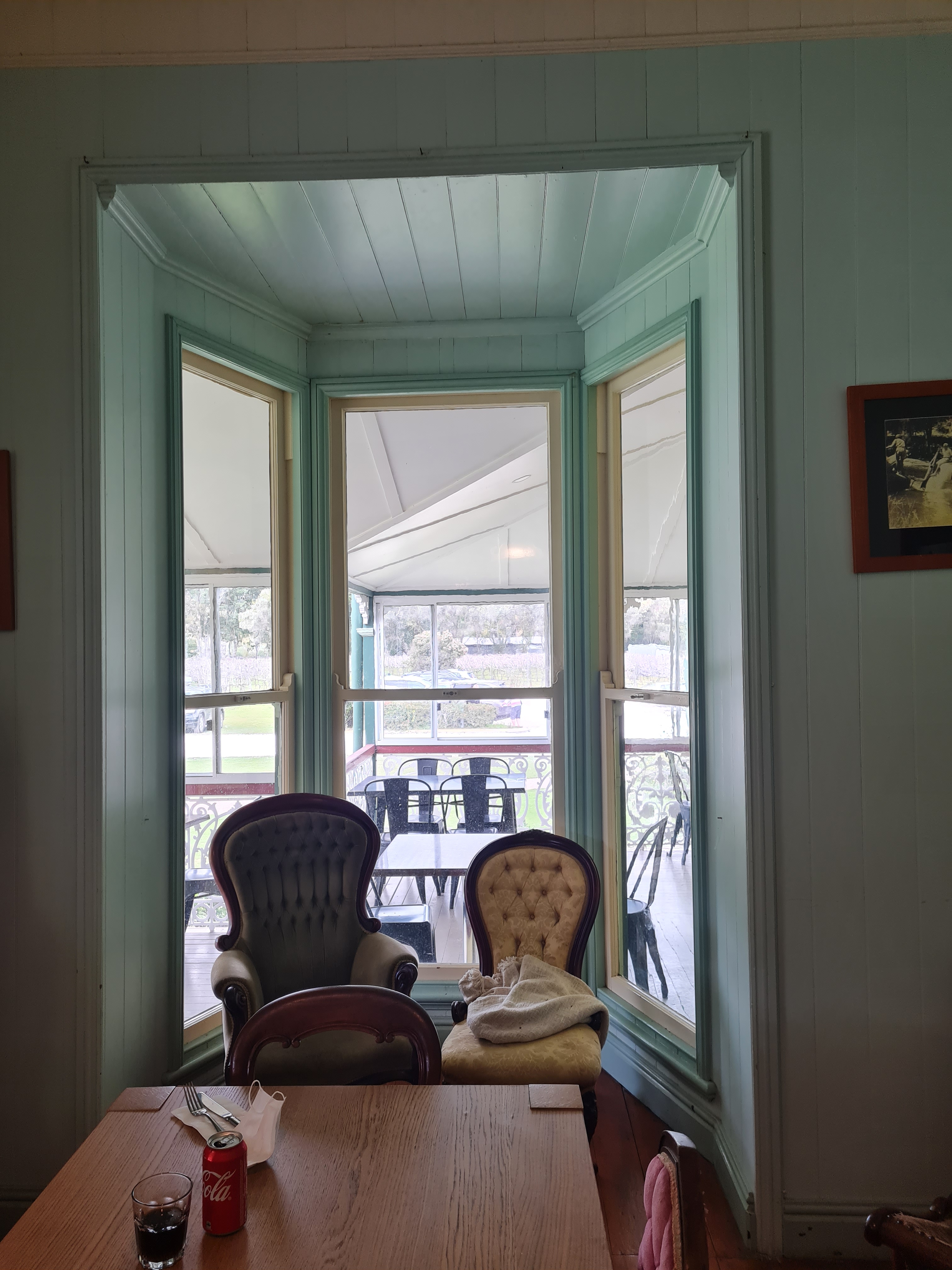
Today we are having lunch in the Platypus room, in the O’Reilly’s vineyard farmhouse, which, if you close your eyes and let your imagination run free, could see it as the master bedroom of a homestead.

Certainly, the building is old, made completely of timber, inside and out, with the traditional high ceilings to keep the heat at bay.

At one end, a large bay window, which would be ideal to sit and view the outside, past the sweeping verandah.  There is a small lawn and a rotunda, but beyond that what might have been extended gardens, is the vineyard.

The homestead is in an ideal position midway between the main road and the river, has the traditional surrounding verandah, and shows signs of being extended on almost all sides.

On the other side of the wide corridor that leads you to the bar, and, coincidentally, down the centre of the house, is a smaller bedroom, also used as a dining room, and ubiquitously named the library.

It may be small but it does have a fireplace, which the assumed master bedroom does not, but now I’m thinking that room might have been the morning room.

Behind the room, we’re in is another bedroom, or perhaps this might be the master because it does have a fireplace and is quite large.  And a name, the Ambassador room.  Now it serves as the pickup place for picnic baskets.

There is another room on the opposite side of the corridor called the Drawing Room but is not open to the public.  But, going into the room with the fireplace adjacent to it, you can sell the aroma of pizzas, so it’s probably an extension of the kitchen, and, walking around the outside that side of the house proves it to be the case.

After all, they do catering for weddings and need a very large food preparation area which I discovered runs down the whole of that side of the house.

At the end of the corridor I’d the bar and spare space, and running off that and behind that is where there is a large dining area, perhaps prior to COVID, the restaurant.

It’s not hard to imagine that area as a very large entertaining area, either for very large dinner parties, or dancing.

As for the food, it’s either a picnic basket or pizzas.  We chose the latter, not realising the bases were not homemade, but bought in.  

The toppings however were both plentiful and tasty.  It could have been hotter, because it was a cold day, and it was cold in the room.

As for something to do other than taste the wine, and buy a few bottles, you can get up close to the vines, which, at this time of the year gave been pruned back and look quite dead, look at or walk an alpaca, even feed it, or all of them, or go down to the river and see if you can spot a Platypus.

Perhaps next time we’ll have a picnic down by the river.

The first case of PI Walthenson – “A Case of Working With the Jones Brothers”

This case has everything, red herrings, jealous brothers, femme fatales, and at the heart of it all, greed.

See below for an excerpt from the book…

Coming soon!

PIWalthJones1

An excerpt from the book:

When Harry took the time to consider his position, a rather uncomfortable position at that, he concluded that he was somehow involved in another case that meant very little to him.

Not that it wasn’t important in some way he was yet to determine, it was just that his curiosity had got the better of him, and it had led to this: sitting in a chair, securely bound, waiting for someone one of his captors had called Doug.

It was not the name that worried him so much, it was the evil laugh that had come after the name was spoken.

Doug what? Doug the ‘destroyer’, Doug the ‘dangerous’, Doug the ‘deadly’; there was any number of sinister connotations, and perhaps that was the point of the laugh, to make it more frightening than it was.

But there was no doubt about one thing in his mind right then: he’d made a mistake. A very big. and costly, mistake. Just how big the cost, no doubt he would soon find out.

His mother, and his grandmother, the wisest person he had ever known, had once told him never to eavesdrop.

At the time he couldn’t help himself and instead of minding his own business, listening to a one-sided conversation which ended with a time and a place. The very nature of the person receiving the call was, at the very least, sinister, and, because of the cryptic conversation, there appeared to be, or at least to Harry, criminal activity involved.

For several days he had wrestled with the thought of whether he should go. Stay on the fringe, keep out of sight, observe and report to the police if it was a crime. Instead, he had willingly gone down the rabbit hole.

Now, sitting in an uncomfortable chair, several heat lamps hanging over his head, he was perspiring, and if perspiration could be used as a measure of fear, then Harry’s fear was at the highest level.

Another runnel of sweat rolled into his left eye, and, having his hands tied, literally, it made it impossible to clear it. The burning sensation momentarily took his mind off his predicament. He cursed and then shook his head trying to prevent a re-occurrence. It was to no avail.

Let the stinging sensation be a reminder of what was right and what was wrong.

It was obvious that it was the right place and the right time, but in considering his current perilous situation, it definitely was the wrong place to be, at the worst possible time.

It was meant to be his escape, an escape from the generations of lawyers, what were to Harry, dry, dusty men who had been in business since George Washington said to the first Walthenson to step foot on American soil, ‘Why don’t you become a lawyer?” when asked what he could do for the great man.

Or so it was handed down as lore, though Harry didn’t think Washington meant it literally, the Walthenson’s, then as now, were not shy of taking advice.

Except, of course, when it came to Harry.

He was, Harry’s father was prone to saying, the exception to every rule. Harry guessed his father was referring to the fact his son wanted to be a Private Detective rather than a dry, dusty lawyer. Just the clothes were enough to turn Harry off the profession.

So, with a little of the money Harry inherited from one of his aunts, he leased an office in Gramercy Park and had it renovated to look like the Sam Spade detective agency, you know the one, Spade and Archer, and The Maltese Falcon.

There’s a movie and a book by Dashiell Hammett if you’re interested.

So, there it was, painted on the opaque glass inset of the front door, ‘Harold Walthenson, Private Detective’.

There was enough money to hire an assistant, and it took a week before the right person came along, or, more to the point, didn’t just see his business plan as something sinister. Ellen, a tall cool woman in a long black dress, or so the words of a song in his head told him, fitted in perfectly.

She’d seen the movie, but she said with a grin, Harry was no Humphrey Bogart.

Of course not, he said, he didn’t smoke.

Three months on the job, and it had been a few calls, no ‘real’ cases, nothing but missing animals, and other miscellaneous items. What he really wanted was a missing person. Or perhaps a beguiling, sophisticated woman who was as deadly as she was charming, looking for an errant husband, perhaps one that she had already ‘dispatched’.

Or for a tall, dark and handsome foreigner who spoke in riddles and in heavily accented English, a spy, or perhaps an assassin, in town to take out the mayor. The man was such an imbecile Harry had considered doing it himself.

Now, in a back room of a disused warehouse, that wishful thinking might be just about to come to a very abrupt end, with none of the romanticized trappings of the business befalling him. No beguiling women, no sinister criminals, no stupid policemen.

Just a nasty little man whose only concern was how quickly or how slowly Harry’s end was going to be.

© Charles Heath 2019

Mistaken Identity – The Editor’s Draft – Day 8

I have been working on the story, the editor is asking for a second draft after making suggested changes – and I’m now working on it

The story proceeds. That underlying suspicion of Maryanne’s motives rears its head again, but for different reasons.

Of course, Jack, the main character has a name, if not a little trite but it suits him, has always been suspicious because he’s not the type to be approached by beautiful women, and yet, so far has managed to allay those fears but is the perfect companion.

But, what’s a self-confessed gate crasher got up her sleeve.

Out of the hospital and on their road trip, they’re heading for an island and a hotel that overlooks the Mediterranean, which might be synonymous with the perfect location for romance.

But all of that is shattered when he sees her with another man, at the rear of the ferry, and the animation in her manner tells him the man is not just someone who ran into her.

Jack knows who it is, and what he does, so that makes the meeting even more mysterious.

And perhaps dangerous.

Yes, we are exploring the theme of ‘everyone has secrets’.

Today’s effort amounts to 2,444 words, for a total, so far, of 20,594.

More tomorrow.

‘Sunday in New York’ – A beta reader’s view

I’m not a fan of romance novels but …

There was something about this one that resonated with me.

This is a novel about a world generally ruled by perception, and how people perceive what they see, what they are told, and what they want to believe.

I’ve been guilty of it myself as I’m sure we all have at one time or another.

For the main characters Harry and Alison there are other issues driving their relationship.

For Alison, it is a loss of self-worth through losing her job and from losing her mother and, in a sense, her sister.

For Harry, it is the fact he has a beautiful and desirable wife, and his belief she is the object of other men’s desires, and one in particular, his immediate superior.

Between observation, the less than honest motives of his friends, a lot of jumping to conclusions based on very little fact, and you have the basis of one very interesting story.

When it all comes to a head, Alison finds herself in a desperate situation, she realises only the truth will save their marriage.

But is it all the truth?

What would we do in similar circumstances?

Rarely does a book have me so enthralled that I could not put it down until I knew the result. They might be considered two people who should have known better, but as is often the case, they had to get past what they both thought was the truth.

And the moral of this story, if it could be said there is one, nothing is ever what it seems.

Available on Amazon here: amzn.to/2H7ALs8

“One Last Look”, nothing is what it seems

A single event can have enormous consequences.

A single event driven by fate, after Ben told his wife Charlotte he would be late home one night, he left early, and by chance discovers his wife having dinner in their favourite restaurant with another man.

A single event where it could be said Ben was in the wrong place at the wrong time.

Who was this man? Why was she having dinner with him?

A simple truth to explain the single event was all Ben required. Instead, Charlotte told him a lie.

A single event that forces Ben to question everything he thought he knew about his wife, and the people who are around her.

After a near-death experience and forced retirement into a world he is unfamiliar with, Ben finds himself once again drawn back into that life of lies, violence, and intrigue.

From London to a small village in Tuscany, little by little Ben discovers who the woman he married is, and the real reason why fate had brought them together.

It is available on Amazon here:  http://amzn.to/2CqUBcz