An excerpt from “If Only” – a work in progress

Investigation of crimes doesn’t always go according to plan, nor does the perpetrator get either found or punished.

That was particularly true in my case.  The murderer was incredibly careful in not leaving any evidence behind, to the extent that the police could not rule out whether it was a male or a female.

At one stage the police thought I had murdered my own wife though how I could be on a train at the time of the murder was beyond me.  I had witnesses and a cast-iron alibi.

The officer in charge was Detective First Grade Gabrielle Walters.  She came to me on the day after the murder seeking answers to the usual questions like, when was the last time you saw your wife, did you argue, the neighbors reckon there were heated discussions the day before.

Routine was the word she used.

Her fellow detective was a surly piece of work whose intention was to get answers or, more likely, a confession by any or all means possible.  I could sense the raging violence within him.  Fortunately, common sense prevailed.

Over the course of the next few weeks, once I’d been cleared of committing the crime, Gabrielle made a point of keeping me informed of the progress.

After three months the updates were more sporadic, and when, for lack of progress, it became a cold case, communication ceased.

But it was not the last I saw of Gabrielle.

The shock of finding Vanessa was more devastating than the fact she was now gone, and those images lived on in the same nightmare that came to visit me every night when I closed my eyes.

For months I was barely functioning, to the extent I had all but lost my job, and quite a few friends, particularly those who were more attached to Vanessa rather than me.

They didn’t understand how it could affect me so much, and since it had not happened to them, my tart replies of ‘you wouldn’t understand’ were met with equally short retorts.  Some questioned my sanity, even, for a time, so did I.

No one, it seemed, could understand what it was like, no one except Gabrielle.

She was by her own admission, damaged goods, having been the victim of a similar incident, a boyfriend who turned out to be an awfully bad boy.  Her story varied only in she had been made to witness his execution.  Her nightmare, in reliving that moment in time, was how she was still alive and, to this day, had no idea why she’d been spared.

It was a story she told me one night, some months after the investigation had been scaled down.  I was still looking for the bottom of a bottle and an emotional mess.  Perhaps it struck a resonance with her; she’d been there and managed to come out the other side.

What happened become our secret, a once-only night together that meant a great deal to me, and by mutual agreement, it was not spoken of again.  It was as if she knew exactly what was required to set me on the path to recovery.

And it had.

Since then, we saw each about once a month in a cafe.   I had been surprised to hear from her again shortly after that eventful night when she called to set it up, ostensibly for her to provide me with any updates on the case, but perhaps we had, after that unspoken night, formed a closer bond than either of us wanted to admit.

We generally talked for hours over wine, then dinner and coffee.  It took a while for me to realize that all she had was her work, personal relationships were nigh on impossible in a job that left little or no spare time for anything else.

She’d always said that if I had any questions or problems about the case, or if there was anything that might come to me that might be relevant, even after all this time, all I had to do was call her.

I wondered if this text message was in that category.  I was certain it would interest the police and I had no doubt they could trace the message’s origin, but there was that tiny degree of doubt, about whether or not I could trust her to tell me what the message meant.

I reached for the phone then put it back down again.  I’d think about it and decide tomorrow.

© Charles Heath 2018-2020

“Trouble in Store” – Short stories my way: Adding more to the second part

The story fleshed out for the second section, discussed in Point of View


Annalisa looked at the two men facing her, a shopkeeper who, despite his protestations, was a dealer, and the other man, a customer scared shitless.

The poor bastard was not the only one scared. 

It was meant to be simple, arrive at the shop just before closing, force the shopkeeper to hand over the shit, and leave.

What had happened?

The shopkeeper laughed at them and  told them to get out.  Simmo started ranting and waving the gun around, then all of a sudden collapsed. 

There was a race for the gun which spilled out of Simmo’s hand, and she won.  No more arguments, the shopkeeper was getting the stuff when the customer burst into the shop.

This was worse than any bad hair day, or getting out of the wrong side of bed day, this was, she was convinced, the last day of her life.

Her mother said she would never amount to anything, and here she was with a drug addict coming apart because she had been cut off from her money and could no longer pay for his supply, which had led them to this inevitable ending.

She heard a strange sound come from beside her and looked down.  Simmo was getting worse, like he had a fever, and was moaning.


If Alphonse had thought his day was going to get any better after the delivery disaster earlier that day, he was wrong.

If he thought he could maintain his real business and his under the counter business with no one finding out, in that he was wrong too.  He’s know, inevitably, some useless punk would come and do exactly what Simmo was doing.

It might have been salvageable before the customer came in the door, but now it was not.  The customer had heard the words, and given him ‘the look’.  A drug addict telling the cops he was a dealer, it was his word against an  unreliable addict, but this local chap, he had that air of respectability the cops would listen too.

Damn.

But he had to try and salvage the situation, there was a lot of money involved, and other people depending on him.  He looked at the boy, on the floor, then  the girl.

“Listen to me, young lady, I have no idea what you are talking about.  Please, put the gun down before someone gets hurt.  Your friend needs medical help and I can call an ambulance.”

The girl switched her attention back to him.  “Shut up, let me think.  Shit.”

The storekeeper glanced over at the customer.  He’s been in once or twice, probably lived in the neighborhood, but looked the sort who’d  prefer to be anywhere but in his shop.  More so now.  If only he hadn’t burst in when he did.  He would have the gun, called the police, and brazened his way out of trouble.  Now, that remedy was off the table.

Now he had to deal with the fallout, especially if the girl started talking.


© Charles Heath 2016-2020

Plots ripped from newspaper headlines

Truth is stranger than fiction

I’ve been reading about an anomaly in Google Maps where people are looking at maps that display weird objects in places where they shouldn’t be,

For instance, one of the recent occurrences of this places a plane, either an Airbus A320 or a Boeing 737, is on the ground, in the middle of a clearing of a dense forest with trees all around it.

No one is missing a plane so where did it come from, and how could it possibly get there?

Another occurrence was a car at the bottom of a lake, though there has been more than one occurrence of this. 

But, sometimes those objects actually are there, like, for instance, one of those cars where the body of a man who had been missing for 20-odd years was discovered.

There is a rational reason why people are seeing what are objects that cannot be explained.  It is an instance where two images have been taken, and one is a ‘ghost’, and in the case of the aeroplane, it could have been flying very low over the area in question when the photo was taken.

So.

What if …

Someone was using the map program to look at various places, places that did not get the usual public scrutiny, or perhaps not at all.

After all, what does one do with the leisure hours when there’s nothing else to do?

Mick was a tramper, one of those people who liked to trail blaze, find new paths through forests and make odd discoveries, one of which, several years before, had uncovered a lost village of some archaeological value.

He sees what seems to be wreckage dispersed in the forest, notes the date of the photograph, nearly a year before, and checks newspapers and media sources for any news of missing small lanes, but discovers none.

But just in case his mind is playing tricks, he asks a friend to come and verify the discovery, and, lo and behold, it is no longer there.

Perhaps it was his imagination, wanting to find something.

Until he checked the date of the photograph and notes it’s been updated to another, a year later.

With nothing else to do, perhaps it was time for another walking holiday, and to see what was there.

The cinema of my dreams – I always wanted to write a war story – Episode 18

For a story that was conceived during those long boring hours flying in a steel cocoon, striving to keep away the thoughts that the plane and everyone in it could just simply disappear as planes have in the past, it has come a long way.

Whilst I have always had a fascination in what happened during the second world war, not the battles or fighting, but in the more obscure events that took place, I decided to pen my own little sidebar to what was a long and bitter war.

And, so, it continues…


It was clear, however, that Marina was familiar with the man and very annoyed with the woman.

When I took a longer look at the man, I realised he was not a man at all, but a boy in his teens, blessed by the fact he looked older than he was.  My guess, about 16.  I was surprised he had not been conscripted into the war, there seemed very few young men in the area.

Marina went straight over to him and snatched the elderly rifle he was holding away from him, the glared at Chiara

“Are you stark staring mad.  Enrico is not supposed to be out in the open, hell, it’s been a battle to keep him hidden away.  What will his parents think when they discover he’s here?”

“Pleased,” Enrico said.  “My father said it’s about time I did something to rid of the Germans, of the English too for that matter.  None of you has any right to be here.”

Fervently spoken, and to the wrong person, it would earn him a bullet to the back of the head.  But I agreed with him.

“All well and good,” Marina said to him, “but now there’s no easy way of doing that.  We must be careful, and you must stay put with your parents.  What we’re doing isn’t a game, you are neither trained or equipped to take anyone on, except perhaps rabbits.”

Back at Chiara.  “Take him home, and never bring him back here.  You don’t want to be the one who has to tell his mother if he gets killed.  Now, both of you go now, before I shoot both of you myself.”

“This is not the end of the matter,” Enrico said.

“And when you’ve taken him back, come back here.  We need to talk.”

Chiara said nothing, just nodded sullenly.  I think she believed the less said the better and did as she was asked, nodding her head in his direction, and adding a few choice phrases in Italian to him that I couldn’t understand.  It also just occurred to me that she had not asked Chiara the questions about the two men from the castle.  I guess that would have to wait until the safety of Enrico was settled, and she returned.

“Make sure they’re safe,” she said to Carlo, and he disappeared, leaving us alone.

“I thought all of the young men had been taken away by the Italian Army.”

“Not all.  We managed to hide a few away, but as you can see, despite our best efforts, they don’t seem to appreciate the trouble they could get into.  We used to have about a hundred young men from 14 through to 20 at the start of the war.  Two have found their way back, casualties of war, the rest, we may never see them again.  Enrico just doesn’t see the trouble he could get into.”

“It’s called youthful enthusiasm.  In the first world war, joining up, or going to war, was a lark.  It was a little less so this time because most of the parents knew from firsthand experience what it was like and tried to shield them.  And if you didn’t join up, questions were asked, and quite often jail, except for some who landed cushy jobs away from the fighting.”

“You were not so lucky?”

“No, I was one of those mad buggers who thought joining up to fight would be an adventure.  That quickly faded when the enemy started shooting at me.”

“And now you’re here, and a spy to boot.  That’s what they’ll hang on you if you get caught.”

“Then I shall try very hard not to get caught.  Again.”


Chiara came back about an hour later.  It seemed to me it was a lot safer to move around at night with the blackout, and I doubted Thompson would spare any men from the castle to check up on the local farmers.

And while I was at the castle, I didn’t hear anything raised about the local resistance, which I thought odd at the time, but now I knew why.  Most of them had joined him.  Better that than be hunted down and killed.

Chiara still looked sullen.  A closer look showed she was not very old herself, barely out of her twenties, and surprising that the Italian army, or Thomson for that matter, had not rounded her up for ‘duties’ at the castle.

There were a number of the local women working up at the castle, but they were mostly staff, or more likely forced labour, though I had thought we, when I believed it to be a British outpost, would be fairer to the locals than either the Germans or their own Italian military.  It’s odd how you tend to look at certain situations because of who you are, and the fact you would not do similar things at home.  The Germans, however, we would always treat differently, because they were the enemy, and because we expected the worst from them.  At that moment, though, wouldn’t the Germans think the same of us if the positions were reversed?

Best not to think about that.  My view of the war and the people in it was clouded enough.

Chiara, however, clearly thought the worst of me, and of those in the castle, and certainly didn’t think I was as neutral as I appeared.  A gun always in hand, I was sure she would shoot me again with the least provocation.

We sat, both Chiara and Marina with their weapons on the table in front of them.  I wasn’t trusted enough to be given a weapon.

Marina’s first question was directed at Chiara, “I’m told there were two men from the castle following Sam, and that he told you about them.”

“He did.  We did not see them.  We didn’t take the path, because, as you know, it’s not safe.”

It was a reasonable answer.  If the men at the castle were unfamiliar with the area, as I’m sure they would be, because they hadn’t been there for very long, and I doubt Thompson would want to advertise the nationality of those at the castle unless he had to, they would stick to the clearly-marked roads and paths.

I had on my way to the castle, from a different direction.  It didn’t explain why I had not been met by the leader of the resistance as arranged, but that was now explained, both by the former leader trying to kill me in a roadside explosion, and then what I learned at the castle in the last few days.

“Even so, there’s not that much distance between the two, and it is possible to shadow them.”

“I keep well away from them.  Perhaps Leonardo saw them.  He doesn’t have to worry about what they might do because they use him to supply food.  Maybe he knows more.”

“Perhaps I shall ask him next time I see him.  We need to know who from the castle is about and when so that we don’t get caught.”

“I’ll remember next time.  Is that all?”

“Yes.”

Chiara picked up her gun, gave me an extra-long sullen stare.  “I don’t trust this one, Marina.  You 

need to be careful.”

“I will.”

We waited a few minutes until after she had departed, and then Marina said, “We should be going too.  This place is a little eerie at night.  There are far too many ghosts for my liking.”

I shuddered, then followed her out.


© Charles Heath 2019

Mistaken Identity – The Editor’s Draft – Day 11

I have been working on the story, the editor is asking for a second draft after making suggested changes – and I’m now working on it

So now the truth, or a version of it, is out there, Jack now needs to find out who this Jacob is.

Well, he thinks he knows who it is, but he needs some confirmation from his mother about what she apparently has been hiding from him all his life.

Of course, as expected, his mother is being elusive.

In the meantime, I’ve been playing around with the backstory, which, sometimes never finds its way into the book. It serves me to get a better understanding of a character, of several, in what some might call a background paper.

I also wonder if this type of scenario plays out in other families, and if they were, or are, referred to as the skeletons in the closet.

We didn’t have any in our family, well, none that I knew about, anyway. I’m sure there were, we just never got to hear about them.

I guess that’s why often members of a family will go searching the genealogical records, and find out if they are related to someone famous. My wife reckons that she is somehow related to Harriet Beecher Stowe, the writer of Uncle Tom’s Cabin. On our side, we had a Luddite (who wasn’t really a Luddite – long story) transported to Van Diemen’s Land from England.

I know who won that forebear contest!

Today’s effort amounts to 2,438 words, for a total, so far, of 27,923.

More tomorrow.

Searching for locations: Smith Street, Fitzroy (Once part of what was known as Marvellous Melbourne)

Of course, it could easily be Collingwood depending on who you barrack for in the local football competition, as it is Fitzroy, but the map and my GPS tells me the street is, for all intents and purposes, in Fitzroy.

Not that there is a football team for Fitzroy any more, that moved north to Queensland a long, long time ago.

But…

Going for a wander up and down the street shows two or three very different sides to inner suburban living, and the effect that comes from a diverse range of cultures, the city has acquired over the past few decades.

Once viewed as almost the slums of Melbourne, these inner suburban areas have moved upscale to become havens for the more wealthy middle classes and a home for many diverse outlets, not the least of which are eateries.

And. In just this small section of Smith Street, there are a lot of eating establishments, from the Old Kingdom Peking duck restaurant to a small place selling Falafel, and then everything in between. It says a lot about how Australian eating habits have changed in a single generation, where back in those infamous old days you would be lucky to have a fish and chips/ hamburger shop and one or two Chinese restaurants.

Now, intermingled with gourmet bakeries and cozy coffee shops, there are a plethora of other eating establishments that cater to any cuisine you can imagine.  In fact, it’s possible to dine out on a different cuisine every night for a fortnight and only traverse about half a kilometre up and down the street.  It could be ideal if you lived in one of the small fronted houses just off the main carriageway in a leafy narrow side street or laneway.

And, as you would expect in an inner-city suburb,  the streets are narrow and made more hazardous for traffic because of the trams, a familiar sight in many of the streets in this area, and a much-used form of transport for workers making the short trip into the city.  It’s almost possible to take the extra half hour, and walk.

The street is lined with old buildings, some dating back to about 1868, there’s around the turn of the century, but most are not inhabited except for the street level where there is an eclectic mixture of furniture, haberdashery, and clothing stores catering to a particular group of people, what some call yuppies or upwardly mobile men and women who are between 25-35, with high paying jobs, and preferably no children.

Then there a subgroup walking there streets, homosexual men, some wheeling adopted children in pushers, others walking hand in hand out for a Saturday afternoon stroll where they can feel safe among many others.  It’s very different from other places I’ve been, but one can imagine there are places like this in every city all over the world.

But as a backdrop to the appearance of wealth, the shopfronts that cater to those upwardly mobile upper middle classes, there’s that exact opposite in full view, the homeless, and beggars, sitting on the ground outside the more run down shops soliciting alms, asking for a spare dollar, and even one asking for a cigarette.

Everyone walks past them, imagining no doubt there are not there, or that if they ignore them, they will go away.  I think not.  And, I suspect, more will come out of their daytime hiding places and take up residence in Smith Street itself.

The only surprise is that the local council has not asked the police to move them on. It’s an interesting juxtaposition of inhabitants in an area that no doubt can only attract the upper middle classes, as anything and everything is relatively expensive, particularly real estate, and permit driven parking spaces.

Would I live here?  No.

Would I come here to wine and dine?

Maybe, if I could get parking, which there appear to be very few spots or any other form of parking such as under the local supermarket which can be very expensive.  And if you are lucky enough to find a spot, who has the time or the memory if continually feeding a parking meter every two hours, particularly if you’re having a good time.

Equally, it’s a place I would not feel comfortable, even if it was once a safe haven, which up to a few years ago, I’d probably think it not.  In fact, at times I was not sure what to make of some of the people on the street, but I guess if I lived here, it would no doubt be the norm.

Would I recommend people to come here?

Of course.  One of the more interesting places in Melbourne to experience grassroots cuisine that is incredibly diverse in it range and price, and even from a place with tables and chairs that may have seen better days, but you haven’t come to see the furniture.

And to my mind, the dining is definitely better, here than perhaps Carlton, which in itself is Mecca to a plethora of university types, both teachers and students alike, and the coffee culture that pervade that area of Melbourne.

I have no doubt you will come and leave with a very good opinion of the place.

As for me, I came here for an engagement party held at the Hotelito de Jesus, a Mexican restaurant, serving a variety of Mexican dishes.  As I’m no expert of that particular cuisine, everything was going to be new.

It was.  It’s spicy but not too spicy, the pork belly excellent, the canapés delicious, and both the mushroom-based and shredded beef based mini tacos were equally scrumptious.

All of this was washed down with two particular Mexican beers, two of several available in bottles, cans, or by the glass.

Oh, and you can get sangria by the jug too if you like.  I would have, but my passion for trying different beers won out.

I’m trying to write a period piece

Televison is a great recorder of the past, and most channels, and especially cable tv have great libraries of films that go back more than a hundred years.

And, whilst it’s possible that modern day films and television series can try to recapture the past, the English as an exception being very good at it, often it is impossible to capture it correctly.

But, if you have a film shot in the moment, then you have a visual record of what life, and what was once part of our world before you in all it’s dated glory. The pity of it is that, then, we never appreciated it.

After all, in those particular times, who had the time to figuratively stop and smell the roses. Back then as life was going on, we were all tied up with just trying to get through each day.

Years later, often on reflection, we try to remember the old days, and, maybe, remember some of what it was like, but the chances are that change came far too rapidly, and often too radical, that it erases what we thought we knew existed before.

My grandmothers house is a case in point. In it’s place is a multi lane super highway, and there’s nothing left to remind us, or anyone of it, just some old sepia photographs.

I was reminded of how volatile history really is when watching an old documentary, in black and white, and how the city I grew up in used to look.

Then, even though it seemed large to me then, it was a smaller city, with suburbs that stretched about ten or so miles in every direction, and the outer suburbs were where people moved to get a larger block, and countrified atmosphere.

Now, those outer suburbs are no longer spacious properties, the acreage subdivided and the old owners now much richer for a decision made with profit not being the motivator, and the current suburban sprawl is now out to forty or fifty miles.

The reason for the distance is no longer the thought of open spaces and cleaner air, the reason for moving now is that land further out is cheaper, and can make buying that first house more affordable.

This is where I tip my hat to the writers of historical fiction. I myself am writing a story based in the 1970s, and its difficult to find what is and isn’t time specific.

If only I had a dollar for every time I went to write the character pulling out his or her mobile phone.

What I’ve found is the necessity to research, and this has amounted to finding old films, documentaries of the day, and a more fascinating source of information, the newspapers of the day.

The latter especially has provoked a lot of memories and a lot of stuff I thought I’d forgotten, some of it by choice, but others that were poignant.

Yes, and don’t get me started on the distractions.

If only I’d started this project earlier…

The cinema of my dreams – I never wanted to go to Africa – Episode 43

Our hero knows he’s in serious trouble.

The problem is, there are familiar faces and a question of who is a friend and who is foe made all the more difficult because of the enemy, if it was the enemy, simply because it didn’t look or sound or act like the enemy.

Now, it appears, his problems stem from another operation he participated in, and because of it, he has now been roped into what might be called a suicide mission.


The hut was a barracks, with bedding and ablutions for twenty men.  Since this was one of two, I assumed the other hut housed the twenty soldiers that the Colonel had alluded to.  There would be no more than one or two others including the Captain.

Hopefully, there were not more in Nagero.

The two hostages had been taken to the Captain’s office where I assumed there was probably a brig for them to be locked in.  Not quite what I was expecting, but no plan was ever perfect.

I went to the rear and sat down at a table that could accommodate about ten.

Davies and Shurl joined me.

I looked at Shurl.  “Good work, and glad they didn’t shoot you.”

“So am I.  Monroe had joined the others.  I had to make a lot of noise before they found me, so I don’t think this is a crack troop.”

“The Captain, or whatever he is, looks sharp,” Davies said.

“New command perhaps.  Can’t believe his luck, I’m guessing.  Did you get a look at the plane?”

“As much as I could without looking like I was looking at it.  It’s been well maintained, and I have no doubt we can get it off the ground.  It just depends if we need help to get the engines started.  It’s possible they don’t, though it’s not usual for this type of plane.  We shall see when the time comes.”

“Can you take off at night?”

“It’s a bit dangerous without lights.  I see they have a lighting system, so I suggest, if and when we break out of here you get someone to find the switch.”

“Noted.”

“Any idea when that’ll be?”

“I’m sure we have people working on that as we speak.”

The door at the entrance to the hut opened and the Captain stood next to his officer, with a gun pointed loosely in our direction, just in case we got the idea we could escape.

“Mr. James.  Time to tell me all about your escape plans.”

“I’m not so sure they could be called that, now.”

His tone hardened.  “Don’t keep me waiting.  I have people waiting for my report.”

I shrugged and got up.  “Just make sure everyone is ready to move when the time comes.  Tell Baines that I expect him to find the generator and get the lights working.”

The Captain’s impatient look told me not to keep him waiting any longer.

The Captain led the way, and his officer kept the gun pointed at me, just in case of what I’m not sure.  Inside his office, rather spacious, and with a door which likely led to some form of accommodation and the brig where the hostages were being held.  The door was closed so I couldn’t see, so it had to be an assumption.

The officer remained in the doorway, while the Captain sat behind a large desk, and gestured for me to sit the other side.  It didn’t look like a comfortable chair.

I thought I’d start the ball rolling.  “I’m assuming that there isn’t always an army guard on this airstrip?”

“No.  When we heard you were coming for the prisoners, a detachment was sent.  Fortuitous wouldn’t you say?”

“For who.”  Time to sow some seeds of discontent.

“What do you mean Mr. James?”

“Your mate back at the militia camp just pocketed two million US dollars’ worth of diamonds for those two men.  What was your cut?”

A shocked look, one that eased back into benign slowly.  No cut from that look, I’d say.

“We pride ourselves on being above bribery.  That was the old way of doing things.”

“Clearly the militia don’t agree.  Are you going to give them back to the commander so he can raffle them again?”

The Captain didn’t seem to understand the word ‘raffle’.

“Sell them back to us for another two million.  Maybe you should talk to your superiors and see what they think.  If you left us go, I can arrange for five million, for you and your friends to share.”

Disdain, or disappointment.

“What did I just say about bribery.”

“That it’s not the way things are done.  Maybe not in the capital, but this is the boondocks, and you’re the man in charge.  Five million can go a long way, but I suspect if you tell your superiors, you won’t get to see any of it.  Or perhaps you should take a few men over to the Militia commander’s camp and demand your share, or just take it.  After all, Captain, who is in charge of this sector, him or you?”

At least he was thinking about it.  Five million was a lot of money, but in US dollars, that could take him anywhere.

I remembered my old instructor saying, one, ‘every man has his price’.

I just had to find the Captains.

“Aside from trying to bribe me, Mr. James, what were you hoping to achieve here?”

“A rescue.  I know we tried once before and not succeeded, but you know how it is, if you at first don’t succeed, try, try, try again.”

“That it failed before should be a warning that we are not as weak as you might think we are.  The US Army is not necessarily the best in the world.”

“So I’m beginning to discover.  Did we train you?”

“No.  I spent some time in England, training with the British Army.”

So that was where he got his accent and ramrod stiff never a crease out of place posture.

“But,” he said, “this not about me, but you.  And your so-called film crew.  How did you expect top escape through this airstrip, flights are restricted, and you can’t possibly fly in a Hercules?  The runway is not long enough.

“No, we were hoping for something a bit smaller than that, but we’ll find out tomorrow what it is.  I’ll be standing on the patio looking as surprised as you are when it arrives.  Now, let me ask you a question.  Do you know who those men are that you have in detention?”

“Militia prisoners.”

“For doing what?”

“I don’t ask questions.  I obey orders.

“Then I’ll tell you.  They were trying to set up a trade agreement for some precious metal you have in abundance here.  Good for the country for income, and employment.  Might even help you get on better terms with the rest of the world.  Unless of course, you don’t want to.”

“I am a soldier, not a politician.  That’s their problem.  I was told to hold you until my superiors arrive.”

“Who told you?”

“The Colonel.  He’s based in Ada.”

So, we had a leak.  Surprising given the limited circulation of the plan.  It might be down to Jacobi, but somehow, I didn’t think it was him.  He had several opportunities to turn on us and he didn’t.

“So, you’re saying we basically drove into a trap?”

“Yes.  So much for the smart Americans who have all the technology and answers.

I could understand his contempt, especially when the attempt had failed so badly.  Pity then he didn’t understand what was about to happen to him.

© Charles Heath 2020

An excerpt from “The Things We Do For Love”; In love, Henry was all at sea!

In the distance he could hear the dinner bell ringing and roused himself.  Feeling the dampness of the pillow, and fearing the ravages of pent up emotion, he considered not going down but thought it best not to upset Mrs. Mac, especially after he said he would be dining.

In the event, he wished he had reneged, especially when he discovered he was not the only guest staying at the hotel.

Whilst he’d been reminiscing, another guest, a young lady, had arrived.  He’d heard her and Mrs. Mac coming up the stairs, and then shown to a room on the same floor, perhaps at the other end of the passage.

Henry caught his first glimpse of her when she appeared at the door to the dining room, waiting for Mrs. Mac to show her to a table.

She was about mid-twenties, slim, long brown hair, and the grace and elegance of a woman associated with countless fashion magazines.  She was, he thought, stunningly beautiful with not a hair out of place, and make-up flawlessly applied.  Her clothes were black, simple, elegant, and expensive, the sort an heiress or wife of a millionaire might condescend to wear to a lesser occasion than dinner.

Then there was her expression; cold, forbidding, almost frightening in its intensity.  And her eyes, piercingly blue and yet laced with pain.  Dracula’s daughter was his immediate description of her.

All in all, he considered, the only thing they had in common was, like him, she seemed totally out of place.

Mrs. Mac came out of the kitchen, wiping her hands on her apron.  She was, she informed him earlier, chef, waitress, hotelier, barmaid, and cleaner all rolled into one.  Coming up to the new arrival she said, “Ah, Miss Andrews, I’m glad you decided to have dinner.  Would you like to sit with Mr. Henshaw, or would you like to have a table of your own?”

Henry could feel her icy stare as she sized up his appeal as a dining companion, making the hair on the back on his neck stand up.  He purposely didn’t look back.  In his estimation, his appeal rating was minus six.  Out of a thousand!

“If Mr. Henshaw doesn’t mind….”  She looked at him, leaving the query in mid-air.

He didn’t mind and said so.  Perhaps he’d underestimated his rating.

“Good.”  Mrs. Mac promptly ushered her over.  Henry stood, made sure she was seated properly and sat.

“Thank you.  You are most kind.”  The way she said it suggested snobbish overtones.

“I try to be when I can.”  It was supposed to nullify her sarcastic tone but made him sound a little silly, and when she gave him another of her icy glares, he regretted it.

Mrs. Mac quickly intervened, asking, “Would you care for the soup?”

They did, and, after writing the order on her pad, she gave them each a look, imperceptibly shook her head, and returned to the kitchen.

Before Michelle spoke to him again, she had another quick look at him, trying to fathom who and what he might be.  There was something about him.

His eyes, they mirrored the same sadness she felt, and, yes, there was something else, that it looked like he had been crying?  There was a tinge of redness.

Perhaps, she thought, he was here for the same reason she was.

No.  That wasn’t possible.

Then she said, without thinking, “Do you have any particular reason for coming here?”  Seconds later she realized she’s spoken it out loud, had hadn’t meant to actually ask, it just came out.

It took him by surprise, obviously not the first question he was expecting her to ask of him.

“No, other than it is as far from civilization, and home, as I could get.”

At least we agree on that, she thought.

It was obvious he was running away from something as well.

Given the isolation of the village and lack of geographic hospitality, it was, from her point of view, ideal.  All she had to do was avoid him, and that wouldn’t be difficult.

After getting through this evening first.

“Yes,” she agreed.  “It is that.”

A few seconds passed, and she thought she could feel his eyes on her and wasn’t going to look up.

Until he asked, “What’s your reason?”

Slight abrupt in manner, perhaps as a result of her question, and the manner in which she asked it.

She looked up.  “Rest.  And have some time to myself.”

She hoped he would notice the emphasis she had placed on the word ‘herself’ and take due note.  No doubt, she thought,  she had completely different ideas of what constituted a holiday than he, not that she had actually said she was here for a holiday.

Mrs. Mac arrived at a fortuitous moment to save them from further conversation.

Over the entree, she wondered if she had made a mistake coming to the hotel.  Of course, there had been no possible way she could know than anyone else might have booked the same hotel, but realized it was foolish to think she might end up in it by herself.

Was that what she was expecting?

Not a mistake then, but an unfortunate set of circumstances, which could be overcome by being sensible.

Yet, there he was, and it made her curious, not that he was a man, by himself, in the middle of nowhere, hiding like she was, but for very different reasons.

On discreet observance whilst they ate, she gained the impression his air of light-heartedness was forced and he had no sense of humor.

This feeling was engendered by his looks, unruly dark hair, and permanent frown.  And then there was his abysmal taste in clothes on a tall, lanky frame.  They were quality but totally unsuited to the wearer.

Rebellion was written all over him.

The only other thought crossing her mind, and rather incongruously, was he could do with a decent feed.  In that respect, she knew now from the mountain of food in front of her, he had come to the right place.

“Mr. Henshaw?”

He looked up.  “Henshaw is too formal.  Henry sounds much better,” he said, with a slight hint of gruffness.

“Then my name is Michelle.”

Mrs. Mac came in to take their order for the only main course, gather up the entree dishes, then return to the kitchen.

“Staying long?” she asked.

“About three weeks.  Yourself?”

“About the same.”

The conversation dried up.

Neither looked at the other, rather at the walls, out the window, towards the kitchen, anywhere.  It was, she thought, almost unbearably awkward.

Mrs. Mac returned with a large tray with dishes on it, setting it down on the table next to theirs.

“Not as good as the usual cook,” she said, serving up the dinner expertly, “but it comes a good second, even if I do say so myself.  Care for some wine?”

Henry looked at Michelle.  “What do you think?”

“I’m used to my dining companions making the decision.”

You would, he thought.  He couldn’t help but notice the cutting edge of her tone.  Then, to Mrs. Mac, he named a particular White Burgundy he liked and she bustled off.

“I hope you like it,” he said, acknowledging her previous comment with a smile that had nothing to do with humor.

“Yes, so do I.”

Both made a start on the main course, a concoction of chicken and vegetables that were delicious, Henry thought, when compared to the bland food he received at home and sometimes aboard my ship.

It was five minutes before Mrs. Mac returned with the bottle and two glasses.  After opening it and pouring the drinks, she left them alone again.

Henry resumed the conversation.  “How did you arrive?  I came by train.”

“By car.”

“Did you drive yourself?”

And he thought, a few seconds later, that was a silly question, otherwise she would not be alone, and certainly not sitting at this table. With him.

“After a fashion.”

He could see that she was formulating a retort in her mind, then changed it, instead, smiling for the first time, and it served to lighten the atmosphere.

And in doing so, it showed him she had another more pleasant side despite the fact she was trying not to look happy.

“My father reckons I’m just another of ‘those’ women drivers,” she added.

“Whatever for?”

“The first and only time he came with me I had an accident.  I ran up the back of another car.  Of course, it didn’t matter to him the other driver was driving like a startled rabbit.”

“It doesn’t help,” he agreed.

“Do you drive?”

“Mostly people up the wall.”  His attempt at humor failed.  “Actually,” he added quickly, “I’ve got a very old Morris that manages to get me where I’m going.”

The apple pie and cream for dessert came and went and the rapport between them improved as the wine disappeared and the coffee came.  Both had found, after getting to know each other better, their first impressions were not necessarily correct.

“Enjoy the food?” Mrs. Mac asked, suddenly reappearing.

“Beautifully cooked and delicious to eat,” Michelle said, and Henry endorsed her remarks.

“Ah, it does my heart good to hear such genuine compliments,” she said, smiling.  She collected the last of the dishes and disappeared yet again.

“What do you do for a living,” Michelle asked in an off-hand manner.

He had a feeling she was not particularly interested and it was just making conversation.

“I’m a purser.”

“A what?”

“A purser.  I work on a ship doing the paperwork, that sort of thing.”

“I see.”

“And you?”

“I was a model.”

“Was?”

“Until I had an accident, a rather bad one.”

“Oh, I’m sorry.”

So that explained the odd feeling he had about her.

As the evening had worn on, he began to think there might be something wrong, seriously wrong with her because she didn’t look too well.  Even the carefully applied makeup, from close up, didn’t hide the very pale, and tired look, or the sunken, dark ringed eyes.

“I try not to think about it, but it doesn’t necessarily work.  I’ve come here for peace and quiet, away from doctors and parents.”

“Then you will not have to worry about me annoying you.  I’m one of those fall-asleep-reading-a-book types.”

Perhaps it would be like ships passing in the night and then smiled to himself about the analogy.

Dinner now over, they separated.

Henry went back to the lounge to read a few pages of his book before going to bed, and Michelle went up to her room to retire for the night.

But try as he might, he was unable to read, his mind dwelling on the unusual, yet the compellingly mysterious person he would be sharing the hotel with.

Overlaying that original blurred image of her standing in the doorway was another of her haunting expressions that had, he finally conceded, taken his breath away, and a look that had sent more than one tingle down his spine.

She may not have thought much of him, but she had certainly made an impression on him.

© Charles Heath 2015-2020

lovecoverfinal1

Searching for locations: O’Reilly’s Vineyard, Canungra, Queensland, Australia

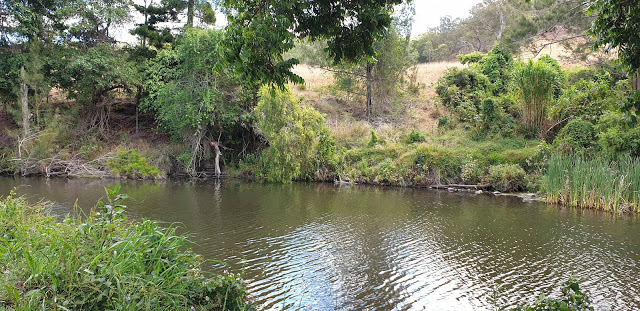
O’Reilly’s Canungra Valley Vineyards located on Lamington National Park Road, Canungra, Queensland, is a 15-acre vineyard with the 163-year-old historic homestead ‘Killowen’ set up with dining rooms and long verandahs, and extensive grounds that are next to the Canungra creek where it is possible to find Platypus and turtles while partaking in a picnic.

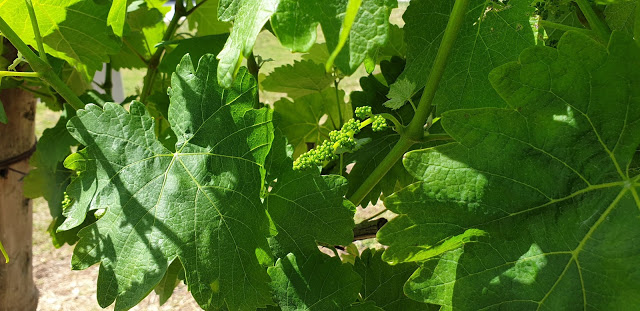
There are about 6,000 vines of the (white) Semillon, Verdelho and (red) Chambourcin, Shiraz and Petit Vedot varieties.

We visited there in December when the vines were just starting to produce fruit. 

That fruit is usually harvested in February and then turned into wine.
The setting for picnics is, on a warm Summer’s day is idyllic, where you can wade in the creek, or go looking for a platypus.  We did not see one there the day we visited but did spend some time sitting beside the creek.